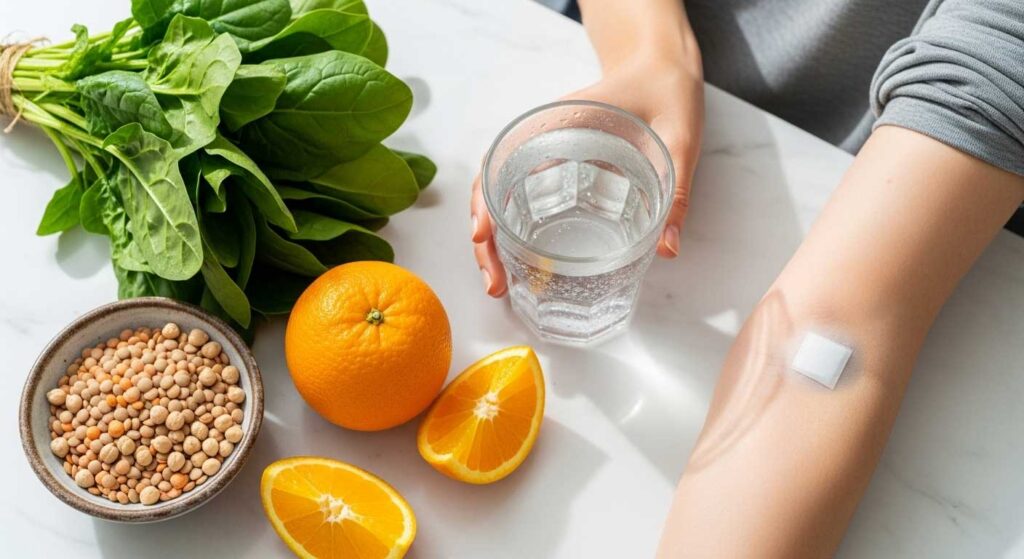
After getting blood drawn, you should immediately have a light snack like juice and crackers to stabilize blood sugar and prevent dizziness. For your first full meal, prioritize iron-rich foods such as lean meat, beans, or spinach, paired with a source of Vitamin C like bell peppers or oranges to enhance iron absorption. Drinking plenty of water is also crucial to restore blood volume.
- Quick Answer: Your Post-Draw Checklist
- Why Labs Offer Juice and Cookies: It’s Not Just a Treat
- The Critical Importance of Rehydration
- How Long Should You Wait Before Leaving?
- Alcohol: A Top Priority to Skip
- Caffeine: Think Twice About That Coffee or Soda
- Heavy, Fatty, and Fried Foods
- Building a Balanced Recovery Plate
- Sample Meal Ideas for Optimal Recovery
- Iron: The Master Blood-Builder
- B Vitamins: The Unsung Heroes of Cell Production
- Understanding the Volume of Blood Lost
- Adjusting Your Recovery Timeline and Focus
While a routine blood draw is a minor medical event, what you do in the hours that follow can make a significant difference in how you feel. Proper after blood draw care, especially your diet, helps you feel better faster, prevents side effects like fainting, and gives your body the essential tools it needs to recover. This guide covers everything you need to know, from the first 15 minutes to your meals for the rest of the day.
Quick Answer: Your Post-Draw Checklist
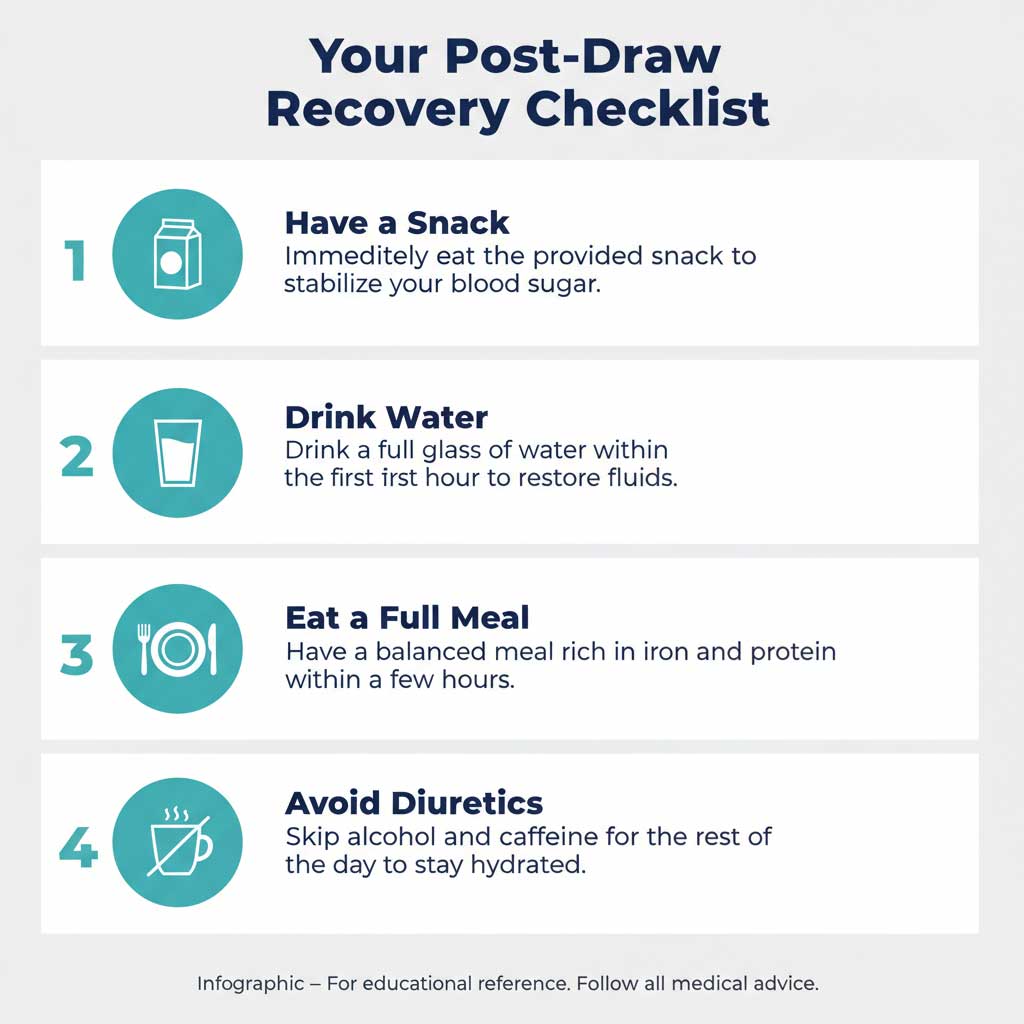
- Immediately: Have the provided snack (juice, cookies, or pretzels).
- First Hour: Drink at least one full glass (8-10 oz) of water.
- First Meal: Eat a balanced meal rich in iron, protein, and vitamins.
- All Day: Continue to hydrate and be sure to avoid alcohol and caffeine.
Immediately After Your Blood Draw: The First 15 Minutes
The care you receive in the moments right after the needle comes out is based on simple, effective science. Following the phlebotomist’s instructions is the first step toward a quick and easy recovery.

Why Labs Offer Juice and Cookies: It’s Not Just a Treat
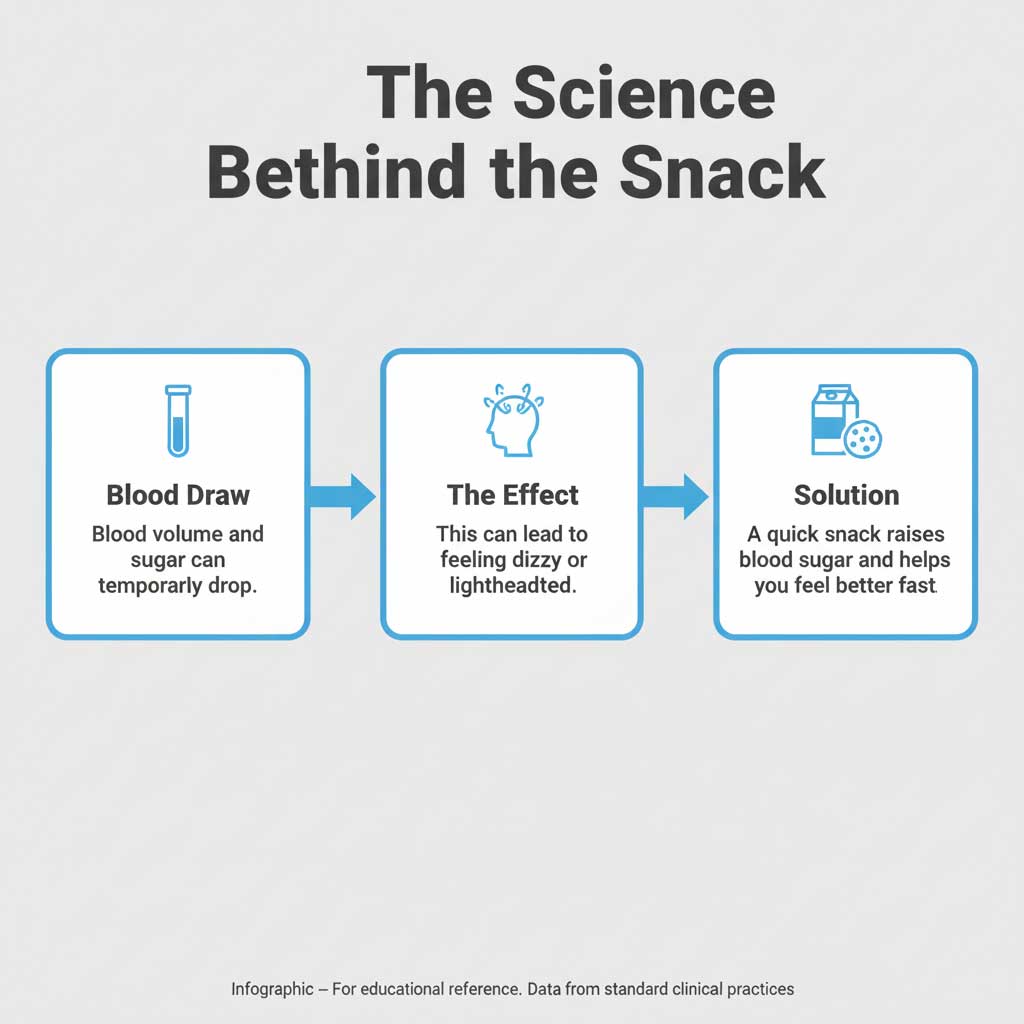
That small cup of juice and packet of cookies or pretzels serves a critical purpose. A sudden, small drop in your blood volume, especially if you were fasting, can cause your blood sugar and blood pressure to dip. This dip is what can lead to a vasovagal response—the medical term for feeling dizzy, lightheaded, or even fainting.
The simple carbohydrates and sugars in these snacks are absorbed into your bloodstream very quickly. This provides an immediate glucose spike that stabilizes your blood sugar, helping to ward off those unpleasant symptoms. It’s a simple but vital part of after blood draw care.
The Critical Importance of Rehydration
Your blood is composed of more than 50% water. When blood is drawn, you lose a small amount of this fluid, which can cause a temporary drop in blood pressure. Drinking water, juice, or another non-caffeinated beverage right away is the first step in restoring that fluid volume. This helps your circulatory system readjust and is a key factor in preventing post-draw dizziness.
How Long Should You Wait Before Leaving?
Medical professionals strongly advise that you remain seated at the clinic for at least 15 minutes after your blood draw. This waiting period is a safety measure. It gives the snack time to raise your blood sugar and allows you to confirm you feel stable and well before you get behind the wheel or resume your daily activities.
What to AVOID for the Rest of the Day
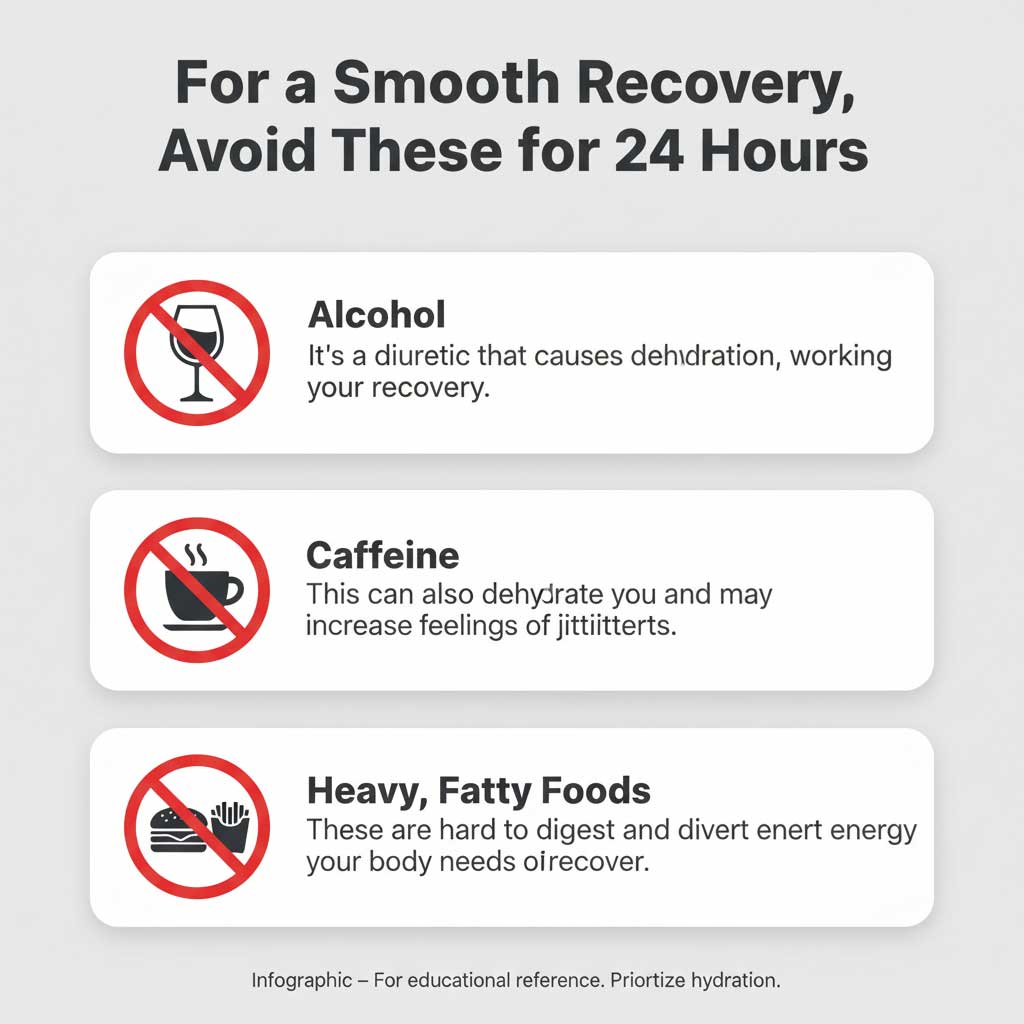
What you don’t eat or drink after getting blood drawn is just as important as what you do. For the next 24 hours, it’s best to steer clear of a few specific items to ensure your body recovers smoothly. This is a crucial list of foods to avoid after a blood test.
Alcohol: A Top Priority to Skip
Consuming alcoholic beverages after a blood draw is strongly discouraged. Alcohol is a diuretic, which means it causes your body to lose more fluid through urination. This is the exact opposite of what your body needs when it’s trying to restore blood volume. Drinking alcohol can lead to dehydration, which may worsen or bring back feelings of dizziness.
Caffeine: Think Twice About That Coffee or Soda
Like alcohol, caffeine is a diuretic that can hinder your rehydration efforts. Furthermore, caffeine is a stimulant that can temporarily increase your heart rate and sometimes cause jitteriness. If you’re already feeling a bit shaky or lightheaded from the blood draw, the effects of caffeine can amplify those sensations. It’s best to stick to water or herbal tea.
Heavy, Fatty, and Fried Foods
Your body uses a significant amount of energy and diverts blood flow to the digestive system to process heavy, greasy, or fried foods. After a blood draw, you want your body’s resources focused on recovery and replenishment, not on a difficult digestive task. Opting for a heavy meal can leave you feeling sluggish, lethargic, or even nauseous.
The Best Foods for Your First Full Meal
Once you’ve had your initial snack and feel stable, your focus should shift to your first complete meal. This is your opportunity to give your body a powerhouse of nutrients to help it repair and replenish.
Building a Balanced Recovery Plate
A well-rounded meal is your best bet. Aim to include three core components on your plate to create one of the best foods to eat after a blood test:
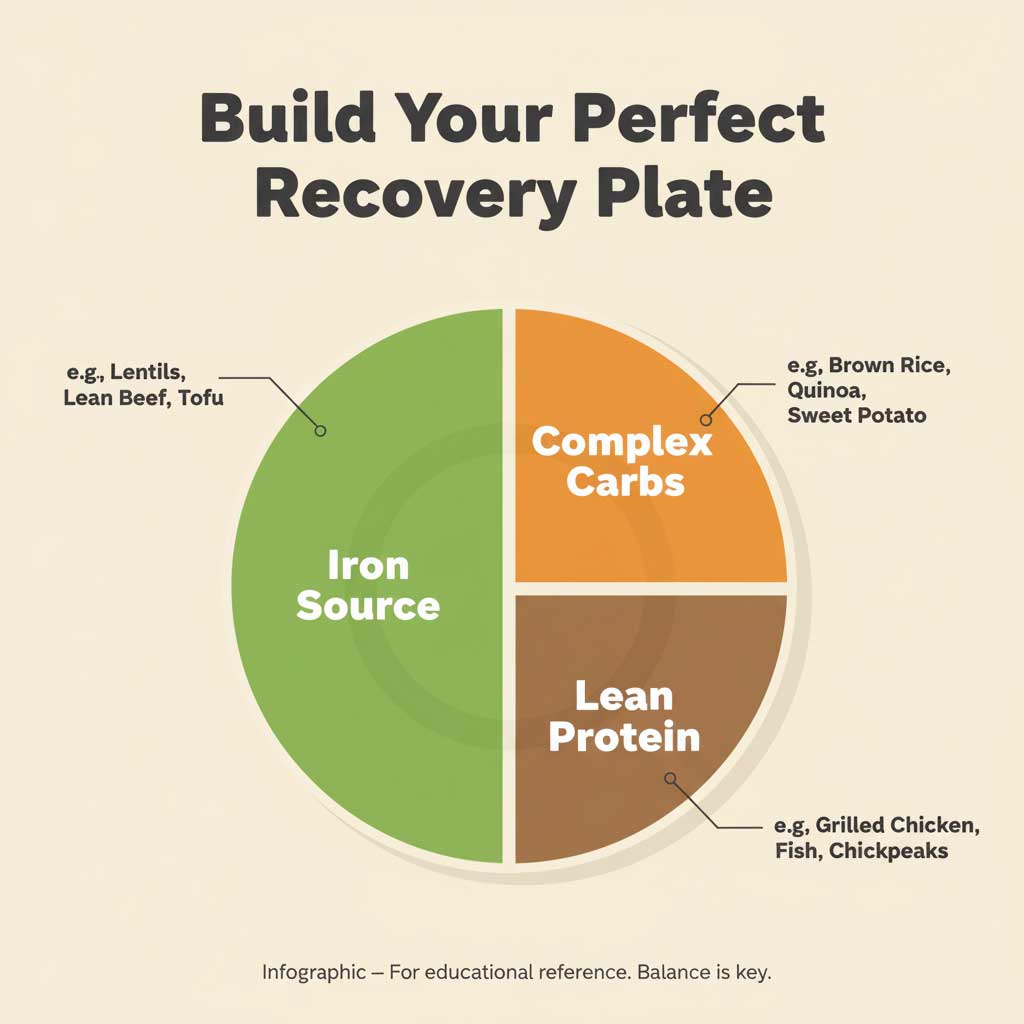
- An Iron Source: This is the most important component for helping your body begin the process of making new red blood cells.
- Complex Carbohydrates: Unlike the quick rush from cookies, complex carbs (like whole grains and vegetables) provide a slow, sustained release of energy to keep you feeling good for hours.
- Lean Protein: Protein is essential for overall tissue repair and will help you feel full and satisfied.
Sample Meal Ideas for Optimal Recovery
Here are a few easy and effective meal ideas that provide the balanced nutrition your body needs:
- Hearty & Warm: A comforting bowl of lentil soup served with a slice of whole-wheat toast. Lentils are packed with iron, and the bread provides sustained energy.
- Quick & Easy: A turkey sandwich on whole-wheat bread with a side of orange slices. Turkey provides lean protein, and the orange slices add a crucial dose of Vitamin C.
- Plant-Based Power: A large spinach salad topped with chickpeas, colorful bell peppers, and a lemon-based vinaigrette. This is a fantastic combination of iron and Vitamin C.
- Breakfast for Lunch: A bowl of oatmeal made with milk or a fortified plant-based alternative, topped with fresh strawberries, walnuts, and a sprinkle of iron-fortified cereal.
Key Nutrients to Replenish Your Body: A Deep Dive
To truly understand what to eat after a blood draw, it’s helpful to know which specific nutrients your body is craving and why. These are the building blocks your system uses to create new, healthy blood cells.
Iron: The Master Blood-Builder
Iron is the star player in post-draw recovery. It is a vital component of hemoglobin, the protein within your red blood cells responsible for transporting oxygen from your lungs to the rest of your body. When you lose blood, you lose iron. Consuming iron-rich foods gives your body the raw material it needs to manufacture new, oxygen-carrying red blood cells.
Heme vs. Non-Heme Iron: What’s the Difference?
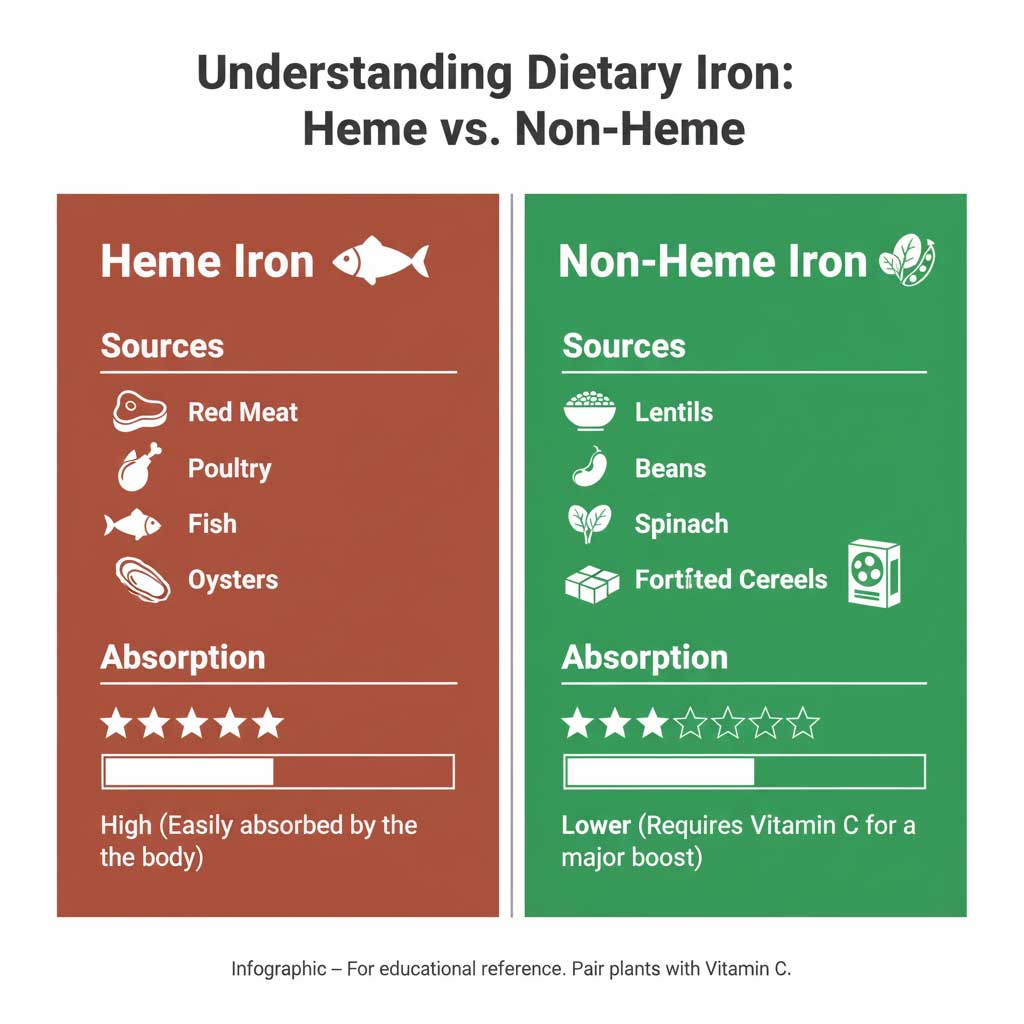
Not all dietary iron is created equal. Understanding the difference can help you make more effective food choices.
- Heme Iron: This type of iron is found in animal products like red meat, poultry, and fish. It is highly bioavailable, meaning your body can absorb and use it very efficiently.
- Non-Heme Iron: This type is found in plant-based foods, including lentils, beans, spinach, tofu, and iron-fortified cereals. While still incredibly valuable, non-heme iron is not absorbed as easily by the body and often needs a “helper” to maximize its potential.
Boosting Absorption with Vitamin C: The Perfect Partner
Vitamin C is the essential “helper” for non-heme iron. Consuming Vitamin C at the same time as a plant-based iron source can increase its absorption by up to six times. This simple food pairing trick is one of the most effective ways to boost your iron levels.
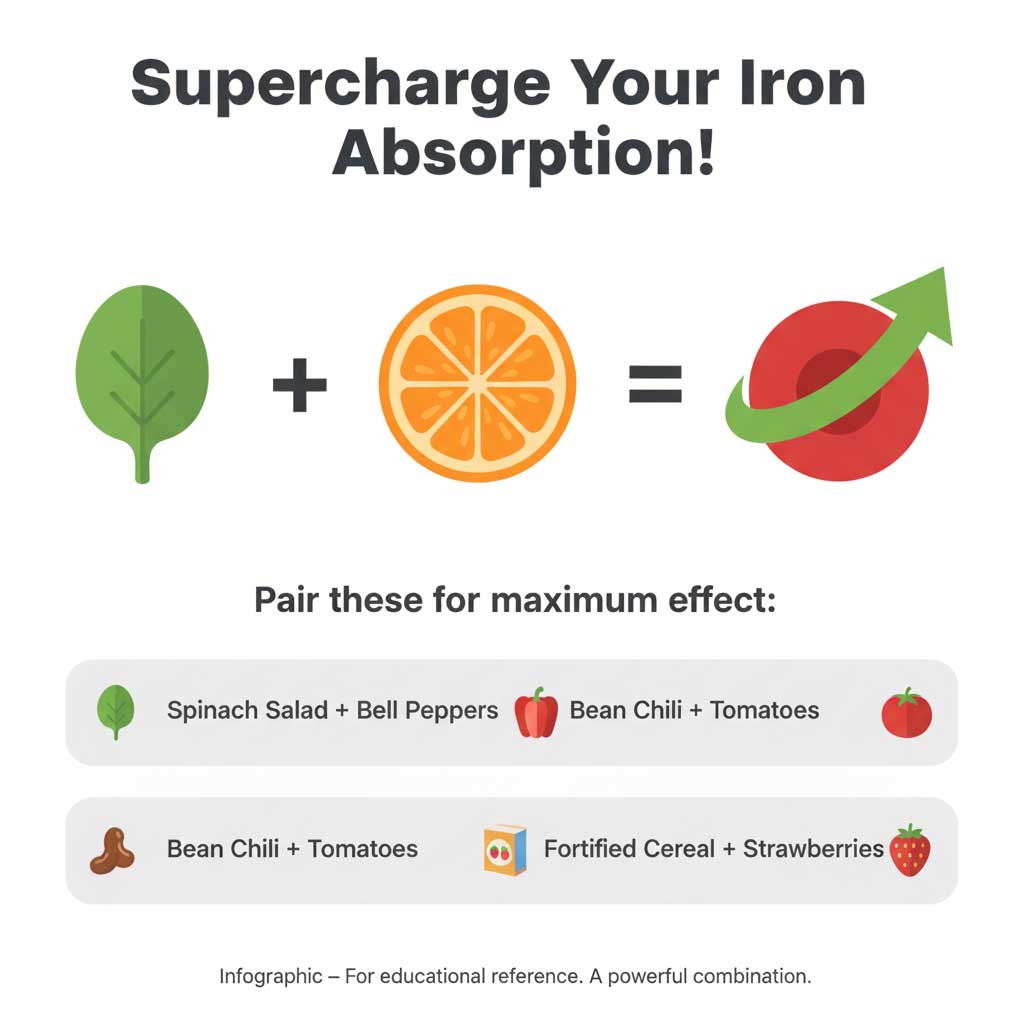
Practical examples include squeezing fresh lemon juice over a spinach salad, adding tomatoes and bell peppers (both high in Vitamin C) to a bean chili, or having a small glass of orange juice with your iron-fortified breakfast cereal.
B Vitamins: The Unsung Heroes of Cell Production
If iron is the raw material for red blood cells, think of B vitamins as the skilled factory workers who assemble them. Several B vitamins are critical for this process.
- Folate (Vitamin B9): This vitamin is essential for the proper formation and maturation of new red blood cells in your bone marrow. Top sources include leafy green vegetables (spinach, kale), asparagus, Brussels sprouts, beans, and avocados.
- Vitamin B12: This vitamin works hand-in-hand with folate to synthesize new red blood cells. A B12 deficiency can lead to improperly formed red blood cells. It is found almost exclusively in animal products like meat, fish, eggs, and dairy. Vegetarians and vegans can get it from fortified foods like nutritional yeast, cereals, and plant milks.
The Ultimate Post-Blood Draw Nutrition Guide
This table provides a comprehensive look at the key nutrients your body needs after a blood draw, why you need them, and the best food sources to find them in.
| Nutrient | Why You Need It After a Blood Draw | Best Heme (Animal) Sources | Best Non-Heme (Plant) Sources |
| Iron | The primary building block of hemoglobin in new red blood cells. Directly replaces what was lost. | Lean red meat (beef, lamb), Oysters, Chicken (especially dark meat), Tuna | Lentils, Spinach, Tofu, Fortified cereals, Beans (kidney, black), Potatoes with skin |
| Vitamin C | Dramatically increases the absorption of non-heme (plant-based) iron. Acts as an essential helper. | Not applicable as an iron source | Oranges, Bell peppers (all colors), Strawberries, Broccoli, Tomatoes, Kiwi |
| Folate (B9) | A crucial B vitamin required for the proper formation and maturation of new red blood cells. | Liver, Eggs | Leafy greens (spinach, kale), Asparagus, Brussels sprouts, Avocado, Beans |
| Vitamin B12 | Works with folate to synthesize new red blood cells and prevent a type of anemia. | Salmon, Tuna, Beef, Milk, Yogurt, Eggs | Fortified nutritional yeast, Fortified cereals, Fortified plant milks |
| Water/Fluids | Restores blood volume, helps maintain blood pressure, and prevents dizziness and fainting. | Water | 100% fruit juice, Coconut water, Broth-based soups, Electrolyte drinks |
Routine Blood Test vs. Blood Donation: A Critical Difference
It is essential to understand that the recovery needs after a routine blood test are very different from those after donating a full pint of blood. The advice on what to eat after getting blood drawn needs to be scaled accordingly.
Understanding the Volume of Blood Lost
The difference in volume is immense and is the primary reason for the different recovery protocols.
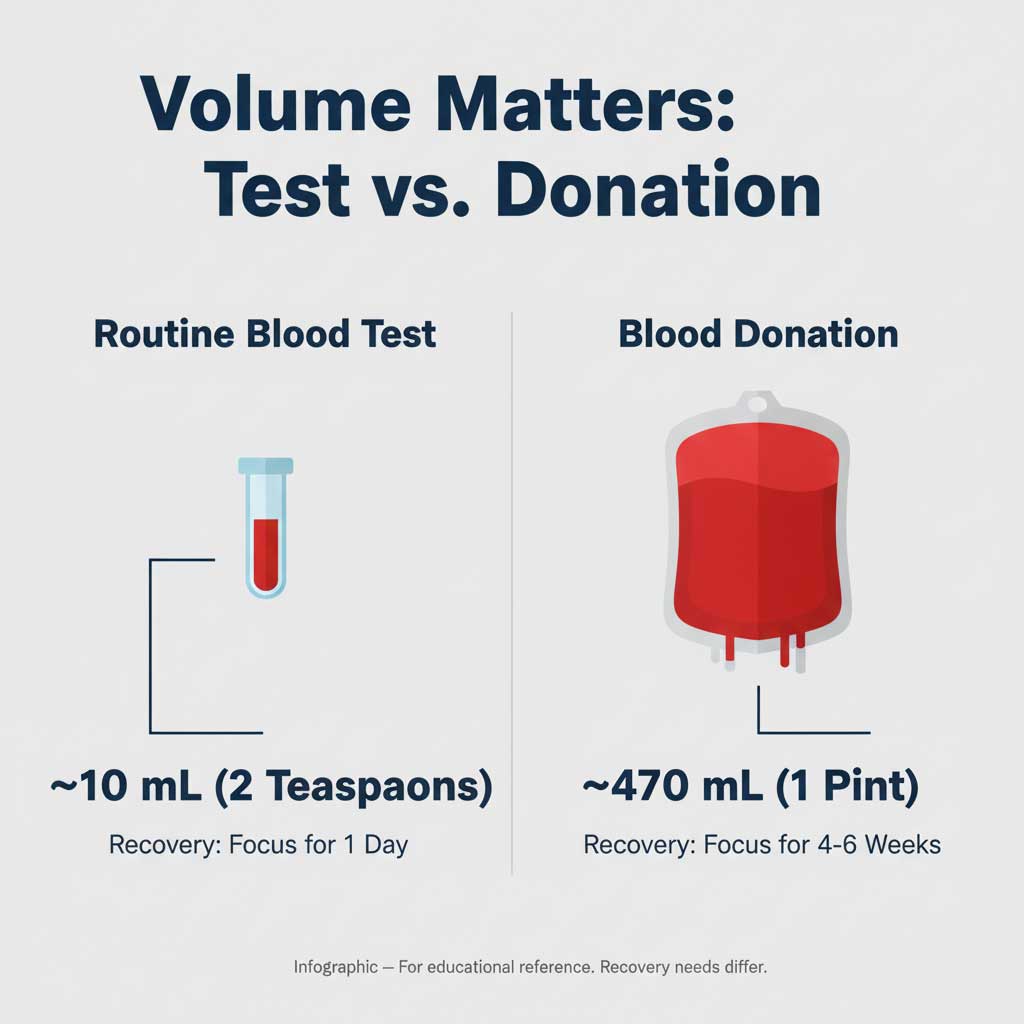
- Routine Blood Test: A typical lab test involves drawing between 1 to 3 teaspoons (approximately 5-15 mL) of blood.
- Blood Donation: A standard blood donation removes one pint (approximately 470 mL) of blood. This is more than 30 times the amount of a routine test.
Adjusting Your Recovery Timeline and Focus
Because the volume is so different, the recovery plan must be adjusted.
- For a Routine Test: Your body replaces the small amount of lost fluid within hours. Focusing on a nutrient-dense meal and good hydration for the remainder of the day is perfectly sufficient.
- For a Blood Donation: While your body replaces the lost plasma (fluid) within about 24 hours, it can take 4 to 6 weeks to fully replace all the lost red blood cells. Therefore, eating after blood donation requires a much longer-term focus on iron-rich foods, as recommended by organizations like the American Red Cross.
Conclusion: Fueling Your Body for a Quick Recovery
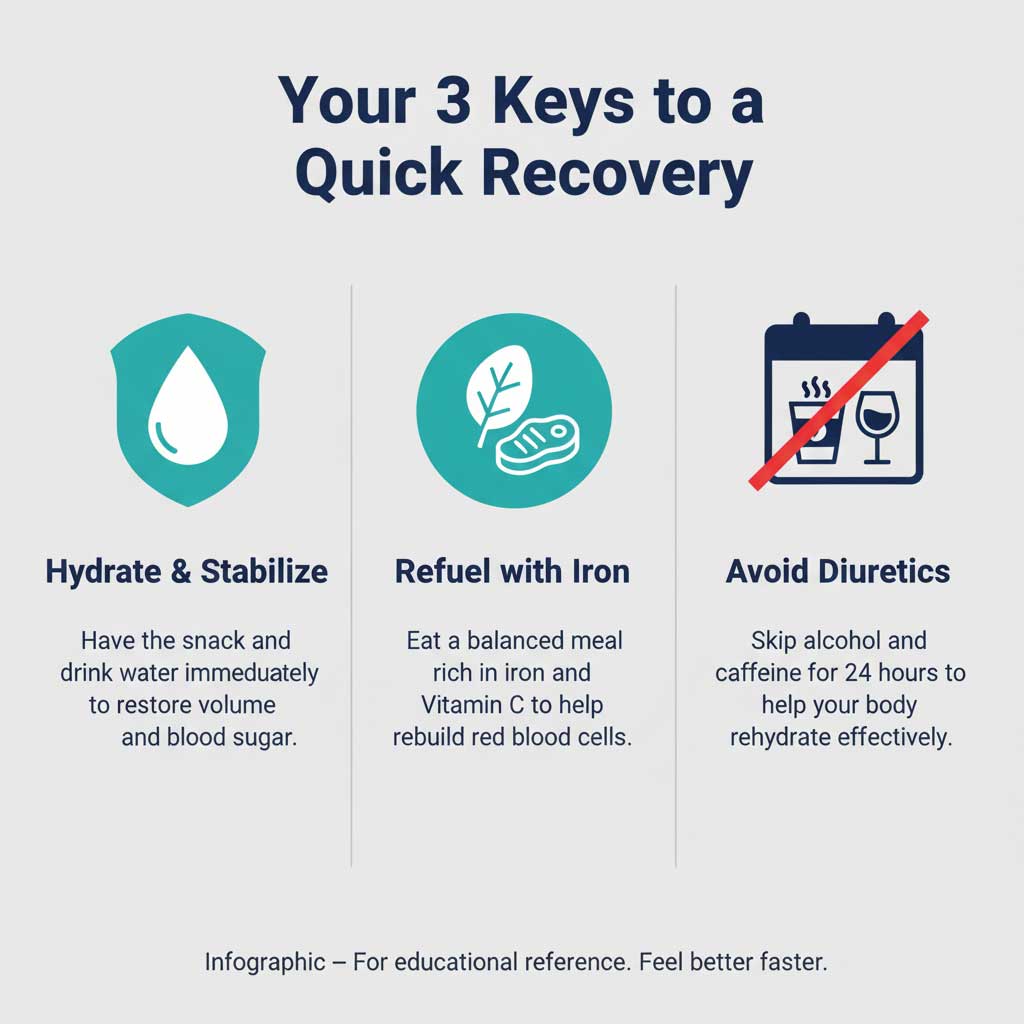
Getting your blood drawn is a simple, common procedure, and your recovery can be just as simple. The key is to be proactive. The 15-minute snack-and-wait period at the clinic is non-negotiable for your safety. For the rest of the day, prioritize restoring fluids with plenty of water, avoid diuretics like alcohol and caffeine, and build your meals around powerful, blood-building nutrients like iron, Vitamin C, and B vitamins.
By following these straightforward nutritional steps, you are providing your body with exactly what it needs to quickly replenish its resources, helping you feel strong, stable, and ready to get on with your day.