An 88-year-old woman in New York ate 2 to 3 pounds of raw bok choy every day for months, hoping to control her diabetes. She ended up in intensive care with a thyroid shutdown that nearly killed her. That case still drives a lot of fear about kale.
Table of Contents
What the headlines skip: your kale salad is nowhere near that amount. And the type of kale on your plate matters far more than most articles admit.
Quick Answer: Yes, kale is safe for thyroid health for most people. Curly and lacinato kale contain less than 10 μmol of goitrin per 100 grams, so you would need over 4 pounds raw in one day to reach the level shown to block iodine uptake. Some Russian and Siberian kale is a different species with far more goitrin. Getting enough iodine matters more than avoiding kale.
5 rules for eating kale with thyroid concerns:
- Choose curly or lacinato kale for large raw servings.
- Cook Red Russian or Siberian kale, or keep raw portions modest.
- Get 150 μg of iodine daily from iodized salt, dairy, eggs, or seafood.
- Take levothyroxine 30 to 60 minutes before eating.
- Rotate kale with other greens and keep intake steady before TSH tests.
At a Glance
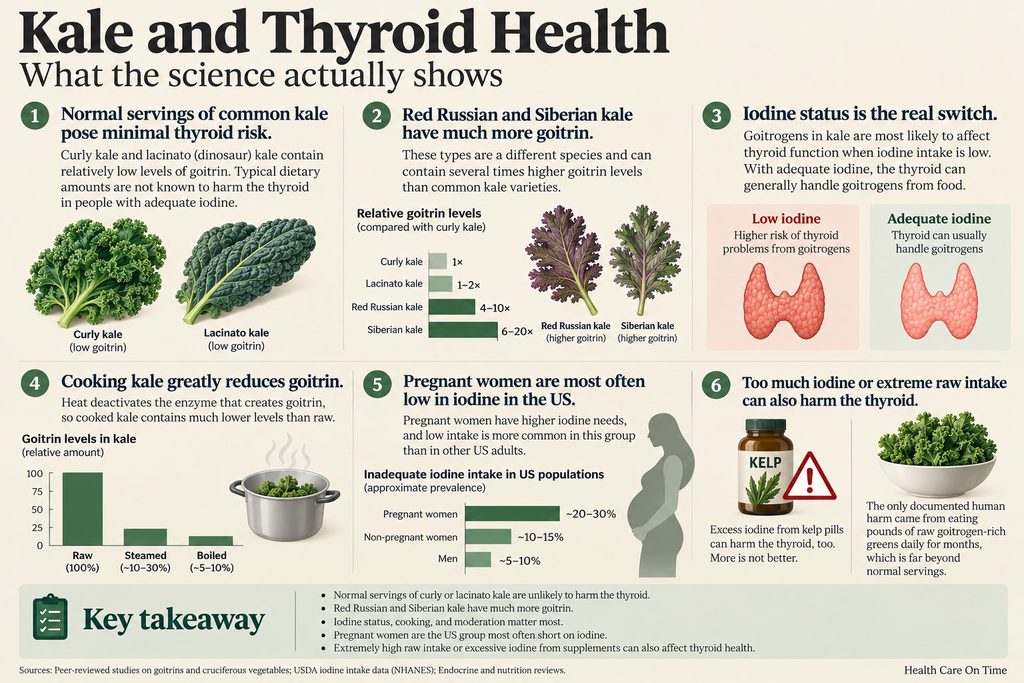
- Normal servings of curly or lacinato kale pose minimal thyroid risk.
- Red Russian and Siberian kale are a different species with much more goitrin.
- Iodine status is the real switch; goitrogens matter most when iodine is low.
- Cooking kale switches off the enzyme that creates goitrin.
- Pregnant women are the US group most often short on iodine.
- Too much iodine from kelp pills can harm the thyroid too.
- The only documented human harm came from pounds of raw greens eaten daily for months.
What Goitrogens in Kale Actually Do
Kale is a cruciferous vegetable, like broccoli, cabbage, and Brussels sprouts. These plants store natural sulfur compounds called glucosinolates. On their own, glucosinolates do very little.
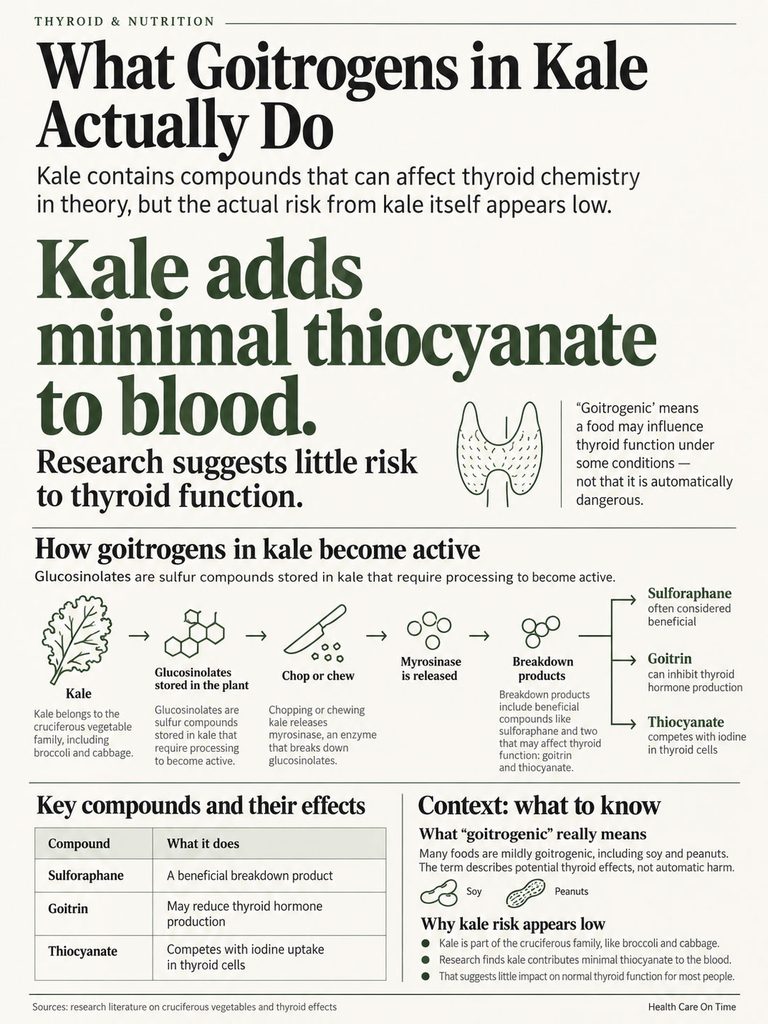
The action starts when you chop, chew, or blend raw kale. That damage releases an enzyme called myrosinase, which breaks glucosinolates into smaller compounds. A few of those can affect your thyroid.
Glucosinolates, Myrosinase, and the Two Culprits
Most breakdown products are ones researchers like, such as sulforaphane. Two are different. Progoitrin breaks down into goitrin and indole glucosinolates break down into thiocyanate, and both may lower thyroid hormone production.
Goitrin slows the enzyme your thyroid uses to build hormone. Thiocyanate competes with iodine at the entry point into thyroid cells. Either way, the gland has less raw material.
Why “Goitrogenic” Sounds Worse Than It Is
“Goitrogen” comes from goiter, an enlarged thyroid. It sounds alarming. But many everyday foods are mildly goitrogenic, including soy, peanuts, and millet.
A food being goitrogenic tells you a mechanism exists. It tells you nothing about dose. Patients commonly ask us whether “goitrogenic” means “dangerous,” and the honest answer is that it depends on how much you eat and how much iodine you get.
Thiocyanate Math: Food vs What’s Already in Your Blood
Your blood already carries thiocyanate from normal metabolism and from sources like tobacco smoke. The question is whether kale adds enough to matter.
It doesn’t. Researchers estimated brassica vegetables add at most about 10 μM of thiocyanate to blood, well below the 40 to 69 μM people already carry, and judged this source minimal risk. That leaves goitrin as the compound worth watching.
How Much Kale Is Too Much? The Real Numbers
No top-ranking page answers this with actual math. Here it is, step by step.
The Goitrin Threshold
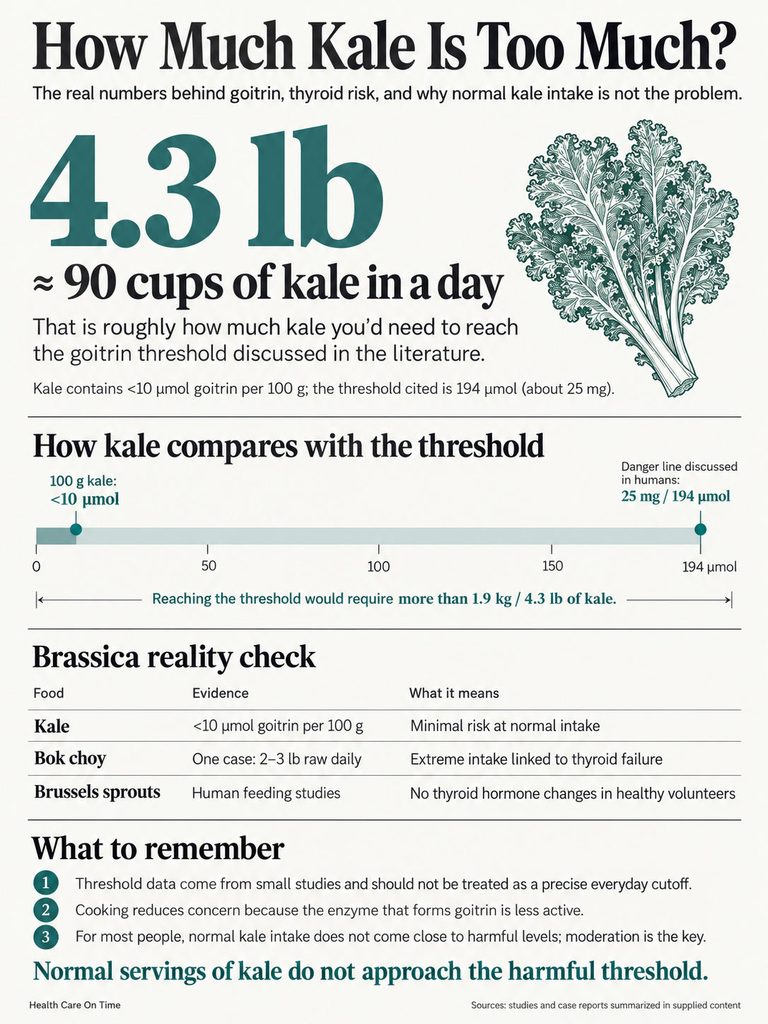
The key data point comes from a 2016 review in Nutrition Reviews co-authored by a UCLA thyroid specialist. It reported that 194 μmol of goitrin blocked radioiodine uptake into the thyroid, while 77 μmol did not.
That 194 μmol equals about 25 milligrams of goitrin. It’s the closest thing science has to a human danger line.
Converting the Threshold to Cups and Pounds
Now compare that line to kale. The review found that broccoli, broccoli rabe, turnip tops, and Brassica oleracea kale each contain less than 10 μmol of goitrin per 100-gram serving, which the authors rated minimal risk.
At under 10 μmol per 100 grams, you need at least 1,940 grams to reach 194 μmol. That’s about 4.3 pounds of raw kale in one day.
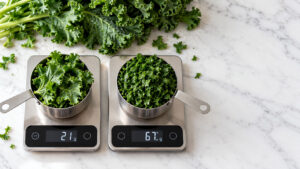
A loosely packed cup of chopped raw kale weighs about 21 grams (0.7 ounces). So 4.3 pounds is more than 90 cups. Even a big smoothie with 3 packed cups is a small fraction of that.
Our medical team has reviewed this threshold against typical eating patterns, and normal kale intake doesn’t come close. For calorie and serving details, see our guide on how many calories are in kale.
Table 1: Kale Types and Other Brassicas vs the Goitrin Threshold
| Vegetable | Species | Goitrin or progoitrin per 100 g raw | Raw amount to reach 194 μmol | Real-world thyroid risk |
| Curly kale | Brassica oleracea | Under 10 μmol | Over 4.3 lb (over 90 cups chopped) | Minimal |
| Lacinato (Tuscan) kale | Brassica oleracea | Under 10 μmol | Over 4.3 lb | Minimal |
| Commercial broccoli | Brassica oleracea | Under 10 μmol | Over 4.3 lb | Minimal |
| Broccoli rabe, turnip tops | Brassica rapa | Under 10 μmol | Over 4.3 lb | Minimal |
| Red Russian or Siberian kale | Brassica napus | About 176.6 μmol (progoitrin) | About 110 g (3.9 oz) | Caution if eaten raw, in large amounts, daily |
| Some collards and Brussels sprouts | Brassica oleracea | Some samples over 100 μmol | Under 194 g (6.8 oz) for high samples | Moderate if raw and daily; low when cooked |
| Bok choy (NEJM case) | Brassica rapa | Not measured in case | 1.0 to 1.5 kg daily for months caused harm | Only at extreme raw intake |
Sources: Felker et al., Nutrition Reviews 2016; Chu and Seltzer, NEJM 2010. Progoitrin values are upper bounds, since not all progoitrin converts to goitrin.
The Bok Choy Case as a Dose Benchmark
That 88-year-old patient is the best-known case of food-related thyroid failure. She ate 2 to 3 pounds of raw bok choy daily for months, then developed respiratory failure and myxedema coma, a rare and often deadly form of extreme hypothyroidism.
The pattern is clear: raw, pounds per day, for months, in an older adult. A cup or two of kale a few times a week doesn’t fit it.
Human feeding data agrees. In McMillan’s 1986 study in Human Toxicology, healthy volunteers ate 150 grams (about 5.3 ounces) of cooked Brussels sprouts daily for four weeks with no change in thyroid hormone levels.
What This Evidence Can and Can’t Tell You
Be clear about the limits. The 194 μmol threshold comes from older, small human dosing studies of purified goitrin, not from people eating kale.
The Brussels sprouts study had few participants and lasted only four weeks. No long-term trial has tested daily kale on thyroid labs in people with hypothyroidism. The case for safety rests on dose math plus a consistent absence of harm, which is strong but not perfect.
Why Kale Type Matters More Than Anyone Tells You
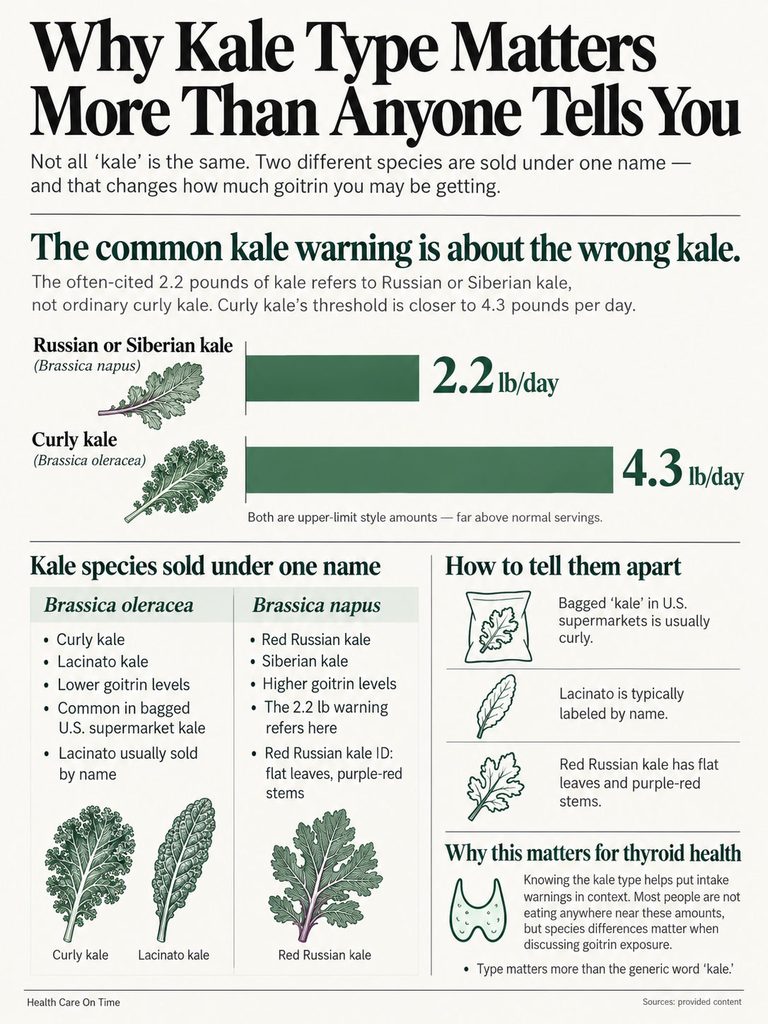
Most articles treat “kale” as one food. It isn’t. Two species are sold under the same name, and their goitrin levels are far apart.
Brassica oleracea vs Brassica napus
Curly kale and lacinato kale (also called Tuscan, dinosaur, or cavolo nero) belong to Brassica oleracea. That’s the same species as broccoli and cabbage, and it’s low in goitrin.
Red Russian and Siberian kale belong to Brassica napus, the same species as rutabaga and canola. The 2016 review named collards, Brussels sprouts, and some Brassica napus Russian kale as containing enough goitrin to potentially reduce iodine uptake.
The “2.2 Pounds of Kale” Warning Is About the Wrong Kale
The popular warning that “2.2 pounds of kale per day” harms the thyroid traces back to this review. But its conclusion about intake above 1 kilogram a day for several months refers to raw Russian or Siberian kale, not the curly kale in most grocery bags.
That’s an important difference. For curly kale, the threshold sits closer to 4.3 pounds a day, and even that is an upper bound.
How to Tell Which Kale You Bought
Bagged kale and bunches labeled “kale” in US supermarkets are almost always curly. Lacinato is usually sold by name. Both are low risk.
Red Russian kale has flat, frilly, oak-like leaves with purple-red stems. It shows up at farmers markets, in “baby kale” salad mixes, and in home gardens. If you eat it raw in large amounts daily, cooking it or mixing it with curly kale is a sensible step.
In cases reviewed by our medical team, very few people realize their “kale” might be a different plant. A label or seed packet answers the question in seconds.
Iodine Is the Real Switch
Goitrogens don’t damage the thyroid directly. They compete with iodine or slow how the gland uses it. So whether goitrogens matter depends heavily on your iodine.
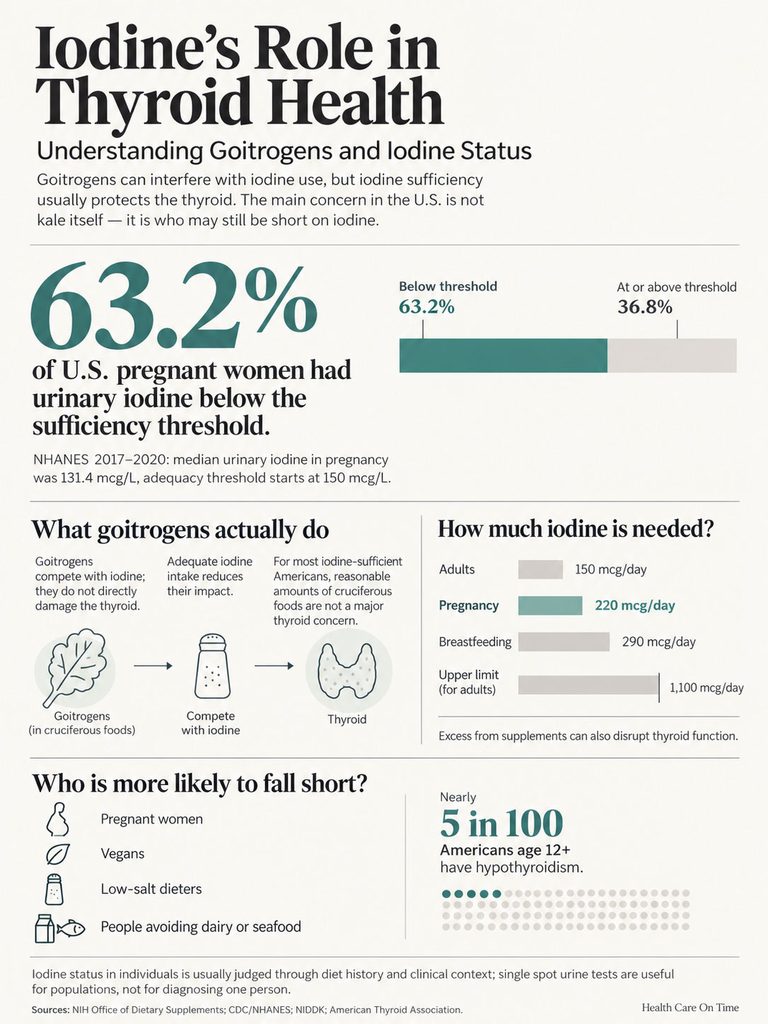
With enough iodine, a little competition makes no difference. When iodine runs low, the same amount of goitrogen hits harder.
US Iodine Status in Adults
Most Americans are covered by iodized salt, dairy, eggs, and seafood. A CDC analysis of NHANES data found US iodine levels have held steady, with adequate iodine nutrition in the general population since 2000.
A 2024 systematic review reached a matching conclusion. After analyzing 123 cell, animal, and human studies, the authors found most results challenged claims that brassicas harm human thyroid function, and that eating them daily with adequate iodine causes no adverse thyroid effects.
Pregnancy, Vegans, and Low-Salt Diets
Some groups fall short. In NHANES 2005 to 2008, pregnant women had a median urinary iodine of 125 μg/L, and 56.9% were below 150 μg/L. The WHO considers a median below 150 μg/L insufficient during pregnancy.
A US pregnancy cohort study from the University of Idaho showed the same gap: 48% of 966 urine samples had iodine at or below 150 μg/L.
Others at risk include people who skip dairy and eggs, those who use only sea salt or kosher salt (usually not iodized), and people on very low-sodium diets. For these groups, the fix is iodine, not avoiding vegetables.
Don’t Overcorrect With Kelp or Iodine Pills
Here’s the trap. People who fear goitrogens sometimes start kelp tablets or high-dose iodine drops. Kelp products vary widely in iodine content, and some deliver far more than the label suggests.
The NIH sets the adult upper limit at 1,100 μg of iodine per day. Too much iodine can trigger hypothyroidism or hyperthyroidism, especially in people with Hashimoto’s. Our medical reviewers note that excess iodine causes more thyroid trouble in practice than kale ever does.
Table 2: US Thyroid and Iodine Statistics
| Measure | US figure | Source |
| Hypothyroidism prevalence | About 5 in 100 Americans age 12 and older | NIDDK |
| Iodine RDA, adults | 150 μg per day | NIH Office of Dietary Supplements |
| Iodine RDA, pregnancy and lactation | 220 μg and 290 μg per day | NIH Office of Dietary Supplements |
| Iodine upper limit, adults | 1,100 μg per day | NIH Office of Dietary Supplements |
| Pregnant women, median urinary iodine | 125 μg/L, with 56.9% under 150 μg/L | CDC NHANES 2005 to 2008 |
| Pregnant women, US cohort | 48% at or below 150 μg/L (n=966 samples) | University of Idaho cohort |
| Women of reproductive age | Median 139 μg/L, 15.1% under 50 μg/L | CDC NHANES 2003 to 2004 |
| Background blood thiocyanate | 40 to 69 μM vs about 10 μM maximum from brassicas | Felker et al., Nutrition Reviews 2016 |
Patients booking thyroid panels with us often ask whether to test iodine too. A single urine sample swings a lot day to day, so doctors usually judge iodine from diet history and thyroid labs instead.
Kale With Hypothyroidism, Hashimoto’s, or Levothyroxine
This is where most readers land. If your thyroid is already underactive, does kale make it worse?
If You Have Hypothyroidism and Take Medication
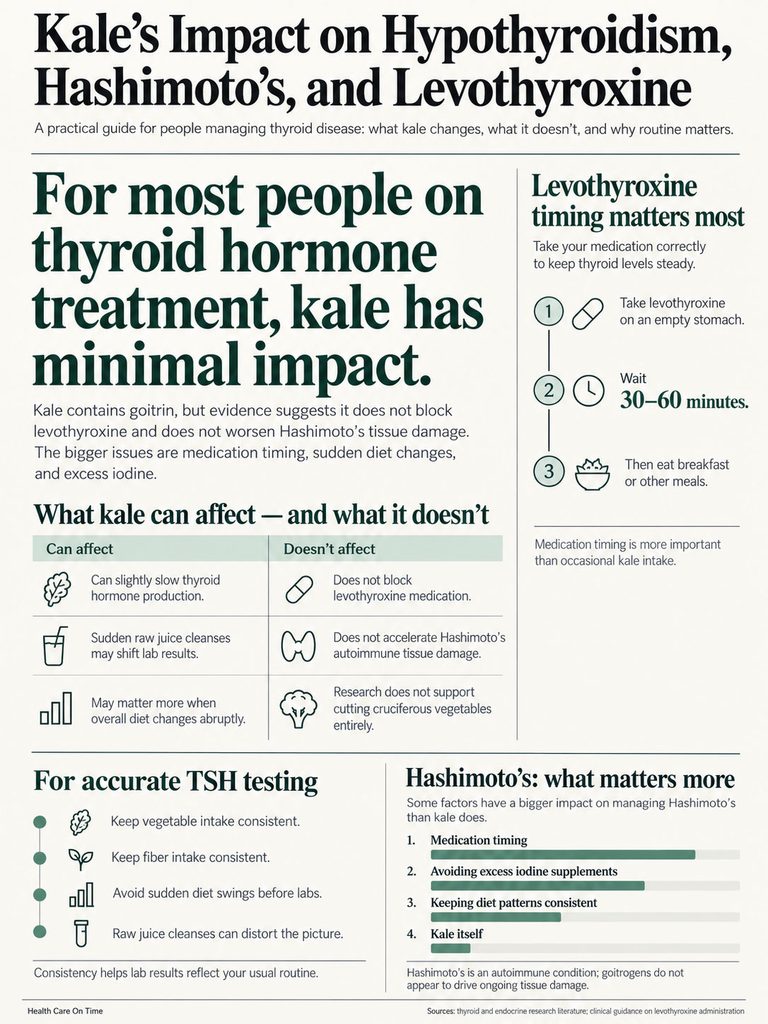
On thyroid hormone replacement, your hormone comes from the pill. Goitrin slows hormone production inside the gland, but it doesn’t block the hormone you swallow.
So normal kale intake has little effect on a treated thyroid. The main exception is a sudden, dramatic diet change, such as starting a daily raw juice cleanse, which can nudge lab results.
If You Have Hashimoto’s
Hashimoto’s thyroiditis is autoimmune: your immune system attacks thyroid tissue. It’s the most common cause of hypothyroidism in the United States.
Goitrogens don’t cause or speed up that attack. Online Hashimoto’s groups often push cutting all cruciferous vegetables, but research doesn’t support a blanket ban. The more relevant caution for Hashimoto’s is avoiding excess iodine from supplements.
Levothyroxine Timing Matters More Than Kale
If you take levothyroxine (Synthroid, Levoxyl, Unithroid, or generic), timing is the bigger issue. The FDA label advises an empty stomach, 30 to 60 minutes before breakfast.
Fiber, calcium, and iron can cut absorption. Kale has fiber and calcium, like any leafy green. The fix is simple: take your pill with water first, then eat. Keep calcium and iron supplements about 4 hours apart from it.
Across patients we serve, meal timing explains far more unstable TSH results than kale itself.
Keep Your Diet Steady Before a TSH Test
Doctors adjust levothyroxine doses based on TSH. If you suddenly double your vegetable or fiber intake before a test, the result can shift for reasons unrelated to your thyroid.
Whatever amount of kale you eat, keep it consistent. A steady diet gives your doctor a cleaner reading. Learn more in our guide to the TSH blood test.
Raw vs Cooked vs Juiced Kale
How you prepare kale changes how much goitrin you get. It’s the easiest lever you control.
Cooking Switches Off Myrosinase
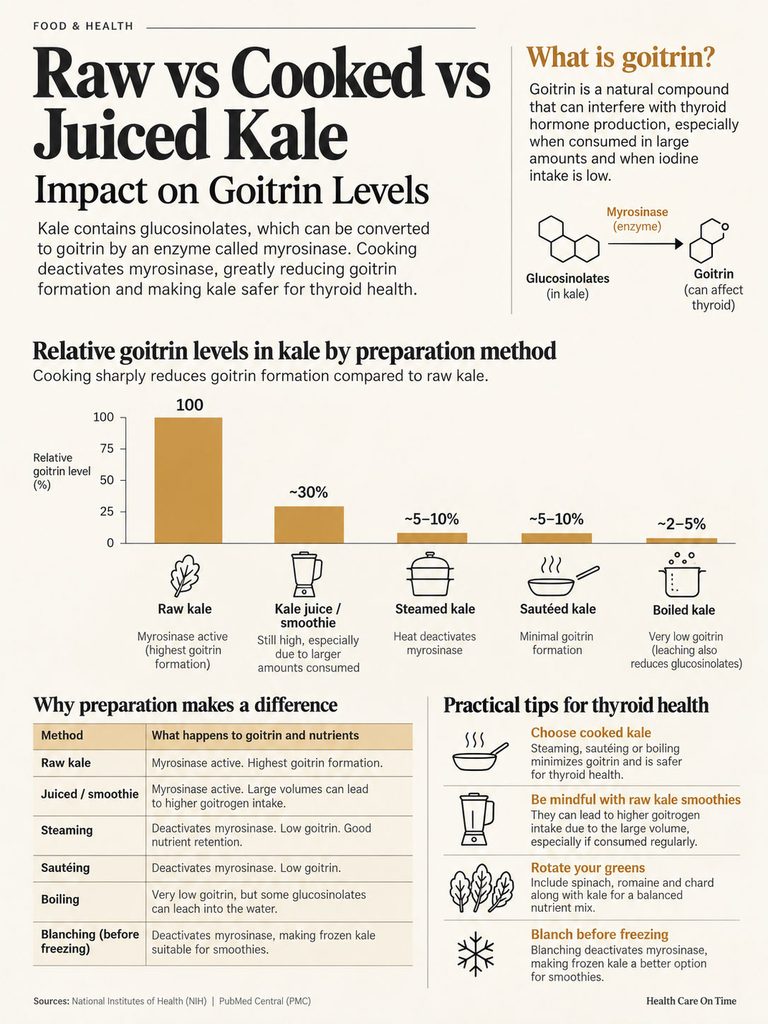
Goitrin only forms when myrosinase breaks down progoitrin, and heat damages myrosinase. Doctors involved in the bok choy case explained that cooking deactivates the enzyme, and that eating huge amounts raw is what drove the thyroid shutdown.
Steaming, sautéing, and boiling all reduce goitrin formation. Boiling also leaches some glucosinolates into the water. Cooked kale is the lowest-risk option for anyone concerned.
The tradeoff: cooking also cuts some sulforaphane. For people with normal thyroid function, eating both raw and cooked kale is fine. For the full picture on what kale does well, see our article on the health benefits of kale.
Smoothies and Juice Cleanses: Where Volume Sneaks Up
A kale smoothie isn’t risky by default. The issue is volume. Blending lets you drink far more raw greens than you’d chew, and juicing removes bulk so you can finish several bunches at once.
One symptom-checker site warns that large daily amounts of raw kale juice may supply enough goitrogens to affect the thyroid, but never says how much. By the threshold math, curly kale juice would still need well over 4 pounds of leaves a day. Juice made from Red Russian kale is a different story.
Rotating Your Greens
The simplest habit is rotation. Alternate kale with spinach, romaine, chard, and arugula through the week. You get a wider nutrient mix and avoid stacking one compound day after day.
If you prep smoothies ahead, blanch kale for a minute in boiling water, then freeze it. That step switches off much of the myrosinase before it ever hits the blender.
Easy Ways to Eat Kale With a Thyroid Condition
Knowing kale is safe is one thing. Building it into a week without second-guessing every bite is another. These simple habits keep goitrin low and nutrition high.
Pair Raw Kale With Iodine Foods
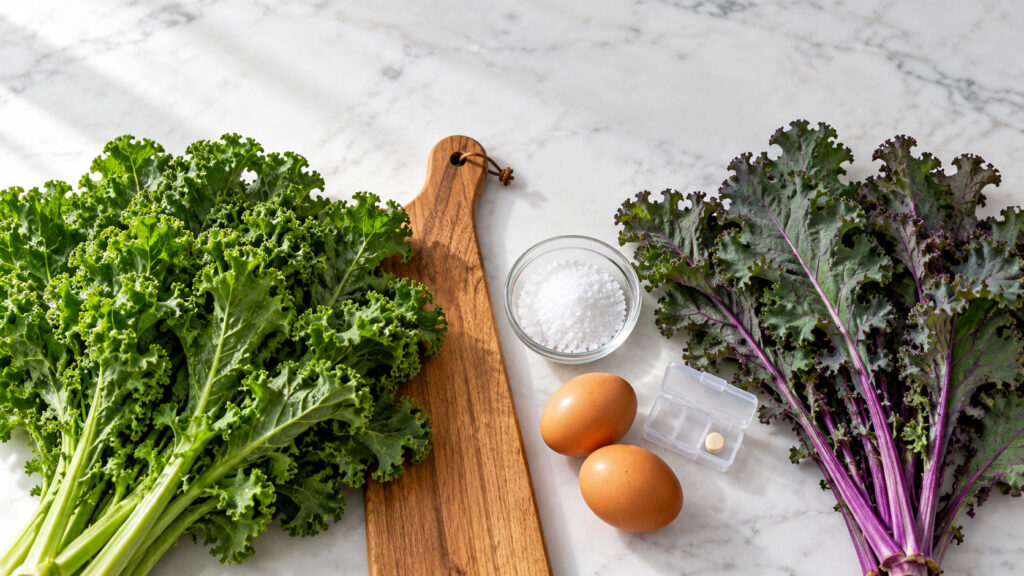
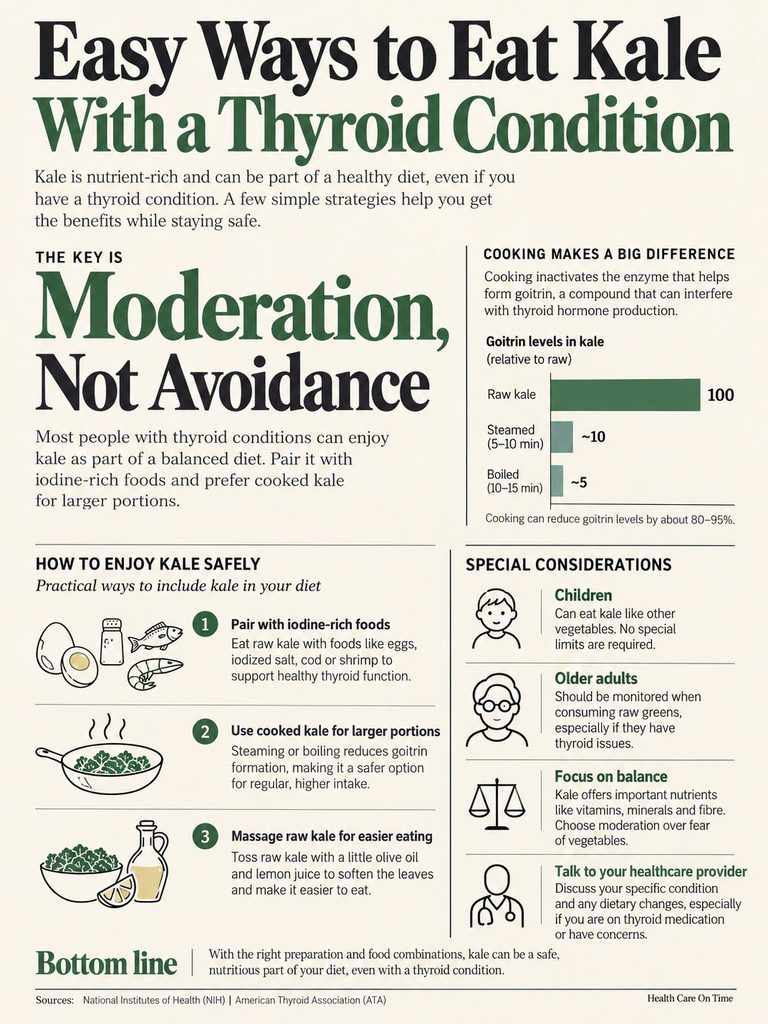
Add a hard-boiled egg, a sprinkle of iodized salt, or a few ounces of cod or shrimp to a kale salad. A yogurt-based dressing works too. You get the greens and some of the iodine your thyroid needs in the same meal.
Use Cooked Kale for Big Portions
If a recipe calls for a whole bunch, cook it. Sautéed kale with garlic, kale stirred into soups, and baked kale chips all reduce goitrin formation. A full bunch also shrinks to a small, easy portion once cooked.
Massage Raw Kale Instead of Blending Mountains
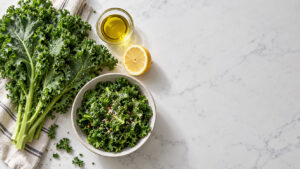
Massaging chopped curly kale with a little olive oil and lemon softens it for salads. It keeps servings to a normal size, unlike a blender, which makes it easy to drink several cups without noticing.
Children and Older Adults
Kids can eat kale like any other vegetable. Their iodine usually comes from milk, eggs, and iodized salt in school and home meals. No special limit is needed beyond ordinary variety.
Older adults deserve a little more attention. The bok choy case involved an 88-year-old, and thyroid problems become more common with age. If an older relative has started a raw-greens “cure” for diabetes or weight, it’s worth a gentle check-in and a TSH test at their next visit.
Our medical team sees this pattern in families more often than people expect: a well-meaning health trend taken to an extreme. The answer is moderation, not fear of a vegetable.
Myths and Real Risks
Kale has swung from superfood to supposed villain and back. Here’s what holds up.
Myth: Kale Causes Hypothyroidism
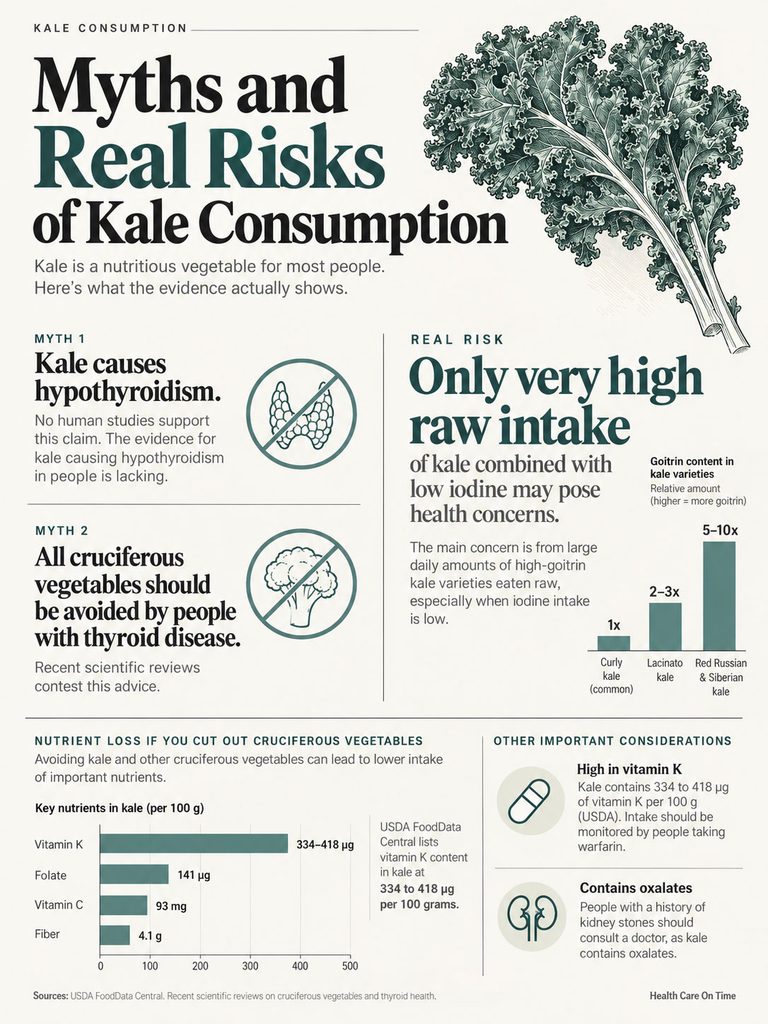
No human study shows normal kale intake causing hypothyroidism in people with adequate iodine. The one well-documented case of greens-induced thyroid failure involved raw bok choy at 2 to 3 pounds a day for months.
Myth: People With Thyroid Disease Must Avoid All Cruciferous Vegetables
This advice is common and outdated. The 2024 review authors said they took on the topic because diet sources keep telling people with hypothyroidism to avoid brassicas over their goitrogenic potential. Their findings didn’t support that.
Cutting cruciferous vegetables means losing fiber, folate, vitamin C, and compounds linked to lower cancer and heart disease risk. That’s a real cost for a theoretical benefit.
Real Risk: Very High Raw Intake Plus Low Iodine
The risk that exists comes from a specific mix: large daily amounts, eaten raw, ideally of a high-goitrin variety, in someone low on iodine. Remove any one factor and the risk drops sharply.
Other Kale Cautions Worth Knowing
Kale is one of the richest sources of vitamin K. USDA FoodData Central lists 334 to 418 μg per 100 grams for raw and cooked kale. If you take warfarin, sudden changes in kale intake can shift your INR, so keep intake steady and tell your doctor about diet changes.
Kale also contains oxalates, though less than spinach. People with a history of calcium oxalate kidney stones can discuss portions with their doctor.
What to Do: A Simple Plan
Most readers need just a few clear rules. Match your situation below.
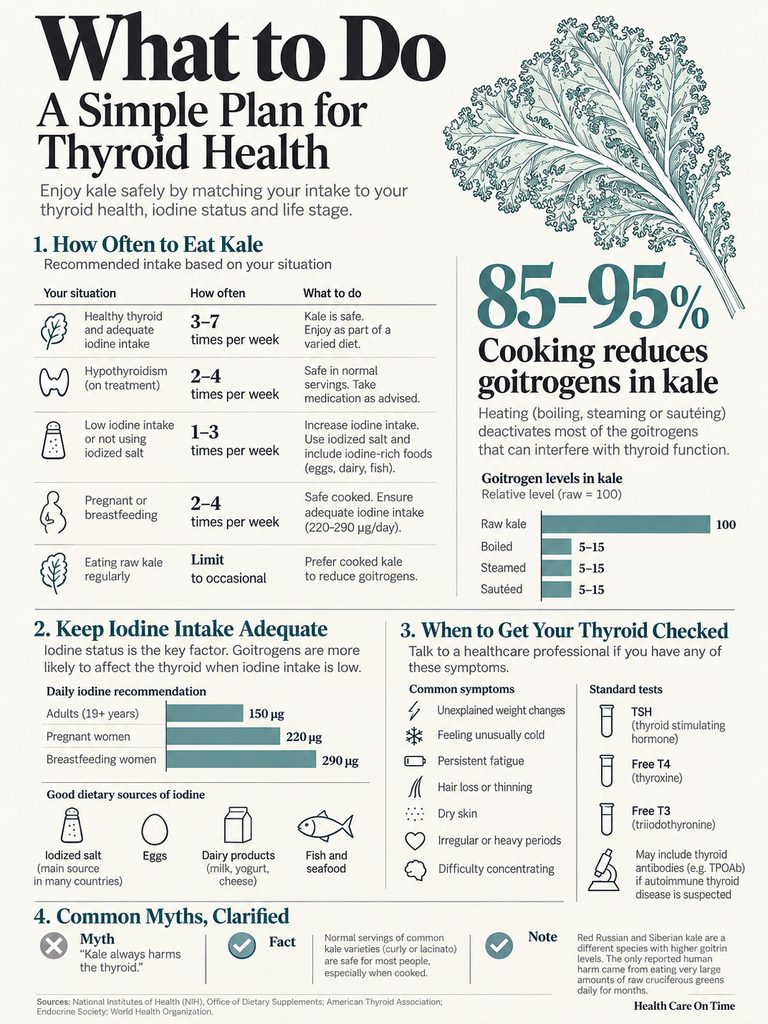
Table 3: Scenario and Recommended Action
| Your situation | Thyroid risk from kale | Recommended action |
| Healthy adult using iodized salt and dairy | Minimal | Eat kale freely, raw or cooked, in a varied diet |
| Hypothyroidism on levothyroxine | Minimal | Take your pill 30 to 60 minutes before eating; keep kale intake steady |
| Hashimoto’s thyroiditis | Minimal at normal intake | Keep kale; avoid kelp and high-dose iodine supplements |
| Pregnant or breastfeeding | Low, but iodine often short | Take a prenatal with 150 μg iodine; cook kale if eating large amounts |
| Vegan or no iodized salt | Low to moderate | Fix iodine first with iodized salt or a supplement; rotate greens |
| Daily raw kale smoothie, 3+ cups | Low for curly kale | Rotate greens or blanch kale before freezing |
| Eating raw Red Russian or Siberian kale daily | Moderate at high intake | Cook it, mix with curly kale, or limit raw amounts |
| Taking warfarin | Not a thyroid issue | Keep kale intake consistent and tell your doctor about changes |
When to Get Your Thyroid Checked
Diet rarely causes thyroid problems, but symptoms deserve attention. See a doctor for ongoing fatigue, feeling cold when others aren’t, unexplained weight gain, dry skin, constipation, hair thinning, or swelling at the front of the neck.
A TSH test is the standard first step. If TSH is high, your doctor may add free T4 and thyroid antibody tests to check for Hashimoto’s. Through HealthCareOnTime, these tests can be booked at a nearby lab without a long wait.
If you’ve recently started eating very large amounts of raw greens, or started an iodine supplement, mention it. Either detail helps your doctor read your results correctly.
Frequently Asked Questions
Is kale bad for hypothyroidism?
No, not in normal amounts. Curly and lacinato kale contain under 10 μmol of goitrin per 100 grams, far below the level shown to affect iodine uptake. If you take levothyroxine, your hormone comes from the pill, so kale has little effect. Keep intake steady and take medication on an empty stomach.
Can kale cause a goiter?
Only in extreme cases, and almost never from kale alone. Food-related goiter requires very large daily amounts of raw goitrogenic vegetables, usually with low iodine. In the United States, iodized salt and dairy protect most people. Iodine deficiency remains the main cause of goiter worldwide.
Does cooking kale remove goitrogens?
Cooking doesn’t remove every goitrogen, but it sharply cuts goitrin formation. Heat damages myrosinase, the enzyme that turns progoitrin into goitrin. Steaming, sautéing, and boiling all help, and boiling leaches some compounds into the water. Cooked kale is the lowest-risk choice for anyone concerned.
Are kale smoothies bad for your thyroid?
A daily smoothie with a few cups of curly kale isn’t a meaningful risk for most people. Reaching the goitrin threshold would take over 4 pounds of curly kale in one day. Risk rises with juice cleanses, Red Russian kale, or low iodine. Rotating greens adds a safety margin.
How much kale is safe per day for thyroid health?
For curly or lacinato kale, several cups a day is well within a safe range for people with adequate iodine. The threshold works out to more than 90 cups of chopped raw kale in a day. With raw Red Russian or Siberian kale, keep daily portions moderate or cook it.
Is kale safe with Hashimoto’s?
Yes, for most people. Hashimoto’s is autoimmune, and goitrogens don’t cause or worsen the immune attack. Research doesn’t support cutting all cruciferous vegetables. A bigger risk is excess iodine from kelp or iodine supplements, which can worsen thyroid function in people with Hashimoto’s.
Should kale be eaten at a different time from levothyroxine?
Yes. Levothyroxine absorbs best on an empty stomach, 30 to 60 minutes before breakfast. Fiber and calcium in kale and other foods can reduce absorption if eaten at the same time. Take your pill first with water, then eat. Separate calcium and iron supplements by about 4 hours.
Is spinach better than kale for the thyroid?
Spinach isn’t cruciferous, so it doesn’t produce goitrin. That makes it a good rotation partner. But curly kale is already low risk, so switching entirely isn’t needed. Spinach has more oxalates, which matters for kidney stone formers. Eating both gives you a wider mix of nutrients.
Is Red Russian kale bad for your thyroid?
Red Russian kale belongs to Brassica napus, a different species from curly kale. It can contain about 176.6 μmol of progoitrin per 100 grams, so roughly 3.9 ounces raw could approach the threshold. Occasional normal portions are fine. Cook it or limit large raw daily servings.
Can kale change TSH test results?
Normal, steady kale intake is unlikely to change TSH. Sudden large diet changes, especially raw juice cleanses or high-fiber regimens, can shift levothyroxine absorption and nudge TSH. Keep your eating pattern consistent in the weeks before a test so your doctor gets an accurate reading.
Is kale safe during pregnancy for thyroid health?
Yes, kale is safe and nutritious during pregnancy. The bigger concern is iodine, since many US pregnant women fall short. The American Thyroid Association advises a prenatal vitamin with 150 μg of iodine daily. With adequate iodine, normal kale intake poses no meaningful thyroid risk.
What vegetables should people with hypothyroidism limit?
Most people with hypothyroidism don’t need to limit any vegetable. The only reasonable caution is avoiding very large daily amounts of raw high-goitrin types, such as Red Russian kale, some collards, and Brussels sprouts. Cooking these and rotating greens is usually enough. Ask your doctor about your specific diet.
Disclaimer: This article is for general education and does not replace advice from your doctor or endocrinologist. Thyroid conditions vary, and your treatment should be based on your own lab results and health history. Do not change thyroid medication, start iodine supplements, or make major diet changes without talking to your healthcare provider.
References
- Felker P, Bunch R, Leung AM. Concentrations of thiocyanate and goitrin in human plasma, their precursor concentrations in brassica vegetables, and associated potential risk for hypothyroidism. Nutrition Reviews, 2016
- Galanty A, et al. Brassica vegetables and thyroid function: a systematic review. Int J Mol Sci, 2024;25(7):3988
- Chu M, Seltzer TF. Myxedema Coma Induced by Ingestion of Raw Bok Choy. N Engl J Med, 2010;362:1945-1946
- Caldwell KL, et al. Iodine Status of the US Population, NHANES 2005-2006 and 2007-2008. Thyroid, 2011
- Monitoring the Iodine Status of Pregnant Women in the United States. CDC
- Iodine Intake From Diet and Supplements in US Pregnant Women. University of Idaho
- Iodine: Fact Sheet for Health Professionals. NIH Office of Dietary Supplements
- Hypothyroidism (Underactive Thyroid). NIDDK