
You took the pill. You waited the hour. The room is still moving.
Here is what almost nobody explains at the pharmacy counter: meclizine can be doing exactly what it was engineered to do while you stay dizzy, because it was never built to fix the thing making you spin. It turns down a signal. It does not repair a system.
Table of Contents
Quick Answer: Meclizine is a first-generation antihistamine that blocks H1 receptors and acetylcholine signaling in the brain’s balance and vomiting centers. It starts working in about an hour and lasts 8 to 24 hours. It suppresses the spinning sensation and the nausea riding along with it. It does not move displaced inner-ear crystals, calm an inflamed vestibular nerve, raise low blood pressure, or treat migraine. When the cause remains, dizziness returns as the dose fades.
At a Glance
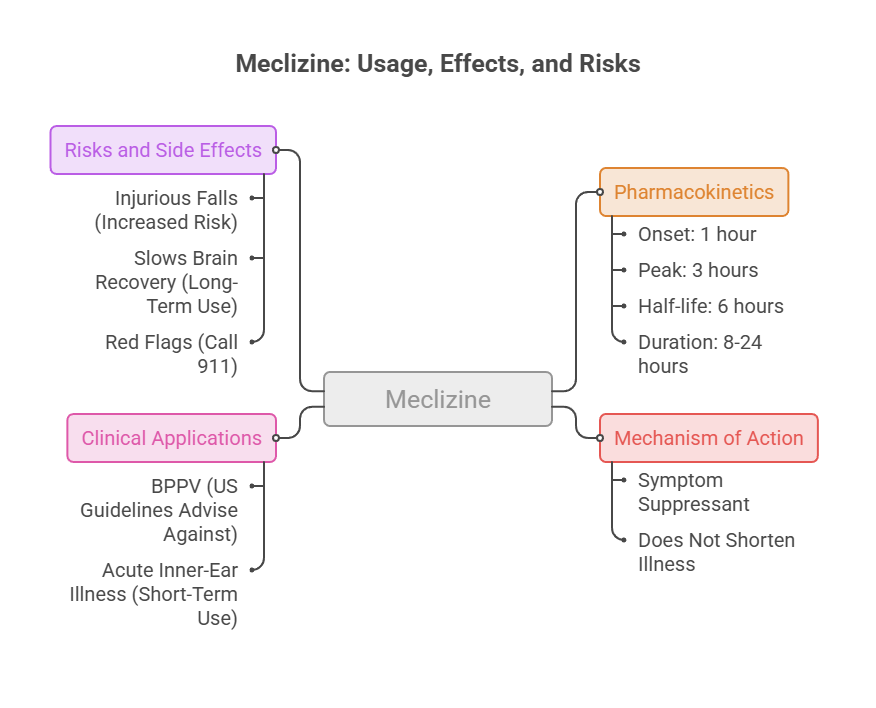
• Meclizine begins working in roughly 1 hour, peaks near 3 hours, has a half-life of about 6 hours, and lasts 8 to 24 hours.
• It is a symptom suppressant. Nothing about it shortens the underlying illness.
• For BPPV, the most common cause of true spinning vertigo, US guidelines advise against routine use of drugs in this class.
• A 2025 study of more than 800,000 US adults linked a filled meclizine prescription to roughly two to three times the risk of an injurious fall.
• For acute inner-ear illness, most specialists cap vestibular suppressants at 1 to 3 days, because longer use slows the brain’s own recovery.
• A short list of red flags means skipping the pill entirely and calling 911.
What Meclizine Actually Does Inside Your Body
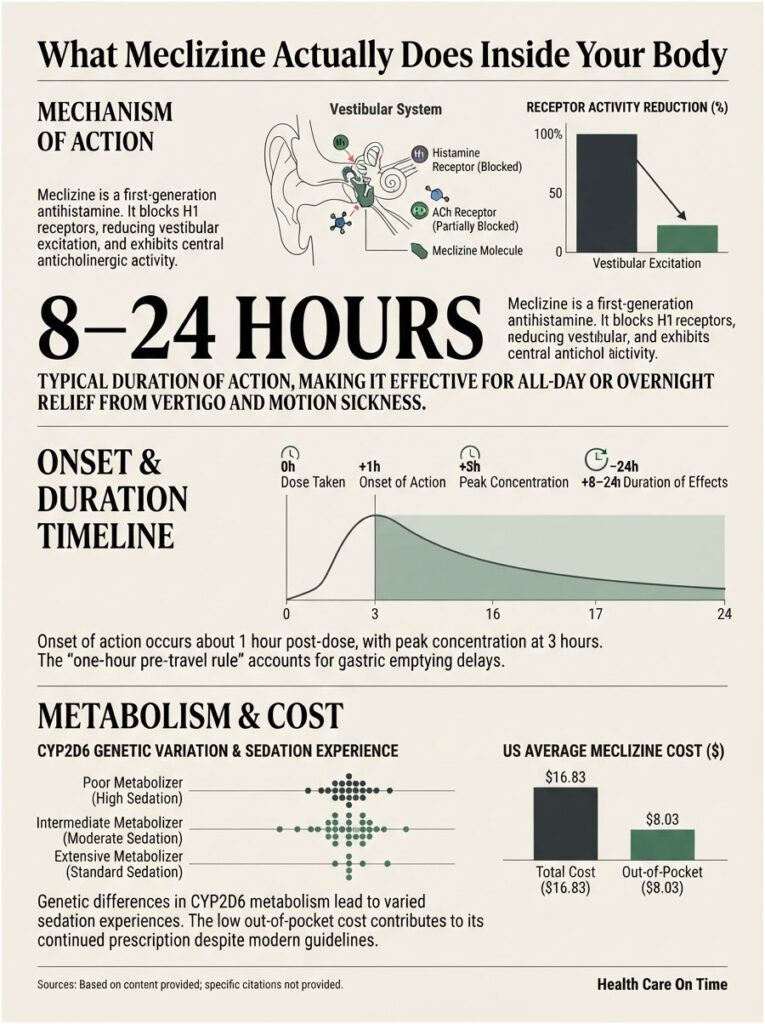
Meclizine belongs to the piperazine family of first-generation antihistamines. Americans buy it over the counter as Bonine and Dramamine Less Drowsy, and receive it by prescription as Antivert.
At HealthCareOnTime, the pattern our team notices in vestibular workup requests is consistent: patients arrive with a half-empty bottle and no clear idea what the medication was treating. Understanding the mechanism changes what you expect from it.
The Two Receptor Systems It Blocks
H1 Histamine Blockade in the Balance Pathway
Being first-generation, meclizine crosses the blood-brain barrier freely. Second-generation allergy drugs like cetirizine largely do not, which is precisely why they do nothing for vertigo.
Once inside, meclizine occupies H1 histamine receptors along the pathway running from the vestibular nuclei toward the brainstem. That blockade dampens signaling from the nucleus of the solitary tract and the vestibular nuclei to the chemoreceptor trigger zone and the vomiting center in the medulla, reducing vestibular excitation and labyrinth excitability.
Your inner ear keeps sending the same faulty message. Meclizine lowers the volume on the receiver, never the transmitter.
Central Anticholinergic Action
The second mechanism matters more than patient handouts admit. Meclizine also carries central anticholinergic activity, and the combination of H1 and cholinergic blockade produces its antiemetic and antivertigo effects.
That same property generates dry mouth, blurred vision, constipation, urinary retention, and the mental fog people describe as feeling underwater. It is also why geriatricians flag this drug specifically, covered in detail below.
The Real Timeline: Onset, Peak, and Duration
These are the numbers people actually need, drawn from the NIH StatPearls monograph.
Onset of action arrives about 1 hour after an oral dose. Peak plasma concentration hits near 3 hours. Half-life runs approximately 6 hours, with a duration of action of 8 to 24 hours.
The liver enzyme CYP2D6 handles most metabolism, and the drug leaves the body as a metabolite in urine and unchanged in feces.
Two practical consequences follow. First, a dose taken at 8 a.m. is still measurably present at bedtime. Second, “it stopped working” at hour four usually means the dose was too small for the indication, not that the drug quit.
Why the One-Hour Pre-Travel Rule Exists
Nausea slows gastric emptying. A tablet sitting in a stalled stomach does not absorb on schedule, so the one-hour estimate stretches unpredictably once you already feel sick.
That is the entire reason every label says to take it before the boat leaves the dock. The CDC Yellow Book applies the same logic to all oral motion-sickness agents and suggests a trial dose at home first, so you learn how sedated you get before you need to function.
What You Can Actually Buy in the United States
Bonine and Dramamine Less Drowsy are 25 mg tablets sold without a prescription, often in chewable form. Antivert is the prescription brand, historically stocked at 12.5, 25, and 50 mg.
Generic meclizine is inexpensive. According to the ClinCalc DrugStats database, the average total cost per US fill in 2024 was $16.83, with $8.03 paid out of pocket. Low cost is part of why prescribing persists despite guideline pushback.
Why Two People React Differently to the Same Tablet
Because CYP2D6 does the metabolic work, genetic variation in that enzyme changes the outcome. Poor metabolizers clear the drug slowly and feel heavier sedation from a standard 25 mg dose.
Ultrarapid metabolizers may feel almost nothing at all. This is not imagination and it is not tolerance developing. It is pharmacogenetics, and it explains a large share of the “it knocks me out” versus “it does nothing” split in patient reviews.
Why You Can Still Be Dizzy After Taking It
Seven reasons account for nearly every case of meclizine not working. Find yours before you change anything.
Reason 1: Your Dizziness Is BPPV, and a Pill Cannot Move a Crystal
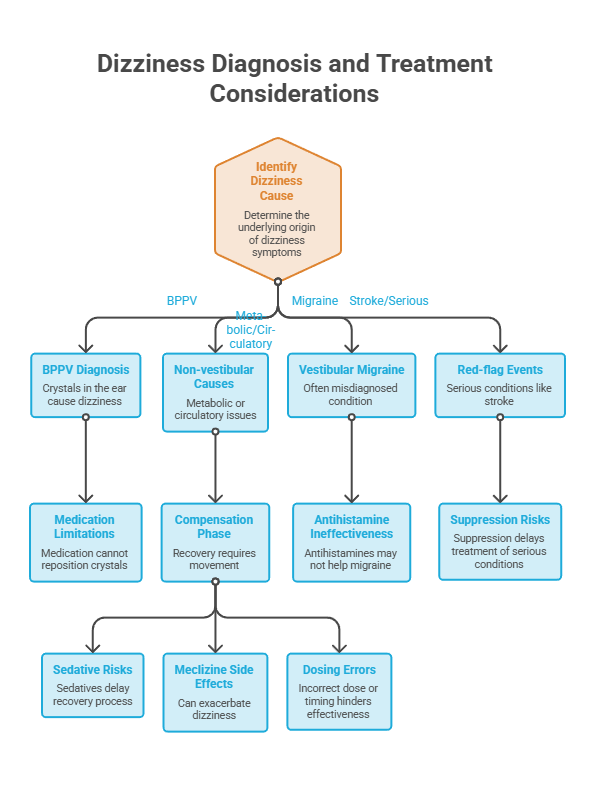
Benign paroxysmal positional vertigo occurs when calcium carbonate crystals break free from the utricle and drift into a semicircular canal. Rolling over in bed, tipping your head back at the sink, or bending to tie a shoe triggers 10 to 60 seconds of violent spinning.
No medication relocates those crystals. Meclizine blunts the nausea while they sit in the wrong place, and the spinning returns with your next head movement.
The American Academy of Otolaryngology-Head and Neck Surgery Foundation states in its BPPV clinical practice guideline that clinicians should not routinely treat BPPV with vestibular suppressant medications such as antihistamines or benzodiazepines. The guideline summary sits on the AAO-HNSF site.
Trial evidence backs the position. A 2023 systematic review in Academic Emergency Medicine pooled five randomized controlled trials covering 296 patients and found vestibular suppressants may have no effect on symptom resolution at longest follow-up, with evidence favoring repositioning maneuvers over medication.
There is a diagnostic cost too. Sedating the vestibular system reduces the nystagmus a clinician needs to see during a Dix-Hallpike test, which can turn a five-minute diagnosis into a two-week detour.
Reason 2: Your Dizziness Is Not Vestibular At All
A large share of dizziness never involves the inner ear, and meclizine offers nothing useful for any of it.
The Metabolic and Circulatory Causes People Skip
Orthostatic hypotension produces a gray-out on standing, not a spinning room. Low blood sugar adds shakiness and sweating. Iron deficiency anemia brings fatigue and breathlessness alongside the lightheadedness.
Thyroid dysfunction and vitamin B12 deficiency both surface as unsteadiness that patients call dizziness. Dehydration and blood pressure medication changes account for more cases than most people expect.
Across the diagnostic panels ordered through HealthCareOnTime for unexplained dizziness, these reversible causes are the ones most often missed in the first round of evaluation. A panel covering complete blood count, ferritin, TSH, vitamin B12, fasting glucose, and electrolytes rules out a meaningful share of cases for less than a typical urgent care copay.
Reason 3: You Are in the Compensation Phase, Not the Acute Phase
After vestibular neuritis or labyrinthitis, the injured ear transmits a weaker signal than the healthy one. Your brain must recalibrate around that permanent mismatch, a process clinicians call vestibular compensation.
Compensation runs on movement. The brain needs to receive error signals, register them, and adjust the internal model. Head turns, walking, and visual tracking supply that input.
Sedating the vestibular system removes exactly the data the brain needs to recalibrate. This is the mechanism behind the widely repeated clinical observation that prolonged suppressant use extends recovery rather than shortening it.
Most vestibular specialists therefore limit meclizine to the first 24 to 72 hours of an acute attack, then actively push patients to move. Lying still in a dark room for two weeks feels better each day and costs months on the far end.
Reason 4: Meclizine Itself Is Making You Dizzy
Common adverse effects include drowsiness, urinary retention, dry mouth, headache, fatigue, and vomiting, with blurred vision reported less frequently.
Sedation combined with blurred vision in someone whose balance is already compromised reproduces the exact sensation they took the pill to escape. Patients regularly ask our team whether the medication could be worsening things. Sometimes the answer is yes.
Reason 5: Wrong Dose, Wrong Timing, or Wrong Expectation
Motion sickness dosing is once daily. Vertigo dosing is typically divided across the day. Someone taking a single 25 mg tablet each morning for Meniere’s-type vertigo is underdosed for that indication by design, not by accident.
The opposite error is doubling up. Onset stays near one hour regardless of dose size, so a bigger tablet adds sedation without arriving faster.
Reason 6: The Cause Is Vestibular Migraine
Vestibular migraine is common and badly underdiagnosed. According to the Merck Manual, it carries a one-year US prevalence of 2.7%, likely making it the most common single cause of dizziness.
Episodes run minutes to days, frequently with no headache at all. Light sensitivity, sound sensitivity, and intolerance of busy visual environments like grocery aisles are the tells. Migraine treatment works here. Antihistamines largely do not.
Reason 7: It Is a Red-Flag Event
A small but serious fraction of dizziness represents stroke, transient ischemic attack, or another central cause. Suppressing the symptom in that scenario delays the only intervention that changes the outcome.
| Cause of Dizziness | Does Meclizine Help? | Typical Time Course | US Guideline First-Line Treatment | Why Meclizine Falls Short |
| BPPV | Nausea only, not the vertigo | 10 to 60 seconds per position change, recurring for weeks | Canalith repositioning (Epley or Semont maneuver) | Cannot move displaced otoconia; masks nystagmus and delays diagnosis |
| Vestibular neuritis or labyrinthitis | Yes, for the first 24 to 72 hours | Severe for 1 to 3 days, imbalance for weeks | Brief symptom control, then early vestibular rehabilitation | Extended use slows vestibular compensation |
| Meniere’s disease | Yes, during acute attacks | Attacks of 20 minutes to 12 hours, unpredictable | Sodium restriction, diuretics, attack-time suppressants, ENT care | Does not reduce attack frequency or protect hearing |
| Vestibular migraine | Minimal | Minutes to 72 hours, recurrent | Migraine prevention plus acute migraine therapy | Wrong target; no effect on migraine mechanisms |
| Orthostatic hypotension or presyncope | No | Seconds on standing | Hydration, sodium, medication review, compression stockings | Anticholinergic sedation raises fall risk further |
| Persistent postural-perceptual dizziness | No, and may worsen it | Daily, months to years | Vestibular rehabilitation, SSRI or SNRI, cognitive behavioral therapy | Reinforces avoidance and blocks habituation |
| Posterior circulation stroke | No, and it is dangerous | Sudden onset, continuous | Emergency imaging and stroke pathway | Masks a time-critical neurological emergency |
The Fall Risk Nobody Mentions at the Pharmacy Counter
This is the newest part of the meclizine story and it is absent from nearly every article currently ranking for this topic.
What the 2025 JAMA Otolaryngology Cohort Found
Researchers at the University of Minnesota examined US commercial and Medicare Advantage claims for adults newly diagnosed with dizziness. The study appeared in JAMA Otolaryngology-Head and Neck Surgery in 2025.
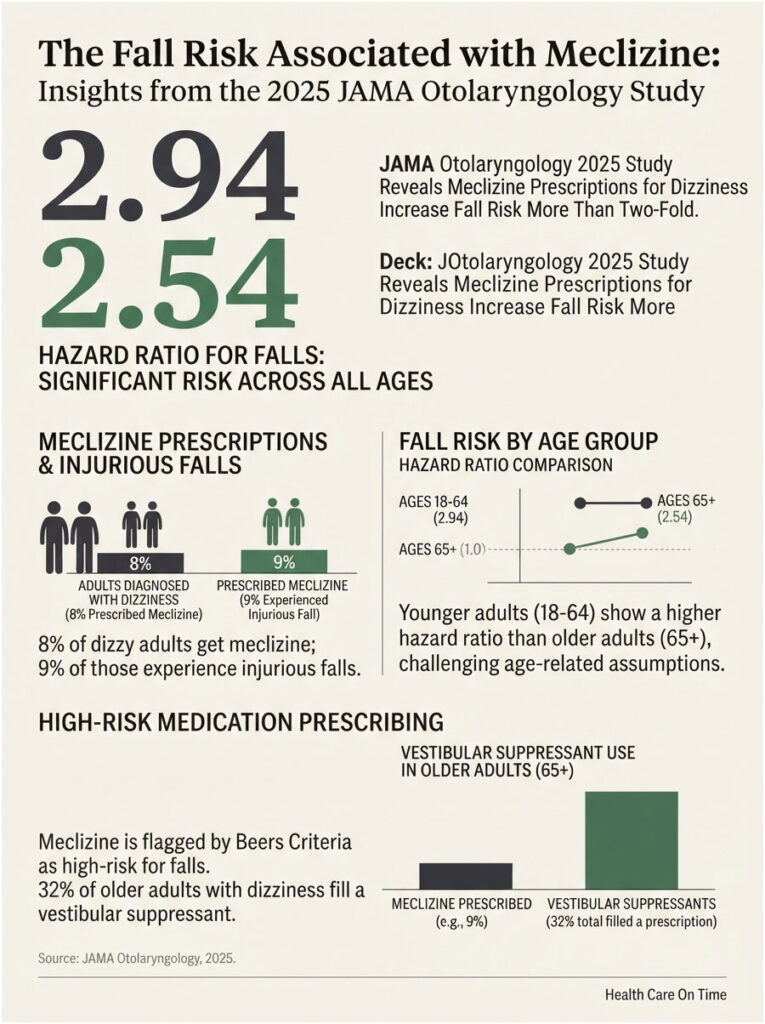
Among 805,454 individuals with dizziness (62% women, median age 52), 8% received a meclizine prescription. Of those prescribed the drug, 9% experienced an injurious fall. After adjustment for sociodemographic and clinical factors, a filled meclizine prescription was associated with subsequent falls at a hazard ratio of 2.94 (95% CI, 2.81 to 3.08) in adults aged 18 to 64 and 2.54 (95% CI, 2.42 to 2.66) in adults aged 65 and older.
Why Younger Adults Are Not Exempt
The reflexive assumption treats fall risk as a geriatric concern. This data disagrees. Adults aged 18 to 64 showed nearly a threefold increase, higher than the older group.
The authors are appropriately careful about causality. This is claims data, not a randomized trial, and it captures fills rather than actual swallowing. Still, the signal is large, consistent across age bands, and drawn from a cohort of more than 800,000 people.
A companion analysis in the Journal of the American Geriatrics Society examined older adults alone. Of 190,348 individuals aged 65 and over presenting with dizziness, 60,658 (32%) filled a vestibular suppressant prescription within a month of diagnosis, and 8% of those users had a fall requiring medical attention within 60 days.
The Beers Criteria Problem
The American Geriatrics Society maintains the Beers Criteria, the standard US list of medications generally best avoided in older adults.
The 2023 update places meclizine among first-generation antihistamines flagged as highly anticholinergic, with reduced clearance in advanced age and risk of confusion, dry mouth, and constipation. It notes that cumulative anticholinergic exposure is associated with increased risk of falls, delirium, and dementia, even in younger adults, and advises assessing total anticholinergic burden during medication reviews.
Our medical reviewers see anticholinergic stacking most often in patients over 65 already taking two or more sedating medications. Meclizine is frequently the third one nobody counted, because it came off a drugstore shelf rather than a prescription pad. Bladder antispasmodics, diphenhydramine sleep aids, and tricyclic antidepressants all add to the same total.
The Scale of the Problem in the United States
| Statistic | Figure | Source |
| US ED visits for dizziness and vertigo, 2016 to 2022 | 33.7 million total, roughly 4.8 million per year | Miulli & Kim, Academic Emergency Medicine, 2026 (NHAMCS) |
| Share of all US emergency department visits | 3.4% | Miulli & Kim, Academic Emergency Medicine, 2026 |
| Antihistamines administered or prescribed at those visits | 7.1% | Miulli & Kim, Academic Emergency Medicine, 2026 |
| US meclizine prescriptions, 2024 | 3,246,111 across roughly 1.58 million patients | ClinCalc DrugStats v2026.08 (MEPS / AHRQ) |
| Average out-of-pocket cost per fill | $8.03 | ClinCalc DrugStats v2026.08 |
| Fall hazard ratio, ages 18 to 64 | 2.94 (95% CI, 2.81 to 3.08) | Adams et al., JAMA Otolaryngol Head Neck Surg, 2025 |
| Fall hazard ratio, ages 65 and older | 2.54 (95% CI, 2.42 to 2.66) | Adams et al., JAMA Otolaryngol Head Neck Surg, 2025 |
| Adults 65+ with dizziness filling any vestibular suppressant | 32% | Marmor et al., J Am Geriatr Soc, 2025 |
The same national analysis found a mean patient age of 50.6 years and 60% female, with CT imaging used at 28.4% of visits and MRI at only 3.6%.
Dosage, Timing, and the Mistakes That Waste a Dose
Dosing below reflects FDA-approved labeling as summarized by StatPearls and Cleveland Clinic. Your prescriber’s instructions override anything written here.
Motion Sickness Dosing
25 to 50 mg by mouth, taken 1 hour before departure, repeated once every 24 hours as needed for the duration of travel.
Vertigo Dosing
25 to 100 mg per day by mouth in divided doses, adjusted to clinical response.
Meniere’s Disease Dosing
12.5 to 25 mg every 8 hours.
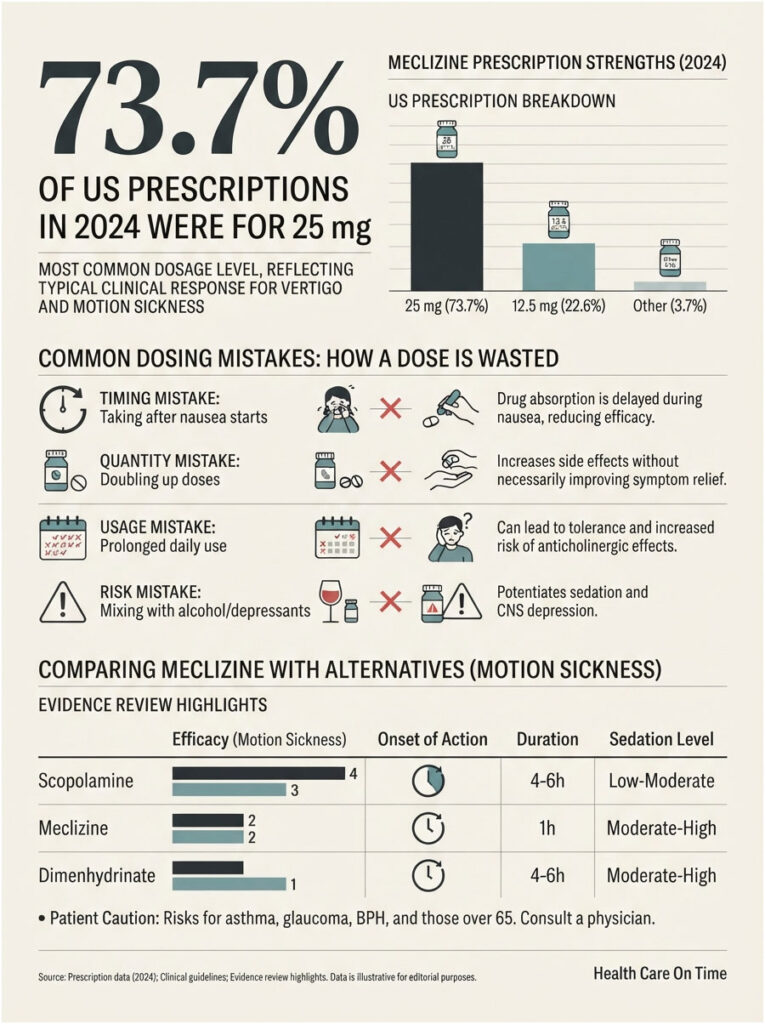
For scale, 73.7% of US prescriptions dispensed in 2024 were 25 mg, with 22.6% at 12.5 mg.
The Five Most Common Dosing Mistakes
Taking It After Nausea Starts
Absorption stalls once your stomach slows. The pill still works, just on an unpredictable schedule.
Doubling Up Because It Is Not Working
Higher doses add sedation, dry mouth, and fall risk. They do not shorten the one-hour onset.
Taking It Daily for Months
The single most consequential error. Continuous suppression works directly against the recalibration your brain is trying to complete.
Mixing With Alcohol, Sleep Aids, or Other Anticholinergics
Anticholinergic and CNS depressant properties mean meclizine interacts with alcohol, tranquilizers, sedatives, and other anticholinergic drugs, raising the risk of central nervous system depression. Diphenhydramine, oxybutynin, tricyclic antidepressants, and several bladder medications all pile onto the same burden.
Assuming Over-the-Counter Means Risk-Free
OTC status reflects short-term safety in healthy adults. It says nothing about daily use by a 78-year-old on five other medications.
Who Should Approach Meclizine With Extra Caution
Anticholinergic effects create risk in patients with asthma, glaucoma, or benign prostatic hyperplasia, and antihistamines can precipitate acute angle-closure glaucoma. Those with bladder outlet obstruction face urinary retention risk. The drug is not approved for children under 12, and it can worsen ileus or gastrointestinal obstruction by reducing gut motility.
How Meclizine Compares With the Alternatives
| Medication | Class | Typical Adult Dose | Onset | Duration | Sedation | Best Use Case |
| Meclizine (Bonine, Antivert) | First-gen antihistamine, anticholinergic | 25 to 50 mg | About 1 hour | 8 to 24 hours | Moderate | Long trips; acute vertigo for 1 to 3 days |
| Dimenhydrinate (Dramamine) | First-gen antihistamine, anticholinergic | 50 to 100 mg | 30 to 60 min | 4 to 6 hours | Higher | Short trips; faster onset needed |
| Scopolamine patch (Transderm Scop) | Anticholinergic, transdermal | 1 patch, about 1 mg over 3 days | 4 to 8 hours | Up to 72 hours | Lower | Cruises and multi-day travel |
| Promethazine | Phenothiazine antihistamine | 25 mg | 20 to 60 min | 4 to 6 hours | Highest | Severe vomiting, supervised settings |
| Ondansetron | 5-HT3 antagonist | 4 to 8 mg | About 30 min | 6 to 8 hours | Minimal | Nausea control without sedation |
| Diazepam (short course) | Benzodiazepine | 2 to 5 mg | 15 to 60 min | 6 to 12 hours | High | Severe acute vertigo, days only |
Comparative efficacy is worth knowing before you pick. American Family Physician’s evidence review notes that scopolamine is more effective than meclizine and about as effective as dimenhydrinate for motion sickness. The CDC Yellow Book adds that scopolamine is slightly less sedating than dimenhydrinate or meclizine, while promethazine is the most sedating in the group.
What Works Better, Sorted by Cause
BPPV: The Epley Maneuver
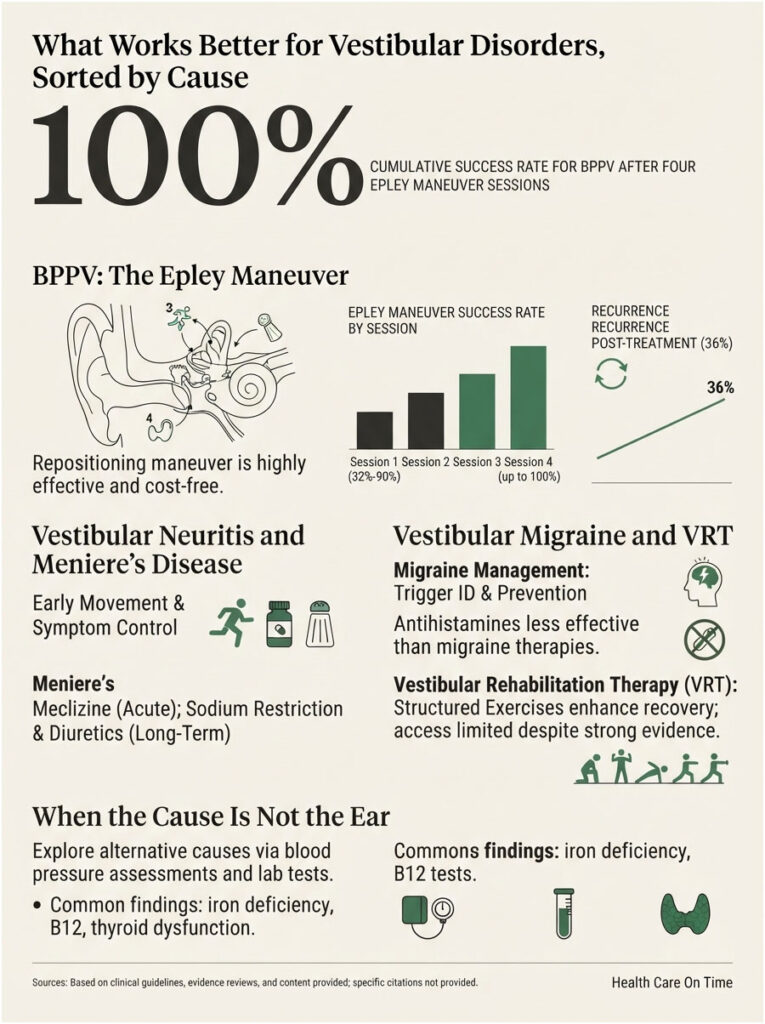
For posterior canal BPPV, a repositioning maneuver is the treatment. It takes about five minutes and costs nothing beyond the visit.
A Cochrane review of 11 randomized controlled trials covering 745 patients concluded the Epley maneuver is safe and effective for posterior canal BPPV, with outcomes comparable to the Semont and Gans maneuvers and superior to Brandt-Daroff exercises. Recurrence after treatment runs about 36%. Against control or sham, the odds ratio for symptom resolution was 4.4, giving a number needed to treat of 3.
Repeat sessions matter when the first attempt does not clear things. Across published studies, first-session success ranged from 32% to 90%, with cumulative success reaching 40% to 100% after a second session and 87% to 100% after a fourth.
Have the maneuver performed by someone trained to identify which canal is involved. Running the wrong maneuver can convert one form of BPPV into another and leave you feeling worse than when you started.
Vestibular Neuritis and Labyrinthitis: Move Early, Medicate Briefly
Use symptom control for the worst 24 to 72 hours, then begin moving deliberately. Short walks, gentle head turns, and visual tracking exercises give the brain the error signals it needs.
Hearing loss alongside the vertigo shifts the label from neuritis to labyrinthitis and raises the urgency of an audiogram, since sudden sensorineural hearing loss is treated on a clock measured in days.
Meniere’s Disease: Sodium, Diuretics, and Specialist Care
The AAO-HNS considers meclizine a reasonable option for suppressing vertigo and nausea during Meniere’s attacks.
That is attack-time relief only. It does not change how often attacks come or protect hearing over time, which is why sodium restriction, diuretics, and otolaryngology follow-up carry the actual therapeutic load.
Vestibular Migraine: Treat the Migraine
Trigger identification, sleep regularity, hydration, and standard migraine preventives outperform antihistamines here by a wide margin.
If your episodes come with light sensitivity, visual motion intolerance, or a personal or family migraine history, raise that pattern specifically. It changes the treatment path entirely.
Vestibular Rehabilitation Therapy: The Most Underused Option in America
VRT is a structured exercise program delivered by a physical therapist trained in vestibular disorders. Gaze stabilization, habituation exercises, and balance retraining form the core.
A Cochrane review found moderate to strong evidence that vestibular rehabilitation is a safe and effective management approach for unilateral peripheral vestibular dysfunction, based on multiple high-quality randomized controlled trials. For BPPV specifically, the same review concluded that repositioning maneuvers should be the primary intervention, supported by vestibular rehabilitation for longer-term functional recovery.
Access is the bottleneck, not evidence. Most US commercial plans and Medicare Part B cover vestibular therapy when a physician orders it, typically with a standard physical therapy copay. Ask for the referral by name, because “physical therapy” alone may route you to a clinic without vestibular-trained staff.
When the Cause Is Not the Ear
If the pattern points away from the inner ear, the workup shifts to blood pressure taken lying and standing, a full medication review including everything bought without a prescription, and targeted lab work.
Our lab partners report that unexplained-dizziness panels frequently return actionable findings in iron studies, vitamin B12, and thyroid function. These are inexpensive tests that change management when they come back abnormal.
Red Flags: When Dizziness Is Not an Inner Ear Problem
The Stroke Overlap Problem
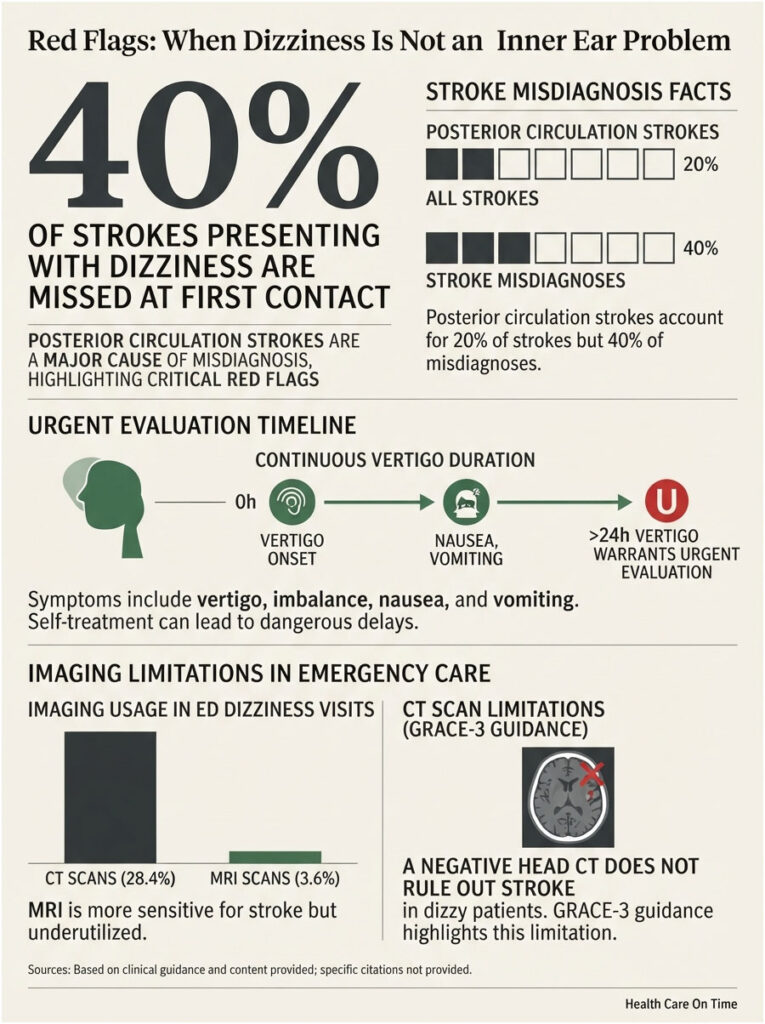
Posterior circulation strokes present with vertigo, imbalance, nausea, and vomiting, the same package a benign inner-ear problem produces. They account for roughly 20% of all strokes but 40% of stroke misdiagnoses, and up to 40% of strokes presenting with dizziness are missed at first contact.
This is exactly why suppressing symptoms before a diagnosis carries real cost. In cases reviewed by our medical team, the most consequential delays involve people who self-treated sudden, severe, continuous vertigo for a day or two before seeking care.
Symptoms That Mean Stop and Call 911
- Sudden severe headache alongside the dizziness
- New double vision or facial drooping
- Slurred speech or difficulty finding words
- Weakness or numbness on one side of the body
- Inability to walk or sit upright without falling
- New severe imbalance with no positional trigger
- Sudden hearing loss in one ear alongside vertigo
- Chest pain, fainting, or an irregular racing heartbeat
Timing and triggers matter as much as the symptom itself. Continuous vertigo lasting more than 24 hours with new imbalance deserves urgent evaluation even when nothing else looks alarming.
Why the ED Orders a CT That Usually Finds Nothing
CT was used at 28.4% of US ED dizziness visits and MRI at just 3.6%.
CT is fast and available around the clock, but it performs poorly at detecting small posterior circulation strokes. A negative head CT does not rule out stroke in a dizzy patient, and the GRACE-3 emergency medicine guidance reflects that limitation directly.
Your Next Seven Days: A Practical Plan
Days 1 to 3
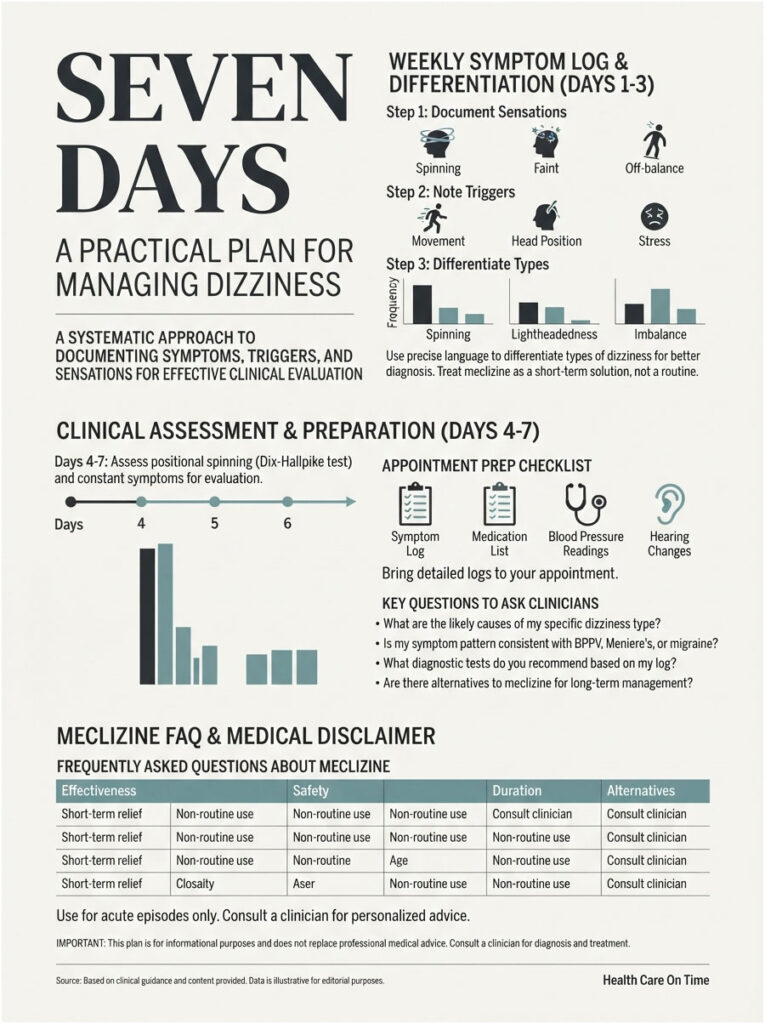
Document the pattern. Time each episode with your phone. Record what triggers it, whether the room spins or you feel faint, and whether anything changed in your hearing.
Describe it precisely rather than saying “dizzy.” Spinning, floating, faint, and off-balance point clinicians toward four different diagnoses. That single distinction saves more diagnostic time than any test.
If you are using meclizine, treat it as a short bridge rather than a routine.
Days 4 to 7
Positional spinning under a minute means requesting Dix-Hallpike testing and a repositioning maneuver. Constant symptoms mean evaluation for neuritis or a central cause.
Request a medication review regardless. Ask for basic labs if nothing points clearly to the ear.
What to Bring to Your Appointment
Your symptom log, a complete medication list including drugstore purchases and supplements, blood pressure readings taken sitting and standing, and notes on any hearing change.
Four questions worth asking:
- What specifically do you think is causing this?
- Should I have a Dix-Hallpike test?
- Would vestibular therapy help me?
- Is anything on my medication list contributing?
| If This Is Your Situation | Do This Next | Timeframe | Who to See |
| Spinning under 60 seconds, triggered by rolling over or looking up | Request Dix-Hallpike testing and an Epley maneuver; stop daily meclizine | Within 1 week | Primary care, ENT, or vestibular physical therapist |
| Constant spinning over 24 hours, no hearing change, no red flags | Brief symptom control, then early movement and a VRT referral | Evaluate within 24 to 48 hours | Urgent care or primary care, then vestibular PT |
| Vertigo attacks with hearing loss, tinnitus, and ear fullness | Audiogram plus Meniere’s evaluation; discuss sodium and diuretics | Within 1 to 2 weeks | Otolaryngology |
| Dizziness with light sensitivity, visual motion intolerance, or headache | Migraine evaluation and preventive discussion, not antihistamines | Within 2 to 4 weeks | Primary care or neurology |
| Lightheaded only on standing, no spinning | Orthostatic vitals, hydration, medication review, basic labs | Within 1 to 2 weeks | Primary care |
| Dizzy while taking three or more sedating or anticholinergic drugs | Full anticholinergic burden review before adding anything new | Before the next refill | Pharmacist plus prescriber |
| Dizziness with slurred speech, weakness, double vision, or inability to walk | Call 911; do not take meclizine | Immediately | Emergency department |
Frequently Asked Questions
Why am I still dizzy after taking meclizine?
Because meclizine suppresses the sensation without treating the cause. If your dizziness comes from displaced inner-ear crystals, migraine, low blood pressure, anemia, or a central problem, the drug has no mechanism to fix it. Symptoms return as the dose wears off.
How long does meclizine take to work?
Onset is about one hour after an oral dose, with peak blood levels near three hours. A larger dose does not speed this up. For motion sickness, take it one hour before travel, since nausea slows stomach emptying and delays absorption significantly.
How long does meclizine stay in your system?
Half-life runs roughly six hours, so most of a dose clears within about 30 hours. Noticeable effects last 8 to 24 hours. Older adults and CYP2D6 poor metabolizers clear it more slowly and often report lingering grogginess the next morning.
Can I take meclizine every day for vertigo?
Only under clinician direction. Daily use can slow vestibular compensation, the brain’s own adaptation process, and prolong imbalance for months. Most specialists limit vestibular suppressants to the acute phase, typically one to three days, then shift to movement-based therapy.
Does meclizine cure vertigo or just mask it?
It masks it. Meclizine has no disease-modifying effect on any cause of vertigo. It reduces spinning and nausea while active in your system. Repositioning maneuvers, vestibular rehabilitation, and cause-specific treatment are what actually resolve the underlying problem.
Is meclizine safe for people over 65?
It requires caution. The 2023 AGS Beers Criteria list meclizine among highly anticholinergic medications generally best avoided in older adults, citing risks of confusion, falls, delirium, and dementia with cumulative exposure. Review total anticholinergic burden with a pharmacist before regular use.
What is the maximum meclizine dose per day?
Labeling supports 25 to 100 mg daily in divided doses for vertigo, and 25 to 50 mg once daily for motion sickness. Going higher adds sedation and anticholinergic effects without extra benefit. Never increase your dose without asking your prescriber first.
Can meclizine make dizziness worse?
Yes, in two ways. Drowsiness, blurred vision, and mental fog compound unsteadiness in someone whose balance is already impaired. With longer use, suppressed vestibular signaling delays the brain’s recalibration, stretching mild imbalance well past the original illness.
Is Bonine the same as meclizine?
Yes. Bonine and Dramamine Less Drowsy both contain meclizine, usually 25 mg per tablet. Antivert is the prescription brand name. Regular Dramamine contains dimenhydrinate instead, a different antihistamine that acts faster, fades sooner, and sedates more heavily.
Meclizine or Dramamine for motion sickness?
Dimenhydrinate acts faster, within 30 to 60 minutes, but lasts only 4 to 6 hours and sedates more. Meclizine takes about an hour and covers 8 to 24 hours. Meclizine suits long trips, dimenhydrinate suits short ones, and scopolamine patches beat both for cruises.
Can you drive after taking meclizine?
Not until you know how it affects you. Sedation is the most common side effect, and paired with blurred vision it slows reaction time measurably. Try a test dose at home on a free day. Never combine it with alcohol before driving.
What should I take instead of meclizine for BPPV?
Nothing oral treats BPPV. The Epley or Semont repositioning maneuver is the guideline-recommended treatment, with a number needed to treat of about 3 in Cochrane data. Ask your primary care provider, an ENT, or a vestibular physical therapist for Dix-Hallpike testing first.
Medical Disclaimer: This article provides general health information and is not medical advice. It does not replace evaluation by a licensed clinician. Meclizine dosing, safety, and suitability vary by individual, and drug interactions are common. Do not start, stop, or change any medication based on this content. Sudden or severe dizziness accompanied by neurological symptoms is a medical emergency; call 911.
References
- Meclizine, StatPearls, National Library of Medicine
- Meclizine Use and Subsequent Falls Among Patients With Dizziness, JAMA Otolaryngology-Head and Neck Surgery, 2025
- Clinical Practice Guideline: Benign Paroxysmal Positional Vertigo (Update), AAO-HNSF
- Vestibular Suppressants for BPPV: Systematic Review and Meta-Analysis, Academic Emergency Medicine, 2023
- US Emergency Department Visits for Dizziness and Vertigo From 2016 to 2022, Academic Emergency Medicine, 2026
- The Epley (Canalith Repositioning) Manoeuvre for BPPV, Cochrane Database of Systematic Reviews
- Vestibular Rehabilitation for Unilateral Peripheral Vestibular Dysfunction, Cochrane Database of Systematic Reviews
- 2023 American Geriatrics Society Beers Criteria
- Vestibular Suppressant Utilization and Subsequent Falls Among Patients 65 and Older, Journal of the American Geriatrics Society, 2025
- Motion Sickness, CDC Yellow Book
- Meclizine Drug Usage Statistics, ClinCalc DrugStats Database
- Dizziness and Vertigo, Merck Manual Professional Edition
- GRACE-3: Acute Dizziness and Vertigo in the Emergency Department, Academic Emergency Medicine, 2023
- Treatment of Motion Sickness, American Family Physician
- Meclizine Tablets or Capsules, Cleveland Clinic