
The drug that stops an acute porphyria attack has been available in the United States since 1983. The reason most patients still wait too long to receive it has almost nothing to do with the drug, and almost everything to do with how long it takes to be believed.
Table of Contents
Quick Answer: Acute hepatic porphyria treatment has three tiers. Intravenous hemin stops an attack in progress, with symptom relief typically taking 48 to 72 hours. Givosiran, a monthly injection, prevents attacks in people with recurrent episodes, but guidelines advise against using it during an attack. Liver transplant is reserved for refractory disease.
At a Glance
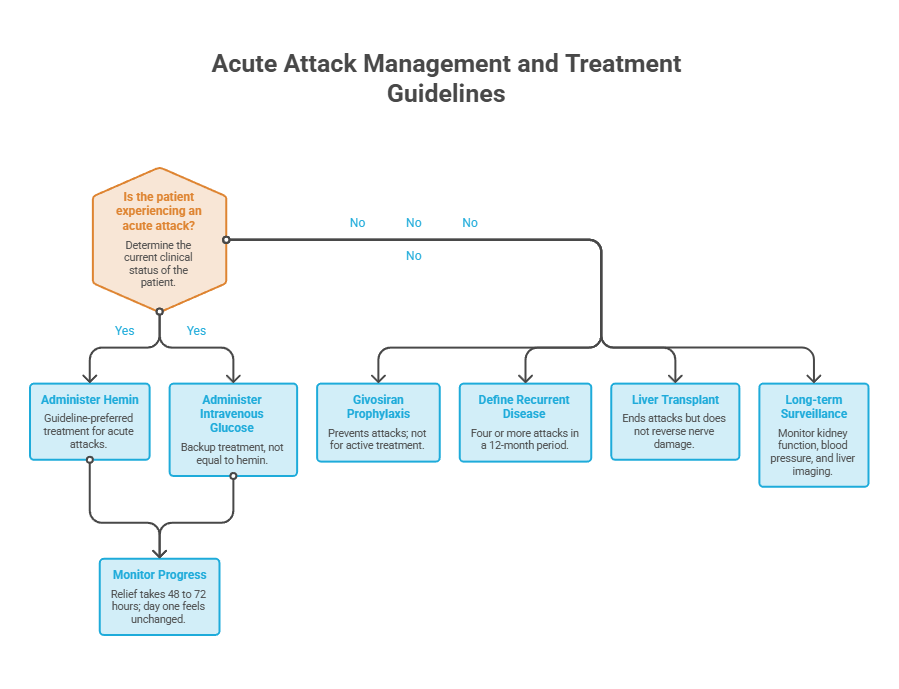
• Hemin is the guideline-preferred treatment for an acute attack; intravenous glucose is the backup, not the equal.
• Relief from hemin takes 48 to 72 hours. Day one usually feels unchanged, and that is expected.
• Givosiran prevents attacks. It is explicitly not used to treat one already underway.
• In the pivotal trial, givosiran cut the annualized attack rate by 74% against placebo.
• Recurrent disease has a formal definition: four or more attacks in a 12-month period.
• Liver transplant ends the attacks but does not reverse nerve damage already done.
• Long-term surveillance of kidney function, blood pressure, and liver imaging matters as much as attack treatment.
Before Treatment Starts: Getting the Diagnosis Nailed Down
Treatment for acute hepatic porphyria only works when the diagnosis is solid. Getting there is where most of the lost time happens.
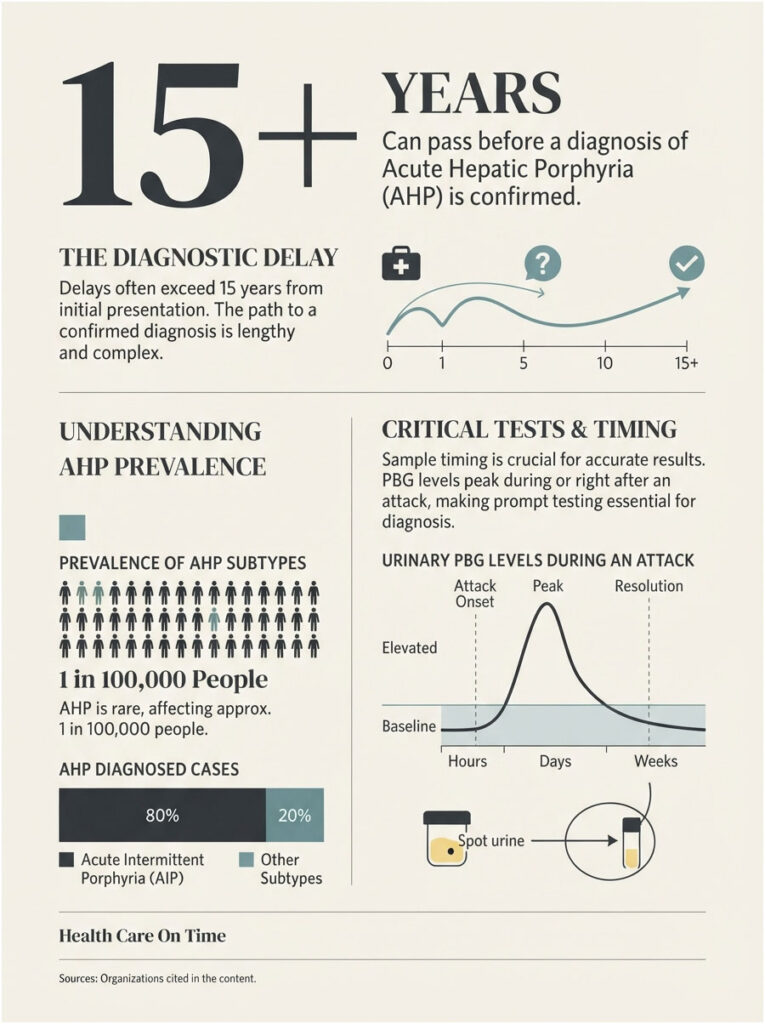
Diagnoses of acute hepatic porphyria are often missed, with a delay of more than 15 years from initial presentation. That is not a typo. Fifteen years of emergency visits, negative scans, and referrals that go nowhere.
The One Test That Opens the Door
The screening tests of choice are random urine porphobilinogen and delta-aminolevulinic acid corrected to creatinine, according to the AGA Clinical Practice Update. A single spot urine sample, collected during or shortly after symptoms, does most of the diagnostic work.
Timing matters more than volume. PBG runs highest during and immediately after an attack, so a sample collected weeks later can read normal in someone who genuinely has the disease.
Across the diagnostic panel requests our team fields for unexplained recurrent abdominal pain, the spot urine PBG is the test most often absent from a workup that already includes three imaging studies. It costs a fraction of a CT scan.
Confirming the Subtype
Once biochemistry points to acute porphyria, genetic testing names which one. Sequencing the four genes ALAD, HMBS, CPOX, and PPOX identifies ALAD-deficiency porphyria, acute intermittent porphyria, hereditary coproporphyria, and variegate porphyria respectively, and whole-gene sequencing identifies 95% to 99% of cases.
Subtype changes some downstream details, particularly skin involvement in variegate porphyria and hereditary coproporphyria. It does not change the core treatment path.
How Common Is This, Actually?
Symptomatic acute hepatic porphyria affects roughly 1 in 100,000 people, but population genetic studies put the prevalence of pathogenic variants for acute intermittent porphyria between 1 in 1,300 and 1 in 1,785.
In the US specifically, the prevalence of people diagnosed with symptomatic AHP sits around 10 per 1 million, and about 80% of cases are acute intermittent porphyria.
Most carriers never have an attack. Among those who do, up to 8% experience frequent recurrent attacks and should be considered for preventive treatment.
The Treatment Map: Three Tiers, One Goal
Every treatment for acute hepatic porphyria, from a bag of sugar water to a $575,000 injection, aims at the same target. Once that clicks, the plan stops looking like a random collection of interventions.
Patients who reach HealthCareOnTime with porphyria questions almost always ask about sequence rather than science. What comes first, what comes next, and when.
Why Every Treatment Targets the Same Enzyme
ALAS1 and the Negative Feedback Loop
Heme production in the liver starts with an enzyme called ALAS1. It is the first and rate-limiting step, and it runs under feedback control: plenty of heme, and ALAS1 activity drops.
In acute hepatic porphyria, a downstream enzyme works at roughly half capacity. When something ramps ALAS1 up, the line jams and two intermediates back up: aminolevulinic acid (ALA) and porphobilinogen (PBG).
Those deficiencies allow PBG and ALA to accumulate whenever ALAS1 is upregulated, producing episodic acute attacks and often chronic symptoms including abdominal pain, weakness, neuropathy, vomiting, hypertension, seizures, and mental status changes.
How Hemin, Glucose, and Givosiran Each Hit It Differently
Three tools, one target, three mechanisms.
Hemin is intravenous heme working by negative feedback on ALAS1. Glucose raises insulin, which inhibits ALAS1 by reducing transcription and blocking PGC1-alpha, a coactivator that drives ALAS1 transcription. Givosiran is an RNA interference medication targeting hepatic ALAS1, decreasing the enzyme itself.
Hemin flips the switch off chemically. Glucose nudges it down metabolically. Givosiran shreds the instruction manual before the enzyme is ever built.
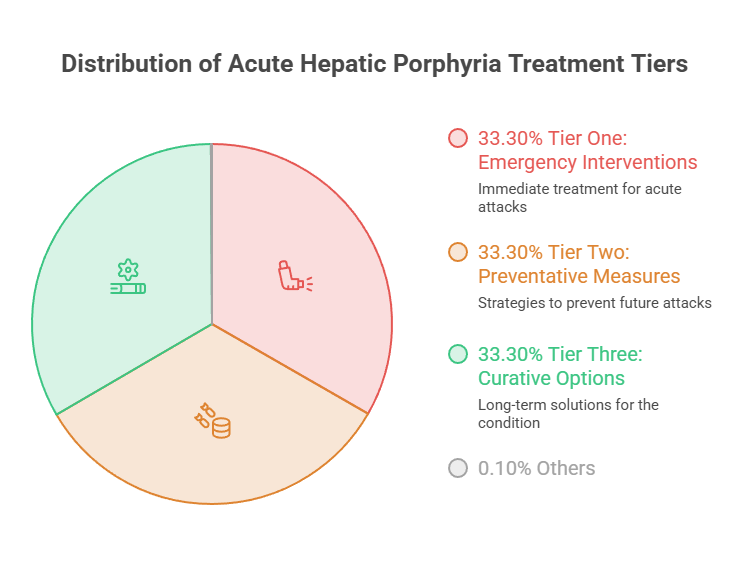
Tier One: Stopping an Attack in Progress
The emergency layer. Hemin, glucose when hemin is delayed, aggressive pain and nausea control, sodium correction, and close neurological monitoring.
Tier Two: Preventing the Next One
Givosiran for recurrent attacks, prophylactic hemin when givosiran is unavailable or unsuitable, and GnRH analogues for women whose attacks track their menstrual cycle.
Tier Three: Curative Options
Liver transplant. The only intervention that removes the source of the overproduction, carrying every risk transplant surgery carries.
The Layer Underneath All Three
None of it works well if what drives attacks stays in place. Unsafe medications, alcohol, smoking, fasting, and rapid weight loss all live here.
The IPNET panel recommends that everyone with acute porphyria, regardless of whether they have ever had an attack, be informed of drug risk and shown how to check drug safety. Those with active porphyria, meaning an attack within the last two years, should avoid alcohol completely, and the panel recommends all individuals with porphyria avoid smoking.
| Treatment | What It Does | Typical Regimen | Time to Effect | Guideline Role | Main Drawbacks |
| IV hemin (Panhematin) | Suppresses ALAS1 by heme feedback | 3 to 4 mg/kg/day IV, usually 4 days | 48 to 72 hours | Preferred treatment for acute attacks | Phlebitis, vein loss, iron overload with repeat use |
| IV glucose / carbohydrate loading | Suppresses ALAS1 via insulin and PGC1-alpha | About 300 g glucose daily, IV or oral | Slow, variable | Backup only, or for mild symptoms | Worsens hyponatremia; not a substitute for hemin |
| Givosiran (Givlaari) | Degrades ALAS1 messenger RNA | 2.5 mg/kg subcutaneous, monthly | Weeks to months | Preferred for recurrent attacks | Cost, liver and kidney monitoring, injection reactions |
| Prophylactic hemin | Ongoing ALAS1 suppression | 1 infusion every 1 to 4 weeks | Ongoing | Second line when givosiran unavailable | Iron overload, clots, venous access loss, tachyphylaxis |
| GnRH analogue | Suppresses the progesterone peak | Monthly injection, limited to 1 year | 1 to 3 cycles | Option for cyclic menstrual attacks | Induced menopause, bone density loss |
| Liver transplant | Replaces the source organ | One-time surgery, lifelong immunosuppression | Days | Last resort for refractory disease | Surgical risk, hepatic artery thrombosis, lifelong drugs |
What Counts as an Attack (And Why the Definition Matters)
Patients get told they are having an attack or not having an attack with no explanation of where that line sits. It is not arbitrary, and knowing it changes how you advocate for yourself.
The Formal Criteria
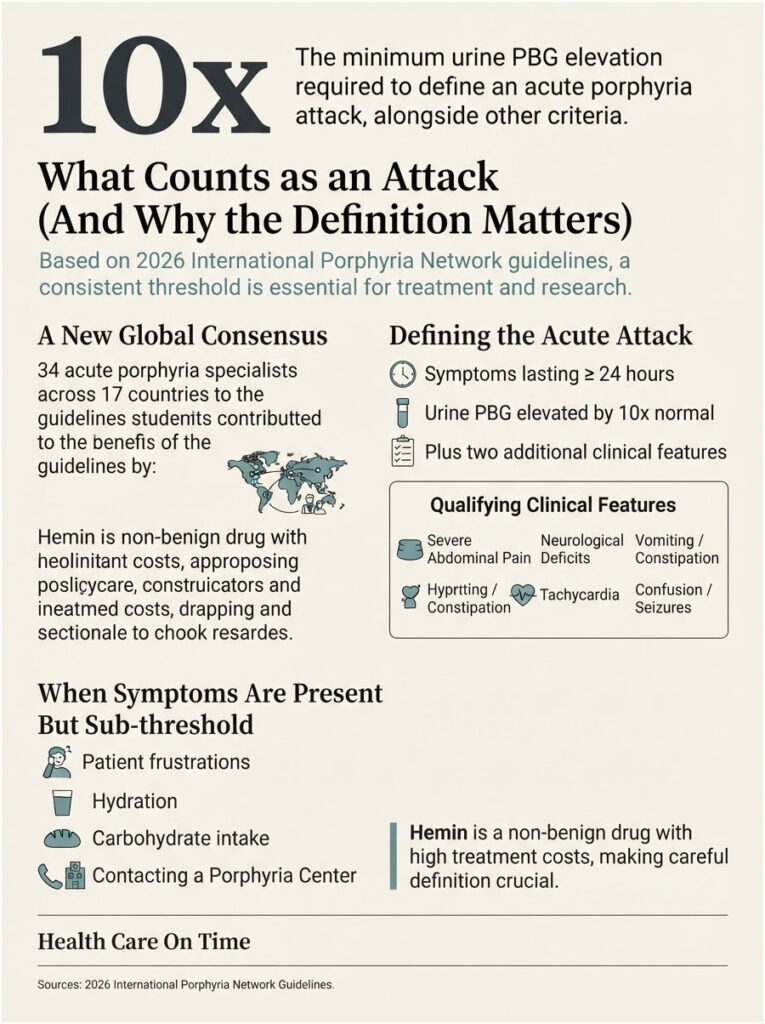
The 2026 International Porphyria Network guidelines set explicit thresholds. An acute attack requires symptoms lasting at least 24 hours, significantly increased urine PBG at a minimum of 10 times the upper limit of normal, and at least two additional clinical features.
Those guidelines came from 34 acute porphyria specialists across 17 countries, spanning internal medicine, hematology, endocrinology, gastroenterology, hepatology, neurology, and biochemistry, plus laboratory scientists and patient representatives, using the GRADE framework to produce 15 recommendations.
The Seven Qualifying Features, in Plain Language
- Intense pain
- Nausea, vomiting, or constipation
- High blood pressure or rapid heart rate
- Low sodium
- Muscle weakness, paralysis, or reduced reflexes
- Urinary retention or incontinence
- Central nervous system involvement such as seizures, confusion, reduced consciousness, psychosis, or PRES on MRI
Two of those seven, plus 24 hours of symptoms, plus the PBG elevation. That is the bar.
Why the Threshold Exists, and Where It Fails Patients
The threshold exists because hemin is not a benign drug, and because attack counts drive treatment decisions worth hundreds of thousands of dollars. Consistency matters for research and for access.
It fails patients when symptoms are unmistakably porphyric but do not tick two boxes, or when a hospital cannot run an urgent PBG. In the patient accounts our team encounters, this gap is the most common source of frustration with emergency care.
What to Do When Symptoms Are Real but Sub-Threshold
The panel does not recommend administering hemin when a patient has symptoms but does not meet the attack threshold. That does not mean nothing should be done.
Carbohydrate intake, hydration, symptom control, and a same-day urine ALA and PBG sample are all reasonable. So is calling your porphyria center rather than waiting to see whether it escalates.
Treating an Acute Attack: Hemin, Step by Step
Before the Infusion, the Urine Sample That Must Come First
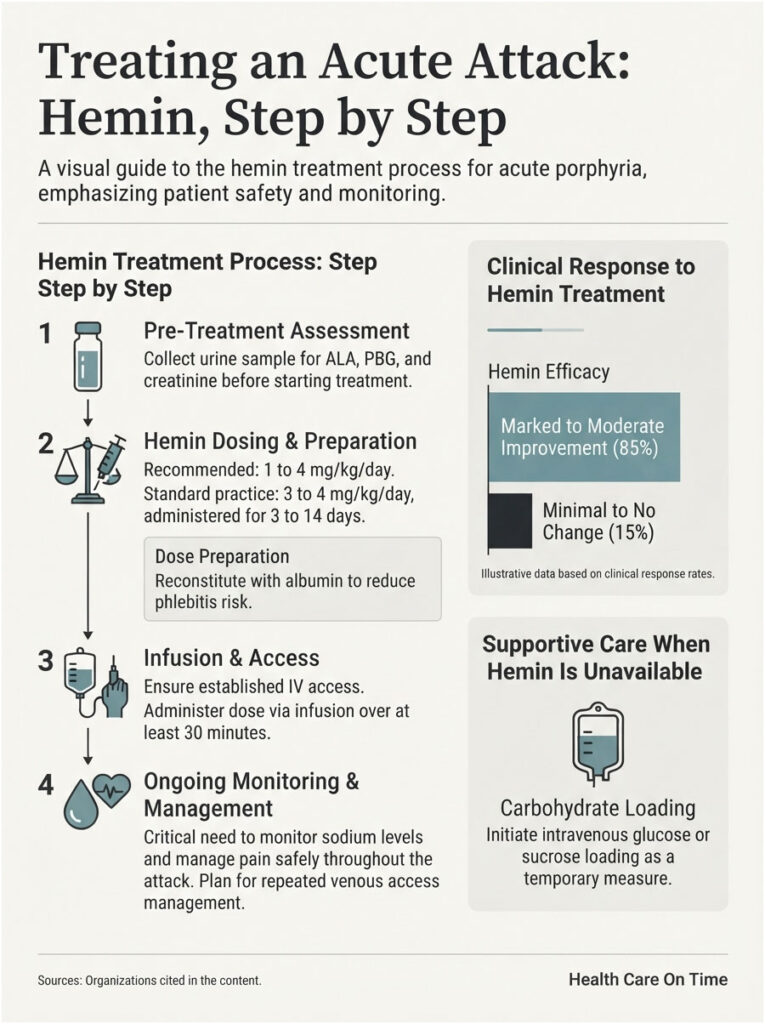
A random urine for ALA, PBG, and creatinine should be collected before hemin treatment starts. Hemin drives those values down fast, and a sample drawn afterward can erase the diagnostic evidence.
Because rapid ALA and PBG tests are not widely available, hemin can be started on empirical grounds in patients with confirmed AHP. If you already carry a confirmed diagnosis, waiting for the lab is not required.
The Dose and the Schedule
The FDA label for Panhematin is specific. Dosing runs 1 to 4 mg/kg/day for 3 to 14 days based on clinical signs, with 3 to 4 mg/kg/day the standard in clinical practice. In more severe cases the dose may be repeated no earlier than every 12 hours, and total exposure must not exceed 6 mg/kg in any 24-hour period.
The AGA Clinical Practice Update describes what that looks like in real hospitals. Hemin is usually given once daily at 3 to 4 mg/kg, typically for four days. Symptom relief depends on clearing excess ALA and PBG and typically requires 48 to 72 hours, though recovery from neurologic symptoms varies considerably.
That window is the number nobody prepares patients for. It is why day two of an admission feels like failure when it is actually the expected course.
What the Infusion Day Actually Looks Like
Expect the urine sample first, then IV access, then the reconstituted dose. The label directs infusion over at least 30 minutes through a separate line, with a 100 mL saline flush afterward and no other drug added to the admixture.
In practice many centers run it slower. One trial protocol reconstituted 4 mg/kg with 25% human albumin and infused over an hour, noting that the longer time is acceptable given hemin stability in albumin.
Then you wait. The infusion itself is short; the recovery is not.
Why Albumin Reconstitution Matters
The most common short-term problem is inflamed veins. Phlebitis risk drops when hemin is reconstituted in albumin rather than saline, when the vein is flushed with 0.9% sodium chloride afterward, and when it is given through a central line or a large peripheral vein.
Ask for albumin reconstitution by name. Not every hospital pharmacy defaults to it.
Protecting Your Veins Over Years of Treatment
For anyone facing repeated infusions, venous access becomes a long-term asset worth guarding deliberately.
Raise the question of a port or a central line before your peripheral options run out, not after. Patients who wait until access becomes difficult often lose treatment days to failed sticks.
How Well It Works
Across five open-label studies of 99 patients with acute porphyrias, 72 with acute intermittent porphyria, treated at 3 to 4 mg/kg/day, clinical response occurred in 85.5% of treatment courses, defined as symptom improvement and reduced pain.
A separate series examined 2 to 4 mg/kg in 57 patients and found a clinical response in 74 of 82 acute attacks, or 90%.
Hemin is believed to shorten attacks, reduce attack severity, and reduce the risk of long-term complications. It is also safe in pregnancy, which matters given who this disease predominantly affects.
One honest limitation: in an early series, hematin suppressed the chemical and clinical signs of acute attacks but had no effect on chronic subacute symptoms. Hemin treats attacks. It does not treat the background.
Glucose, and When It Is the Right Call
Carbohydrate loading has a real role, just a narrower one than its historical reputation suggests.
Intravenous carbohydrate loading can be used when hemin is unavailable or while waiting for it to arrive, as an interim measure while awaiting attack confirmation, or for mild attack symptoms. It should not be the sole treatment when hemin is available, and should not be used when the patient has significant hyponatremia.
Typical hospital regimens deliver around 300 grams of glucose daily. The label suggests considering a period of carbohydrate loading at roughly 400 g glucose per day for one to two days before hemin.
Current practice generally moves to hemin faster than the label implies for moderate or severe attacks. Labeling itself notes that for mild attacks a glucose trial is reasonable while awaiting hemin, while moderate to severe attacks warrant immediate hemin.
Managing Low Sodium During an Attack
Hyponatremia is common, dangerous, and frequently underweighted.
The panel recommends treating hyponatremia promptly to prevent progression and investigating the underlying cause, following national guidelines for correction.
In cases reviewed by our medical team, the sodium check is the step most often skipped in general emergency settings, where abdominal pain absorbs all the clinical attention. If you are supporting someone through an attack, ask about sodium explicitly and early.
Pain Control Without Triggering a Worse Attack
Attack pain is severe and usually requires opioids, which are considered safe in porphyria. The danger comes from what gets added around them: certain anticonvulsants, some antibiotics, and various sedatives can induce ALAS1 and deepen the attack.
In a life-threatening emergency, a needed drug should not be withheld over porphyria concerns. In non-urgent situations, drugs known to be safe are preferred unless the benefit of a porphyrinogenic drug outweighs the risk.
Two databases settle this in practice: the NAPOS database and PorphyriaDrugs.com. Bookmark one before you need it.
Walking Into an ER That Has Never Seen Porphyria
Most emergency physicians will treat one porphyria attack in their career, if that. Arriving prepared changes the encounter.
Carry a one-page summary: your confirmed diagnosis with the gene variant, your usual hemin dose in mg/kg, your porphyria center phone number, and the drug database link. Some patients keep it as a phone photo plus a printed card.
Ask for three things in order: the urine PBG sample, a sodium level, and a call to your specialist. Those three requests reorient the visit faster than any explanation of heme biosynthesis.
Preventing Attacks: Givosiran and the Alternatives
What Givosiran Is and How It Is Given
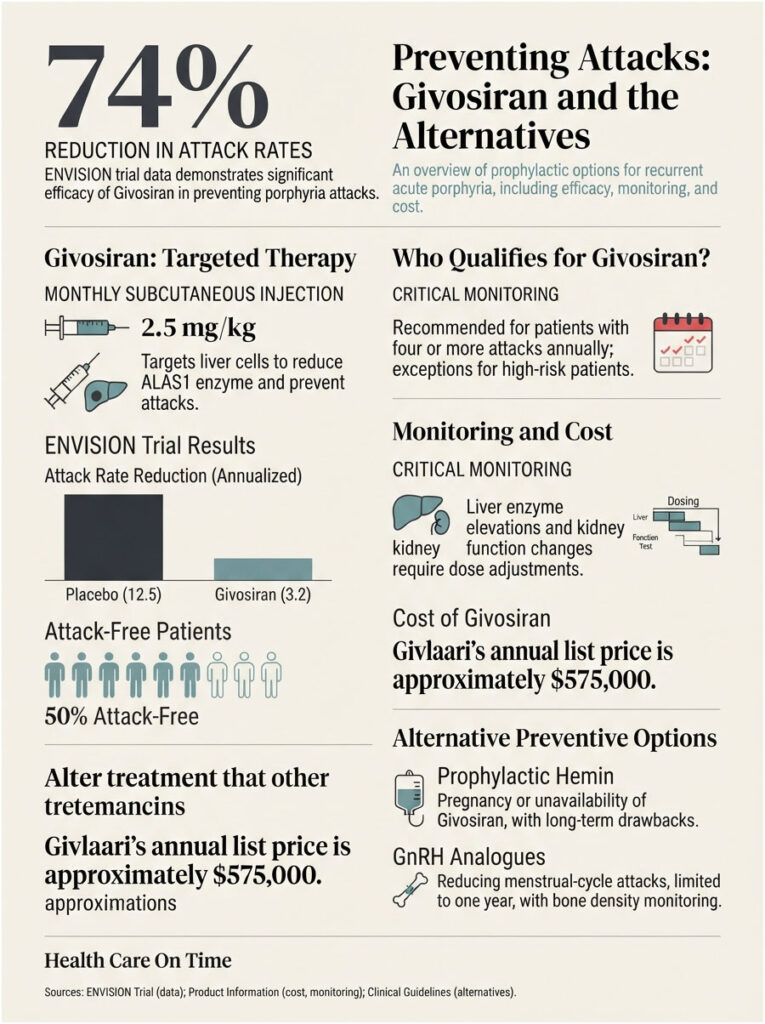
Givosiran is a small interfering RNA given by subcutaneous injection once a month at 2.5 mg/kg.
Its trivalent N-acetylgalactosamine ligands bind asialoglycoprotein receptors on liver cells, which is what makes the drug essentially liver-specific. The messenger RNA for ALAS1 is degraded before the enzyme is ever produced.
Common side effects include injection site reactions and increases in liver enzymes and creatinine.
The Efficacy Numbers
The pivotal trial was ENVISION, published in the New England Journal of Medicine.
A total of 94 patients were randomized, 48 to givosiran and 46 to placebo. Among the 89 with acute intermittent porphyria, the mean annualized attack rate was 3.2 with givosiran versus 12.5 with placebo, a 74% lower rate. Givosiran also produced lower urinary ALA and PBG, fewer days of hemin use, and better daily pain scores.
Half of givosiran-treated patients had no porphyria attacks at all during the treatment period, compared with 17% on placebo.
Long-term data followed. In the 36-month final analysis published in the Journal of Hepatology, the median annualized attack rate during givosiran treatment was 0.4, with annualized days of hemin use staying low in the continuous group at a median of 0.0 to 0.4.
Among patients who crossed over from placebo, median annualized attack rate fell from 10.7 to 1.4, and median annualized days of hemin use dropped from 14.98 to 0.71.
Who Qualifies Under Current Guidelines
The Four-Attacks-in-Twelve-Months Threshold
Recurrent attacks are defined as four or more attacks in a 12-month period within the last two years, and givosiran is the preferred treatment for that group. Before starting any preventive treatment, the panel recommends confirming that modifiable triggers such as unsafe medications, alcohol, and dieting have been eliminated.
The High-Risk Exception for Fewer Attacks
The panel suggests considering givosiran for some patients with sporadic attacks who face high risk of harm, for example someone with neuropathy from an earlier attack in whom additional attacks could impede recovery. That decision belongs with a porphyria specialist.
Who the Panel Declined to Recommend It For
The panel did not recommend givosiran for patients who fall below the recurrent threshold and are not high risk, or who have high urine PBG with chronic symptoms, citing insufficient data. It also did not consider givosiran justified for people with high urine PBG but no symptoms.
And one line worth memorizing: the panel does not recommend using givosiran to treat acute attacks. It is prevention, full stop.
Side Effects and the Monitoring Schedule
Patients should be closely monitored on givosiran, particularly during the first six months while the body adjusts.
Liver Enzymes and the Dose Reduction Rule
Transaminase elevations are the most common lab signal. If transaminase levels are significantly increased, the dose is reduced to 1.25 mg/kg once monthly.
Elevations do not automatically end treatment. They trigger a dose adjustment and closer watching.
Kidney Function
Creatinine rises are documented and require tracking. Baseline kidney function matters especially in patients who already have porphyria-associated kidney disease.
Homocysteine and Vitamin B6
This one surprises people. Elevated homocysteine is common on givosiran and is treated with vitamin B6, or pyridoxine.
One reported case involved a 72-year-old patient who developed major hyperhomocysteinemia above 400 micromol per liter on starting treatment, attributed to a functional deficiency of cystathionine beta-synthase. Long-term vitamin B6, the enzyme cofactor, normalized homocysteine while givosiran continued.
Safety of givosiran in pregnancy has not been established.
Prophylactic Hemin When Givosiran Is Not an Option
The panel recommends preventive hemin for recurrent attacks when givosiran is unavailable or unsuitable, such as during pregnancy. Long-term drawbacks include iron overload, blood clots, loss of venous access, and reduced effectiveness over time. Hemin should be given at the lowest effective frequency, usually one infusion every one to four weeks.
There is also an on-demand approach. Hemin can be given when symptoms first begin, before progression to severe pain or vomiting that would require hospitalization. Both prophylactic and on-demand hemin are given in an outpatient infusion center.
One caution worth naming: some studies show hemin prophylaxis has no effect on chronic symptoms between attacks, which is part of why alternatives were sought in the first place.
GnRH Analogues for Menstrual-Cycle Attacks
For cyclic attacks tied to menstruation, GnRH analogues induce a temporary menopause and may reduce attacks. Use should be limited to one year because of bone density loss. Add-back estrogen can mitigate that risk while carrying its own attack risk, and bone density monitoring should be in place.
Contraception choices matter too. Hormonal IUDs are the preferred contraceptive for acute porphyria patients, while injectable or implantable progestogens are not recommended for anyone with porphyria regardless of disease activity.
| Measure | Figure | Source |
| Annualized attack rate, givosiran vs placebo | 3.2 vs 12.5 (74% reduction) | Balwani et al., New England Journal of Medicine, ENVISION |
| Patients attack-free during treatment period | 50% vs 17% on placebo | ENVISION phase 3, reported by ASH Clinical News |
| Median annualized attack rate at 36 months | 0.4 | ENVISION final analysis, Journal of Hepatology |
| Placebo crossover group, attack rate change | 10.7 to 1.4 | ENVISION open-label extension |
| Nausea rate on givosiran, 6-month blinded period | 27% | Alnylam / ENVISION safety data |
| Injection site reaction rate | 25% | Alnylam / ENVISION safety data |
| Hemin clinical response across treatment courses | 85.5% (141 of 165) | Panhematin prescribing information, 5 open-label studies |
| Symptomatic AHP prevalence | About 1 in 100,000 | AGA Clinical Practice Update, Gastroenterology |
| Pathogenic variant prevalence for AIP | 1 in 1,300 to 1 in 1,785 | AGA Clinical Practice Update, Gastroenterology |
| Share of symptomatic patients with recurrent attacks | Up to 8% | Scott & Leaf, The Hematologist, ASH |
| Liver transplant survival, 1-year and 5-year | 92% and 82% | Lissing et al., Liver Transplantation |
| Givlaari annual list price | About $575,000 | Alnylam launch pricing, reported by Fierce Pharma |
The Cost Conversation Nobody Starts
Clinical pages stop at “givosiran is available.” American patients need the next sentence.
What the Drugs Actually List For
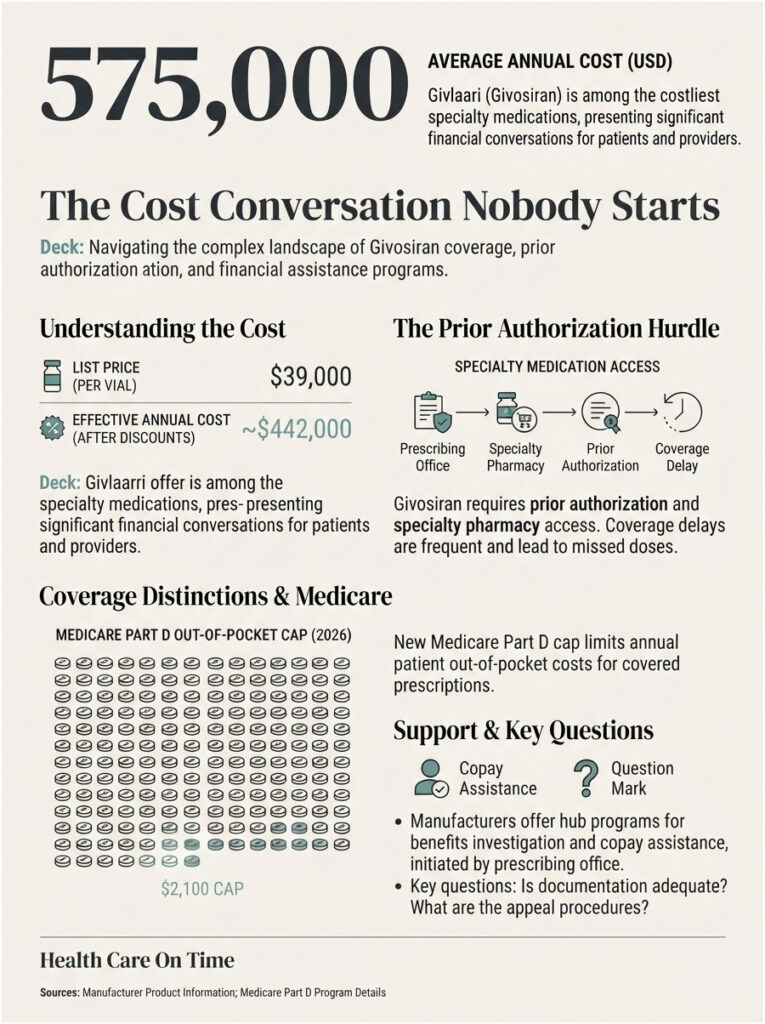
Givlaari launched with an average annual cost of $575,000 per patient based on a list price of $39,000 per vial, with the annual figure after mandatory discounts landing near $442,000.
Alnylam has also used value-based agreements with payers, including a prevalence-based adjustment under which the company pays a rebate if an insurer ends up with more patients than expected.
How Coverage Typically Works in the US
Givosiran is a specialty medication, which routes it through prior authorization, a specialty pharmacy, and sometimes buy-and-bill depending on where it is given. Hemin, administered in a hospital or infusion center, usually falls under medical benefits rather than pharmacy benefits.
That distinction matters at appeal time, because the two benefit types run through different review processes with different timelines.
For anyone on Medicare Part D, 2026 plans carry a $2,100 annual out-of-pocket cap on covered prescription medications, after which the plan covers the full cost for the rest of the year.
Patient Assistance and Manufacturer Support Programs
Both manufacturers run hub programs handling benefits investigation, prior authorization support, and copay assistance for commercially insured patients. Enrollment is usually initiated by the prescribing office rather than the patient.
Across the rare disease inquiries our team fields, coverage delays cause more missed doses than side effects do. Starting the paperwork the same week the decision is made, rather than after the first denial, is the highest-yield administrative step available.
Questions to Ask Before Your First Prior Authorization
Ask how many documented attacks your chart actually shows, and whether the documentation meets the formal definition. Ask who at the practice submits the authorization and who tracks it.
Ask what the appeal path looks like if the first submission is denied, because first denials are common with drugs at this price point.
When Attacks Do Not Stop: Liver Transplant
Why a New Liver Ends the Attacks
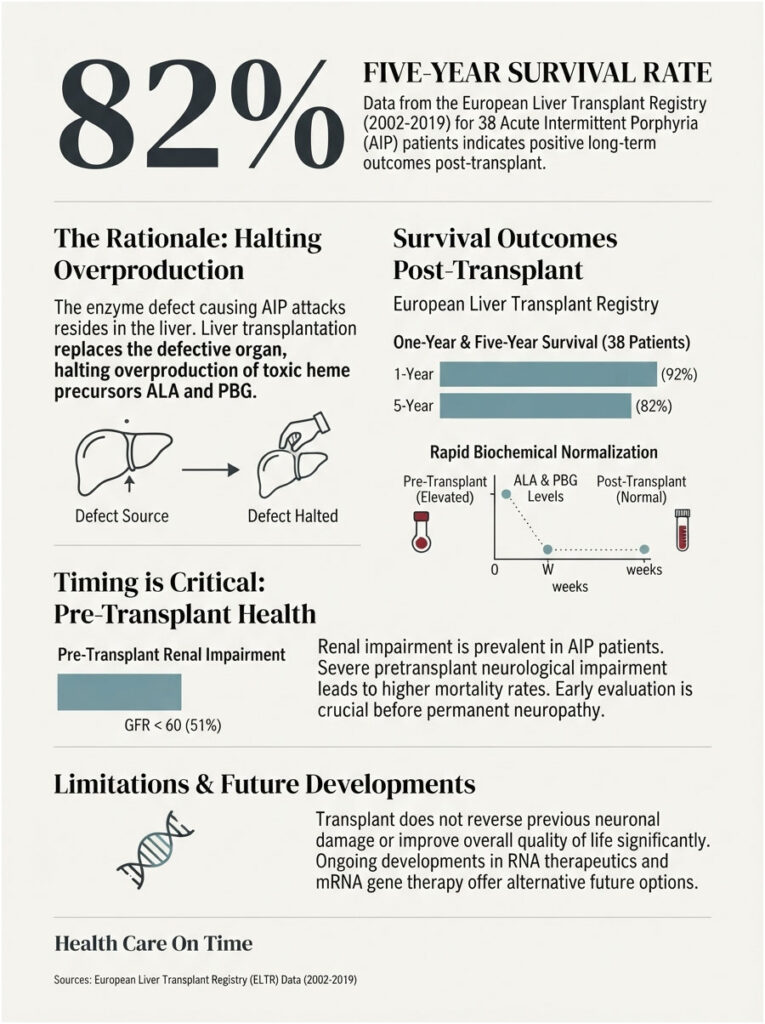
The enzyme defect driving attacks lives in the liver. Replace the organ and the overproduction stops.
In a documented case, after orthotopic liver transplantation the recipient plasma and urinary ALA and PBG rapidly normalized and her attacks immediately stopped.
Reports describe resolution of disease after transplantation with clinical remission and normalization of biochemical parameters within 72 hours.
The Outcome Data
The largest series comes from the European Liver Transplant Registry, published in Liver Transplantation.
Thirty-eight patients received transplants across 12 countries between 2002 and 2019. Median age was 37 and 89% were women. One-year and five-year overall survival were 92% and 82%, comparable with other metabolic diseases transplanted in the same period. No patient had an attack after transplant except one who received an auxiliary graft.
Timing shaped the results. Advanced pretransplant neurological impairment was associated with increased mortality: five-year survival was 94% among 19 patients with moderate or no neuropathy, versus 83% among 10 with severe neuropathy. Renal impairment was common, with 51% having a GFR below 60.
There is a technical caveat specific to this population. One series of 10 AIP transplants found hepatic artery thrombosis in 4 of 10 patients, with 1 requiring regrafting.
What Transplant Does Not Fix
In that same series, the effects of previous neuronal damage such as joint contractures were not improved by transplantation, and impaired quality of life in surviving patients usually traced back to preoperative complications.
Few patients improved renal function after transplant, although neurological impairments improved and no worsening was recorded.
Why Timing Decides the Outcome
The registry authors concluded that severe neuropathy and impaired renal function are common and increase the risk of poor outcomes, and that if other treatment options fail, evaluation for transplant should be performed early.
Early evaluation is not the same as early surgery. It means being on a transplant team radar before the neuropathy becomes permanent.
The Work in Progress
RNA therapeutics have opened further development paths for AHP, including an mRNA-based gene therapy in development for acute intermittent porphyria. As of the end of 2022, 520 patients worldwide were receiving commercial givosiran, according to a review in Blood.
Long-term data on the safety and effects of sustained ALAS1 suppression are still lacking, and additional follow-up is needed to understand the full impact of these therapies.
The Porphyrias Consortium, funded through the NIH and NCATS as part of the Rare Diseases Clinical Research Network, runs the US longitudinal studies collecting that evidence.
Living With It: Long-Term Monitoring and Chronic Symptoms
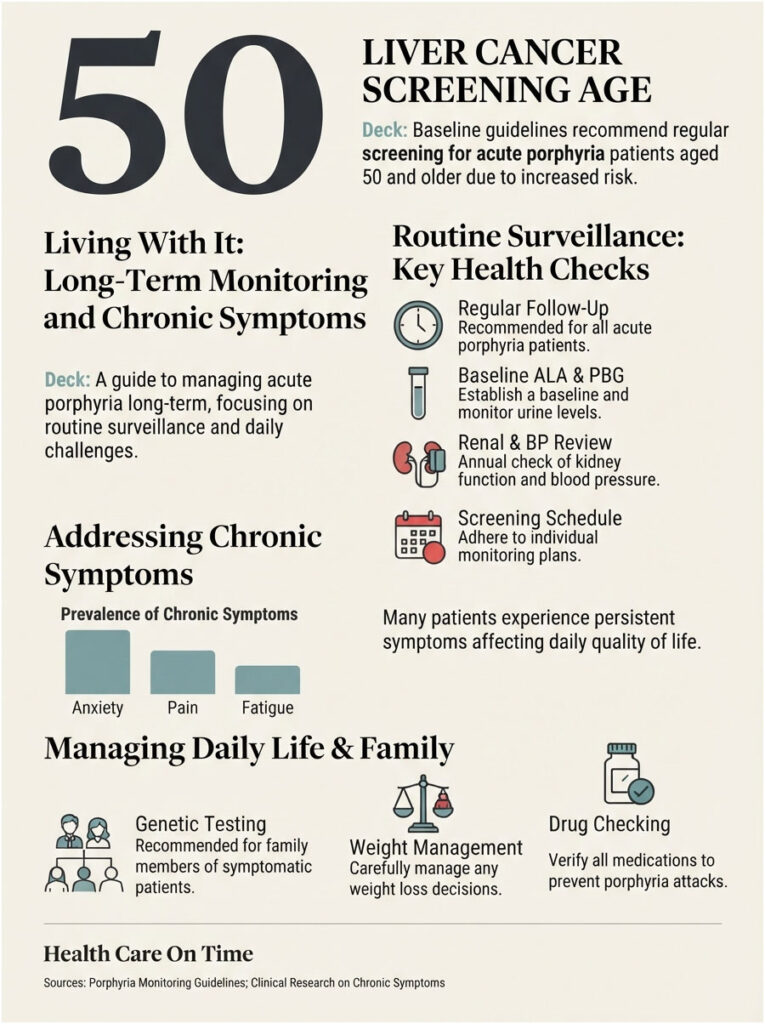
The Follow-Up Schedule Current Guidelines Recommend
The IPNET panel recommends that everyone diagnosed with acute porphyria be offered at least one appointment with a porphyria specialist. Ongoing follow-up is recommended for patients with high urine PBG or an attack within the last two years.
Patients who have never had an attack and have normal urine PBG do not require special liver screening or ongoing specialist follow-up.
Baseline and Repeat Urine ALA and PBG
An initial visit should include education about triggers, an estimate of attack risk, measurement of baseline urine ALA and PBG normalized to creatinine, and discussion of family testing.
Establishing a baseline is what makes later changes interpretable. Without it, a single elevated result floats without context.
Kidney Function and Blood Pressure
Follow-up should include review of recent symptoms and attacks, medication changes, lifestyle discussion, repeat urine ALA and PBG, and monitoring of kidney function and blood pressure.
The reason sits in registry data. A Swedish matched cohort found acute hepatic porphyria associated with increased risk of kidney cancer, hypertension, chronic kidney disease, and mortality, though not with cardiovascular disease or other nonhepatic cancers.
That cohort followed 1,244 patients with a verified AHP diagnosis over a median of 19 years, comparing them with general population controls matched 1:10 by age, sex, and county.
Liver Cancer Surveillance After 50
The panel recommends screening every six months for patients over 50 who have had at least one attack at any point in life, or whose urine PBG runs at least four times the upper limit of normal. Screening is generally by ultrasound. It is not recommended under 50, or for those who have never had an attack with normal PBG.
Multiple studies show that symptomatic patients carry 30 to 100 times higher risk of primary liver cancer versus reference controls.
Chronic Symptoms Between Attacks
The attacks get the attention. The daily burden often comes from what happens in between.
Some patients continue to experience chronic symptoms such as anxiety, hypertension, insomnia, neuropathic pain, and muscle weakness or paralysis.
The POWER study quantified this across six countries. Among 92 patients, 94.3% of those reporting pain, 95.6% reporting fatigue, and 91.4% reporting muscle weakness said these symptoms limited daily activities. Moderate to severe depression was present in 58.7% and moderate to severe anxiety in 48.9%.
Of the 47% who were employed, 36.8% reported lost productivity at work, and 85.9% said they had to change or modify goals important to them.
Notably, aside from healthcare utilization and pain severity, scores did not vary significantly with attack rate or with use of hemin or glucose prophylaxis.
Preventing attacks is necessary. It is not sufficient. Mental health support belongs in the treatment plan rather than beside it.
Family Testing and Genetic Counseling
Genetic testing is recommended for family members of all patients with symptomatic acute porphyria or high urine PBG, supported by genetic counseling. The value is earlier diagnosis and attack prevention through identifying carriers.
Most identified relatives will never have an attack. What they gain is the knowledge to avoid porphyrinogenic drugs before a surgery or a course of antibiotics turns into a crisis.
Pregnancy, Contraception, and Weight Loss Decisions
Weight loss is the decision most often mishandled.
Rapid weight loss, especially with carbohydrate restriction such as low-carb or keto diets, increases attack risk. For those with active porphyria, all planned weight loss including diet, medications, and bariatric surgery should be avoided.
For those with high ALA or PBG but no attack in two years, bariatric surgery should be avoided while diet or medication approaches can be attempted with medical supervision. For those with normal ALA and PBG and no attack in at least two years, planned weight loss by any route can be allowed.
The logic is reversibility. A diet can be stopped. A surgically altered stomach cannot.
Individuals who had active porphyria and are now stabilized on givosiran should work with their provider to assess individual risk rather than applying a general rule.
Building Your Safe-Drug Habit
Every new prescription, dental procedure, and urgent care visit is a checkpoint.
Our lab partners report that the patients with the fewest breakthrough attacks are usually the ones who have made drug checking automatic rather than occasional. It takes 30 seconds and prevents the most avoidable category of attack there is.
| If This Is Your Situation | Recommended Next Step | Timeframe | Who Handles It |
| Severe unexplained abdominal pain, no diagnosis yet | Request a spot urine PBG, ALA, and creatinine before any treatment | Same visit | Emergency department or primary care |
| Confirmed AHP, new attack starting | Urine sample first, then hemin at 3 to 4 mg/kg/day IV | Start within hours | Emergency department or infusion center |
| Four or more attacks in the past 12 months | Trigger reassessment, then givosiran evaluation | Within 2 to 4 weeks | Porphyria specialist |
| One to three attacks but existing neuropathy | Discuss the high-risk exception for givosiran | Within 4 weeks | Porphyria specialist |
| Attacks tracking your menstrual cycle | Discuss GnRH analogue or hormonal IUD if givosiran unsuitable | Within 1 to 2 cycles | Porphyria specialist plus gynecology |
| On givosiran with rising ALT or creatinine | Repeat labs; possible reduction to 1.25 mg/kg monthly | Before next dose | Prescribing specialist |
| Over 50 with any prior attack or PBG 4x normal | Start liver ultrasound surveillance | Every 6 months | Hepatology or porphyria center |
| Asymptomatic relative of a diagnosed patient | Targeted genetic testing with counseling | Within 3 months | Genetic counselor |
Frequently Asked Questions
Is acute hepatic porphyria curable?
Liver transplant is the only curative option and is reserved for refractory disease. Registry data show one-year survival of 92% and five-year survival of 82%, with attacks stopping after transplant. Nerve damage from earlier attacks does not reverse, which is why early evaluation matters more than aggressive timing.
How fast does hemin work?
Symptom relief typically takes 48 to 72 hours, because relief depends on clearing accumulated ALA and PBG rather than on the drug reaching your bloodstream. Recovery from neurological symptoms takes considerably longer and varies widely. Feeling unchanged on day one is the expected course, not treatment failure.
What is the standard hemin dose?
FDA labeling specifies 1 to 4 mg/kg/day intravenously for 3 to 14 days, with 3 to 4 mg/kg/day standard in practice, usually once daily for about four days. The absolute ceiling is 6 mg/kg in any 24-hour period. Severe cases may repeat no sooner than every 12 hours.
Can givosiran stop an attack that has already started?
No. Current international guidelines explicitly recommend against using givosiran to treat acute attacks. It works by degrading ALAS1 messenger RNA, which takes weeks to translate into clinical benefit. Hemin remains the treatment for an attack in progress, with givosiran preventing future ones.
How much does Givlaari cost per year?
Givlaari launched at roughly $575,000 per year based on a $39,000 list price per vial, with the post-discount figure near $442,000 annually. Actual out-of-pocket cost depends heavily on your plan. Medicare Part D plans carry a $2,100 annual out-of-pocket cap in 2026.
How many attacks do I need before givosiran is approved?
Guidelines define recurrent attacks as four or more within a 12-month period during the last two years, and that group is the primary candidate pool. A high-risk exception exists for patients with fewer attacks who face serious harm, such as existing neuropathy. A porphyria specialist should make that call.
What are the most common givosiran side effects?
Nausea affected 27% and injection site reactions 25% in the pivotal trial. Liver enzyme elevations and creatinine increases both occur and require scheduled monitoring, especially during the first six months. Elevated homocysteine is common and is managed with vitamin B6 rather than by stopping the drug.
Does hemin cause iron overload?
Repeated hemin can cause secondary iron overload, along with thrombophlebitis, clotting abnormalities, and progressive loss of venous access. Ferritin measured within one to two weeks of an infusion may reflect an acute phase response rather than true overload, so the timing of that test changes how it should be read.
Do I need liver cancer screening?
If you are over 50 and have had at least one attack at any point, or your urine PBG runs at least four times the upper limit of normal, guidelines recommend ultrasound surveillance every six months. Screening is not recommended under 50 or for people who have never had an attack with normal PBG.
Is treatment safe during pregnancy?
Hemin is considered safe in pregnancy and is the preferred option, including for prophylaxis when needed. Givosiran safety in pregnancy has not been established. Pregnancy planning should involve a porphyria specialist early, since medication choices and monitoring both shift during that period.
Can I lose weight safely with acute hepatic porphyria?
It depends on disease activity. With an attack in the last two years, all planned weight loss should be avoided. With high ALA or PBG but no recent attack, avoid bariatric surgery while supervised dietary or medication approaches may be possible. Normal levels plus two attack-free years opens all options.
Should my family members be tested?
Yes, if you have symptomatic acute porphyria or high urine PBG. Guidelines recommend genetic testing for relatives with genetic counseling, because identifying carriers allows trigger avoidance long before a first attack. Whole-gene sequencing identifies 95% to 99% of cases once the family variant is known.
Medical Disclaimer: This article provides general health information about acute hepatic porphyria and is not medical advice. It does not replace evaluation by a licensed clinician or a porphyria specialist. Dosing, eligibility, monitoring, and treatment choices vary by individual and by country. Do not start, stop, or change any treatment based on this content. An acute porphyria attack is a medical emergency; seek immediate care or call 911.
References
- Guidelines for the Management of Acute Porphyria: Recommendations from the International Porphyria Network, The Lancet Haematology
- Managing Acute Porphyrias: International Guidelines, United Porphyrias Association plain-language summary
- Phase 3 Trial of RNAi Therapeutic Givosiran for Acute Intermittent Porphyria, New England Journal of Medicine
- Efficacy and Safety of Givosiran for Acute Hepatic Porphyria: Final Results of the Phase III ENVISION Trial, Journal of Hepatology
- Panhematin (hemin) Prescribing Information, DailyMed, National Library of Medicine
- AGA Clinical Practice Update on Diagnosis and Management of Acute Hepatic Porphyrias, Gastroenterology
- Acute Hepatic Porphyria, StatPearls, National Library of Medicine
- Liver Transplantation for Acute Intermittent Porphyria, Liver Transplantation
- Liver Transplantation for AIP Is Complicated by a High Rate of Hepatic Artery Thrombosis, Liver Transplantation
- Givosiran: A Targeted Treatment for Acute Intermittent Porphyria, ASH Education Program
- RNA Interference Therapy in Acute Hepatic Porphyrias, Blood
- Not So Benign: Acute Hepatic Porphyria, The Hematologist, ASH
- Porphyria Worldwide Patient Experience Research (POWER) Study
- Risk for Incident Comorbidities, Nonhepatic Cancer and Mortality in Acute Hepatic Porphyria: A Matched Cohort Study in 1,244 Individuals, Journal of Inherited Metabolic Disease
- Preventing Hyperhomocysteinemia Using Vitamin B6 Supplementation in Givosiran-Treated Acute Intermittent Porphyria, Molecular Genetics and Metabolism Reports
- NAPOS Drug Database for Acute Porphyria