
Anti saccharomyces cerevisiae igg antibodies Test and its Function
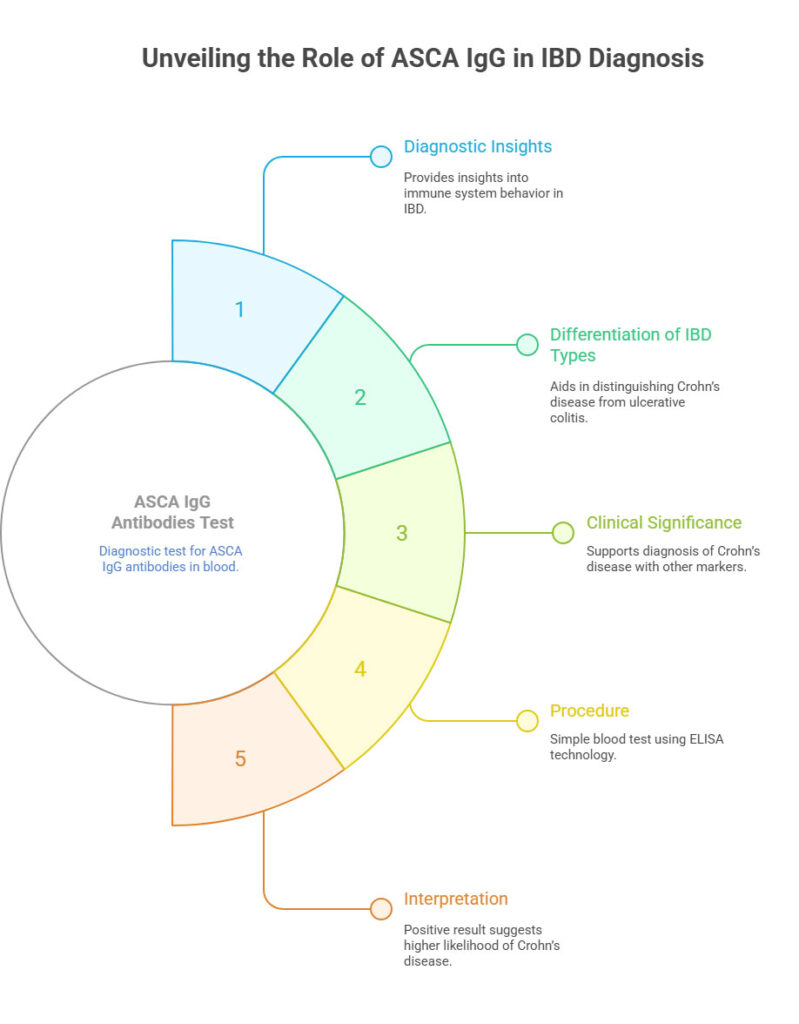
The Anti-Saccharomyces Cerevisiae IgG (ASCA IgG) Antibodies Test is a specialized blood test used to detect immune system proteins (IgG antibodies) that react against Saccharomyces cerevisiae, a common yeast found in food and the gut. These antibodies are frequently elevated in individuals with inflammatory bowel disease (IBD), particularly Crohn’s disease.
Primary Functions:
Helps differentiate between Crohn’s disease and ulcerative colitis, the two main types of IBD.
Supports diagnosis when symptoms are ambiguous or when biopsy results are inconclusive.
May assist in tailoring treatment plans based on antibody presence.
Conditions that may require Anti saccharomyces cerevisiae igg antibodies Test
This test is typically recommended when a patient presents with symptoms suggestive of IBD, especially when clinical evaluation alone cannot confirm the diagnosis.
Common indications include:
Persistent abdominal pain or cramps
Chronic diarrhea or rectal bleeding
Unexplained weight loss or fatigue
Joint pain or skin-related symptoms
Delayed growth or development in children
Inconclusive results from colonoscopy or biopsy
It is particularly useful when distinguishing Crohn’s disease from ulcerative colitis, as ASCA IgG antibodies are found in:
~60–70% of Crohn’s disease patients
~10–15% of ulcerative colitis patients.
Anti saccharomyces cerevisiae igg antibodies Test Procedure
Anti-Saccharomyces Cerevisiae IgG Antibodies Test Procedure
Preparation:
No fasting or special preparation is required.
Sample Collection:
A blood sample is drawn from a vein in the arm using standard venipuncture.
The test is typically conducted using Enzyme-Linked Immunosorbent Assay (ELISA) methodology.
Post-collection:
Minor discomfort or bruising may occur at the puncture site.
Results are usually available within 24–48 hours.
Interpreting Anti saccharomyces cerevisiae igg antibodies Test Results
Positive Result:
Indicates the presence of ASCA IgG antibodies.
Suggests a higher likelihood of Crohn’s disease, especially if pANCA (perinuclear anti-neutrophil cytoplasmic antibodies) is negative.
Not definitive for diagnosis—used in conjunction with clinical findings and other tests.
Negative Result:
Does not rule out IBD.
May still occur in patients with Crohn’s disease or ulcerative colitis.
Important Notes:
The presence or absence of ASCA IgG does not correlate with disease severity or treatment response.
Results should always be interpreted by a healthcare provider in the context of symptoms, imaging, and other lab findings.
More Related Tests


Why To Book with HealthCareOnTime

17 Crores+ Samples Processed

World Class Technology Labs

25+ Years of Trust & Experience

Free Home Collection
FAQs Around Anti saccharomyces cerevisiae igg antibodies Test
How much does Anti saccharomyces cerevisiae igg antibodies Test cost?
The Anti saccharomyces cerevisiae igg antibodies Test cost is Rs.1030, although it is now available for Rs.944 because of the offer.