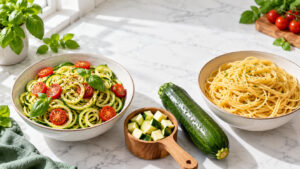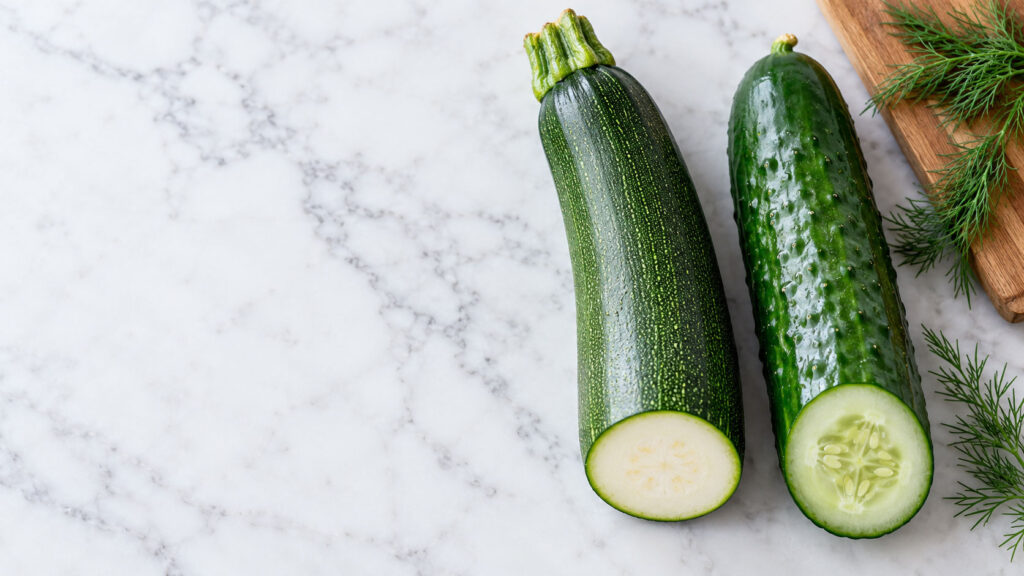
You slice what looks like a cucumber into your salad, take a bite, and get a dry, bland crunch instead of that cool, watery snap. It wasn’t a cucumber. It was zucchini.
Table of Contents
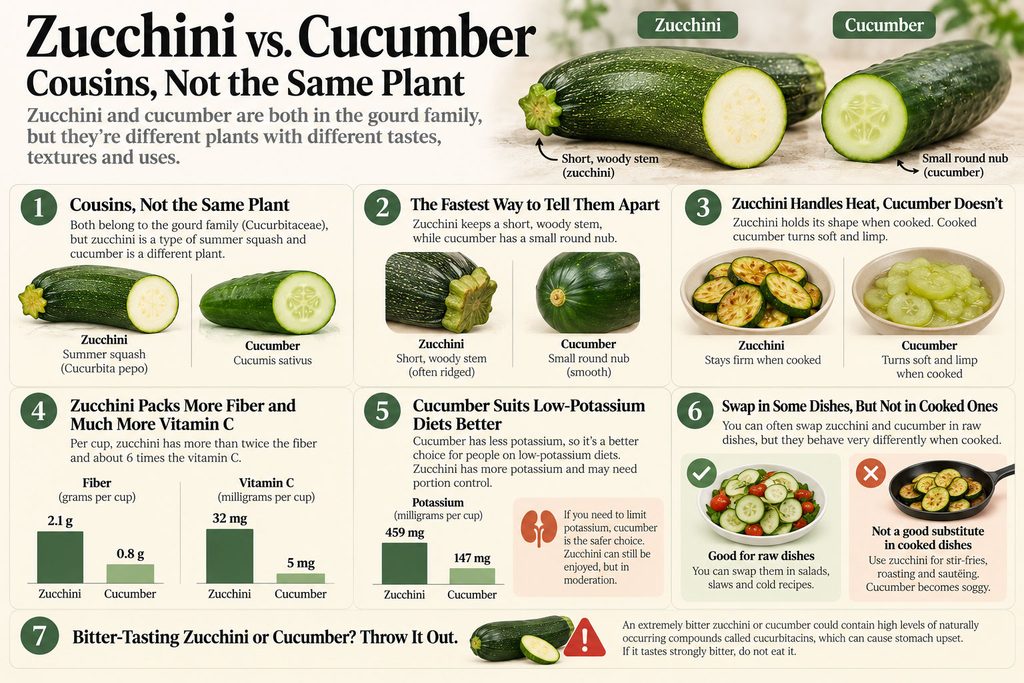
This mix-up happens in American kitchens every week. The two look like twins, but they come from different plants, taste different, cook differently, and even suit different health needs.
Quick Answer: Zucchini is a summer squash (Cucurbita pepo), while cucumber belongs to a separate genus (Cucumis sativus). Zucchini has a woody stem, matte skin, and dense cream-colored flesh, and it’s usually cooked. Cucumber has smooth, often waxy skin, crisp watery flesh, and visible seeds, and it’s usually eaten raw. Zucchini offers more fiber, vitamin C, and potassium. Cucumber has about 3.5 times more vitamin K.
At a Glance
- Zucchini and cucumber are cousins in the gourd family, not the same plant.
- The fastest tell: zucchini keeps a short, woody stem; cucumber has a small round nub.
- Zucchini holds up to heat; cooked cucumber turns soft and limp.
- Per cup, zucchini has more than twice the fiber and about 6 times the vitamin C.
- Cucumber suits low-potassium diets better; zucchini needs portion control there.
- An extremely bitter zucchini or cucumber belongs in the trash, not your mouth.
- You can swap them in some raw dishes, but almost never in cooked ones.
What Is Zucchini, and What Is a Cucumber?
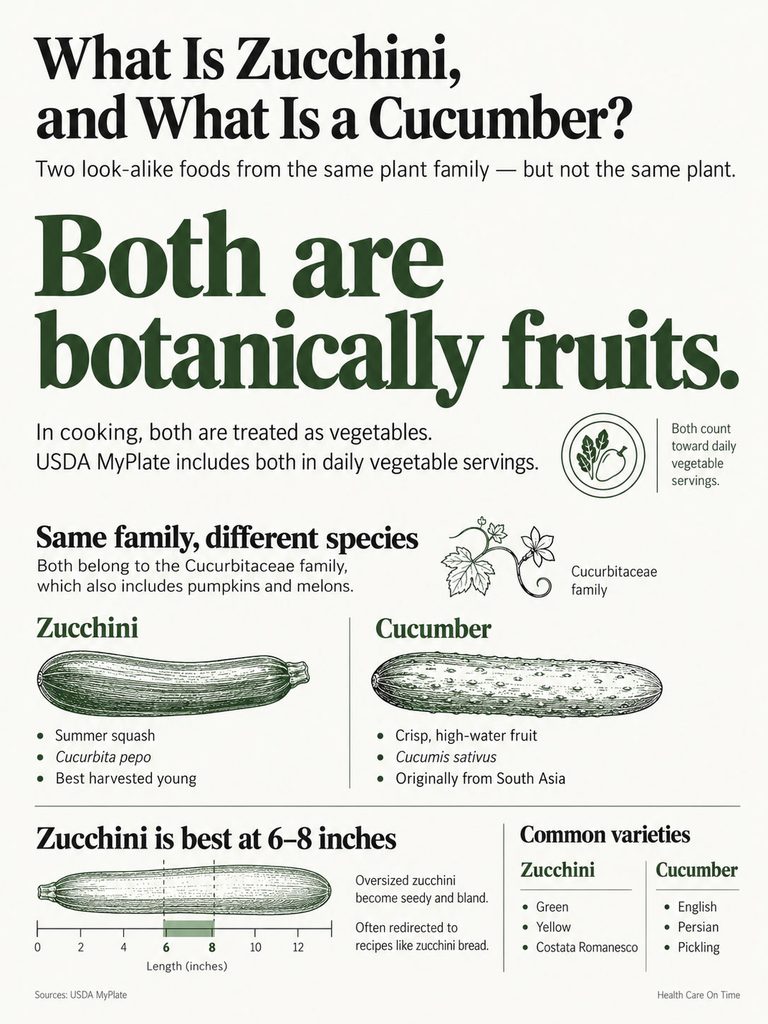
Both plants belong to the Cucurbitaceae family, often called the gourd family. Pumpkins, watermelons, and cantaloupes sit in the same family. That shared background explains the similar shape, color, and vining growth.
Below the family level, they split. Patients often ask our nutrition team whether zucchini is “a type of cucumber.” It isn’t, and the difference affects how you cook, store, and even eat them for your health.
Zucchini: A Summer Squash
Zucchini is a variety of Cucurbita pepo, the same species as many pumpkins, acorn squash, and yellow squash. Farmers pick it young, usually at 6 to 8 inches long, while the skin is still tender.
Left on the vine, zucchini can grow as big as a baseball bat. Oversized ones turn seedy, watery, and bland. That’s why home gardeners in late summer end up grating extras into zucchini bread.
Cucumber: A Gourd-Family Cousin
Cucumber is Cucumis sativus, a species that shares its genus with melons. It first grew in South Asia and has been farmed for thousands of years.
Growers breed cucumbers for crispness and high water content. That’s why they taste best raw, pickled, or sliced into a pitcher of ice water.
Are They Fruits or Vegetables?
Botanically, both are fruits. Each grows from a flower and carries seeds inside. In the kitchen, both act as vegetables because they’re savory and low in sugar.
The USDA MyPlate program counts both toward your daily vegetable servings. For meal planning, treat them as vegetables.
Common US Varieties You’ll See at the Store
Most American grocery stores carry several types of each. Knowing them makes the zucchini vs cucumber question easier to answer in the produce aisle.
Cucumber Types
- Slicing (American garden) cucumbers: 7 to 9 inches, dark green, often coated with food-grade wax to slow moisture loss.
- English (hothouse) cucumbers: 12 to 14 inches, thin skin, nearly seedless, usually shrink-wrapped in plastic.
- Persian cucumbers: 5 to 6 inches, thin skin, very crisp, often sold in bags.
- Kirby cucumbers: short, bumpy, and firm; the classic pickling type.
Zucchini Types
- Green zucchini: the standard, dark green with faint speckles.
- Golden zucchini: bright yellow but straight, unlike curved crookneck yellow squash.
- Round zucchini (such as Eight Ball): shaped like a softball and great for stuffing.
- Costata Romanesco: a ribbed, pale-striped heirloom with a nuttier flavor.
How to Tell Zucchini and Cucumber Apart
Learning how to tell zucchini from cucumber takes about ten seconds once you know where to look. Here’s the quick checklist our team shares with readers:
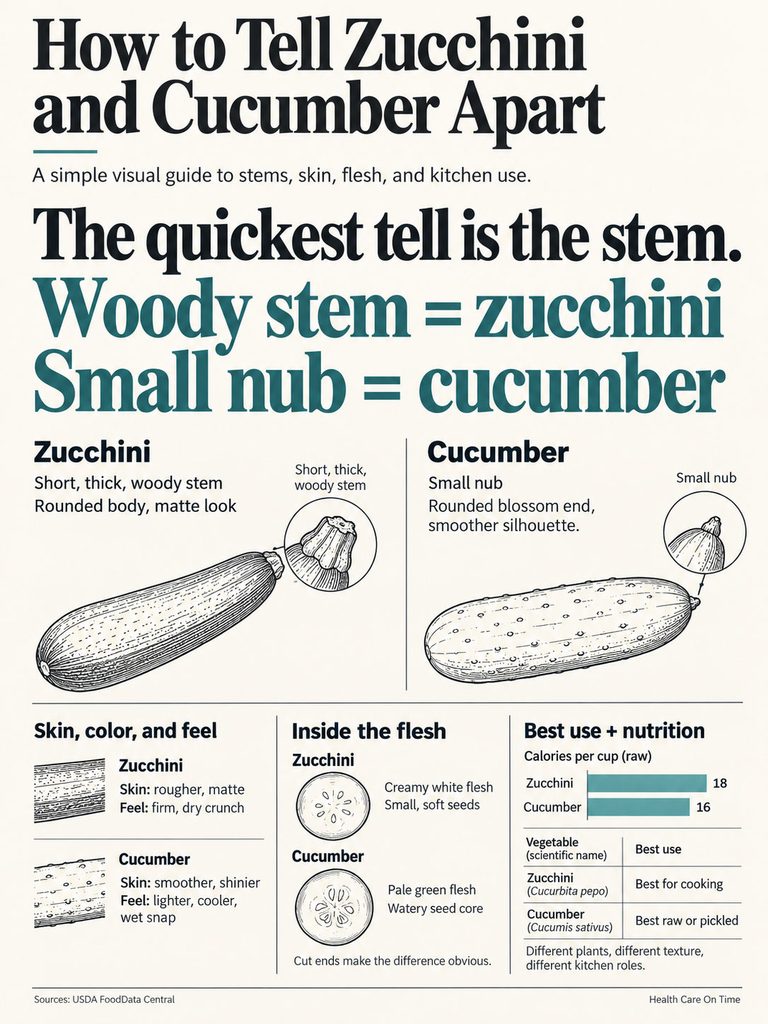
- Check the stem. A short, woody stem means zucchini. A smooth round nub means cucumber.
- Feel the skin. Matte and slightly rough points to zucchini. Smooth, shiny, or waxy points to cucumber.
- Weigh it in your hand. Zucchini feels denser and heavier for its size.
- Cut it open. Creamy white flesh is zucchini. Pale green flesh with a watery seed core is cucumber.
Check the Stem and Ends
Zucchini almost always reaches the store with a short, thick, woody stem attached. It looks like a little ridged cork.
Cucumber usually has no stem at all, only a small, smooth nub where it met the vine. The blossom end of a cucumber also tends to be more rounded.
Feel the Skin Texture and Look at the Color
Run your fingers along each one. Zucchini skin feels slightly rough or dull, with faint speckles or light stripes and a matte finish.
Cucumber skin feels smoother and often shinier, especially when waxed. Slicing cucumbers may have tiny bumps or soft spines. Kirby cucumbers feel noticeably warty.
Look Inside the Flesh and Seeds
Slice both in half and the difference jumps out. Zucchini flesh is creamy white to pale yellow and dense, with small, soft seeds that blend into the center.
Cucumber flesh has a pale green tint and a translucent, juicy look. Its seeds sit in a clear, watery core running down the middle.
Try the Squeeze and Snap Test
Gently squeeze each one. Zucchini feels firm with almost no give. Cucumber feels firm too, but lighter and cooler to the touch.
Snap a small piece. Cucumber breaks with a wet, juicy crack. Zucchini breaks with a drier, slightly spongy crunch.
| Feature | Zucchini | Cucumber | What It Means for You |
| Species | Cucurbita pepo (summer squash) | Cucumis sativus | Different plants, different nutrients |
| Stem | Short, thick, woody stem attached | Small round nub, usually no stem | Fastest in-store tell |
| Skin | Matte, slightly rough, speckled | Smooth or bumpy, often waxed and shiny | Zucchini skin is thicker; both are edible |
| Flesh color | Creamy white to pale yellow | Pale green, translucent | Visible once sliced |
| Seeds | Small, soft, blended in | Distinct watery seed core | Cucumber releases more liquid |
| Raw texture | Dense, dry crunch | Crisp, wet crunch | Cucumber wins for salads |
| Best use | Sautéed, grilled, roasted, baked | Raw, pickled, chilled | Cooked cucumber goes limp |
| Calories (1 cup sliced, raw) | About 18 | About 16 | Both are very low in calories |
Taste and Texture: Raw vs Cooked
Flavor is where many people first notice the difference between zucchini and cucumber. Neither tastes strong, but each has its own personality.
The Raw Bite Comparison
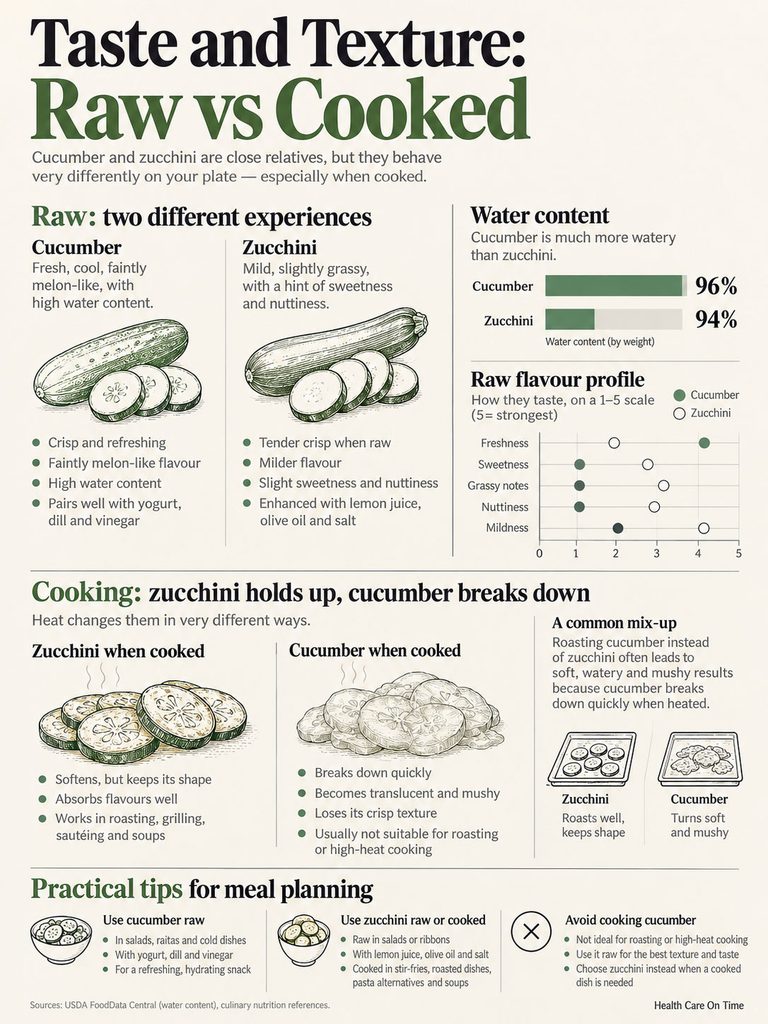
Raw cucumber tastes fresh, cool, and faintly melon-like. Its high water content feels hydrating in your mouth, which is why it pairs so well with yogurt, dill, and vinegar.
Raw zucchini tastes milder and slightly grassy, with a hint of sweetness and nuttiness. Some find it bland alone. Thin ribbons with lemon juice, olive oil, and a pinch of salt fix that fast.
What Happens When You Cook Each One
Heat is where the two part ways completely. Zucchini softens but keeps its shape, browns well on a grill, and soaks up garlic, herbs, and tomato sauce.
Cucumber breaks down quickly under heat. It turns translucent and mushy within minutes. Some Chinese dishes stir-fry cucumber briefly, but that’s the exception.
In meal plans reviewed by our medical team, this is the most common practical mix-up: someone roasts cucumber thinking it’s zucchini and ends up with a pan of hot water and limp green skins.
Zucchini vs Cucumber Nutrition: Which Is Healthier?
Both rank among the lowest-calorie foods you can buy. Still, zucchini vs cucumber nutrition is not a tie. Each one wins in different categories.
That matters because most Americans fall short on vegetables. CDC data from its 2019 Behavioral Risk Factor Surveillance System found that just 10% of US adults met the federal vegetable recommendation of 2 to 3 cups a day.
Calories, Carbs, and Fiber
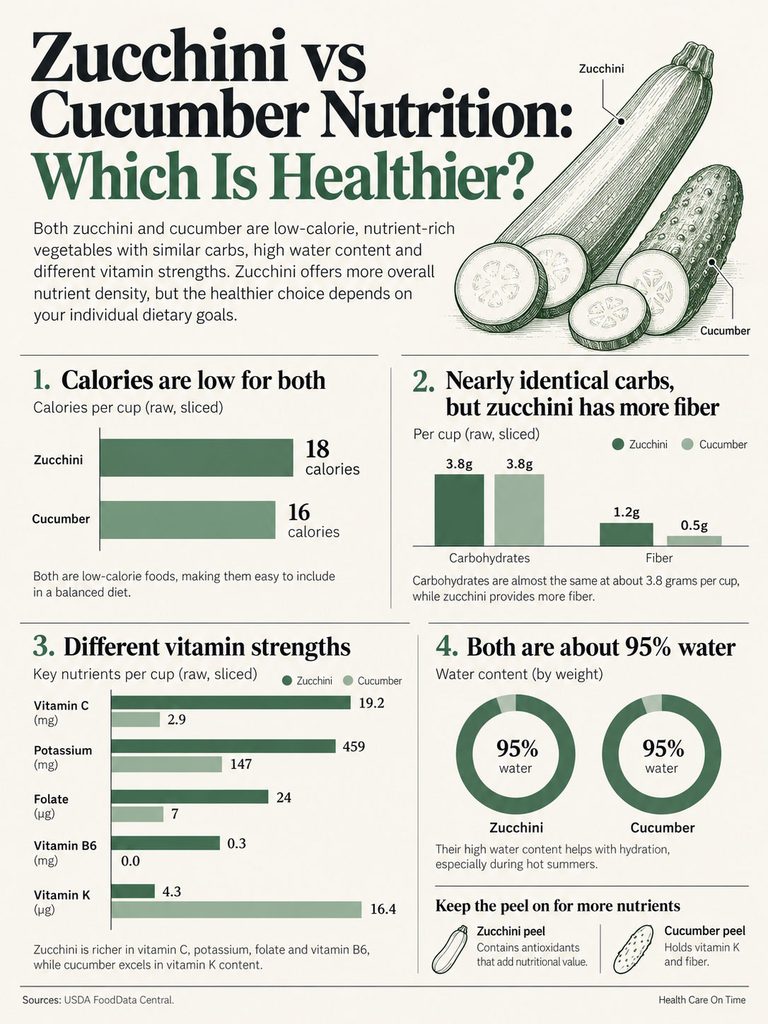
A cup of sliced raw zucchini has about 18 calories; the same amount of cucumber has about 16. That gap is too small to matter for most diets.
Carbs are nearly identical at roughly 3.8 grams per cup. Fiber is the real difference: zucchini gives you about 1.2 grams per cup, more than twice cucumber’s 0.5 grams.
Vitamins and Minerals Head to Head
Zucchini leads on vitamin C, potassium, folate, and vitamin B6. One cup supplies about 19 milligrams of vitamin C, roughly a fifth of an adult’s daily need.
Cucumber’s top nutrient is vitamin K, which supports blood clotting and bone health. A cup of cucumber with peel provides about 17 micrograms, compared with about 5 in zucchini.
Zucchini also carries about 2,400 micrograms of lutein and zeaxanthin per cup, according to USDA FoodData Central. These plant pigments collect in the retina and are studied for their role in eye health.
Hydration Value
Both are about 95% water by weight. That makes them helpful for hydration during hot American summers, when many people drink less than they need.
Cucumber feels more hydrating because its water releases easily when you bite. In practice, both add real water to your day.
Should You Peel Them?
Keep the peel on both whenever you can. Much of cucumber’s vitamin K and fiber sits in or just under the skin, and zucchini’s skin holds a large share of its antioxidants.
Peel waxed slicing cucumbers only if the texture bothers you. The wax is FDA-approved and safe to eat. English and Persian cucumbers are rarely waxed.
| Nutrient (1 cup sliced, raw, with skin) | Zucchini (113 g) | Cucumber (104 g) | Source |
| Calories | 18 kcal | 16 kcal | USDA FoodData Central |
| Protein | 1.4 g | 0.7 g | USDA FoodData Central |
| Carbohydrates | 3.8 g | 3.8 g | USDA FoodData Central |
| Dietary fiber | 1.2 g | 0.5 g | USDA FoodData Central |
| Potassium | 296 mg | 153 mg | USDA FoodData Central |
| Vitamin C | 19.2 mg | 2.9 mg | USDA FoodData Central |
| Vitamin K | 4.9 mcg | 17.1 mcg | USDA FoodData Central |
| Folate | 33 mcg | 7 mcg | USDA FoodData Central |
| Water content | About 95% | About 95% | USDA FoodData Central |
So, is zucchini healthier than cucumber? On nutrient density, yes, by a clear margin. But “healthier” depends on your body and your goals, as the next section shows.
Health Benefits for Specific Goals and Conditions
This is where most zucchini vs cucumber guides stop short. For people managing a medical condition, the better pick can flip.
Weight Loss
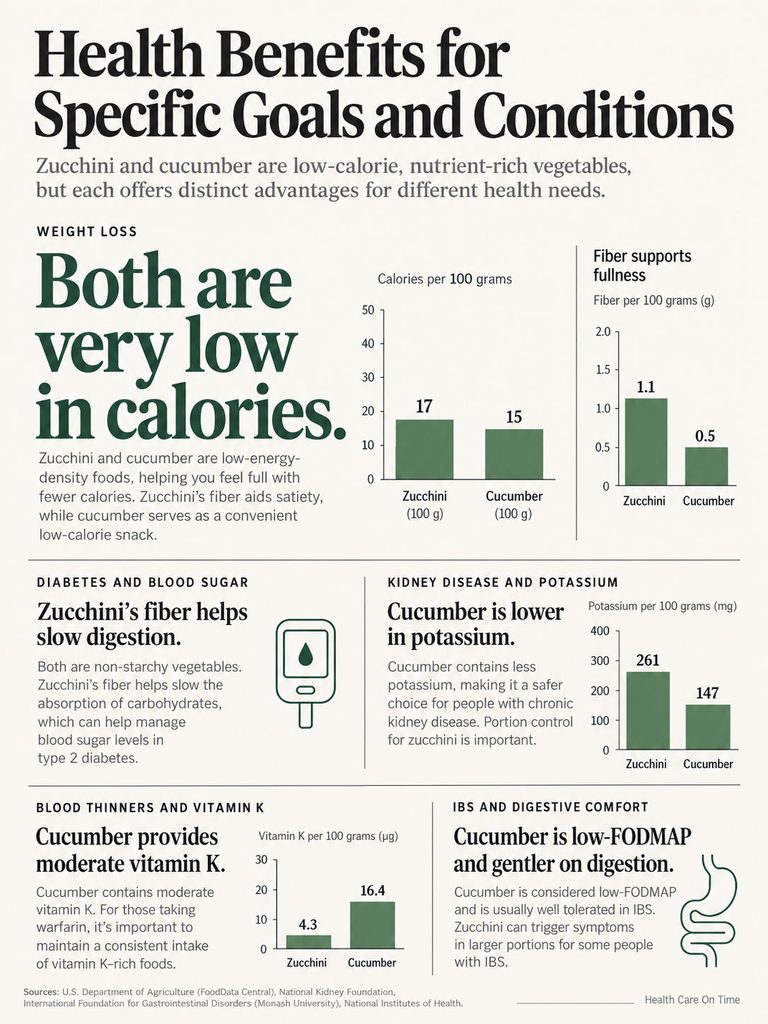
Both are low-energy-density foods. They fill your plate and stomach with very few calories, which helps you eat satisfying portions while staying in a calorie deficit.
Zucchini’s extra fiber helps you stay full longer. It also works as a pasta swap: a cup of zucchini noodles has about 18 calories, while a cup of cooked spaghetti has about 220, based on USDA data. Cucumber makes the easier grab-and-go snack.
Diabetes and Blood Sugar
Both count as non-starchy vegetables, the group the American Diabetes Association suggests should fill half your plate. At under 4 grams of carbs per cup, neither causes a meaningful blood sugar rise.
Zucchini has a slight edge because its fiber slows digestion. Patients managing type 2 diabetes often tell our team that replacing half their pasta with zucchini noodles is the easiest change they’ve kept up.
Kidney Disease and Potassium
People with chronic kidney disease often need to limit potassium. Here, cucumber is the safer choice, with about half the potassium of zucchini per cup.
Zucchini isn’t off-limits, but portions matter. The National Kidney Foundation advises working with a renal dietitian on daily targets. Boiling sliced zucchini and draining the water lowers its potassium further.
Blood Thinners and Vitamin K
If you take warfarin (Coumadin), you don’t need to avoid vitamin K. You need to keep intake steady from day to day, according to the NIH Office of Dietary Supplements.
A cup of cucumber supplies about 17 micrograms, roughly 19% of a woman’s daily adequate intake of 90 micrograms. That’s moderate. Trouble comes from sudden swings, like eating cucumber salad every day for a week and then stopping.
IBS and Digestive Comfort
For people on a low-FODMAP diet for irritable bowel syndrome, cucumber is the gentler pick. Monash University, which created the low-FODMAP diet, rates cucumber low FODMAP at typical servings.
Zucchini stays low FODMAP only in smaller portions, around half a cup. Bigger servings add fructans that can trigger gas and bloating. Cooked zucchini also tends to sit easier on a sensitive stomach.
Safety Risks: Bitterness, Allergies, and Pesticides
Both vegetables are safe for nearly everyone. Still, a health guide should cover the rare risks, because one of them can be serious.
Bitter Zucchini and Cucurbitacin Poisoning
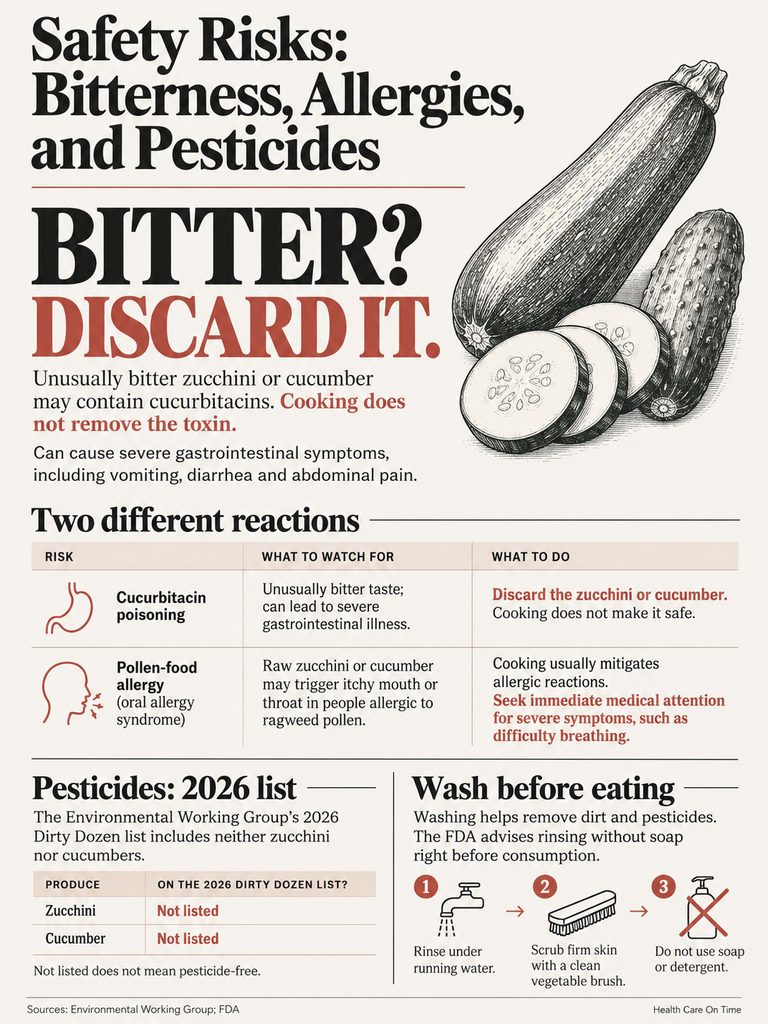
All gourd-family plants can make cucurbitacins, bitter compounds that defend the plant against insects. Commercial varieties are bred to contain only trace amounts.
Trouble shows up mostly in home-garden squash that cross-pollinated with ornamental gourds, or in plants stressed by heat and drought. The result is a zucchini or cucumber that tastes intensely bitter.
The condition, sometimes called toxic squash syndrome, causes vomiting, cramping, and diarrhea, often within an hour. A report in JAMA Dermatology described two women who lost hair weeks after eating bitter squash. A fatal case linked to home-garden zucchini has also been reported in Europe, as Food Safety News documented.
Our medical reviewers give one simple rule: if a zucchini or cucumber tastes unusually bitter, spit it out and throw the whole thing away. Cooking does not remove the toxin.
Oral Allergy Syndrome
Some people allergic to ragweed pollen get an itchy mouth or throat after eating raw zucchini or cucumber. Doctors call this oral allergy syndrome, or pollen-food allergy syndrome.
Cooking usually breaks down the proteins behind the reaction. If raw zucchini makes your lips tingle, try it sautéed instead. Any throat swelling or trouble breathing needs emergency care right away.
Pesticide Residue and How to Wash Produce
The Environmental Working Group’s 2026 Shopper’s Guide to Pesticides in Produce drew on USDA testing of 54,344 samples across 47 fruits and vegetables. Neither zucchini nor cucumber made its Dirty Dozen list, which spinach, strawberries, and grapes topped.
That doesn’t mean you can skip washing. The FDA recommends rinsing produce under running water just before eating, without soap. Scrub firm skins like these with a clean vegetable brush.
Can You Substitute Zucchini for Cucumber?
Sometimes, yes. Often, no. Whether you can substitute zucchini for cucumber depends mostly on whether the dish is raw or cooked.
When the Swap Works
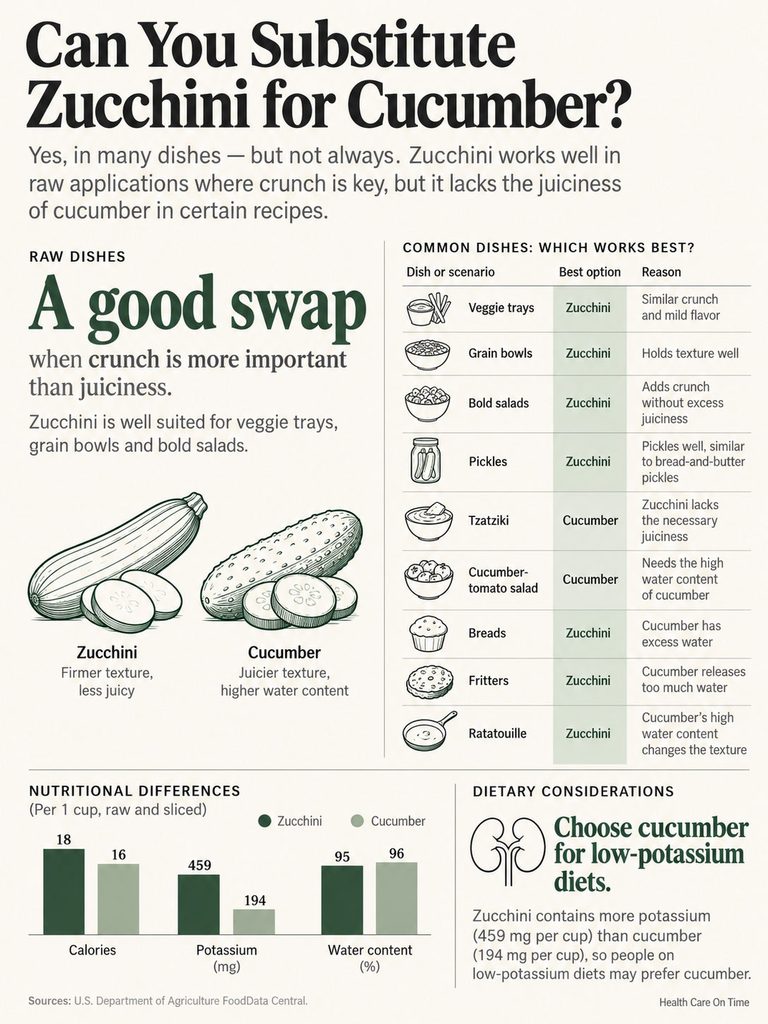
In raw dishes where crunch matters more than juiciness, the swap works. Think veggie trays, grain bowls, or a chopped salad with a bold dressing.
Zucchini also pickles well. A quick fridge pickle with vinegar, dill, and garlic turns it into a tangy side that tastes close to a bread-and-butter pickle.
When It Fails
In tzatziki, cucumber water, or a classic cucumber-tomato salad, zucchini falls flat. It lacks the juicy, cooling quality those dishes rely on.
The reverse swap is worse. Cucumber can’t replace zucchini in bread, fritters, grilled skewers, or ratatouille. It releases too much water and collapses.
| Scenario | Best Pick | Why, or What to Do |
| Greek salad or tzatziki | Cucumber | Needs juicy, cooling crunch; zucchini tastes flat here |
| Grilling, roasting, or stir-frying | Zucchini | Holds shape and browns; cucumber turns mushy |
| Low-carb pasta swap | Zucchini | About 18 calories per cup vs about 220 for spaghetti |
| Quick fridge pickles | Either | Cucumber is classic; zucchini makes a softer, milder pickle |
| Low-potassium kidney diet | Cucumber | About 153 mg per cup vs 296 mg in zucchini |
| Taking warfarin | Either, consistently | Keep daily vitamin K intake steady; cucumber has more |
| Low-FODMAP diet for IBS | Cucumber | Zucchini is low FODMAP only at about ½ cup |
| Produce tastes very bitter | Neither | Discard it; bitterness signals cucurbitacin |
Easy Ways to Eat More of Both
Knowing the difference is only useful if it changes what lands on your plate. Here are simple, low-effort ways our nutrition team suggests working each one into a normal American week.
Quick Cucumber Ideas
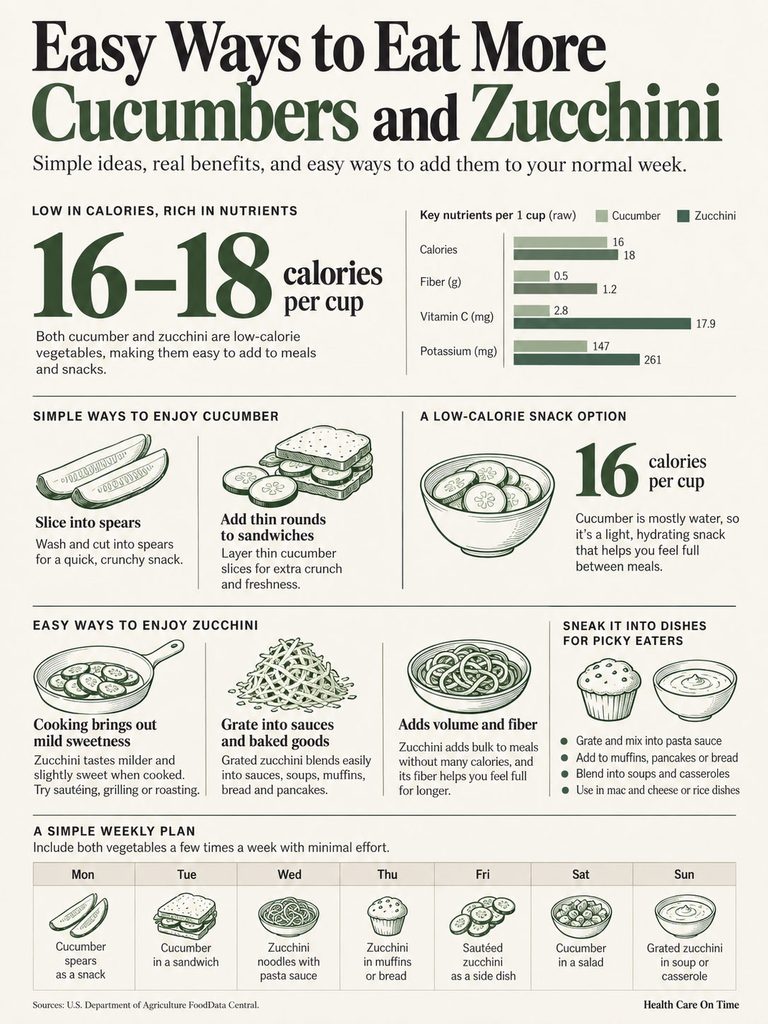
Cucumber shines when you keep it cold and simple. Slice it into spears for a desk snack, or add thin rounds to a turkey sandwich for crunch without extra calories.
- Toss diced cucumber with cherry tomatoes, red onion, olive oil, and lemon for a 5-minute salad.
- Stir grated cucumber into plain Greek yogurt with garlic and dill for a homemade tzatziki dip.
- Drop a few slices into a pitcher of water and chill it for at least an hour.
- Swap crackers for thick cucumber rounds topped with hummus or tuna salad.
Quick Zucchini Ideas
Zucchini works best when heat brings out its mild sweetness. It also stretches meals, adding volume and fiber to dishes you already make.
- Sauté half-moons in olive oil with garlic for 4 to 5 minutes as a fast side.
- Spiralize it into noodles and toss with warm marinara for a lighter pasta night.
- Grate it into meatballs, turkey burgers, or muffin batter to add moisture.
- Grill thick planks for 3 to 4 minutes per side, then finish with salt and lemon.
Families who cook with us often say grated zucchini is the easiest way to sneak extra vegetables past picky kids. It nearly disappears into sauces and baked goods.
Growing Zucchini and Cucumber at Home
Both are popular summer crops in American backyard gardens. Knowing how each plant grows helps you tell them apart before harvest and avoid the bitter-fruit problem.
How the Plants Differ
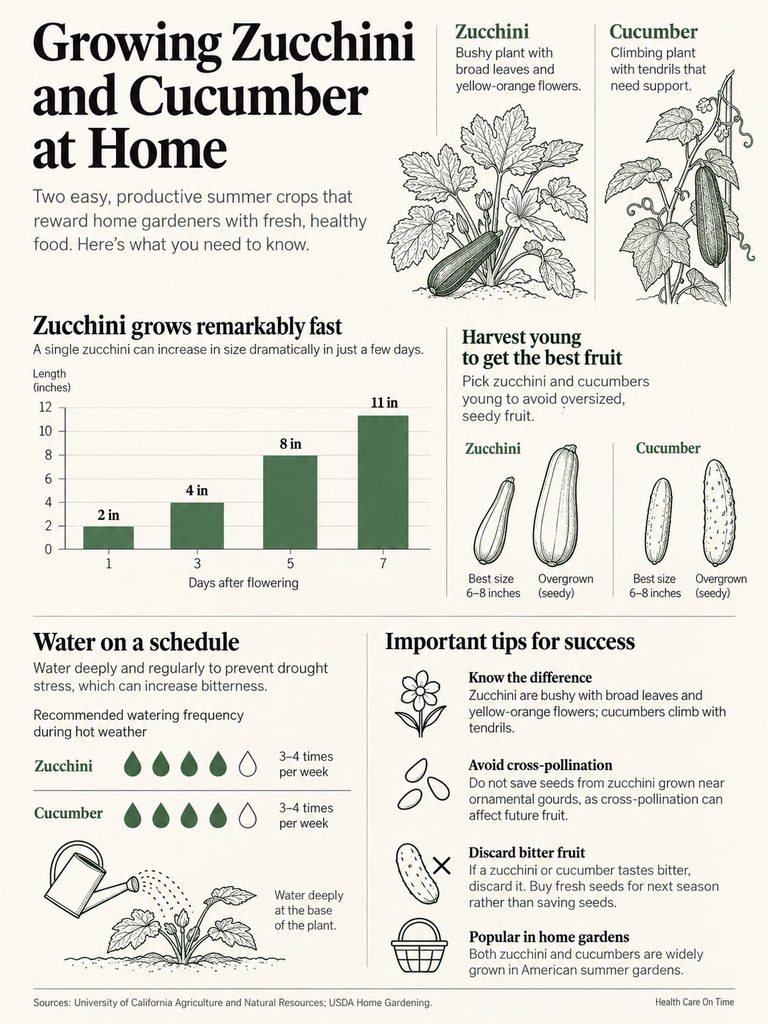
Most zucchini plants grow as large, bushy mounds with broad, prickly leaves and big yellow-orange flowers. Cucumber plants grow as climbing vines that grab trellises and fences with thin, curly tendrils.
Zucchini grows fast. Many home gardeners check plants daily in midsummer, because a fruit can jump from 6 inches to over a foot in just a few days.
Garden Tips That Lower Bitterness Risk
Water deeply and on a steady schedule, especially during heat waves, since drought stress raises cucurbitacin levels. Pick fruit young, before it turns oversized and seedy.
Avoid saving seeds from squash grown near ornamental gourds, which can cross-pollinate. If a homegrown fruit tastes harshly bitter, discard it, and buy fresh seed for next season.
How to Buy and Store Each One
Freshness affects both flavor and nutrition. A few quick checks at the store go a long way.
Choosing Fresh Produce
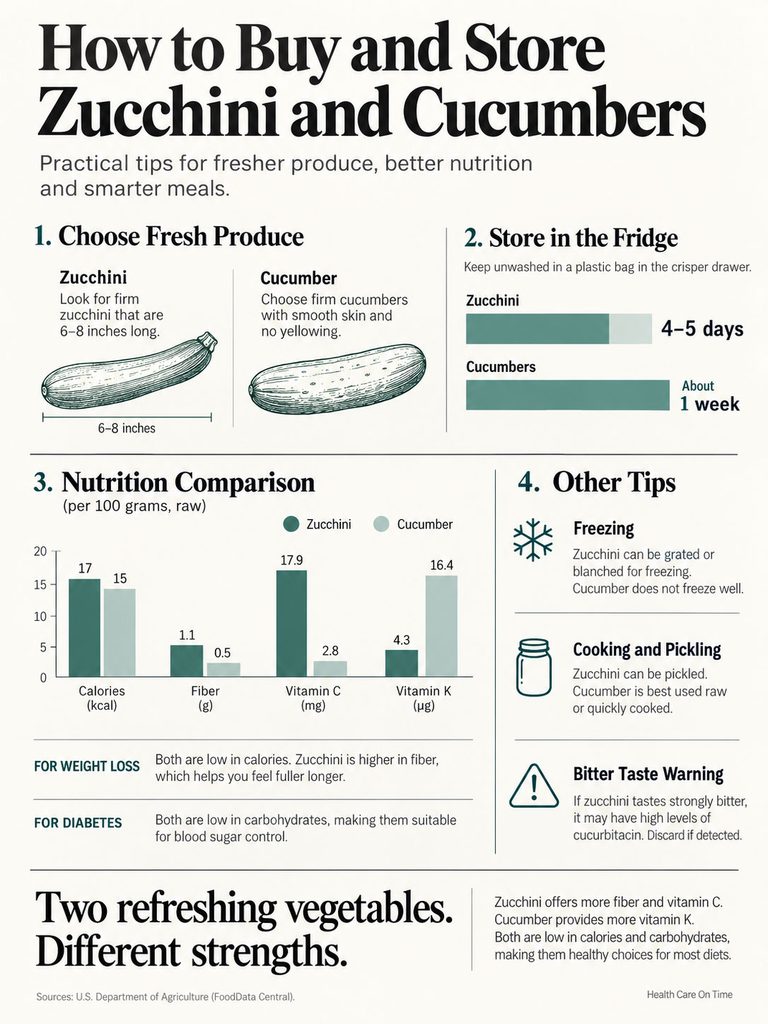
Pick zucchini that are 6 to 8 inches long, firm, heavy for their size, and free of soft spots. Smaller ones taste sweeter and carry fewer seeds.
Choose cucumbers that feel firm from end to end, with no yellowing or soft tips. Yellow patches mean the cucumber is overripe and likely seedy or bitter.
Fridge Storage and Shelf Life
Store zucchini unwashed in a loosely closed bag in the crisper drawer. It keeps about 4 to 5 days. Wash it right before use to prevent mold.
Cucumbers keep about one week in the fridge. Both dislike very cold spots, so keep them toward the front, away from bananas, apples, and other ethylene-producing fruits.
Readers who meal prep often ask us about freezing. Zucchini freezes well when grated or blanched, which is perfect for baking. Cucumber doesn’t freeze well; it thaws into a soggy mess.
Frequently Asked Questions
Can you eat zucchini raw like a cucumber?
Yes. Store-bought zucchini is safe to eat raw once washed. It has a drier, denser crunch and a milder, slightly sweet taste. Try it thinly sliced or shaved into ribbons with lemon, olive oil, and salt. Throw away any zucchini that tastes strongly bitter, since that signals high cucurbitacin levels.
Is zucchini healthier than cucumber?
For most people, zucchini is more nutrient-dense. Per cup, it has more than twice the fiber, about six times the vitamin C, and nearly twice the potassium. Cucumber offers more vitamin K and suits low-potassium diets better. Both are healthy, low-calorie choices, so the better pick depends on your health needs.
Which is better for weight loss, zucchini or cucumber?
Both work well. Cucumber has slightly fewer calories, about 16 per cup versus 18 for zucchini. Zucchini’s higher fiber keeps you full longer, and zucchini noodles can replace pasta to save around 200 calories per cup. Use cucumber for snacks and zucchini for main dishes to get the benefits of both.
Are zucchini and cucumber good for diabetics?
Yes. Both are non-starchy vegetables with under 4 grams of carbohydrate per cup, so they barely affect blood sugar. The American Diabetes Association recommends filling half your plate with non-starchy vegetables. Zucchini’s extra fiber slightly slows digestion, which may help keep post-meal glucose steadier.
Why does my zucchini taste bitter?
Bitterness comes from cucurbitacins, natural compounds that rise when plants face heat stress, drought, or cross-pollination with ornamental gourds. Mild bitterness near a cucumber’s stem is common. Strong bitterness in zucchini is a warning sign. Spit it out and discard the whole vegetable, since cucurbitacin poisoning can cause severe vomiting.
Is zucchini a type of cucumber?
No. Zucchini is a summer squash in the species Cucurbita pepo, the same species as many pumpkins. Cucumber belongs to Cucumis sativus, a different genus that also includes melons. Both sit in the gourd family, which explains their similar look, but they differ in taste, texture, nutrition, and cooking behavior.
Can you pickle zucchini?
Yes. Zucchini makes excellent quick fridge pickles. Slice it into spears or rounds, pack it into a jar with garlic and dill, then cover with a hot brine of vinegar, water, salt, and a little sugar. Refrigerate for at least 24 hours. Zucchini pickles come out softer and milder than cucumber pickles.
Can you cook cucumber?
You can, but carefully. Cucumber softens fast under heat because it holds so much water. A quick stir-fry of one to two minutes keeps some crunch, a method common in Chinese cooking. Avoid roasting or baking cucumber, which turns it mushy and watery. For most cooked recipes, zucchini is the better choice.
Do you need to peel zucchini or cucumber?
No. Both peels are edible and hold much of the fiber, vitamin K, and antioxidants. Wash and scrub the skin with a vegetable brush instead. Peel waxed slicing cucumbers only if you dislike the texture; the wax is FDA-approved and safe. Very large zucchini may have tough skin worth removing.
Is zucchini OK on a kidney diet?
Often yes, in controlled portions. A cup of raw zucchini has about 296 milligrams of potassium, almost double cucumber’s amount. People on potassium-restricted diets should check daily targets with a renal dietitian. Boiling sliced zucchini and draining the water reduces potassium. Cucumber is generally the easier fit for low-potassium meal plans.
Can people on warfarin eat cucumber?
Yes. Warfarin users don’t need to avoid vitamin K; they need steady intake. A cup of cucumber has about 17 micrograms of vitamin K, a moderate amount. Eating similar portions most days is fine. Avoid sudden big changes, and talk to your doctor before making major shifts in your vegetable intake.
How long do zucchini and cucumber last in the fridge?
Whole, unwashed zucchini lasts about 4 to 5 days in a loosely closed bag in the crisper drawer. Whole cucumbers last about one week. Both dislike very cold spots, so keep them away from the back of the fridge. Once cut, wrap them tightly and use within 1 to 2 days.
Disclaimer: This article is for general educational purposes and does not replace personalized medical advice. If you have kidney disease, take blood thinners, manage diabetes, or have food allergies, speak with your doctor or a registered dietitian before changing your diet. Seek emergency care for severe vomiting or throat swelling after eating any food.
References
- USDA FoodData Central
- USDA MyPlate: Vegetables
- CDC: Adults Meeting Fruit and Vegetable Intake Recommendations (BRFSS 2019)
- NIH Office of Dietary Supplements: Vitamin K Fact Sheet
- NIH Office of Dietary Supplements: Potassium Fact Sheet
- FDA: Selecting and Serving Produce Safely
- Environmental Working Group: Shopper’s Guide to Pesticides in Produce
- American Diabetes Association: Non-Starchy Vegetables
- National Kidney Foundation: Potassium
- Monash University FODMAP Diet
- Live Science: Toxic Squash Syndrome and Hair Loss
- Food Safety News: Zucchini Poisoning Case Report