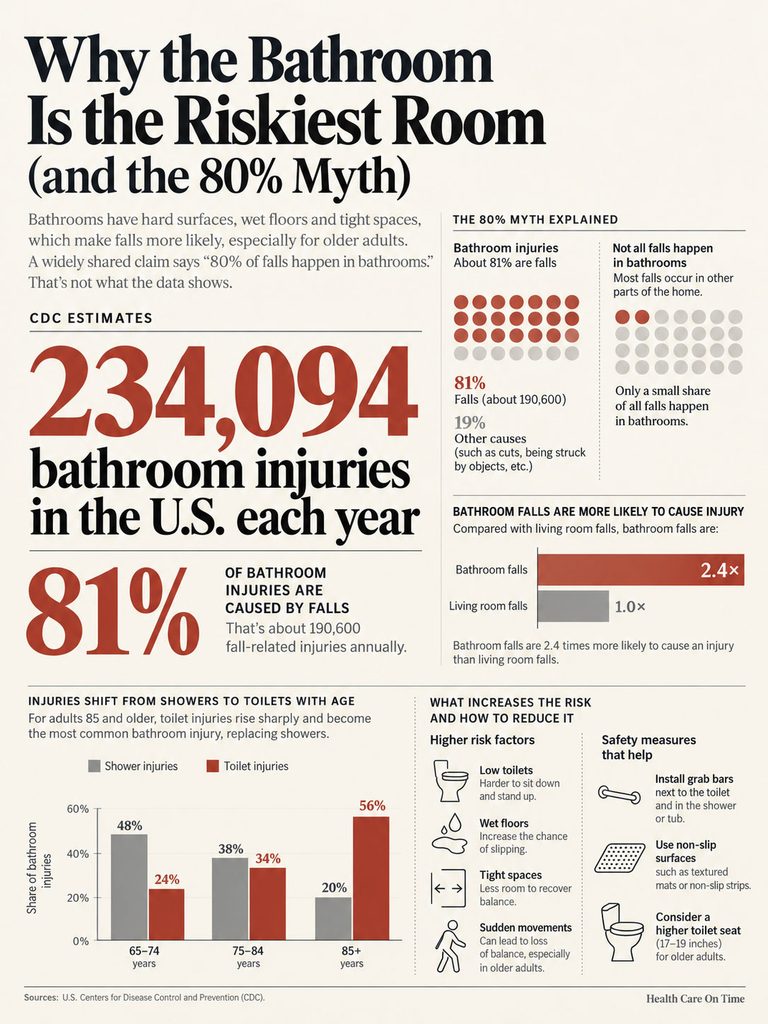
You’ve probably read that 80% of senior falls happen in the bathroom. It’s on dozens of senior-care websites, and it’s wrong. The real CDC finding is that about 80% of bathroom injuries are caused by falls, which is a very different claim.
Table of Contents
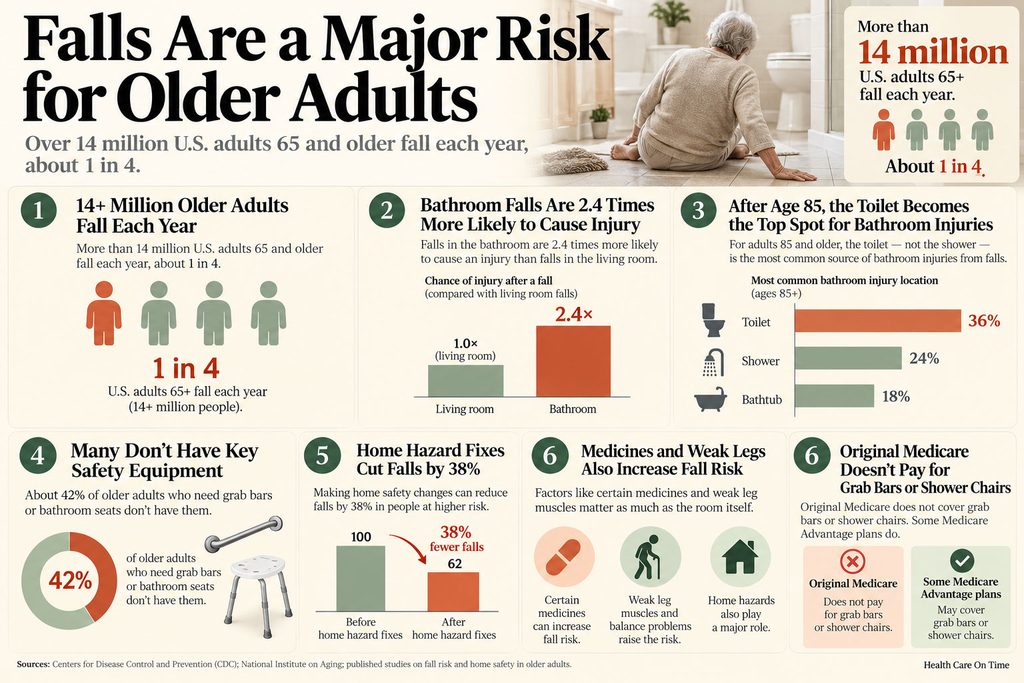
Here’s the part that should worry you more. When an older adult falls in the bathroom, the fall is more than twice as likely to cause an injury as a fall in the living room. The bathroom isn’t where most falls happen. It’s where falls hurt the most.
Our medical team reviewed the most-shared bathroom safety pages before writing this guide. Most repeat the 80% figure with no source. This guide sticks to numbers you can check.
Quick Answer: The most effective bathroom safety tips for older adults are:
- Install grab bars screwed into wall studs
- Raise the toilet seat to 17 to 19 inches
- Use a shower chair or transfer bench
- Add non-slip strips to the tub floor
- Remove loose rugs
- Light the path with motion night lights
- Set the water heater to 120°F
- Add a handheld shower head
- Sit down to dry off and dress
- Keep a phone or alert device within reach
- Book an occupational therapist home check
At a Glance
- Over 14 million US adults 65 and older fall each year, about 1 in 4.
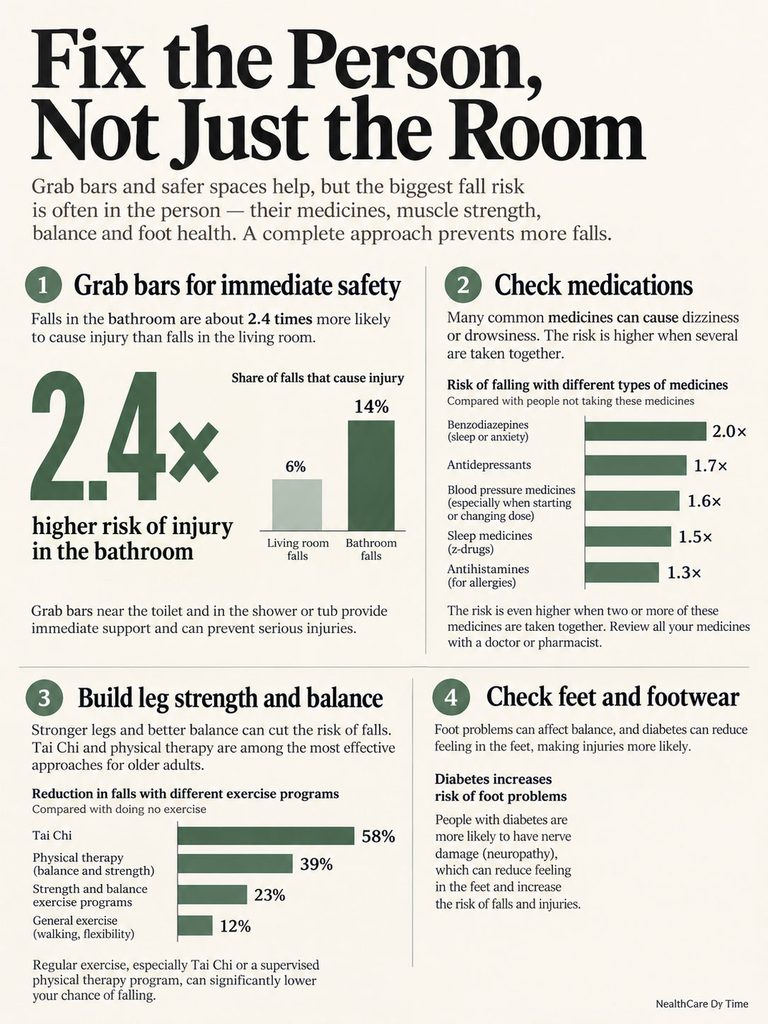
- Falls in the bathroom are 2.4 times more likely to cause injury than living room falls.
- After age 85, the toilet, not the shower, becomes the top spot for bathroom injuries.
- About 42% of older adults who need grab bars or bathroom seats don’t have them.
- Home hazard fixes cut falls by 38% in people at higher risk.
- Medicines and weak legs matter as much as the room itself.
- Original Medicare doesn’t pay for grab bars or shower chairs. Some Medicare Advantage plans do.
Why the Bathroom Is the Riskiest Room (and the 80% Myth)
Bathrooms combine everything that makes a fall dangerous. Hard tile, porcelain edges, wet floors, tight turns, and constant sitting and standing all happen in a space the size of a closet.
What CDC Data Actually Says
The only national CDC study of bathroom injuries, published in MMWR, counted an estimated 234,094 bathroom injuries treated in US emergency departments in one year among people 15 and older. About 81% of those injuries came from falls.
So the accurate statement is this: most bathroom injuries are falls. That’s useful, because it tells you where to focus. It doesn’t mean most falls happen in the bathroom.
Injury rates climbed steadily with age in that study. Adults 65 and older had the highest rates of fractures and hospital admissions. The authors pointed to grab bars and non-slip strips as the obvious fixes.
Why Bathroom Falls Hurt More
A CDC-led study of high-risk older adults tracked 1,172 falls using monthly calendars. Of the 783 falls inside the home, bathroom falls were 2.4 times more likely to cause an injury than living room falls (Stevens et al.).
The reason is simple. A living room has carpet, couches, and soft landings. A bathroom has a tub edge at hip height, a toilet tank at head height, and tile everywhere else. There’s rarely a soft fall in there.
The Toilet Overtakes the Shower After 85
Most safety guides start with the shower, and for younger adults that’s right. Most bathroom injuries happen in or near the tub or shower, and most of those happen while getting out.
But the pattern flips with age. Toilet-related injuries made up just 2% of bathroom injuries in people aged 15 to 24, and 37% in people 85 and older (MDedge summary of the CDC data). The toilet injury rate rose from 4.1 to 266.6 per 100,000 across those same age groups.
Sitting down and standing up is hard work for aging legs. Low toilets make it harder, and standing quickly can drop blood pressure enough to cause dizziness. That’s why this guide treats the toilet as its own zone.
Bathroom Fall Risk by the Numbers
Before buying anything, it helps to know how big the problem is. Here’s the most current US data we could verify.
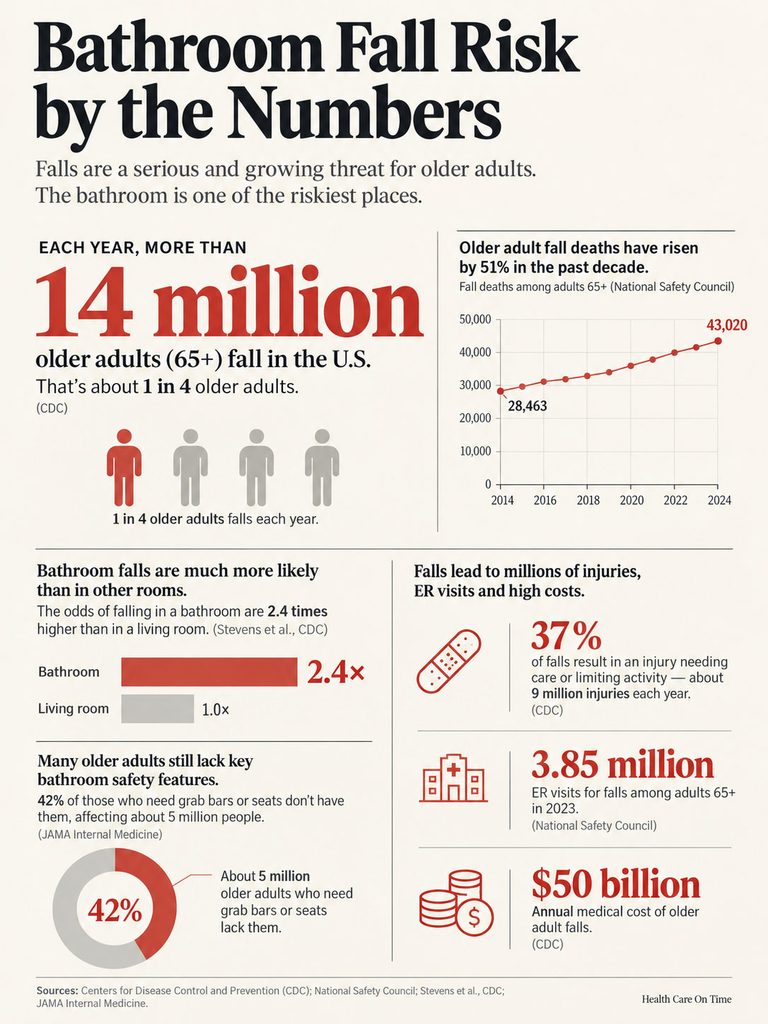
| Statistic | Figure | Source |
| Older adults (65+) who fall each year | Over 14 million, about 1 in 4 | CDC |
| Falls that cause an injury needing care or limiting activity | About 37%, roughly 9 million injuries | CDC |
| Fall deaths, adults 65+ (2024) | 43,020 | National Safety Council |
| ER visits for falls, adults 65+ (2023) | Over 3.85 million | National Safety Council |
| Rise in older adult fall deaths over 10 years | 51% | National Safety Council |
| Injury odds, bathroom vs living room fall | 2.4 times higher | Stevens et al., CDC |
| Older adults needing grab bars or seats who lack them | 42%, about 5 million people | JAMA Internal Medicine |
| Annual medical cost of older adult falls | About $50 billion | CDC |
That 42% figure deserves a second look. The study followed 2,614 Medicare beneficiaries who had real trouble bathing or toileting. Four years later, 35% of those with bathing needs and 52% with toileting needs still had no equipment (JAMA).
The fixes are cheap and well known. They just aren’t getting installed.
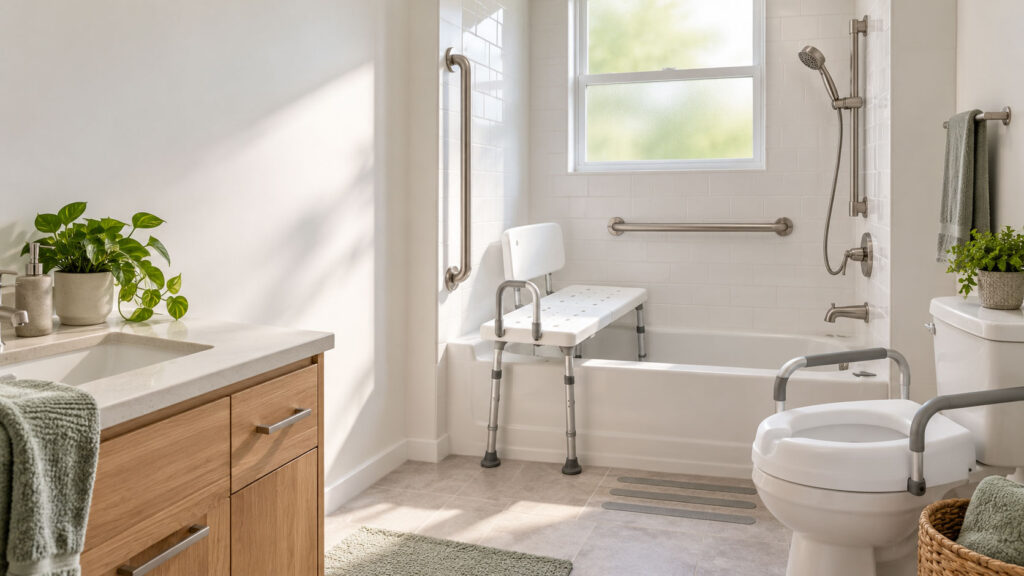
11 Bathroom Safety Fixes, Zone by Zone
Think of the bathroom as six zones: the path in, the toilet, the tub or shower, the floor, the water, and the help system. Each has its own main hazard and its own fix. Costs below are typical US retail ranges, not quotes.
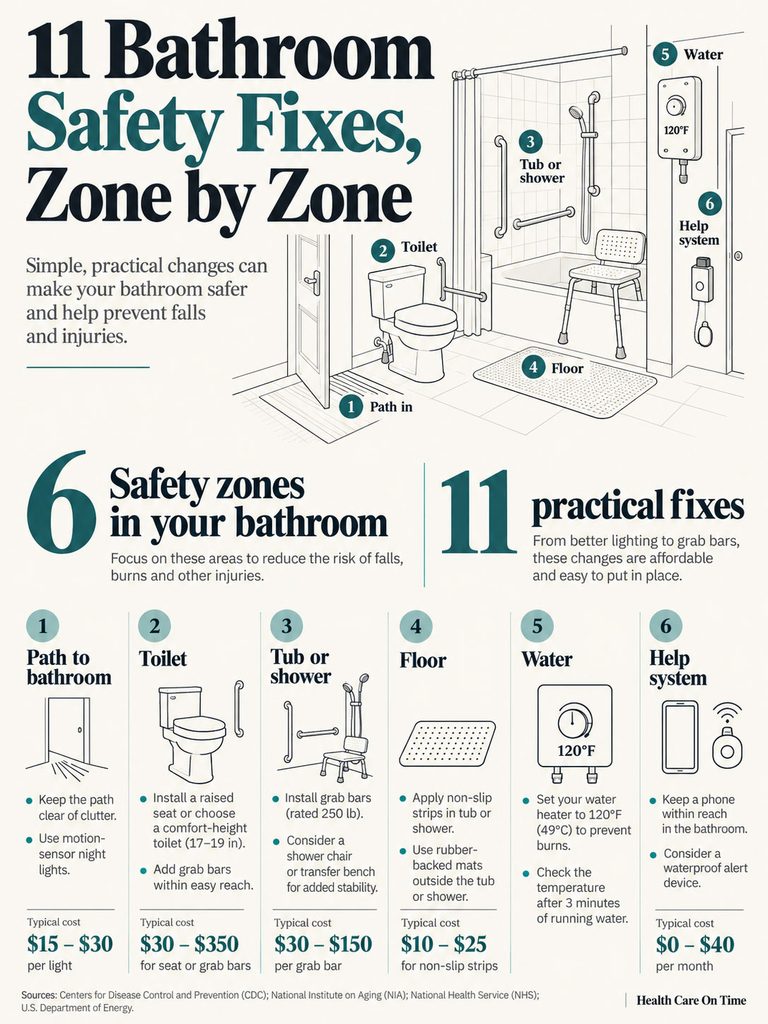
| Zone | Main Hazard | Key Fix | Install Spec | Typical Cost |
| Path to bathroom | Dark hallway, clutter, rugs | Motion night lights, clear route | Lights low along the route, one near the toilet | $15 to $30 |
| Toilet | Low seat, hard stand-up | Raised seat or comfort-height toilet, grab bar | Seat 17 to 19 inches high | $30 to $350 |
| Tub or shower | Stepping out on a wet surface | Grab bars, shower chair or transfer bench | Bars 33 to 36 inches high, rated 250 lb | $30 to $150 per bar installed |
| Floor | Wet tile, loose bath rugs | Non-slip strips, rubber-backed mat or none | Strips across the full tub floor | $10 to $25 |
| Water | Scald burns from hot water | Water heater set to 120°F | Test at the tap after 3 minutes | Free |
| Help system | Can’t call for help after a fall | Phone, waterproof alert device, outward door | Device worn in the shower | $0 to $40 per month |
The Path to the Bathroom
Fix 1: Clear the route. Walk the path from bed to toilet yourself at night. Move cords, laundry baskets, and furniture corners out of the way.
Loose rugs are a bigger problem than most families think. A CDC analysis found about 37,991 older adults a year land in the ER after falls involving rugs and carpets. The bathroom was the most common spot, and many falls happened while hurrying to get there (CDC).
Fix 2: Light the path automatically. Plug-in motion-sensor night lights cost a few dollars each. Place them low along the hallway and put one inside the bathroom near the toilet.
Don’t rely on a wall switch. Someone who’s half asleep and in a hurry won’t reach for it.
The Toilet
Fix 3: Get the height right. The ADA standard sets accessible toilet seats at 17 to 19 inches from the floor. Many standard home toilets sit below 17 inches.
You have three options. A clamp-on raised seat adds 2 to 5 inches for $30 to $60. A comfort-height toilet replaces the bowl entirely. For someone very tall or recovering from hip surgery, a seat above 19 inches may work better.
Toilet Frames vs Wall Grab Bars
Fix 4: Give the hands something solid. A toilet safety frame sits around the bowl and gives two armrests. It needs no drilling, which suits renters.
A wall-mounted grab bar is stronger. The ADA layout puts a 42-inch bar on the side wall and a 36-inch bar behind the toilet, both 33 to 36 inches high. At home, even one side bar helps.
Patients commonly ask us whether they can hold the sink or toilet paper holder instead. Neither is built to carry body weight, and both can break loose under a sudden pull.
The Tub and Shower
Grab Bars That Hold
Fix 5: Install real grab bars, anchored into studs. A proper bar should hold 250 pounds without bending. That only happens when it’s screwed into wall studs or rated hollow-wall anchors.
Place one vertical bar at the tub or shower entry, for stepping in and out. Add one horizontal bar on the long wall, 33 to 36 inches high, with 1.5 inches of space behind it for the hand.
Skip suction-cup bars for weight support. They can let go without warning, especially on textured tile. They’re fine as a balance cue, not as something to catch a fall.
Shower Chair vs Transfer Bench
Fix 6: Sit while you wash. A shower chair sits fully inside the tub or stall. A transfer bench straddles the tub wall, so the person sits outside, then slides across. No step over the tub edge is needed.
For anyone who struggles to lift a leg over the tub, the transfer bench is the safer pick. Look for non-slip rubber feet and adjustable legs.
Handheld Shower Head
Fix 7: Bring the water to the person. A handheld shower head on a slide bar lets someone wash while seated, without twisting or standing to rinse. It also makes caregiver help much easier.
Getting Out Is the Danger Moment
Fix 8: Slow down the exit. Most tub injuries in the CDC data happened on the way out (HealthDay). Wet feet, warm skin, and lower blood pressure all hit at once.
Turn off the water, sit for a moment, and dry off seated. Then stand using the grab bar, not the shower door or curtain rod. Dressing while sitting on a closed toilet lid or chair beats balancing on one leg.
The Floor
Fix 9: Make every wet surface grippy. Apply adhesive non-slip strips across the tub or shower floor. They work better than mats, which trap water and can shift.
Outside the tub, use a rubber-backed mat or none at all. Wipe up splashes right away. An absorbent mat with a rubber back outside the shower door helps.
Water Temperature
Fix 10: Set the water heater to 120°F. Older skin is thinner and often less sensitive, so burns can happen before someone feels the heat. Diabetes and some medicines make this worse.
The Consumer Product Safety Commission spells out how fast hot water burns. At 150°F, a third-degree burn takes about 2 seconds. At 140°F it takes 6 seconds, and at 130°F about 30 seconds (CPSC).
Don’t trust the dial. In a survey of nearly 1,000 Baltimore homes, 41% had water heaters set too high, and 27% were at 130°F or above (WXPR report). Run hot water for 3 minutes, check it with a kitchen thermometer, and adjust.
Help Within Reach
Fix 11: Plan for the fall that still happens. Keep a phone in the bathroom, or use a waterproof alert pendant worn in the shower. Many older adults take off their alert device to bathe, which is exactly when they need it most.
Consider the door, too. An inward-swinging door can be blocked by someone lying on the floor. A door that swings out, or a privacy lock that opens from outside, lets help get in.
In cases reviewed by our medical team, the longest waits for help after a fall often happen in bathrooms behind locked doors. Lying on a cold floor for hours raises the risk of dehydration, pressure sores, and muscle breakdown.
For product picks, see our guide to the best assistive devices for the elderly.
Night-Time Bathroom Trips: The Hidden Risk
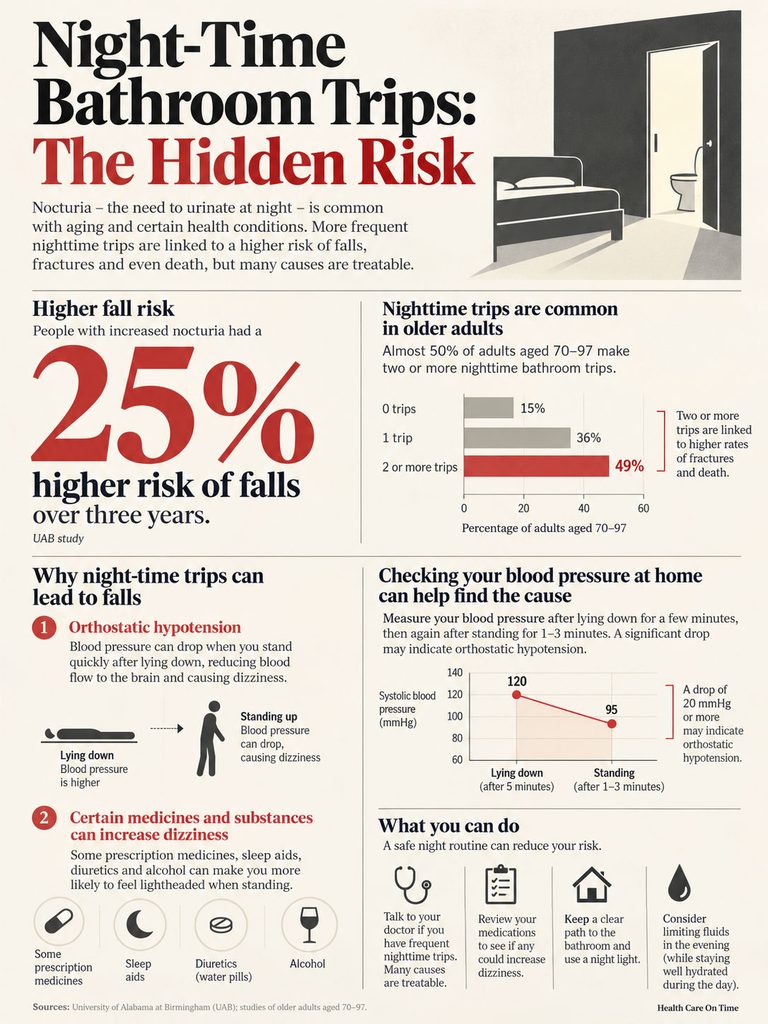
Most bathroom safety advice assumes daylight. Many dangerous trips happen at 2 a.m., when someone is groggy, rushing, and walking in the dark.
Why Nocturia Raises Fall Risk
Nocturia means waking up at night to urinate. It becomes common with age, due to prostate changes, bladder changes, heart failure, diabetes, and evening fluids or water pills.
In a University of Alabama at Birmingham study of older adults who hadn’t fallen in the past year, getting up three times a night raised the risk of a new fall by about 25% over three years (UAB study abstract). Separate research from Japan found nearly half of adults aged 70 to 97 made two or more trips a night, and that group had higher fracture and death rates.
Dizziness on Standing
Blood pressure can drop for a few seconds when you stand up fast, especially after lying flat for hours. Doctors call this orthostatic hypotension. Blood pressure pills, water pills, sleep aids, and alcohol all make it more likely.
Families booking at-home blood draws with us often mention a parent who “gets lightheaded at night.” That’s worth raising with a doctor. A standing blood pressure check, plus a medication review, can find the cause.
A Safe Night Routine
- Sit on the edge of the bed for 30 seconds before standing.
- Let motion lights turn on before walking.
- Keep a walker or cane next to the bed if one is used during the day.
- Wear non-slip slippers, not socks.
- Limit fluids in the 2 hours before bed, unless a doctor advises otherwise.
- For frequent trips, consider a bedside commode at night.
If someone gets up two or more times every night, that’s a medical question, not just a safety one. Many causes of nocturia are treatable.
Fix the Person, Not Just the Room
Grab bars help the body you have today. But CDC says the rise in fall deaths can be addressed by screening for fall risk and treating risk factors like risky medicines and poor strength or balance. A safe bathroom works best alongside these steps.
Review Medicines
Some medicines cause dizziness, drowsiness, or sudden blood pressure drops. Common culprits include sleep aids, older allergy pills like diphenhydramine, anti-anxiety drugs, some antidepressants, blood pressure pills, and water pills.
Our medical reviewers note that the problem is often the combination, not one drug. Bring every pill bottle, including over-the-counter ones, to a pharmacist or doctor once a year.
Build Leg Strength and Balance
Getting off a toilet is basically a squat. Getting out of a tub is a one-leg balance test. Both get easier with practice.
A Cochrane review of exercise for fall prevention found balance and strength programs cut the rate of falls by about 23% (Cochrane). Tai chi and physical therapy programs both count. Ask about local classes through an Area Agency on Aging.
Check Feet and Footwear
Numb feet from diabetes, long toenails, or loose slippers all raise fall risk. Wear slippers with a closed back and rubber soles. Go barefoot in the shower only on a non-slip surface.
If you’re tracking checkups for a parent, our health screenings by age checklist covers fall risk screening.
Does It Actually Work? What the Evidence Shows
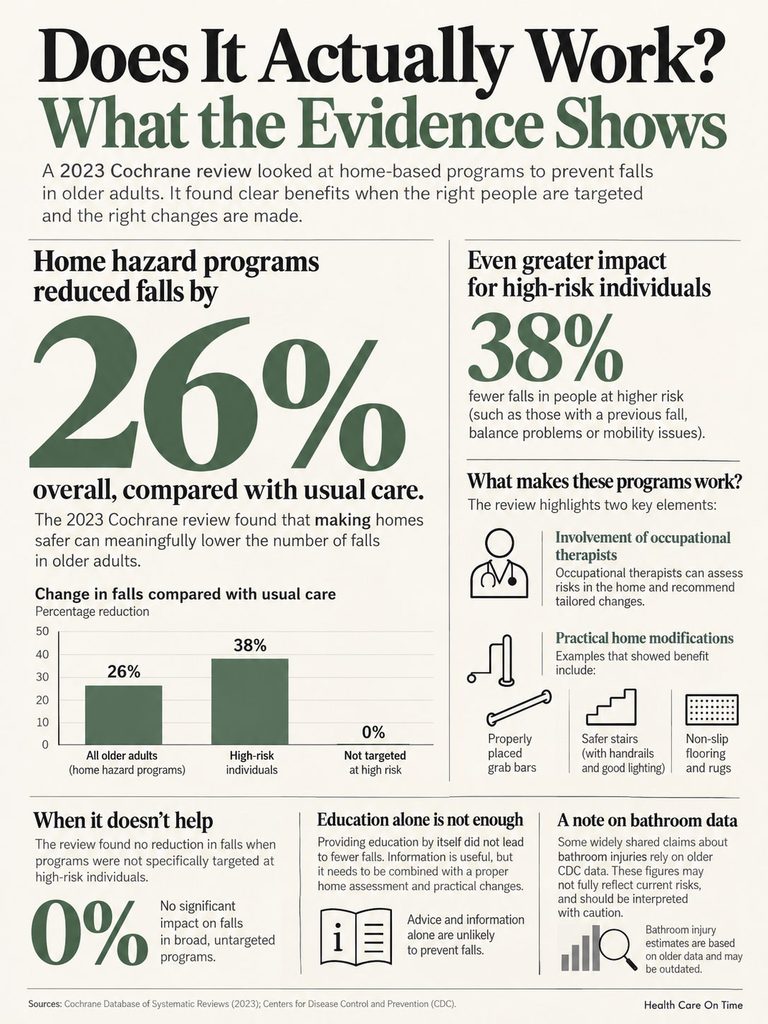
Grab bars and night lights seem like common sense. But do they actually prevent falls? The best answer comes from a 2023 Cochrane review.
What Cochrane Found
The review pooled 22 studies with 8,463 older adults living at home (Cochrane CD013258). Home hazard reduction programs lowered the overall rate of falls by about 26%.
The effect was bigger in people at higher risk: about 38% fewer falls. “Higher risk” meant someone who’d fallen in the past year, had a recent hospital stay, or needed help with daily tasks.
Why an OT Visit Beats a Checklist
The programs that worked were mostly delivered by occupational therapists. They didn’t just hand out a list. They watched the person move through the home, then fixed the hazards that person actually faced.
That matters. A grab bar in the wrong spot is just a towel bar. An OT can see that your mother pulls herself up using the sink and put the bar exactly where her hand goes. Across patients we serve, families who got an OT visit often say the biggest fix was one they’d never have guessed.
Limits of the Evidence
Be honest about what the research doesn’t show. When programs were given to older adults not selected for fall risk, there was no clear drop in falls. Education alone didn’t reduce falls either.
The CDC bathroom injury data is also old, collected in 2008. It’s still the only national study of its kind. Since older adult fall deaths have climbed 51% in the last decade, today’s real numbers are likely higher.
Who Pays? Medicare, Medicaid, VA, and Local Help
This is where many families get stuck. Bathroom safety items are cheap, but they usually aren’t free.
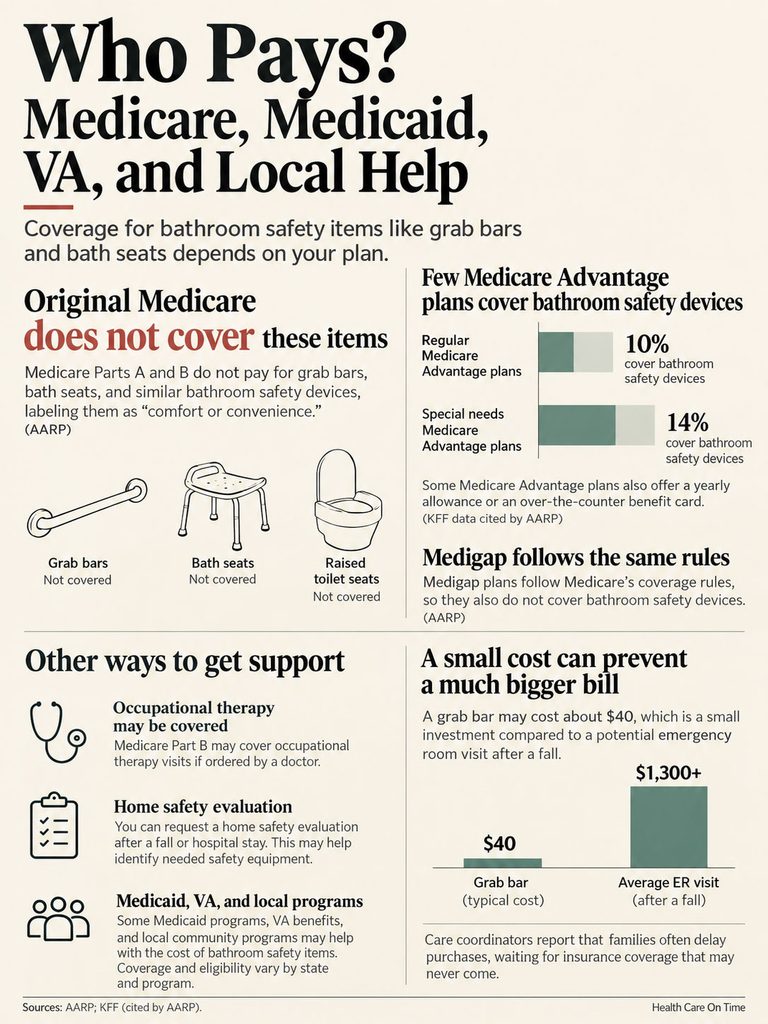
Original Medicare (Parts A and B) doesn’t cover grab bars, bath seats, raised toilet seats, or non-slip flooring. Medicare treats these as “comfort or convenience” items (AARP). Medigap follows the same rule.
Medicare Advantage is different. About 10% of regular plans and 14% of special needs plans cover bathroom safety devices, according to KFF data cited by AARP. Some plans include a yearly allowance or an over-the-counter benefit card. Check your plan’s Evidence of Coverage.
Occupational therapy visits can be covered under Medicare Part B when a doctor orders them. Ask for a home safety evaluation after a fall or hospital stay.
Other help:
- Medicaid waiver programs in many states pay for home modifications.
- VA benefits may fund bathroom changes for eligible veterans.
- Area Agencies on Aging often run free or low-cost grab bar installation. Find yours through the Eldercare Locator at 1-800-677-1116.
- Nonprofits such as Rebuilding Together offer free repairs for low-income older homeowners.
Our care coordinators hear the same line often: “We’ll wait to see if insurance covers it.” A $40 grab bar costs far less than one ER visit. Waiting for coverage that may never come is a bad trade.
Common Mistakes Families Make
Good intentions can still leave gaps. These are the errors we see most.
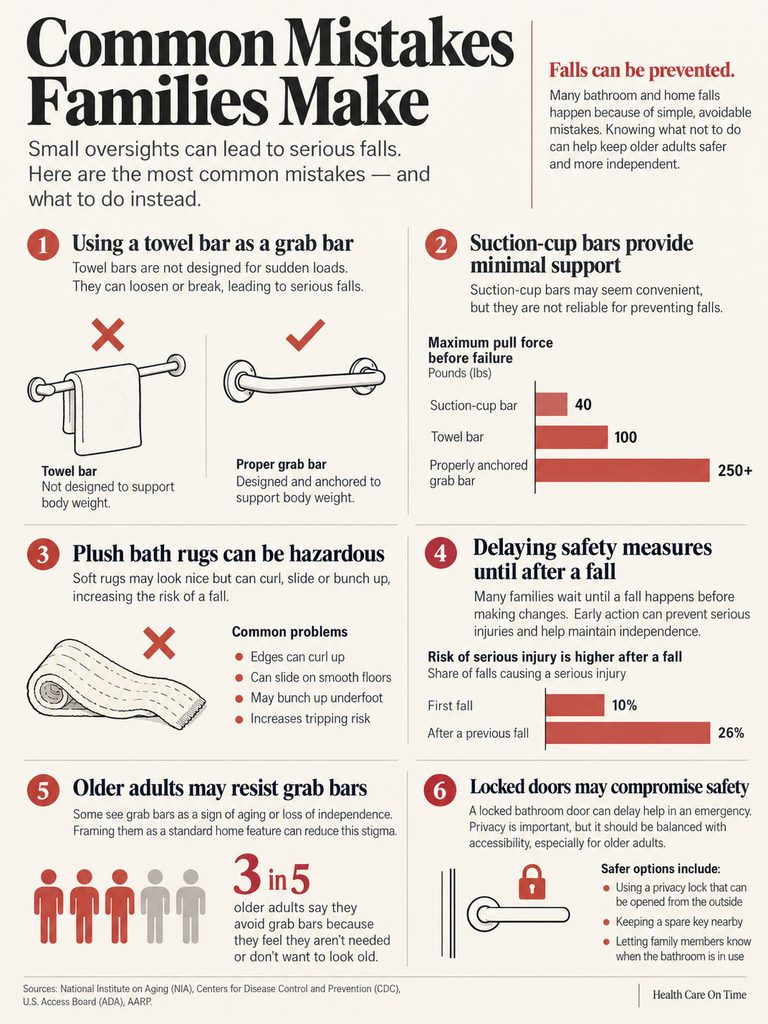
Using a towel bar as a grab bar. Towel bars are mounted with small screws into drywall. They pull out under a sudden load.
Buying suction-cup bars for real support. They’re fine for balance. They’re not rated to stop a fall.
Keeping the plush bath rug. It looks nice and feels soft. It also curls, slides, and soaks up water.
Waiting for the first fall. The JAMA data showed equipment was more likely to show up after a hip fracture or hospital stay. By then, the damage is done.
Ignoring pride. Many older adults see grab bars as a sign of decline. Frame them as what they are: the same features found in every hotel and public restroom. Matching the finish to the faucet helps too.
Locking the door. Privacy matters, but a locked door can turn a minor fall into hours on the floor.
What to Do After a Bathroom Fall
Even with every fix in place, falls can still happen. Knowing the next step matters.
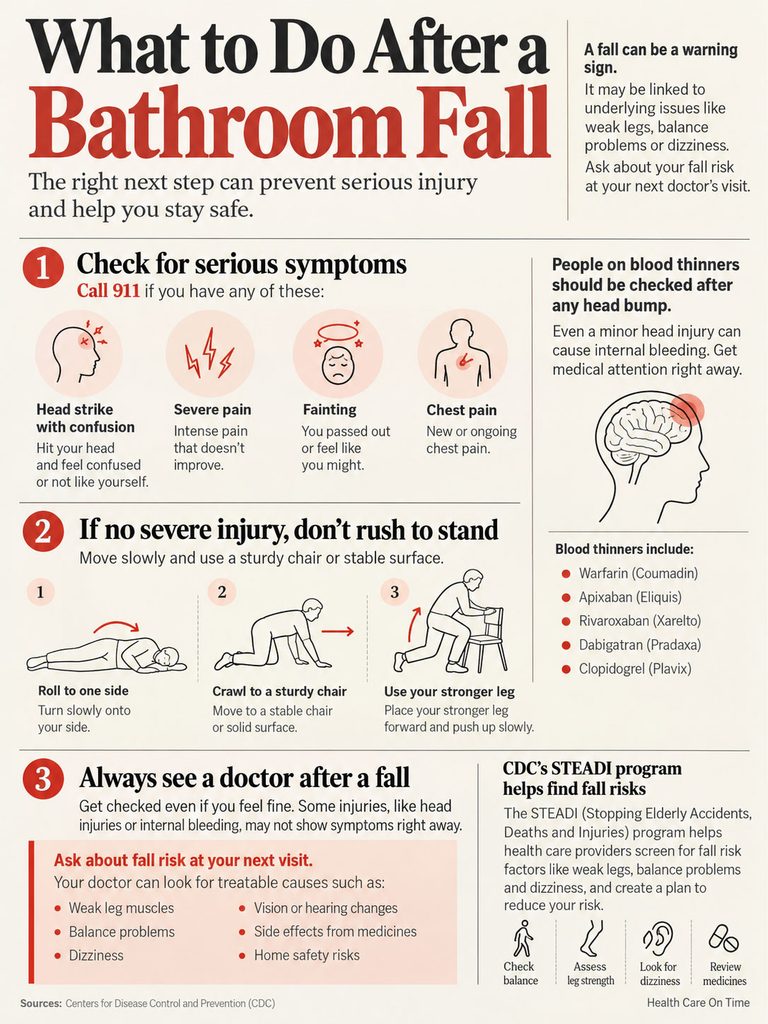
Call 911 right away if there’s a head strike with confusion, vomiting, or drowsiness; severe hip or back pain; a leg that looks shorter or turned out; fainting before the fall; or chest pain or trouble breathing. People on blood thinners should be checked after any head bump.
If there’s no serious injury, don’t rush to stand. Roll to one side, get onto hands and knees, and crawl to a sturdy chair or the toilet. Put the stronger leg forward and push up slowly.
See a doctor even if you feel fine. A fall is a warning sign. The CDC’s STEADI program helps doctors screen for weak legs, vision problems, and medicines that cause dizziness. Ask for a fall risk check at the next visit.
Your Bathroom Safety Action Plan
Use this table to match the situation to the next step.
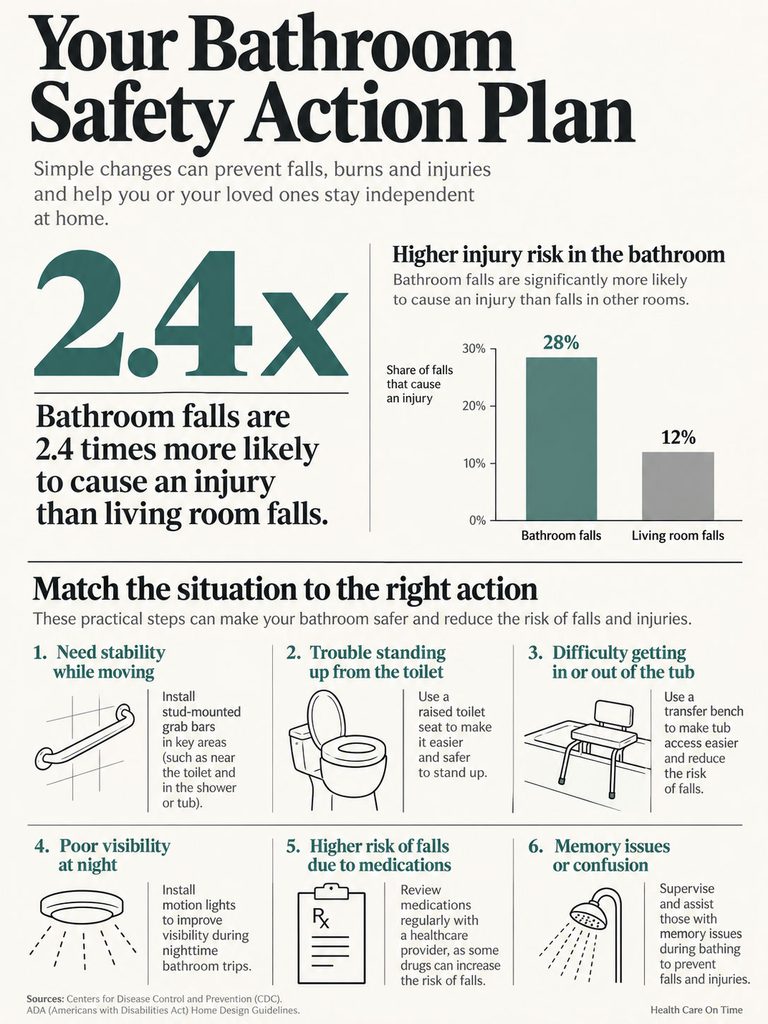
| Scenario | Recommended Action | Priority |
| Pulls up on the sink, towel bar, or toilet paper holder | Install stud-mounted grab bar where the hand goes | This week |
| Struggles to stand up from the toilet | Add raised seat (17 to 19 inches) or toilet frame | This week |
| Steps over a tub wall to shower | Add transfer bench and vertical entry grab bar | This week |
| Gets up 2 or more times every night | Motion lights now; ask doctor about nocturia | Within 2 weeks |
| Feels dizzy when standing | Sit before standing; ask for standing BP check and med review | Within 2 weeks |
| Takes a sleep aid or 4+ daily medicines | Pharmacist or doctor medication review | Within 1 month |
| Hot water feels very hot fast | Test at tap; set heater to 120°F | Today |
| Fell once in the past year | Request Medicare-covered OT home safety evaluation | Within 1 month |
| Has dementia or memory problems | Supervise bathing; use alert device; remove door lock | This week |
| Recent hip or knee surgery | Follow OT plan; raised seat and transfer bench before discharge | Before coming home |
Start with the fixes that cost least and stop the riskiest moves: getting off the toilet, getting out of the tub, and walking at night.
Frequently Asked Questions
Is it true most senior falls happen in the bathroom?
No. That widely shared 80% figure misreads CDC data. The CDC found about 80% of bathroom injuries are caused by falls, not that 80% of falls happen in bathrooms. Bathroom falls do matter more, though. They’re about 2.4 times more likely to cause injury than living room falls.
Where should grab bars be placed next to a toilet?
The ADA layout uses a 42-inch bar on the side wall and a 36-inch bar behind the toilet, both 33 to 36 inches above the floor. At home, a side bar within easy reach of the stronger hand is the most useful single bar. Anchor it into studs.
What height should a toilet be for older adults?
Aim for a seat height of 17 to 19 inches from the floor, which matches the ADA standard. Many standard home toilets sit lower. A clamp-on raised seat is the cheapest fix. Taller adults or people recovering from hip surgery may need a seat slightly higher.
Are suction cup grab bars safe?
They’re safe as a balance aid but not for holding body weight. Suction can fail without warning, especially on textured or grout-heavy tile. If someone needs to pull up or catch themselves, choose a bar screwed into studs and rated for at least 250 pounds.
Can a towel bar be used as a grab bar?
No. Towel bars are designed to hold a few pounds of wet cloth and are often attached only to drywall. A sudden pull during a slip can rip them out. Some companies make combination grab bars with towel hooks, which solve both needs safely.
Is a shower chair or transfer bench better?
It depends on the tub. A shower chair works for walk-in showers and for people who can step over a tub wall safely. A transfer bench is better for anyone who struggles to lift a leg, because they sit outside the tub and slide across.
Should older adults use bath mats?
Inside the tub, adhesive non-slip strips usually work better than mats, which can shift and trap water. Outside the tub, use a rubber-backed mat or none. Avoid plush rugs without grip. CDC data shows rug-related falls often happen in or near bathrooms.
What water heater temperature is safe for seniors?
The Consumer Product Safety Commission recommends 120°F. At 130°F, a third-degree burn can happen in about 30 seconds. Don’t rely on the heater dial. Run the hot tap for 3 minutes, measure with a kitchen thermometer, and adjust until it reads 120°F or below.
Does Medicare pay for grab bars or shower chairs?
Original Medicare and Medigap don’t cover them. Some Medicare Advantage plans do, often through an allowance or over-the-counter benefit. Medicare Part B may cover an occupational therapist’s home safety visit with a doctor’s order. Medicaid waivers, VA benefits, and local aging agencies may also help.
Why do seniors fall more at night?
Night trips combine darkness, grogginess, hurrying, and blood pressure drops on standing. Getting up three times a night was linked to about a 25% higher fall risk in one US study. Motion night lights, sitting before standing, and asking a doctor about frequent urination all help.
How can families get a parent to accept bathroom safety changes?
Frame changes as standard features, like those in every hotel bathroom. Let the parent choose finishes and placement. Start with one small change, such as a night light. Having a doctor or occupational therapist recommend the changes often works better than family pressure.
What should an older adult do after falling in the bathroom?
Stay still for a moment and check for pain. Call 911 for a head injury with confusion, severe hip pain, or trouble breathing. Otherwise, roll to one side, get onto hands and knees, and rise slowly using a sturdy chair. See a doctor afterward, even without obvious injury.
Disclaimer: This article is for general information and does not replace advice from a doctor, occupational therapist, pharmacist, or licensed contractor. Fall risk depends on health, medications, and home layout. Don’t stop or change any medicine without talking to your doctor. If someone has fallen and may be injured, call 911. For local home modification help, contact the Eldercare Locator at 1-800-677-1116.
References
- CDC: Nonfatal Bathroom Injuries Among Persons Aged 15 Years and Older, United States, 2008 (MMWR)
- CDC: Older Adult Falls Data
- CDC: Older Adult Falls Costs and Risk Factors
- National Safety Council Injury Facts: Older Adult Falls
- Stevens et al.: Circumstances and Outcomes of Falls Among High Risk Community-Dwelling Older Adults (CDC Stacks)
- CDC Stacks: Fall Injuries in Adults Associated With Rugs and Carpets
- JAMA Internal Medicine: Unmet Need for Bathroom Equipment Among Older Adults
- JAMA: Millions of Older Adults Lack Bathroom Modifications
- Cochrane: Environmental Interventions for Preventing Falls in Older People Living in the Community
- Cochrane: Exercise for Preventing Falls in Older People Living in the Community
- Consumer Product Safety Commission: Avoiding Tap Water Scalds
- ADA Standards: Grab Bars at Water Closets
- AARP: Does Medicare Cover Home Safety Equipment?
- UAB Study of Aging: Nocturia and Incident Falls
- MDedge: Bathroom Safety, A Doctor’s Domain?
- HealthDay: Bathroom Injuries a Little-Known Problem
- WXPR: Many Water Heaters Set Too High