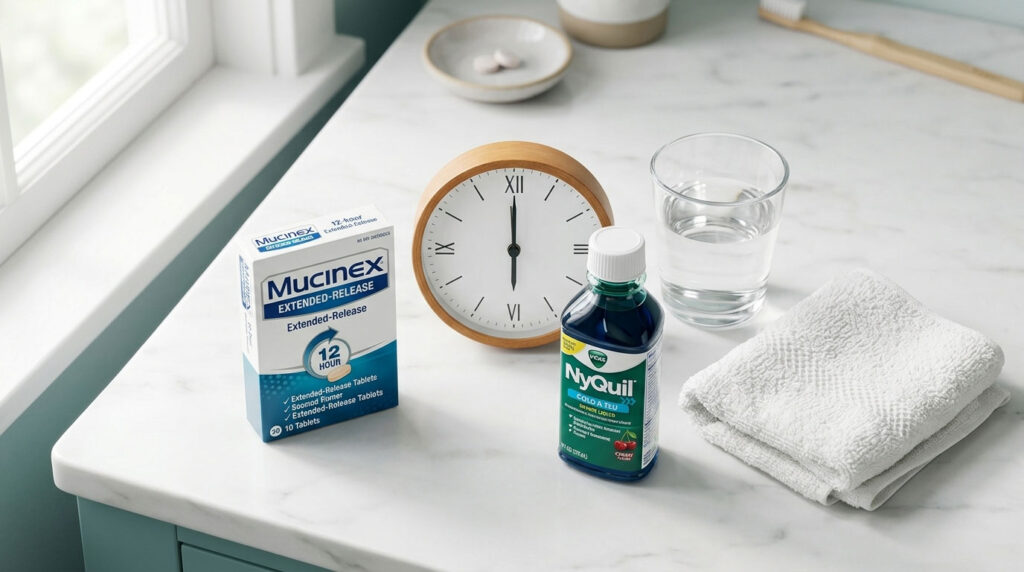
A friend called me at 11 p.m. last January in a dead panic. She’d swallowed Mucinex DM around dinner, then capped her night off with a standard NyQuil dose, and suddenly her room was spinning. What she’d actually done is what lands thousands of Americans in emergency rooms every winter: accidentally doubling up on a single ingredient hiding inside two differently branded cold medicines. Her question is almost certainly yours right now, and the honest answer depends on which box you’re holding.
Table of Contents
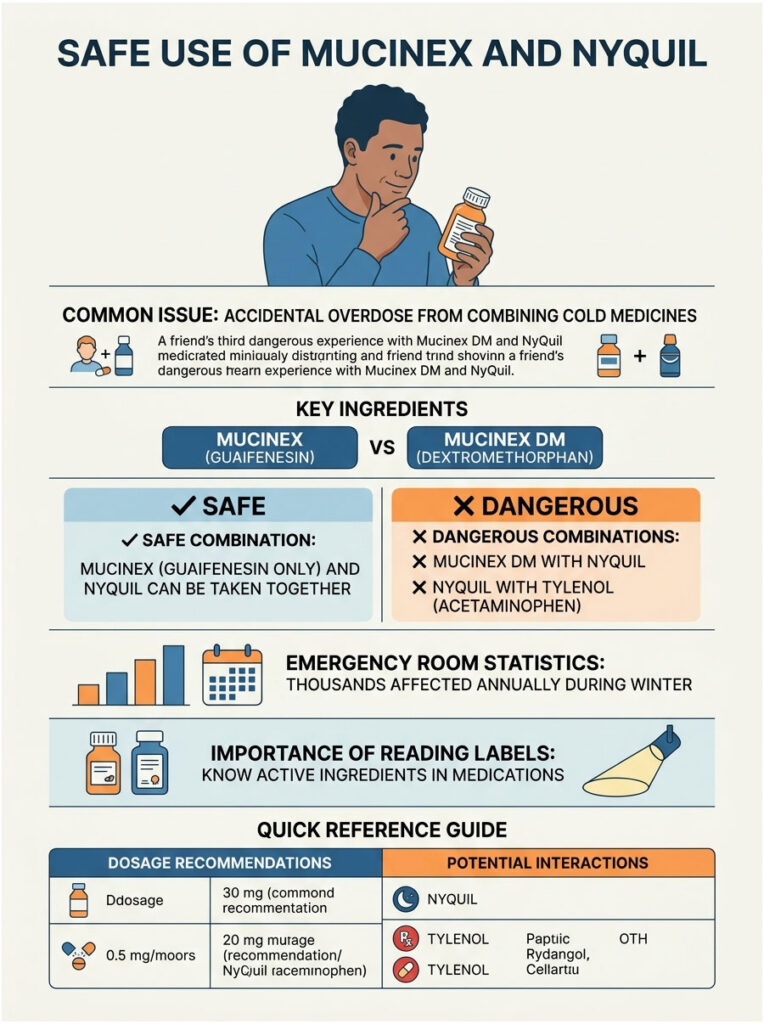
Quick Answer: Yes, regular Mucinex (guaifenesin only) and standard NyQuil can be taken together because their active ingredients don’t overlap. Do not combine Mucinex DM with NyQuil since both contain dextromethorphan, and never pair NyQuil with Tylenol or any other acetaminophen product.
At a Glance
- Regular Mucinex plus NyQuil: generally safe for healthy adults 12+
- Mucinex DM plus NyQuil: avoid, both contain dextromethorphan
- NyQuil packs 650 mg of acetaminophen per adult dose
- FDA daily ceiling: 4,000 mg of acetaminophen from all sources
- Space Mucinex (day) and NyQuil (night) at least 4 to 6 hours apart
- Pregnancy, liver disease, high blood pressure, kids under 12 should consult a doctor first
- Alcohol plus NyQuil multiplies sedation and liver risk
What Mucinex and NyQuil Actually Do
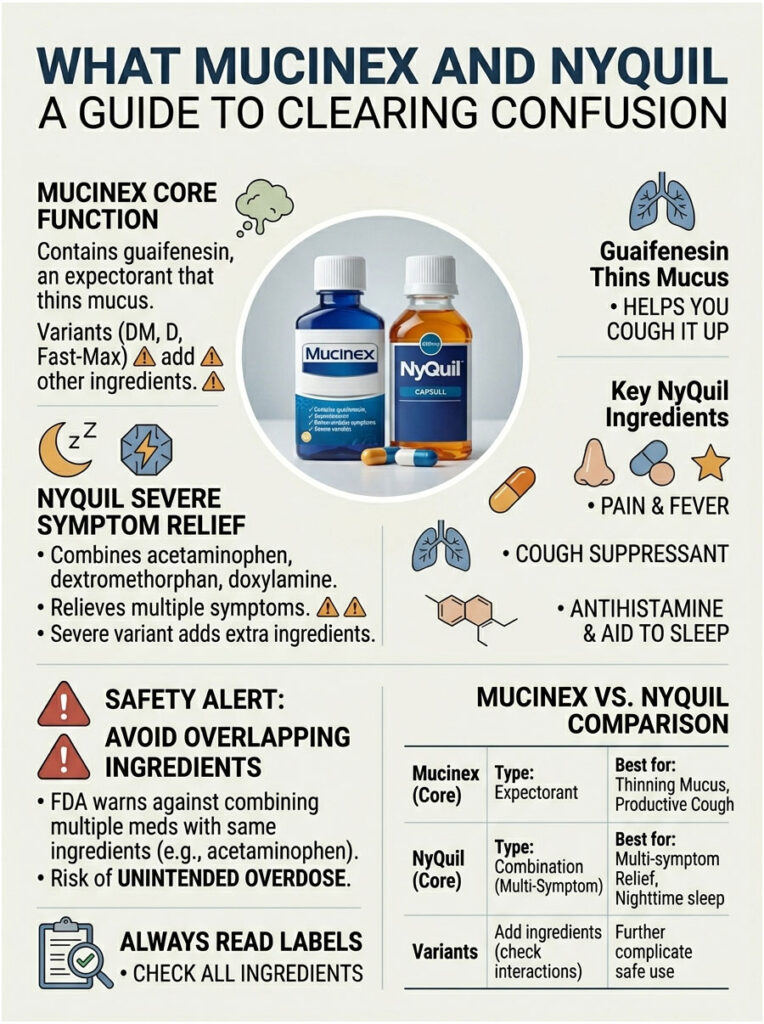
People mix these two up constantly, and honestly, the drugstore aisle is half the reason. Both products sit on the same shelf. Both promise fast cold relief. Both carry confusing suffixes like DM, D, and Severe that change their ingredients without changing their shelf position. They solve different problems, though, and that single distinction is the whole reason combining them can be safe or a genuine mistake.
Mucinex: The Mucus Thinner
Regular Mucinex has exactly one active ingredient: guaifenesin. It’s an expectorant, which means it thins the mucus trapped in your chest so you can cough it up and out. According to the FDA, guaifenesin is the only approved expectorant available over the counter in the USA, and it’s been on shelves for decades.
Guaifenesin on its own is quiet in the body. It doesn’t sedate you, doesn’t cross into the brain meaningfully, and doesn’t interact with most medications. I’ve leaned on plain Mucinex myself through three winter chest colds in Boston, and it stays out of the way while doing its job.
The trouble starts with variants. Mucinex DM adds dextromethorphan, a cough suppressant. Mucinex D adds pseudoephedrine, a decongestant. Mucinex Fast-Max can pile on acetaminophen too. Each addition changes what you can safely pair it with.
NyQuil: The Multi-Symptom Nighttime Formula
Standard NyQuil Cold and Flu packs three active ingredients into a single 30 mL dose: 650 mg of acetaminophen for pain and fever, 30 mg of dextromethorphan to suppress cough, and 12.5 mg of doxylamine succinate, an antihistamine that also puts you to sleep. Some formulas add phenylephrine for nasal congestion.
That’s a heavy payload in one cup. NyQuil Severe goes further by adding guaifenesin and phenylephrine to the same list, which means you’re essentially getting a mini-Mucinex baked in. This matters the moment you start thinking about adding anything else.
Why People Ask About Combining Them
You’d assume cold medicine is cold medicine. The FDA’s own warnings say otherwise. There are more than 600 products on USA shelves that contain acetaminophen, and dozens contain dextromethorphan. In one pharmacy consult I sat through, a customer had three different cold products in his basket, each containing acetaminophen, and he had no idea he was stacking doses.
Table 1: Mucinex vs NyQuil Core Comparison
| Feature | Regular Mucinex | Mucinex DM | Standard NyQuil | NyQuil Severe |
| Active ingredients | Guaifenesin 600 mg | Guaifenesin 600 mg + DXM 30 mg | Acetaminophen 650 mg + DXM 30 mg + Doxylamine 12.5 mg | APAP 650 mg + DXM 30 mg + Doxylamine 12.5 mg + Guaifenesin 400 mg + Phenylephrine 10 mg |
| Main job | Thins chest mucus | Thins mucus + suppresses cough | Relieves cough, pain, fever, runny nose; induces sleep | Everything NyQuil does + decongestion |
| Causes drowsiness? | No | Usually no | Yes | Yes |
| Safe with NyQuil? | Yes, spaced properly | No, DXM overlap | (it is NyQuil) | Watch doxylamine + DXM duplication |
| Best time of day | Morning or afternoon | Morning only | Bedtime | Bedtime |
Is It Safe to Take Them Together? The Short Answer
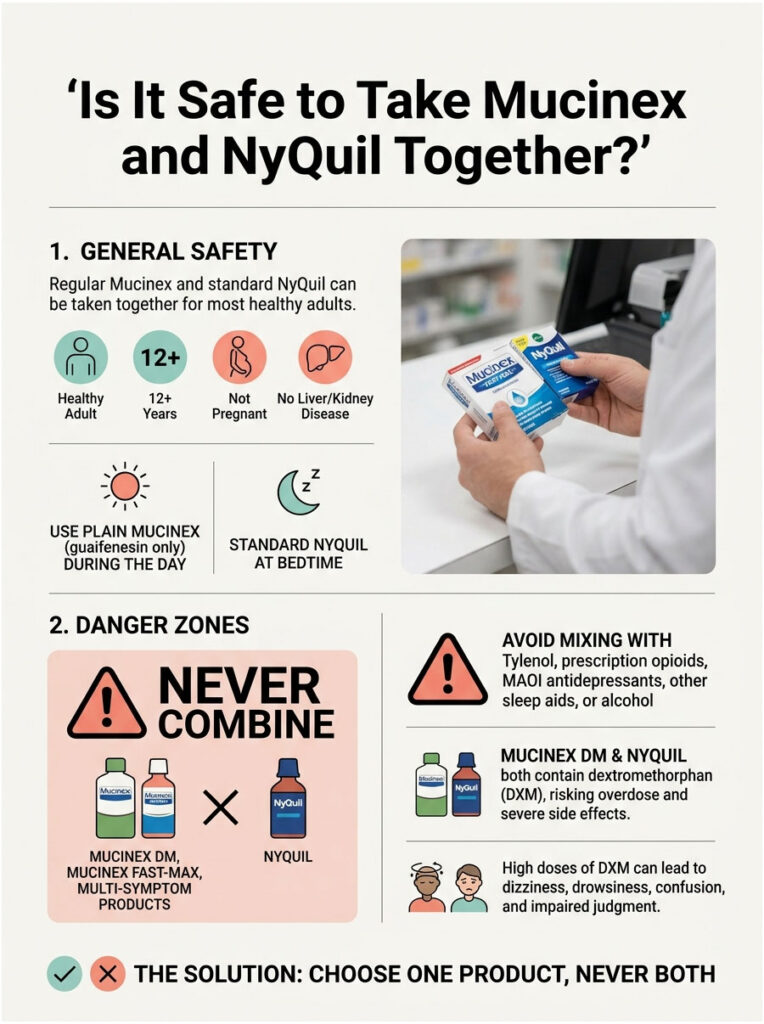
For most healthy adults, yes. Regular Mucinex and standard NyQuil can be taken together if you follow a couple of simple rules. GoodRx confirms that guaifenesin and NyQuil’s ingredients don’t share active components or interact directly. But “generally safe” is doing real work in that sentence, so let’s get specific.
When It’s Generally Safe
You’re an adult over 12. You’re not pregnant or breastfeeding. You don’t have liver or kidney disease, active heart rhythm issues, or a psychiatric medication in your daily routine. You’re taking plain Mucinex (guaifenesin only) during the day, and you’re taking standard NyQuil at bedtime. That scenario works. Mucinex helps you cough productively during the day; NyQuil quiets the cough reflex and helps you sleep at night.
When You Should Never Combine Them
Skip this combo entirely if you’re reaching for Mucinex DM, Mucinex Fast-Max, or any multi-symptom Mucinex product with dextromethorphan or acetaminophen in it. Don’t add Tylenol on top. Don’t mix it with a prescription opioid, an MAOI antidepressant, another sleep aid, or alcohol. Each of those stacks the same problems NyQuil already brings.
The Mucinex DM Problem
This is the single most common mistake I see readers make, and it’s the one that put my friend in a panic attack at 11 p.m. Mucinex DM and NyQuil both contain dextromethorphan. Taking adult doses of each means swallowing 60 mg of DXM, double the standard serving. Drugs.com’s interaction checker warns that dextromethorphan combined with doxylamine may increase dizziness, drowsiness, confusion, and difficulty concentrating.
At higher doses, DXM can trigger dissociation, racing heart, and impaired judgment. The fix is simple: pick one product or the other. Never both.
Ingredient-by-Ingredient Interaction Breakdown
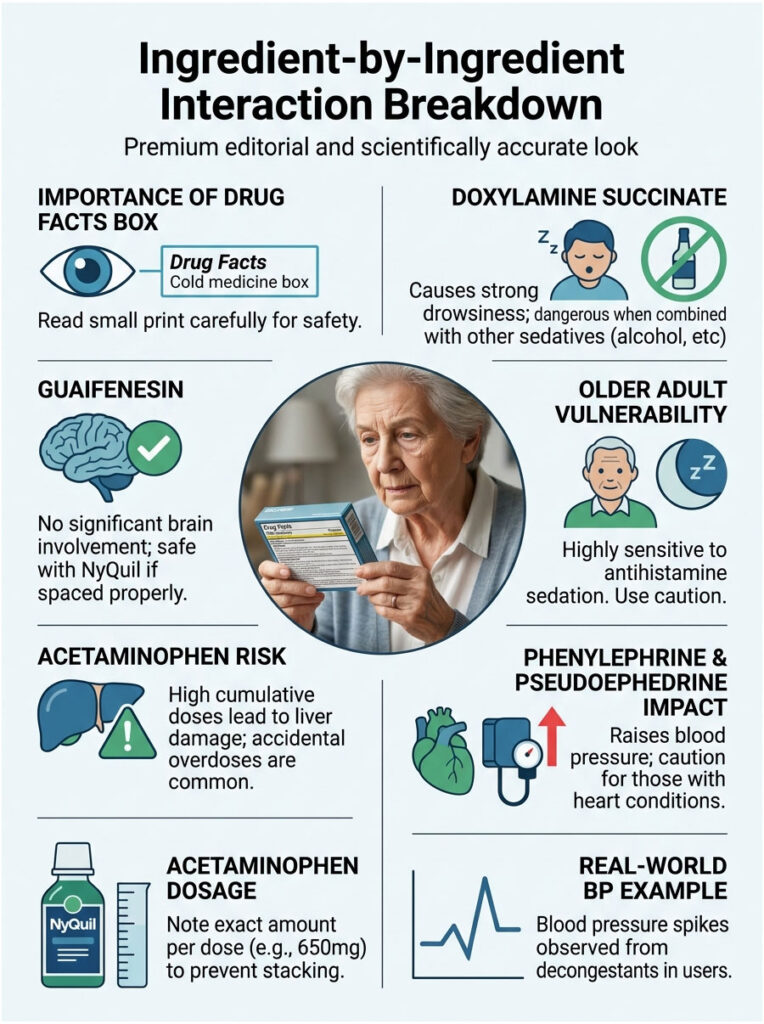
Reading the “Drug Facts” box on every cold product is the single best habit you can build. Brand names mean almost nothing. Ingredient names mean everything.
Guaifenesin + NyQuil Ingredients
Guaifenesin is the quiet one. It doesn’t cross the blood-brain barrier meaningfully, doesn’t stack with sedatives, and doesn’t tax the liver the way acetaminophen does. That’s why regular Mucinex pairs cleanly with NyQuil when you respect the spacing.
Acetaminophen: The Hidden Overlap Risk
Each adult dose of NyQuil carries 650 mg of acetaminophen. The FDA caps daily intake at 4,000 mg from all sources for adults and kids 12 and up. Four NyQuil doses alone gets you to 2,600 mg, and that’s before counting any Tylenol, Excedrin, or combo products you might also be taking that day.
Research through the Acute Liver Failure Study Group found that the median daily acetaminophen dose tied to liver injury was 5 to 7.5 grams per day, not far above the legal ceiling. That’s why accidental overdose happens so quietly. People don’t feel a single “too much” moment; they slide over the edge across a long day of sipping multiple products.
Doxylamine Succinate and Sedation Math
Doxylamine is a first-generation antihistamine that crosses into the brain and causes strong drowsiness. Stack it with alcohol, another sleep aid, high-dose melatonin, diphenhydramine (Benadryl, ZzzQuil), or certain antidepressants, and the sedation multiplies. Older adults are particularly vulnerable to confusion, daytime grogginess, and falls on this class of drug.
Phenylephrine, Pseudoephedrine, and Blood Pressure
Some NyQuil formulas (NyQuil D, NyQuil Severe) and Mucinex D all contain phenylephrine or pseudoephedrine. These decongestants can raise blood pressure and heart rate. If you have hypertension, arrhythmia, or you’re on heart medication, even a standard dose can matter. In my family, my dad’s cardiologist steered him away from every decongestant-containing product after a single Sudafed dose pushed his blood pressure into the 160s.
Dosage Timing: How to Combine Them Safely
Timing is where most people trip. The goal is to avoid stacking peak drug levels on top of each other and to give your liver and kidneys breathing room.
The 4 to 6 Hour Spacing Rule
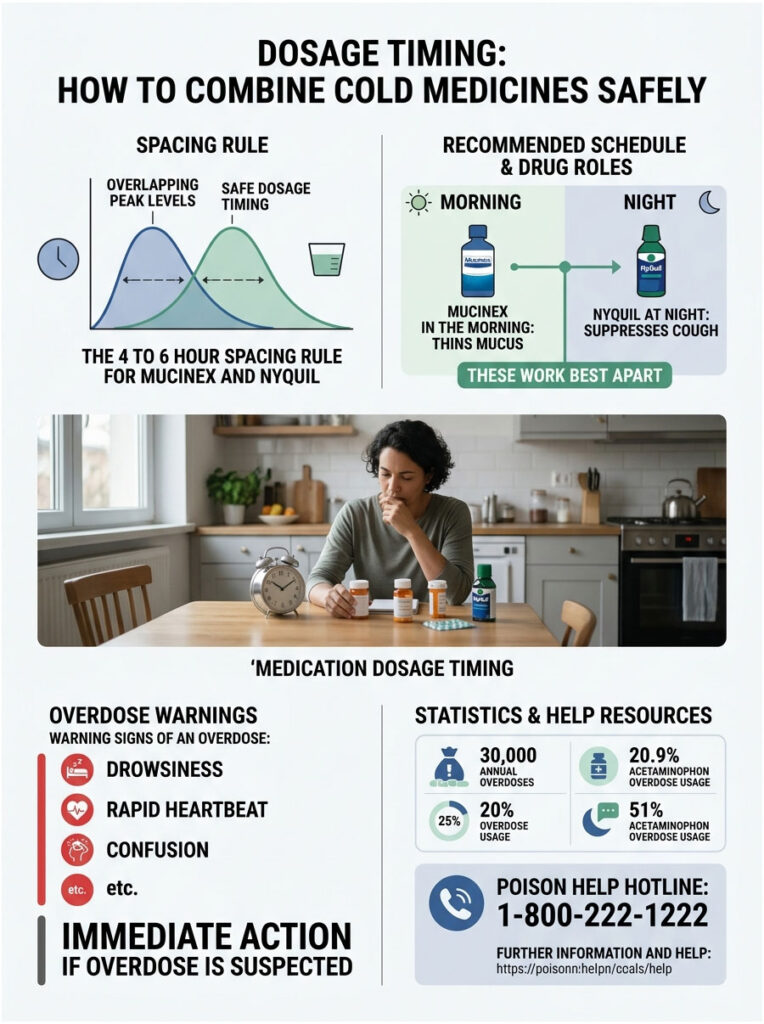
Working rule: take Mucinex at least 4 to 6 hours before NyQuil, and don’t retake Mucinex until at least 4 hours after your last dose. Regular Mucinex immediate-release is labeled every 4 hours; Mucinex 12-hour extended-release lasts half a day. NyQuil is labeled every 6 hours, max four doses in 24 hours.
Daytime Mucinex, Nighttime NyQuil Protocol
The cleanest schedule I’ve used during a brutal chest cold looks like this: Mucinex 600 mg extended-release at 8 a.m., a second dose at 2 p.m. if needed, then NyQuil at 9 p.m. once I’m ready to sleep. That gives guaifenesin time to thin mucus when I’m upright and can actually clear it, then NyQuil suppresses nighttime cough so I sleep through it.
Red-Flag Signs You Took Too Much
Unusual drowsiness, dizziness, rapid heartbeat, confusion, hallucinations, persistent nausea, abdominal pain, dark urine, or yellowing of the skin or eyes all warrant immediate attention. Yellowing or right-upper-belly pain especially suggests possible acetaminophen liver injury. Call Poison Help at 1-800-222-1222 right away if you suspect an overdose, even if you currently feel fine.
Table 2: USA Cold Medicine Safety Data
| Metric | Figure | Source |
| Annual USA ER visits for acetaminophen overdose | 78,414 | NCBI / Acute Liver Failure Study Group |
| OTC products containing acetaminophen | 600+ | FDA Consumer Update |
| Max daily acetaminophen for adults | 4,000 mg | FDA Acetaminophen Guidance |
| USA adults using an OTC medication last week | 81% | Drug Topics, 2024 |
| USA OTC medicine sales (2024) | $44.3 billion | Drug Topics / CHPA |
| Americans catching the flu each year | 8 to 10% | CDC FluView |
| Annual OTC-related hospitalizations (older adults) | ~100,000 | Drug Topics, 2024 |
Who Should Avoid This Combination Entirely
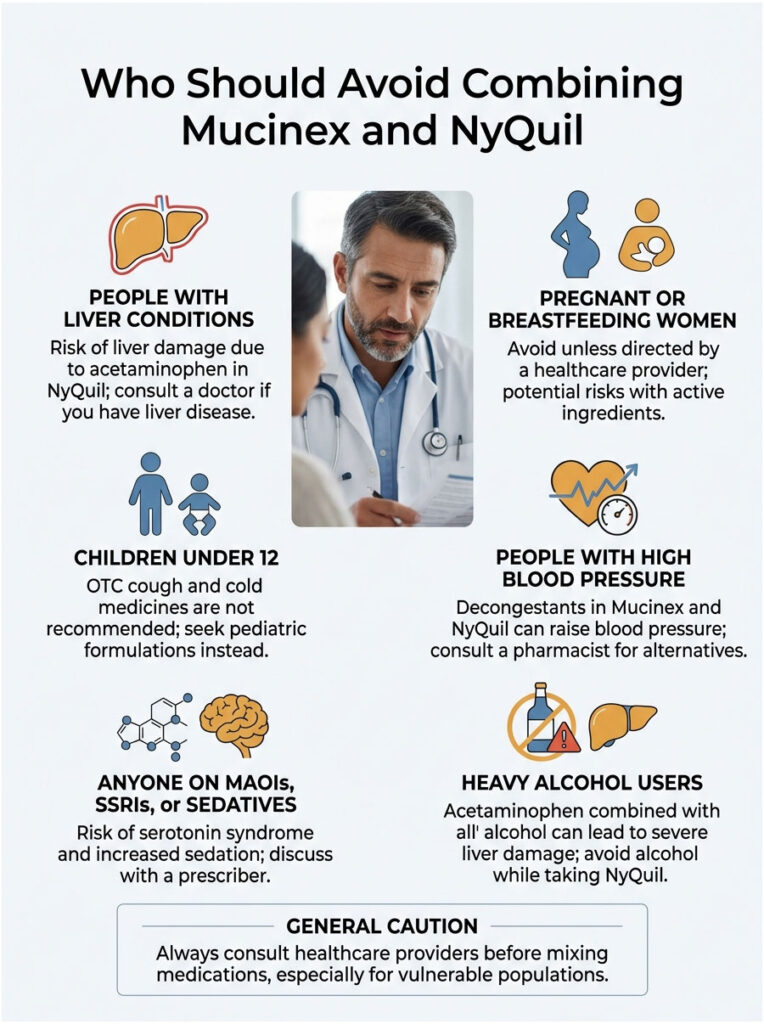
Some groups carry too much risk to combine Mucinex and NyQuil without direct medical guidance. In pharmacy consults I’ve watched, these are the populations pharmacists flag every single time.
People With Liver Conditions
Acetaminophen is processed by the liver, and NyQuil delivers 650 mg per dose. Harvard Health notes that taking the maximum daily dose over extended periods can seriously damage the liver in some people. If you have hepatitis, cirrhosis, fatty liver disease, or a history of elevated liver enzymes, NyQuil should be cleared by your doctor first. The American College of Gastroenterology recommends capping daily acetaminophen at 2,000 mg in liver disease.
Pregnant or Breastfeeding Women
Drugs.com’s official answer says that most experts advise avoiding Mucinex and Mucinex DM during pregnancy, especially the first trimester, unless your provider directs otherwise. NyQuil’s doxylamine and dextromethorphan carry similar cautions. In 2025 the FDA also issued updated guidance about acetaminophen use during pregnancy. Call your OB first, always.
Children Under 12
The American Academy of Pediatrics recommends against OTC cough and cold medicines for kids under 6, and adult Mucinex and NyQuil formulas are labeled for ages 12 and up. Kids need pediatric formulations dosed by weight, not adult cold medicine in smaller sips. For a kid under 6 with a tough cold, honey (over age 1), saline drops, a cool-mist humidifier, and fluids are the CDC-endorsed first line.
People With High Blood Pressure
Phenylephrine and pseudoephedrine (in Mucinex D, NyQuil D, NyQuil Severe) can raise blood pressure. If you’re on antihypertensives, pick products without decongestants. Coricidin HBP and plain guaifenesin-only Mucinex are often safer starting points. Ask your pharmacist to match your current prescription list against the Drug Facts label before you buy.
Anyone on MAOIs, SSRIs, or Sedatives
Dextromethorphan interacts with serotonergic drugs and can trigger serotonin syndrome, a real medical emergency. Doxylamine compounds sedation on top of benzodiazepines, opioids, or other antihistamines. If you take any daily psychiatric medication, run this combo past your prescriber before mixing.
Heavy Alcohol Users
The FDA explicitly warns that severe liver damage may occur with three or more alcoholic drinks per day while using acetaminophen. Alcohol also multiplies doxylamine’s drowsiness and dextromethorphan’s nervous system effects. Skip the nightcap entirely while you’re sick and taking NyQuil.
Mucinex and NyQuil Variant Matrix
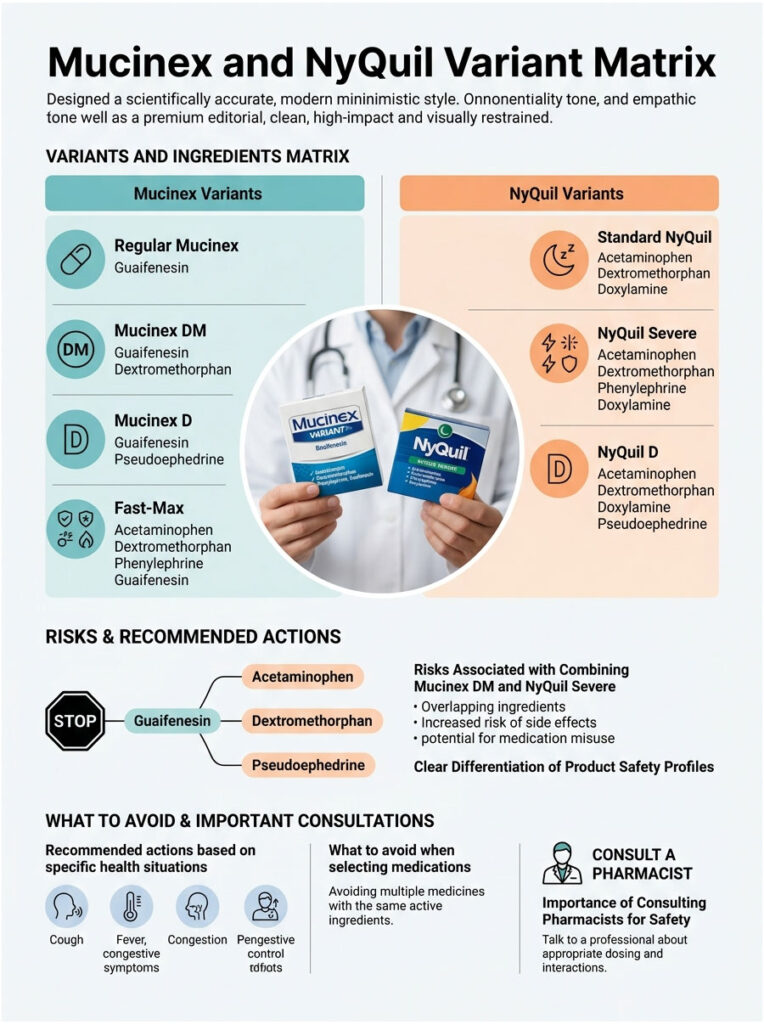
Variants are where things get risky fast. The “DM” and “D” suffixes add ingredients that completely change the safety profile, even though the boxes look nearly identical.
Regular Mucinex vs Mucinex DM vs Mucinex D vs Fast-Max
Regular Mucinex: guaifenesin only. Mucinex DM: adds dextromethorphan. Mucinex D: adds pseudoephedrine. Mucinex Fast-Max Cold and Flu: can contain acetaminophen, phenylephrine, dextromethorphan, and guaifenesin all at once. In the CVS aisle those boxes look nearly identical. In your bloodstream they’re wildly different.
NyQuil vs NyQuil Severe vs NyQuil D
Standard NyQuil Cold and Flu: acetaminophen, dextromethorphan, doxylamine. NyQuil Severe: adds guaifenesin and phenylephrine. NyQuil D: swaps in pseudoephedrine. Pairing NyQuil Severe with Mucinex DM is essentially the worst-case grocery cart: doubled DXM, doubled guaifenesin, multiple sedating and pressure-raising ingredients all at once.
Table 3: Decision and Action Matrix
| Your Situation | Recommended Action | What to Avoid |
| Daytime wet cough, healthy adult | Regular Mucinex 600 mg every 12 hrs + fluids | Mucinex DM if taking NyQuil later |
| Nighttime cough plus congestion, no other meds | Standard NyQuil at bedtime only | Adding Tylenol, Mucinex DM, or alcohol |
| Wet cough day, dry cough night | Regular Mucinex AM + NyQuil PM, 6 hrs apart | Mucinex DM + NyQuil same day |
| On blood pressure medication | Guaifenesin-only Mucinex; pharmacist check on NyQuil | Mucinex D, NyQuil D, NyQuil Severe |
| Pregnant (any trimester) | Call OB before any OTC combo | Self-medicating with DXM or doxylamine |
| Senior 65+ on multiple meds | Bring full med list to pharmacist | Stacking sedating antihistamines |
| Teen 12 to 17, moderate cold | Single multi-symptom product, label-dosed | Combining multiple brands |
What About Adding Tylenol, Advil, or DayQuil?
This is the “while I’m at it” question, and it’s where most accidental overdoses actually originate. I’ve had to talk two separate family members out of stacking exactly these products.
The Tylenol + NyQuil Trap
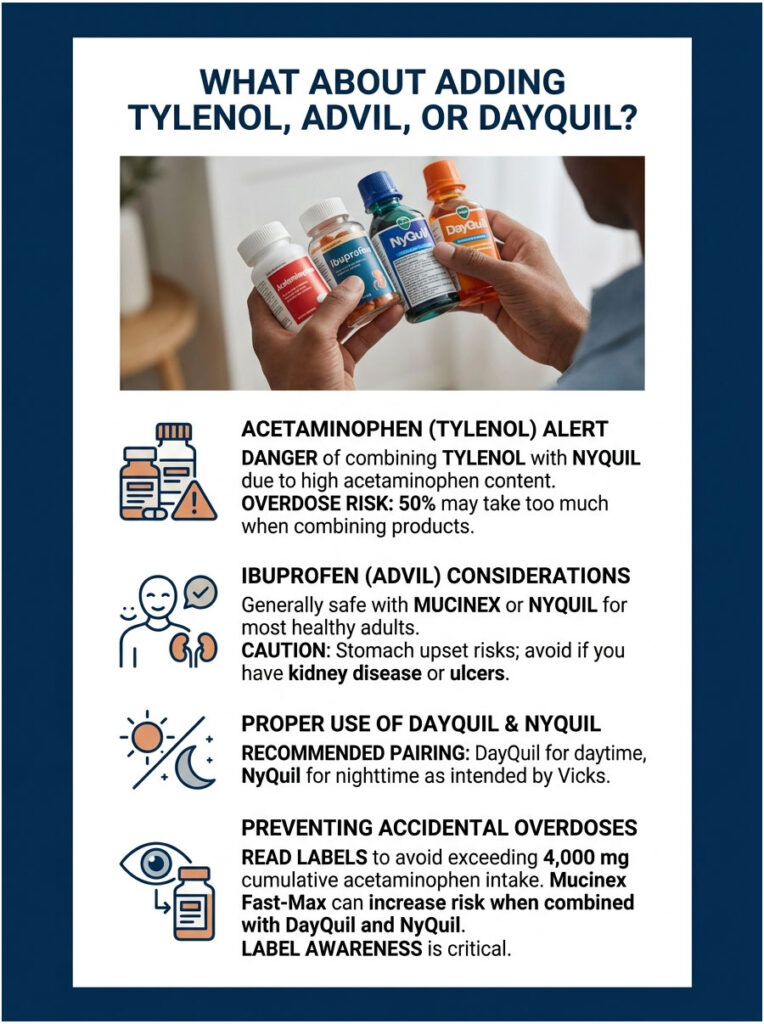
Adding Tylenol to NyQuil is the single most dangerous combination in the cold aisle. NyQuil already has 650 mg of acetaminophen per dose. Extra Strength Tylenol adds another 500 to 1,000 mg. A study cited by GoodRx found that about half of people combining multiple acetaminophen products took too much. If your fever is lingering, retake NyQuil at the labeled interval or switch to ibuprofen. Never stack Tylenol on top.
Ibuprofen With Mucinex or NyQuil
Ibuprofen (Advil, Motrin) works on a different pathway than acetaminophen and doesn’t stack dangerously with it for most healthy adults. Advil plus Mucinex is generally fine. Advil plus NyQuil can also work because their ingredients don’t duplicate. Just watch for stomach upset, and skip ibuprofen if you have kidney disease, ulcers, or you’re on blood thinners.
DayQuil + NyQuil Rotation
This is actually the intended product pairing from Vicks: DayQuil (non-drowsy) during the day, NyQuil at night. Both contain acetaminophen and dextromethorphan, though, so you can still hit the 4,000 mg acetaminophen ceiling if you’re not paying attention. Add Mucinex Fast-Max on top and you’re almost certainly over. Read every single label.
Side Effects and Warning Signs
Even “safe” combinations have side effects. Knowing the difference between annoying and dangerous keeps you out of the ER.
Common Side Effects to Expect
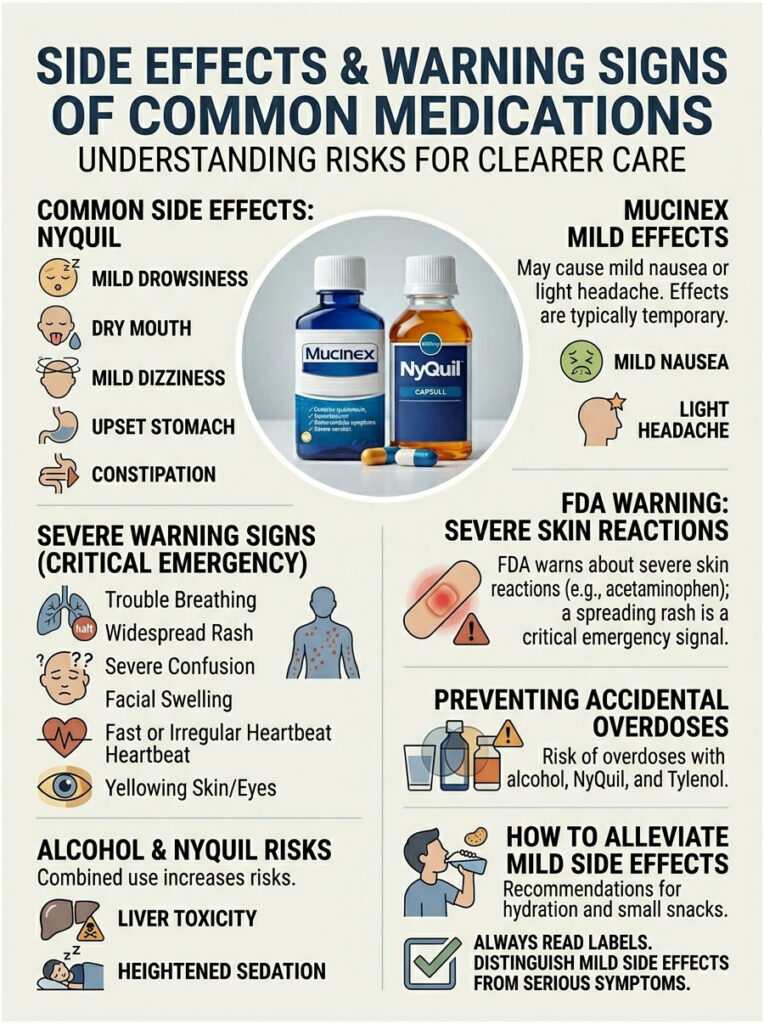
Mild drowsiness, dry mouth, mild dizziness, upset stomach, and constipation are the typical complaints with NyQuil. Mucinex might cause mild nausea or a light headache in some people. These usually resolve as the drug clears and aren’t reasons to panic. Drink water, eat something small, and let the dose pass.
Dangerous Symptoms That Need ER
Fast or irregular heartbeat, severe confusion or hallucinations, trouble breathing, a rash spreading across the body, swelling of the face, lips, or throat, severe abdominal pain, or yellowing skin or eyes all demand immediate medical attention. In 2024 the FDA added warnings about rare severe skin reactions with acetaminophen, so a spreading rash is a genuine emergency signal.
Alcohol + NyQuil: Real Risks
Alcohol plus NyQuil is the combination I warn people about most. Alcohol speeds the liver’s conversion of acetaminophen into a toxic byproduct, which can injure liver cells at surprisingly modest totals. It also stacks on doxylamine’s sedation, raising the risk of falls, impaired judgment, and slowed breathing during sleep. A “quick glass of wine” plus NyQuil plus a Tylenol chaser is exactly how quiet, accidental overdoses happen.
Smarter Alternatives to Stacking OTCs
Sometimes the best answer is not combining drugs at all. I’ve found, working with friends and family through countless winters, that single-product strategies beat stacking almost every time.
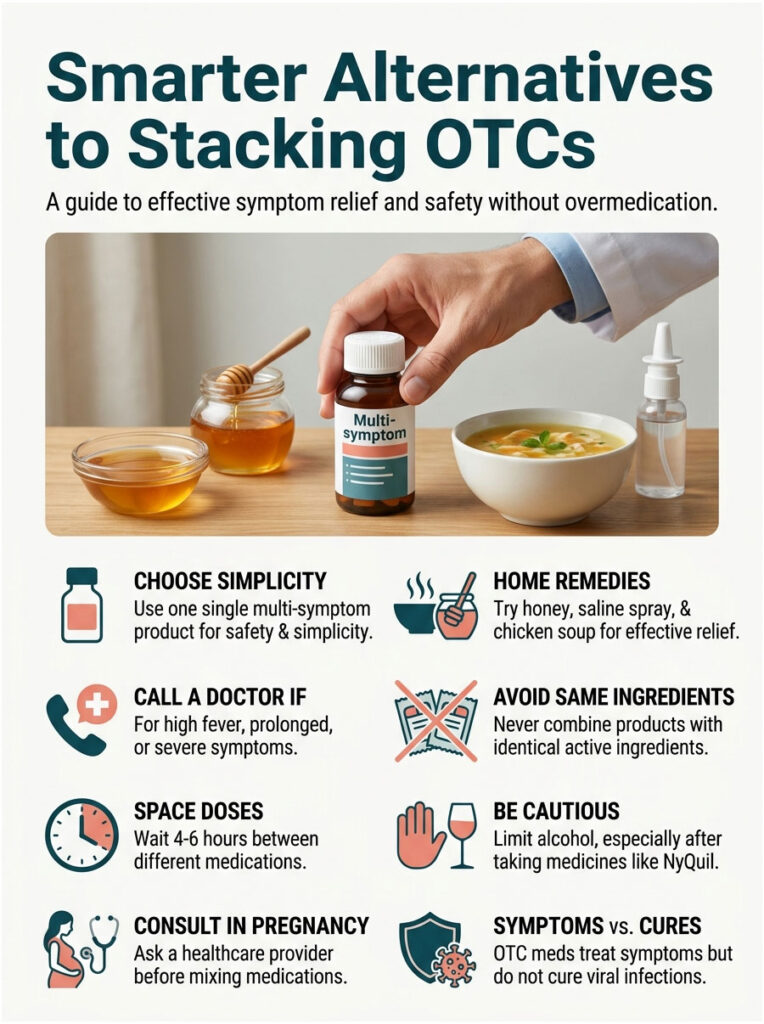
Pick a Single Multi-Symptom Product
If you have cough, congestion, fever, and can’t sleep all at once, a single product like NyQuil Severe or Mucinex Fast-Max Cold and Flu covers most of what you need without forcing you to read four labels simultaneously. One product, one timer, one ingredient profile to track. Simpler is safer.
Home Remedies That Actually Work
The CDC’s cold management guidance recommends rest, fluids, humidifiers, saline nasal spray, warm steam, and honey for cough relief in anyone over age 1. Honey specifically has research showing it beats dextromethorphan for nighttime cough in kids over 12 months. Saltwater gargles soothe sore throats. Chicken soup really does help, mostly because it’s warm, salty, hydrating, and easy to keep down.
When to Call Your Doctor
If your fever tops 103°F, if symptoms stretch past 10 days, if you’re short of breath, if you have chest pain, or if you’re coughing up blood-streaked mucus, pick up the phone. Also call if you’re high-risk (over 65, chronic lung disease, diabetes, pregnant, immunocompromised). A telehealth visit can confirm whether you need antivirals like Tamiflu or a prescription cough suppressant instead of OTC roulette.
Frequently Asked Questions
Can you take Mucinex DM and NyQuil together?
No. Both contain dextromethorphan, so combining them doubles your DXM dose. That raises the risk of dizziness, confusion, rapid heart rate, and at higher doses hallucinations or serotonin syndrome. Pick one product. If you need daytime mucus relief plus nighttime symptom control, use regular (not DM) Mucinex during the day and standard NyQuil at bedtime.
How long should I wait between Mucinex and NyQuil?
Space them at least 4 to 6 hours apart. Regular Mucinex immediate-release is dosed every 4 hours, and Mucinex 12-hour extended-release lasts half a day. NyQuil is labeled every 6 hours. A clean schedule is Mucinex in the morning and early afternoon, with NyQuil reserved for bedtime so the sedating doxylamine works in your favor.
Does NyQuil contain acetaminophen?
Yes. Standard adult NyQuil Cold and Flu contains 650 mg of acetaminophen per 30 mL dose. NyQuil Severe contains the same amount plus added ingredients. Because the FDA caps daily acetaminophen at 4,000 mg, and because over 600 USA products contain it, avoid adding Tylenol or any other acetaminophen-containing product alongside NyQuil.
Can I drink alcohol after taking Mucinex and NyQuil?
No. Alcohol converts acetaminophen into a liver-toxic byproduct, increasing the risk of liver injury even at standard NyQuil doses. Alcohol also multiplies doxylamine’s sedation and dextromethorphan’s nervous system effects, making driving, stairs, and even standing up riskier. Skip alcohol entirely until at least 24 hours after your last NyQuil dose while sick.
Can kids take Mucinex and NyQuil together?
No. Adult Mucinex and adult NyQuil are labeled for ages 12 and up. The American Academy of Pediatrics and CDC recommend against OTC cough and cold combination products in children under 6. For kids 6 to 11, use pediatric-specific formulations dosed by weight, and don’t combine adult brands. Ask your pediatrician before pairing any two OTC products.
Is it safe to take Mucinex and NyQuil while pregnant?
Consult your OB first. Most experts advise avoiding Mucinex and Mucinex DM during pregnancy, especially the first trimester, unless specifically directed by a provider. NyQuil contains acetaminophen (under updated 2025 FDA guidance during pregnancy), doxylamine, and dextromethorphan, all of which warrant provider input. Acetaminophen alone at the lowest effective dose is often preferred.
Can I take Mucinex, NyQuil, and Tylenol together?
No. NyQuil already contains 650 mg of acetaminophen, the same active ingredient as Tylenol. Adding Tylenol risks exceeding the 4,000 mg daily ceiling and can cause liver damage. Regular Mucinex (guaifenesin only) doesn’t touch the liver the same way, so Mucinex plus NyQuil alone is safer. Drop the Tylenol entirely while using NyQuil.
What should I do if I accidentally took too much?
Call Poison Help at 1-800-222-1222 immediately, even if you feel fine. Acetaminophen overdose can have a silent 24 to 72 hour window before liver symptoms appear, so waiting for obvious signs is dangerous. If you have trouble breathing, severe confusion, a racing heart, seizures, or lose consciousness, call 911. Bring all medication bottles with you to the ER.
Can I take Mucinex in the morning and NyQuil at night?
Yes, this is the intended pairing for most healthy adults. Regular Mucinex (guaifenesin only) in the morning helps you cough up mucus during active hours. NyQuil at bedtime suppresses nighttime cough and helps you sleep. Keep at least 6 hours between the last Mucinex dose and NyQuil, and never substitute Mucinex DM in this routine.
Is Mucinex or NyQuil better for a wet cough?
Mucinex is better for wet, productive coughs because guaifenesin thins mucus so you can clear it. NyQuil actually suppresses the cough reflex, which is less helpful when mucus needs to come out (and why Mucinex at night can sometimes wake you up coughing). For daytime wet coughs use Mucinex; for dry nighttime coughs that block sleep, use NyQuil.
Can I take Mucinex and NyQuil with blood pressure medicine?
Regular Mucinex (guaifenesin only) and standard NyQuil are generally compatible with most blood pressure medications. But avoid anything with phenylephrine or pseudoephedrine (Mucinex D, NyQuil D, NyQuil Severe, Sinus-Max) because these decongestants can spike blood pressure and clash with antihypertensives. Run every cold product past your pharmacist if you’re on BP meds.
Do Mucinex and NyQuil help with COVID or flu?
They treat symptoms only, not the virus. For influenza, the CDC recommends antiviral drugs like Tamiflu started within 48 hours of symptom onset, especially for people at higher risk. For COVID-19, antivirals like Paxlovid can be prescribed within 5 to 7 days of symptoms. Mucinex and NyQuil can manage cough, congestion, and fever while you recover, but they don’t shorten the illness itself.
Disclaimer: This article is for general information and isn’t a substitute for personalized medical advice. Drug interactions vary by individual health history, other medications, and product formulations. Always read the Drug Facts label, ask a licensed pharmacist, and consult your doctor before combining OTC medications, especially if you’re pregnant, breastfeeding, under 18, over 65, or managing a chronic condition.
References
- FDA: Acetaminophen Information
- FDA Consumer Update: Don’t Overuse Acetaminophen
- CDC: Manage Common Cold Treatment Guidance
- CDC: Flu Antiviral Drugs
- MedlinePlus: Acetaminophen Drug Information
- Harvard Health: Acetaminophen Safety
- GoodRx: Can You Take Mucinex and Nyquil With OTC Painkillers
- Drugs.com: Mucinex and Nyquil Interaction Check
- NCBI: Acetaminophen Dosing Research
- American College of Gastroenterology: Medications and the Liver