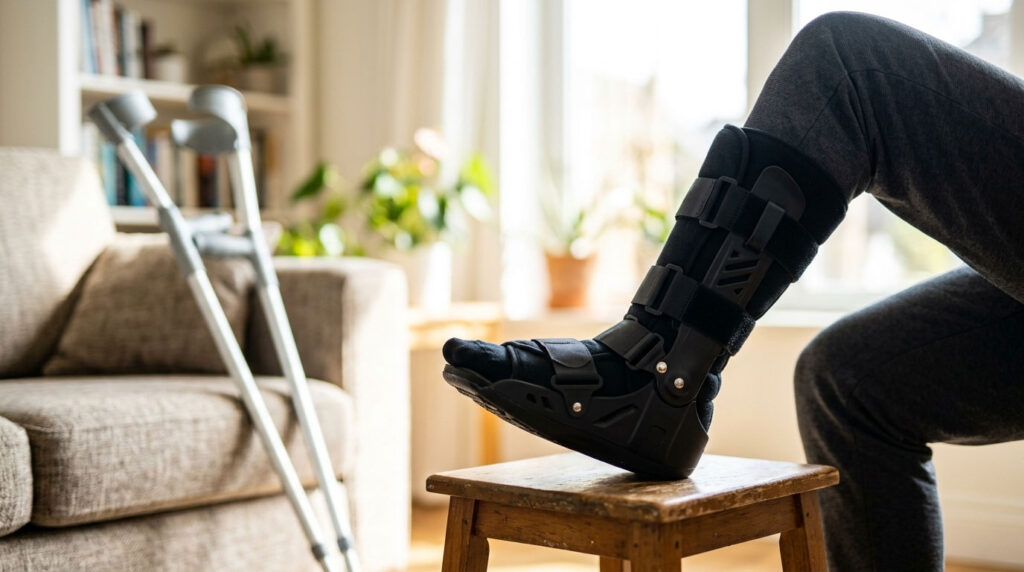
“It’s just the small bone, so it’s no big deal.” That’s the usual reaction when someone hears the fibula is broken instead of the shin. The logic sounds right, since the fibula carries far less weight than the tibia.
Table of Contents
Here’s the catch. That thin bone anchors the outside of your ankle, and when it breaks near the joint, it can still mean weeks off your feet, a walking boot, and sometimes surgery.
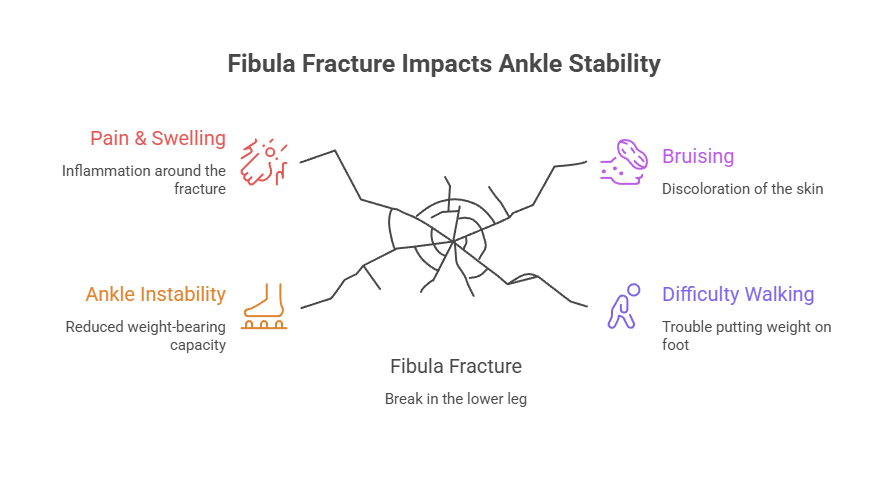
Quick answer: A fibula fracture is a break in the smaller of the two lower-leg bones, often called the calf bone. The common symptoms are pain, swelling, tenderness, and bruising along the outer leg or ankle, often with trouble putting weight on it. Causes range from rolled ankles and falls to direct blows and repetitive stress. Most heal in 6 to 8 weeks without surgery, though displaced, unstable, or open breaks may need plates and screws.
This guide has been prepared and reviewed by the HealthCareOnTime medical content team and reflects current guidance from US sources including Cleveland Clinic, the American Academy of Orthopaedic Surgeons, and peer-reviewed orthopedic research. Patients recovering from leg fractures often ask us why a so-called small break still sidelined them for two months, and the answer lies in what the fibula actually does.
At a glance:
- The fibula is the thin outer bone of your lower leg, and it stabilizes your ankle even though it bears little weight.
- The most common type breaks at the ankle end, the lateral malleolus.
- Pain, swelling, bruising, and trouble bearing weight are the usual signs.
- Most fibula fractures heal in 6 to 8 weeks; surgical cases can take 3 to 6 months.
- Surgery is reserved for displaced, unstable, open, or ankle-joint fractures.
- You can sometimes stand on a broken fibula, but you should not until a doctor clears you.
- A bone through the skin, or a cold, pale, numb foot, is an emergency.
If you’re scanning for the symptoms that should prompt a check, here they are at a glance.
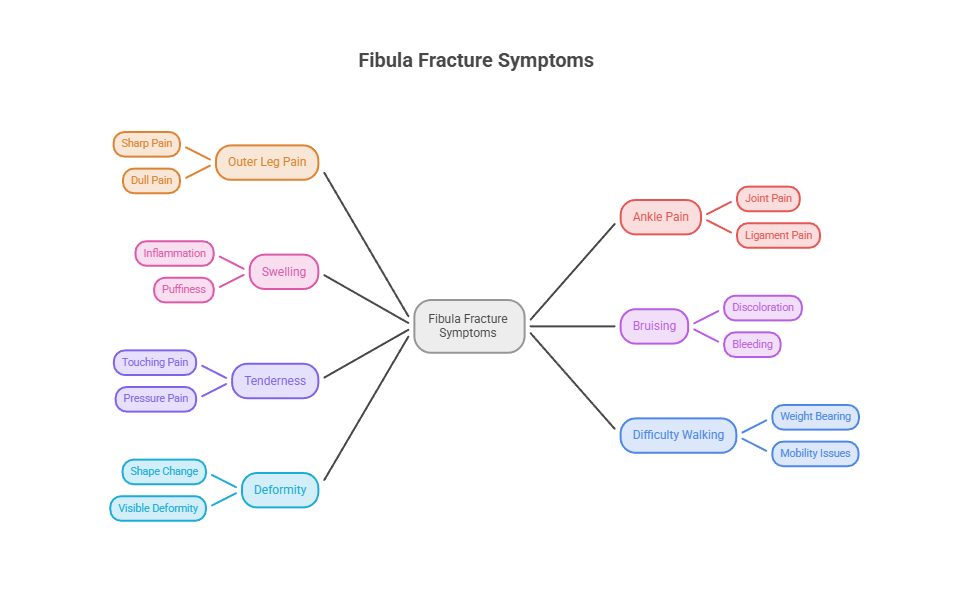
- Pain on the outer leg or ankle, worse with movement
- Swelling and tenderness over the break
- Bruising along the lower leg or ankle
- Trouble or inability to bear weight
- Visible deformity in severe cases
- Numbness, tingling, or a cold foot (a warning sign)
The full picture follows, because the type, cause, and treatment all shape how long you’ll be off your feet.
What Is a Fibula Fracture?
A fibula fracture is the medical term for a broken calf bone. The fibula is one of two bones in your lower leg, running alongside your shin bone, the tibia.
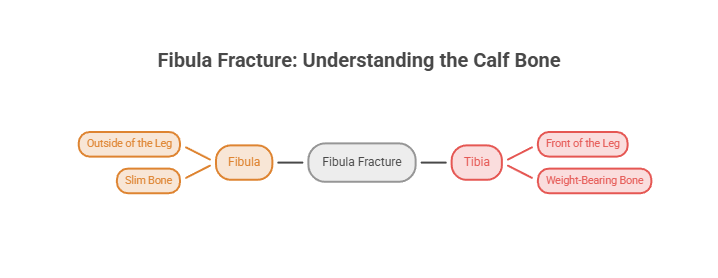
The two bones work as a pair. The tibia is the large, weight-bearing shin bone in front, while the fibula is the slim bone on the outside of your leg.
Where the Fibula Sits and What It Does
The fibula and tibia connect at both the knee and the ankle. Together they stabilize the lower leg and give the surrounding muscles something to attach to.
At the ankle, the bottom of the fibula forms the bony bump on the outer side, called the lateral malleolus. That knob is a key part of the ankle joint, which is why ankle injuries and fibula fractures so often go together.
Our medical reviewers note that this anatomy explains a frequent surprise: people expect a “leg bone” break to involve the shin, but most fibula fractures actually happen down at the ankle.
Why a Broken Fibula Often Heals Faster Than Other Leg Bones
There’s a silver lining to the fibula’s job. Because it doesn’t carry your body weight the way the tibia does, it tends to heal faster than other leg bones. Cleveland Clinic notes that fibula breaks usually heal faster precisely because the fibula doesn’t support your weight when you stand and move.
That same fact shapes treatment. An isolated fibula fracture, with the ankle joint stable and the bones lined up, can often heal without surgery.
Bone strength matters here too, and that’s partly a nutrition story. Across our diagnostic network, low vitamin D and calcium show up often in patients with fragile bones, which ties into the prevention steps later in this guide.
Types of Fibula Fractures
A fracture can happen anywhere along the bone, and doctors describe it by both location and pattern. The location often predicts how serious the injury is and whether the ankle joint is involved.
By Location
The ankle-end break is the big one. A lateral malleolus fracture occurs at the ankle and is sometimes classified as an ankle fracture even though the break is on the fibula. A fibular head or proximal fracture happens up near the knee, and a shaft fracture happens in the midsection, usually from a direct blow.
Common types of fibular fracture include lateral malleolus fractures at the ankle, fibular head fractures at the knee, avulsion fractures where a small piece of bone attached to a tendon or ligament breaks away, and stress fractures from repetitive stress.
By Pattern
Beyond location, the shape of the break matters. A stable fracture means the bone ends stay close together, a displaced fracture means the ends are out of place, a comminuted fracture means the bone is shattered into three or more pieces, and an open or compound fracture means there’s a wound in the skin near the break.
Stress fractures sit at the milder end. A fibula stress fracture is a small hairline crack that develops over time and may worsen with exercise and ease with rest. Spiral and oblique fractures, by contrast, come from twisting forces and run diagonally across the bone.
The Danis-Weber Classification
Orthopedic specialists often grade ankle-level fibula fractures using the Danis-Weber system. It classifies the break by where it sits relative to the syndesmosis, the strong ligament band joining the tibia and fibula at the ankle.
Ankle fractures are classified using the Weber system based on the location of the fibular fracture relative to the syndesmosis. Type A sits below it, Type B at its level, and Type C above it, with higher letters generally signaling more instability and a greater chance surgery is needed.
The table below maps the main fracture types to where they happen, what tends to cause them, and roughly how long they take to heal.
| Fracture Type | Where It Happens | Typical Cause | Surgery Likely? | Typical Healing Time |
| Lateral malleolus (distal) | Ankle end of the fibula | Rolled or twisted ankle, fall | Sometimes, if displaced or unstable | 6 to 8 weeks |
| Fibular head (proximal) | Just below the knee | Direct blow, twisting, often with other injuries | Sometimes, depends on knee or tibia | 6 to 8 weeks |
| Midshaft (fibular shaft) | Middle of the bone | Direct blow to the outer leg | Usually no, if isolated and stable | 6 to 8 weeks |
| Displaced fracture | Any location | Higher-force trauma | Often yes | 8 to 12 weeks or more |
| Comminuted fracture | Any location | High-energy trauma | Usually yes | 3 to 6 months |
| Open (compound) fracture | Any location | High-energy trauma, severe twist | Yes, often emergency | 3 to 6 months |
| Stress fracture | Often lower third | Running, hiking, repetitive load | Rarely | 6 to 8 weeks with rest |
Fibula Fracture Symptoms
Most fibula fracture symptoms show up fast and center on the outer leg or ankle. The intensity depends on how severe the break is and whether other bones or ligaments are involved.
The Common Signs
Pain and swelling lead the list. The most common symptoms of a fibula bone fracture are pain and swelling. Tenderness over the break and bruising along the outer leg or ankle usually follow within hours.
Many people also feel the injury when they try to stand. You may have difficulty walking or bearing weight on the injured leg, and there may be swelling or bruising on the lower leg at the site of the injury.
Signs It’s More Serious
Some symptoms point to a higher-grade injury that needs urgent care. With severe fractures, there may be a bone protruding through the skin or an obvious deformity.
A foot that turns cold, pale, numb, or tingly is a warning sign that blood flow or a nerve may be affected. So is pain that feels far out of proportion to the injury and keeps escalating, which can signal swelling pressure inside the leg.
In cases reviewed by our medical team, these are the situations where waiting it out is the wrong call. A visible wound over the break, in particular, is an emergency.
Broken Fibula vs Sprained Ankle: How to Tell
This is a common mix-up, and for good reason. Many fibula fractures happen as part of an ankle injury, and they may look and feel like a badly sprained ankle.
The honest answer is that you often can’t tell them apart at home. A bad sprain and a lateral malleolus fracture can both swell, bruise, and hurt to stand on.
Point tenderness directly over the bony ankle knob, an inability to take even a few steps, or an obvious deformity leans toward a fracture. When in doubt, an X-ray settles it, which is why specialists recommend imaging rather than guessing.
First Aid: What to Do Right After the Injury
The first hour matters, and a few simple steps protect the leg while you arrange care. The goal is to limit swelling and avoid making the break worse.
Stop activity and get the weight off the leg immediately. If you have an open fracture, seek emergency attention, and otherwise follow the RICE principle while you wait for help: rest, ice, compression, and elevation.
Ice the area through a cloth, keep the leg elevated, and avoid testing whether you can walk on it. If you see a wound over the break, do not push the bone back or apply heavy pressure; cover it loosely with a clean dressing and call 911.
Leave alignment to professionals. Trying to “straighten” a deformed leg at home can damage nerves, vessels, and soft tissue, so immobilize it as it is and get to care.
What Causes a Fibula Fracture?
Most fibula fractures come from a sudden force the bone can’t absorb. A smaller share build up slowly from repetitive stress.
Trauma, Twists, and Direct Blows
Everyday accidents account for many breaks. Except for stress fractures, these fractures often occur from a traumatic injury or more pressure on the bone than it can handle, such as rolling your ankle, a direct blow to the leg, a fall, or sports-related trauma.
Twisting injuries are especially common at the ankle. If your ankle turns outward or inward, it can fracture your fibula, and forceful blows from motor vehicle accidents can break the bone too.
Stress and Overuse Fractures
Not every break comes from one dramatic moment. Stress fractures of the fibula occur when repetitive stress is applied by activities such as hiking or running.
These hairline cracks are common in runners and athletes who ramp up mileage too quickly. The pain often starts vague, worsens with activity, and eases with rest, which is why people tend to push through it longer than they should.
Risk Factors
Some people break the fibula more easily than others. Older age raises the risk, because osteoporosis and an unsteady gait make falls more likely, and a direct fall on the fibula can break it.
Low bone mass is a major driver. Research shows the biggest risk factor for a fibula fracture is low bone mass, which increases the stress and trauma the fibula takes on. Sports with jumping, cutting, and contact add risk on the other end of the age spectrum.
Here’s how often these injuries occur, and what tends to cause them, across the US population. These figures come from national and population-based datasets, and while collection years vary, the patterns have stayed consistent.
| Statistic | Figure | Source |
| Estimated US ankle fractures (2012 to 2016) | About 673,214 | Journal of Foot and Ankle Surgery (NEISS data) |
| Ankle fracture incidence rate (US) | 4.22 per 10,000 person-years | Journal of Foot and Ankle Surgery (NEISS data) |
| Share of all fractures that are ankle fractures | About 9 to 10% | Population studies (Elsoe et al.) |
| Most common ankle fracture type | Lateral malleolus, about 55% | Population study (Elsoe et al.) |
| Leading injury mechanism | Falls, about 55% | Journal of Foot and Ankle Surgery (NEISS data) |
| Sports as injury mechanism | About 21% | Journal of Foot and Ankle Surgery (NEISS data) |
| Associated trauma in high-energy open fractures | 40 to 70% | American Academy of Orthopaedic Surgeons |
How Doctors Diagnose a Fibula Fracture
Diagnosis starts with the story of the injury and a hands-on exam, then moves to imaging. The goal is to confirm the break, see if it’s displaced, and check whether the ankle joint is stable.
Physical Exam and the Ottawa Ankle Rules
A clinician will look for swelling, bruising, and deformity, then press along the bone to find the most tender spot. They’ll also check the pulse and sensation in your foot.
For ankle injuries, doctors often use the Ottawa Ankle Rules, a quick set of checks that helps decide who actually needs an X-ray. It’s a simple way to avoid unnecessary imaging while catching the breaks that matter.
X-rays, CT, MRI, and Stress Views
Imaging confirms what the exam suspects. The doctor will conduct a physical examination, look for deformities, and take an X-ray to see the fracture and whether a bone is displaced; an MRI gives a more detailed picture of soft tissues, and CT scans or bone scans may be used for a precise judgment.
Stress X-rays play a special role at the ankle. Stress radiographs help detect associated mortise instability, which is fundamental to defining the treatment approach. Across the imaging our diagnostic partners process, that stability question is what separates a simple boot-and-rest plan from a surgical one.
What to Expect at Your Appointment
Knowing the flow can ease the nerves. Expect to describe how the injury happened, rate your pain, and have the leg examined and imaged, often in the same visit.
If the fracture is stable, you may leave in a boot or cast with weight-bearing instructions and a follow-up date. If it’s displaced or unstable, the conversation shifts to realignment or surgery, and you may be referred to an orthopedic specialist the same day.
Fibula Fracture Treatment Options
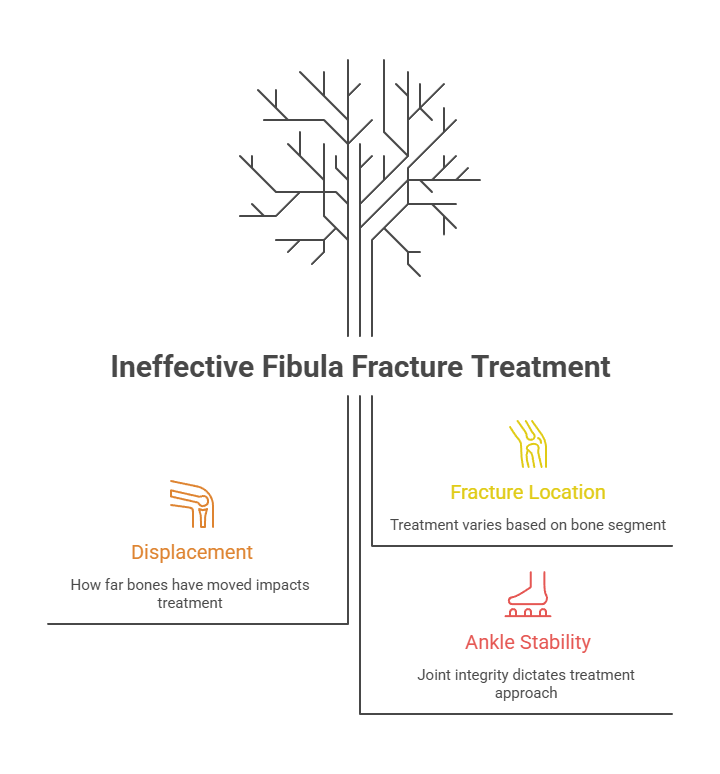
Treatment depends on the fracture’s location, how displaced it is, and whether the ankle joint is stable. The two broad paths are nonsurgical care and surgery.
Nonsurgical Treatment
Most isolated, stable fibula fractures heal without an operation. Treatment often begins with elevating the leg, ice to relieve pain and reduce swelling, and if no surgery is needed, crutches for mobility plus a brace, cast, or walking boot while healing takes place.
You’ll likely stay off the leg at first. A walking boot or cast protects the bone, and many people transition from non-weight bearing to partial and then full weight bearing as the bone knits.
For minimally displaced, stable breaks, the results are reassuring. For simple, minimally displaced fractures without ankle instability, conservative treatment leads to excellent results.
When Surgery Is Needed
Surgery steps in when the bones won’t stay put or the ankle is unstable. For internal fixation, a surgeon places metal implants inside the broken bone to hold the fracture together while it heals, and severe open fractures may need external fixation with screws or pins outside the skin until internal fixation is possible.
The standard operation is open reduction and internal fixation. Open reduction and internal fixation is the most common treatment for unstable, displaced fibula fractures, using a plate and screws to stabilize the bone.
Newer hardware can speed things up. Studies of anatomically contoured locking plates report a 100% bone healing rate at 3 months and the ability to allow immediate full weight-bearing, with a short recovery time and early return to work.
What Recovery From Surgery Looks Like
Surgical recovery generally runs longer than nonsurgical. After surgery, patients often wait until the bone has healed enough to bear weight, which can take 6 to 8 weeks, followed by rehabilitation, with total recovery ranging from 3 to 6 months depending on complexity and adherence to rehab.
Physical therapy is part of the plan in most surgical cases. It rebuilds the strength and ankle motion that weeks of immobilization take away.
The table below turns common situations into clear next steps.
| Your Situation | What It Likely Means | Recommended Next Step |
| Pain and swelling after an ankle twist, can still take a few steps | Possible stable fibula or bad sprain | See a provider for an X-ray within a day or two; rest, ice, elevate, stay off it |
| Cannot bear any weight, severe swelling or deformity | Possible displaced or unstable fracture | Get urgent evaluation and imaging the same day |
| Bone visible through the skin or a deep wound at the break | Open (compound) fracture | Call 911; this is an emergency needing antibiotics and surgery |
| Cold, pale, numb, or tingling foot after injury | Possible blood-vessel or nerve involvement | Seek emergency care immediately |
| Nagging outer-leg pain that worsens with running, eases with rest | Possible stress fracture | See a provider; expect rest and reduced loading, not just pushing through |
| Diagnosed stable fracture, in a boot, healing on schedule | Nonsurgical course working | Follow weight-bearing instructions and keep follow-up X-ray appointments |
Recovery Timeline: What to Expect Week by Week
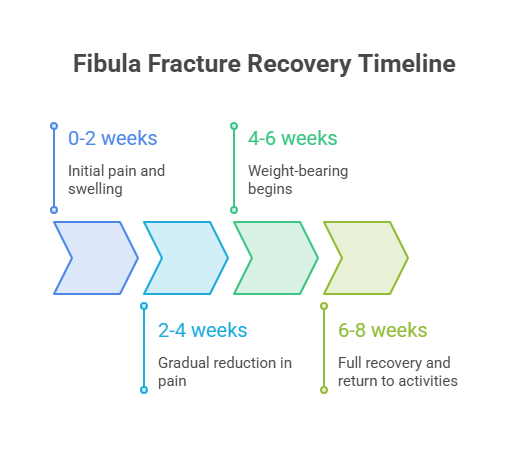
Recovery moves through predictable phases, though the exact pace varies with the fracture and whether you had surgery. It usually takes six to eight weeks for a broken fibula to heal.
Weeks 0 to 2
The first priority is protecting the bone and controlling swelling. You’ll likely keep weight off the leg, use crutches or a knee scooter, elevate often, and ice the area.
A cast, splint, or walking boot immobilizes the fracture. Pain and swelling are usually at their peak here.
Weeks 3 to 6
New bone begins to form, and follow-up X-rays start to show healing. A boot may replace a cast to allow a little controlled movement.
Depending on your provider’s guidance, gentle motion exercises may begin to keep the ankle from stiffening. This is still mostly a protected, limited-weight phase.
Weeks 6 to 12
This is the turning point for many people. As the fracture shows solid healing, gradual weight bearing begins, often progressing from partial to full.
Physical therapy becomes central, rebuilding muscle strength and ankle range of motion. Walking boots or orthopedic shoes ease the transition back to normal footwear.
Months 3 to 6
Most simple fractures are well healed by now, while surgical and complex breaks finish their recovery in this window. A spiral fracture in the fibula typically takes around 3 to 6 months to heal fully.
Return to sport and high-impact activity usually comes last, once strength and stability are back. Patients we serve frequently underestimate this final stretch, expecting full speed the moment the boot comes off.
| Phase | What’s Happening | Typical Activity / Weight Bearing |
| Weeks 0 to 2 | Swelling control, fracture protection | Non-weight bearing; crutches or knee scooter; ice and elevate |
| Weeks 3 to 6 | Early bone healing, callus forming | Limited weight bearing per provider; boot; gentle motion |
| Weeks 6 to 12 | Solid healing, rehab focus | Gradual partial to full weight bearing; physical therapy |
| Months 3 to 6 | Full healing, strength return | Return to walking and most activity; sport last (surgical cases longer) |
Can You Walk on a Broken Fibula?
This is one of the most common questions about this injury, and the answer is nuanced. Because the fibula carries little weight, some people physically can put a foot down with a break.
That does not mean you should. On the same day the fracture occurs, you can sometimes resume walking with the help of crutches or a walker, but only until you see an orthopedic doctor to determine whether you’re allowed to bear weight.
Walking on an unstable or ankle-level fibula fracture too soon can shift the bones, delay healing, or worsen the injury. The safe move is to stay off it, use crutches, and let a clinician decide when weight bearing is appropriate.
Possible Complications and Red Flags
Most fibula fractures heal without lasting trouble. Generally speaking, most fibula fractures heal without long-term complications. A few situations, though, need fast action or careful follow-up.
Open Fracture, Infection, and Compartment Syndrome
An open fracture is a true emergency. A compound fracture can quickly lead to infection, which can be life threatening, so seek immediate medical care and call 911 if a piece of bone is sticking out through the skin.
Compartment syndrome is another urgent concern, where swelling builds dangerous pressure inside the leg. Severe, escalating pain, numbness, or a tight, tense calf after injury should never be brushed off.
Nonunion, Malunion, and Post-Traumatic Arthritis
Sometimes bones heal poorly or not at all. A nonunion means the ends fail to join, and a malunion means they heal out of alignment, both of which can cause ongoing pain and may need further treatment.
The longer-term concern is arthritis. Ankle fractures are the most common cause of post-traumatic ankle osteoarthritis, accounting for about 53% of such cases, with a mean time from injury to end-stage arthritis of roughly 20.9 years.
Outcomes also track with how many bones are involved. A moderate or poor outcome is reported for about 5% of single-malleolus fractures, 18% of two-malleolus fractures, and 30% of three-malleolus fractures. Our medical reviewers note that this is why doctors take ankle-joint stability so seriously, not just the fibula itself.
How to Lower Your Risk of a Fibula Fracture
You can’t prevent every accident, but you can make your bones harder to break and your falls less likely. Two areas do most of the work.
Bone Health
Strong bones resist fracture. You may lower your risk by getting weight-bearing exercise to strengthen bones and supporting muscles, and by getting enough calcium and vitamin D.
Bone density also deserves attention with age. Women approaching menopause and men near age 70 should talk with their doctor about osteoporosis risk and possible screening, since finding and treating a problem early helps prevent fractures. Knowing your vitamin D and calcium status is a practical starting point, and our diagnostic partners see how often correcting a deficiency is the first step toward stronger bones.
Fall-Proofing and Sport Safety
Simple home and gear choices add up. Use proper sports equipment, including shin guards and well-fitting shoes for the activity.
At home, reducing fall risk matters most for older adults. Keep floors and hallways clear of clutter, use night lights, add grab bars in showers and railings near stairs, and wear supportive shoes when exercising.
Frequently Asked Questions
Can you walk on a fractured fibula?
Sometimes you physically can, because the fibula bears little weight, but you should not until a doctor clears you. Walking on an unstable or ankle-level break too early can shift the bones and delay healing. Use crutches and stay off the leg until you’re evaluated and given specific weight-bearing instructions.
How long does a broken fibula take to heal?
Most fibula fractures heal in about 6 to 8 weeks. Stable, isolated breaks recover fastest, while displaced, comminuted, or surgical fractures can take 3 to 6 months for full recovery. Healing time depends on fracture severity, your age and bone health, and how closely you follow your provider’s plan.
Is a fibula fracture serious?
It can range from minor to serious. An isolated, stable fracture often heals well without surgery, but a displaced or open fracture, or one involving the ankle joint, is more serious and may need an operation. Any suspected broken bone should be evaluated promptly, and an open fracture is an emergency.
Does a fibula fracture always need surgery?
No. Most isolated, stable fibula fractures heal with rest, immobilization in a boot or cast, and a period of non-weight bearing. Surgery is reserved for displaced or unstable breaks, open fractures, and fractures that involve the ankle joint or the tibia, where plates and screws restore alignment.
How painful is a broken fibula?
It’s usually quite painful at first, with sharp pain at the break, swelling, and tenderness that worsens when you try to bear weight. Pain typically peaks in the first days and eases as the bone heals. Pain that keeps escalating or feels out of proportion can signal a complication and needs evaluation.
What’s the difference between a broken fibula and a sprained ankle?
They can feel almost identical, since many fibula fractures happen with ankle injuries. Both cause swelling, bruising, and pain. Point tenderness over the bony ankle knob, inability to take a few steps, or visible deformity leans toward a fracture. Only an X-ray can reliably tell them apart, so get imaging if unsure.
Can a fibula fracture heal on its own?
A stable, minimally displaced fibula fracture can heal with conservative care, which is rest, immobilization, and protected weight bearing rather than surgery. The bone still needs proper support, monitoring, and follow-up X-rays to confirm it’s aligning and healing. “On its own” doesn’t mean ignoring it, since untreated fractures can heal crooked or not at all.
Do you need a cast for a fibula fracture?
Often, but not always. Many fibula fractures are treated with a cast, splint, or removable walking boot to immobilize the bone while it heals. The choice depends on the fracture’s location and stability. Some stable breaks do well in a boot that allows controlled motion, while others need the rigidity of a cast.
What is a fibula stress fracture?
A fibula stress fracture is a small hairline crack caused by repetitive stress, common in runners and hikers who increase activity too quickly. The pain usually builds gradually, worsens with exercise, and eases with rest. Treatment centers on rest and reduced loading, sometimes with a boot, and these fractures rarely require surgery.
How do you sleep with a broken fibula?
Keep the leg elevated on pillows to reduce swelling and throbbing, especially in the early weeks. Sleeping on your back with the leg supported is often most comfortable, and a pillow between the knees can help side sleepers. Take any prescribed pain medication as directed, and keep the boot or cast on if instructed.
When can I drive after a fibula fracture?
It depends on which leg is injured and whether you can safely control the pedals without pain or a boot. Many people avoid driving while non-weight bearing or in a cast, particularly with a right-leg fracture. Always confirm with your provider, since driving too early can be unsafe and may affect insurance coverage.
What happens if a fibula fracture goes untreated?
An untreated fracture can heal out of alignment (malunion) or fail to heal (nonunion), causing chronic pain, instability, and a higher risk of arthritis later. Ankle-joint fractures left unstable are especially prone to long-term problems. Prompt evaluation and proper treatment give the best chance of full, complication-free recovery.
Disclaimer: This article is for general education and is not medical advice. A suspected fibula fracture needs in-person evaluation and imaging by a qualified clinician, and individual cases vary. Call 911 or seek emergency care for an open fracture (bone through the skin) or for signs of compartment syndrome such as severe, escalating pain, numbness, or a tight, tense leg.
References
- Cleveland Clinic: Fibula Fracture (Broken Fibula or Calf Bone)
- WebMD: What to Know About Fibular Fractures
- Healthline: Fibula Fracture, Types, Treatment, Recovery, and More
- Medical News Today: Fibula fracture, symptoms, treatment, and recovery
- Journal of Foot and Ankle Surgery: Ankle Fracture Epidemiology in the United States (NEISS)
- NIH / PMC: Fibula fractures management
- Frontiers in Surgery: Global Status of Research in Ankle Fracture (post-traumatic arthritis data)
- ScienceDirect: Population-based epidemiology of 9767 ankle fractures (lateral malleolus share)