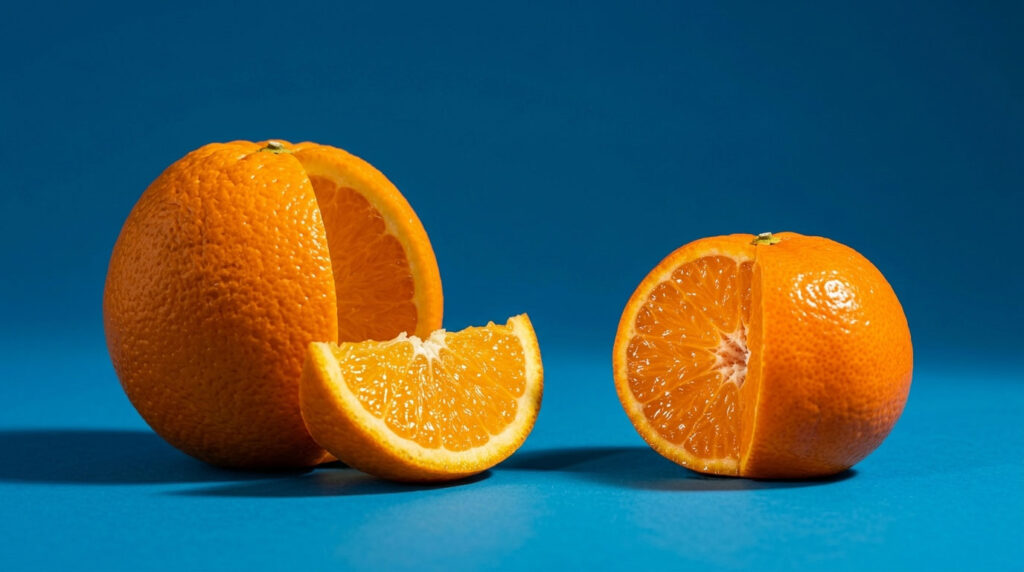
Toss a tangerine in a kid’s lunchbox and most people assume they’ve packed a baby orange. Same color, same citrus tang, just smaller. Case closed.
Not quite. These two fruits pull ahead in different nutrients, which means the honest answer to “which is healthier” depends on what your body actually needs.
Table of Contents
Quick answer: Both are nutritious, but they win different categories. Per fruit, an orange delivers more vitamin C (close to a full day’s worth) and more fiber, while a tangerine is sweeter, smaller, easier to peel, and richer in vitamin A. Per 100 grams, tangerines run slightly higher in calories and sugar. For most people, the healthier choice is whichever one you’ll actually eat regularly.
This guide was prepared and reviewed by the HealthCareOnTime nutrition content team using current data from the USDA, the NIH Office of Dietary Supplements, and Mayo Clinic. Patients asking us about vitamin testing often wonder which “superfood” to chase, when consistency beats optimization nearly every time.
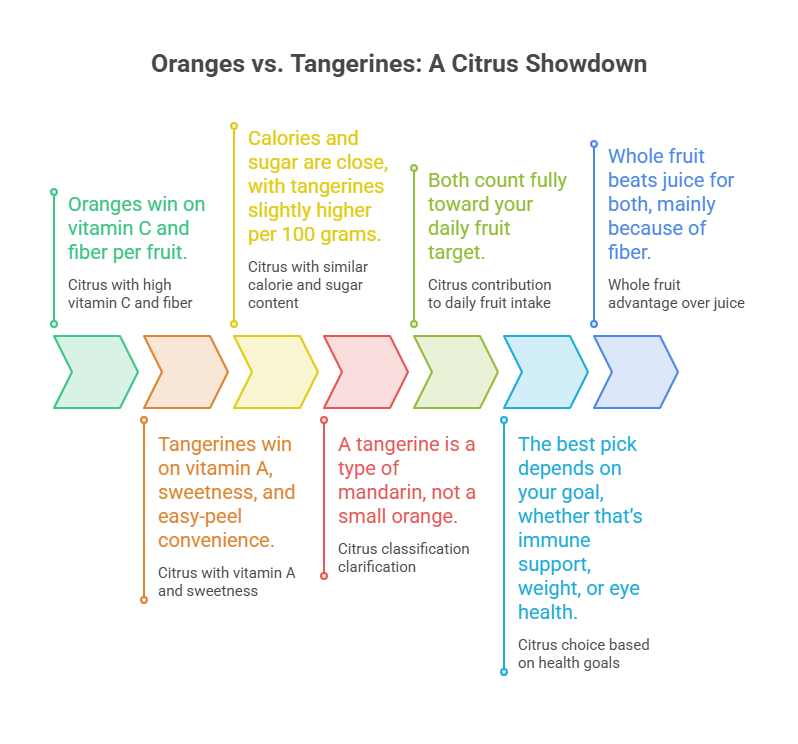
At a glance:
- Oranges win on vitamin C and fiber per fruit.
- Tangerines win on vitamin A, sweetness, and easy-peel convenience.
- Calories and sugar are close, with tangerines slightly higher per 100 grams.
- A tangerine is a type of mandarin, not a small orange.
- Both count fully toward your daily fruit target.
- The best pick depends on your goal, whether that’s immune support, weight, or eye health.
- Whole fruit beats juice for both, mainly because of fiber.
If you just want the bottom line before the details, here it is.
- Most vitamin C and fiber: orange
- Most vitamin A: tangerine
- Easiest to peel and pack: tangerine
- Fewest calories per 100 grams: orange
- Best overall: both, eaten as whole fruit
Orange vs Tangerine: What They Actually Are
Before comparing nutrition, it helps to know what’s on your plate. Oranges and tangerines are cousins in the citrus family, not parent and child.
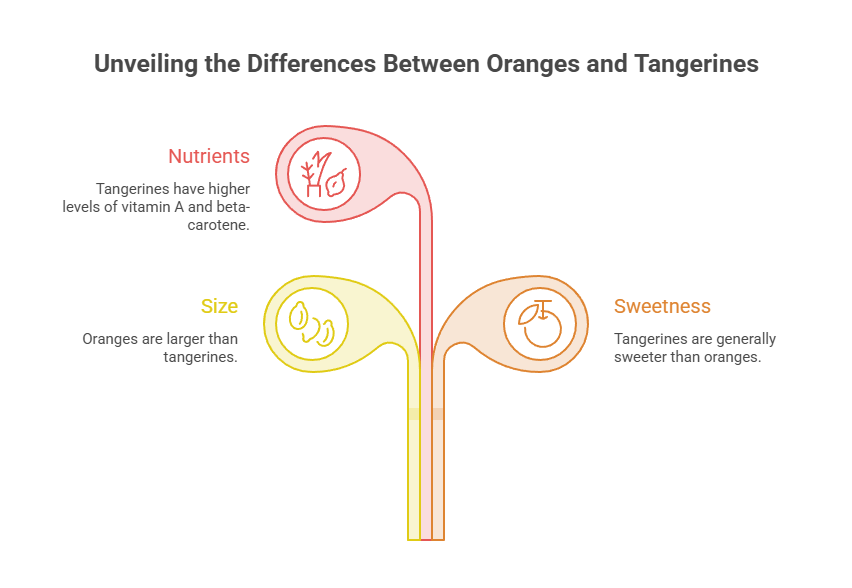
Both are bright, juicy, and packed with water and carbohydrates with almost no fat. The differences come down to size, sweetness, and a few standout nutrients.
The Orange
The common sweet orange is the heavyweight of the citrus aisle. It’s larger, juicier, and a little more tart than a tangerine, with a peel that clings tighter to the fruit.
It’s also the most familiar source of vitamin C in the American diet. Our nutrition reviewers note that when people picture “getting their vitamin C,” they almost always picture an orange or a glass of orange juice.
The Tangerine
A tangerine is smaller, sweeter, and easier to peel, which is exactly why it ends up in lunchboxes and gym bags. The looser skin and segments make it a grab-and-go fruit.
Here’s the part that surprises people. The tangerine is closely related to the orange, lemon, lime, and grapefruit, and in the United States the term “tangerine” is often used interchangeably with “mandarin,” though tangerines are technically considered a specific variety of mandarin.
Tangerine vs Mandarin vs Clementine
This trio causes endless confusion at the grocery store. The simplest way to hold it straight is to treat “mandarin” as the umbrella term.
Tangerines are a variety of mandarin oranges, while clementines are actually a hybrid of mandarins and sweet oranges. So a clementine (often sold as a “Cuties” or “Halos” easy-peeler) carries a touch of orange parentage, while a tangerine is mandarin through and through.
Nutrition Face-Off: Orange vs Tangerine
Now to the numbers. The two fruits look nearly identical on a nutrition label until you zoom in on a few specific nutrients.
There’s one trap to avoid first, because it trips up almost every comparison you’ll read online.
Reading the Numbers: Per 100 Grams vs Per Fruit
Most nutrition tables compare a fixed weight, usually 100 grams (about 3.5 ounces). By that measure, a tangerine looks slightly higher in calories and sugar than an orange.
But you don’t eat by the gram, you eat by the fruit, and a typical orange is bigger than a typical tangerine. Dietitians note that size is the biggest difference between the two, with roughly two tangerines equaling one orange.
So the per-100-gram numbers tell you about nutrient density, while the per-fruit numbers tell you what actually lands in your stomach. The table below uses the standard 100-gram basis, with the per-fruit nuance called out underneath.
| Nutrient (per 100g) | Orange | Tangerine | Edge |
| Calories | 46 | 53 | Orange (fewer) |
| Carbohydrates | 11.5 g | 13.3 g | Orange (fewer) |
| Sugar | 9.1 g | 10.6 g | Orange (less) |
| Fiber | 2.4 g | 1.8 g | Orange (more) |
| Vitamin C | 45 mg | 26.7 mg | Orange (more) |
| Vitamin A | 11 mcg | 34 mcg | Tangerine (more) |
| Potassium | 169 mg | 166 mg | Tie |
Source for these values: USDA data compiled by SouperSage. Per whole fruit, a medium orange still leads on vitamin C and fiber because it’s the larger fruit.
Calories, Carbs, and Sugar
The calorie gap is small and mostly about water and density. Tangerine and orange contain similar amounts of calories, with tangerine at 53 per 100 grams and orange at 46, and similar sugar, with tangerine at 10.6 grams and orange at 9.1.
In practice, both are low-calorie, naturally sweet snacks. Neither is a “high sugar” fruit in any meaningful sense, and the fiber in the whole fruit blunts how that sugar hits your bloodstream.
Vitamin C: Oranges Take It
This is the clearest win on the board. Both are high in vitamin C, but orange has 69% more than tangerine, with orange at 45 milligrams per 100 grams and tangerine at 26.7 milligrams.
Some sources put the gap even wider per serving. Healthline reports that oranges have more than double the amount of vitamin C compared with tangerines, and that vitamin C is a powerful antioxidant supporting skin, blood vessels, and bones.
If immune support and vitamin C are your priority, the orange is the better buy. One medium orange comes close to covering an adult’s full daily target.
Vitamin A and Antioxidants: Tangerines Take It
Tangerines answer back with vitamin A. Tangerine has 209% more vitamin A than orange, at 34 micrograms per 100 grams versus 11 micrograms.
That vitamin A comes largely from carotenoids like beta-carotene, the pigment behind the deep orange color. A 3.5-ounce serving of tangerines contains over three times the vitamin A of oranges, which supports the case that tangerines win that particular battle.
Vitamin A matters for vision, skin, and immune function, so the tangerine isn’t just the “convenient” choice. It carries a real nutritional edge of its own.
Fiber, Potassium, and the Rest
Oranges edge ahead on fiber, the nutrient most Americans under-eat. Orange has 33% more dietary fiber than tangerine, at 2.4 grams per 100 grams versus 1.8 grams.
For most other minerals, the two are neck and neck. They contain similar amounts of potassium, with tangerine at 166 milligrams and orange at 169, and similar calcium, at 37 and 43 milligrams respectively.
Both also deliver folate, thiamin, and B6, rounding out a genuinely nutrient-dense profile. There’s no “junk” fruit here; the differences are about emphasis, not quality.
Vitamin C deserves a closer look, since it’s the nutrient people most associate with citrus and the one Americans most often miss. The recommended dietary allowance is 90 milligrams per day for adult men and 75 milligrams for adult women, set to maintain near-maximal neutrophil vitamin C with minimal urinary loss.
Plenty of people fall short anyway. Industry analyses of national intake data suggest close to half of US adults don’t get enough vitamin C from food alone, which is part of why a single vitamin-C-rich orange does real work in a day. If you’re curious where you actually stand, our diagnostic partners can run a vitamin panel rather than leaving it to guesswork.
Health Benefits of Oranges
Oranges earn their reputation honestly, and most of it traces back to vitamin C and fiber working together.
Vitamin C, Immunity, and Skin
Vitamin C is the headline act. According to the NIH Office of Dietary Supplements, citrus fruits are major contributors of vitamin C to the American diet, and the vitamin functions as an antioxidant and a cofactor for collagen production.
Collagen is what keeps skin, blood vessels, and connective tissue resilient. Vitamin C also helps the body absorb iron from plant foods, a quiet benefit that matters for anyone eating less meat.
It plays a role in wound healing and everyday tissue repair too. Because the body doesn’t make or store vitamin C, a daily citrus habit is a simple way to keep your levels topped up rather than riding the ups and downs of an irregular diet.
Fiber, Heart, and Blood Sugar
The fiber in a whole orange does more than aid digestion. Dietitians note that an orange’s fiber not only supports digestive health but may help lower cholesterol, benefiting cardiovascular health, with added support from the antioxidants naturally present in the fruit.
That fiber also slows sugar absorption, which is why a whole orange treats your blood sugar far more gently than juice. It’s the difference between eating the fruit and drinking it.
Fiber feeds the helpful bacteria in your gut and supports regularity, benefits that compound over time. One whole orange brings around 3 grams of fiber, a meaningful step toward the 25 to 30 grams most adults need each day and routinely miss.
Hydration and Kidney-Stone Notes
Oranges are about 87% water, making them a tasty way to top up fluids. They also carry citrate, which has a specific perk.
Studies suggest that drinking orange juice may help prevent the formation of calcium oxalate and uric acid, which can contribute to kidney stones, though eating the whole fruit adds back the fiber lost in juicing. For most people, that whole-fruit version is the smarter default.
Health Benefits of Tangerines
Tangerines bring their own strengths, and convenience is a genuine health feature, not a consolation prize.
Vitamin A, Eyes, and Skin
The vitamin A advantage shows up where it counts. The carotenoids that give tangerines their color support eye health and skin, and act as antioxidants in their own right.
Beyond antioxidants, tangerines may help reduce the risk of kidney stones and support immune function, heart health, and regularity, while supplying copper, vitamin B6, thiamine, and folate.
Easy-Peel Convenience and Portion Control
Don’t underrate the peel. Dietitians point out that for some adults and children, a tangerine is easier to peel and eat thanks to its smaller size, and that including whichever fruit is easiest is the best approach.
The smaller size also builds in portion control. A tangerine is a naturally single-serving snack, which helps if you’re watching calories or packing fruit for kids.
Antioxidants and Everyday Nutrition
For day-to-day eating, the tangerine is hard to beat on friction. No knife, no sticky hands, no mess at a desk.
That low effort translates into a real benefit: people eat what’s easy. In cases reviewed by our nutrition team, the “best” fruit for a given person is usually the one already sitting in the fridge, peeled-and-ready in their mind.
Citrus Peels, Zest, and the Whole-Fruit Bonus
Most people toss the peel, but it carries real nutrition. The colorful zest and the white pith beneath it hold fiber and plant compounds the juicy segments don’t fully capture.
Dietitians point to the peel specifically. The antioxidants present in oranges and orange juice have been shown to improve several cardiovascular risk factors, and compounds in the peel may also benefit heart health, according to research the experts cite.
You don’t need to bite into a peel to benefit. A little grated orange or tangerine zest in yogurt, oatmeal, dressings, or baked goods adds flavor and a small dose of those compounds without the bitterness of a big mouthful.
The broader lesson is the whole-fruit principle again. The closer you stay to the intact fruit, segments, fiber, and a touch of zest, the more of citrus’s benefits you actually capture.
Which Is Healthier? It Depends on Your Goal
Here’s where the comparison gets useful. Instead of crowning one fruit, match the fruit to what you’re trying to do.
Matching the Fruit to Your Priority
If you want maximum vitamin C and fiber, reach for an orange. If you want a sweet, portable, lower-effort snack with a vitamin A boost, grab a tangerine.
For most goals, though, the gap is small enough that personal preference wins. As one dietitian put it, both fruits are highly nutritious and positively contribute to health and disease prevention for most individuals, so enjoying both is a sound strategy. The table below turns that into quick guidance.
| Your Goal or Situation | Better Pick | Why |
| Maximum vitamin C and immune support | Orange | Roughly double the vitamin C per serving; one orange nears a full day’s target |
| Fewer calories per 100 grams | Orange | 46 calories per 100g vs 53 for tangerine |
| More fiber for digestion and cholesterol | Orange | About 33% more fiber per 100 grams |
| Eye and skin support (vitamin A) | Tangerine | Over three times the vitamin A of an orange |
| Easy snack for kids or on the go | Tangerine | Smaller, sweeter, easy to peel, naturally portion-sized |
| Watching blood sugar | Either, whole fruit | Both are whole fruits with fiber; skip juice and mind portions |
How Much Americans Eat (and Why It’s Shifting)
Citrus is woven into the American diet, but the way people eat it is changing fast. That shift is part of why easy-peel tangerines and mandarins keep gaining shelf space.
Citrus in the US Diet
Oranges have long been a cornerstone fruit, yet fresh citrus is a smaller slice of the plate than it used to be. In 2018, citrus fruits accounted for 14% of the fresh fruit available to Americans, down from a 24% share in 1970, partly reflecting expanded fresh-fruit options.
A huge share of oranges never gets eaten whole at all. According to USDA data, fresh oranges made up about 16% of available oranges, while 84% was consumed in the form of juice. The table below gathers the key US numbers.
| Statistic | Figure | Source |
| Vitamin C RDA, adult men | 90 mg per day | NIH Office of Dietary Supplements |
| Vitamin C RDA, adult women | 75 mg per day | NIH Office of Dietary Supplements |
| Vitamin C in one medium orange | About 70 to 83 mg | USDA FoodData Central |
| Citrus share of fresh fruit available (2018) | 14% (down from 24% in 1970) | USDA Economic Research Service |
| US oranges consumed as juice | About 84% | USDA Economic Research Service |
| Trend in mandarin/tangerine intake | Rising, while fresh oranges decline | USDA Economic Research Service |
Easy-peel fruit is winning the convenience race. Over recent decades, per capita availability of fresh oranges and grapefruit declined, while availability of lemons, limes, and tangerines increased, with sweet, small, easy-peel citrus gaining favor.
That trend lines up with how people actually live. A fruit you can peel one-handed at your desk beats one that needs a cutting board, even if the nutrition is similar.
Juice has driven much of the shift. Per capita orange juice consumption has fallen by more than 50% since the early 2000s, as grab-and-go breakfasts replace the morning glass and easy-peel fruit fills the gap.
Whole Fruit vs Juice: A Big Difference
Whichever citrus you prefer, how you eat it changes the math. This is the single most important point in the whole comparison.
Why Juice Loses the Fiber
Juicing strips out the fiber that makes citrus so good for you. Healthline notes that by eating whole oranges you also benefit from the fiber, which is lost during juicing.
Without fiber, the natural sugars hit your bloodstream faster, and it’s easy to drink the sugar of three or four oranges in one glass. The whole fruit keeps you fuller on fewer calories.
Sugar and Portion Reality
A whole orange or tangerine comes pre-portioned by nature. A glass of juice does not, which is how liquid calories sneak up on people.
Mayo Clinic frames the practical version of this clearly. It notes that most people can get enough vitamin C from food or drink, citing about three-quarters of a cup of orange juice as one example, while listing whole fruits like oranges among the best sources. When in doubt, eat the fruit and drink water.
Blood Sugar, Diabetes, and Portion Notes
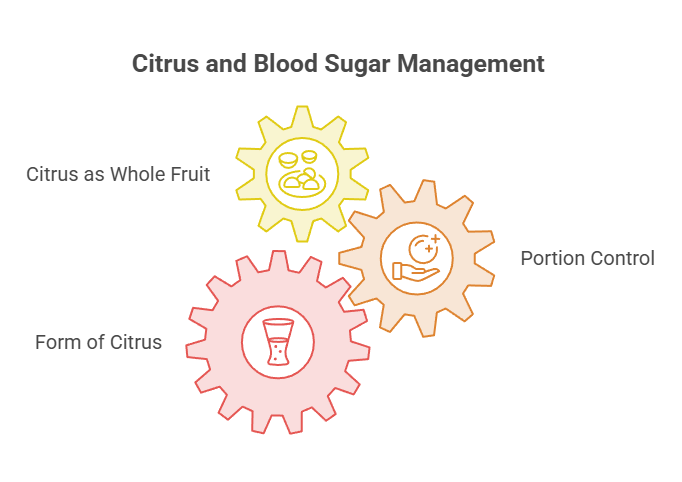
Citrus is generally friendly for blood sugar when eaten as whole fruit, but portions and form still matter.
The Glycemic Picture for Both Fruits
Whole oranges and tangerines have a relatively modest effect on blood sugar, thanks to their fiber and water. The fiber slows digestion so the natural sugar releases gradually rather than spiking.
That changes with juice or dried citrus, where sugar concentrates and fiber drops. For blood-sugar management, the whole fruit is the safer everyday choice.
Both fruits sit in the low-to-moderate range on the glycemic scale as whole fruit, which is friendlier than many processed snacks. Eating citrus alongside a meal, rather than alone on an empty stomach, smooths the response even more.
Sensible Portions
One piece of fruit at a time is a reasonable serving for most people. Pairing it with protein or a handful of nuts slows absorption even further.
Anyone with diabetes or prediabetes should personalize this. If you want to know how your body handles carbohydrates over time, our diagnostic partners can check markers like HbA1c rather than relying on how a snack “feels.”
Who Should Be a Little Cautious
For the vast majority of people, both fruits are a healthy daily habit. A few groups should pay closer attention.
A citrus or pollen-related allergy, though uncommon, can make either fruit a problem, so anyone with symptoms should check with an allergist. Acid reflux can also flare with citrus for some people, in which case smaller portions or different fruit may sit better.
There’s also a medication note worth knowing. While the famous interaction involves grapefruit rather than oranges or tangerines, anyone on medications with citrus warnings should confirm with a pharmacist, since some mandarin relatives have been studied for similar effects.
How to Pick, Store, and Enjoy Both
A little know-how makes either fruit taste better and last longer. Quality at the store does most of the work.
Choosing Ripe Fruit
Pick fruit that feels heavy for its size, which signals juiciness. The skin should be firm, fragrant, and free of soft or moldy spots.
Color isn’t a perfect ripeness guide for citrus, since some fruit is treated or naturally varies. Weight and smell are more reliable cues than shade alone.
Storage and Easy Ways to Eat More
Both keep for days at room temperature and one to two weeks in the refrigerator. Cooler storage stretches their life when you buy in bulk.
To eat more, make them visible and easy. Keep a bowl on the counter, toss segments into salads or yogurt, freeze them for smoothies, or pack a tangerine in every bag you carry.
How They Taste and Cook
Flavor often decides the winner in real kitchens, and the two fruits behave differently. A tangerine is sweeter and less tart, with segments that separate cleanly, which makes it ideal for snacking and tossing into salads whole.
An orange is juicier and brighter, with a sharper edge that holds up in cooking. Its juice and zest lift dressings, marinades, baked goods, and sauces in a way the milder tangerine can’t quite match.
For raw eating, many people prefer the tangerine’s sweetness and easy segments. For cooking, juicing, and zesting, the orange is the kitchen workhorse, so keeping both on hand covers nearly every use.
Frequently Asked Questions
Which is healthier, an orange or a tangerine?
Both are healthy, but they lead in different nutrients. Oranges offer more vitamin C and fiber per fruit, while tangerines provide more vitamin A and are sweeter and easier to peel. For most people, the healthier choice is whichever one you’ll eat consistently as part of a varied diet.
Which has more vitamin C, an orange or a tangerine?
The orange wins clearly. Per 100 grams it has roughly 45 milligrams of vitamin C versus about 27 in a tangerine, and some sources put oranges at nearly double per serving. One medium orange comes close to covering an adult’s full daily vitamin C target.
Do tangerines have more sugar than oranges?
Slightly, by weight. A tangerine has about 10.6 grams of sugar per 100 grams versus 9.1 in an orange. The difference is small, and because a whole tangerine is smaller than a whole orange, the sugar you eat per fruit is roughly comparable.
Is a tangerine just a small orange?
No. A tangerine is a variety of mandarin, a separate citrus type that’s closely related to the orange but not the same fruit. Tangerines are generally sweeter, smaller, and easier to peel than sweet oranges, and they carry more vitamin A.
What’s the difference between a tangerine and a mandarin?
Mandarin is the broad category, and a tangerine is one type of mandarin. The terms are often used interchangeably in the US. Clementines are a separate mandarin variety, technically a hybrid of mandarin and sweet orange, which is why they taste a touch sweeter.
Are tangerines better for weight loss?
They can help, mainly through convenience and portion control, since each fruit is naturally a single serving. Per 100 grams, oranges are actually a bit lower in calories. For weight goals, either fruit works well as a whole-food snack that satisfies a sweet craving for few calories.
Which citrus is best if I’m watching my blood sugar?
Either, as long as you eat the whole fruit rather than juice. The fiber in whole oranges and tangerines slows sugar absorption. Stick to one fruit per serving, consider pairing it with protein, and skip sugary juice. Anyone with diabetes should personalize portions with their care team.
Can I eat oranges and tangerines every day?
Yes, for most people daily citrus is a healthy habit that helps meet fruit and vitamin C goals. Variety still matters, so rotate in other fruits and vegetables too. If you’re on medications affected by citrus, such as certain statins with grapefruit, check with your pharmacist.
Is orange juice as healthy as a whole orange?
Not quite. Juicing removes most of the fiber, so juice raises blood sugar faster and is easier to overconsume. A whole orange keeps you fuller, delivers fiber, and offers built-in portion control. If you drink juice, keep it to a small glass and choose 100% juice.
Which is better for kids?
Tangerines often win for kids because they’re sweet, small, and easy to peel without help, which makes them a low-friction snack. Nutritionally both are excellent. The best fruit for a child is usually the one they’ll happily eat, so let preference guide the choice.
Do oranges or tangerines have more fiber?
Oranges have more. They contain about 2.4 grams of fiber per 100 grams versus 1.8 grams in a tangerine, roughly a third more. Fiber supports digestion, helps with cholesterol, and slows sugar absorption, so oranges have a slight edge for those benefits.
Which citrus is best for my skin?
Both help, through different nutrients. Oranges supply vitamin C, which supports collagen and skin structure, while tangerines offer more vitamin A and carotenoids that also benefit skin. Eating a mix of citrus gives you both, alongside the hydration that comes from their high water content.
Disclaimer: This article is for general education and is not medical or dietary advice. Individual nutritional needs vary, and the right choices depend on your health, medications, and goals. People with diabetes, kidney conditions, or specific dietary needs should consult a physician or registered dietitian before making changes.
References
- USDA data compiled by SouperSage: Tangerine vs Orange nutrition comparison
- Healthline: Tangerines vs Oranges, How Are They Different?
- NIH Office of Dietary Supplements: Vitamin C Fact Sheet
- Mayo Clinic: Vitamin C, how much do you need?
- USDA Economic Research Service: Citrus share of fresh fruit available (2018)
- USDA Economic Research Service: Over 80% of US oranges used in juice
- AOL / Dietitians: Tangerine vs Orange, which is better for you?
- Dr. Axe: Tangerine benefits, nutrition, and how it compares to orange
- USDA Economic Research Service: Trends in US Fruit Consumption (ERR-341)