
As a board-certified gastroenterologist treating patients across the United States, I hear one question more than almost any other: is ginger good for stomach acid? Patients are tired of depending entirely on prescription medications and want to know whether this ancient root can actually help.
Table of Contents
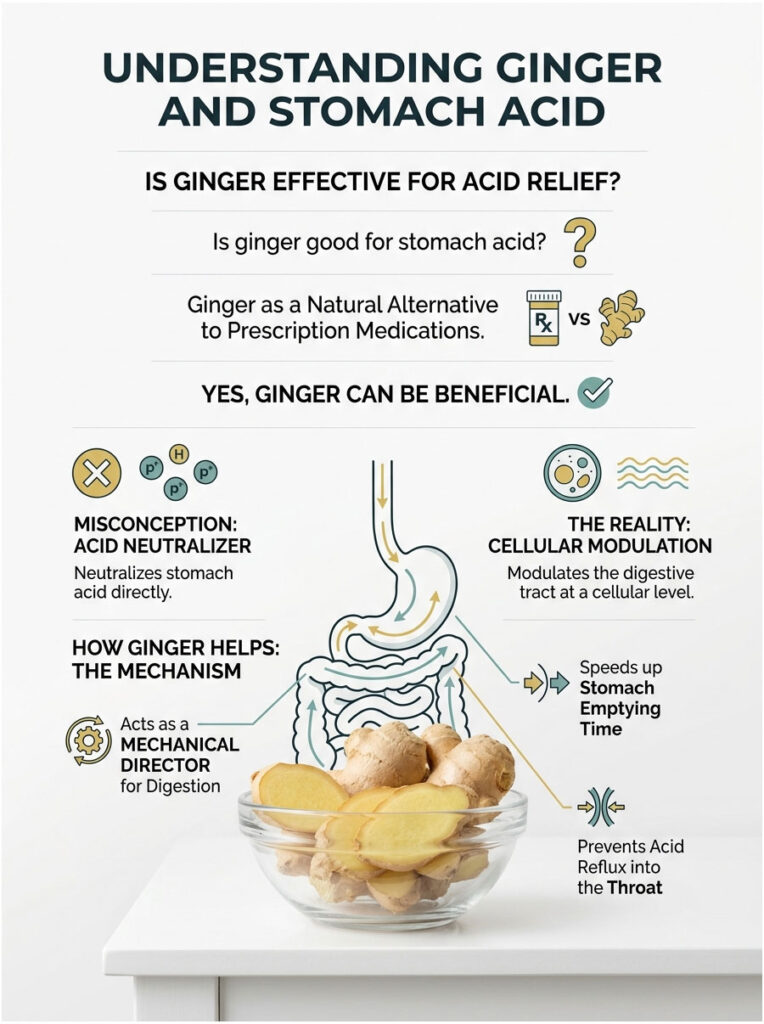
The short answer is yes. But the way ginger works might surprise you. Most people assume it acts like a basic antacid, chemically neutralizing the acid in your stomach. That is actually a common misconception.
Ginger does not neutralize stomach acid at all. Instead, it modulates your entire digestive tract at a cellular level. It acts as a mechanical director for your digestive system, speeding up the time it takes for food to leave your stomach. This faster emptying directly prevents acid from splashing back into your throat.
Quick Answer: Is Ginger Good for Stomach Acid?
Yes. Clinical evidence shows ginger is highly beneficial for managing stomach acid. It works as a natural prokinetic agent, accelerating gastric emptying and reducing mucosal inflammation. The key is keeping your daily intake under the safe 4-gram limit to avoid irritation.
Key Statistics on Digestion and Acid Reflux
- Over 60 million Americans experience heartburn at least once a month (American College of Gastroenterology, 2022).
- Clinical studies show ginger can accelerate stomach emptying by up to 25% in healthy adults.
- The safe daily limit for ginger is 4 grams for adults and 1.5 grams for pregnant women.
- Nearly 20% of the US population lives with chronic Gastroesophageal Reflux Disease (GERD).
- Over-the-counter antacid sales in the US exceed $2 billion annually.
- Roughly 40% of patients on daily prescription acid blockers still report breakthrough heartburn.
How Stomach Acid and Digestion Actually Work
To understand why ginger is so effective, you first need to understand how your body digests food. Many patients walk into my office convinced their body makes too much acid. In most cases, excess acid is not the real problem.
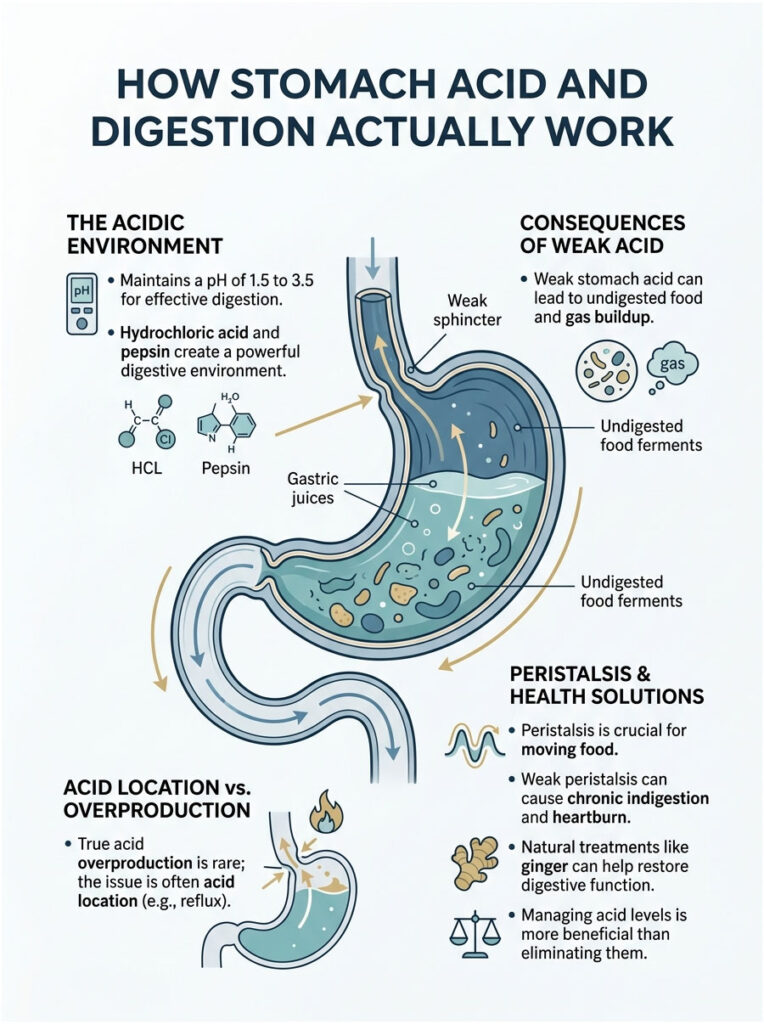
Your stomach needs a highly acidic environment to function properly. A healthy stomach maintains a pH between 1.5 and 3.5. This extreme acidity is essential for breaking down dense proteins and absorbing vital nutrients like vitamin B12, iron, and calcium. It also serves as your first defense against dangerous foodborne pathogens.
Constantly shutting off acid production with strong medications invites a different set of health problems. The goal should be to manage the acid, not eliminate it entirely.
Understanding Your Gastric pH
When you swallow food, specialized parietal cells in the stomach start pumping out hydrochloric acid. This acid mixes with an enzyme called pepsin to form a powerful digestive soup.
If stomach acid is too weak, food does not break down properly. This leads to a condition called hypochlorhydria. Undigested food ferments and creates excessive gas, which forces the stomach to expand. That expansion puts massive pressure on the valves separating your stomach from your throat. This is exactly why low stomach acid often mimics the symptoms of high stomach acid.
The Myth of Acid Overproduction
True acid overproduction is incredibly rare. It typically occurs only in uncommon conditions like Zollinger-Ellison syndrome. For the vast majority of people, the amount of acid is perfectly normal.
The real issue is location. The acid is simply in the wrong place. It belongs in your thick, mucus-lined stomach chamber, not in the unprotected tissue of your esophagus.
How Peristalsis Keeps Digestion Moving
Your digestive tract is essentially a long, muscular tube that relies on coordinated muscle contractions called peristalsis to move food downward. When peristalsis is strong and consistent, food moves smoothly from the stomach into the small intestine.
When peristalsis is weak or uncoordinated, food stagnates. That stagnation is the primary driver of chronic indigestion and severe heartburn. This is precisely where natural botanical treatments like ginger come in. They help restore the natural rhythm of your digestive muscles.
Why Is Ginger Good for Stomach Acid? The Mechanical Explanation
Most acid reflux in American adults is a structural and mechanical issue, not a chemical imbalance. It typically involves delayed gastric emptying, sometimes called mild gastroparesis.
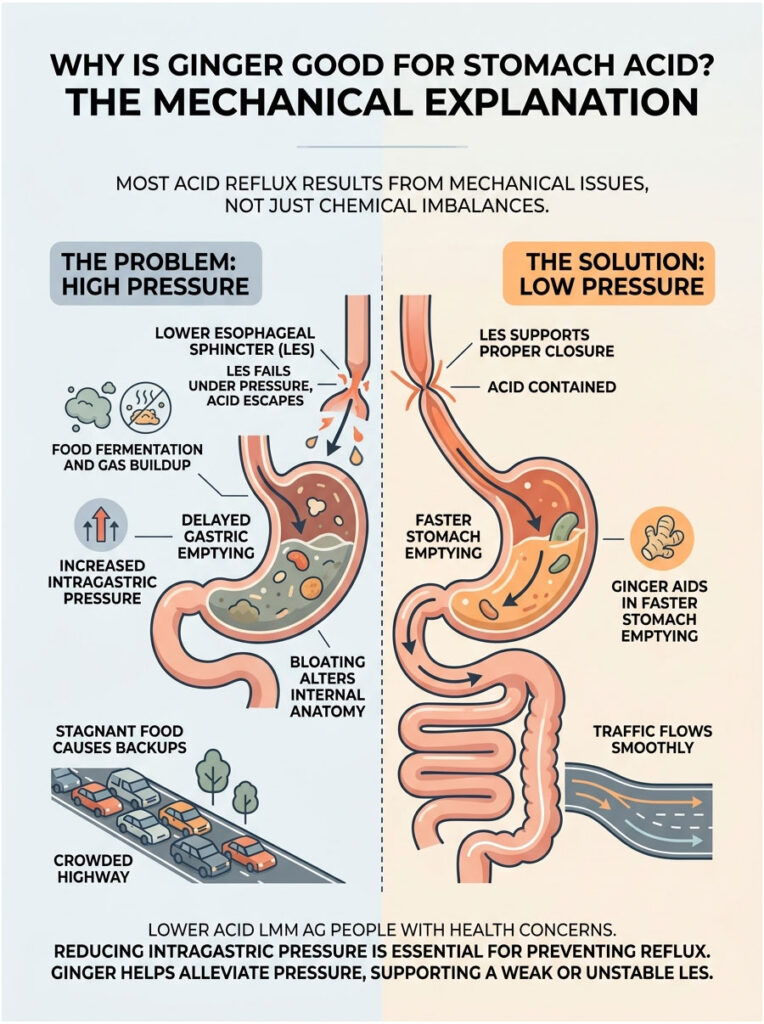
When food sits in your stomach for 4 to 6 hours instead of the normal 2, problems start. Stagnant food ferments, bubbles, and creates gas. That gas pushes upward, and this upward pressure is the real enemy of a comfortable digestive system.
So, is ginger good for stomach acid in this specific scenario? Absolutely. It directly addresses this mechanical failure by helping the stomach empty its contents faster.
The Traffic Jam Analogy
Think of a crowded highway during rush hour. If the cars at the front stop moving, a massive backup builds behind them. Your digestive system works exactly the same way.
When the stomach does not release its contents into the small intestine quickly enough, new food has nowhere to go. The stomach becomes overfilled and distended, triggering pain receptors and causing nausea and cramping. Ginger helps clear this internal traffic jam by signaling the stomach to open its lower valve and release the trapped food.
The Role of the Lower Esophageal Sphincter (LES)
The Lower Esophageal Sphincter is a circular band of muscle at the bottom of your esophagus. Think of it as a one-way door: it opens to let food drop into the stomach, then snaps shut to keep acid trapped below.
When internal stomach pressure gets too high, it pushes against this muscle until it gives way, allowing acidic contents to escape upward. That is the burning sensation you know as heartburn.
Ginger does not directly tighten this sphincter. What it does is remove the pressure pushing against it. By speeding up digestion, it serves as an excellent support system for a weak or unstable LES.
Bloating and Intragastric Pressure
Bloating is not just uncomfortable. It is a physical force that alters your internal anatomy. Severe bloating pushes the stomach upward against the diaphragm, making it physically impossible for the esophageal sphincter to close properly. Acid then flows freely through this gap every time you bend over or lie down.
Reducing intragastric pressure is one of the top priorities in my clinical practice. If we can stop the bloating, we can usually stop the reflux.
How Ginger Affects Gastric Physiology at the Cellular Level
The raw root of Zingiber officinale contains over 400 unique chemical compounds. The ones we care most about belong to a group called phenolic compounds. These are the active ingredients responsible for ginger’s therapeutic effects on the digestive system.
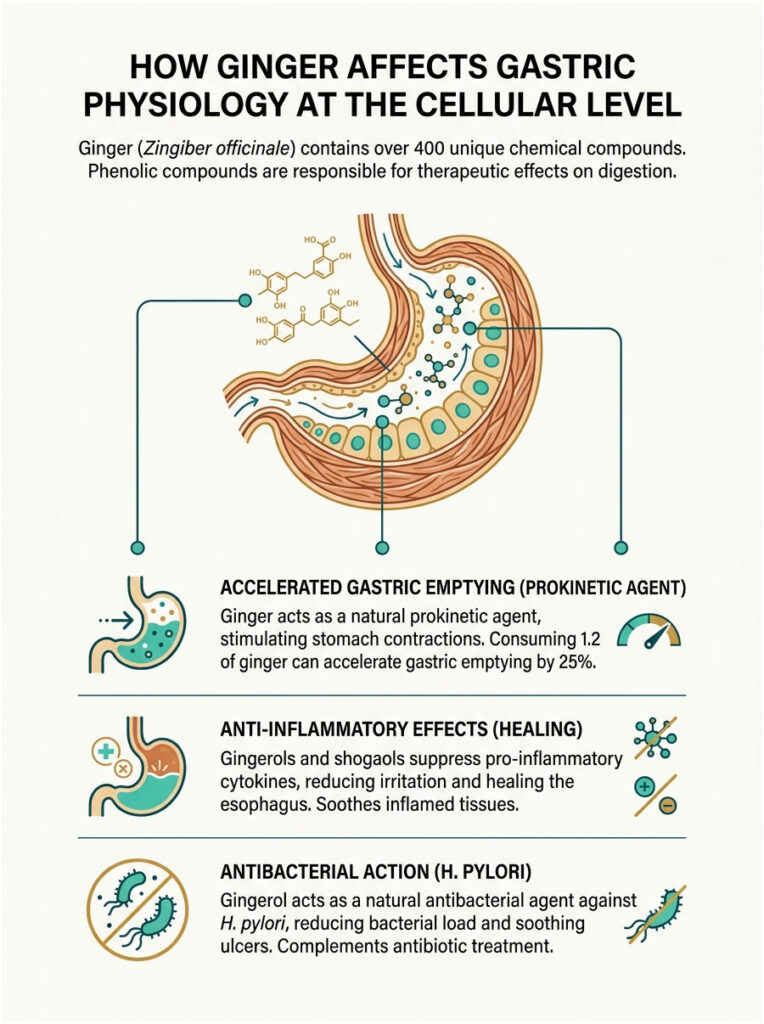
Let us look at the three primary clinical actions that make ginger so effective.
Ginger as a Natural Prokinetic Agent
In gastroenterology, we often prescribe pharmaceutical prokinetic drugs to speed up sluggish digestion. However, many patients prefer natural alternatives because of the harsh side effects that come with those drugs. Ginger is widely recognized in medical literature as one of the best natural prokinetic agents available.
When you consume ginger, its active oils stimulate the antrum, the thick, muscular lower pumping section of the stomach. The oils cause this section to contract more frequently and with greater force. This rapid movement pushes food and acid out of the stomach and into the small intestine much faster.
Research Highlight: A study published in the World Journal of Gastroenterology found that consuming just 1.2 grams of ginger powder before a meal accelerated gastric emptying by roughly 25%. For someone with chronic reflux, that improvement can mean the difference between a peaceful night of sleep and waking up choking on acid.
Anti-Inflammatory Properties of Gingerols and Shogaols
Acid reflux causes real physical damage to the delicate lining of your esophagus. Repeated acid exposure triggers cellular damage and chronic inflammation. To heal this tissue, your body needs powerful anti-inflammatory compounds.
The most important active compounds in ginger are gingerols and shogaols. These phytochemicals give ginger its signature spicy flavor and are responsible for its medicinal properties. Gingerols actively suppress pro-inflammatory cytokines, the chemical messengers that tell your immune system to create swelling, redness, and pain. By blocking these signals, gingerols help soothe an irritated stomach lining and promote healing in a damaged esophagus.
Ginger’s Effect on Helicobacter pylori (H. pylori)
Sometimes severe stomach pain is not just acid reflux. It can be caused by Helicobacter pylori, a highly aggressive bacterium that burrows into the stomach lining and causes chronic gastritis or peptic ulcers.
Clinical studies show that gingerol acts as a targeted, natural antibacterial agent against H. pylori without destroying the beneficial bacteria in the lower gut. Ginger is not a replacement for prescribed antibiotics, but it serves as an excellent complementary therapy during treatment. It helps reduce the bacterial load while soothing the painful ulcers caused by the infection.
Ginger vs. Conventional Acid Reflux Treatments: An Honest Comparison
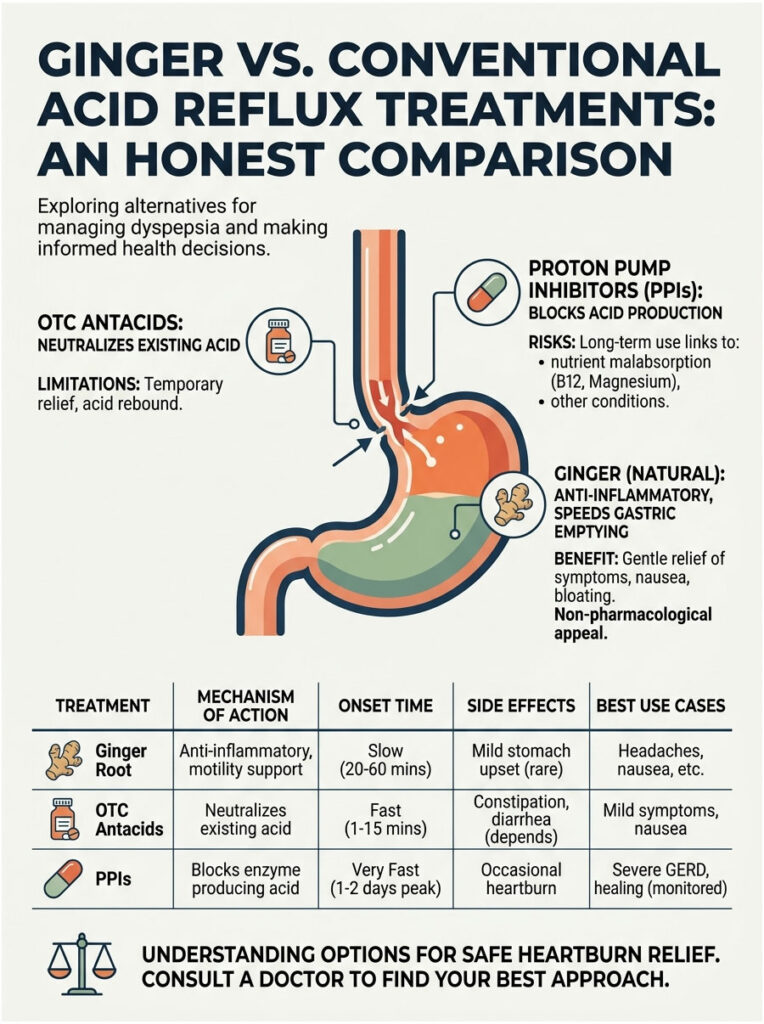
Patients frequently ask me how ginger stacks up against the medications they buy at the pharmacy. Is ginger good for stomach acid when compared directly to a standard antacid or PPI? Each approach works through a completely different mechanism, and each comes with a different risk profile.
The Limitations of Antacids and PPIs
Over-the-counter calcium carbonate antacids provide nearly instant relief by neutralizing the acid currently sitting in your stomach. However, the effect is temporary and often fades within two hours. Your stomach then produces a massive surge of new acid to compensate, a frustrating cycle known as the acid rebound effect.
Prescription Proton Pump Inhibitors (PPIs) like omeprazole work differently. They shut down the acid-producing pumps inside your stomach cells. While effective for healing severe esophageal damage, long-term daily use carries significant risks.
Without adequate stomach acid, your body struggles to absorb calcium, magnesium, and vitamin B12. Over time, this can lead to chronic fatigue, weakened bones, and vulnerability to Small Intestinal Bacterial Overgrowth (SIBO). This is exactly why so many patients are seeking natural, non-pharmacological alternatives for managing dyspepsia.
Treatment Comparison Table
| Treatment | Mechanism of Action | Onset | Side Effects | Best Use Case |
| Ginger Root | Accelerates gastric emptying, reduces mucosal inflammation | 30-45 min | Mild if under 4g/day | Mild to moderate daily dyspepsia, motility support |
| OTC Antacids | Chemically neutralizes existing gastric acid | 5-10 min | Constipation, rebound acidity | Immediate short-term relief for sudden heartburn |
| PPIs (Omeprazole) | Blocks gastric proton pump to halt acid production | 1-4 days | Nutrient malabsorption, osteoporosis risk | Severe erosive esophagitis, chronic diagnosed GERD |
When Ginger Can Backfire: The Risk of Paradoxical Heartburn
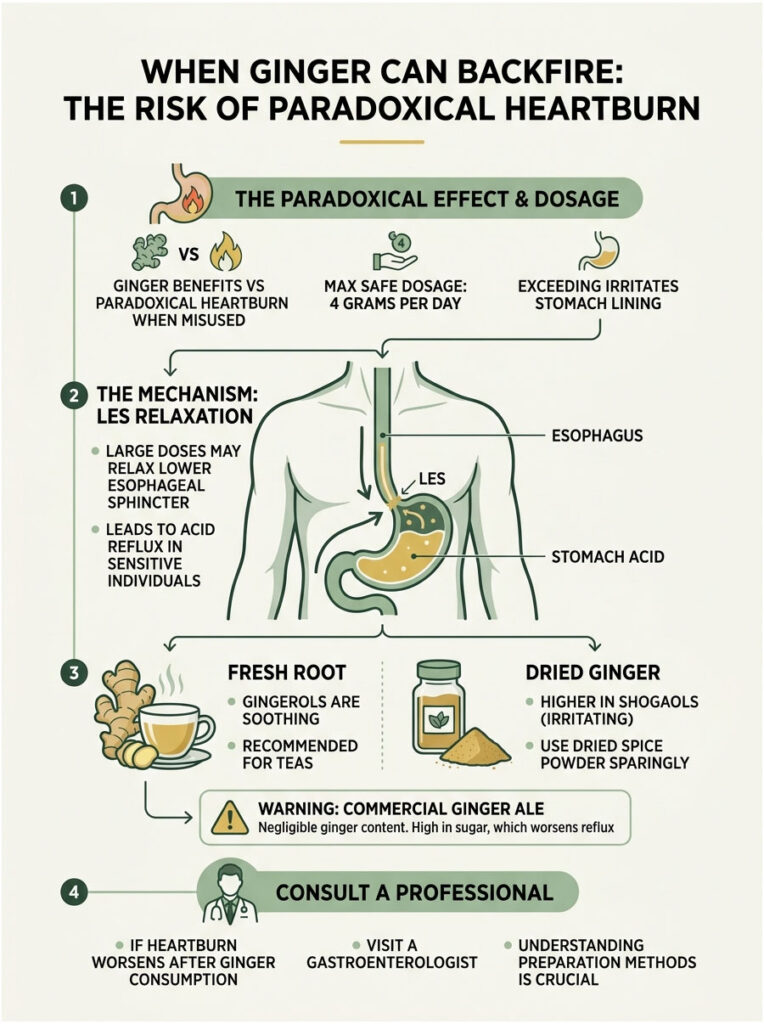
Despite all its benefits, ginger is not a cure-all. Used incorrectly, it can actually make your symptoms worse. This is called paradoxical heartburn, and it is important to understand why it happens.
The 4-Gram Dosage Threshold
The FDA classifies ginger as “Generally Recognized as Safe” (GRAS). However, clinical guidelines are strict about dosage. The maximum safe limit is 4 grams of active ginger per day.
If you exceed that threshold, the active compounds become irritating to the stomach lining. Instead of soothing inflammation, high doses act like a chemical burn and immediately trigger acid reflux symptoms. More is not better with botanical medicine. Precision dosing is essential.
LES Relaxation in Sensitive Individuals
In a small subset of sensitive individuals, large doses of ginger oils can actually relax the Lower Esophageal Sphincter. If the sphincter relaxes when it should be closed, raw acid pours into the esophagus.
If you notice your heartburn gets significantly worse immediately after drinking strong ginger tea, you may fall into this category. Stop consuming it and consult your gastroenterologist. This reaction is more common in patients with a diagnosed hiatal hernia, where the structural defect already makes the sphincter unstable.
Fresh Ginger vs. Dried Ginger: A Critical Difference
How you prepare ginger dramatically changes its chemical profile. When fresh root is dehydrated into powder, the soothing gingerols convert into shogaols. Shogaols are roughly twice as pungent and much more irritating to a sensitive stomach.
If you rely heavily on dried powder, you are consuming high levels of harsh shogaols, which significantly raises your risk of paradoxical heartburn. For the best results, stick to fresh, water-rich root whenever possible.
Ginger Preparation Comparison
| Preparation | Dominant Compound | Potency | Irritation Risk | Recommendation |
| Fresh Raw Root | Gingerol | High | Low | Gold standard for daily teas and infusions |
| Standardized Capsules | Extract Blend | Very High | Moderate | Best for precise dosing in gastroparesis patients |
| Dried Spice Powder | Shogaol | Moderate | High | Use sparingly in food; can trigger heartburn |
| Commercial Ginger Ale | Negligible | Low | Very High | Avoid entirely; high sugar and carbonation worsen reflux |
Practical Strategies: How to Use Ginger for Stomach Acid Relief
Knowing the science is only half the battle. You need to know how to apply it in your daily life. Many patients make the mistake of reaching for sugary ginger candies or carbonated ginger ale, which contain almost no real active ingredients. The high sugar and carbonation actually make reflux worse.
Here are the proven methods I teach my patients for consistent results.
How to Brew Clinical-Grade Ginger Tea
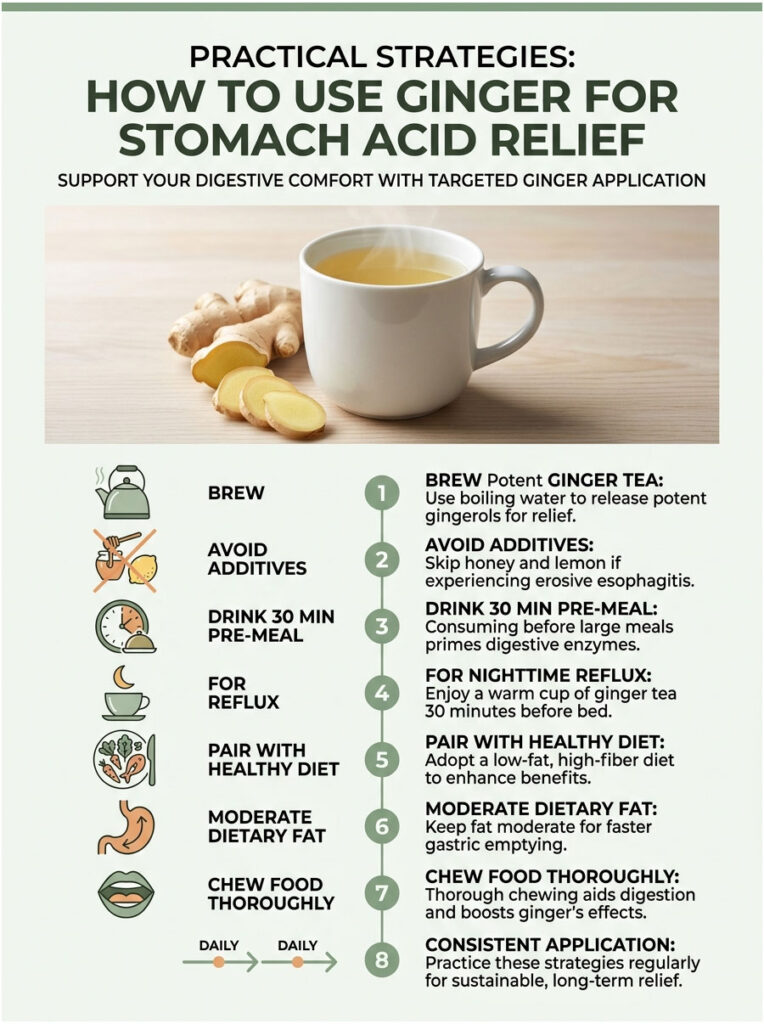
To extract the maximum benefit from active gingerols, you need to use hot water properly. Boiling water breaks down the tough plant cell walls and releases the healing oils. Here is the exact protocol:
- Purchase firm, fresh, organic ginger root from the produce section. Avoid wrinkled or soft pieces.
- Peel the outer skin and slice exactly 1 to 2 grams of the raw root. This is roughly the size of a US quarter.
- Lightly crush the slices with the back of a spoon to release the natural oils.
- Pour 8 ounces of boiling water directly over the crushed slices in a ceramic mug.
- Cover the mug with a small plate and steep for exactly 10 minutes. Do not rush this step.
- Strain and drink the liquid while still warm.
Avoid adding honey or lemon if you have active erosive esophagitis. Lemon juice is highly acidic and will irritate damaged tissue. Honey is concentrated sugar, which can trigger further reflux and fermentation.
When to Drink Ginger Tea for Maximum Effect
Timing matters enormously with natural prokinetic agents. The best time to drink ginger tea is exactly 30 minutes before a large meal. This primes your digestive enzymes and prepares your stomach to empty quickly once the food arrives.
For patients who suffer from severe nighttime reflux, I also recommend a small, warm cup 30 minutes before bed. This helps the stomach empty its acidic contents into the small intestine before you lie down for the night.
Dietary Choices That Enhance Ginger’s Benefits
Ginger tea alone will not solve everything if your diet is working against you. Botanical medicine works best when paired with smart lifestyle choices.
Combine your daily ginger protocol with a low-fat, high-fiber diet. Dietary fat heavily delays gastric emptying, which directly counteracts ginger’s prokinetic benefits. Keeping fat intake moderate allows the stomach to empty more rapidly.
Also, chew your food thoroughly. Your stomach does not have teeth. Swallowing large chunks of unchewed food makes it harder for any prokinetic, natural or pharmaceutical, to move that mass into the small intestine efficiently.
Safety, Contraindications, and Drug Interactions
Natural does not automatically mean harmless. Ginger is a potent botanical medicine that interacts with several bodily systems and can interfere with prescription medications. Before starting any daily ginger protocol, be fully aware of these critical safety guidelines.
Blood Thinners and Cardiovascular Medications
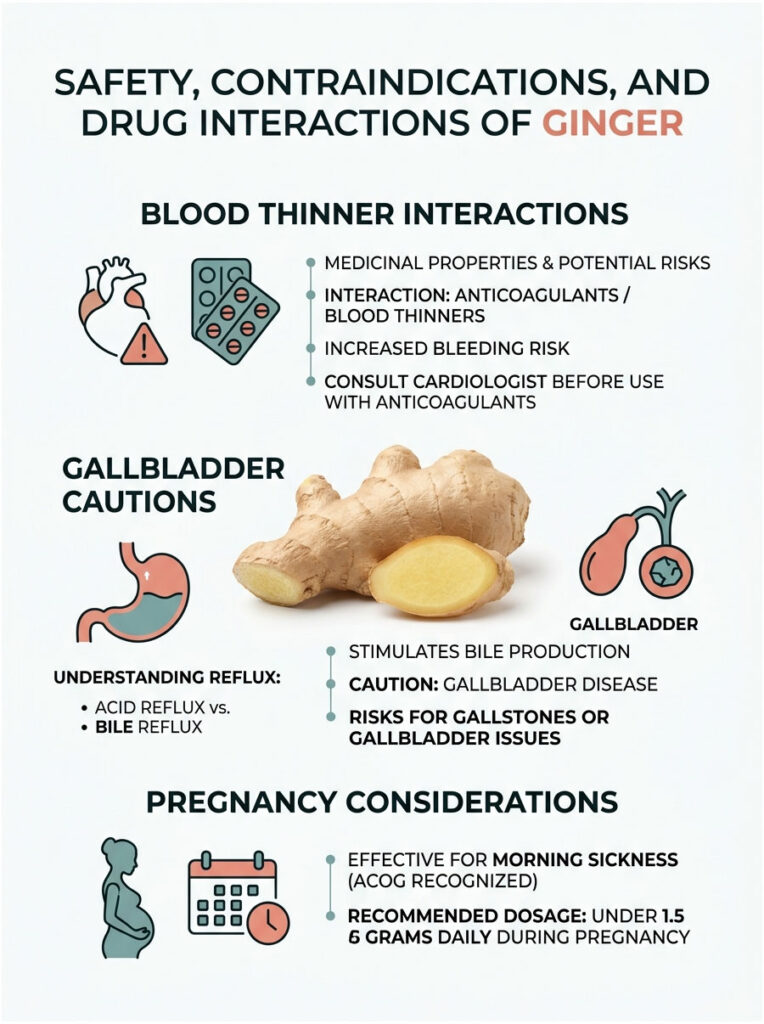
Ginger has mild but noticeable anticoagulant properties. It naturally thins the blood and slightly slows the clotting process. For a healthy person, this can be beneficial for cardiovascular health.
However, if you take prescription blood thinners like warfarin, clopidogrel, or even daily baby aspirin, you must be careful. Combining high daily doses of ginger with pharmaceutical anticoagulants can increase the risk of bruising and internal bleeding. Always consult your cardiologist before adding ginger to your routine.
Gallbladder Disease and Bile Reflux
There is an important distinction between acid reflux and bile reflux. Acid reflux involves stomach acid moving upward into the esophagus. Bile reflux involves digestive bile moving backward from the small intestine into the stomach.
Ginger actively stimulates the liver and gallbladder to produce and release more bile. If your gallbladder is healthy, this helps with fat digestion. But if you have gallstones or severe gallbladder disease, this stimulation can trigger a painful gallbladder attack. Patients with diagnosed bile reflux should use extreme caution. A simple medical ultrasound can help determine whether your gallbladder is healthy enough for daily ginger use.
Ginger During Pregnancy: Dosage Guidelines
Is ginger good for stomach acid and nausea during pregnancy? Yes. It is actually considered the global gold standard for treating severe morning sickness (hyperemesis gravidarum). The American College of Obstetricians and Gynecologists officially recognizes ginger as safe and effective for pregnant women.
However, the safe dosage is much stricter during pregnancy. Expectant mothers should keep total daily intake strictly under 1.5 grams.
Key Takeaways: Is Ginger Good for Stomach Acid?
The clinical evidence, supported by decades of gastroenterology research, is clear: ginger is highly effective for managing stomach acid problems. But it works differently than most people expect.
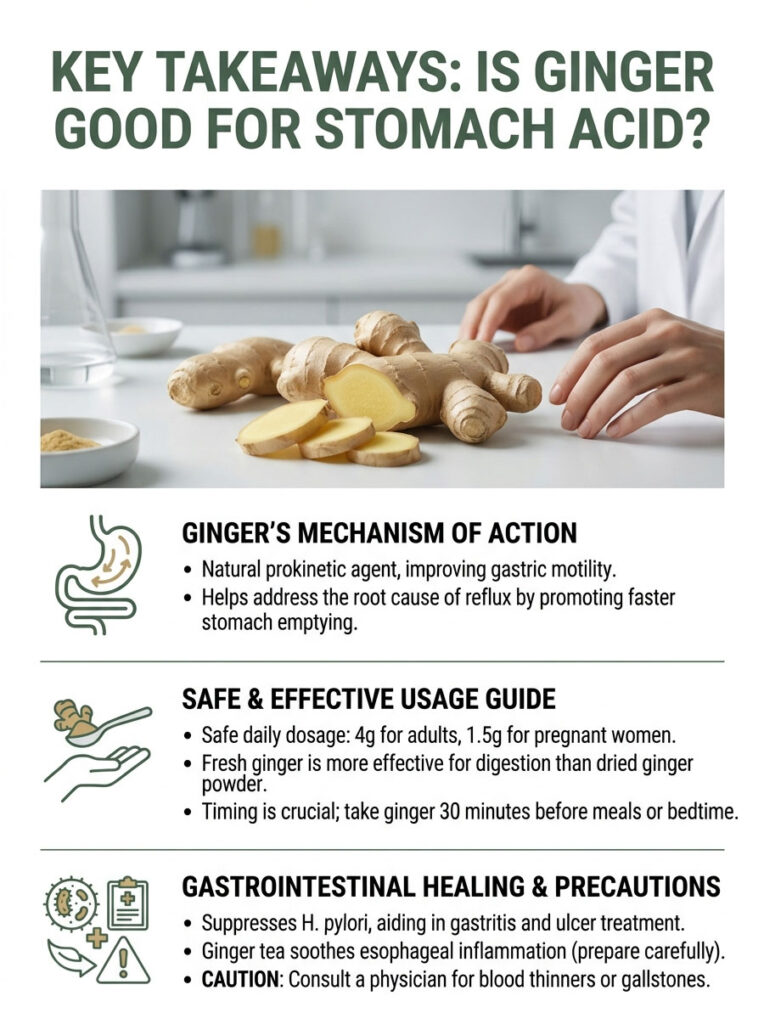
Ginger does not act like a chemical antacid. It functions as a natural prokinetic agent, improving gastric motility so your stomach empties faster and relieving the pressure on your Lower Esophageal Sphincter. This addresses the root cause of reflux rather than just masking the symptom.
Here are the essential points to remember:
- Stick to fresh, raw ginger root whenever possible to maximize soothing gingerols and minimize harsh shogaols.
- Keep your total daily dosage strictly under 4 grams (1.5 grams during pregnancy).
- Drink warm ginger tea 30 minutes before meals for the best prokinetic effect.
- Avoid commercial ginger ale and sugary ginger products, which contain minimal active compounds.
- Consult your doctor before using ginger if you take blood thinners or have gallbladder disease.
You do not have to rely solely on medications that suppress your natural acid production. With the right preparation, dosage, and timing, ginger can be a powerful ally in your journey toward lasting, natural digestive relief.
Frequently Asked Questions
Is ginger actually effective for managing stomach acid?
Yes, ginger is highly effective, but not as a chemical neutralizer like a standard antacid. As a gastroenterologist, I recommend it because it acts as a natural prokinetic agent, accelerating gastric emptying. By moving food and acid out of the stomach into the small intestine faster, it reduces the intragastric pressure that causes acid to reflux into the esophagus.
How does ginger compare to over-the-counter antacids and PPIs?
While OTC antacids provide temporary relief by neutralizing pH and PPIs shut down acid production entirely, ginger addresses the mechanical root of the problem. It improves digestive motility without the risks of nutrient malabsorption or ‘acid rebound’ often associated with long-term pharmacological acid suppression.
What is the maximum safe daily dosage of ginger for reflux sufferers?
For most adults, the clinical safety threshold is 4 grams of active ginger per day. Exceeding this limit can lead to mucosal irritation and paradoxical heartburn. For pregnant women managing morning sickness or reflux, the safe limit is lower, strictly capped at 1.5 grams daily.
Why does ginger sometimes make my heartburn feel worse?
This is known as paradoxical heartburn. It typically occurs if you exceed the 4-gram daily limit or use dried ginger powder, which is high in shogaols—compounds that are twice as pungent and more irritating than the gingerols found in fresh root. Additionally, in those with a hiatal hernia, high doses may occasionally cause the lower esophageal sphincter (LES) to relax.
Is fresh ginger root better than ginger powder for digestion?
Fresh ginger root is the gold standard for digestive health. It contains high levels of gingerols, which are soothing to the gastric mucosa. During the drying process, these convert into shogaols, which are much harsher and more likely to trigger gastric irritation or a burning sensation in sensitive patients.
When is the best time to consume ginger for maximum acid relief?
Timing is critical for prokinetic efficacy. I advise patients to drink a fresh ginger infusion approximately 30 minutes before a heavy meal to prime the digestive tract, or 30 minutes before bed to ensure the stomach is empty before lying down, which prevents nocturnal reflux.
Can ginger help with H. pylori infections?
Gingerol acts as a targeted natural antibacterial agent that can suppress Helicobacter pylori, the bacteria responsible for many cases of chronic gastritis and peptic ulcers. While it is not a replacement for a prescribed antibiotic triple-therapy, it serves as an excellent complementary botanical treatment.
Are there any risks to taking ginger while on blood thinners?
Yes. Ginger possesses mild anticoagulant properties. If you are taking prescription blood thinners such as Warfarin, Clopidogrel, or daily Aspirin, you must consult your physician before starting a daily ginger regimen to avoid an increased risk of bruising or internal bleeding.
Can I use ginger if I have gallstones or bile reflux?
Patients with gallbladder disease should exercise extreme caution. Ginger stimulates the production and release of bile. While this helps with fat digestion in healthy individuals, it can trigger a painful biliary colic (gallbladder attack) in those with active gallstones.
Does ginger tea help heal a damaged esophagus?
Yes, the phytochemicals gingerol and shogaol have potent anti-inflammatory properties. They suppress pro-inflammatory cytokines, which helps soothe the irritation and cellular damage caused by repeated acid exposure in patients with erosive esophagitis.
How should I prepare ginger tea to avoid triggering more reflux?
To create a clinical-grade infusion, steep 1-2 grams of crushed fresh root in boiling water for 10 minutes. Crucially, avoid adding acidic lemon juice or high-sugar honey, as these can irritate a burned esophageal lining or trigger fermentation-related bloating.
Is ginger ale a good substitute for fresh ginger for stomach issues?
Absolutely not. Most commercial ginger ales contain negligible amounts of real ginger and are high in high-fructose corn syrup and carbonation. The gas from carbonation increases intragastric pressure, while the sugar can trigger fermentation, both of which significantly worsen acid reflux.
Disclaimer
This article is for informational purposes only and does not constitute medical advice. The information provided is based on clinical research and the expertise of a board-certified gastroenterologist, but it should not replace a consultation with your own healthcare provider. Always consult a qualified physician before starting new botanical supplements, especially if you are pregnant, taking blood thinners, or have gallbladder disease.
References
- American College of Gastroenterology – gi.org – Clinical guidelines for the diagnosis and management of Gastroesophageal Reflux Disease (GERD).
- World Journal of Gastroenterology – “Effects of ginger on gastric emptying and motility in healthy humans” – Research study demonstrating the 25% acceleration in gastric transit.
- National Institutes of Health (NIH) – nccih.nih.gov – Comprehensive safety profile and bioactive compound analysis of Zingiber officinale.
- American College of Obstetricians and Gynecologists (ACOG) – Practice Bulletin on Nausea and Vomiting of Pregnancy – Official recognition of ginger as a first-line treatment.
- Food and Drug Administration (FDA) – GRAS Notice Inventory – Documentation of ginger’s status as “Generally Recognized as Safe” within specific dosage limits.
- Journal of Chromatography – “Analysis of gingerols and shogaols” – Statistical data regarding the chemical conversion of gingerols during the drying process.