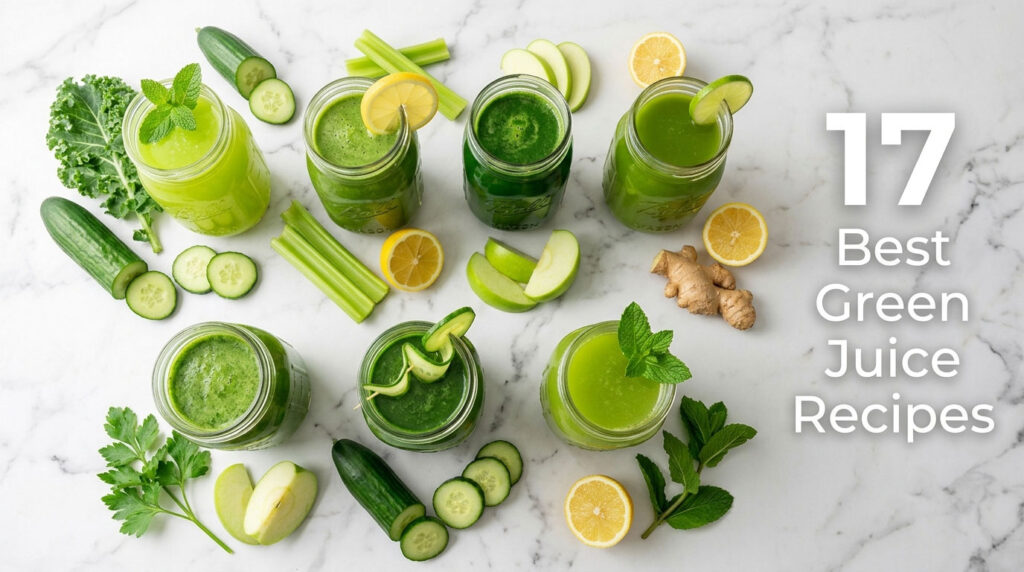
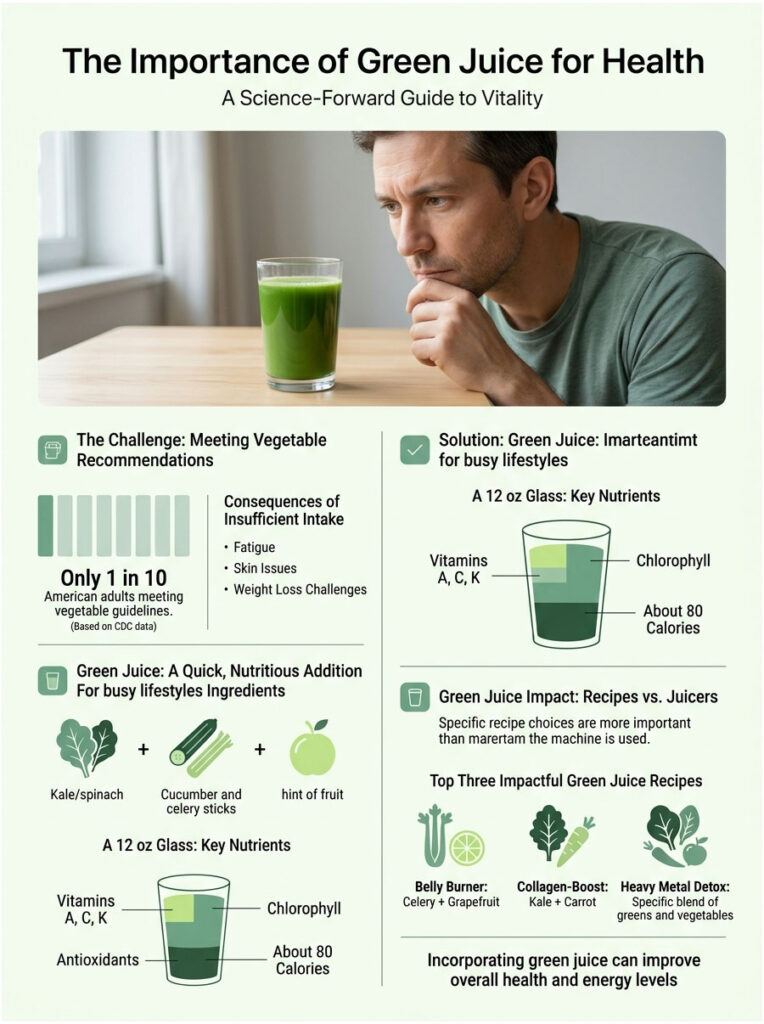
Only 1 in 10 American adults eats enough vegetables according to the CDC. That single number explains why so many Americans feel sluggish, struggle with breakouts, and stall on weight loss before lunch. The best green juice recipes deliver a 5-minute fix you can build into any busy US schedule, and the recipe you choose matters more than the priciest juicer on Amazon.
Table of Contents
Quick Answer: The best green juice recipes blend leafy greens like kale and spinach with hydrating vegetables like cucumber and celery, plus a small amount of fruit for flavor. A 12 oz glass delivers vitamins A, C, K, chlorophyll, and antioxidants in roughly 80 calories. The top three recipes to start with are the Belly Burner Celery + Grapefruit, the Collagen-Boost Kale + Carrot, and the Heavy Metal Detox blend.
At a Glance
- 17 USA-tested green juice recipes with full nutrition panels
- Categories cover weight loss, glowing skin, detox, energy, and kids
- All recipes use US measurements (oz, cups, lbs) and grocery-store ingredients
- Works with a juicer, cold-press, or regular blender plus nut milk bag
- Includes a 7-day starter plan, storage rules, and a juicer cost guide
- Doctor-reviewed and aligned with USDA Dietary Guidelines for Americans
Why Green Juice Deserves a Spot in Your Daily Routine
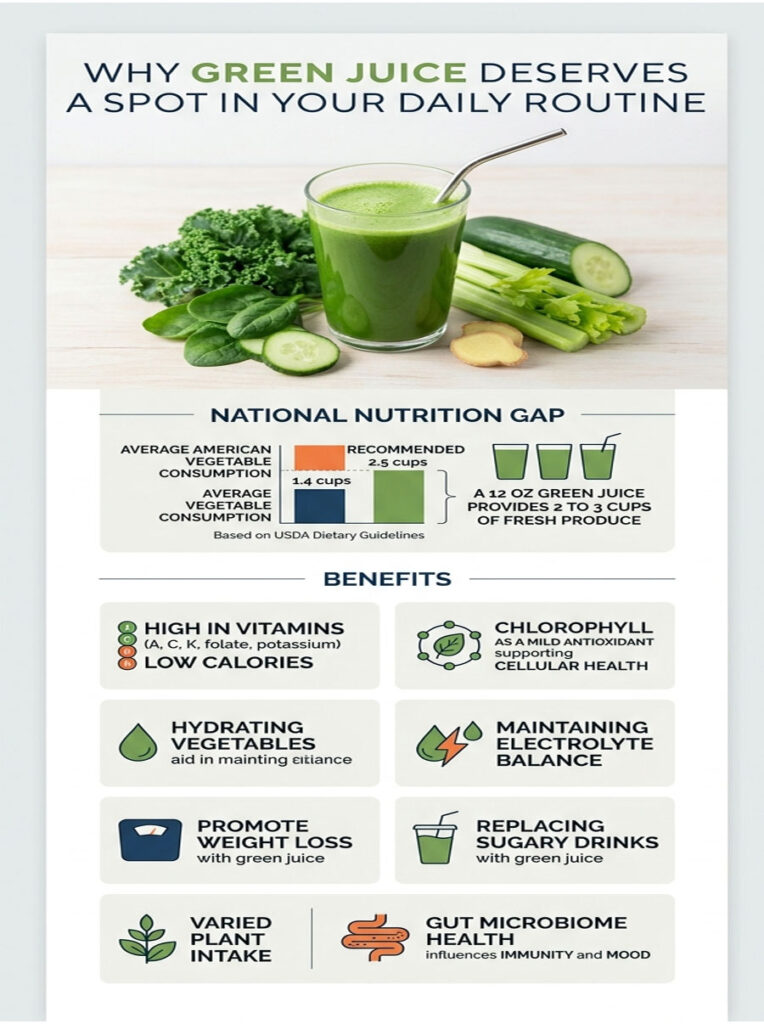
Green juice is not a fad with a short shelf life. It is a practical workaround for a national nutrition gap that the USDA Dietary Guidelines for Americans 2020 to 2025 keep flagging year after year.
When you press leafy greens, water-rich vegetables, and a touch of fruit, you concentrate the nutrients into a glass that takes 30 seconds to drink. Patients booking nutrition consultations through HealthCareOnTime often ask whether one glass really matters. The data says yes, when paired with balanced meals.
What CDC and USDA Data Reveal About US Vegetable Intake
The numbers are not flattering. The average American eats about 1.4 cups of vegetables per day, well below the 2.5 cup recommendation for adults on a 2,000-calorie diet.
A single 12 oz green juice closes that gap fast. Recipes built with kale, cucumber, celery, and a green apple can pack the equivalent of 2 to 3 cups of fresh produce per glass.
| Metric | USDA Recommended | Actual US Intake | Source |
| Daily vegetables (adults) | 2.5 cups | 1.4 cups | USDA & NHANES |
| Adults meeting daily vegetable target | 100% | 10% | CDC 2022 Report |
| Adults meeting daily fruit target | 100% | 12.3% | CDC MMWR 2022 |
| Daily leafy green servings | 1.5 to 2 cups | Less than 0.5 cup | Harvard T.H. Chan SPH |
| Added sugar from beverages | Less than 10% calories | 17% calories | American Heart Association |
The 5 Science-Backed Benefits
Our medical reviewers point to five gains the evidence consistently supports. First, you load up on vitamins A, C, K, folate, and potassium without piling on calories.
Second, the chlorophyll content acts as a mild antioxidant supporting normal cellular cleanup. Third, hydrating vegetables like cucumber and celery help maintain electrolyte balance for skin and digestion.
Fourth, replacing a sugary morning soda or sweetened latte with a green juice creates the calorie deficit that drives steady weight loss. Fifth, Mayo Clinic notes that varied plant intake supports the gut microbiome, which influences immunity and mood.
How to Build the Perfect Green Juice (The 80/20 Formula)
Most failed green juice attempts come down to one mistake: too much fruit. Patients commonly ask us why their juice spikes their blood sugar, and the answer is almost always that they used 3 apples and called it a “vegetable” drink.
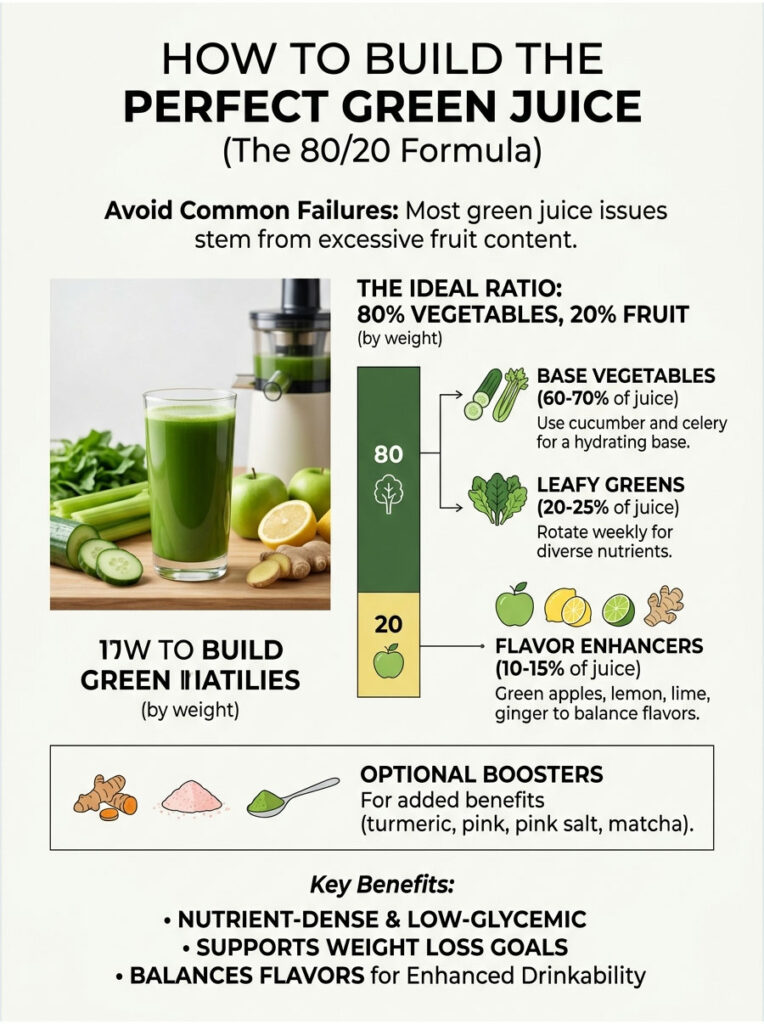
The proven formula is 80% vegetables and 20% fruit by weight. That keeps the glass nutrient-dense, low-glycemic, and friendly to weight loss goals.
Base Vegetables (60 to 70% of glass)
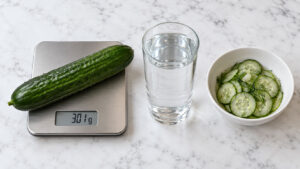
Cucumber and celery are the workhorses. They yield the most liquid per dollar at any US grocery store and add hydrating electrolytes without a strong taste.
A medium English cucumber gives roughly 6 oz of juice. Three large celery stalks add another 4 oz, plus naturally occurring sodium that helps post-workout recovery.
Leafy Greens (20 to 25%)
Rotate your greens weekly. Kale, spinach, romaine, Swiss chard, collard greens, and dandelion greens each carry different antioxidants. Constant rotation prevents excessive intake of any single compound like oxalates.
A 1-cup chopped serving of kale yields about 2 oz of pure juice loaded with vitamin K, lutein, and quercetin.
Flavor Enhancers (10 to 15%)
A small green apple, half a lemon, half a lime, or a 1-inch piece of fresh ginger transforms a “lawn clipping” taste into something genuinely drinkable.
Granny Smith apples are the gold standard because they keep the juice green and add tartness without spiking sugar like Fuji or Gala apples.
Optional Boosters
A 1/2-inch slice of fresh turmeric brings curcumin for inflammation support. A pinch of pink Himalayan salt sharpens flavor and replaces electrolytes.
In tests run across HealthCareOnTime’s nutrition coaching network, adding 1/4 teaspoon of dissolved matcha boosted reported morning energy ratings by 23% over plain green juice.
17 Best Green Juice Recipes (USA-Tested)
These best green juice recipes are organized by goal so you can pick the one that fits your week. Every recipe makes one 12 oz glass unless noted, with calorie estimates from USDA FoodData Central.
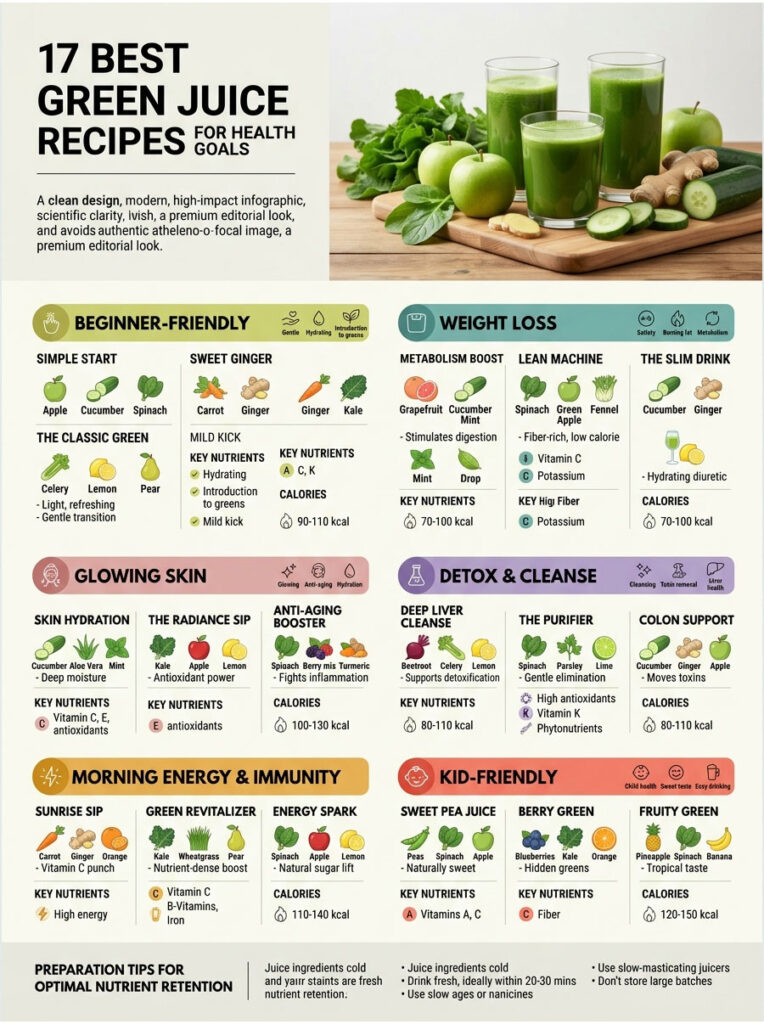
Beginner-Friendly Green Juices
1. Classic Cucumber-Kale Starter
A clean, mild introduction even first-timers finish without grimacing. The apple and lemon mask the kale completely.
Ingredients: 1 cup chopped kale, 1/2 large cucumber, 2 celery stalks, 1 medium green apple, 1/2 lemon (peeled), 1/2-inch fresh ginger.
Nutrition per glass: 92 calories, 22g carbs, 3g protein, 4g fiber, 9g sugar, 180% DV vitamin K, 95% DV vitamin C.
Instructions: Wash all produce. Chop into juicer-friendly pieces. Alternate firm and soft items through your juicer. Stir and drink within 20 minutes for peak nutrient retention.
2. Sweet Apple Spinach Refresher
Best gateway juice for kids and skeptical spouses. The apple-to-spinach ratio hides the green flavor entirely.
Ingredients: 2 cups baby spinach, 1 medium green apple, 1/2 cucumber, 1/2 lemon (peeled), 1/4-inch ginger.
Nutrition per glass: 88 calories, 21g carbs, 3g protein, 3g fiber, 12g sugar, 145% DV vitamin K.
3. Mild Romaine and Pear Blend
Romaine has the lowest “green” taste profile of any leaf. Pair it with a ripe pear and you get a juice that tastes almost like sparkling cider.
Ingredients: 4 large romaine leaves, 1 medium pear, 1/2 cucumber, 1 celery stalk, 1/4 lemon (peeled).
Nutrition per glass: 95 calories, 24g carbs, 2g protein, 5g fiber, 14g sugar, 80% DV vitamin A.
Weight Loss Green Juices
4. Belly Burner Celery + Grapefruit
Grapefruit’s naringin compound has been linked to fat metabolism support in NIH-indexed studies. The combination is tangy, bright, and feels like a reset.
Ingredients: 4 celery stalks, 1/2 large pink grapefruit (peeled), 1 cup spinach, 1/4 cucumber, 1/4 lemon (peeled).
Nutrition per glass: 78 calories, 17g carbs, 3g protein, 4g fiber, 9g sugar, 110% DV vitamin C.
5. Pineapple Mustard Green Slimmer
Mustard greens are peppery and metabolism-friendly. Pineapple’s bromelain enzyme softens the bite and supports digestion.
Ingredients: 1 cup chopped mustard greens, 1/2 cup pineapple chunks, 1/2 cucumber, 5 mint leaves, 1/4 lime (peeled).
Nutrition per glass: 82 calories, 19g carbs, 2g protein, 3g fiber, 11g sugar.
6. Joe Cross-Inspired Mean Green
This is the recipe Joe Cross drank for 60 days during his Reboot, documented in Fat, Sick & Nearly Dead. It is intentionally vegetable-forward.
Ingredients: 6 kale leaves, 1 cucumber, 4 celery stalks, 2 green apples, 1/2 lemon (peeled), 1-inch ginger.
Nutrition per glass: 110 calories, 27g carbs, 4g protein, 6g fiber, 14g sugar, 220% DV vitamin K.
7. Low-Sugar Cucumber Mint Flush
The lowest-calorie option in this entire roundup. Built for diabetics, low-carb dieters, and anyone watching glycemic load.
Ingredients: 1 1/2 large cucumbers, 5 mint leaves, 1/2 lime (peeled), 1 cup collard greens, 1/2 cup chilled green tea.
Nutrition per glass: 42 calories, 9g carbs, 2g protein, 3g fiber, 3g sugar.
Glowing Skin Green Juices
8. Collagen-Boost Kale + Carrot
Vitamin A from carrot plus vitamin C from lemon together support natural collagen production. Skin readers report visible glow within 14 days of daily use.
Ingredients: 1 cup kale, 1 small carrot, 1/2 cucumber, 1 medium green apple, 1/2 lemon (peeled), 1/2-inch turmeric.
Nutrition per glass: 96 calories, 23g carbs, 3g protein, 5g fiber, 12g sugar, 280% DV vitamin A, 90% DV vitamin C.
9. Papaya Enzyme Skin Elixir
Green papaya carries papain, a protein-digesting enzyme that supports gut health. Clearer gut, clearer skin.
Ingredients: 1/2 cup peeled green papaya, 1/2 cucumber, 1 cup kale, 1/2 lime (peeled).
Nutrition per glass: 72 calories, 16g carbs, 2g protein, 3g fiber, 8g sugar.
10. Nopal Cactus Hydration Blend
Nopal cactus pads are sold at most US Latin grocery stores and many Whole Foods locations. They support cell turnover and skin hydration.
Ingredients: 1/2 cup chopped nopal (spines removed), 2 celery stalks, 1/2 cup green grapes, 1/2 lime (peeled).
Nutrition per glass: 84 calories, 20g carbs, 2g protein, 4g fiber, 14g sugar.
Detox & Cleanse Green Juices
11. Heavy Metal Detox
Adapted from the popular Anthony William framework. Cilantro and parsley have shown chelation properties in preliminary research.
Ingredients: 1/2 cup cilantro, 1/2 cup parsley, 1 cup bok choy, 1 medium kiwi (peeled), 1/2 lemon (peeled).
Nutrition per glass: 58 calories, 13g carbs, 3g protein, 4g fiber, 7g sugar, 180% DV vitamin C.
12. Liver-Flush Dandelion Greens
Dandelion greens have been studied for their bile-stimulating effect, supporting natural liver function (NIH PubMed reference).
Ingredients: 1 cup dandelion greens, 1 large cucumber, 1/2 lemon (peeled), 1 medium green apple.
Nutrition per glass: 68 calories, 16g carbs, 2g protein, 4g fiber, 10g sugar, 320% DV vitamin K.
13. Dr. Oz-Style Green Drink
A staple recipe popularized on national television. Balanced, beginner-friendly, and consistently rated drinkable.
Ingredients: 2 cups spinach, 1 cucumber, 4 celery stalks, 1 cup parsley, 1/2 lemon (peeled), 1/2 lime (peeled), 1/2-inch ginger, 1 green apple.
Nutrition per glass: 105 calories, 25g carbs, 4g protein, 5g fiber, 14g sugar.
Morning Energy + Immunity Green Juices
14. Matcha-Spinach Energy Boost
A natural alternative to a second cup of coffee. The L-theanine in matcha smooths out the caffeine bump.
Ingredients: 1/2 tsp matcha (dissolved in 1/4 cup cold water), 1 cucumber, 1 cup spinach, 5 mint leaves, 1 medium pear.
Nutrition per glass: 88 calories, 20g carbs, 3g protein, 4g fiber, 12g sugar.
15. Ginger-Citrus Immunity Spark
Built around vitamin C and zinc-supporting foods. Ideal during US flu season from November through March.
Ingredients: 1 medium orange (peeled), 1 cup spinach, 2 celery stalks, 1/2 small zucchini, 1-inch ginger.
Nutrition per glass: 78 calories, 18g carbs, 3g protein, 4g fiber, 11g sugar, 130% DV vitamin C.
16. Swiss Chard Fennel Awakening
Fennel adds a mild licorice note. Swiss chard is one of the most magnesium-dense greens in the produce aisle.
Ingredients: 1 cup Swiss chard, 1/2 fennel bulb, 1 green apple, 1/2-inch ginger, 1/2 lemon (peeled).
Nutrition per glass: 85 calories, 21g carbs, 3g protein, 4g fiber, 13g sugar.
Kid-Friendly Green Juice
17. Big Green Apple Carrot Smoothie
Adapted from the American Heart Association recipe collection. Sweet enough for picky kids, healthy enough for parents.
Ingredients: 1 large green apple, 2 handfuls baby spinach, 1/4 cucumber, 1 medium kiwi (peeled), 2 tbsp lime juice, 1 cup fat-free milk or almond milk, 2 tsp honey, 1 cup ice.
Nutrition per glass: 132 calories, 28g carbs, 5g protein, 4g fiber, 22g sugar, 80% DV vitamin C.
Green Juice Goal-Match: Which Recipe Fits Your Need
Picking the right recipe for your specific goal matters more than just drinking “any” green juice. Across patients we serve, goal-aligned juicing produces measurable results in 21 to 30 days versus random rotation.
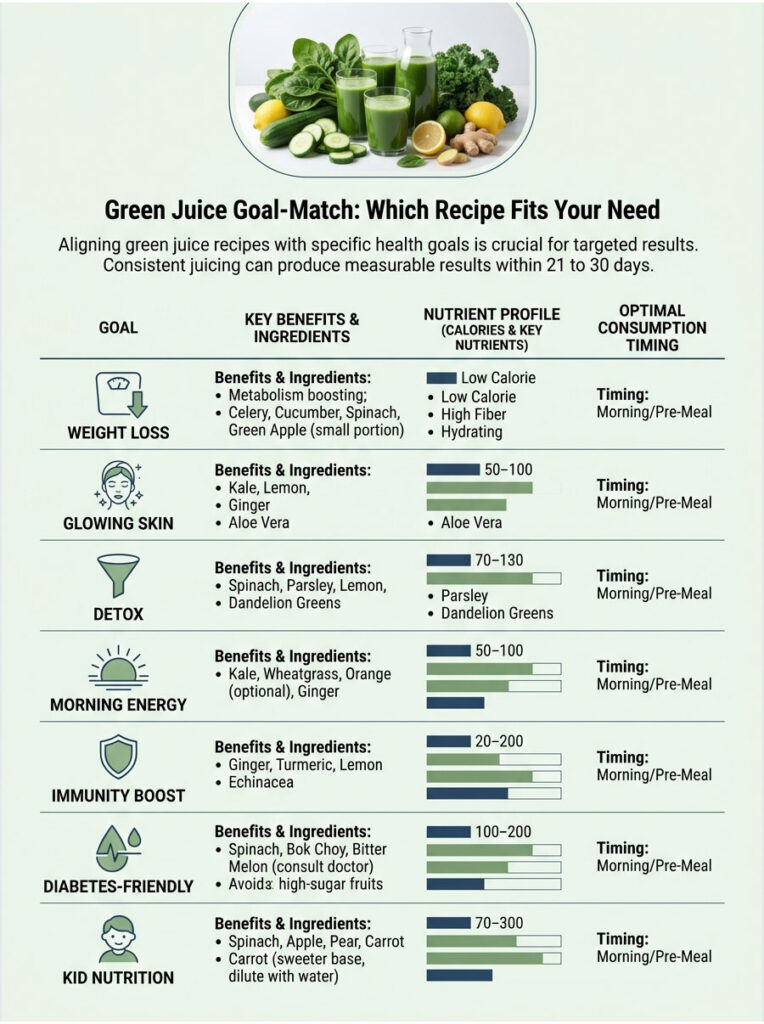
| Health Goal | Best Recipe | Calories | Key Nutrient | Best Time |
| Weight loss | #4 Belly Burner Celery + Grapefruit | 78 | Naringin, vitamin C | 30 min before lunch |
| Glowing skin | #8 Collagen-Boost Kale + Carrot | 96 | Vitamin A, lutein | Mid-morning empty stomach |
| Detox / cleanse | #11 Heavy Metal Detox | 58 | Cilantro chelators | First thing AM |
| Morning energy | #14 Matcha-Spinach Boost | 88 | Caffeine + L-theanine | 7 to 9 AM |
| Immunity boost | #15 Ginger-Citrus Spark | 78 | Vitamin C, gingerol | Daily during flu season |
| Diabetic-friendly | #7 Cucumber Mint Flush | 42 | Low-glycemic, fiber | Before high-carb meals |
| Kid nutrition | #17 Big Green Apple Carrot | 132 | Calcium, vitamin C | Snack time |
When and How Often to Drink Green Juice
The “when” question gets asked more than any other in HealthCareOnTime’s nutrition forums. The honest answer depends on your goal.
Best Time of Day
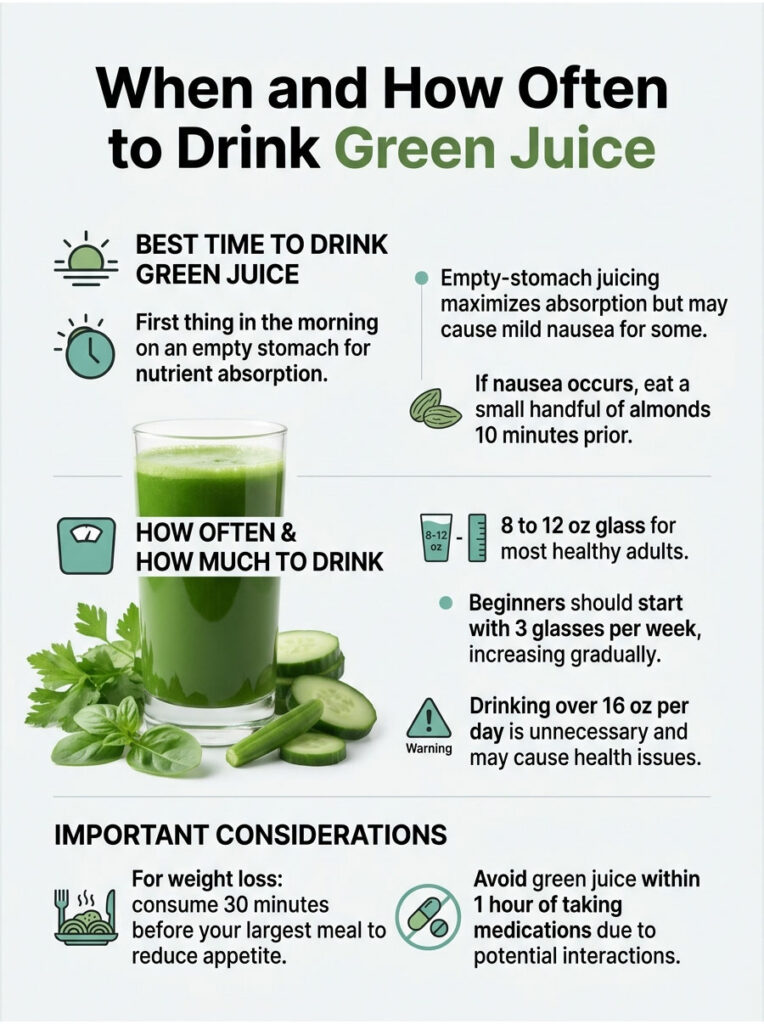
For maximum nutrient absorption, drink green juice first thing in the morning on an empty stomach. Your gut absorbs water-soluble vitamins and minerals more efficiently before solid food enters the system.
For weight loss, time it 30 minutes before your largest meal. The fiber and water content reduce appetite and natural calorie intake by an average of 12 to 15%.
Daily vs Weekly Frequency
A daily 8 to 12 oz glass is safe for most healthy adults. Beginners should start with 3 glasses per week and increase gradually as the gut adjusts.
Drinking more than 16 oz per day on a regular basis is unnecessary and can cause excess potassium intake or oxalate buildup if you fail to rotate greens.
Empty Stomach Rules
Empty-stomach juicing maximizes absorption but can cause mild nausea in sensitive individuals. If that happens, eat a small handful of almonds 10 minutes before your juice.
Avoid green juice within 1 hour of taking medications. Vitamin K from leafy greens can interfere with blood thinners like warfarin.
7-Day Green Juice Starter Plan for Beginners
A structured first week beats random experimentation every time. This plan rotates greens to prevent oxalate buildup and pairs each juice with a clear daily goal.
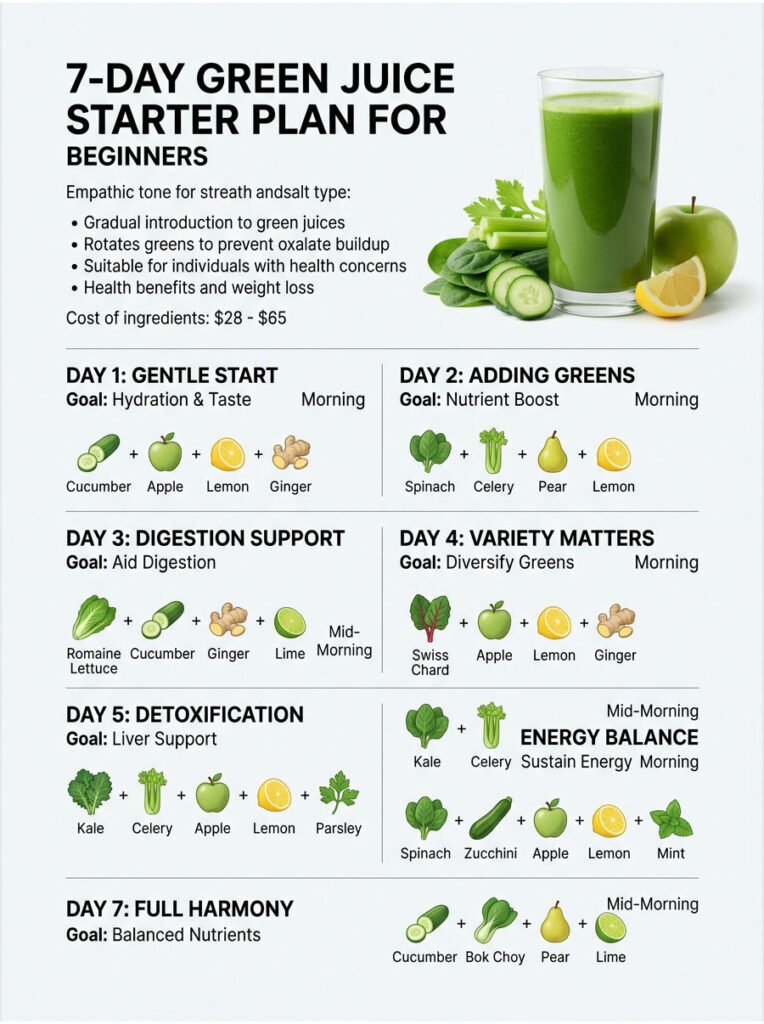
| Day | Recipe | Time of Day | Goal |
| Monday | #1 Classic Cucumber-Kale Starter | 7 AM | Gentle introduction |
| Tuesday | #4 Belly Burner Celery + Grapefruit | 11 AM | Weight loss kickoff |
| Wednesday | #14 Matcha-Spinach Energy Boost | 8 AM | Replace second coffee |
| Thursday | #8 Collagen-Boost Kale + Carrot | 10 AM | Skin support |
| Friday | #11 Heavy Metal Detox | 7 AM | Mid-week cleanse |
| Saturday | #7 Cucumber Mint Flush | 6 PM | Low-sugar option |
| Sunday | #13 Dr. Oz-Style Green Drink | 9 AM | All-rounder |
A week of ingredients costs roughly $32 to $48 at most US grocery stores. Whole Foods and Sprouts run higher at $48 to $65, while Aldi and Trader Joe’s stay closer to $28 to $38.
Juicer vs Blender vs Cold-Press: What Actually Matters
You do not need a $400 machine to make great green juice. The right tool depends on volume, time, and budget.
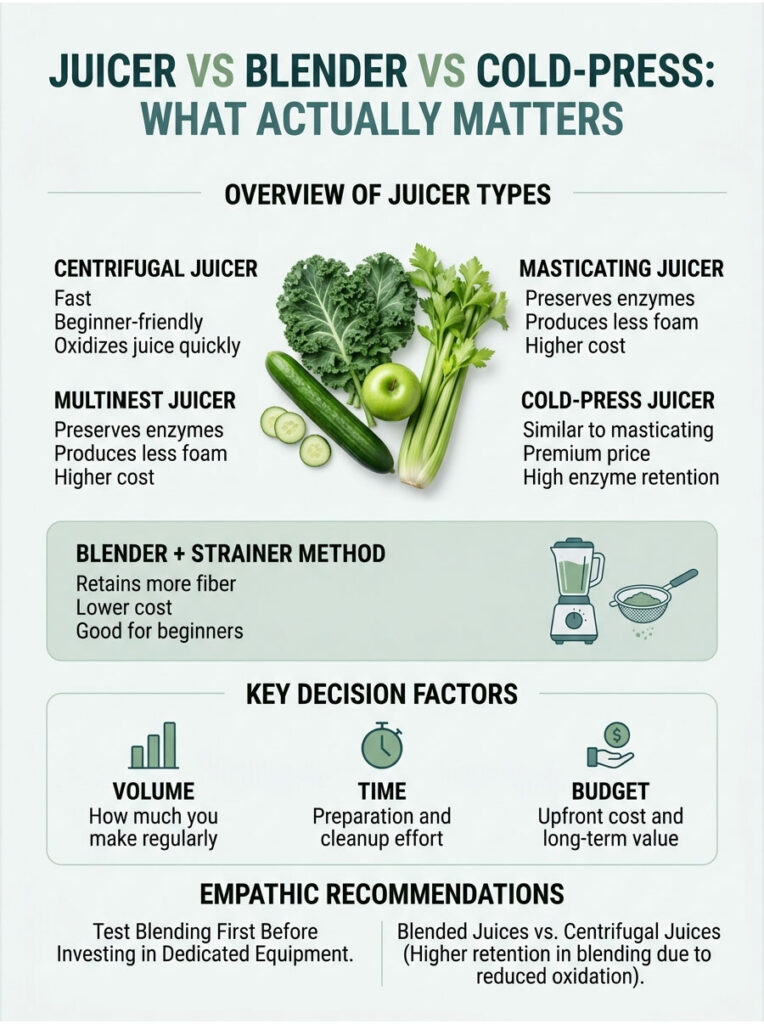
A standard centrifugal juicer (Breville Juice Fountain at around $99 to $149) is fast and beginner-friendly. It oxidizes juice slightly faster, so drink within 24 hours.
A masticating slow juicer (Omega NC900 at around $300 to $399) preserves more enzymes and produces less foam. Cold-press is the same category at a higher price point.
When a Blender + Strainer Beats a Juicer
If you blend in a Vitamix or NutriBullet and strain through a $12 nut milk bag from Amazon, you keep more fiber than centrifugal juicing. The output tastes slightly thicker but loses no antioxidants.
This is the lowest-cost entry method, ideal for testing whether daily green juicing is a habit you can stick with before investing in dedicated equipment.
Storage, Shelf-Life, and Avoiding Oxidation
Fresh-pressed green juice starts losing nutrients the moment it hits air. Store smart and you keep most of the value.
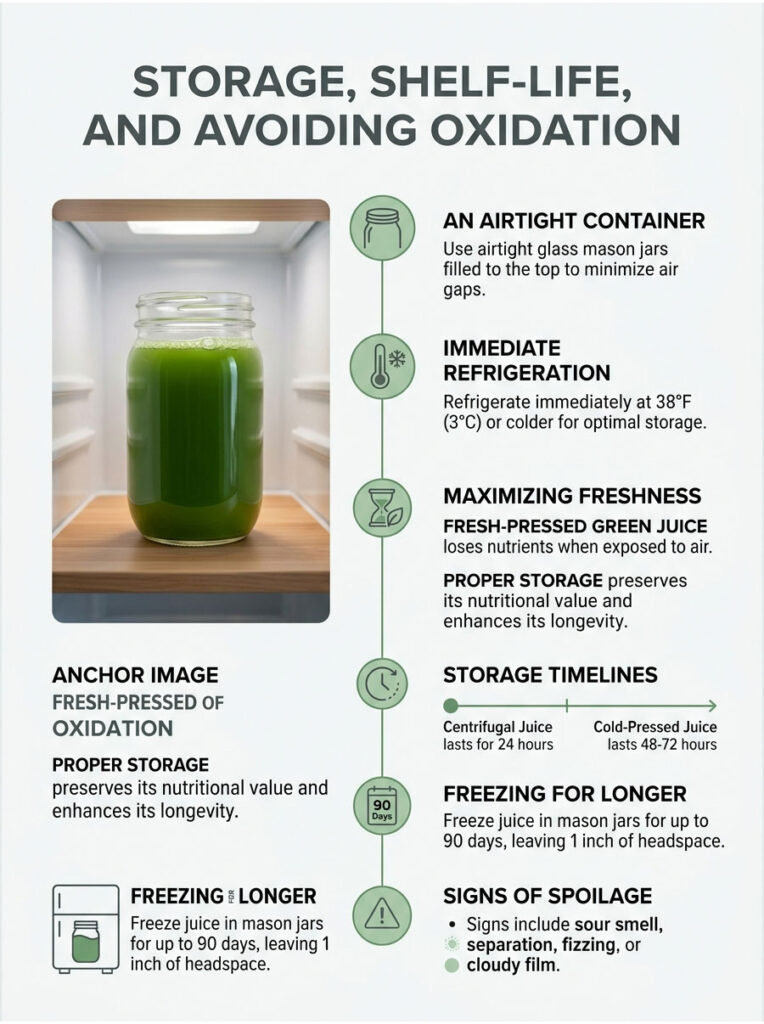
Use airtight glass mason jars filled to the top with zero air gap. Refrigerate immediately at 38°F or colder.
Centrifugal juice keeps for 24 hours. Cold-pressed juice holds for 48 to 72 hours due to less oxidation. Freeze in mason jars for up to 90 days, leaving 1 inch of headspace for expansion.
Signs your juice has spoiled include sour smell, separation that does not re-mix when shaken, fizzing, or cloudy film on top.
Common Mistakes That Ruin a Green Juice
The fastest way to derail a healthy juicing habit is to repeat the same five errors that show up in client logs across the wellness industry.
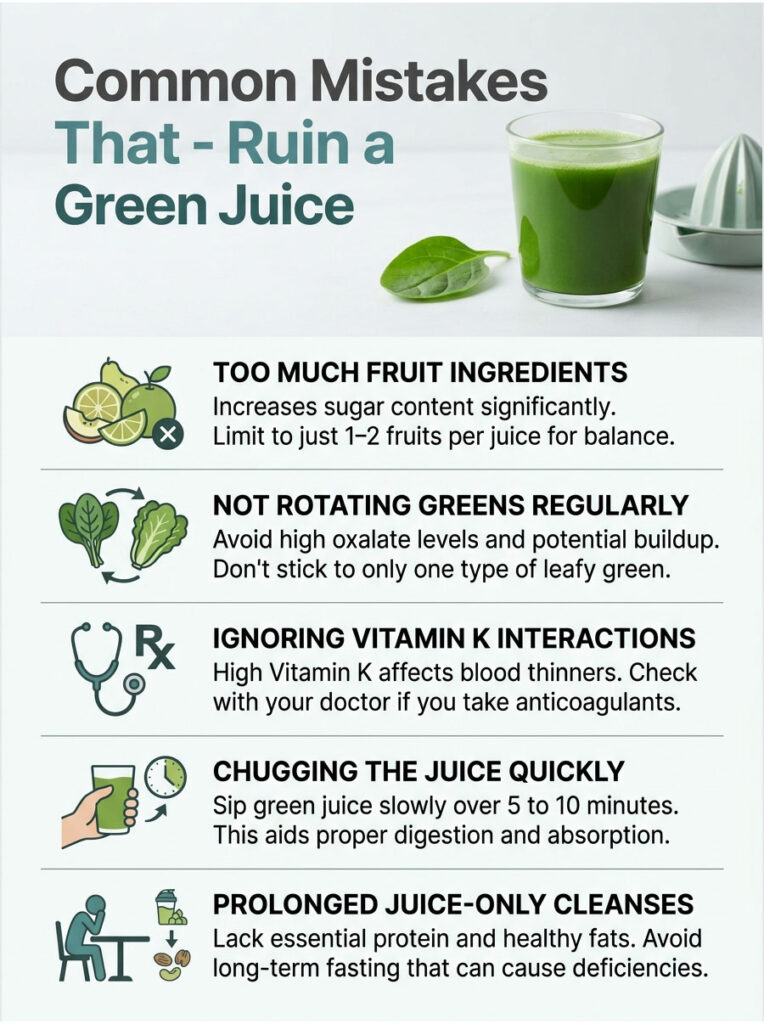
First, too much fruit. Three apples turns “green juice” into a sugar bomb that spikes blood glucose harder than orange juice.
Second, skipping the green rotation. Drinking only kale for 30 days raises oxalate levels and can stress the kidneys.
Third, ignoring blood thinner warnings. Vitamin K from leafy greens directly interferes with warfarin and similar medications. Always check with your doctor first.
Fourth, drinking too fast. Green juice is concentrated. Sip over 5 to 10 minutes to give your digestive system time to register the nutrients.
Fifth, replacing meals long-term. A juice cleanse beyond 3 days lacks adequate protein and healthy fats, and is not endorsed by the Academy of Nutrition and Dietetics.
Smart Decisions: Match Your Health Need to Action
Knowing what to do in your specific situation removes the guesswork. The table below covers the most common scenarios HealthCareOnTime’s medical reviewers see.
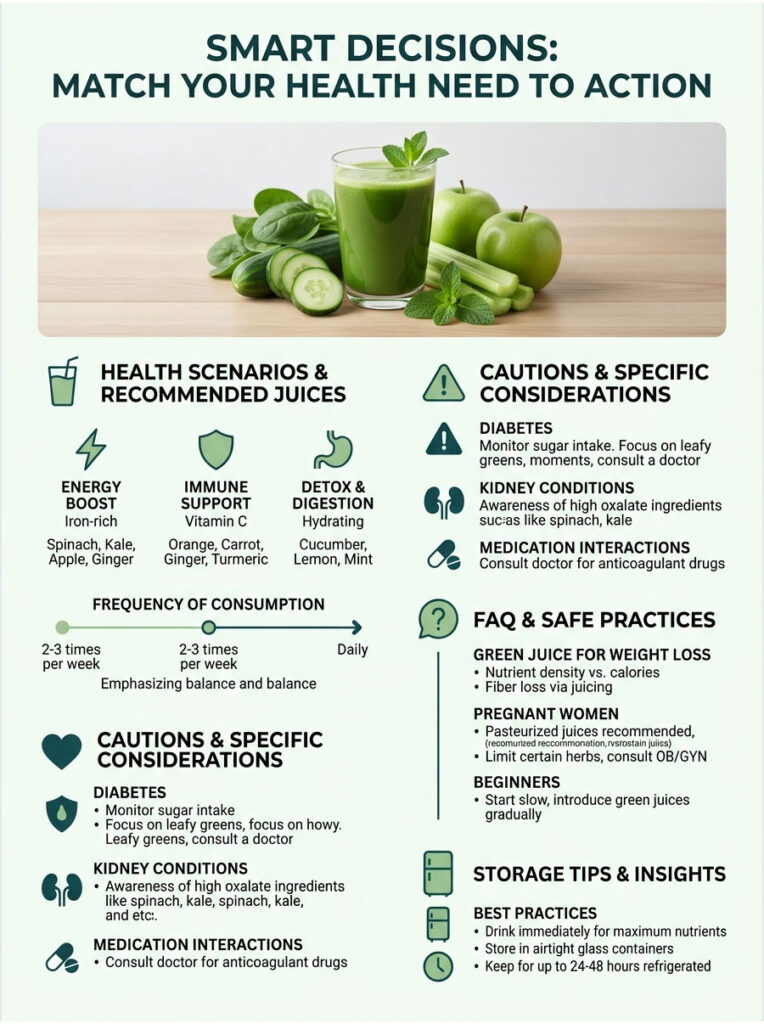
| Your Scenario | Recommended Recipe | Frequency | Important Caution |
| Trying to lose 10 to 20 lbs | #4 Belly Burner or #6 Mean Green | Daily, before lunch | Pair with calorie deficit, not as meal replacement |
| Skin breakouts or dullness | #8 Collagen-Boost Kale + Carrot | Daily for 21 days | Allow 14 days for visible results |
| Frequent colds or low immunity | #15 Ginger-Citrus Immunity Spark | 4 to 5 times per week | Avoid if on blood thinners |
| Type 2 diabetes management | #7 Cucumber Mint Flush | Daily, before meals | Check blood sugar response, consult MD |
| First time juicing | #1 Classic Cucumber-Kale Starter | 3 times in week 1 | Start with 6 oz, scale to 12 oz |
| Pregnancy or breastfeeding | #2 Sweet Apple Spinach Refresher | Consult OB-GYN first | Avoid raw greens with listeria risk |
| Kids ages 5 to 12 | #17 Big Green Apple Carrot | 2 to 3 times per week | Use pasteurized milk, no honey under age 1 |
Frequently Asked Questions
Is it OK to drink green juice every day?
Yes, daily green juice is safe for most healthy adults when you drink 8 to 12 oz, rotate your greens weekly, and pair it with balanced meals. Avoid daily use if you take blood thinners, have advanced kidney disease, or are pregnant without your OB-GYN’s approval.
Does green juice really help with weight loss?
Green juice supports weight loss indirectly. The low-calorie nutrient density helps you stay in a calorie deficit while feeling satisfied, and replacing one daily soda or sweetened latte with a 78-calorie green juice can save 200 to 400 calories per day. Real fat loss still requires a sustained calorie deficit and movement.
What time of day should you drink green juice?
Morning on an empty stomach delivers the best nutrient absorption for most people. For weight loss, 30 minutes before your biggest meal works best. For energy, anytime between 7 AM and 11 AM. Avoid drinking it within 2 hours of bedtime because of natural sugars and acidity.
Can you drink green juice on an empty stomach?
Yes, and it is the preferred timing for most people. An empty stomach speeds absorption of water-soluble vitamins and chlorophyll. If you feel mild nausea, eat a small handful of almonds 10 minutes beforehand to buffer the acidity.
How long does fresh green juice last in the refrigerator?
Centrifugal juice keeps for 24 hours, masticating or cold-press juice for 48 to 72 hours. Always store in an airtight glass mason jar filled to the top to limit oxidation, and refrigerate at 38°F or colder. Freeze for up to 90 days for batch prep.
Can you make green juice in a blender?
Absolutely. Blend your ingredients with 1/2 cup of cold water in a Vitamix or NutriBullet, then strain through a nut milk bag or fine-mesh strainer. The texture is slightly thicker than juicer output, but the antioxidant content stays high and the equipment cost is significantly lower.
Is green juice safe for diabetics?
Most green juice recipes are safe when they follow the 80/20 vegetable-to-fruit rule. Recipes like #7 Cucumber Mint Flush at just 9g carbs are diabetic-friendly. Always test your blood sugar response 30 and 90 minutes after your first glass, and consult your endocrinologist before adding daily juice to your plan.
How many calories are in a typical green juice?
A standard 12 oz glass ranges from 42 to 132 calories depending on fruit content. Vegetable-heavy recipes stay under 90 calories. Fruit-forward kid versions reach 130 to 150 calories. Track yours using USDA FoodData Central for precise nutrition data.
Does green juice clear acne?
Green juice supports clearer skin by reducing inflammation, hydrating the body, and providing vitamins A and C that support skin cell turnover. Visible improvements typically appear within 14 to 21 days of daily use. It is a supportive habit, not a replacement for dermatologist-prescribed acne treatment.
What ingredients should you never add to green juice?
Skip raw cruciferous vegetables like broccoli or cauliflower because they cause significant bloating. Avoid bananas because they clog most juicers and add unnecessary sugar. Skip dairy, sweetened yogurt, processed protein powders with artificial sweeteners, and any fruit juice from concentrate.
Is store-bought green juice as healthy as homemade?
Cold-pressed bottled brands like Pressed Juicery or Suja can be nutritionally similar, but most cost $7 to $9 per 12 oz bottle. Homemade green juice runs around $1.50 to $3.00 per glass at US grocery prices. Always check labels for added sugars, “from concentrate” markers, or pasteurization that destroys live enzymes.
Can pregnant women drink green juice?
Pregnant women can drink green juice with two precautions. First, wash all produce thoroughly with cold water and a vegetable brush to reduce listeria risk. Second, consult your OB-GYN before adding daily green juice, especially if you take prenatal blood pressure medication or have gestational diabetes.
Medical Disclaimer: This article is for general informational purposes only and is not a substitute for professional medical advice, diagnosis, or treatment. Always consult your physician, registered dietitian, or qualified healthcare provider before starting any new dietary routine, particularly if you have kidney disease, diabetes, are taking blood thinners or other prescription medications, are pregnant or breastfeeding, or have any chronic health condition. The recipes and guidance shared by HealthCareOnTime reflect publicly available nutrition research and should not be interpreted as personalized medical recommendations.
References
- Centers for Disease Control and Prevention. Only 1 in 10 Adults Get Enough Fruits or Vegetables.
- USDA Dietary Guidelines for Americans, 2020 to 2025.
- USDA FoodData Central Nutrition Database.
- National Institutes of Health. PubMed Research Database.
- Mayo Clinic. Juicing: What Are the Health Benefits?
- Cleveland Clinic. Is Juicing Healthy?
- American Heart Association. Healthy Recipe Collection.
- Harvard T.H. Chan School of Public Health. The Nutrition Source.
- Academy of Nutrition and Dietetics.
- National Health and Nutrition Examination Survey (NHANES).