
Here is something that catches almost every family off guard in that first hematology appointment: acute myeloid leukemia is treated as a medical emergency, yet the strongest leukemia programs in the country often spend the first three to seven days not giving chemotherapy. They are waiting on genetics. That pause is not hesitation. It is the decision that shapes everything after it.
Table of Contents
Quick Answer: Acute myeloid leukemia treatment falls into six categories: intensive induction chemotherapy, lower-intensity therapy such as venetoclax with a hypomethylating agent, mutation-targeted drugs, allogeneic stem cell transplant, supportive care, and clinical trials. Your plan depends on age, organ function, and the genetic mutations inside your leukemia cells. Most adults receive a sequence of these over several months.
At a Glance
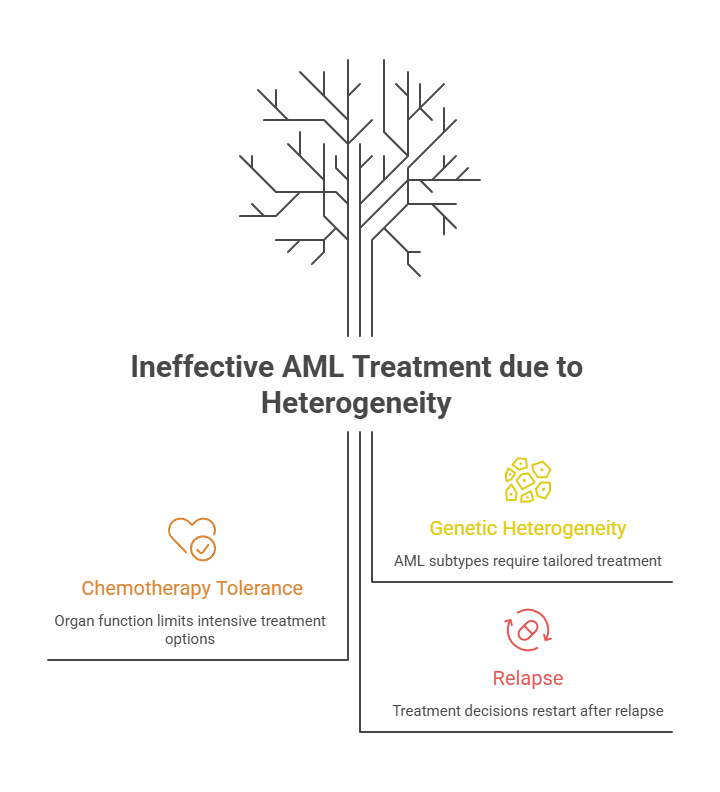
AML is now treated as a group of genetically distinct diseases, and testing drives the plan.
The first fork is whether you can tolerate intensive chemotherapy, which depends on organ function far more than birth date.
In May 2026 the FDA approved the first all-oral regimen for newly diagnosed AML in adults 75 or older, or with health problems that rule out intensive induction.
Targeted drugs now exist for FLT3, IDH1, IDH2, NPM1, and KMT2A-rearranged disease.
Allogeneic stem cell transplant is still the only reliably curative route for many higher-risk patients.
SEER projects 22,720 new US cases in 2026 and roughly 11,500 deaths.
Relapse is common, and it opens a second full round of treatment decisions rather than closing them.
What AML Treatment Actually Means, and Why It Starts So Fast
Acute myeloid leukemia floods the bone marrow with immature cells called blasts. Those blasts crowd out the red cells, white cells, and platelets your body depends on. Untreated, this type of cancer usually gets worse quickly.
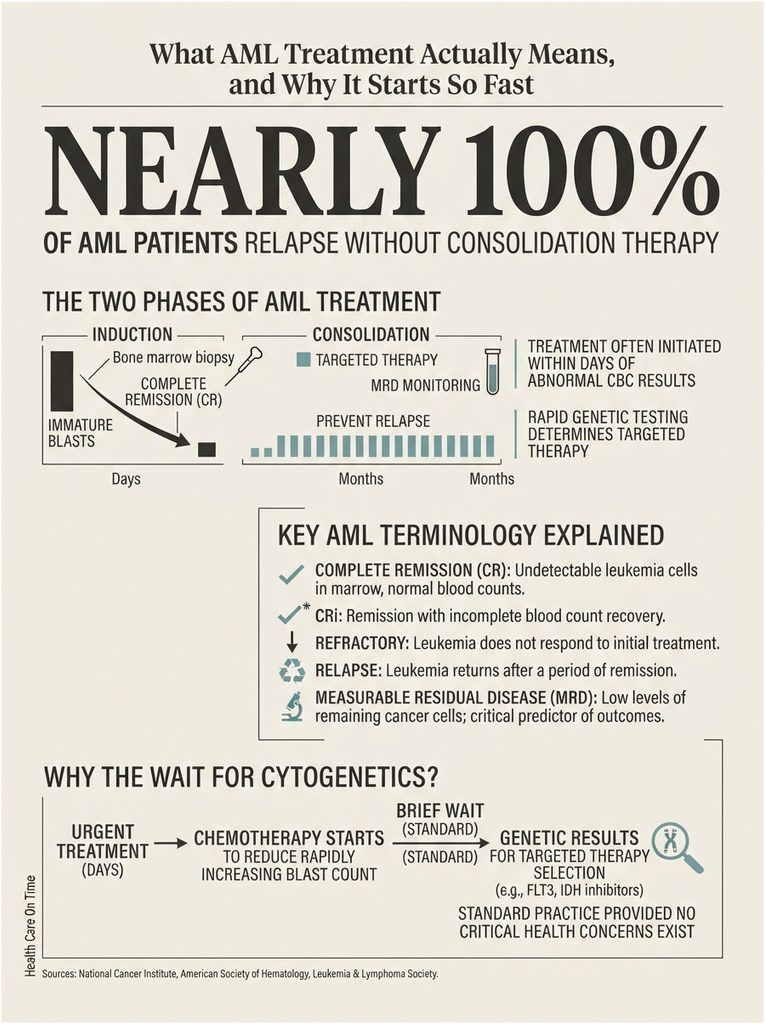
That is why AML treatment is measured in days. Patients booking urgent blood work with us often arrive after a routine CBC came back with numbers nobody expected, and the hematology referral happens the same afternoon.
The Two Phases Every Plan Is Built On
Nearly every AML treatment plan shares the same skeleton. Phase one is induction, aimed at clearing visible leukemia and reaching remission. Phase two is consolidation, sometimes called post-remission therapy, aimed at what no microscope can see.
Skipping phase two is not on the table. Without it, leukemia returns in essentially everyone who reached remission, because residual cells survive the first assault and rebuild.
Why Waiting a Few Days for Genetics Is Not a Delay
Rapid genetic testing tells your team whether a targeted drug belongs in cycle one. Adding a FLT3 inhibitor on day one produces a very different trajectory than adding it after relapse.
Unless your white count is dangerously high or you are actively bleeding, a short and deliberate wait for cytogenetics plus a next-generation sequencing panel is standard at high-volume centers. Our medical reviewers note this is one of the most common sources of confusion families raise in the first week.
The Vocabulary Your Team Will Use
Complete remission (CR) means under 5% blasts in the marrow with recovered blood counts. CRi means the marrow cleared but counts have not fully rebounded. Refractory means the leukemia never responded. Relapse means it came back after responding.
Measurable residual disease (MRD) describes leukemia cells too few to see under a microscope but detectable by flow cytometry or gene sequencing. It has become one of the strongest predictors in modern AML care.
The Tests That Decide Your Treatment Plan
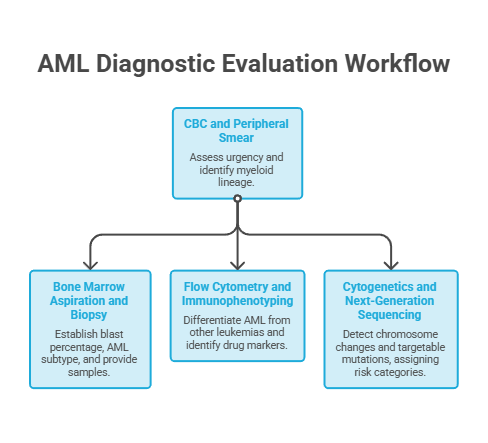
Before any AML treatment option is chosen, four pieces of information have to exist. Families who contact us after a bone marrow biopsy referral are usually surprised by how much rides on this workup.
Complete Blood Count and Peripheral Smear
The CBC that flagged the problem also frames the urgency. Very high white counts, severe anemia, and platelet counts under 20,000 per microliter each change how fast treatment starts and what supportive measures come first.
A pathologist reviewing the smear looks for blasts and for Auer rods, needle-shaped inclusions that point toward myeloid lineage.
Bone Marrow Aspiration and Biopsy
This is the diagnostic anchor. A needle draws liquid marrow and a small core of bone from the back of the hip, usually under local anesthetic with sedation available.
The sample confirms the blast percentage, establishes the AML subtype, and supplies material for every test that follows.
Flow Cytometry and Immunophenotyping
Flow cytometry reads the surface proteins on the blasts, separating AML from acute lymphoblastic leukemia and identifying markers such as CD33 that unlock specific drugs.
Cytogenetics and Next-Generation Sequencing
Karyotype and FISH detect chromosome-level changes. An NGS panel reads dozens of individual genes. Together they assign your risk category and reveal every targetable mutation.
In marrow and CBC panels processed through our lab partners, broad sequencing has shifted from a specialty add-on to routine practice. If your center is not running one, that is worth questioning out loud.
The First Fork in the Road: Intensive Therapy or Lower-Intensity Therapy
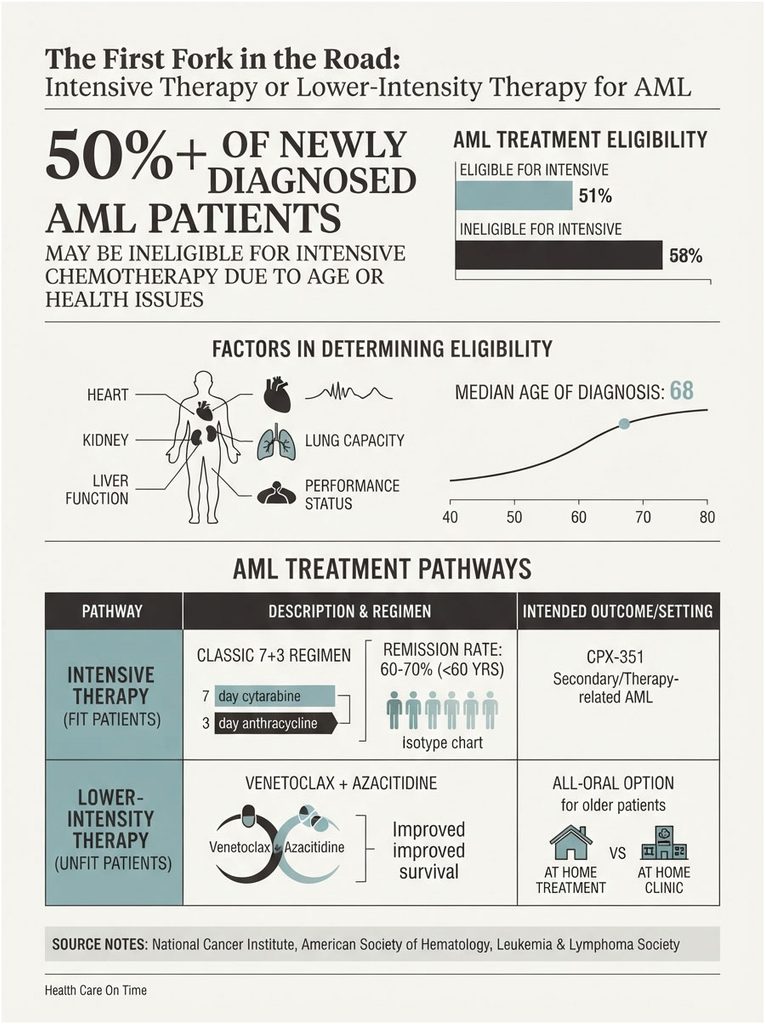
Every AML treatment decision branches from one question: can this body survive four to six weeks of profound marrow suppression? More than half of newly diagnosed patients are likely ineligible for intensive induction chemotherapy because of advanced age or health concerns.
What “Fit for Intensive Chemotherapy” Actually Measures
Fitness is not a number on a driver’s license. Hematologists weigh heart function, kidney and liver function, lung capacity, prior cancer treatment, and performance status, meaning how independently you manage daily life.
A physiologically strong 74-year-old may be offered intensive therapy. A 58-year-old with heart failure and uncontrolled diabetes may not be. The median age at AML diagnosis is 68, which is why this branch point governs so much of what follows.
Inside 7+3 Induction
The classic intensive regimen is 7+3: seven days of continuous cytarabine paired with three days of an anthracycline such as daunorubicin or idarubicin. Remission rates with cytarabine plus anthracycline induction in patients under 60 run 60% to 70%.
Plan on four to six weeks in the hospital for the first cycle. Counts bottom out, infection risk peaks, and transfusions become part of the daily rhythm.
Consolidation follows with several more cytarabine cycles, often delivered as outpatient infusions once counts recover.
CPX-351 for Secondary and Therapy-Related AML
Some AML arises from a prior blood disorder such as myelodysplastic syndrome, or from chemotherapy given years earlier for a different cancer. A history of myelodysplastic syndrome, or previous chemotherapy or radiation for another cancer, affects both prognosis and treatment options.
CPX-351 packages daunorubicin and cytarabine in a fixed ratio inside a liposome and is approved specifically for these harder-to-treat presentations in adults.
Venetoclax Plus a Hypomethylating Agent
For adults who cannot tolerate 7+3, the standard shifted several years ago. Venetoclax, an oral BCL-2 inhibitor, paired with azacitidine changed what unfit patients could expect. In the VIALE-A trial, median overall survival reached 14.7 months with venetoclax plus azacitidine versus 9.6 months with azacitidine alone.
Most of this regimen runs outpatient after the first cycle, though the initial dose ramp-up requires close monitoring for tumor lysis syndrome.
The All-Oral Option and What It Changes
On May 13, 2026, the FDA approved an oral combination of decitabine and cedazuridine tablets with venetoclax for newly diagnosed AML in adults 75 years or older, or with comorbidities that preclude intensive induction chemotherapy. It is the first and only all-oral combination approved for this group, offering an alternative to injectable hypomethylating agents that demand frequent clinic visits.
Approval rested on the phase 2 ASCERTAIN-V trial, which enrolled 101 patients and reported a complete response rate of 41.6%, a combined CR plus CRi rate of 63.4%, and median overall survival of 15.5 months, with more than 75% of responders still in remission at 12 months. Grade 3 or higher side effects were common and dominated by marrow suppression.
For a patient two hours from the nearest infusion center, the practical meaning is concrete: treatment at the kitchen table instead of monthly multiday trips.
Table 1: AML Treatment Pathways Compared
| Approach | Who It’s Typically For | What It Involves | Typical Setting | Evidence Snapshot |
| Intensive 7+3 induction | Adults fit for intensive therapy, generally under 75 with good organ function | 7 days cytarabine plus 3 days anthracycline, then consolidation cycles | Inpatient, 4 to 6 weeks for cycle one | CR in roughly 60% to 70% of adults under 60 |
| 7+3 plus targeted agent | Fit adults with FLT3-ITD, CD33-positive, or favorable-risk disease | Standard induction plus quizartinib, midostaurin, or gemtuzumab ozogamicin | Inpatient induction, oral maintenance after | Quizartinib arm: median OS 31.9 months vs 15.1 months |
| CPX-351 liposomal daunorubicin and cytarabine | Secondary AML or therapy-related AML, roughly ages 60 to 75 | Fixed-ratio liposomal infusion on days 1, 3, and 5 | Inpatient | Approved specifically for secondary and therapy-related disease |
| Venetoclax plus azacitidine | Adults 75+ or unfit for intensive chemotherapy | Daily oral venetoclax plus injectable azacitidine, 28-day cycles | Mostly outpatient after ramp-up | Median OS 14.7 months vs 9.6 months on azacitidine alone |
| Oral decitabine/cedazuridine plus venetoclax | Adults 75+ or unfit, prioritizing home-based treatment | All tablets, days 1 to 5, plus daily venetoclax, 28-day cycles | Home, with lab monitoring | CR 41.6%, CR plus CRi 63.4%, median OS 15.5 months (n=101) |
| Best supportive care | Patients declining anti-leukemic therapy or too frail for any of it | Transfusions, antibiotics, symptom control, hospice | Home or hospice | Median survival measured in weeks to a few months |
Targeted Therapy: Matching the Drug to the Mutation
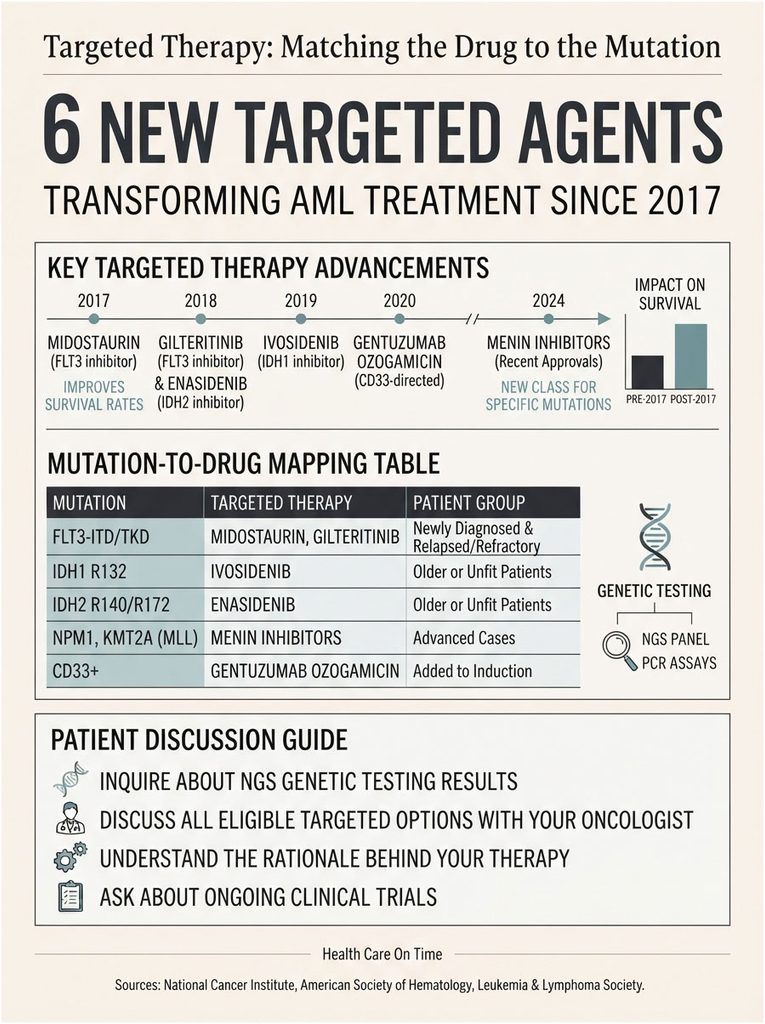
Since 2017 there has been a rapid expansion of approved AML treatments, with most new drugs aimed at specific gene mutations or cell survival pathways. This is where AML treatment has changed most, and it is also where the older patient-facing pages online fall furthest behind.
FLT3 Inhibitors
Roughly three in ten patients carry a FLT3 mutation, historically a poor-prognosis marker. The phase 3 QuANTUM-First trial found that adding oral quizartinib to standard chemotherapy lifted median overall survival to 31.9 months in adults with FLT3-ITD positive AML, against 15.1 months for chemotherapy alone.
Complete remission rates were 55% in both arms, but median remission duration stretched to 38.6 months with quizartinib versus 12.4 months without it. Depth and durability of response, not just response itself, is what these drugs buy.
Gilteritinib carries the relapsed setting. In the ADMIRAL trial, composite complete remission reached 55% in patients with no prior FLT3 inhibitor exposure and 52% among those who had already received midostaurin or sorafenib.
An unexpected result surfaced recently. The phase 2 QUIWI trial tested quizartinib in FLT3-ITD negative AML and reported median event-free survival of 20.4 months versus 9.9 months on placebo, with three-year overall survival of 60.8% compared with 45.7%.
IDH1 and IDH2 Inhibitors
Ivosidenib and olutasidenib target IDH1. Enasidenib targets IDH2. All three are oral, generally better tolerated than chemotherapy, and useful in older or unfit patients alone or alongside azacitidine.
They work by pushing arrested cells to mature rather than killing them outright. That mechanism carries a distinct risk, differentiation syndrome, covered further down.
Menin Inhibitors, the Newest Class
This is the largest recent addition to AML treatment options. In October 2025 the FDA approved revumenib for adults and children with NPM1-mutated AML, expanding past its earlier approval for far rarer KMT2A-rearranged disease and putting the drug within reach of as many as 40% of AML patients.
A month later, on November 13, 2025, the FDA approved ziftomenib for adults with advanced NPM1-mutated AML, the first and only once-daily oral menin inhibitor for these patients. In its pivotal trial, 21.4% reached full remission or remission with partial count recovery, with a median response duration of 5 months.
Frontline testing is moving quickly. Data presented at EHA 2026 from 99 newly diagnosed patients with NPM1 mutations or KMT2A rearrangements treated with a menin inhibitor plus intensive chemotherapy showed composite complete response rates of 90% to 96% across both subsets.
Those results are early and not yet standard of care. They do signal where the field is heading, and they are worth asking your oncologist about if either marker appears on your report.
CD33-Directed Therapy
Gemtuzumab ozogamicin links an antibody against CD33 to a cell-killing payload delivered directly to leukemia cells. It is added to induction for favorable-risk and selected intermediate-risk patients, and it has a role in high-risk acute promyelocytic leukemia.
The Mutation-to-Drug Map
| Mutation or Marker | How Common in AML | Approved Targeted Options | Where It Fits | How It Is Found |
| FLT3-ITD or FLT3-TKD | About 30% | Midostaurin, quizartinib, gilteritinib | Frontline with chemotherapy; gilteritinib in relapse | NGS panel or PCR fragment analysis |
| NPM1 | About 30% of newly diagnosed | Revumenib, ziftomenib | Relapsed or refractory now; frontline in trials | NGS panel; also a leading MRD marker |
| IDH1 | 6% to 10% | Ivosidenib, olutasidenib | Frontline in unfit patients; relapse | NGS panel |
| IDH2 | 8% to 12% | Enasidenib | Relapsed or refractory | NGS panel |
| KMT2A rearrangement | 5% to 10% | Revumenib | Relapsed or refractory | Karyotype plus FISH |
| PML-RARA (APL) | 5% to 10% | ATRA plus arsenic trioxide | Frontline, urgent | FISH or PCR, often same-day |
| CD33 surface expression | Majority of cases | Gemtuzumab ozogamicin | Added to induction | Flow cytometry |
| TP53 | 8% to 15% | No targeted agent yet; trials preferred | Any line | NGS panel |
Stem Cell Transplant: When Cure Is the Goal
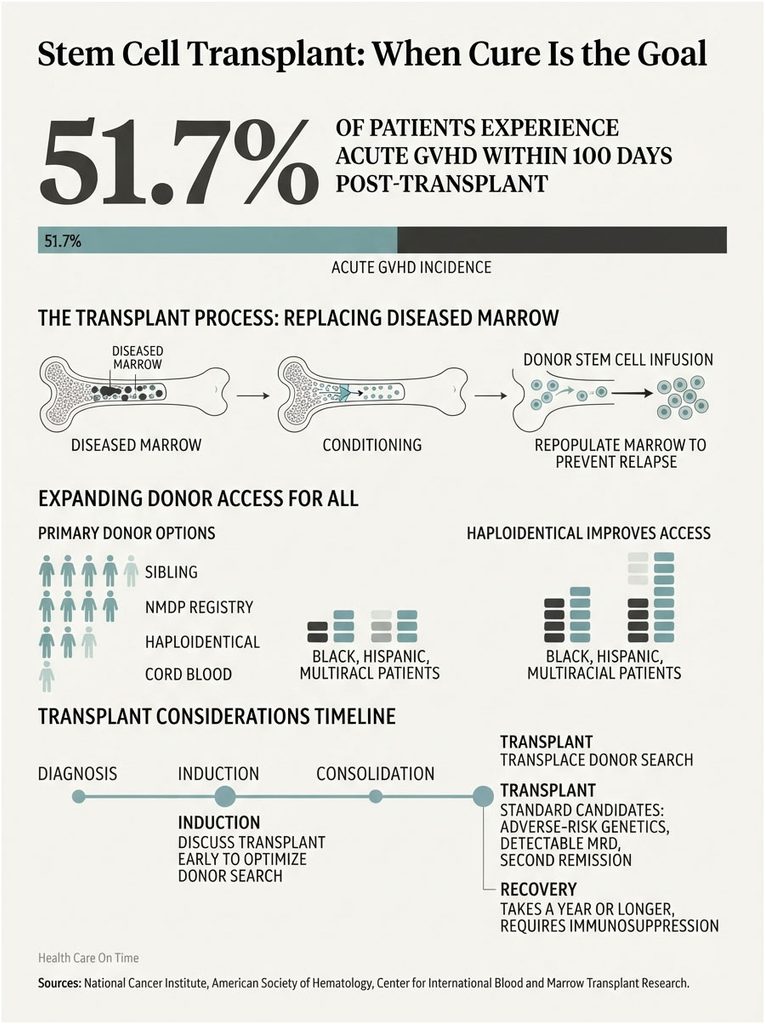
For many higher-risk patients, allogeneic stem cell transplant is the only treatment that reliably prevents relapse. It swaps your diseased marrow for a donor’s healthy stem cells, and the donor immune system then patrols for surviving leukemia.
Who Gets Referred, and When
The transplant conversation belongs in induction, not after relapse. Waiting burns the window when donor searching and insurance authorization run smoothest.
Standard candidates include patients with adverse-risk genetics, those with MRD still detectable after consolidation, and most patients in second remission. Favorable-risk patients who clear MRD frequently skip transplant.
Finding a Donor in the US
Siblings are checked first, though only about one in four matches. Beyond that, the NMDP registry, haploidentical family donors (a half-matched parent, child, or sibling), and cord blood units all widen the pool.
Haploidentical transplant has narrowed a long-standing access gap for Black, Hispanic, and multiracial patients, who historically found fully matched unrelated donors less often.
Reduced-Intensity Conditioning
Older adults were once excluded outright. Reduced-intensity conditioning regimens now allow transplant for many older patients with acceptable risks of complications and non-relapse death.
The Honest Risk Side
Transplant is not the gentler path. Graft-versus-host disease, where donor immune cells attack the recipient’s skin, gut, and liver, is common. In one US claims analysis, 51.7% of patients experienced acute GVHD within the first 100 days, with 20.8% developing CMV infection and 45.4% experiencing bacterial infection.
Recovery runs a year or longer, and immunosuppressive medication typically continues for months.
The Subtype That Rewrote the Rules: Acute Promyelocytic Leukemia
APL is a form of AML, but treating it like ordinary AML is a serious error. It carries the PML-RARA fusion gene and arrives with a bleeding disorder that can kill within days of diagnosis.
ATRA Plus Arsenic Trioxide
All-trans retinoic acid combined with chemotherapy had already produced cure rates above 80% in APL. Arsenic trioxide then largely removed chemotherapy from the equation for standard-risk patients.
In the landmark comparison, two-year disease-free survival reached 97% with ATRA plus arsenic trioxide versus 90% with ATRA plus chemotherapy. For patients with a white blood cell count of 10,000 per microliter or lower, ATRA plus arsenic is now the preferred induction and consolidation regimen, carrying less toxicity than conventional chemotherapy.
A UK trial reported that after the first treatment course, patients on the arsenic-based arm had markedly lower rates of severe hair loss (5% versus 23%) and severe mouth toxicity (1% versus 19%).
The First 48 Hours
When APL is suspected, ATRA starts immediately, before genetic confirmation returns. Waiting on the FISH result costs lives, because the coagulopathy kills before the leukemia does.
Aggressive platelet and clotting factor support runs alongside it during that window.
If AML Comes Back: Relapsed and Refractory Options
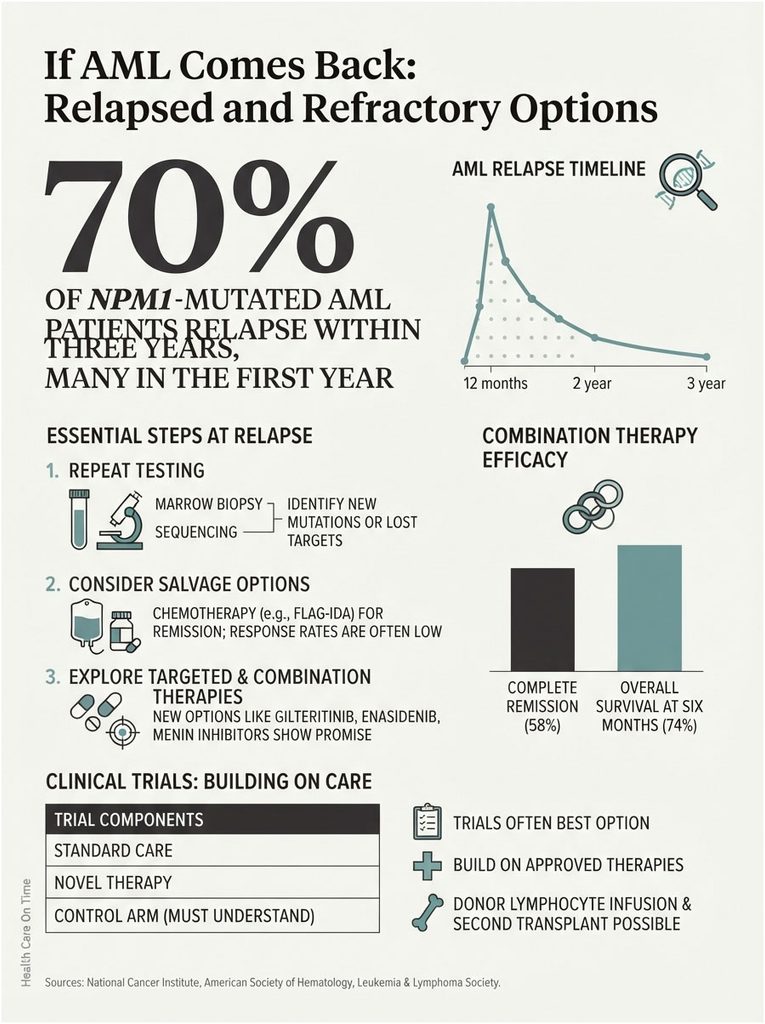
Relapse is common, and it reopens the treatment conversation rather than ending it. Among patients with NPM1-mutated AML, roughly seven in ten relapse within three years, most inside the first year.
Patients commonly ask us whether relapse means the original treatment failed. It usually means a small resistant population survived, which is a different problem with different solutions.
Repeat Testing Comes First
Leukemia acquires new mutations under treatment pressure. A repeat marrow biopsy with fresh sequencing at relapse can reveal a target that was not there at diagnosis, or show that an earlier target has disappeared.
Salvage Chemotherapy
Regimens such as FLAG-IDA or high-dose cytarabine combinations aim to force a second remission, usually as a bridge to transplant. Response rates in first relapse are relatively low, and when a second remission is achieved it tends to be shorter than the first.
Prognosis is hardest when the first remission lasted under a year.
Targeted Salvage
Gilteritinib for FLT3, enasidenib or olutasidenib for IDH, and menin inhibitors for NPM1 or KMT2A give options that did not exist a decade ago.
Combination approaches are producing striking early numbers. In a study of revumenib with oral decitabine/cedazuridine and venetoclax in relapsed disease, 58% reached CR or CRh, 93% of responders turned MRD negative, six-month overall survival was 74%, and 46% went on to transplant.
Second Transplant and Donor Lymphocyte Infusion
For patients who relapse after transplant, donor lymphocyte infusion delivers additional donor immune cells to re-establish control. A second transplant is possible in selected cases, though non-relapse mortality climbs.
When a Clinical Trial Is the Strongest Option
In relapsed AML, a trial is frequently the best available treatment rather than a last resort. Most build on an approved backbone, so enrolling rarely means giving up standard care. Ask what the control arm is before deciding.
How Your Team Measures Whether Treatment Is Working
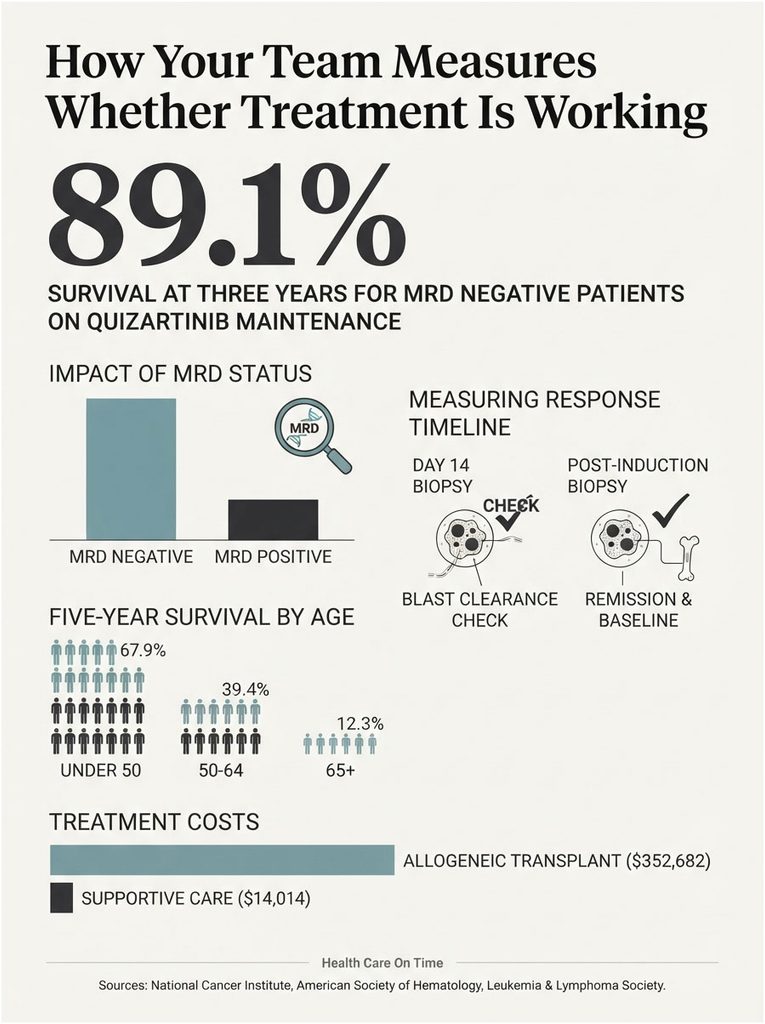
A bone marrow biopsy around day 14 of induction checks whether blasts are clearing. A second biopsy after counts recover confirms remission and sets the baseline for everything after.
MRD Testing and What It Changes
MRD is measured by multicolor flow cytometry or by tracking a known mutation with sequencing. Patients who clear MRD relapse less often and live longer than patients with an identical-looking remission but detectable residual disease.
MRD status increasingly drives two decisions: whether to proceed to transplant, and whether to continue maintenance therapy. In one analysis, patients who were MRD negative at the end of consolidation reached 89.1% survival at three years on quizartinib maintenance without any transplant.
Among the questions we field most often at booking, “what does MRD negative actually mean” ranks near the top, and the honest answer is that it lowers your risk substantially without reducing it to zero.
Table 2: US AML Data That Shapes Treatment Decisions
| Metric | Figure | Population | Source |
| Projected new cases, 2026 | 22,720 | United States, all ages | SEER Cancer Stat Facts |
| Projected deaths, 2026 | 11,500 | United States, all ages | SEER Cancer Stat Facts |
| Incidence rate | 4.4 per 100,000 per year | US, age-adjusted, 2019 to 2023 | SEER Cancer Stat Facts |
| Death rate | 2.7 per 100,000 per year | US, age-adjusted, 2020 to 2024 | SEER Cancer Stat Facts |
| 5-year relative survival | 31.9% | US adults with AML | NCI PDQ, SEER 2014 to 2020 |
| Most common age at diagnosis | 65 to 74 years | United States | SEER Cancer Stat Facts |
| Lifetime risk of diagnosis | About 0.5% | US men and women | SEER Cancer Stat Facts |
| Direct cost, first 6 months | $14,014 (supportive care only) to $352,682 (allogeneic transplant) | US patients by treatment pathway | Economic burden analysis, PubMed 26568358 |
Our medical reviewers flag one thing about that survival figure: it averages across every age group and every risk category. Broken out by age, US five-year survival for men runs 67.9% under 50, 39.4% at 50 to 64, and 12.3% at 65 and older, with comparable figures for women. Your number is not the headline number.
What AML Treatment Costs in the US, and Who Pays
Nobody on page one of Google addresses this, so here it is. A cost-of-illness analysis put average US direct costs for the first six months of therapy at $14,014 for best supportive care alone, climbing to $352,682 for induction followed by allogeneic stem cell transplant.
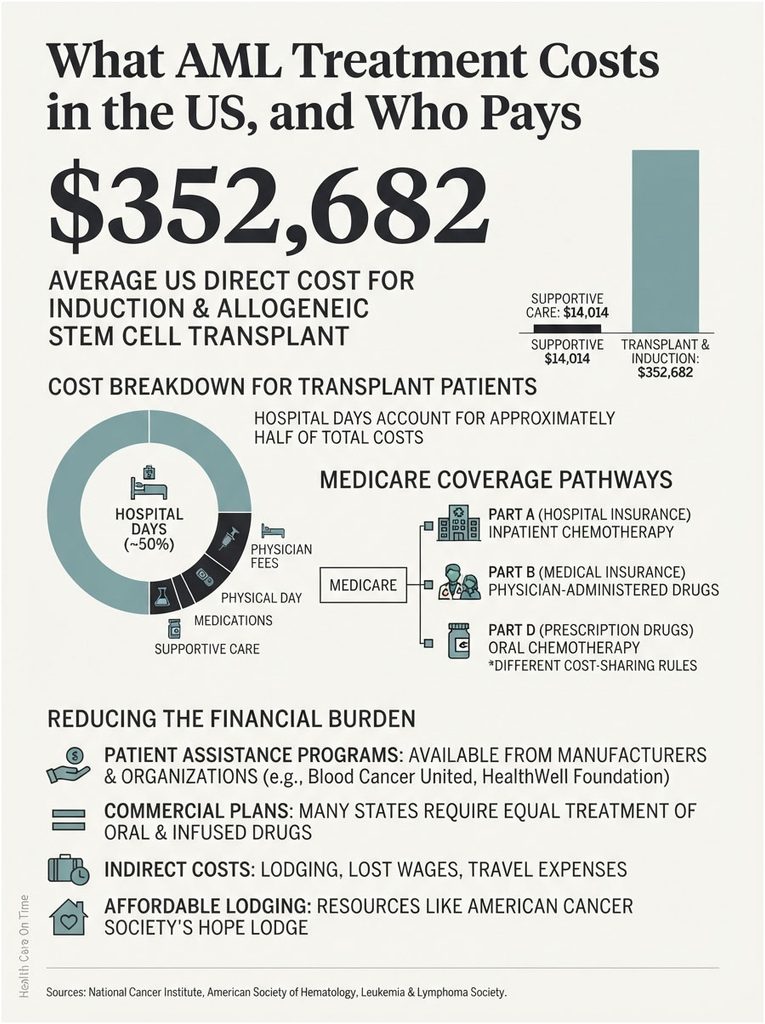
Hospital days drive most of it. In one commercial-claims analysis of transplant patients, inpatient care accounted for roughly half of total cost.
Medicare, Commercial Insurance, and Oral Drug Parity
Original Medicare covers inpatient chemotherapy under Part A and physician-administered drugs under Part B. Oral agents such as venetoclax and the menin inhibitors usually fall under Part D, where cost sharing works on a different formula.
Most states have oral chemotherapy parity laws requiring commercial plans to cover oral cancer drugs no less favorably than infused ones. Coverage still varies by plan, so have a financial navigator run a benefits check before cycle one starts.
Assistance Programs Worth Contacting Early
Every manufacturer of an approved AML drug runs a patient assistance or copay support program. Blood Cancer United, the Leukemia Research Foundation, and the HealthWell Foundation offer grants covering treatment-related costs including travel and lodging.
Apply in week one. Funds at several foundations open and close during the year, and waiting until a bill arrives often means waiting for the next funding cycle.
The Indirect Costs Nobody Budgets For
Lodging near a transplant center, a caregiver’s lost wages, and repeated travel add up fast. The American Cancer Society’s Hope Lodge network and Joe’s House provide low-cost or free lodging near many treatment centers.
Side Effects and Supportive Care Worth Planning For
Infection Risk
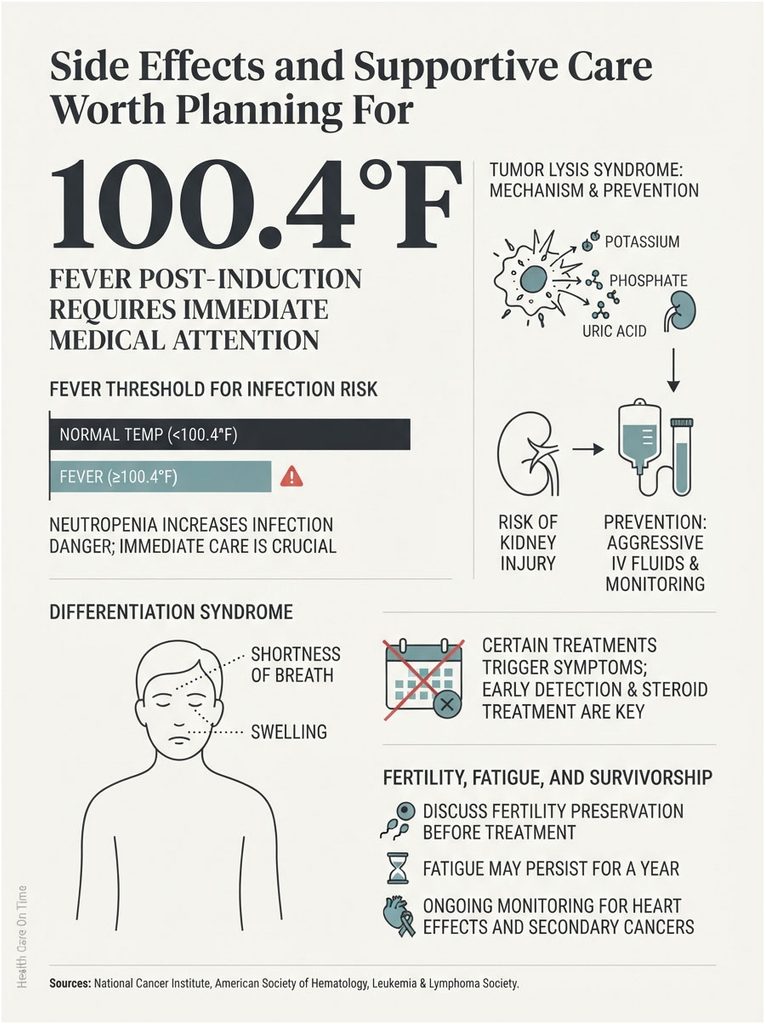
Neutropenia after induction is the biggest near-term danger. Fever in that window is a true emergency, with broad-spectrum antibiotics started inside an hour of arrival.
Keep a thermometer at home, a written temperature threshold from your team (usually 100.4 degrees Fahrenheit), and the after-hours number saved in every family member’s phone.
Tumor Lysis Syndrome
When large numbers of leukemia cells die at once, potassium, phosphate, and uric acid pour into the bloodstream and can injure the kidneys. Venetoclax ramp-up, very high white counts, and intensive induction all raise the risk.
Prevention is straightforward: aggressive IV fluids, allopurinol or rasburicase, and frequent labs across the first several days.
Differentiation Syndrome
ATRA, arsenic trioxide, IDH inhibitors, and menin inhibitors can all set it off. Watch for shortness of breath, unexplained weight gain, swelling, and fever. Caught early and treated with steroids, it resolves. Missed, it becomes life-threatening.
Fertility, Fatigue, and Survivorship
Fertility preservation has to be raised before treatment begins, not after. Fatigue routinely outlasts treatment by a year.
Survivors need ongoing monitoring for heart effects from anthracyclines, secondary cancers, and, after transplant, chronic GVHD and delayed immune recovery.
Your First Two Weeks: A Practical Action Plan
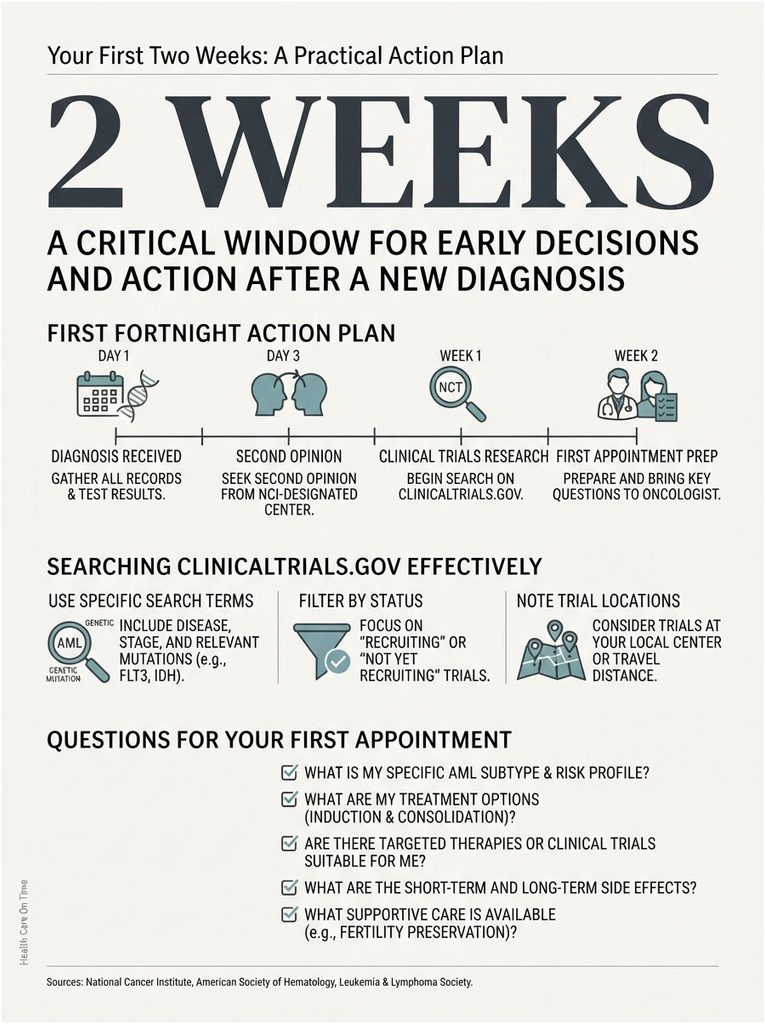
Table 3: Scenario and Recommended Action
| If This Describes You | What It Usually Means | Recommended Action | Who to Ask |
| Newly diagnosed, under 60, no major organ disease | Likely candidate for intensive induction and possibly transplant | Confirm full cytogenetics and an NGS panel were ordered; open the transplant conversation now | Treating hematologist, transplant coordinator |
| Newly diagnosed, over 75 or with heart, kidney, or lung disease | Lower-intensity or all-oral therapy is the likely path | Ask specifically about venetoclax combinations, including the oral decitabine/cedazuridine option | Hematologist, oncology pharmacist |
| Suspected APL (bleeding, very low platelets, abnormal clotting) | The most time-critical AML subtype | ATRA should begin before genetic confirmation returns | Attending physician, immediately |
| Genetics show FLT3, IDH1, IDH2, NPM1, or KMT2A | A targeted drug may belong in cycle one | Ask whether the agent is going in upfront or being held in reserve, and why | Hematologist |
| Treated at a community hospital with no leukemia program | Outcomes are generally better at high-volume centers | Request a second opinion at an NCI-designated cancer center within the first week | Your oncologist, insurance case manager |
| In remission but MRD still detectable | Relapse risk is meaningfully higher | Ask whether this changes the transplant or maintenance recommendation | Hematologist, transplant physician |
| Relapsed after first remission | Salvage plus targeted or trial therapy | Repeat mutation testing; search ClinicalTrials.gov by mutation, not only by diagnosis | Hematologist, trial navigator |
Getting a Second Opinion
There are more than 70 NCI-designated cancer centers across the United States, and most run virtual second-opinion programs. A second opinion in week one costs little and occasionally rewrites the entire plan.
Searching ClinicalTrials.gov Without Getting Lost
Search by mutation plus “AML” rather than by drug name. Filter to actively recruiting studies within a drivable radius, then bring the shortlist to your oncologist instead of contacting sites cold.
Questions to Bring to the First Appointment
Ask what risk category your genetics place you in, whether a targeted drug applies, whether transplant is on the table and when, what the treatment goal is (cure, control, or comfort), and what the plan is if the first cycle does not work.
Mistakes and Misconceptions That Cost Patients
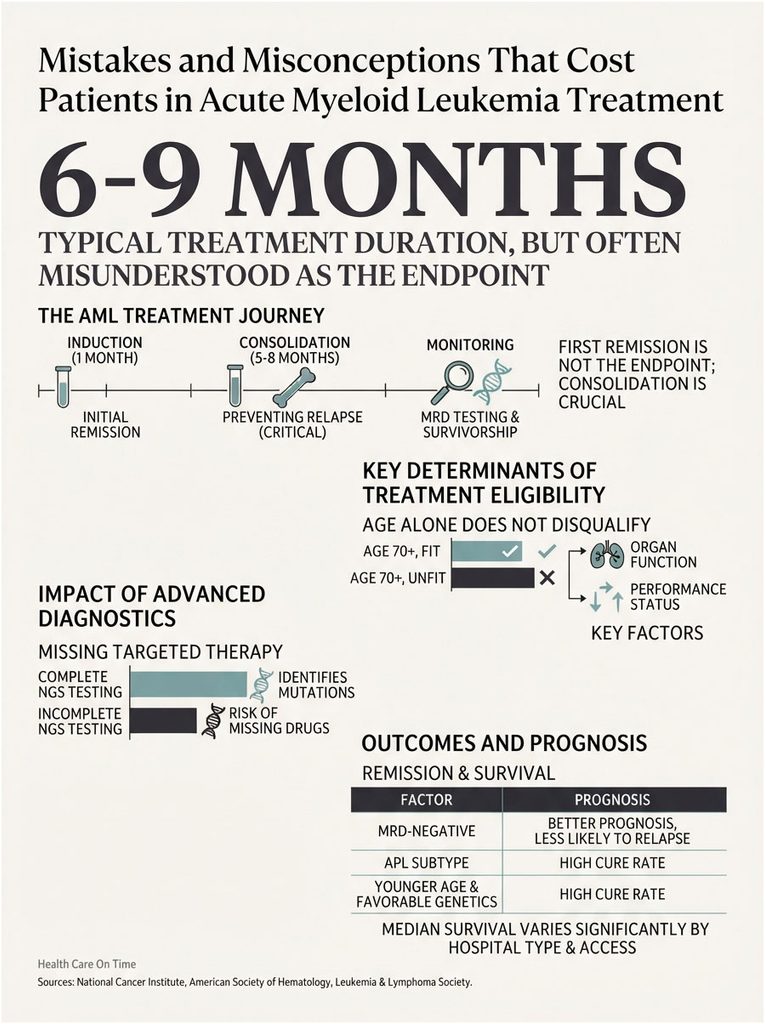
Assuming age alone disqualifies treatment. It does not. Organ function and performance status decide fitness, and the venetoclax and all-oral regimens were built precisely for people who once got nothing offered to them.
Starting therapy where broad sequencing is not standard. If a full NGS panel never ran, a targeted drug that belonged in cycle one gets missed entirely.
Treating first remission as the finish line. Consolidation, MRD monitoring, and sometimes transplant are what turn remission into cure.
Reading survival tables as a personal forecast. A real-world US cohort at one safety-net hospital reported median overall survival of 12.2 months and five-year survival of 18%, with only 12% of patients receiving a transplant, which shows how far access and center type move the numbers away from any national average.
Frequently Asked Questions
What is the newest treatment for acute myeloid leukemia?
The most recent US approval arrived on May 13, 2026, when the FDA cleared oral decitabine and cedazuridine tablets with venetoclax for newly diagnosed AML in adults 75 or older, or with health problems ruling out intensive chemotherapy. Menin inhibitors ziftomenib and revumenib were approved in late 2025 for NPM1-mutated disease.
Can acute myeloid leukemia be cured?
Yes, for a meaningful share of patients. Cure is most likely in younger adults with favorable-risk genetics, and in acute promyelocytic leukemia, where long-term cure rates exceed 80%. Allogeneic stem cell transplant offers cure potential in higher-risk disease. Older adults with adverse genetics face considerably lower odds.
What is the first-line treatment for AML?
It depends on fitness. Adults who can tolerate intensive therapy typically receive 7+3 induction, often with a targeted drug added once mutation results return. Adults who cannot generally receive venetoclax combined with a hypomethylating agent, now available in a fully oral form.
How long does AML treatment take from start to finish?
Intensive treatment usually spans six to nine months: four to six weeks inpatient for induction, then two to four consolidation cycles. Transplant adds several months plus a year of recovery. Lower-intensity regimens continue in 28-day cycles for as long as they keep working.
What are the AML treatment options for someone over 75?
Venetoclax with azacitidine, the all-oral decitabine/cedazuridine plus venetoclax regimen, single-agent hypomethylating therapy, mutation-matched targeted drugs, clinical trials, and best supportive care. More than half of newly diagnosed patients fall into this ineligible-for-intensive-chemotherapy group.
Is there an AML treatment that does not require hospital admission?
Yes. The all-oral regimen approved in May 2026 allows eligible patients to be treated at home, replacing injectable hypomethylating agents that required monthly multiday clinic visits. Venetoclax with azacitidine is also largely outpatient once the ramp-up period is complete.
How soon after diagnosis does treatment have to start?
Within days. If white counts are extremely high, bleeding is present, or APL is suspected, treatment begins immediately. Otherwise most centers start within three to seven days, using that window for the genetic testing that determines which drugs enter cycle one.
What happens if AML returns after remission?
Repeat mutation testing comes first, since leukemia can acquire new targets. Options then include salvage chemotherapy, targeted agents such as gilteritinib or menin inhibitors, allogeneic transplant if not already done, donor lymphocyte infusion, and clinical trials. Second remissions are typically shorter than the first.
Does everyone with AML need a stem cell transplant?
No. Patients with favorable-risk genetics who clear measurable residual disease often finish consolidation chemotherapy and stop there. Transplant is generally reserved for intermediate and adverse-risk disease, persistent MRD, and second remission after relapse.
What does MRD negative mean for my prognosis?
It means no leukemia was detected by sensitive flow cytometry or gene sequencing, far below what a microscope can see. MRD-negative patients relapse less often and live longer than patients with the same visible remission but detectable residual disease. It increasingly guides transplant and maintenance decisions.
How much does AML treatment cost in the United States?
Direct costs across the first six months range from roughly $14,014 for supportive care alone to about $352,682 for induction followed by allogeneic transplant. Your out-of-pocket exposure depends entirely on your plan. Request a financial navigator before treatment starts.
Which gene mutations are tested before AML treatment begins?
A standard workup includes karyotype, FISH, and a next-generation sequencing panel covering FLT3, NPM1, IDH1, IDH2, TP53, CEBPA, RUNX1, ASXL1, KMT2A rearrangements, and more. In CBC and marrow panels processed through our lab partners, this combination has become routine rather than an add-on.
Medical Disclaimer: This article provides general information and does not replace advice from a licensed physician. Acute myeloid leukemia is a medical emergency requiring immediate evaluation by a hematologist-oncologist. Treatment decisions rest on individual genetics, organ function, and clinical circumstances that only your care team can assess. Survival statistics describe populations, not individuals. Never delay or change treatment based on anything read online. If you or someone you care for has persistent fever, unusual bruising or bleeding, or extreme fatigue alongside abnormal blood counts, seek medical care right away.
References
- SEER Cancer Stat Facts: Acute Myeloid Leukemia, National Cancer Institute
- Adult Acute Myeloid Leukemia Treatment (PDQ), Health Professional Version, National Cancer Institute
- Adult Acute Myeloid Leukemia Treatment (PDQ), Patient Version, National Cancer Institute
- FDA Approves Oral Combination of Decitabine and Cedazuridine Tablets with Venetoclax for Newly Diagnosed AML, US Food and Drug Administration
- FDA Approves First All-Oral Regimen for AML, American Journal of Managed Care
- FDA Approves New Drug to Treat Advanced AML in Adults, Blood Cancer United
- FDA Approves Novel Treatment for Acute Myeloid Leukemia, Damon Runyon Cancer Research Foundation
- Phase III Trial Reports Quizartinib Doubles Overall Survival in FLT3-ITD-Positive AML, The ASCO Post
- Quizartinib for Newly Diagnosed FLT3-ITD-Negative AML: The QUIWI Study, Journal of Clinical Oncology
- Quizartinib Granted FDA Approval for Newly Diagnosed FLT3-ITD Mutated AML, AML Hub
- Genetic Risk Stratification and Outcomes Among Treatment-Naive Patients With AML Treated With Venetoclax and Azacitidine, Blood
- Quizartinib for Patients With Newly Diagnosed FLT3-ITD-Positive AML Who Received Maintenance Therapy, Blood Advances
- Retinoic Acid and Arsenic Trioxide for Acute Promyelocytic Leukemia, New England Journal of Medicine
- Acute Promyelocytic Leukemia, StatPearls, National Center for Biotechnology Information
- Health Care Costs Among Patients With Hematologic Malignancies Receiving Allogeneic Transplants, Blood Advances
- Economic Burden Associated With Acute Myeloid Leukemia Treatment, PubMed
- Real-World Treatment Outcomes From a Retrospective Cohort of Patients With AML at an Urban Safety Net Hospital, PMC
- Age-Specific Survival in Acute Myeloid Leukemia in the Nordic Countries Through a Half Century, Blood Cancer Journal
- Treating Acute Myeloid Leukemia (AML), American Cancer Society