
A blood pressure cuff on a 15-year-old’s arm can say more about a heart attack at 45 than almost anything that happens in between.
Table of Contents
For decades, the honest answer to whether teenage weight shapes adult disease was “probably, but nobody has followed anyone long enough to prove it.” That gap has now closed. National health registries in Israel, Sweden, Denmark, and Norway have tracked millions of adolescents into their thirties, forties, and fifties, and the 2026 results are the clearest evidence yet published.
The finding that surprises most families is not about the number on the scale today. It is about how many years the body carries the load, and about which of those years count most.
Quick Answer: Teen obesity raises the risk of serious adult disease well before middle age. Registry studies tracking adolescents into adulthood link teenage obesity to type 2 diabetes, high blood pressure, fatty liver disease, chronic kidney disease, sleep apnea, PCOS, stroke, and early death. Many of these conditions appear in the twenties and thirties rather than the fifties. Risk climbs with obesity severity and with the number of years the excess weight is carried.
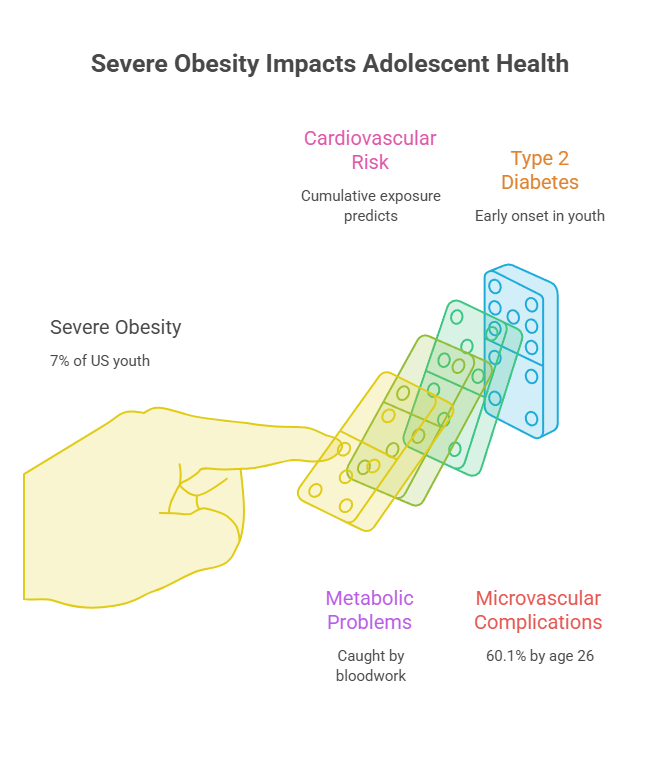
The conditions most consistently linked to adolescent obesity are:
- Type 2 diabetes, often before age 25
- High blood pressure and early cardiovascular disease
- Nonalcoholic fatty liver disease
- Chronic kidney disease and abnormal kidney function
- Obstructive sleep apnea
- Polycystic ovary syndrome in girls
- Mobility limits, joint pain, and skin complications
At a Glance
• About 1 in 5 American adolescents ages 12 to 19 meets the clinical definition of obesity, and roughly 7% of all US youth fall into the severe obesity category.
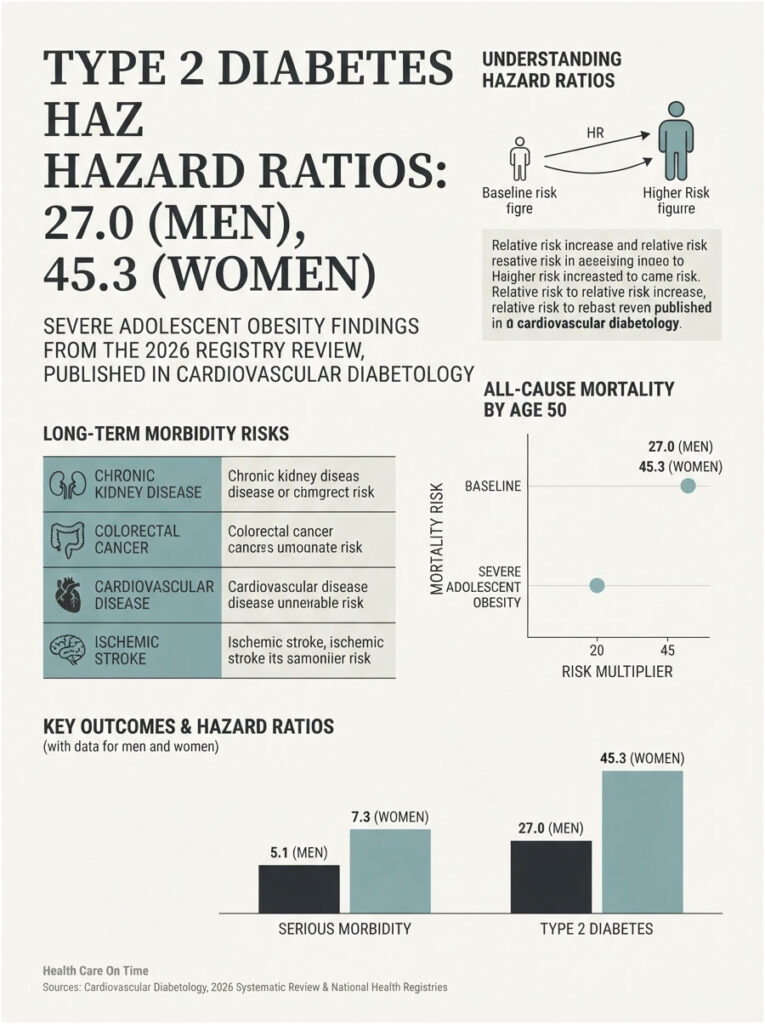
• A 2026 review of 38 national registry cohorts tied severe teenage obesity to type 2 diabetes before age 25 at hazard ratios of 27.0 in men and 45.3 in women.
• Complications do not wait for middle age. In the TODAY2 follow-up, 60.1% of people diagnosed with type 2 diabetes as teenagers had at least one microvascular complication by an average age of 26.
• Cumulative exposure to excess weight predicts cardiovascular risk better than a single BMI reading, and that effect is strongest in younger people.
• A 2026 JAMA Pediatrics analysis found that childhood excess weight does not appear to permanently program coronary heart disease risk if weight normalizes by young adulthood. Weight gained during puberty is the part that tends to carry forward.
• Basic bloodwork catches metabolic problems years before a teenager feels anything.
• The most common family mistake is treating adolescent weight as a discipline issue rather than a health condition with biological, genetic, and environmental drivers.
What Researchers Actually Found
The 2026 Registry Review
The clearest picture comes from a systematic review published in Cardiovascular Diabetology in June 2026, pooling 38 cohort studies built on national registry data. The findings are blunt.
Within four years of follow-up and before age 25, severe adolescent obesity was associated with a hazard ratio of 5.1 for serious morbidity in men and 7.3 in women. For type 2 diabetes specifically, hazard ratios reached 27.0 in men and 45.3 in women.
Before age 30, severe adolescent obesity was tied to chronic kidney disease, while adolescent obesity was linked to colorectal cancer and cardiovascular disease mortality. Before age 40, both overweight and obesity in adolescence were associated with ischemic stroke.
By age 50, the pattern extended to all-cause mortality for severe adolescent obesity, and to diabetes-related and cancer mortality for adolescent obesity. The authors describe the association as strong, immediate, and progressive with both severity and elapsed time.
What a Hazard Ratio Actually Means
Numbers like 45.3 sound apocalyptic, and context matters. A hazard ratio compares the rate of an event between two groups over time. A ratio of 27 means the rate ran 27 times higher in the exposed group, not that 27 out of every 100 teenagers will develop the condition.
Type 2 diabetes before age 25 is uncommon in the general population, so a large multiplier still describes a modest absolute number of people. A 27-fold increase in a rare outcome is not a statistical quirk, though. It signals that something in the underlying biology shifted early.
Our medical reviewers note that families reading these figures usually jump straight to worst-case thinking. The more useful reading is directional: the earlier and heavier the exposure, the earlier the clock starts running.
Why This Evidence Arrived Only Recently
Studying childhood risk factors for adult disease has always been difficult. Defining obesity in a body that is still growing requires age-specific statistics, and cardiovascular endpoints can take forty years of monitoring to detect.
Losing participants to follow-up in a mobile population compounds the problem. Countries with unified national health registries solved it by linking adolescent measurements to adult medical records automatically, which is why almost all of the strongest recent data comes from Northern Europe and Israel rather than the United States.
Table 1: Measured Risk From Adolescent Obesity, By Outcome
| Adult outcome | Teen weight status studied | Measured risk | Age window | Cohort and source |
| Type 2 diabetes | Severe obesity | HR 27.0 (men), HR 45.3 (women) | Before 25 | 38-cohort registry review, Cardiovascular Diabetology 2026 |
| Serious chronic morbidity, any | Severe obesity | HR 5.1 (men), HR 7.3 (women) | Before 25 | Cardiovascular Diabetology 2026 |
| Type 1 diabetes | Obesity | HR 2.0 | Before 25 | Cardiovascular Diabetology 2026 |
| Swollen legs and skin ulcers | Severe obesity at 18 | Over 4 times higher | Adulthood | Teen-LABS analysis |
| Walking limitation | Severe obesity at 18 | Over 3 times higher | Adulthood | Teen-LABS analysis |
| Abnormal kidney function | Severe obesity at 18 | Over 3 times higher | Adulthood | Teen-LABS analysis |
| Any microvascular complication | Youth-onset type 2 diabetes | 60.1% of participants | Mean age 26.4 | TODAY2, NEJM |
| Two or more complications | Youth-onset type 2 diabetes | 28.4% of participants | Mean age 26.4 | TODAY2, NEJM |
| Hypertension | Youth-onset type 2 diabetes | 67.5% cumulative at 15 years | By mid-twenties | TODAY2 follow-up |
| Diabetic kidney disease | Youth-onset type 2 diabetes | 54.8% cumulative at 15 years | By mid-twenties | TODAY2 follow-up |
Patients booking metabolic panels with us often ask which of these appears first. In practice, the earliest measurable changes tend to show in fasting insulin, HbA1c, and liver enzymes, long before any diagnosis is written down.
How Common Teen Obesity Is in the United States Right Now
The scale matters, because those risk multipliers apply to a very large group of American teenagers.
The National Picture
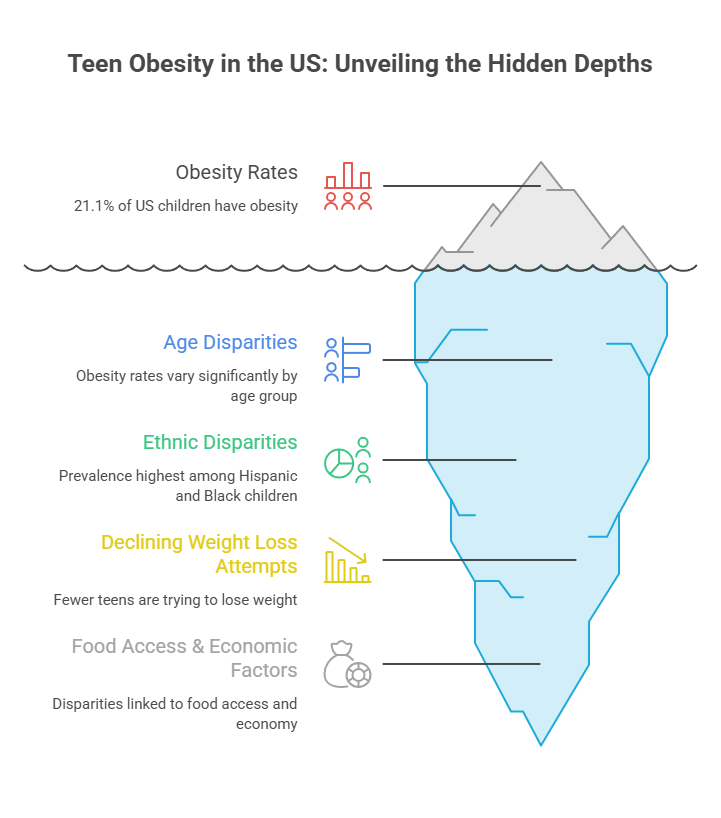
According to NHANES data covering August 2021 through August 2023, an estimated 21.1% of US children and adolescents ages 2 to 19 have obesity, including 7.0% with severe obesity. Another 15.1% are classified as overweight.
Breaking that down by age, the CDC reports obesity prevalence of 12.7% among children ages 2 to 5, 20.7% among those 6 to 11, and 22.2% among adolescents 12 to 19. Prevalence rises steadily with age, exactly the pattern the longitudinal research predicts.
In raw numbers, that works out to roughly 14.7 million American youths ages 2 to 19 living with obesity.
Where the Gaps Are Widest
Obesity does not fall evenly. CDC figures put prevalence highest among Hispanic children at 26.2% and non-Hispanic Black children at 24.8%, against 16.6% among non-Hispanic white children and 9.0% among non-Hispanic Asian children. Prevalence also climbs as family income falls.
Among girls, the highest rate is in non-Hispanic Black girls at 30.8%. Among boys, it is Hispanic boys at 29.3%. These gaps track closely with food access, neighborhood walkability, and household economic pressure rather than anything intrinsic to the groups themselves.
The Trend Nobody Is Discussing
A March 2026 analysis from Florida Atlantic University’s Charles E. Schmidt College of Medicine examined 85,588 US high school students in grades 9 through 12 using CDC Youth Risk Behavior Survey data from 2013 to 2023.
Obesity in that group rose from 13.7% to 15.9%, peaking at 16.3% in 2021. Black and Hispanic adolescents carried the highest rates, peaking at 21.2% and 20.2%. Asian teens had the lowest, though their prevalence nearly doubled from 5.6% to 11%.
At the same time, students reporting they were trying to lose weight fell from 47.7% to 44.5%, with the sharpest declines among 10th and 12th graders. More teenagers are meeting clinical criteria while fewer are attempting anything about it.
Table 2: US Teen Obesity by the Numbers
| Metric | Figure | Population and period | Source |
| Obesity prevalence, ages 2 to 19 | 21.1% | US youth, Aug 2021 to Aug 2023 | NCHS Health E-Stats (NHANES) |
| Severe obesity prevalence, ages 2 to 19 | 7.0% | US youth, Aug 2021 to Aug 2023 | NCHS Health E-Stats (NHANES) |
| Obesity prevalence, ages 12 to 19 | 22.2% | US adolescents, 2017 to Mar 2020 | CDC Childhood Obesity Facts |
| Obesity prevalence, ages 2 to 19 | 18.5% | US youth, 2015 to 2016 | NCHS (NHANES 2015 to 2016) |
| Youth ages 2 to 19 with obesity | About 14.7 million | United States | CDC Childhood Obesity Facts |
| High school obesity, 2013 vs 2023 | 13.7% rising to 15.9% | 85,588 students, grades 9 to 12 | FAU analysis of CDC YRBS, 2026 |
| Teens attempting weight loss, 2013 vs 2023 | 47.7% falling to 44.5% | US high school students | FAU analysis of CDC YRBS, 2026 |
| Highest prevalence by group | 30.8% | Non-Hispanic Black girls, ages 2 to 19 | CDC Childhood Obesity Facts |
The Conditions That Show Up First
Adult-onset obesity complications tend to arrive slowly. Adolescent-onset complications do not follow that schedule, and the difference is the core clinical concern.
Type 2 Diabetes and the Speed Problem
Type 2 diabetes diagnosed in adolescence behaves more aggressively than the adult version. Beta cell function declines faster, glycemic control slips sooner, and treatment options are narrower.
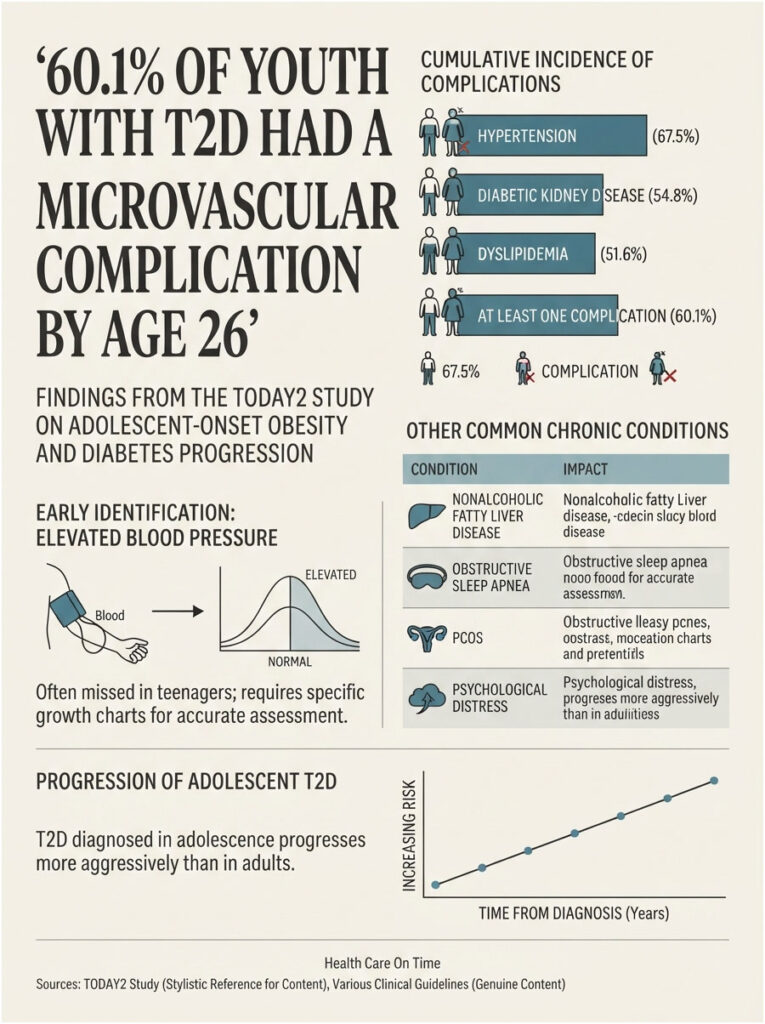
The TODAY2 study published in the New England Journal of Medicine followed participants diagnosed between ages 10 and 17. At least one microvascular complication developed in 60.1%, and 28.4% had two or more, at a mean age of 26.4 years and a mean diabetes duration of 13.3 years.
What TODAY2 Revealed About Timing
The 15-year cumulative incidence figures are stark: hypertension 67.5%, diabetic kidney disease 54.8%, dyslipidemia 51.6%, and neuropathy 32.4%, as summarized in a review of youth-onset type 2 diabetes.
Serious cardiovascular events were uncommon at 3.73 per 1,000 person-years, but they occurred. Seventeen participants had events including four heart attacks, six congestive heart failure episodes, three coronary artery disease events, and four strokes, with one death from myocardial infarction. Every one of these happened at an average age under 30.
For comparison, only about 25% of adults in the UK Prospective Diabetes Study developed moderately increased albuminuria after roughly ten years of diabetes. The youth cohort more than doubled that in a comparable window.
Why Treatment Is Harder in This Group
The original TODAY trial found that roughly half of participants lost glycemic control on metformin alone within a few years, a failure rate far faster than in adults. Pregnancy outcomes were also affected, with complications reported in 65% of pregnancies in the cohort.
Blood Pressure and the Heart
Elevated blood pressure is one of the earliest measurable changes and one of the easiest to miss, because teenagers rarely feel it. Pediatric hypertension is defined against age, sex, and height percentiles rather than a single adult cutoff, so it has to be plotted against a chart rather than eyeballed.
Research from Mass General Brigham published in PLOS One found that long-term exposure to excess weight predicted cardiovascular risk better than BMI at a single point in time. Among the study population, 12,048 participants (8.8%) experienced cardiovascular events, and the association ran strongest in the youngest age categories.
That reframes the question entirely. It is not “what does your teenager weigh,” it is “how many years will they have carried this by the time they turn 40.”
The Liver
Nonalcoholic fatty liver disease has quietly become one of the most common chronic liver conditions in American adolescents. It produces no symptoms in its early stages, which is precisely why it goes undetected for years.
A review of childhood and adolescent obesity lists fatty liver alongside type 2 diabetes, hypertension, obstructive sleep apnea, and dyslipidemia as conditions that once belonged to adult medicine and now appear routinely in pediatric clinics.
Across the liver panels processed through our diagnostic network, a mildly elevated ALT in a young person carrying extra weight is one of the more common incidental findings. For many families, it is the first hard signal they receive.
Sleep Apnea and Daytime Function
Obstructive sleep apnea in teenagers gets misread constantly as laziness, an attention problem, or ordinary adolescent moodiness. The physical signs are loud snoring, pauses in breathing, morning headaches, and daytime sleepiness that no amount of early bedtime fixes.
The metabolic consequences compound. Fragmented sleep worsens insulin resistance and disrupts the hormones governing appetite, which pushes weight up, which worsens the apnea further.
Breaking that loop often produces faster gains in energy, mood, and school performance than any dietary change. It is also one of the more treatable pieces of the whole picture, which makes it worth raising with a pediatrician early rather than late.
PCOS and Hormonal Effects in Girls
Polycystic ovary syndrome appears disproportionately in young women who had obesity as teenagers. Irregular or absent periods, persistent acne, and unwanted hair growth are the visible signs, with insulin resistance usually sitting underneath.
Because PCOS affects fertility, metabolic health, and long-term diabetes risk at the same time, identifying it during adolescence rather than in the late twenties changes the management timeline substantially.
Joints, Mobility, and Skin
The Teen-LABS analysis found adults who had severe obesity as teenagers were over four times more likely to report swollen legs and skin ulcers, and more than three times more likely to have walking limitations.
These are not headline conditions and they rarely make the news coverage. They do shape daily life in ways a diabetes statistic never captures, affecting work, exercise capacity, and independence through the thirties and forties.
Mental Health, Running in Both Directions
Depression, anxiety, and low self-esteem occur more frequently in adolescents with obesity, and the relationship runs both ways. Psychological distress affects sleep, eating patterns, and activity levels, and each of those feeds back into weight.
Weight-based teasing is a documented harm with measurable consequences. Reviews of pediatric obesity note that pressure around body size during adolescence can push some teenagers toward bulimia nervosa, binge-eating disorder, or night eating syndrome.
That is a concrete reason to be careful about how the subject gets raised at home, and it is the single point our medical reviewers flag most often when families ask how to start the conversation.
Why Adolescence Specifically Matters
Something about the teenage years separates them from earlier childhood, and the 2026 research has started to pin down what.
Puberty as the Critical Window
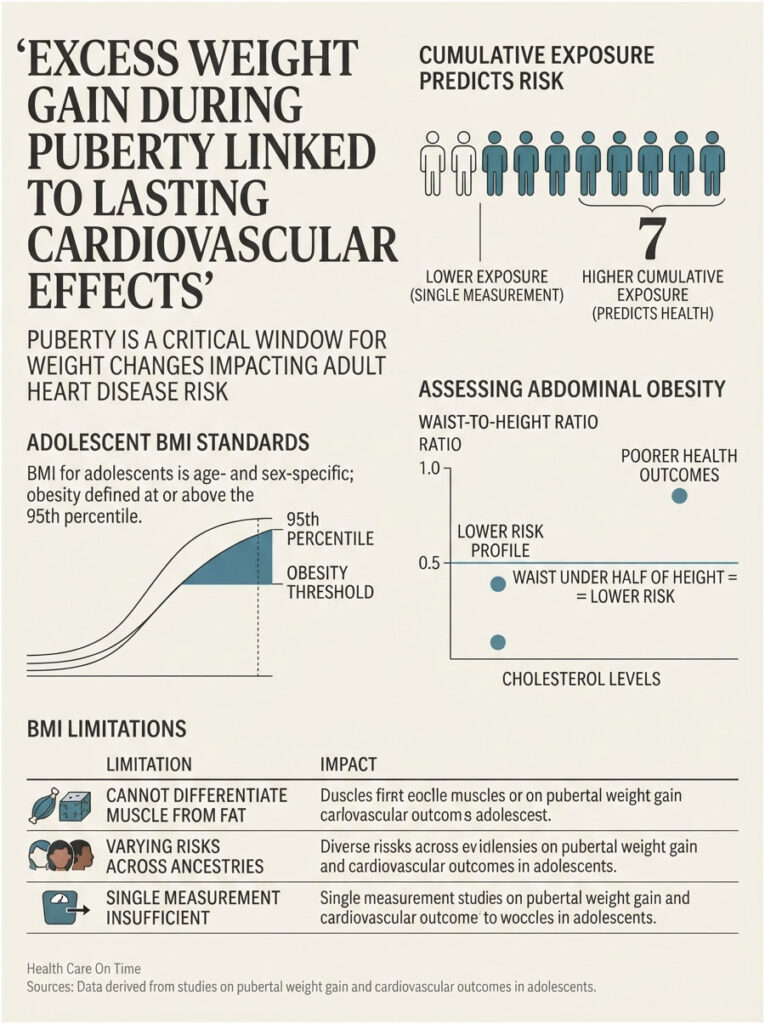
A February 2026 study in JAMA Pediatrics by Ohlsson and colleagues, summarized by the Obesity Medicine Association, examined how weight status changes between childhood and young adulthood affect adult coronary heart disease risk.
Excess adiposity in childhood was associated with later obesity, but it did not appear to irreversibly program coronary heart disease risk if weight normalized by young adulthood. Weight gained during puberty, a phase already marked by physiological insulin resistance, was the part that carried forward.
Practically, that separates the two phases in a useful way. Extra weight at age 8 that resolves by 20 reads differently in the data from extra weight gained between 12 and 18.
Cumulative Exposure Beats a Snapshot
The Mass General Brigham result fits the same logic. Years of exposure, not a single reading, is what tracks with cardiovascular outcomes.
This is why a teenager whose weight has sat stable in the overweight range for six years may carry different risk from one who gained rapidly in the past year, even at identical BMIs today. A single number on a chart cannot distinguish the two.
How BMI Works for Teens and Where It Falls Short
For adults, BMI uses fixed cutoffs. For anyone under 20, BMI is plotted against age-and-sex-specific growth charts, and obesity is defined as at or above the 95th percentile. Severe obesity is generally set at or above 120% of the 95th percentile.
BMI is a screening tool, not a diagnosis. It cannot separate muscle from fat, and body composition varies with ancestry and pubertal stage. Research suggests health risks may begin at lower BMI values in people of Asian descent, for instance.
Waist-to-Height Ratio as a Second Measure
Longitudinal work from the Adolescent Brain Cognitive Development Study, published in April 2026, used a waist-to-height ratio above 0.5 to define abdominal obesity in US adolescents, alongside total cholesterol at or above 145 mg/dL, HbA1c at or above 5.7%, and blood pressure at or above the 95th percentile.
The researchers found early cardiometabolic excess tends to persist into adulthood, and that elevated waist-to-height ratio and lipid levels in adolescence track with poorer cardiovascular and brain health trajectories.
Waist measured against height is simple, needs no growth chart, and captures central fat that BMI misses. A teenager whose waist measures less than half their height is generally in reasonable territory on that specific metric.
The Good News About Reversal
Nearly every article on this topic ends on a warning. The 2026 evidence supports a more useful ending than that.
What the JAMA Pediatrics Finding Actually Says
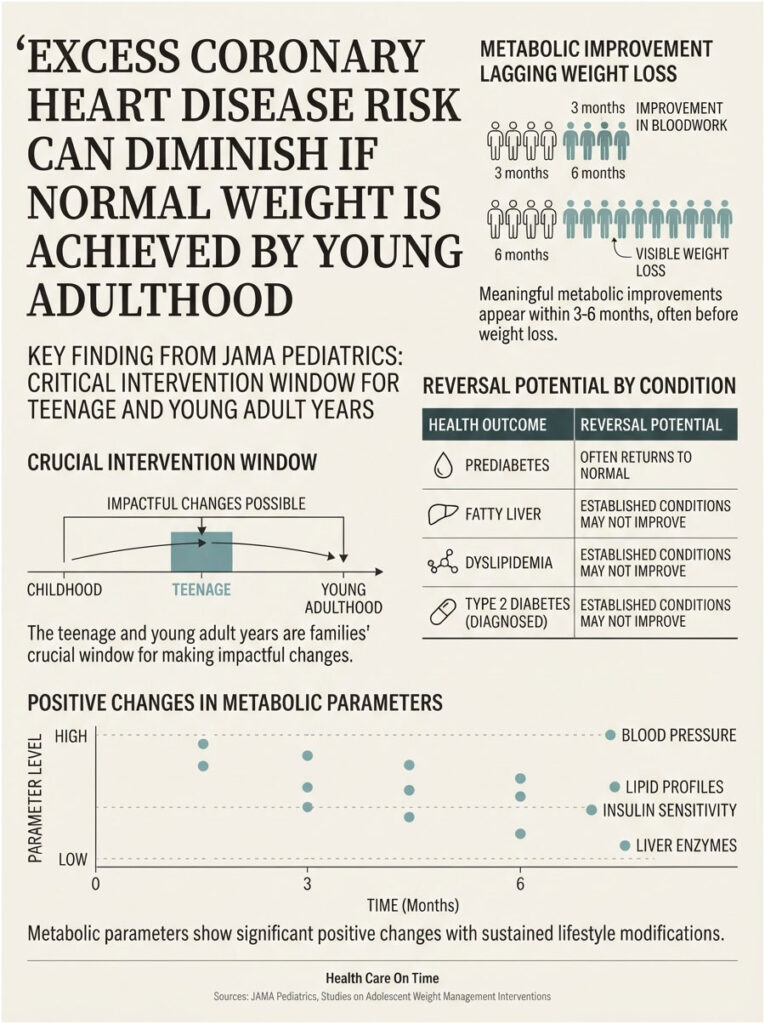
If a young person who carried extra weight in childhood reaches normal weight status by young adulthood, the excess coronary heart disease risk tied to that childhood weight does not appear to be locked in. The body is not keeping a permanent ledger of every year spent above the 95th percentile.
That is a different message from “the damage is done.” It places the intervention window squarely in the teenage and young adult years, which is exactly when most families still have the leverage to act.
What Changes and What Does Not
Reversal is not uniform across every outcome. Established damage, such as diagnosed type 2 diabetes with microvascular complications, does not simply undo itself, and the TODAY2 data makes that plain.
Blood pressure, liver enzymes, lipid profiles, and insulin sensitivity are all responsive, though. Fatty liver in particular can improve substantially with sustained change, and prediabetes in young people frequently returns to normal range.
Realistic Timelines
Meaningful metabolic improvement usually shows in bloodwork within three to six months of sustained change, often well before the scale moves noticeably. Families who repeat teen wellness panels with us are regularly surprised that HbA1c and ALT shift first while weight lags behind.
That lag is worth explaining to a teenager in advance. The scale is the metric they will check daily, and it is the one that responds slowest, which is a recipe for giving up right before the underlying picture starts improving.
What Screening Should Look Like
Screening turns a vague worry into information you can act on. Our medical reviewers consider this the highest-value step a family can take in the first month.
The Tests That Matter
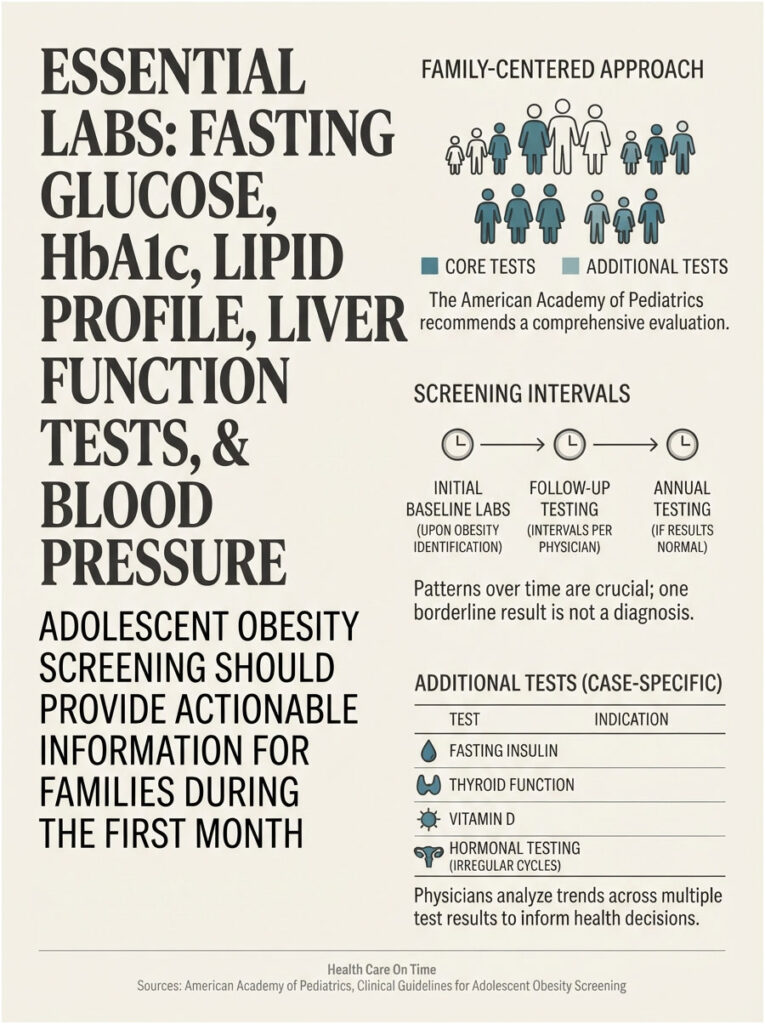
For an adolescent carrying extra weight, a sensible baseline usually includes fasting glucose and HbA1c, a fasting lipid profile, liver function tests covering ALT and AST, and blood pressure measured against pediatric percentiles.
Depending on symptoms and family history, a physician may add fasting insulin, thyroid function, vitamin D, and for girls with irregular cycles, hormonal testing to evaluate for PCOS.
When to Start and How Often
The American Academy of Pediatrics clinical practice guideline recommends evaluating children and adolescents with obesity for related conditions using a family-centered, non-stigmatizing approach.
In practice that means baseline labs when obesity is first identified, then repeat testing at intervals set by the physician based on results. Annual repetition is common when the first panel comes back clean.
Reading Results Without Panic
One borderline value is not a diagnosis. Adolescent labs move with growth spurts, recent illness, hydration, and how long ago the teenager last ate.
The pattern across repeated panels carries the information. A physician looking at three sets of results across eighteen months sees something no single printout can show, which is why the second test matters as much as the first.
Treatment Options and the Debate Around Them
Reasonable clinicians disagree here, and families deserve to see the disagreement rather than a tidy consensus that does not exist.
Lifestyle-First Treatment and Its Honest Limits
Intensive health behavior and lifestyle treatment is the recommended first-line approach, built on frequent contact with a multidisciplinary team over an extended period.
The honest limitation is that it produces modest average results, particularly in severe obesity, and access to properly staffed programs is thin across much of the United States. Most pediatric practices lack the capacity to deliver it as the guideline describes.
The 2023 AAP Guideline
The AAP guideline recommends offering pharmacotherapy to adolescents 12 and older with obesity as part of a broader care plan, and evaluating adolescents 13 and older with severe obesity for metabolic and bariatric surgery.
It also frames obesity as a chronic disease with genetic, physiological, socioeconomic, and environmental contributors rather than a failure of willpower, and addresses weight stigma directly.
GLP-1 Medications in Adolescents
GLP-1 receptor agonists have reshaped the treatment conversation. Writing in Pediatrics, clinicians describe them as a way to bring effective obesity treatment to young people who do not respond adequately to lifestyle management alone, while noting that lifestyle and dietary therapy remain the foundation.
The open questions are real. Long-term safety data in adolescents is still accumulating, cost and insurance coverage restrict access sharply, and prescribing involves gradual dose escalation with monitoring for gastrointestinal effects, pancreatitis, and gallbladder disease.
Real-world uptake also lags the guideline considerably. Nutrition counseling remains far more common than pharmacotherapy, driven by clinician hesitation, caregiver reluctance, and limited insurance coverage.
The Criticism Worth Hearing
The AAP guideline drew substantive critique from eating disorder specialists. The Academy for Eating Disorders raised three concerns: limited attention to eating disorder screening and referral, insufficient clinician training in discussing weight sensitively, and thin long-term data on the medications and surgical options recommended.
Defenders point out that rigorous obesity treatment trials have not been associated with increased eating disorder rates. Both positions are held by serious people, and any family talking to a pediatrician is entitled to raise either one without apology.
Mistakes That Make Things Worse
Treating It as a Discipline Problem
Framing a teenager’s weight as a character flaw is both inaccurate and counterproductive. Obesity has documented genetic, hormonal, socioeconomic, and environmental drivers, and adolescents in food-insecure households face constraints that no lecture will address.
Restrictive Dieting Without Supervision
Aggressive restriction in a body still growing carries genuine risk, including nutrient deficiency, interference with growth, and the development of disordered eating patterns. This is exactly why clinical guidance emphasizes supervised programs over self-directed plans found online.
Waiting for Symptoms
Fatty liver, insulin resistance, and early kidney changes are silent conditions. By the time a teenager feels unwell, the process has usually been running for years.
Screening Without a Support Plan
Ordering labs and handing a teenager an abnormal result with no conversation and no follow-up does harm. Families booking panels with us are always encouraged to have the pediatrician appointment scheduled before results arrive.
A Practical Action Plan
Table 3: Scenario and Recommended Action
| Scenario | What it may signal | Recommended action | Who to involve |
| BMI at or above the 95th percentile, no symptoms | Screening threshold reached | Book baseline metabolic and liver panel plus pediatric blood pressure check | Pediatrician |
| HbA1c between 5.7% and 6.4% | Prediabetes range | Repeat testing in 3 to 6 months alongside a supervised lifestyle plan | Pediatrician, registered dietitian |
| ALT elevated on liver panel | Possible fatty liver disease | Confirm with repeat testing, discuss imaging | Pediatrician, pediatric gastroenterology if persistent |
| Waist measurement above half of height | Abdominal obesity by the 0.5 ratio threshold | Add lipid panel and HbA1c even if BMI looks acceptable | Pediatrician |
| Loud snoring, daytime sleepiness, poor focus | Possible obstructive sleep apnea | Request sleep evaluation referral | Pediatrician, sleep specialist |
| Irregular periods, acne, excess hair growth | Possible PCOS | Request hormonal panel and clinical evaluation | Pediatrician, pediatric endocrinology or gynecology |
| Rapid weight gain across 12 months during puberty | Highest-risk pattern in the 2026 data | Early clinical evaluation rather than watchful waiting | Pediatrician |
| Shame, food restriction, or secretive eating | Disordered eating risk | Pause the weight conversation, seek assessment first | Pediatrician, mental health professional |
This Month
Get a baseline. Book the metabolic and liver panel, have blood pressure plotted against pediatric percentiles, and schedule the follow-up appointment before results come back so nobody is reading numbers alone at a kitchen table.
Measure waist against height while you are at it. It takes thirty seconds and adds information BMI cannot provide.
This Quarter
Target sleep and movement before food. Both are less emotionally loaded, both improve insulin sensitivity directly, and both are easier for a teenager to own without feeling monitored.
Sleep in particular tends to be the highest-yield first move, because fixing it improves appetite regulation, mood, and school performance at the same time.
This Year
Re-test and track direction rather than absolute values. Watch where HbA1c, ALT, and lipids are heading, and let a physician interpret the trend against growth.
If the numbers are improving while the scale is stubborn, that is a normal and encouraging pattern, not a failure.
Frequently Asked Questions
What percentage of obese teenagers become obese adults?
Estimates vary by study and measurement method, but longitudinal research consistently shows adolescent obesity rarely resolves on its own. Children with obesity are several times more likely to have obesity as adults than peers at healthy weight, and adolescence is the period where that tracking becomes strongest.
Which health problems are most strongly linked to teen obesity?
Type 2 diabetes carries the largest risk multipliers in registry data, followed by chronic kidney disease, hypertension, fatty liver disease, obstructive sleep apnea, and PCOS in girls. Cardiovascular disease and ischemic stroke appear at longer follow-up. Mobility limitations and skin complications are common but rarely discussed.
Can teen obesity be reversed before adulthood?
The 2026 JAMA Pediatrics analysis suggests childhood excess weight does not permanently lock in coronary heart disease risk when weight status normalizes by young adulthood. Weight gained during puberty is harder to reverse. Metabolic markers including HbA1c and liver enzymes respond well to sustained change.
At what age do obesity-related complications usually appear?
Earlier than most families expect. Registry data links severe adolescent obesity to type 2 diabetes before 25 and chronic kidney disease before 30. In TODAY2, 60.1% of participants diagnosed as teenagers had a microvascular complication by a mean age of 26.4 years.
What blood tests should an overweight teenager get?
A typical baseline covers HbA1c, fasting glucose, a fasting lipid profile, and liver function tests including ALT and AST. A physician may add fasting insulin, thyroid function, vitamin D, and hormonal testing for girls with irregular cycles. Blood pressure should be plotted against pediatric percentiles.
Is BMI accurate for teenagers?
BMI for anyone under 20 is plotted against age-and-sex-specific growth charts rather than fixed adult cutoffs. It works as a screening tool but cannot separate muscle from fat, and it varies with pubertal stage and ancestry. Waist-to-height ratio above 0.5 offers a useful second measure.
Does teen obesity shorten life expectancy?
The 2026 registry review associated severe adolescent obesity with all-cause mortality before age 50, and adolescent obesity with diabetes-related and cancer mortality. These describe population-level associations rather than individual predictions, and risk declines as weight and metabolic markers improve.
Are GLP-1 medications safe for teens?
The AAP recommends considering pharmacotherapy for adolescents 12 and older with obesity as part of a broader plan. Trials show meaningful weight and glycemic benefits. Long-term safety data in this age group remains limited, and prescribing involves gradual dose escalation with monitoring for gastrointestinal and gallbladder effects.
What is severe obesity in an adolescent?
Severe obesity is generally defined as a BMI at or above 120% of the 95th percentile for age and sex, though definitions vary between studies. It carries substantially higher risk than mild obesity for type 2 diabetes, hypertension, fatty liver disease, and dyslipidemia, frequently during adolescence itself.
Can a teenager reverse prediabetes?
Often, yes. HbA1c values between 5.7% and 6.4% frequently return to normal range with sustained changes in sleep, activity, and eating patterns. Improvement typically shows in bloodwork within three to six months, sometimes before any noticeable change in weight.
How do I talk to my teenager about weight without causing harm?
Lead with health markers rather than appearance, avoid comments about body size entirely, and frame testing as routine care. Weight-based teasing is a documented risk factor for disordered eating. If a teenager shows shame, restriction, or secretive eating, pause the weight conversation and seek professional assessment.
Does teen obesity affect fertility later in life?
It can, mainly through PCOS, which occurs more often in young women who had adolescent obesity. PCOS affects ovulation, insulin sensitivity, and long-term diabetes risk together. Identifying it during the teenage years generally widens the management options compared with a diagnosis in the late twenties.
Medical Disclaimer
This article is for informational purposes only and does not replace advice from a qualified healthcare professional. Adolescent weight, growth, and metabolic health are individual and require assessment by a pediatrician or specialist. Do not start, stop, or change any medication, diet, or treatment plan based on this content. If you are concerned about a teenager’s eating patterns or mental health, contact a licensed clinician.
References
- Adolescent obesity and risk of serious chronic morbidity and mortality in young adulthood, Cardiovascular Diabetology, 2026
- Childhood Obesity Facts, Centers for Disease Control and Prevention
- Prevalence of Overweight, Obesity, and Severe Obesity Among Children and Adolescents, NCHS Health E-Stats
- FAU Study Finds Concerning Rise in U.S. Teen Obesity Over a Decade
- Long-Term Complications in Youth-Onset Type 2 Diabetes, New England Journal of Medicine
- Youth-onset type 2 diabetes mellitus: an urgent challenge
- Change in Weight Status From Childhood to Young Adulthood and Risk of Adult Coronary Heart Disease, JAMA Pediatrics 2026
- Long-Term Obesity Associated with Risk of Cardiovascular Disease, Mass General Brigham
- Prevalence and Incidence of Abdominal Obesity and Cardiometabolic Risk in Early Adolescence
- Clinical Practice Guideline for the Evaluation and Treatment of Children and Adolescents With Obesity, American Academy of Pediatrics
- GLP-1 Receptor Agonists in Pediatric and Adolescent Obesity, Pediatrics
- More Support and Critique of AAP Guideline for Childhood Obesity
- Childhood and Adolescent Obesity: A Review
- Overweight and Obesity Statistics, NIDDK
- Shifts in US Pediatric Obesity Treatment After the AAP Guidelines, Pediatrics Open Science
- Teen obesity linked to serious health problems in adulthood, Medical News Today