The leanest guy in the gym can have them. So can a man carrying an extra 60 pounds, a 13-year-old boy who just started high school, and a woman two weeks into a pregnancy she does not know about yet.
Puffy nipples show up across every body type and every age bracket. That is exactly why chest workouts fail so many of the people who try them first.
Table of Contents
Ten seconds of pressing on the tissue behind your areola will tell you more than a month of incline presses. Here is what that tissue actually is, what changed to make it appear, and when it is signaling something worth acting on quickly.
Quick Answer
Puffy nipples occur when the nipple and areola push forward from the chest wall, driven by either firm glandular breast tissue (gynecomastia) or soft fat (pseudogynecomastia). Hormone shifts during puberty and aging, weight gain, common prescription medications, and anabolic steroids are the leading causes. Most cases are benign. See a doctor if the swelling is one-sided, hard, fixed, or comes with nipple discharge or skin changes.
At a Glance
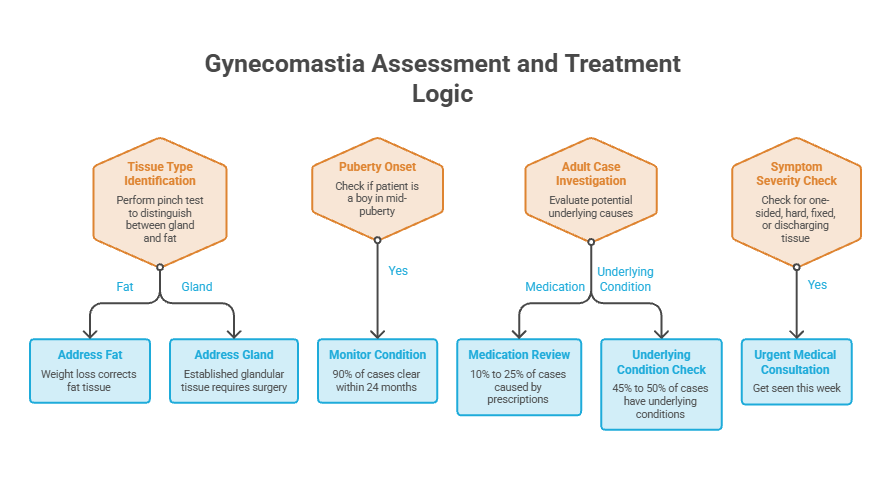
• Gland or fat is the fork in the road, and a pinch test separates them in under a minute
• Roughly 50% of boys develop breast tissue in mid-puberty, and over 90% of those cases clear within 24 months
• Medications account for about 10% to 25% of adult cases, and several offenders are extremely common prescriptions
• When adult gynecomastia is properly investigated, an underlying condition turns up in 45% to 50% of cases
• One-sided, hard, fixed, or discharging changes move the timeline from watch it to get seen this week
• Weight loss corrects fat, not gland; medication works mainly inside the first year; established glandular tissue responds only to surgery
What Puffy Nipples Actually Are
Puffy nipples is a description, not a diagnosis. It refers to a nipple-areola complex that sits raised above the natural curve of the chest, forming a small mound instead of lying flat.
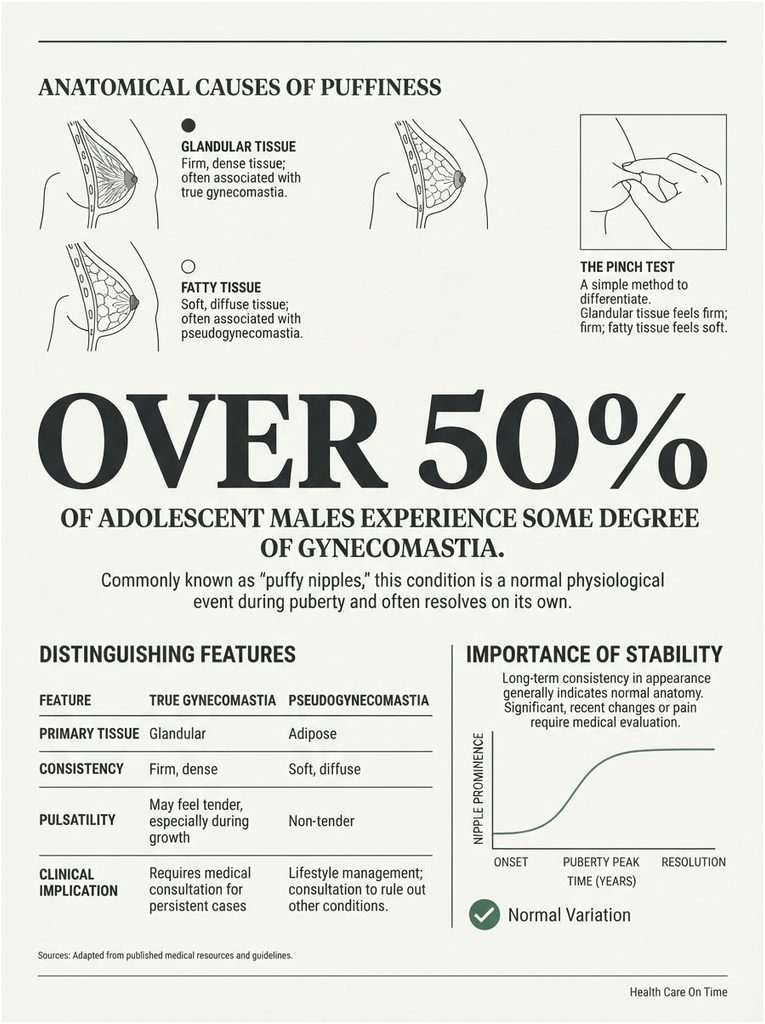
That mound can be built from two completely different materials. Telling them apart is the most useful thing you can do before booking an appointment or spending a dollar on anything.
The Nipple-Areola Complex, Layer by Layer
Every human body is born with breast tissue. The structures under the areola are identical across sexes, just present in very different quantities.
Directly beneath the areola sits hormone-sensitive glandular tissue, which in men is normally close to nonexistent. Around and above it sits subcutaneous fat, then skin. When the glandular layer enlarges, it pushes the nipple forward, and the areola stretches to accommodate the new volume.
Fat produces a visually similar result through a different mechanism. It spreads diffusely across the chest rather than concentrating into a disc centered on the nipple.
Gland Versus Fat, the Difference That Decides Everything
Glandular tissue is firm and rubbery, roughly the density of the pad of your thumb. It concentrates into a coin-shaped or disc-shaped mass directly behind the nipple, and it frequently feels tender or slightly sore under pressure.
Fat is soft and compressible. It has no defined edge, it does not hurt, and it blends into the surrounding chest without a boundary you can trace with your fingers.
This one distinction determines everything downstream. Fat responds to a sustained calorie deficit. Glandular tissue does not, no matter how lean you get.
The 30-Second Pinch Test
Stand in front of a mirror with your arms relaxed at your sides. Using your thumb and index finger, pinch the tissue at the outer edge of the areola and slowly walk your fingers inward toward the nipple.
If you feel a distinct firm ridge or disc that resists compression and has a traceable boundary, that is glandular tissue. If everything stays uniformly soft and you cannot locate an edge, you are feeling fat.
Do both sides. Note whether one differs from the other, whether either is tender, and roughly how wide the firm area measures. Patients booking hormone panels through HealthCareOnTime often arrive with exactly this information already gathered, and it shortens the clinical conversation considerably.
What a Normal Anatomical Variant Feels Like
Some people simply have a naturally raised areola with no excess gland and no excess fat. The tissue stays soft, both sides match, nothing hurts, and the appearance has held steady since adolescence.
That is anatomy, not pathology. The distinguishing feature is stability over time. Something that has looked identical for fifteen years is a fundamentally different situation from something that appeared over four months.
| Feature | True Gynecomastia | Pseudogynecomastia (Fat) | Normal Areolar Variant | Friction or Irritation | Suspicious Finding |
| What you feel on pinch | Firm rubbery disc, 2 to 5 cm, clear edge | Soft, diffuse, no defined border | Soft, symmetrical, no mass | Surface tenderness, no deep mass | Hard, irregular, fixed to skin or chest wall |
| Distribution | Both sides in most cases, often asymmetric | Both sides, spread across chest | Both sides, matched | Usually one side, both in runners | Almost always one side only |
| Tenderness | Common in the first 6 to 12 months | Absent | Absent | Present, burning or raw | Variable, may be painless |
| Responds to weight loss | No | Yes | Not applicable | Not applicable | No |
| Typical age window | 12 to 17 and 50 to 80 | Any age with BMI over 27 | Present since adolescence | Any age, activity-linked | Peak age 60 to 70 in men |
| Next step | Hormone panel, review medications | Weight management, recheck at 6 months | Reassurance, no workup needed | Barrier protection, topical care | Clinical exam within 1 to 2 weeks |
Why It Happens: The Hormone Math Behind the Puffiness
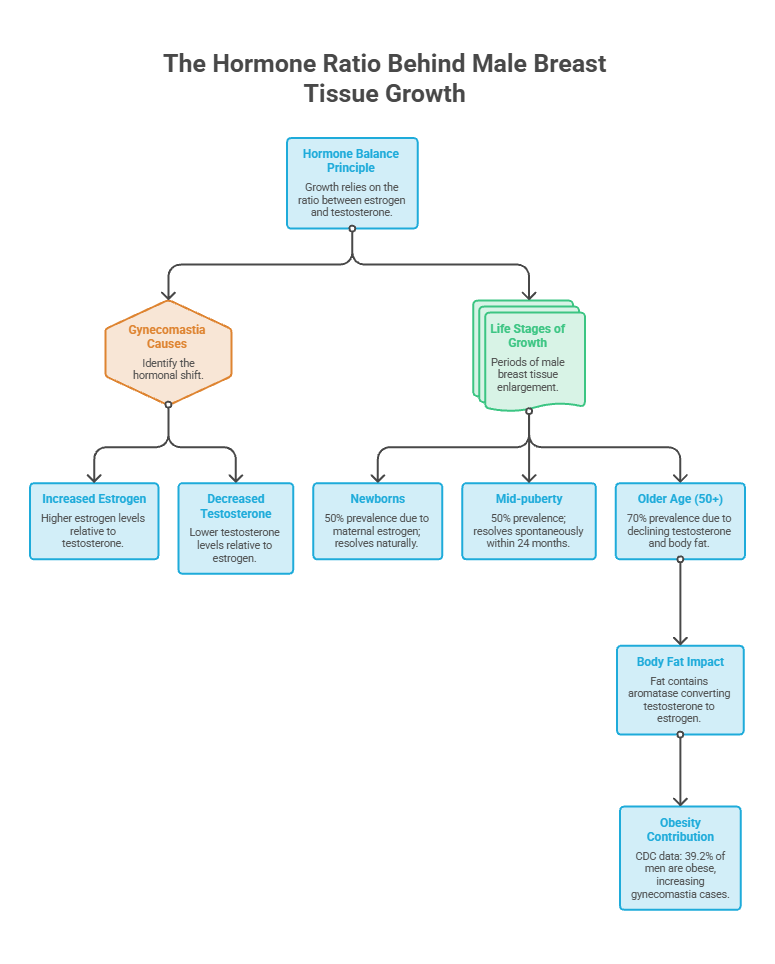
Breast tissue growth is not controlled by estrogen alone or by testosterone alone. It is controlled by the balance between the two at the level of the breast itself.
Estrogen and Testosterone Are Not Opposites, They Are a Ratio
Estrogen tells breast glandular tissue to proliferate. Testosterone suppresses that signal. Men produce both hormones, just in dramatically different quantities.
Gynecomastia occurs in response to increased estrogen production or activity, or because of decreased production or activity of testosterone. A man can hold perfectly normal testosterone levels and still grow breast tissue if his estrogen has climbed. The ratio is what the tissue reads.
That is why the condition surfaces in situations that look unrelated on the surface. Anything raising estrogen, lowering testosterone, or blocking testosterone from binding to its receptor produces the same downstream result.
The Three Life Stages Where This Is Expected
Male breast tissue enlargement follows a trimodal pattern. It clusters in newborns, again in mid-puberty, and again in older age, with a different mechanism driving each window.
Newborns
Roughly half of newborn boys have palpable breast tissue at birth, caused by maternal estrogen crossing the placenta during pregnancy. It resolves within a few weeks as those hormones clear the infant system.
No treatment, no workup, no concern unless it persists past several months of age.
Puberty
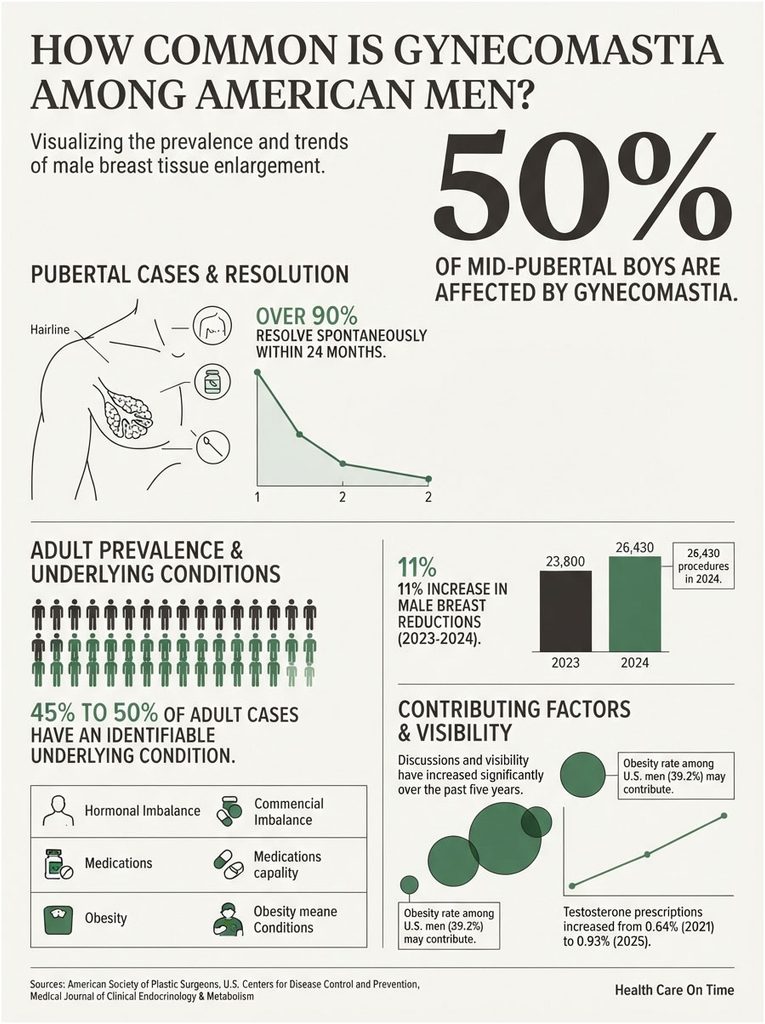
This is the largest group by far. Per the EAA and ASA clinical practice guidelines, gynecomastia of puberty affects approximately 50% of mid-pubertal boys, and in more than 90% of cases it resolves spontaneously within 24 months.
Testosterone and estrogen both surge during puberty, but not on the same schedule. Estrogen tends to rise first, opening a temporary window where the ratio favors breast tissue growth before testosterone climbs and shuts the signal down.
A large population study out of Israel examined 531,686 boys aged 12 to 15 and found a coded diagnosis rate of 1.08%, with 70% of diagnosed cases falling at ages 13 and 14. The gap between that 1% figure and the 50% examination figure is meaningful: most pubertal cases are mild enough that nobody ever brings them to a physician.
Men Over 50
Testosterone declines gradually with age while body fat tends to increase. Fat tissue converts testosterone into estrogen, so the ratio drifts in two directions at once and breast tissue responds accordingly.
Reported prevalence in men aged 50 to 69 runs as high as 70%, although a large share of that figure represents fat rather than true glandular growth.
Body Fat, Aromatase, and Why Chest Fat Feeds Itself
Fat cells contain an enzyme called aromatase, which converts testosterone into estradiol. More fat means more aromatase, which means more estrogen, which stimulates more glandular tissue.
That is a feedback loop, not a straight line. It also explains why pseudogynecomastia and true gynecomastia so often coexist in the same chest, and why a man can lose 30 pounds, see genuine improvement, and still find a firm disc left behind.
CDC data from August 2021 through August 2023 puts adult obesity prevalence at 40.3%, with 39.2% among men. That population-level number is the quiet engine behind a substantial share of American cases.
How Common Is This, Really? The US Numbers
Puffy nipples feel isolating. Statistically, they are close to a universal male experience at some point across a lifespan.
Prevalence Across the Lifespan
Gynecomastia carries a reported prevalence of 32% to 65%, depending on the age of the population studied and the criteria used to define it. That range is wide because researchers disagree on how much tissue counts as a case.
The clinically important number sits elsewhere. Adult gynecomastia is more prevalent among older men, and proper investigation reveals an underlying pathology in 45% to 50% of cases. Roughly half of adult cases that get worked up have a findable, nameable cause.
| Metric | Figure | Population and Year | Source |
| Overall gynecomastia prevalence | 32% to 65% | Males, varies by age and criteria | EAA/ASA Clinical Practice Guidelines, Andrology 2019 |
| Mid-pubertal boys affected | About 50% | Boys in mid-puberty | EAA/ASA Guidelines, 2019 |
| Spontaneous resolution | Over 90% within 24 months | Pubertal cases | EAA/ASA Guidelines, 2019 |
| Adult cases with an underlying condition | 45% to 50% | Adult men investigated | EAA/ASA Guidelines, 2019 |
| Coded diagnosis rate, adolescents | 1.08% | 531,686 boys aged 12 to 15 | Berger et al., Frontiers in Pediatrics, 2024 |
| US male breast reductions performed | 26,430 | US men, 2024 | ASPS Procedural Statistics via Statista |
| Growth in male gynecomastia surgery | Plus 11% | US men, 2023 to 2024 | American Society of Plastic Surgeons |
| US adult male obesity | 39.2% | US men aged 20+, Aug 2021 to Aug 2023 | CDC NCHS Data Brief No. 508 |
| Projected male invasive breast cancer | 2,670 cases, 530 deaths | US men, 2026 | American Cancer Society |
What American Men Are Doing About It
Surgical demand has climbed sharply. In 2024, US plastic surgery practices performed 26,430 male breast reductions, making it the most common cosmetic surgery among male patients that year.
Gynecomastia surgery also posted the sharpest growth of any procedure among male patients, up 11% in 2024 over 2023. Our medical reviewers note that a meaningful share of that growth comes from men who spent years on diet and training before learning their tissue was never going to respond to either one.
Why This Question Is Spiking Right Now
Three separate trends are pushing more American men toward this exact search. Understanding them helps explain why the same symptom is showing up in populations that rarely reported it a decade ago.
Testosterone prescribing has rebounded hard. Epic Cosmos data covering 109 million men shows the share of male patients holding an active testosterone prescription fell to 0.64% in 2021, then rose to 0.93% in 2025. Exogenous testosterone aromatizes into estradiol, so more prescriptions mathematically means more men encountering the side effect.
Rapid weight loss is the second driver. Men dropping significant weight on GLP-1 medications frequently discover that what they assumed was chest fat was partly glandular tissue all along, revealed rather than created by the loss.
The third is simply visibility. Across the men we serve, questions about chest tissue have become far less taboo than they were even five years ago, which means more people are asking instead of quietly avoiding pool days.
Medications and Substances That Trigger It
This is the most under-covered cause on the consumer internet and the most immediately actionable. Drugs are estimated to cause about 10% to 25% of all cases of gynecomastia.
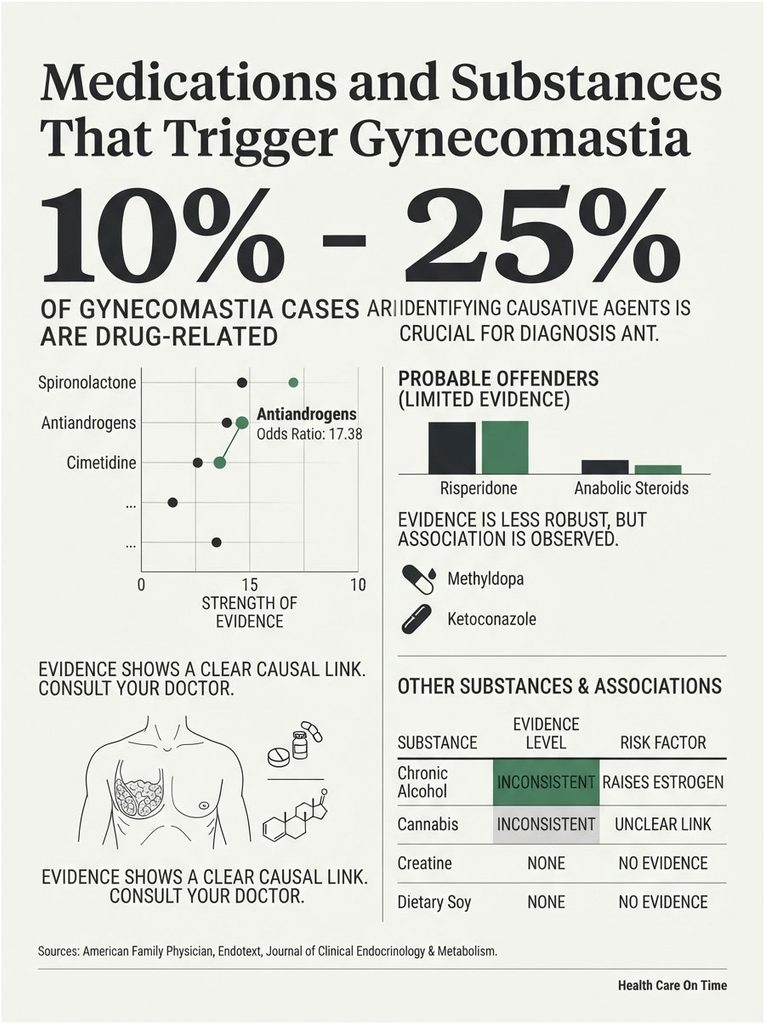
Not all drug associations carry equal weight. A landmark evidence review from Cedars-Sinai sorted them into tiers by the quality of evidence behind each claim, and that distinction matters enormously when deciding whether to raise it with your prescriber.
Definite Offenders
The medications definitely associated with gynecomastia are spironolactone, cimetidine, ketoconazole, human growth hormone, estrogens, hCG, anti-androgens, GnRH analogs, and 5-alpha-reductase inhibitors.
Randomized trial data supports those tiers with hard numbers. A 2021 systematic review of 32 randomized controlled trials found antiandrogens carried an odds ratio of 17.38 for gynecomastia, spironolactone 8.39 in mixed-gender populations, and 5-alpha-reductase inhibitors 1.77 compared with controls.
| Drug or Class | Common US Brand Examples | Evidence Tier | What Usually Happens After Stopping |
| Spironolactone | Aldactone, CaroSpir | Definite (OR 8.39) | Often regresses if caught within 12 months |
| Antiandrogens | Casodex (bicalutamide), Eulexin (flutamide) | Definite (OR 17.38) | Frequently persists; often managed preventively |
| 5-alpha-reductase inhibitors | Propecia, Proscar (finasteride), Avodart (dutasteride) | Definite (OR 1.77) | Usually regresses over several months |
| Cimetidine | Tagamet | Definite, dose-dependent | Typically regresses after discontinuation |
| Ketoconazole (oral) | Nizoral | Definite | Typically regresses |
| Anabolic androgenic steroids | Non-prescription, gray market | Probable | Glandular tissue often permanent |
| Antipsychotics | Risperdal (risperidone) | Probable, prolactin-mediated | Variable, depends on switching options |
| Calcium channel blockers | Norvasc, Calan, Procardia | Probable | Usually regresses after a medication change |
| Proton pump inhibitors | Prilosec (omeprazole) | Probable | Usually regresses |
| HIV antiretrovirals | Sustiva (efavirenz) | Probable | Variable |
Probable Offenders
Medications probably associated with gynecomastia include risperidone, verapamil, nifedipine, omeprazole, alkylating chemotherapy agents, efavirenz, anabolic steroids, alcohol, and opioids.
Probable means the association is real but the evidence base rests more on case series than on controlled trials. It still deserves a conversation with the prescriber rather than a silent assumption.
Never stop a prescribed medication on your own based on an article. Spironolactone treats heart failure and resistant hypertension, and abrupt discontinuation carries risks that dwarf any cosmetic concern.
Alcohol, Cannabis, and Anabolic Steroids
Chronic heavy alcohol use raises estrogen through liver effects and suppresses testosterone directly, hitting the ratio from both directions at once. Cannabis gets cited constantly as a cause, though the human evidence remains weak and inconsistent.
Anabolic steroids are a different matter entirely. Exogenous testosterone converts to estradiol through aromatase, and the higher the dose, the more estrogen the body generates. About 3% to 4% of men in the United States report lifetime anabolic steroid use.
Glandular tissue that develops during a steroid cycle tends to stay. Our clinical content team hears this from readers constantly, usually months too late for medication to help.
Possible and Overblown
Plenty of substances get blamed online with almost nothing behind the accusation. Creatine, whey protein, and normal dietary soy intake all fall here.
None has controlled trial evidence supporting a causal link to male breast tissue growth. The soy claim in particular persists on older health sites despite population data pointing the other way.
Medical Conditions Behind Persistent Puffiness
When breast tissue appears in an adult man with no medication trigger and no recent weight change, the workup shifts toward underlying disease.
Low Testosterone and Hypogonadism
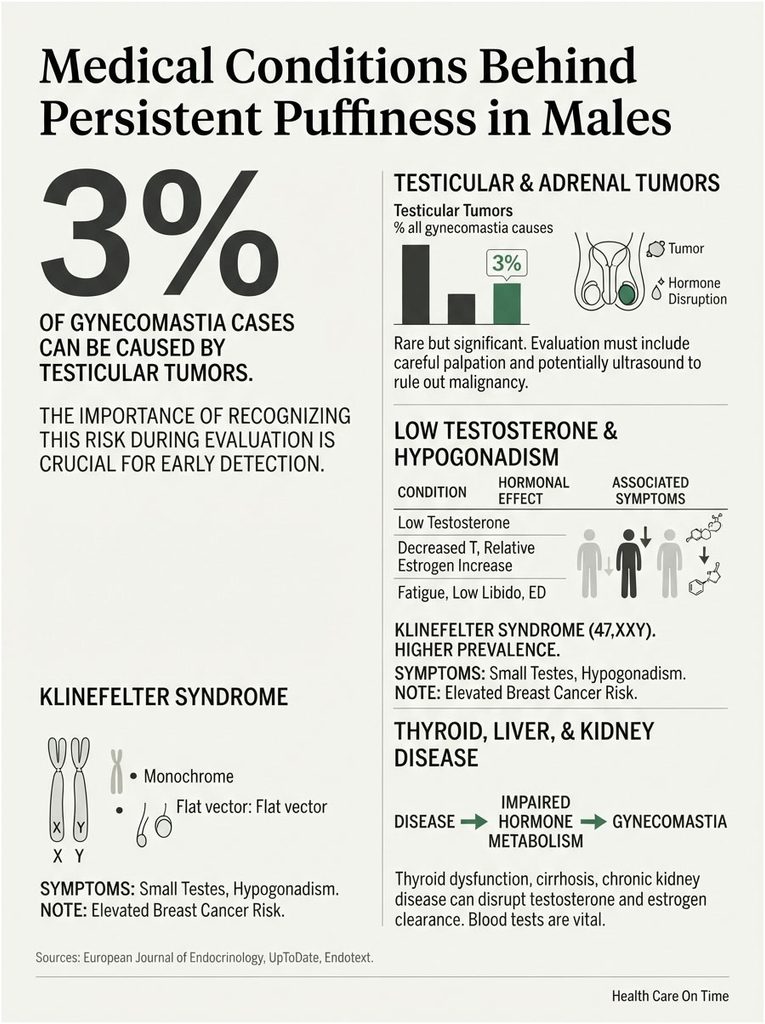
Primary hypogonadism (the testes are not producing) and secondary hypogonadism (the pituitary signal is absent) both reduce testosterone while leaving estrogen relatively untouched. The ratio shifts and breast tissue follows.
Symptoms that travel alongside include low libido, persistent fatigue, reduced morning erections, thinning body hair, and declining muscle mass. Patients commonly ask us whether puffy nipples alone prove low testosterone, and the honest answer is no. It is one signal among several, and only a blood test settles it.
Klinefelter Syndrome
Klinefelter syndrome (47,XXY) affects roughly 1 in 500 to 1 in 1,000 males and frequently goes undiagnosed well into adulthood. Persistent gynecomastia, small firm testes, taller than average stature, and infertility form the recognizable cluster.
It matters far beyond appearance. Klinefelter carries a substantially elevated male breast cancer risk relative to the general male population, which changes how the condition is monitored over a lifetime.
Thyroid, Liver, and Kidney Disease
Hyperthyroidism raises sex hormone-binding globulin, which reduces free testosterone while leaving estrogen more biologically available. Chronic liver disease impairs estrogen clearance and disrupts hormone metabolism broadly. Chronic kidney disease interferes with the hypothalamic-pituitary-gonadal axis.
All three are detected on standard blood work, which is why a liver function panel, kidney markers, and thyroid testing sit at the front of the diagnostic sequence rather than the back.
Testicular and Adrenal Tumors
This category is rare, and it is also the reason a physician examines the testes during a gynecomastia visit instead of only looking at the chest.
The 3% Finding Every Man Should Know About
Two figures from the American Academy of Family Physicians frame the risk correctly. Approximately 10 percent of persons with testicular tumors present with gynecomastia alone, and in a study of 175 men referred to a breast surgeon for evaluation of gynecomastia, a testicular tumor was diagnosed in 3 percent.
Three percent is a small number. It is also 3% of a highly treatable cancer that strikes young men, which is why the exam is not optional and why guidelines increasingly call for testicular ultrasound when palpation is unclear.
Puffy Nipples in Women and Teen Girls
Nearly every article on this topic treats it as a male-only issue. It is not, and the causes on the female side are almost entirely different.
Cycle-Linked Swelling
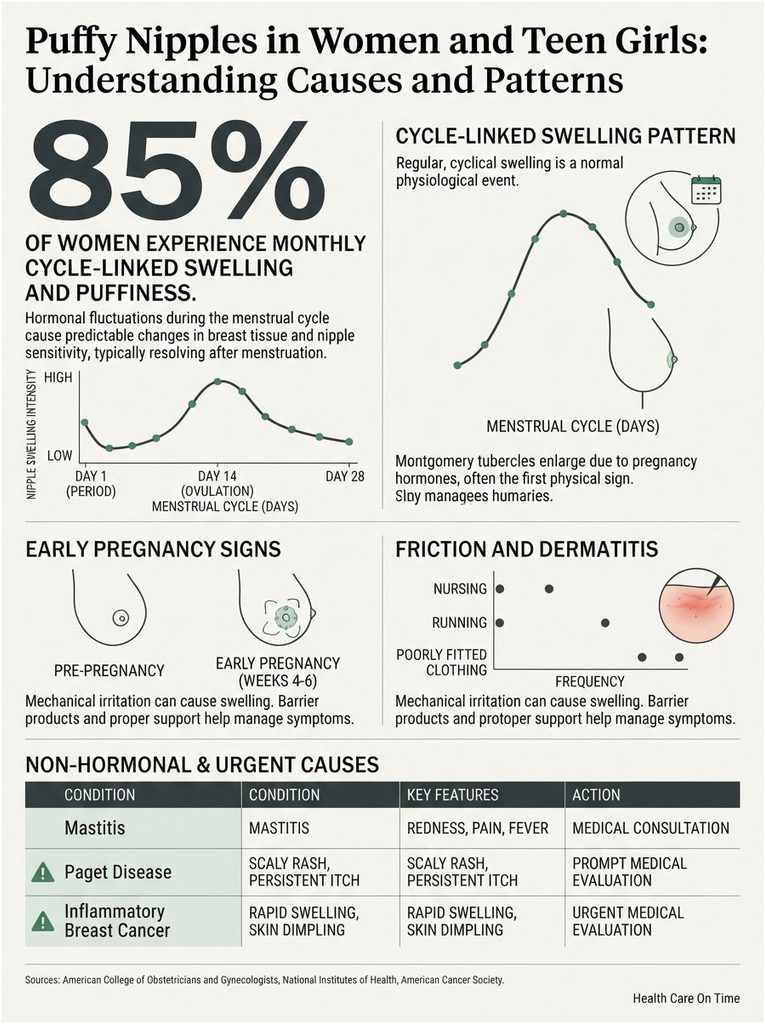
Estrogen and progesterone shifts across the menstrual cycle produce predictable breast and nipple changes. Swelling and tenderness typically appear in the week before menstruation and settle within a day or two of bleeding starting.
The signature is the pattern rather than the sensation. Symptoms that arrive on a monthly rhythm and affect both sides roughly equally point strongly toward normal hormonal cycling.
Tracking two full cycles is more diagnostically useful than a single observation. If the swelling stops matching the calendar, that change is the finding worth reporting.
Early Pregnancy and Montgomery Tubercles
Small raised bumps on the areola, called Montgomery tubercles, are oil glands that enlarge under pregnancy hormones. A change in the size and number of Montgomery glands visible on the nipple and areola is one of the earliest signs of pregnancy, sometimes appearing before morning sickness or other symptoms.
Studies have found that between 30% and 50% of pregnant women notice these glands becoming prominent. They should never be squeezed or popped, since doing so risks introducing infection into the gland.
Areolar darkening and enlargement often accompany the change. These shifts can precede a missed period, which makes them a genuinely early signal for anyone tracking conception.
Breastfeeding, Friction, and Dermatitis
Friction from nursing, running, or poorly fitted clothing produces real swelling and soreness. Long-distance runners of any sex encounter this routinely, and it resolves once the source of rubbing is removed.
Barrier products, properly fitted athletic wear, and lanolin or petroleum-based ointments handle most friction cases. Nursing parents dealing with cracked or swollen nipples should raise it with a lactation consultant rather than pushing through.
Contact dermatitis from detergents, fabric softeners, fragrances, or topical products causes puffiness paired with redness and itching. Nipple piercings can inflame or become infected, producing localized swelling that needs medical attention if warmth, pus, or fever develops.
When Female Nipple Swelling Is Not Hormonal
Mastitis produces a red, hot, painful, usually one-sided breast, most commonly during breastfeeding but occasionally outside it entirely. Mastitis in a woman who is neither pregnant nor breastfeeding warrants prompt evaluation rather than a wait-and-see approach.
Two rare cancers mimic benign conditions in this region. Paget disease of the breast produces eczema-like scaling, redness, and itching of the nipple and areola, characteristically on one side only.
Inflammatory breast cancer causes rapid swelling, redness, warmth, and an orange-peel skin texture that can look almost identical to an infection. Any nipple or areolar skin change that fails to resolve after two weeks of appropriate treatment deserves imaging rather than another round of cream.
Red Flags: What Should Send You In This Week
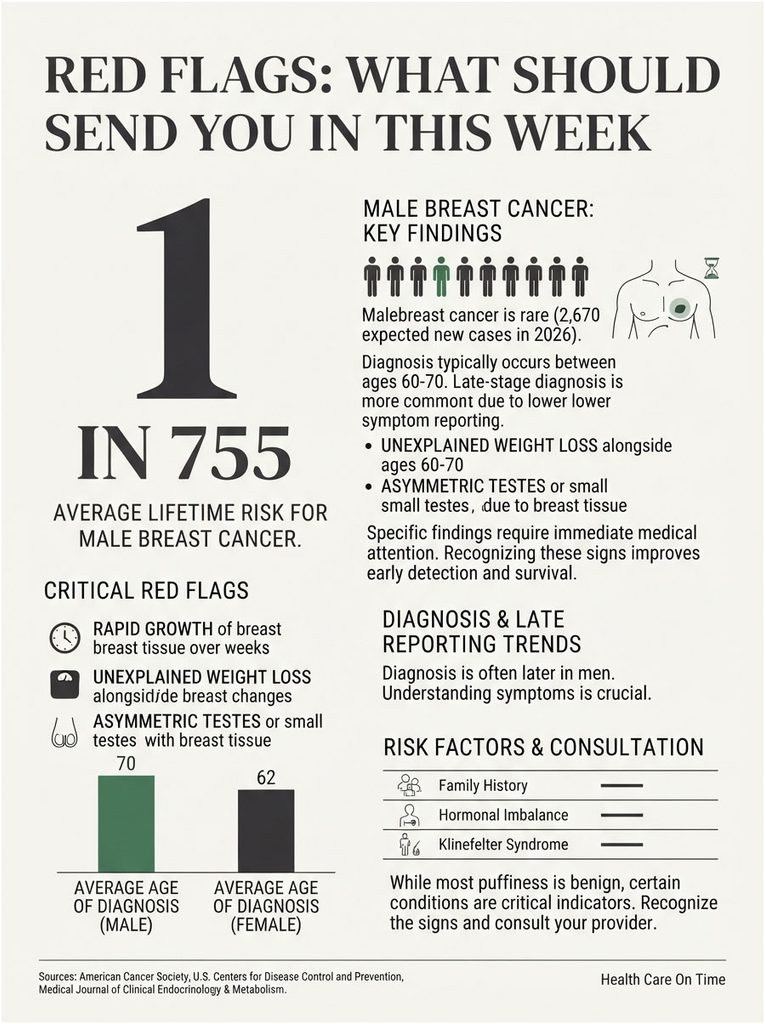
Most puffy nipples are benign. A short list of findings changes that calculation entirely, and none of them should be monitored for months.
The Six Signs That Change the Timeline
- One side only, with a hard or irregular lump. Physiologic causes are usually bilateral even when uneven. A solitary firm mass is a different situation.
- A lump that feels fixed. Tissue that will not glide under the skin or feels tethered to the chest wall needs imaging.
- Nipple discharge, particularly if bloody, or clear and emerging spontaneously from a single duct.
- Skin changes: dimpling, puckering, scaling, persistent redness, or an orange-peel texture.
- Nipple retraction, where a previously outward-pointing nipple turns inward.
- A swollen lymph node in the armpit on the same side.
Rapid growth over a matter of weeks, growth alongside unexplained weight loss, and breast tissue appearing in a man with small or asymmetric testes all belong on this list as well.
Male Breast Cancer in Perspective
The honest framing matters here. Male breast cancer is rare and puffy nipples are common, so the overwhelming majority of men reading this do not have cancer.
The American Cancer Society projects about 2,670 new invasive breast cancer diagnoses among US men and about 530 deaths in 2026. The average lifetime risk for a man is roughly 1 in 755, and the average age at diagnosis falls between 60 and 70 years.
The reason to memorize the red flags anyway comes down to timing. Survival rates for men are about the same as for women at the same stage at diagnosis, but men are often diagnosed at a later stage, possibly because they are less likely to report signs and symptoms. That gap is behavioral rather than biological, and it closes the moment men get checked.
How Doctors Actually Diagnose It
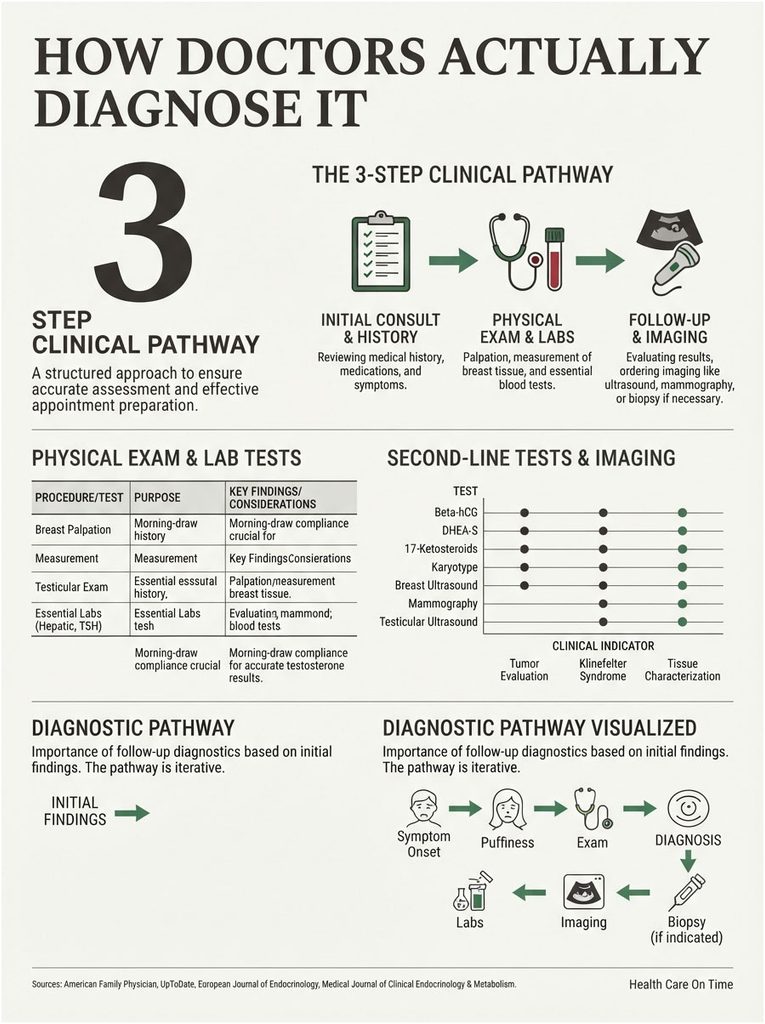
There is a defined clinical pathway, and knowing it means walking into the appointment prepared instead of guessing.
The Physical Exam
The clinician palpates the breast tissue to separate glandular from fatty, measures the diameter of any subareolar disc, and records whether the finding is one-sided or bilateral. Axillary lymph nodes get examined on both sides.
A testicular exam is a standard part of proper evaluation, not an optional extra. Guidelines recommend that genital examination be supported by testicular ultrasound, since detecting a testicular tumor by palpation alone has low sensitivity.
The Lab Panel, Test by Test
Laboratory studies to investigate the underlying cause should include hepatic transaminase, serum creatinine, and thyroid-stimulating hormone levels for all patients. Those three cover liver, kidney, and thyroid contributions in a single draw.
First-Line Tests
- Total and free testosterone, drawn in the morning when levels peak
- Estradiol (E2) to measure the other half of the ratio
- LH and FSH to separate primary from secondary hypogonadism
- TSH with free T4 if thyroid disease is on the table
- Liver enzymes (ALT, AST) and serum creatinine
- Prolactin, though hyperprolactinemia is an uncommon finding in gynecomastia
Lab partners across our diagnostic network report that morning-draw compliance is the single biggest determinant of whether a testosterone result is interpretable, since afternoon samples routinely read artificially low and trigger unnecessary repeat testing.
Second-Line Tests When Something Looks Off
Serum beta-hCG, DHEA sulfate, or urinary 17-ketosteroid levels are obtained to rule out testicular, adrenal, or other tumors when clinically suspected. Sex hormone-binding globulin and alpha-fetoprotein complete the extended panel.
Karyotype testing enters the picture when Klinefelter syndrome is being considered, typically in a younger man with persistent tissue, small testes, and fertility concerns.
When Imaging Gets Ordered
Breast ultrasound distinguishes glandular tissue from fat when the physical exam is equivocal. Mammography is ordered whenever any feature suggestive of malignancy appears, and it performs well in male breast tissue.
Core needle biopsy follows if imaging raises concern. Testicular ultrasound is ordered when the exam is abnormal or when hormone results point toward a gonadal source.
What Actually Helps, and What Does Not
The correct answer depends entirely on which tissue you are dealing with and how long it has been present.
If It Is Fat: Weight Loss and Training
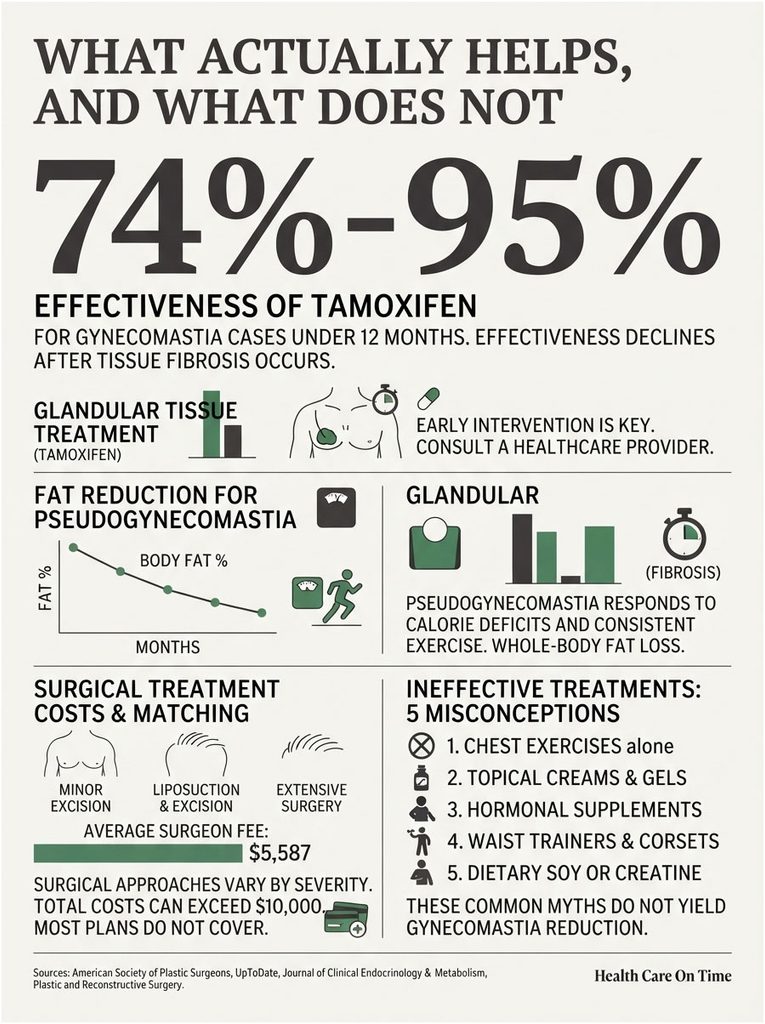
Pseudogynecomastia responds to a sustained calorie deficit. Chest-specific exercises build the pectoralis underneath, which improves contour, but they cannot selectively burn chest fat because targeted fat loss is not physiologically possible.
Whole-body fat loss through a moderate deficit, resistance training, and regular cardiovascular work is the mechanism that actually moves the needle. Expect months rather than weeks, and expect the chest to be one of the last areas to change for many men.
If It Is Gland: The 12-Month Window
Glandular tissue has a treatment window. In its early phase the tissue is actively proliferating and hormonally responsive. After roughly a year, fibrous tissue replaces the glandular component and the biology changes permanently.
Tamoxifen at 10 to 20 mg daily for three to six months is the most studied off-label option, with reported response rates of 74% to 95% for reducing breast size and pain, and it performs best in cases under 6 to 12 months old. No drug is FDA-approved specifically for treating gynecomastia.
Once fibrosis has set in, medications are unlikely to produce meaningful improvement. That is the practical reason not to spend two years hoping it disappears. The window closes quietly.
Matching Treatment to Severity
Surgeons grade male breast enlargement on a scale running from mild puffiness confined to the areola through to significant tissue volume with skin excess. The grade drives the approach more than the cause does.
Mild, gland-dominant cases are typically handled with excision of the disc through a small incision at the lower areolar border. Moderate cases combine liposuction for the fatty component with direct glandular excision.
Advanced cases with skin laxity, common after major weight loss, may require skin removal and nipple repositioning. In cases reviewed by our medical team, men who address the problem at a lower grade consistently face simpler procedures and shorter recoveries.
Surgery, Cost, and Insurance in the US
The average surgeon fee for male breast reduction is $5,587 according to ASPS, and that figure excludes anesthesia, operating room facilities, and other related expenses. Total out-of-pocket costs in 2026 commonly land between roughly $5,000 and $10,000 or more, depending on grade and geography.
Most health insurance plans do not cover male breast reduction or its complications. Some plans do consider coverage where documentation shows persistent pain, functional impairment, or a clearly identified underlying medical cause, so requesting your plan written medical necessity criteria before the consultation is worth the phone call.
Excised tissue should always be sent to pathology. It is an inexpensive step that rules out the rare malignancy hiding inside what appeared to be routine gynecomastia.
Five Things That Do Not Work
- Chest exercises for glandular tissue. Building pectoral muscle behind a firm disc can push it forward and make it more visible.
- Fat-freezing and fat-dissolving injections. These target adipose tissue and do nothing whatsoever to dense glandular tissue.
- Over-the-counter estrogen blocker supplements. No controlled evidence, no standardized dosing, no FDA oversight of the marketing claims.
- Cutting out soy. Population data does not support meaningful estrogenic effects from ordinary dietary soy intake in men.
- Waiting indefinitely. The most common regret described to us is a man who watched it for three years and closed his own treatment window in the process.
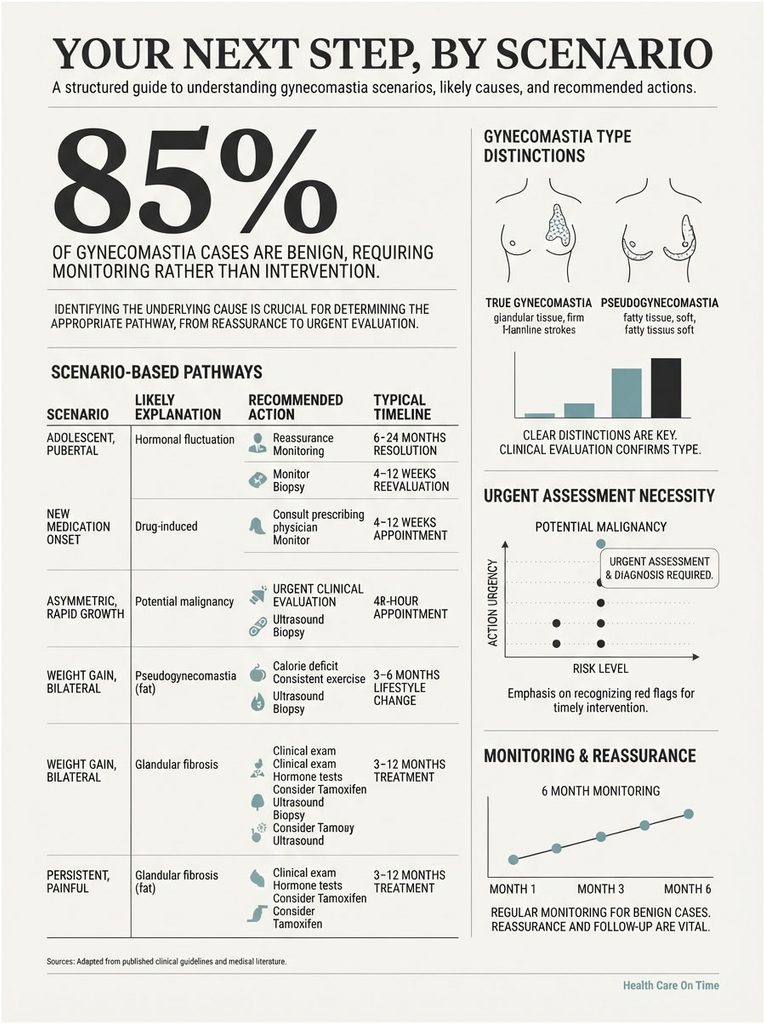
Your Next Step, by Scenario
| Your Situation | Most Likely Explanation | Recommended Action | Typical Timeline |
| Boy aged 12 to 15, both sides, tender, under 12 months | Pubertal gynecomastia | Pediatric visit for exam and reassurance; labs only if atypical | Recheck at 6 months; over 90% resolve within 24 months |
| Lean adult man, firm disc, no medications, no weight change | Idiopathic or endocrine gynecomastia | Hormone panel plus liver enzymes, creatinine, TSH; physician exam | Labs within 2 weeks; treatment decision within 3 months |
| Man with BMI over 30, soft and diffuse, no firm disc | Pseudogynecomastia | Structured weight loss and resistance training; recheck by pinch test | Reassess at 6 months |
| Man on spironolactone, finasteride, or an antiandrogen | Drug-induced gynecomastia | Discuss alternatives with the prescriber; never stop unilaterally | Regression often begins 1 to 3 months after switching |
| Man 6+ months off anabolic steroids, firm disc remains | Established glandular tissue | Surgical consultation; medication window likely closed | Consultation within 1 to 2 months |
| Any adult, one side only, hard, fixed, or with discharge | Requires exclusion of malignancy | Clinical exam plus imaging | Appointment within 1 to 2 weeks |
| Woman, both sides, swelling tied to the menstrual cycle | Cyclical hormonal change | Track across two cycles; evaluate if the pattern breaks | Two cycles |
Living With It While You Sort It Out
The physical condition is usually minor. The psychological weight frequently is not, and pretending otherwise helps nobody.
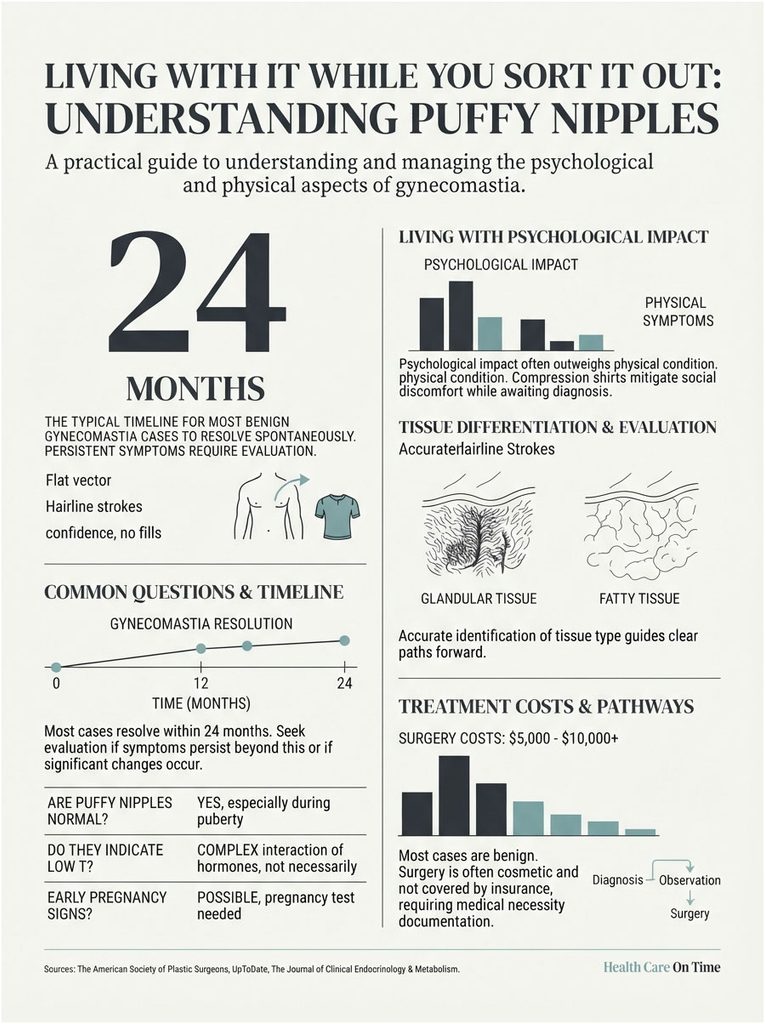
Men describe skipping swimming, wearing shirts at the beach, avoiding locker rooms, and turning down situations that involve taking a shirt off. Adolescents report the same pattern, often at an age when it shapes how they feel about their body for years afterward.
Compression shirts offer a practical short-term option while a diagnosis is being worked out. They change nothing underneath, but they let people keep showing up to things.
Two things are worth holding onto during the waiting period. Most cases are benign, and most have a defined path forward once the tissue type is identified. Getting the pinch test done and the labs drawn converts an open-ended worry into a specific, answerable question.
Frequently Asked Questions
Are puffy nipples normal?
For most people, yes. Around half of boys develop breast tissue during mid-puberty and the majority resolves without treatment. Adults with soft, symmetrical, stable tissue and no other symptoms are usually dealing with normal anatomy or body fat rather than any disease process.
Do puffy nipples mean low testosterone?
Not necessarily. Breast tissue growth reflects the estrogen-to-testosterone ratio, so it can appear with entirely normal testosterone if estrogen has climbed. Low testosterone is one possible cause among many. A morning blood draw measuring total testosterone, free testosterone, estradiol, LH, and FSH provides the actual answer.
How do I know if it is gland or fat?
Pinch the tissue at the outer areola and walk your fingers inward toward the nipple. Glandular tissue feels like a firm rubbery disc with a defined edge and is often tender. Fat feels uniformly soft with no traceable border. Gland does not respond to weight loss; fat does.
Do puffy nipples go away on their own?
Pubertal cases usually do, with more than 90% resolving within 24 months. Drug-induced cases frequently regress after the medication is changed, particularly within the first year. Established glandular tissue in adults that has been present beyond 12 months rarely resolves without medical or surgical treatment.
How long does it take for teen puffy nipples to resolve?
Most pubertal cases clear within six months to two years of onset. Persistence beyond 24 months, tissue wider than about 4 cm, or onset before puberty begins are the situations warranting an endocrine evaluation rather than continued watchful waiting at home.
Can chest exercises get rid of puffy nipples?
They help with fat-based puffiness only as part of overall fat loss, since spot reduction is not physiologically possible. For glandular tissue, building the pectoral muscle underneath can push the disc forward and make it more noticeable. Exercise is worthwhile generally; it is not a gynecomastia treatment.
Will puffy nipples from steroids go away?
Sometimes, if addressed early. Glandular tissue that forms during anabolic steroid use often persists after stopping because the tissue fibroses. Cases caught within the first several months may respond to medical therapy. Established tissue typically requires surgical removal for permanent correction.
Why is only one nipple puffy?
Asymmetry is common in benign gynecomastia, since the two sides rarely develop at identical rates. That said, a strictly one-sided hard, fixed, or irregular mass is the pattern most warranting prompt evaluation, particularly in men over 50. Have it examined rather than tracking it at home.
Are puffy nipples a sign of cancer in men?
Rarely. The American Cancer Society projects about 2,670 male invasive breast cancer diagnoses in 2026, with a lifetime risk near 1 in 755. The concerning features are a one-sided hard fixed lump, nipple discharge, skin dimpling, nipple retraction, or an enlarged armpit lymph node.
What blood tests should I ask for?
A reasonable starting panel covers total and free testosterone, estradiol, LH, FSH, TSH, prolactin, liver enzymes (ALT and AST), and serum creatinine. Draw testosterone in the morning. Beta-hCG and DHEA sulfate get added when a tumor source is clinically suspected by your physician.
How much does gynecomastia surgery cost in the US, and will insurance pay?
The ASPS average surgeon fee is $5,587, excluding anesthesia and facility charges. Total costs commonly land between $5,000 and $10,000 or more. Most plans classify the procedure as cosmetic and decline coverage, though documented pain, functional limitation, or an underlying medical cause can change that determination.
Can puffy nipples be an early sign of pregnancy?
They can be. Nipple and areolar swelling, darkening, and enlargement of the small bumps called Montgomery tubercles are among the earliest pregnancy changes, sometimes appearing before a missed period. Between 30% and 50% of pregnant women notice these changes. A pregnancy test confirms it.
Medical Disclaimer
This article is provided by HealthCareOnTime for general educational purposes and does not constitute medical advice, diagnosis, or treatment. Puffy nipples have causes ranging from entirely normal to conditions requiring prompt care, and only a licensed clinician who can examine you and review your results can determine which applies to your situation. Never start, stop, or change a prescribed medication based on information read online. If you notice a hard one-sided lump, nipple discharge, skin dimpling, or nipple retraction, contact a healthcare provider promptly.
References
- EAA Clinical Practice Guidelines: Gynecomastia Evaluation and Management, Andrology (2019)
- Johnson RE, Murad MH. Gynecomastia: Pathophysiology, Evaluation, and Management. Mayo Clinic Proceedings
- Gynecomastia. American Academy of Family Physicians (AFP)
- Deepinder F, Braunstein GD. Drug-induced gynecomastia: an evidence-based review. Expert Opinion on Drug Safety
- Drug-induced gynecomastia: A systematic review and meta-analysis of randomized clinical trials
- Berger O, et al. Pubertal gynecomastia incidence among 530,000 boys. Frontiers in Pediatrics (2024)
- Clinical and Biochemical Phenotype of Adolescent Males with Gynecomastia. J Clin Res Pediatr Endocrinol
- CDC NCHS Data Brief No. 508: Obesity and Severe Obesity Prevalence in Adults
- Key Statistics for Breast Cancer in Men. American Cancer Society
- Breast Cancer in Men. Susan G. Komen
- Gynecomastia Surgery. American Society of Plastic Surgeons
- Gynecomastia Surgery Cost. American Society of Plastic Surgeons
- Testosterone Prescribing Rates Rising Again. Epic Research
- Anabolic Steroid Use Disorder. StatPearls, NCBI Bookshelf
- Diseases of the Male Breast: Gynecomastia and Breast Cancer. PMC