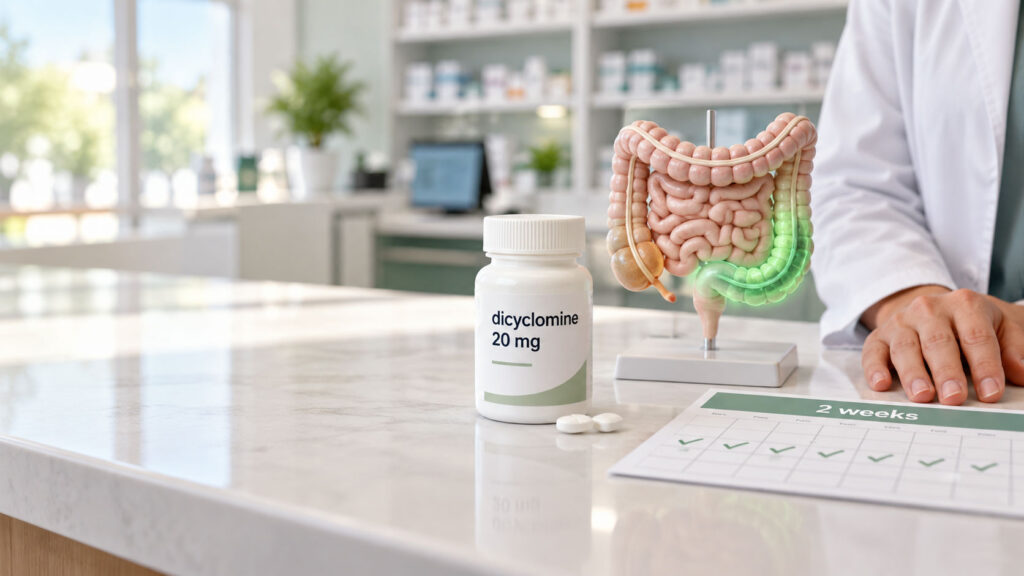
Here’s a detail most people never hear at the pharmacy counter. The FDA label for dicyclomine says only one oral dose has been clearly shown to work: 160 mg a day, split into four doses. Yet many people take a single 20 mg pill when a cramp hits, then wonder why it barely helped.
Table of Contents
There’s a second surprise. If your gut pain is truly severe, sudden, or the worst you’ve ever felt, dicyclomine may be the wrong tool entirely. This guide explains how it works, what the real numbers show, and the medically approved next steps.
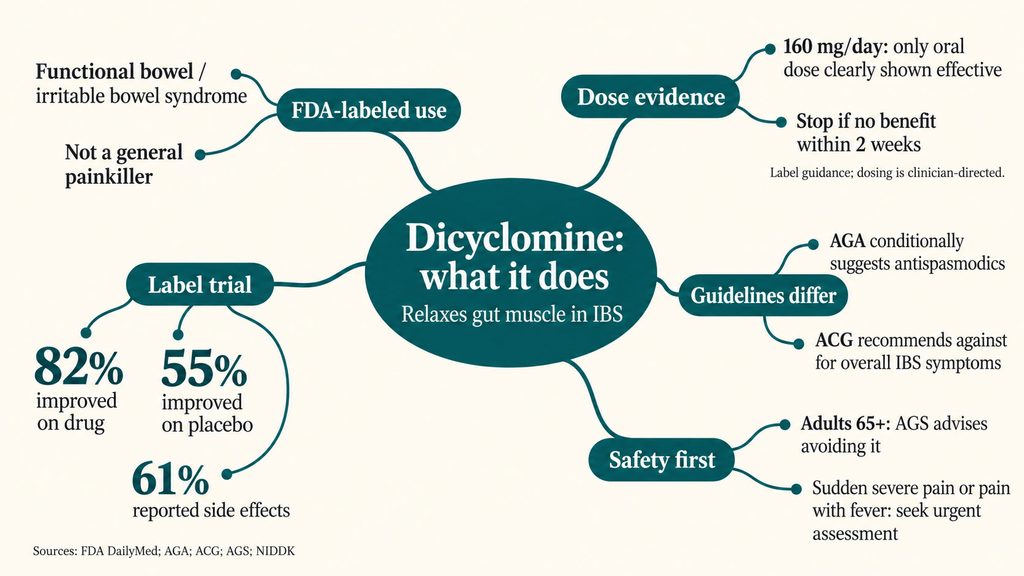
Quick Answer: Dicyclomine (brand name Bentyl) is a prescription antispasmodic. It blocks acetylcholine and relaxes the smooth muscle of your intestines, which eases IBS-type cramping. Blood levels peak about 60 to 90 minutes after a dose. It does not treat appendicitis, gallstones, ulcers, blockages, or infections. Sudden severe pain, fever, constant vomiting, or black or bloody stools need medical care, not a spasm pill.
At a Glance
- Dicyclomine relaxes gut muscle; it is not a general painkiller.
- The FDA label names one use: functional bowel/irritable bowel syndrome (IBS).
- Only 160 mg per day is clearly proven, and the label says to stop if there’s no benefit within 2 weeks.
- In label trials, 82% improved on dicyclomine versus 55% on placebo, and 61% reported side effects.
- The two leading US gastroenterology groups disagree on whether to use it.
- Most adults 65 and older are advised to avoid it because of anticholinergic risks.
- Severe, sudden, or feverish pain is a red flag, not a dicyclomine case.
What Dicyclomine Is (and What It Isn’t)
Dicyclomine hydrochloride has been on the US market for decades. It belongs to a drug class called anticholinergic antispasmodics. You’ll see it sold as Bentyl or, far more often, as a low-cost generic.
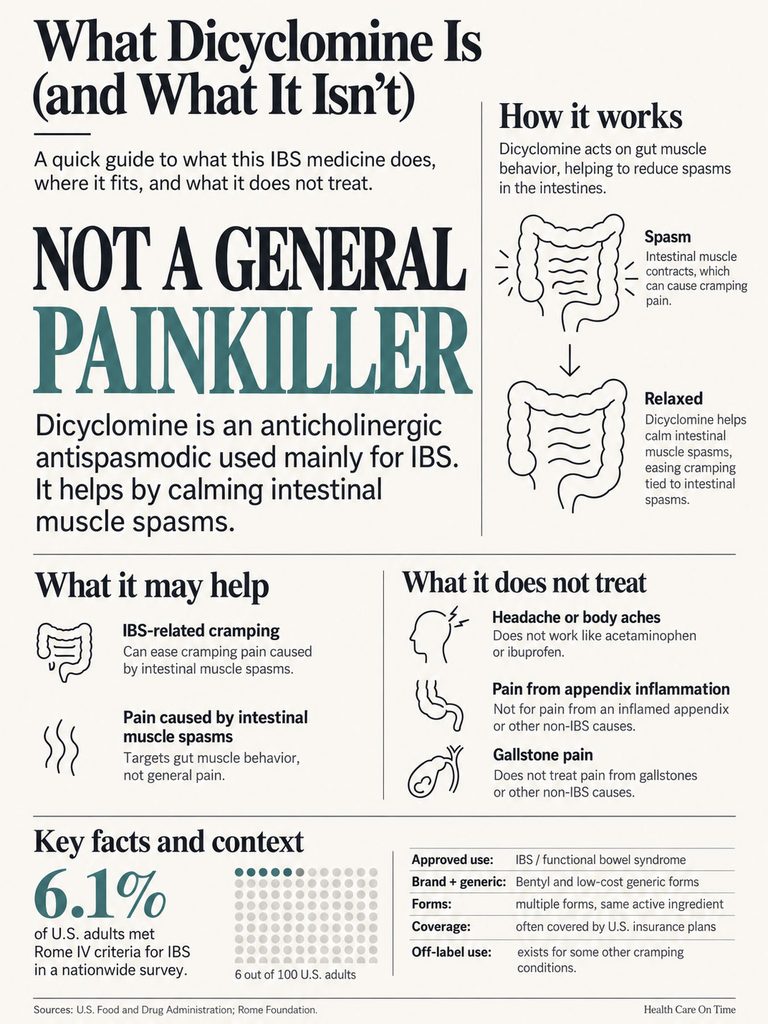
Patients who book digestive lab panels through HealthCareOnTime often ask whether dicyclomine is “a stronger Tylenol for the stomach.” It isn’t. It changes how your gut muscle behaves, and that’s all it does.
A Prescription Antispasmodic, Not a Painkiller
Painkillers like acetaminophen or ibuprofen act on pain signaling or inflammation. Dicyclomine works on the muscle itself. If a cramp comes from your intestine squeezing too hard, easing that squeeze eases the pain.
If the pain comes from something else, such as an inflamed appendix, a gallstone, or an ulcer, relaxing the gut muscle does little. That gap is the most important thing to understand about this drug.
The One FDA-Labeled Use: Functional Bowel/IBS
The FDA-approved label on DailyMed lists a single indication: functional bowel/irritable bowel syndrome. Doctors sometimes prescribe it off-label for other cramping problems. The trial evidence, however, comes from IBS.
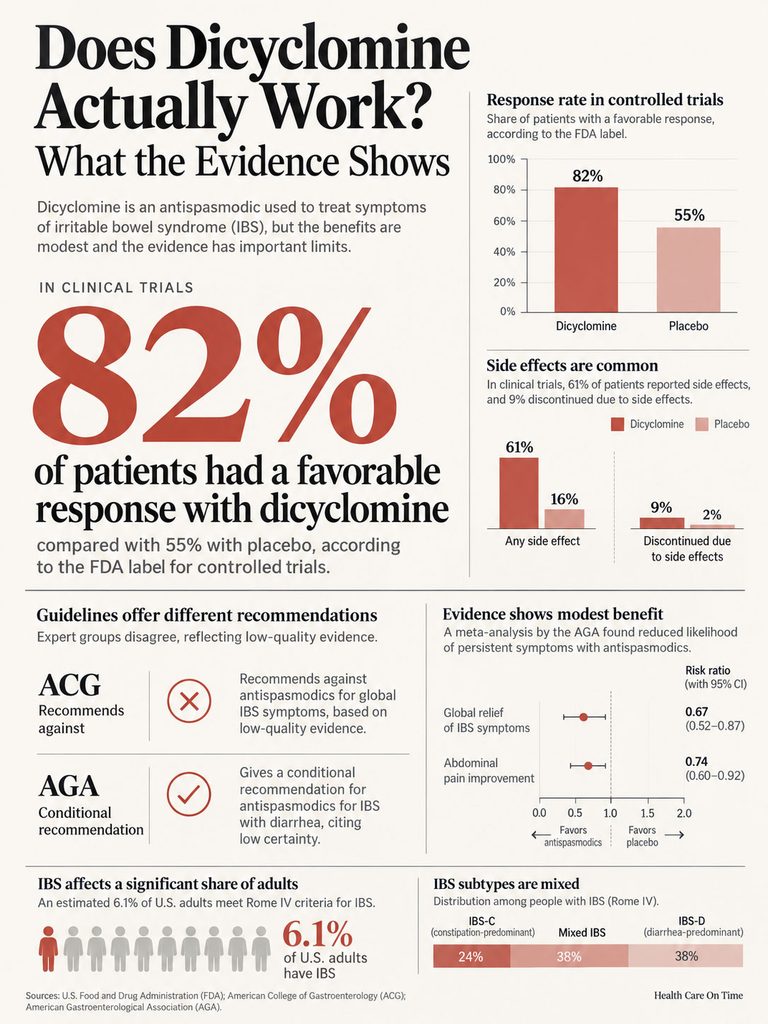
IBS is common in the United States. A nationwide survey of 88,607 US adults published in Gastroenterology found 6.1% met the strict Rome IV criteria. The survey ran in spring 2020, and the authors noted the pandemic may have nudged that number up.
Brand, Generic, and Forms
Dicyclomine comes in several forms:
- 10 mg capsules
- 20 mg tablets
- An oral solution (syrup) at 10 mg per 5 mL
- An injection given into a muscle, used short-term when someone can’t take pills (never into a vein)
Generic and brand versions contain the same active drug. Most US insurance plans cover the generic on a low tier.
How Dicyclomine Works in Your Gut
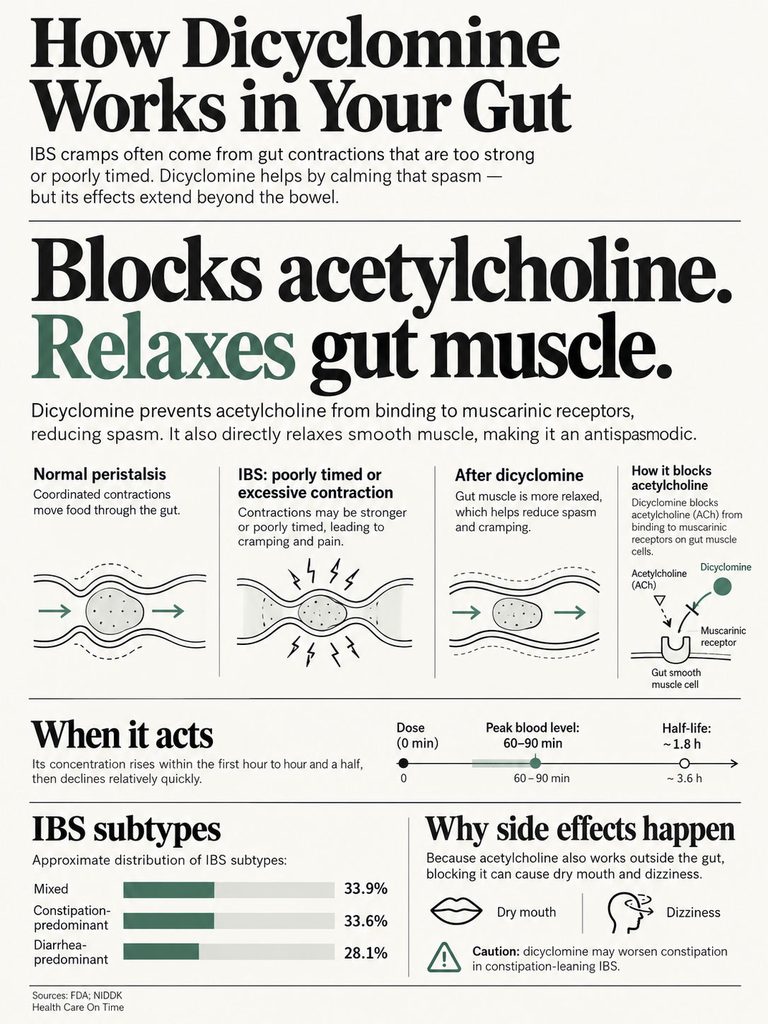
Your digestive tract is lined with smooth muscle. It squeezes in waves to move food and stool along, a process called peristalsis. In IBS, those contractions can become too strong, too frequent, or badly timed. That’s when you feel cramping.
Blocking Acetylcholine at the Muscle
Nerves tell gut muscle to contract by releasing a chemical messenger called acetylcholine. Dicyclomine blocks the receptors acetylcholine binds to, called muscarinic receptors. With fewer “squeeze” signals getting through, the muscle relaxes.
The label describes this as an indirect effect on the muscle. The drug also slows gut movement and reduces some digestive secretions.
The Direct Smooth-Muscle Effect
Dicyclomine has a second action. It relaxes smooth muscle directly, not only through nerve signals. That dual action is one reason it’s grouped with antispasmodics rather than with pure anticholinergic drugs like atropine.
How Fast It Starts and How Long It Lasts
According to the label, blood levels peak about 60 to 90 minutes after an oral dose. The main elimination half-life is about 1.8 hours. That short window is why the label spreads the daily dose over four doses rather than one or two.
In practice, some people feel cramp relief within an hour. Others notice little from a single dose, especially at 10 or 20 mg.
Why Side Effects Show Up Outside Your Gut
Acetylcholine doesn’t just work in your intestines. It also controls saliva, sweating, eye focusing, bladder emptying, and parts of your brain. When dicyclomine blocks it, those systems slow down too.
That’s where the classic side effects come from: dry mouth, blurred vision, dizziness, trouble urinating, and less sweating. Our medical review team treats these as expected effects of the drug class, not rare surprises.
Which IBS Type It Fits Best
Because dicyclomine slows the gut, it can make constipation worse. In the same national survey, IBS cases split roughly into thirds: 33.9% mixed, 33.6% constipation-predominant, and 28.1% diarrhea-predominant.
The AGA made conditional recommendations for antispasmodics in both its IBS-D and IBS-C guidelines. If your IBS leans toward constipation, though, ask your prescriber to watch closely for worsening.
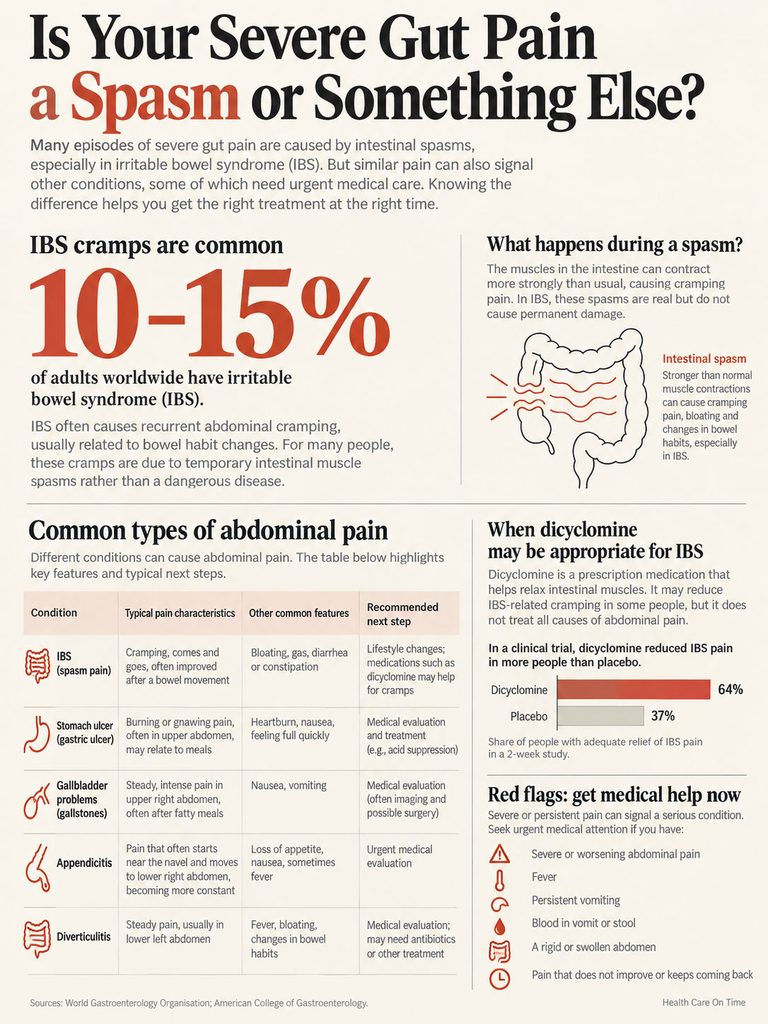
Is Your Severe Gut Pain a Spasm or Something Else?
This is the question that matters most. Dicyclomine only helps one kind of pain. Taking it for the wrong kind can delay care for a condition that needs a scan, a surgeon, or antibiotics.
What Spasm Pain Usually Feels Like
IBS cramping tends to share a few features:
- Crampy, wave-like pain, often in the lower belly
- Pain linked to bowel movements, often easing after you go
- Changes in stool form or frequency (diarrhea, constipation, or both)
- A pattern over weeks or months, not a one-time event
- No fever, no weight loss, no blood
If that describes your pain and a doctor has diagnosed IBS, dicyclomine may be a reasonable option.
Pain Dicyclomine Can’t Fix
Many serious causes of abdominal pain look quite different from IBS once you know what to watch for. The table below compares the most common ones.
| Pain Type | Typical Feel and Location | Other Clues | Will Dicyclomine Help? | Next Step |
| IBS spasm | Crampy, lower belly, comes in waves | Linked to bowel movements; weeks or months of pattern | Often, at the right dose | Primary care or GI visit |
| Gas and bloating | Pressure, fullness, shifting location | Burping, passing gas, tight waistband | Rarely; not its target | Diet review, IBS workup |
| Appendicitis | Starts near belly button, moves to lower right | Fever, loss of appetite, pain with walking or bumps | No; may hide early signs | Emergency room same day |
| Gallbladder attack | Upper right or upper middle, steady, 30 minutes to hours | Often after fatty meals; pain to right shoulder | No | Urgent care or ER; ultrasound |
| Stomach or duodenal ulcer | Burning, upper middle belly | Changes with food; black stools if bleeding | No; may slow emptying | Primary care; ER if black stools |
| Bowel obstruction | Severe cramping, swollen belly | Vomiting, no gas or stool passing | No; label contraindication | Emergency room now |
| IBD flare (Crohn’s or ulcerative colitis) | Cramping, often with urgency | Blood or mucus in stool, weight loss, night symptoms | No; severe ulcerative colitis is a contraindication | GI visit; fecal calprotectin test |
| Menstrual cramps | Low pelvic, cyclical | Starts with period, peaks days 1 to 2 | Not labeled for this | NSAIDs first; gynecology if severe |
For pain that settles in the lower right belly, see our guide on lower right abdominal pain and appendicitis. For pain higher up with nausea, our upper stomach pain and nausea guide ranks causes by urgency.
Red Flags: Skip the Pill and Get Care Now
In cases reviewed by our medical team, a common pitfall is treating a new, severe pain like an old IBS cramp. Get emergency care (call 911 or go to the ER) if you have:
- Sudden, severe, or “worst ever” belly pain
- A hard, rigid belly, or pain when you move, cough, or walk
- Fever with abdominal pain
- Vomiting that won’t stop, or vomiting blood
- Black, tarry, or bloody stools
- No gas or stool passing along with a swollen belly
- Pain during pregnancy, especially with bleeding or dizziness
Also book a prompt doctor visit for unexplained weight loss, pain that wakes you at night, new symptoms after age 50, or a family history of colon cancer or IBD.
Does Dicyclomine Actually Work? What the Evidence Shows
This is where the honest answer gets interesting. The label’s numbers look strong. The newer guideline reviews are far more cautious.
The Label Trials: 82% vs 55%
The FDA label reports controlled trials in more than 100 patients with functional bowel/IBS. At an initial dose of 160 mg daily (40 mg four times a day), 82% had a favorable response, compared with 55% on placebo.
That gap is real, but the details matter. Side effects were reported by 61% of patients. Nine percent stopped the drug because of them, versus 2% on placebo.
Among those with side effects, 41% tolerated the full dose without change. Another 46% needed a cut to an average of about 90 mg a day and still kept a favorable response.
Why a 55% Placebo Response Matters
More than half of people on a sugar pill improved. That’s typical in IBS research, where symptoms rise and fall on their own and expectation plays a large role.
It means some of the relief people credit to dicyclomine would have happened anyway. The true drug effect is the gap between 82% and 55%, not the full 82%.
What US Guidelines Say: ACG vs AGA
The two leading US gastroenterology societies reviewed much of the same evidence and landed in different places.
The American College of Gastroenterology 2021 IBS guideline recommends against the antispasmodics available in the United States (dicyclomine, hyoscyamine, and hyoscine) for global IBS symptoms. It rates this a conditional recommendation based on low-quality evidence. The panel looked only at drugs sold in the US and noted stronger data exist for antispasmodics sold abroad.
The American Gastroenterological Association 2022 IBS-D guideline takes the opposite view. It gives antispasmodics a conditional recommendation for IBS with diarrhea, again with low certainty. The AGA made a matching conditional recommendation in its IBS-C guideline.
Both groups agree on one thing: peppermint oil, an over-the-counter antispasmodic, is suggested for global IBS symptoms.
Pain Relief vs Overall IBS Relief
The AGA based its review on a Cochrane analysis of 22 randomized trials with 2,983 patients, covering 12 different antispasmodics. Compared with placebo, fewer antispasmodic users were left without adequate global relief (risk ratio 0.67).
For abdominal pain specifically, the risk ratio was 0.74. The panel rated that evidence very low certainty. It also said the pain improvement did not meet its bar for a clinically meaningful effect.
In plain English: antispasmodics as a group seem to help some people, but the pain benefit is smaller and shakier than most drug pages suggest.
Evidence Limits
Our medical reviewers flag three limits worth knowing:
- The label trials are old and small. “More than 100 patients” is tiny by modern standards, and the trials predate current IBS definitions.
- The pooled reviews mix many drugs. Most of the 12 antispasmodics in the Cochrane analysis aren’t sold in the US, so dicyclomine-specific data are thin.
- Few trials test as-needed use. The proven results come from scheduled dosing four times a day, not one pill during a flare.
| Metric | Figure | Population or Context | Source |
| Favorable response at 160 mg/day | 82% vs 55% placebo | Functional bowel/IBS, controlled trials, 100+ patients | FDA label (DailyMed) |
| Any side effect | 61% of patients | Same trials, mostly anticholinergic | FDA label |
| Stopped due to side effects | 9% vs 2% placebo | Same trials | FDA label |
| Needed a dose cut | 46% of those with side effects, to about 90 mg/day | Still kept a favorable response | FDA label |
| Failure to get global IBS relief | Risk ratio 0.67 | 22 RCTs, 2,983 patients, 12 antispasmodics | AGA 2022 / Cochrane |
| Abdominal pain improvement | Risk ratio 0.74, very low certainty | Same review | AGA 2022 |
| US adults meeting Rome IV IBS criteria | 6.1% (5,414 of 88,607) | National online survey, spring 2020 | Almario, Gastroenterology 2023 |
| IBS subtype split | 33.9% mixed, 33.6% IBS-C, 28.1% IBS-D, 4.4% unsubtyped | Same survey | Almario, Gastroenterology 2023 |
How to Take Dicyclomine the Right Way
Always follow your prescriber’s directions. The points below explain what the label says, so you can have a better conversation with your doctor or pharmacist.
Label Dosing: 80 mg/day, Then 160 mg/day
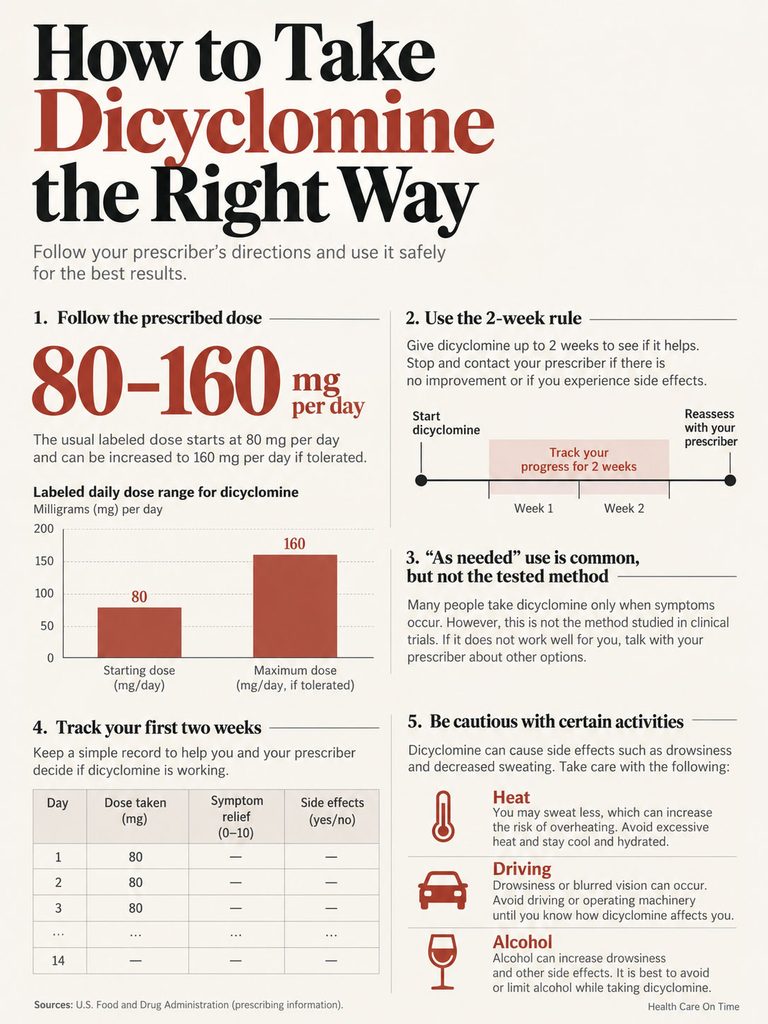
For adults, the label advises starting at 80 mg per day, split into four doses (20 mg four times daily). If you tolerate it, the dose may rise to 160 mg per day (40 mg four times daily) during the first week.
The label starts lower because 160 mg causes many side effects. It’s also the only dose clearly shown to work, which is why doctors may try to reach it.
The 2-Week Rule
The label is direct here. If dicyclomine hasn’t worked within 2 weeks, or side effects force the dose below 80 mg per day, it should be stopped.
The label also notes that safety data are not documented for doses above 80 mg daily for longer than 2 weeks. If you’ve been taking it for months without a clear plan, raise that with your prescriber.
“As Needed” Use and Why It’s Common
Many prescriptions say “take 1 tablet up to 4 times daily as needed for cramping.” Patients commonly ask us whether that’s wrong. It isn’t unsafe on its own, but it isn’t how the drug was tested.
Some people do feel relief from a single dose, especially for predictable triggers such as a large meal. If as-needed dosing isn’t helping, a scheduled trial or a different therapy may make more sense than taking extra pills.
Your First Two Weeks on Dicyclomine
A simple tracking plan makes the 2-week decision far easier:
- Days 1 to 3: Note the time of each dose, your cramp level (0 to 10), and any dry mouth, dizziness, or blurred vision.
- Days 4 to 7: If your prescriber planned a dose increase, this is usually when it happens. Watch for new constipation.
- Days 8 to 14: Compare your average cramp score to the first days. A clear drop suggests it’s working.
- Day 14: Share the log with your prescriber and decide together whether to continue, adjust, or switch.
A notes app or a paper calendar works fine. The goal is real numbers instead of a vague “maybe a little better.”
Heat, Driving, and Alcohol
- Heat: Dicyclomine reduces sweating, so your body can overheat. On hot days, especially in the 90s °F, during exercise, or in a sauna, limit exertion and drink water. The label warns about heat prostration (fever and heat stroke).
- Driving: Dizziness, drowsiness, and blurred vision can impair driving. Wait until you know how it affects you.
- Alcohol: Alcohol adds to drowsiness and dizziness. Limit it or skip it while taking dicyclomine.
Side Effects and Who Should Avoid Dicyclomine
Common Side Effects
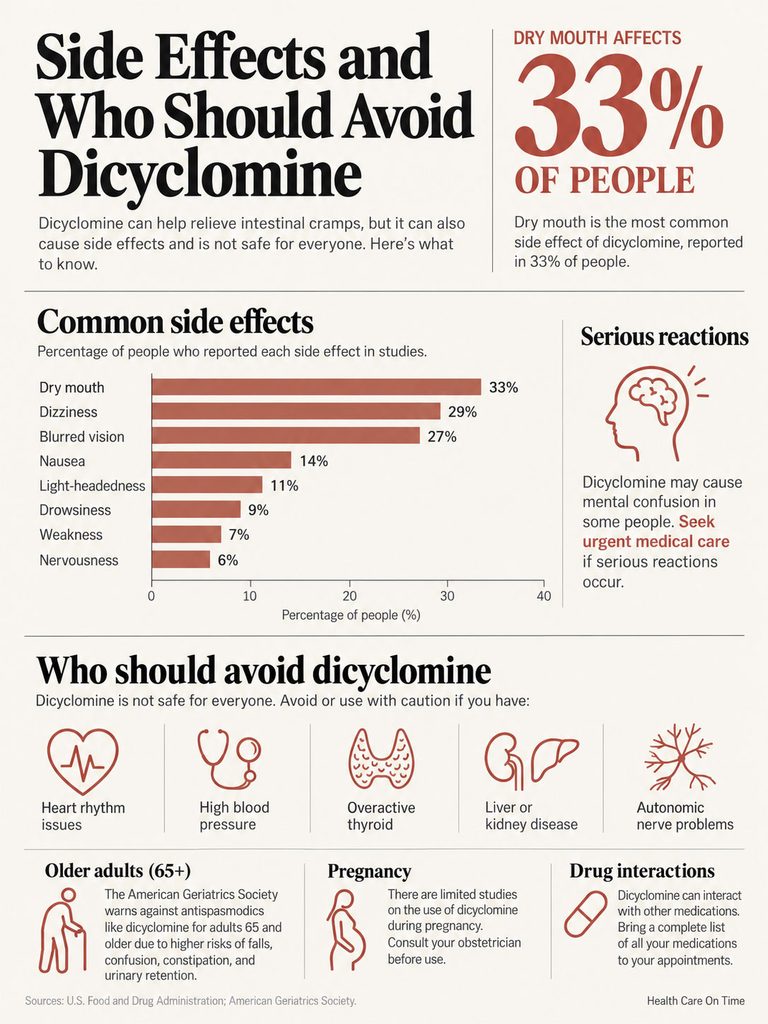
The label trial compared 40 mg four times daily with placebo:
| Side Effect | Dicyclomine | Placebo |
| Dry mouth | 33% | 5% |
| Dizziness | 29% | 2% |
| Blurred vision | 27% | 2% |
| Nausea | 14% | 6% |
| Light-headedness | 11% | 3% |
| Drowsiness | 9% | 1% |
| Weakness | 7% | 1% |
| Nervousness | 6% | 2% |
These numbers come from the highest labeled dose. Lower doses usually cause fewer effects. Constipation is also common, which matters if your IBS already leans that way.
Serious Reactions
Call your doctor promptly, or seek urgent care, if you notice:
- Confusion, agitation, hallucinations, or memory trouble
- Trouble urinating, or being unable to urinate
- A fast or irregular heartbeat
- Eye pain with blurred vision (possible glaucoma attack)
- Fever, hot dry skin, or no sweating in the heat
- Rash, swelling, or trouble breathing (allergic reaction)
The label notes that mental confusion and similar nervous system effects can occur, especially in sensitive people. If you think someone took too much, call Poison Help at 1-800-222-1222.
Who Shouldn’t Take It
The label lists these contraindications:
- Blockage of the urinary tract (obstructive uropathy), such as from an enlarged prostate
- Blockage of the digestive tract
- Severe ulcerative colitis
- Reflux esophagitis
- Unstable heart status during acute bleeding
- Glaucoma
- Myasthenia gravis
- Breastfeeding
- Infants under 6 months old
Tell your prescriber about heart rhythm problems, high blood pressure, an overactive thyroid, liver or kidney disease, or autonomic nerve problems. The label advises caution with each of these.
Adults 65 and Older: The Beers Warning
The American Geriatrics Society 2023 Beers Criteria list antispasmodics, including dicyclomine, as potentially inappropriate for most older adults. The stated reason: they’re highly anticholinergic, with uncertain effectiveness.
For older adults, the concerns are falls, confusion, constipation, and urinary retention. The risk grows when dicyclomine is combined with other anticholinergic drugs. In cases reviewed by our medical team, sudden confusion in an older adult is worth checking against the medication list first. Our guide to altered mental status explains what to watch for.
Pregnancy
The label notes that no adequate, well-controlled studies exist in pregnant women at the recommended doses of 80 to 160 mg a day. Epidemiologic studies, however, didn’t show more structural birth defects in babies whose mothers took products containing dicyclomine at up to 40 mg a day in the first trimester.
That’s reassuring but limited. Abdominal pain in pregnancy also has causes that need prompt checking, including ectopic pregnancy and appendicitis. Talk to your OB before taking any dose.
Drug Interactions
Dicyclomine can interact with:
- Other anticholinergic drugs: diphenhydramine (Benadryl), meclizine, tricyclic antidepressants, oxybutynin, and some antipsychotics. Side effects stack.
- Antacids: these may reduce how much dicyclomine you absorb. Space them apart.
- Opioids: the combined constipation and urinary retention can be significant.
- Metoclopramide: dicyclomine works against drugs that speed up the gut.
- Drugs affected by slower gut transit: some medicines absorb differently when the gut slows.
Bring a full medication list, including over-the-counter sleep aids and allergy pills, to every appointment.
Medically Approved Next Steps
Whether dicyclomine helped, didn’t help, or you haven’t tried it yet, the path forward is the same: confirm the diagnosis, then build a plan that goes beyond one pill.
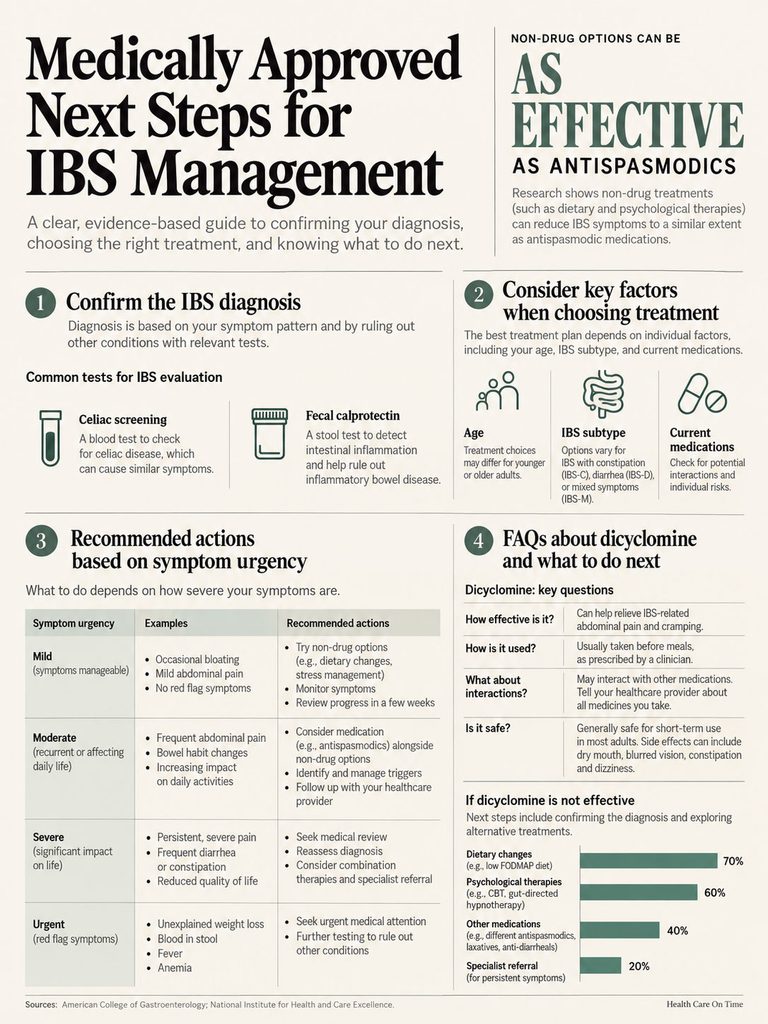
This step gets skipped often. In the same national survey, only about 54% to 59% of people with IBS had sought care for their symptoms in the past year.
Getting the Diagnosis Right
IBS is diagnosed by symptom pattern under the Rome IV criteria, plus a few tests to rule out look-alikes. Both US guidelines support a “positive diagnosis” approach rather than endless testing. Common tests include:
- Complete blood count (CBC): screens for anemia, which can point to bleeding or IBD.
- Celiac blood test (tTG-IgA with total IgA): especially useful for diarrhea-leaning symptoms.
- Fecal calprotectin: a stool test that helps separate IBD from IBS.
- C-reactive protein (CRP): a general marker of inflammation.
- Colonoscopy: for red flags, age-based screening, or unclear results.
In workups reviewed by our medical team, celiac screening and fecal calprotectin are the two results worth confirming before anyone settles on an IBS label. Ask whether you’ve had both.
Non-Drug Options
The evidence for these is often as good as, or better than, the evidence for antispasmodics:
- Low-FODMAP diet: the ACG suggests a limited trial, best done with a registered dietitian.
- Soluble fiber: psyllium is suggested; insoluble fiber like bran often worsens bloating.
- Gut-directed psychotherapy: cognitive behavioral therapy and gut-directed hypnotherapy are suggested for global IBS symptoms.
- Regular movement and sleep: these support overall symptom control.
Other Medications Your Doctor May Try
- Peppermint oil capsules: suggested by both the ACG and AGA; enteric-coated forms reduce heartburn.
- Low-dose tricyclic antidepressants: recommended by the ACG for global IBS symptoms, at doses far below those used for depression.
- IBS-D options: rifaximin, eluxadoline, alosetron (for women with severe IBS-D), and loperamide for diarrhea.
- IBS-C options: linaclotide, plecanatide, lubiprostone, tenapanor, and polyethylene glycol.
The right choice depends on your IBS subtype, your age, and your other medicines.
What to Ask at Your Appointment
- Is my pain pattern consistent with IBS, or do we need more testing?
- Should I take dicyclomine on a schedule or only as needed?
- What dose are we aiming for, and when do we stop if it’s not working?
- Are any of my other medications anticholinergic?
- What’s the plan if dicyclomine doesn’t help in 2 weeks?
| Scenario | Recommended Action | Urgency |
| Sudden, severe, or worst-ever belly pain | Skip dicyclomine; call 911 or go to the ER | Emergency |
| Belly pain plus fever or constant vomiting | Go to the ER or urgent care today | Same day |
| Black, tarry, or bloody stools | Seek emergency care | Emergency |
| Known IBS, familiar cramping, no red flags | Take dicyclomine as prescribed; track response | Routine |
| No clear benefit after 2 weeks | Call your prescriber; ask about stopping and alternatives | Within 1 week |
| Adult 70+ with new confusion or dizziness on dicyclomine | Hold further doses; call the prescriber; ER if severe | Same day |
| Pregnant with abdominal cramping | Contact your OB before any dose; ER if bleeding or faint | Same day |
| Only dry mouth or mild dizziness | Sip water, chew sugar-free gum, avoid driving; mention at next visit | Routine |
Frequently Asked Questions
How long does dicyclomine take to work?
Blood levels of dicyclomine peak about 60 to 90 minutes after an oral dose, according to the FDA label. Many people notice cramp relief within an hour or two. For a fair judgment of whether it works overall, the label allows a trial of up to 2 weeks at the prescribed dose.
Is dicyclomine a painkiller?
No. Dicyclomine is an antispasmodic, not an analgesic. It relaxes the smooth muscle of your intestines, so it only eases pain caused by gut spasms. It won’t reliably help pain from inflammation, infection, gallstones, ulcers, or a blockage, and it shouldn’t be used as a general pain pill.
Can you take dicyclomine only as needed?
Many prescriptions allow as-needed use, and some people find it helpful for predictable triggers. However, the FDA label trials tested scheduled dosing four times daily, and only 160 mg per day was clearly effective. If as-needed doses aren’t working, ask your prescriber about a scheduled trial or alternatives.
Does dicyclomine help with gas and bloating?
Dicyclomine targets muscle spasms, not trapped gas. Some people feel less cramping during bloating episodes, but it doesn’t reduce gas production. It can also slow the gut and worsen constipation, which may add to bloating. A low-FODMAP diet trial or peppermint oil is often a better fit.
Can dicyclomine mask appendicitis?
It can blur early warning signs by reducing cramping, which may delay care. Appendicitis pain usually becomes constant, moves to the lower right belly, and comes with fever or loss of appetite. Never use dicyclomine to “test” new severe pain. Get evaluated first.
Why does dicyclomine cause dizziness?
Dicyclomine blocks acetylcholine throughout the body, not just in the gut. That affects blood vessels, eye focusing, and brain function. In label trials, 29% of patients on the highest dose reported dizziness versus 2% on placebo. Lower doses, slow position changes, and skipping alcohol usually help.
Is dicyclomine safe during pregnancy?
The label reports no increase in structural birth defects in epidemiologic studies at doses up to 40 mg per day in the first trimester. Well-controlled studies at standard doses haven’t been done. Because pregnancy pain has causes that need urgent checking, talk to your OB before taking any dose.
Can older adults take dicyclomine?
The American Geriatrics Society Beers Criteria advise most adults 65 and older to avoid antispasmodics like dicyclomine. They’re highly anticholinergic with uncertain effectiveness. Risks include confusion, falls, constipation, and urinary retention. If an older adult is prescribed it, review every other medication with a pharmacist.
Can you take dicyclomine with ibuprofen?
The dicyclomine label doesn’t list ibuprofen as an interaction, and the two drugs work in different ways. Ibuprofen can irritate the stomach lining, though, and may not suit people with ulcers, kidney disease, or bleeding risk. Check with your pharmacist, especially if you take other medicines regularly.
Is dicyclomine addictive?
Dicyclomine is not a controlled substance and isn’t considered addictive the way opioids or benzodiazepines are. A small number of case reports describe misuse at very high doses for mind-altering effects. If you’ve taken it regularly for a long time, ask your prescriber before stopping.
Dicyclomine vs hyoscyamine: which is better?
Both are anticholinergic antispasmodics sold in the United States, and neither has strong head-to-head evidence. The ACG 2021 guideline recommends against both for global IBS symptoms. The choice usually comes down to your doctor’s experience, how fast you need relief, and which side effects you tolerate.
What if dicyclomine doesn’t work?
The label says to stop dicyclomine if it hasn’t helped within 2 weeks. Next steps include confirming the diagnosis with tests like celiac screening and fecal calprotectin, then trying peppermint oil, a low-FODMAP diet, gut-directed therapy, low-dose tricyclic antidepressants, or subtype-specific IBS drugs.
Medical Disclaimer: This article is for general education and isn’t a substitute for advice from your doctor or pharmacist. Don’t start, stop, or change any medication without talking to your prescriber. If you have sudden severe abdominal pain, fever with belly pain, black or bloody stools, or signs of an allergic reaction, call 911 or go to the nearest emergency room. For a possible overdose, call Poison Help at 1-800-222-1222.
References
- Dicyclomine Hydrochloride Tablets, FDA Label, DailyMed (National Library of Medicine)
- Bentyl (Dicyclomine HCl) Prescribing Information, Drugs@FDA
- Lacy BE, et al. ACG Clinical Guideline: Management of Irritable Bowel Syndrome. Am J Gastroenterol. 2021;116(1):17-44
- Lembo A, et al. AGA Clinical Practice Guideline on the Pharmacological Management of IBS With Diarrhea. Gastroenterology. 2022;163(1):137-151
- Chang L, et al. AGA Clinical Practice Guideline on the Pharmacological Management of IBS With Constipation. Gastroenterology. 2022;163(1):118-136
- Brenner DM, Lacy BE. Antispasmodics for Chronic Abdominal Pain: Analysis of North American Treatment Options. Am J Gastroenterol. 2021;116(8):1587-1600
- Almario CV, et al. Prevalence and Burden of Illness of Rome IV Irritable Bowel Syndrome in the United States. Gastroenterology. 2023;165(6):1475-1487
- 2023 American Geriatrics Society Beers Criteria Update Expert Panel. J Am Geriatr Soc. 2023;71(7):2052-2081
- Irritable Bowel Syndrome, National Institute of Diabetes and Digestive and Kidney Diseases (NIDDK)