
It usually starts with a limp. A child with autism and a very short food list begins favoring one leg, and weeks of X-rays, bloodwork, and a workup for bone infection follow before anyone asks what the child actually eats.
Table of Contents
The answer turns out to be crackers, one brand of chicken nuggets, and water. The diagnosis is scurvy, a disease most people link to 18th-century sailors. US children’s hospitals have documented this pattern again and again, and it often begins with eating that everyone wrote off as “just autism pickiness.”
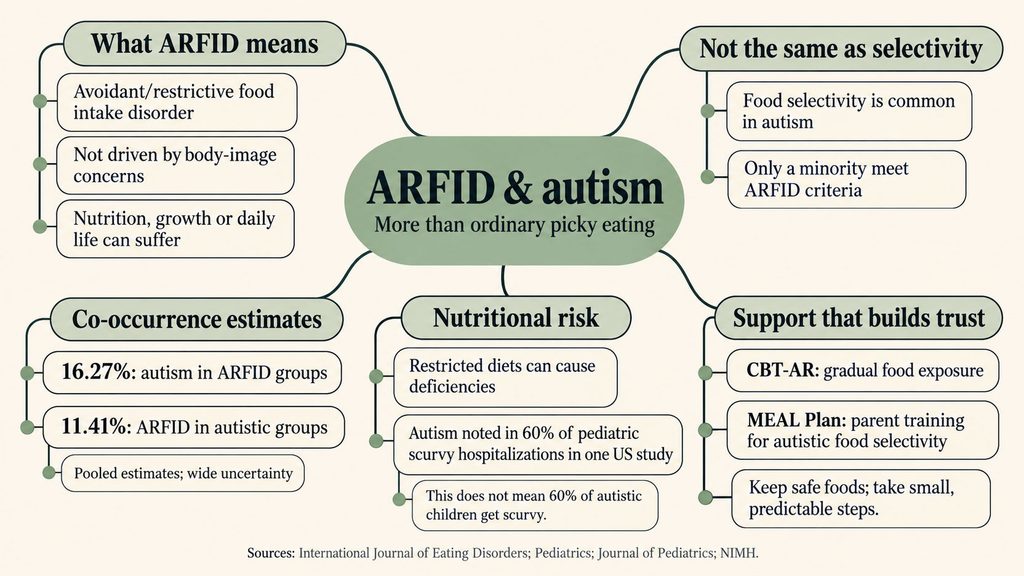
Quick Answer: ARFID and autism overlap far more often than chance. A 2025 review of 21 studies found about 16% of people with ARFID are autistic, and about 11% of autistic people meet ARFID criteria. Shared drivers include sensory sensitivity, a strong need for sameness, and anxiety. Management starts with a medical and nutrition check, then gradual, pressure-free food exposure through parent training, CBT-AR, or feeding therapy that respects sensory needs.
At a Glance
- ARFID (avoidant/restrictive food intake disorder) is a real eating disorder, not ordinary picky eating and not about body image.
- Most autistic kids have some food selectivity, but only a minority meet ARFID criteria.
- The statistics online conflict. The best pooled estimate is 16.27% autism in ARFID and 11.41% ARFID in autism.
- Untreated ARFID can cause real nutrient deficiencies. Autism appears in 60% of US pediatric scurvy hospitalizations in one multi-hospital study.
- The best-studied treatments are parent training (the MEAL Plan) and CBT-AR. Neither involves force-feeding.
- Safe foods are protected, not taken away. Change happens in small, predictable steps.
Why This Question Matters More Now
Autism is being identified more often than ever. The CDC’s ADDM Network now reports about 1 in 31 eight-year-olds with autism, up from 1 in 150 in the early 2000s.
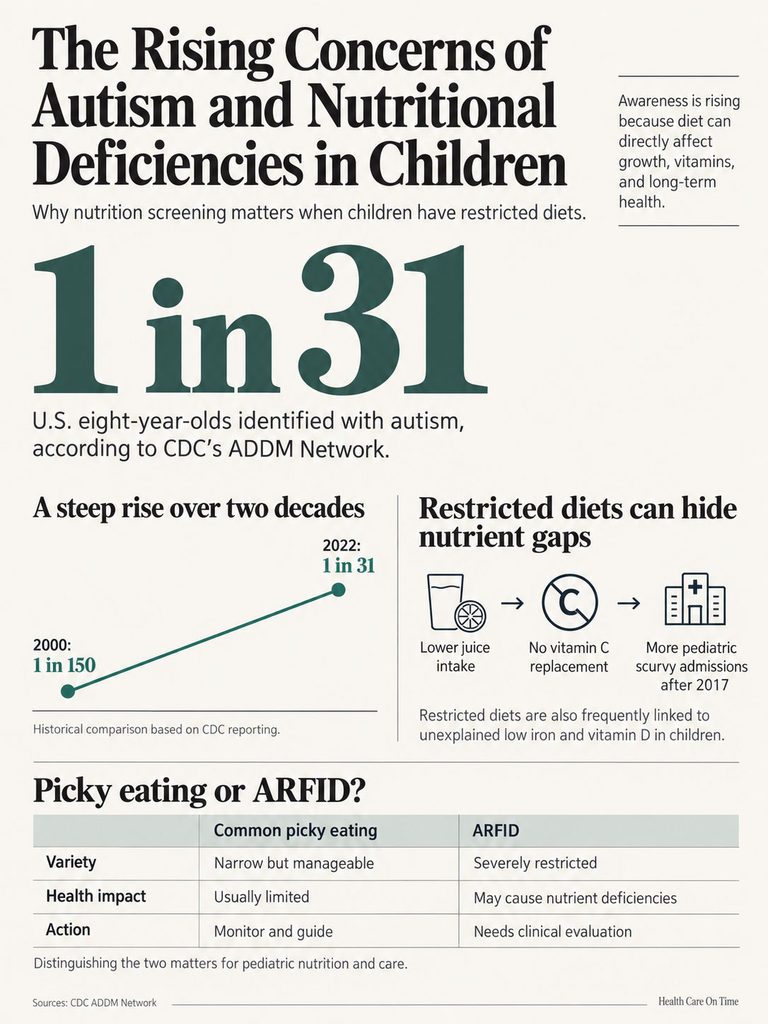
At the same time, pediatric scurvy admissions at US children’s hospitals rose sharply after 2017. The study’s authors point to lower juice intake as one likely factor; families followed advice to cut juice, but selective eaters had nothing to replace the vitamin C.
Across the lab panels our diagnostic network processes, restricted diets are one of the most common reasons behind unexplained low iron and vitamin D in children. Knowing where picky eating ends and ARFID begins has never mattered more.
What Is ARFID? (And What It Isn’t)
ARFID stands for avoidant/restrictive food intake disorder. It entered the DSM-5 in 2013 and replaced older labels like “feeding disorder of infancy and early childhood.”
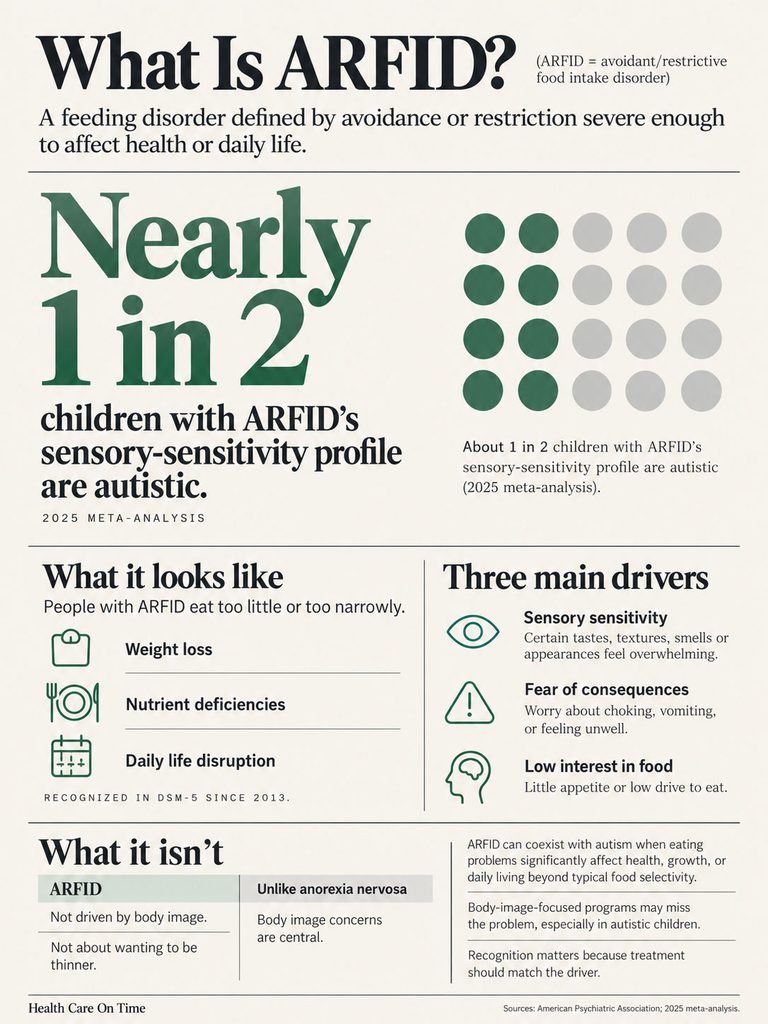
A person with ARFID eats too little, or too narrow a range of foods, to meet their needs. The pattern causes weight loss or faltering growth, a nutrient deficiency, reliance on supplements or tube feeding, or real disruption to daily life.
The Three Drivers: Sensory Sensitivity, Fear of Consequences, Low Interest
Clinicians describe three main drivers, and many people have more than one.
- Sensory sensitivity: the texture, smell, taste, temperature, or look of food feels overwhelming or unbearable.
- Fear of aversive consequences: worry about choking, vomiting, gagging, or stomach pain after eating.
- Low interest in eating: weak hunger signals, eating feels like a chore, and the person fills up fast.
The sensory driver is the one most closely tied to autism. In one large pediatric surveillance study summarized in the 2025 meta-analysis, nearly half of children with the sensory profile of ARFID were autistic.
Why ARFID Is Not About Body Image
Unlike anorexia nervosa, ARFID has nothing to do with wanting to be thinner or fearing weight gain. A child with ARFID is not “dieting.”
This matters because some eating disorder programs are built around body image work. That approach misses the point for ARFID, and it can confuse an autistic child who has no interest in how their body looks.
Can ARFID Be Diagnosed Alongside Autism?
Yes. The DSM-5-TR allows both diagnoses at the same time, as long as the eating problem goes beyond what is usually seen with autism and needs its own clinical attention.
That rule is the heart of this topic. Food selectivity is extremely common in autism; ARFID is the point where that selectivity starts harming health, growth, or daily life.
How Common Is ARFID in Autism? The Numbers, Sorted Out
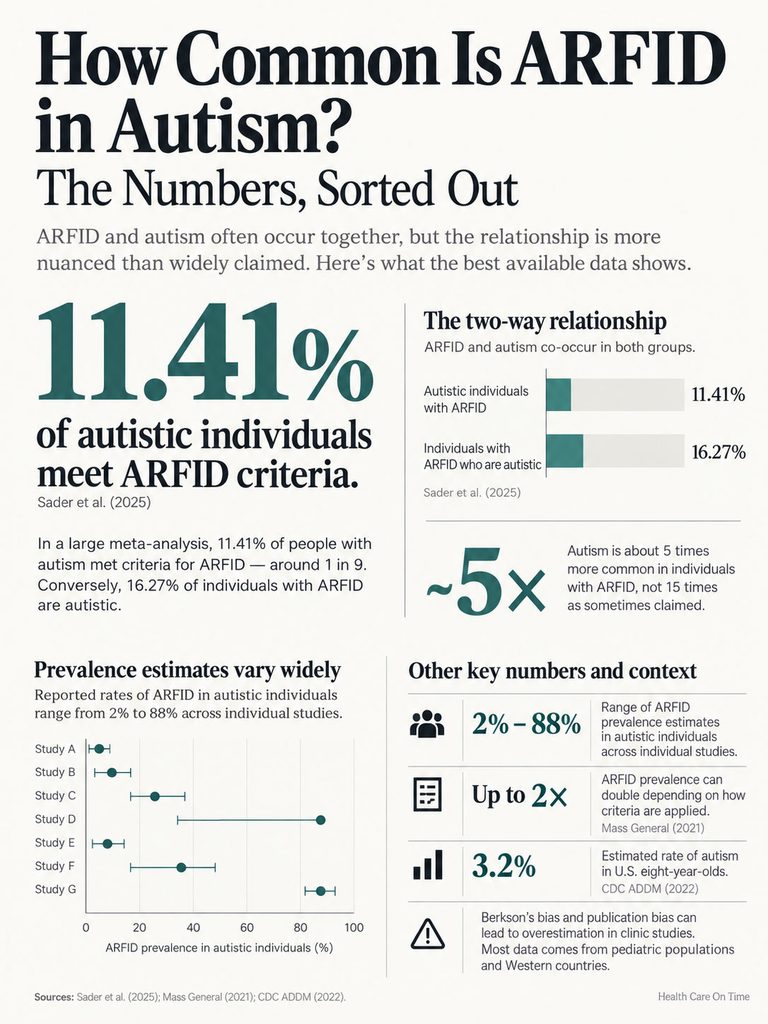
ARFID is common in autism, but not universal. The largest review to date, a 2025 meta-analysis of 21 studies, found that about 16% of people with ARFID are autistic and about 11% of autistic people meet ARFID criteria. Both estimates carry wide uncertainty because the studies used very different methods.
If you’ve searched this topic, you’ve probably seen conflicting figures: 13% to 58% on one page, 12.5% to 33.3% on another, 21% on a third. None is exactly wrong; each comes from a different single study with a different sample.
Why Every Website Gives a Different Number
ARFID is a young diagnosis, and researchers still measure it in different ways. A 2021 Mass General analysis found that ARFID prevalence can double depending on how strictly the criteria are applied.
Where a study recruits matters too. A specialty feeding clinic will find far more autism than a school survey, and a clinic that mostly treats boys will find more than one that mostly treats girls.
What the Largest Review Found
The first meta-analysis on this question was published in the International Journal of Eating Disorders in 2025 by Sader and colleagues. It pooled 7,442 participants.
Across 18 studies of people with ARFID, 16.27% were autistic (95% confidence interval 8.64% to 28.53%). Across just 3 studies of autistic groups, 11.41% met ARFID criteria (95% confidence interval 2.89% to 35.76%).
Individual studies ranged from under 2% to 88%. That spread is exactly why single-study numbers mislead.
Checking the “15 Times Higher” Claim Against US Data
Some articles repeat that autism is 15 times more common in people with ARFID than in the general population. That comparison used global autism rates of roughly 0.6% to 1%.
In the United States, autism is identified in about 3.2% of eight-year-olds. Against that US baseline, 16.27% is roughly 5 times higher. Still a strong link, but a more honest number for American families.
Why Clinic Numbers Run High
The review’s authors flagged two problems. The first is Berkson’s bias: a child with both autism and ARFID is more likely to be referred to a specialty clinic, so clinic studies overcount the overlap.
The second is publication bias, since small studies with dramatic results were more likely to be published. Most data are also pediatric and from Western countries. In short, the overlap is real and large, but the exact number is still uncertain.
| Statistic | Figure | Source |
| Autism among people with ARFID (pooled) | 16.27% (CI 8.64 to 28.53%) | Sader et al., Int J Eat Disord, 2025 (18 studies) |
| ARFID among autistic people (pooled) | 11.41% (CI 2.89 to 35.76%) | Sader et al., 2025 (3 studies) |
| Autistic US youth screening positive for ARFID | 21.0% (1,083 of 5,157) | Koomar et al., Front Psychiatry, 2021 (SPARK cohort) |
| Young autistic children meeting ARFID criteria | 28.0% (13 of 46) | Nygren et al., 2021 |
| Autistic adults with ARFID (online sample) | 2.1% (11 of 531) | Sedgewick et al., 2020 |
| Odds of autism with restrictive eating | 11.9x in boys, 10.1x in girls | Swedish twin study, 2017 |
| US autism prevalence, age 8 | 1 in 31 (3.2%) | CDC ADDM Network, 2022 surveillance year |
| Autism among US pediatric scurvy admissions | 60% of 138 patients | PHIS multi-hospital study, 2006 to 2021 |
Why Autism and ARFID Overlap
No single cause links the two. Researchers point to several overlapping traits, and most autistic kids with ARFID have more than one.
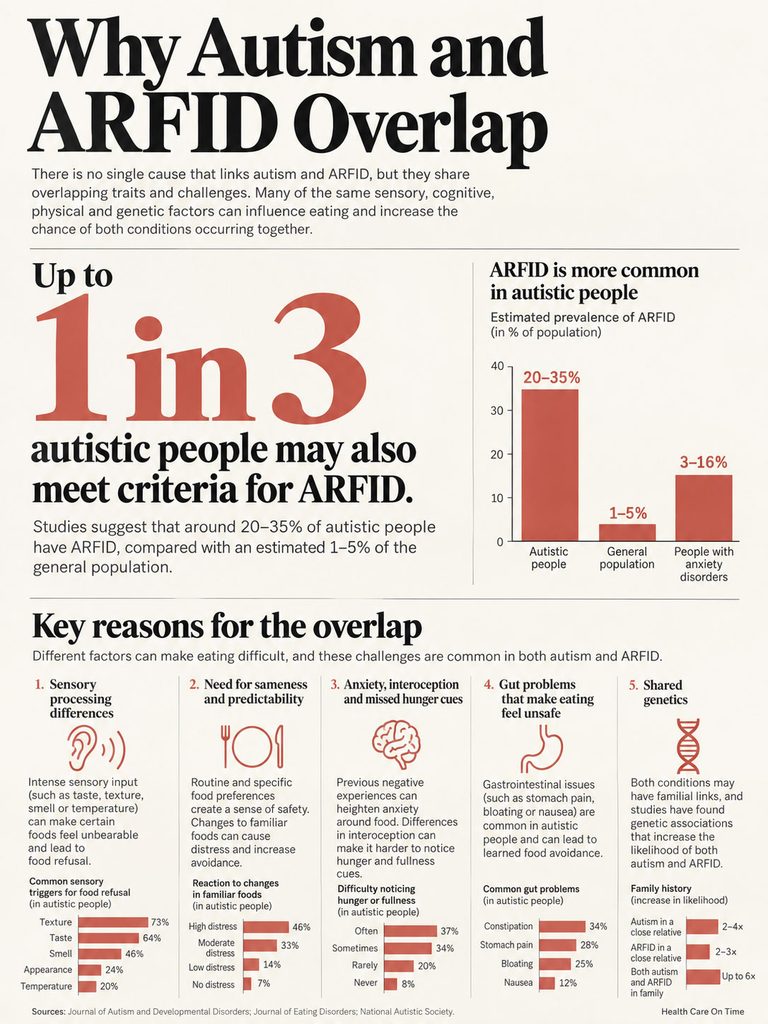
Sensory Processing Differences
Many autistic people experience sensory input more intensely. A crunchy bit in a soft food, a strong smell, or a mixed texture can feel like an alarm going off.
A study in the Journal of Autism and Developmental Disorders found that autistic children with higher sensory sensitivity refused more foods. That’s why “just one bite” can feel impossible rather than simply unpleasant.
Need for Sameness and Predictability
Routine brings calm to many autistic people, and food fits into that pattern. A specific brand, shape, color, or package can become the only version that feels safe.
That explains why a child who eats one brand of nuggets may refuse the store brand, even when adults can’t tell them apart.
Anxiety, Interoception, and Missed Hunger Cues
Anxiety is common in both autism and ARFID. One past choking or gagging episode can turn into a lasting fear of whole food categories.
Interoception, the sense of what’s happening inside the body, can also differ in autism. Some people don’t notice hunger until it’s intense, or feel full very early.
Gut Problems That Make Eating Feel Unsafe
Constipation, reflux, and stomach pain are common in autistic children. When eating keeps leading to discomfort, avoiding food becomes a learned response.
Patients booking lab work with us often mention years of constipation long before anyone raised an eating disorder. Treating the gut problem is frequently step one.
Shared Genetics
Both conditions run in families. In the Koomar SPARK study, 17% of parents of autistic children were flagged as at risk for ARFID.
A Swedish twin study found children with restrictive eating had about 12 times higher odds of autism in boys and 10 times in girls. These are associations, not a genetic test. Our overview of whether eating disorders are genetic explains why family risk is never destiny.
Picky Eating, Autistic Food Selectivity, or ARFID?
The line usually falls at harm. Picky eating and autistic food selectivity become ARFID when the restricted diet starts causing nutrient deficiencies, slowed growth, dependence on supplements, or major disruption to school, family, or social life. A shrinking food list is one of the clearest early warnings.
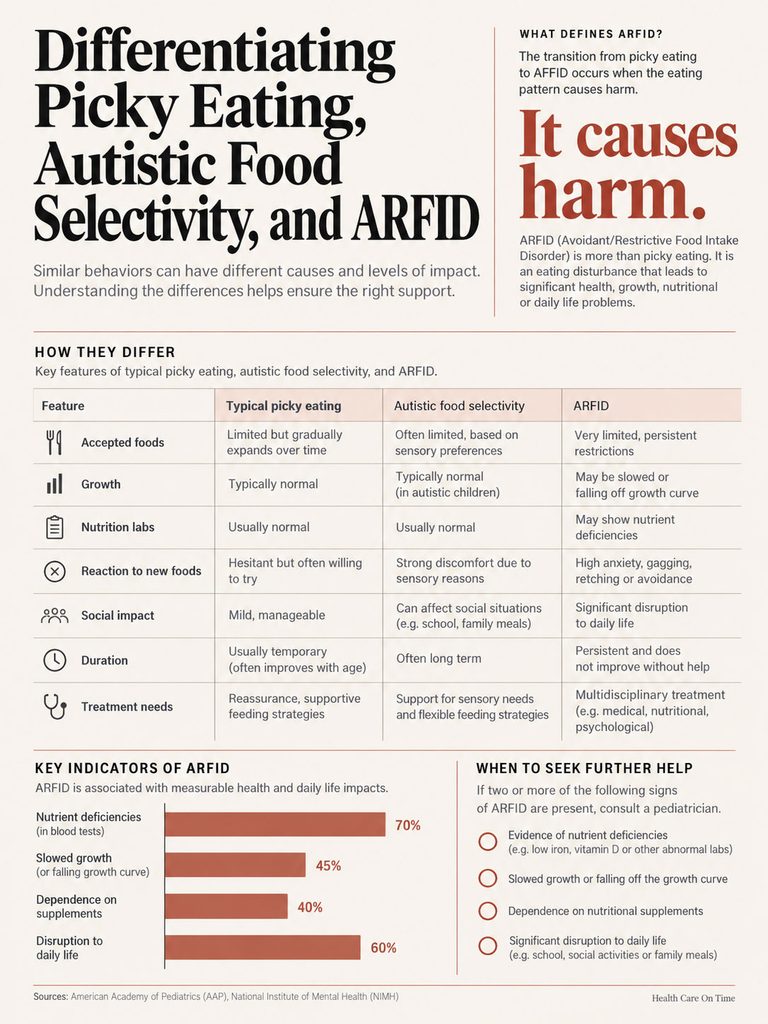
The table compares the three patterns side by side. No single row decides it; clinicians look at the full picture.
| Feature | Typical Picky Eating | Autistic Food Selectivity (no ARFID) | ARFID (with or without autism) |
| Accepted foods | Usually 20 or more, across most food groups | Narrow, often fewer than 20, but covers basic nutrition | Very narrow; whole food groups missing (often fruits, vegetables, or proteins) |
| Growth and energy | Normal growth on the child’s own curve | Normal growth on the child’s own curve | Growth slows, falls off the curve, or energy drops |
| Nutrition labs | Normal | Usually normal, sometimes low vitamin D or iron | Deficiencies common (iron, vitamin D, vitamin C, vitamin A) |
| New food reaction | Dislike, then acceptance after 10 to 15 tries | Strong refusal; gradual acceptance with support | Gagging, vomiting, panic, or meltdown even when food is only near the plate |
| Social and school impact | Minimal | Some (packed lunches, restaurant limits) | Major (skips school meals, avoids parties, family meals break down) |
| Duration | Usually fades by school age | Often lifelong, but stable | Persists or worsens; food list shrinks over time |
| Needs specialist treatment? | No | Sometimes (OT or feeding support) | Yes: medical, nutrition, and behavioral care |
7 Warning Signs It Has Crossed Into ARFID
- The list of accepted foods is getting shorter, not longer.
- A favorite food gets “dropped” and nothing replaces it.
- Growth has slowed or changed direction on the pediatrician’s chart.
- Your child relies on one brand, and a recipe change triggers refusal to eat at all.
- New foods cause gagging, vomiting, or panic, not just a “yuck.”
- Your child seems tired, pale, cold, or bruises or bleeds from the gums easily.
- Meals cause daily conflict, or your child avoids school, parties, or outings because of food.
If two or more apply, book a pediatric visit and ask directly about ARFID.
Health Risks When ARFID Goes Unnoticed
The biggest risk is time. Families adapt around restricted eating for years, and the health effects build quietly.
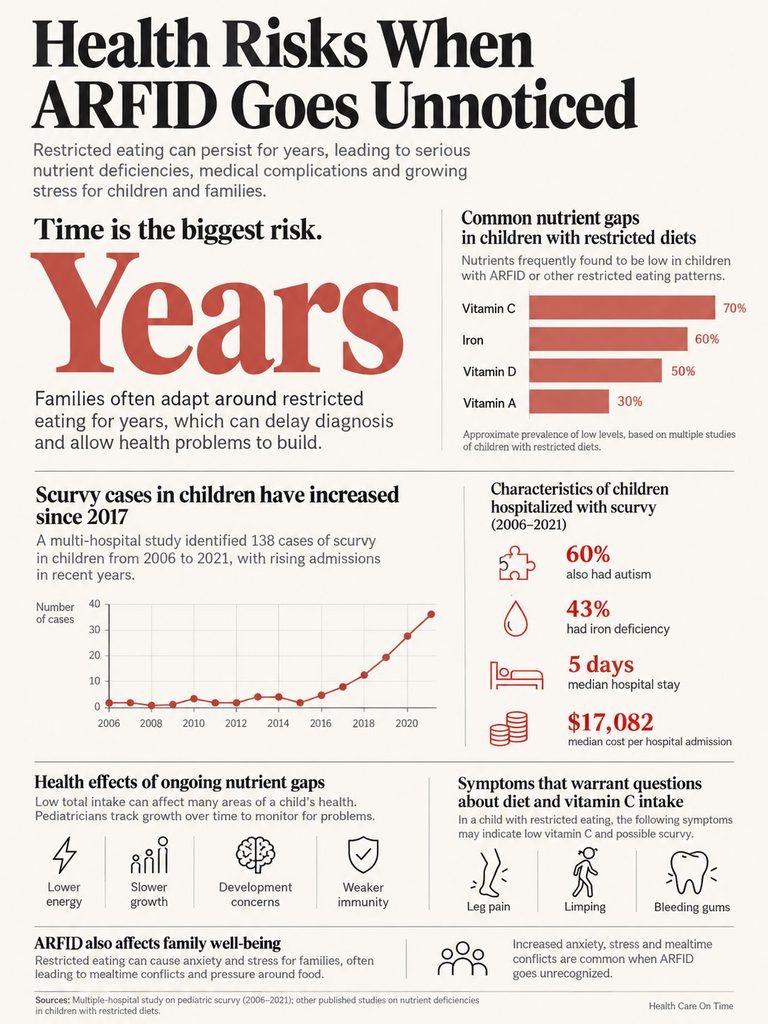
Nutrient Gaps: Vitamin C, Iron, Vitamin D, Vitamin A
Diets built on crackers, fries, plain pasta, and nuggets often lack fruits and vegetables. That leaves gaps in vitamin C (scurvy), iron (anemia and fatigue), vitamin D (bone health), and vitamin A (night vision and, in severe cases, eyesight).
In lab panels processed across our diagnostic network, low ferritin and low vitamin D are among the most common findings in children with very restricted diets. Neither causes obvious symptoms early on.
The Limp That Turned Out to Be Scurvy
A US multi-hospital study identified 138 children hospitalized for scurvy between 2006 and 2021, with admissions rising sharply after 2017.
Autism was listed in 60% of these patients and iron deficiency in 43%. The median stay was 5 days, at a median cost of $17,082 per admission.
In a Boston Children’s Hospital case series, seven children with scurvy first showed up with a limp. They went through extensive testing before anyone asked about diet, and vitamin C treatment led to rapid recovery.
The takeaway: leg pain, limping, swollen or bleeding gums, or easy bruising in a child with a very narrow diet deserve a direct question about vitamin C.
Energy, Growth, and Development
When total intake stays low, the body conserves energy. Kids may seem tired, irritable, less focused at school, or slow to grow compared with their own past pattern.
Your pediatrician tracks this on growth charts over time. The direction of the line matters more than any single measurement.
Anxiety, Family Stress, and Mealtime Conflict
ARFID affects the whole household. Parents often cook several meals a night, skip restaurants, and dread holidays.
Pressure at the table usually makes things worse. Stress raises anxiety, anxiety tightens food refusal, and the cycle repeats.
When to Call the Doctor
Not every food struggle is an emergency. The table matches common situations to the right next step and timeline.
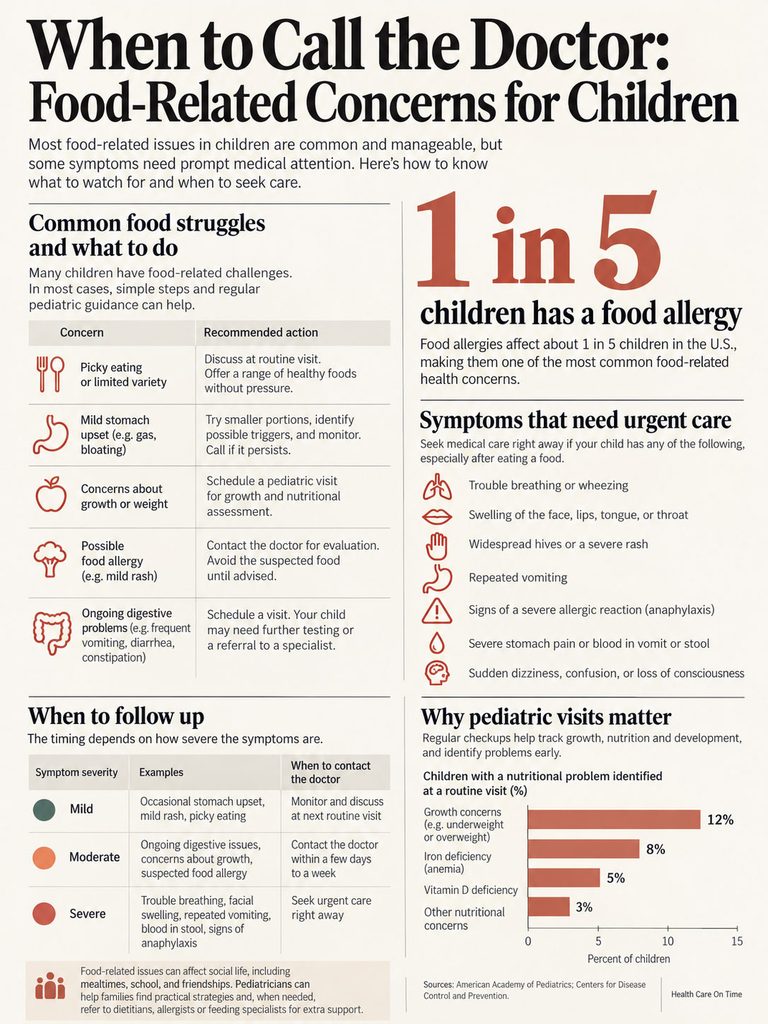
| Scenario | Recommended Action | How Soon |
| Food list shrinking over 2 to 3 months | Pediatric visit; ask about ARFID screening and a growth chart review | Within 2 to 4 weeks |
| Limping, leg pain, bleeding or swollen gums, easy bruising | Pediatric visit; ask about vitamin C and iron levels | Within 1 to 3 days |
| Only 1 brand accepted and it’s discontinued or changed | Call pediatrician; request dietitian referral and a bridging plan | Within 1 week |
| Gagging or vomiting with new foods, fear of choking | Pediatrician plus feeding evaluation (SLP or OT) | Within 2 to 4 weeks |
| Fatigue, pale skin, frequent illness | Pediatric visit with CBC, ferritin, vitamin D | Within 1 to 2 weeks |
| Teen or adult avoiding social events due to food | Primary care or eating disorder clinician familiar with ARFID and autism | Within 1 month |
| Refusing all food or fluids for 24 hours, dizziness, fainting, very dark urine | Urgent care or emergency department | Same day |
How ARFID Is Diagnosed in Autistic Kids and Adults
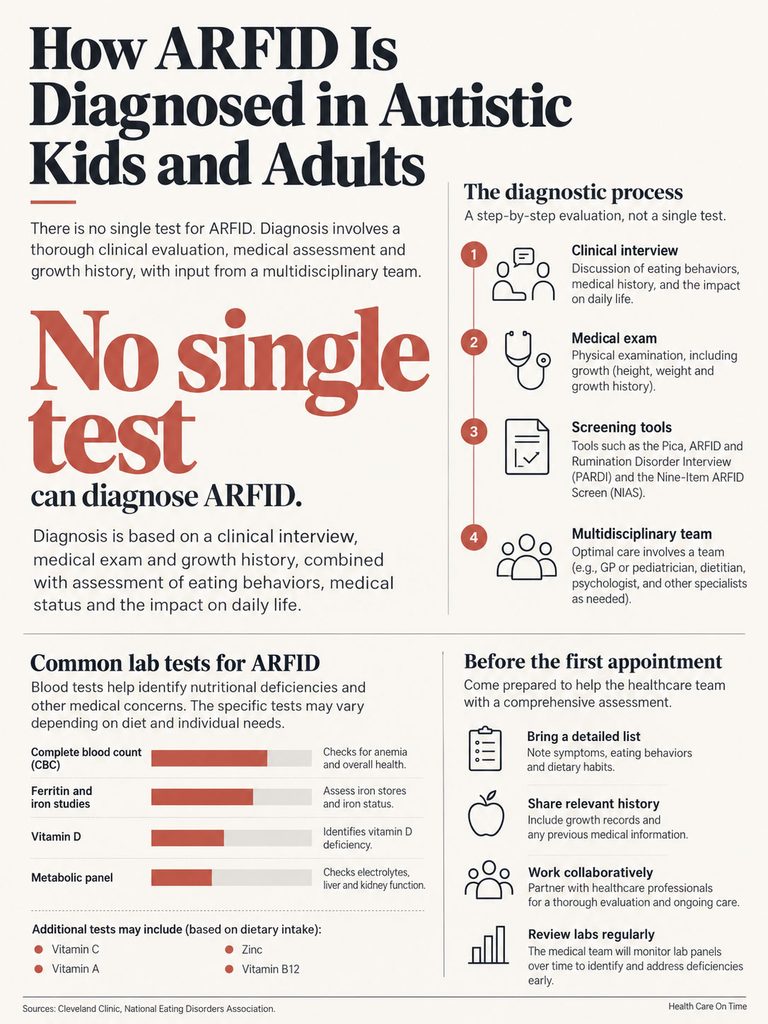
There’s no single test for ARFID. Diagnosis comes from a clinical interview, a medical exam, growth history, and lab work, after other causes of poor intake are ruled out.
Who Should Be on the Team
The best care is usually multidisciplinary. A typical team includes:
- A pediatrician or primary care clinician for growth, labs, and medical stability
- A registered dietitian to map nutrient gaps and plan food steps
- A feeding therapist (speech-language pathologist or occupational therapist) for oral-motor and sensory work
- A psychologist trained in ARFID treatment
- A pediatric gastroenterologist when reflux, constipation, or pain are involved
Screening Tools and Lab Tests
Clinicians may use structured tools such as the Pica, ARFID, and Rumination Disorder Interview (PARDI) or the Nine-Item ARFID Screen (NIAS). These help separate ARFID from autism-related food preference.
Common lab tests include a complete blood count, ferritin and iron studies, vitamin D, and a metabolic panel. Depending on the diet, vitamin C, vitamin A, zinc, or vitamin B12 may be added.
Our medical team reviews these panels regularly, and they often catch deficiencies long before symptoms appear. See our guides to the CBC blood test and ferritin testing for what each result means.
What to Bring to the First Appointment
- A 3-day food log, including brands and amounts
- A list of foods your child used to eat but has dropped
- Past growth charts, if you have them
- Notes on sensory triggers: textures, smells, colors, temperatures
- Current medications and supplements
How to Manage ARFID With Autism: What the Evidence Supports
ARFID research is still young, and families deserve an honest picture. Some treatments have randomized trials behind them; others have promising early results only.
Parent Training: The MEAL Plan
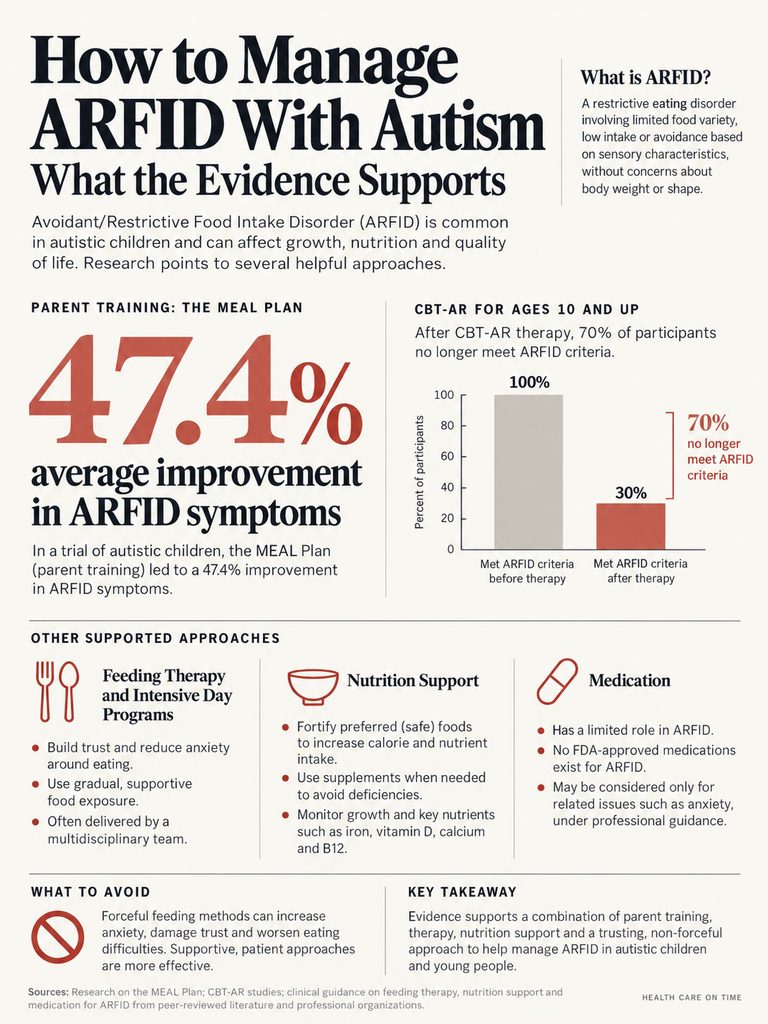
The MEAL Plan (Managing Eating Aversions and Limited variety) was developed at the Marcus Autism Center in Atlanta. It teaches parents to structure meals, reduce pressure, and expand the diet in small steps.
In a 16-week randomized trial of 38 autistic children, 47.4% of MEAL Plan families showed meaningful improvement, compared with 5.3% in a general parent education group.
The trial was small, and the children had moderate rather than severe food selectivity. Still, it’s the strongest trial evidence available for autistic kids specifically.
CBT-AR for Ages 10 and Up
Cognitive-behavioral therapy for ARFID (CBT-AR) was developed at Massachusetts General Hospital. It targets each ARFID driver with its own module and uses gradual food exposure.
In an open trial of children and teens aged 10 to 17, 70% no longer met ARFID criteria after 20 to 30 sessions, and patients added about 17 new foods on average.
In an open trial of adults, 80% were rated much improved and 47% no longer met criteria. These trials had no control group, evidence in autistic people comes mostly from case reports, and a randomized trial of CBT-AR has not yet been published.
Feeding Therapy and Intensive Day Programs
Feeding therapy with an SLP or OT works on chewing, swallowing, and sensory tolerance. For severe restriction, intensive interdisciplinary day programs combine medical, nutrition, and behavioral care over several weeks.
Ask any program how it handles refusal. The best ones build trust and never force food into a child’s mouth.
Nutrition Support: Safe-Food Fortification and Supplements
While the diet expands, the body still needs nutrients. A dietitian may suggest fortifying safe foods, choosing iron-fortified versions of accepted foods, or a targeted supplement.
Many kids with ARFID refuse chewable vitamins because of taste or texture. Liquid, powder, or tiny swallowable forms may work better. Confirm doses with your child’s clinician.
Medication: Limited Role, Low-Appetite Cases Only
No medication is FDA-approved for ARFID. In some cases, doctors prescribe off-label medications to stimulate appetite or ease anxiety.
The evidence is limited to small case series. Medication works best as an add-on to therapy, not a replacement.
What to Avoid
- Force-feeding or holding a child down to eat. This deepens fear and can cause choking or trauma.
- Hiding “real” food inside safe foods without consent. If discovered, the safe food may be lost too.
- Punishment or bribery tied to eating. It raises anxiety at the table.
- Compliance-only programs that ignore sensory distress.
- Unproven restrictive diets, such as gluten-free or casein-free plans without a diagnosed medical need, which can shrink an already narrow diet.
Autism-Friendly Strategies You Can Start at Home
These strategies support professional care; they don’t replace it. They draw on the same principles used in the MEAL Plan and CBT-AR.
Protect the Safe Foods
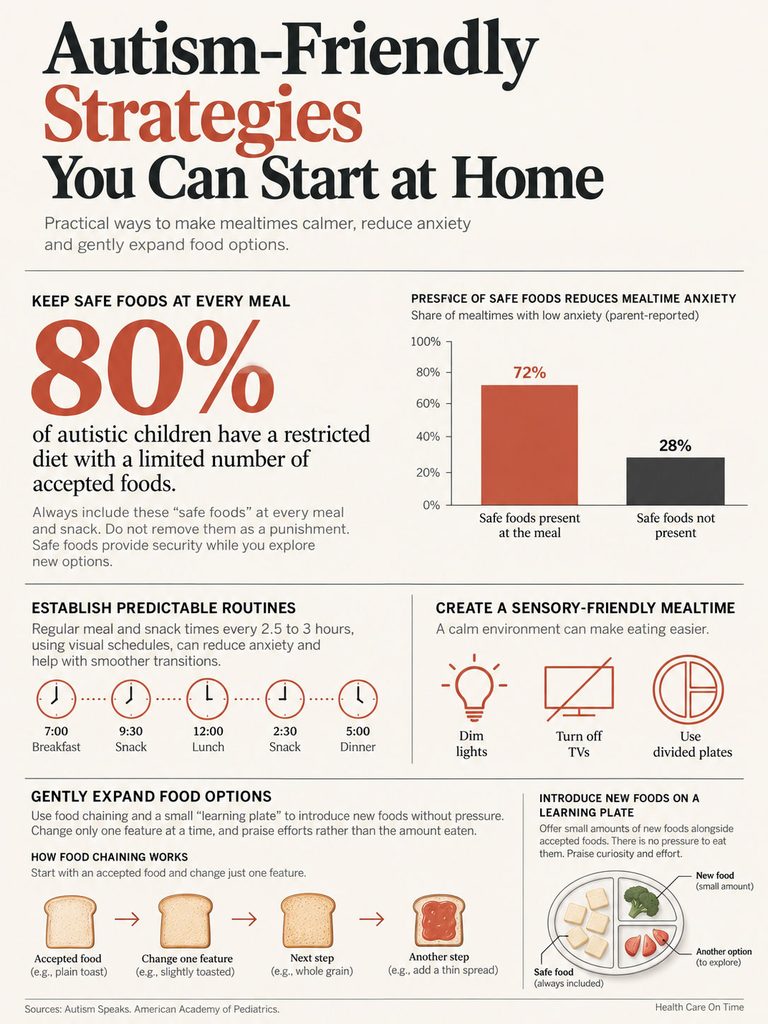
Safe foods are the foods your child reliably eats. Serve at least one at every meal and snack, and never remove one as punishment.
Food Chaining in Small Steps
Food chaining moves from an accepted food to a very similar one: Brand A nuggets, then Brand B nuggets, then homemade breaded chicken strips, then grilled strips.
Each step changes only one feature, such as brand, shape, color, or texture. Progress can take weeks per link, and that’s normal.
Predictable Meal Routines
Set regular meal and snack times, roughly every 2.5 to 3 hours for young children, and avoid all-day grazing. A visual schedule can help; predictability lowers anxiety.
Sensory-Friendly Mealtimes
Dim harsh lights, turn off the TV, offer divided plates so foods don’t touch, and let your child use preferred utensils. Seat them away from strong cooking smells.
Take Pressure Off the Plate
Put a new food on a small “learning plate” beside the main plate, with no expectation to eat it. Touching, smelling, or licking it all count as progress.
Praise the effort, not the amount eaten. Parents we speak with often say this one change calmed their dinner table within weeks.
ARFID and Autism in Teens and Adults
Most research focuses on children, yet many autistic adults have lived with ARFID for decades without a name for it.
Late Diagnosis, Masking, and Women
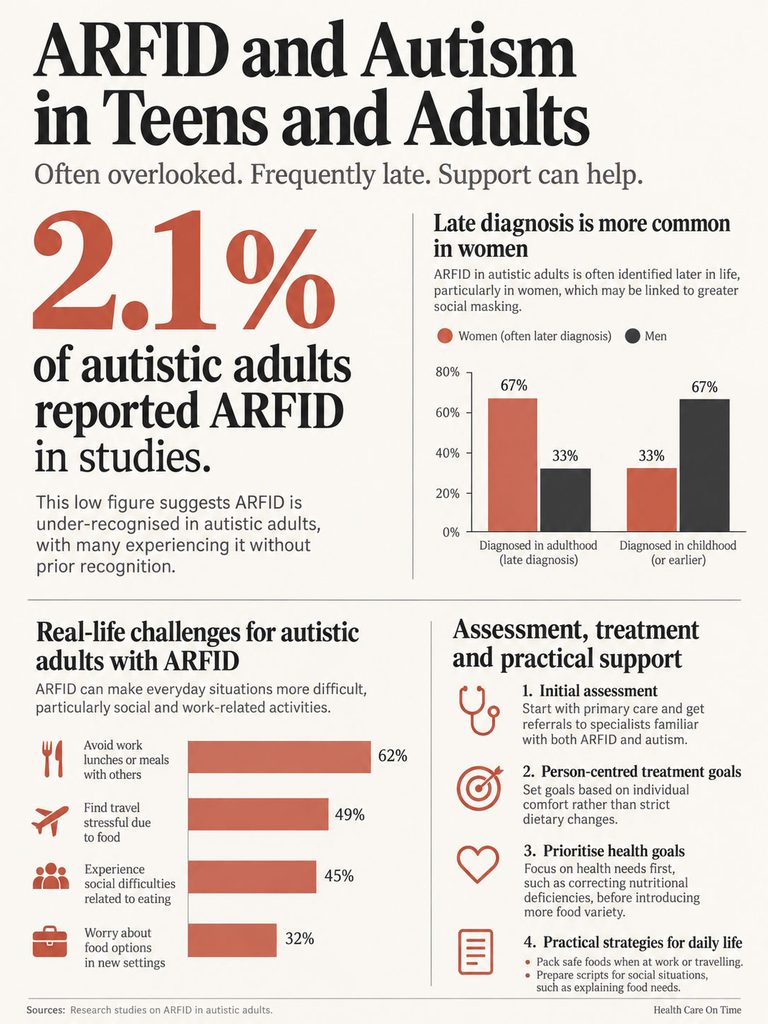
Autism is often diagnosed later in girls and women, who may mask social differences. Their eating patterns can be mislabeled as anorexia, “fussiness,” or a digestive problem.
In the one adult study in the meta-analysis, only 2.1% of autistic adults reported ARFID. Researchers believe that likely reflects under-recognition, not true rarity.
How Adults Can Get Assessed
Start with a primary care visit and basic labs, then ask for a referral to an eating disorder clinician who knows both ARFID and autism.
Bring a simple list of your accepted foods and the situations you avoid. If a clinician focuses only on body image questions, it’s reasonable to ask whether ARFID has been considered.
Eating at Work, Dates, and Travel
For adults, the burden often shows up socially: skipped work lunches, avoided dates, stressful travel. Packing safe foods, checking restaurant menus ahead, and a short script (“I have a medical eating condition, and I’m fine with this”) can help.
Neurodiversity-Affirming Treatment Goals
Good adult care lets the person set the goals. Maybe the goal is five foods that work at restaurants, not fifty new foods.
In cases reviewed by our medical team, adults do best when health goals, like correcting an iron deficiency, come first and variety goals follow at their own pace.
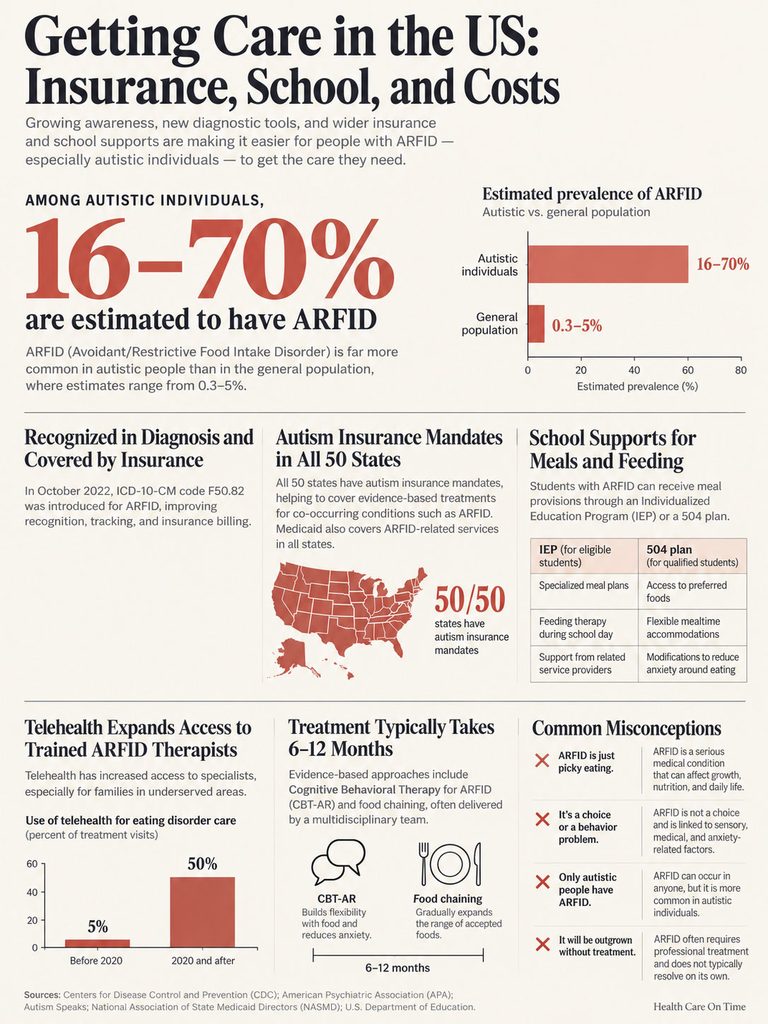
Getting Care in the US: Insurance, School, and Costs
ICD-10 F50.82, Autism Insurance Mandates, and Medicaid
Since October 2022, ARFID has had its own US diagnosis code, ICD-10-CM F50.82, which makes insurance billing for ARFID treatment more straightforward.
All 50 states have some form of autism insurance mandate, though coverage varies by plan, and self-funded employer plans follow federal rules instead. For children on Medicaid, the EPSDT benefit covers medically necessary services under age 21, which can include feeding therapy.
Ask your insurer three questions: Is feeding therapy covered under medical or behavioral health benefits? Is prior authorization required? Are there in-network ARFID-trained clinicians?
IEP and 504 Meal Accommodations
School meals can be a daily stressor. A 504 plan or IEP can include permission to bring safe foods, a quieter place to eat, extra lunch time, and no staff pressure to try foods.
Telehealth CBT-AR Options
Trained ARFID therapists are scarce in many parts of the country, and telehealth helps close that gap.
A 2026 study of virtually delivered CBT-AR evaluated real-world effectiveness for adults outside a research clinic. Confirm the provider is licensed in your state before booking.
Frequently Asked Questions
Is ARFID a form of autism?
No. ARFID is an eating disorder, and autism is a neurodevelopmental condition. They are separate diagnoses that often occur together, and a person can have either without the other. When both are present, clinicians treat the eating problem on its own terms while adapting care to autistic sensory and communication needs.
What percentage of autistic people have ARFID?
The best pooled estimate is about 11%, from a 2025 meta-analysis. That figure rests on only three studies, which ranged from 2% to 28%. Individual US studies, like the SPARK cohort, found screening rates near 21%. The true number likely falls somewhere within that range.
Can you have ARFID without autism?
Yes. Most people with ARFID are not autistic. The 2025 meta-analysis found autism in about 16% of people with ARFID, meaning roughly 84% had no autism diagnosis. ARFID also appears with anxiety, ADHD, gut conditions, and after frightening choking episodes.
Is ARFID a sign of autism?
Not on its own, since ARFID can occur in anyone. Because the two overlap strongly, clinicians often suggest autism screening when ARFID appears alongside social communication differences, strong routines, or sensory sensitivities. Only a formal autism evaluation can confirm it either way.
Will an autistic child grow out of ARFID?
Some children improve with age, but many don’t without support. The food list often shrinks over time instead of growing. Early treatment offers the best chance to expand the diet and prevent nutrient deficiencies. Waiting it out is risky when growth or lab results are already affected.
What is a safe food?
A safe food is one a person reliably eats without distress, often a specific brand, texture, or preparation. In ARFID treatment, safe foods are protected and served at every meal. They provide comfort and nutrition while new foods are introduced slowly through small, predictable steps.
Should an autistic child be made to eat?
No. Force-feeding, bribing, or punishing usually increases fear and food refusal. Evidence-based approaches like the MEAL Plan and CBT-AR use structure, low pressure, and gradual exposure instead. If intake becomes dangerously low, a medical team may use supervised nutrition support, never force.
What vitamins are most often low with ARFID?
Iron and vitamin D deficiencies are common. Vitamin C deficiency can cause scurvy, especially when fruits and vegetables are missing. Vitamin A, zinc, and vitamin B12 may also run low depending on the diet. A blood test is the only reliable way to know.
Can adults be diagnosed with ARFID and autism?
Yes. Many autistic adults are diagnosed with ARFID later in life, often after years of being called picky. CBT-AR has been studied in adults aged 18 to 55. A clinician familiar with both conditions can assess them together and help set adult-led treatment goals.
Does insurance cover ARFID treatment?
Often, yes. ARFID has its own code, ICD-10-CM F50.82, which supports billing. Coverage depends on your plan, your state’s mandates, and whether services fall under medical or behavioral benefits. Children on Medicaid may qualify through EPSDT. Check prior authorization rules before starting.
How long does ARFID treatment take?
CBT-AR typically runs 20 to 30 sessions, often over 4 to 8 months. Parent programs like the MEAL Plan last about 16 weeks, and intensive day programs may run several weeks. Progress is gradual, and booster sessions help protect gains during transitions like a new school year.
What is food chaining?
Food chaining is a step-by-step way to expand a diet. It moves from an accepted food to a very similar one, changing only one feature at a time, such as brand, color, or shape. Keeping each step small keeps anxiety low, which makes new foods feel manageable.
Disclaimer: This article is for general education and does not replace advice from a qualified healthcare professional. ARFID can cause serious medical complications. If you or your child is refusing food or fluids, feels faint, or shows signs of dehydration, seek urgent care. For eating disorder support, contact the ANAD Helpline at 1-888-375-7767. If you or someone you know is in crisis, call or text 988 to reach the 988 Suicide and Crisis Lifeline.
References
- Sader M, et al. The Co-Occurrence of Autism and ARFID: A Prevalence-Based Meta-Analysis. Int J Eat Disord. 2025
- CDC. Data and Statistics on Autism Spectrum Disorder (ADDM Network)
- Characteristics of Pediatric Scurvy Hospitalizations: 2006 to 2021
- Scurvy as a Manifestation of Food Selectivity in Children with Autism. J Autism Dev Disord. 2016
- Sharp WG, et al. The Autism MEAL Plan vs Parent Education: A Randomized Clinical Trial. J Pediatr. 2019
- Thomas JJ, et al. CBT for ARFID: Feasibility and Proof-of-Concept for Children and Adolescents. Int J Eat Disord. 2020
- Thomas JJ, et al. Cognitive-Behavioral Therapy for Adults With ARFID. 2021
- Effectiveness of Virtually Delivered CBT for ARFID. 2026
- Koomar T, et al. Estimating the Prevalence and Genetic Risk Mechanisms of ARFID in a Large Autism Cohort. Front Psychiatry. 2021
- Restrictive Eating in a Nationwide Swedish Twin Study. 2017
- Harshman SG, et al. How We Define ARFID Can Double Its Prevalence. J Clin Psychiatry. 2021
- Chistol LT, et al. Sensory Sensitivity and Food Selectivity in Children With ASD. J Autism Dev Disord. 2018
- Johnson CR, et al. Parent Training for Feeding Problems in Children With ASD. J Pediatr Psychol. 2019
- ANAD Eating Disorder Helpline
- 988 Suicide and Crisis Lifeline