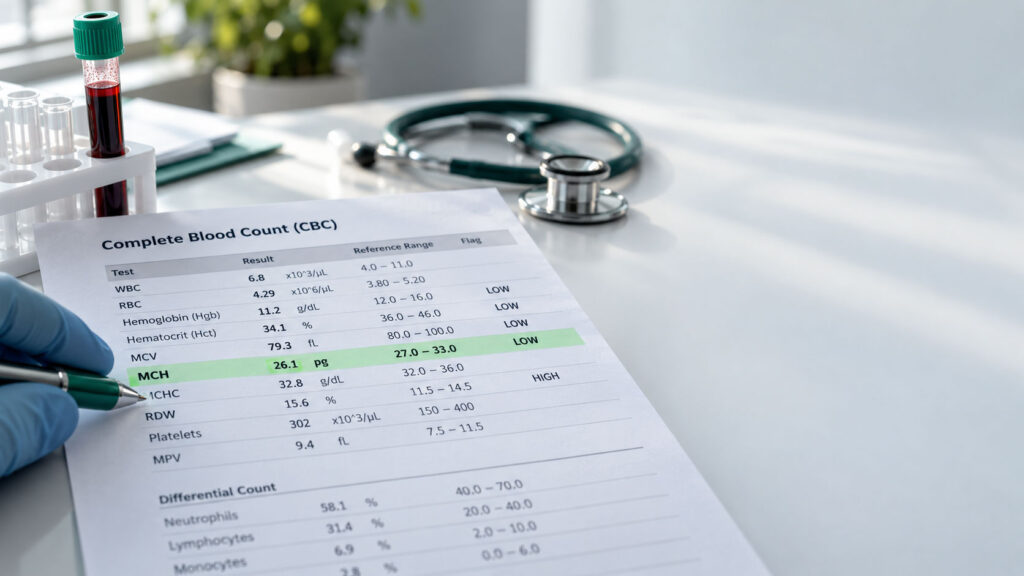
Three of the biggest health websites in the US list three different “normal” ranges for MCH. Two of them even contradict themselves on the same page. So if your lab report flagged an MCH of 32 or 33, it may be perfectly normal at your lab and “high” on a website you read five minutes later.
Table of Contents
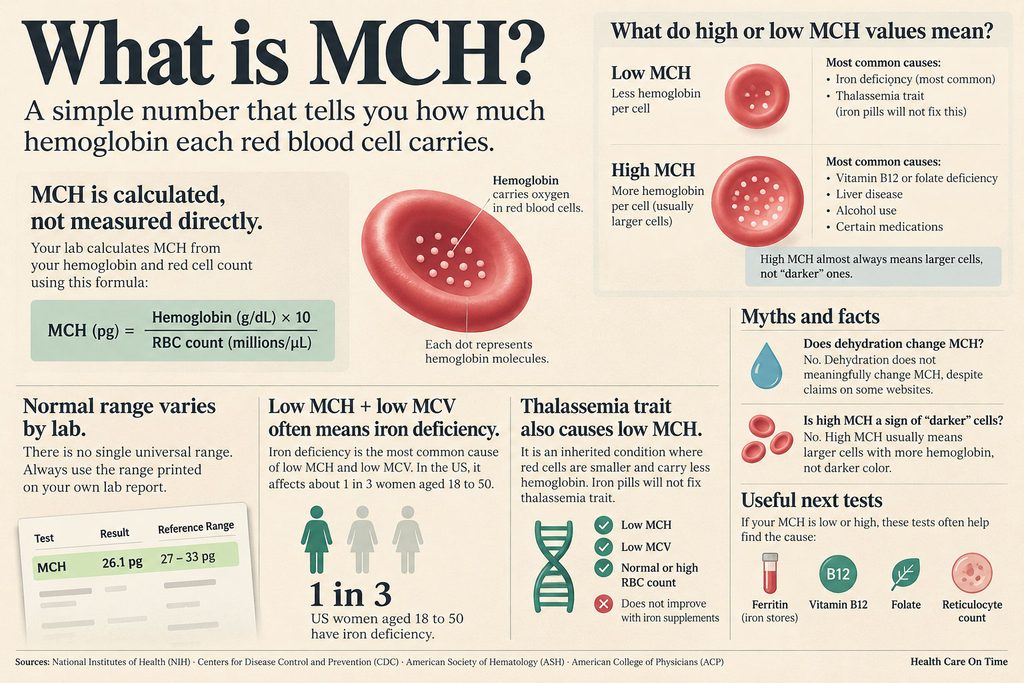
That confusion is fixable. This guide explains what MCH actually measures, which range to trust, what low and high values usually point to, and the specific tests to ask about next.
Quick Answer: MCH (mean corpuscular hemoglobin) is the average amount of hemoglobin inside each red blood cell. Most US labs use about 27 to 33 picograms (pg). A low MCH usually means small red cells, most often from iron deficiency or thalassemia trait. A high MCH usually means large red cells, often from vitamin B12 or folate deficiency, alcohol, liver disease, thyroid problems, or certain medications. Read it alongside MCV, RDW, and hemoglobin, then test the cause before taking supplements.
At a Glance
- MCH is calculated from your hemoglobin and red cell count. It is not measured directly.
- The normal range depends on your lab. Use the range printed on your own report.
- Low MCH plus low MCV most often means iron deficiency, which affects about 1 in 3 US women aged 18 to 50.
- Thalassemia trait also causes low MCH, and iron pills will not fix it.
- High MCH almost always means larger cells, not “darker” ones.
- Dehydration does not meaningfully change MCH, despite what some websites claim.
- The most useful next tests are usually ferritin, vitamin B12, folate, and a reticulocyte count.
The 8 Most Common Causes of an Abnormal MCH
- Iron deficiency (low MCH)
- Thalassemia trait (low MCH)
- Chronic inflammation or kidney disease (low or low-normal MCH)
- Vitamin B12 deficiency (high MCH)
- Folate deficiency (high MCH)
- Regular heavy alcohol use (high MCH)
- Liver disease or an underactive thyroid (high MCH)
- Medications such as methotrexate, hydroxyurea, or some seizure and HIV drugs (high MCH)
What MCH Is (and What It Isn’t)
MCH stands for mean corpuscular hemoglobin. It tells you, on average, how much hemoglobin each of your red blood cells carries. Hemoglobin is the iron-rich protein that picks up oxygen in your lungs and drops it off in your tissues.
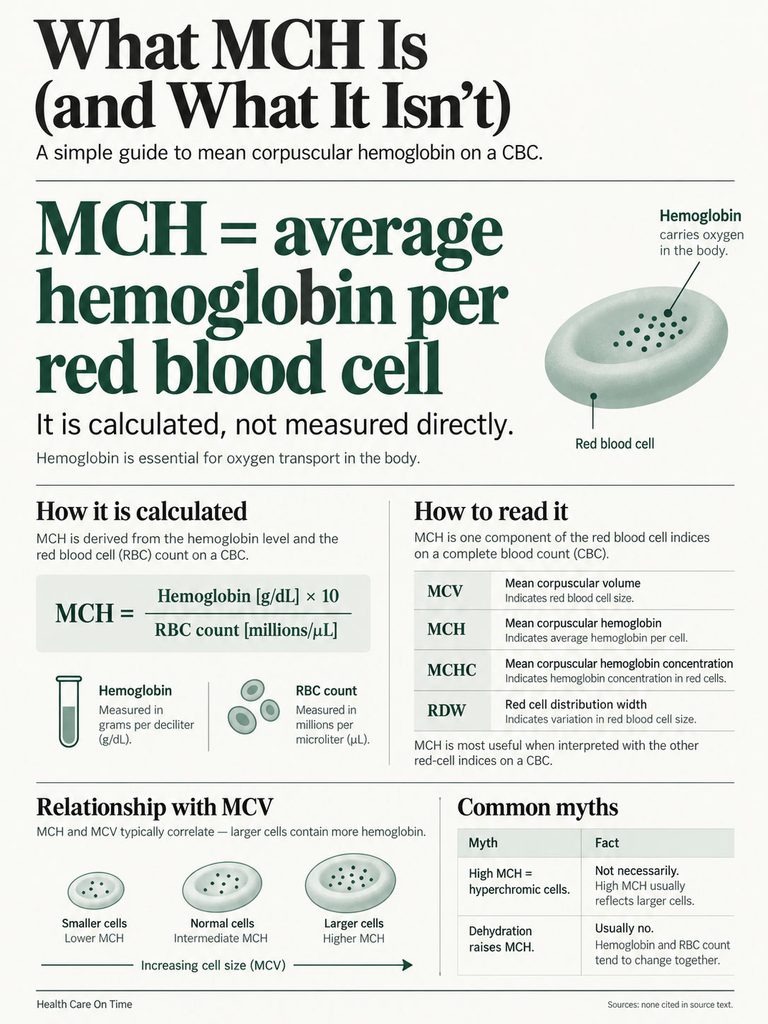
MCH appears as one line on a complete blood count (CBC), the most commonly ordered blood test in the US. It belongs to a group called the red blood cell indices, along with MCV, MCHC, and RDW.
How MCH Is Calculated
Your lab analyzer measures your hemoglobin and counts your red blood cells. MCH is then worked out with a simple formula: hemoglobin (g/dL) multiplied by 10, divided by your red blood cell count (millions per microliter).
For example, a hemoglobin of 14 g/dL and an RBC count of 4.7 gives an MCH of about 29.8 pg. MCH can only be as accurate as the two numbers behind it. If either is off, MCH moves too.
MCH vs MCV vs MCHC vs RDW
These four numbers answer different questions about the same cells:
- MCV (mean corpuscular volume): How big are your red cells on average?
- MCH: How much hemoglobin does each cell carry on average?
- MCHC (mean corpuscular hemoglobin concentration): How tightly packed is the hemoglobin, relative to cell size?
- RDW (red cell distribution width): How much do your cells vary in size?
MCH and MCV usually move together. Bigger cells hold more hemoglobin; smaller cells hold less. Our medical reviewers read MCH as part of that full pattern, never as a stand-alone verdict.
Two Myths on Page One of Google
Myth 1: High MCH means “hyperchromic,” extra-dark red cells. Red cells don’t become hyperchromic. When a cell holds more hemoglobin than normal, it’s because the cell is larger, not because the hemoglobin is more concentrated. That’s why MCHC usually stays normal when MCH is high.
Myth 2: Dehydration raises MCH. Dehydration concentrates your blood, so hemoglobin and red cell count rise together. Because MCH is a ratio of those two numbers, the effect largely cancels out. Dehydration can nudge hemoglobin and hematocrit, but it shouldn’t meaningfully move MCH.
What Is a Normal MCH Range?
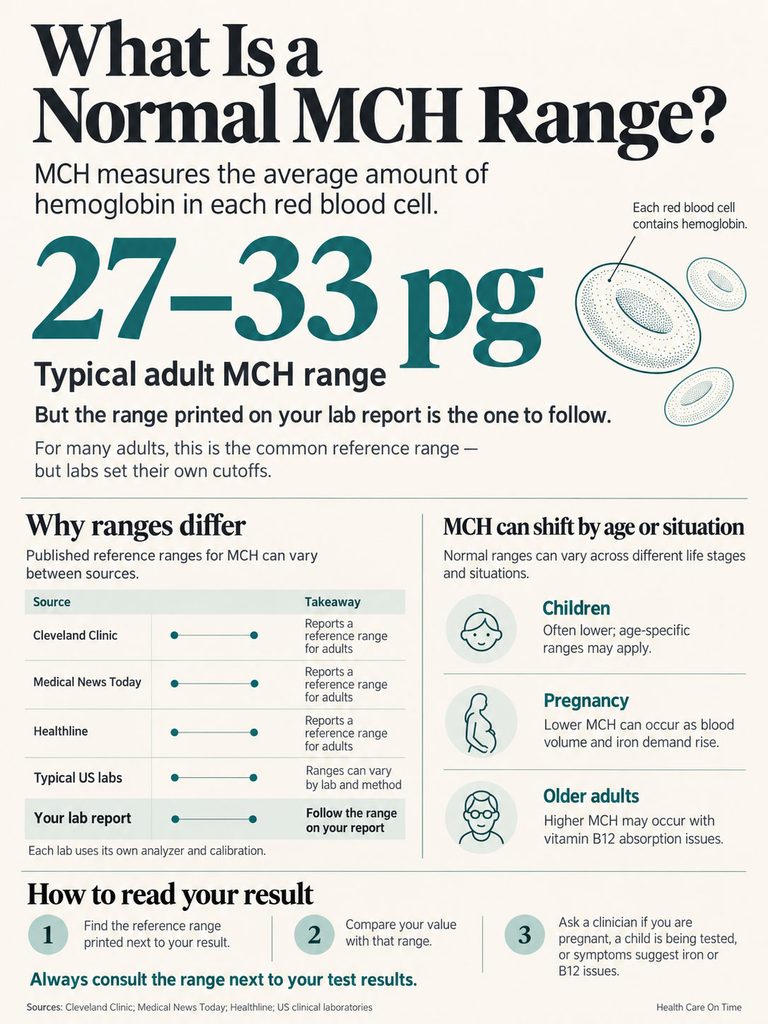
Most US labs report a normal adult MCH somewhere between 27 and 33 pg per cell. But the exact cutoffs vary, and that’s where a lot of worry starts.
| Source | Low MCH | Normal MCH | High MCH | Problem |
| Cleveland Clinic MCH page | Below 27 pg | 27 to 33 pg | Above 33 pg | Its own CBC page uses 27 to 31 pg |
| Cleveland Clinic CBC page | Below 27 pg | 27 to 31 pg | Above 31 pg | Disagrees with the MCH page |
| Medical News Today | 27 pg or below | 27 to 31 pg | 34 pg or more (text); above 31 (table) | Text and table disagree |
| Healthline | Below 27.5 pg | 27.5 to 33.2 pg | Above 33.2 pg (text); over 31 (table) | Text and table disagree |
| Typical US hospital lab | About 26 to 27 pg | About 27 to 33 pg | About 33 to 34 pg | Varies by analyzer |
Why Labs Disagree
Each lab sets its own reference range based on its analyzer, its calibration, and the healthy population it tested. A range of 27 to 31 and a range of 27 to 33 can both be correct for the lab that produced them.
The practical rule is simple: use the range printed next to your result on your own report. Patients booking CBC tests with us often bring website printouts to the conversation; the lab’s own range always wins.
Children, Pregnancy, and Older Adults
Children have naturally smaller red cells, so their MCH runs lower. Many labs use age-specific ranges, and values in the mid-20s can be normal for young kids.
During pregnancy, blood volume expands and iron demand rises, so low MCH from iron deficiency becomes more common. Older adults are more prone to high MCH from vitamin B12 problems, since stomach acid and B12 absorption both decline with age.
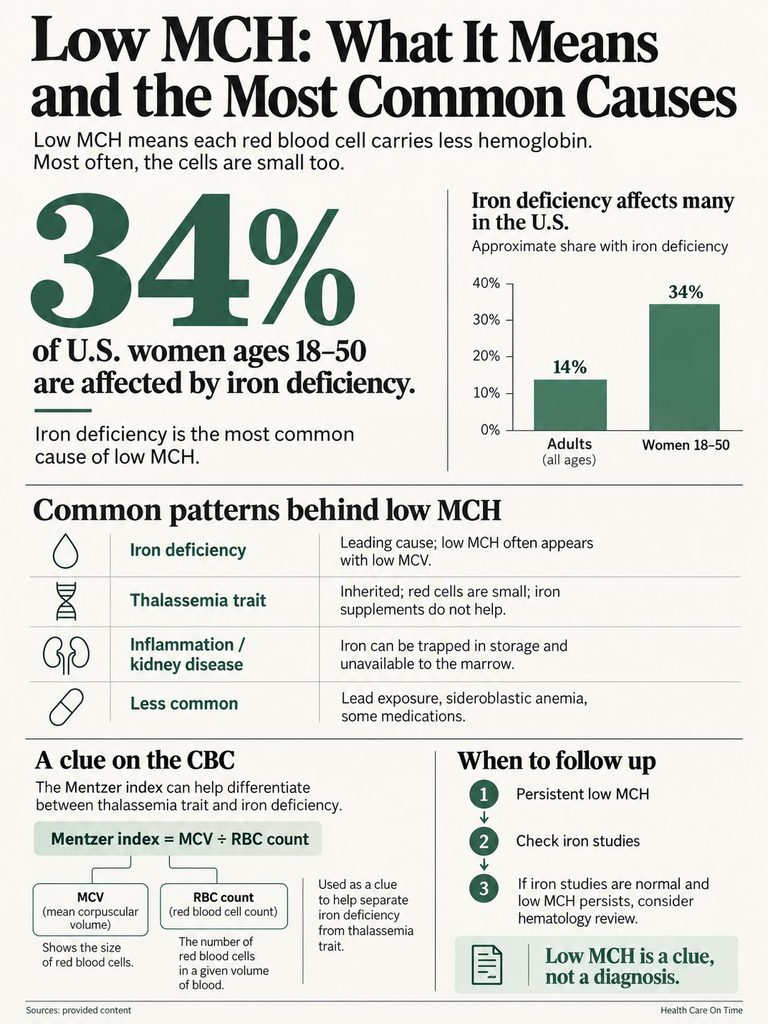
Low MCH: What It Means and the Most Common Causes
A low MCH means your red cells carry less hemoglobin than usual. Almost always, it’s because the cells are smaller than normal (low MCV). When hemoglobin is also low, doctors call this microcytic, hypochromic anemia.
Iron Deficiency
Iron deficiency is the leading cause of low MCH in the US. Without enough iron, your bone marrow can’t build full hemoglobin, so it makes smaller, paler cells.
It’s more common than many people assume. In NHANES data from 2017 to 2020, about 14% of US adults had absolute iron deficiency, and nearly 34% of women aged 18 to 50 did. A new American Journal of Medicine analysis found the biggest rise over two decades was in that same group.
Common reasons include:
- Heavy menstrual periods
- Pregnancy and breastfeeding
- Slow bleeding in the stomach or bowel (ulcers, polyps, colon cancer)
- Regular aspirin or NSAID use, such as ibuprofen
- Celiac disease or past weight-loss surgery, which reduce absorption
- Low iron intake, especially in vegetarian or vegan diets
- Frequent blood donation
Low MCH can show up before hemoglobin drops. That makes it a useful early warning that iron stores are running down.
Thalassemia Trait
Thalassemia trait (also called thalassemia minor) is an inherited difference in how your body builds hemoglobin. People with the trait usually feel fine, but their red cells are small, so MCV and MCH are low.
It’s more common in families with Mediterranean, Middle Eastern, South Asian, Southeast Asian, or African ancestry. Many people only learn they carry it after a routine CBC.
The key point: iron supplements do not fix thalassemia trait. Researchers note that iron is very helpful in iron deficiency anemia but can be harmful when the anemia is due to thalassemia, because unneeded iron can slowly build up in the body.
The Mentzer Index, Explained Simply
Doctors often run a quick screen called the Mentzer index: your MCV divided by your red blood cell count.
- Below 13: leans toward thalassemia trait (many small cells)
- Above 13: leans toward iron deficiency (fewer small cells)
Example: an MCV of 65 and an RBC count of 5.6 gives 11.6, pointing toward thalassemia trait. An MCV of 70 with an RBC count of 4.0 gives 17.5, pointing toward iron deficiency.
The index is a screen, not a diagnosis. One pediatric study reported 98.7% sensitivity and 82.3% specificity, while others found much weaker results. People can also have both conditions at once. Confirming thalassemia trait usually takes iron studies plus hemoglobin electrophoresis.
Anemia of Chronic Inflammation and Kidney Disease
Long-term inflammation from rheumatoid arthritis, inflammatory bowel disease, chronic infections, or some cancers can lock iron inside storage cells. The iron is there, but the marrow can’t use it.
Chronic kidney disease adds another problem: damaged kidneys make less erythropoietin, the hormone that tells your marrow to produce red cells. Both can cause low or low-normal MCH. Ferritin may look normal in these cases, so doctors often add transferrin saturation or CRP.
Rare Causes
Less common causes include lead exposure (a particular concern for children in older US housing), sideroblastic anemia, and some medications. They’re uncommon, but they’re the reason a persistent low MCH with normal iron studies deserves a hematology review.
High MCH: What It Means and the Most Common Causes
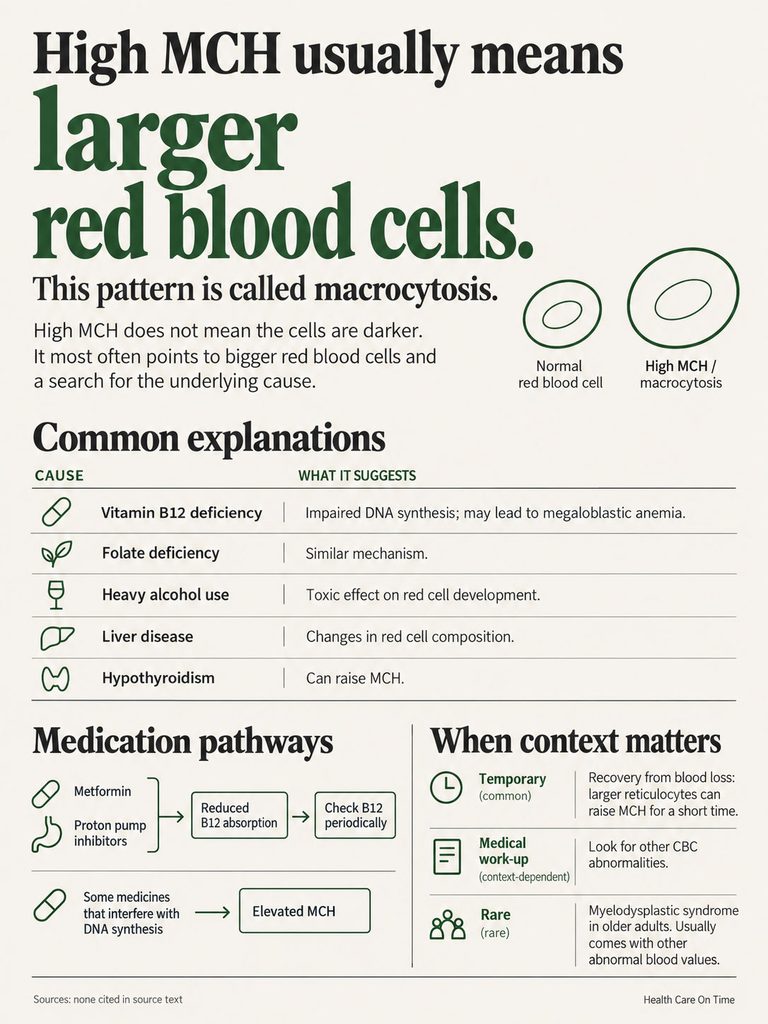
A high MCH means each red cell carries more hemoglobin than average. Almost always, that’s because the cells are larger than normal, a pattern called macrocytosis. High MCH itself causes no symptoms; the cause behind it might.
Vitamin B12 and Folate Deficiency
Your marrow needs vitamin B12 and folate to copy DNA when making new red cells. Without them, cells grow but can’t divide properly, so they come out oversized. This is called megaloblastic anemia.
B12 deficiency is more likely if you:
- Are over 50 (lower stomach acid reduces absorption)
- Have pernicious anemia, an autoimmune condition that blocks B12 absorption
- Follow a vegan diet without supplements
- Have had stomach or bowel surgery, Crohn’s disease, or celiac disease
- Take certain long-term medications
High MCH can be one of the earliest clues. In one hospital study, 20.9% of B12 deficiency cases showed enlarged red cells with no anemia yet. Early detection matters, because nerve damage from long-standing B12 deficiency can become permanent.
Metformin, PPIs, and B12: What the Newest Data Says
Online articles often claim up to half of people on metformin become B12 deficient. Those figures usually come from older studies using loose definitions.
A 2026 study from Denmark using stricter modern criteria found deficiency in 2.3% of current metformin users versus 1.3% of non-users, a difference that was not statistically meaningful. That’s reassuring, though it’s one non-US study. US diabetes guidance still supports periodic B12 checks for long-term metformin users, especially those with numbness or anemia.
Proton pump inhibitors such as omeprazole, taken for years, can also lower B12 absorption. Don’t stop either medicine on your own; ask about a B12 test instead.
Alcohol Use
Regular heavy drinking is one of the most common causes of high MCH and MCV in US adults. Alcohol has a direct toxic effect on developing red cells, separate from any vitamin shortage.
About 90% of people with heavy alcohol use show enlarged red cells even before anemia develops. It reverses with abstinence, though it usually takes months, because the old large cells must age out first.
In results reviewed across our lab partner network, a mildly high MCH alongside an elevated GGT liver enzyme is a common pairing. It’s worth an honest conversation with your doctor about how much you drink.
Liver Disease and Hypothyroidism
Liver disease changes the fat content of red cell membranes, which makes cells larger. Fatty liver disease, hepatitis, and cirrhosis can all raise MCH.
An underactive thyroid slows red cell production and can also produce mildly large cells. A TSH test checks for it, and it’s often ordered alongside B12 when MCH is high.
Medications
Several drugs interfere with DNA synthesis or folate use and can raise MCH:
- Methotrexate
- Hydroxyurea
- Azathioprine
- Some HIV medications (antiretrovirals)
- Valproic acid and phenytoin (seizure medicines)
- Certain chemotherapy drugs
If you take any of these, a high MCH may be an expected side effect. Your prescriber should still know about it.
Recovery After Blood Loss
After bleeding or hemolysis (red cell destruction), your marrow releases young red cells called reticulocytes. These are larger than mature cells, so MCV and MCH can rise for a while. A reticulocyte count separates this recovery pattern from a true deficiency.
A rare but important cause of high MCH in older adults is myelodysplastic syndrome, a group of bone marrow disorders. These usually come with other abnormal CBC values, such as low platelets or low white cells.
Reading Your MCH With the Rest of Your CBC
MCH alone rarely tells the full story. The pattern across your red cell indices is what points to a cause. This is the same pattern-first approach our reviewing clinicians use.
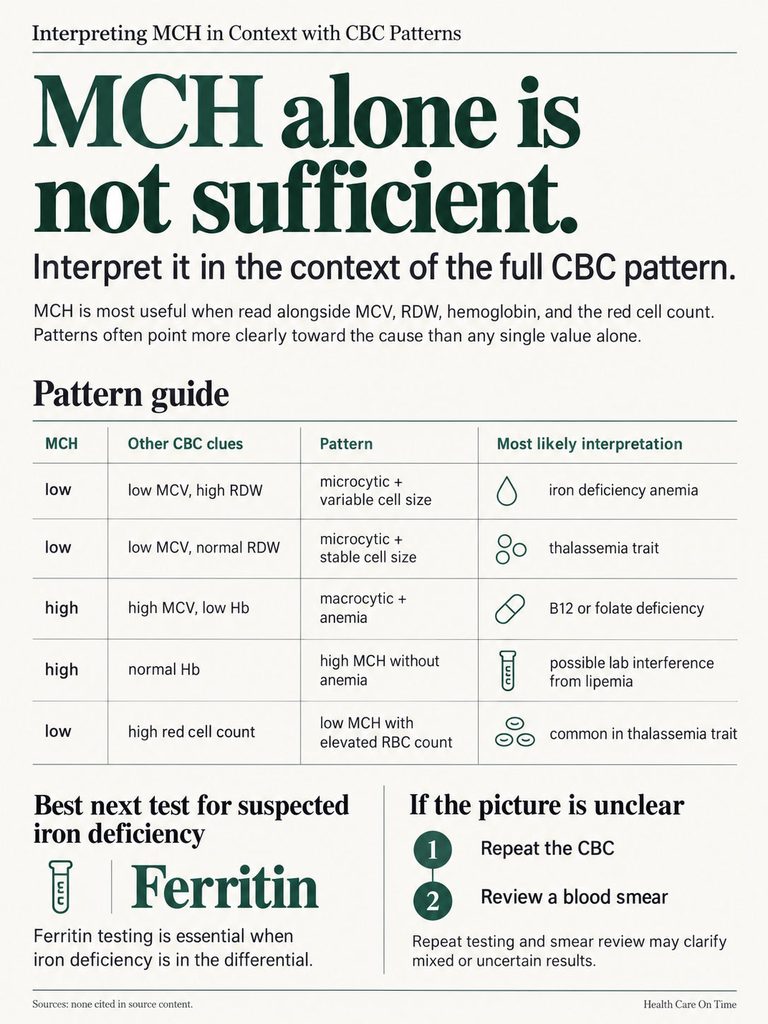
| CBC Pattern | Most Likely Cause | Key Next Test | How Urgent |
| Low MCH, low MCV, high RDW, low Hb | Iron deficiency anemia | Ferritin, iron panel | See doctor within 1 to 2 weeks |
| Low MCH, low MCV, normal RDW, high RBC count | Thalassemia trait | Iron panel, hemoglobin electrophoresis | Routine, within a few weeks |
| Low MCH, low or normal MCV, normal or high ferritin | Anemia of inflammation or kidney disease | CRP, transferrin saturation, kidney panel | Routine follow-up |
| High MCH, high MCV (often above 110 fL), low Hb | B12 or folate deficiency | B12, folate, methylmalonic acid | Within 1 week, sooner with numbness |
| High MCH, high MCV (usually under 110 fL), normal Hb | Alcohol, liver disease, medications | GGT, liver panel, medication review | Routine follow-up |
| High MCH, high MCV, high reticulocytes | Recovery after bleeding or hemolysis | Reticulocyte count, bilirubin, LDH | Depends on the bleeding source |
| High MCH plus low platelets or low white cells | Possible marrow disorder | Peripheral smear, hematology referral | Prompt referral |
Low MCH With Normal Hemoglobin
This is common and is often the first sign of iron deficiency, before anemia sets in. Your marrow still makes enough cells, but each holds a little less hemoglobin. It can also reflect thalassemia trait, where hemoglobin may stay near normal for life. A ferritin test usually settles it.
High MCH With Normal MCV
This combination is unusual, so lab interference is the first suspect. Very high blood fats (lipemia) can falsely raise the hemoglobin reading, which pushes MCH and MCHC up while cell size looks normal.
If the pattern doesn’t fit your health picture, a repeat CBC on a fasting sample plus a blood smear review is a sensible first step before any further workup.
Low MCH but High Red Cell Count
Many small cells with near-normal hemoglobin is a classic thalassemia trait pattern. This is where the Mentzer index helps most, and where unprescribed iron is most likely to backfire.
How Common Are These Causes in the US?
The figures below come from US national surveys, major guidelines, and peer-reviewed studies. They show why iron deficiency is the first thing most clinicians check when MCH is low.
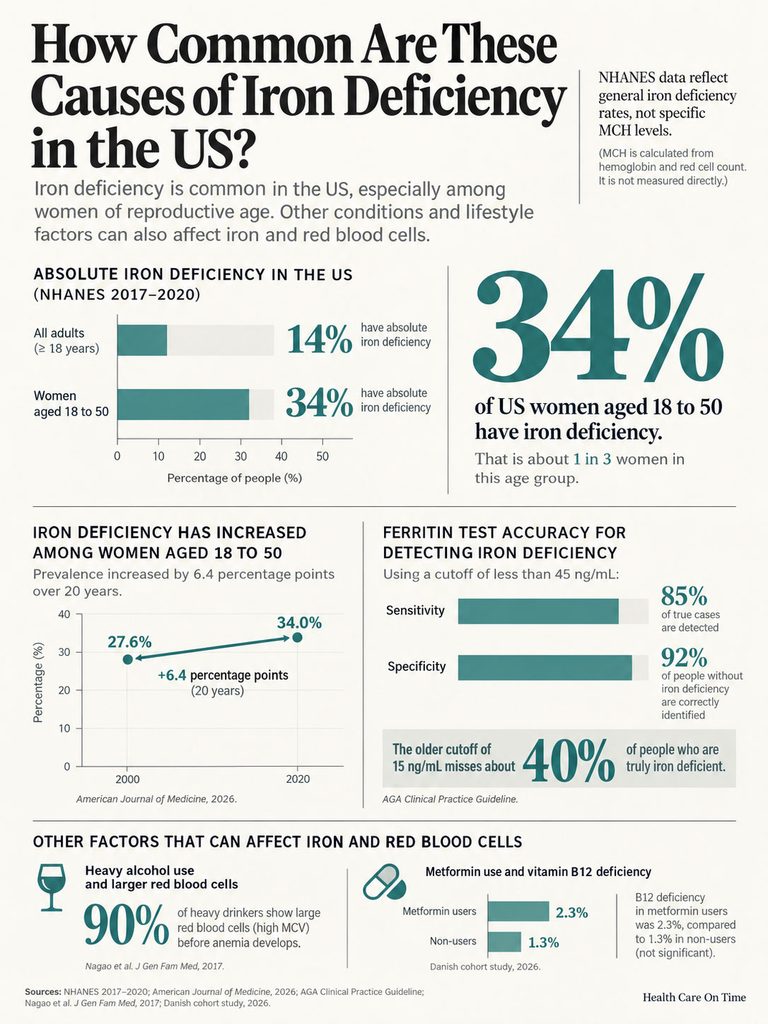
| Statistic | Figure | Source |
| US adults with absolute iron deficiency | About 14% | NHANES 2017 to 2020 (Buckley et al.) |
| US women aged 18 to 50 with absolute iron deficiency | Nearly 34% | NHANES 2017 to 2020 (Buckley et al.) |
| Largest 20-year rise in iron deficiency | +6.4 points, women 18 to 50 | American Journal of Medicine, 2026 |
| Ferritin under 45 ng/mL: accuracy for iron deficiency | 85% sensitivity, 92% specificity | AGA Clinical Practice Guideline |
| Old ferritin cutoff of 15 ng/mL | 59% sensitivity, 99% specificity | AGA Clinical Practice Guideline |
| Heavy drinkers with large red cells before anemia | About 90% | Nagao, J Gen Fam Med, 2017 |
| B12 deficiency on metformin, strict criteria | 2.3% vs 1.3% non-users (not significant) | Danish cohort, 2026 |
The ferritin numbers deserve attention. The older 15 ng/mL cutoff misses about 4 in 10 people who are truly iron deficient. The American Gastroenterological Association now recommends using 45 ng/mL instead for people with anemia. If your ferritin was 25 and someone called it “normal,” it’s fair to ask about this.
What the Evidence Can and Can’t Tell You
A few honest limits are worth knowing. The newest metformin data comes from Denmark, not the US. Most Mentzer index studies were done outside the US, in populations with more thalassemia, so accuracy here may differ.
And the NHANES iron figures measure iron deficiency in general, not MCH specifically. They show how common the leading cause is, not how many people have a low MCH.
Is an Abnormal MCH Serious? Red Flags
Most abnormal MCH results point to something common and treatable. A borderline value (say, 26.5 or 33.5 pg) with an otherwise normal CBC is often a simple recheck situation.
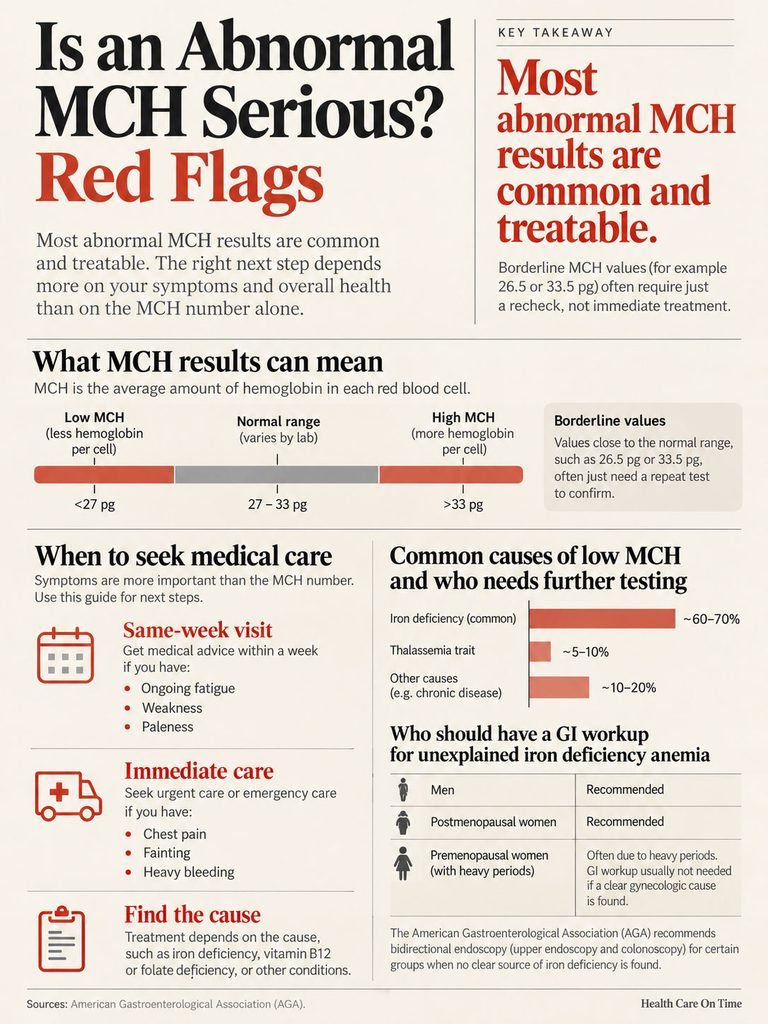
Still, the cause behind the number can range from a diet gap to a bleeding ulcer. Your symptoms matter more than how far outside the range the number sits. Our medical team flags symptoms first and numbers second.
Symptoms That Need a Same-Week Visit
- Fatigue that is getting worse or limits daily life
- Shortness of breath with stairs or light activity
- Pale skin, brittle nails, or cravings for ice or dirt (pica)
- Very heavy periods (soaking a pad or tampon every hour, or clots larger than a quarter)
- Tingling or numbness in hands or feet
- A sore, smooth, or red tongue
- New memory problems or mood changes
Symptoms That Need Urgent Care or the ER
- Black, tarry, or bloody stools, or vomiting blood
- Chest pain, a racing heartbeat at rest, or fainting
- Severe shortness of breath at rest
- New trouble walking, poor balance, or leg weakness
- Yellowing of the skin or eyes with dark urine
If you have any of these, don’t wait for a routine visit. Call 911 for chest pain, fainting, or heavy bleeding.
Why Men and Postmenopausal Women Need a GI Workup
In premenopausal women, heavy periods explain much iron deficiency. Men and women after menopause have no monthly blood loss, so iron deficiency anemia raises the question of hidden bleeding in the gut.
That’s why the AGA recommends bidirectional endoscopy, an upper endoscopy plus a colonoscopy, for these groups when no clear source is found. A low MCH can be the first clue to an ulcer, polyp, or early colon cancer. The AGA also suggests celiac disease blood testing for people with iron deficiency.
Your Next Steps After an Abnormal MCH Result
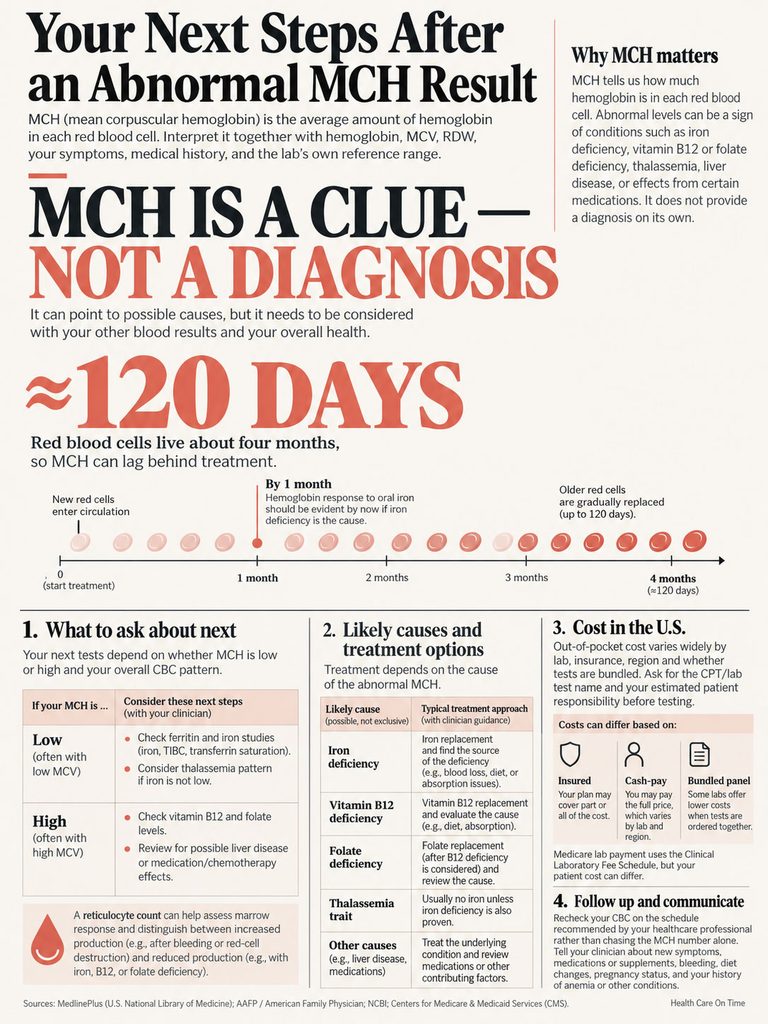
The right next step depends on whether your MCH is low or high, what else is abnormal, and how you feel. These are the conversations our medical reviewers most often suggest having with your doctor.
Tests to Ask For
If your MCH is low:
- Ferritin (ask whether the 45 ng/mL threshold was used)
- Iron panel: serum iron, TIBC, transferrin saturation
- CRP, if you have an inflammatory condition
- Hemoglobin electrophoresis, if iron studies are normal
- Celiac blood test (tTG-IgA)
- Stool testing or endoscopy, depending on age and sex
If your MCH is high:
- Vitamin B12 and folate
- Methylmalonic acid, if B12 is borderline
- Reticulocyte count
- TSH (thyroid)
- Liver panel, including GGT
- Peripheral blood smear
Treatment by Cause
Iron deficiency: Oral iron is the usual first step, and your doctor may suggest a dosing schedule that improves absorption and reduces stomach upset. IV iron is an option when pills aren’t tolerated or don’t work. Finding the source of loss matters as much as replacing the iron.
Thalassemia trait: Usually no treatment. The main steps are confirming it, avoiding unneeded iron, and considering genetic counseling before pregnancy.
B12 deficiency: High-dose oral B12 works for many people. Those with pernicious anemia or nerve symptoms often need injections, at least at first.
Folate deficiency: Folic acid supplements, but only after B12 has been checked. Folic acid can correct the blood picture of B12 deficiency while nerve damage continues underneath.
Alcohol, liver, thyroid, or medication causes: Treat the root cause, and MCH follows.
How Long Until MCH Normalizes
Red blood cells live about 120 days. MCH averages all your circulating cells, old and new, so it moves slowly.
As general guidance, hemoglobin often starts improving within a few weeks of effective treatment, while MCH lags behind. It can take roughly 2 to 4 months to fully normalize as old cells are replaced. Many doctors recheck the CBC around 6 to 12 weeks after treatment starts.
What It Costs in the US
Most of these tests are inexpensive, and insurance typically covers them when a doctor orders them for symptoms or an abnormal result. Typical cash prices at US direct-to-consumer labs (estimates; prices vary by lab and state):
- CBC (CPT 85025): about $10 to $50
- Ferritin (CPT 82728): about $20 to $60
- Vitamin B12 (CPT 82607): about $25 to $70
- Folate (CPT 82746): about $25 to $70
- TSH (CPT 84443): about $20 to $50
Hospital outpatient prices are often higher. If you’re paying cash, ask for the price before your blood draw.
| Your Situation | Recommended Action | Timeframe |
| MCH just outside range, rest of CBC normal, no symptoms | Repeat CBC; compare against your lab’s own range | 4 to 8 weeks |
| Low MCH, low MCV, premenopausal woman with heavy periods | Ferritin and iron panel; discuss period management | Within 2 weeks |
| Low MCH, low MCV, man or postmenopausal woman | Iron studies, celiac test, GI referral for endoscopy | Within 2 to 4 weeks |
| Low MCH with high RBC count and Mentzer index below 13 | Iron panel plus hemoglobin electrophoresis; hold iron until results | Within a few weeks |
| High MCH with numbness, tingling, or balance problems | B12, folate, methylmalonic acid; prompt treatment | Within days |
| High MCH, on metformin or a PPI for years | Ask for a B12 test; do not stop medication on your own | Next scheduled visit |
| High MCH and you drink regularly | GGT, liver panel; cut back or stop alcohol, then recheck | Recheck in 3 months |
| Abnormal MCH plus black stool, chest pain, or fainting | Go to the ER or call 911 | Immediately |
Foods and Habits That Support Healthy MCH
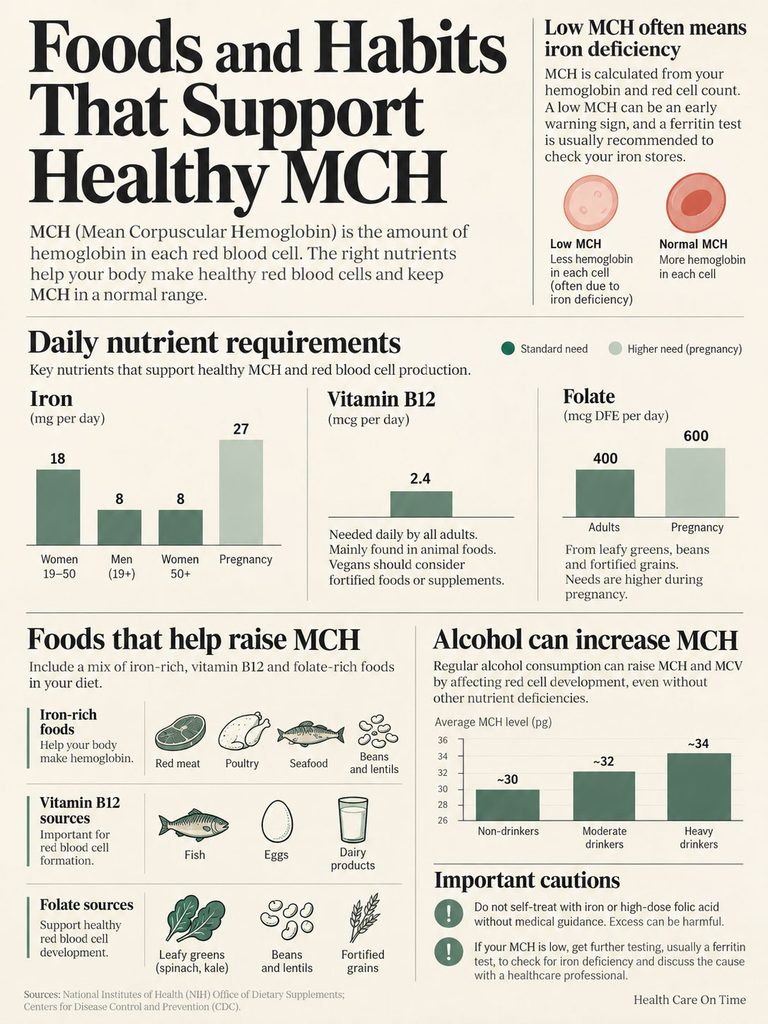
Diet helps most when the cause is a nutrient gap. It won’t fix thalassemia trait, bleeding, or most medication effects, so test before you change course.
Iron
The NIH Office of Dietary Supplements sets the daily iron goal at 18 mg for women aged 19 to 50, 8 mg for adult men and for women over 50, and 27 mg during pregnancy.
- Heme iron (best absorbed): beef, chicken, turkey, oysters, clams, sardines
- Non-heme iron: lentils, beans, tofu, fortified cereals, spinach, pumpkin seeds
- Boosters: vitamin C foods such as oranges, strawberries, and bell peppers at the same meal
- Blockers: tea, coffee, and calcium supplements within about 2 hours of iron-rich meals or iron pills
B12 and Folate
Adults need 2.4 mcg of vitamin B12 daily, found almost entirely in animal foods: fish, meat, eggs, and dairy. Vegans need fortified foods or a supplement. The NIH advises adults over 50 to get most of their B12 from fortified foods or supplements, since absorption from food drops with age.
Folate comes from leafy greens, beans, asparagus, avocado, and fortified grains. Adults need 400 mcg DFE daily, and more during pregnancy.
When Not to Self-Treat
Our medical team advises against starting iron or high-dose folic acid based on an MCH number alone. Iron doesn’t help thalassemia trait and can build up over time. Folic acid can hide B12 deficiency. And “fixing” low MCH with pills can mask a bleeding source that needs to be found.
A single ferritin or B12 test is cheap and fast. It’s the smarter first move.
Frequently Asked Questions
Should You Worry If Your MCH Is Low?
Not usually, but don’t ignore it. A low MCH most often points to iron deficiency, which is common and treatable. The real concern is the cause: heavy periods, poor absorption, or hidden bleeding. A ferritin test is the standard next step, and men or postmenopausal women may need a GI evaluation.
Is an MCH of 26 Bad?
An MCH of 26 pg is mildly low at most US labs. On its own, it isn’t dangerous. It suggests your red cells are a bit small, usually from early iron deficiency or thalassemia trait. Check your hemoglobin, MCV, and RDW, then ask about ferritin and an iron panel to confirm the cause.
Is an MCH of 34 High?
At most US labs, 34 pg sits at or just above the upper limit, so it’s mildly high. It usually reflects slightly larger red cells. Common causes include alcohol, B12 or folate deficiency, thyroid problems, liver disease, and some medications. A B12 test and a look at your MCV are reasonable next steps.
Can Dehydration Affect MCH?
Not meaningfully. Dehydration raises hemoglobin and red cell count together, and because MCH is a ratio of the two, the change largely cancels out. Dehydration can affect hemoglobin and hematocrit, so drink normally before a blood test, but don’t expect hydration to correct an abnormal MCH.
Can Stress Cause High or Low MCH?
There’s no good evidence that emotional stress directly changes MCH. Stress can matter indirectly if it leads to poor eating, heavier drinking, or flare-ups of gut conditions. If your MCH is abnormal during a stressful stretch, look for a physical cause first: iron, B12, folate, alcohol, thyroid, or medications.
Why Is MCH High When Everything Else Is Normal?
An isolated, mildly high MCH can be an early sign of B12 deficiency, alcohol effects, or a medication side effect, showing up before anemia does. Occasionally it’s a lab artifact from high blood fats. A repeat fasting CBC, a B12 level, and a liver panel usually clarify things.
Can MCH Be Low Without Anemia?
Yes, and it’s common. Low MCH with normal hemoglobin often means iron stores are running low but haven’t yet pulled hemoglobin down, an early warning stage. It can also reflect thalassemia trait, which usually keeps hemoglobin near normal. Ferritin and an iron panel help tell the two apart.
What Foods Raise MCH?
If low MCH comes from iron deficiency, iron-rich foods help: red meat, poultry, seafood, beans, lentils, tofu, and fortified cereals, paired with vitamin C. If high MCH comes from B12 or folate deficiency, eat fish, eggs, dairy, leafy greens, and beans. Diet alone won’t fix thalassemia trait or blood loss.
Does Alcohol Raise MCH?
Yes. Regular heavy drinking is one of the most common causes of high MCH and MCV in US adults. Alcohol damages developing red cells directly. The effect usually reverses after you stop drinking, but it can take a few months because the existing large cells need time to be replaced.
Can Low MCH Mean Cancer?
Rarely, and only indirectly. Low MCH itself isn’t cancer, but iron deficiency from slow bleeding can be the first clue to colon or stomach cancer, especially in men and postmenopausal women. That’s why unexplained iron deficiency in these groups usually leads to endoscopy. Most low MCH results have a harmless cause.
How Long Does It Take MCH to Return to Normal?
Often 2 to 4 months after the cause is treated. Red cells live about 120 days, and MCH averages old and new cells together, so it changes slowly. Hemoglobin usually improves first, within a few weeks. Many doctors recheck the CBC about 6 to 12 weeks after treatment starts.
Is MCH Different During Pregnancy?
The normal range is similar, but low MCH becomes more common because daily iron needs rise to 27 mg. Your prenatal care team will monitor your CBC. If MCH is low, they’ll check ferritin, and if thalassemia trait is possible, they may offer carrier screening for both parents.
Disclaimer: This article is for general education and does not replace advice from a licensed healthcare provider. Lab reference ranges vary, and an abnormal MCH should always be interpreted alongside your full CBC, symptoms, and medical history. Do not start, stop, or change medications or supplements without talking to your doctor. If you have chest pain, fainting, black stools, or vomiting blood, call 911 or go to the nearest emergency room.
References
- Cleveland Clinic: Mean Corpuscular Hemoglobin (MCH)
- Cleveland Clinic: Complete Blood Count
- Medical News Today: MCH Levels in Blood Tests
- Healthline: MCH Levels
- HCPLive: Absolute and Functional Iron Deficiency in US Adults (NHANES 2017 to 2020)
- American Journal of Medicine: Temporal Trends in Absolute Iron Deficiency Among US Adults
- American Gastroenterological Association: GI Evaluation of Iron Deficiency Anemia
- AGA Technical Review on Ferritin Cutoffs (PMC)
- AAFP: Iron Deficiency Anemia Guidelines From the AGA
- AAFP: Evaluation of Macrocytosis
- Nagao: Diagnosis and Treatment of Macrocytic Anemias in Adults
- Medscape: Macrocytosis
- Evaluation of Macrocytosis in Routine Hemograms (PMC)
- Metformin and Vitamin B12 Deficiency: A Prevalence Study (PubMed)
- Vehapoglu: Hematological Indices for Beta Thalassemia Trait vs Iron Deficiency
- Mentzer Index in Pregnant Women (PMC)
- NIH Office of Dietary Supplements: Iron Fact Sheet
- NIH Office of Dietary Supplements: Vitamin B12 Fact Sheet