
Quick Answer: A low MCH means your red blood cells each carry less hemoglobin than normal, generally below 27 picograms per cell in adults. Iron deficiency causes most cases. Thalassemia trait, chronic inflammation, blood loss, and lead exposure cause the rest. A low MCH is a clue, not a diagnosis, and the correct first step is a ferritin test rather than an iron supplement.
Table of Contents
Nobody goes looking for their MCH. They go in for a routine physical, give one tube of blood, and get a portal notification with a red flag next to a three-letter code that nobody explained.
Here is what catches readers off guard. Federal survey data suggests roughly one in seven American adults carries depleted iron stores, and most have no medical reason on file that would ever trigger a screening test. For them, a flagged line on a routine panel is the only warning they get.
At a Glance
• Normal adult MCH usually runs 27 to 33 picograms per cell, though reference ranges differ between US labs.
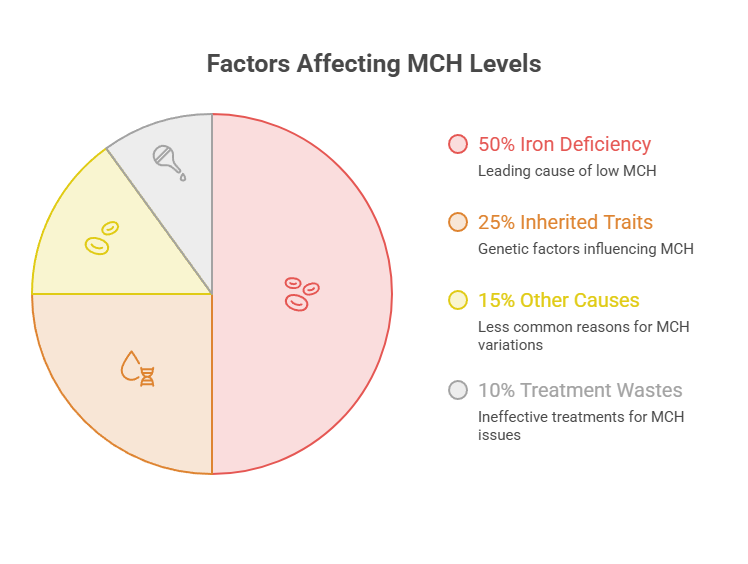
• Iron deficiency is the leading cause, but it is not the only one, and treating the wrong cause wastes months.
• MCH almost never travels alone. Read it alongside MCV, RBC count, and RDW to see the real pattern.
• One calculation using two numbers already on your report separates iron deficiency from an inherited trait.
• In men and postmenopausal women, confirmed iron deficiency triggers a gastrointestinal workup for a specific reason.
• Your numbers recover in a fixed order, and MCH is the slowest one to normalize.
• Starting iron before ferritin is drawn can erase the evidence your doctor needs.
What MCH Actually Measures on Your Blood Test
MCH stands for mean corpuscular hemoglobin. It reports the average weight of hemoglobin packed inside a single red blood cell, measured in picograms, which are trillionths of a gram.
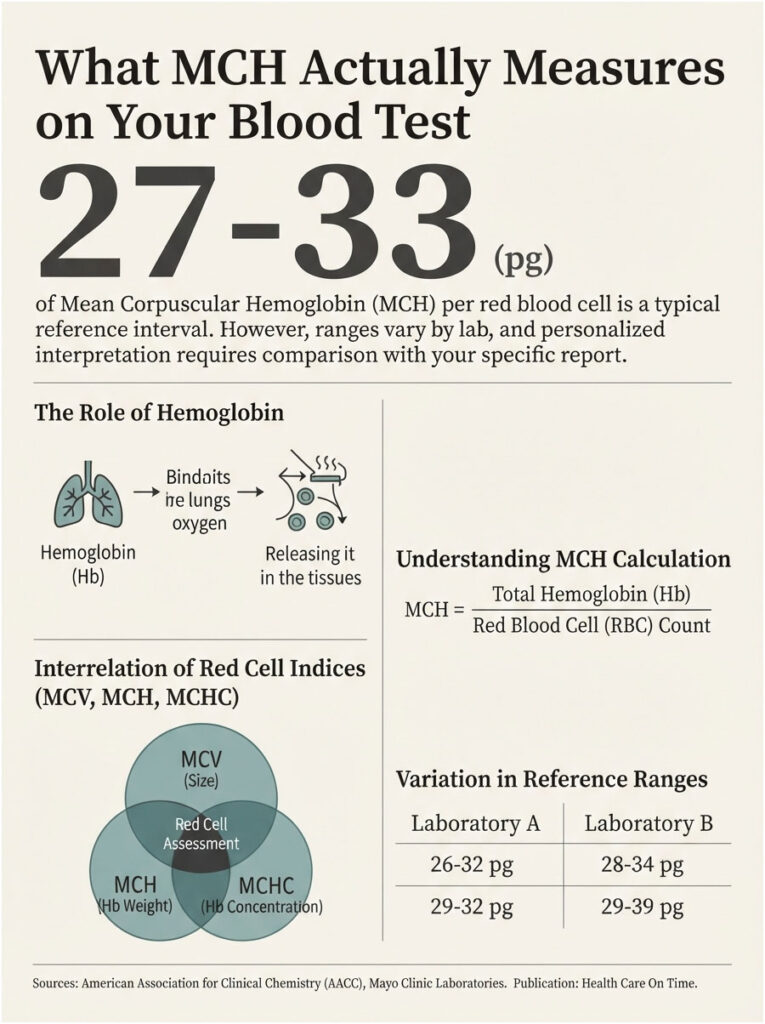
Hemoglobin is the iron-containing protein that binds oxygen in your lungs and releases it in your tissues. Less hemoglobin per cell means less oxygen delivered per trip.
How the Lab Calculates It
MCH is not measured directly. The analyzer divides your total hemoglobin by your red blood cell count, then converts the result into picograms.
Because it is a derived value, anything that moves hemoglobin or RBC count moves MCH with it. That is why the number rarely shifts on its own.
MCH, MCHC, and MCV Are Three Views of One Cell
These three indices describe the same cell from different angles, and readers mix them up constantly. MCV measures cell size. MCH measures how much hemoglobin sits inside the average cell by weight. MCHC measures how concentrated that hemoglobin is relative to volume.
A small cell usually holds less hemoglobin, so low MCV and low MCH tend to appear together. Pathologists call that combination microcytic hypochromic anemia, meaning small and pale.
Why Your Lab’s Normal Range May Not Match Someone Else’s
Patients booking CBC panels through HealthCareOnTime ask about this more than almost anything else. One report says 27 to 33, another says 28 to 32, a third says 27 to 31.
All three can be correct. Each laboratory sets its own reference interval using its own analyzer and local population sample. Read your result against the range printed on your own report, since 27.2 pg is normal at one lab and flagged at another.
What Counts as a Low MCH Result
For adults, the normal MCH range generally falls between 27 and 33 picograms per cell, and it does not differ by sex, according to Cleveland Clinic. Anything under that line gets reported as low.
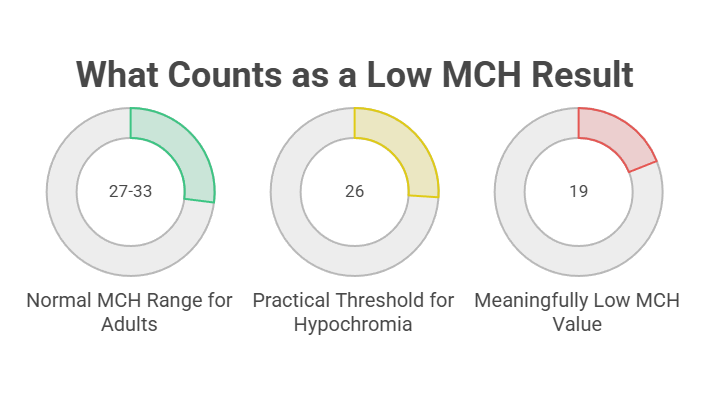
Some references set the practical threshold for hypochromia at 26 pg or below. That is why a result of 26.5 may be flagged at one facility and left alone at another.
Borderline Low Versus Meaningfully Low
A reading of 26 pg with normal hemoglobin and no symptoms sits in very different territory than 19 pg with a hemoglobin of 9.8 g/dL.
Our medical reviewers treat values in the 25 to 26.9 pg band as a prompt to read the rest of the panel, not as an emergency. Values under 24 pg almost always have a findable cause.
Children, Teens, and Pregnancy Read Differently
Pediatric reference ranges sit lower than adult ranges, so a child’s report has to be matched against age-specific intervals rather than the adult numbers above.
Pregnancy raises iron demand sharply, which pulls MCH down even in women who started with adequate stores.
The table below shows how the same low MCH points toward different conditions once you read it alongside the rest of your CBC.
| Likely Cause | Typical MCH | Typical MCV | RBC Count | RDW | Confirming Test |
| Iron deficiency anemia | 18 to 26 pg | 60 to 78 fL | Low | High, often above 15% | Ferritin, transferrin saturation |
| Beta thalassemia trait | 19 to 25 pg | 60 to 72 fL | Normal or high | Normal, usually under 15% | Hemoglobin electrophoresis, HbA2 above 3.5% |
| Alpha thalassemia trait | 20 to 26 pg | 65 to 78 fL | Normal or high | Normal | DNA testing, with normal HbA2 |
| Anemia of inflammation | 25 to 28 pg | 75 to 85 fL | Low to normal | Normal or mildly raised | CRP, ferritin normal or high, low transferrin saturation |
| Lead exposure | 22 to 28 pg | 70 to 82 fL | Low to normal | High | Blood lead level |
| Sideroblastic anemia | 20 to 27 pg | Variable, 60 to 85 fL | Low | High | Bone marrow biopsy with iron stain |
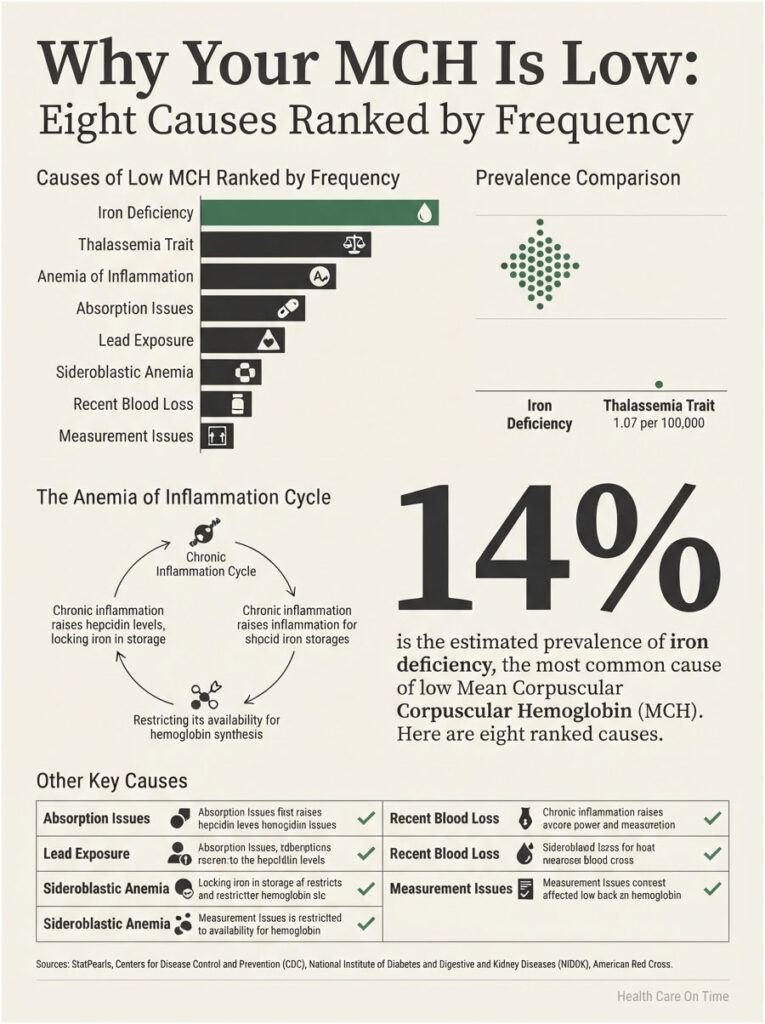
Why Your MCH Is Low: Eight Causes Ranked by Frequency
Iron Deficiency, the Leading Cause
Iron is the raw material for hemoglobin. When stores run down, the marrow keeps producing red cells but underfills them, which drops MCH before hemoglobin ever falls out of range.
StatPearls reports that an estimated 14% of American adults have iron-deficiency anemia based on national survey data.
Where the Iron Actually Goes
Heavy or prolonged menstrual bleeding is the biggest drain in premenopausal women, and most underestimate their own loss because they have no comparison point. In men and older adults, the usual source is slow gastrointestinal bleeding from ulcers, polyps, or inflammatory bowel disease, and it is almost always silent.
Pregnancy, frequent blood donation, endurance training, bariatric surgery, celiac disease, and long-term proton pump inhibitor use all pull stores down over time.
Thalassemia Trait
Thalassemia trait is inherited. The body produces less of one hemoglobin chain, so it makes a normal number of red cells that are simply smaller and paler.
Trait carriers often show a persistently low MCH with completely normal iron studies and no symptoms whatsoever. Their number never changes because there is nothing to correct.
Newborn screening modeling estimated roughly 3,665 clinically significant beta-thalassemia cases in the US in 2023, about 1.07 per 100,000 people. Carrier numbers run far higher, particularly in families with Mediterranean, Middle Eastern, South Asian, Southeast Asian, or African ancestry.
The Mentzer Index Shortcut
You can run this yourself, right now, on the report in front of you. Divide your MCV (in femtoliters) by your RBC count (in millions per microliter).
A result above 13 leans toward iron deficiency anemia. A result below 13 leans toward thalassemia trait.
The logic is clean. Iron deficiency lowers both cell size and cell count, while thalassemia lowers size but keeps the count normal or high. Published figures put its sensitivity near 91% and specificity near 83% for iron deficiency, and the MDCalc calculator runs the same math. It is a triage tool, not a diagnosis.
Anemia of Inflammation and Chronic Disease
Long-running inflammation raises a hormone called hepcidin, which locks iron inside storage cells where the marrow cannot reach it. Kidney disease, rheumatoid arthritis, inflammatory bowel disease, chronic infection, and some cancers all produce this picture, and ferritin frequently reads normal or even high while usable iron stays scarce.
Celiac Disease, H. pylori, and Absorption Failure
Iron is absorbed in the upper small intestine, and damage there blocks uptake no matter how much iron you eat. Celiac disease often presents with unexplained iron deficiency and no digestive complaints at all. Helicobacter pylori infection works through a different mechanism but produces the same lab picture.
Lead Exposure
Lead disrupts several enzyme steps in hemoglobin synthesis, which lowers MCH while raising RDW. Older US housing with deteriorating paint remains the main childhood exposure route, and certain trades carry occupational risk. A blood lead level settles the question in one draw.
Sideroblastic Anemia and Rarer Marrow Causes
In sideroblastic anemia, iron reaches the developing red cell but cannot be built into hemoglobin properly. Causes include inherited enzyme defects, certain medications, copper deficiency, and long-term alcohol use. These are uncommon and generally diagnosed by a hematologist.
Recent Blood Loss, Surgery, or Donation
A significant bleed, a major operation, or repeated whole-blood donation drains stores faster than diet replaces them. Our lab partners report that regular donors are a frequently overlooked group, since donating every eight weeks outpaces dietary replacement in many smaller-framed adults.
Timing and Sample Handling
Occasionally the number reflects a measurement issue rather than physiology. Cold agglutinins, very high white cell counts, or a mishandled specimen can all skew red cell indices. If a low MCH appears with no supporting pattern and no symptoms, a repeat draw is a reasonable first move.
How Low MCH Feels: Symptoms People Dismiss
Early Signs That Get Blamed on Something Else
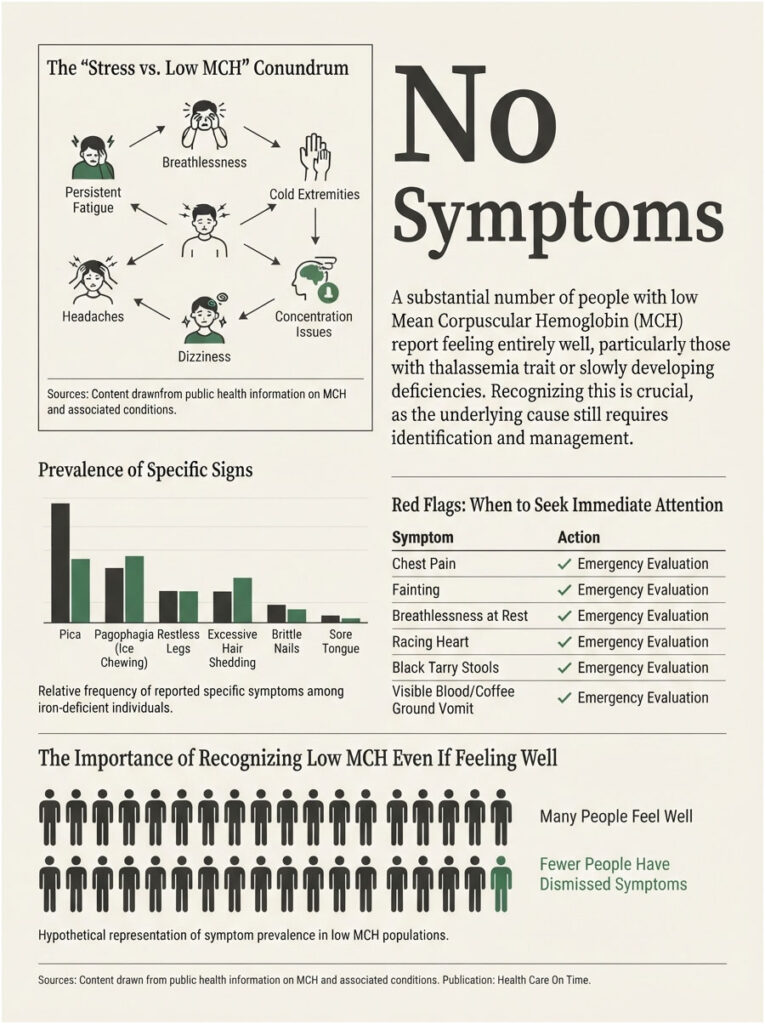
Fatigue that sleep does not fix comes first for most people. Then breathlessness climbing one flight of stairs, cold hands and feet, headaches, dizziness on standing, and trouble concentrating. Nearly all of it gets written off as stress or a busy stretch at work.
The pattern matters more than any single symptom. Iron-related fatigue tends to be constant rather than fluctuating, and it does not lift after a good weekend.
The Signs That Point Specifically at Iron
Pica, meaning cravings for non-food items such as ice, clay, chalk, or raw starch, ties closely to iron deficiency. Compulsive ice chewing has its own name, pagophagia, and it resolves once iron is replaced.
Restless legs at night, hair shedding beyond normal turnover, brittle or spoon-shaped nails, cracks at the corners of the mouth, and a sore or smooth tongue round out the list.
Readers who write to HealthCareOnTime about persistent hair shedding are often surprised that the answer sat in a lab value they already had on file.
When There Are No Symptoms At All
Plenty of people with a low MCH feel entirely fine. That is the norm in thalassemia trait and common in slowly developing deficiency, where the body adapts as it goes. Feeling well does not mean the result can be ignored, only that the cause still needs a name.
Red Flags That Need Same-Day Attention
Chest pain, fainting, breathlessness at rest, or a racing heart while sitting still are emergency signs. So are black tarry stools, visible blood in stool, and vomit that looks like coffee grounds, which point to active bleeding. None of these should wait for a follow-up appointment.
Low MCH in Different Groups: Same Number, Different Meaning
The identical result carries a different weight depending on who is holding the report. This is where most generic explanations fall short.
Premenopausal Women
Menstrual blood loss is the default explanation and usually the correct one. Cycles longer than seven days, soaking through protection hourly, or clots larger than a quarter all point to loss heavy enough to outpace replacement.
Iron replacement plus a plan for managing the bleeding solves most cases. If the deficiency returns after treatment, the source deserves another look.
Pregnancy
Blood volume expands by roughly 45% during pregnancy while red cell mass rises less, so a mild dilutional drop is expected. True deficiency is separate and common, and untreated iron deficiency in pregnancy is associated with preterm birth and low birth weight. That is why obstetric practice screens rather than waiting for symptoms.
Men Over 40 and Postmenopausal Women
Neither group has a routine physiological reason to lose blood, so confirmed iron deficiency here is treated as occult gastrointestinal bleeding until proven otherwise. That is the specific reason the workup pathway looks different, covered in detail further down.
Infants, Toddlers, and Teenagers
Rapid growth outpaces iron intake in young children, and cow’s milk introduced too early or in large volumes worsens it. Once menstruation begins, adolescent girls carry the highest burden of any age group in the country, which is why national screening guidance focuses there.
Athletes and Endurance Trainers
Runners, cyclists, and military trainees lose iron through sweat, foot-strike hemolysis, and gastrointestinal microbleeding during long efforts.
Performance often drops before hemoglobin does. Ferritin at the low end of normal can already be limiting for an endurance athlete.
Plant-Based Eaters and Restricted Diets
Non-heme iron from plants absorbs less efficiently than heme iron, and phytates in whole grains and legumes reduce uptake further. A well-planned plant-based diet still supports normal iron status. Risk rises with restriction, low calorie intake, or heavy tea and coffee at meals.
After Bariatric Surgery
Gastric bypass and sleeve procedures reduce stomach acid and bypass the primary absorption site, so oral iron often stops working the way it did before. Lifelong monitoring is standard, and many post-bariatric patients eventually need intravenous replacement.
How Common Low MCH Really Is in the United States
Iron deficiency and the anemia behind most low MCH results are far more widespread here than readers expect, and the burden lands unevenly.
| Population or Measure | Finding | Figure | Source and Year |
| Americans age 2 and older | Anemia prevalence | 9.3% | CDC NCHS Data Brief 519 (Dec 2024) |
| Adolescent girls, 12 to 19 | Anemia prevalence | 17.4% | CDC NCHS Data Brief 519 (Dec 2024) |
| Women, 20 to 59 | Anemia prevalence | 14.0% | CDC NCHS Data Brief 519 (Dec 2024) |
| Men, 20 to 59 | Anemia prevalence | 3.9% | CDC NCHS Data Brief 519 (Dec 2024) |
| Females, 12 to 49 | Iron deficiency, ferritin under 15 ug/L | 22.6% | CDC FastStats, Healthy People 2030 (2017 to Mar 2020) |
| Children, 1 to 2 years | Iron deficiency, ferritin under 15 ug/L | 22.5% | CDC FastStats, Healthy People 2030 (2017 to Mar 2020) |
| US adults overall | Absolute iron deficiency | About 14% | NHLBI, NHANES 2017 to 2020 (2024) |
| Men and postmenopausal women with iron deficiency anemia | Colorectal cancer found on endoscopy | About 9% | AGA guideline, via AAFP (2021) |
| US emergency department visits | Anemia as primary diagnosis | 789,000 | CDC FastStats (2022 data) |
Women and Teenage Girls Carry the Heaviest Burden
National survey data from the CDC’s National Center for Health Statistics found anemia in 17.4% of adolescent girls aged 12 to 19 and 14.0% of women aged 20 to 59 during August 2021 through August 2023.
The same report notes that anemia among US females aged 15 to 49 climbed from 7.8% in 2000 to 11.5% in 2018, leaving the country off track for the global reduction target set by the World Health Assembly.
Most Cases Are Never Screened
Analysis reported by the NHLBI found that about 14% of US adults had absolute iron deficiency, drawn from more than 8,000 survey participants.
Only about a third had any conventional medical reason that would prompt testing at all. For everyone else, an abnormal CBC index is the sole signal that ever appears, which is why a flagged MCH deserves follow-up rather than a shrug.
The Tests That Come Next and What Each Rules Out
Ferritin First, and the 45 ng/mL Question
Ferritin reflects stored iron and falls before hemoglobin does. It is the highest-yield single test after a low MCH.
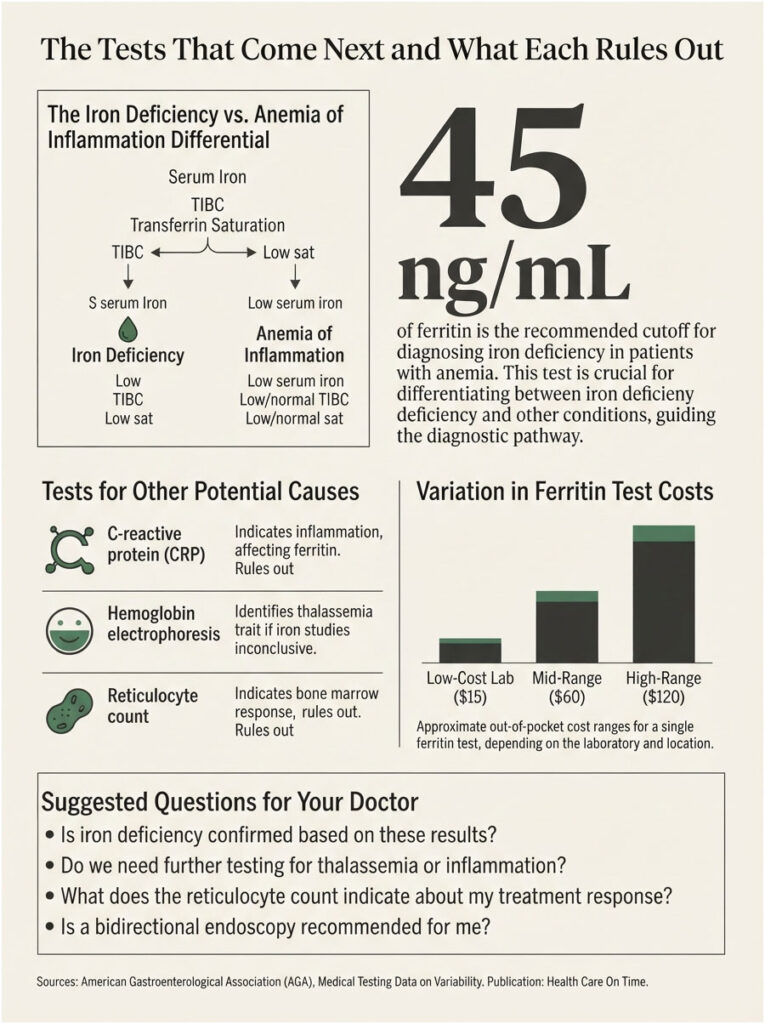
The threshold matters more than most patients realize. The American Gastroenterological Association recommends a ferritin cutoff of 45 ng/mL rather than 15 ng/mL when diagnosing iron deficiency in patients who have anemia.
In reports reviewed by the HealthCareOnTime medical team, this is where deficiency most often slips through. A ferritin of 32 ng/mL reads as normal against the older cutoff and as clearly deficient against the current one.
Serum Iron, TIBC, and Transferrin Saturation
Serum iron swings through the day and after meals, so it means little in isolation. Total iron binding capacity rises when stores are low, and transferrin saturation below roughly 20% supports iron deficiency while helping separate it from anemia of inflammation.
CRP, Because Inflammation Hides Deficiency
Ferritin is an acute-phase reactant, meaning it climbs during inflammation regardless of iron status. Running C-reactive protein alongside it tells your clinician whether a normal-looking ferritin can be trusted.
Hemoglobin Electrophoresis
If iron studies come back clean and the MCH stays low, thalassemia trait moves to the front of the list. Electrophoresis measures hemoglobin subtypes, and an elevated HbA2 above roughly 3.5% supports beta thalassemia trait. Alpha trait usually requires DNA testing to confirm.
Reticulocyte Count and Reticulocyte Hemoglobin
Reticulocytes are newly released red cells, so their hemoglobin content shows what your marrow is producing right now rather than three months ago. This test responds within days of effective treatment, which makes it the earliest available proof the plan is working.
When a Low MCH Sends You to Endoscopy
For asymptomatic men and postmenopausal women with iron deficiency anemia, the AGA recommends bidirectional endoscopy, meaning upper endoscopy and colonoscopy performed at the same sitting.
The reason is stark. As summarized by AAFP, colonic malignancy is found in about 9% and upper gastrointestinal malignancy in about 2% of men and postmenopausal women with iron deficiency anemia, more than ten times the colorectal cancer rate picked up through routine screening.
The same guidance suggests noninvasive testing for H. pylori and celiac disease, with treatment or biopsy following only a positive result.
What This Workup Costs in the US
Prices vary by where the sample is drawn far more than by which test is ordered, and hospital outpatient labs consistently bill the most. A ferritin test runs roughly $40 to $120 at hospitals and clinics, while direct-to-consumer labs generally charge $15 to $35. A standard CBC often lands between $10 and $50 through cash-pay services.
If you are paying against a deductible, asking that the order be routed to an independent lab is a reasonable and common request.
What to Ask Your Doctor
Bring these five questions to the appointment. They cover the entire decision tree in about two minutes of conversation.
- What was my exact ferritin value, and which cutoff are you using to interpret it?
- Did we check CRP alongside ferritin, so we know whether inflammation is masking the result?
- What is my Mentzer Index, and does thalassemia trait need ruling out?
- Given my age and sex, do I need a gastrointestinal evaluation?
- When should I retest, and which numbers should have moved by then?
How to Raise a Low MCH, Backed by Current Evidence
Treat the Cause, Not the Number
This is the point our medical reviewers return to most often. Iron supplements correct iron deficiency and do nothing at all for thalassemia trait, inflammation, or lead exposure.
Taking iron you do not need carries real downsides, including constipation, oxidative stress, and iron overload in people carrying certain genetic variants.
Oral Iron and the Alternate-Day Shift
The old advice was 150 to 200 mg of elemental iron daily, split across multiple doses. Current evidence points somewhere else.
Oral iron triggers a hepcidin rise within hours that blunts absorption for the next 24 to 48 hours. Spacing doses out lets hepcidin fall back between them.
A randomized trial published in eClinicalMedicine compared consecutive-day with alternate-day dosing in 150 iron-depleted women and found absorption was lower on consecutive-day dosing and inversely correlated with serum hepcidin.
Guidance summarized by the University of Illinois Chicago Drug Information Group notes that 2024 guidelines from the American College of Gastroenterology and the European Hematology Association both recommend alternate-day oral iron to improve tolerability and adherence without weakening the hematologic response.
What Helps Absorption and What Blocks It
Take iron on an empty stomach when you can tolerate it, ideally an hour before food. Pairing it with vitamin C, such as a small glass of orange juice, improves uptake.
Coffee, tea, milk, calcium supplements, antacids, and high-fiber meals all cut absorption. Keep them at least two hours away from your dose.
Handling the Side Effects
Constipation, nausea, and cramping drive most people to quit within three weeks. Alternate-day dosing reduces these complaints on its own, which is a large part of why guidelines shifted.
Dark or black stools are expected on iron and harmless. Tarry, sticky, foul-smelling stools are a different thing entirely and need evaluation.
When Intravenous Iron Makes Sense
IV iron fits when oral iron fails, is not tolerated, or cannot keep pace with ongoing loss. It is also standard in inflammatory bowel disease, chronic kidney disease, after bariatric surgery, and in later pregnancy when oral replacement would be too slow. Modern formulations rebuild stores in one or two infusions.
What Food Alone Can and Cannot Do
Diet maintains iron status well. It corrects an established deficiency slowly, and often not completely.
Heme iron from animal sources absorbs at roughly 15% to 35%. Non-heme iron from plants absorbs at closer to 2% to 20% and depends heavily on what else sits on the plate.
Practical US Food Sources
A 3-ounce serving of beef liver, oysters, or lean red meat delivers the most absorbable iron per bite. Dark-meat chicken and turkey follow.
On the plant side, half a cup of cooked lentils, white beans, chickpeas, or fortified breakfast cereal contributes meaningfully, along with tofu, pumpkin seeds, and cooked spinach. Add citrus, tomatoes, or bell pepper to the same meal to lift absorption.
If the Answer Is Thalassemia Trait
Nothing needs correcting. The low MCH is your normal and will stay low for life. What changes is future testing: a note in your chart stops the next clinician from chasing the same number, and genetic counseling matters when both partners may carry a trait.
How Long Recovery Takes and When to Retest
Your Numbers Recover in a Fixed Order
Reticulocytes respond first, often within one to two weeks of adequate treatment. That early rise confirms the diagnosis was right.
Hemoglobin follows, typically normalizing across four to eight weeks. MCV and MCH move last, usually taking three to four months, because the body has to replace an entire generation of red cells.
Retesting CBC and ferritin at eight to twelve weeks gives a meaningful reading. Testing at three weeks tells you almost nothing and causes unnecessary alarm.
What a Flat Response Means
If hemoglobin has not budged after eight weeks of consistent treatment, the problem is with the plan rather than the patient. The usual explanations are ongoing blood loss, an absorption problem such as celiac disease, poor adherence driven by side effects, or a diagnosis that was never iron deficiency.
| Your Situation | What It Most Likely Means | What to Do Next |
| MCH 25 to 26 pg, hemoglobin normal, no symptoms | Early iron depletion or an inherited trait | Request ferritin and CRP; repeat CBC in 3 months |
| Low MCH, low MCV, high RDW | Iron deficiency is the front-runner | Ferritin, serum iron, and TIBC before any supplement |
| Low MCH, low MCV, normal RDW, normal or high RBC count | Thalassemia trait moves ahead of iron deficiency | Calculate the Mentzer Index; request hemoglobin electrophoresis |
| Low MCH with ferritin between 20 and 45 ng/mL | Iron deficient by the current anemia cutoff, missed by the older one | Discuss replacement using the 45 ng/mL threshold |
| Low MCH, ferritin normal or high, CRP elevated | Anemia of inflammation with iron locked in storage | Treat the underlying condition; check transferrin saturation |
| Man over 40 or postmenopausal woman with confirmed iron deficiency | Occult gastrointestinal blood loss until proven otherwise | Ask for a bidirectional endoscopy referral |
| Eight weeks on iron, hemoglobin unchanged | Absorption failure, ongoing loss, or wrong diagnosis | Recheck ferritin; screen for celiac disease and H. pylori |
| Pregnant with a low MCH | Higher iron demand, possibly on top of existing depletion | Ferritin testing early; follow obstetric guidance on dosing |
| Low MCH with black stools, chest pain, fainting, or breathlessness at rest | Active bleeding or severe anemia | Seek same-day or emergency care |
Mistakes That Delay a Correct Diagnosis
Starting Iron Before Ferritin Is Drawn
Supplements raise ferritin within days. Starting them first pushes a genuinely deficient result up into the normal range and erases the evidence your doctor needs.
Our medical team flags this as the most common self-inflicted delay in the entire workup. Draw the labs first, then treat.
Assuming Every Low MCH Is Iron
Roughly the same CBC picture shows up in thalassemia trait, and iron supplements will never change it, so months pass before anyone thinks to order electrophoresis. Running the Mentzer calculation at the outset costs nothing and frequently redirects the whole investigation.
Stopping the Moment Hemoglobin Normalizes
Hemoglobin recovers well before iron stores refill, so stopping there almost guarantees a relapse within months. Most protocols continue treatment for two to three months past normal hemoglobin so ferritin has time to rebuild.
Ignoring It Because Hemoglobin Looks Fine
MCH and ferritin fall before hemoglobin does. Iron deficiency without anemia is a real state that produces real fatigue, hair shedding, and reduced exercise tolerance.
A low MCH with normal hemoglobin is an early warning, and early is the best time to act.
Retesting Too Soon
Red blood cells live about 120 days, so indices cannot normalize faster than the population turns over. A repeat CBC at four weeks will still show a low MCH even when treatment is working perfectly, and that misreading pushes people to abandon therapy that was succeeding.
Buying Supplements Before Knowing the Dose
Over-the-counter iron products vary widely in elemental iron content, and the number on the front of the bottle is often not the one that matters. Ferrous sulfate 325 mg supplies roughly 65 mg of elemental iron. Ask which formulation and dose applies to your result rather than guessing at the pharmacy shelf.
Your Next Three Steps
- This week, pull your full CBC report. Write down MCH, MCV, MCHC, RDW, RBC count, and hemoglobin side by side. Divide MCV by RBC count to get your Mentzer Index and note which side of 13 it lands on.
- Within two weeks, request ferritin plus CRP. Ask that ferritin be interpreted against the 45 ng/mL cutoff if you have anemia. If iron studies come back normal while MCH stays low, ask about hemoglobin electrophoresis.
- Book the recheck for eight to twelve weeks out, not sooner. If you are a man over 40 or a postmenopausal woman with confirmed iron deficiency, raise the gastroenterology referral at that same visit rather than waiting to be offered one.
Frequently Asked Questions
What does a low MCH blood test result mean?
It means each red blood cell carries less hemoglobin than normal, usually below 27 picograms per cell in adults. The cells appear small and pale under a microscope. Iron deficiency explains most cases, though thalassemia trait, chronic inflammation, and lead exposure produce the same result and need different treatment.
Is a low MCH result serious?
On its own, no. It is a signal that prompts further testing rather than a diagnosis. Mildly low values with normal hemoglobin and no symptoms are common and usually manageable. Serious cases involve very low values, marked symptoms, or an underlying cause such as gastrointestinal bleeding.
What is the most common cause of low MCH?
Iron deficiency, by a wide margin. Without enough iron, the bone marrow underfills red cells with hemoglobin. In the United States, heavy menstrual bleeding is the leading source in premenopausal women, while slow gastrointestinal blood loss is the usual explanation in men and older adults.
Can my MCH be low if my hemoglobin is normal?
Yes, and it happens often. MCH and ferritin typically fall before hemoglobin does, so a low MCH with normal hemoglobin usually reflects early iron depletion or an inherited trait. It is worth investigating rather than dismissing, since fatigue and hair shedding can appear well before anemia does.
What MCH level is considered dangerous?
No single number is dangerous by itself. What matters is your hemoglobin, your symptoms, and the cause. Values below 20 picograms usually accompany significant anemia and warrant prompt evaluation. Chest pain, fainting, breathlessness at rest, or black stools need immediate care regardless of the MCH.
What does low MCH with low MCV mean?
Together they describe microcytic hypochromic anemia, meaning red cells that are both small and pale. This combination most often points to iron deficiency, with thalassemia trait as the main alternative. Ferritin and iron studies separate the two, and the Mentzer Index gives you a quick preliminary read.
What does low MCH with a high RDW mean?
RDW measures variation in red cell size. A high RDW alongside low MCH suggests your marrow is producing a mix of older normal cells and newer undersized ones, which fits iron deficiency well. Thalassemia trait more typically shows a low MCH with a normal RDW.
How can I raise my MCH naturally?
Only if iron deficiency is the cause. Eat heme iron from lean red meat, liver, or oysters, plus lentils, beans, tofu, and fortified cereals, paired with vitamin C. Keep coffee, tea, and calcium two hours from iron-rich meals. Diet alone rarely corrects an established deficiency.
How long does it take for MCH to return to normal?
Longer than most people expect. Reticulocytes respond in one to two weeks, hemoglobin normalizes across four to eight weeks, and MCH and MCV take three to four months. Red cells live roughly 120 days, so the average cannot shift until a full generation is replaced.
Does a low MCH mean I have cancer?
Not by itself, and the large majority of low MCH results have benign causes. That said, confirmed iron deficiency anemia in men and postmenopausal women warrants gastrointestinal evaluation, since colorectal cancer is found in about 9% of that group. Getting checked is responsible, not a reason to panic.
Is low MCH hereditary?
It can be. Thalassemia trait is inherited and produces a permanently low MCH alongside normal iron studies. It appears more often in families with Mediterranean, Middle Eastern, South Asian, Southeast Asian, or African ancestry. Electrophoresis or DNA testing confirms it, and carriers usually need no treatment.
Do I need a colonoscopy because of a low MCH?
Not for a low MCH alone. If iron deficiency anemia is confirmed and you are a man or a postmenopausal woman, current gastroenterology guidance recommends upper endoscopy and colonoscopy to locate a bleeding source. Premenopausal women get the same recommendation more conditionally, through shared decision-making.
Medical Disclaimer: This article is for general education and does not replace advice from a licensed healthcare professional. Laboratory reference ranges differ between facilities, and no single abnormal value can diagnose any condition on its own. Do not begin, stop, or change any supplement or medication based on this content. Discuss your own results with your physician, and seek immediate care for chest pain, fainting, breathlessness at rest, or black or bloody stools.
References
- Cleveland Clinic: MCH in a Blood Test (Mean Corpuscular Hemoglobin)
- CDC, National Center for Health Statistics: Anemia Prevalence, United States, August 2021 to August 2023 (Data Brief 519)
- CDC FastStats: Anemia
- NHLBI, NIH: About 1 in 4 Americans May Have Inadequate Iron Intake or Absorption
- StatPearls, NCBI Bookshelf: Iron-Deficiency Anemia
- American Gastroenterological Association: Gastrointestinal Evaluation of Iron Deficiency Anemia
- AGA Press Release: Bidirectional Endoscopy for Most Patients With Iron Deficiency Anemia
- American Academy of Family Physicians: Iron Deficiency Anemia, Guidelines From the AGA
- MDCalc: Mentzer Index
- eClinicalMedicine: Alternate Day Versus Consecutive Day Oral Iron Supplementation in Iron-Depleted Women
- Haematologica: Iron Absorption From Supplements Is Greater With Alternate Day Dosing
- University of Illinois Chicago Drug Information Group: Evidence for Alternate-Day Oral Iron Dosing
- Blood (ASH): Estimated Prevalence of Beta-Thalassemia in the United States in 2023