People use these three terms as if they mean the same thing, and in an emergency the mix-up can cost minutes. Two quick questions sort most cases: is the person awake, and did the trouble start in the last few minutes or build over weeks?
Table of Contents
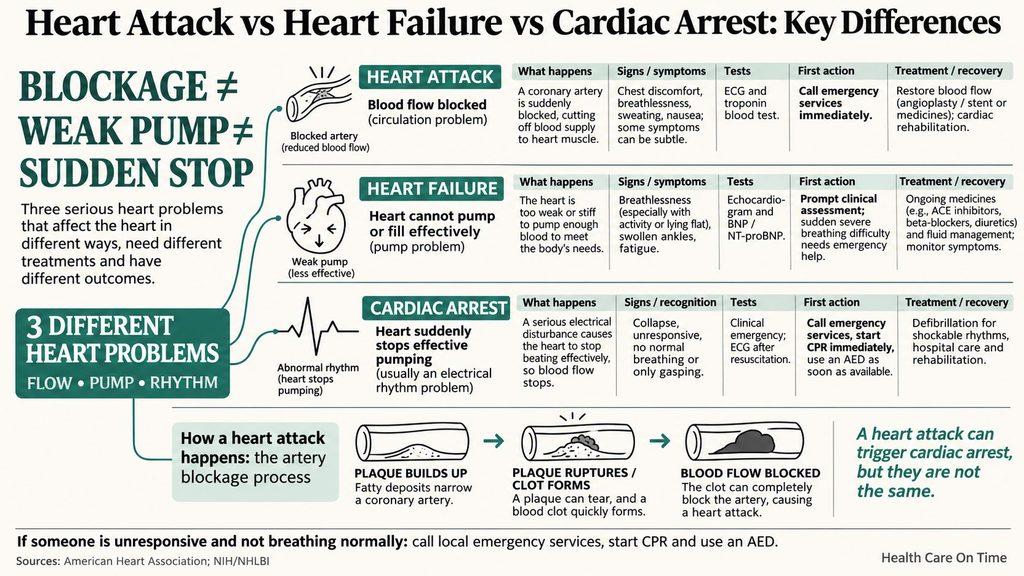
Quick answer: The difference between a heart attack and heart failure is cause and speed. A heart attack is a sudden circulation problem, usually a clot in a coronary artery, and it needs 911 right away. Heart failure is a long-term weakness or stiffness of the heart muscle that builds over weeks to years and is managed with daily medicines. Cardiac arrest is an electrical problem in which the heart stops; it needs 911, CPR and an AED within minutes.
The Core Difference, in Plain Terms
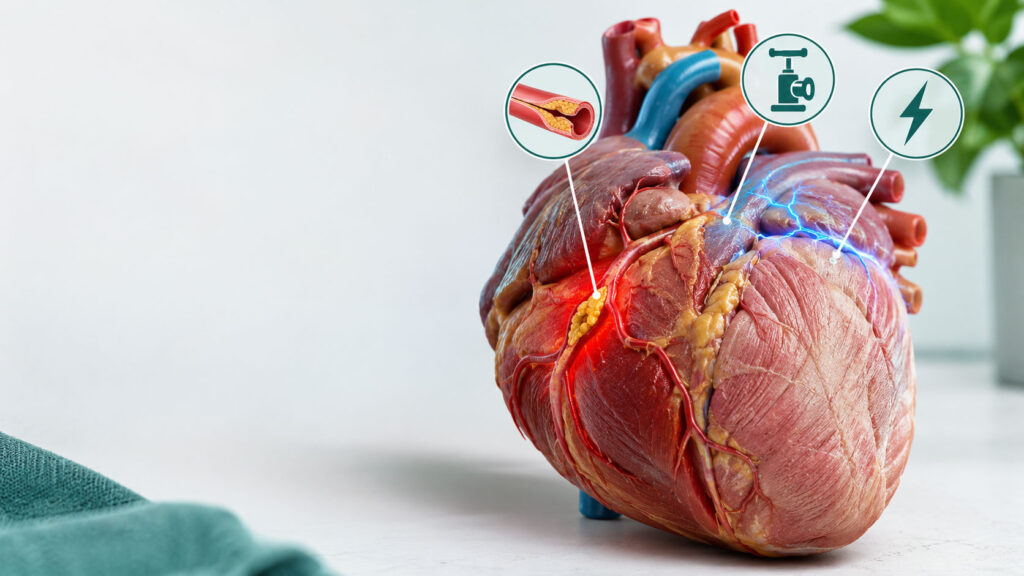
Picture the heart as a pump with its own pipes and wiring. A heart attack is a pipe problem: one of the coronary arteries that feed the heart muscle gets blocked, and the patch of muscle downstream begins to die. Sudden cardiac arrest is a wiring problem, an electrical failure that stops the beat even when every pipe is open.
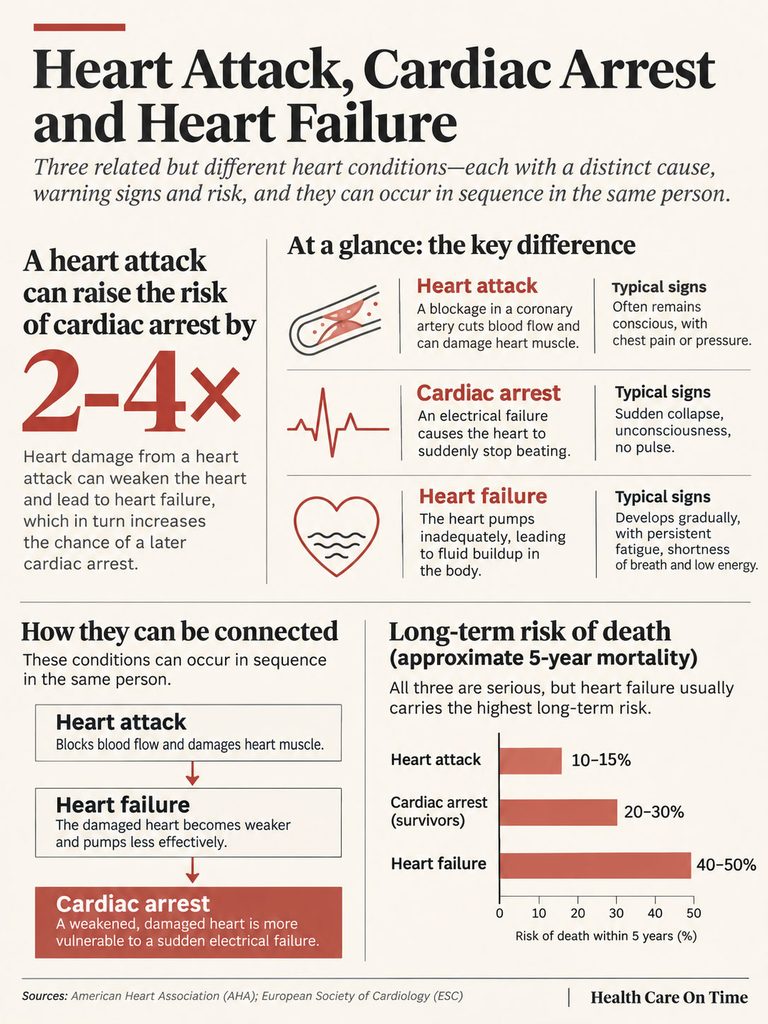
Heart failure is a pump problem. The name makes it sound as if the heart has stopped, but it keeps beating. Heart failure happens when the heart cannot pump enough blood and oxygen to support the other organs, so fluid backs up into the lungs and legs and the body runs short on energy. It wears people down slowly.
During a heart attack, the heart usually keeps beating and the person is awake, often frightened and in pain. During cardiac arrest the person collapses, loses consciousness and has no pulse.
All three can show up in one person’s story, which is a big part of the confusion. A heart attack can damage enough muscle to cause heart failure later, and both a fresh heart attack and a weak, scarred heart raise the odds of the electrical chaos behind cardiac arrest.
Side-by-Side Comparison
In an emergency, two rows of this table do most of the work: whether the person is awake, and what to do first.
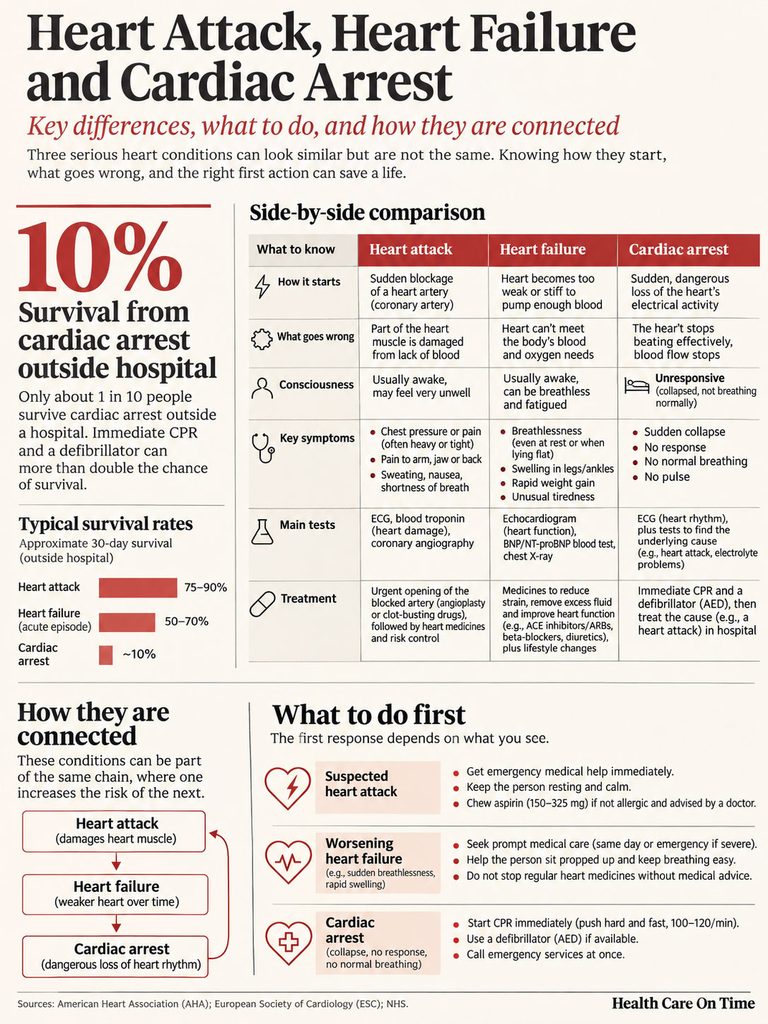
| Feature | Heart attack | Heart failure | Cardiac arrest |
| What goes wrong | A coronary artery is blocked, usually by a clot on plaque, and heart muscle starts to die | The heart muscle is too weak or too stiff to pump enough blood | An electrical malfunction makes the heart stop pumping |
| How it starts | Suddenly, over minutes to hours (warning symptoms can come and go for days) | Usually gradually, over weeks to years; acute flare-ups can come on quickly | Suddenly, often with no warning |
| Is the person awake? | Usually yes, heart still beating | Yes | No; no pulse, not breathing normally |
| Key symptoms | Chest pressure or pain, pain in arm, back, neck or jaw, shortness of breath, cold sweat, nausea | Breathlessness with activity or lying flat, swollen ankles or belly, weight gain from fluid, tiredness | Sudden collapse, unresponsive, no normal breathing |
| Main tests | 12-lead ECG within 10 minutes, cardiac troponin blood test, angiogram | BNP blood test, echocardiogram to measure ejection fraction | Identified on the spot from the heart rhythm on a monitor or AED |
| Main treatment | Reopen the artery fast (stent or bypass), then long-term medicines and cardiac rehab | Daily medicines, low-sodium eating, devices, transplant in advanced cases | CPR plus an electric shock from an AED, then hospital care |
| First action | Call 911 | Call your doctor for slow changes; call 911 for sudden severe breathlessness, chest pain or fainting | Call 911, start CPR, use an AED |
| How they link | Can cause heart failure and can trigger cardiac arrest | Raises the risk of dangerous rhythms and sudden death | A heart attack is a common trigger |
What Happens During a Heart Attack
Why the artery blocks
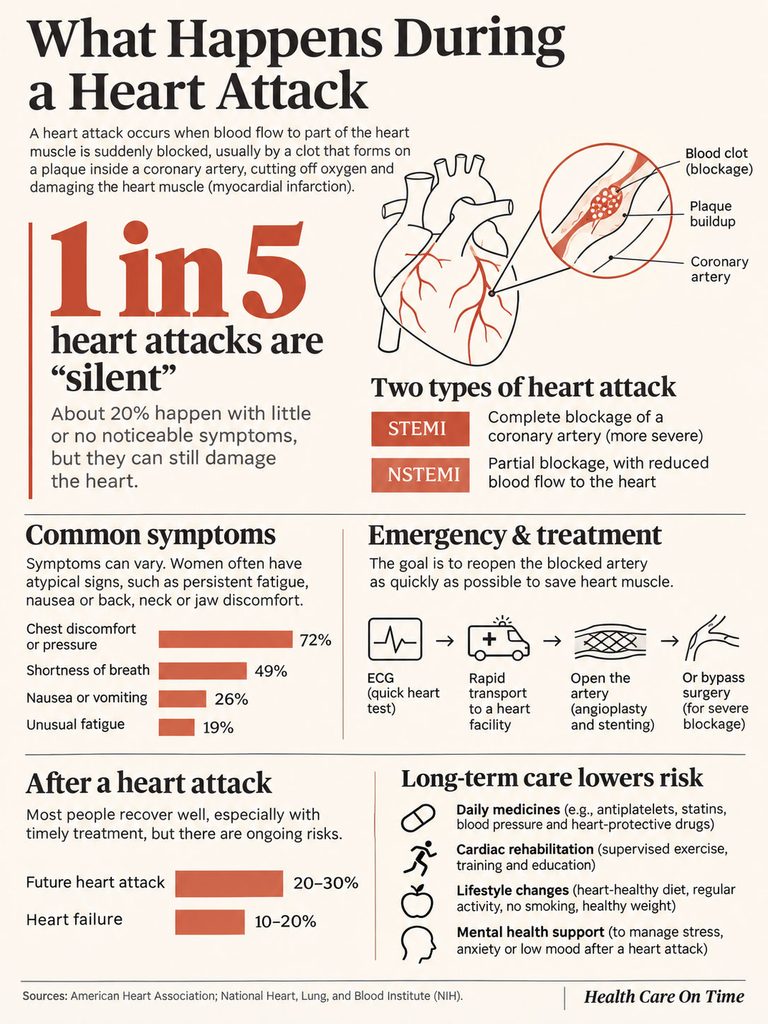
Most heart attacks start with coronary artery disease. Fatty plaque builds up for years inside the arteries on the surface of the heart. When a plaque cracks, the body treats it like a wound and forms a clot on top of it, and if that clot closes the artery, the muscle it feeds loses its oxygen supply. Doctors call the result a myocardial infarction.
Less often, the cause is a coronary artery spasm or a tear in the artery wall (spontaneous coronary artery dissection).
Doctors group heart attacks together with unstable angina under the term acute coronary syndrome, and they split heart attacks into two main types based on the ECG. A STEMI shows a telltale ST-segment elevation pattern and usually means an artery is completely shut, so it gets the fastest response; an NSTEMI lacks that pattern but still shows heart muscle damage on blood tests.
Someone in the United States has a heart attack every 40 seconds, and about 805,000 people have one each year; 605,000 of those are first heart attacks and 200,000 happen in people who have already had one.
Symptoms, including the quieter ones
The classic sign is discomfort in the center of the chest that feels like pressure, squeezing, fullness or pain, and it can last more than a few minutes or fade and come back. Watch for these too:
- Pain or discomfort in one or both arms, the back, neck, jaw or stomach
- Shortness of breath, with or without chest discomfort
- A cold sweat, nausea, lightheadedness, a racing or irregular heartbeat, or unusual tiredness
Chest pain is still the most common symptom in women. Women are more likely, though, to also have shortness of breath, nausea or vomiting, an upset stomach, or pain in the shoulder, back or arm, along with anxiety and unusual tiredness or weakness. Those are easy to write off as flu or stress. They shouldn’t be. Anyone who has already had a heart attack should know that a second one may not feel like the first, and the safer move is to call 911 instead of waiting to compare.
About 1 in 5 heart attacks are silent: the muscle is damaged, but the person never knew it happened.
Treatment: opening the artery fast
Heart muscle that loses its blood supply keeps dying until the artery is reopened, so every step of emergency care runs on a clock. The 2025 ACC/AHA acute coronary syndromes guideline calls for a 12-lead ECG within 10 minutes of first medical contact, transport by EMS, and, for a STEMI, a goal of 90 minutes or less from first medical contact to the device that opens the artery.
Paramedics can begin treatment on arrival, up to an hour sooner than if you drive to the hospital, and people with chest pain who arrive by ambulance may get faster treatment once they’re inside.
In the hospital, the usual fix is a catheter procedure called percutaneous coronary intervention, in which a balloon opens the artery and a stent holds it open; some people need bypass surgery instead. Afterward come blood thinners, cholesterol-lowering drugs and cardiac rehab. Rehab mixes supervised exercise with coaching on heart-healthy living and help with stress, and it’s meant for people recovering from heart failure as well as from a heart attack.
Life after a heart attack
Most people survive a heart attack, and many are back to their normal routine within a few weeks if they have no chest pain or other problems.
The first months still carry risk. A heart attack can lead to cardiac arrest, cardiogenic shock, heart failure, inflammation around the heart or an irregular heartbeat, and a second heart attack becomes more likely than it was before the first. Among Medicare patients 65 and older, the share who had another heart attack within a year dropped from 7.1% in 1995 to 5.1% by 2013, but repeat events remain common enough that cardiologists push hard on medicines and rehab after discharge. Worry about another heart attack, low mood and trouble adjusting to new routines are common in the months afterward, and they’re worth raising with your doctor rather than riding out alone.
What Heart Failure Means
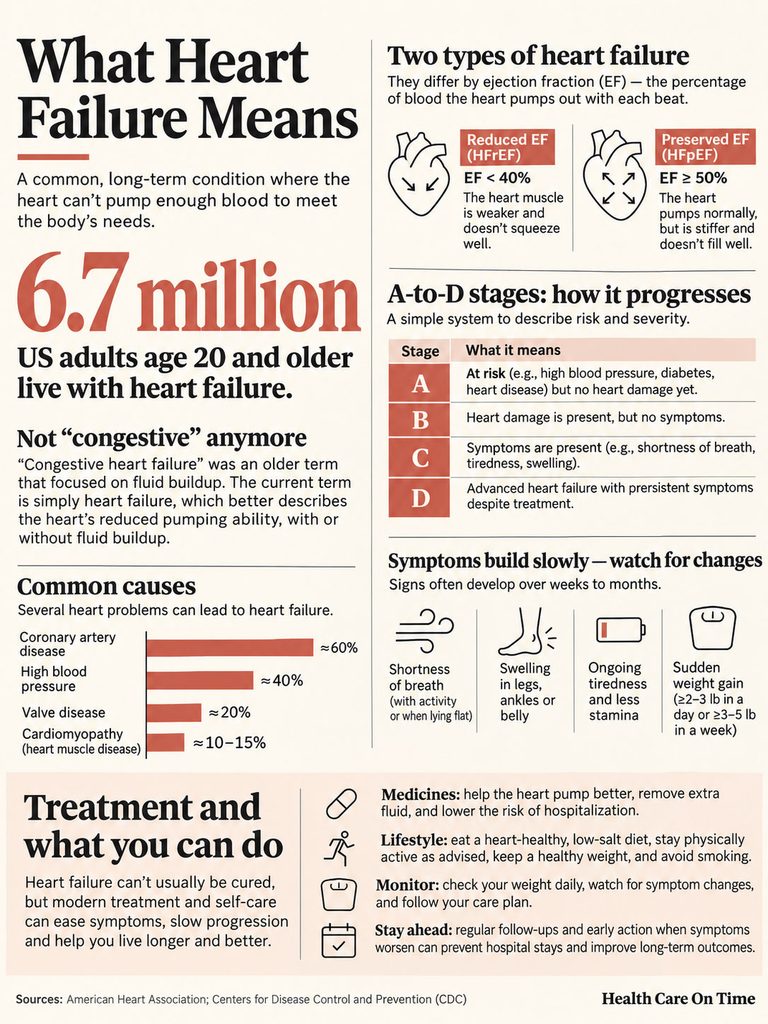
Nearly 6.7 million US adults age 20 and older live with heart failure, most of them managing it for years. The older term “congestive heart failure” refers to the fluid congestion that often comes with it; most doctors now just say heart failure.
Most people manage the chronic form day to day, but it can flare. A sudden worsening, called acute heart failure (or acute decompensated heart failure when a long-standing case gets worse), needs prompt care.
Reduced vs preserved ejection fraction
Ejection fraction is the share of blood the left ventricle pushes out with each beat, and it’s measured with an echocardiogram. A BNP blood test usually comes first; a normal result makes heart failure much less likely, while a high one points toward the echo. The 2022 AHA/ACC/HFSA heart failure guideline sorts heart failure into three groups:
- Reduced ejection fraction (HFrEF): 40% or less. The muscle is weak and doesn’t squeeze well, and this is the type a big heart attack tends to cause.
- Mildly reduced ejection fraction (HFmrEF): 41% to 49%.
- Preserved ejection fraction (HFpEF): 50% or more. The muscle squeezes, but it’s stiff and doesn’t relax and fill properly, often after years of high blood pressure.
Heart failure can also affect the left side, the right side or both. Left-sided failure backs fluid into the lungs, while right-sided failure tends to cause swelling in the legs and belly.
Symptoms that build slowly
Heart failure symptoms usually creep in, and people tend to blame them on age or being out of shape. The usual early ones are shortness of breath during daily activities, trouble breathing when lying down, weight gain with swelling in the feet, legs, ankles or stomach, and feeling tired or weak.
Breathlessness when lying flat is one of the more specific clues, and people often start sleeping propped up on extra pillows without connecting it to the heart. Mention it to your doctor. A cough or wheezing and a fast or irregular heartbeat can show up too. Confusion or trouble thinking clearly is easy to miss, and family members are often the first to notice it.
Weight is the most useful early warning you can measure at home. Many people first notice their heart failure getting worse when they gain more than two or three pounds in a day or more than five pounds in a week, and that kind of fast gain is usually retained fluid. Weigh yourself at the same time each morning, ideally after using the bathroom and before breakfast, and keep a log. Many care teams also ask people to track blood pressure, heart rate, swelling, appetite and sleep, along with how the water pill seems to be working, because small shifts in several of these at once say more than any single reading.
Left untreated, heart failure strains other organs, mainly the kidneys and the liver, and enlarged heart chambers can stretch the valves and set off irregular rhythms.
Stages A to D
The A-to-D staging starts earlier than most people expect. Someone with high blood pressure or diabetes and a normal heart is already stage A. A person with a scar from an old heart attack but no symptoms is stage B. Past or current symptoms put someone in stage C, and stage D means symptoms keep returning despite the best medical treatment, which is why doctors start treating in the early stages, long before anyone feels sick.
How heart failure is treated
Heart failure has no cure, but treatment lets most people live longer and feel better. For reduced ejection fraction, the guideline calls for four medicine classes used together: an angiotensin receptor-neprilysin inhibitor (or an ACE inhibitor or ARB), a heart failure beta blocker, a mineralocorticoid receptor antagonist such as spironolactone, and an SGLT2 inhibitor. Diuretics, often called water pills, remove extra fluid and ease breathing, and for preserved ejection fraction they remain the main treatment.
Daily habits matter as much as pills: a lower-sodium diet, a fluid limit if your doctor sets one, daily weights and regular activity. Sodium gets the most attention, since salt makes the body hold extra water and in heart failure that water ends up in the lungs and ankles. Some people need an implantable defibrillator, a special pacemaker, a mechanical heart pump or, in advanced cases, a transplant.
Coronary disease is the most common cause, but valve disease and cardiomyopathy account for many cases, and some causes take years to surface. In ATTR amyloidosis, abnormal protein slowly builds up in tissues, and carpal tunnel syndrome in both wrists can appear long before the heart is affected.
Where Cardiac Arrest Fits
Cardiac arrest is usually what people mean when they say someone “had a heart attack and died on the spot.” In sudden cardiac arrest, a chaotic rhythm such as ventricular fibrillation makes the heart quiver instead of pump, blood stops reaching the brain, and the person loses consciousness and a pulse. Without help, the person can die within minutes.
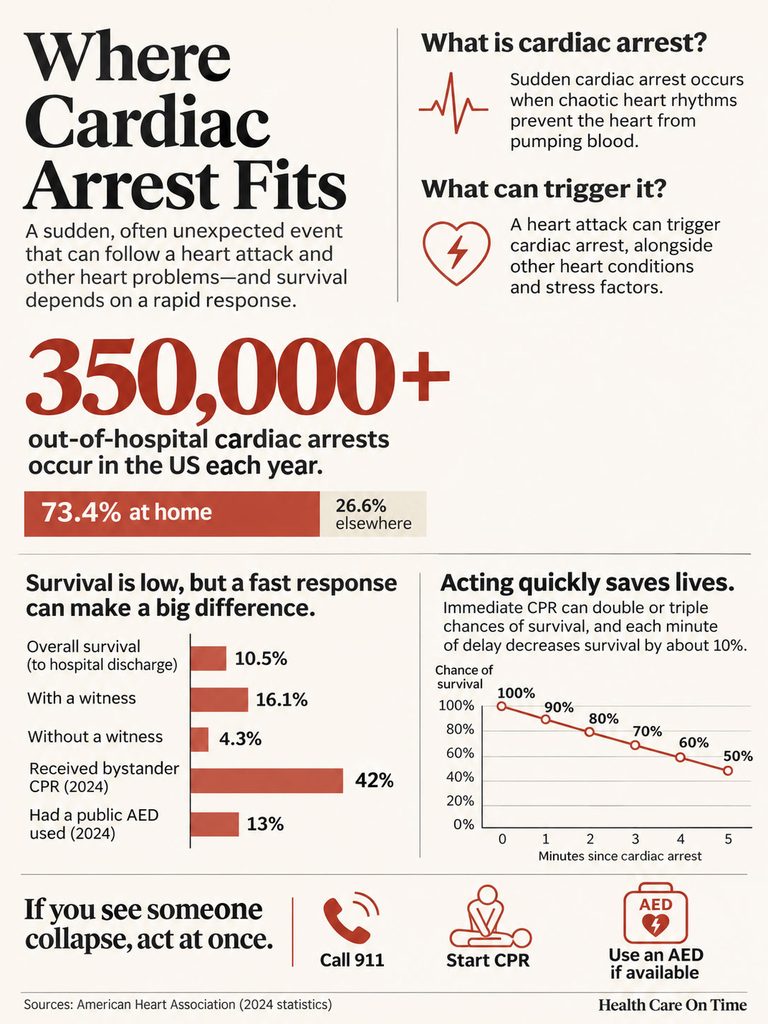
Heart attacks are a common trigger. Other heart conditions that disrupt the rhythm, inherited disorders and severe physical stress can also set it off, and sometimes no cause is ever found.
Most cardiac arrests happen far from a hospital. There are more than 350,000 out-of-hospital cardiac arrests in the US each year, and 73.4% of them happen at home, so the person most likely to help is a family member.
Survival is low. Only 10.5% of people who had an out-of-hospital arrest in 2024 survived to hospital discharge, and cardiac arrest contributed to 380,349 US deaths in 2023.
What bystanders do in the first few minutes decides most outcomes. Immediate CPR can double or triple the chance of survival, while every minute of delay before CPR and an AED cuts survival by about 10%. In national registry data, 16.1% survived when someone saw the collapse happen, compared with 4.3% when nobody did, because a witness can start CPR right away.
Those odds could be better than they are, since in 2024 only 42% of people got bystander CPR and only 13% had a public AED used on them.
If someone collapses and isn’t breathing normally, call 911, start CPR and don’t stop until EMS takes over. If anyone can grab an AED, use it the moment it’s there. Anyone can use one.
How a Heart Attack Can Lead to Heart Failure
A heart attack leaves a scar. Heart muscle that dies doesn’t grow back; stiff scar tissue that can’t contract takes its place.
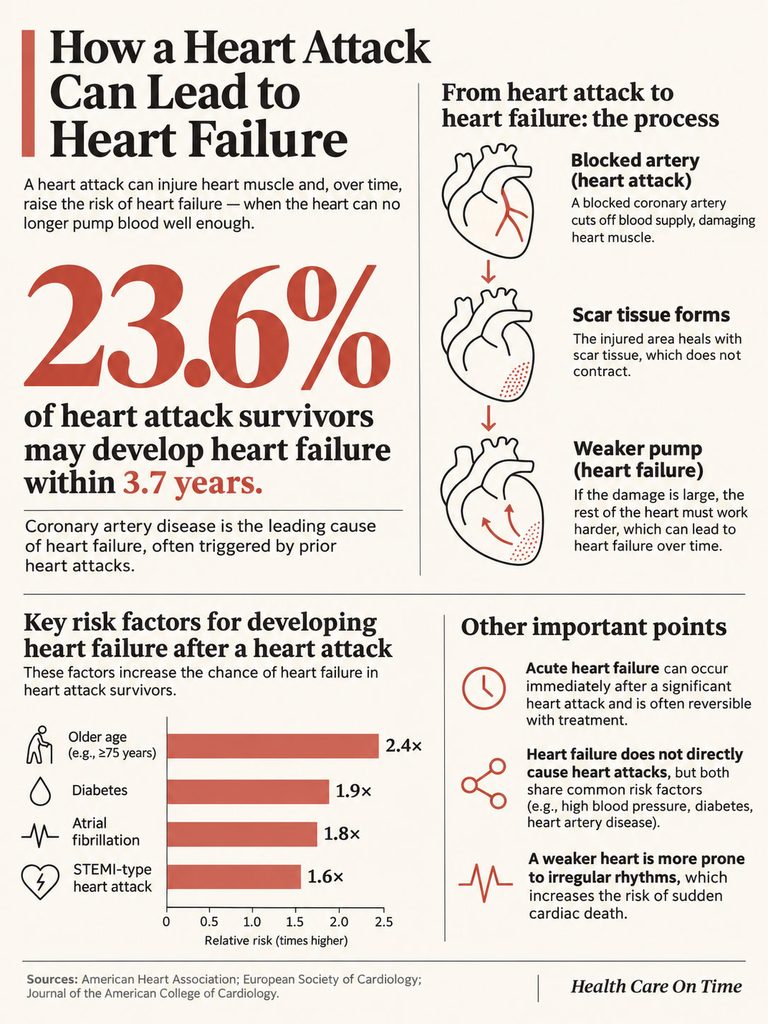
If the scar is small, the rest of the heart picks up the slack and the person may never develop heart failure. If the damage is large, or several heart attacks add up over time, the remaining muscle has to work harder, the left ventricle stretches and thins, and pumping strength falls. That is how a heart attack produces the reduced-ejection-fraction type of heart failure.
Coronary artery disease is the most common cause of heart failure, and a prior heart attack is a major route into it. Among 24,479 people in England who survived a first heart attack, 23.6% went on to develop heart failure over a median follow-up of 3.7 years. Older age, diabetes, atrial fibrillation and a STEMI-type heart attack all raised the risk.
Sometimes heart failure appears right away, as acute heart failure in the hospital after a large heart attack, with fluid filling the lungs. That early heart failure often improves with prompt treatment.
The reverse direction doesn’t work the same way. Heart failure doesn’t directly cause heart attacks, though the two share risk factors. Still, a weak heart is more prone to the irregular rhythms behind sudden cardiac death, and that risk is why some people with a low ejection fraction get an implantable defibrillator.
Which Is More Dangerous?
Cardiac arrest is the most dangerous in the moment, because the person dies within minutes without CPR and a shock. Between the other two, a heart attack is the more urgent emergency, yet most people who reach a hospital quickly survive it, and over the years that follow heart failure usually carries the heavier risk of death.
Heart attack care has improved a great deal. Among more than 4.3 million Medicare patients age 65 and older, the share who died within 30 days of a heart attack fell from 20.0% in 1995 to 12.4% in 2014.
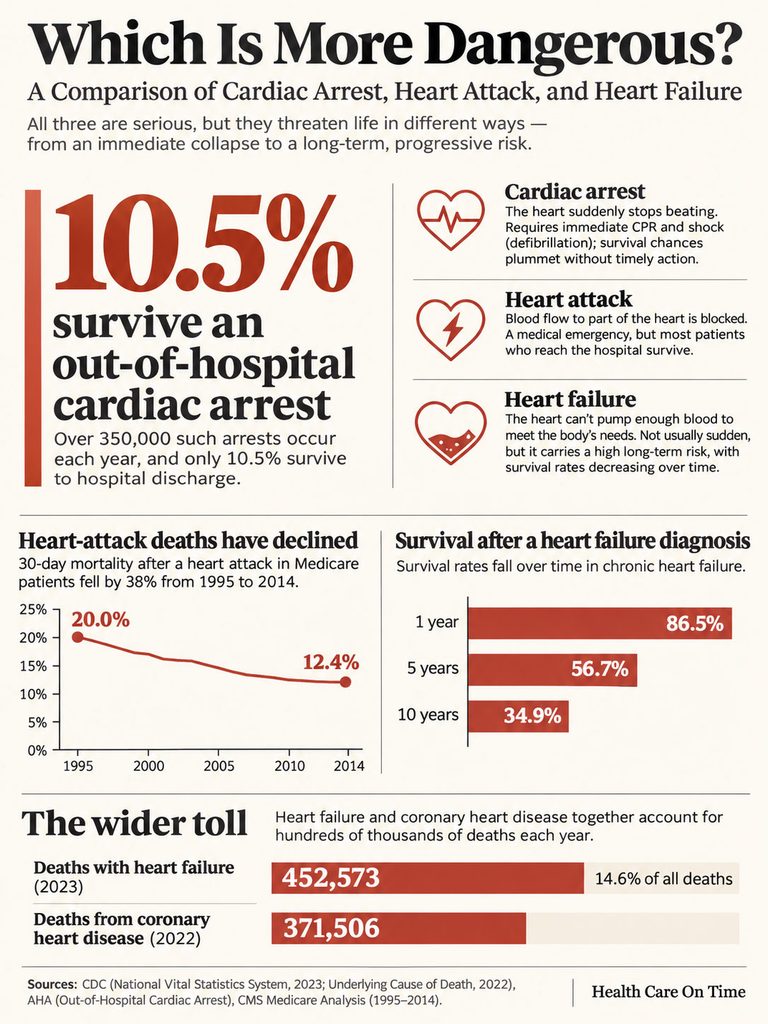
Heart failure has no single moment of danger, so its risk shows up in long-term survival instead. About 86.5% of people with chronic heart failure are alive a year after diagnosis, 56.7% at five years and 34.9% at ten years, based on a pooled analysis of 60 studies covering 1.5 million people. Those averages hide wide variation by age and ejection fraction, and they also show real progress: five-year survival rose from 29.1% for people diagnosed in the 1970s to 59.7% for those diagnosed in the 2000s, as better drugs arrived.
Heart failure shows up at the end of many lives with heart disease. It was mentioned on 452,573 US death certificates in 2023, or 14.6% of all deaths, often alongside other causes, while coronary heart disease, the disease behind most heart attacks, killed 371,506 people in 2022.
| Measure | Figure | Source |
| Heart attacks per year in the US | About 805,000 (605,000 first, 200,000 repeat) | CDC Heart Disease Facts |
| Silent heart attacks | About 1 in 5 | CDC Heart Disease Facts |
| US adults living with heart failure | Nearly 6.7 million (age 20+) | CDC, About Heart Failure |
| Deaths with heart failure on the certificate | 452,573 in 2023 (14.6% of all deaths) | CDC, About Heart Failure |
| Out-of-hospital cardiac arrests per year | More than 350,000; 73.4% at home | AHA CPR Facts and Stats |
| Out-of-hospital cardiac arrest survival | 10.5% to hospital discharge (2024) | AHA 2026 Heart Disease and Stroke Statistics |
| 30-day death rate after heart attack, age 65+ | 20.0% (1995) down to 12.4% (2014) | Krumholz et al., JAMA Network Open, 2019 |
| Heart failure after a first heart attack | 23.6% over a median 3.7 years | Gho et al., BMJ Open, 2018 |
| Five-year survival with chronic heart failure | 56.7% (pooled) | Jones et al., European Journal of Heart Failure, 2019 |
When to Call 911 and When to Call Your Doctor
The two questions from the top of this page help here. Someone who is awake with chest symptoms that began in the last few minutes should be treated as having a heart attack; someone who is unresponsive and not breathing normally is in cardiac arrest. You don’t have to be sure which condition it is before calling. If something feels wrong in your chest, or you aren’t sure whether it’s a heart attack, call 911.
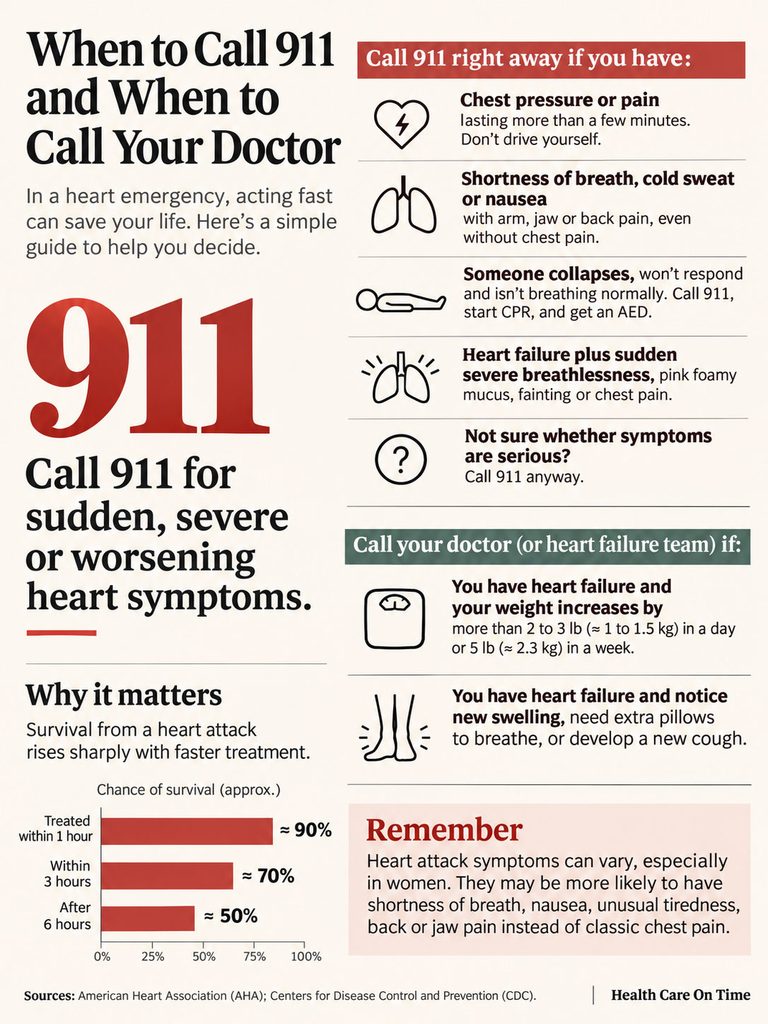
If you already have heart failure, the line sits in a different place. Slow changes, like a couple of extra pounds or ankles that are puffier than usual, usually mean phoning your care team the same day, since they can often adjust your medicines before things get worse.
Chest pain, fainting or severe weakness, or sudden severe shortness of breath with white or pink foamy mucus are different: call 911.
| Situation | What to do now | Why it matters |
| Chest pressure or pain lasting more than a few minutes, or going away and coming back | Call 911; don’t drive yourself | EMS can start treatment up to an hour sooner than driving |
| Shortness of breath, cold sweat or nausea with arm, jaw or back pain | Call 911, even without chest pain | Heart attacks don’t always cause chest pain, and women more often have these other signs |
| Someone collapses, won’t respond and isn’t breathing normally | Call 911, start CPR, get an AED | Survival drops about 10% for each minute CPR and an AED are delayed |
| Heart failure and weight up more than 2 to 3 pounds in a day or 5 pounds in a week | Call your heart failure team the same day | Fast weight gain is usually retained fluid |
| Heart failure and new swelling, extra pillows to breathe, or a new cough | Call your doctor right away | Your team can adjust medicines before a flare-up turns into a hospital stay |
| Heart failure plus sudden severe breathlessness, pink foamy mucus, fainting or chest pain | Call 911 | These can signal acute heart failure or another emergency |
| Not sure whether symptoms are serious | Call 911 anyway | Calling is almost always the fastest route to treatment |
Risk Factors the Three Share
The same handful of risk factors sits behind all three conditions. High blood pressure, high cholesterol and smoking drive coronary artery disease, and about half of all Americans have at least one of those three. Diabetes, obesity, inactivity, a high-sodium diet and heavy drinking add to the risk.
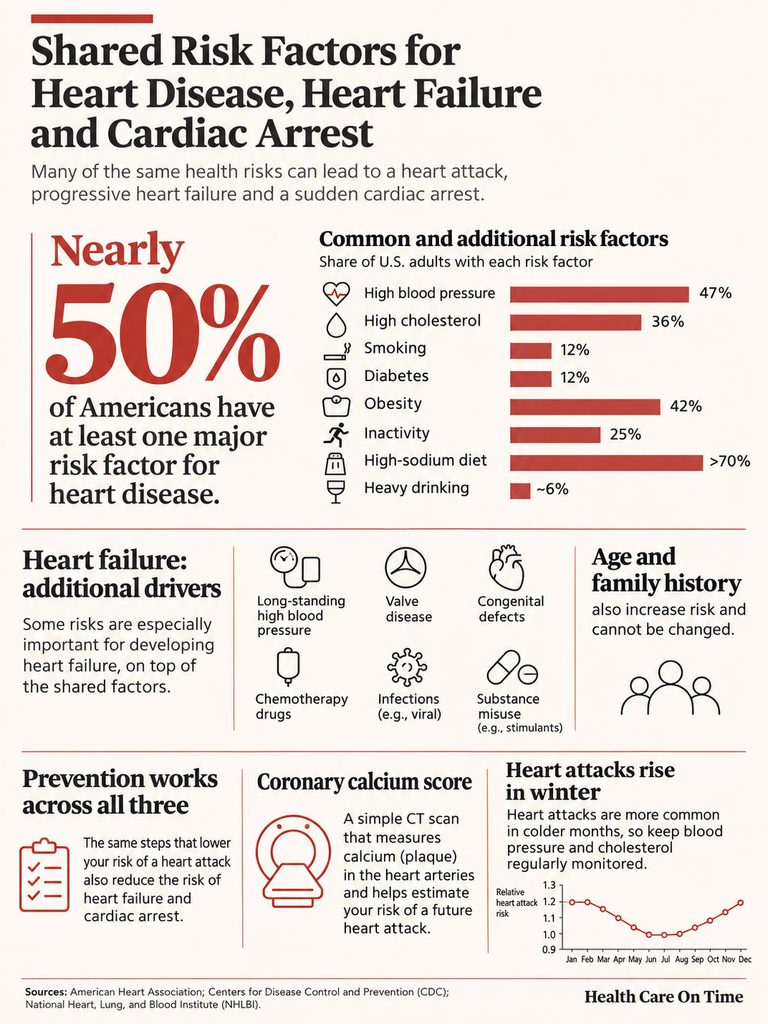
Heart failure has a few extra drivers. Long-standing high blood pressure stiffens the heart, while valve disease, congenital heart defects, some chemotherapy drugs, infections and alcohol or drug misuse can weaken it. Age and family history count for all three, though nobody can change them.
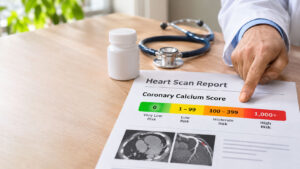
Because the risks overlap, the steps that prevent a heart attack also lower the odds of heart failure and cardiac arrest later. If you’ve never had a heart attack and don’t know how much plaque you already have, ask about a coronary calcium score, which can help settle whether a statin is worth starting. Season plays a part as well, and heart attacks rise in the winter months, so the colder half of the year is a sensible time to check that blood pressure and cholesterol are under control.
Questions to Bring to Your Next Appointment
If you or a family member has had a heart attack or a heart failure diagnosis, these questions are worth asking:
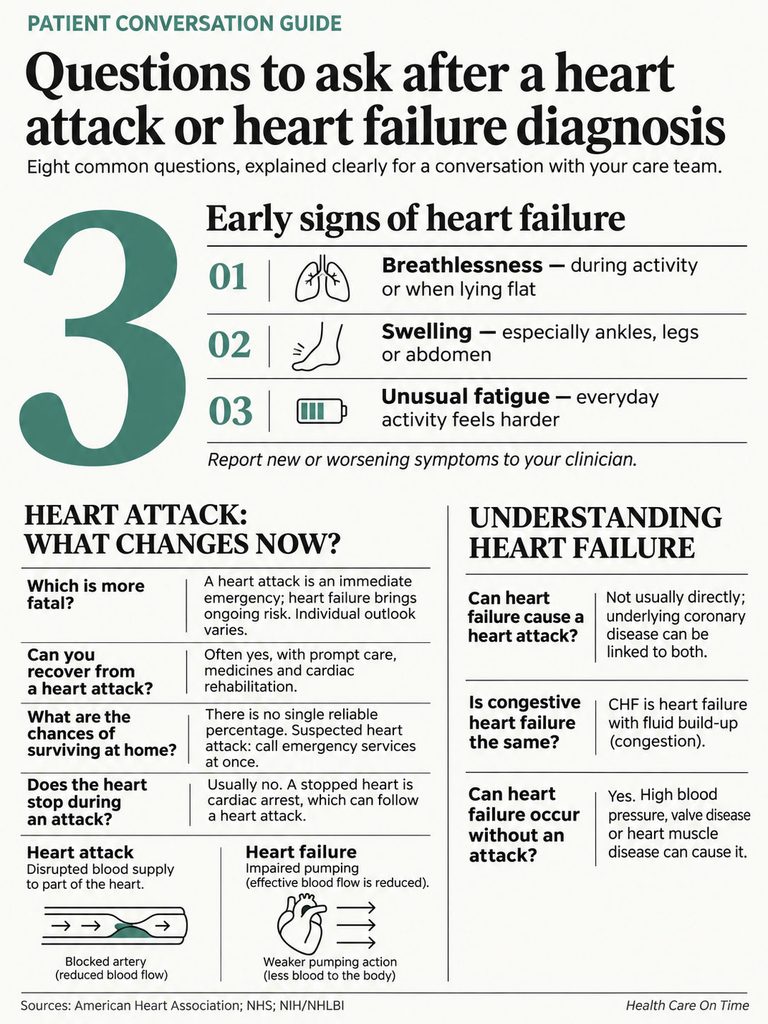
- Did the heart attack damage enough muscle to raise the risk of heart failure, and what is the ejection fraction now?
- Should the echocardiogram be repeated in a few months, once the heart has had time to recover?
- Are there other heart failure medicines that should be added, and if one was left out, why?
- How much weight gain should trigger a call, and who takes that call after hours?
- Is the risk of a dangerous heart rhythm high enough to talk about an implantable defibrillator?
- Is cardiac rehab covered, and where is the nearest program?
Frequently Asked Questions
Which is more fatal, heart attack or heart failure?
Over the long term, heart failure usually carries the higher risk of death, because it doesn’t go away and tends to progress, while most people who reach a hospital quickly survive a heart attack. A heart attack is far more dangerous in its first minutes, though, mainly because it can trigger cardiac arrest. Someone who has had a large heart attack and then develops heart failure faces both risks, which is why treatment after the hospital stay focuses on protecting the remaining heart muscle.
What are three early warning signs your heart is failing?
The three most common early signs are shortness of breath during everyday activity, trouble breathing when lying flat, and swelling in the ankles, legs or belly with weight gain from fluid. Unusual tiredness often comes along with them.
Can you recover from a heart attack?
Yes, most people do, especially when the artery is opened quickly. Cardiac rehab, daily medicines and lifestyle changes help prevent future heart problems, and many people are back to normal activities within a few weeks.
What are the chances of surviving a heart attack at home?
It hinges on whether the heart keeps beating. A person having a heart attack who calls 911 right away has a good chance, because paramedics start treatment on arrival and the artery can be opened fast. Waiting at home to see whether the pain passes is the risky part. The worst case is a heart attack that triggers cardiac arrest, and most out-of-hospital arrests happen at home; there, survival depends on someone in the house calling 911 and starting CPR right away rather than waiting for the ambulance.
Can heart failure cause a heart attack?
Not directly. A heart attack can cause heart failure, but heart failure doesn’t block arteries. The two share causes such as coronary artery disease, so people with heart failure can still have a heart attack.
Is congestive heart failure the same as heart failure?
Yes, for most purposes. “Congestive” refers to the fluid buildup in the lungs and legs that often comes with heart failure.
Can you have heart failure without ever having a heart attack?
Yes. High blood pressure, valve disease, cardiomyopathy, diabetes and some medicines or infections can all lead to heart failure in someone whose arteries never fully blocked.
Does the heart stop during a heart attack?
Usually not, though a heart attack can set off cardiac arrest, in which it does stop. Anyone who collapses and isn’t breathing normally needs CPR and an AED right away.
Medical disclaimer: This article is for general information and does not replace advice from your doctor. If you think you or someone near you is having a heart attack or cardiac arrest, call 911 immediately. Don’t start, stop or change any heart medicine without talking to your health care team.
References
- Centers for Disease Control and Prevention. Heart Disease Facts. https://www.cdc.gov/heart-disease/data-research/facts-stats/index.html
- Centers for Disease Control and Prevention. About Heart Failure. https://cdc.gov/heart-disease/about/heart-failure.html
- Centers for Disease Control and Prevention. About Heart Attack Symptoms, Risk, and Recovery. https://cdc.gov/heart-disease/about/heart-attack.html
- American Heart Association. Heart Attack and Sudden Cardiac Arrest Differences. https://www.heart.org/en/health-topics/heart-attack/about-heart-attacks/heart-attack-or-sudden-cardiac-arrest-how-are-they-different
- American Heart Association. Warning Signs of a Heart Attack. https://www.heart.org/en/health-topics/heart-attack/warning-signs-of-a-heart-attack
- American Heart Association. Managing Heart Failure Symptoms. https://heart.org/en/health-topics/heart-failure/warning-signs-of-heart-failure/managing-heart-failure-symptoms
- American Heart Association. CPR Facts and Stats. https://cpr.heart.org/en/resources/cpr-facts-and-stats
- American Heart Association. Top Takeaways from the 2026 Heart Disease and Stroke Statistics. https://professional.heart.org/en/science-news/-/media/C44EB8DE5D8C4015AF53095F737377C6.ashx
- American Red Cross. CPR Facts and Statistics. https://www.redcross.org/take-a-class/resources/articles/cpr-facts-and-statistics
- Mayo Clinic. Heart failure: Symptoms and causes. https://www.mayoclinic.org/diseases-conditions/heart-failure/symptoms-causes/syc-20373142
- American Family Physician. Management of Heart Failure: Updated Guidelines From the AHA/ACC (2022 AHA/ACC/HFSA guideline summary). https://www.aafp.org/afp/2023/0900/practice-guidelines-heart-failure
- National Heart, Lung, and Blood Institute. Heart Failure Treatment. https://www.nhlbi.nih.gov/health/heart-failure/treatment
- National Heart, Lung, and Blood Institute. Heart Attack Recovery. https://www.nhlbi.nih.gov/health/heart-attack/recovery
- Guideline Central. Management of ACS: 2025 ACC/AHA Guidelines Spotlight. https://www.guidelinecentral.com/insights/management-of-acs-guidelines-spotlight
- Gho JMIH, et al. An electronic health records cohort study on heart failure following myocardial infarction in England. BMJ Open. 2018;8(3):e018331. https://eprints.whiterose.ac.uk/id/eprint/126192/
- Jones NR, et al. Survival of patients with chronic heart failure in the community: a systematic review and meta-analysis. European Journal of Heart Failure. 2019;21(11):1306-1325. https://research.birmingham.ac.uk/en/publications/survival-of-patients-with-chronic-heart-failure-in-the-community–2
- Krumholz HM, Normand SLT, Wang Y. Twenty-Year Trends in Outcomes for Older Adults With Acute Myocardial Infarction in the United States. JAMA Network Open. 2019;2(3):e191938. https://files-
- .-profile.medicine.yale.edu/documents/5ba64c0f-6a66-47f7-8114-5071416cada3