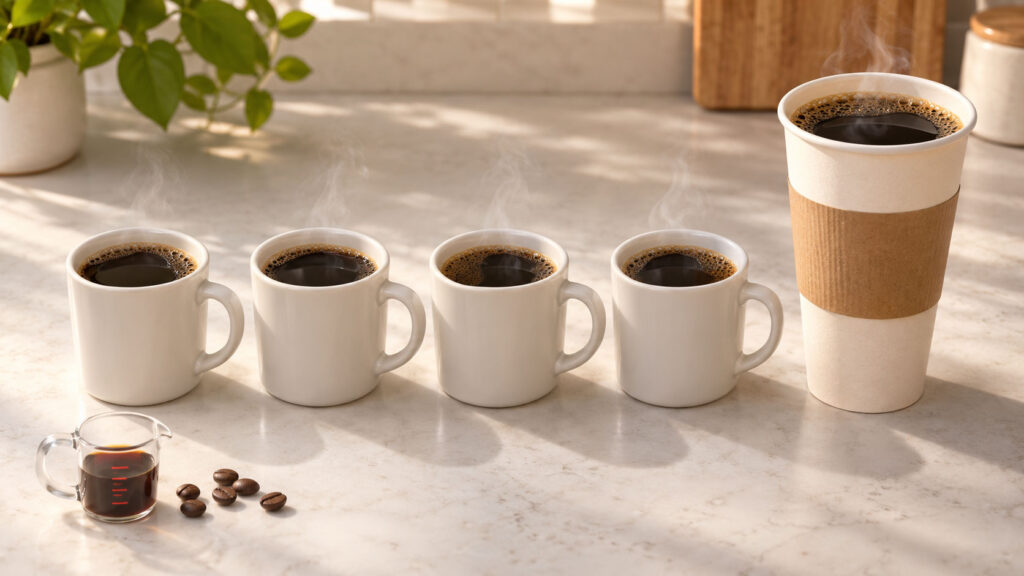
For most healthy adults, up to 400 mg of caffeine a day is the amount US health agencies treat as safe, which comes to about four 8-ounce cups of home-brewed coffee. Pregnant and breastfeeding parents and teens have lower limits, and the cup count drops quickly once the cup gets bigger.
Table of Contents
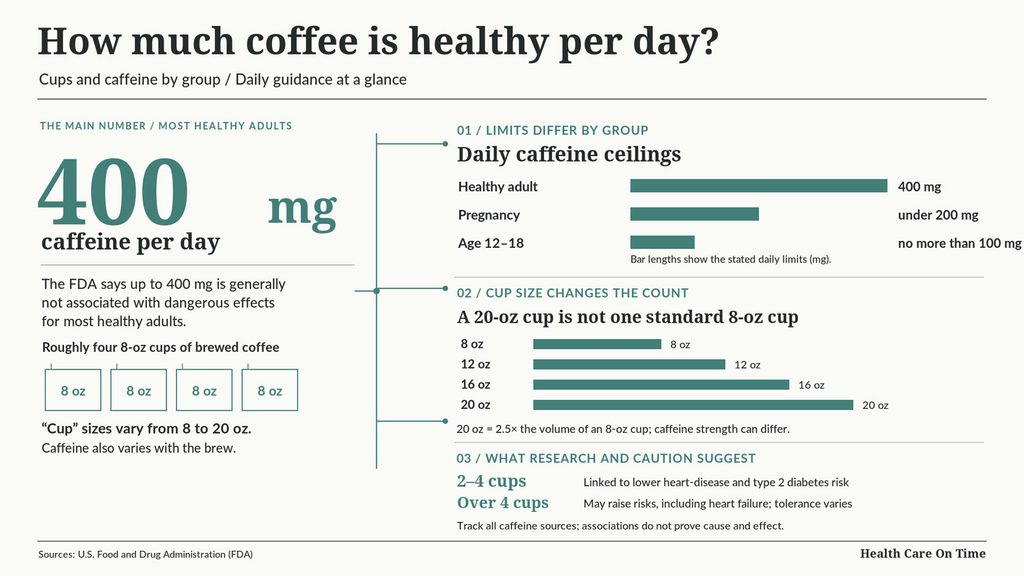
Quick answer: Most healthy adults can have up to 400 mg of caffeine a day. An average 8-ounce cup of brewed coffee has about 96 mg, so that’s roughly four cups, or two to three 12-ounce cups. Research ties the most benefit to about 2 to 4 cups a day. Limits are lower during pregnancy (under 200 mg), breastfeeding (about 300 mg) and the teen years, 12 to 18 (100 mg).
Why Do Some Say Four Cups and Others Say Two or Three?
The 400 mg figure itself isn’t in dispute. The FDA calls it an amount “not generally associated with negative effects” in healthy adults, and a 2017 systematic review backed it for most adults.
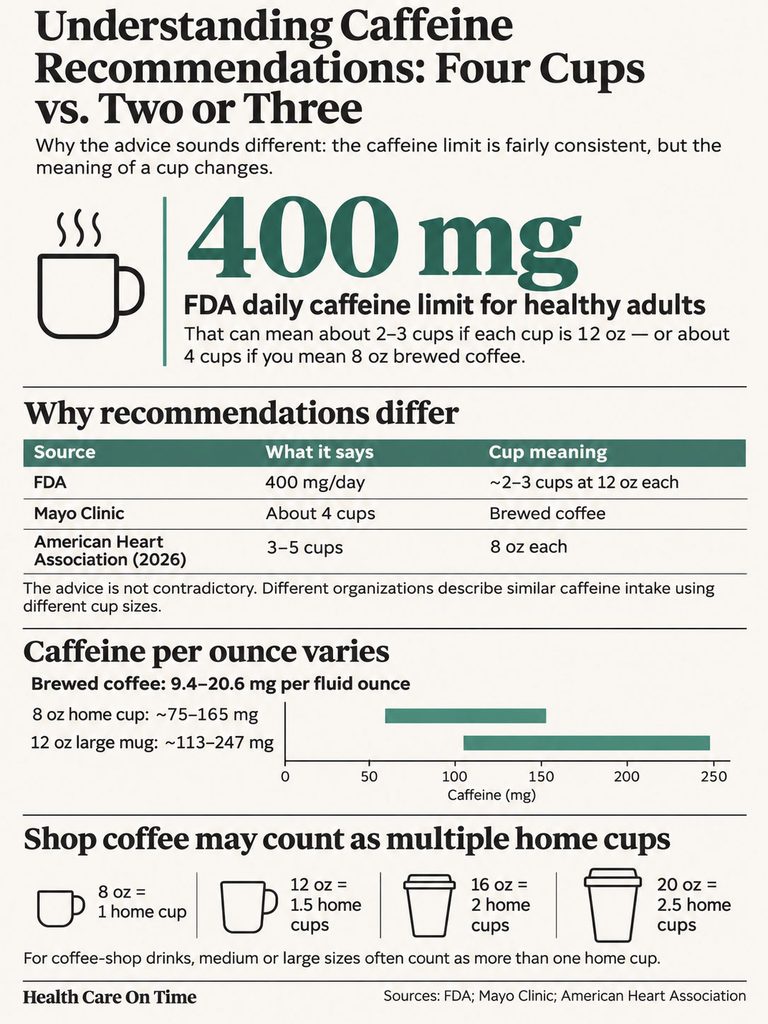
The confusion starts when that number gets turned into cups. The FDA pictures a 12-fluid-ounce mug and gets two to three of them. Mayo Clinic counts about four cups of brewed coffee, and the American Heart Association’s 2026 statement allows no more than 3 to 5 cups of 8 ounces each. None of them is wrong; they simply assume different cup sizes and brew strengths for the same 400 mg.
Ounces work better than cups. Regular brewed coffee carries about 9.4 to 20.6 mg of caffeine per fluid ounce, and where a given pot falls in that range depends on the beans, the grind and the brew time, so a big mug of strong drip can hold twice the caffeine of a small mug of weak drip.
| Cup size | Common example | Estimated caffeine | Cups that fit in 400 mg |
| 8 oz brewed | Standard measuring cup, small home mug | 75 to 165 mg (average about 96 mg) | 2 to 5 (about 4 at average strength) |
| 12 oz brewed | Large mug, many coffee-shop small sizes | 113 to 247 mg | About 1.5 to 3.5 |
| 16 oz brewed | Many coffee-shop medium sizes, travel mugs | 150 to 330 mg | About 1 to 2.5 |
| 20 oz brewed | Many coffee-shop large sizes | 188 to 412 mg | About 1 to 2 |
| 24 oz brewed | Extra-large iced coffee cups | 226 to 494 mg | Fewer than 2, sometimes fewer than 1 |
| 1 oz espresso shot | Single shot in a latte or cappuccino | About 63 mg | About 6 shots |
| 8 oz instant | A mug made from instant crystals | About 62 mg | About 6 |
Brewed ranges are estimated from 9.4 to 20.6 mg per fluid ounce, which gives the same 113 to 247 mg the FDA publishes for a 12-ounce cup. Espresso and instant figures come from Mayo Clinic’s caffeine chart.
If your coffee comes from a shop, count each medium or large drink as two or more home cups when you add up your day.
What 1, 2, 3, 4 and 5+ Cups a Day Look Like in the Research
Nearly everything known about coffee and long-term health comes from observational studies, where researchers ask large groups of people how much they drink and then follow them for years. That design can’t prove coffee causes a benefit, since moderate coffee drinkers may differ from non-drinkers in income, diet and other habits, and a “cup” is often defined loosely. In the large UK Biobank study, intake was self-reported and tea drinkers were grouped with people who drank no coffee, which can blur the comparison. Even so, the same rough curve shows up study after study.
One cup a day
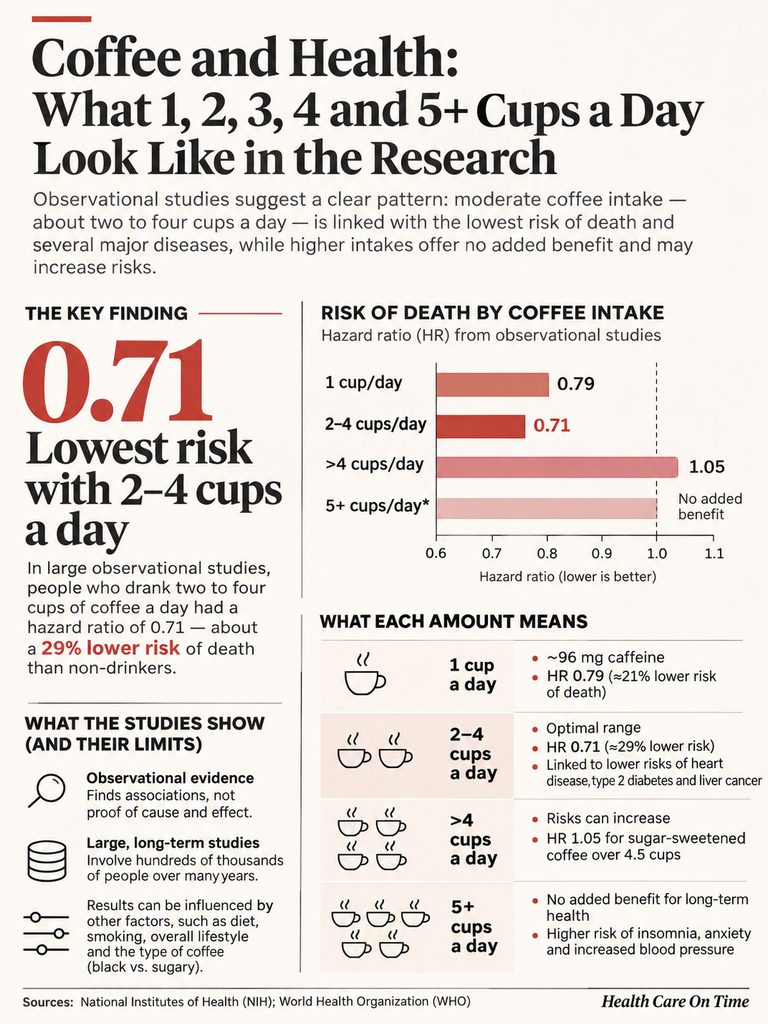
One 8-ounce cup averages about 96 mg of caffeine, under every adult limit and roughly at the ceiling for teens. In a UK Biobank analysis of 171,616 adults published in the Annals of Internal Medicine, people who drank up to 1.5 cups of unsweetened coffee a day had a hazard ratio for death of 0.79 compared with people who drank none.
Two to four cups: where most of the benefit shows up
For unsweetened coffee, the lowest risk in that study (mean age 55.6, a median of 7 years of follow-up and 3,177 deaths) fell at more than 2.5 to 4.5 cups a day, with a hazard ratio of 0.71 in both of those bands, meaning those drinkers were about 29% less likely to die during follow-up than people who skipped coffee. Sugar didn’t erase the effect at moderate amounts: people who sweetened their coffee did best at more than 1.5 to 2.5 cups (hazard ratio 0.69), although they stirred in only about 1.1 teaspoons per cup on average, far less than a flavored coffee-shop drink holds.
The AHA’s July 2026 statement in Circulation reached a similar conclusion for the heart, linking 2 to 4 cups of caffeinated coffee a day with lower risk of heart disease, heart failure and stroke, and coffee without added sugars, flavors or cream was also tied to lower risk of type 2 diabetes and some irregular heart rhythms.
A dietitian at Johns Hopkins Medicine recommends the same window, 2 to 4 cups (16 to 32 ounces) a day, and points to lower risk of liver cancer (an estimated 41% to 53% reduction), chronic liver disease, type 2 diabetes, chronic kidney disease, Parkinson’s disease and several cancers.
More than four cups
Above that range the heart data move the other way, and the AHA statement found that more than 4 cups a day “may increase the risk of heart failure,” the same outcome that looked better at 2 to 4 cups. Mayo Clinic’s advice is to cut back if you drink more than four cups a day and have side effects such as headaches, insomnia or a fast heartbeat.
Sugar seems to matter more at high intakes. Unsweetened coffee above 4.5 cups a day still carried a hazard ratio of 0.77 in the UK Biobank data, but sugar-sweetened coffee at that level came in at 1.05, which means no lower risk at all.
Five cups and beyond
Five 8-ounce cups at average strength come to about 480 mg, over the 400 mg limit. The AHA’s upper figure of five cups assumes regular black coffee toward the lighter end of the strength range. Strong home brew or coffee-shop sizes can push five cups past 600 mg, and at that intake the realistic trade-off is worse sleep, a jumpier heart rhythm, higher blood pressure and more anxiety, with no added benefit to show for it.
Some people drink that much for years without obvious trouble. Tolerance builds, so a daily drinker may feel little from a dose that would keep an occasional drinker awake half the night. Feeling fine doesn’t settle it, though, since people tend to underestimate how much sleep caffeine costs them.
Daily Coffee Limits by Group
The 400 mg number was set for healthy, non-pregnant adults. Cup counts below use an average of 96 mg per 8-ounce cup, so treat them as estimates.
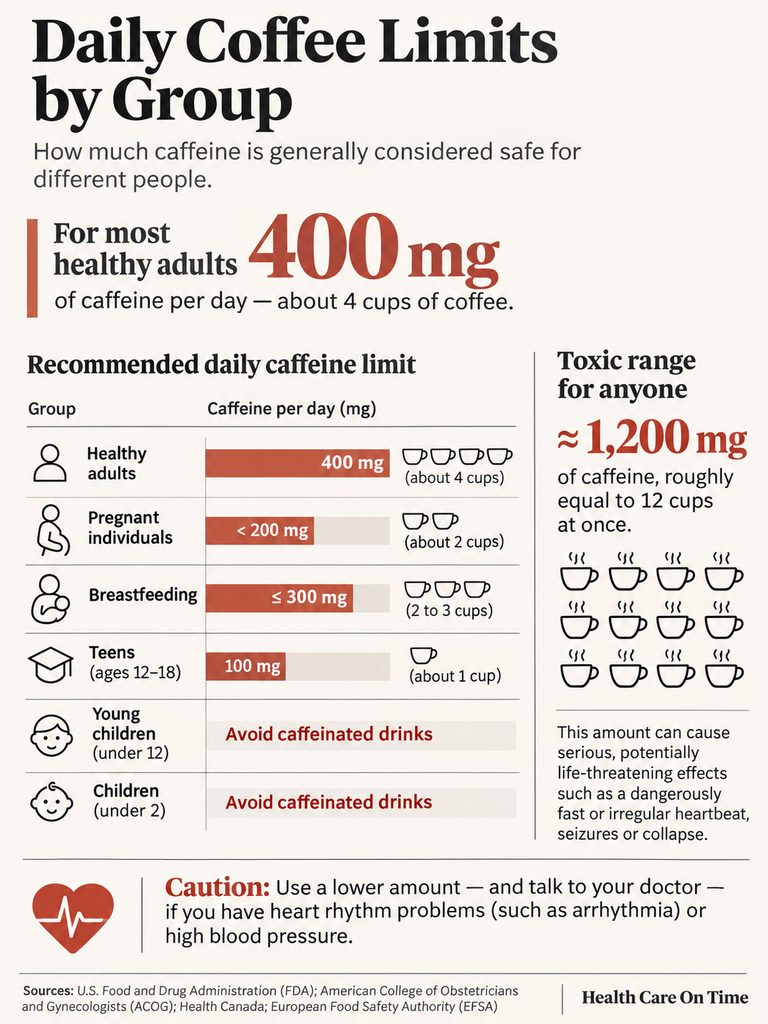
| Group | Daily caffeine limit | About how many 8-oz cups | Source |
| Healthy adults | Up to 400 mg | About 4 | FDA |
| Pregnant | Less than 200 mg | About 2 (192 mg), with nothing else caffeinated | ACOG Committee Opinion No. 462 |
| Breastfeeding | About 300 mg or less | 2 to 3 | CDC |
| Teens ages 12 to 18 | 100 mg | About 1 | AACAP guidance (Riley Children’s Health) |
| Children under 12 | Avoid caffeinated drinks | 0 | American Academy of Pediatrics (Riley Children’s Health) |
| Children under 2 | Avoid caffeinated drinks | 0 | Dietary Guidelines for Americans (FDA) |
| Toxic range (anyone) | About 1,200 mg taken quickly | Roughly 12 or more cups’ worth at once | FDA |
Pregnancy
Moderate caffeine, defined as less than 200 mg a day, does not appear to be a major factor in miscarriage or preterm birth, according to the American College of Obstetricians and Gynecologists’ Committee Opinion No. 462; its link with fetal growth restriction was left undetermined. Two 8-ounce home cups come to about 192 mg, which leaves almost no room for tea, soda or chocolate, and a single 16-ounce brewed coffee can be anywhere from 150 to 330 mg by itself. One regular cup in the morning and decaf after that keeps most people comfortably under the line.
Anyone who is pregnant, trying to become pregnant or breastfeeding should talk with a health care provider about limiting caffeine, so bring your real daily drinks, sizes included, to your next prenatal visit.
Breastfeeding
About 300 mg or less a day, roughly 2 to 3 cups of coffee, usually doesn’t harm a breastfed baby, by the CDC’s definition of a low to moderate amount. Preterm babies and young newborns break caffeine down more slowly, so parents of those babies may want to drink less. Irritability, poor sleep, fussiness and jitteriness have been reported in babies whose mothers had very high intakes, about 10 cups of coffee or more a day.
Teens and children
Teens ages 12 to 18 should stay at or under 100 mg a day, about one 8-ounce cup of coffee or two cans of soda. Caffeine is part of the day for more than 70% of US children. In teens, too much can show up as irregular heartbeats, anxiety, hyperactivity, high blood pressure, sleep problems, dehydration or digestion problems, and the American Academy of Pediatrics advises against energy drinks for children and teens because of their sugar and caffeine.
A teen who buys one 16-ounce brewed coffee on the way to school may already be at 150 mg or more before lunch.
People with heart rhythm or blood pressure concerns
In the AHA’s review, 1 to 3 cups a day was not associated with a higher risk of atrial fibrillation, but that same amount may be linked to more premature ventricular contractions, the “skipped beat” feeling many people notice. Blood pressure results were mixed. Among people who started with optimal blood pressure, 1 to 3 cups a day was associated with a higher risk of developing high blood pressure, while more than 3 cups was associated with lower risk. Energy drinks and energy shots are a different matter: they can raise blood pressure significantly, especially in people who already have it, and very high caffeine doses have been tied to abnormal heart rhythms even in healthy adults younger than 30.
Adding Up a Real Day: Coffee Plus Everything Else
Every limit above covers caffeine from all sources, and the amounts vary a lot by drink. The same 400 mg is about four cups of brewed coffee, 10 cans of cola or two energy shots. Per 8 ounces, brewed black tea has about 48 mg, green tea 29 mg, cola 33 mg and an energy drink 79 mg, while a 2-ounce energy shot carries about 200 mg. Energy drinks swing the most, from 54 to 328 mg in a 16-ounce can.
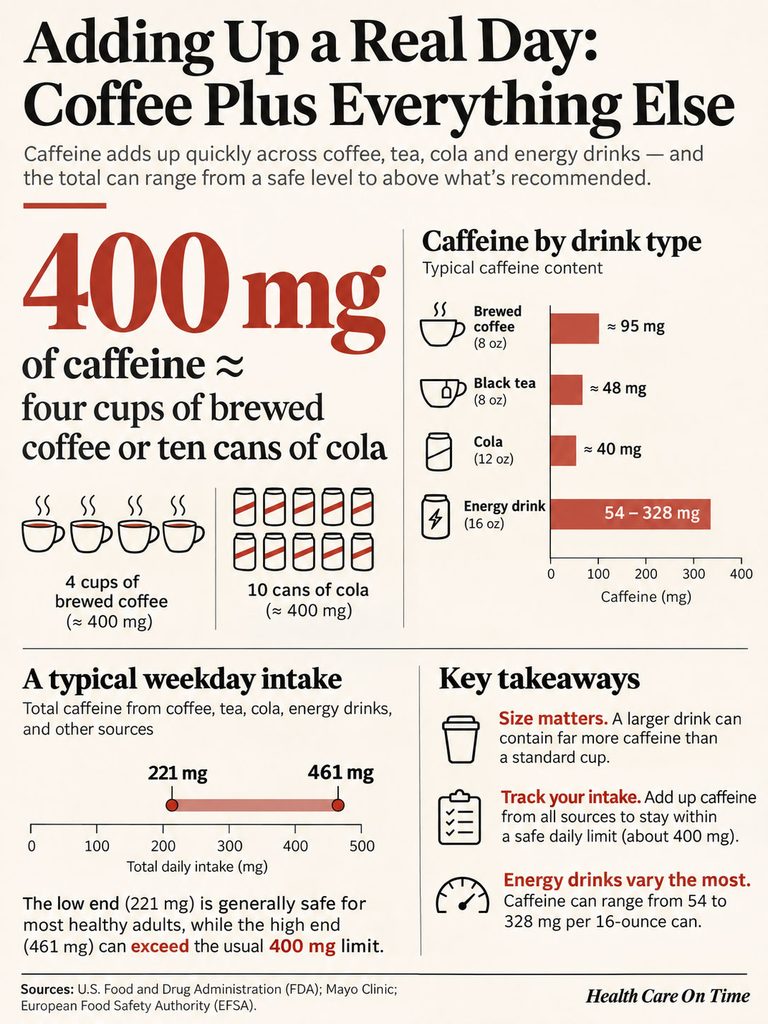
A fairly ordinary weekday shows how fast it adds up. A 16-ounce brewed coffee on the commute (150 to 330 mg), a 12-ounce soda with lunch (23 to 83 mg, the FDA’s range for caffeinated soft drinks) and an 8-ounce black tea in the afternoon (about 48 mg) come to roughly 221 to 461 mg. Size drives most of that gap. The low end is comfortable for most adults, but the high end is over the limit, and the person drinking it might describe the habit as “one coffee a day.”
A one-day log of every caffeinated drink, its size and the time you drank it is the quickest way to see how much coffee is healthy for you, because it shows both your total and how late the last dose landed.
Signs You’re Drinking Too Much Coffee
Your body usually flags the problem well before a label does, and any of these is a reason to look at how much you’re really drinking:
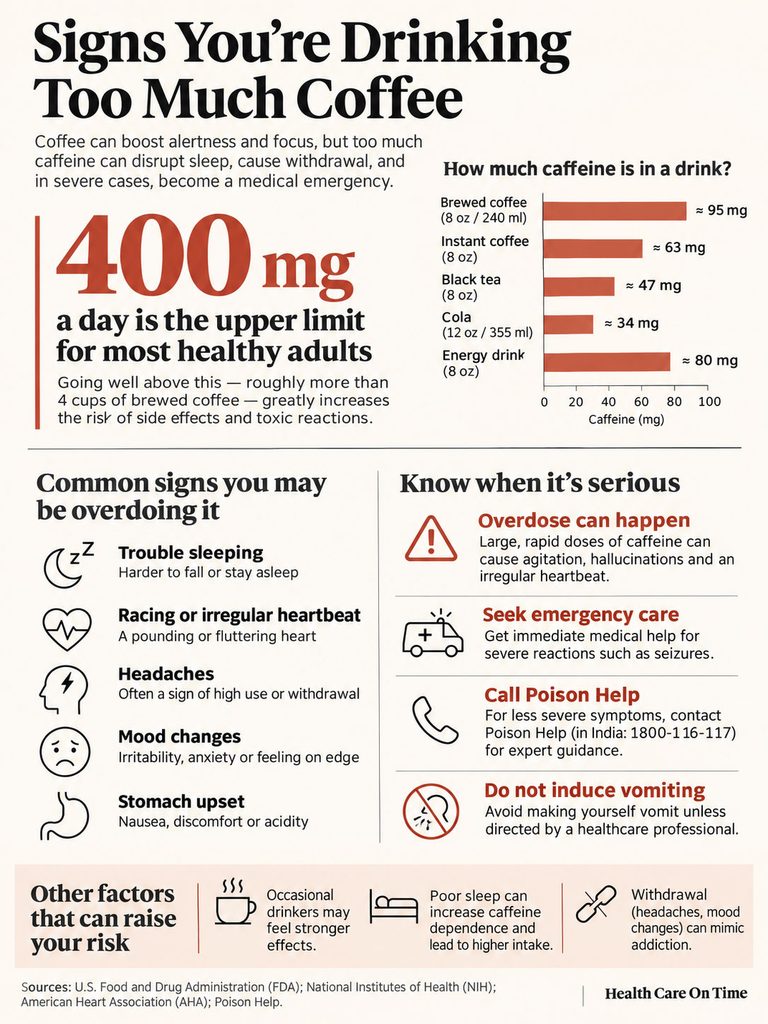
- Sleep: trouble falling asleep, waking at night, or feeling tired even after a full night.
- A fast or pounding heartbeat, or palpitations
- Jitters: shaky hands or muscle tremors
- Nervousness, anxiety or crankiness
- Headache
- Upset stomach, nausea or loose stools (see why coffee can cause diarrhea in some people)
- Needing to urinate often, or trouble controlling urination
- Higher blood pressure readings than usual
People who don’t drink caffeine every day tend to react more strongly, so one large coffee can hit an occasional drinker much harder than a daily drinker. Poor sleep can also hide the cause: caffeine keeps you up, you feel worse in the morning, you reach for more coffee, and the next night gets worse.
Too much caffeine can cause a headache, and so can skipping your usual dose, which is why a missed morning cup often ends with a sore head and a bad mood that look like a caffeine problem but come from withdrawal.
When too much becomes an emergency
Regular coffee rarely causes poisoning on its own. The danger comes from very large, fast doses, especially from energy shots, caffeine pills and pure powdered or liquid caffeine. Toxic effects such as seizures can occur with rapid intake of about 1,200 mg, less than half a teaspoon of pure caffeine, and one teaspoon of powdered caffeine equals about 28 cups of coffee.
Symptoms of a caffeine overdose in adults include breathing trouble, confusion, agitation or hallucinations, seizures, fever, dizziness, vomiting, increased thirst and urination, muscle twitching, and a rapid or irregular heartbeat. In severe cases, convulsions or an irregular heartbeat can be fatal.
Call 911 for seizures, trouble breathing, confusion or an irregular heartbeat after a large dose.
For anything less severe, or if you’re unsure, call Poison Help at 1-800-222-1222, which is free and open 24/7 anywhere in the US. Don’t make the person vomit unless poison control or a health care provider tells you to.
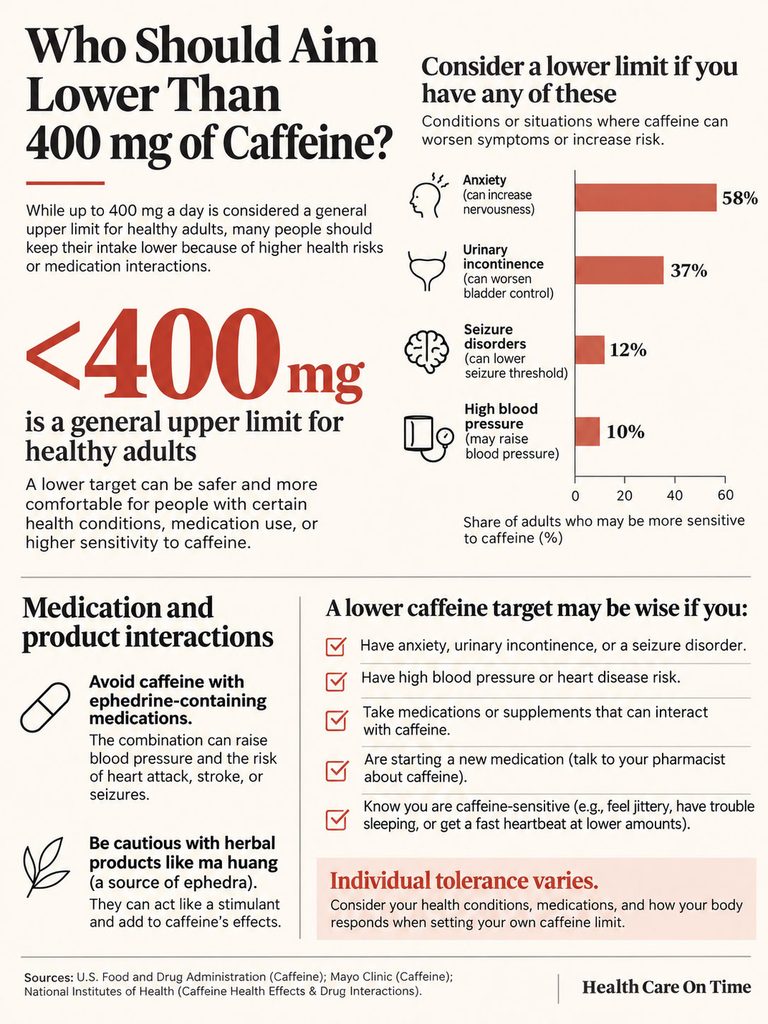
Who Should Aim Lower Than 400 mg?
Some healthy adults simply do better well under the standard limit. Caffeine can worsen anxiety, urinary incontinence and seizure disorders, and it can interact with medicines and supplements. Avoid caffeine entirely if you take a medicine that contains ephedrine, since the combination may raise the risk of high blood pressure, heart attack, stroke or seizures, and be careful with herbal products such as ma huang, a natural source of ephedra.
- Thyroid medicine: coffee taken too close to your pill is the concern, more than your daily total, so check how long to wait after thyroid medication before your first cup.
- High LDL cholesterol: choose paper-filtered or instant coffee.
- Diabetes: caffeine can raise blood sugar and insulin levels in people with type 2 diabetes, and caffeine’s effect on blood sugar differs enough from person to person that your own meter is the best guide.
- Acid reflux, because caffeine relaxes the valve between the esophagus and the stomach
- Frequent skipped beats or palpitations
- Slow caffeine metabolizers, who feel the same dose more strongly and for longer
When you start a new prescription or over-the-counter drug, ask your pharmacist whether caffeine affects it.
Timing: Sleep, Half-Life and the “2-Hour Rule”
How much coffee is healthy also depends on when you drink it. Caffeine generally peaks within an hour of drinking it, and its half-life is about 5 hours, so half of a 3 p.m. cup is still in your system at 8 p.m.; in some people it takes up to 10 hours to leave the bloodstream.
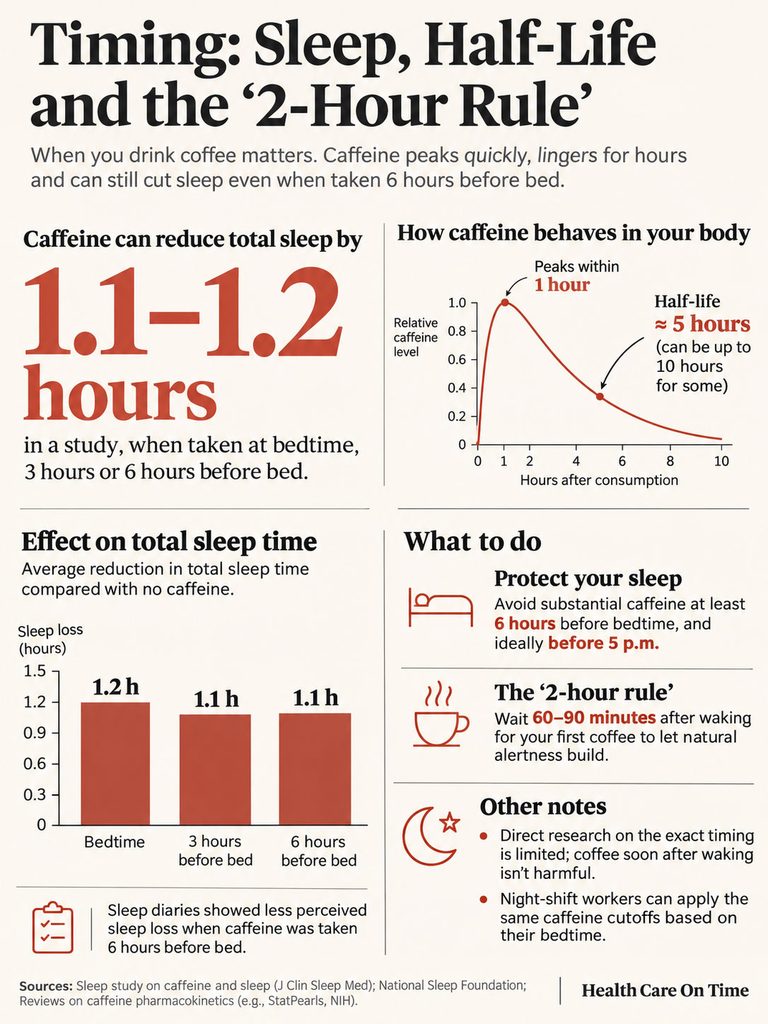
A well-known sleep study in the Journal of Clinical Sleep Medicine gave 12 healthy sleepers 400 mg of caffeine at bedtime, 3 hours before bed or 6 hours before bed, on different nights, and compared each with a placebo. An in-home sleep monitor showed total sleep time dropping by 1.1 to 1.2 hours in all three conditions, even the 6-hour one. The volunteers’ own diaries showed a smaller loss for the 6-hour dose, so people often don’t notice that an afternoon coffee is costing them sleep. The researchers recommend avoiding substantial caffeine for at least 6 hours before bedtime and keeping afternoon caffeine before 5 p.m.
The “2-hour rule” you may see online is about the other end of the day. It tells you to wait after waking before your first cup; Jackson Health System describes the wait as 60 to 90 minutes, based on the idea that adenosine, the chemical caffeine blocks, is low right after sleep and that the natural morning cortisol rise already boosts alertness. There’s little direct research behind the exact timing, and coffee soon after waking isn’t harmful. If waiting helps you avoid an afternoon slump, try it; if not, your cutoff time at night matters far more than your start time in the morning.
Night-shift workers and late sleepers can use the same math by counting back from their own bedtime instead of the clock. With a midnight bedtime, for example, a 6 p.m. cutoff gives the 6 hours of distance the sleep study supports, while someone with an early bedtime would need to finish their last cup by early afternoon.
How You Make Your Coffee Changes the Answer
Two people can both drink three cups a day and get very different results, mostly because of what goes into the cup. The sweetened-coffee drinkers who still had lower death risk in the UK Biobank study used about 1.1 teaspoons of sugar per cup. Sugar, flavored syrups, milk or cream “likely reduces” coffee’s potential benefits, in the AHA’s words, and a reasonable ceiling is about two tablespoons of milk, a milk substitute or half-and-half. Flavored creamers can carry their own added sugar, which is why many people watching their blood sugar move to a sugar-free coffee creamer or plain milk.
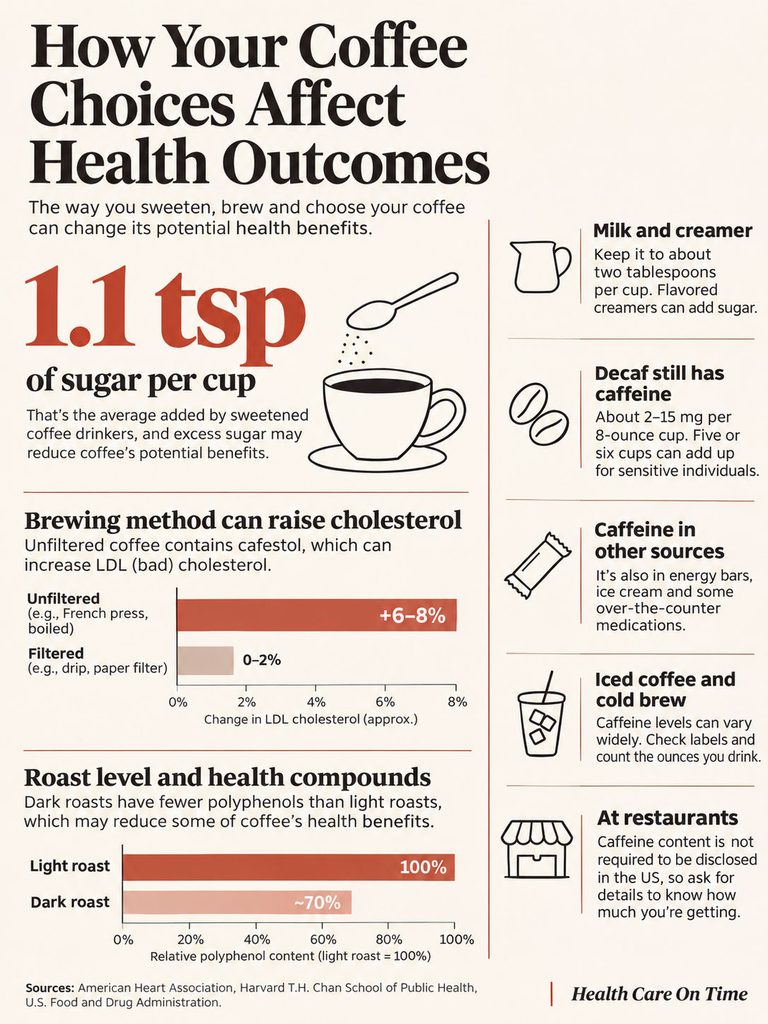
The brewing method matters for cholesterol. Cafestol, a compound in coffee oil, raises LDL (“bad”) cholesterol and passes through in unfiltered coffee such as espresso, French press, Turkish and boiled coffee, while paper filters trap it and instant coffee doesn’t contain it.
Roast makes a smaller difference, though dark roasts do contain fewer polyphenols, the plant compounds tied to some of coffee’s benefits, than light roasts. Decaf typically has 2 to 15 mg of caffeine per 8-ounce cup, so it isn’t caffeine-free, and five or six cups of decaf can add up for a very sensitive person. Energy and protein bars, some ice cream, chewing gum, some supplements and some over-the-counter pain relievers can also contain caffeine, and because US restaurants aren’t legally required to post caffeine content, asking is the only way to know.
Iced coffee and cold brew follow the same logic. Count the ounces. When a bottle or can lists caffeine on the label, use that number instead of any estimate.
Find Your Number: A Simple Decision Guide
Use the first row that fits you, and if more than one fits, follow the lower target.
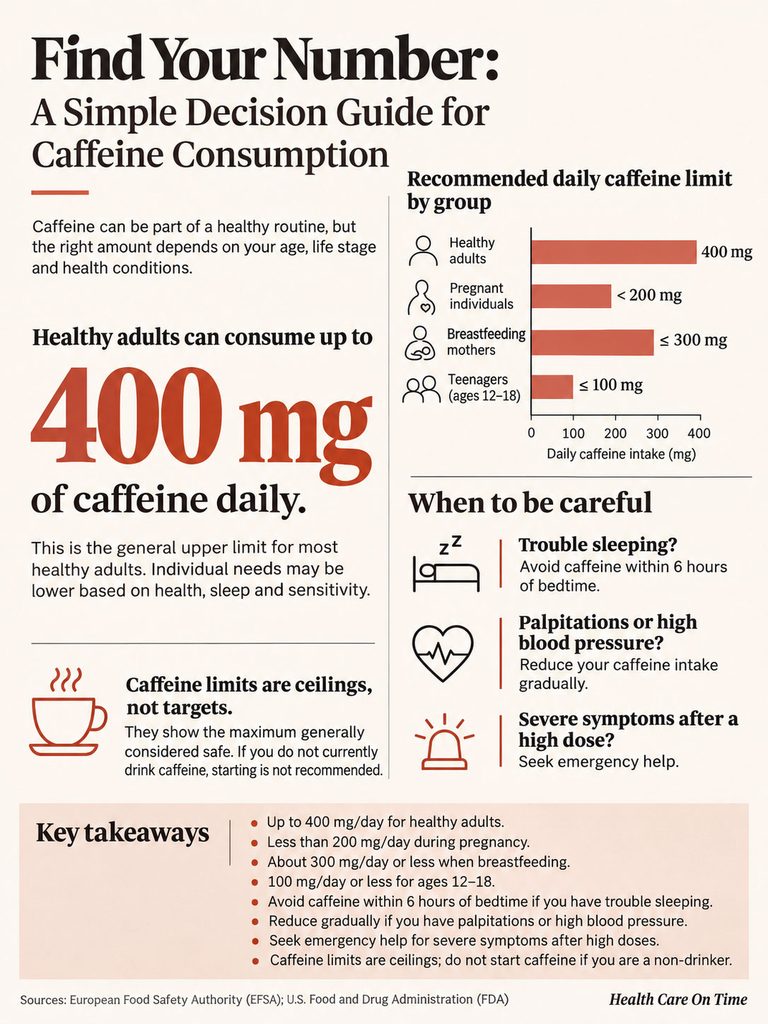
| If this describes you | A reasonable daily target | What to do next |
| Healthy adult, sleeping well, no symptoms | Up to 400 mg (about four 8-oz cups) | Keep most coffee before early afternoon and count shop drinks by ounces |
| Two 16-oz coffee-shop drinks a day | Could total 300 to 660 mg | Check the shop’s caffeine listing; size one drink down or switch it to decaf |
| Pregnant | Less than 200 mg | About two small cups at most, counting tea, soda and chocolate; ask your OB-GYN |
| Breastfeeding | About 300 mg or less | 2 to 3 cups; cut back if your baby seems fussy or jittery |
| Teen, 12 to 18 | 100 mg | One 8-oz cup or less; skip energy drinks |
| Trouble sleeping | No caffeine within 6 hours of bed | Move your last cup earlier; switch afternoon cups to decaf |
| Palpitations, skipped beats or high blood pressure | Less than you drink now | Cut back gradually and track symptoms; avoid energy drinks and shots; tell your doctor |
| Seizure, confusion, irregular heartbeat or trouble breathing after a big dose | Emergency | Call 911, or Poison Help at 1-800-222-1222 for milder symptoms |
These numbers are ceilings rather than targets. If you don’t drink coffee now, the research isn’t strong enough to make starting a health habit, since nearly all of it is observational, and plenty of people stay healthy without any caffeine at all.
How to Cut Back Without a Withdrawal Headache
Stopping a daily coffee habit all at once can bring headaches, tiredness, crankiness and trouble focusing for a few days. Withdrawal is unpleasant but not dangerous, and a slow taper avoids most of it: Cleveland Clinic dietitian Beth Czerwony suggests trimming a four-cup habit by half a cup a day and keeping any single sitting to no more than 200 mg.
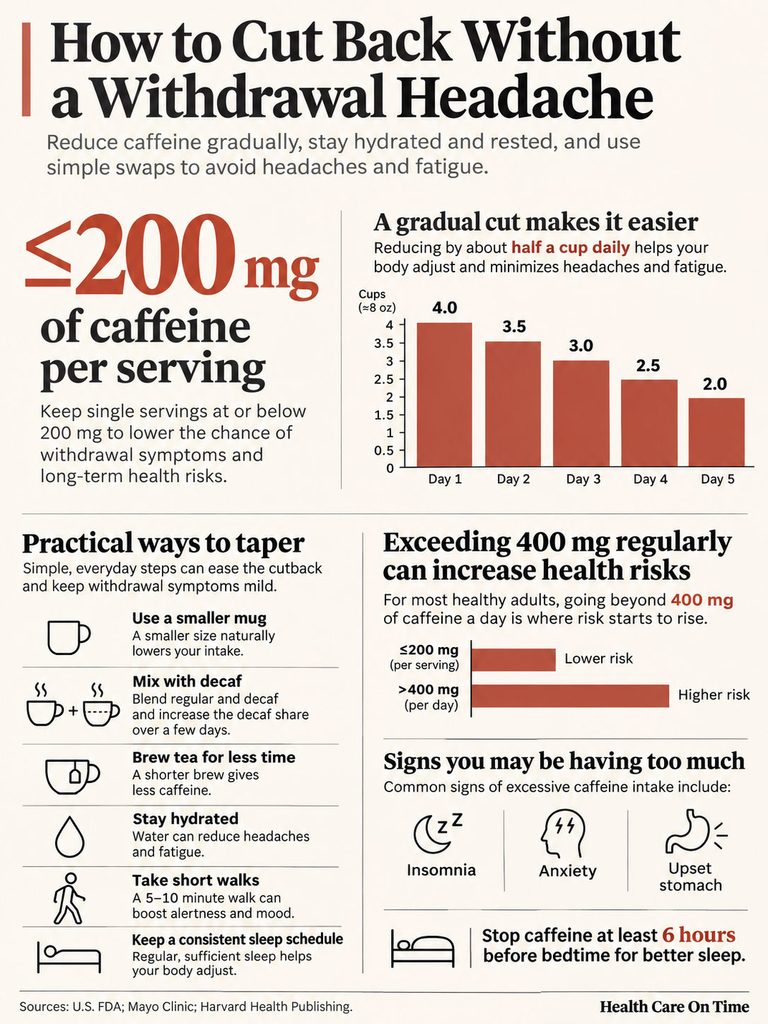
The first few days are usually the hardest. A glass of water after each cup, a short walk when the afternoon slump hits and a steady bedtime all make the taper easier. Small swaps help too. Use a smaller mug, mix half regular and half decaf, brew tea for a shorter time, and keep track of energy drinks and soda, which many people forget to count. If you mostly drink coffee to push through short nights, fix the sleep first, because extra caffeine tends to deepen that cycle rather than break it.
Frequently Asked Questions
How many cups of coffee per day is unhealthy?
Regularly going past 400 mg of caffeine is where risk starts to outweigh benefit for most healthy adults, and with average-strength coffee that means more than about four 8-ounce cups. More than 4 cups a day may also raise heart failure risk. Pregnant people (under 200 mg) and teens (100 mg) hit their line much sooner.
What are signs of drinking too much coffee?
Insomnia, a racing or pounding heart, shaky hands, anxiety, headache, an upset stomach and frequent trips to the bathroom are the usual ones. Seizures, confusion, an irregular heartbeat or trouble breathing after a large dose need emergency care right away.
What is the 2 hour rule for coffee?
It’s a wellness trend that says to delay your first coffee after waking. The name points to two hours, though the hospital version described above uses 60 to 90 minutes. The reasoning is that adenosine is low right after sleep and morning cortisol already raises alertness. Research on the exact timing is thin, and an early cup isn’t harmful. For sleep, the cutoff of at least 6 hours before bed matters more.
Is 5 cups of coffee a day too much?
It depends on the cup. Five 8-ounce cups of average-strength coffee contain about 480 mg of caffeine, which is above the 400 mg limit, while the AHA’s upper estimate of five cups assumes lighter black coffee, so five mugs of strong drip or five coffee-shop drinks would be well over. Heart failure risk may also rise above 4 cups a day. If you drink five cups, sleep well and have no palpitations and normal blood pressure, cutting to three or four is still a reasonable target; if you have any symptoms, five is too much for you.
How much caffeine is in a 16-ounce coffee?
Roughly 150 to 330 mg for brewed coffee, based on 9.4 to 20.6 mg per fluid ounce, or one to more than three home cups.
Does decaf count toward the 400 mg limit?
Barely. At 2 to 15 mg per 8-ounce cup, decaf only matters if you drink a lot of it or are very sensitive.
Is it OK to drink coffee every day?
Yes, for most healthy adults. In large studies, a daily habit of about 2 to 4 cups goes along with lower risk of heart disease, heart failure, stroke and type 2 diabetes, as long as you stay within your group’s limit and go easy on sugar.
How late in the day can you drink coffee?
Stop at least 6 hours before bed. Caffeine taken that late still cut total sleep by more than an hour in a sleep study.
Medical disclaimer: This article is for general information and isn’t a substitute for advice from your doctor, pharmacist or other qualified health professional. Caffeine limits differ with pregnancy, age, medicines and health conditions. If you think someone has taken a dangerous amount of caffeine, call 911 or Poison Help at 1-800-222-1222.
References
- US Food and Drug Administration. Spilling the Beans: How Much Caffeine Is Too Much? https://www.fda.gov/consumers/consumer-updates/spilling-beans-how-much-caffeine-too-much
- Mayo Clinic Staff. Caffeine: How much is too much? https://www.mayoclinic.org/healthy-lifestyle/nutrition-and-healthy-eating/in-depth/caffeine/art-20045678
- Mayo Clinic Staff. Caffeine content for coffee, tea, soda and more. https://www.mayoclinic.org/healthy-lifestyle/nutrition-and-healthy-eating/in-depth/caffeine/art-20049372
- American Heart Association. Coffee and heart health: how many cups of caffeinated coffee are safe to drink each day? (Marcus GM, et al. Caffeine and Cardiovascular Disease, Circulation, July 20, 2026). https://newsroom.heart.org/news/coffee-and-heart-health-how-many-cups-of-caffeinated-coffee-are-safe-to-drink-each-day
- Johns Hopkins Medicine. Coffee Health Benefits (Gabrielle Judd, R.D.). https://www.hopkinsmedicine.org/health/expert-qa/coffee-health-benefits
- American College of Cardiology. Journal scan of Liu D, et al. Association of Sugar-Sweetened, Artificially Sweetened, and Unsweetened Coffee Consumption With All-Cause and Cause-Specific Mortality. Annals of Internal Medicine, 2022. https://www.acc.org/Latest-in-Cardiology/Journal-Scans/2022/06/07/19/09/Association-of-Sugar-Sweetened
- ACOG Committee Opinion No. 462: Moderate caffeine consumption during pregnancy. Obstet Gynecol. 2010. https://pubmed.ncbi.nlm.nih.gov/20664420/
- Centers for Disease Control and Prevention. Maternal Diet and Breastfeeding. https://www.cdc.gov/breastfeeding-special-circumstances/hcp/diet-micronutrients/maternal-diet.html
- Riley Children’s Health. How much caffeine is safe for your teen? https://www.rileychildrens.org/connections/how-much-caffeine-is-safe-for-your-teen
- Drake C, Roehrs T, Shambroom J, Roth T. Caffeine Effects on Sleep Taken 0, 3, or 6 Hours before Going to Bed. J Clin Sleep Med. 2013. https://pmc.ncbi.nlm.nih.gov/articles/PMC3805807
- Cleveland Clinic. How To Get Caffeine Out of Your System. https://health.clevelandclinic.org/how-to-get-caffeine-out-of-your-system
- MedlinePlus. Caffeine overdose. https://medlineplus.gov/ency/article/002579.htm
- Jackson Health System. Should You Wait 90 Minutes Before Drinking Coffee? https://jacksonhealth.org/blog/should-you-wait-90-minutes-before-drinking-coffee/
- Rush University Medical Center. Health Benefits of Coffee. https://www.rush.edu/news/health-benefits-coffee