If you have ever stood in a pharmacy aisle wondering whether Pepto-Bismol actually works for diarrhea, you are not alone. This is one of the most common questions I hear as a clinical pharmacist with over 15 years of experience treating digestive issues. The short answer is yes, it really does work.
Table of Contents
Stomach bugs, food poisoning, and sudden bouts of loose stools are something nearly everyone deals with at some point. When it hits, you want something that offers fast, reliable relief. The problem is that the pharmacy shelf is packed with options, and most people have no idea which one is right for their situation.
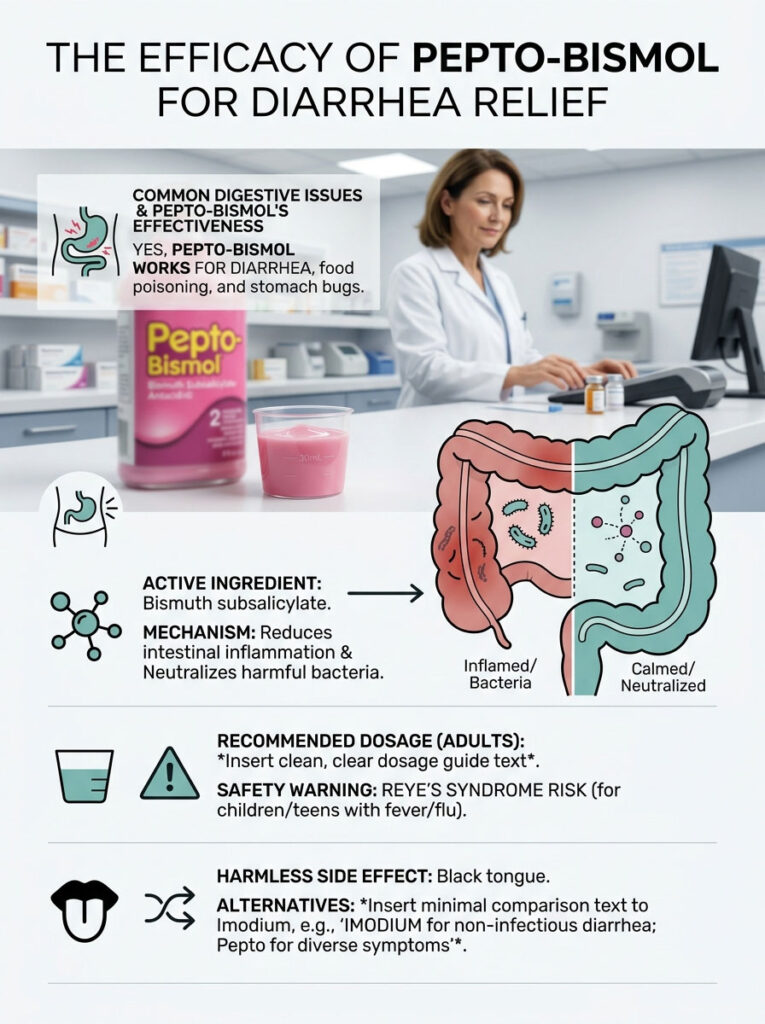
Pepto-Bismol stands out because its active ingredient, bismuth subsalicylate, works through a dual mechanism. It reduces intestinal inflammation while also neutralizing harmful bacteria. In this guide, we will cover exactly how it works, the correct dosage for adults, critical safety warnings including Reye’s Syndrome, harmless side effects like black tongue, and how it compares to alternatives like Imodium.
Quick Answer: Does Pepto-Bismol Help Diarrhea?
Yes. Pepto-Bismol is an FDA-approved over-the-counter medication that treats diarrhea by reducing inflammation and fighting stomach bacteria. Its active ingredient, bismuth subsalicylate, works through antisecretory and antimicrobial properties to stop excess fluid loss and kill pathogens. Adults should never exceed 8 doses within a 24-hour period.
Key Statistics and Clinical Data
- Efficacy Rate: Clinical studies show bismuth subsalicylate reduces stool frequency by about 50% compared to placebo.
- Maximum Daily Limit: Adults should take no more than 8 doses (240 mL or 16 regular tablets) per 24 hours.
- Onset of Relief: Most patients notice improvement within 30 to 60 minutes of the first dose.
- H. pylori Treatment: Bismuth compounds are used in multi-drug regimens with over 80% success in eradicating H. pylori infections.
- Traveler’s Diarrhea Prevention: According to the American College of Gastroenterology, this medication can lower the risk of traveler’s diarrhea by up to 60%.
- Standard Dose: The original liquid formula contains 262 milligrams of active ingredient per 15 milliliters.
How Does Pepto-Bismol Help Diarrhea? The Core Pharmacology
A Brief History of Bismuth in Medicine
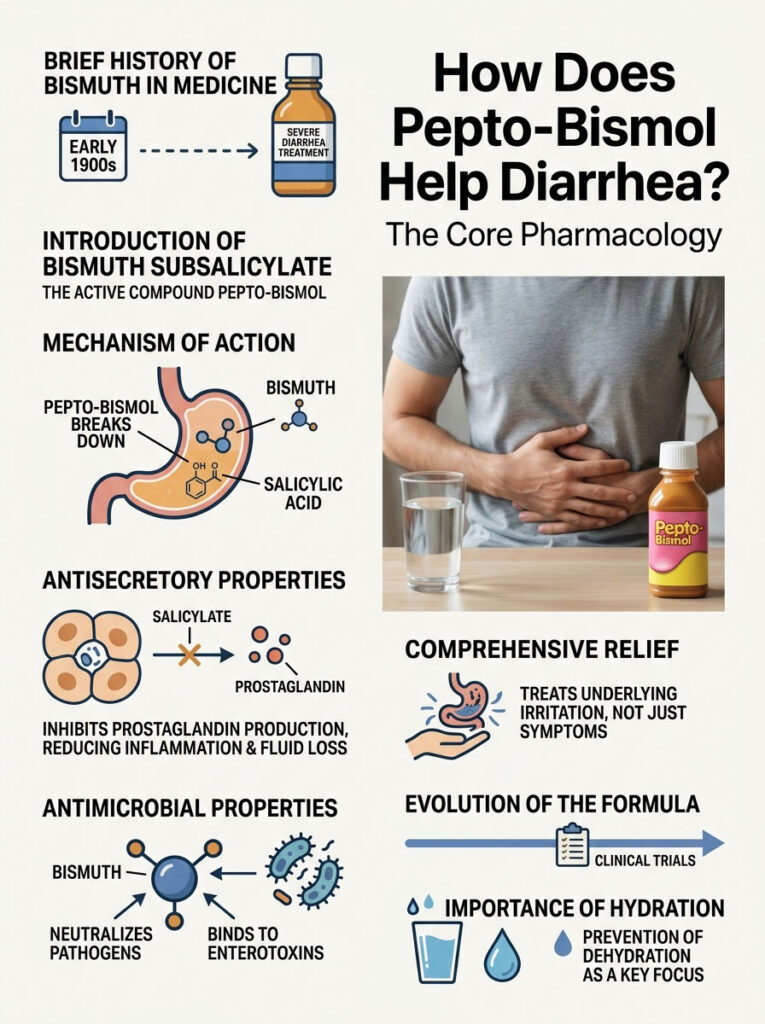
Bismuth has been used to treat digestive problems for well over a century. In the early 1900s, a New York physician created the original pink formula to combat cholera infantum, a severe bacterial infection causing life-threatening diarrhea in young children. The formula proved remarkably effective at stopping dangerous fluid loss.
Procter & Gamble eventually acquired the rights and brought it to a wider audience. Scientists have refined the formula over the decades, but the core chemistry remains largely the same. Modern clinical trials continue to confirm that bismuth subsalicylate is uniquely effective at treating intestinal inflammation, a testament to how well the original approach actually works.
Bismuth Subsalicylate Chemistry Explained
The active compound in Pepto-Bismol is bismuth subsalicylate. When you swallow a dose, the liquid enters your stomach, where the highly acidic environment breaks it down into two separate therapeutic agents: bismuth and salicylic acid.
Each component does something different. Salicylic acid gets absorbed into your bloodstream and works to reduce inflammation throughout your system. Bismuth, on the other hand, stays inside your digestive tract. It physically coats and protects the irritated lining of your stomach and intestines. This two-part chemical breakdown is what makes the medication so versatile, whether you ate something questionable or you are dealing with a viral stomach bug.
The Dual Mechanism of Action
Antisecretory Properties (Salicylate Component)
When your intestines are infected or irritated, your body produces inflammatory chemicals called prostaglandins. These cause swelling in your gut and force your intestinal walls to dump large amounts of water and electrolytes into the bowel. That fluid overload is what creates watery, urgent stools.
The salicylate in Pepto-Bismol directly inhibits prostaglandin production. By shutting down inflammation at the cellular level, it stops the excessive flow of fluids into your gut. This antisecretory action is essential for firming up stool, preventing dehydration, and restoring normal bowel function.
Antimicrobial Properties (Bismuth Component)
Bismuth is a heavy metal with direct bactericidal effects. It kills or neutralizes common pathogens like E. coli and physically coats your stomach lining to create a protective barrier. Bismuth also binds to enterotoxins, the harmful byproducts released by bacteria as they multiply. By trapping these toxins, the medication prevents further damage to your gastrointestinal lining.
Together, these antisecretory and antimicrobial properties provide comprehensive relief. You are not just covering up symptoms. You are actively treating the underlying irritation and helping your body clear the infection faster.
Pepto-Bismol Dosage Guide for Adults
Standard FDA-Approved Dosing
Getting the dosage right matters. Too little and you will not get adequate relief. Too much and you risk serious side effects.
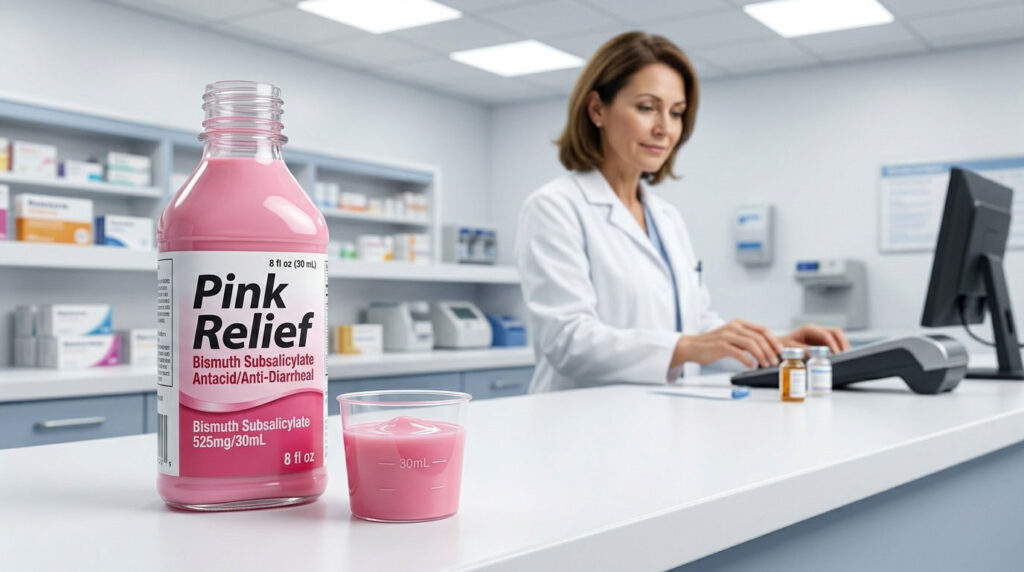
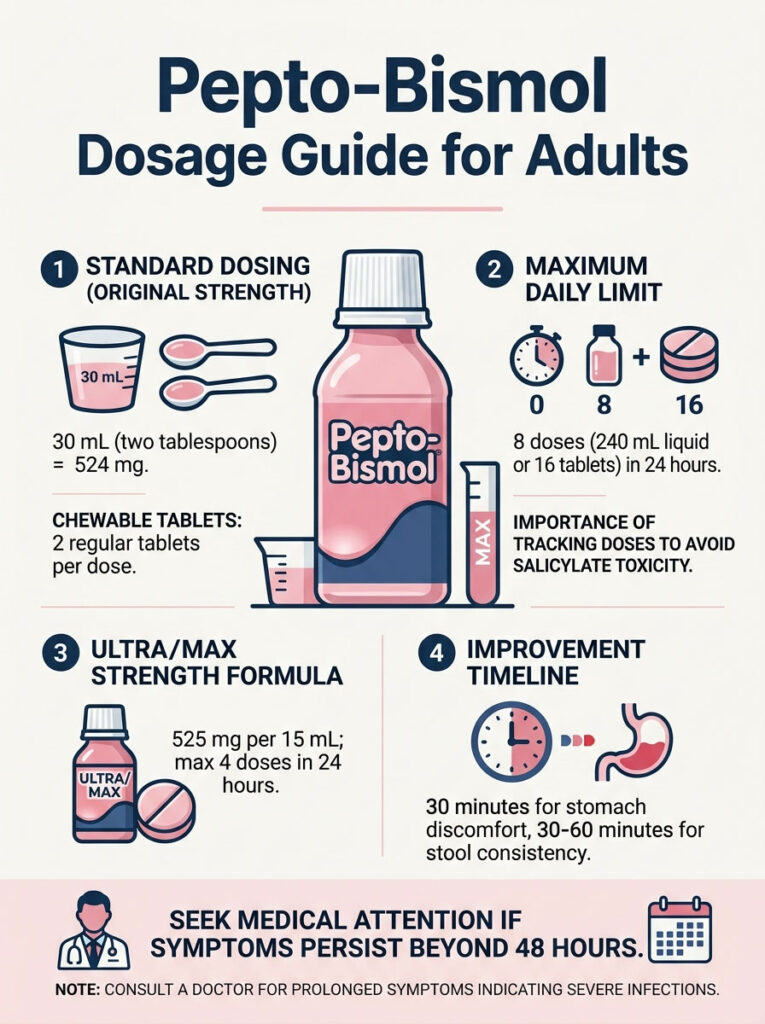
For the Original Strength liquid, each dose is 262 milligrams per 15 milliliters. The standard adult dose is 30 milliliters (two tablespoons, or 524 milligrams total). If you prefer chewable tablets, take two regular tablets per dose. You can take one dose every 30 to 60 minutes as needed, but you must keep track of how many doses you have taken throughout the day.
Maximum Daily Limits You Must Follow
The FDA sets a strict ceiling of 8 doses in any 24-hour period. That equals 240 milliliters of the original liquid or 16 regular chewable tablets. This limit exists because the medication contains salicylates, compounds closely related to aspirin. Taking too much can lead to salicylate toxicity, a serious condition that requires emergency medical treatment.
Always count your doses and note the time of your first one. If symptoms continue after you reach the maximum, stop taking the medication and see a doctor.
Important Note on Ultra/Max Strength Formulas: The Ultra liquid is twice as concentrated at 525 milligrams per 15 milliliters. If you are using this version, the maximum is only 4 doses per 24 hours. Always check the label on your specific bottle.
How Quickly Does It Work?
Most people notice improvement in stomach discomfort and nausea within about 30 minutes. Stool consistency typically starts improving within 30 to 60 minutes after the first or second dose. However, complete recovery from acute gastroenteritis may require several doses over a full day as your body works to clear the infection and reduce inflammation.
If your symptoms persist beyond 48 hours even with proper dosing, stop self-treating and see a physician. Prolonged symptoms often point to a more severe bacterial infection that needs prescription antibiotics.
Pepto-Bismol vs Imodium: Which OTC Medication is Best?
How They Differ
These are the two most popular over-the-counter diarrhea medications, and they work in completely different ways. The right choice depends on your symptoms and what caused them.
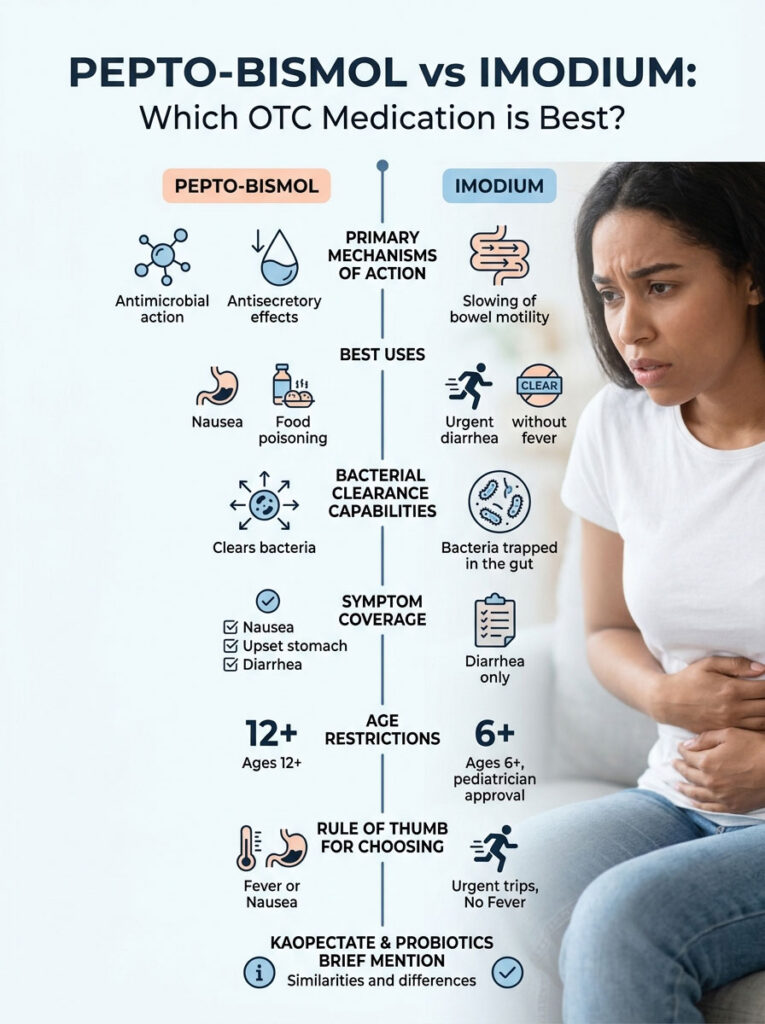
Pepto-Bismol (bismuth subsalicylate) uses antisecretory and antimicrobial properties to reduce inflammation and fight bacteria. This makes it a strong choice when you suspect food poisoning or have nausea alongside diarrhea.
Imodium (loperamide) works by slowing down bowel motility. It essentially paralyzes the intestinal muscles to stop the physical movement of stool. This provides fast relief in urgent situations but can be risky with severe bacterial infections because it traps harmful bacteria inside the gut.
Side-by-Side Comparison
| Feature | Pepto-Bismol (Bismuth Subsalicylate) | Imodium (Loperamide) |
| Primary Mechanism | Antisecretory and antimicrobial | Slows bowel motility and muscle contractions |
| Best Used For | Diarrhea with nausea, upset stomach, or suspected food poisoning | Frequent, urgent, watery diarrhea without fever |
| Bacterial Clearance | Helps neutralize and clear bacteria | Traps bacteria in the gut (not ideal for infections) |
| Symptom Coverage | Multi-symptom: heartburn, indigestion, nausea, diarrhea | Single symptom: diarrhea only |
| Age Restriction | Adults and teens 12 and older | Adults and children 6+ (with pediatrician approval) |
A simple rule of thumb: if you have a low-grade fever, nausea, or suspect bad food, go with Pepto-Bismol. If you just need to stop urgent bathroom trips during a long drive and have no fever, Imodium may be the better option.
What About Probiotics and Kaopectate?
Modern Kaopectate actually uses the exact same active ingredient as Pepto-Bismol (bismuth subsalicylate), so it works identically and carries the same warnings.
Probiotics are a different story. They contain live beneficial bacteria designed to restore your gut microbiome. Probiotics are excellent for long-term digestive health and recovery after antibiotics, but they are not fast-acting. Do not expect them to provide immediate relief during an acute episode.
Critical Safety Warnings and Side Effects
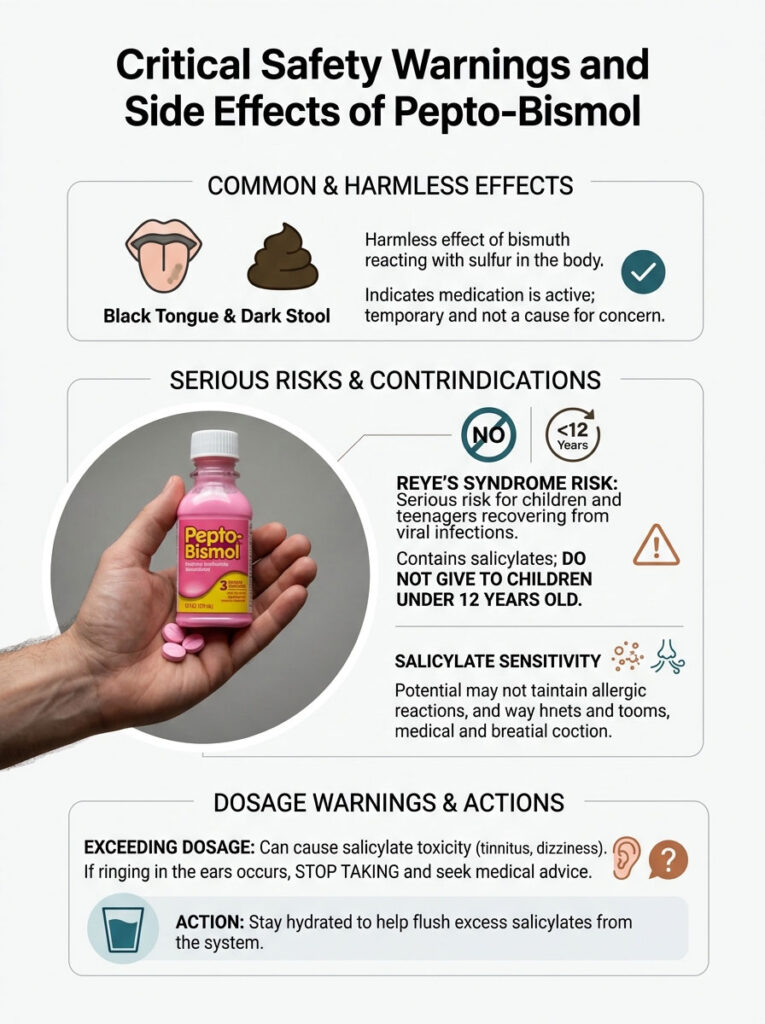
Black Tongue and Dark Stool: Why It Happens
This is the side effect that sends people into a panic. If your stool suddenly turns black or your tongue darkens after taking Pepto-Bismol, do not worry. This is completely harmless.
Here is what happens: your saliva and digestive tract naturally contain trace amounts of sulfur. When bismuth meets sulfur, it creates a compound called bismuth sulfide, which is deep black. This compound passes through your system and darkens your stool. If you chew the tablets, the reaction can happen in your mouth, temporarily staining your tongue. The discoloration is temporary and actually indicates the medication is active in your system.
The Reye’s Syndrome Warning
This is a serious safety concern that every parent needs to understand. Because Pepto-Bismol contains salicylates, it can trigger Reye’s Syndrome in children and teenagers recovering from viral infections like the flu or chickenpox.
Reye’s Syndrome causes sudden, severe mitochondrial dysfunction that leads to dangerous brain swelling and acute liver damage. It is rare but can be fatal if not treated immediately. This warning is printed on every bottle. Never give regular Pepto-Bismol to anyone under 12 years of age.
Salicylate Sensitivity and Overdose Risks
If you have a known allergy to aspirin, avoid this medication entirely. An allergic reaction can cause hives, facial swelling, and severe breathing difficulty.
Exceeding the recommended dosage can cause salicylate toxicity. Early symptoms include tinnitus (ringing in the ears), rapid breathing, excessive sweating, and dizziness. If you notice ringing in your ears, stop taking the medication immediately and contact a doctor. Drinking plenty of water helps your kidneys flush the excess from your system.
Pediatric Care: Regular vs. Children’s Pepto
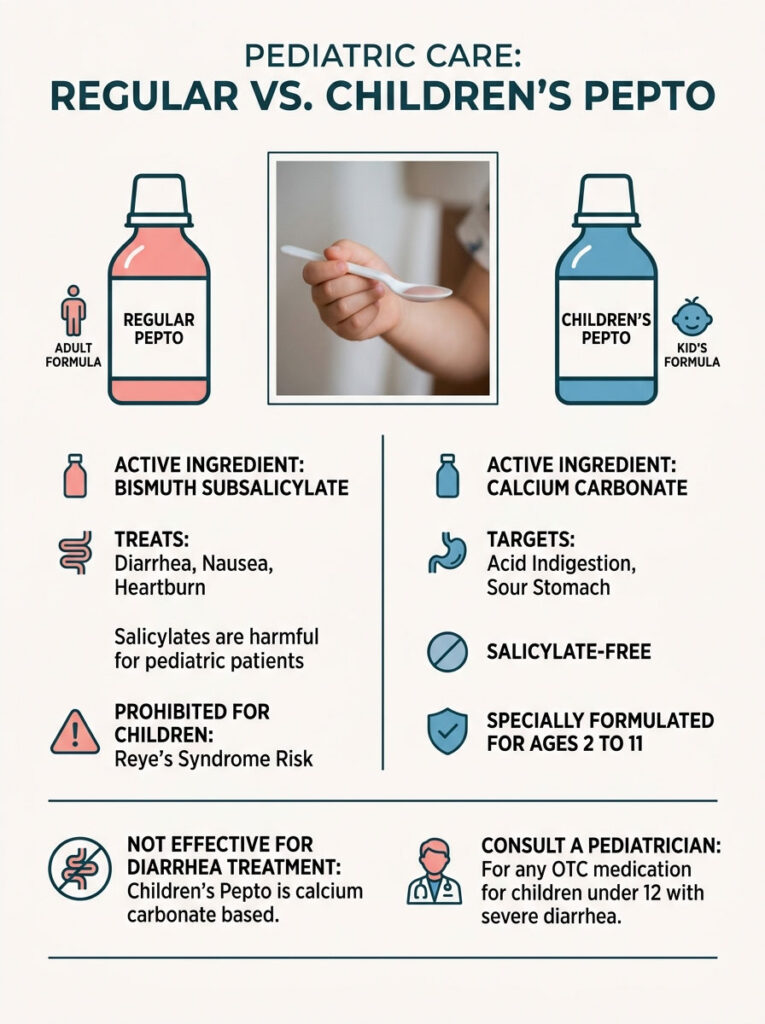
Why the Adult Formula is Not Safe for Kids
Because of the Reye’s Syndrome risk, you cannot simply give a child a smaller dose of the adult formula. The salicylates are dangerous to pediatric systems regardless of the amount. Manufacturers created a separate product called Children’s Pepto specifically for younger patients.
It is important to understand that these are two completely different products. Children’s Pepto does not contain bismuth or salicylates. Instead, it uses calcium carbonate, which is essentially a mild antacid. It treats acid indigestion and sour stomach but is not designed to treat diarrhea.
Pediatric Formula Comparison
| Specification | Regular Pepto-Bismol | Children’s Pepto |
| Active Ingredient | Bismuth Subsalicylate | Calcium Carbonate |
| Primary Function | Treats diarrhea, nausea, heartburn | Treats acid indigestion and sour stomach |
| Effective for Diarrhea? | Yes, highly effective | Not indicated for diarrhea |
| Contains Salicylates? | Yes (aspirin family) | No (salicylate-free) |
| Safe Age Range | 12 years and older | 2 to 11 years old |
If your child under 12 has severe diarrhea, do not give them any OTC diarrhea medication without a pediatrician’s direct guidance. Children dehydrate much faster than adults, so your main focus should be on hydration and oral rehydration salts.
Dangerous Drug Interactions to Watch For
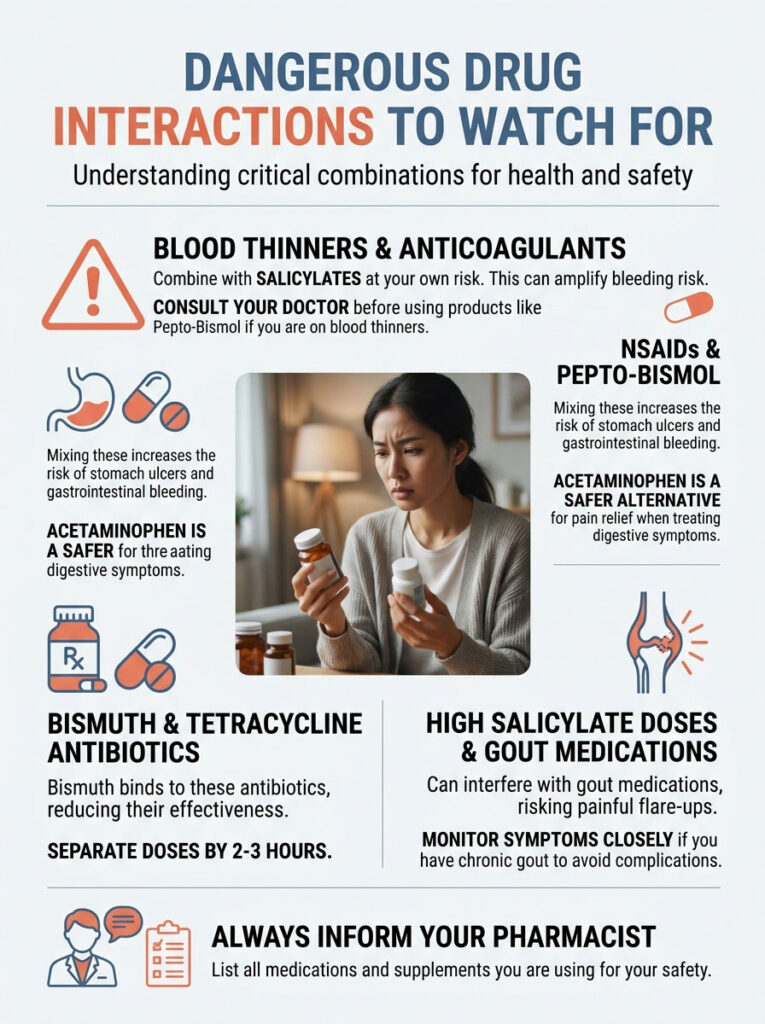
Blood Thinners and Anticoagulants
The salicylate component can amplify the effects of medications like warfarin and other prescription blood thinners. Since salicylates naturally thin the blood, combining them with anticoagulants significantly raises your bleeding risk, including the possibility of internal bleeding.
If you take any blood thinners, consult your doctor before using Pepto-Bismol. They will likely suggest a safer alternative. Always tell your pharmacist about all supplements and OTC medications you use.
NSAIDs and Pain Relievers
Avoid mixing Pepto-Bismol with non-steroidal anti-inflammatory drugs (NSAIDs) like ibuprofen or naproxen. Combining them greatly increases your risk of stomach ulcers and gastrointestinal bleeding. It also pushes blood salicylate levels dangerously close to toxicity.
If you need pain relief while treating digestive symptoms, acetaminophen (Tylenol) is a much safer choice. It does not thin the blood or irritate the stomach lining and pairs safely with bismuth compounds.
Antibiotics and Gout Medications
Bismuth physically binds to tetracycline-class antibiotics inside your stomach, preventing proper absorption. This can render your prescription completely ineffective. The solution is simple: separate your doses by at least two to three hours.
High doses of salicylates can also interfere with uricosuric drugs used for gout treatment. They may prevent your kidneys from properly excreting uric acid, potentially triggering a painful gout flare. Monitor your symptoms closely if you have chronic gout.
Real-World Clinical Uses
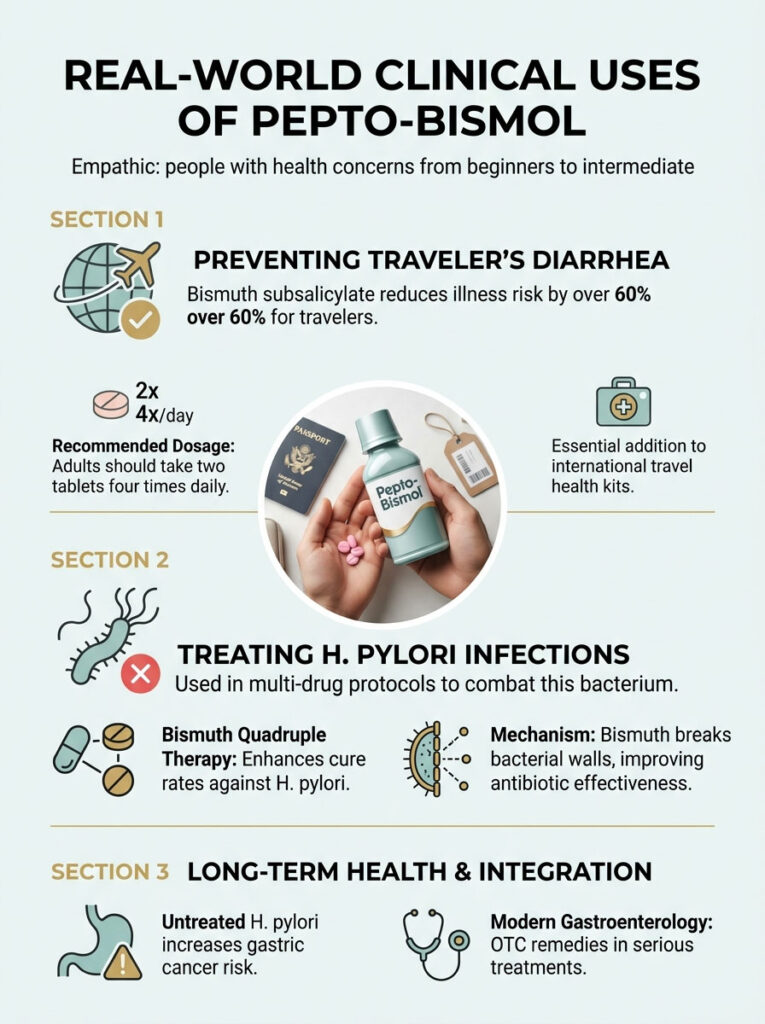
Preventing Traveler’s Diarrhea
One of the strongest real-world applications for Pepto-Bismol is international travel. When visiting developing regions, your digestive system encounters unfamiliar bacteria that can quickly cause illness.
The American College of Gastroenterology recommends bismuth subsalicylate as a daily preventive measure for travelers. According to their guidelines, adults taking two tablets four times daily can reduce the risk of getting sick by over 60%. This makes it a practical addition to any international travel health kit.
Treating H. pylori Infections
Beyond symptom relief, gastroenterologists use bismuth subsalicylate as part of a multi-drug protocol to treat Helicobacter pylori, a stubborn bacterium that burrows into the stomach lining and causes painful ulcers. Left untreated, H. pylori significantly increases long-term gastric cancer risk.
Standard antibiotics often fail against H. pylori when used alone. Adding bismuth to the regimen, a protocol known as Bismuth Quadruple Therapy, dramatically improves cure rates. The heavy bismuth breaks down bacterial cell walls, allowing antibiotics to penetrate and destroy the infection. It is a compelling example of how an old OTC remedy still plays a vital role in modern gastroenterology.
Practical Strategies for Full Digestive Recovery
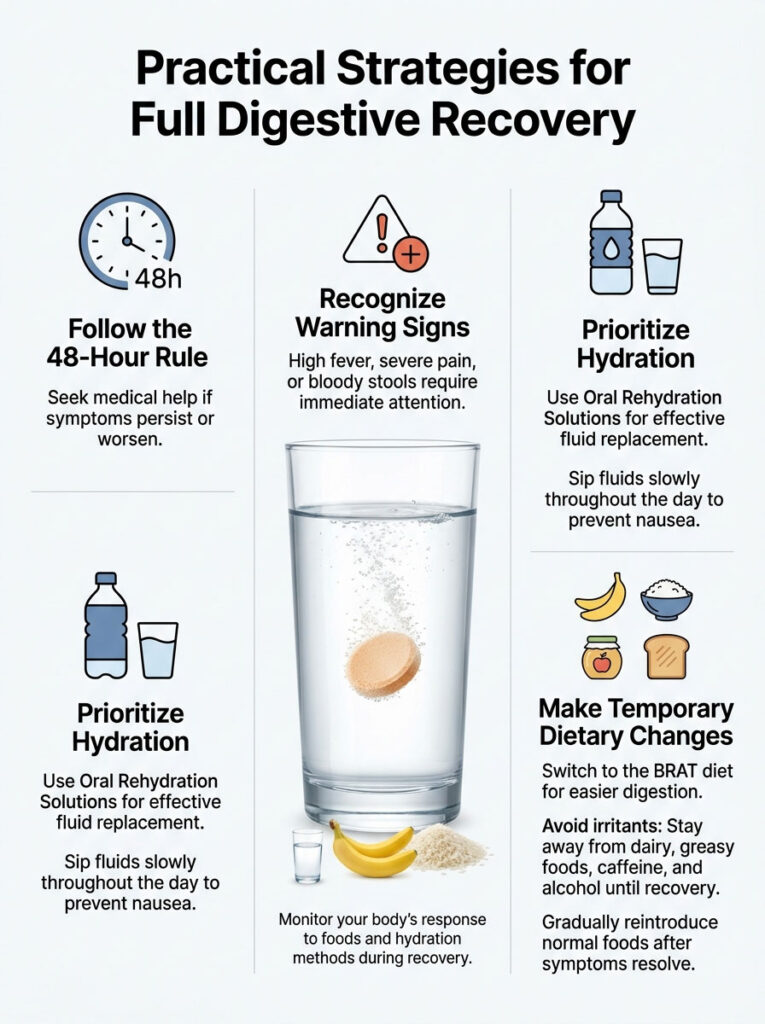
Follow the 48-Hour Rule
Medication alone is not enough for a full recovery. Pepto-Bismol is meant for short-term, acute use. If your symptoms have not improved after 48 hours of proper dosing, stop self-treating and see a doctor to rule out a severe parasitic or bacterial infection.
Seek immediate medical attention if you experience a high fever above 102 degrees, severe abdominal pain, or bloody stools. Keep in mind that black stool is normal with this medication, but bright red blood is not.
Prioritize Hydration
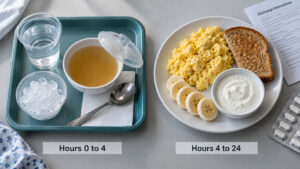
Every loose bowel movement costs your body water and essential electrolytes. Plain water alone is not enough to replace what you are losing. Oral Rehydration Solutions like Pedialyte or electrolyte packets contain the precise ratio of sodium, potassium, and glucose your intestines need to absorb water efficiently.
Sip these fluids slowly throughout the day rather than drinking large amounts at once, which can trigger nausea and vomiting. Consistent, small sips are far more effective for rehydration.
Make Temporary Dietary Changes
Give your gut a rest by switching to the BRAT diet: Bananas, Rice, Applesauce, and Toast. These foods are bland, easy to digest, and contain natural binding properties. The pectin in applesauce and resistant starch in bananas help firm up stool naturally while providing needed calories.
Avoid dairy, greasy fried foods, caffeine, and alcohol until you feel fully recovered. These will irritate your stomach lining and slow your healing. Reintroduce your normal diet gradually once symptoms have completely resolved.
Summary and Key Takeaways
The science is clear: Pepto-Bismol is an effective, well-studied treatment for diarrhea. Its dual mechanism, combining antisecretory and antimicrobial properties, targets the root causes of digestive upset by reducing inflammation and neutralizing harmful bacteria.
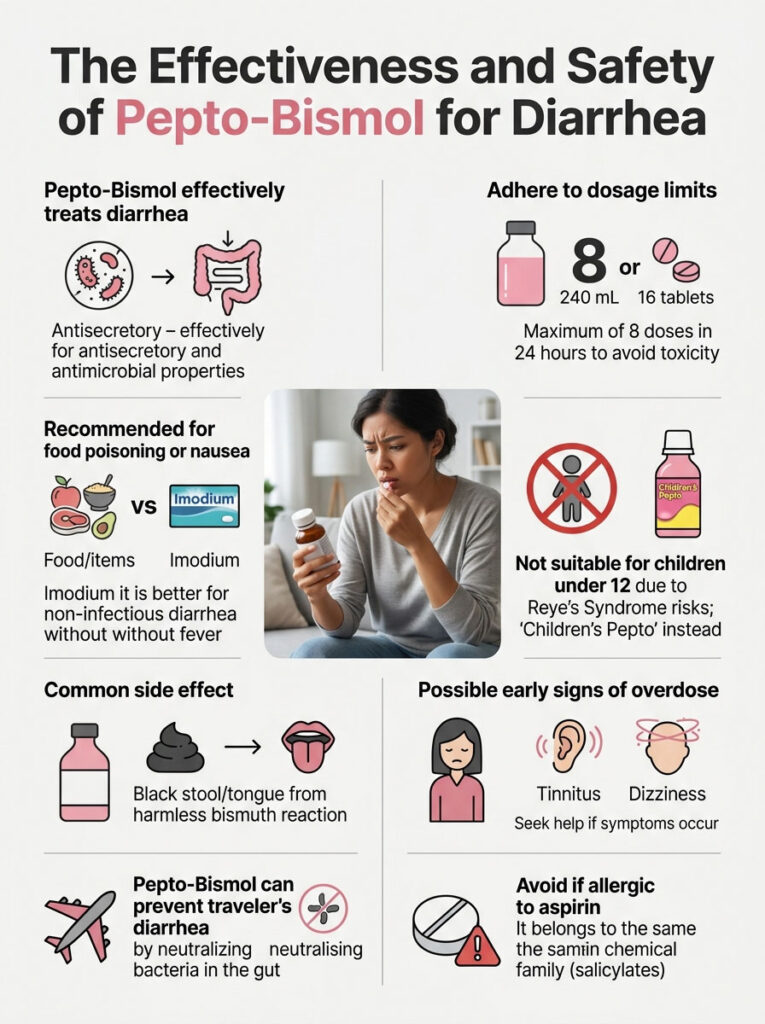
Stick to the dosage limits. Never exceed 8 doses in a 24-hour period to avoid salicylate toxicity. When choosing between OTC options, reach for Pepto-Bismol if you suspect food poisoning or have nausea. Choose Imodium for simple, non-infectious diarrhea without fever.
Safety always comes first. Never give this medication to children under 12 because of Reye’s Syndrome risks. If your stool turns dark, relax. It is a harmless chemical reaction that shows the medicine is doing its job. So, does Pepto-Bismol help diarrhea? Without question, when used correctly and safely.
Frequently Asked Questions
Does Pepto-Bismol help diarrhea quickly?
As a clinical pharmacist, I can confirm that Pepto-Bismol is highly effective for rapid relief. Its active ingredient, bismuth subsalicylate, uses a dual mechanism—antisecretory and antimicrobial properties—to reduce intestinal inflammation and neutralize pathogens. Most patients report significant gastrointestinal distress relief within 30 to 60 minutes of their first dose.
What is the correct Pepto-Bismol dosage for adults?
For the Original Strength liquid (262 mg per 15 mL), the standard dosage for adults is 30 mL every 30 to 60 minutes as needed. You must use the provided dosing cup to ensure accuracy. It is critical never to exceed 8 doses (240 mL or 16 regular tablets) in a 24-hour period to prevent salicylate toxicity.
Why does Pepto-Bismol turn my tongue or stool black?
This is a common and harmless side effect known as melanoglossia. It occurs when the bismuth in the medication reacts with trace amounts of sulfur in your saliva or digestive tract to form bismuth sulfide. This black substance naturally stains the stool and tongue but is temporary and will disappear once you stop taking the medication.
Is Pepto-Bismol safe for children with a stomach bug?
Regular Pepto-Bismol should never be given to children or teenagers recovering from viral infections like the flu or chickenpox. Because it contains salicylates, it carries a strict Reye’s syndrome FDA warning. For children under 12, use ‘Children’s Pepto,’ which contains calcium carbonate and is salicylate-free, or consult a pediatrician.
How does the bismuth subsalicylate mechanism of action work?
The medication works through two primary pathways. The salicylate component provides antisecretory effects by inhibiting prostaglandin synthesis, which stops the excessive flow of fluids into the gut. Simultaneously, the bismuth provides antimicrobial effects by killing bacteria like E. coli and binding to harmful enterotoxins that irritate the stomach lining.
What is the difference between Pepto-Bismol and Imodium?
Pepto-Bismol (bismuth subsalicylate) treats the underlying cause by reducing inflammation and killing bacteria, making it ideal for food poisoning or upset stomach. Imodium (loperamide) works by slowing down bowel motility (muscle contractions). While Imodium is faster for stopping urgent trips to the bathroom, it can trap harmful bacteria in the gut during a severe infection.
Can I take Pepto-Bismol if I have an aspirin allergy?
No. Bismuth subsalicylate belongs to the same chemical family as aspirin (salicylates). If you have a known allergy to aspirin or other NSAIDs, you must avoid this medication entirely to prevent a potentially severe allergic reaction, including hives, swelling, or anaphylaxis.
Can Pepto-Bismol prevent traveler’s diarrhea?
Yes. According to guidelines from the American College of Gastroenterology, taking bismuth subsalicylate as a prophylactic (two tablets four times a day) can reduce the risk of traveler’s diarrhea by up to 60%. It works by constantly neutralizing bacteria in the digestive tract before they can cause infection.
What are the risks of taking too much Pepto-Bismol?
Exceeding the maximum daily limit of 8 doses can lead to salicylate toxicity. Early warning signs include tinnitus (ringing in the ears), rapid breathing, and dizziness. If you experience these symptoms, stop the medication immediately and increase fluid intake to help your kidneys flush the excess salicylate.
Are there dangerous drug interactions with bismuth subsalicylate?
Yes. It can dangerously increase the effects of blood thinners like warfarin, leading to bleeding risks. It should also be avoided with NSAIDs like ibuprofen to prevent stomach ulcers. Additionally, it can bind to tetracycline antibiotics, making them less effective; you should separate these doses by at least two to three hours.
How is Pepto-Bismol used for H. pylori infections?
In clinical gastroenterology, bismuth is a core component of ‘Bismuth Quadruple Therapy.’ It helps eradicate Helicobacter pylori by physically breaking down the bacterial cell walls, which allows prescription antibiotics to penetrate and kill the bacteria more effectively, achieving a success rate of over 80%.
When should I stop self-treating and see a doctor?
You should follow the 48-hour rule. If your diarrhea persists beyond two days despite proper dosing, or if you experience ‘red flag’ symptoms like a fever over 102°F, severe abdominal pain, or bright red blood in your stool, you must consult a healthcare professional immediately.
Disclaimer
This article is for informational purposes only and does not constitute medical advice. While written by a clinical pharmacist, the information provided should not replace the counsel of your personal physician. Always consult a qualified healthcare professional before starting any new medication, especially if you have underlying health conditions or are taking prescription drugs.
References
- U.S. Food and Drug Administration (FDA) – fda.gov – Official safety guidelines on bismuth subsalicylate dosing and Reye’s Syndrome warnings.
- American College of Gastroenterology (ACG) – gi.org – Clinical guidelines for the prevention and management of traveler’s diarrhea.
- Mayo Clinic – mayoclinic.org – Comprehensive drug profile for bismuth subsalicylate and its mechanism of action.
- Centers for Disease Control and Prevention (CDC) – cdc.gov – Information on Reye’s Syndrome pathophysiology and pediatric safety protocols.
- Journal of Clinical Gastroenterology – Lippincott Williams & Wilkins – Research regarding Bismuth Quadruple Therapy for the eradication of H. pylori.
- Cleveland Clinic – clevelandclinic.org – Professional insights into salicylate toxicity and medication interactions.