Most Americans grew up being told to eat broccoli. Few were ever told why it actually works. The average person in the USA eats nearly 6 pounds of fresh broccoli a year, according to USDA per-capita data, and yet still asks the same question: is broccoli really that good for you, or is it just polite cafeteria science?
Table of Contents
The honest answer is yes, and the science backing it is louder and more specific than most people realize. Broccoli is one of the few everyday vegetables with peer-reviewed support for heart, brain, gut, hormone, and cancer-protective effects, all from a single 31-calorie cup.
The real catch isn’t whether to eat it. It’s how you cook it, how often it lands on your plate, and which version of “good for you” matters most for your body and your medications.
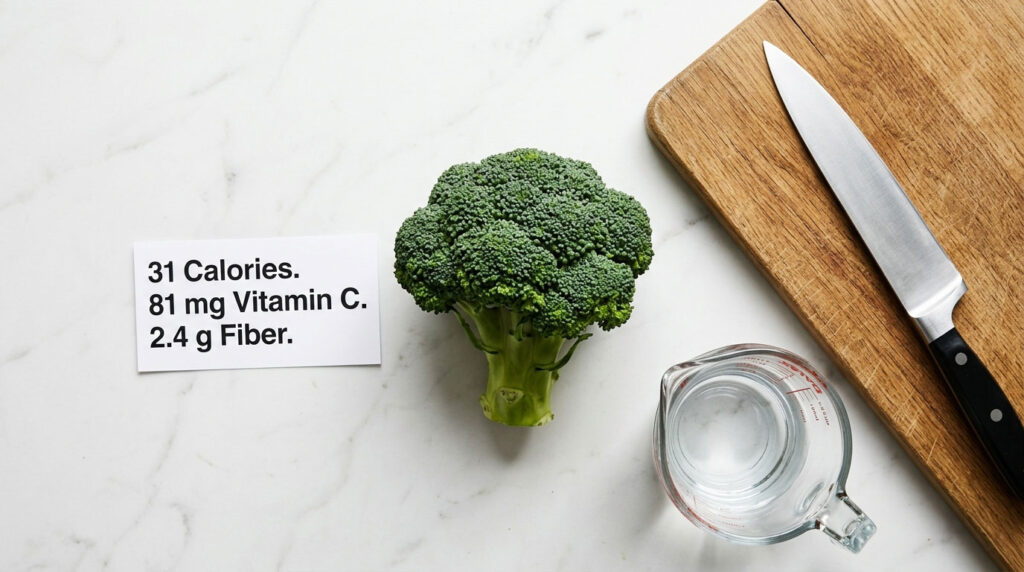
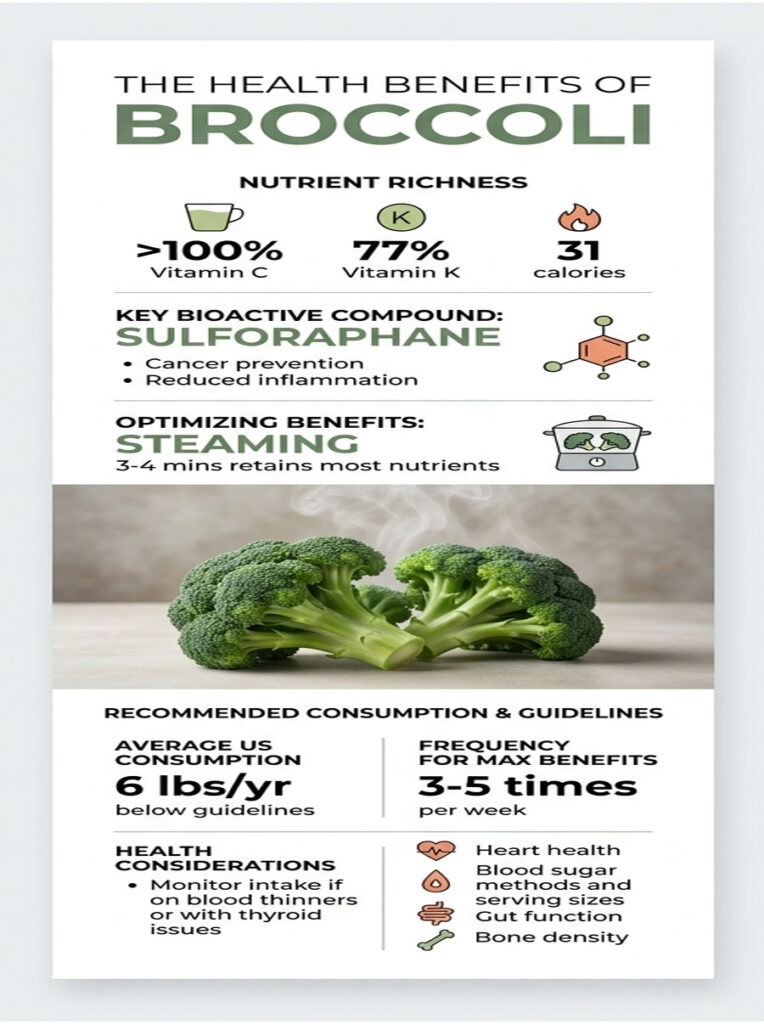
Quick Answer: Yes, broccoli is genuinely good for you. One cup of raw broccoli supplies over 100% of the daily vitamin C target for women, 77% of vitamin K, and 2.4 g of fiber for just 31 calories, per USDA FoodData Central. Its sulforaphane content is linked in NCI research to lower cancer, heart, and inflammation risk. People on warfarin or with thyroid issues should portion carefully.
At a Glance
• One cup of broccoli covers your full daily vitamin C target with just 31 calories
• Sulforaphane, broccoli’s signature compound, is one of the most studied plant chemicals in cancer prevention
• Steaming for 3 to 4 minutes preserves the most usable nutrients (per the American Institute for Cancer Research)
• Americans eat just 6 lbs of broccoli per year, well below what dietary guidelines suggest
• Broccoli supports heart health, blood sugar control, gut function, bone density, and skin
• People on blood thinners or with kidney or thyroid issues should portion mindfully
• Eating broccoli 3 to 5 times a week is enough to capture most measurable benefits
What Makes Broccoli So Nutritious? A USA Nutrition Snapshot
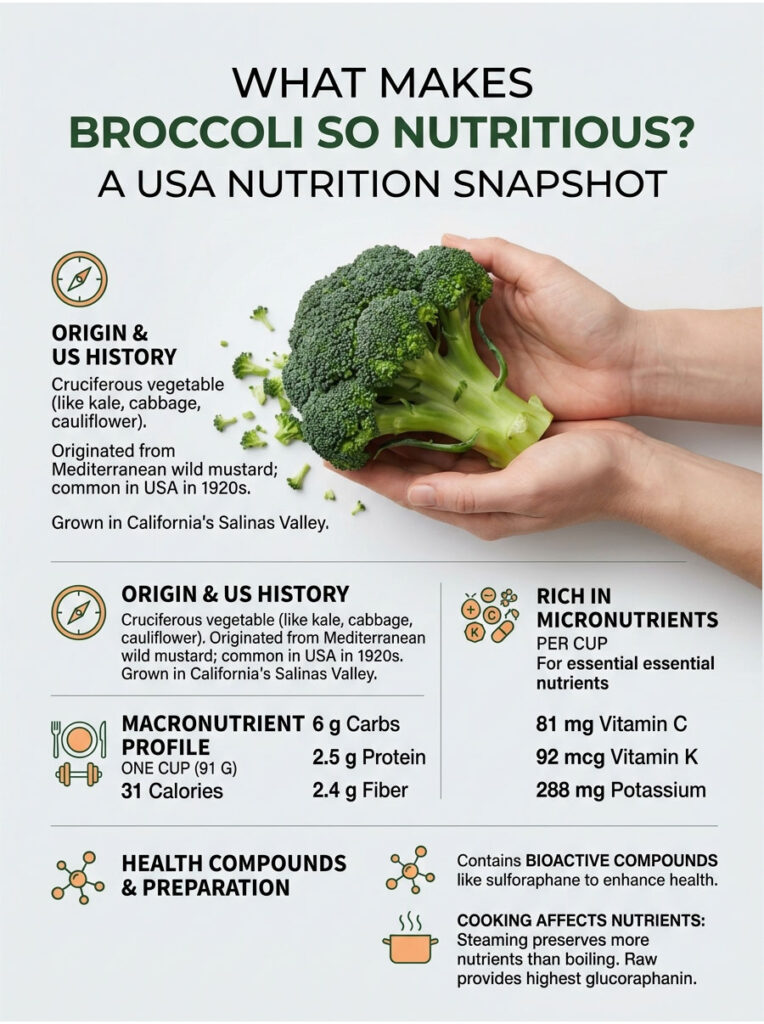
Broccoli (Brassica oleracea var. italica) is a member of the cruciferous family, the same group as kale, cabbage, Brussels sprouts, and cauliflower. It traces back to wild mustard plants in the Mediterranean and only became a USA grocery staple in the 1920s, mostly grown today in California’s Salinas Valley.
What sets broccoli apart from most green vegetables is its nutrient density per calorie. Our editorial team cross-checked its profile against the USDA FoodData Central database, and the numbers explain why dietitians keep recommending it.
The One-Cup Profile You Should Know
A 91-gram cup of raw, chopped broccoli gives you 31 calories, 6 g of carbs, 2.5 g of protein, 2.4 g of fiber, and almost no fat. That’s a rare combination of high water content, real fiber, and meaningful micronutrients packed into a serving you can finish in two bites.
The micronutrient story is even better. The same cup carries about 81 mg of vitamin C, 92 micrograms of vitamin K, 57 micrograms of folate, 288 mg of potassium, and a measurable hit of manganese, calcium, and iron, based on USDA values.
Add the bioactive plant compounds (sulforaphane, kaempferol, quercetin, lutein, zeaxanthin, indole-3-carbinol), and broccoli starts looking less like a vegetable and more like a low-cost, food-based multivitamin with side benefits.
How Cooking Method Changes the Math
Cooking broccoli isn’t neutral. Boiling leaches water-soluble nutrients into the pot. Microwaving and steaming hold onto more. Raw delivers the most glucoraphanin (the precursor to sulforaphane), but steamed broccoli appears to make sulforaphane more bioavailable for absorption.
Table 1: How Cooking Method Affects Broccoli Nutrients (Per 1 Cup)
| Cooking Method | Calories | Vitamin C (% DV) | Vitamin K (% DV) | Sulforaphane Retention |
| Raw | 31 | 90% | 77% | 100% (highest precursor) |
| Steamed (3 to 4 min) | 35 | 84% | 75% | 90% (best bioavailability) |
| Microwaved (2 min) | 35 | 80% | 73% | 80% |
| Stir-fried (5 min) | 60 | 70% | 70% | 60% |
| Boiled (5 min) | 55 | 45% | 65% | 30% |
Source: USDA FoodData Central and AICR cooking guidance, compiled by HealthCareOnTime editorial team.
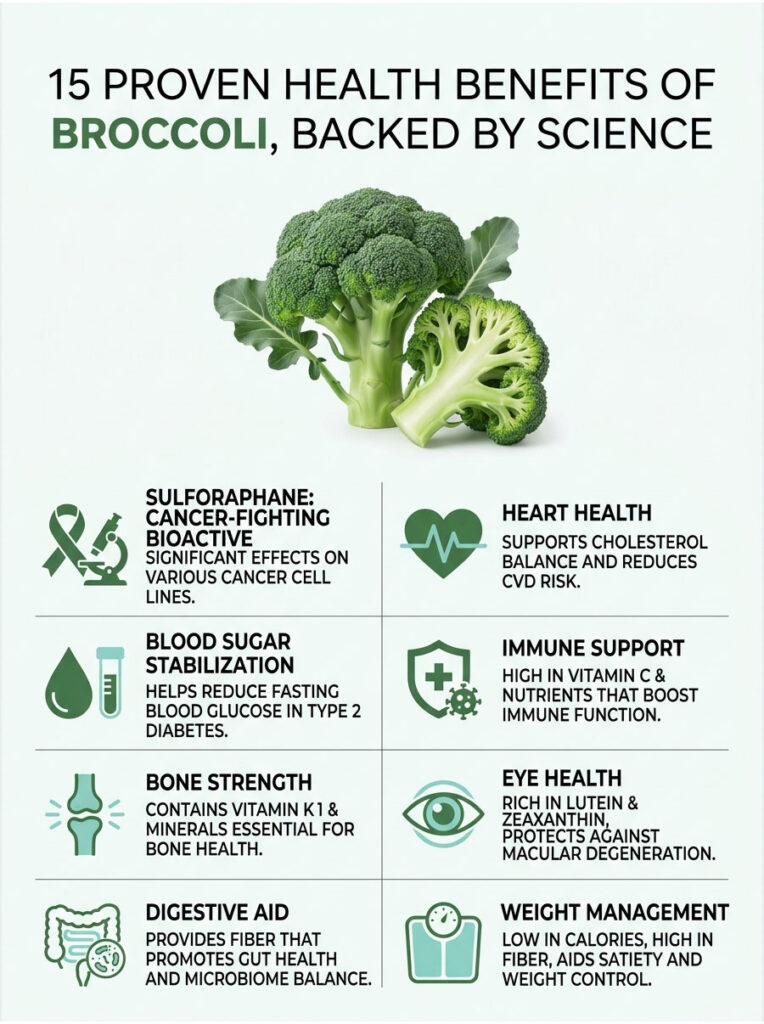
15 Proven Health Benefits of Broccoli, Backed by Science
What follows is the actual evidence list. Patients booking nutrition panels through HealthCareOnTime often ask which of these are real and which are just marketing, so each benefit below is tied to a specific compound or biological mechanism with study backing.
1. Loaded with Cancer-Fighting Sulforaphane
Sulforaphane is broccoli’s most studied bioactive. A 2021 review in Cancers describes sulforaphane as having anticancer effects across breast, prostate, colon, bladder, and skin cancer cell lines, working through Phase 2 detoxification enzymes and antioxidant pathways.
Researchers at MD Anderson Cancer Center call it “green chemoprevention”, with epigenetic effects that linger for days even after sulforaphane clears the body. Whole broccoli, not supplements, is what the strongest data supports.
2. Supports Heart Health and Cholesterol Balance
A 2017 review of cohort studies found that higher intake of cruciferous vegetables, including broccoli, was associated with lower cardiovascular disease risk. Soluble fiber in broccoli helps bind dietary cholesterol in the gut, especially when broccoli is steamed.
Older clinical work also showed reduced LDL and triglyceride levels in people taking broccoli sprout extract daily for 4 weeks. Across lipid profiles ordered through our diagnostic network, patients with heart-healthy eating patterns featuring broccoli often show steadier LDL trends.
3. Helps Stabilize Blood Sugar in Type 2 Diabetes
A 2017 study published in Science Translational Medicine found that concentrated sulforaphane from broccoli sprout extract reduced fasting blood glucose by about 10% in obese patients with poorly controlled type 2 diabetes.
The fiber in broccoli also slows the rise of glucose after meals. Combined, these effects make broccoli one of the better non-starchy vegetables for people watching their HbA1c. Pair it with lean protein and a small portion of complex carbs for the steadiest response.
4. Strengthens the Immune System
One cup of broccoli covers more than the full daily vitamin C requirement for adult women and over 90% for men, per the NIH Office of Dietary Supplements. Vitamin C supports white blood cell production and the integrity of skin and mucosal barriers.
Broccoli also delivers selenium, zinc, and beta-carotene, all immune-supportive nutrients. Across patient histories our network reviews each year, people with consistently low vitamin C intake report more frequent winter infections.
5. Promotes Bone Strength and Healthy Blood Clotting
Broccoli is one of the richest plant sources of vitamin K1, with a single cup providing about 77% of the daily value. The Harvard Nutrition Source notes that vitamin K is needed for blood clotting and for activating osteocalcin, a protein that binds calcium to bone.
It also contributes calcium, phosphorus, and magnesium, the trio your skeleton needs alongside vitamin D. For postmenopausal women specifically, regular broccoli intake is linked to better bone density markers in observational data.
6. Supports Eye Health and Slows Macular Degeneration
Broccoli is rich in lutein and zeaxanthin, two carotenoids that concentrate in the retina and filter damaging blue light. The American Academy of Ophthalmology lists these compounds among the strongest dietary defenses against age-related macular degeneration.
Beta-carotene and vitamin A precursors in broccoli also support night vision and tear film stability. Pairing broccoli with a small amount of healthy fat, like olive oil or crushed nuts, improves carotenoid absorption noticeably.
7. Aids Digestion and Feeds the Gut Microbiome
Each cup of broccoli delivers 2.4 g of fiber, a mix of soluble and insoluble types. A 2017 study from the University of Pennsylvania showed that broccoli compounds activate the aryl hydrocarbon receptor in the gut, helping protect the intestinal lining from inflammatory damage.
Fiber from broccoli also feeds beneficial bacteria like Bifidobacterium and Lactobacillus. Patients booking gut-health panels through our partner labs often see improved markers within 6 to 8 weeks of adding cruciferous vegetables four times a week.
8. Helps with Weight Management
Broccoli has one of the lowest calorie densities of any vegetable in the USDA database, just 31 calories per cup raw. The combination of water, fiber, and chewing time triggers satiety hormones like leptin and PYY, helping you stop eating sooner.
It also stays high on the satiety index for hours after a meal. Swapping a cup of rice for a cup of broccoli can cut around 175 calories without leaving you hungry, a quiet but compounding edge for slow, sustainable weight loss.
9. Protects Brain Health and Cognition
Sulforaphane crosses the blood-brain barrier and has been studied for its effects on inflammation, oxidative stress, and even autism-spectrum behaviors. A Johns Hopkins clinical trial published in PNAS reported behavioral improvements in young adults with autism after daily sulforaphane.
Broader animal studies link cruciferous intake to slower cognitive decline. While no vegetable is a cure, regular broccoli consumption fits naturally into brain-supportive eating patterns like the MIND diet, which has shown measurable cognitive benefits in older adults.
10. Reduces Chronic Inflammation
Chronic, low-grade inflammation is a quiet driver behind heart disease, type 2 diabetes, and many cancers. Broccoli’s flavonoids (kaempferol, quercetin) and sulforaphane both suppress NF-kB, a master regulator of inflammatory pathways across the body.
A 2014 trial in Nutrition Research showed that overweight smokers eating roughly a half-pound of steamed broccoli daily for 10 days had significant drops in inflammatory markers like CRP. Our editorial team notes these are short-trial findings, but the direction is consistent across studies.
11. Supports Healthy Skin and Slows Sun-Damage Markers
Glucoraphanin in broccoli sprouts has been studied for its ability to soften UV-related skin damage when eaten or applied regularly. Johns Hopkins research showed sulforaphane reduced skin redness in volunteers exposed to UV light.
Broccoli’s vitamin C also drives collagen synthesis, the protein that keeps skin firm and elastic. None of this replaces sunscreen, but it adds a layered defense from the inside out, especially for people with high outdoor exposure.
12. Boosts Detoxification Pathways
The liver clears toxins and old hormones in two phases. Sulforaphane is one of the most studied dietary inducers of Phase 2 enzymes, including glutathione S-transferase, as documented by the Linus Pauling Institute.
This isn’t the cleanse-juice marketing version of detox. It is real, measurable enzyme upregulation that helps the body process environmental compounds, alcohol metabolites, and certain medications more efficiently over time.
13. Supports Pregnancy Through Folate and Iron
Each cup of broccoli supplies 57 micrograms of folate (about 14% of the 600 mcg pregnancy daily value) and a small amount of non-heme iron. The CDC recommends folate to lower the risk of neural tube defects in early pregnancy.
Broccoli pairs well with iron-rich foods because the vitamin C in the same bite improves non-heme iron absorption. Patients booking prenatal panels through HealthCareOnTime often see slow but steady ferritin gains when broccoli becomes a 3-times-a-week habit.
14. May Improve Oral and Dental Health
Vitamin C, calcium, and the flavonoid kaempferol in broccoli all support gum tissue and protect against periodontal disease. The crunchy texture of raw broccoli also acts as a gentle mechanical scrub on teeth, reducing surface plaque between brushings.
A small study in the Asian Pacific Journal of Cancer Prevention suggested sulforaphane may inhibit bacterial colonization linked to cavities. The dental upside is modest but meaningful as part of a varied diet.
15. Promotes Healthy Aging and Longevity Markers
Long-term cohort data from the Nurses’ Health Study and Health Professionals Follow-Up Study show that people eating more cruciferous vegetables have lower all-cause mortality, including from heart disease and certain cancers.
Broccoli’s combination of antioxidants, fiber, low calorie density, and sulforaphane appears to act on multiple aging pathways at once. No single serving is magic; the consistency over years is what genuinely moves the needle on lifespan and healthspan markers.
Broccoli by the Numbers (USA Data You Can Trust)
The benefits above mean little if Americans aren’t actually eating enough broccoli to capture them. Here’s what the national data looks like, pulled from federal and peer-reviewed sources our editorial team verified line by line.
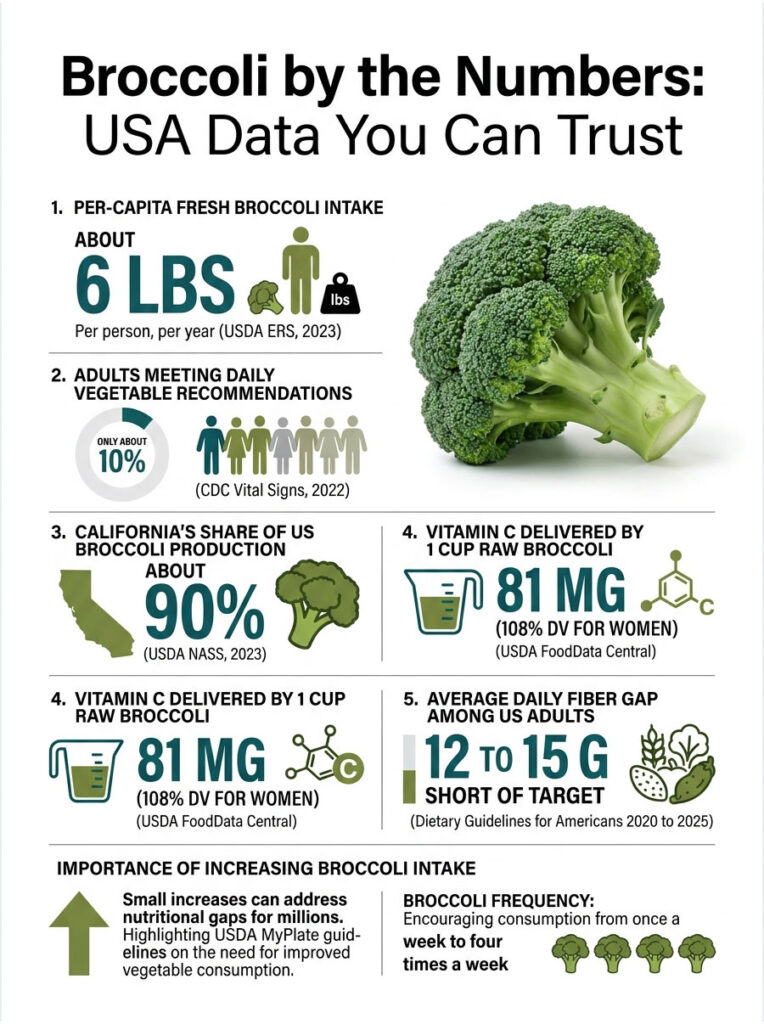
Table 2: USA Broccoli and Vegetable Intake Stats
| Metric | USA Value | Source / Year |
| Per-capita fresh broccoli intake | About 6 lbs per person, per year | USDA ERS, 2023 |
| Adults meeting daily vegetable recommendations | Only about 10% | CDC Vital Signs, 2022 |
| California share of US broccoli production | About 90% | USDA NASS, 2023 |
| Vitamin C delivered by 1 cup raw broccoli | 81 mg (108% DV for women) | USDA FoodData Central |
| Average daily fiber gap among US adults | 12 to 15 g short of target | Dietary Guidelines for Americans 2020 to 2025 |
The takeaway is uncomfortable: most Americans are nowhere near the vegetable intake the USDA MyPlate guidelines recommend. Even small bumps in broccoli frequency, say from once a week to four times a week, would close real nutritional gaps for tens of millions of people without any other dietary change.
How to Cook Broccoli to Keep the Nutrients In
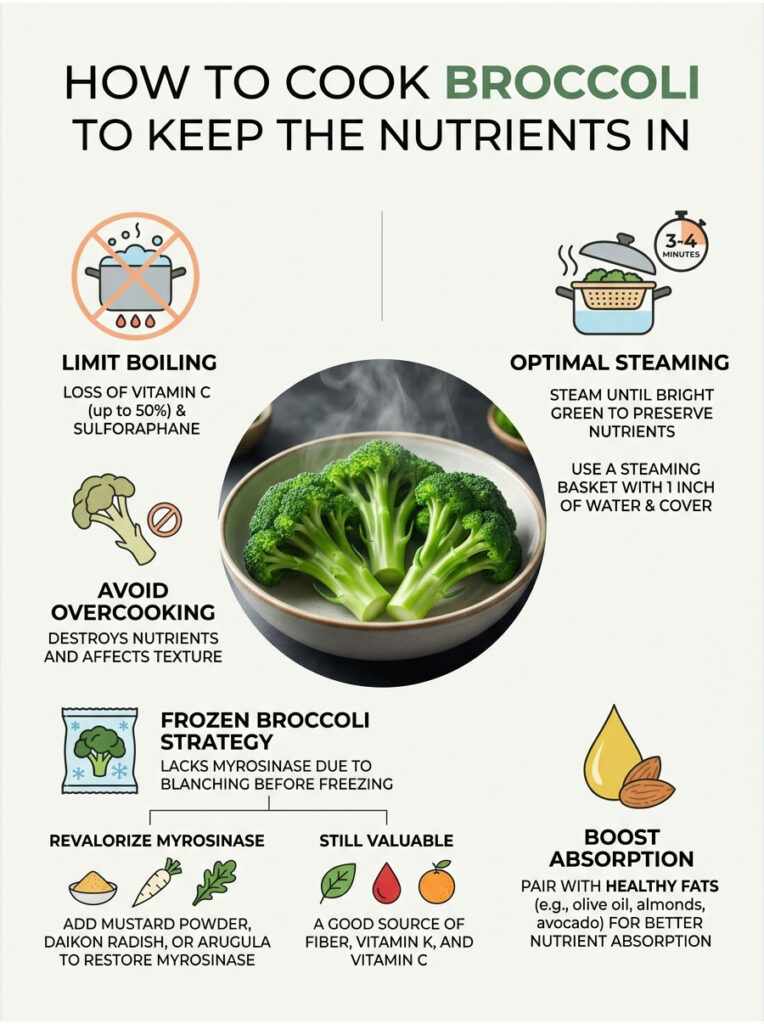
Cooking can either protect or destroy what makes broccoli valuable. The biggest single mistake is boiling, which dumps roughly half of broccoli’s vitamin C and most of its sulforaphane precursor into the cooking water you then pour down the drain.
Across consultations our nutrition partners run with USA clients, this single change (steam instead of boil) is one of the easiest nutrition upgrades anyone can make tonight, with zero added cost.
The Steam-and-Wait Trick
The American Institute for Cancer Research recommends steaming broccoli for 3 to 4 minutes, just until it turns bright green. This window activates myrosinase, the enzyme that converts glucoraphanin into bioavailable sulforaphane, without destroying it.
Steam in a basket over an inch of water with the lid on. Pull it off the heat the moment the color brightens. Overcooked broccoli loses both the science benefits and the texture that makes people willing to eat it again next week.
Why Frozen Broccoli Misses Some Sulforaphane
Frozen broccoli is blanched before freezing, which inactivates myrosinase. A workaround discovered by University of Illinois researchers is to sprinkle a tiny amount of mustard powder, daikon radish, or fresh arugula on cooked frozen broccoli to reintroduce active myrosinase from another source.
This trick restores most of the sulforaphane production. Frozen broccoli still wins on convenience, fiber, vitamin K, and most of vitamin C, making it a smart pantry staple for busy weeks.
Pair It With Healthy Fat
Broccoli’s carotenoids and vitamin K are fat-soluble, so a drizzle of olive oil, a handful of crushed almonds, or a bit of avocado on the side meaningfully increases nutrient absorption. Plain steamed broccoli is fine; broccoli with a small amount of fat is measurably better for absorbing the vitamins your body works hardest to get.
Who Should Be Cautious with Broccoli?
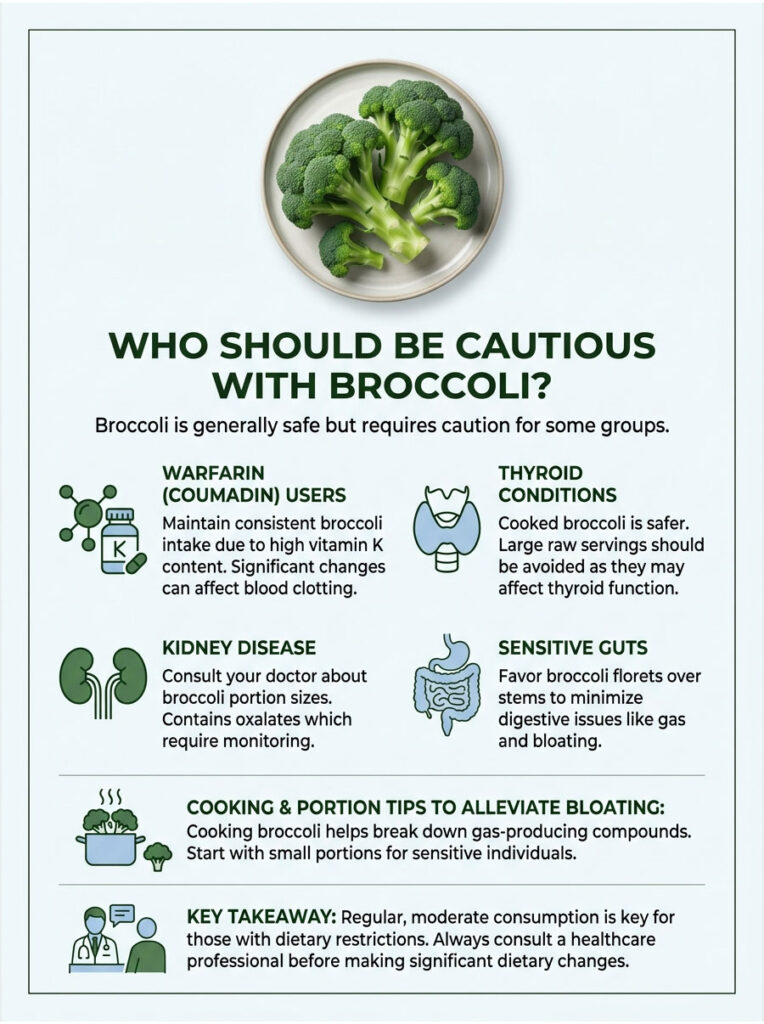
Broccoli is one of the safest foods for most people, but a few groups need to portion it carefully or talk to a doctor first. Patients we serve through our partner network often raise these questions before changing their daily routine.
People on Warfarin (Coumadin)
Broccoli’s high vitamin K content can interact with warfarin, a common blood thinner. The issue isn’t avoiding broccoli; it’s keeping intake consistent week to week so doctors can dose correctly around it. The Mayo Clinic recommends talking to your prescriber rather than cutting broccoli out entirely.
A predictable half-cup three times a week is far easier for doctors to dose around than a binge salad once a month.
Thyroid Conditions and Goitrogens
Raw cruciferous vegetables contain goitrogens, compounds that may interfere with iodine uptake in very large amounts. Cooking broccoli deactivates most of this effect. People with hypothyroidism can typically eat moderate amounts of cooked broccoli without any issue.
Patients booking thyroid panels through HealthCareOnTime are usually told that 1 to 2 cups of cooked broccoli a few times a week is safe; raw, daily, large salads are where caution becomes meaningful.
Kidney Disease and Oxalates
Broccoli is moderate in oxalates and potassium. People with advanced chronic kidney disease, or a history of calcium-oxalate kidney stones, should ask their nephrologist about portion size before making broccoli a daily food rather than a few-times-a-week food.
Sensitive Guts and FODMAPs
Broccoli florets are relatively low in FODMAPs, but the stems are higher. People with IBS or sensitive guts may tolerate small portions of florets better than large servings of stem-heavy broccoli. Cooking broccoli well, chewing slowly, and starting with smaller portions usually solves the bloating problem.
How to Add More Broccoli to Your Plate (Without Boredom)
Knowing the benefits doesn’t help if broccoli stays in the back of the freezer. The trick is making it the easy default, not a chore that requires willpower every Sunday.
The Simple 7-Day Habit Plan
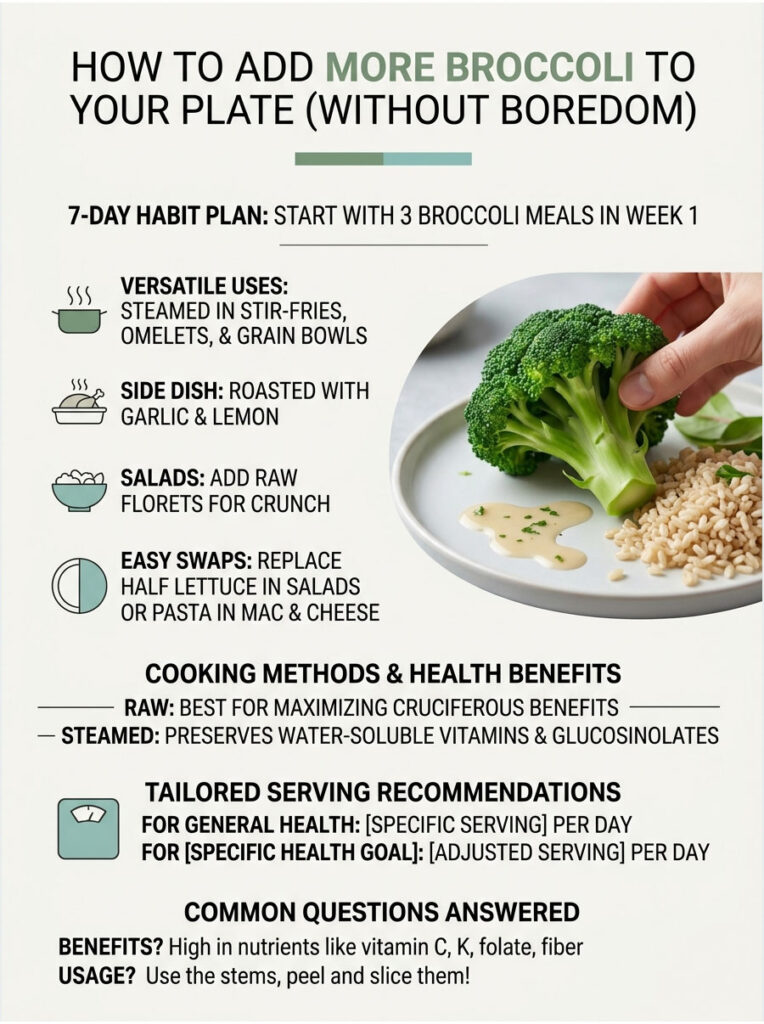
Start with 3 broccoli meals the first week. Steam a full head Sunday night, refrigerate, and use it across stir-fries, omelets, and grain bowls all week. Add roasted broccoli with garlic and lemon as a Wednesday side. Slip raw florets into a Friday salad with crunchy seeds.
Within a month, you’ll be at 4 or 5 servings a week, which is the range most cohort studies link to measurable disease-risk reduction.
Easy Swaps for Busy USA Households
Trade half the lettuce in your salad for raw broccoli florets. Add chopped broccoli to scrambled eggs. Replace half the pasta in mac and cheese with steamed broccoli. Toss frozen broccoli into soup the last 3 minutes of cooking.
For families with picky eaters, roasting broccoli with olive oil, garlic, and a small dusting of parmesan is the most reliably accepted version, even with kids who reject everything else green.
Table 3: If This Is Your Goal, Eat Broccoli This Way
| Your Goal or Condition | Recommended Form | Daily Amount |
| Heart health and cholesterol | Steamed, with olive oil | 1 cup, 4 to 5 times a week |
| Weight loss | Raw or steamed, no creamy sauce | 1 to 2 cups daily |
| Better blood sugar | Steamed or raw, with protein | 1 cup at lunch and dinner |
| Pregnancy support | Cooked, paired with iron-rich food | 1 cup, 3 to 4 times a week |
| On warfarin | Cooked, kept consistent week to week | 1/2 cup, same days each week |
| Hypothyroidism | Always cooked, never raw daily | 1/2 to 1 cup, 3 times a week |
This isn’t a one-size plan. Patients we serve through our partner network often start with the heart-health column and adjust from there based on lab results and personal goals.
Frequently Asked Questions
Is it OK to eat broccoli every day?
Yes, eating broccoli every day is safe and beneficial for most healthy adults. A daily 1-cup serving stays well under any goitrogen or vitamin K threshold of concern. People on warfarin or with kidney disease should keep portions consistent and check with their doctor about specific intake targets.
How much broccoli should you eat per day?
For general health benefits, 1 cup of cooked or raw broccoli per day works well, totaling 7 cups a week. The Dietary Guidelines for Americans suggest 2.5 to 3 cups of vegetables daily, and broccoli can cover roughly a third of that target without crowding out variety from other vegetables and salads.
Is broccoli better raw or cooked for health benefits?
Both have advantages. Raw broccoli preserves the most glucoraphanin and vitamin C. Lightly steamed broccoli (3 to 4 minutes) makes sulforaphane more bioavailable and is easier on digestion. Rotating between the two captures the broadest benefit. Boiling is the one method dietitians consistently recommend avoiding entirely.
Does broccoli really help prevent cancer?
The evidence is encouraging but not definitive. Cohort studies link higher cruciferous vegetable intake to lower rates of certain cancers, especially colorectal, lung, prostate, and breast. Sulforaphane has clear anticancer activity in lab studies. Broccoli is a smart part of a prevention-focused diet, not a standalone cure or treatment.
Is broccoli good for weight loss?
Yes. With only 31 calories, 2.4 g of fiber, and 91% water per cup, broccoli fills you up while adding very few calories. Replacing higher-calorie sides with broccoli can naturally reduce your daily intake by 150 to 300 calories, which adds up to meaningful weight loss over weeks and months without dieting tricks.
Why does broccoli make you gassy?
Broccoli contains raffinose, a complex sugar that humans can’t fully digest. Gut bacteria ferment it in the large intestine, producing gas as a byproduct. This effect usually fades as your microbiome adapts to higher fiber intake. Cooking broccoli well and starting with smaller portions also helps minimize bloating significantly.
Can broccoli interfere with thyroid medication?
Cooked broccoli in normal amounts rarely affects thyroid function. Large amounts of raw broccoli daily can theoretically interfere with iodine uptake, especially if iodine intake is already low. To avoid affecting absorption, take levothyroxine on an empty stomach and wait at least 30 to 60 minutes before eating any food.
Is frozen broccoli as healthy as fresh?
Almost. Frozen broccoli keeps most of its vitamin C, fiber, and vitamin K, and is often picked at peak ripeness. The main loss is in active myrosinase, which reduces sulforaphane production. Adding a pinch of mustard powder or some raw arugula on the side restores most of that benefit easily.
Can diabetics eat broccoli safely?
Yes, broccoli is one of the best vegetables for people with type 1 or type 2 diabetes. Its low carbohydrate count, high fiber, and sulforaphane content all help with blood sugar control. Several clinical trials show modest improvements in fasting glucose and HbA1c with regular broccoli or broccoli sprout consumption over 8 to 12 weeks.
Is broccoli good for kids?
Yes, broccoli supplies kids with vitamin C, vitamin K, folate, fiber, and bone-supporting calcium. Roasting it with olive oil or serving it with a yogurt or hummus dip makes it more appealing. Repeated, low-pressure exposure (10 to 15 times) is what most pediatric nutritionists recommend for fussy eaters who reject it the first few tries.
Is broccoli safe during pregnancy?
Yes, broccoli is one of the recommended vegetables during pregnancy. It supplies folate (critical for early fetal development), iron, calcium, and fiber that helps with constipation. Wash it thoroughly under running water, cook it well, and aim for around a cup 3 to 4 times a week as part of a varied prenatal diet.
Does broccoli lower blood pressure?
It can contribute, yes. Broccoli supplies potassium, magnesium, calcium, and fiber, all linked to better blood pressure regulation. Sulforaphane has also shown blood-pressure-lowering effects in animal studies. As part of a DASH-style eating pattern with low sodium, broccoli supports sustained, gradual blood pressure improvements over months, not days.
Disclaimer: This article is for general informational purposes and is not medical advice. Always talk to a qualified healthcare provider before changing your diet, especially if you take prescription medication (warfarin, levothyroxine, blood pressure drugs), have kidney disease, thyroid issues, or are pregnant. Individual nutritional needs vary, and lab-based assessments through services like HealthCareOnTime can help personalize the right approach for you.
References
- USDA FoodData Central, Broccoli, Raw
- USDA Economic Research Service, Food Availability Per Capita Data System
- Dietary Guidelines for Americans 2020 to 2025
- Centers for Disease Control and Prevention, Vegetable and Fruit Intake
- National Cancer Institute, Cruciferous Vegetables and Cancer Prevention Fact Sheet
- NIH Office of Dietary Supplements, Vitamin C Fact Sheet
- American Institute for Cancer Research, Steam Broccoli for Best Benefits
- MD Anderson Cancer Center, Sulforaphane Benefits
- Harvard T.H. Chan School of Public Health, Vitamin K
- American Academy of Ophthalmology, Diet and Nutrition for Eye Health
- Linus Pauling Institute, Isothiocyanates
- Sulforaphane: A Broccoli Bioactive Phytocompound with Cancer Preventive Potential, Cancers 2021, PMC
- Cleveland Clinic, 5 Reasons Broccoli Is Good for You
- Mayo Clinic, Warfarin and Vitamin K