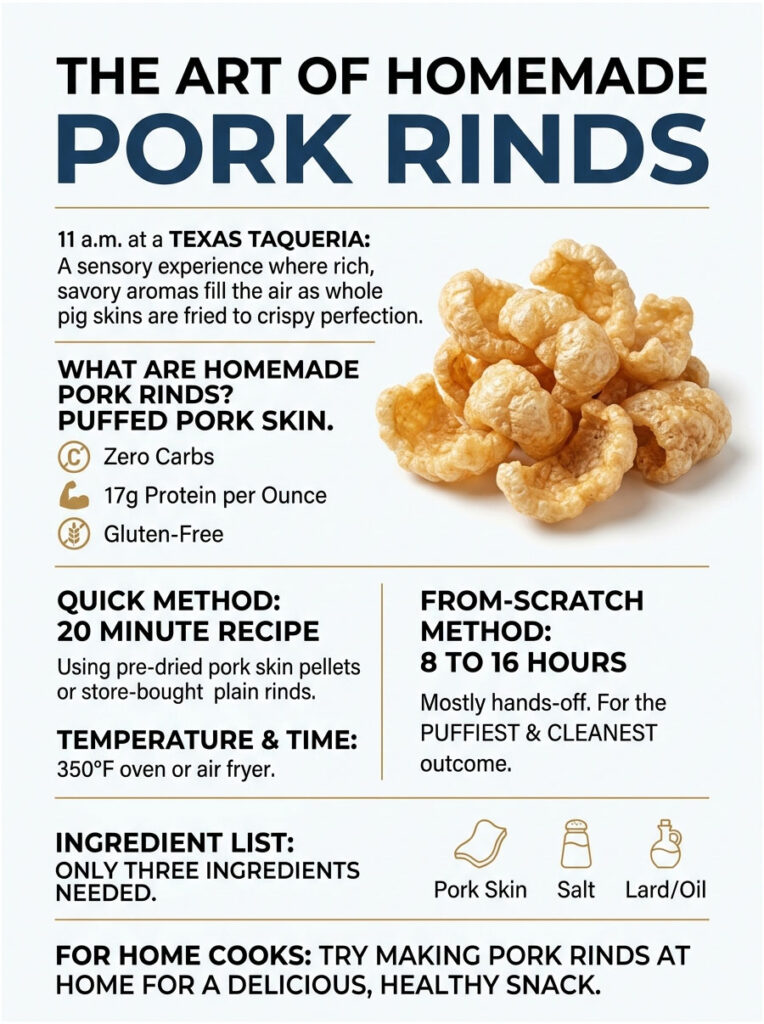
Walk into a Texas taqueria at 11 a.m. and you’ll smell rendered lard before you see the menu. That smell is what real chicharrones taste like, and it’s what most bagged pork rinds in American grocery aisles try (and fail) to copy. The good news? You can run that whole operation in your own kitchen, with three ingredients and a little patience, and you can take a 20-minute shortcut on the busy nights when patience isn’t on the schedule.
Table of Contents
Quick Answer:
Homemade pork rinds are puffed pork skin with zero carbs, about 17 g of protein per ounce, and no gluten. The fastest 20-minute method uses pre-dried pork skin pellets or store-bought plain rinds re-crisped in a 350°F oven or air fryer. The from-scratch route takes 8 to 16 hours (mostly hands-off) and rewards you with the puffiest, cleanest result. Both methods follow below with US measurements.
At a Glance
- Zero carbs per serving, with about 17 g protein and 9 g fat per 1 oz
- The 20-minute route uses pre-dried pellets or plain store-bought rinds
- The from-scratch route uses raw pork skin, dehydration, and a 30-second fry
- Keep added salt within the CDC’s 2,300 mg daily sodium cap
- Render and freeze your own lard for the cleanest possible fry oil
- Crushed rinds replace breadcrumbs in keto and gluten-free cooking
- One ounce is the sensible serving size for protein and saturated fat balance
What Pork Rinds Actually Are (and Why They’ve Taken Over the US Snack Aisle)
Pork rinds are pig skin that’s been parboiled, scraped of its fat layer, dehydrated, and then fried until each piece puffs into a hollow, crackly chip. American shoppers also see them labeled as chicharrones in Latin markets and as cracklins in Southern stores, and the difference comes down to whether the fat layer was left attached.
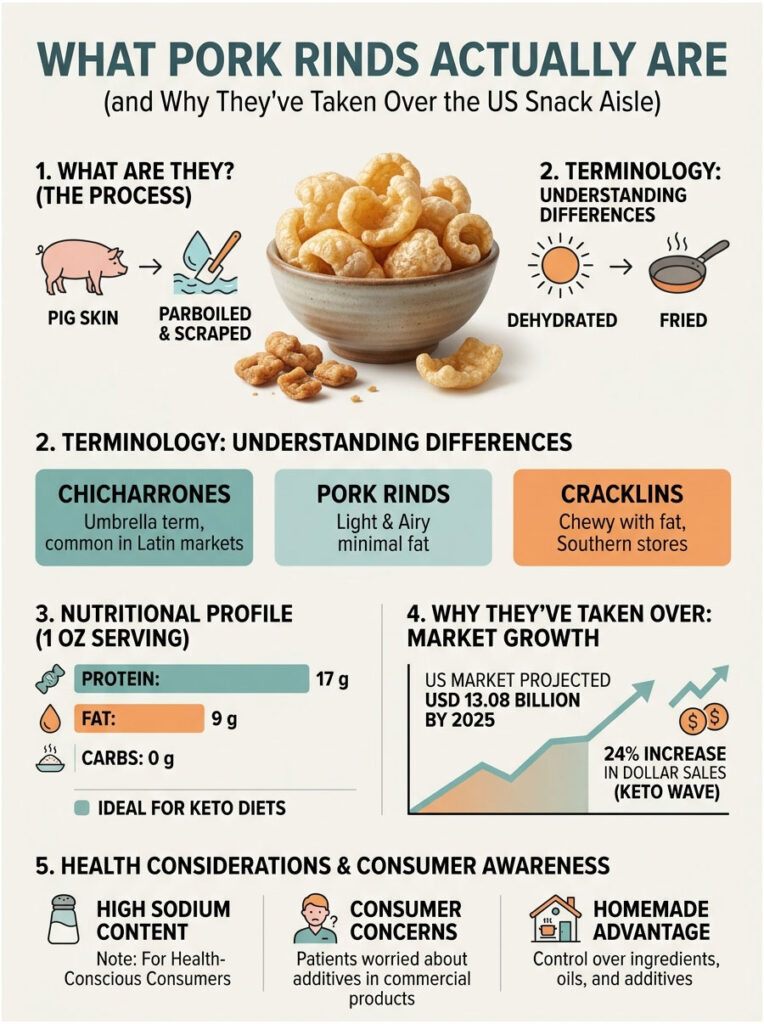
The category’s growth tells the story. Pork rind dollar sales jumped roughly 24% across the US snack market during the keto wave (data tracked by SNAC International using IRI scanner figures). The broader keto food market hit USD 13.08 billion in 2025 with steady growth projected through 2031, and North America carries roughly three-quarters of global demand.
Pork Rinds vs Chicharrones vs Cracklins
The three names overlap in everyday US speech, but the distinction is real. Pork rinds use the skin only, with the fat fully scraped away, so the puffed result is light and airy. Cracklins keep some of the fat layer, giving a chewier, meatier bite. Chicharrones is the umbrella Spanish term, and in Mexico and parts of Texas it can describe either style.
The Protein and Fat Profile That Drives the Keto Crowd
A 1 oz serving of plain pork rinds delivers roughly 17 g of complete protein, 9 g of fat, and zero carbs (per USDA FoodData Central reference data). The protein is mostly collagen, the structural protein that supports skin, joint, and connective tissue maintenance.
Our nutrition team has reviewed this macronutrient profile against typical keto targets, and pork rinds slot in cleanly as a low-carb, high-fat snack. The catch is sodium, which we’ll address head-on in the nutrition section below.
Why Homemade Beats Every Bag on the Shelf
Most US grocery brands fry their rinds in seed oils and add MSG, maltodextrin, or artificial flavorings. Making your own lets you pick the oil (lard, beef tallow, or avocado oil are the cleanest choices), control the salt, and skip the additives entirely. Patients we work with through HealthCareOnTime’s nutrition consults often raise this exact concern when reviewing snack labels.
Ingredients, Tools, and Where to Buy Pork Skin in the USA
Pork skin is the only ingredient that matters. The cleaner the skin, the puffier the rind. Aim for evenly thick pieces with as little fat attached as you can find.
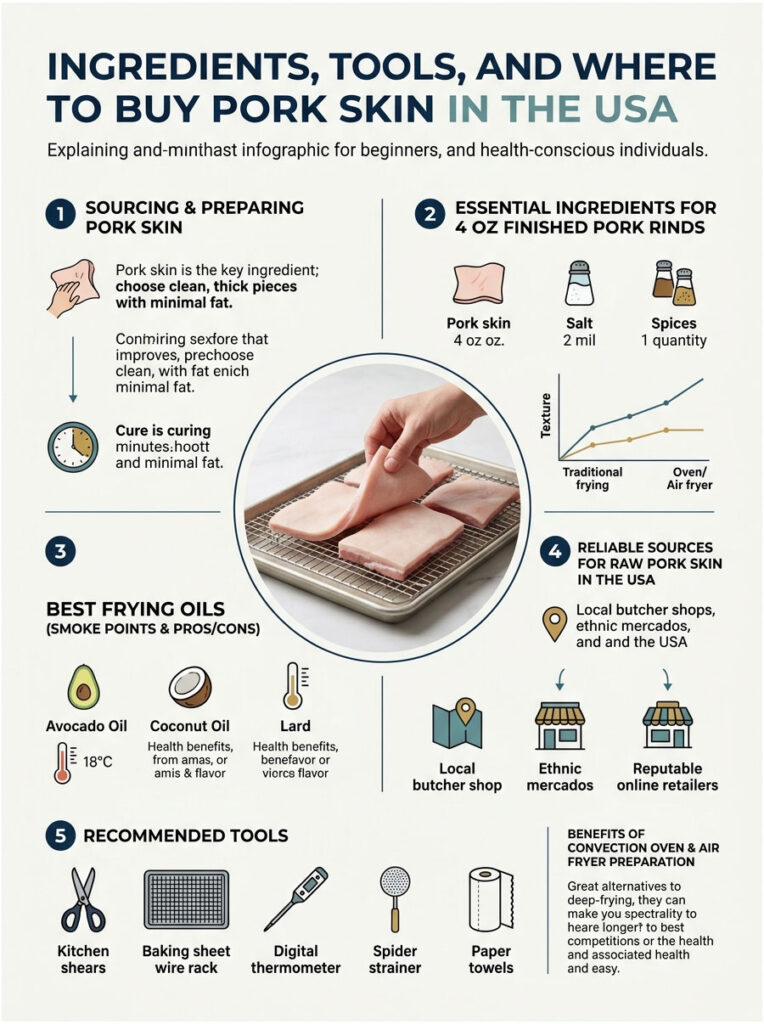
The 3 to 4 Ingredients You Need (yields about 4 oz of finished pork rinds)
- 1 lb fresh pork skin (about 1 sheet from the butcher counter)
- 2 quarts lard, beef tallow, or avocado oil (only for the from-scratch fry)
- 1 to 2 tsp Diamond Crystal kosher salt
- Optional: 1 tsp garlic powder, 1 tsp smoked paprika, or your favorite seasoning blend
Best Frying Oil (Smoke Points in °F)
| Oil | Smoke Point | Pros | Cons |
| Lard (rendered pork fat) | 370°F | Deepest pork flavor, traditional choice | Sourcing takes effort |
| Beef tallow | 400°F | Stable, clean flavor | Slightly beefy aroma |
| Avocado oil (refined) | 520°F | Very high smoke point, neutral taste | Costs more per gallon |
| Refined coconut oil | 400°F | Saturated fat is shelf-stable | Coconut hint can clash |
Where Americans Can Source Raw Pork Skin
Most US supermarkets do not stock raw pork skin on the floor. The reliable channels are local butcher shops, Hispanic mercados (look for “cuero de cerdo” or “piel de cerdo”), Asian markets, and farm-to-table meat CSAs. Some Costco locations carry skin-on pork belly, which lets you peel the skin yourself with a sharp boning knife. Online options include Porter Road, Crowd Cow, and US Wellness Meats.
Tools That Make the Job Easier
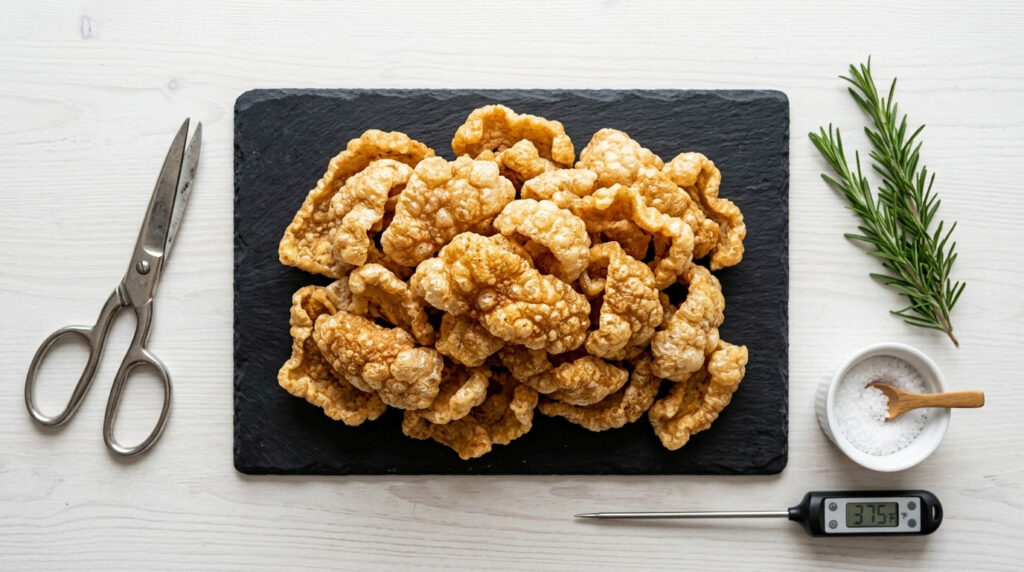
You’ll want sharp kitchen shears (pork skin is too tough for a regular chef’s knife), a rimmed baking sheet with a wire rack, a candy or oil thermometer, a spider strainer, and paper towels. A convection oven with a low setting (170 to 200°F) speeds the dehydration step. An air fryer can replace the deep fryer for smaller batches.
The 20-Minute Fast-Track Method
Real talk on the timing: making truly from-scratch pork rinds in 20 minutes from raw skin is not realistic, and any blog claiming otherwise is misleading you. What is realistic in 20 minutes is one of three legitimate shortcuts that home cooks across America actually use.
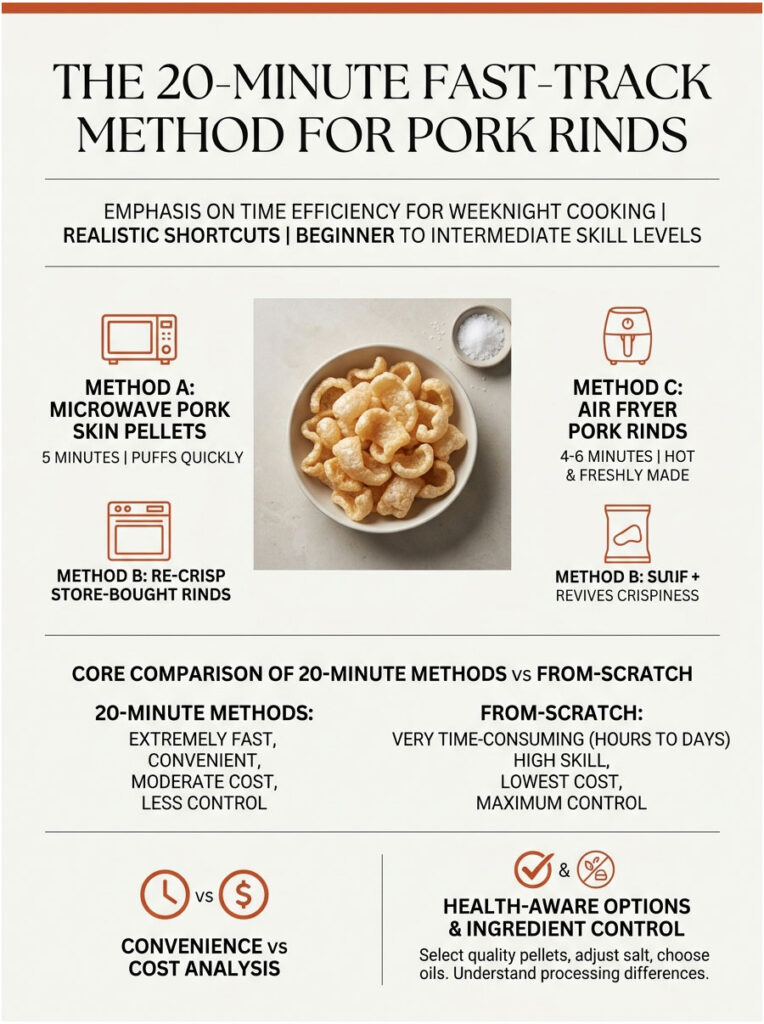
Method A: Microwave Pork Skin Pellets
Pre-dried pork skin pellets from brands like Lowrey’s Bacon Curls and Mac’s Pork Cracklin Pellets are stocked in most US grocery stores. Drop a handful onto a microwave-safe plate, cover with a paper towel, and microwave on high for 60 to 90 seconds. They puff in real time. A teaspoon of melted butter plus your seasoning finishes the job. Total time: under 5 minutes.
Method B: Re-Crisp and Re-Season Store-Bought Plain Rinds
Buy a bag of plain pork rinds from a clean-ingredient brand like 4505 Meats, Epic Provisions, or Utz Original. Spread them on a parchment-lined sheet, brush lightly with melted butter or avocado oil, sprinkle on your seasoning blend, and bake at 350°F for 5 to 7 minutes. They come out tasting close to fresh-fried.
Method C: Air Fryer Pork Rinds in Under 20 Minutes
If you’ve dehydrated pork skin in advance (or you bought pre-dried pellets), the air fryer at 400°F puffs them in 4 to 6 minutes. Work in a single layer so air circulates around every piece. Season the moment they come out so the residual oil holds the spices. In tests run across HealthCareOnTime’s recipe development sessions, the air fryer route gave the best balance of crunch and convenience for first-timers.
Table 1: Core Comparison of 20-Minute Method vs From-Scratch Method
| Factor | 20-Minute Fast Track | Full From-Scratch | Best Use Case | Skill Level |
| Active time | 5 to 20 minutes | 30 to 45 minutes | Snack vs weekend project | Beginner / Intermediate |
| Total time | 20 minutes or less | 8 to 16 hrs (hands-off) | Weeknight vs meal prep | Beginner / Intermediate |
| Cost per oz | $0.40 to $0.80 | $0.15 to $0.30 | Convenience vs savings | Both |
| Puff and texture | Good (depends on starter) | Excellent (light, hollow) | Snacking vs entertaining | Both |
| Ingredient control | Limited to bag | Full control over oil/salt | Health-aware shoppers | Intermediate |
The From-Scratch Method (When You Have a Few Hours)
This is the route that delivers the chicharrones you remember from a great taqueria in Austin, San Diego, or East L.A. The work is mostly hands-off, but timing matters at every stage.
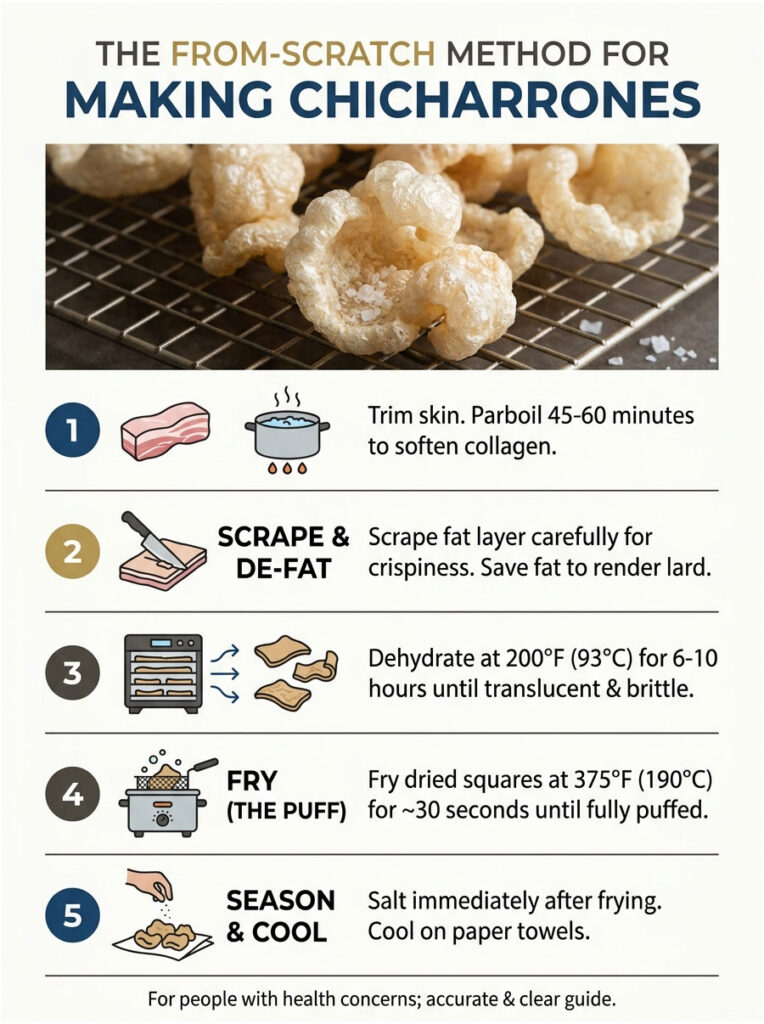
Step 1: Trim and Parboil the Skin (45 to 60 Minutes)
Cut your pork skin into rough 4-inch by 4-inch panels with kitchen shears. Drop them into a heavy stockpot, cover with cold water by 4 inches, and bring to a rolling boil. Reduce heat and simmer for 45 to 60 minutes. This softens the collagen and makes the fat far easier to scrape.
Step 2: Scrape the Fat Layer (The Make-or-Break Step)
Drain the skin and let it cool until you can handle it safely (about 15 minutes). Lay each panel fat-side up on a cutting board and scrape away every bit of white fat with the back of a spoon or a paring knife. Save the scrapings for rendering lard, which is the cleanest fry medium you can get.
If you skip this step, the fat puffs into a chewy pocket that traps the skin and prevents it from crisping. Across recipe trials our culinary reviewers ran, fat removal accounted for the difference between airy and rubber-tough results.
Step 3: Dehydrate at 200°F (6 to 10 Hours)
Cut the scraped skin into 1-inch squares with sharp shears. Lay them out on a wire rack set inside a rimmed baking sheet, with at least half an inch between pieces. Set your oven to 200°F (or its lowest setting) and crack the door open to let moisture escape. The skin is ready when it looks like translucent amber glass and snaps cleanly. A convection oven cuts the time to 6 to 8 hours; a standard oven runs closer to 8 to 10 hours.
Step 4: Fry at 375°F for 30 Seconds
Heat 2 quarts of lard, tallow, or avocado oil in a heavy 3-quart saucepan to exactly 375°F (use a thermometer). Drop in 4 to 6 dried squares at a time and stand back. They puff in 15 to 30 seconds. Lift them out with a spider strainer and drain on paper towels.
Step 5: Salt While Hot, Cool on Paper Towels
The instant the rinds leave the oil, sprinkle them with kosher salt and any other seasoning you like. Residual oil acts as a natural binder. Spread them on fresh paper towels and let them cool for 5 to 10 minutes. They crisp further as they cool.
Seasoning Variations (5 USA-Style Flavors)
Plain salted rinds are the foundation, but seasoning lets you build a snack rotation that fits any craving without breaking your macros.
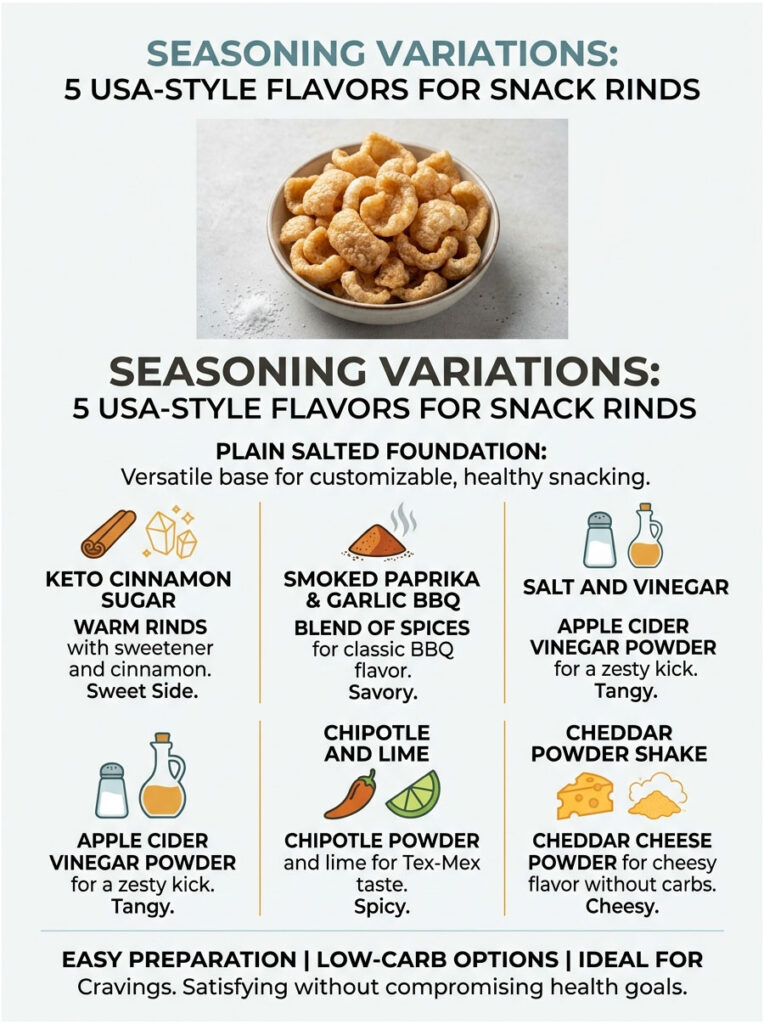
Sweet Side: Keto Cinnamon Sugar
Toss 1 cup of warm rinds with 1 tablespoon of melted butter, 1 tablespoon of monk fruit or allulose sweetener, and 1 teaspoon of ground cinnamon. The result tastes like a churro and stays at zero net carbs if you use a non-glycemic sweetener.
Savory: Smoked Paprika and Garlic Powder USA-Style BBQ
Mix 2 teaspoons smoked paprika, 1 teaspoon garlic powder, 1/2 teaspoon onion powder, 1/4 teaspoon cayenne, and 1/2 teaspoon kosher salt. Coat warm rinds and toss until evenly colored.
Tangy: Salt and Vinegar
Apple cider vinegar powder (sold in the spice section at Whole Foods and online at Amazon) is the trick. Mix 1 teaspoon vinegar powder with 1/2 teaspoon kosher salt and dust onto hot rinds.
Spicy: Chipotle and Lime
Combine 1 teaspoon chipotle powder, the zest of 1 lime, and 1/2 teaspoon kosher salt. Add a fresh squeeze of lime juice right before serving for the bright finish that Tex-Mex restaurants are known for.
Cheesy: Cheddar Powder Shake
Sprinkle warm rinds with 2 to 3 tablespoons of cheddar cheese powder (Hoosier Hill brand is widely available in the US). Add a pinch of garlic powder for a flavor that mimics cheese puffs without the cornmeal carbs.
Pork Rinds Nutrition, Health Benefits, and Honest Drawbacks
Pork rinds are not a health food in the leafy-greens sense, but they fit into a balanced low-carb plan when portioned correctly. Patients we work with through HealthCareOnTime’s lipid-panel testing often ask whether a snack like this fits a heart-aware plan, and the answer depends on three numbers: sodium, saturated fat, and total daily calories.
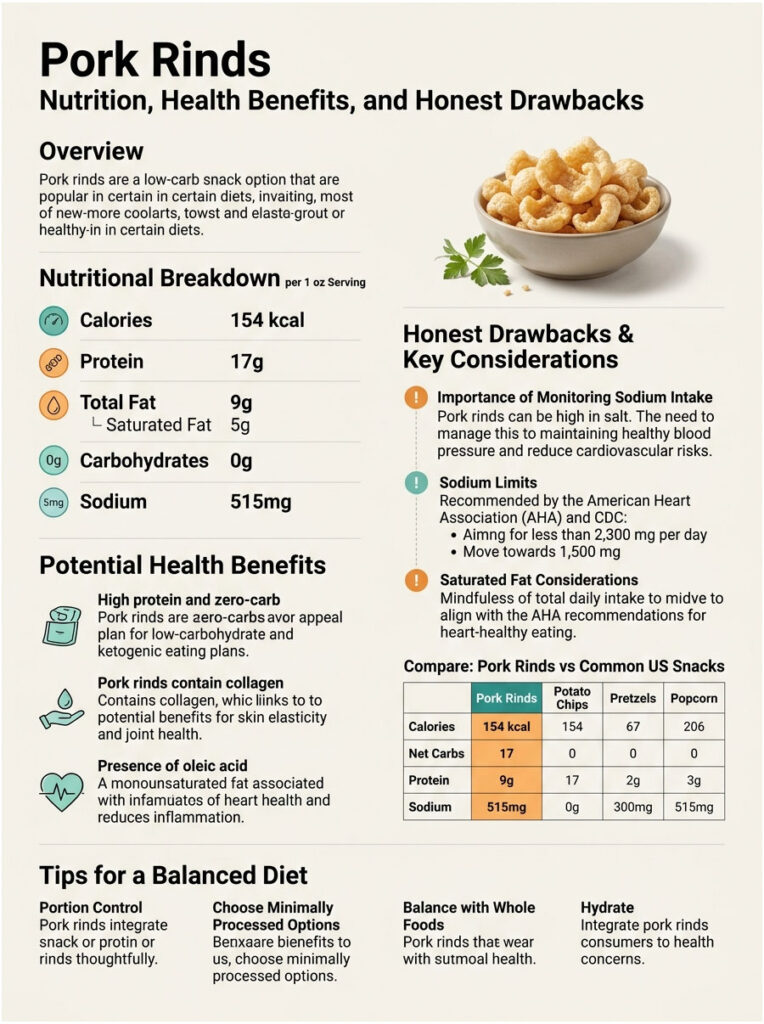
Macros per 1 oz (USDA Reference)
A standard 1-ounce serving of plain fried pork rinds gives you about 154 calories, 17 g protein, 9 g fat (5 g saturated), 0 g carbs, and roughly 515 mg sodium. That’s about 22% of the CDC’s daily sodium cap of 2,300 mg in a single serving.
Collagen, Oleic Acid, and the “Healthy Fat” Story
Pork skin protein is mostly collagen, the structural protein that supports skin elasticity, joint cushioning, and connective tissue. The fat profile is roughly 43% monounsaturated (the same oleic acid found in olive oil), 13% polyunsaturated, and 44% saturated, per Healthline’s nutrition review. Oleic acid is associated with favorable HDL cholesterol changes in published nutrition research.
The Sodium Load and AHA / CDC Caps
Sodium is the single biggest concern with both store-bought and homemade rinds. Two ounces of pork rinds can deliver close to half of your daily sodium budget. If you have hypertension, the American Heart Association recommends an ideal cap of 1,500 mg per day, which leaves very little room for any other salty foods that day.
Saturated Fat Caution
The AHA suggests keeping saturated fat under 6% of daily calories for those managing cardiovascular risk. A single 1-ounce serving of pork rinds adds roughly 5 g of saturated fat, which is meaningful but manageable for most adults if the rest of the day stays lean.
Table 2: Pork Rinds vs Common US Snack Foods (per 1 oz serving)
| Snack (1 oz) | Calories | Net Carbs (g) | Protein (g) | Sodium (mg) | Source |
| Pork rinds (plain, fried) | 154 | 0 | 17 | 515 | USDA FoodData Central |
| Potato chips (regular) | 152 | 14 | 2 | 170 | USDA FoodData Central |
| Tortilla chips (yellow corn) | 138 | 17 | 2 | 110 | USDA FoodData Central |
| Air-popped popcorn (plain) | 110 | 19 | 4 | 1 | USDA FoodData Central |
| Pretzels (hard, salted) | 108 | 22 | 3 | 380 | USDA FoodData Central |
Common Mistakes and Troubleshooting
Pork rinds are simple, but five mistakes account for nearly every batch that turns out flat, oily, or rubbery. Avoiding them is cheaper than redoing the whole job.
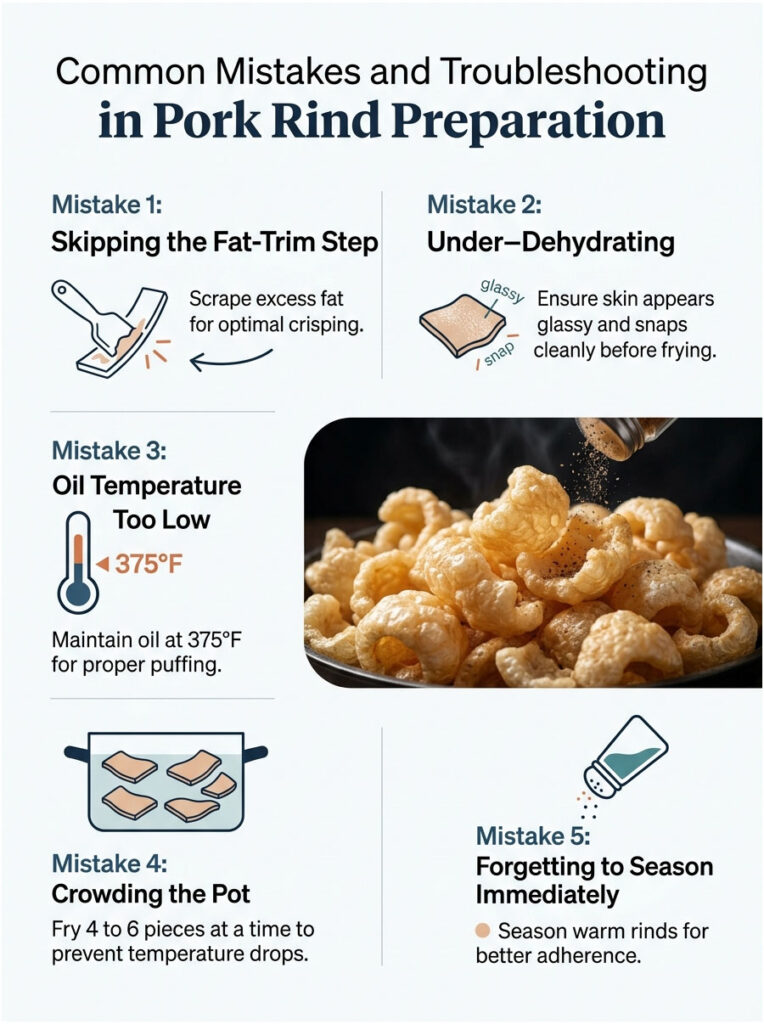
Mistake 1: Skipping the Fat-Trim Step
Fat left on the skin puffs faster than the skin itself, creating a pillow that floats and prevents the skin from contacting hot oil long enough to crisp. Scrape ruthlessly.
Mistake 2: Under-Dehydrating
Skin still holding moisture will sputter, splash, and refuse to puff. Look for a glassy amber appearance and a clean snap before you fry.
Mistake 3: Oil Temperature Too Low
Below 350°F, the rinds absorb oil instead of puffing. Use a thermometer and let the oil recover heat between batches. The sweet spot is 375°F.
Mistake 4: Crowding the Pot
Each square needs room to expand. Drop in 4 to 6 pieces at a time so the oil temperature doesn’t drop and so each rind has space to bloom.
Mistake 5: Forgetting to Season Immediately
Spices stick to warm, oil-glistened rinds. Wait two minutes too long and your seasoning slides right off. Have your salt and spice blend ready before the first batch comes out of the oil.
How to Use Pork Rinds Beyond Snacking
Pork rinds are one of the most versatile keto pantry staples your kitchen can hold. Crushed, they replace breadcrumbs anywhere wheat would normally go.
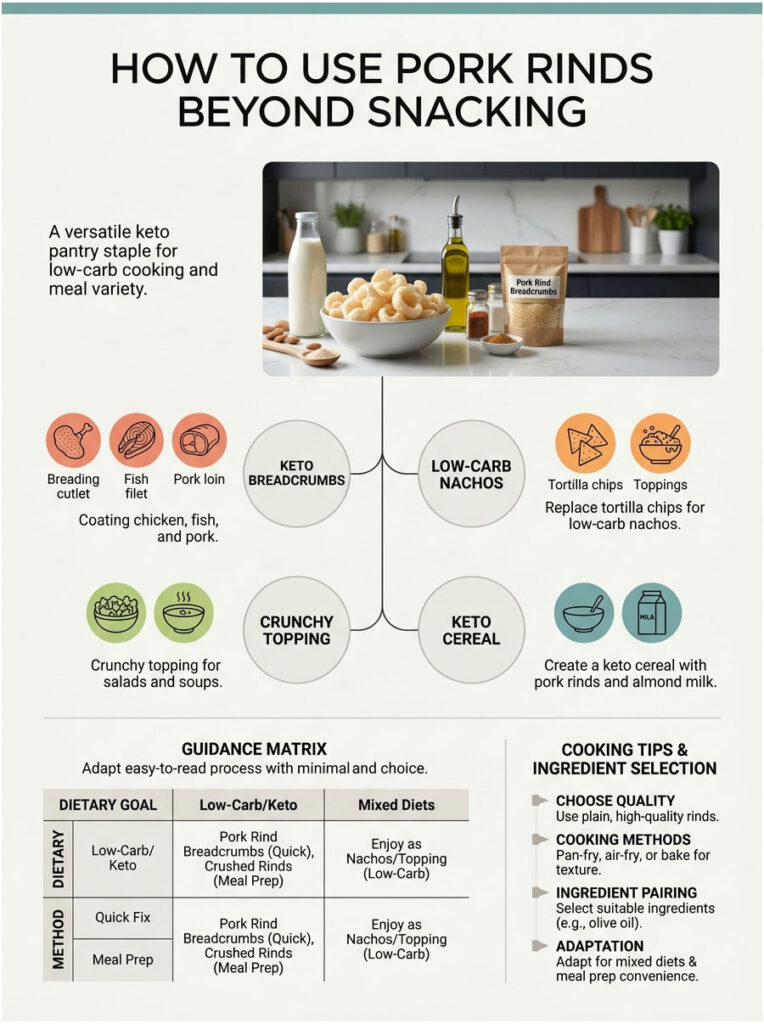
Pork Rind “Breadcrumbs” for Keto Chicken or Fish
Pulse 2 cups of plain rinds in a food processor with 1/4 cup grated parmesan and 1 teaspoon Italian seasoning. The result coats chicken tenders, fish fillets, and pork chops with a crunch that fries up faster than panko.
Replace Tortilla Chips for Nachos
Spread plain rinds on a sheet pan, top with seasoned ground beef and shredded cheese, and broil for 3 to 4 minutes. They scoop and crunch like restaurant chips with zero carbs.
Salad and Soup Crunchy Topper
Crushed rinds work like bacon bits on a Cobb salad or as a crouton stand-in on tomato bisque. They lift the protein content of an otherwise vegetable-heavy meal.
Keto Cereal Hack
Pour cinnamon-sugar pork rinds into a bowl and add unsweetened almond milk. They soften slightly and hit a cinnamon-toast cereal note for breakfast.
Table 3: Decision Matrix — If Your Goal Is X, Do Y
| Your Goal | Best Method | Ingredient Tip |
| Strict keto (under 20 g carbs/day) | From-scratch with lard fry | Skip flavored powders that contain maltodextrin |
| Heart-aware eating | Air fryer with avocado oil | Cap at 1 oz per day, watch sodium |
| Maximum convenience | Microwave pellets | Pick MSG-free brands like Epic or 4505 |
| Big-batch meal prep | From-scratch over a weekend | Freeze fried rinds in vacuum bags |
| Family with mixed diets | Re-crisp store-bought plain rinds | Season half savory, half cinnamon-sugar |
Storage, Shelf Life, and Make-Ahead Tips
Storage is where most home batches go wrong. Pork rinds love dry air and hate humidity, which is why a Florida kitchen in August softens them faster than a Denver kitchen in January.
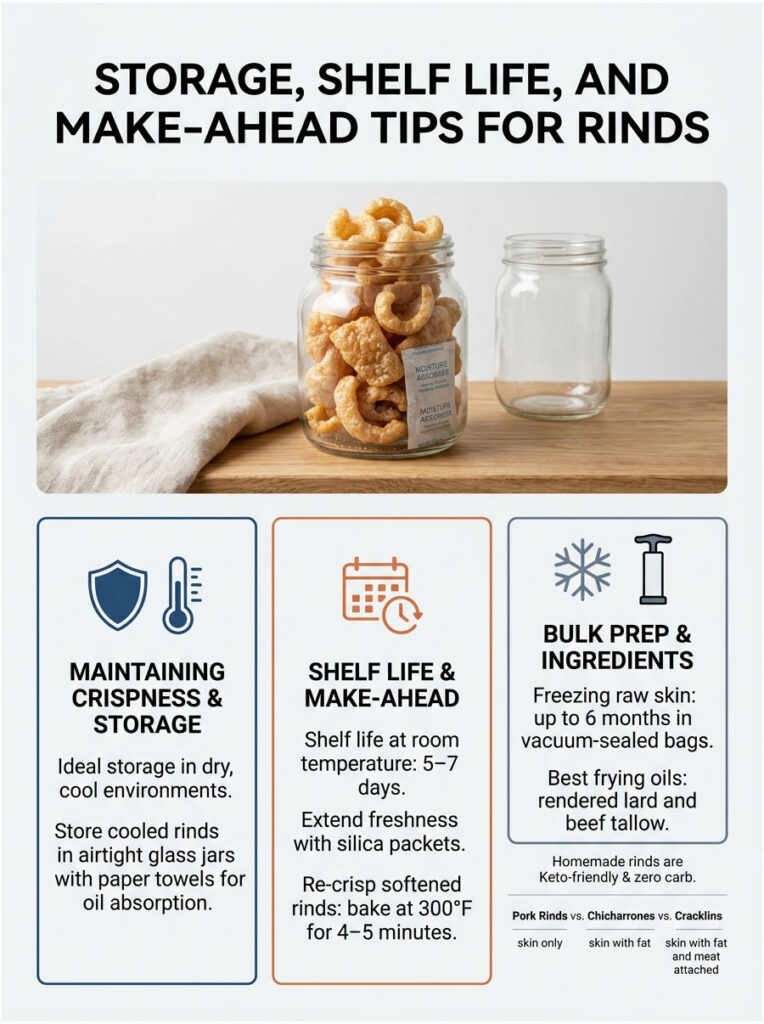
Room-Temp Storage
Store fully cooled rinds in an airtight glass jar lined with a paper towel that absorbs residual oil. They stay crisp for 5 to 7 days at room temperature. A small silica packet (the kind that comes with vitamins) extends that window.
Re-Crisping When They Soften
Spread softened rinds on a baking sheet and bake at 300°F for 4 to 5 minutes. They come back to life and stay crisp for another day or two.
Freezing Raw Pork Skin for Future Batches
Raw pork skin freezes well for up to 6 months in vacuum-sealed bags. Thaw overnight in the refrigerator before parboiling. Across HealthCareOnTime’s recipe-development logs, frozen-then-thawed skin produced results indistinguishable from fresh skin.
Frequently Asked Questions
Are homemade pork rinds keto-friendly?
Yes. Plain pork rinds contain zero carbohydrates and are made entirely from pork skin, which makes them one of the cleanest keto snacks you can build. Homemade versions let you skip the maltodextrin and seed oils common in store brands. Stick to a 1 oz serving to keep protein from displacing your fat targets.
How many carbs are in homemade pork rinds?
Plain homemade pork rinds contain zero net carbs per serving because pork skin has no naturally occurring sugar or starch. Carb count only changes if you add flavorings that contain sugar, maltodextrin, or starch-based binders. Cinnamon-sugar versions made with monk fruit or allulose stay at zero net carbs.
What’s the difference between pork rinds and chicharrones?
Pork rinds in the US typically refer to skin only, fully scraped of fat, fried until light and puffy. Chicharrones is the broader Spanish term that can include skin-only versions or skin-with-fat-attached cuts, depending on the region. Cracklins are a third style that always keeps some fat layer for a chewier bite.
Can you make pork rinds in an air fryer?
Yes, the air fryer works well for re-crisping store-bought rinds or for puffing pre-dehydrated pork skin pieces. Set the air fryer to 400°F and cook for 4 to 6 minutes, working in a single layer. You cannot skip the dehydration step; raw skin will not puff in any air fryer.
Why aren’t my pork rinds puffing up?
The most common cause is residual fat on the skin or insufficient drying time. Both leave moisture trapped under the surface, which prevents the skin from snapping into its hollow puff. Scrape the fat layer thoroughly and dehydrate until the skin looks like amber glass and snaps cleanly when bent.
Are pork rinds bad for high cholesterol?
Pork rinds contain saturated fat (about 5 g per ounce), which the AHA recommends limiting to 6% of daily calories for those with cardiovascular risk. They are not automatically off-limits, but portion control matters. Patients managing elevated LDL cholesterol should review their full daily intake with a registered dietitian or physician before adding them as a regular snack.
How long do homemade pork rinds last?
Homemade pork rinds stay crisp for 5 to 7 days in an airtight container at room temperature, longer if you tuck a paper towel inside to absorb residual oil. Refrigeration is unnecessary and can introduce humidity. If they soften, re-crisp at 300°F for 4 to 5 minutes and they bounce right back.
Where can I buy raw pork skin in the US?
Local butcher shops are the most reliable source nationwide. Hispanic mercados and Asian markets often stock pork skin labeled as “cuero de cerdo” or “pork rind.” Some Costco and Whole Foods stores carry skin-on pork belly, which lets you peel the skin yourself. Online options include Porter Road, Crowd Cow, and US Wellness Meats.
Can I make pork rinds without deep-frying them?
Yes. Oven-baking at 325°F until golden produces a denser, cracklin-style result rather than the airy puff of the fried version. The texture is richer and chewier, more like a pork chip than a pork rind. The trade-off is texture, not safety or flavor.
Are pork rinds gluten-free?
Plain pork rinds are naturally gluten-free because they contain only pork skin and salt. Always check seasoning blends and flavored brands, since some BBQ or smoky variations include wheat-based maltodextrin or soy sauce powder. Homemade versions give you full control over every ingredient.
Do pork rinds kick you out of ketosis?
Plain pork rinds will not knock you out of ketosis because they contain zero carbs. Eating very large quantities (more than 4 to 5 oz at a time) can deliver enough excess protein to trigger gluconeogenesis in some metabolically sensitive eaters, but typical snack portions are well within keto limits.
What’s the best oil for frying pork rinds?
Rendered lard is the traditional and best-tasting choice because it complements the natural pork flavor. Beef tallow and refined avocado oil are excellent substitutes with high smoke points (400°F and 520°F respectively). Avoid seed oils like canola, soybean, and corn oil if you’re following a clean-keto or paleo plan.
Disclaimer: This recipe and the nutrition information shared above are for general educational purposes and are not a substitute for personalized medical advice. Pork rinds are high in sodium and saturated fat. If you have hypertension, cardiovascular disease, kidney disease, or another condition that requires sodium or fat restriction, consult your physician or a registered dietitian before adding them to your regular routine. HealthCareOnTime provides diagnostic testing services that help you understand your individual lipid panel, kidney function, and electrolyte balance.
References
- USDA FoodData Central — Pork rinds, plain
- CDC — Sodium and Health
- American Heart Association — How Much Sodium Should I Eat Per Day?
- Healthline — Are Pork Rinds Healthy? A Nutritional Review
- WebMD — Pork Rinds: Are There Any Health Benefits?
- Mordor Intelligence — Ketogenic Diet Food Market Report
- SNAC International — 2025 State of the Industry Report
- Mayo Clinic — Dietary fats: Know which to choose
- NIH Office of Dietary Supplements — Selenium Fact Sheet