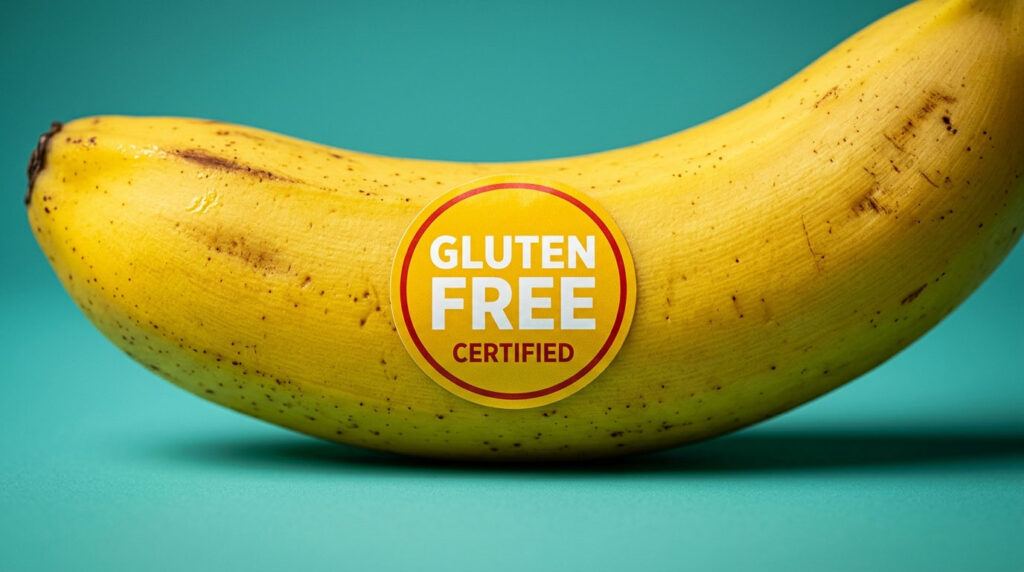
Picture a bag of plain potato chips with a bright “gluten free” sticker on the front. Potatoes never had gluten in the first place. So what is that label actually telling you?
Table of Contents
That little sticker is the source of a lot of confusion. Some people think it means healthier. Others think it means low-carb, or that the food has zero gluten. None of those are quite right.
The truth is more specific, and more useful once you know it. “Gluten free” is a legal claim with an exact definition set by the US Food and Drug Administration, and understanding it changes how you read every label in the store.
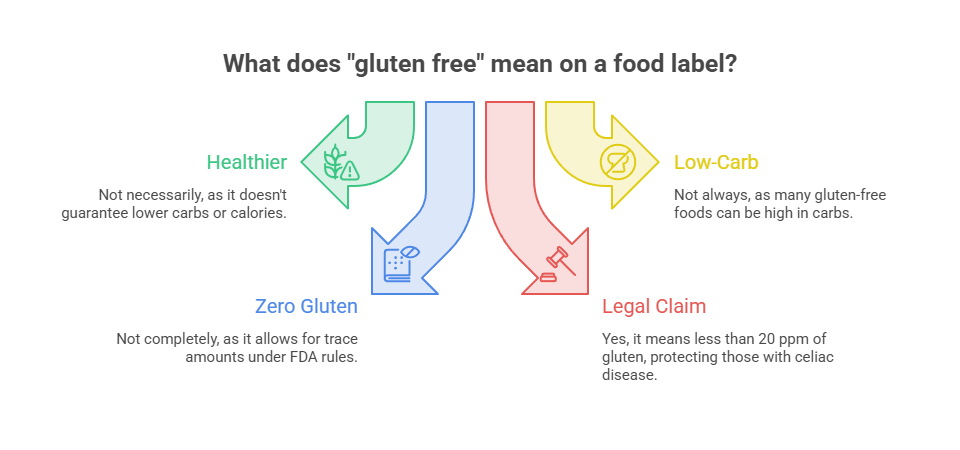
Quick Answer: “Gluten free” means a food contains less than 20 parts per million (ppm) of gluten, the protein found in wheat, barley, and rye, under FDA rules. It is a legal labeling claim, not a health claim. Gluten-free foods are not automatically healthier, lower in carbs, or completely free of gluten. The label mainly protects people with celiac disease and gluten-related conditions.
At a Glance
- Gluten is a protein in wheat, barley, rye, and their crossbreeds like triticale.
- The FDA rule for a “gluten free” label is less than 20 ppm of gluten, about 20 mg per kilogram of food.
- “Gluten free,” “free of gluten,” “without gluten,” and “no gluten” all mean the same thing legally.
- Gluten free does not mean healthy, carb-free, or zero gluten.
- Around 1% of Americans have celiac disease, and up to 6% may have non-celiac gluten sensitivity.
- Wheat free is not the same as gluten free, since barley and rye still contain gluten.
What “Gluten Free” Actually Means
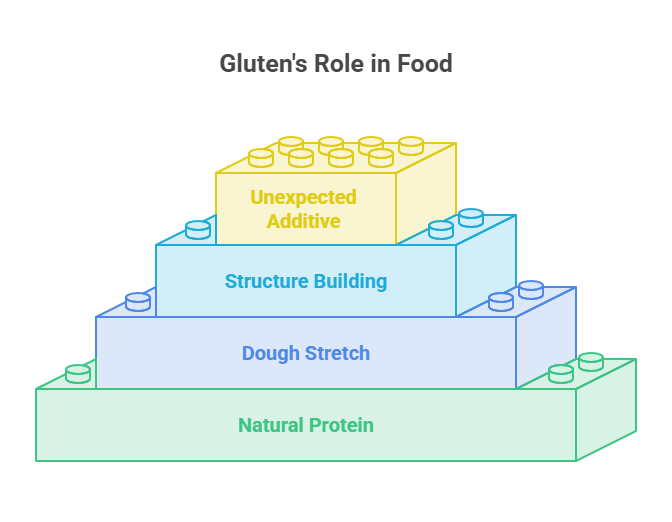
Before the label makes sense, you need to know what gluten is. It is not an additive or a chemical. It is a natural protein.
Gluten gives dough its stretch and chew. It is the reason bread holds together and pizza crust pulls apart in strands. That structure-building quality is exactly why food makers also add it to products you might not expect.
First, What Gluten Is (and Which Grains Have It)
Gluten lives in three main grains: wheat, barley, and rye. It also shows up in wheat relatives like spelt, kamut, and triticale, as the Mayo Clinic notes in its gluten-free guidance.
Oats are the gray area. Oats themselves do not contain gluten, but they are often grown and processed alongside wheat, so cross-contact is common. That is why you see oats specifically labeled “gluten free” when they have been kept separate.
Our medical reviewers note that this grain list is the foundation everything else rests on. Once you know wheat, barley, and rye are the culprits, label reading gets far less mysterious.
The Label Is a Legal Claim, Not a Health Claim
Here is the part the splashy packaging hides. “Gluten free” is regulated by the FDA as a statement of fact about gluten content, nothing more.
It says nothing about calories, sugar, fat, or whether the food is good for you. A gluten-free cookie loaded with sugar is still a sugary cookie. The label only certifies one thing: the gluten level.
Patients ask us about this constantly, usually after assuming a “gluten free” snack was a diet food. The dietitians we work with are quick to separate the two ideas, because conflating them leads to poor choices at the grocery store.
The FDA Rule Behind the Label (Less Than 20 ppm)
The FDA finalized its gluten-free labeling rule, and manufacturers had to comply by August 5, 2014. Before that, “gluten free” had no standard meaning, and shoppers were largely guessing.
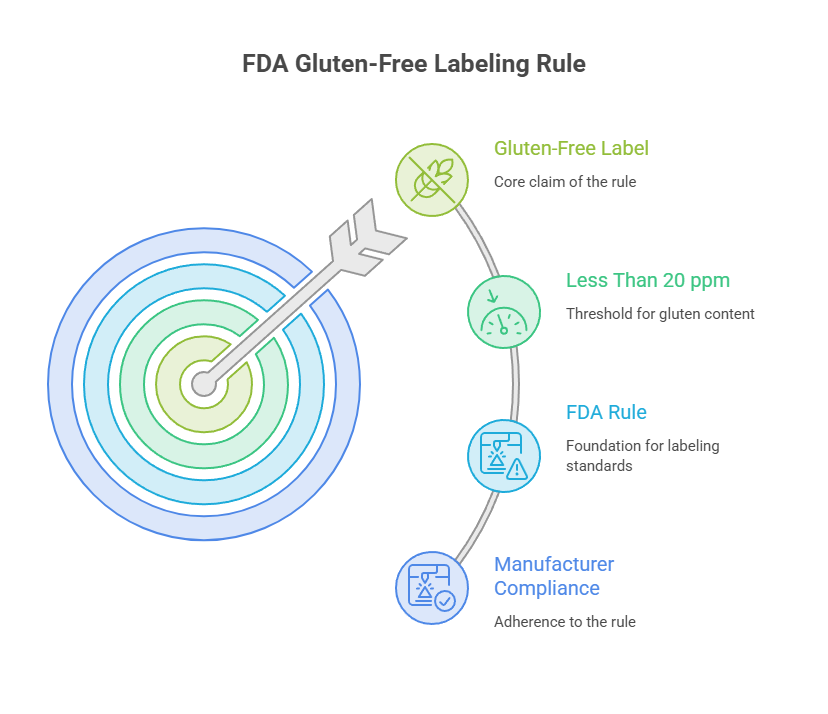
The rule set a single, uniform threshold. Any food carrying a gluten-free claim must contain less than 20 parts per million of gluten. That number is the backbone of the entire label.
What 20 Parts Per Million Really Means
Twenty ppm sounds abstract, so here is the plain version. It equals 20 milligrams of gluten per kilogram of food, which is roughly 20 mg in about 2.2 pounds.
The FDA chose 20 ppm because it is the lowest level that current science can reliably and consistently detect using validated lab methods, such as certain ELISA tests. Going lower would mean testing that labs cannot dependably perform.
It is also a level that celiac disease experts consider safe for most people with the condition. Research suggests that around 10 mg of gluten per day is unlikely to cause harm for most people living with celiac disease.
The Four Phrases That Legally Mean the Same Thing
The FDA rule treats several phrases as identical. “Gluten free,” “free of gluten,” “without gluten,” and “no gluten” all carry the exact same requirement.
If a package uses any of those four terms, the food must meet the under-20-ppm standard. Other wording, like “made without gluten ingredients,” is evaluated case by case and does not automatically carry the same guarantee.
Why the Limit Isn’t Zero
People are often surprised that “gluten free” allows any gluten at all. The reason is practical. Truly measuring zero is not scientifically possible with today’s tools, and trace cross-contact can happen even in careful facilities.
So the standard is built around what is detectable and what is safe, not around an impossible absolute. This is exactly the kind of nuance that the top search results tend to skip, and it matters for anyone managing a real medical condition.
The conditions that send people to gluten-free eating are not all the same. This table lays them out side by side.
| Condition | What Happens in the Body | Common Signs | Gluten Tolerance | How It’s Diagnosed |
| Celiac disease | Autoimmune attack damages the small intestine lining | Diarrhea, bloating, fatigue, anemia, weight loss | None; strict lifelong avoidance | Blood test (tTG-IgA) plus intestinal biopsy |
| Non-celiac gluten sensitivity | Symptoms without intestinal damage | Bloating, brain fog, headache, fatigue | Low; improves off gluten | Diagnosis of exclusion (celiac and wheat allergy ruled out) |
| Wheat allergy | Immune reaction to wheat proteins | Hives, swelling, breathing trouble, anaphylaxis | Must avoid wheat (may tolerate barley, rye) | Allergy skin or blood testing |
| Dermatitis herpetiformis | Skin form of celiac disease | Intensely itchy, blistering rash | None; lifelong avoidance | Skin biopsy plus celiac antibodies |
| Gluten ataxia | Immune response affecting nerve tissue | Balance and coordination problems | None; lifelong avoidance | Neurological workup plus antibodies |
Who Actually Needs Gluten Free (and Who Doesn’t)
A gluten-free diet is medically necessary for some people and entirely optional for others. Knowing which group you fall into is the difference between treating a condition and following a trend.
For a meaningful share of Americans, gluten is a genuine medical problem. For most others, it simply is not, and removing it offers no proven benefit.
Celiac Disease
Celiac disease is an autoimmune disorder. When someone with celiac eats gluten, the immune system mistakenly attacks the lining of the small intestine, which damages it over time and blocks nutrient absorption.
It affects roughly 1% of the US population, about 3 million Americans, though many remain undiagnosed. The only treatment is a strict, lifelong gluten-free diet; there is no pill and no cure.
Across the readers we serve, celiac questions come up far more than people expect, often from those who spent years with vague symptoms like fatigue, anemia, or stomach trouble before getting answers.
Non-Celiac Gluten Sensitivity
This condition causes celiac-like symptoms, such as bloating, brain fog, headaches, and fatigue, but without the intestinal damage that defines celiac disease. Blood tests and biopsies for celiac come back negative.
Up to 6% of Americans may have non-celiac gluten sensitivity. Some research suggests other compounds in gluten-containing foods, like certain carbohydrates called FODMAPs, may play a role rather than gluten alone, as Mayo Clinic explains.
Wheat Allergy
A wheat allergy is different again. Here the immune system reacts to wheat proteins as if they were a threat, which can trigger hives, swelling, or even anaphylaxis.
People with a wheat allergy need to avoid wheat, but they may still tolerate barley and rye. That is one reason “wheat free” and “gluten free” are not interchangeable, a point our medical reviewers stress often.
Choosing Gluten-Free Without a Medical Reason
Plenty of people go gluten-free by choice, hoping for weight loss or more energy. The evidence does not support those benefits for people without a gluten-related condition.
In fact, cutting out gluten can reduce your intake of fiber, iron, and B vitamins, since many fortified breads and cereals contain wheat. Johns Hopkins Medicine points out that many people who feel better “gluten free” actually improved by cutting processed food, not gluten.
Here is how the numbers break down across the US.
| Statistic | US Figure | Source |
| Americans with celiac disease | About 1% (roughly 3 million) | Beyond Celiac |
| Estimated undiagnosed celiac cases | About 2.5 million | Celiac data reports |
| Americans with non-celiac gluten sensitivity | Up to 6% | Beyond Celiac |
| FDA threshold for a “gluten free” label | Less than 20 ppm | FDA |
| “Gluten free” labeled foods exceeding 20 ppm | About 1.1% in one study | National Celiac Association |
| US gluten-free food market size | About $3.49 billion in 2025 | Fortune Business Insights |
How Gluten Conditions Are Diagnosed
If you suspect gluten is a problem, resist the urge to quit it cold turkey before testing. This single step trips up more people than almost anything else.
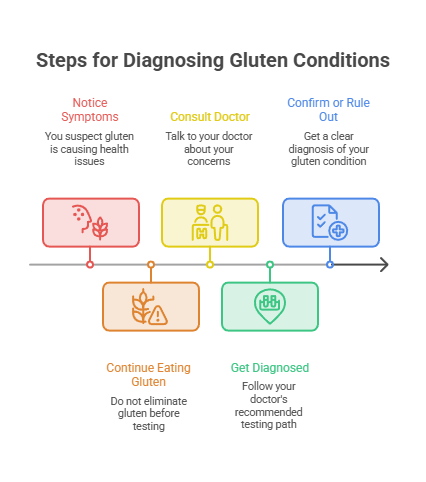
Getting a clear answer first saves you from years of uncertainty and from cutting out foods you may not need to avoid. Patients commonly ask us about the right order, so here it is.
Why You Must Keep Eating Gluten Before Testing
Celiac testing only works while gluten is in your system. The blood test looks for specific antibodies, and the confirming biopsy looks for intestinal damage, both of which fade once you stop eating gluten.
If you go gluten-free first and then get tested, results can come back falsely normal. That can leave celiac disease undiagnosed, which means missing the lifelong strict diet that actually protects your health.
The Standard Testing Path
Diagnosis usually starts with a blood test for tissue transglutaminase antibodies, written as tTG-IgA. A positive result is typically followed by an upper endoscopy with a small intestinal biopsy to confirm celiac disease.
For a suspected wheat allergy, an allergist uses skin-prick or blood testing instead. Non-celiac gluten sensitivity has no single test; doctors diagnose it by ruling out celiac disease and wheat allergy first, then watching how symptoms respond.
Why Family Screening Matters
Celiac disease runs in families. First-degree relatives, meaning parents, siblings, and children, carry a much higher risk, and some studies put it as high as 1 in 10 to 1 in 22.
Because many cases are silent, our medical reviewers often suggest that close relatives of a diagnosed person get screened, even without obvious symptoms. Catching it early helps prevent complications like osteoporosis and nutrient deficiencies.
Gluten-Free Eating for Kids
Celiac disease often shows up in childhood, and managing it looks a little different for kids. The diet is the same, but the social and growth pieces add real complexity for families.
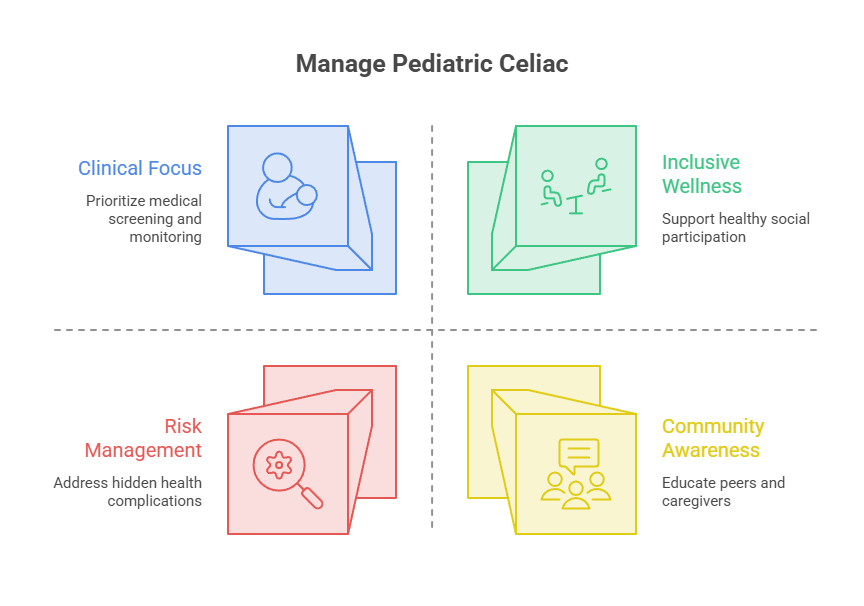
Parents we hear from worry most about two things: catching the condition early and helping a child feel normal at school and parties. Both are manageable with a plan.
Spotting Celiac Disease in Children
In kids, celiac disease can stunt growth, delay puberty, and cause irritability, on top of the usual stomach symptoms. Some children show dental enamel defects or unexplained anemia rather than classic digestive complaints.
Because a child cannot always describe how they feel, our medical reviewers encourage parents to mention any persistent tummy trouble, poor weight gain, or fatigue to a pediatrician, who can order the celiac blood test before any diet change.
Handling School, Parties, and Playdates
A gluten-free child can still join in, with a little preparation. Sending safe snacks, talking with teachers about cross-contact, and keeping gluten-free treats on hand for surprise birthday cupcakes all help.
The goal is inclusion without risk. Many families find that coaching their child to politely ask “does this have wheat, barley, or rye” turns label awareness into a confident habit early on.
The Biggest Myths About “Gluten Free”
The gap between what the label means and what people think it means is wide. Clearing up four myths handles most of the confusion.
These come up so often that our team built quick answers for them, since the misunderstandings can lead to wasted money or, worse, missed nutrition.
Myth 1: Gluten-Free Means Healthier
This is the big one. A gluten-free label says nothing about nutrition, and many gluten-free packaged foods are higher in sugar and fat to make up for texture and taste.
A gluten-free brownie is still a brownie. For someone without a gluten condition, swapping regular processed snacks for gluten-free processed snacks is not an upgrade.
Myth 2: Gluten-Free Means Carb-Free
Gluten and carbohydrates are not the same thing. Rice, potatoes, corn, beans, and fruit are all naturally gluten-free and full of carbs.
You can eat a very high-carb diet that is entirely gluten-free. The two ideas simply are not connected, even though the marketing sometimes blurs them.
Myth 3: Wheat-Free Means Gluten-Free
A product can be wheat-free and still contain gluten from barley or rye. Malt, for example, comes from barley and shows up in malt vinegar, some cereals, and many beers.
This is why reading only the “wheat” allergen line is not enough. Barley and rye are not among the major allergens that US labels must call out by name, so they can hide in the ingredient list.
Myth 4: Gluten-Free Means Zero Gluten
As covered earlier, “gluten free” legally means under 20 ppm, not absolute zero. For nearly everyone with celiac disease, that trace level is considered safe.
People who are extremely sensitive sometimes seek out products tested to even lower levels, but the standard label is built around what is detectable and safe, not perfection.
How to Read a Label and Spot Hidden Gluten
Once you know the rule, the label becomes a tool instead of a guessing game. A few habits make shopping faster and safer.
In tests booked through HealthCareOnTime, newly diagnosed patients often say label reading felt overwhelming at first and then became second nature within a few weeks.
“Gluten-Free” vs “Certified Gluten-Free”
The plain “gluten free” claim means the manufacturer is responsible for meeting the FDA’s under-20-ppm standard. “Certified gluten free” adds a third-party check.
Certifying groups, such as the Gluten-Free Certification Organization, often test to a stricter limit, commonly 10 ppm. For people with celiac disease, that extra layer can be reassuring, though the standard FDA label is still considered safe.
Hidden Sources Most People Miss
Gluten turns up in places you would not expect. Soy sauce is often made with wheat, malt flavoring comes from barley, and gluten is sometimes used as a binder or thickener in sauces, soups, and seasonings.
It can even appear in some medications, supplements, and lip products. The Celiac Disease Foundation recommends reading the full ingredient list every time, since formulations change.
Cross-Contact and the “May Contain” Reality
Cross-contact happens when a gluten-free food touches gluten during growing, processing, or cooking. A shared toaster or fryer is a classic example.
Some labels carry voluntary “may contain wheat” or “made in a facility with wheat” notes. These are not required, so their absence does not guarantee safety, which is why people with celiac disease look for the gluten-free claim specifically.
When symptoms or uncertainty come into play, the table below offers a quick starting point.
| If You… | What It Likely Means | Recommended Next Step |
| See a “gluten free” label | Food is under 20 ppm gluten | Generally safe; still scan the ingredient list |
| Have ongoing bloating, fatigue, or anemia | Possible celiac disease | Ask your doctor for a celiac blood test before going gluten-free |
| Feel better off gluten but tested negative for celiac | Possible non-celiac gluten sensitivity | Work with a dietitian to confirm and stay nourished |
| Have hives or breathing issues after wheat | Possible wheat allergy | See an allergist for proper testing |
| Want gluten-free for weight loss only | No proven benefit without a condition | Focus on whole foods and less processed food instead |
| Have celiac and react to “gluten free” foods | Possible cross-contact or high sensitivity | Choose certified gluten-free and review your kitchen setup |
Eating Gluten-Free at Restaurants
The FDA’s labeling rule covers packaged foods, not the plate a restaurant hands you. That distinction matters, because dining out is where many people with celiac disease accidentally get glutened.
The agency does say that restaurants making a gluten-free claim on a menu should follow the same under-20-ppm definition. Still, enforcement is lighter, so a little caution goes a long way.
Questions Worth Asking Your Server
A few simple questions reveal a lot. Ask whether the kitchen uses a dedicated fryer, separate prep surfaces, and clean utensils for gluten-free orders.
Fried foods are a common trap, since gluten-free items cooked in the same oil as breaded foods pick up gluten. The readers we serve who handle restaurants best tend to call ahead during slow hours and speak with a manager.
Watch for Sneaky Menu Items
Sauces, marinades, soups, and dressings often hide gluten through flour thickeners, soy sauce, or malt. Even a dish that sounds naturally gluten-free can be seasoned with a gluten-containing blend.
When in doubt, simpler is safer. Grilled proteins, plain vegetables, rice, and salads with oil and vinegar carry less risk than complex, sauce-heavy dishes.
What Gluten-Free Foods Cost (and Why)
Gluten-free eating is not cheap, and that surprises people. The US gluten-free food market reached about $3.49 billion in 2025, and shoppers feel the premium at checkout.
The cost is not arbitrary. It reflects real production challenges, which our team thinks is worth explaining so the price tag makes sense.
The Price Premium, Explained
Gluten-free products often rely on specialty flours like almond, sorghum, or quinoa, which cost more than wheat flour. Makers also need dedicated equipment or separate facilities to prevent cross-contact.
Smaller production runs add to the price too. All of this means a gluten-free loaf can cost noticeably more than its wheat-based counterpart, sometimes roughly double.
How to Eat Gluten-Free Without Overspending
The savings trick is to lean on naturally gluten-free whole foods rather than packaged substitutes. Rice, beans, potatoes, eggs, fresh produce, and plain meats are gluten-free and budget-friendly.
Reserving the pricey specialty breads and snacks for occasional use, instead of building every meal around them, keeps both your nutrition and your grocery bill in better shape.
Naturally Gluten-Free Foods You Already Know
Going gluten-free does not mean living on special products. A huge share of everyday food is naturally gluten-free without any label at all.
The dietitians we work with usually start newly diagnosed patients here, because it is the simplest and most affordable foundation.
Whole Foods That Never Had Gluten
Fruits, vegetables, fresh meat, fish, poultry, eggs, and most dairy are naturally gluten-free. So are beans, lentils, nuts, and seeds.
Among grains, rice, corn, quinoa, buckwheat (despite the name), millet, and certified gluten-free oats all work. These foods form the core of a balanced gluten-free plate.
Smart Swaps for Bread, Pasta, and Flour
When you do want bread or pasta, gluten-free versions made from rice, corn, or legumes are widely available. Almond and coconut flours work well for baking.
The key, as MedlinePlus advises, is to replace gluten with nutrient-dense whole grains, fruits, and vegetables rather than relying only on refined gluten-free products that may be low in fiber and vitamins.
A Sample Gluten-Free Day
Putting it together is easier than it sounds. Breakfast might be eggs with fruit and certified gluten-free oats, while lunch could be a rice bowl with grilled chicken, beans, and vegetables.
Dinner might be baked salmon, roasted potatoes, and a salad with oil and vinegar, with yogurt or nuts for snacks. None of it requires a single specialty product, which keeps both nutrition and cost in check.
Frequently Asked Questions
What does the “gluten free” label legally mean?
Under FDA rules, a “gluten free” label means the food contains less than 20 parts per million of gluten, about 20 mg per kilogram. It is a statement about gluten content only, not about nutrition, calories, or whether the food is healthy.
Is gluten free the same as wheat free?
No. Wheat-free foods can still contain gluten from barley or rye. Gluten lives in all three grains, so a product without wheat is not automatically gluten-free. Always check for barley, rye, and malt, not just wheat, on the ingredient list.
Does gluten free mean healthier?
Not at all. The label says nothing about nutrition. Many gluten-free packaged foods contain more sugar or fat to improve taste and texture. For people without a gluten-related condition, gluten-free processed foods offer no proven health advantage over regular ones.
What foods are naturally gluten free?
Many everyday foods are naturally gluten-free, including fruits, vegetables, fresh meat, fish, eggs, most dairy, beans, nuts, and seeds. Among grains, rice, corn, quinoa, buckwheat, and certified gluten-free oats qualify. These whole foods form the most affordable gluten-free foundation.
Can people with celiac disease trust “gluten free” labels?
Generally, yes. One study found about 98.9% of foods labeled gluten-free met the under-20-ppm standard. That trace level is considered safe for most people with celiac disease. Reading the full ingredient list and choosing certified products adds extra peace of mind.
Does gluten free mean no carbs?
No. Gluten is a protein, not a carbohydrate. Naturally gluten-free foods like rice, potatoes, corn, beans, and fruit are full of carbs. You can follow a high-carb diet that is completely gluten-free, since the two are unrelated.
What is the difference between “gluten free” and “certified gluten free”?
“Gluten free” means the manufacturer meets the FDA’s under-20-ppm rule. “Certified gluten free” adds independent third-party testing, often to a stricter limit like 10 ppm. Certification gives extra assurance, though the standard FDA label is still considered safe for celiac disease.
Are oats gluten free?
Pure oats do not contain gluten, but they are often cross-contaminated with wheat during growing and processing. Only oats specifically labeled “gluten free” have been kept separate and tested. Some people with celiac disease also react to a protein in oats, so introduce them cautiously.
Why are gluten free foods more expensive?
Gluten-free products use specialty flours like almond or sorghum that cost more than wheat, and makers need dedicated equipment to prevent cross-contact. Smaller production runs raise costs further. A gluten-free loaf can cost roughly double its wheat-based version because of these added expenses.
Can a gluten free diet help if I don’t have celiac disease?
For most people without a gluten-related condition, there is no proven benefit. If you feel better off gluten, it may be from cutting processed foods or from a separate sensitivity. Talk with your doctor before cutting out gluten, since it can reduce fiber and nutrient intake.
How much gluten is too much for someone with celiac disease?
Research suggests around 10 mg of gluten per day is unlikely to harm most people with celiac disease. For comparison, a small crumb of regular bread can contain far more. Because total daily exposure adds up, strict avoidance remains the safest approach.
Does gluten free mean zero gluten?
No. “Gluten free” legally means less than 20 ppm, not absolute zero, because zero cannot be reliably measured and trace cross-contact can occur. For nearly everyone with celiac disease, that small amount is considered safe under current medical guidance.
Medical Disclaimer: This article is for general educational purposes and reflects current US health guidance. It is not a substitute for professional medical advice, diagnosis, or treatment. If you suspect celiac disease, gluten sensitivity, or a wheat allergy, talk with a qualified healthcare provider before changing your diet, since testing is most accurate while you are still eating gluten.
References
- U.S. Food and Drug Administration (FDA), Gluten and Food Labeling
- FDA, Questions and Answers on the Gluten-Free Food Labeling Final Rule
- Mayo Clinic, Gluten-Free Diet
- Johns Hopkins Medicine, What Is a Gluten-Free Diet?
- Celiac Disease Foundation, Label Reading and the FDA
- Beyond Celiac, Celiac Disease Facts and Figures
- MedlinePlus, Gluten-Free Diet
- Fortune Business Insights, Gluten-Free Food Market