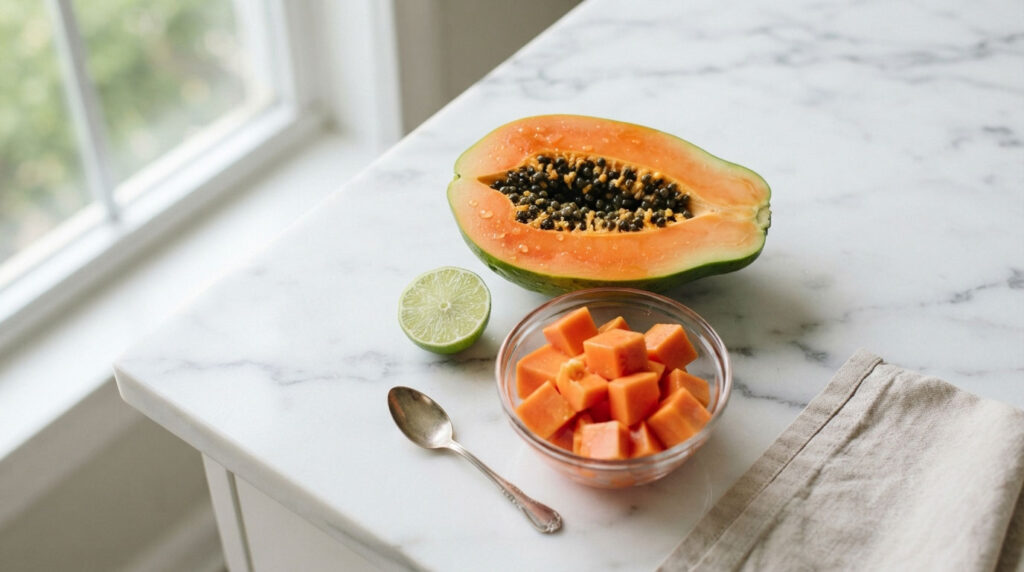
Most Americans reach for an apple or a banana and call it a day. Meanwhile a fruit that delivers nearly a full day’s vitamin C in a single cup sits quietly in the produce aisle. Only about 1 in 8 US adults eats enough fruit on a typical day, per the CDC, and papaya is one of the easiest, most nutrient-dense ways to fix that.
Table of Contents
Quick Answer: Eating papaya daily, in moderation, is good for most people. One cup delivers nearly a full day’s vitamin C plus fiber, potassium, and the digestive enzyme papain. Ripe papaya also supports skin, heart, and eye health through antioxidants and carotenoids. The main cautions are latex allergy and avoiding unripe papaya in pregnancy.
At a Glance
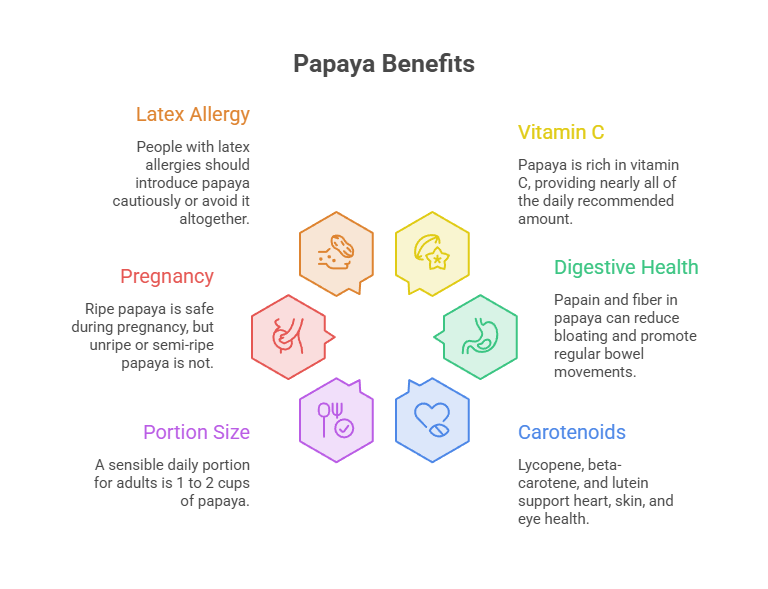
- One cup of ripe papaya has about 62 calories and roughly 98% of your daily vitamin C.
- Papain plus fiber may ease bloating and support regular bowel movements.
- Carotenoids (lycopene, beta-carotene, lutein) support heart, skin, and eye health.
- A sensible daily portion for adults is 1 to 2 cups.
- Fully ripe papaya is fine in pregnancy; unripe or semi-ripe is not.
- People with a latex allergy should introduce papaya carefully or skip it.
What Eating Papaya Daily Actually Does
Papaya earns its reputation because of what’s packed into a low-calorie package. Ripe papaya carries vitamin C, dietary fiber, potassium, folate, and a group of plant pigments called carotenoids.
It also contains papain, a protein-digesting enzyme found in the fruit, leaves, and seeds. That enzyme is the reason papaya shows up so often in conversations about digestion and gut comfort.
None of this needs special prep. A bowl of cubed papaya after dinner, a few spears at breakfast, or a handful blended into a smoothie all count toward the same daily habit.
What’s Inside a Papaya
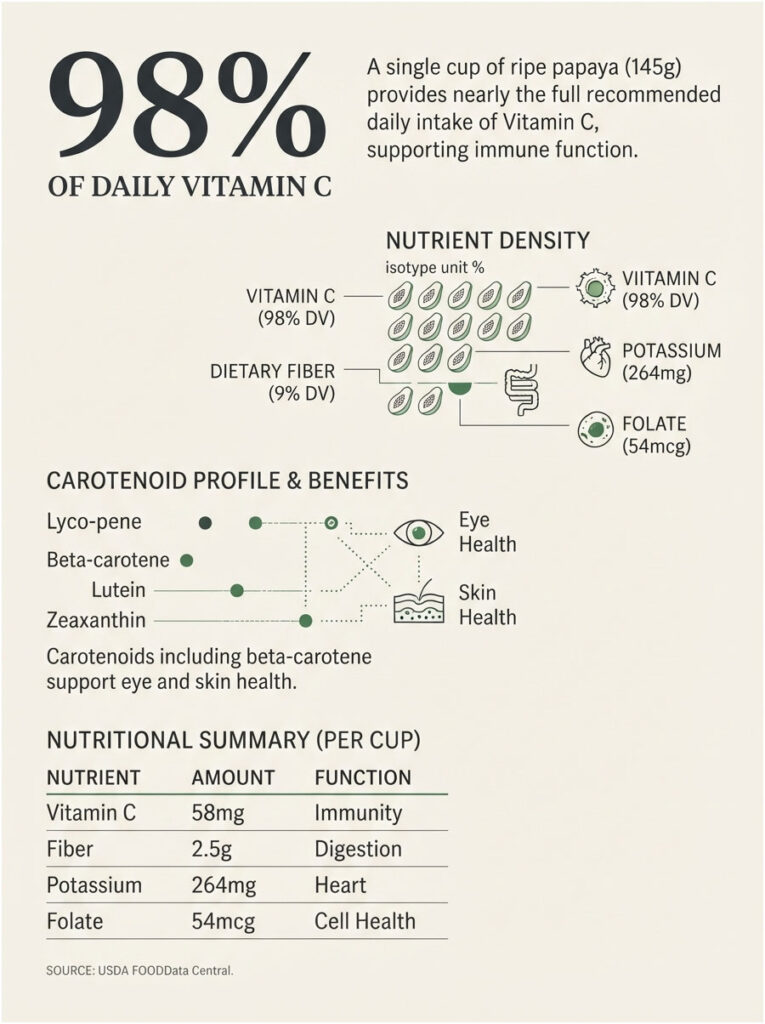
The standout nutrient is vitamin C. A single cup provides close to a full day’s worth, which is more per bite than most people expect from a mild, buttery fruit.
Fiber does the quiet work behind the scenes, adding bulk that keeps things moving. Potassium and folate round out the mineral and B-vitamin side.
Then come the pigments. Lycopene, beta-carotene, lutein, and zeaxanthin give ripe papaya its orange-red color, and each plays a part in the benefits below.
Ripe vs Unripe, and Why It Matters
Ripe papaya is soft, orange inside, and mildly sweet. This is the version you want for eating papaya daily, and the version that’s safe for most people, including pregnant women in reasonable amounts.
Unripe or green papaya is a different story. It contains more latex, the milky sap that can trigger problems for some people and is best avoided during pregnancy.
Green papaya still has culinary uses (Southeast Asian salads, for one), but for a daily health habit, ripe is the safer, sweeter choice.
The table below shows what one cup of ripe papaya actually delivers, mapped to the benefit each nutrient supports.
| Nutrient | Per 1 Cup (145g) | % Daily Value | What It Supports |
| Calories | ~62 kcal | 3% | Low-calorie snacking |
| Vitamin C | ~88 mg | ~98% | Immunity, collagen, antioxidant defense |
| Dietary fiber | ~2.5 g | 9% | Digestion, regularity |
| Vitamin A (carotenoids) | ~68 mcg RAE | ~8% | Eye and skin health |
| Potassium | ~264 mg | ~6% | Heart function, blood pressure |
| Folate | ~54 mcg | ~13% | Cell health, pregnancy support |
Values are based on USDA FoodData Central. Percent Daily Values use a 2,000-calorie reference.
Why Papaya Matters for Americans Right Now
The case for eating papaya every day gets stronger when you look at how most Americans actually eat. The gap between guidelines and reality is wide, and fruit is where a lot of that gap sits.
The Fruit-Intake Gap in the US
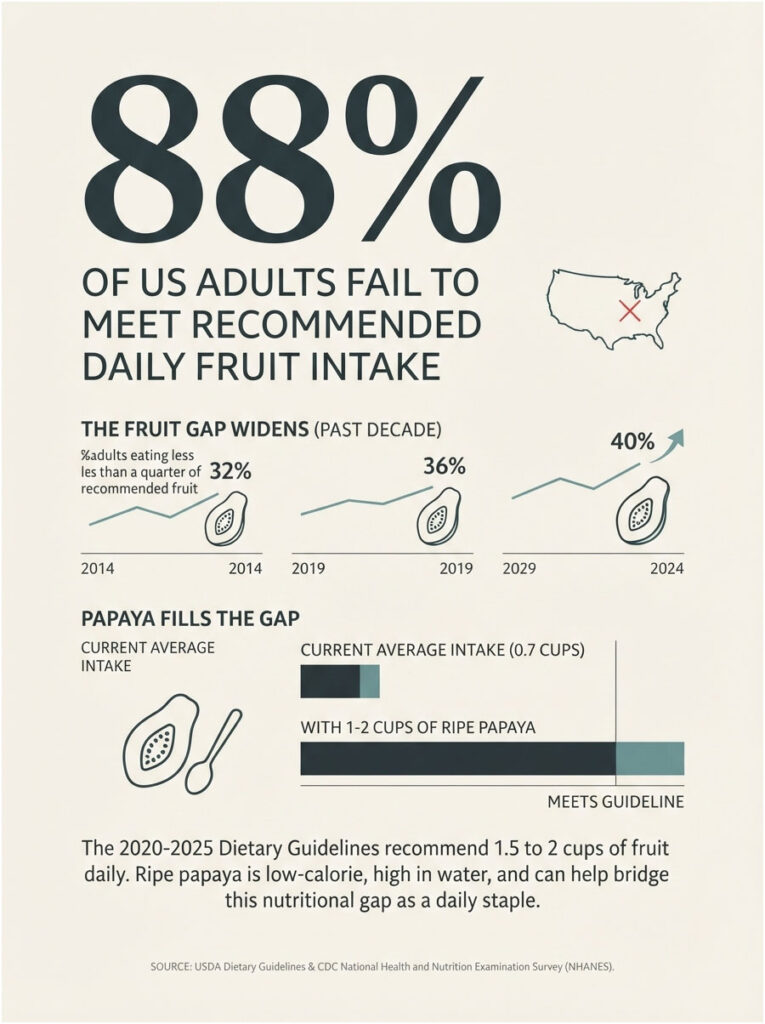
The 2020 to 2025 Dietary Guidelines for Americans advise adults to eat 1.5 to 2 cups of fruit a day. Most people don’t come close.
CDC data from the Behavioral Risk Factor Surveillance System found that only 12.3% of US adults met the fruit recommendation. Put simply, close to 88% fell short.
The trend has been sliding the wrong way. USDA Economic Research Service researchers reported that about 40% of adults were eating below a quarter of the recommended fruit by the early 2020s, up from 32% a decade earlier.
Across the readers we serve at HealthCareOnTime, the request is almost always the same: give me one simple habit I’ll actually keep. A cup of papaya qualifies.
Where Daily Papaya Fits
One to two cups of ripe papaya slots neatly into that 1.5 to 2 cup fruit target. It’s sweet enough to feel like a treat and gentle enough for most stomachs.
Because it’s low in calories and high in water, papaya fills you up without the sugar load some tropical fruits carry. That combination is part of why it works as a daily staple rather than an occasional one.
For readers who want the full micronutrient breakdown, our detailed papaya nutrition guide covers the per-gram numbers in depth.
The 8 Health Benefits of Eating Papaya Every Day
Here’s where the fruit earns its keep. Each benefit is grounded in nutrition science, and where the evidence has limits, we say so plainly.
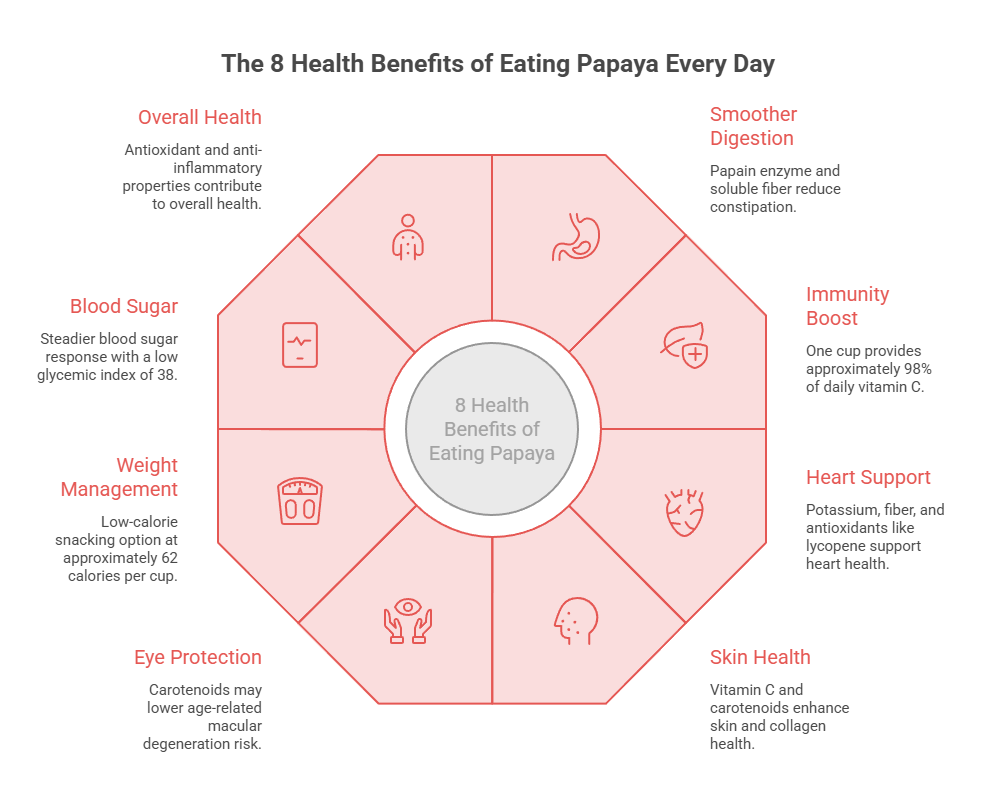
1. Smoother Digestion and Less Constipation
This is papaya’s headline act. The papain enzyme helps break down proteins, and the soluble fiber adds bulk that supports regular, comfortable bowel movements.
For anyone prone to bloating or sluggish digestion, a small bowl of ripe papaya after a meal is a time-tested move. The fiber keeps stool soft, and the enzyme helps the stomach process a heavy plate of food.
Our medical reviewers note that whole-food fiber sources like papaya tend to be gentler on the gut than a sudden jump to fiber supplements, which is worth remembering when you start a daily habit.
What the Clinical Evidence Really Shows
Here’s the honest picture. A double-blind, placebo-controlled study (Muss and colleagues, published 2013) tested a papaya preparation called Caricol on 139 volunteers with digestive complaints.
Over 40 days, participants taking the papaya preparation reported significant improvements in constipation and bloating compared with placebo. That’s real support for papaya’s digestive reputation.
The catch, and it matters, is that the study used a concentrated preparation with several times more papain than fresh fruit. So treat eating papaya daily as a supportive habit, not a clinical treatment.
Why This Matters for So Many Americans
Digestive complaints are common. Chronic idiopathic constipation affects between 9% and 20% of US adults, according to NIH-published research.
That’s millions of people living with an uncomfortable, quality-of-life problem. A daily fruit that supports regularity is a low-risk place to start, alongside water and movement.
Readers who track gut health with us often ask whether one fruit can really move the needle. The honest answer: papaya helps, but it works best inside a fiber-friendly, well-hydrated routine.
2. A Daily Vitamin C Boost for Immunity
Eat papaya every day and you’re topping off your vitamin C tank without thinking about it. One cup covers close to your full daily target, roughly 90 milligrams against an adult goal near 75 to 90.
Vitamin C supports normal immune function and works as an antioxidant, helping the body handle oxidative stress. Your body can’t make it or store much, so a daily source genuinely matters.
Reaching for papaya instead of a supplement also brings fiber, potassium, and carotenoids along for the ride. Whole fruit tends to give you more than a single isolated nutrient can.
3. Heart Support
Papaya feeds heart health from several angles at once. Its potassium (about 264 milligrams per cup) helps balance sodium and supports healthy blood pressure, while fiber plays a role in managing cholesterol.
The antioxidants matter too. Lycopene, the same red pigment found in tomatoes, plus vitamin C help counter the oxidative stress and inflammation tied to cardiovascular problems over time.
A specific tip our nutrition team shares with heart-conscious readers: pair a cup of papaya with a small handful of walnuts or chia seeds. You get the fruit’s potassium and antioxidants plus omega-3 fats in one snack.
4. Skin and Collagen Health
Glowing skin is one of the most-searched papaya benefits, and there’s real nutrition behind it. Vitamin C is a required cofactor for collagen synthesis, the protein that keeps skin firm and elastic.
Vitamin A and the fruit’s carotenoids help defend skin cells against damage from sun exposure and daily stressors. Together they support a smoother, more even complexion from the inside.
Eating papaya daily won’t replace sunscreen or a dermatologist’s care, and any honest source will tell you so. Still, feeding skin with vitamin C and carotenoids is a sensible, food-first habit that costs almost nothing.
5. Eye Protection
Your eyes benefit from the same pigments that color the fruit. Papaya supplies beta-carotene (a vitamin A precursor) plus lutein and zeaxanthin, two carotenoids concentrated in the retina.
These compounds help filter high-energy light and support long-term eye health. Diets rich in lutein and zeaxanthin are associated with a lower risk of age-related macular degeneration, a leading cause of vision loss in older Americans.
For anyone building habits that pay off decades later, a daily serving of a carotenoid-rich fruit like papaya is an easy addition your future eyesight may appreciate.
6. Weight-Friendly, Low-Calorie Snacking
At roughly 43 calories per 100 grams, papaya is one of the lighter ways to satisfy a sweet craving. A full cup lands near 62 calories, a bargain for how filling it is.
The fiber and high water content help you feel satisfied, so papaya works well as a swap for cookies, chips, or a sugary afternoon pick-me-up. That one swap, repeated daily, quietly adds up over a month.
Patients commonly ask our reviewers whether fruit sugar sabotages weight goals. For a moderate-sugar, high-fiber fruit like papaya, a one-cup daily serving fits comfortably into most balanced plans.
7. Steadier Blood Sugar Response
Papaya has a low glycemic index, around 38, meaning it raises blood sugar more gently than many sweet foods. The fiber slows sugar absorption further.
That’s not a free pass; papaya still holds natural sugar, about 11 grams per cup. The fix is portion and pairing rather than avoidance.
Keeping to one cup, and eating it alongside a protein or healthy fat, softens the sugar response. People managing blood sugar should still track their own numbers and loop in their clinician.
8. Antioxidant and Anti-Inflammatory Load
Beyond any single benefit, papaya delivers a steady daily dose of antioxidants. Lycopene, beta-carotene, and vitamin C all help neutralize free radicals that contribute to cell damage.
Chronic, low-grade inflammation sits behind many long-term conditions, from heart disease to metabolic problems. Filling your plate with antioxidant-rich foods like papaya is one practical way to push back.
No fruit is a cure-all, and papaya isn’t one either. What it offers is a reliable, tasty contribution to an overall eating pattern that supports long-term health.
The statistics below put the American context in numbers, with sources attached.
| US Health Statistic | Figure | Source | Papaya Relevance |
| Adults meeting daily fruit intake | 12.3% | CDC BRFSS (MMWR) | Easy daily fruit to help close the gap |
| Adults under 25% of recommended fruit | ~40% | USDA Economic Research Service | One cup moves the needle |
| Chronic idiopathic constipation | 9% to 20% of adults | NIH (PMC) | Papain and fiber support regularity |
| Vitamin C in 1 cup papaya | ~98% DV | USDA FoodData Central | Nearly a full day’s vitamin C |
| Recommended daily fruit (adults) | 1.5 to 2 cups | Dietary Guidelines for Americans | 1 to 2 cups papaya fits the target |
| Digestive improvement (preparation) | Significant vs placebo, 40 days | Muss et al., 2013 | Clinical support (preparation, not whole fruit) |
How Papaya Compares to Other Popular Fruits
Papaya doesn’t have to win every category to earn a daily spot. Still, it helps to see how it stacks up against the fruits Americans reach for most.
Its edge is vitamin C at a low calorie cost. A cup of papaya rivals strawberries and oranges for vitamin C while staying lighter than a banana, and it’s the only one of the group that carries the papain enzyme.
| Fruit (1 Cup) | Calories | Vitamin C | Fiber | Potassium |
| Papaya | ~62 kcal | ~98% DV | ~2.5 g | ~264 mg |
| Orange (sections) | ~85 kcal | ~106% DV | ~4.3 g | ~326 mg |
| Banana (sliced) | ~134 kcal | ~15% DV | ~3.9 g | ~537 mg |
| Apple (sliced) | ~57 kcal | ~6% DV | ~2.6 g | ~117 mg |
| Strawberries | ~49 kcal | ~99% DV | ~3.0 g | ~233 mg |
Approximate per-cup values from USDA FoodData Central. Daily Values use a 2,000-calorie reference.
Bananas pull ahead on potassium, and oranges edge out papaya on fiber. For a low-calorie, high-vitamin-C fruit that also supports digestion, though, papaya is one of the strongest all-rounders on the list.
How Much Papaya Should You Eat Daily (and When)
Enthusiasm is great, but more isn’t always better. A little planning turns papaya from a random snack into a habit that actually pays off.
Portion Guidance in US Cups
For most adults, 1 to 2 cups of ripe papaya per day is a sensible range. That amount fits the federal fruit target and delivers the vitamin C, fiber, and antioxidants without overdoing natural sugar.
If papaya is new to you, start with one cup and see how your stomach responds. The fiber and enzyme content are gentle for most, but every gut is a little different.
Variety still counts. Papaya is a strong daily anchor, yet rotating in berries, citrus, and other fruits across the week gives you a wider nutrient spread.
Morning, Empty Stomach, or With Meals?
You’ll see confident claims that papaya must be eaten first thing on an empty stomach. The evidence for a unique empty-stomach benefit is thin.
For most people, morning papaya is pleasant and easy to digest, and the fiber gives a gentle start to the day. If you have acid reflux or a sensitive stomach, eating it with a meal may sit better.
The habit of eating papaya after a heavy dinner is real-world tested and popular for a reason. Bottom line: the best time to eat papaya is the time you’ll actually keep.
Easy Ways Americans Add It
The simplest approach is cubed ripe papaya with a squeeze of fresh lime, which brightens the flavor and adds a little extra vitamin C. Two minutes, no recipe.
Blend it into a morning smoothie with Greek yogurt for protein, or spoon it over oatmeal. Diced papaya also works in a savory salad with cucumber, red onion, and a light vinaigrette.
A buying tip from our team: choose papaya that gives slightly to gentle pressure and smells faintly sweet at the stem. Overripe fruit turns mealy and bland, so use it within a day or two of ripening.
How to Pick, Ripen, and Store Papaya
Choose a papaya whose skin is turning from green to yellow-orange and that yields slightly to gentle pressure, like a ripe avocado. A faintly sweet smell near the stem is a good sign; a sour or fermented odor means it’s past its prime.
If yours is still firm and green, leave it on the counter at room temperature for a few days. Placing it in a paper bag with a banana speeds ripening, since the banana releases natural ripening gas.
Once ripe, refrigerate the whole fruit and use it within about a week. Cut papaya keeps two to three days in an airtight container in the fridge, so slice only what you’ll eat over a couple of days.
What About Papaya Seeds and Leaves?
The black seeds are edible and have a sharp, peppery bite. Some people grind them as a pepper substitute, and small studies point to antibacterial and other compounds, though the research is limited and portions should stay small.
Papaya leaf extract is popular in wellness circles, sometimes tied to claims about supporting platelet counts. The human evidence is thin, and leaf products are not the same as eating the fruit.
Our medical reviewers suggest keeping the focus on the ripe fruit for daily eating. Anyone pregnant, nursing, or on medication should check with a clinician before using concentrated seed or leaf products.
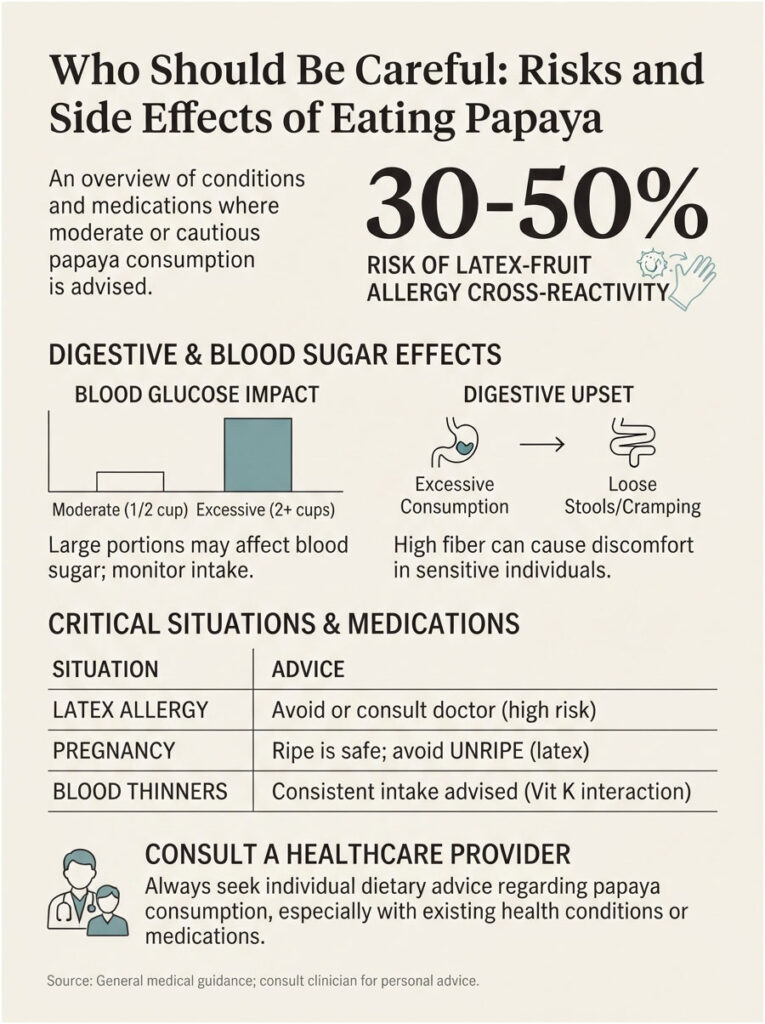
Who Should Be Careful (Risks and Side Effects)
Eating papaya daily is safe for most people, but not everyone. Here’s where honesty protects you more than hype does.
Latex-Fruit Allergy Cross-Reactivity
Papaya can trigger reactions in people with a latex allergy, a pattern known as latex-fruit syndrome. Symptoms range from mild mouth itching to more serious reactions.
If you have a known latex allergy, introduce papaya cautiously or avoid it, and talk with your doctor first. This is one case where a food-first habit needs a medical green light.
Pregnancy: Ripe Is Fine, Unripe Is Not
This distinction is one our nutrition team stresses constantly. Fully ripe papaya, in moderation, is generally considered safe during pregnancy and offers folate, vitamin C, and fiber.
Unripe or semi-ripe papaya is the concern. It contains more latex, which has been linked to uterine contractions, so it’s best avoided while pregnant.
When in doubt, choose only soft, fully orange papaya, and check with your obstetrician about your own diet. Pregnancy nutrition is personal, and individual guidance beats a general rule.
Blood Sugar, Medications, and Eating Too Much
Papaya’s natural sugar is modest, but very large daily amounts can add up for people watching blood glucose. Portion control keeps it in check.
Too much papaya can also cause digestive upset in sensitive individuals, since the fiber and enzymes are working hard. Loose stools or cramping are a signal to scale back.
If you take medications, including blood thinners, keep your papaya intake steady rather than swinging from none to a lot, and mention it to your clinician. Consistency makes any diet-and-medication balance easier to manage.
The quick-reference table below matches common situations to a sensible action.
| If This Is You | Then Do This | Why |
| You bloat or get constipated often | Try 1 cup ripe papaya after dinner, plus water | Fiber and papain support regularity |
| You’re pregnant | Eat only fully ripe papaya; skip green/unripe | Unripe latex may trigger contractions |
| You have a latex allergy | Introduce cautiously or avoid; ask your doctor | Latex-fruit cross-reactivity risk |
| You’re managing blood sugar | Keep to ~1 cup and pair with protein | Low GI, but still natural sugar |
| You take blood thinners or other meds | Keep intake steady; check with your clinician | Possible nutrient-medication interactions |
| You want a lighter snack habit | Swap a sugary snack for 1 cup papaya | ~62 calories, fiber, low glycemic index |
The Honest Limits of the Evidence
Good health writing tells you what’s solid and what’s still hopeful. Papaya is genuinely nutritious, and it’s also surrounded by more marketing than proof.
Whole Fruit vs Concentrated Preparations
Much of the strongest clinical research, like the Caricol digestion trial, used concentrated papaya products, not fresh fruit. Those preparations pack several times the papain of a fresh slice.
So when you read that “papaya is clinically proven to fix digestion,” add the nuance. The fruit supports digestion; the studied product was a stronger, standardized formula.
What’s Well-Supported vs What’s Still Promising
Well-supported: papaya is a low-calorie, high-vitamin-C, fiber-containing fruit that fits a heart-healthy, gut-friendly diet. That much rests on firm nutritional footing.
Still promising but not proven in humans: claims about papaya preventing cancer. Lycopene shows anticancer activity in test-tube and animal studies, but human evidence isn’t there yet.
In content reviewed by our medical team, the guiding rule is simple. Enjoy papaya for its real, everyday nutritional value, and treat bold disease-cure claims with healthy skepticism.
The Bottom Line
Eating papaya daily is a simple, affordable way to add vitamin C, fiber, potassium, and antioxidants to your plate, and to help close the fruit gap most Americans live with. For digestion, immunity, skin, heart, and eye health, one to two cups of ripe fruit is a smart daily habit.
Keep it ripe, keep the portion sensible, and take the cautions seriously if you’re pregnant or have a latex allergy. Do that, and papaya is one of the easier wins in a produce aisle full of good choices.
Frequently Asked Questions
Is it OK to eat papaya every day?
Yes, for most people eating papaya daily is safe and beneficial in moderation. One to two cups of ripe papaya supplies vitamin C, fiber, and antioxidants. Exceptions include people with a latex allergy and anyone who should avoid unripe papaya, such as during pregnancy.
How much papaya should I eat per day?
A sensible daily portion for adults is 1 to 2 cups of cubed ripe papaya. That amount fits the federal fruit recommendation of 1.5 to 2 cups and provides plenty of vitamin C and fiber without excessive natural sugar. Start with one cup if papaya is new to you.
What is the best time to eat papaya?
There’s no single magic time. Many people enjoy papaya in the morning because it’s easy to digest, while others eat it after dinner to support digestion. If you have acid reflux, eating it with a meal may feel better. The best time is whenever you’ll do it consistently.
Can I eat papaya on an empty stomach?
For most people, yes, and the fiber and papain can support digestion. Evidence for a special empty-stomach benefit is limited, though. If you have a sensitive stomach or acid reflux, pairing papaya with food may be more comfortable than eating it alone first thing.
Does papaya help with constipation?
Papaya can support regularity through its fiber and the papain enzyme. A clinical study using a concentrated papaya preparation showed significant improvement in constipation and bloating. Fresh fruit is milder than that preparation, so pair daily papaya with water and movement for the best results.
Is papaya good for weight loss?
Papaya suits weight-management goals well. At about 62 calories per cup with fiber and high water content, it satisfies sweet cravings while keeping calories low. Swapping a sugary snack for a cup of papaya is an easy, repeatable change that supports a calorie-aware eating pattern.
Can pregnant women eat papaya?
Fully ripe papaya, in moderation, is generally considered safe during pregnancy and offers folate, vitamin C, and fiber. Unripe or semi-ripe papaya should be avoided because its higher latex content has been linked to uterine contractions. Always confirm your own diet choices with your obstetrician.
Who should not eat papaya?
People with a latex allergy should be cautious or avoid papaya due to cross-reactivity. Anyone advised to avoid unripe papaya, including during pregnancy, should skip green fruit. Those managing blood sugar or taking certain medications should keep portions steady and consult their clinician.
Does papaya lower blood sugar?
Papaya has a low glycemic index (around 38) and contains fiber that slows sugar absorption, so it raises blood sugar gently compared with many sweets. It still has natural sugar, though. Keep to about one cup, pair it with protein, and monitor your own glucose response.
What are the side effects of eating too much papaya?
Eating very large amounts can cause digestive upset, such as loose stools or cramping, because of the fiber and enzyme load. Excess natural sugar can also add up for people watching blood glucose. People with latex allergy may react. Moderation, around 1 to 2 cups daily, avoids most issues.
Is papaya good for your skin?
Papaya supports skin health from the inside. Its vitamin C aids collagen production, while vitamin A and antioxidants help defend skin cells against everyday damage. Daily papaya won’t replace sun protection or professional skincare, but it’s a useful, food-first way to nourish your complexion.
Is ripe or unripe papaya healthier?
For daily eating, ripe papaya is the better choice. It’s sweeter, easier to digest, and safe for most people, including pregnant women in moderation. Unripe (green) papaya has culinary uses but contains more latex, making it unsuitable for pregnancy and less ideal as an everyday snack.
Disclaimer: This article is for general educational purposes and does not replace professional medical advice, diagnosis, or treatment. Nutritional needs vary from person to person. Talk with your physician or a registered dietitian before making significant changes to your diet, especially if you are pregnant, managing a health condition, taking medications, or have known allergies.
References
- CDC MMWR, Adults Meeting Fruit and Vegetable Intake Recommendations, United States
- USDA Economic Research Service, Fruit Consumption Trends
- USDA FoodData Central, Papayas, Raw
- NIH (PMC), Chronic Constipation in the United States
- Muss et al., 2013, Papaya Preparation (Caricol) in Digestive Disorders
- Cleveland Clinic, Papaya Health Benefits
- Healthline, Evidence-Based Health Benefits of Papaya