Here’s the twist most articles skip: pregnancy hormones usually slow your gut down, not speed it up. So if your stomach is running a few days before your period is due, pregnancy is rarely the best explanation.
That doesn’t mean you’re not pregnant. It means diarrhea can’t tell you either way, and something else is usually behind it.
Table of Contents
Quick Answer: No, diarrhea on its own is not a reliable sign of pregnancy. Early pregnancy hormones, mainly progesterone, tend to slow digestion and cause constipation instead. Diarrhea before a missed period is more often caused by the prostaglandins that come before a period, or by food, stress, or a stomach bug. The only way to know if you’re pregnant is a pregnancy test taken on or after the day your period is due.
At a Glance
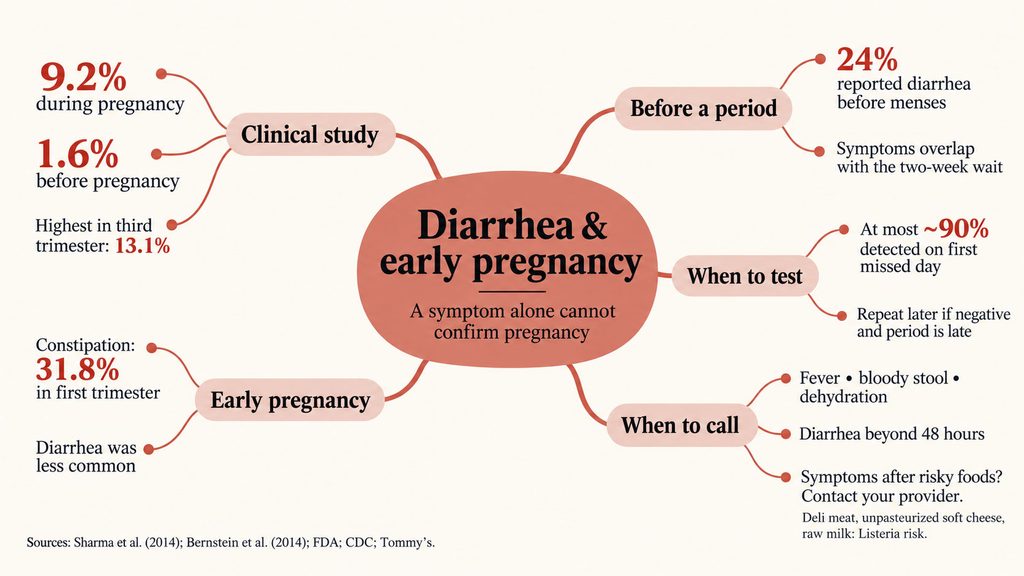
- In one clinical study, diarrhea affected 9.2% of pregnant women versus 1.6% before pregnancy, and it peaked in the third trimester, not the first.
- Constipation is far more common in early pregnancy, reaching 31.8% in the first trimester in the same study.
- About 1 in 4 women get diarrhea in the days before a period, which overlaps exactly with the “two-week wait.”
- Even a perfect pregnancy test can only catch about 90% of pregnancies on the first day of a missed period.
- If you’re pregnant, diarrhea after deli meat, soft cheese, or raw milk needs a call to your provider because of Listeria.
- Fever, blood in stool, dehydration, or diarrhea lasting more than 2 days during pregnancy need prompt care.
Is Diarrhea a Sign of Pregnancy?
Diarrhea is not one of the classic early signs of pregnancy. It can happen during pregnancy, but it happens so often outside pregnancy that it tells you very little.
Patients booking hCG tests with us often ask whether a sudden upset stomach “means something.” The honest answer is that it rarely does on its own. A missed period and a positive test are what count.
The most common reasons for diarrhea in the days before a period is due are:
- Prostaglandins released before your period
- A stomach bug or food poisoning
- Diet changes, including more fiber, fruit, or juice
- Stress and anxiety during the wait
- New supplements or medicines, including antibiotics
What Counts as Diarrhea
Diarrhea means loose or watery stools three or more times in a day, according to the National Institute of Diabetes and Digestive and Kidney Diseases. One soft stool after a big meal doesn’t qualify.
Short bouts lasting a day or two are called acute diarrhea. Diarrhea lasting four weeks or more is chronic and needs a medical workup, pregnant or not.
What the Numbers Actually Show
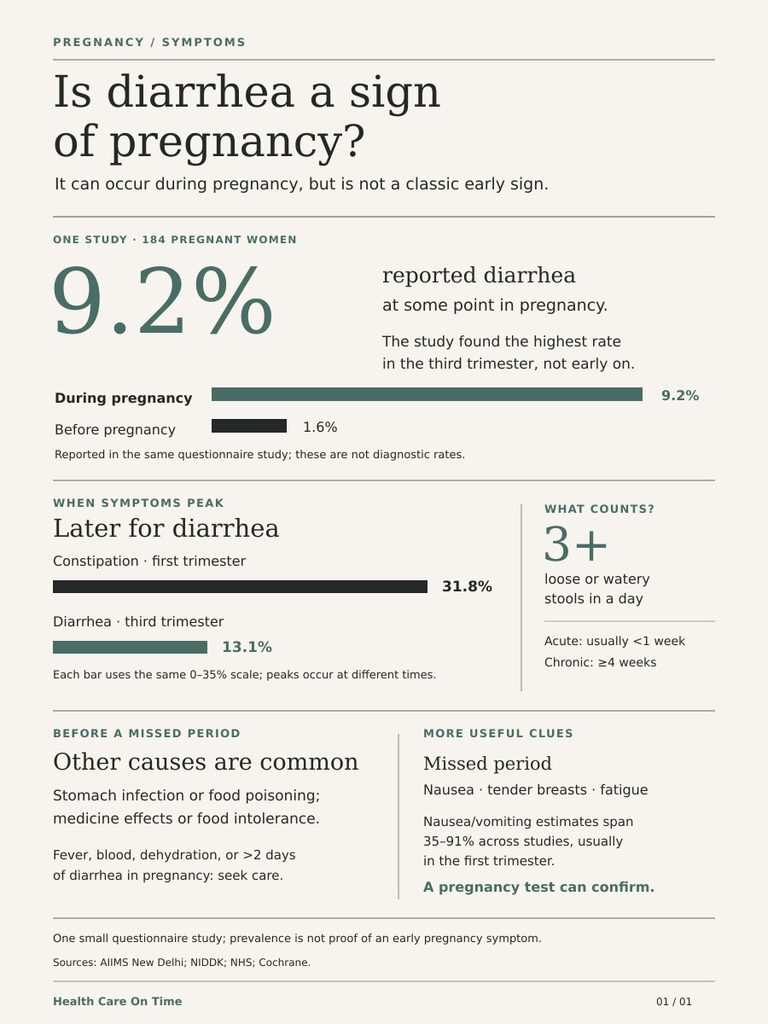
Very few studies have measured diarrhea in pregnancy directly. One of the clearest is a questionnaire study of 184 pregnant women compared with 184 matched women who weren’t pregnant.
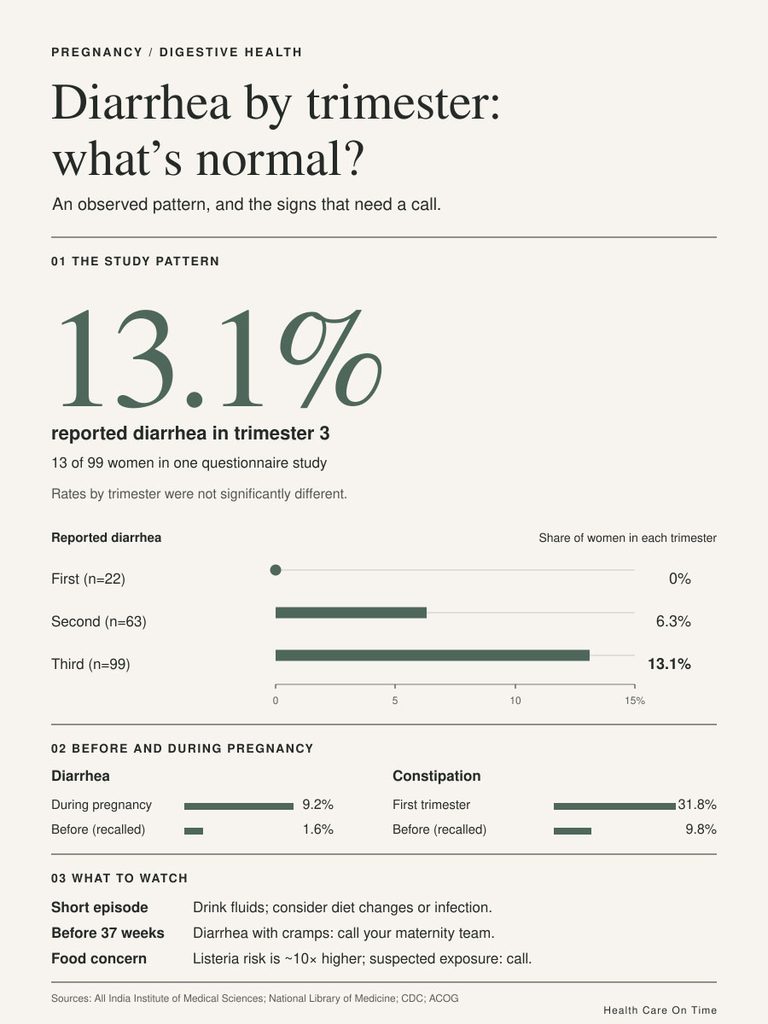
Diarrhea showed up in 9.2% of pregnant women, compared with 1.6% before pregnancy. But it peaked in the third trimester at 13.1%. Constipation peaked in the first trimester at 31.8%, versus 9.8% in women who weren’t pregnant.
So the data points one way. Early pregnancy leans toward constipation, and diarrhea is more of a late-pregnancy symptom. One caution: this was a small study from a South Asian hospital, so US rates may differ somewhat.
The Early Signs That Are More Reliable
A missed period is still the most useful early sign. After that, nausea, breast tenderness, and tiredness are far more common in early pregnancy than diarrhea.
Nausea stands out. Brown University Health reports that 91% of pregnant women have nausea in the first trimester, usually in weeks 6 to 8. That’s roughly ten times the rate of diarrhea in pregnancy.
Here’s how diarrhea compares with the signs people usually watch for.
| Symptom | How common in pregnancy | Also common before a period? | When it usually starts | Reliability as a pregnancy sign |
| Missed period | Nearly all pregnancies | No (it’s the absence of one) | Day your period is due, about 14 days after ovulation | High |
| Nausea | Up to 91% in first trimester | Sometimes | Weeks 5 to 8 after last period | Moderate to high |
| Breast tenderness | Very common | Yes, often | Weeks 4 to 6 | Low to moderate |
| Fatigue | Very common | Yes | Weeks 4 to 8 | Low |
| Constipation | 31.8% in first trimester | Sometimes | Weeks 4 to 12 | Low to moderate |
| Bloating | Common | Yes, very often | Any time | Low |
| Cramping | Common, usually mild | Yes, very often | Around the expected period | Low |
| Diarrhea | 9.2% overall, 13.1% third trimester | Yes, about 24% of women | Any time, peaks late | Very low |
Why Pregnancy Usually Slows Your Gut Down
Once an embryo implants, progesterone levels climb fast. Progesterone relaxes smooth muscle throughout your body, including the muscle that moves food through your intestines.
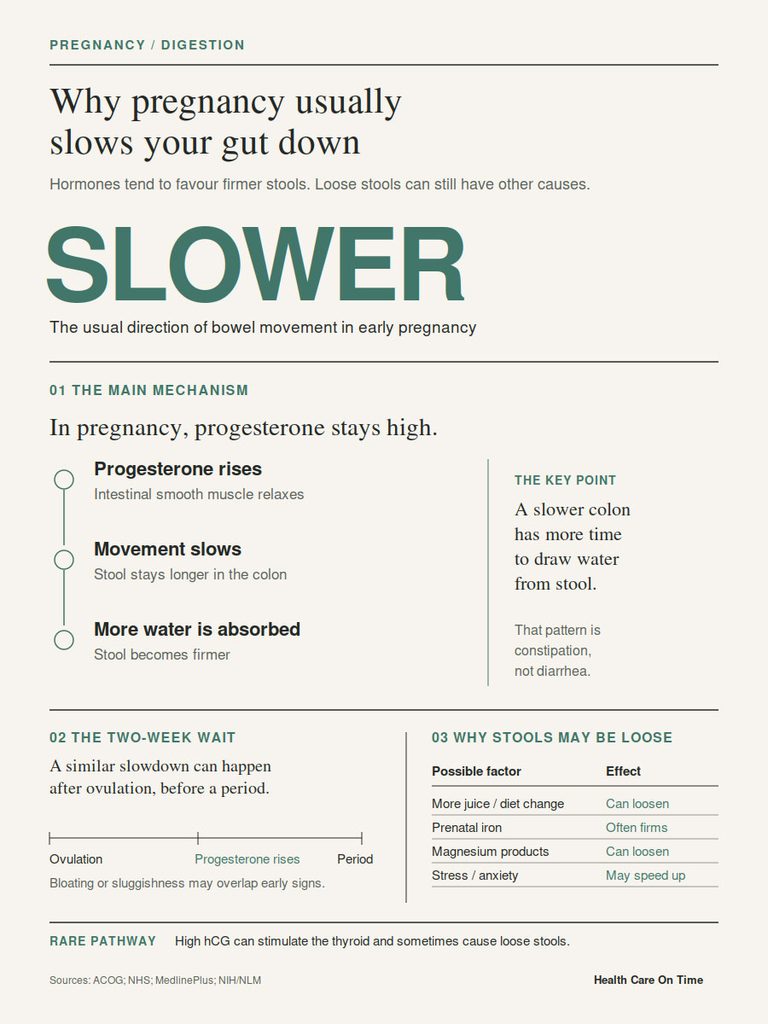
Slower movement gives your colon more time to pull water out of stool. That’s why stools usually get firmer, not looser. An OB-GYN interviewed by SELF explained that high progesterone leads to constipation, the exact opposite of diarrhea.
Progesterone and Smooth Muscle
Progesterone also rises every month after ovulation, whether or not you conceive. That’s part of why the week after ovulation can feel sluggish and bloated.
The difference in pregnancy is that progesterone keeps rising instead of dropping. That steady climb keeps digestion slow through the first trimester.
Why Some People Still Get Loose Stools Early On
Diarrhea can still happen in early pregnancy. It just usually has a cause other than pregnancy hormones.
Our medical review team sees the same handful of triggers again and again when patients report loose stools in the first weeks.
Nausea and Eating Changes
When nausea kicks in, many people eat whatever they can keep down. Crackers one day, fruit and juice the next. Those swings alone can loosen stools.
Some people also drink far more water or juice to settle their stomach. Large amounts of fruit juice, especially apple and pear, can cause loose stools in anyone.
Diet Changes After a Positive Test
A positive test often leads to an overnight diet overhaul. More vegetables, beans, fruit, and fiber. Your gut needs a week or two to adjust to a big fiber jump.
Adding more dairy for calcium can also cause trouble if you’re mildly lactose intolerant and never noticed before.
Prenatal Vitamins
Prenatal vitamins affect people differently. Iron tends to cause constipation, but some formulas contain magnesium, which can loosen stools.
Switching brands or taking a vitamin on an empty stomach can also upset digestion. If loose stools started the same week as a new vitamin, that’s a likely link. Ask your provider before stopping, since folic acid matters in early pregnancy.
Stress and Anxiety
Waiting to find out if you’re pregnant is stressful. So is finding out. Your gut and brain are closely linked, and stress can speed up bowel movements in some people.
This is one reason diarrhea shows up so often during the two-week wait, whatever the test result turns out to be.
A Rare Hormonal Cause
In some early pregnancies, very high hCG levels can briefly push the thyroid into overdrive. This is called gestational transient thyrotoxicosis. It’s often linked with severe vomiting and can cause a racing heart, shakiness, and loose stools.
It’s uncommon and usually settles by mid-pregnancy. A simple TSH blood test can check for it if you have these symptoms together.
Diarrhea Before Your Period vs. Early Pregnancy
This is where most of the confusion comes from. The days before your period and the first days of a possible pregnancy fall in the exact same window.
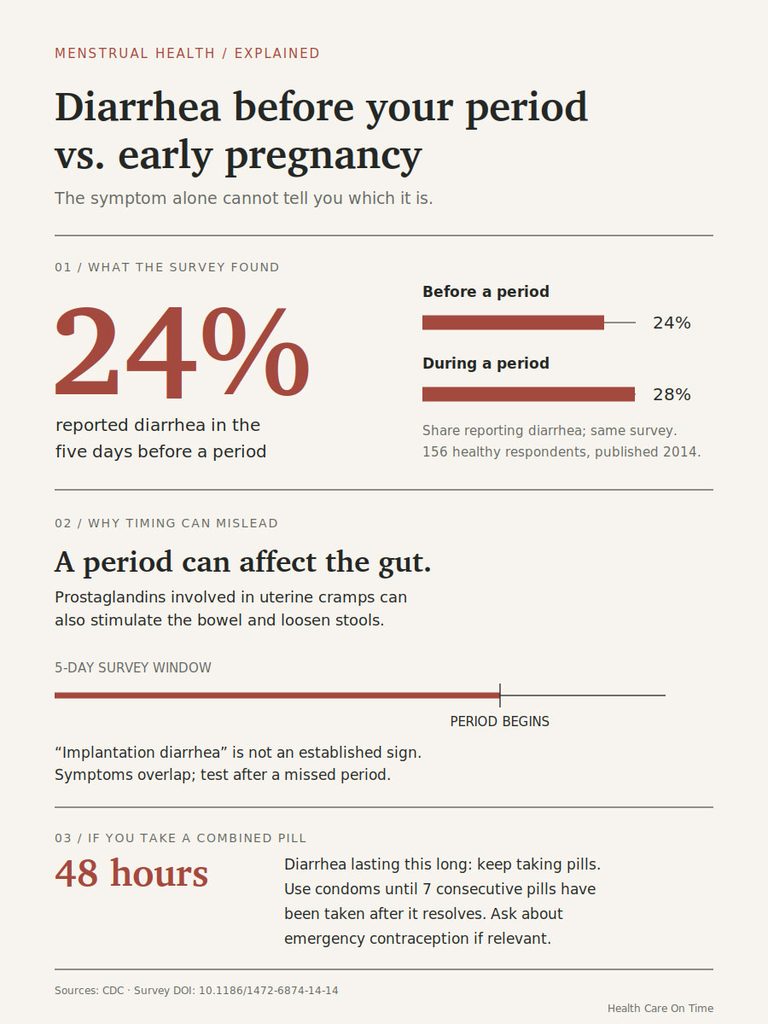
If you have diarrhea 3 to 5 days before your period is due, the most likely explanation is the normal hormonal shift before a period.
Prostaglandins: The Period and Diarrhea Connection
Before and during your period, the lining of your uterus releases chemicals called prostaglandins. They make the uterus contract so it can shed its lining.
Prostaglandins don’t stay in the uterus. They also reach your intestines and make them contract faster. That’s why many people get cramps and loose stools on day 1 of their period.
A study of 156 healthy US women in BMC Women’s Health found that 73% had at least one digestive symptom around their period. Diarrhea affected 24% before the period and 28% during it.
That’s more than double the rate of diarrhea in the pregnancy study above. For more on this pattern, see our guide to period flu and day 1 symptoms.
Is “Implantation Diarrhea” Real?
Many fertility forums describe “implantation diarrhea.” No research shows that implantation itself causes diarrhea.
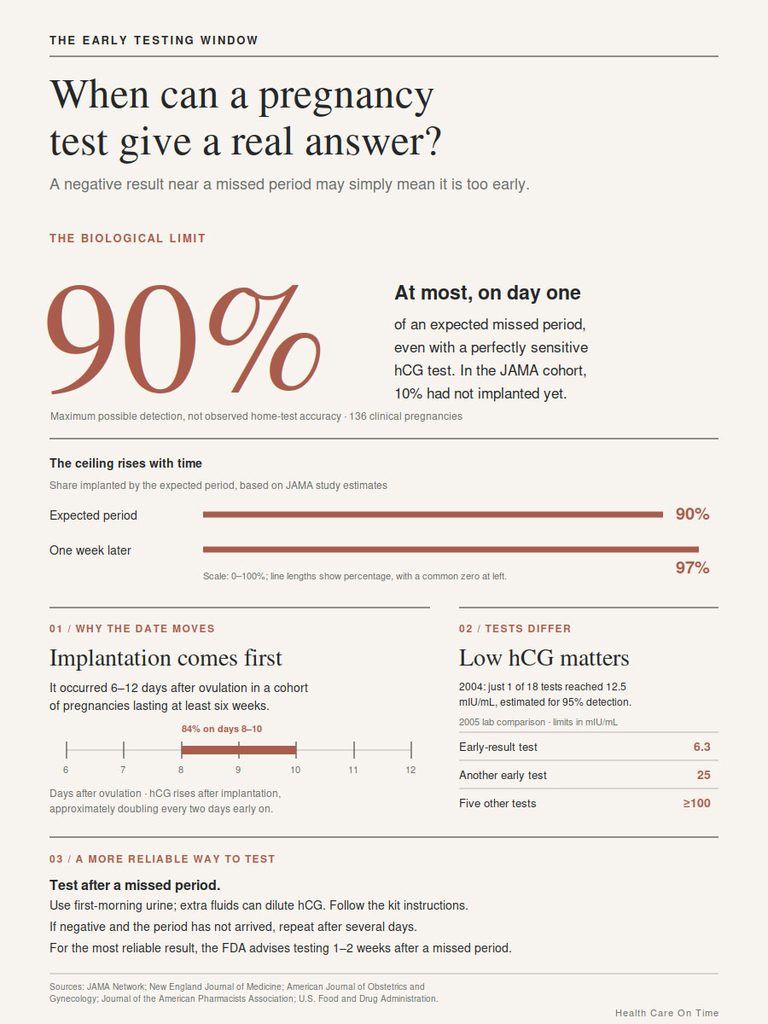
Implantation usually happens 6 to 12 days after ovulation, with most cases on days 8 to 10, according to a landmark study in the New England Journal of Medicine. That’s the same week premenstrual prostaglandins start rising. The timing overlaps, which is why people connect the two.
How to Tell the Difference
Honestly, you can’t tell them apart by how your stomach feels. Premenstrual diarrhea and a stomach upset in early pregnancy can feel exactly the same.
A few clues can help, but none of them are proof:
- Points toward your period: diarrhea with cramping, a pattern you’ve noticed in past cycles, and symptoms that ease once bleeding starts.
- Points toward something else: fever, vomiting, or others in your home getting sick, which suggests a stomach bug.
- Points toward pregnancy: no period by the expected day, plus nausea or breast changes that keep building instead of fading.
The only real answer is a pregnancy test at the right time.
A Twist: Diarrhea Can Raise Your Pregnancy Risk on the Pill
If you take birth control pills, severe diarrhea matters in a different way. When it lasts long enough, your body may not absorb the pill properly.
CDC contraception guidance advises treating vomiting or severe diarrhea that lasts 48 hours or more like missed pills. That means using condoms or avoiding sex until you’ve taken active pills for 7 days in a row. Some people may also need emergency contraception, so check with a pharmacist.
When Can a Pregnancy Test Give You a Real Answer?
Across the questions our care team receives, the most common one after “is this a sign?” is “when is the right time to test?” Timing matters more than any symptom.
The hCG Timeline After Ovulation
Pregnancy tests detect hCG, a hormone made only after implantation. It starts very low and roughly doubles every couple of days early on.
Because implantation timing varies from person to person, some pregnancies simply don’t have detectable hCG yet by the day a period is due. A study in JAMA by Wilcox and colleagues estimated that even a perfect hCG test could catch only about 90% of pregnancies on the first day of a missed period. A week later, that figure rose to about 97%.
So a negative test on the day your period is due isn’t always the final word. If your period still doesn’t come, testing again a few days later makes sense.
Early-Result Tests vs. Standard Tests
Home tests are not all equally sensitive. A 2004 study in the American Journal of Obstetrics and Gynecology found a test would need to detect 12.5 mIU/mL to catch 95% of pregnancies on the day of a missed period. Only 1 of the 18 brands tested met that bar.
A 2005 follow-up by the same research group found First Response Early Result detected hCG at 6.3 mIU/mL and was estimated to catch more than 95% of pregnancies on the day of the missed period.
These studies are about 20 years old, and test formulas have changed since then. The lesson still holds: “99% accurate” claims usually apply to testing on or after the day your period is due, not days earlier.
Can Diarrhea Affect Your Test?
Diarrhea doesn’t change your hCG level. But if you’re drinking a lot to replace fluids, your urine gets diluted, which lowers the hCG concentration in a sample.
For the most reliable early result, test with first morning urine. If the result is negative and your period still hasn’t come, test again in 48 to 72 hours.
A blood hCG test can detect pregnancy a few days earlier than home tests and gives an exact number. If you’ve had bleeding that looked like a period and aren’t sure what it was, read can you be pregnant and still have a period.
Diarrhea by Trimester: What’s Normal
If you already know you’re pregnant, the question shifts. It’s no longer “is this pregnancy?” but “is this normal, and is the baby OK?”
In most cases, short-term diarrhea during pregnancy isn’t dangerous. Patients commonly ask us whether a single bad day can hurt the baby, and it usually can’t. The main risks are dehydration and a few specific infections.
First Trimester
Diarrhea in the first trimester is usually tied to diet changes, prenatal vitamins, nausea-driven eating, or a stomach bug. It usually passes within a day or two.
Because vomiting from morning sickness is also common now, fluid losses can add up faster. Keep an eye on how much you drink and how often you pee.
Second Trimester
The second trimester is often the most settled stretch for digestion. Nausea eases for most people, and eating becomes more regular.
New diarrhea during this stretch is more likely an infection, a food trigger, or a flare of an existing gut condition like IBS or inflammatory bowel disease.
Third Trimester and Diarrhea as a Sign of Labor
Diarrhea becomes more common late in pregnancy, as the study data above showed. Your growing uterus presses on your bowel, and hormone shifts near the end can loosen stools.
The American Pregnancy Association notes that diarrhea near the due date may be a sign labor is coming, sometimes a couple of weeks ahead. On its own, it doesn’t mean labor has started.
When It Could Mean Preterm Labor
Before 37 weeks, diarrhea paired with other signs deserves a call. The Mayo Clinic lists cramps like a period, with or without diarrhea, among the signs of preterm labor.
Call your provider the same day if diarrhea comes with any of these before 37 weeks:
- Regular tightening or contractions
- A dull, low backache that doesn’t go away
- Pelvic pressure, like the baby is pushing down
- A change in vaginal discharge, especially watery, mucus-like, or bloody
- A gush or trickle of fluid
Here are the key numbers behind this article in one place.
| Measure | Figure | Source |
| Diarrhea during pregnancy vs. before pregnancy | 9.2% vs. 1.6% | Sharma et al., Int J Reprod Contracept Obstet Gynecol, 2014 |
| Diarrhea in the third trimester | 13.1% | Sharma et al., 2014 |
| Constipation in first trimester vs. not pregnant | 31.8% vs. 9.8% | Sharma et al., 2014 |
| Diarrhea before and during periods | 24% before, 28% during | Bernstein et al., BMC Women’s Health, 2014 (156 US women) |
| Nausea in the first trimester | 91% | Brown University Health |
| Pregnancies detectable on first day of missed period | About 90% (97% one week later) | Wilcox et al., JAMA, 2001 |
| Listeriosis risk in pregnancy | About 10 times other healthy adults | FDA |
| Pregnancy-associated listeriosis incidence | About 13 times the general population | ACOG |
| US pregnant women infected with Listeria each year | About 1 in 25,000 | CDC |
| Pregnancy loss after Listeria infection | About 1 in 4 | CDC |
When Diarrhea in Pregnancy Is a Warning Sign
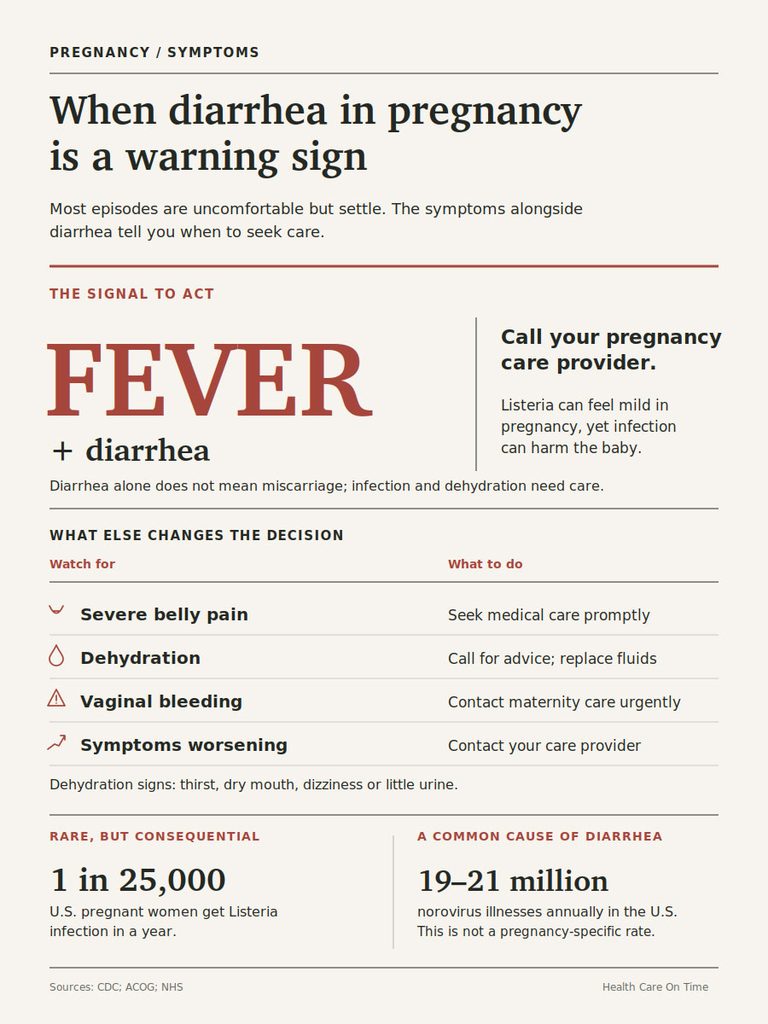
Most diarrhea in pregnancy is uncomfortable, not dangerous. But pregnancy changes your immune system, and a few infections hit harder. Our lab partners report that stool tests during pregnancy are most often ordered when diarrhea comes with a fever or follows a risky food.
Listeria: The Pregnancy-Specific Risk
Listeria is the main reason food poisoning is taken more seriously in pregnancy. The FDA says pregnant women are about 10 times more likely to get listeriosis than other healthy adults.
The CDC estimates about 1 in 25,000 pregnant women in the US are infected each year. About 1 in 4 of them lose the pregnancy or the baby shortly after birth.
The tricky part is that symptoms in the mother are often mild. ACOG notes they can include fever, chills, muscle aches, and diarrhea, and may appear as late as 2 months after eating contaminated food.
Higher-risk foods include:
- Deli meats and hot dogs not heated until steaming hot (165°F)
- Soft cheeses like queso fresco, even when pasteurized
- Unpasteurized (raw) milk and products made from it
- Refrigerated smoked seafood
- Pre-cut melon left out or stored too long
If you have diarrhea or a fever and ate any of these, or a recalled food, call your provider and name the food. Listeria can be treated with antibiotics, and early treatment helps protect the baby.
Dehydration Signs to Watch
Pregnancy raises your fluid needs, so diarrhea can dry you out faster than usual. Watch for:
- Dark yellow urine, or peeing much less than normal
- No urine for 8 hours or more
- Dizziness or lightheadedness when you stand
- A racing heartbeat
- Dry mouth and strong thirst
- Feeling unusually weak or confused
Dehydration late in pregnancy can also trigger contractions. That’s one more reason to take it seriously.
Other Infections
Viral stomach bugs are the most common cause of sudden diarrhea in anyone. The CDC estimates norovirus alone causes 19 to 21 million illnesses in the US each year.
Salmonella, E. coli, and Campylobacter from undercooked food can also cause diarrhea, sometimes with fever and blood. If you recently took antibiotics, C. diff is another possibility, especially with frequent watery stools.
Can Diarrhea Cause a Miscarriage?
Ordinary diarrhea from something you ate or a short stomach bug does not cause miscarriage. Your baby is well protected inside the uterus, and your intestines are a separate system.
The concerns are specific: severe, untreated dehydration, and infections like Listeria that can reach the baby. If diarrhea comes with vaginal bleeding or strong cramping in early pregnancy, contact your provider so they can check what’s going on.
Red Flags: When to Get Care Fast
Call your provider the same day, or go to urgent care or the ER, if you’re pregnant and have:
- A fever of 100.4°F or higher
- Blood in your stool or black, tarry stool
- Six or more watery stools in 24 hours
- No urine for 8 hours or very dark urine
- Dizziness, fainting, or a racing heart
- Severe or constant belly pain, especially on one side
- Diarrhea lasting more than 48 hours
- Vomiting so much you can’t keep fluids down
- Fewer baby movements than normal later in pregnancy
Severe belly pain on the lower right side needs special attention. Our guide to appendicitis during pregnancy explains why symptoms can look different when you’re expecting.
How to Treat Diarrhea Safely While Pregnant
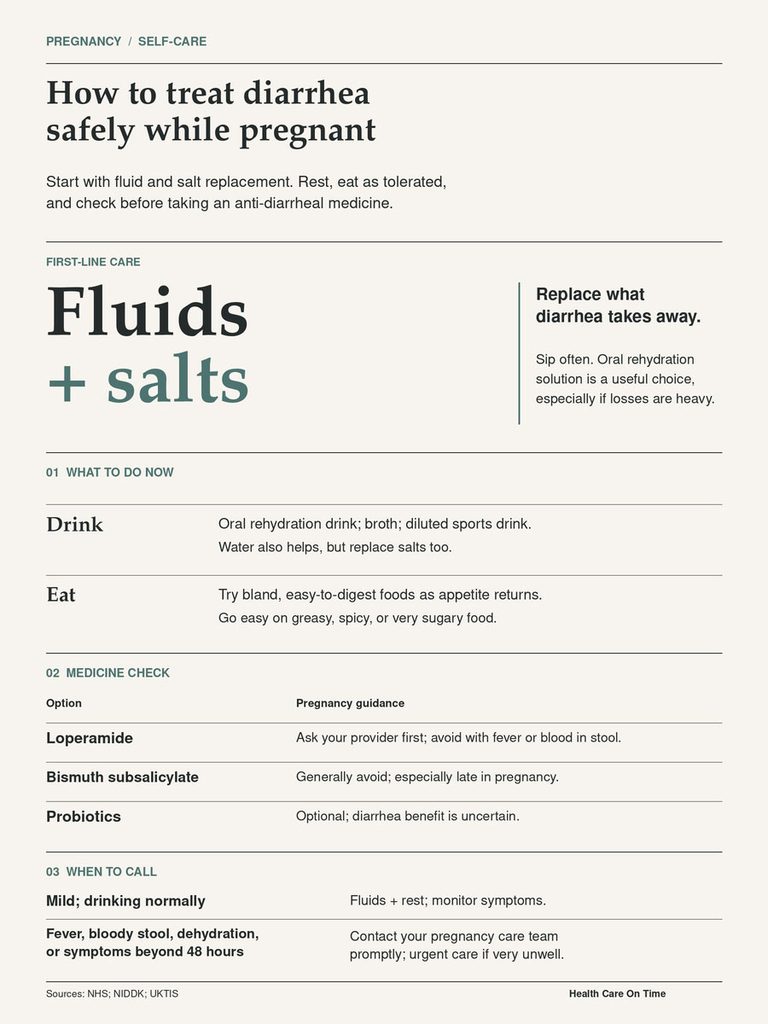
Most diarrhea in pregnancy clears on its own within a day or two. The goal while it runs its course is to replace fluids and salts and give your gut a break.
Fluids First
Water alone doesn’t replace the sodium and potassium you lose. Oral rehydration drinks like Pedialyte, broth, and diluted sports drinks help your body hold onto water.
UT Southwestern recommends salty fluids such as sports drinks and sodium-rich foods such as broth for mild diarrhea. Take small sips often if you’re also nauseous.
What to Eat
You don’t need a strict diet. Simple, gentle foods are usually easiest:
- Bananas, white rice, applesauce, and toast
- Plain crackers and pretzels (the salt helps)
- Oatmeal, plain potatoes, and eggs
- Plain yogurt, if dairy doesn’t bother you
For a day or two, go easy on greasy food, spicy food, caffeine, and large amounts of juice or sugar-free products made with sugar alcohols.
Over-the-Counter Medicines: What’s Usually OK and What to Skip
Our medical reviewers note that the safest first step for short-term diarrhea in pregnancy is not a pill at all. Fluids, rest, and simple foods handle most cases.
Always check with your OB, midwife, or pharmacist before taking a diarrhea medicine while pregnant. You can also call MotherToBaby, a free US service that answers questions about medicines in pregnancy.
Loperamide (Imodium)
Loperamide isn’t a first choice in pregnancy. The UK Teratology Information Service says non-drug treatments like rest and fluids are usually advised first for short-term diarrhea, and more research is needed to confirm loperamide’s safety.
Some providers may OK a short course in specific cases. Never use it if you have a fever or bloody stools, since slowing your gut can keep harmful bacteria inside longer.
Bismuth Subsalicylate (Pepto-Bismol, Kaopectate)
These products contain a salicylate, a relative of aspirin. Most US providers advise avoiding them during pregnancy, especially in the third trimester. US Kaopectate now uses the same ingredient as Pepto-Bismol, so check the label.
Probiotics
Probiotics are generally considered low risk in healthy pregnancies. But the evidence that they shorten diarrhea is limited, and product quality varies a lot. They’re optional, not a must.
Here’s a quick guide to match your situation with the right next step.
| Scenario | What It Likely Means | What to Do |
| Diarrhea 3 to 5 days before your period is due | Premenstrual prostaglandins, stress, or diet | Wait; test with first morning urine on the day your period is due |
| Loose stools started after a new prenatal vitamin | Vitamin formula (often magnesium) or empty-stomach dosing | Take it with food; ask about switching brands; don’t stop folic acid |
| Pregnant, diarrhea after deli meat, soft cheese, or raw milk | Possible Listeria exposure | Call your provider the same day and name the food |
| Pregnant, diarrhea with fever of 100.4°F or higher | Infection | Same-day call or urgent care; skip loperamide |
| Watery diarrhea at 37 weeks or later | Possible early sign that labor is near | Stay hydrated; call if contractions, fluid leak, or bleeding start |
| Diarrhea plus cramps or back pain before 37 weeks | Possible preterm labor | Call your provider or labor and delivery right away |
| Diarrhea lasting more than 48 hours at any stage | Infection, food trigger, or gut condition | Book a visit; ask about stool testing |
| On the pill with severe diarrhea for 48+ hours | Pill may not be absorbed | Use backup birth control for 7 days of active pills; ask about emergency contraception |
| Positive test plus bleeding and one-sided belly pain | Possible ectopic pregnancy | Go to the ER now |
What to Do Next If You Think You Might Be Pregnant
If you’re here because you’re wondering whether you’re pregnant, diarrhea won’t give you the answer. These steps will.
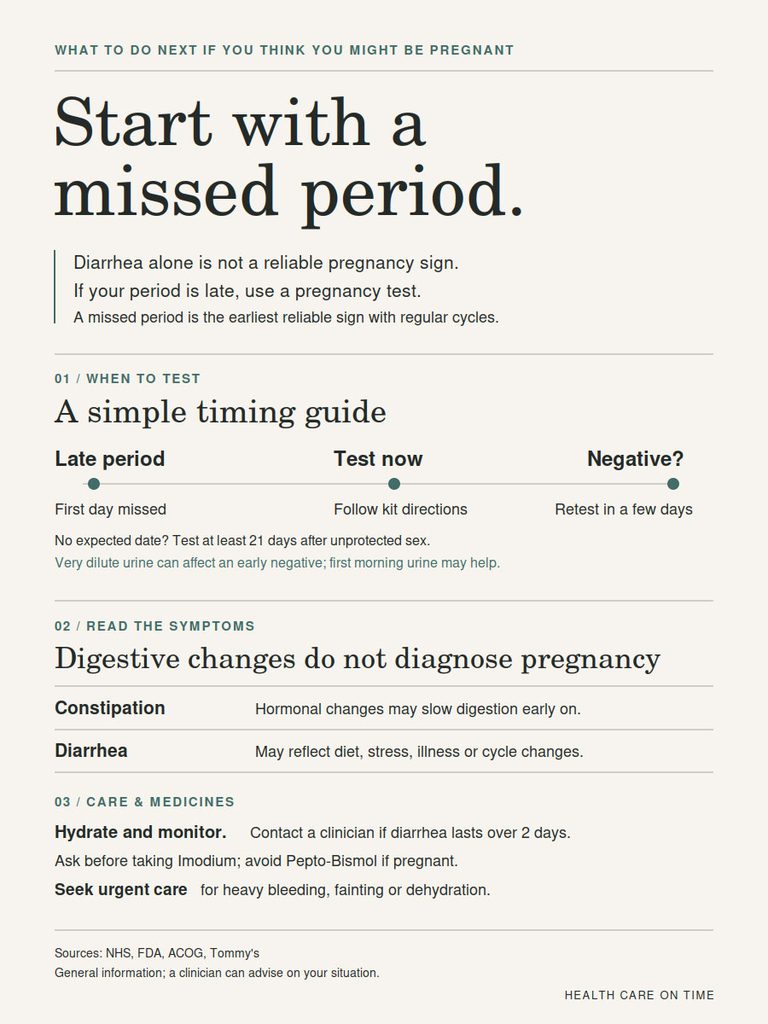
- Figure out your timing. Count about 14 days from ovulation, or use the day your period is normally due. If you’re not sure when you ovulated, our article on what ovulating means explains why day 14 is often wrong.
- Test on the day your period is due or later. Use first morning urine. Testing earlier often gives a false negative.
- Retest if needed. A negative test with no period means testing again in 48 to 72 hours.
- Start folic acid now. The CDC recommends 400 mcg of folic acid daily for anyone who could become pregnant.
- Follow food safety basics. Keep your fridge at 40°F or below, heat deli meats until steaming, and skip raw milk.
- Get a blood test if things are unclear. A blood hCG test gives an exact number and can detect pregnancy a few days sooner than home tests.
- Book a visit if symptoms don’t fit. Diarrhea that lasts, keeps coming back, or comes with weight loss needs a workup whatever the test says.
In lab orders placed through HealthCareOnTime, a quantitative blood hCG test is one of the most common requests from people with an unclear home test. It takes the guessing out of the wait.
Frequently Asked Questions
Can diarrhea be the first sign of pregnancy?
It can happen, but it’s rarely the first sign. Early pregnancy hormones usually slow digestion and cause constipation. A missed period is still the most reliable first sign, followed by nausea, breast tenderness, and fatigue. If diarrhea is your only symptom, other causes like diet, stress, or your upcoming period are more likely.
Is diarrhea a sign of implantation?
No research shows implantation causes diarrhea. Implantation usually happens 6 to 12 days after ovulation, the same week period-related prostaglandins start rising. That timing overlap is why people link the two. Diarrhea during this window is more likely tied to your cycle than to implantation itself.
Can you have diarrhea at 1 or 2 weeks pregnant?
In pregnancy dating, weeks 1 and 2 happen before conception, since dating starts from your last period. So diarrhea at that point can’t be caused by pregnancy. Around weeks 3 and 4, hormone levels are still low. Diarrhea this early almost always has another cause.
Why does diarrhea happen before a period?
Before and during a period, the uterus releases prostaglandins to help shed its lining. These chemicals also make your intestines contract faster, which can cause loose stools. One study of US women found diarrhea in 24% before their period and 28% during it. It’s common and usually harmless.
Is diarrhea normal in the first trimester?
Occasional diarrhea in the first trimester is common and usually not serious. It’s often caused by diet changes, prenatal vitamins, or a stomach bug. Constipation is actually more typical at this stage. Call your provider if it lasts more than 2 days, comes with fever or blood, or you show signs of dehydration.
Can diarrhea cause a miscarriage?
Ordinary diarrhea from a stomach bug or something you ate does not cause miscarriage. The baby is protected inside the uterus. The real concerns are severe dehydration and certain infections, especially Listeria, which can reach the baby. If diarrhea comes with vaginal bleeding or strong cramping, contact your provider promptly.
Does diarrhea mean labor is coming?
Diarrhea near your due date can be an early sign that labor is approaching, sometimes by days or a couple of weeks. It doesn’t mean labor has started. Before 37 weeks, diarrhea with cramps, back pain, pelvic pressure, or leaking fluid can signal preterm labor and needs a same-day call.
Is Imodium safe during pregnancy?
Loperamide (Imodium) isn’t a first choice in pregnancy because safety data are limited. Rest, fluids, and simple foods are usually advised first. Some providers may approve a short course in specific cases. Never use it with a fever or bloody stools, and always check with your OB, midwife, or pharmacist before taking it.
Is Pepto-Bismol safe while pregnant?
Most US providers advise avoiding Pepto-Bismol during pregnancy. Its active ingredient, bismuth subsalicylate, is related to aspirin, and salicylates are a concern especially in the third trimester. US Kaopectate now uses the same ingredient. Ask your provider about safer options, starting with oral rehydration fluids.
Can diarrhea affect a pregnancy test result?
Diarrhea doesn’t change your hCG level. But drinking lots of fluids to stay hydrated can dilute your urine, which may cause a false negative early on. Test with first morning urine on or after the day your period is due. If it’s negative and your period still hasn’t come, retest in 2 to 3 days.
How long does pregnancy diarrhea last?
Most bouts of diarrhea during pregnancy last 1 to 2 days and clear up with fluids and simple foods. If it’s tied to a new prenatal vitamin or diet change, it may ease within a week. Diarrhea lasting more than 48 hours, or coming back again and again, should be checked by your provider.
When should a pregnant person go to the ER for diarrhea?
Go to the ER if you’re pregnant and have heavy bloody or black stool, fainting, no urine for 8 hours or more, severe or one-sided belly pain, vomiting that stops you keeping fluids down, or fewer baby movements late in pregnancy. For fever alone or diarrhea lasting 2 days, call your provider the same day.
Disclaimer: This article is for general education only and is not medical advice. It does not replace a visit with a doctor, midwife, or other qualified health professional. If you’re pregnant or might be, talk with your provider before taking any medicine. If you have severe symptoms, call 911 or go to the nearest emergency room.
References
- NIDDK: Diarrhea
- Sharma JB et al. Prevalence of gastro-intestinal symptoms during pregnancy. Int J Reprod Contracept Obstet Gynecol. 2014
- Bernstein MT et al. Gastrointestinal symptoms before and during menses in healthy women. BMC Women’s Health. 2014
- Brown University Health: Gastrointestinal Issues During Pregnancy
- Wilcox AJ et al. Time of implantation of the conceptus and loss of pregnancy. N Engl J Med. 1999
- Wilcox AJ et al. Natural limits of pregnancy testing in relation to the expected menstrual period. JAMA. 2001
- Cole LA et al. Accuracy of home pregnancy tests at the time of missed menses. Am J Obstet Gynecol. 2004
- Cole LA et al. Sensitivity of over-the-counter pregnancy tests. J Am Pharm Assoc. 2005
- CDC: US Selected Practice Recommendations for Contraceptive Use
- FDA: Listeria (Food Safety for Moms-to-Be)
- CDC: People at Increased Risk for Listeria Infection
- ACOG: Listeria and Pregnancy
- ACOG: Management of Pregnant Women With Presumptive Exposure to Listeria monocytogenes
- CDC: About Norovirus
- American Pregnancy Association: Diarrhea in Pregnancy
- Mayo Clinic: Preterm Labor Symptoms and Causes
- UT Southwestern: 5 Common Pregnancy-Related GI Issues
- UK Teratology Information Service: Loperamide in Pregnancy
- MotherToBaby: Fact Sheets
- CDC: About Folic Acid