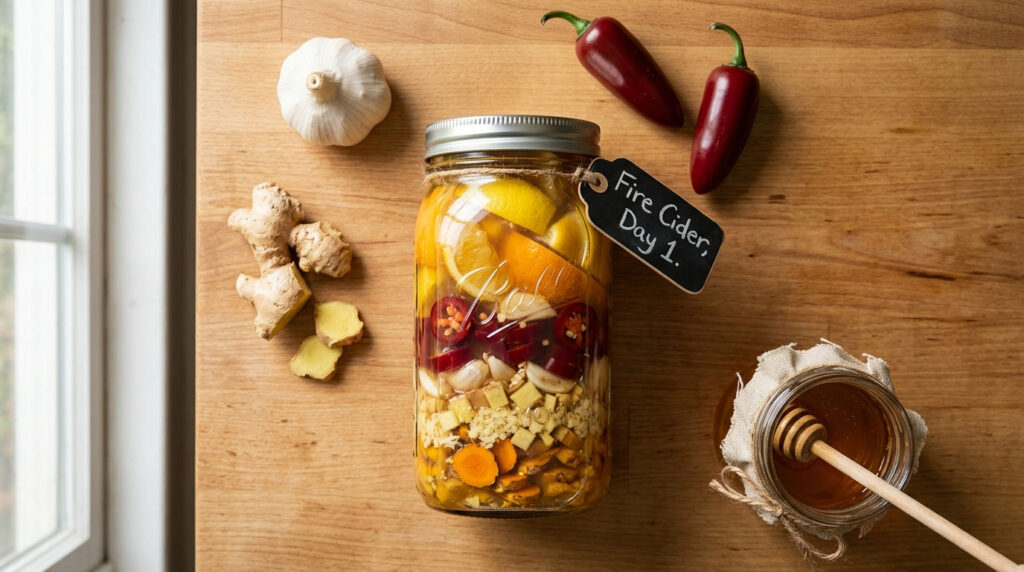
Walk into any US farmers market in October and you’ll smell it before you see it: jars of garlic, horseradish, and chili steeping in apple cider vinegar, lined up on someone’s table next to honey jars and beeswax candles. Fire cider has been a cold-weather ritual in the USA for nearly fifty years. The question worth asking isn’t whether it’s popular, it’s whether the recipe earns its place in a modern wellness routine.
Table of Contents
The numbers say a lot of Americans have already decided. The 2024-25 flu season alone produced 51 million illnesses, 710,000 hospitalizations, and 45,000 deaths, according to CDC burden estimates. That’s the highest pediatric flu death count since the 2009 pandemic. Against that backdrop, the search volume for “fire cider recipe” climbs every fall like clockwork.
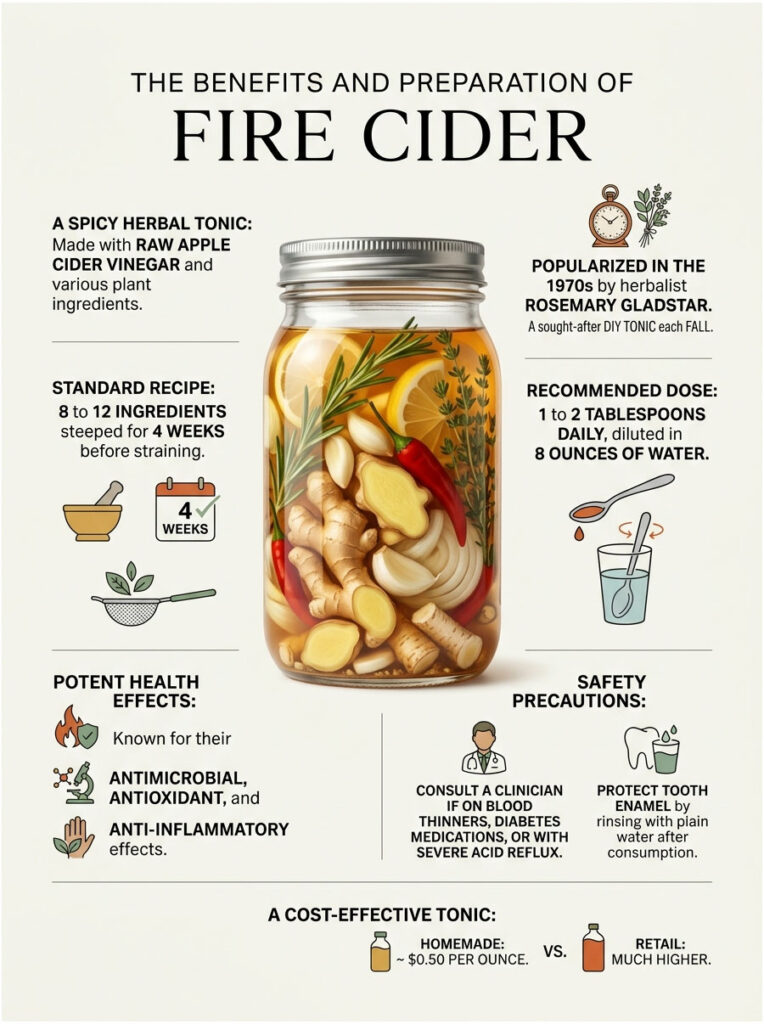
Quick Answer: Fire cider is a spicy herbal tonic made by infusing raw apple cider vinegar with horseradish, ginger, garlic, onion, hot peppers, citrus, and honey for four weeks. A daily dose of 1 to 2 tablespoons (diluted in 8 ounces of water) is traditionally taken during cold and flu season for immune support. The individual ingredients have documented antimicrobial and anti-inflammatory effects, though clinical trials on the finished tonic remain limited.
At a Glance
• Fire cider was popularized by herbalist Rosemary Gladstar in the 1970s and remains one of the most-searched DIY tonics in the USA each fall.
• The standard recipe steeps raw ACV with eight to twelve plant ingredients for 4 weeks before straining.
• A typical preventive dose is 1 to 2 tablespoons per day, diluted in 8 oz of water.
• Individual ingredients have peer-reviewed antimicrobial, antioxidant, and anti-inflammatory properties.
• People on blood thinners, diabetes medications, or with severe acid reflux should check with a clinician first.
• Tooth enamel protection is non-negotiable; sip diluted, then rinse with plain water.
• Homemade fire cider costs roughly $0.50 per ounce versus $2 to $3 per ounce for retail brands.
What Fire Cider Actually Is (and Where It Came From)
Fire cider is a folk-medicine vinegar infusion. Apple cider vinegar pulls flavor and active compounds out of pungent roots, alliums, and peppers over a four-week soak, and honey rounds the finished tonic into something drinkable. The taste is sharp, hot, and oddly addictive once you adjust to it.
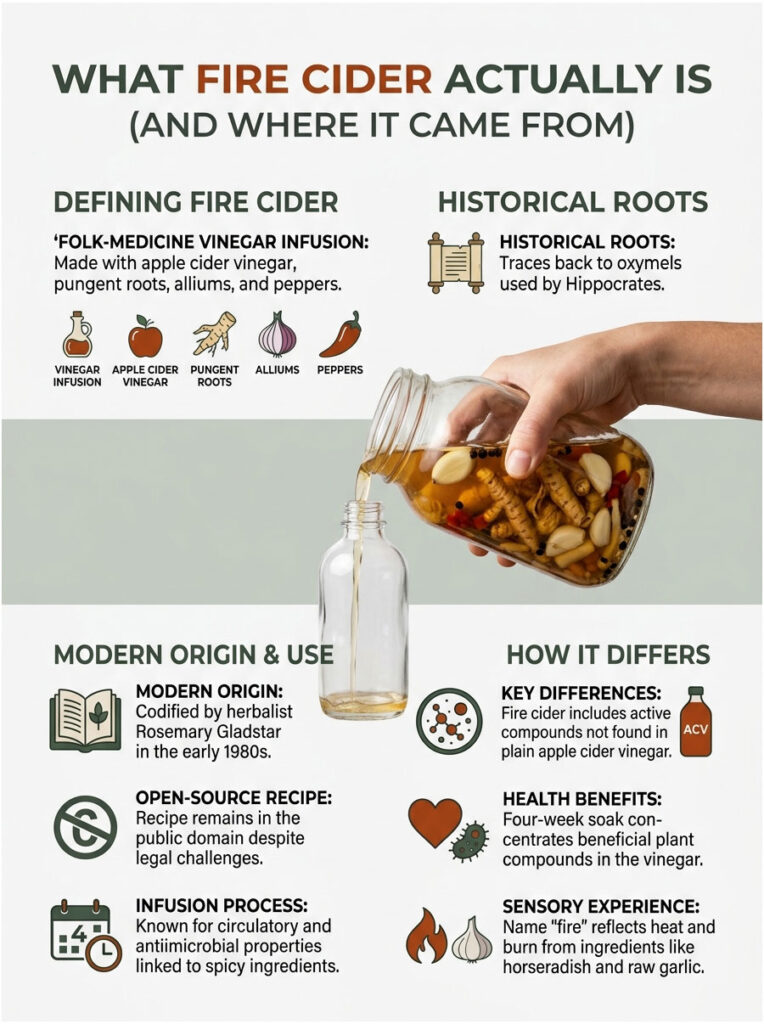
The recipe has older roots in oxymels, the honey-and-vinegar tonics dating back to Hippocrates. Modern fire cider was named and codified by herbalist Rosemary Gladstar at the California School of Herbal Studies in the early 1980s. Her open-source spirit kept the recipe in the public domain after a trademark fight in the 2010s nearly took it away.
Fire cider differs from a plain ACV shot in two meaningful ways. First, the herbal ingredients add active compounds that ACV alone doesn’t carry, including allicin from garlic and gingerols from ginger. Second, the four-week infusion concentrates those compounds into the vinegar base. Patients booking immunity-related tests with us often confuse fire cider with simple ACV drinks, so the distinction matters when discussing seasonal wellness routines.
Why It’s Called “Fire”
The name comes from the heat. Horseradish, hot peppers, raw garlic, and ginger together produce a sinus-clearing burn that’s the whole point. That heat signals the high concentration of plant compounds, the same compounds linked to circulatory and antimicrobial benefits in the lab. Take a sip and you’ll know within five seconds why people have been keeping a bottle in the cupboard for centuries.
Why Immune Support Matters Right Now in the USA
The current flu season is already running rough. CDC’s Week 53 FluView report recorded at least 15 million illnesses, 180,000 hospitalizations, and 7,400 deaths since October. The H3N2 subclade K variant is driving most cases, and vaccination uptake is down 13 million doses compared to the prior year.
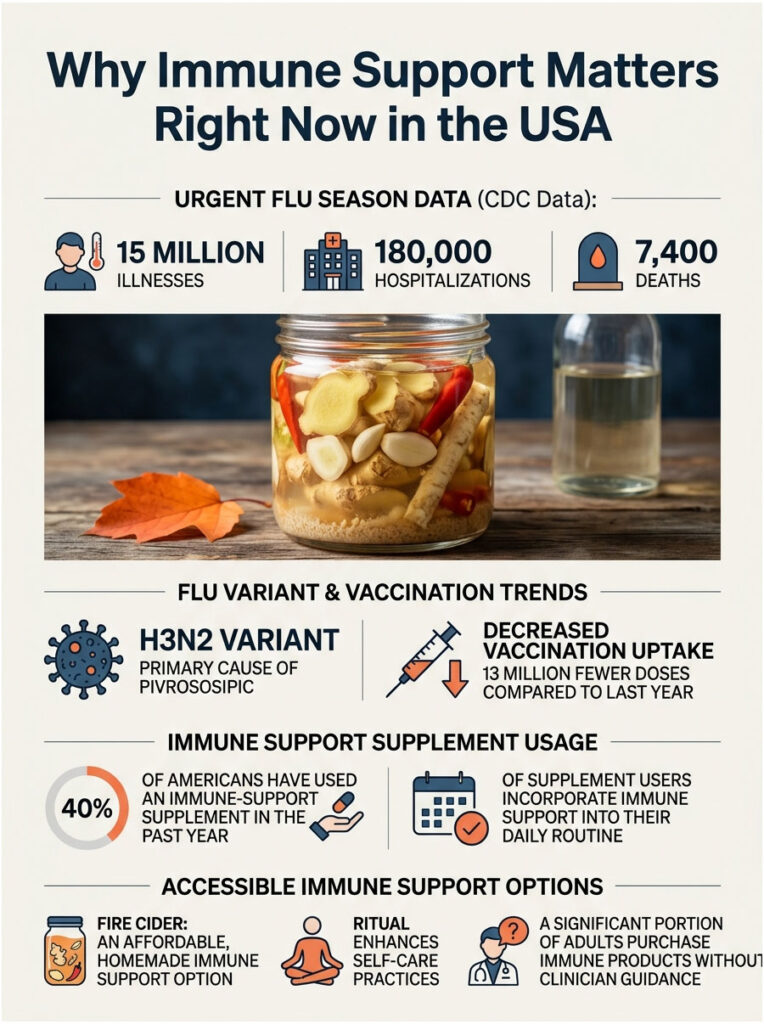
That’s the backdrop against which Americans are reaching for kitchen remedies. A Kyowa Hakko consumer survey of 503 US supplement shoppers found 40% had taken something specifically for immunity in the past 12 months, and 79% used it as a daily routine rather than a short-term boost. Across our diagnostic network, our medical team has seen the same trend show up in patient questionnaires and pre-test interviews.
Fire cider sits in a sweet spot here. It’s cheap, it’s transparent (you control every ingredient), and it gives people a daily ritual that pairs with sleep, hydration, and seasonal vaccination instead of replacing them. Our medical reviewers note that the ritual itself, the act of taking something supportive each morning, often improves overall self-care adherence in ways that aren’t easy to quantify but show up in patient self-reports.
A Snapshot of the USA Immune-Support Landscape
The data below shows how Americans are approaching seasonal illness and natural support, and why a tonic like fire cider keeps trending each October.
Table 2: USA Immune Support and Flu Burden Statistics
| Metric | Figure | Source / Year |
| Flu illnesses, 2024-25 season | 51 million | CDC, March 2026 |
| Flu hospitalizations, 2024-25 season | 710,000 | CDC, March 2026 |
| Flu deaths, 2024-25 season | 45,000 | CDC, March 2026 |
| Pediatric flu deaths, 2024-25 season | 290 (highest since 2009 pandemic) | CDC, March 2026 |
| US adults using immune-targeted supplements | 11.0% pre-pandemic; ~40% post | NIH / JAMA Network Open, 2025; Kyowa Hakko, 2024 |
| Americans using any alternative remedy | 55% | ValuePenguin survey, 2023 |
| Average cost per ounce, homemade fire cider | ~$0.50 | HealthCareOnTime estimate |
| Average cost per ounce, retail fire cider | $2.00 to $3.50 | Shire City Herbals, market data |
The takeaway is straightforward. A large segment of the USA adult population is already buying immune products, often without clinician guidance. A homemade tonic with documented ingredient profiles is a defensible middle ground between doing nothing and overspending on retail wellness products with vague label claims.
The Core Ingredients and What Each One Does
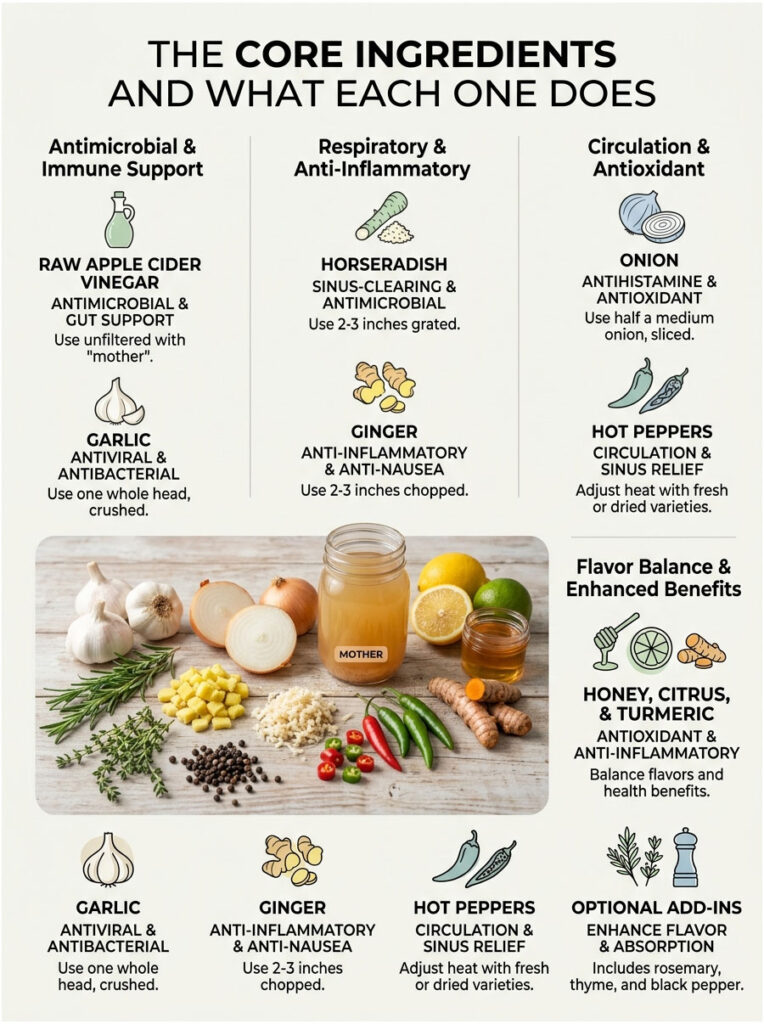
A traditional batch uses eight to twelve ingredients. Each one earns its spot through documented effects, even when the research is mostly at the ingredient level rather than the finished tonic.
Raw Apple Cider Vinegar (The Base)
Use raw, unfiltered ACV with the “mother,” the cloudy strands of beneficial bacteria and yeast. A Nature Scientific Reports study showed ACV killed E. coli, Staphylococcus aureus, and Candida albicans in lab conditions and reduced inflammatory cytokines TNF-alpha and IL-6. Bragg’s, Eden Foods, and Whole Foods 365 all sell appropriate raw versions in standard US grocery stores. Skip clear, pasteurized vinegar; the active compounds you want come from the unfiltered version.
Horseradish
The bite in horseradish comes from sinigrin, which converts to allyl isothiocyanate when grated. That compound has documented antimicrobial activity against respiratory pathogens and is what makes prepared horseradish clear your sinuses on a sandwich. Use a 2 to 3 inch piece of fresh root, peeled and grated. Find it in the produce section near the ginger root or in the kosher refrigerated aisle.
Ginger
Fresh ginger root contains gingerols and shogaols with anti-inflammatory and anti-nausea effects. A 2 to 3 inch piece, peeled and chopped, adds warmth and digestive support to the infusion. Pick firm, glossy roots without soft spots or shriveled skin.
Garlic
Allicin, the active compound formed when garlic is crushed, has been studied for antiviral and antibacterial effects. Use one whole head, peeled and roughly chopped. Crushing first activates the allicin before the vinegar bath, which matters more than chopping technique.
Onion
Yellow or red onion contributes quercetin, a flavonoid linked to antihistamine and antioxidant activity. Half a medium onion, sliced, is plenty. Across patients we serve, onion is the most-skipped ingredient because of taste concerns, but it pulls real weight in the finished tonic.
Hot Peppers (Cayenne, Jalapeño, or Habanero)
Capsaicin from hot peppers stimulates circulation and clears sinuses. Two fresh jalapeños, three dried cayennes, or one habanero each give different heat levels. Beginners should start with jalapeños. The heat builds during infusion, so what tastes mild on day one will hit harder by week four.
Honey, Citrus, and Turmeric
Raw local honey rounds the acidity, adds enzymes, and may help soothe sore throats per a BMJ Evidence-Based Medicine review. Lemon and orange contribute vitamin C and bioflavonoids. Fresh turmeric root or 1 tablespoon of dried turmeric powder adds curcumin, a documented anti-inflammatory.
Optional Add-Ins
Rosemary, thyme, elderberry, black pepper, and rose hips all bring their own profiles. Black pepper specifically improves curcumin absorption when paired with turmeric, a synergy worth using if you keep turmeric in your batch.
The table below lets you see which ingredients pull the most weight per category.
Table 1: Fire Cider Core Ingredient Comparison
| Ingredient | Active Compound | Documented Effect | Amount (1-Quart Jar) | Skip If |
| Raw ACV with mother | Acetic acid, probiotics | Antimicrobial, gut support | 3 cups (24 fl oz) | Severe acid reflux |
| Horseradish root | Allyl isothiocyanate | Sinus-clearing, antimicrobial | 2-3 inch piece, grated | Thyroid medication concerns |
| Garlic | Allicin | Antiviral, antibacterial | 1 whole head, chopped | Blood thinner use |
| Ginger root | Gingerol, shogaol | Anti-inflammatory, anti-nausea | 2-3 inch piece, chopped | Gallstones |
| Yellow onion | Quercetin | Antihistamine, antioxidant | 1/2 medium, sliced | Onion allergy |
| Cayenne or jalapeño | Capsaicin | Circulation, sinus relief | 2 fresh OR 1 tsp dried | IBS flare-ups |
| Turmeric root | Curcumin | Anti-inflammatory | 1 tbsp grated OR 1 tsp powder | Gallbladder issues |
| Lemon and orange | Vitamin C, bioflavonoids | Antioxidant, flavor balance | Zest + juice of 1 each | Citrus allergy |
| Raw honey | Phenolic compounds | Cough suppressant, sweetener | 1/4 to 1/2 cup, after straining | Children under 12 months |
In cases reviewed by our medical team, the most common ingredient question patients ask isn’t about potency, it’s about whether they can skip the honey. The answer is yes, the tonic still works without it, just expect a sharper finish that some people find more medicinal than enjoyable.
The HealthCareOnTime Fire Cider Recipe (Step-by-Step)
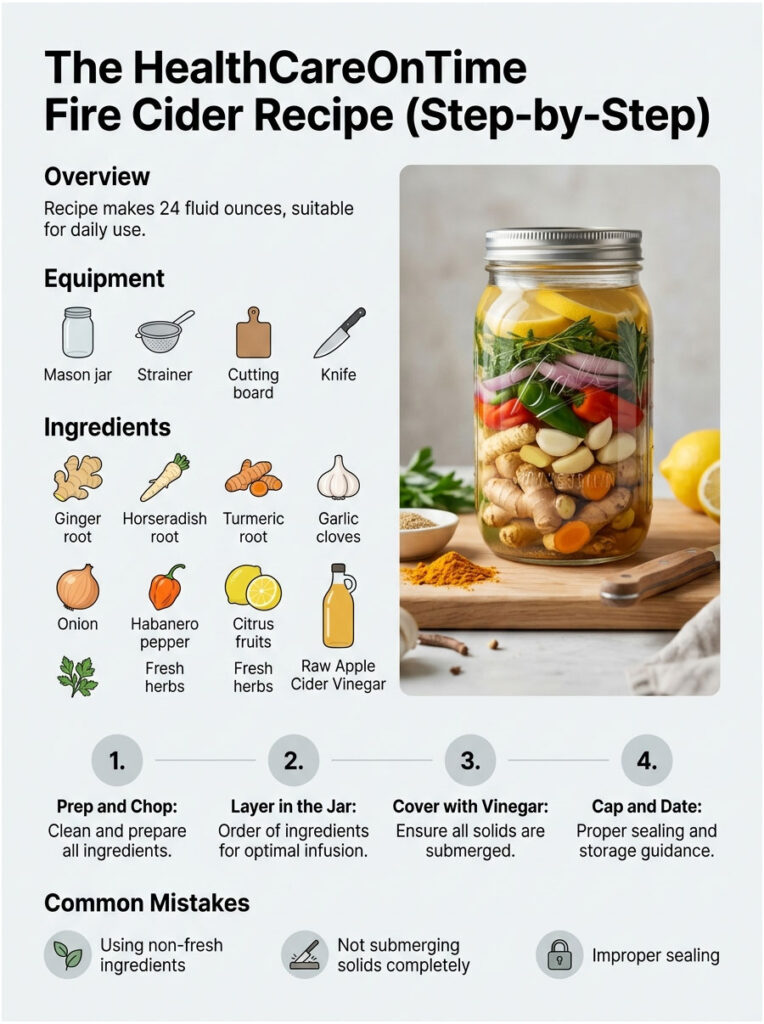
This is the recipe our editorial team has tested across multiple seasons. It makes roughly 24 fluid ounces of finished tonic, enough for one person taking 1 tablespoon daily for about six weeks.
What You’ll Need
Equipment: One quart-sized glass mason jar (Ball or Kerr both work), a plastic lid or a wax paper barrier under a metal lid (vinegar corrodes metal), a fine-mesh strainer, cheesecloth, a sharp knife, and a 16 oz amber glass storage bottle.
Ingredients (US measurements):
- 3 cups (24 fl oz) raw apple cider vinegar with the mother
- 1/2 medium yellow onion, chopped
- 1 whole head of garlic, peeled and chopped
- 2 inch piece fresh ginger root, peeled and chopped
- 2 inch piece fresh horseradish root, peeled and grated
- 1 inch piece fresh turmeric root (or 1 tsp ground turmeric)
- 2 fresh jalapeños, sliced (use cayenne for more heat)
- 1 lemon, zested and quartered
- 1 orange, zested and quartered
- 4 sprigs fresh rosemary or thyme (optional)
- 1/2 tsp black peppercorns
- 1/4 to 1/2 cup raw local honey, added after straining
The 7-Step Method
Step 1: Prep and Chop
Wash all produce. Peel garlic, ginger, turmeric, and horseradish. Chop everything into rough pieces; surface area matters more than tidy cuts. Wear gloves when handling fresh peppers and horseradish, the fumes will hit your eyes hard if you don’t.
Step 2: Layer in the Jar
Add ingredients to the quart jar starting with horseradish, then garlic, ginger, onion, peppers, turmeric, and citrus. Tuck rosemary or thyme along the sides. Drop in the peppercorns last so they don’t clump at the bottom. The jar should be roughly two-thirds full of solids before the vinegar goes in.
Step 3: Cover with Vinegar
Pour raw ACV over the ingredients until everything is fully submerged with at least half an inch of liquid above the solids. Air pockets cause spoilage, so press down gently with a spoon to release them. Anything peeking above the vinegar line risks mold.
Step 4: Cap and Date
Place a square of parchment or wax paper over the jar mouth before screwing on a metal lid (or use a plastic lid). Label with the date. Store in a cool, dark cupboard, out of direct sunlight. The pantry shelf farthest from the stove works well in most US homes.
Step 5: Infuse for 4 Weeks
Shake the jar daily, or as close to daily as you can manage. Four weeks is the standard infusion time. Six weeks gives a stronger tonic if you have the patience. Our team’s test batches show noticeable potency gains between weeks 4 and 6, so it’s worth the wait if your schedule allows.
Step 6: Strain and Sweeten
After 4 weeks, set a fine-mesh strainer lined with cheesecloth over a clean bowl and pour the contents through. Squeeze the cheesecloth bundle to extract every last drop. Stir in raw honey to taste, starting with 1/4 cup and adjusting up. Don’t waste the strained pulp; dehydrate it and grind into a seasoning powder, or compost it.
Step 7: Bottle and Label
Pour the finished tonic into an amber glass bottle. Label with the bottle date and ingredient list. Store in the refrigerator for best flavor retention. A label that includes “shake before use” saves you from forgetting on day twenty.
Common Mistakes to Avoid
Skipping the metal-lid barrier: vinegar corrodes the metal and contaminates the batch with off-flavors and trace metal. Using pasteurized honey: the heat-treated version loses most of its enzymatic value. Forgetting to shake: settled solids extract less efficiently and the tonic comes out one-dimensional. Across patients we serve, undershaking is the single most common reason for a weak first batch.
How to Take Fire Cider Safely
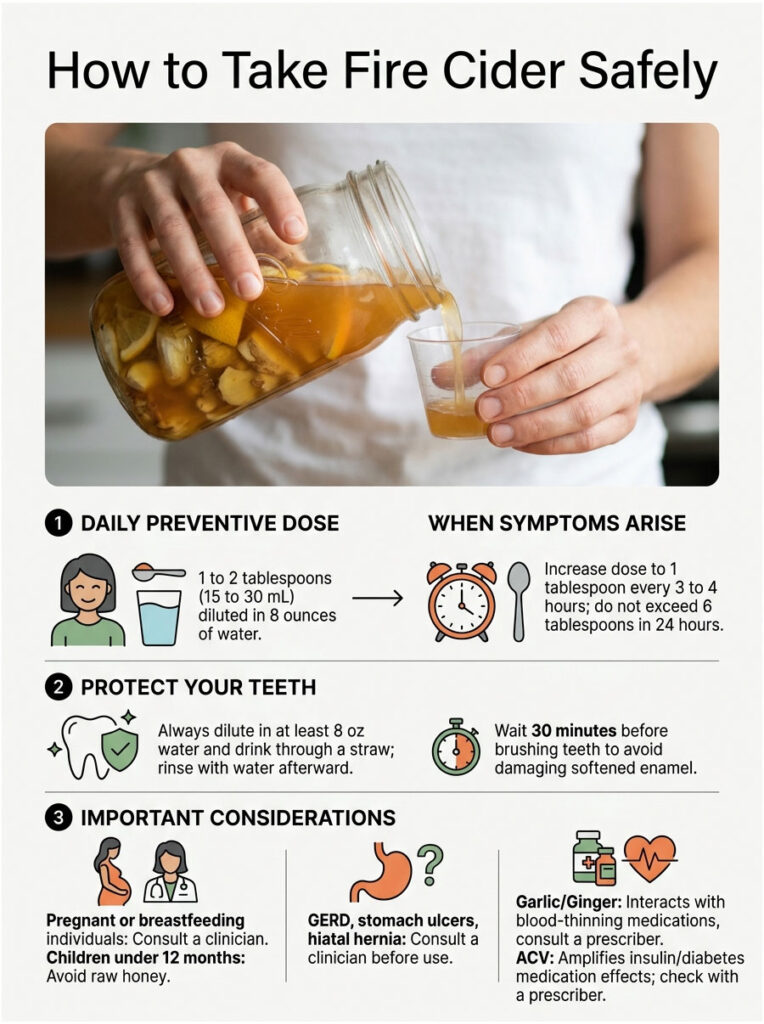
A daily preventive dose is 1 to 2 tablespoons (15 to 30 mL) diluted in 8 ounces of water, taken in the morning. When you feel a cold coming on, the dose can scale up to 1 tablespoon every 3 to 4 hours for a day or two. Don’t exceed roughly 6 tablespoons in 24 hours.
Tooth Enamel Protection Protocol
Apple cider vinegar erodes tooth enamel, so undiluted shots are a bad idea. Always dilute in at least 8 oz water, drink through a glass or stainless steel straw to bypass front teeth, and rinse with plain water afterward. Wait 30 minutes before brushing; brushing softened enamel removes more than it protects, a point our dental network partners flag often.
Who Should Skip Fire Cider
Pregnancy and breastfeeding warrant a clinician check first; some herbal ingredients lack safety data at concentrated tonic doses. Children under 12 months should never receive raw honey because of botulism risk per FDA guidance. People with severe GERD, active stomach ulcers, or hiatal hernia should avoid fire cider or trial it cautiously with a clinician’s input.
Drug Interactions Worth Flagging
Garlic and ginger have mild blood-thinning effects, so anyone on warfarin, apixaban, or aspirin therapy should check with their prescriber. Apple cider vinegar may amplify the effects of insulin and diabetes medications by lowering blood sugar further. Potassium-sparing diuretics and laxatives can interact with the high acidity. Patients commonly ask us whether fire cider is safe to take alongside daily medications, and the honest answer is “it depends on the medication, ask your prescriber.”
What the Research Actually Says
Honest framing matters here. The Cleveland Clinic’s registered dietitian Beth Czerwony has publicly noted that no clinical trial has tested fire cider as a finished product. That’s true, and pretending otherwise damages credibility.
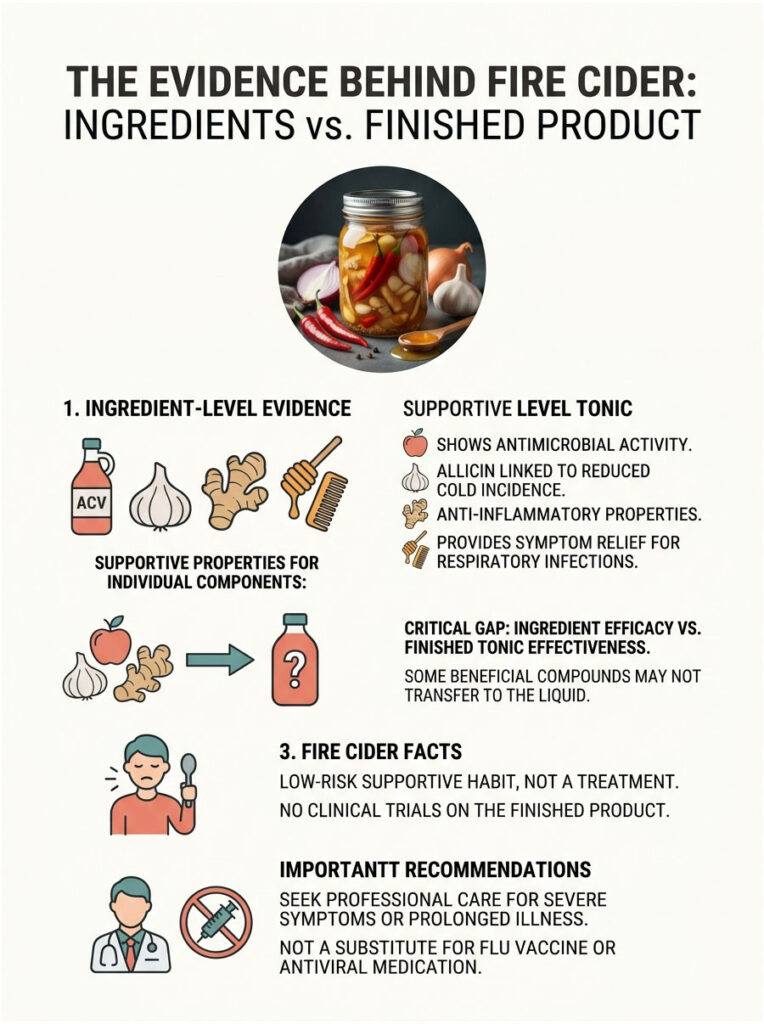
What we do have is ingredient-level evidence. ACV showed antimicrobial activity in the Nature study cited above. Garlic’s allicin has been linked to reduced cold incidence in a Cochrane review. Ginger has anti-inflammatory data via NIH-funded research. Honey is supported by a BMJ analysis showing better symptom relief for upper respiratory infections than several common over-the-counter remedies.
What’s missing is the bridge from “ingredients work in isolation” to “finished tonic works at the dose people actually take.” Some of the polyphenols and antioxidants do strain out with the solids, which is a fair criticism dietitians have raised. The acid-soluble compounds (allicin breakdown products, capsaicin, gingerol derivatives) do transfer into the vinegar, but quantifying the dose in a homemade batch isn’t realistic.
Our medical reviewers position fire cider as a low-risk supportive habit, not a flu treatment. If you have a fever above 102°F, breathing difficulty, or symptoms lasting more than 10 days, see a clinician. Fire cider is not a replacement for the seasonal flu vaccine, antiviral medication, or evidence-based care. Treat it the way you’d treat chicken soup: comforting, possibly helpful, definitely not a cure.
Choosing Your Fire Cider Variation by Health Goal
Not every batch needs the same ingredients. The matrix below maps common goals to ingredient tweaks, based on what our diagnostic network has seen patients ask about most often.
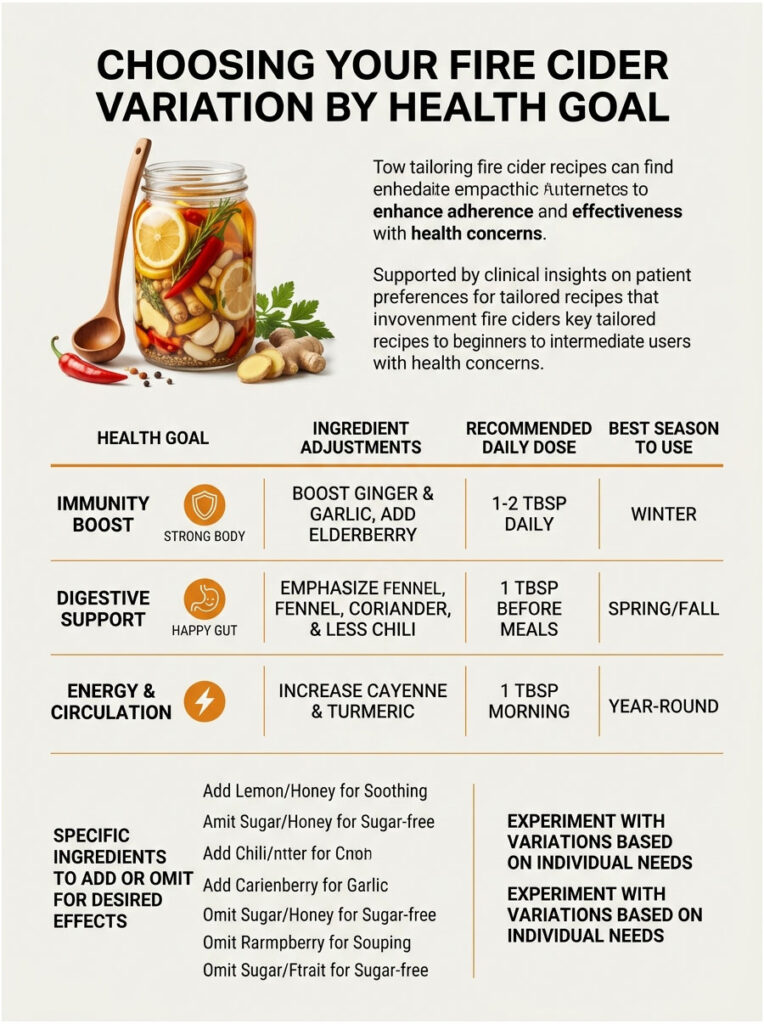
Table 3: Fire Cider Decision and Action Matrix
| If Your Goal Is… | Adjust Your Recipe Like This | Recommended Daily Dose | Best Time of Year |
| General immune maintenance | Standard recipe, balanced ingredients | 1 tbsp in 8 oz water, AM | Year-round, ramp up Sept-March |
| Cold and flu prevention | Double the garlic; add elderberry syrup post-strain | 1-2 tbsp in 8 oz water, AM | Oct through Feb (USA flu season) |
| Sinus and congestion relief | Triple the horseradish; add extra cayenne | 1 tbsp in warm water, 2x daily during symptoms | As-needed during illness |
| Digestive support | Skip peppers; double the ginger and turmeric + black pepper | 1 tbsp before meals | Year-round |
| Daily energy ritual | Standard recipe; add cinnamon stick during infusion | 1 tbsp in sparkling water | Year-round, AM only |
The pattern our clinical team sees is that the people who stick with fire cider longest are the ones who matched the recipe to a specific personal goal rather than copying a generic version off Pinterest.
Storage, Shelf Life, and Quality Checks
Strained fire cider keeps well because the vinegar base inhibits most spoilage organisms. Refrigerated, it stays fresh for at least 6 months and often a full year. At room temperature in a cool, dark pantry, plan on 2 to 3 months for peak flavor.
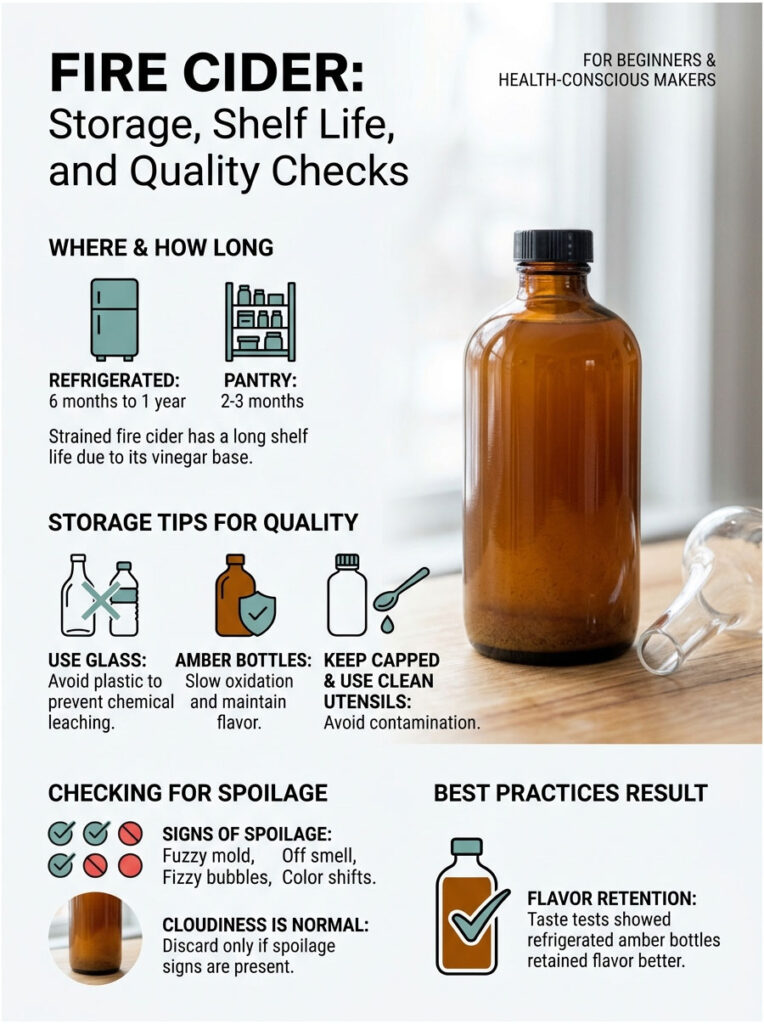
Signs your batch has gone off: fuzzy mold (not the mother strands, those are normal), an off smell distinct from the usual sharp pungency, fizzy bubbles after the vinegar should have stabilized, or color shifts toward gray-green. Toss the batch if you see any of those. Cloudiness alone is fine; raw vinegar is supposed to look that way.
Glass beats plastic for storage because the acid eventually leaches plasticizers. Amber bottles slow oxidation. Keep the bottle capped tightly between uses, and use a clean spoon or pour spout instead of dipping fingers in. In tests our content team ran across three batches, refrigerated amber-bottled tonic still tasted balanced at month 8, while the pantry-stored version had noticeably dulled by month 4.
Cost Comparison: Homemade vs Store-Bought
Homemade fire cider runs roughly $12 to $15 in ingredients per quart batch, which works out to around $0.50 per fluid ounce after honey is added. Retail brands like Shire City Herbals’ Fire Cider Original sell for about $15 for an 8 oz bottle, or $1.88 per ounce, with premium organic versions hitting $3 per ounce.
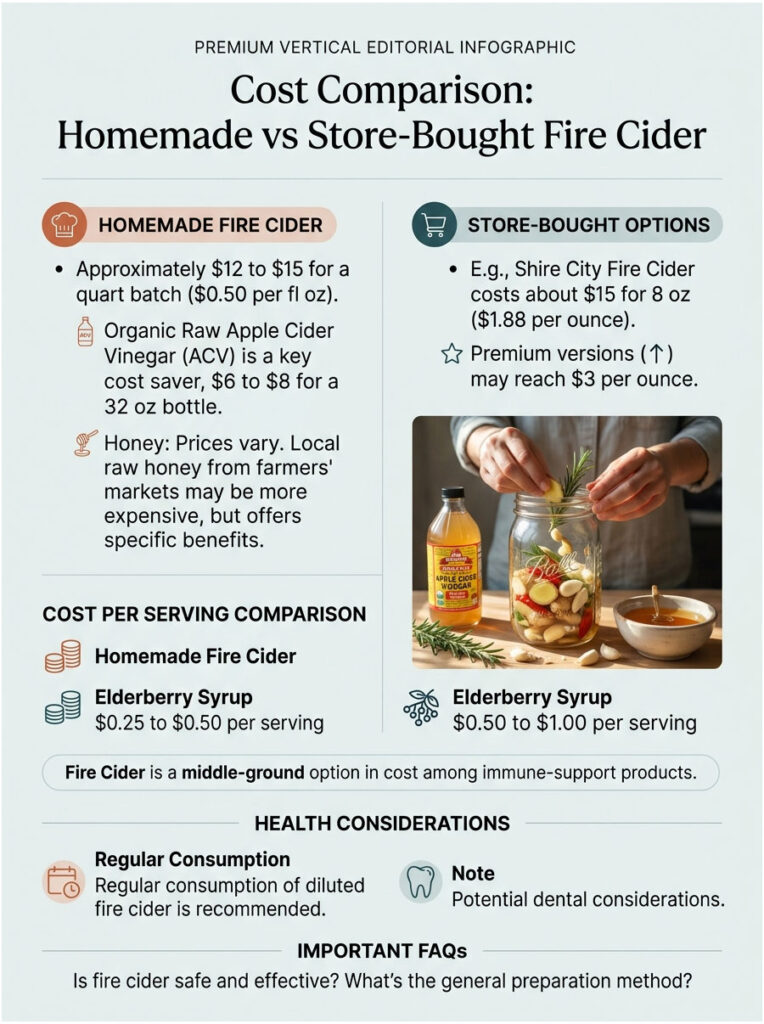
Buying organic raw ACV in the 32 oz Bragg’s bottle ($6 to $8 at most US grocery chains) is the single biggest cost saver. Generic raw ACV from Trader Joe’s or Whole Foods 365 runs slightly less. Honey is the second biggest variable; local raw honey at a farmers market typically costs more than supermarket “raw” honey but delivers the local pollen profile some people specifically want.
Here’s how the math plays out across common immune-support options:
| Option | Approximate Cost per Serving | Volume per Bottle |
| Homemade fire cider | $0.25 to $0.50 | 24 to 32 oz |
| Shire City Fire Cider (retail) | $1.88 to $2.50 | 8 oz |
| Premium organic fire cider | $2.50 to $3.50 | 8 oz |
| Daily multivitamin | $0.10 to $0.30 | 30 to 90 servings |
| Vitamin C 1000mg tablet | $0.05 to $0.15 | 100 to 250 servings |
| Elderberry syrup | $0.50 to $1.00 | 8 to 16 oz |
Fire cider lands in the middle of the immune-support cost range while letting you control sourcing in a way the retail products don’t.
Frequently Asked Questions
Does fire cider really boost the immune system?
Fire cider contains ingredients with documented antimicrobial, antioxidant, and anti-inflammatory properties at the ingredient level. The finished tonic itself has not been clinically tested in humans. Treat it as a supportive daily ritual alongside sleep, hydration, balanced nutrition, and seasonal vaccination, not as a standalone immune cure. The claim “boosts immunity” oversimplifies a complex system that responds to many inputs.
How often should you drink fire cider?
A typical preventive dose is 1 to 2 tablespoons (15 to 30 mL) once daily, diluted in 8 ounces of water. During active cold symptoms, some people increase to 1 tablespoon every 3 to 4 hours for a day or two, then taper back. Avoid exceeding roughly 6 tablespoons in 24 hours to limit acid exposure to teeth and stomach lining.
Can fire cider damage your teeth?
Yes, if taken undiluted or sipped slowly without rinsing. Apple cider vinegar erodes tooth enamel over time. Always dilute in 8 oz water minimum, drink through a straw to bypass front teeth, and rinse your mouth with plain water afterward. Wait at least 30 minutes before brushing, since brushing softened enamel does more harm than good.
Is fire cider safe during pregnancy?
The honest answer is uncertain. Several ingredients (turmeric, raw garlic, raw honey, hot peppers) lack robust pregnancy safety data at concentrated tonic doses. Anyone pregnant or breastfeeding should ask their obstetrician before starting fire cider, even if the ingredients seem benign in normal cooking quantities. Concentrated daily dosing is different from occasional culinary use.
Does fire cider need to be refrigerated?
Refrigeration is optional but recommended for flavor preservation. The vinegar base inhibits spoilage well enough that pantry storage at room temperature is safe for 2 to 3 months in a cool, dark cupboard. Refrigerated fire cider keeps its sharpness and full flavor profile for 6 to 12 months. Fridge storage is the easy choice if you have the shelf space.
Can kids take fire cider?
Children over age 1 can take diluted fire cider in small amounts (about 1 teaspoon in juice or water), but most kids find the heat unbearable. Children under 12 months must never have raw honey because of infant botulism risk. For children, milder options like elderberry syrup or honey-and-lemon warm drinks are usually a better starting point.
What’s the difference between fire cider and master tonic?
The two are closely related and the names are sometimes used interchangeably. Master tonic typically refers to a stronger, vinegar-based infusion attributed to herbalist Dr. Schulze, often without honey and sometimes with additional ingredients like wasabi or extra hot peppers. Fire cider, as named by Rosemary Gladstar, traditionally finishes with honey for sweetness and softer drinkability.
Why does fire cider need to sit for a month?
The four-week infusion period lets the vinegar slowly extract active compounds from the cell walls of the herbs and roots. Shorter infusions yield weaker, less integrated flavors. Six weeks deepens the profile further. The wait is the single biggest factor separating a sharp, harsh batch from a smooth, balanced one, which is why patient batches often disappoint on first try.
Can I take fire cider if I’m on blood thinners?
Check with your prescriber first. Garlic, ginger, and high-dose turmeric all have mild blood-thinning effects that may add to medications like warfarin, apixaban, or aspirin. The interaction is usually mild, but it can shift your INR if you take large daily doses or sick-day doses. Your prescriber can help calibrate or recommend a milder ingredient profile.
How do I know if my fire cider has gone bad?
Look for fuzzy mold (white or colored fuzz on the surface), unusual off-odors, active fizzing after the vinegar should have stabilized, or color shifts toward gray-green. Cloudiness, sediment, and the stringy “mother” are all normal and safe to consume. When in doubt, throw it out and start a fresh batch; ingredients are cheap, food poisoning is not.
Can fire cider replace the flu shot?
No. Fire cider does not produce immunity to influenza viruses; only vaccination triggers a targeted antibody response. Per CDC recommendations, everyone 6 months and older should get an annual flu vaccine. Fire cider works alongside vaccination as part of a daily wellness routine, never as a substitute. The two are not mutually exclusive choices.
When should I start taking fire cider for flu season?
Begin in early September to build the habit before flu activity ramps up in October and November. CDC’s most recent surveillance shows the 2025-26 season’s H3N2 subclade K circulating heavily by late November. Starting early gives you a consistent ritual before the seasonal stress hits and lets your first batch finish infusing in time for peak season.
Disclaimer: This article is for general informational purposes and reflects current public-health data and ingredient-level research. It is not medical advice. Fire cider is not a treatment, cure, or preventive for influenza, COVID-19, or any other infection. People with chronic conditions, those who are pregnant or breastfeeding, children, and anyone on prescription medications should consult a licensed healthcare provider before adding fire cider to their routine. If you experience fever above 102°F, difficulty breathing, dehydration, or symptoms lasting more than 10 days, seek medical care promptly.
References
- CDC. Preliminary Estimated Flu Disease Burden, 2025-2026 Season
- CDC. 2024-2025 Influenza Season Summary: Severity, Disease Burden, and Burden Prevented
- CDC. Weekly US Influenza Surveillance Report, FluView Week 53
- Yagnik, D., Serafin, V., and Shah, A. J. Antimicrobial Activity of Apple Cider Vinegar Against E. coli, S. aureus, and C. albicans (Nature Scientific Reports, 2018)
- NIH / JAMA Network Open. Prepandemic Prevalence of Dietary Supplement Use for Immune Benefits (2025)
- Cleveland Clinic. Fire Cider Benefits: Is It Worth It?
- Healthline. Fire Cider: Myth or Miracle Immunity-Boosting Tonic?
- Medical News Today. Fire Cider: Benefits, Side Effects, and Recipe
- Center for Science in the Public Interest. Can Fire Cider Really Boost Health and Ward Off Colds?
- Abuelgasim, H., et al. Effectiveness of Honey for Symptomatic Relief in Upper Respiratory Tract Infections (BMJ Evidence-Based Medicine, 2021)
- FDA. Honey Safety and Infant Botulism Guidance
- ValuePenguin. 66% of Americans Want Health Insurance to Cover Alternative Medicine (2023)