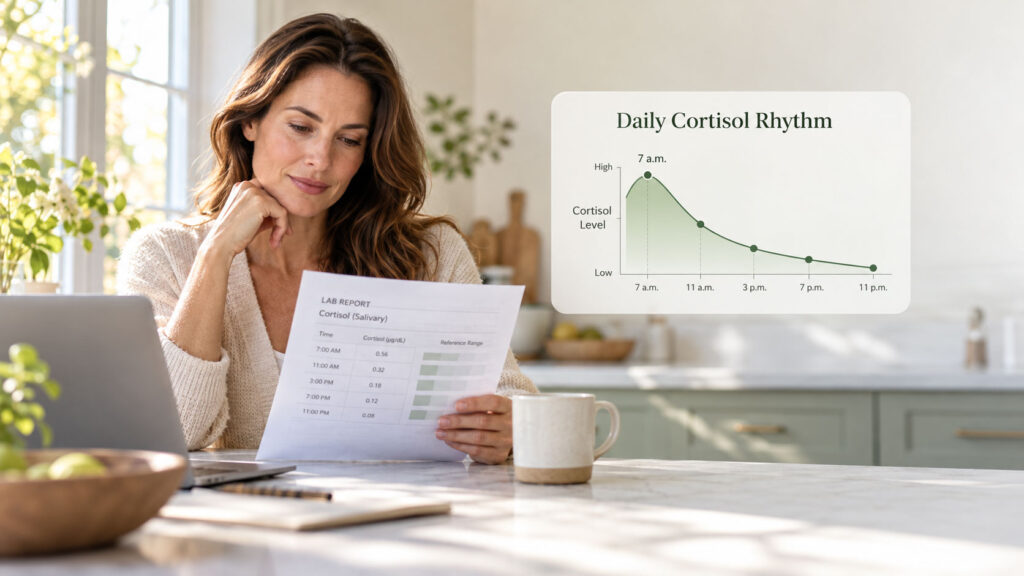
Most women who search for “high cortisol” don’t have a cortisol disease. But the small group who do often wait three years or more for a diagnosis, because every sign gets blamed on stress, kids, work, or “just getting older.”
Both mistakes happen every day. Some women chase a hormone problem they don’t have. Others brush off one they do. This guide shows how to tell the difference.
Table of Contents
Quick Answer: High cortisol in women 30 to 45 is usually caused by ongoing stress, short sleep, and lifestyle strain, and it often improves within weeks once those change. Common signs include belly weight gain, 3 a.m. waking, irregular periods, cravings, and anxiety. If you have purple stretch marks wider than a fingertip, easy bruising, weak thigh muscles, or fast-rising blood pressure or blood sugar, that points to a medical cause. Get tested instead.
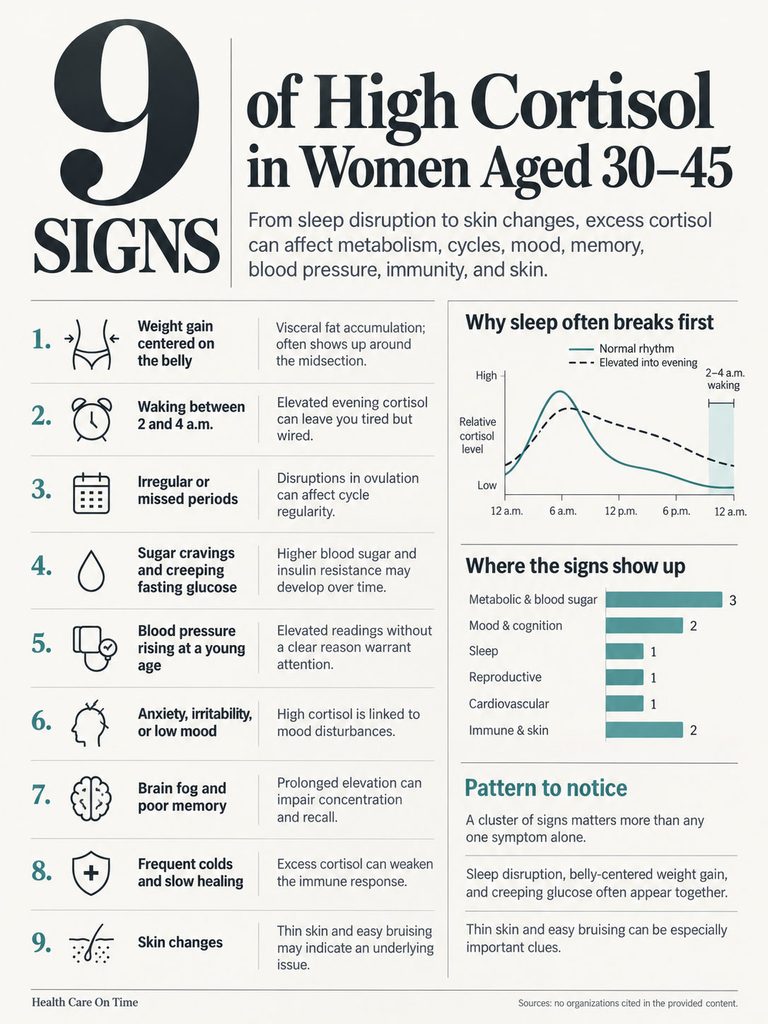
The 9 signs at a glance:
- Weight gain centered on the belly
- Waking between 2 and 4 a.m., “tired but wired”
- Irregular or missed periods
- Sugar cravings and creeping fasting glucose
- Blood pressure rising at a young age
- Anxiety, irritability, or low mood
- Brain fog and poor memory
- Frequent colds and slow healing
- Skin changes: thin skin, acne, easy bruising
At a Glance
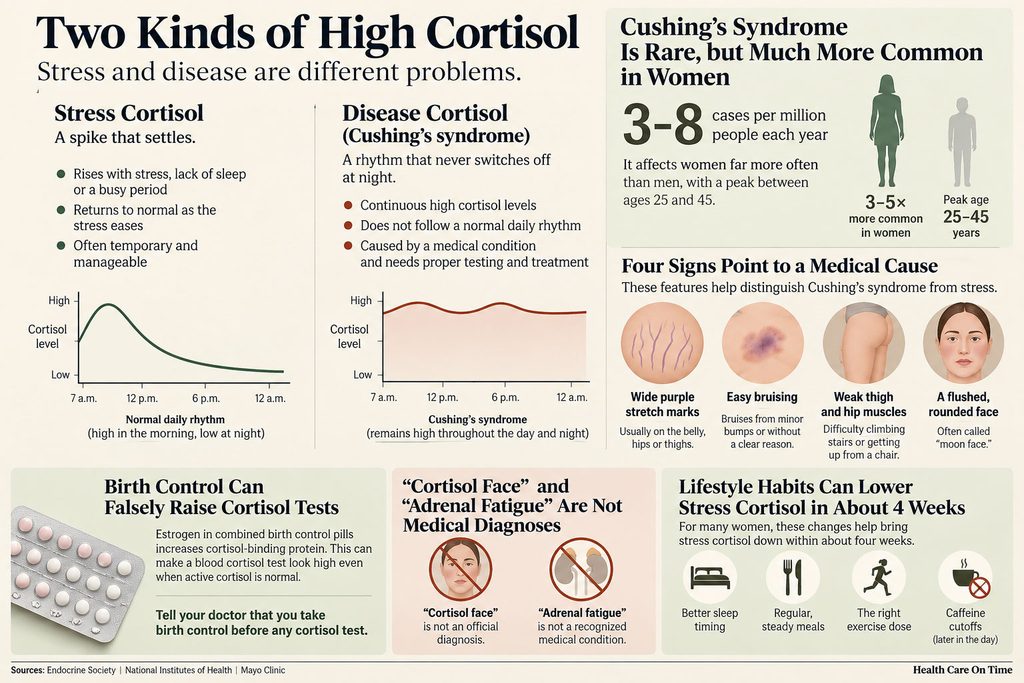
- Stress cortisol and disease cortisol are different problems. One is a spike that settles; the other is a rhythm that never switches off at night.
- Cushing’s syndrome is rare, but it hits women far more often than men, with a peak between ages 25 and 45.
- Four signs separate a medical cause from stress: wide purple stretch marks, easy bruising, weak thigh and hip muscles, and a flushed, rounded face.
- The birth control pill can make a cortisol blood test look falsely high. Tell your doctor before any cortisol test.
- “Cortisol face” and “adrenal fatigue” are not medical diagnoses.
- Sleep timing, steady meals, the right exercise dose, and caffeine cutoffs lower stress cortisol within about four weeks for many women.
What Cortisol Actually Does (And Why “High” Is Confusing)
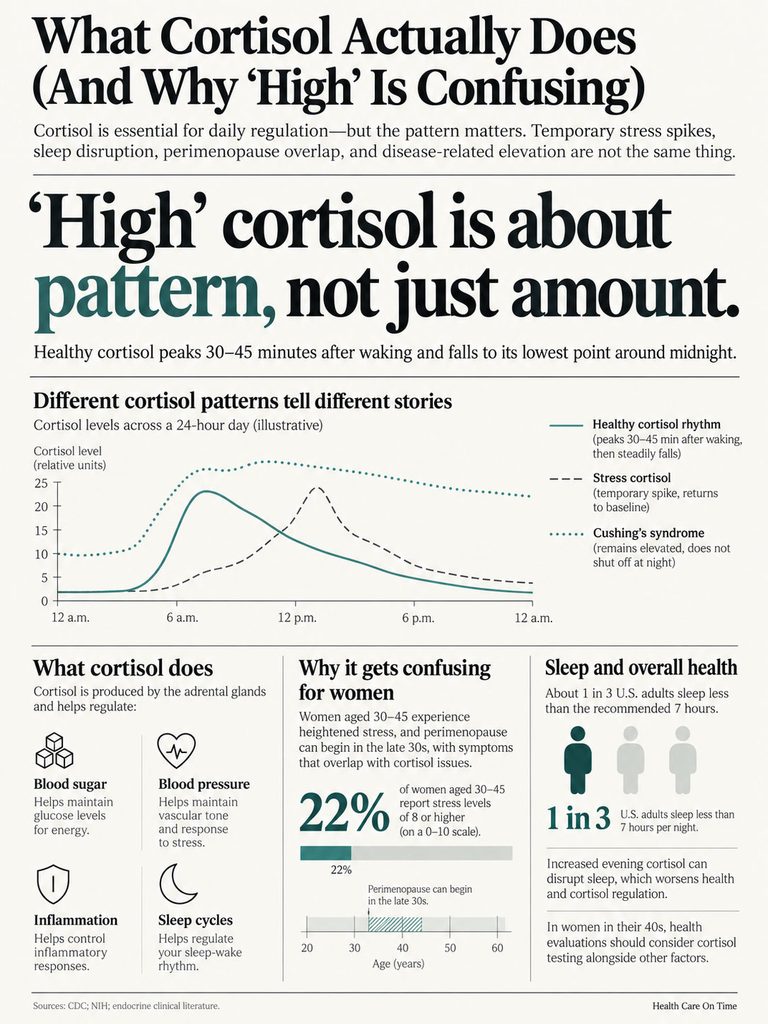
Cortisol is a hormone made by your adrenal glands, two small glands that sit on top of your kidneys. It helps control blood sugar, blood pressure, inflammation, and your sleep and wake cycle.
You can’t live without it. The problem is never cortisol itself. The problem is cortisol that stays high when it should come down.
The Daily Rhythm: High at Waking, Low at Midnight
In a healthy body, cortisol peaks about 30 to 45 minutes after you wake up. That surge helps you get out of bed and think clearly.
It then drifts down all day and hits its lowest point around midnight. That low point lets you fall asleep and stay asleep. Doctors care more about this rhythm than about any single number.
Stress Cortisol vs. Disease Cortisol
Stress cortisol is a spike. A deadline, a sick toddler, or a fight with your partner pushes it up, and it falls once the stress passes. Months of strain can flatten the curve, so evenings run higher than they should.
Disease cortisol is different. In Cushing’s syndrome, a tumor or a steroid medicine keeps cortisol high around the clock. The midnight dip disappears, and the body changes in ways stress alone rarely causes.
Why Women 30-45 Notice It Most
This decade stacks the pressure. Careers peak, children are young, aging parents need help, and sleep gets cut first.
The American Psychological Association’s Stress in America survey found that 22% of women rated their stress 8 or higher out of 10, compared with 18% of men. Among adults 35 to 44, 27% reported stress that high, compared with 8% of adults 65 and older.
Sleep is already short for many Americans. The CDC reports that about 1 in 3 US adults regularly sleeps less than the recommended 7 hours. Patients booking cortisol tests with HealthCareOnTime often fall right in this 30 to 45 window, and that pattern matches what the research shows.
Where Perimenopause Fits In
Perimenopause can start in the late 30s and usually begins in the 40s. Shifting estrogen brings night sweats, broken sleep, mood swings, and belly weight gain. Those are nearly the same signs people blame on cortisol.
Research on whether perimenopause raises cortisol directly is mixed. What’s clear is that the two overlap. Broken sleep from hot flashes nudges cortisol up, and higher evening cortisol makes sleep worse.
That’s why a good workup for a woman in her 40s looks at the whole picture: cortisol only when red flags appear, plus thyroid, iron, blood sugar, and cycle history. Treating night sweats can fix “cortisol symptoms” that were never about cortisol.
9 Signs of High Cortisol in Women 30-45
No single sign proves high cortisol. What matters is a cluster of signs that builds over months. Each sign below carries a quick tag showing whether it usually points to stress or needs a closer look.
1. Weight Gain Centered on the Belly
Cortisol tells the body to store fat deep inside the abdomen, around the organs. This is called visceral fat. Your arms and legs may stay the same while your waist grows.
In a study of 142 women with confirmed Cushing’s syndrome, weight gain showed up in 57.4% of women under 45 but only 15.8% of women 65 and older. Younger women are more likely to notice it as the first sign.
Tag: Usually stress and lifestyle. Needs testing if it’s fast, unexplained, and paired with thin arms and legs.
2. Waking Between 2 and 4 a.m., “Tired but Wired”
When evening cortisol stays high, falling asleep gets harder and early waking becomes common. You feel drained during the day but alert at night.
It works both ways. Lost sleep also raises cortisol. In a classic sleep lab study, restricted sleep pushed next-evening cortisol up by 37% to 45%.
Tag: Usually stress, sleep habits, or early perimenopause.
3. Irregular or Missed Periods
High cortisol can quiet the brain signals that trigger ovulation. Cycles get longer, lighter, or skip entirely.
In one Israeli center, menstrual problems showed up in 46.8% of reproductive-age women with Cushing’s. That makes it one of the most common clues in this age group.
Tag: Could be stress, PCOS, thyroid, or perimenopause. Missing three or more periods in a row deserves a doctor visit no matter the cause.
4. Sugar Cravings and Creeping Fasting Glucose
Cortisol raises blood sugar to give you fast energy. Over time, the body becomes less sensitive to insulin.
You might notice afternoon crashes, stronger sweet cravings, or a fasting glucose that edges from the 80s into the high 90s or low 100s mg/dL on routine labs.
Tag: Stress can do this. A fasting glucose of 126 mg/dL or higher, or diabetes that won’t come under control, needs a cortisol workup.
5. Blood Pressure Rising at a Young Age
Cortisol makes the body hold onto salt and tightens blood vessels. Blood pressure climbs.
A reading over 130/80 in your 30s without a clear reason is worth a second look. Our medical team flags this pattern in particular, because high blood pressure under 40 is less common and often has a hidden cause.
Tag: Needs evaluation, especially above 140/90 or when it needs two or more medicines.
6. Anxiety, Irritability, or Low Mood
Cortisol acts on brain areas that manage fear and mood. Chronically high levels can leave you on edge, short-tempered, or flat.
This works in reverse too. Depression and anxiety can raise cortisol on their own, which is why doctors look at the whole picture instead of mood alone.
Tag: Usually stress or a mood condition. Treat the mood problem directly; don’t wait for a hormone answer.
7. Brain Fog and Poor Memory
The hippocampus, the brain’s memory center, has many cortisol receptors. Long exposure to high cortisol can slow recall and make focus harder.
Many women describe walking into a room and forgetting why. That’s common with poor sleep and stress, and it usually lifts as both improve.
Tag: Usually stress and sleep.
8. Frequent Colds and Slow Healing
Cortisol calms the immune system. That’s why steroid drugs treat inflammation. Too much of it, for too long, leaves you open to more infections.
Small cuts that take weeks to close, or one cold after another, can be a clue.
Tag: Needs a closer look if paired with skin thinning or easy bruising.
9. Skin Changes: Thin Skin, Acne, Easy Bruising
High cortisol breaks down collagen, the protein that keeps skin firm. Skin gets thinner and bruises with small bumps. Acne and oily skin can also flare.
Easy bruising without injury is one of the strongest clues that something more than stress is going on.
Tag: Acne alone is usually stress or hormones. Easy bruising needs testing.
When It’s Not Stress: Signs That Point to Cushing’s
Cushing’s syndrome is rare. StatPearls describes it as the set of signs that comes from long exposure to excess cortisol, either from steroid medicines (pills, inhalers, injections, or creams) or from the body itself.
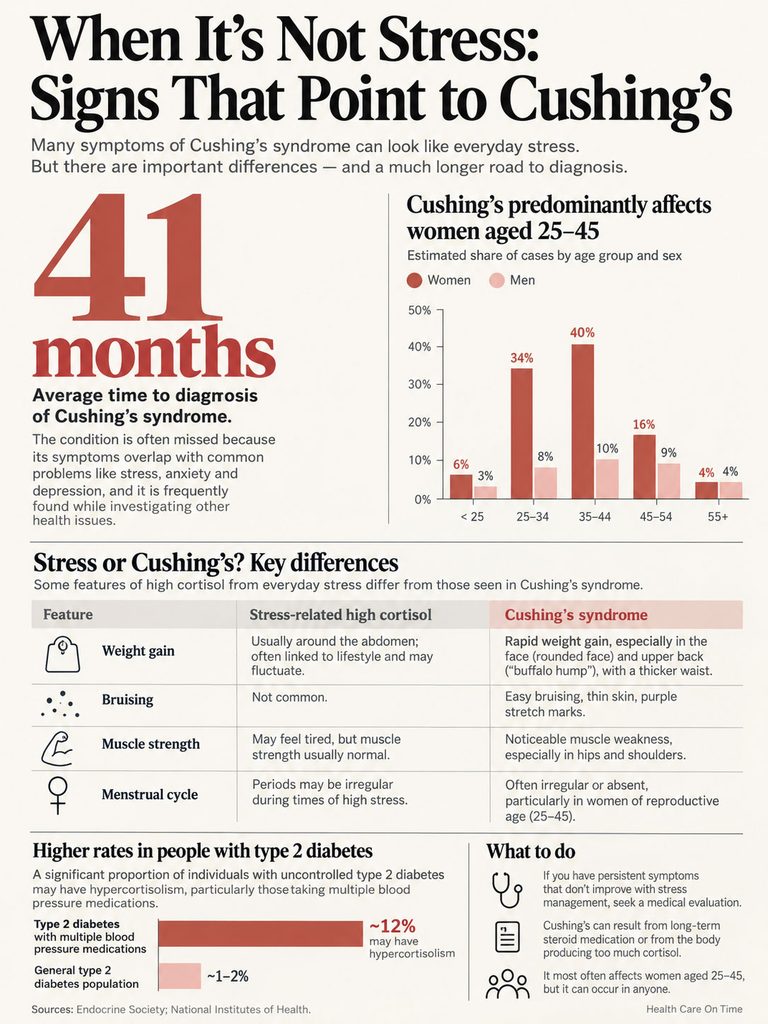
The body-made form is mostly caused by a small pituitary tumor. It affects women three to eight times more often than men, and it peaks between ages 25 and 45. That’s right in the middle of the age range most likely to search this topic.
The Four Signs That Separate Disease From Stress
The Endocrine Society’s diagnostic guideline points to a few features that stress almost never causes:
- Wide purple or dark red stretch marks, usually more than 1 cm wide, on the belly, thighs, or under the arms. Normal stretch marks from pregnancy or weight gain are thin and silvery.
- Easy bruising with no clear injury.
- Weak muscles in the hips and thighs. Trouble standing from a low chair without using your arms.
- A flushed, rounded face (doctors call it facial flushing), often with a fat pad behind the neck or above the collarbones.
One of these, together with several of the 9 signs above, is a reason to get tested, not to try another wellness routine.
Why Diagnosis Takes So Long
Cushing’s is easy to miss because its early signs look like ordinary life. In a Spanish case series, the average time from first symptom to diagnosis was about 41 months.
In the Israeli study above, clinical suspicion started the workup in only 19.7% of confirmed cases. Most were found while doctors chased something else, such as diabetes, high blood pressure, or a fracture.
The Hidden Group: Diabetes That Won’t Respond
The US CATALYST study screened 1,057 adults with type 2 diabetes that stayed uncontrolled despite good treatment. About 24% had hypercortisolism, and the rate rose to about 1 in 3 among those also taking three or more blood pressure drugs.
One caution: the study was funded by the maker of a cortisol-blocking drug. The findings still count, but they apply to hard-to-treat diabetes, not to women with ordinary stress.
| Sign | Stress-related high cortisol | Cushing’s syndrome | Common look-alike | What to do |
| Belly weight gain | Gradual, whole-body plus belly | Fast, belly and face, thin arms and legs | Perimenopause, low thyroid | Track waist monthly; test if fast |
| Stretch marks | Thin, pale, silvery | Purple, wider than 1 cm | Pregnancy, rapid weight gain | Purple and wide: see a doctor |
| Bruising | Normal | Easy bruising with no injury | Blood thinners, low platelets | Get a CBC and cortisol test |
| Muscle strength | Normal | Weak hips and thighs | Low vitamin D, thyroid disease | Chair-stand test; tell your doctor |
| Periods | Mildly irregular | Often stop or become sparse | PCOS, perimenopause | 3+ missed periods: evaluate |
| Blood pressure | Normal or mildly up | Rising, often 140/90+ under 40 | Primary hypertension, kidney disease | 2+ medicines: ask about cortisol |
| Blood sugar | Normal to high-normal | New or hard-to-control diabetes | Type 2 diabetes, PCOS | A1C 6.5% or higher: full workup |
| Night sleep | Early waking | Poor sleep plus all-day fatigue | Anxiety, sleep apnea, night sweats | Fix sleep first; test if no change |
High Cortisol by the Numbers
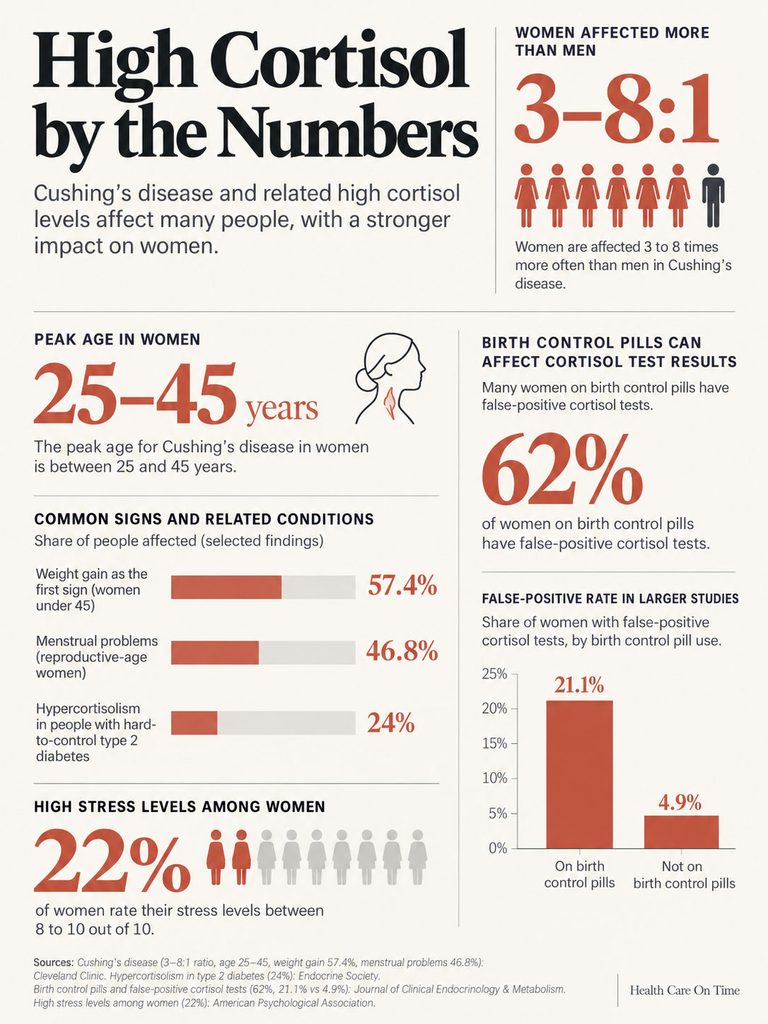
These figures come from US and international clinical research. In cases reviewed by our medical team, the numbers most readers find surprising are the birth control effect and the diabetes overlap.
| Statistic | Figure | Source |
| Women vs. men with Cushing’s disease | About 3 to 8 women for every man | Endocrine Abstracts, multiple cohorts |
| Peak age for Cushing’s in women | 25 to 45 years | StatPearls, NIH |
| Weight gain as first sign, women under 45 | 57.4% (vs. 15.8% at 65+) | OHSU women’s Cushing’s cohort, n=142 |
| Menstrual problems, reproductive-age women | 46.8% | Tel Aviv Sourasky cohort, n=76 |
| Hypercortisolism in hard-to-control type 2 diabetes | 24% (about 1 in 3 with 3+ BP drugs) | CATALYST, 36 US sites, n=1,055 |
| False-positive cortisol test while on the pill | 62% (8 of 13 healthy women) | Netherlands Journal of Medicine study |
| False positives in larger pill study | 21.1% on pill vs. 4.9% off | Journal of Clinical Endocrinology & Metabolism |
| Women rating stress 8 to 10 out of 10 | 22% (men: 18%) | APA Stress in America 2025 |
| US adults sleeping under 7 hours | About 1 in 3 | CDC |
How Doctors Test for High Cortisol (And the Birth Control Trap)
A cortisol test is only useful if it’s the right test, done the right way. Lab orders seen across our diagnostic network show the same issue again and again: a single random blood draw, read without context.
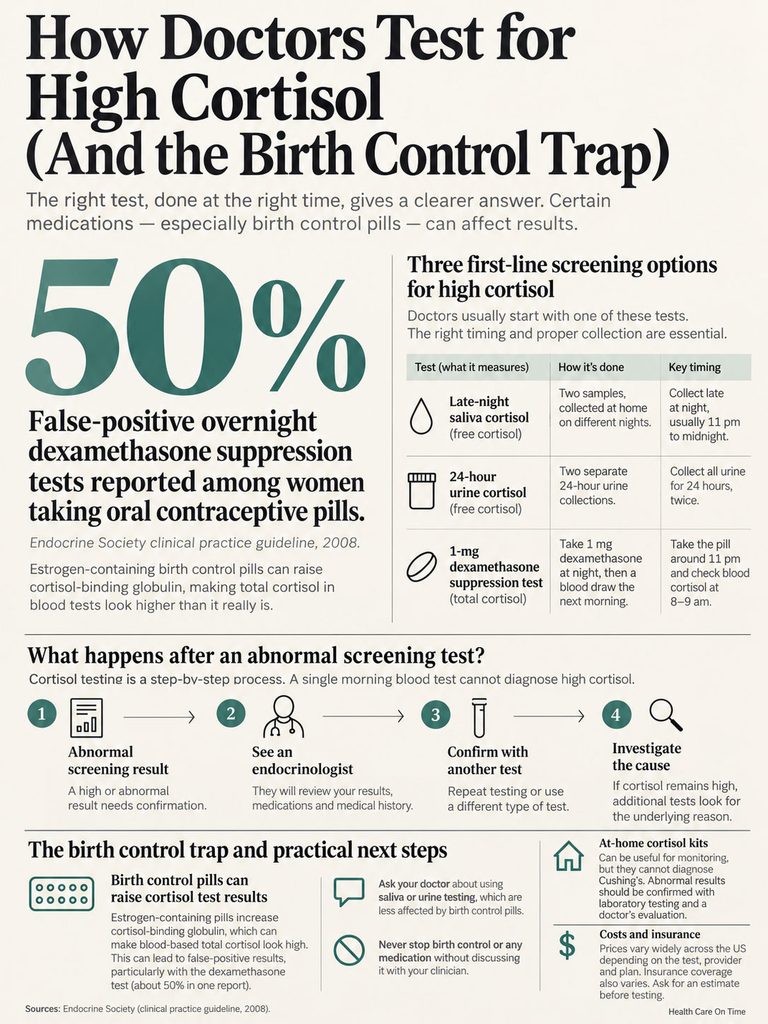
The Three First-Line Tests
Doctors start with one or more of these screening tests:
- Late-night salivary cortisol. You spit into a tube at home between 11 p.m. and midnight. It checks whether cortisol drops at night the way it should. It’s usually repeated on two nights.
- 24-hour urine free cortisol. You collect all urine for a full day. It measures total cortisol output.
- 1 mg overnight dexamethasone suppression test. You take a small steroid pill at 11 p.m. and have blood drawn at 8 a.m. In a healthy body, the pill shuts cortisol down. Under the Endocrine Society guideline, a level above 1.8 mcg/dL is abnormal.
If one test is abnormal, doctors repeat it or add a second one. An endocrinologist then checks ACTH, the pituitary hormone that drives cortisol, to find the source.
Why One Morning Blood Test Isn’t Enough
Morning cortisol is supposed to be high. A morning level of 20 mcg/dL can be completely normal and tells nothing about whether cortisol drops at night.
Normal morning ranges run roughly 5 to 23 mcg/dL, depending on the lab. Because cortisol swings so much, a single random value can’t confirm or rule out Cushing’s.
The Birth Control Pill Trap
This is the testing fact that matters most for women 30 to 45. Estrogen in combined birth control pills raises a carrier protein called cortisol-binding globulin, or CBG. More CBG means more total cortisol shows up in the blood, even though the active, free cortisol is normal.
In a Dutch study of healthy women, 8 of 13 (62%) failed the dexamethasone test while on the pill. One week after stopping, only 1 failed. At six weeks, every test was normal. A larger study in the Journal of Clinical Endocrinology & Metabolism found false positives in 21.1% of pill users compared with 4.9% of non-users.
Guidelines advise stopping estrogen-containing pills, and oral hormone therapy, for six weeks before blood cortisol tests. Some centers test after a one-week pill break instead. Saliva and urine tests are less affected because they measure free cortisol.
Never stop your pill without a backup birth control plan. Talk with your doctor about timing first.
Other Things That Skew Results
- Night-shift work or a scrambled sleep schedule
- Heavy drinking, which can mimic Cushing’s (doctors call this pseudo-Cushing’s)
- Untreated depression or severe anxiety
- Pregnancy, which raises cortisol naturally
- Steroid creams, inhalers, joint injections, or nasal sprays
- Certain seizure medicines and the antibiotic rifampin, which speed up how fast the body clears dexamethasone
At-Home Cortisol Kits: What They Can and Can’t Tell You
Direct-to-consumer kits often measure saliva cortisol four times in one day. They can show a general daily curve. They can’t diagnose Cushing’s, and many aren’t collected at the precise times doctors use.
Even under clinical conditions, a single elevated saliva result is weak evidence. In a US study of 705 patients, most people with at least one high late-night saliva result did not have Cushing’s.
What Testing Costs in the US
Cash prices vary widely by lab and state. Typical self-pay ranges run about $25 to $75 for a blood cortisol test, $40 to $150 for a 24-hour urine test, and $50 to $150 for a late-night saliva kit ordered through a doctor.
Most insurance plans cover cortisol testing when a doctor orders it for symptoms. Total cortisol in blood or saliva is usually billed under CPT code 82533, and urine free cortisol under 82530. Ask for the code ahead of time so you can check your plan’s price tool or your HSA eligibility.
3 Cortisol Myths Worth Dropping
Myth 1: “Cortisol Face” Is a Diagnosis
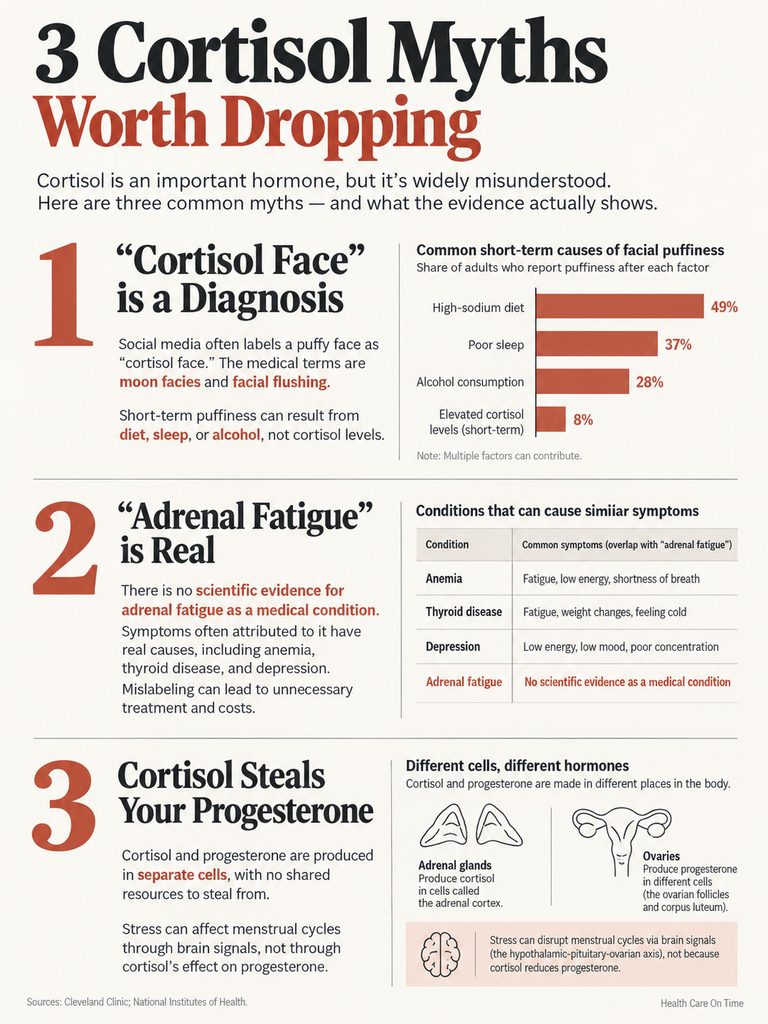
Social media videos call a puffy, rounded face “cortisol face.” According to endocrinologists at the University of Colorado Anschutz, that’s not a medical term. The real terms are moon facies and facial flushing, and they show up with Cushing’s alongside other signs.
A slightly puffy face after a salty dinner, a bad night’s sleep, or alcohol is fluid, not a hormone problem. Many of these videos sell supplements or tools.
Myth 2: “Adrenal Fatigue” Is Real
The idea is that stress “wears out” the adrenal glands. A systematic review of 58 studies by Cadegiani and Kater found no evidence that adrenal fatigue exists as a medical condition. The Endocrine Society agrees.
Your tiredness is real. The label is wrong, and it can send you toward expensive adrenal supplements while a real cause, like anemia, thyroid disease, sleep apnea, or depression, goes untreated.
Myth 3: “Cortisol Steals Your Progesterone”
Some sites claim the body “steals” progesterone to make more cortisol, a theory called pregnenolone steal. Hormone production happens in separate cells with separate controls, so there’s no shared pool to steal from.
Stress can disrupt periods, but it does so through brain signals that slow ovulation. That’s a different and better-understood path.
Your 4-Week Action Plan to Lower Stress Cortisol
If your signs fit the stress pattern and none of the red flags apply, start here. Each week adds one change. Patients commonly ask us which step matters most, and the honest answer is sleep, which is why it comes first.
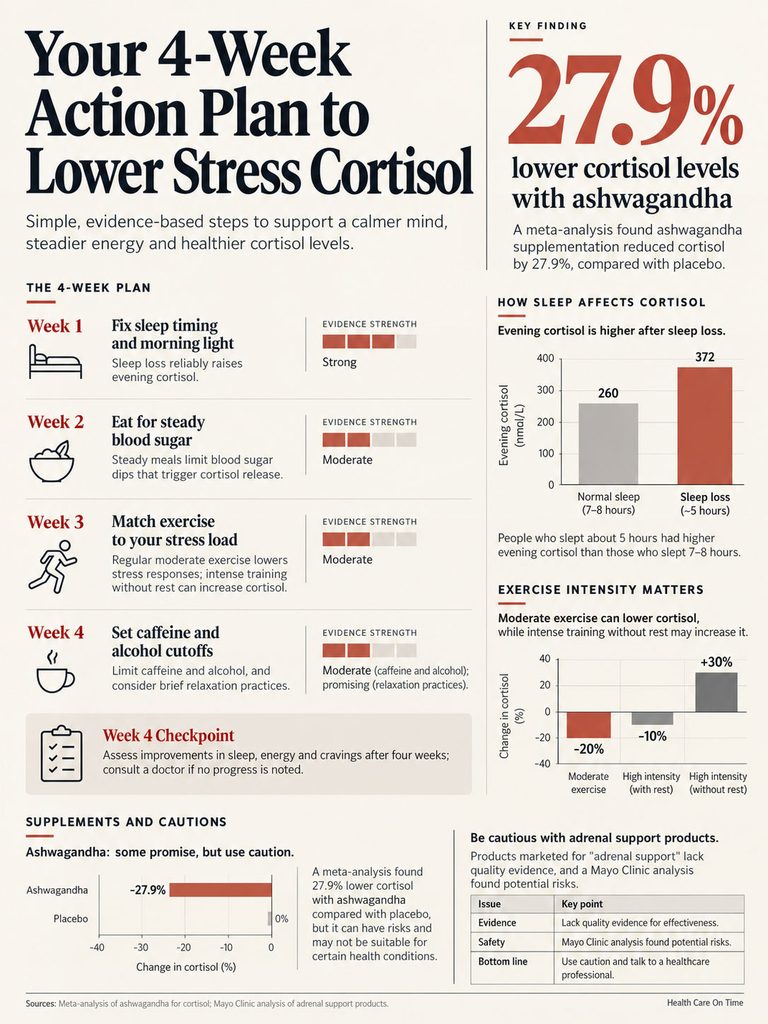
Week 1: Fix Sleep Timing and Morning Light
- Keep the same wake time every day, weekends included. A fixed wake time steadies the cortisol rhythm faster than a fixed bedtime.
- Get 10 to 20 minutes of outdoor light within an hour of waking. Bright morning light helps anchor the cortisol peak where it belongs.
- Aim for 7 to 9 hours in bed. If you wake at 3 a.m., keep the lights low and the phone face down.
Evidence strength: Strong. Sleep loss reliably raises evening cortisol in lab studies.
Week 2: Eat for Steady Blood Sugar
- Eat breakfast within about 90 minutes of waking, with protein (eggs, Greek yogurt, cottage cheese, or a protein smoothie).
- Build lunch and dinner around a protein source plus vegetables, beans, or whole grains.
- Skip long fasting windows during stressful weeks. Extended fasting can raise cortisol in some women.
Evidence strength: Moderate. Blood sugar dips trigger cortisol release, and steady meals limit those dips.
Week 3: Match Exercise to Your Stress Load
- Do strength training 2 to 3 days a week and brisk walking on most other days. The federal Physical Activity Guidelines set a target of 150 minutes of moderate activity weekly.
- If you’re worn out, swap back-to-back high-intensity classes for strength work, yoga, or Pilates for a few weeks.
- Keep hard workouts earlier in the day when possible.
Evidence strength: Moderate. Regular moderate exercise lowers stress responses over time. Very intense daily training without rest can push cortisol higher.
Week 4: Set Caffeine and Alcohol Cutoffs
- Stop caffeine by noon. Keep the total under 400 mg a day, the FDA’s general limit for healthy adults (about four 8-ounce cups of brewed coffee).
- Limit alcohol. Even moderate drinking fragments sleep, and heavy drinking can mimic Cushing’s on lab tests.
- Add one 10-minute daily downshift: a walk without your phone, slow breathing at about 6 breaths per minute, or journaling.
Evidence strength: Moderate for caffeine and alcohol; mixed but promising for brief relaxation practices.
The Week 4 Checkpoint
At the end of four weeks, take stock. Most women who are on the stress side of the line notice better sleep, steadier energy, and fewer cravings, even if the scale hasn’t moved yet.
Book a doctor visit if any of these are true:
- Sleep and energy haven’t improved at all
- Weight is still climbing quickly
- Periods have stopped or a red-flag sign has appeared
- Blood pressure or fasting glucose is still rising
No improvement after four honest weeks is useful information. It means the cause may not be stress, and testing is the next step.
Supplements: What Has Data and What Doesn’t
Ashwagandha has the most trial data. In a 60-day trial of 64 adults, serum cortisol fell about 27.9% compared with placebo. The trials are small and short, and several were funded by supplement makers.
The NIH’s LiverTox database lists rare but serious liver injury from ashwagandha. Skip it if you’re pregnant, have liver or thyroid disease, or take thyroid medicine, sedatives, or immune-suppressing drugs.
Products sold as “adrenal support” or “cortisol blockers” lack quality evidence. A Mayo Clinic Proceedings analysis of 12 adrenal supplements found thyroid hormone in all of them and at least one steroid in 7. Our medical reviewers advise against these products.
What to Do Next: Your Decision Guide
Use this table to match your situation to the right next step.
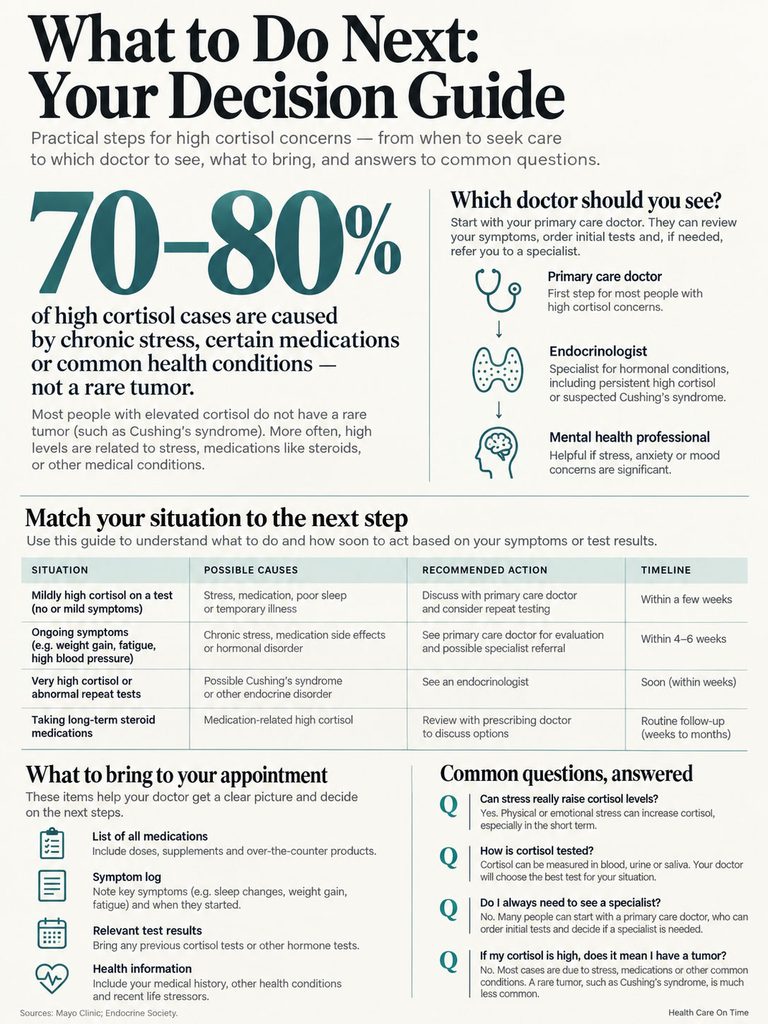
| Your situation | Recommended action | How soon |
| Stress signs only (sleep, mood, mild belly weight), no red flags | Start the 4-week plan; recheck at week 4 | Now |
| Stress signs plus you take the birth control pill and plan to test | Tell your doctor; ask about saliva or urine tests or a pill break | At your next visit |
| Purple stretch marks wider than 1 cm, or easy bruising | See your primary care doctor for cortisol testing | Within 2 to 4 weeks |
| Type 2 diabetes with A1C above 7.5% despite 2+ medicines | Ask about a 1 mg dexamethasone suppression test | Within 1 to 3 months |
| Blood pressure above 140/90 before age 40, or needing 3+ BP drugs | Ask about cortisol and aldosterone screening | Within 1 month |
| Long-term steroid use (pills, inhalers, injections, creams) | Review the dose with your prescriber; never stop suddenly | At your next visit |
| Severe muscle weakness, blood sugar above 300 mg/dL, or confusion | Go to urgent care or the emergency room | Same day |
Which Doctor to See and What to Bring
Start with your primary care doctor or OB-GYN. They can order screening tests and refer you to an endocrinologist if a result comes back abnormal.
Bring a list of every medicine, including inhalers, creams, joint shots, birth control, and supplements. Bring old photos if your face or body shape has changed. A two-week sleep log and your last few period dates help too.
Frequently Asked Questions
How can you tell if your cortisol is high?
Signs alone can’t confirm it. A cluster of symptoms such as belly weight gain, early waking, irregular periods, and rising blood pressure suggests it. Only testing confirms high cortisol: late-night saliva, 24-hour urine, or a dexamethasone suppression test, usually repeated because cortisol shifts from day to day.
Can birth control raise cortisol levels?
Yes, on blood tests. Estrogen in combined pills raises cortisol-binding globulin, which lifts total cortisol even when active cortisol is normal. This causes false positives on blood-based tests. Doctors may ask you to pause the pill for one to six weeks or use saliva or urine tests instead.
Does high cortisol cause belly fat in women?
It can. Cortisol encourages fat storage deep in the abdomen. Stress-related cortisol tends to add modest belly weight over time. In Cushing’s, belly and face weight builds fast while arms and legs stay thin. Diet, sleep, perimenopause, and genetics also shape where women gain weight.
Why do some women wake up at 3 a.m. every night?
Evening cortisol that stays high can cause early waking, especially during stressful periods. Other common causes include alcohol, night sweats from perimenopause, anxiety, sleep apnea, and an overactive thyroid. If it lasts more than a month, a doctor can help sort out which one applies.
Is cortisol face real?
Not as a medical diagnosis. The term comes from social media. A truly rounded, flushed face, called moon facies, does occur in Cushing’s syndrome, but alongside other signs like wide purple stretch marks and muscle weakness. A puffy face alone usually reflects salt, sleep, alcohol, or weight change.
What is a normal cortisol level for a woman?
It depends on the time and the test. Morning blood cortisol usually runs about 5 to 23 mcg/dL. Late-night levels should be much lower. After a 1 mg dexamethasone test, a normal result is 1.8 mcg/dL or below. Always compare results with your own lab’s reference range.
How long does it take to lower cortisol?
Stress-related cortisol can start improving within days of better sleep. Most women notice changes in energy and sleep within three to four weeks of steady habits. Weight changes take longer, often two to three months. Cushing’s syndrome needs medical treatment and doesn’t respond to lifestyle changes alone.
Are at-home cortisol tests accurate?
They measure cortisol, but they can’t diagnose a cortisol disorder. Collection timing, food, caffeine, and stress on test day all affect results. Even in clinics, one high saliva result often turns out to be a false alarm. Use home kits as a conversation starter, not a verdict.
Can high cortisol cause irregular periods?
Yes. High cortisol can slow the brain signals that trigger ovulation, leading to longer, lighter, or skipped cycles. Menstrual changes appear in nearly half of reproductive-age women with Cushing’s. PCOS, thyroid disease, and perimenopause cause similar changes, so testing helps find the real cause.
Is adrenal fatigue real?
No. A systematic review of 58 studies found no evidence for adrenal fatigue as a medical condition, and the Endocrine Society does not recognize it. The exhaustion people feel is real, though. Common hidden causes include iron deficiency, low thyroid, sleep apnea, depression, and long COVID.
Does perimenopause raise cortisol?
Perimenopause can make the body more sensitive to stress, and hot flashes and night waking can disrupt the cortisol rhythm. Research on whether perimenopause itself raises cortisol is mixed. Because the symptoms overlap so much, doctors often check thyroid, iron, and reproductive hormones alongside cortisol.
What doctor should you see for high cortisol?
Start with a primary care doctor or OB-GYN, who can order screening tests. If a test is abnormal or you have red-flag signs like wide purple stretch marks, ask for a referral to an endocrinologist, a hormone specialist who confirms and finds the source of high cortisol.
Frequently Asked Questions
Disclaimer: This article is for general education and does not replace advice from your doctor. Cortisol test results depend on timing, medicines, and lab methods. Never stop prescribed steroids or birth control without talking to your prescriber. If you have severe weakness, very high blood sugar, confusion, or chest pain, seek emergency care. If stress or low mood feels unmanageable, call or text 988 to reach the Suicide and Crisis Lifeline.
References
- Cleveland Clinic: Cushing Syndrome
- StatPearls (NIH): Hypercortisolism
- Endocrine Society: The Diagnosis of Cushing’s Syndrome, Clinical Practice Guideline
- OHSU: Cushing’s Syndrome in Women, Age-Related Differences
- Endocrine Abstracts: Clinical Presentation of Cushing’s Syndrome, Tel Aviv Cohort
- Endocrine Abstracts: Cushing’s Disease Time to Diagnosis, Córdoba Series
- UNC Health: CATALYST Hypercortisolism in Type 2 Diabetes
- Erasmus University: Oral Contraceptives and the 1 mg Dexamethasone Test
- Journal of Clinical Endocrinology & Metabolism: Oral Contraceptives and DST False Positives
- Journal of the Endocrine Society: Salivary Cortisol and Cortisone
- Leproult et al., Sleep: Sleep Loss and Evening Cortisol
- CDC: Adult Sleep Facts and Stats
- Cadegiani & Kater, BMC Endocrine Disorders: Adrenal Fatigue Does Not Exist
- University of Colorado Anschutz: What to Know About Cortisol Face
- Chandrasekhar et al.: Ashwagandha and Stress Trial
- NIH LiverTox: Ashwagandha
- Mayo Clinic Proceedings: Hormone Contamination in Adrenal Supplements (PubMed search)
- US Physical Activity Guidelines for Americans
- FDA: How Much Caffeine Is Too Much?
- American Psychological Association: Stress in America