
One study found that caregivers of people with ATTR amyloidosis spend a median of 2 hours a week on care. Another found 72 hours. Both numbers are real, and where your loved one falls in that range changes almost everything about the help you need.
Table of Contents
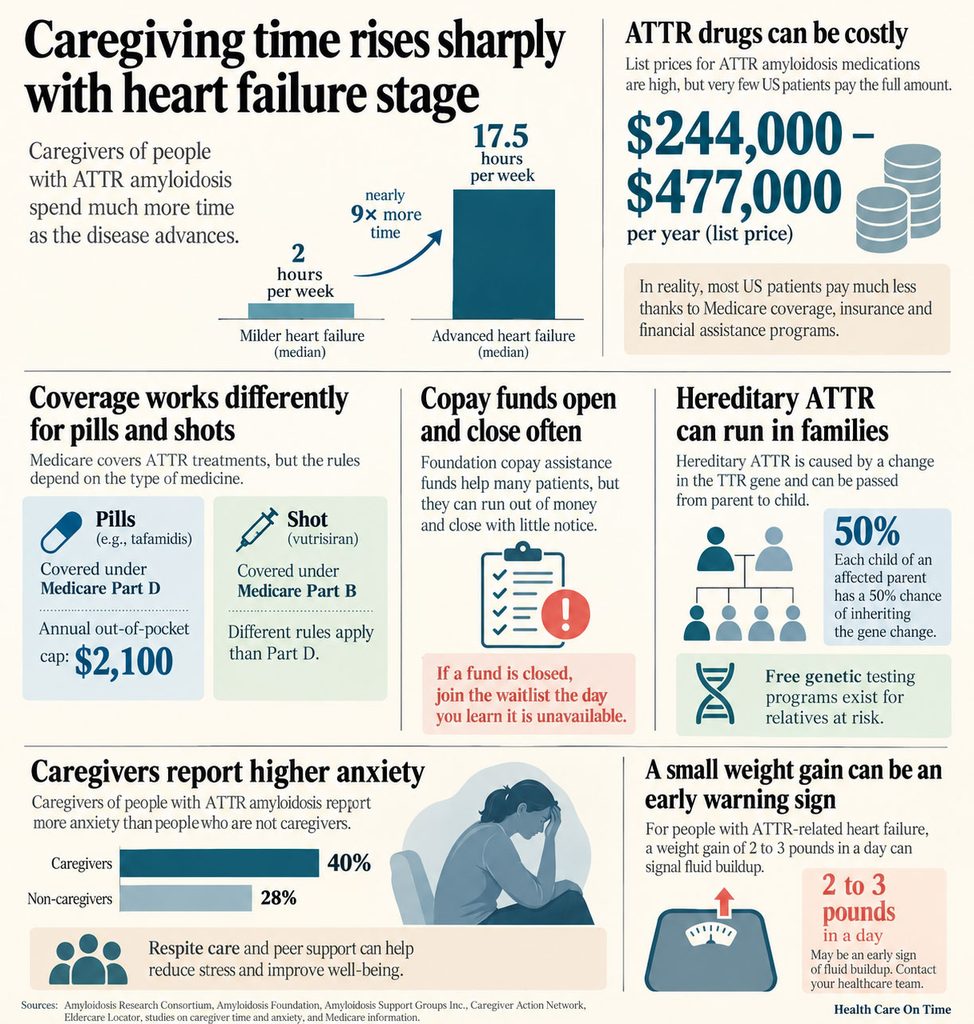
Quick Answer: The main resources for ATTR amyloidosis caregivers are the Amyloidosis Research Consortium (ARC), the Amyloidosis Foundation, Amyloidosis Support Groups Inc., and the Caregiver Action Network. For money help, use foundation copay funds (PAN, HealthWell, The Assistance Fund) and Medicare’s out-of-pocket limits, including the $2,100 Part D cap in 2026. For a break, call the Eldercare Locator at 1-800-677-1116 to find respite care near you.
At a Glance
- Caregiving time rises sharply with heart failure stage: a median of 2 hours a week in milder cases vs 17.5 hours in advanced ones.
- ATTR drugs list at about $244,000 to $477,000 a year. Very few US patients pay that.
- Pills fall under Medicare Part D ($2,100 cap). The shot, vutrisiran, falls under Part B, which has different rules.
- Foundation copay funds open and close often. Join the waitlist the day you learn a fund is closed.
- Hereditary ATTR can run in families. Free genetic testing programs exist for relatives.
- ATTR caregivers report more anxiety than non-caregivers. Respite care and peer support help.
- A weight gain of 2 to 3 pounds in a day can be an early sign of fluid buildup.
What Caring for Someone With ATTR Amyloidosis Really Involves
ATTR amyloidosis happens when a blood protein called transthyretin (TTR) loses its shape. The misfolded protein builds up as stiff deposits, mostly in the heart and nerves. Over time, those organs stop working the way they should.
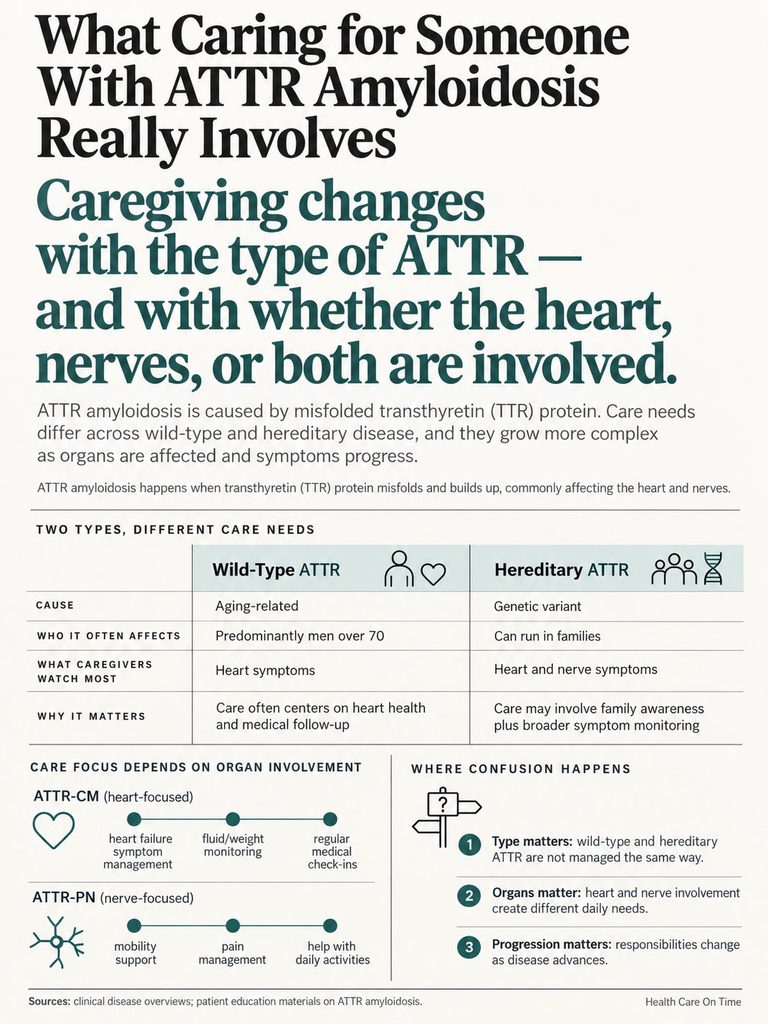
Your job as a caregiver depends on which organs are hit and how far the disease has gone. A man in his 80s with early heart involvement may need rides and reminders. A 55-year-old with nerve damage may need help walking and bathing.
Wild-Type vs Hereditary ATTR
Wild-type ATTR (ATTRwt) comes with aging. It is not inherited, it mostly affects men over 70, and it shows up mainly in the heart.
Hereditary ATTR (ATTRv or hATTR) is caused by a change in the TTR gene. It can start earlier, can affect the heart, the nerves, or both, and each child of an affected parent has a 50% chance of inheriting the gene variant.
For caregivers, this matters in a very practical way. With hereditary ATTR, you may be caring for one family member while worrying about another, or about yourself.
Heart-Focused Care (ATTR-CM) vs Nerve-Focused Care (ATTR-PN)
ATTR-CM (cardiomyopathy) stiffens the heart muscle. Daily life centers on heart failure care: weight checks, water pills, fatigue, shortness of breath, and cardiology visits.
ATTR-PN (polyneuropathy) damages nerves. It brings numbness, burning pain, weakness, falls, stomach problems, and dizziness when standing. Care here leans toward mobility, safety, and personal care.
When our medical team reviews caregiver questions, the most common mix-up is simple: families read advice written for the other form of the disease. Use the table below to match advice to your situation.
| ATTR Type | Who It Usually Affects | Main Daily Care Needs | Typical Care Load (Research) | Should Family Get Tested? |
| Wild-type ATTR-CM | Mostly men over 70 (one study: 86% male, median age 81) | Daily weight, salt and fluid limits, water pills, breathlessness, cardiology visits | Median 2 hours/week in milder heart failure (NYHA I/II) | Usually no; not inherited |
| Hereditary ATTR-CM (V122I) | Black Americans over 60; 3.4% carry V122I | Same heart failure care, plus family health talks | Similar to wild-type; rises with stage | Yes; each child has a 50% chance of carrying it |
| Hereditary ATTR-PN | Adults from their 30s to 60s, depending on variant | Falls, numbness, pain, stomach upset, dizziness on standing | 60.9% need a caregiver; up to 96.3% at the most severe stage | Yes |
| Mixed heart and nerve disease | Many hereditary variants | Both sets of needs at once | Mean 46 hours/week in one US-led survey | Yes |
| Advanced heart disease (NYHA class III) | Any type | Help with cleaning (58%), cooking (51%), bathing (35%), walking (35%) | Median 17.5 hours/week | Depends on type |
How Much Care Does ATTR Amyloidosis Take? The Real Numbers
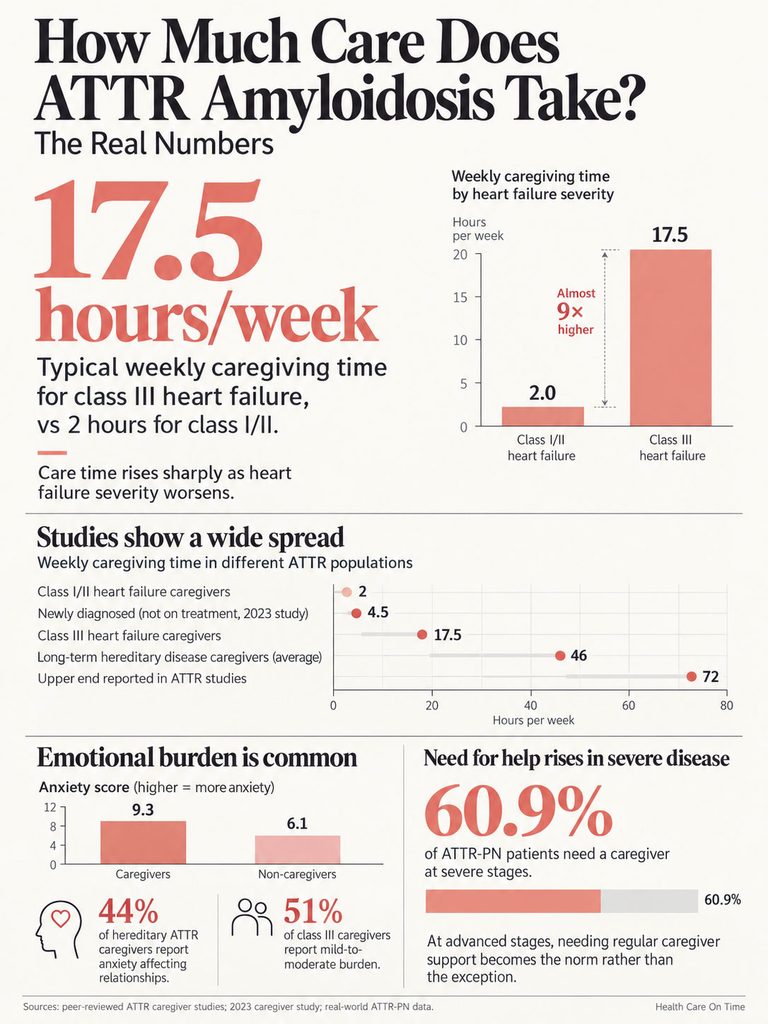
Caregiver hours in ATTR studies range so widely that families often feel either guilty or confused. The spread makes sense once you see who was studied.
Why Studies Show 2 Hours to 72 Hours a Week
A 2023 study in Frontiers in Cardiovascular Medicine followed 208 patient and caregiver pairs. The patients were newly diagnosed, mostly wild-type, and not yet on disease-modifying drugs. Caregivers spent a median of 4.5 hours a week on care.
An earlier survey by Stewart and colleagues found caregivers spending an average of 46 hours a week. Those caregivers had been at it for 3 to 7 years, and 41% had ATTR themselves. A related study on ClinicalTrials.gov reported a median of 72 hours a week among 29 caregivers.
The lesson: early wild-type heart disease and long-running hereditary disease are very different jobs. Plan for the stage you are in, and expect the load to grow.
How the Burden Rises as Heart Failure Worsens
Doctors grade heart failure on the New York Heart Association (NYHA) scale, from class I (no limits) to class IV (symptoms at rest). In the 2023 study, caregivers of class III patients spent a median of 17.5 hours a week on care. That is more than 8 times the 2 hours spent by caregivers of class I or II patients.
Half of caregivers (51%) for class III patients reported at least mild-to-moderate burden on the Zarit Burden Interview, a standard caregiver stress score. Only 33% of caregivers for milder cases did.
Families booking cardiac lab panels through HealthCareOnTime often ask what “class III” means in daily life. In plain terms, it means getting short of breath doing less than ordinary activity, such as walking across a room or getting dressed.
The Mental Health Toll on Caregivers
A survey of hereditary ATTR caregivers found their anxiety scores were higher than matched non-caregivers (9.3 vs 6.1 on the HADS scale). A score of 8 or more suggests anxiety worth raising with a doctor.
An Italian study of cardiac amyloidosis caregivers found 44% were anxious, and those caregivers reported more conflict with the person they cared for. Stress spills into the relationship. That is not a character flaw; it is a signal to get support.
| Statistic | Number | Group Studied and Source |
| Median weekly caregiving hours (all) | 4.5 hours | 208 ATTR-CM pairs, untreated; Ponti et al., Frontiers in Cardiovascular Medicine, 2023 |
| Weekly hours, advanced heart failure (NYHA III) | 17.5 hours vs 2.0 for NYHA I/II | Same study |
| Caregivers of NYHA III patients with mild-to-moderate burden or worse | 51% | Same study (Zarit Burden Interview) |
| Mean weekly caregiving hours, longer-term disease | 46 hours | Stewart et al., Neurology and Therapy, 2018 |
| Median weekly caregiving hours | 72 hours (range 2 to 168) | 29 ATTR caregivers; ClinicalTrials.gov NCT01604122 |
| ATTR-PN patients needing a caregiver | 60.9% overall; 96.3% at most severe stage | Real-world ATTR-PN sample; ISPOR Europe 2025 |
| Caregiver anxiety score vs non-caregivers | 9.3 vs 6.1 (HADS) | 36 hATTR caregivers; Acaster et al., Orphanet J Rare Dis, 2023 |
| US family caregivers (all conditions) | 63 million; 1 in 5 in fair or poor health from caregiving | AARP and National Alliance for Caregiving, 2025 |
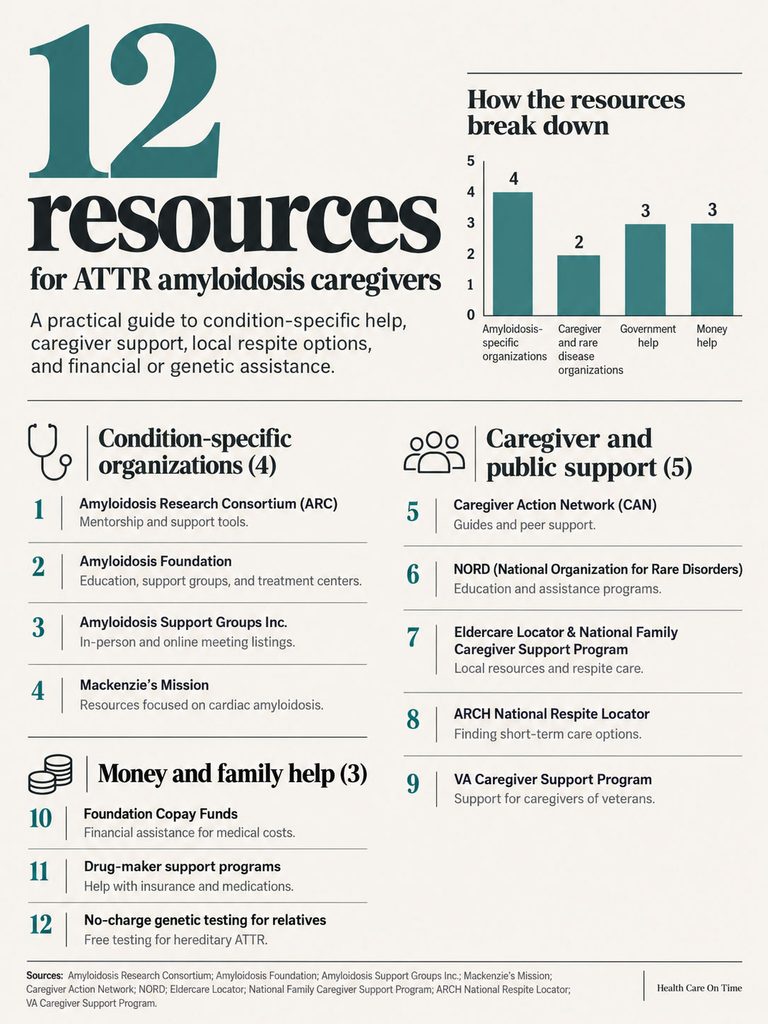
12 Resources for ATTR Amyloidosis Caregivers
These are the resources our medical reviewers point families to first. They are grouped by what they help with. None requires your loved one to be on a specific drug.
Amyloidosis-Specific Organizations
1. Amyloidosis Research Consortium (ARC)
ARC runs PEER Link, which pairs patients and caregivers with mentors who have lived with amyloidosis. Its free My Amyloidosis Pathfinder tool helps you find specialty centers and clinical trials. ARC social workers also help families find emotional and practical support. Phone: 617-467-5170.
2. Amyloidosis Foundation
Founded by people living with amyloidosis, the Amyloidosis Foundation offers education, support group listings, webinars, and a list of treatment centers with amyloidosis experience. Phone: 248-922-9610.
3. Amyloidosis Support Groups Inc.
This group lists in-person and online meetings by state and runs a 24/7 toll-free line at 866-404-7539. If you want to sit in a room with people who understand, start here.
4. Mackenzie’s Mission
Focused on cardiac amyloidosis, Mackenzie’s Mission shares blogs, videos, a podcast, and resource links. It is useful when you want to hear from other families in plain language.
Caregiver and Rare Disease Organizations
5. Caregiver Action Network (CAN)
CAN offers a free guide, Caregiving Through Amyloidosis (ATTR): A Guide for Families, covering the diagnosis journey, the health system, and practical resources. CAN also runs a Caregiver Help Desk and a peer forum.
6. NORD (National Organization for Rare Disorders)
NORD offers rare disease education, caregiver resources, and some assistance programs for treatment and testing costs. Programs may have waitlists, so check status directly.
Government Help
7. Eldercare Locator and the National Family Caregiver Support Program
The Eldercare Locator (1-800-677-1116) connects you with your local Area Agency on Aging. Through the federal National Family Caregiver Support Program, these agencies fund respite care, training, counseling, and support groups for people caring for adults 60 and older.
8. ARCH National Respite Locator
The ARCH National Respite Network helps you find short-term care so you can take a break. Respite can last a few hours or a few days, at home or at a care center.
9. VA Caregiver Support Program
If your loved one is a veteran, the VA Caregiver Support Line (1-855-260-3274) can connect you with training, respite, and in some cases a monthly stipend.
Money Help
10. Foundation Copay Funds
Independent charities help pay copays, coinsurance, and deductibles for people who qualify by income and insurance. For amyloidosis, the main ones are the PAN Foundation (part of Patient Advocate Foundation since a March 2026 merger), the HealthWell Foundation, and The Assistance Fund.
11. Drug-Maker Support Programs
Each ATTR drug maker runs a support program (Pfizer’s VyndaLink is one example). These programs help with insurance paperwork, prior authorization, and sometimes free drug for people who meet income rules.
Family Health
12. No-Charge Genetic Testing for Relatives
If your loved one has hereditary ATTR, adult relatives can often get free genetic testing and counseling. The Alnylam Act program covers people 18 and older in the US with a family history or suspected diagnosis. A drug maker sponsors it, but independent labs do the testing and there is no duty to use any product.
Caregivers who contact us often say the hardest part is knowing which number to call first. If you are just starting, call ARC or the Amyloidosis Foundation. They can point you to the rest.
Paying for ATTR Treatment Without Draining Savings
ATTR drugs are among the most expensive heart drugs ever approved. Very few US patients pay list price, but getting there takes paperwork, and caregivers usually do it.
What the Three FDA-Approved Drugs Cost
The FDA has approved three drugs that slow ATTR-CM:
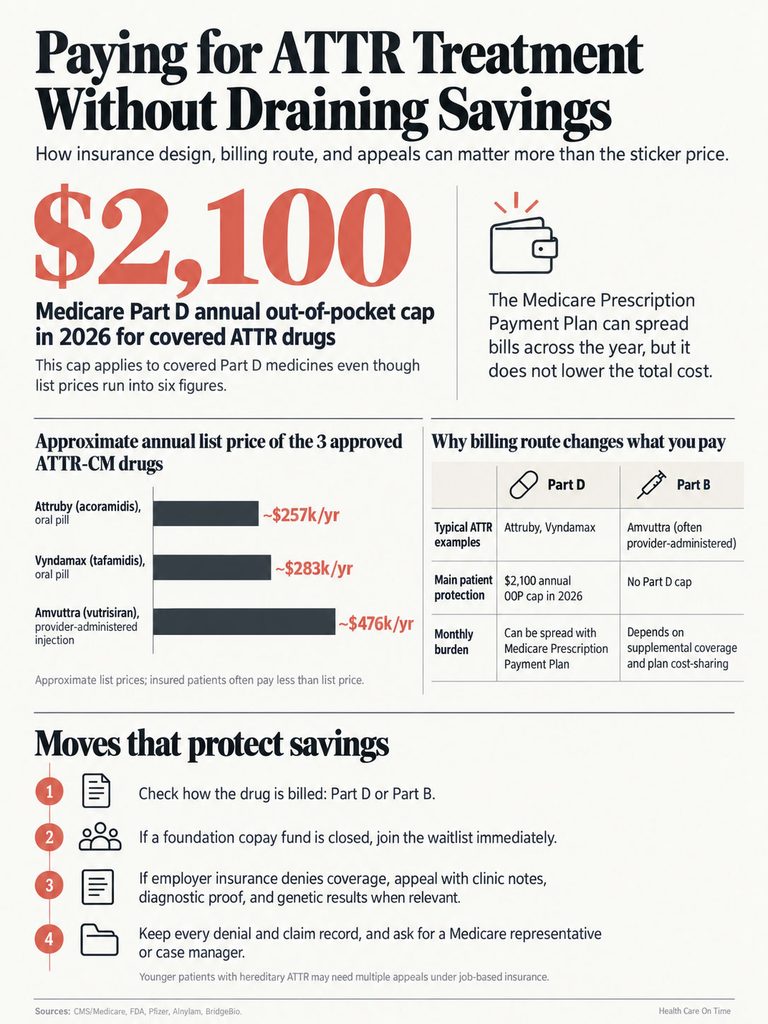
- Tafamidis (Vyndamax, Vyndaqel): approved 2019, a daily pill, list price about $268,000 a year.
- Acoramidis (Attruby): approved November 2024, a twice-daily pill, list price about $244,000 a year.
- Vutrisiran (Amvuttra): approved for ATTR-CM in March 2025 (and for hereditary ATTR-PN since 2022), a shot every 3 months, list price about $477,000 a year.
The Institute for Clinical and Economic Review (ICER) found these drugs work but are priced far above value. It estimated stabilizers would be cost-effective at roughly $13,600 to $39,000 a year.
Pills Under Medicare Part D: The $2,100 Cap
Tafamidis and acoramidis are pills, so Medicare covers them under Part D. For 2026, Part D caps out-of-pocket costs for covered drugs at $2,100 a year, including the deductible (up to $615) and copays. Premiums do not count.
Once your loved one hits $2,100, the plan pays 100% of covered drug costs for the rest of the year. The cap applies to stand-alone Part D plans and to Medicare Advantage plans with drug coverage.
One catch: the drug must be on the plan’s formulary. Money spent on a non-covered drug does not count. During open enrollment (October 15 to December 7), confirm the ATTR drug is covered by next year’s plan.
The Medicare Prescription Payment Plan
Most patients on an ATTR pill hit the $2,100 cap in January. That can mean one huge pharmacy bill at the start of the year.
The free Medicare Prescription Payment Plan spreads that cost out. If you enroll before January 1, the most your loved one pays at the pharmacy is about $175 a month. Enrollment now renews each year unless you opt out.
The Shot Under Medicare Part B: A Different Set of Rules
Vutrisiran must be given by a health professional, so Medicare usually bills it under Part B, not Part D. The $2,100 Part D cap does not apply.
Under Original Medicare, Part B generally leaves you with 20% coinsurance after the yearly deductible, with no out-of-pocket limit. On a drug listing near $477,000 a year, that 20% is a serious number. A Medigap (Medicare Supplement) plan can cover most or all of it.
Medicare Advantage plans work differently. They must cap in-network costs for Part A and B services at no more than $9,250 in 2026, and many plans set lower limits. Before choosing a plan, ask how it handles the specific ATTR drug your loved one takes.
How Foundation Copay Funds Work
Foundation funds can cover deductibles, copays, coinsurance, and sometimes premiums. But they open and close as donations come and go, so a fund may be listed as “waitlist” or “not funded.”
- Check each fund’s website once a month.
- Join every waitlist you qualify for. Waitlisted applicants are often contacted first when money arrives.
- Apply early in the calendar year. Approved help usually lasts through December 31.
- Ask the specialty pharmacy or clinic financial counselor to apply for you. They do this every week.
Know this rule too: drug-maker copay cards generally cannot be used with Medicare or Medicaid because of federal law. Independent foundations can. Drug-maker free-drug programs may still help low-income Medicare patients.
Private Insurance and Appeals
Younger patients with hereditary ATTR often have job-based insurance. Expect prior authorization. If the plan denies the drug, ask the doctor’s office to file an appeal with the genetic test, scan, or biopsy report attached.
A strong appeal shows proof of diagnosis, not just symptoms. Keep copies of every letter and test. For handling Medicare paperwork on someone else’s behalf, see our guide on appointing a Medicare representative.
Day-to-Day Care That Makes a Real Difference
Most caregiving happens at the kitchen table, not in a doctor’s office. These habits catch problems early and help keep your loved one out of the ER.
Track Weight, Swelling, and Breathing Every Day
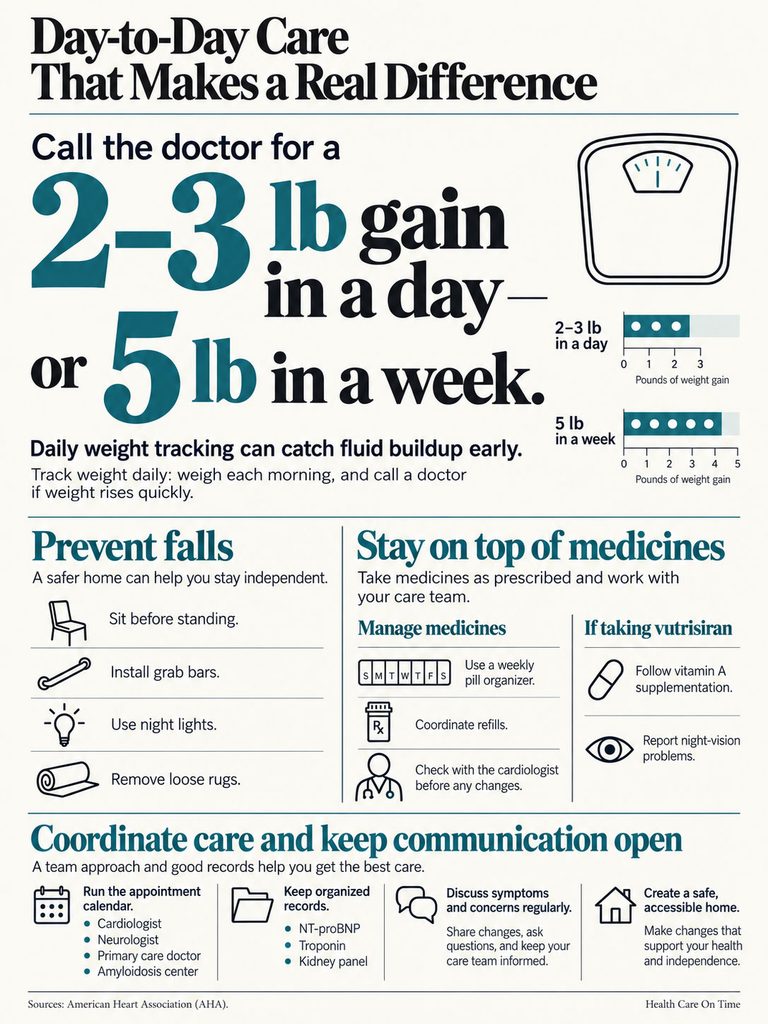
Weigh your loved one each morning, after using the bathroom and before breakfast, on the same scale. Write it down. The American Heart Association advises calling the doctor for a gain of 2 to 3 pounds in a day or 5 pounds in a week.
Also watch for:
- Ankle or belly swelling
- Needing more pillows to sleep
- Shortness of breath with less activity than usual
- Waking at night gasping for air
Prevent Falls and Dizziness
Many people with ATTR get dizzy when they stand up, a problem called orthostatic hypotension. It is common with nerve involvement and with water pills.
Have your loved one sit on the edge of the bed for a minute before standing. Add bathroom grab bars and hallway night lights, and remove loose rugs. Our guide to the best assistive devices for the elderly covers shower chairs, raised toilet seats, and walkers.
Manage Medicines Carefully
People with ATTR-CM often take several drugs: water pills, blood thinners for atrial fibrillation, and an ATTR drug. A weekly pill organizer and a shared phone calendar for refills prevent most mistakes.
The stiff ATTR heart often handles standard heart failure drugs poorly. Beta-blockers and some blood pressure pills can cause low blood pressure or fatigue, and doctors may lower or stop them. Never start, stop, or change a heart drug without asking the cardiologist.
If your loved one takes vutrisiran, the label says it lowers vitamin A, so the doctor will prescribe a daily vitamin A supplement. Do not give more than prescribed, and report night vision problems.
Run the Appointment Calendar
ATTR care can involve a cardiologist, a neurologist, a primary care doctor, and an amyloidosis center. Caregivers usually become the coordinator.
Keep one folder (paper or phone) with:
- Current medicine list with doses
- Recent lab results and heart scan reports
- Questions for each visit
- Names and phone numbers of every doctor
Our lab partners report that ATTR patients are often monitored with blood tests such as NT-proBNP, troponin, and a kidney panel. Bringing copies of past results lets each doctor see the trend, not just one number.
When ATTR Runs in the Family
If your loved one has hereditary ATTR, the diagnosis touches the whole family. For many caregivers, this is the most delicate part of the job.
Who Should Consider Genetic Testing
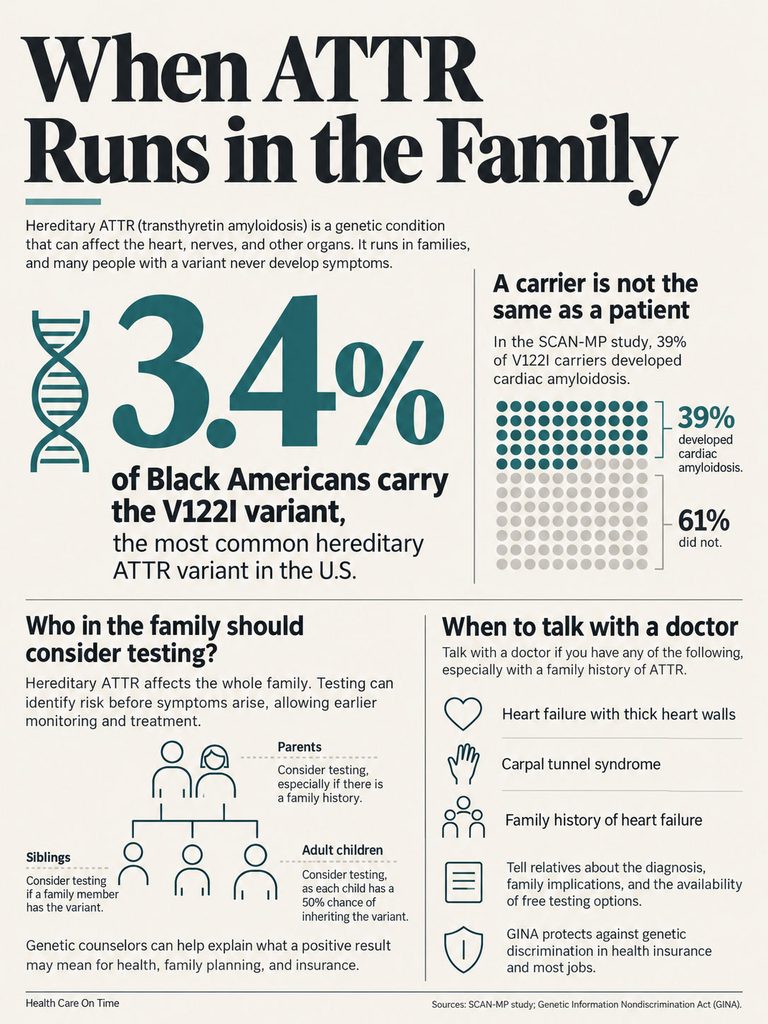
Adult children, siblings, and parents of a person with hereditary ATTR may carry the same variant. Testing can catch disease before symptoms start, when treatment may help most.
A genetic counselor can explain what a positive result means for health, family planning, and insurance. The federal Genetic Information Nondiscrimination Act (GINA) protects against genetic discrimination in health insurance and most jobs. It does not cover life, disability, or long-term care insurance.
The V122I Variant in Black Americans
The V122I variant (also written Val122Ile) is the most common hereditary ATTR variant in the US. About 3.4% of Black Americans, or roughly 1.5 million people, carry it.
Carrying the variant is not the same as having the disease. In the SCAN-MP study of older Black adults with heart failure, 39% of V122I carriers had developed cardiac amyloidosis. It remains an important cause of heart failure that is often missed or blamed on high blood pressure.
If a Black family member over 60 has heart failure with thick heart walls, carpal tunnel in both hands, or a family history of heart failure, ask the doctor about ATTR testing.
Talking to Relatives
Keep it simple: what the diagnosis is, that it can run in families, and that free testing exists. Let each person decide. Some will want to know; some will not.
Plan Ahead While Everyone Can Talk
ATTR is progressive, even with treatment. The best time to talk about future care is when your loved one feels well enough to share their wishes.
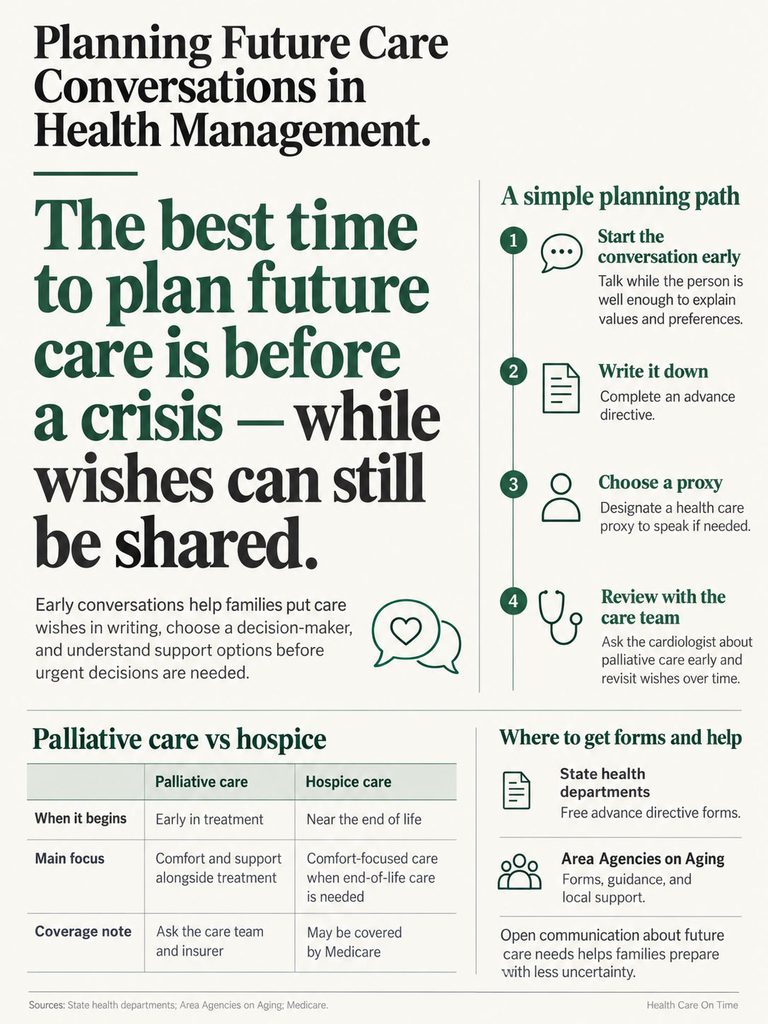
Help them complete an advance directive and name a health care proxy (the person who makes medical choices if they cannot). Free state forms are available through your state’s health department or Area Agency on Aging.
Ask the cardiologist about palliative care early. It is not the same as hospice. It adds a team focused on comfort, symptoms, and family support, alongside regular treatment. Hospice comes later, when the focus shifts fully to comfort, and Medicare covers it with little or no cost to the patient.
Taking Care of Yourself as an ATTR Caregiver
The AARP and National Alliance for Caregiving 2025 report found 63 million Americans are now family caregivers. Nearly 1 in 5 say caregiving has left them in fair or poor health.
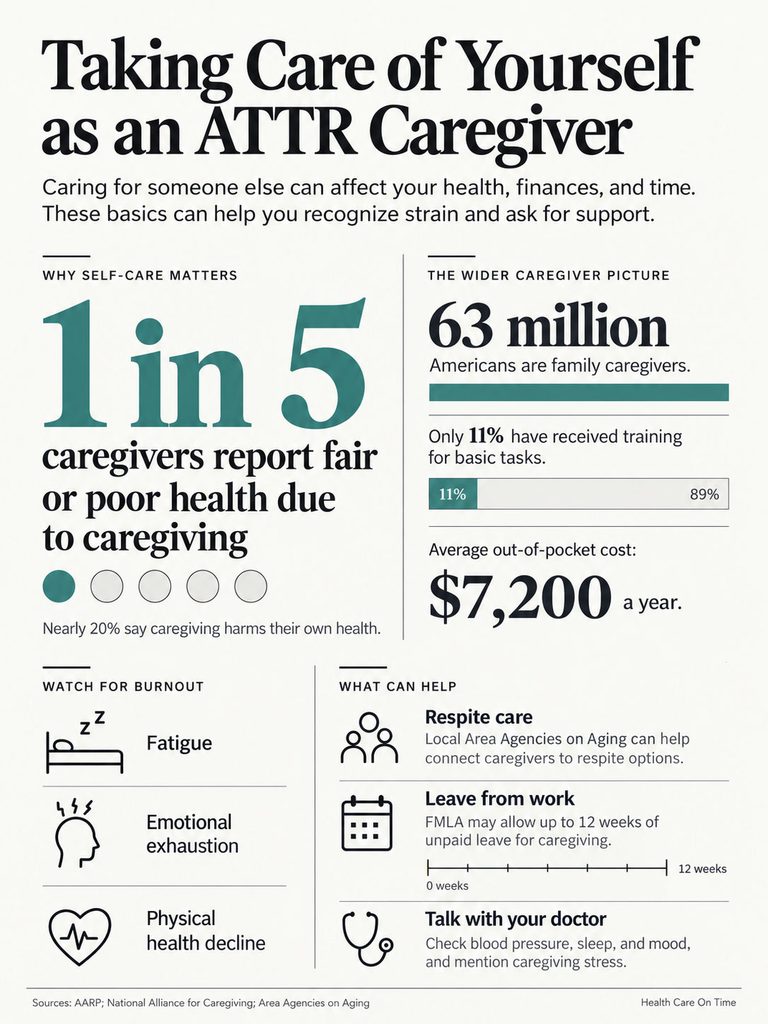
Only 11% of caregivers in that report had received training for basic caregiving tasks. Caregivers also spend about $7,200 a year of their own money on caregiving costs.
Signs of Caregiver Burnout
Watch for these in yourself:
- Feeling tired even after sleep
- Snapping at the person you care for, then feeling guilty
- Pulling away from friends or hobbies
- Getting sick more often
- Using alcohol, food, or sleep aids to cope
- Feeling hopeless or trapped
If several sound familiar, burnout is building. That is a health concern, not a weakness.
Get Respite Care
Respite care gives you planned time off. Your local Area Agency on Aging can tell you what is funded nearby. Some programs offer a few hours a week of in-home help at low or no cost.
Know Your Work Rights
The Family and Medical Leave Act (FMLA) allows eligible workers up to 12 weeks of unpaid, job-protected leave a year to care for a spouse, parent, or child with a serious health condition. You generally qualify if your employer has 50 or more employees and you worked there at least 1,250 hours in the past year.
Leave can be taken a few hours at a time, such as for appointments. Several states also offer paid family leave on top of FMLA.
Talk to Your Own Doctor
Tell your doctor you are a caregiver and ask for a check on blood pressure, sleep, and mood. Patients commonly ask us whether caregiver stress shows up in their own lab work, and it can: poor sleep and chronic stress affect blood pressure, blood sugar, and more.
Your ATTR Caregiver Action Plan
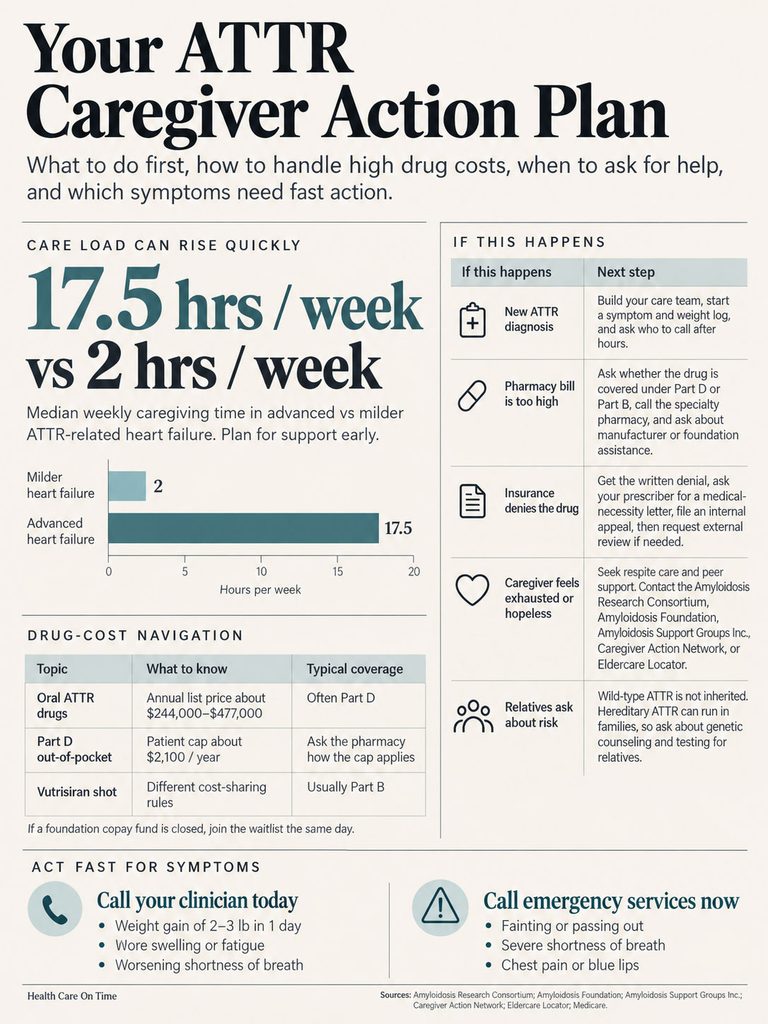
Use this table when something comes up and you are not sure where to turn.
| Scenario | What to Do Now | Resource |
| Just diagnosed, feeling lost | Ask for referral to an amyloidosis center; call one patient organization | ARC (617-467-5170) or Amyloidosis Foundation (248-922-9610) |
| Pharmacy bill over $1,000 for an ATTR pill | Enroll in the Medicare Prescription Payment Plan; ask about foundation funds | Part D plan; PAN, HealthWell, The Assistance Fund |
| Copay fund says “closed” or “waitlist” | Join the waitlist today; check monthly; try the other funds | Foundation websites or clinic financial counselor |
| Insurance denied the drug | Ask the doctor to file an appeal with test results attached | Drug-maker support program; doctor’s office |
| You feel exhausted or hopeless | Book respite care; tell your own doctor; call 988 if in crisis | Eldercare Locator (1-800-677-1116); 988 Lifeline |
| A relative asks if they could have it too | Share that free genetic testing and counseling exist | Sponsored genetic testing program; genetic counselor |
| Weight up 2 to 3 pounds overnight or 5 pounds in a week | Call the cardiologist the same day | Heart failure clinic nurse line |
| Fainting, chest pain, or severe breathlessness at rest | Call 911 | Emergency services |
When to Call the Doctor or 911
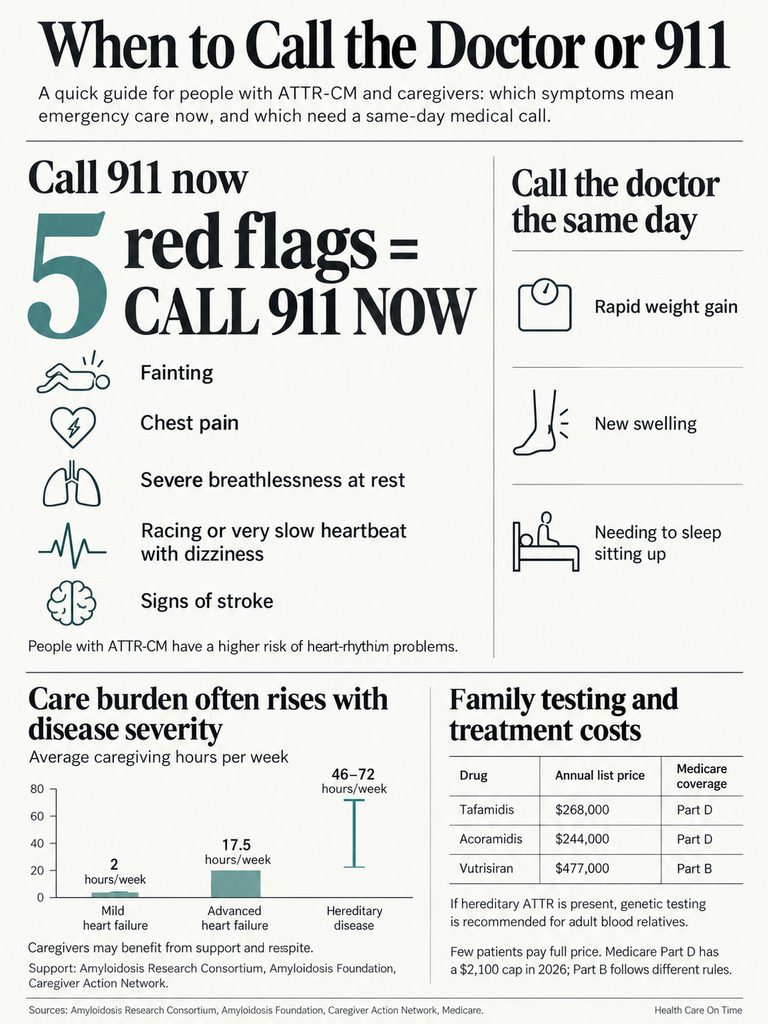
Call 911 right away if your loved one has:
- Fainting or nearly fainting
- Chest pain or pressure
- Severe shortness of breath at rest, or lips turning blue
- A very fast, very slow, or irregular heartbeat with dizziness
- New confusion, trouble speaking, or weakness on one side
Call the doctor the same day for:
- Weight gain of 2 to 3 pounds in a day or 5 pounds in a week
- New or worse swelling in the legs or belly
- Needing to sleep sitting up
- Vomiting or diarrhea lasting more than a day
- A new fall
People with ATTR-CM have a higher risk of heart rhythm problems. Do not wait to see if a fainting spell happens again.
Frequently Asked Questions
What support is available for ATTR amyloidosis caregivers?
Caregivers can turn to the Amyloidosis Research Consortium (peer mentoring and a resource finder), the Amyloidosis Foundation, Amyloidosis Support Groups Inc., and the Caregiver Action Network. For local help, the Eldercare Locator (1-800-677-1116) connects you to respite care, training, and counseling through your Area Agency on Aging.
How many hours a week does caring for someone with ATTR take?
It depends on stage and type. One study found a median of 2 hours a week for milder heart failure and 17.5 hours for advanced heart failure. Studies of long-running hereditary disease found averages of 46 to 72 hours a week. Expect the load to grow over time.
Is ATTR amyloidosis hereditary?
Only one form is. Wild-type ATTR comes with aging and is not inherited. Hereditary ATTR is caused by a change in the TTR gene, and each child of an affected parent has a 50% chance of inheriting it. A genetic test on the patient shows which form it is.
Should family members get genetic testing?
If the patient has hereditary ATTR, adult blood relatives should talk with a genetic counselor about testing. Knowing early allows earlier monitoring and treatment. No-charge testing and counseling programs are available in the US for people 18 and older with a family history.
How much do ATTR amyloidosis drugs cost?
List prices are about $268,000 a year for tafamidis, $244,000 for acoramidis, and $477,000 for vutrisiran. Very few patients pay list price. Medicare out-of-pocket limits, foundation funds, and drug-maker programs cover most of the cost for people who qualify.
Does Medicare cover tafamidis, acoramidis, or vutrisiran?
Yes, but under different parts. Tafamidis and acoramidis are pills covered under Part D, with a $2,100 out-of-pocket cap in 2026. Vutrisiran is given by a health professional and usually billed under Part B, where Original Medicare has no cap unless you have Medigap.
What is the Medicare Prescription Payment Plan?
It is a free Medicare option that spreads your yearly Part D drug costs into monthly payments. With the $2,100 cap in 2026, enrolling before January 1 keeps pharmacy payments to about $175 a month. It does not lower the total, but it prevents one huge bill.
Where can I find an amyloidosis support group near me?
Amyloidosis Support Groups Inc. lists in-person and online meetings by state and runs a 24/7 line at 866-404-7539. The Amyloidosis Foundation and ARC also list groups and hold virtual meetings. Heart-focused groups like Mended Hearts can help with general heart failure support.
Can I take FMLA leave to care for a parent with amyloidosis?
Yes, if you qualify. FMLA gives eligible workers up to 12 weeks of unpaid, job-protected leave a year to care for a parent, spouse, or child with a serious health condition. Your employer must have 50 or more employees, and you must have worked at least 1,250 hours in the past year.
What is respite care and who pays for it?
Respite care is short-term care that lets the main caregiver take a break. Funding may come from the National Family Caregiver Support Program, Medicaid waivers, the VA for veterans, or private pay. Your Area Agency on Aging can explain what is free or low-cost in your area.
How do I know if I have caregiver burnout?
Common signs include constant tiredness, irritability, pulling away from friends, frequent illness, and feeling hopeless or trapped. Studies show ATTR caregivers have higher anxiety than non-caregivers. Tell your own doctor, ask for respite, and call 988 if you ever feel unable to cope or unsafe.
What symptoms mean we should go to the ER?
Call 911 for fainting, chest pain, severe breathlessness at rest, a racing or very slow heartbeat with dizziness, or signs of stroke. Call the cardiologist the same day for rapid weight gain, new swelling, or needing to sleep sitting up. People with ATTR-CM have higher rhythm risks.
Disclaimer: This article is for general information only and is not medical, legal, or financial advice. Always follow the guidance of your loved one’s doctors. Drug prices, Medicare rules, and foundation fund status change often, so confirm details with each program. If you are a caregiver in emotional crisis, call or text 988 (Suicide and Crisis Lifeline) any time.
References
- Ponti L, et al. Burden of untreated transthyretin amyloid cardiomyopathy on patients and their caregivers by disease severity. Frontiers in Cardiovascular Medicine, 2023
- Stewart M, et al. Characterizing the high disease burden of transthyretin amyloidosis for patients and caregivers. Neurology and Therapy, 2018
- Acaster S, et al. A survey exploring caregiver burden and health-related quality of life in hereditary transthyretin amyloidosis. Orphanet Journal of Rare Diseases, 2023
- ClinicalTrials.gov. Burden of disease study in patients with TTR-FAP or TTR-CM and caregivers (NCT01604122)
- ISPOR Europe 2025. Disability resource utilization and caregiver support among patients with ATTR-PN
- Clinical penetrance of the transthyretin V122I variant in older Black patients with heart failure (SCAN-MP). Journal of the American Heart Association, 2023
- Institute for Clinical and Economic Review. Final evidence report on ATTR-CM treatments, 2024
- TCTMD. Vutrisiran FDA approval and pricing for ATTR-CM, 2025
- Cardiovascular Business. High cost of cardiac amyloidosis drugs may limit access
- AARP. Medicare Part D changes in 2026
- Medicare.gov. Medicare Prescription Payment Plan
- KFF. Medicare Advantage out-of-pocket limits: variation and trends, 2026
- AARP and National Alliance for Caregiving. Caregiving in the US 2025
- Administration for Community Living. National Family Caregiver Support Program
- Eldercare Locator
- ARCH National Respite Network
- U.S. Department of Labor. Family and Medical Leave Act
- American Heart Association. Warning signs of heart failure
- Caregiver Action Network. Caregiving Through Amyloidosis (ATTR)
- HealthWell Foundation. Amyloidosis fund
- PAN Foundation. Amyloidosis fund insurance eligibility
- Alnylam Act genetic testing and counseling program