If you’ve just been prescribed Xeljanz, Rinvoq, Olumiant or another JAK inhibitor, the boxed warning on the label is probably the first thing you read. The side effects people actually run into are mostly colds, nausea, headache and acne, while the serious risks depend heavily on age, smoking and heart history.
Table of Contents
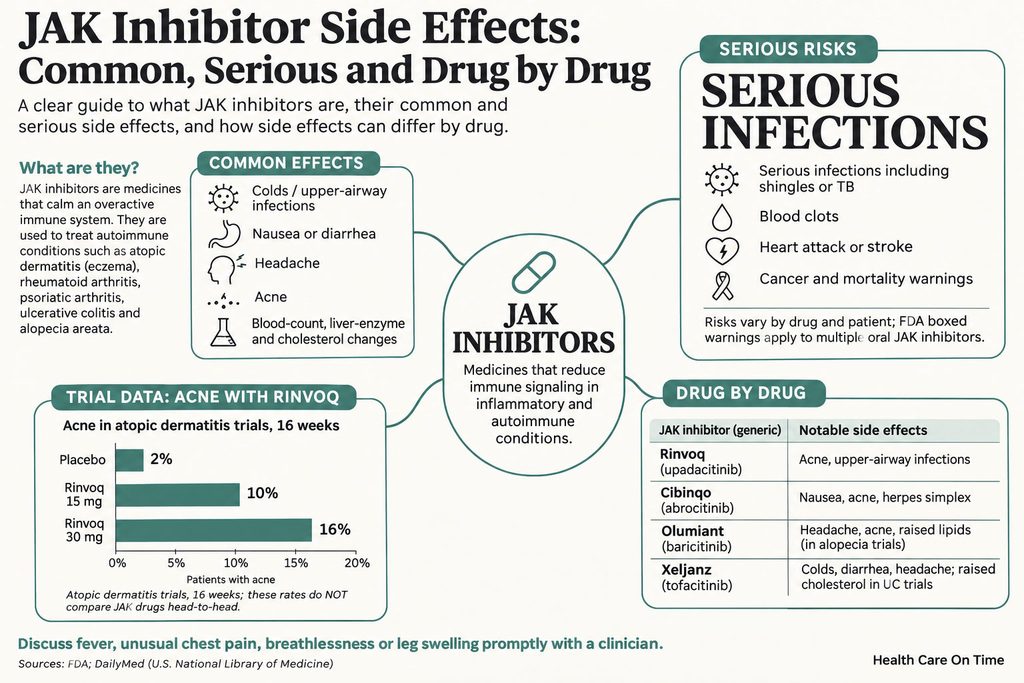
Quick Answer: Common JAK inhibitor side effects include upper respiratory infections, nausea, headache, acne, higher cholesterol and raised CPK on blood tests. Every JAK inhibitor approved for inflammatory disease, including Opzelura cream, carries a boxed warning for serious infections, death, cancer, major heart events and blood clots. Risk is highest in people 50 or older with cardiovascular risk factors, current or past smokers, and anyone with a prior clot or cancer. Regular blood work and shingles vaccination are part of safe use.
What JAK inhibitors are and which ones you might be prescribed
JAK stands for Janus kinase, a family of enzymes inside immune cells that relay signals from inflammatory messengers such as interleukins and interferons. Blocking those enzymes quiets the inflammation behind rheumatoid arthritis, eczema, ulcerative colitis and several other conditions, and it explains most of the side effects too, because the same signals help you fight infections and keep blood counts steady.
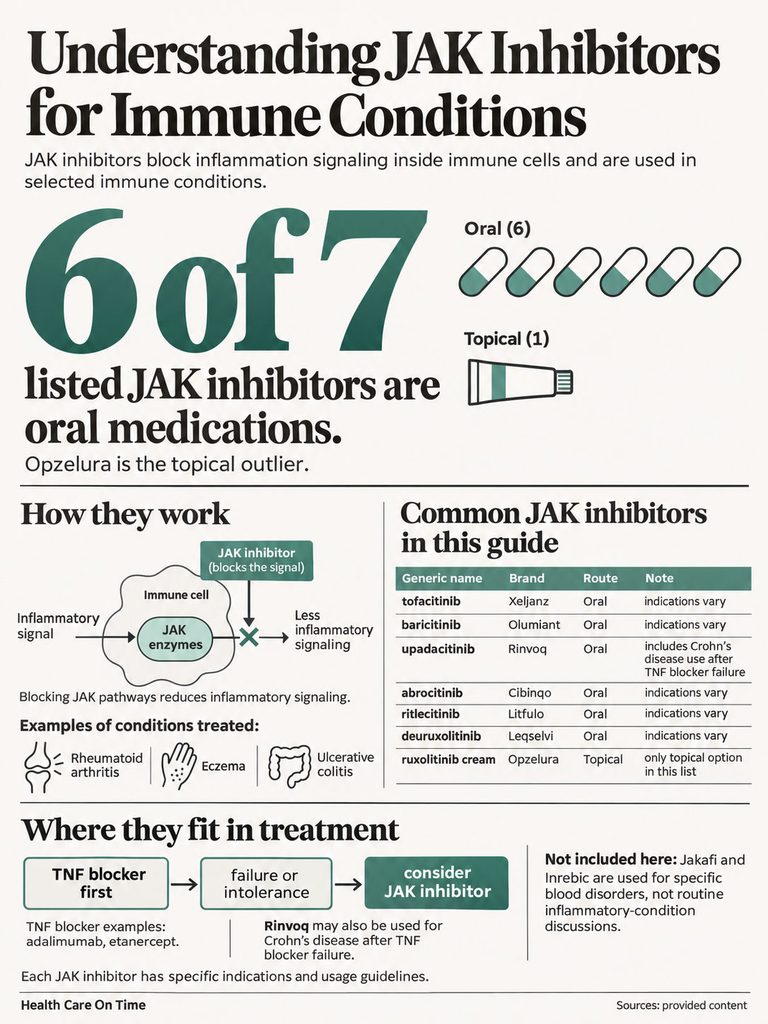
In the US, the JAK inhibitors you are most likely to meet for immune and skin conditions are tofacitinib (Xeljanz), baricitinib (Olumiant), upadacitinib (Rinvoq), abrocitinib (Cibinqo), ritlecitinib (Litfulo), deuruxolitinib (Leqselvi) and ruxolitinib cream (Opzelura). The first four are tablets, Litfulo comes as a capsule, and Opzelura is rubbed into the skin. Each has its own label.
Two older JAK inhibitors, Jakafi (ruxolitinib tablets) and Inrebic (fedratinib), are used for certain blood disorders. They were left out of the 2021 class-wide warning update because they aren’t prescribed for arthritis or other inflammatory diseases, so they aren’t covered here.
For joint and bowel disease, the oral drugs come later in line. The current labels reserve them for people with rheumatoid arthritis, psoriatic arthritis or ankylosing spondylitis, or ulcerative colitis who didn’t do well on, or couldn’t tolerate, at least one TNF blocker such as adalimumab or etanercept. Rinvoq is also approved for Crohn’s disease under a similar rule, so for most people it’s considered only after a TNF blocker, one of the biologics used for Crohn’s, hasn’t worked.
The side effects most people notice
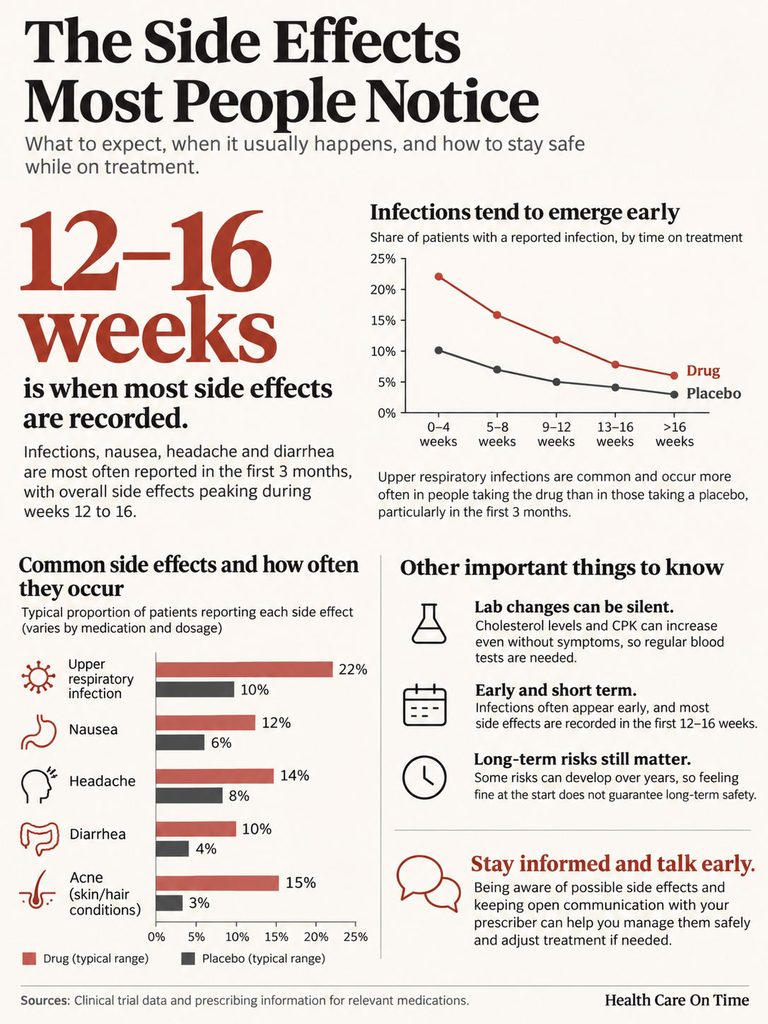
Compared with placebo in the approval trials, the extra everyday side effects are mostly mild infections, stomach upset, headache, acne and lab changes.
Colds, sinus and other mild infections
Upper respiratory infections top the list for the whole class. At arthritis doses they run a few points above placebo: in the Olumiant prescribing information, 16.3% of people on 2 mg had one in the first 16 weeks against 11.7% on placebo, and Rinvoq 15 mg in rheumatoid arthritis showed a similar gap, 13.5% versus 9.5%. Eczema trials used higher doses in younger patients and saw more, with Rinvoq reaching 23% and 25% on its two doses compared with 17% on placebo, plus a rise in cold sores (herpes simplex) from 2% to 4% and 8%.
Most of these are ordinary colds, sore throats and sinus infections. Still, a cold that won’t clear, a fever, or a cough that keeps getting worse deserves a call, because the same drugs also raise the risk of pneumonia and other serious infections.
Nausea, headache and diarrhea
Nausea stands out with Cibinqo. It climbs with dose: 14.5% of eczema patients on 200 mg had it, compared with 6.0% on 100 mg and 2.1% on placebo. With most of the others it’s less common, around 3.5% on Rinvoq in rheumatoid arthritis against 2.2% on placebo.
Headache turns up with every drug in the group, somewhere between roughly 4% and 11% depending on the drug and the condition being treated, and Litfulo sits at the top end, with headache in 10.8% of alopecia areata patients and diarrhea in 10.0%. Xeljanz at the standard 5 mg twice daily produced a flatter pattern in rheumatoid arthritis: upper respiratory infection, nasopharyngitis, diarrhea and headache each at about 4% over the first three months, against 2% to 3% on placebo, along with high blood pressure in 2%.
Acne and skin bumps
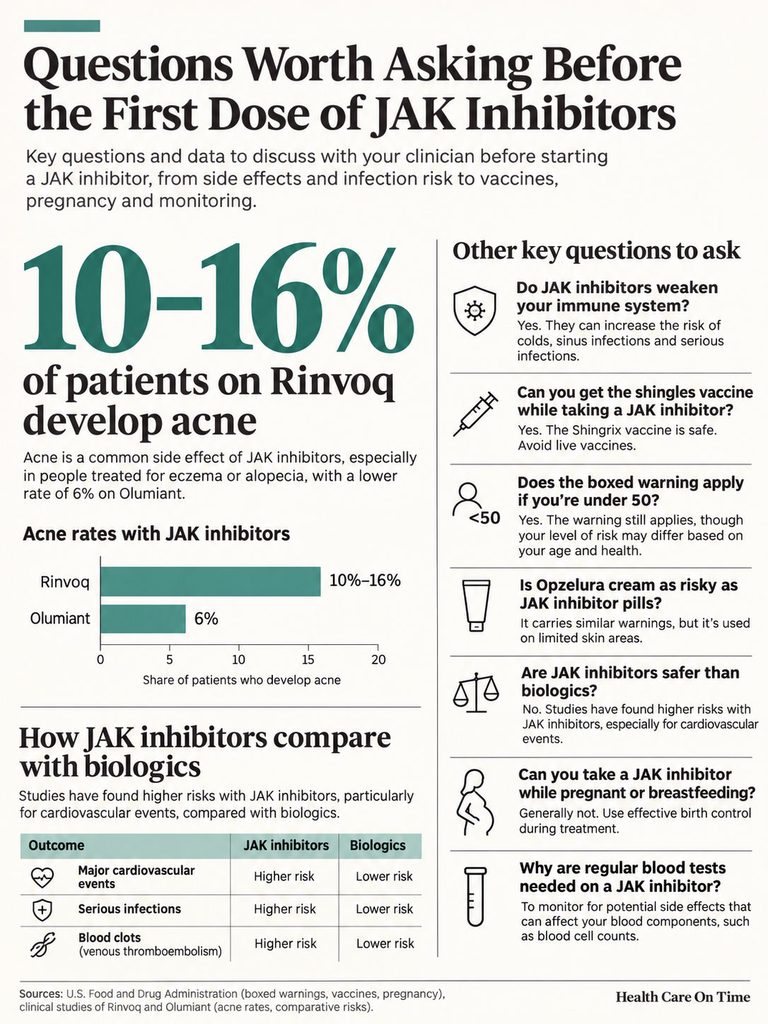
Acne shows up mostly in people treated for skin and hair conditions. On Rinvoq for eczema it affected 10% of people on 15 mg and 16% on 30 mg, against 2% on placebo, and the alopecia drugs land a little lower, around 6% for both Litfulo and Olumiant. Olumiant shows the split most clearly, because the same drug is used for joints and hair: in its rheumatoid arthritis trials, acne stayed under 1%.
If acne appears, tell the prescriber rather than stopping the drug on your own; they can decide whether it needs its own treatment.
Changes that only show up on blood work
Several side effects cause no symptoms at all and are found only on lab tests. Cholesterol is the main one. In the first three months of Xeljanz trials, LDL (“bad”) cholesterol rose 15% on 5 mg twice daily and 19% on 10 mg twice daily, while HDL (“good”) cholesterol rose 10% and 12%, so the ratio between the two barely moved. Average LDL on Olumiant went up 8 mg/dL on 2 mg and 14 mg/dL on 4 mg by week 12.
Creatine phosphokinase (CPK), a muscle enzyme, climbs as well. With Olumiant it rises within a week and levels off by 8 to 12 weeks, and in Rinvoq’s rheumatoid arthritis trials a jump to more than five times the upper limit of normal happened in 1.0% of people, compared with 0.3% on placebo, usually for a short time.
Lymphocyte and neutrophil counts (two types of white blood cell) can fall, hemoglobin can drop, and liver enzymes can rise. With Cibinqo and Litfulo, platelets can fall too. None of this is something you’d feel, so scheduled blood tests are the only way to catch it.
When side effects tend to show up
Infections tend to come early. In placebo-controlled rheumatoid arthritis trials of Xeljanz, serious infections in the first three months ran at 1.7 events per 100 patient-years on the drug compared with 0.5 on placebo, and over the first year the rate on either dose was 2.7 per 100 patient-years. Most of the label tables for common side effects also cover the first 12 to 16 weeks, which is when nausea, headache and colds were counted.
Lab changes take weeks to settle, which is why cholesterol is rechecked somewhere between 4 and 12 weeks in, depending on the drug.
The boxed-warning events behave differently: in ORAL Surveillance they built up over years, with cumulative probabilities tracked out to 5.5 years, so a quiet first few months doesn’t mean the long-term risks are gone.
JAK inhibitor side effects by drug
All of these drugs carry the same core warnings, but their everyday side effects and lab schedules differ. The details below come from each drug’s current US label, all revised in June 2026.
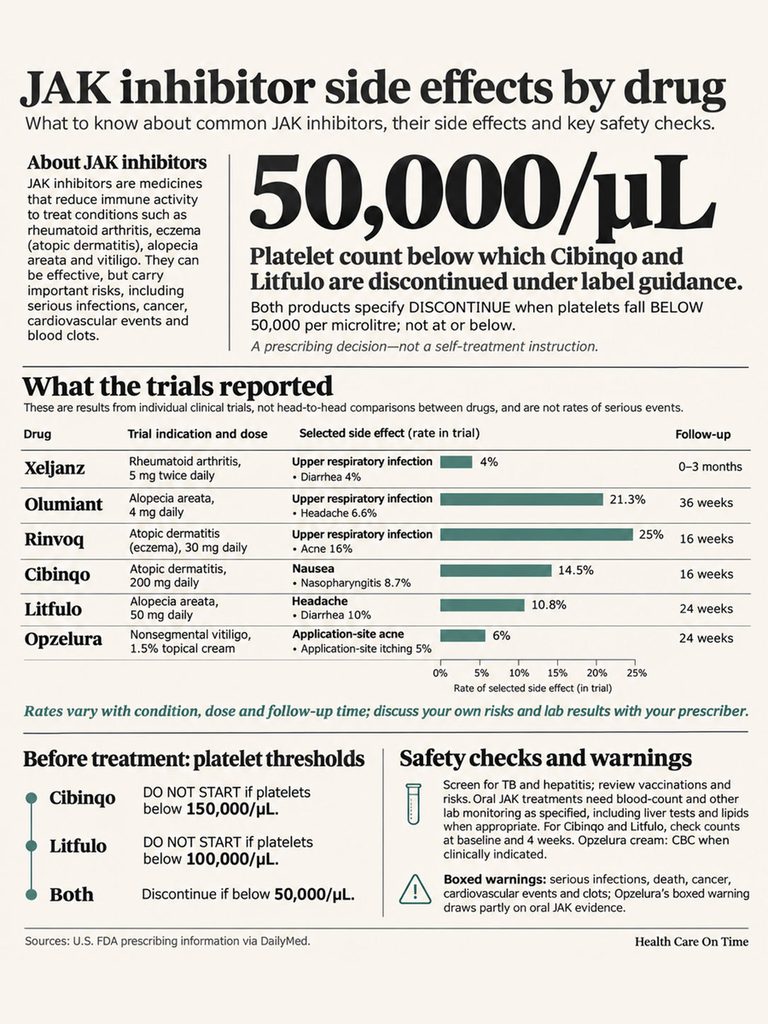
| Drug (form) | Approved for (current US label) | Most common side effects (label %) | Lab checks the label calls for |
| Xeljanz, tofacitinib (tablet, liquid) | RA, psoriatic arthritis, ankylosing spondylitis, ulcerative colitis (after a TNF blocker); pcJIA and psoriatic arthritis from age 2 | Upper respiratory infection, nasopharyngitis, diarrhea, headache about 4% each (placebo 2-3%); high blood pressure 2% | Lymphocytes every 3 months; neutrophils and hemoglobin at 4-8 weeks, then every 3 months; lipids at 4-8 weeks; liver enzymes |
| Olumiant, baricitinib (tablet) | RA (after a TNF blocker), severe alopecia areata, hospitalized COVID-19 | Upper respiratory infection 16.3%; acne 5.8% in alopecia; nausea 2.7%; shingles 1.0% | Lymphocytes, neutrophils, hemoglobin; lipids at about 12 weeks; liver enzymes |
| Rinvoq, upadacitinib (tablet, liquid) | RA, psoriatic arthritis, ankylosing spondylitis, nr-axSpA, ulcerative colitis, Crohn’s disease, pJIA, giant cell arteritis, eczema from age 12 | Eczema: upper respiratory infection 23-25%, acne 10-16%, raised CPK 5-6%; RA: upper respiratory infection 13.5% | Lymphocytes, neutrophils, hemoglobin; lipids at about 12 weeks; liver enzymes; pregnancy status before starting |
| Cibinqo, abrocitinib (tablet) | Refractory moderate to severe eczema from age 12 | Nausea 6.0-14.5%; nasopharyngitis 8.7-12.4%; headache 6.0-7.8%; acne 1.6-4.7% | Blood count incl. platelets at start, at 4 weeks and after dose increases; lipids at about 4 weeks |
| Litfulo, ritlecitinib (capsule) | Severe alopecia areata from age 12 | Headache 10.8%; diarrhea 10.0%; acne 6.2%; rash 5.4%; hives 4.6% | Platelets and lymphocytes at start and at 4 weeks; liver enzymes |
| Opzelura, ruxolitinib (cream) | Mild to moderate eczema from age 2; nonsegmental vitiligo from age 12 | Eczema (12+): nasopharyngitis 3%; vitiligo: application-site acne 6%, itching 5% | Blood counts as clinically indicated; consider TB screening before starting |
Platelets are the main reason Cibinqo and Litfulo need an early blood count. Cibinqo shouldn’t be started if platelets are below 150,000/mm³, and Litfulo not below 100,000/mm³, and both are stopped if the count drops under 50,000/mm³. The table also shows how much the condition matters: the same class of drug produces far more acne in eczema and alopecia patients than in arthritis patients.
What the boxed warning means, in plain numbers
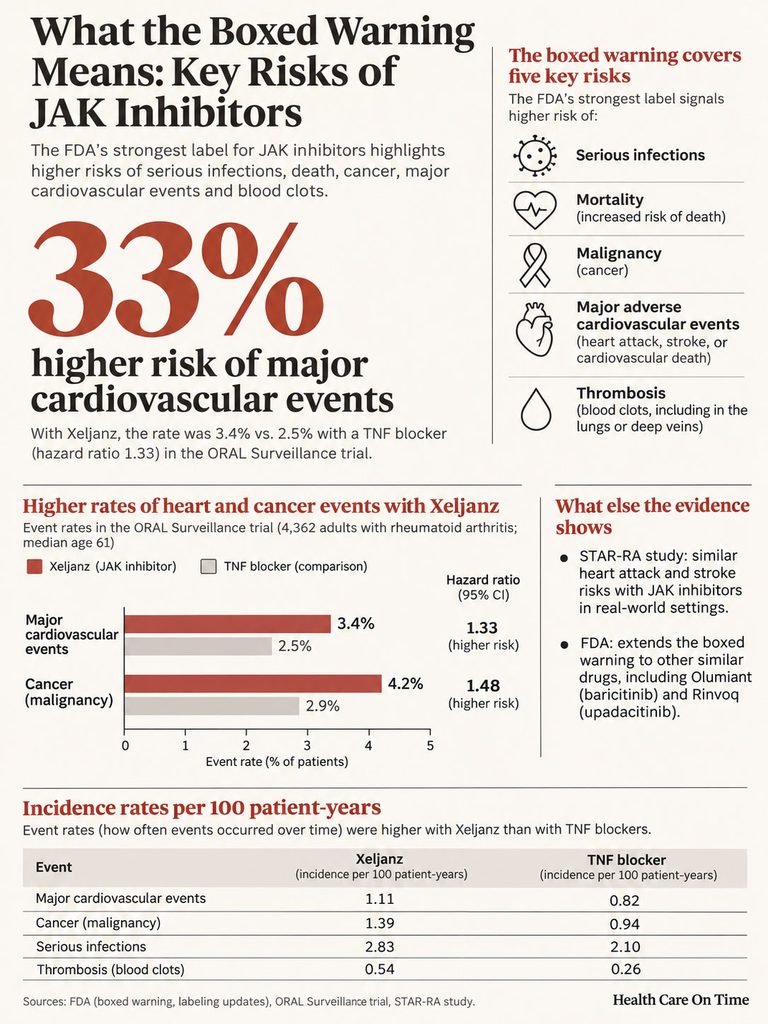
The boxed warning is the FDA’s strongest label warning, and the one on JAK inhibitors covers five risks: serious infections, mortality (death), malignancy (cancer), major adverse cardiovascular events (heart attack, stroke and cardiovascular death, often shortened to MACE) and thrombosis (blood clots in veins or arteries). In September 2021 the FDA expanded that warning to its current heart, cancer, clot and death language after one large safety trial.
The trial behind it
The trial, known as ORAL Surveillance, was a post-approval safety study of Xeljanz. It enrolled 4,362 adults with rheumatoid arthritis in 30 countries, all aged 50 or older, all still active despite methotrexate, and all with at least one extra cardiovascular risk factor. They were randomly assigned to Xeljanz 5 mg twice daily, Xeljanz 10 mg twice daily, or a TNF blocker (adalimumab or etanercept), then followed for a median of four years. The average age was 61, and 78% were women. Pfizer, which makes Xeljanz, paid for the open-label trial.
ORAL Surveillance was built to show that Xeljanz was no worse than a TNF blocker for heart events and cancer, and it failed on both. In the 2022 trial results, 3.4% of people on either Xeljanz dose had a major cardiovascular event, compared with 2.5% on a TNF blocker (hazard ratio 1.33), and cancer other than nonmelanoma skin cancer occurred in 4.2% versus 2.9% (hazard ratio 1.48). Lung cancer led the cancers in the Xeljanz groups, especially in current and past smokers, lymphoma was higher, and nonmelanoma skin cancer roughly doubled, at 2.1% and 2.3% on the two Xeljanz doses compared with 1.1% on a TNF blocker.
A hazard ratio compares the rate in one group with the rate in another. At 1.48 for cancer, people on Xeljanz developed cancer at nearly one and a half times the TNF-blocker rate, yet the absolute difference over about four years was 4.2% versus 2.9%.
The relative figure is what moved the FDA, but for one patient deciding whether to start, the absolute figure is usually the more useful one.
Over the full 5.5 years of follow-up, the estimated chance of a cancer was 6.1% on Xeljanz versus 3.8% on a TNF blocker, and the chance of a major heart event was 5.8% versus 4.3%, with nonfatal heart attack the most common event on Xeljanz.
Rates per 100 patient-years
The same trial’s results also appear on the Xeljanz label as incidence rates, meaning events per 100 patient-years. If 100 people take the drug for one year, the number in each cell is roughly how many of them would have that event, which is easier to picture than a percentage spread over four years.
| Event (Xeljanz label, RA safety study) | TNF blocker | Xeljanz 5 mg twice daily | Xeljanz 10 mg twice daily |
| Any death | 0.69 | 0.88 | 1.23 |
| Cardiovascular death | 0.27 | 0.32 | 0.47 |
| Cancer (excl. nonmelanoma skin) | 0.77 | 1.13 | 1.13 |
| Lymphoma | 0.02 | 0.07 | 0.11 |
| Venous blood clot (DVT or PE) | 0.22 | 0.33 | 0.68 |
| Pulmonary embolism | 0.05 | 0.18 | 0.49 |
| Serious infection | 2.52 | 2.95 | 3.65 |
In almost every row the 10 mg dose carries the most risk and the 5 mg dose sits between it and the TNF blocker, with gaps that are small in absolute terms. Pulmonary embolism, a clot in the lung, made the sharpest relative jump, from 0.05 to 0.49 per 100 patient-years at the higher dose. Deaths at 10 mg twice daily were clearly higher than with a TNF blocker (hazard ratio 1.79). That dose isn’t recommended for rheumatoid arthritis, and in ulcerative colitis it’s limited to the first weeks of treatment and, after that, to the shortest time needed.
Turned around, the gaps can be expressed as how much treatment it takes to cause one extra event. A 2024 safety review worked out about one extra major cardiovascular event for every 567 patient-years of Xeljanz 5 mg instead of a TNF blocker, and about one extra cancer for every 276 patient-years.
What real-world US data adds
Trial populations are chosen on purpose, and ORAL Surveillance picked older, higher-risk patients. The STAR-RA study looked at ordinary US practice instead, using three large insurance databases (Optum, MarketScan and Medicare) that covered 102,263 people with rheumatoid arthritis who started either Xeljanz or a TNF blocker. In that broad group, the risk of hospitalization for heart attack or stroke was essentially the same (hazard ratio 1.01). When the researchers narrowed the group to people who would have qualified for ORAL Surveillance, the estimate rose to 1.24, close to the trial’s 1.33, and people with existing heart disease showed a similar, statistically uncertain increase of 1.27.
Taken with the trial, that suggests the extra heart risk is concentrated in older people who already have cardiovascular risk, and much smaller, perhaps absent, in younger and healthier patients. STAR-RA measured only heart attack and stroke, so it can’t settle the cancer or clot questions.
Why Olumiant, Rinvoq and the cream carry it too
ORAL Surveillance tested only Xeljanz. The FDA applied the same warning to Olumiant and Rinvoq anyway, reasoning that drugs working through the same mechanism may share the same risks, and newer drugs such as Cibinqo and Litfulo launched with it. Opzelura cream carries the full boxed warning as well, even though it’s applied to the skin.
Evidence specific to the other drugs is thinner and mixed. In an observational study of 9,013 people starting Olumiant, venous blood clots were significantly more frequent than in matched TNF-blocker users, while heart events and serious infections were higher only in number, without statistical significance. Pooled Rinvoq trials covering more than 15,000 patient-years found cancer rates similar to those of the comparison drugs, though pooled trial data can’t answer the question the way a dedicated head-to-head safety study can.
Rheumatoid arthritis itself raises the odds of heart disease, blood clots, lymphoma and lung cancer. The same review pulled together meta-analyses showing about 48% more cardiovascular events in people with rheumatoid arthritis than in people without it, and roughly double the rate of venous clots, lymphoma and lung cancer. That background makes drug effects hard to pull apart from disease effects in observational data, and it’s one reason a randomized trial like ORAL Surveillance carries so much weight.
Who is at higher risk
The FDA singled out several groups who should weigh these drugs most carefully. Smokers are first on the list, and that includes people who quit. So is anyone who has had a heart attack, other heart problems, a stroke or a blood clot, along with people who have other cardiovascular risk factors such as high blood pressure, high cholesterol or diabetes. Cancer history is on the list too, other than a nonmelanoma skin cancer that was successfully treated.
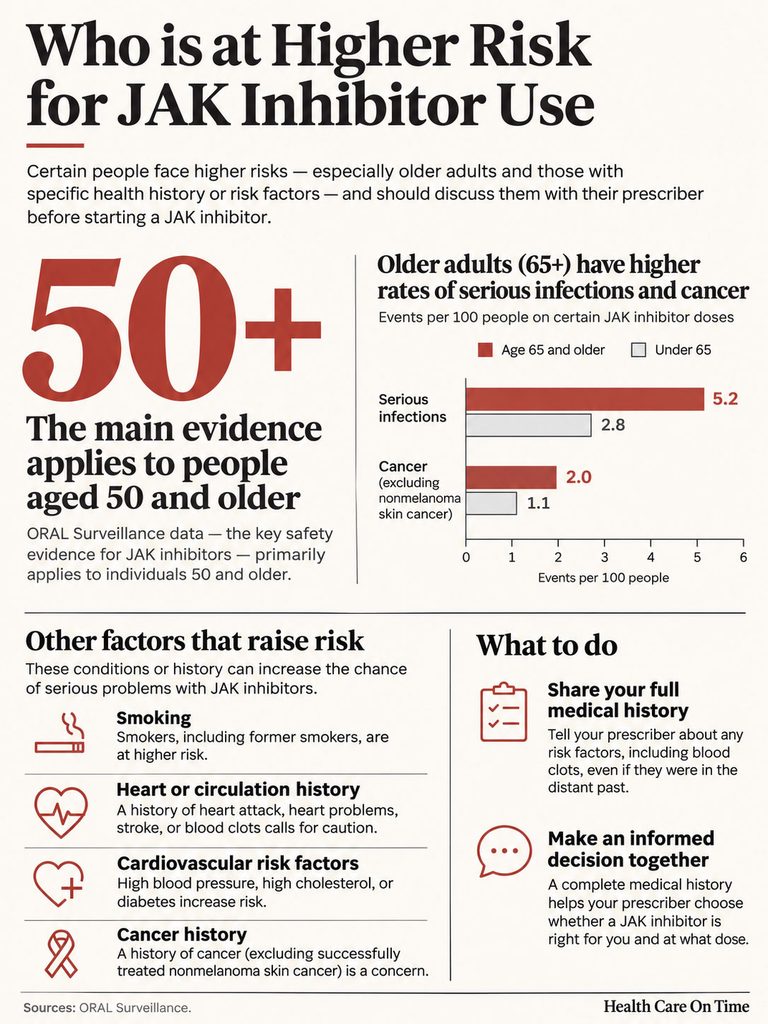
Because ORAL Surveillance only enrolled people 50 and older, its numbers apply most directly to that age group. Older adults also had more trouble on higher doses elsewhere: on Rinvoq 30 mg for eczema, people 65 and older had higher rates of serious infections and cancer in long-term studies.
Clot risk has its own list:
- a previous deep vein thrombosis or pulmonary embolism
- an inherited clotting disorder
- recent major surgery or long stretches without moving
- estrogen-containing birth control or hormone therapy
None of these automatically rules a JAK inhibitor out. They change the balance, and they’re the reason the prescriber asks about smoking, heart history and past clots before the first prescription. Be complete with those answers; a smoking habit you quit decades ago still counts, and if you’re unsure whether something in your history is relevant, mention it anyway.
Shingles, TB and vaccines
Shingles (herpes zoster) is the infection most tied to this drug class, because these drugs can let the dormant chickenpox virus reactivate. Olumiant in rheumatoid arthritis more than doubled it over the first 16 weeks, to 1.0% from 0.4% on placebo, and a year of Rinvoq maintenance for ulcerative colitis brought it to 5% on 15 mg and 6% on 30 mg, with no cases on placebo. Xeljanz trials found higher shingles rates in patients from Japan and Korea, and more shingles at the higher ulcerative colitis doses than at the standard dose.
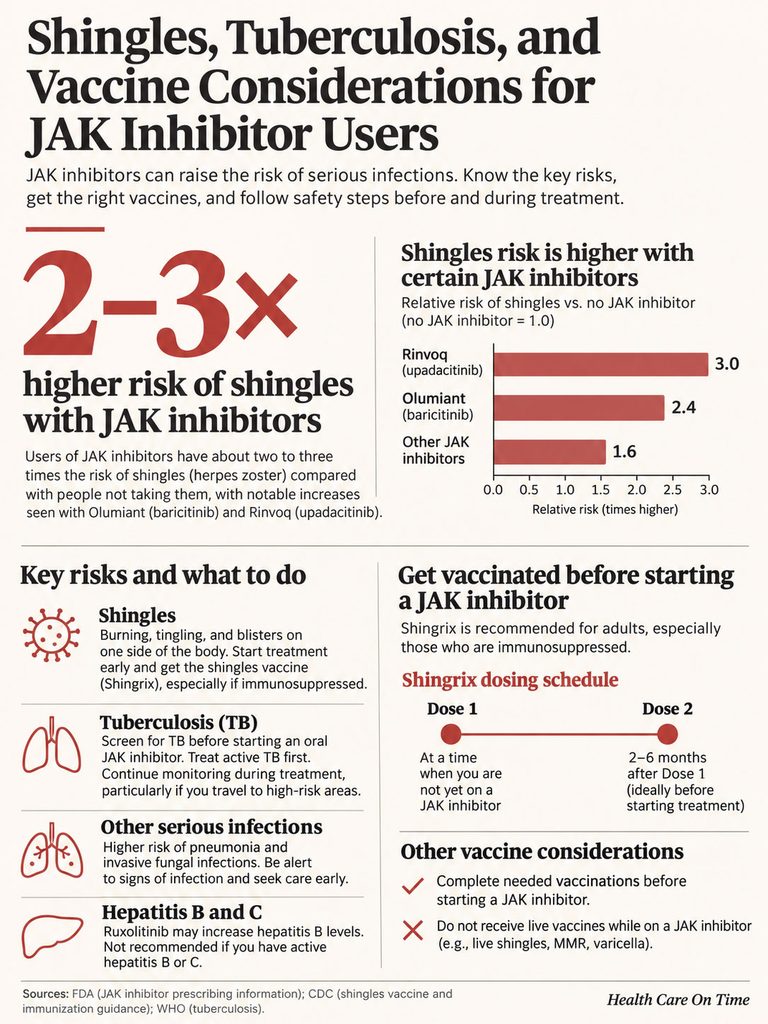
Shingles usually starts as burning, tingling or pain on one side of the body, followed a few days later by a band of blisters. Don’t wait on it. Antiviral treatment works best when it starts early, and the Olumiant label calls for pausing the drug until the episode clears, while Rinvoq’s allows a temporary pause.
Vaccination is the main prevention step. Two doses of the recombinant shingles vaccine, Shingrix, are recommended for adults 19 and older who are or will be immunosuppressed by a disease or a treatment, and CDC guidance favors giving them before immunosuppressive treatment starts when possible, with the second dose usually 2 to 6 months after the first, or 1 to 2 months when a shorter schedule helps. Shingrix is not a live vaccine, and that matters, because live vaccines are to be avoided during JAK inhibitor treatment and all immunizations should be brought up to date before starting.
Expect a tuberculosis test before the first dose of any oral JAK inhibitor, and if it’s positive, the TB gets treated first. Doctors keep watching for active TB during treatment, even when the first test was negative, so mention any time spent where TB is common, or anyone at home with a long-lasting cough. Pneumonia, invasive fungal infections and other opportunistic infections also appear among the serious infections on the labels.
With ruxolitinib taken by mouth, hepatitis B virus levels rose in some people with chronic hepatitis B, so Opzelura isn’t recommended for anyone with active hepatitis B or C.
Blood tests and checkups to expect
The lab plan differs slightly by drug, but the thresholds are similar. Before starting and at intervals after, your prescriber will usually check:
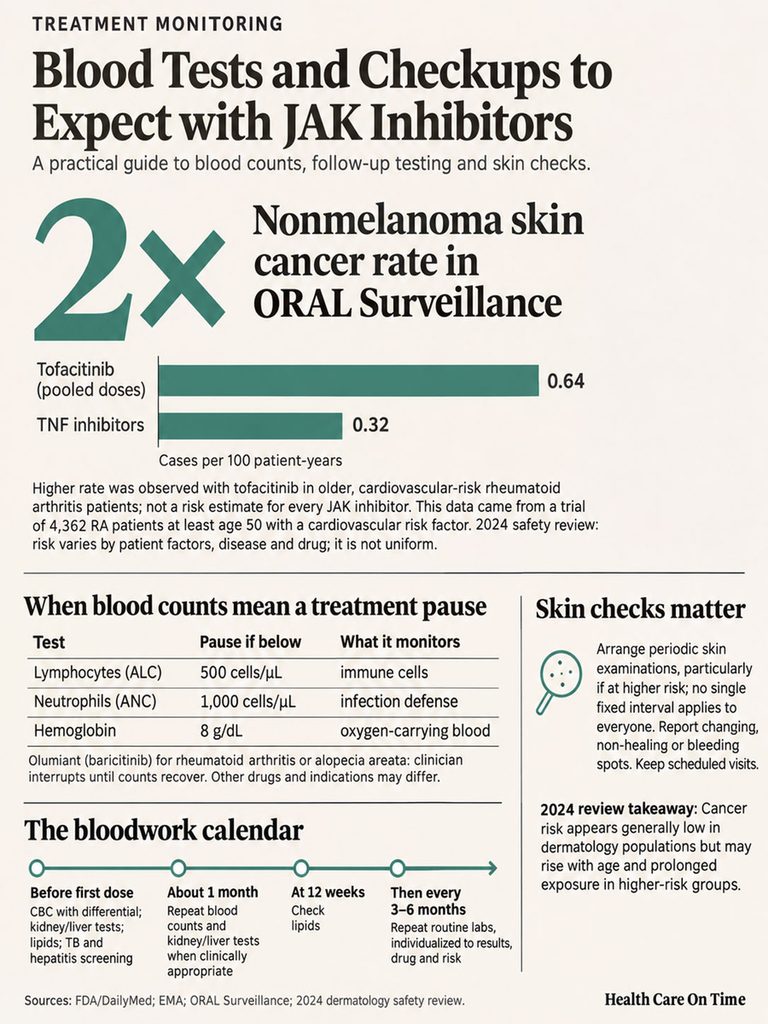
- Lymphocyte count: treatment usually isn’t started, or is paused, below 500 cells/mm³.
- Neutrophil count, with a cutoff of 1,000 cells/mm³ for most of these drugs.
- Hemoglobin, with a pause below 8 g/dL. Xeljanz shouldn’t be started below 9 g/dL, and a drop of more than 2 g/dL also triggers a pause.
- Platelets, mainly for Cibinqo and Litfulo, at the start and again at 4 weeks.
- Cholesterol, at 4 to 8 weeks for Xeljanz, about 4 weeks for Cibinqo, and about 12 weeks for Olumiant and Rinvoq.
- Liver enzymes, at the start and routinely afterward.
For several of these drugs a low count means a pause and a recheck; Olumiant, for example, can be restarted once lymphocytes, neutrophils or hemoglobin are back above the cutoff.
Skin checks belong on the schedule too. The 2024 safety review strongly recommends regular skin exams during JAK inhibitor treatment, which fits the higher nonmelanoma skin cancer rate seen in ORAL Surveillance.
How the cream compares with the pills
Opzelura is the only JAK inhibitor in this group that’s applied to the skin, and its side effects mostly stay there. In vitiligo trials, application-site acne (6% versus 1% on the base cream) and itching (5% versus 3%) led the list, followed by nasopharyngitis and headache at 4% each. In teens and adults with eczema, nasopharyngitis at 3% was the most common.
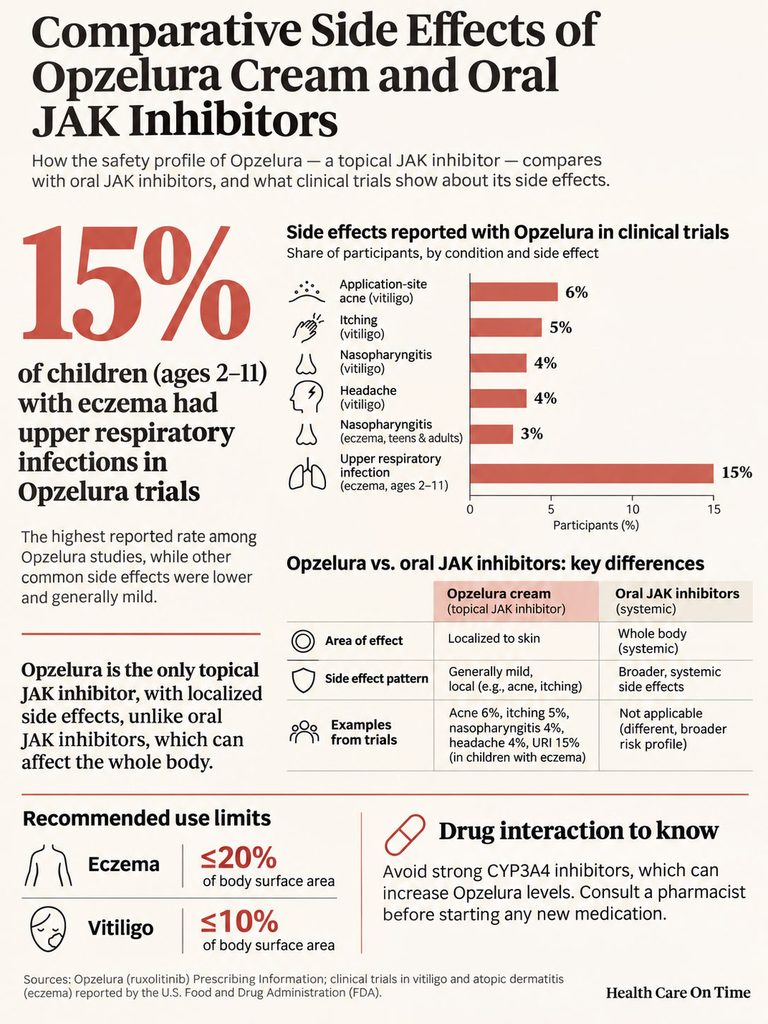
Younger children reacted a little differently. Among those aged 2 to 11 with eczema, upper respiratory infections occurred in 15% compared with 11% on the base cream, COVID-19 in 5% and application-site reactions in 5%.
Because the cream goes only where the skin needs it, how much drug a person gets depends on how large an area is treated. The label puts firm limits on how much cream to use: no more than 20% of body surface area for eczema or 10% for vitiligo, no more than one 60-gram tube a week for adults and teens (one tube every two weeks for children 2 to 11), and no covering the treated skin with occlusive dressings. Strong CYP3A4 inhibitors, a group of interacting drugs, should be avoided with it, and a pharmacist can check your medicine list for them.
Drug combinations to check
Xeljanz isn’t recommended alongside biologic DMARDs or potent immunosuppressants, and Cibinqo shouldn’t be combined with other JAK inhibitors or biologic immune drugs. Cibinqo is also off-limits with antiplatelet drugs such as clopidogrel during the first three months, with low-dose aspirin (81 mg or less a day) as the exception.
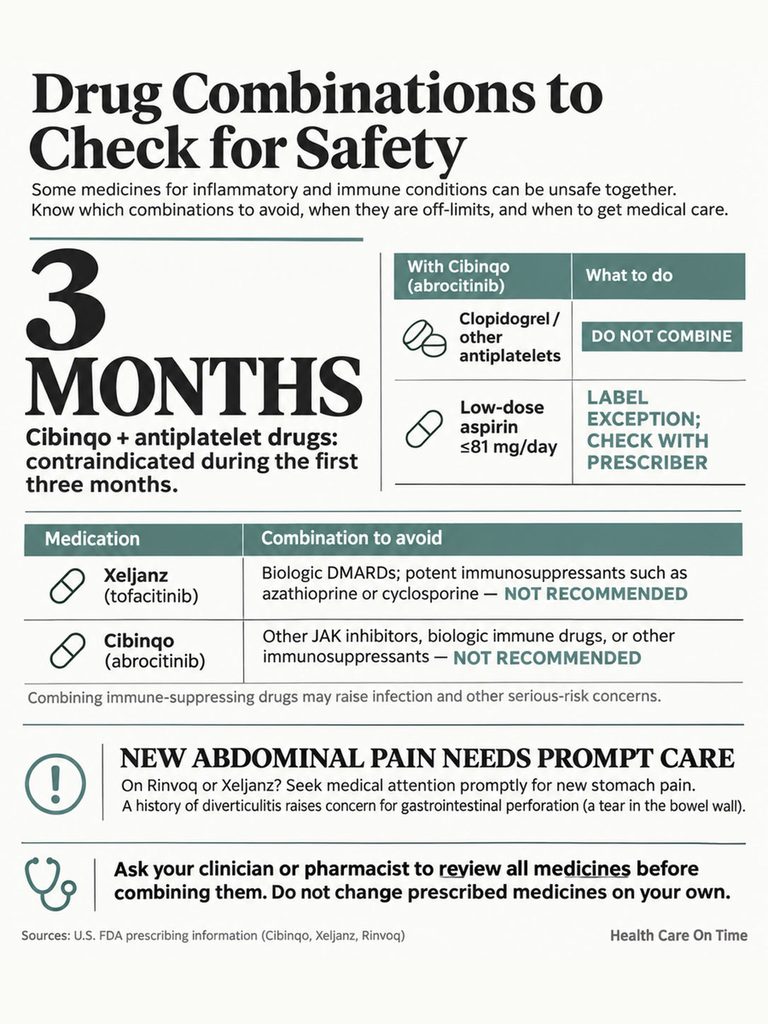
Pain relievers such as NSAIDs and steroid pills come up for a different reason. On Rinvoq or Xeljanz, new stomach pain deserves a quick check in anyone taking them, or anyone with diverticulitis, because of a rare risk of a tear in the bowel wall.
Pregnancy and breastfeeding
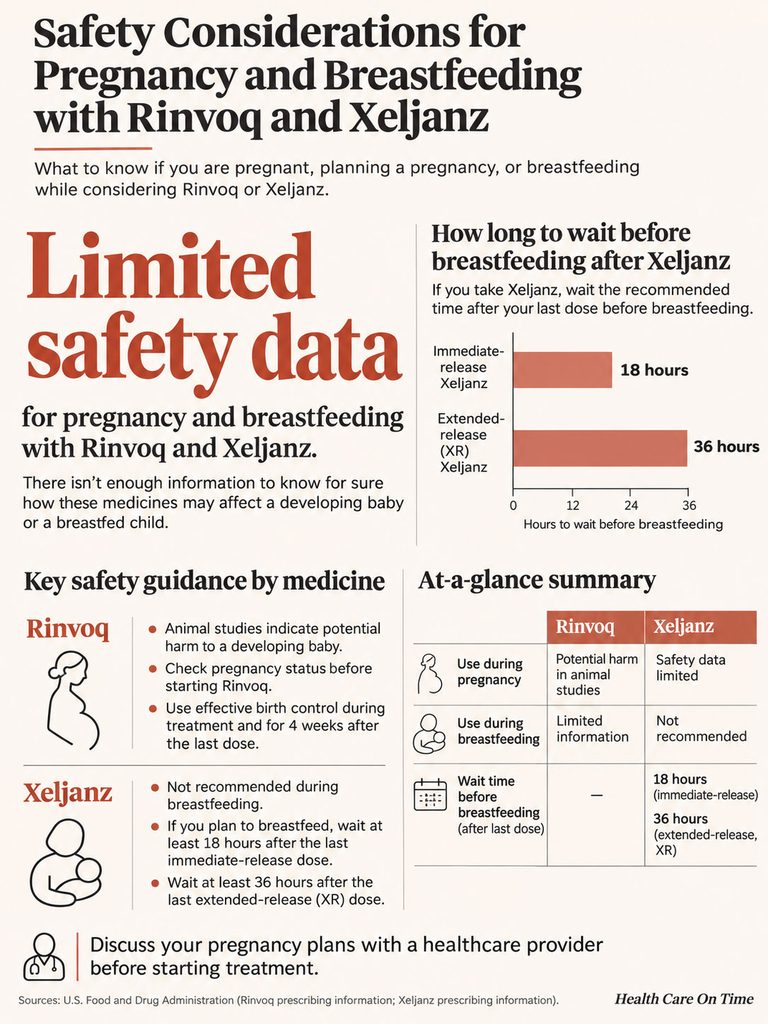
Safety data in pregnancy are limited. Rinvoq comes with the clearest instructions: animal studies suggest it may harm a developing baby, so pregnancy status should be checked before starting, and effective birth control is advised during treatment and for 4 weeks after the last dose. Breastfeeding isn’t advised on Xeljanz, during treatment or for at least 18 hours after the last immediate-release dose, or 36 hours after the last extended-release (XR) dose. If you’re planning a pregnancy, raise it before starting rather than after.
When to call your doctor and when to call 911
Mild side effects can usually wait for a phone call during office hours, but heart attack, stroke and clot symptoms can’t, and those are the rows at the top of the table below.
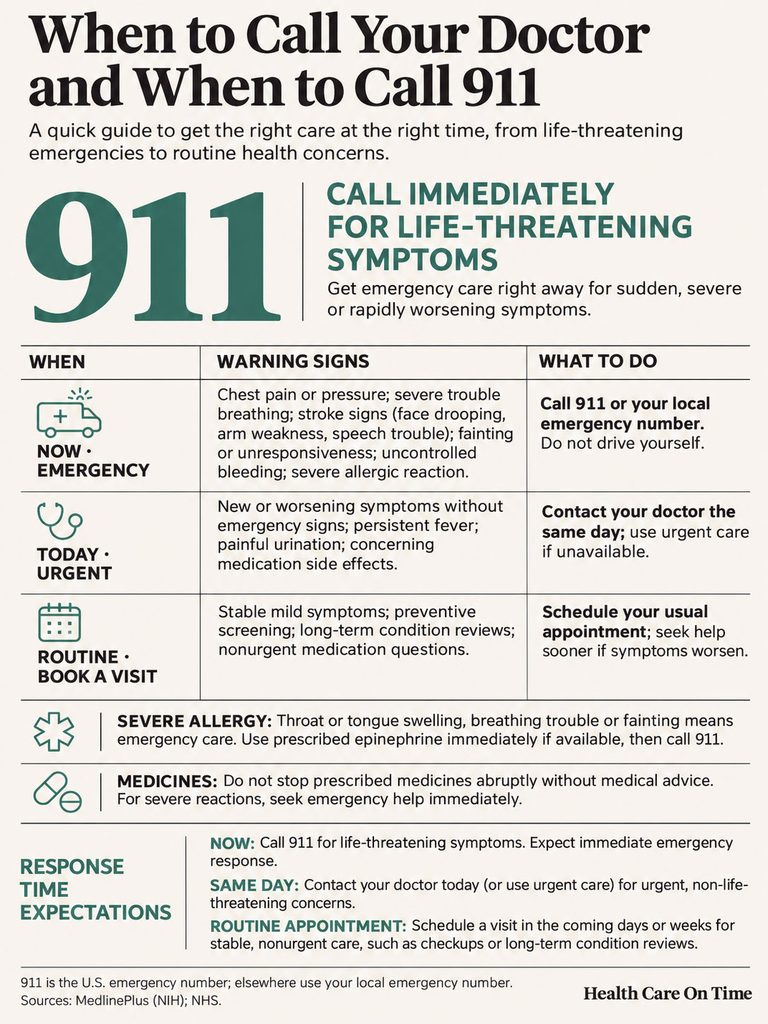
| Situation | What to do | How soon |
| Chest pain or pressure lasting more than a few minutes, or spreading to the arm, jaw, neck or back | Call 911 | Immediately |
| One-sided weakness, slurred speech or a drooping face | Call 911 (possible stroke) | Immediately |
| Sudden shortness of breath or chest pain on breathing | Call 911 (possible lung clot) | Immediately |
| Swelling, pain, warmth or red or discolored skin in one leg or arm | Same-day call or urgent care (possible DVT) | Within hours |
| Fever, chills, a lasting cough, or a painful one-sided blistering rash | Call the prescriber (infection or shingles) | Same day |
| Swollen lymph nodes, ongoing fatigue, night sweats, unexplained weight loss, hoarseness or wheezing | Book a visit (cancer screening) | Within days |
| Severe or lasting new stomach pain, especially with diverticulitis or NSAID use | Urgent evaluation (rare bowel perforation) | Same day |
| Mild acne, mild nausea or an ordinary cold | Mention at next contact | Next visit or message |
Swelling of the lips, tongue or throat, or widespread hives, points to an allergic reaction, which has been seen with Xeljanz, and needs emergency care. For anything else, keep taking the medicine until you’ve spoken with the prescriber, unless they’ve told you otherwise, because stopping suddenly can bring the original disease back.
Questions worth asking before the first dose
Appointments before a new prescription tend to be short, so it helps to walk in with a few questions written down:
- Does a past blood clot, even one from years ago, change which drug is safest here?
- Should the shingles vaccine come first, and how long before starting?
- Which blood tests are needed, and how often over the first three months?
- With a history of smoking, would a biologic be the better first choice?
- If acne or nausea shows up, is a lower dose an option?
- Is it safe to keep taking aspirin, birth control or hormone therapy alongside this drug?
- What happens if a dose is missed during a cold or a course of antibiotics?
Frequently Asked Questions
Do JAK inhibitors cause acne?
Fairly often in people treated for eczema or alopecia. Rinvoq caused acne in 10% to 16% of eczema patients and Olumiant in about 6% of alopecia patients, while it was uncommon in arthritis trials. If it shows up, the prescriber can look at the dose or treat the acne directly.
Do JAK inhibitors weaken your immune system?
They dampen part of it. Colds and sinus infections become a little more common, shingles risk rises, and serious infections such as pneumonia are more likely than without treatment, which is why TB testing and vaccines come first. Staying current on non-live vaccines and calling early with a fever both help.
Can you get the shingles vaccine while taking a JAK inhibitor?
Shingrix can be given, because it’s a non-live vaccine, and it’s recommended for adults 19 and older on immunosuppressing treatment. Getting both doses before the first JAK inhibitor dose is preferred, but it can still be given during treatment if that window has passed. Live vaccines should be avoided while you’re on the drug, so ask before any travel shots or other vaccines that might be live.
Does the boxed warning apply if you’re under 50?
The warning is on every label regardless of age, but the trial behind it, ORAL Surveillance, enrolled only people 50 and older with at least one cardiovascular risk factor. In real-world US insurance data from the STAR-RA study, people with rheumatoid arthritis across ages had no measurable increase in heart attack or stroke on Xeljanz compared with a TNF blocker. That suggests the heart risk is lower in younger, healthier patients, though infections, shingles and lab changes still apply at any age. Cancer and clot risk in younger people has not been studied as directly, so the warning stays.
Is Opzelura cream as risky as JAK inhibitor pills?
Opzelura carries the same boxed warning, but it’s used on limited areas of skin, with caps on both the area treated and the amount per week. Its most common side effects are local, mainly acne and itching where it’s applied.
Are JAK inhibitors safer than biologics?
Compared with TNF blockers in head-to-head data, no. In ORAL Surveillance, Xeljanz had higher rates of heart events, cancer, blood clots and death than TNF blockers in people over 50 with cardiovascular risk factors, and the FDA responded by restricting most arthritis and bowel uses to people who have already tried a TNF blocker. For people without those risk factors, real-world data look more reassuring, and JAK inhibitors are pills rather than injections, which matters to many patients. Your own heart, smoking and cancer history usually decides which way the balance tips.
Can you take a JAK inhibitor while pregnant or breastfeeding?
Usually not. Rinvoq calls for effective birth control during treatment and for 4 weeks after stopping, and breastfeeding on Xeljanz should wait at least 18 hours after the last dose (36 hours for the XR form).
Why are regular blood tests needed on a JAK inhibitor?
Several side effects cause no symptoms. Lymphocytes, neutrophils, hemoglobin, liver enzymes and cholesterol can all shift, and Cibinqo and Litfulo can lower platelets. Each label sets cutoffs, such as lymphocytes below 500 cells/mm³ or hemoglobin below 8 g/dL, where treatment is paused or not started.
Do JAK inhibitors raise cholesterol?
LDL cholesterol rose 15% to 19% on Xeljanz in early trials, though HDL rose too. Lipids are checked within the first few months and treated the usual way if needed. If your LDL was already high before starting, ask whether it should be treated first.
Medical disclaimer: This article is for general information only and isn’t a substitute for advice from your own doctor or pharmacist. Don’t start, stop or change any medicine based on this page. If you have chest pain, stroke symptoms, sudden shortness of breath or signs of a severe allergic reaction, call 911.
References
- US Food and Drug Administration. FDA requires warnings about increased risk of serious heart-related events, cancer, blood clots, and death for JAK inhibitors that treat certain chronic inflammatory conditions. Drug Safety Communication, September 2021, updated December 2021.
- XELJANZ (tofacitinib) prescribing information. Pfizer. Revised 6/2026. FDA.
- OLUMIANT (baricitinib) prescribing information. Eli Lilly. Revised 6/2026. FDA.
- RINVOQ (upadacitinib) prescribing information. AbbVie. Revised 6/2026.
- CIBINQO (abrocitinib) prescribing information. Pfizer. Revised 6/2026. FDA.
- LITFULO (ritlecitinib) prescribing information. Pfizer. Revised 6/2026. FDA.
- OPZELURA (ruxolitinib) cream prescribing information. Incyte. Revised 6/2026. FDA.
- Ytterberg SR, et al. Cardiovascular and Cancer Risk with Tofacitinib in Rheumatoid Arthritis. N Engl J Med. 2022. Summary in The ASCO Post.
- Khosrow-Khavar F, et al. Tofacitinib and risk of cardiovascular outcomes: results from the STAR-RA study. Ann Rheum Dis. 2022;81(6):798-804.
- Wlassits R, et al. JAK-Inhibitors: A Story of Success and Adverse Events. Open Access Rheumatol. 2024;16:43-53.
- Centers for Disease Control and Prevention. Clinical Considerations for Shingrix Use in Immunocompromised Adults Aged 19 Years and Older.
- American Academy of Dermatology. JAK inhibitors: What your dermatologist wants you to know. Updated September 2024.