You stand up on the first morning of your period, the room grays at the edges, and for a second you are certain something is wrong with your heart. Here is what almost nobody tells you: when researchers compared 128 people diagnosed with a fainting disorder against 92 healthy volunteers, both groups reported their worst lightheadedness during menstruation, at nearly identical levels. The scariest symptom of the month turns out to be one of the most ordinary.
Table of Contents
Quick answer: “Period flu” is the popular name for flu-like symptoms that appear in the days before or during a period. It is not influenza, it is not contagious, and it is not a formal diagnosis. The driver is prostaglandins, hormone-like compounds released as the uterine lining breaks down. They force the uterus to contract, push the bowel into overdrive, and can trigger a reflex drop in blood pressure that makes you feel faint. Symptoms peak on day one and ease as bleeding slows.
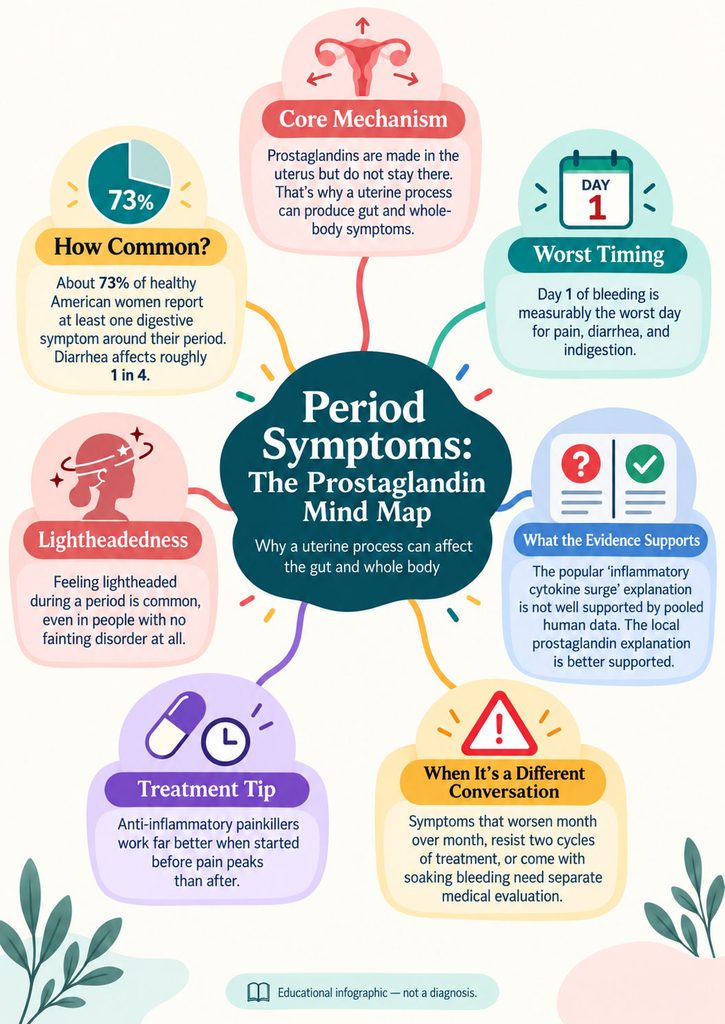
The seven symptoms people call period flu, ranked by how often research documents them:
- Abdominal and pelvic cramping
- Fatigue out of all proportion to your sleep
- Diarrhea or looser, more frequent stools
- Body aches, especially lower back and thighs
- Headache
- Nausea, sometimes with vomiting
- Dizziness, chills, or the sense you might pass out
At a Glance
- Prostaglandins are made in the uterus but do not stay there, which is why a uterine process produces gut and whole-body symptoms.
- About 73% of healthy American women report at least one digestive symptom around their period, with diarrhea affecting roughly a quarter.
- Day one of bleeding is measurably the worst day for pain, diarrhea, and indigestion.
- Lightheadedness during a period is common in people with no fainting disorder at all.
- The popular “inflammatory cytokine surge” explanation is not well supported by pooled human data. The local prostaglandin explanation is.
- Anti-inflammatory painkillers work far better started before pain peaks than after.
- Symptoms that worsen month over month, resist two cycles of treatment, or come with soaking bleeding are a different conversation.
What “Period Flu” Actually Means (And Why No Doctor Will Write It On Your Chart)
The term spread through social media and period-tracking apps, not through medical journals. Search any clinical database for “period flu” and you will find essentially nothing, because clinicians describe the same experience using older words.
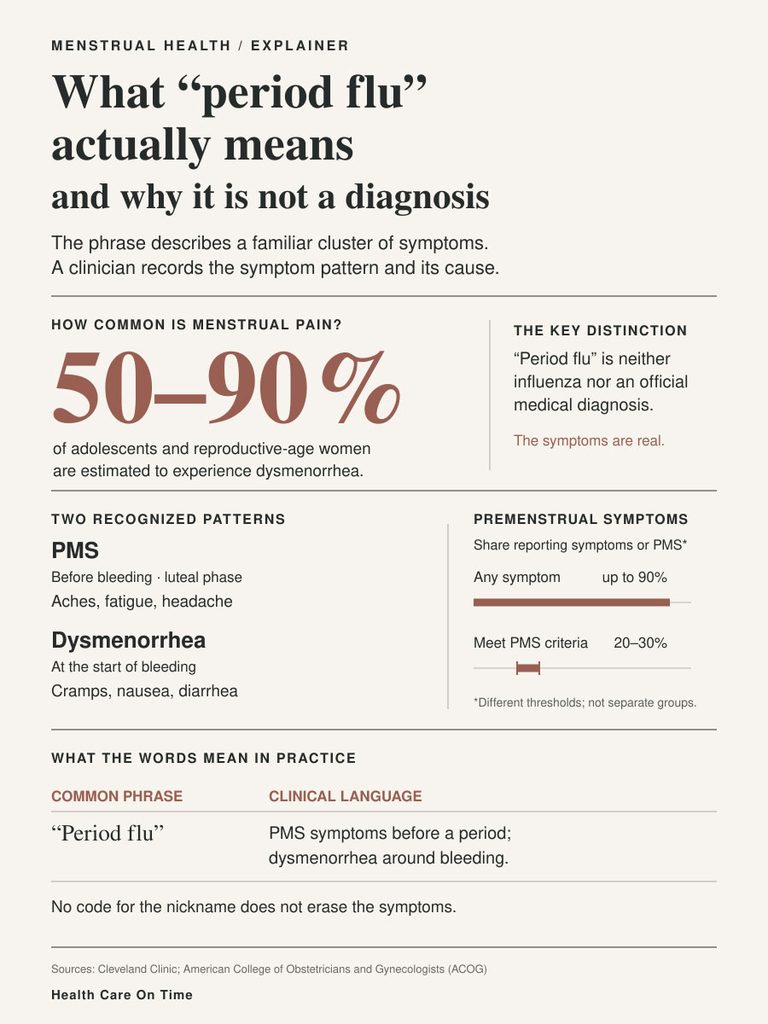
Cleveland Clinic states it plainly: period flu is not the flu and not an official diagnosis. WebMD reaches the same conclusion and maps the symptoms onto two established terms instead.
Those two terms are dysmenorrhea and premenstrual syndrome. Neither fully covers what people mean by period flu, which is part of why the slang caught on.
Our medical reviewers note that the absence of a billing code is not the absence of a mechanism. Patients booking tests with us regularly assume “not an official diagnosis” means “not real,” and those are two very different statements.
Dysmenorrhea, PMS, and the space between them
Dysmenorrhea means painful menstruation. The American Academy of Family Physicians puts prevalence at 50% to 90% of US adolescents and reproductive-age women, and names it a leading cause of school and work absence in this country.
Premenstrual syndrome is different. It describes symptoms that build during the luteal phase, the roughly two weeks after ovulation, and resolve once bleeding starts. Per ACOG guidance, up to 90% of women experience at least one premenstrual symptom, 20% to 30% meet the criteria for PMS, and 2% to 5% meet the criteria for premenstrual dysphoric disorder.
Period flu straddles both. The aches and fatigue behave like PMS. The cramping, nausea, and diarrhea behave like dysmenorrhea.
ACOG guidance on adolescent dysmenorrhea specifically lists nausea, vomiting, diarrhea, headaches, and muscle cramps as recognized companions to menstrual pain. The symptom cluster has been documented for decades. Only the nickname is new.
The Real Mechanism: Prostaglandins, Not a Virus
Every month the uterine lining prepares for a pregnancy that mostly does not happen. When progesterone falls, that lining begins breaking down, and the breakdown releases prostaglandins.
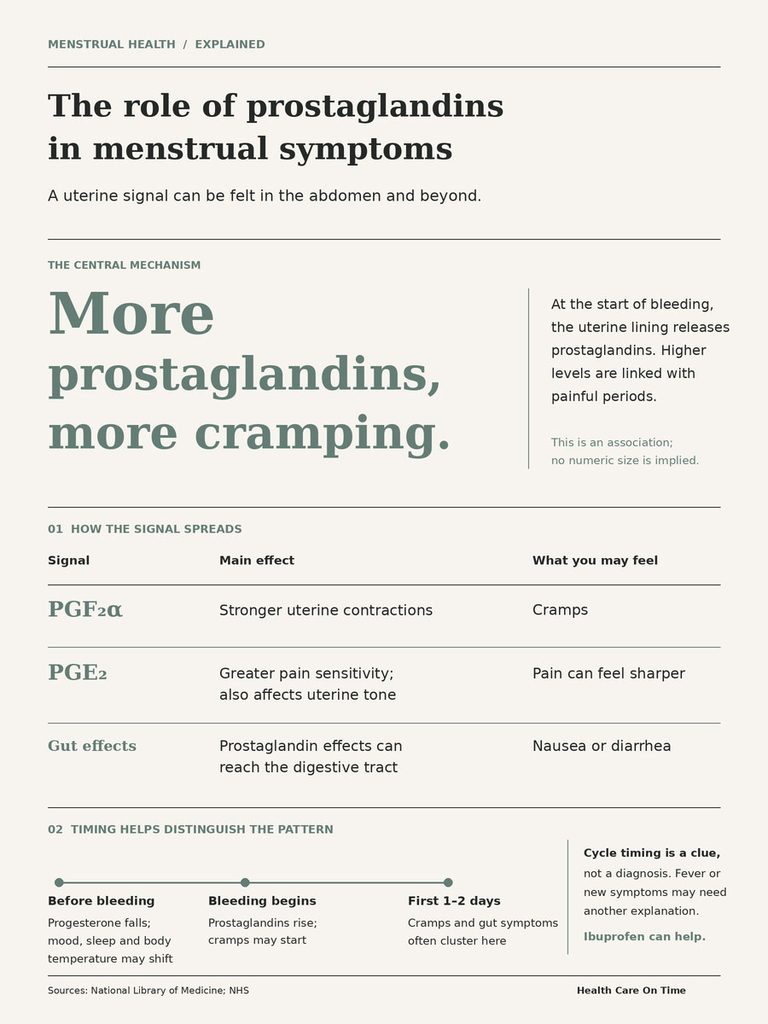
Prostaglandins are fatty-acid signaling molecules, not hormones in the classic sense. Two matter most here: PGF2 alpha, which makes uterine muscle contract hard, and PGE2, which sensitizes nerve endings to pain.
Why the amount matters more than the presence
Everyone who menstruates makes prostaglandins. The people who feel wrecked make more of them.
Using gas chromatography and mass spectrometry, researchers found that on the first day of bleeding, endometrial PGF2 alpha ran roughly four times higher in women with painful periods than in those without, at 300 to 2,600 picograms per milligram of tissue. Their blood levels of the main PGF2 alpha metabolite ran 32 to 105 pg/mL against 20 to 33 pg/mL in women with painless periods.
A separate analysis of menstrual fluid confirmed the pattern and added PGE2, finding both compounds significantly elevated in women with dysmenorrhea compared with controls.
One caveat worth stating: this foundational work dates to the late 1970s and mid 1980s. It has not been overturned, but it has not been repeated at scale with modern assays either.
The part that explains the diarrhea
Prostaglandins do not respect the walls of the uterus. They diffuse into surrounding tissue and enter circulation, and the intestine is full of receptors that respond to them.
Prostaglandins speed intestinal transit and pull fluid into the bowel. That is the same pathway some laxatives exploit deliberately. The result is looser stools, urgent trips, and cramping that is genuinely intestinal rather than uterine.
The same circulating compounds explain the nausea, the headache, and the achy heaviness in the lower back and thighs. One local process, many distant symptoms.
Across the diagnostic network we work with, this is the point that changes how people think about their symptoms. They stop asking why a uterus causes bowel trouble once they see that the messenger travels.
What progesterone withdrawal adds
The drop in progesterone that triggers the sequence also affects mood, sleep, and temperature regulation. That contributes to the “coming down with something” feeling that starts days before any bleeding.
Chills and flushing without a measured temperature are common. An actual fever is not, and that distinction matters more than any other single sign.
| Feature | Period Flu | Influenza | Stomach Bug (norovirus) | Signals a Doctor Visit |
| Onset timing | Predictable, 1 to 5 days before bleeding or on day 1 | Abrupt, no cycle link | Abrupt, often 12 to 48 hours after exposure | Any severe symptom with no prior monthly pattern |
| Fever | Feels feverish or chilled, thermometer stays under 100.4 F | Often 100.4 F to 104 F | Low-grade fever possible | Measured fever above 102 F during a period |
| Body aches | Lower back, thighs, pelvis | Whole body, including arms and shoulders | Uncommon | Aches plus rash plus fever |
| Bowel changes | Looser stools, peak day 1, settle in 2 to 3 days | Uncommon in adults | Watery diarrhea plus forceful vomiting | Blood in stool, or diarrhea past the end of bleeding |
| Duration | 1 to 3 days, tracks heaviest flow | 3 to 7 days, cough lingers | 24 to 72 hours | Beyond 5 days, or worsening after day 3 |
| Contagious | No | Yes | Highly | Household members sick too points away from period flu |
| Response to ibuprofen | Good, especially started early | Reduces fever only | Minimal | No relief across two full cycles |
| What ends it | Flow lightening | Immune clearance | Immune clearance | Nothing, or it keeps escalating |
Table 1. Period flu against the three things it is most often mistaken for.
The most useful question is not which symptom you have but whether the calendar predicts it. Influenza does not arrive on schedule every 28 days.
Why You Get Diarrhea (The Symptom Nobody Quantifies)
Search “period diarrhea” and you will find a dozen pages that mention it in one line and move on. The research is better than the coverage.
How common it actually is
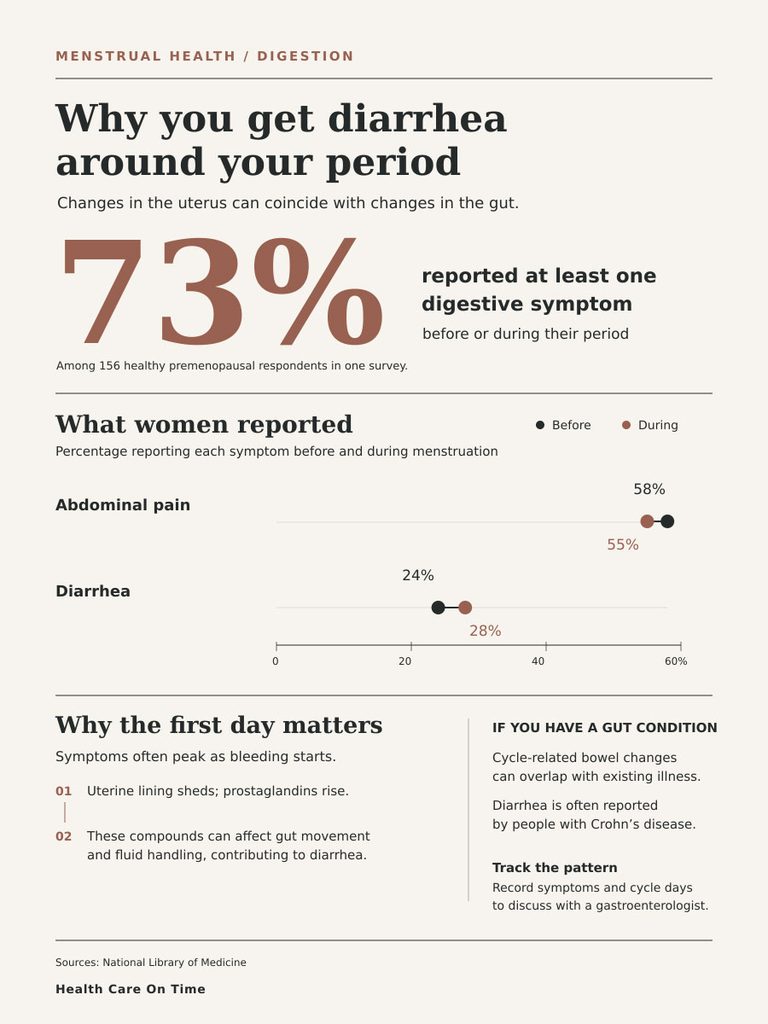
Researchers surveyed 156 healthy, premenopausal women attending a US outpatient gynecology clinic for routine well-woman care, screening out anyone with known digestive, gynecologic, or psychiatric conditions.
About 73% reported at least one digestive symptom before or during their period. Abdominal pain led at 58% premenstrually and 55% during bleeding. Diarrhea affected 24% before and 28% during. Fatigue appeared in 53% and 49%.
These were healthy American women with no gut disorder. The symptoms are not evidence that something is broken.
Why day one is the worst day
A prospective study tracked 78 healthy women through five weeks, recording symptoms daily rather than asking them to remember afterward.
Abdominal pain, diarrhea, and indigestion all scored higher on the first day of bleeding than on any other day of the cycle. Stool frequency, stool form, and reflux peaked there too. On every other day, average discomfort sat below the midpoint between “none” and “slight.”
That is the clearest available answer to why one day flattens you. Prostaglandin release peaks as the lining begins shedding, and the gut responds in real time.
If you already have a gut condition
The menstrual effect stacks on top of existing disease. A prevalence study across inflammatory bowel disease, irritable bowel syndrome, and controls found all disease groups reported cyclical bowel patterns more often than controls, with an odds ratio of 2.0, and diarrhea was the symptom Crohn disease patients named most.
A later review reached the same conclusion and flagged the open question: it remains unclear whether the worsening reflects normal physiology amplified or genuine disease flare. If you have inflammatory bowel disease and your symptoms track your cycle, document the pattern for your gastroenterologist rather than dismissing it.
Why You Feel Like You’ll Faint
This is the symptom that sends people to American emergency rooms, and it has the most reassuring evidence behind it.
The reflex in plain English
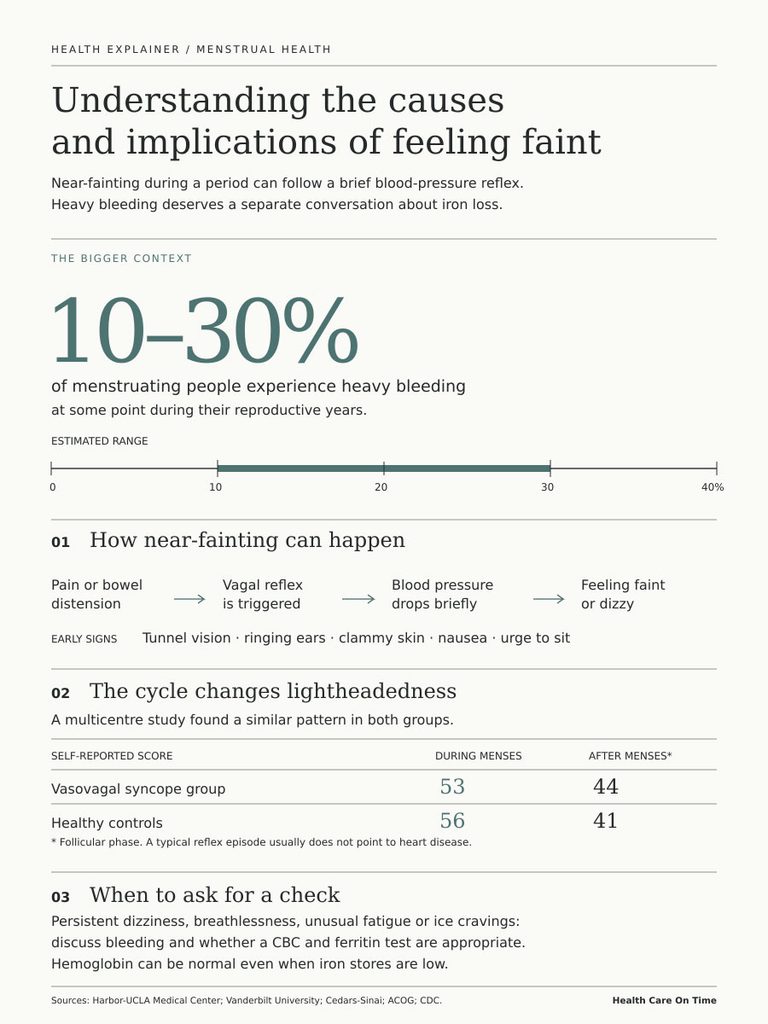
Intense visceral pain and bowel distension both stimulate the vagus nerve. Strong vagal activity slows the heart and widens blood vessels at once, dropping blood pressure and reducing blood flow to the brain.
The result is the familiar sequence: tunnel vision, ringing ears, clammy skin, nausea, and the urge to sit down immediately. Clinicians call the near-miss version presyncope and the full version vasovagal syncope.
Cramping severe enough to double you over is exactly the kind of stimulus that provokes it. Add diarrhea, which independently activates the same nerve, and the two effects compound.
The finding that reframes everything
Investigators running a multicenter syncope trial gave a menstrual questionnaire to 128 women diagnosed with vasovagal syncope and to 92 healthy volunteers matched for sex.
Both groups reported their greatest lightheadedness during menstruation, scoring 53 plus or minus 2 and 56 plus or minus 4, and both improved through the follicular phase to 44 plus or minus 2 and 41 plus or minus 4. The healthy volunteers were, if anything, slightly worse.
The authors concluded that lightheadedness varies across the cycle similarly in patients and controls, and that women with vasovagal syncope carry no greater burden of gynecologic problems. Feeling wobbly on your period does not mean you have a fainting disorder.
Patients commonly ask us whether this warrants a cardiac workup. Near-fainting that only happens on day one, resolves when you sit down, and never occurs between periods is behaving like the reflex, not like a heart rhythm problem.
When it is blood loss, not the reflex
There is a version that does need attention. If the dizziness is constant rather than positional, persists between periods, and comes with breathlessness on stairs, unusual fatigue, or a craving for ice, iron deficiency belongs on the list.
Heavy menstrual bleeding affects an estimated 10% to 30% of menstruating people and is a major contributor to iron deficiency and iron deficiency anemia00024-8/fulltext). A 2026 US chart review noted that iron deficiency affects close to one in three American women and that heavy bleeding often goes undiscussed as the cause, even after the deficiency is on the chart.
Hemoglobin can read normal while iron stores are already depleted. A complete blood count and a ferritin answer two different questions, which is why people booking through HealthCareOnTime for this symptom usually order both.
The Inflammation Story Everyone Repeats (And What the Pooled Data Says)
Almost every article on period flu tells the same story: your immune system fires up, inflammatory cytokines flood your bloodstream, and that is why you feel like you have a virus.
It is a satisfying explanation. The pooled human evidence does not support it well.
What 110 studies actually found
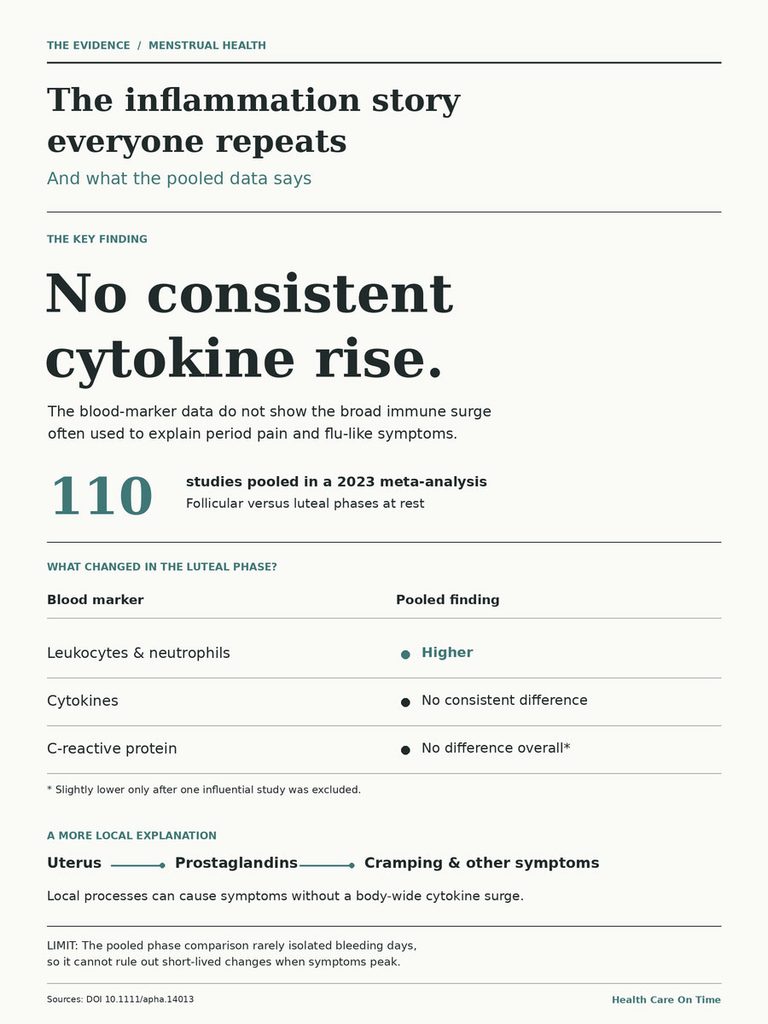
A 2023 systematic review and meta-analysis searched three databases, included 159 studies in qualitative synthesis, and pooled 110 to compare immune markers between the follicular and luteal phases.
Some cell counts did shift. Leukocytes, monocytes, granulocytes, and neutrophils all ran higher in the luteal phase, with standardized mean differences between roughly 0.32 and 0.85.
The cytokines did not. Adaptive immune cells, cytokines, chemokines, and cell adhesion molecules showed no systematic baseline differences between phases. C-reactive protein, the marker most people associate with inflammation, ran slightly lower in the luteal phase rather than higher.
What this changes for you
The uterus during menstruation is genuinely an inflammatory site. That is local tissue breakdown, and it is real.
What the data does not show is a body-wide cytokine storm producing flu-like illness. The more defensible explanation is simpler: prostaglandins made locally, released into circulation, acting on gut, blood vessels, and pain nerves.
That distinction has practical value. If the problem were a systemic immune response, anti-inflammatory painkillers would be a blunt instrument. Because the problem is prostaglandin synthesis, a drug that blocks prostaglandin synthesis aims directly at the cause.
One honest limitation: the meta-analysis compared follicular phase to luteal phase. Very few studies isolate the bleeding days themselves, which is exactly when symptoms peak. The question is not closed, but the popular version has run ahead of the evidence.
| What Was Measured | The Number | Population Studied | Source |
| Any digestive symptom around menses | 73% | 156 healthy US women, gynecology clinic | BMC Women’s Health, 2014 |
| Diarrhea during menses | 28% | Same US cohort | BMC Women’s Health, 2014 |
| Fatigue premenstrually | 53% | Same US cohort | BMC Women’s Health, 2014 |
| Dysmenorrhea prevalence | 50% to 90% | US adolescents and reproductive-age women | AAFP review, 2021 |
| Meets clinical criteria for PMS | 20% to 30% | Reproductive-age women | ACOG PMS/PMDD guidance |
| Meets criteria for PMDD | 2% to 5% | Reproductive-age women | ACOG PMS/PMDD guidance |
| Missed work or school at least once | Up to 50% | US patients with dysmenorrhea | AAFP review, 2021 |
| Worked at reduced capacity | 80.7%, averaging 23.2 days per year | 32,748 women aged 15 to 45, Netherlands | BMJ Open, 2019 |
Table 2. What the numbers actually say, with the population each one came from.
That last row is Dutch, not American, so read it carefully. The structure of the finding still travels: only 13.8% of those women missed work outright, averaging 1.3 days a year, while four out of five worked through symptoms at roughly two-thirds capacity, and only 20.1% of those who did call in sick told their employer why.
Period flu mostly does not show up in absence records. It shows up in a bad week you never mentioned to anyone.
What Actually Helps (Graded by Evidence, Not by Popularity)
The timing rule that changes everything
Anti-inflammatory painkillers block the enzyme that manufactures prostaglandins. They cannot remove prostaglandins already circulating.
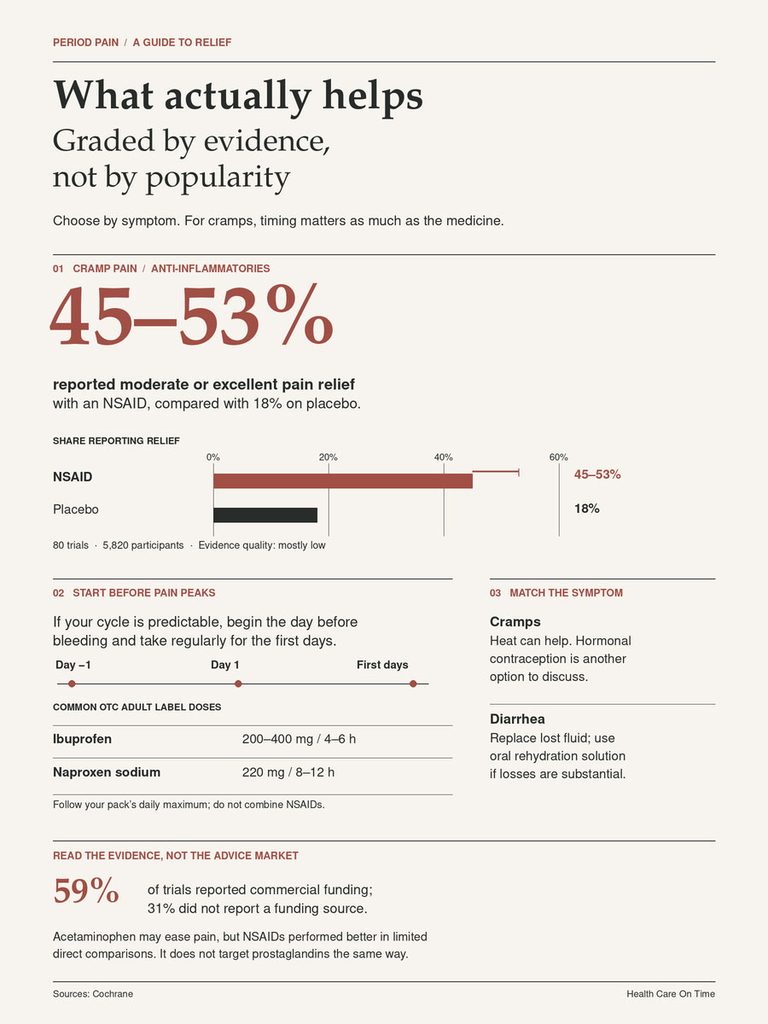
That single fact is why starting ibuprofen or naproxen the evening before your expected period, or at the very first twinge, works far better than starting once cramping has taken hold. If your cycle is predictable enough to plan around, use that.
A Cochrane review pooled 80 randomized trials covering 5,820 women and 20 different anti-inflammatory drugs. The drugs were highly effective for period pain, with roughly two women needing treatment for one to get at least moderate relief she would not have gotten from placebo. The reviewers also noted 59% of included trials were commercially funded, a caveat worth carrying.
What the dosing window looks like in practice
Standard over-the-counter ibuprofen tablets in the US are 200 mg, and package directions typically allow 200 to 400 mg every four to six hours, with a stated daily ceiling. Naproxen sodium is usually 220 mg per tablet with eight to 12 hour intervals, which suits people who cannot re-dose during a shift or a class.
The practical move is not a higher dose. It is an earlier first dose, taken with food, then kept on schedule through the first 24 to 48 hours.
Confirm dosing against your product label and any other medication you take, since many combination cold and headache products already contain an anti-inflammatory.
If you cannot take anti-inflammatory drugs
A history of stomach ulcers, certain kidney conditions, some cardiac conditions, aspirin-sensitive asthma, or pregnancy can all take these drugs off the table.
Heat, hormonal options that thin the lining, and targeted management of the diarrhea all remain available. Acetaminophen can be used for pain in many of these situations, with the caveat below.
Why acetaminophen underperforms here
In a double-blind crossover trial, 12 women with painful periods took placebo, acetaminophen, or ibuprofen across three separate cycles while menstrual fluid was collected and assayed. Ibuprofen suppressed menstrual fluid PGF2 alpha; acetaminophen did not.
Acetaminophen can take the edge off pain. It does not touch the mechanism producing the diarrhea, the nausea, or the aches, which is why people often describe it as helping less than expected.
When diarrhea is the main event
Fluid and sodium losses are the reason the lightheadedness gets worse as the day goes on. Plain water alone replaces the volume but not the salt, which is why an oral rehydration solution or an electrolyte drink usually steadies people faster than a water bottle does.
On a heavy day, sip steadily across waking hours rather than downing two large glasses, aiming for roughly 8 to 16 fluid ounces above your usual intake. Watch one marker: urine that stays pale rather than dark.
Foods that already irritate you, and large amounts of caffeine, tend to make day one worse. There is no special diet here, just the ordinary logic of not provoking an already-irritable gut.
| Option | How It Works | Evidence Strength | Practical Note |
| Ibuprofen or naproxen sodium | Blocks prostaglandin synthesis at the source | Strong, 80 pooled trials | Start before pain peaks; take with food; not for everyone |
| Heat to the lower abdomen | Relaxes uterine muscle, competes with pain signaling | Moderate | Heating pad or adhesive patch; pairs with medication rather than replacing it |
| Combined hormonal contraception | Thins the lining, so less tissue means fewer prostaglandins | Moderate to strong | Prescription, needs a risk assessment |
| Hormonal IUD | Same principle, delivered locally | Moderate | Often cuts bleeding volume, which helps the dizziness too |
| Oral rehydration or electrolyte drinks | Replaces fluid and sodium lost to diarrhea | Indirect but sound | Plain water alone can worsen lightheadedness on heavy days |
| Lying flat with legs raised | Restores blood flow to the brain during presyncope | Strong for the reflex itself | Sit or lie down at the first warning sign; do not push through |
| Acetaminophen | Central pain modulation only | Weak for this specific use | Does not reduce prostaglandins in menstrual fluid |
| Supplements marketed for period flu | Varies by product | Weak or absent | Several widely read articles on this topic are published by companies selling these products |
Table 3. Relief options graded by the strength of the evidence behind them.
That last row is not a throwaway. Among the most-read articles on period flu, one is published by a supplement retailer and one by a practice selling its own line. Their advice may be sound. Their incentive is not neutral, and you deserve to know that before weighing it.
In cases reviewed by our medical team, the most common correctable mistake is not the choice of drug. It is a first dose taken eight hours too late.
When Period Flu Isn’t Period Flu
Most of what this article describes is uncomfortable, predictable physiology. A minority of it is a signal.
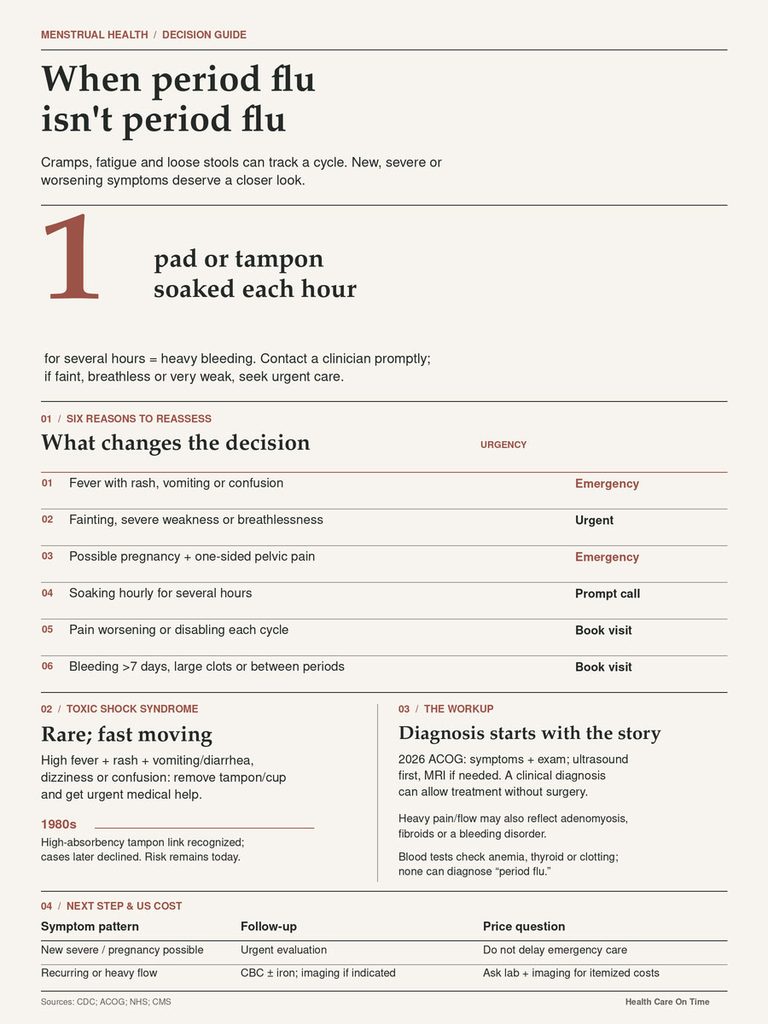
Six red flags
- Fever measured above 102 F, especially with a sunburn-like rash
- Bleeding that soaks through a pad or tampon every hour for several hours
- Actual loss of consciousness, as opposed to feeling like you might
- Symptoms that get measurably worse month over month
- Pain that does not respond to anti-inflammatory medication across two full cycles
- Diarrhea with blood, or diarrhea that continues after bleeding stops
Toxic shock syndrome, the rare one worth knowing
High fever, a rash resembling sunburn, vomiting, diarrhea, and dizziness during a period, particularly while using a tampon, is the one combination that should send you in the same day.
This is genuinely rare now. CDC surveillance recorded 890 toxic shock cases in 1980, 812 of them linked to menstruation, falling to 61 cases in 1989 with 45 menstrual, after high-absorbency products were withdrawn and US absorbency labeling was standardized. Deaths among menstrual cases reached zero in 1988 and 1989.
Rare is not never. Use the lowest absorbency that handles your flow, change products on schedule, and treat that cluster as urgent.
Endometriosis and the 2026 rule change
In February 2026, ACOG published its first clinical practice guideline on diagnosing endometriosis. The guidance targets a delay that averages four to 11 years from symptom onset to diagnosis and identifies the traditional requirement for surgical confirmation as a major driver of it.
The practical shift is that US clinicians are now encouraged to make a presumptive clinical diagnosis from symptoms and examination and to begin treatment, without waiting for laparoscopy. Symptoms that should raise suspicion include chronic pelvic pain, significant dysmenorrhea, pain with deep penetration, and bowel or bladder pain that fluctuates with the cycle.
That last one is directly relevant here. Cyclical bowel symptoms are not automatically endometriosis, but paired with escalating pain that outruns over-the-counter treatment, they are a reason to raise the question by name at your next visit.
The other explanations worth naming
Adenomyosis, where lining tissue grows into the uterine muscle wall, typically brings heavy bleeding with deep, dragging pain. Fibroids bring heaviness and pressure. Undiagnosed bleeding disorders, particularly von Willebrand disease, turn up in a meaningful share of teenagers referred for heavy periods.
| Your Situation | What It Usually Points To | What To Do | How Fast |
| Predictable monthly pattern, settles with early ibuprofen | Primary dysmenorrhea | Track two cycles, keep using the timing rule | No visit needed |
| Fever above 102 F plus rash plus vomiting during a period | Possible toxic shock syndrome | Remove tampon, seek emergency care | Immediately |
| Soaking a pad or tampon hourly for several hours | Heavy menstrual bleeding | Urgent care or ER; expect CBC and ferritin | Same day |
| Actually lost consciousness | Needs evaluation regardless of cause | Contact a clinician; do not drive yourself | Within 24 hours |
| Constant dizziness, breathless on stairs, ice cravings | Possible iron deficiency | Request CBC plus ferritin | Within 1 to 2 weeks |
| Pain unrelieved after two cycles of correct NSAID timing | Secondary cause worth investigating | Gynecology visit; mention the 2026 ACOG guidance | Within 2 to 4 weeks |
| Clearly worse each month for 6 months or more | Progressive process, not stable physiology | Gynecology visit with a written symptom log | Within 2 to 4 weeks |
| Diarrhea with blood, or persisting past bleeding | Digestive cause, not menstrual | Primary care or gastroenterology | Within 2 weeks |
| Any severe symptom with a positive pregnancy test | Requires urgent assessment | Emergency care | Same day |
Table 4. Scenario to action, with a realistic timeframe for each.
What testing may be ordered, and what it costs in the US
For dizziness with heavy bleeding, a complete blood count and a ferritin are the usual starting pair. Thyroid function is often added, since thyroid disease alters both bleeding patterns and fatigue.
A CBC is one of the least expensive tests in American lab medicine, usually in the low tens of dollars when booked directly, with ferritin and TSH in a similar range. Billed through a hospital outpatient department without insurance, the same panel can run several times higher, so direct-booking prices are worth comparing.
Most commercial plans cover diagnostic bloodwork ordered for symptoms rather than screening, though deductible status determines what you actually pay. If a bleeding disorder is suspected, coagulation studies follow.
Patients ask us regularly whether a blood test can diagnose period flu. It cannot. What testing does is rule out the conditions that imitate it.
A Practical Plan for Your Next Three Cycles
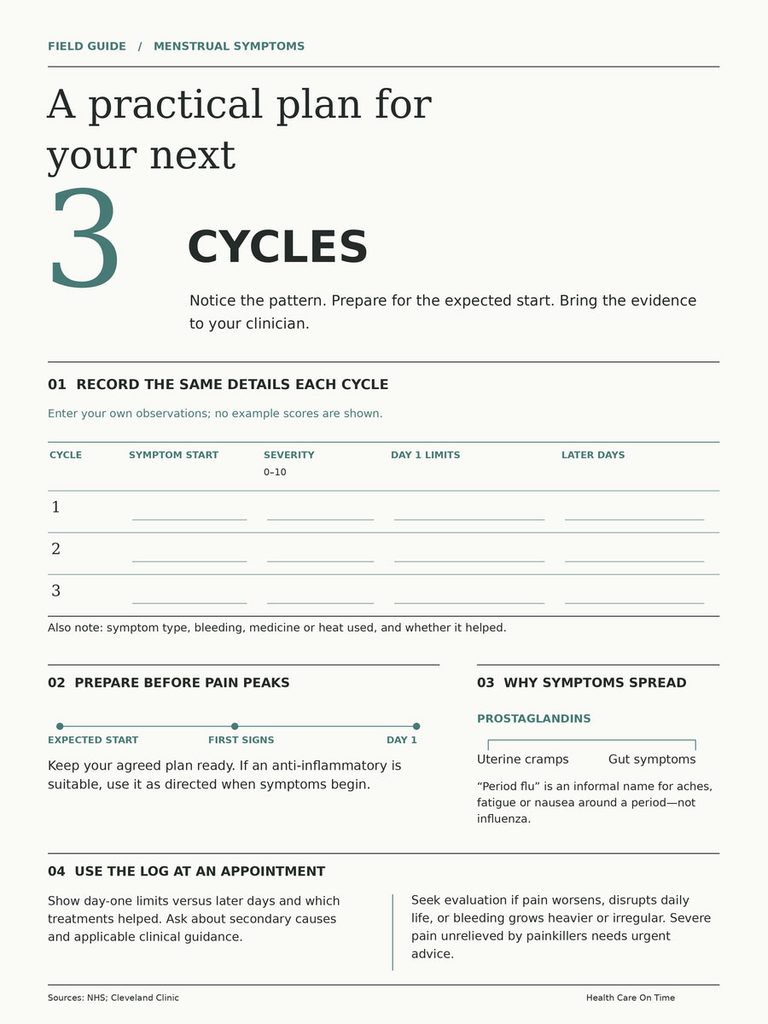
Track two things, not twenty
Most period apps collect more data than anyone uses. For this problem, two columns are enough: the date symptoms start relative to bleeding, and a 0 to 10 severity score for your worst day.
Three cycles of that gives a clinician something to act on in ninety seconds. Vague recollection gives them a shrug.
Take the 48-hour head start
Once you know your typical start day, plan medication around it rather than reacting to it. Begin the evening before, or at the first recognizable twinge.
If diarrhea is your dominant symptom, start electrolyte fluids on the same schedule. Dehydration makes lightheadedness substantially worse, and it is the easiest variable you control.
What to bring to the appointment
Bring the log, a list of what you have tried with doses and timing, and one specific sentence about function: what you cannot do on day one that you can do on day fifteen. Function is what moves a conversation from sympathy to action.
Worth asking directly: whether a secondary cause has been considered, whether the 2026 endometriosis guidance applies to your presentation, and whether your iron stores have ever been measured rather than assumed.
Patients who arrive with two columns of data and one clear function sentence consistently report shorter, more productive visits.
Frequently Asked Questions
Is period flu a real medical condition?
The symptoms are real and measurable. The label is not. Clinicians describe the same experience as dysmenorrhea, premenstrual syndrome, or both together. No doctor will enter “period flu” in your record, but that reflects terminology rather than doubt about what you are experiencing.
How long does period flu usually last?
Typically one to three days. Symptoms often begin one to five days before bleeding, peak on the first day of flow, then ease as the flow lightens. Anything running past five days, or worsening after day three, is behaving unlike period flu and deserves a look.
Can period flu cause an actual fever?
Feeling feverish, flushed, or chilled is common. A measured temperature above 100.4 F is not a typical feature of menstruation. If a thermometer confirms a real fever during your period, consider an infection instead, and treat a reading above 102 F with a rash as urgent.
Why does diarrhea hit hardest on the first day?
Prostaglandin release is highest as the uterine lining begins shedding, which is day one. Those compounds enter circulation and act on intestinal receptors, speeding transit and pulling fluid into the bowel. Daily-diary research confirms abdominal pain, diarrhea, and indigestion all score highest that day.
Is it normal to feel like fainting during a period?
Yes, more normal than most people realize. In one study, healthy volunteers with no fainting disorder reported menstrual lightheadedness at the same level as patients diagnosed with vasovagal syncope. Actually losing consciousness is different and should be evaluated, but near-fainting on day one is common.
Does period flu mean endometriosis?
Not by itself. Suspicion rises when pain escalates over months or years, resists anti-inflammatory medication, includes pain with deep penetration, or brings bowel and bladder symptoms that track the cycle. ACOG guidance from February 2026 now supports diagnosing endometriosis clinically rather than waiting for surgery.
Can birth control stop period flu?
Often, yes. Combined hormonal contraception and hormonal IUDs both thin the uterine lining, and less lining means fewer prostaglandins when it sheds. Many people notice lighter bleeding and milder symptoms within a few cycles. Suitability depends on individual risk factors and requires a prescribing conversation.
Why is period flu worse some months than others?
Prostaglandin output varies with how thick the lining grew that cycle, which is influenced by cycle length, ovulation, sleep, illness, and stress. A longer luteal phase tends to build more lining. Occasional bad months are expected; a consistent upward trend across six months is not.
Is ibuprofen or acetaminophen better for period flu?
Ibuprofen, for a mechanistic reason. A crossover trial measuring menstrual fluid found ibuprofen lowered PGF2 alpha while acetaminophen did not. Acetaminophen can dull pain but leaves the compound driving cramps, nausea, and diarrhea untouched. Naproxen sodium works on the same principle with longer dosing intervals.
Can period flu cause vomiting?
It can. Circulating prostaglandins act on nausea pathways, and severe cramping adds a vagal component. Occasional vomiting on the heaviest day fits the pattern. Repeated vomiting that stops you keeping fluids down, or vomiting alongside fever and rash, needs prompt medical attention instead.
Should heavy bleeding plus dizziness prompt a blood test?
It is a reasonable request. A complete blood count checks for anemia and ferritin checks iron stores, and the two can disagree, since iron can be depleted while hemoglobin still reads normal. Heavy menstrual bleeding is a leading cause of iron deficiency and is frequently overlooked as the source.
Can period flu start before ovulation?
Rarely. The mechanism depends on the post-ovulation progesterone rise and its subsequent fall, so symptoms usually begin somewhere in the two weeks after ovulation. Symptoms appearing in the first week after bleeding ends point somewhere else and are worth mentioning to a clinician.
Medical disclaimer: This article is for general information and does not replace individual medical advice, diagnosis, or treatment. Menstrual symptoms vary widely, and several conditions described here can only be distinguished through examination and testing. Speak with a licensed clinician about your own symptoms, particularly before starting or changing any medication, and confirm all dosing against the product label. If you experience heavy bleeding, loss of consciousness, high fever with a rash, or severe pain that is new for you, seek medical care promptly.
References
- Gastrointestinal symptoms before and during menses in healthy women, BMC Women’s Health 2014
- Stool frequency, form, and gastrointestinal symptoms by day of the menstrual cycle, prospective observational study
- Effects of menstrual cycle phases on immune function and inflammation, systematic review and meta-analysis, Acta Physiologica 2023
- Gynecological and menstrual disorders in women with vasovagal syncope, Clinical Autonomic Research 2013
- Endogenous levels of prostaglandin F2 alpha in plasma and endometrium of normal and dysmenorrheic women
- Menstrual PGF2 alpha, PGE2 and TXA2 in normal and dysmenorrheic women, Prostaglandins 1985
- Clinical efficacy and differential inhibition of menstrual fluid PGF2 alpha with acetaminophen and ibuprofen, AJOG 2007
- Nonsteroidal anti-inflammatory drugs for dysmenorrhoea, Cochrane Database of Systematic Reviews
- Dysmenorrhea, American Academy of Family Physicians clinical review
- ACOG Committee Opinion No. 760, Dysmenorrhea and Endometriosis in the Adolescent
- ACOG publishes new endometriosis clinical guidance, February 2026
- ACOG management guidance on premenstrual syndrome and premenstrual dysphoric disorder
- Productivity loss due to menstruation-related symptoms, BMJ Open 2019
- The relationship between heavy menstrual bleeding, iron deficiency, and iron deficiency anemia, AJOG00024-8/fulltext)
- Disparities in discussion of heavy menstrual bleeding in patients with iron deficiency, 2026
- Reduced incidence of menstrual toxic shock syndrome, CDC MMWR
- Symptomatology of irritable bowel syndrome and inflammatory bowel disease during the menstrual cycle
- The menstrual cycle and its effect on inflammatory bowel disease and irritable bowel syndrome, prevalence study