Almost every article claiming cooked carrots are healthier is quietly giving credit to the wrong thing. The heat is not the hero. The olive oil in the pan is.
Table of Contents
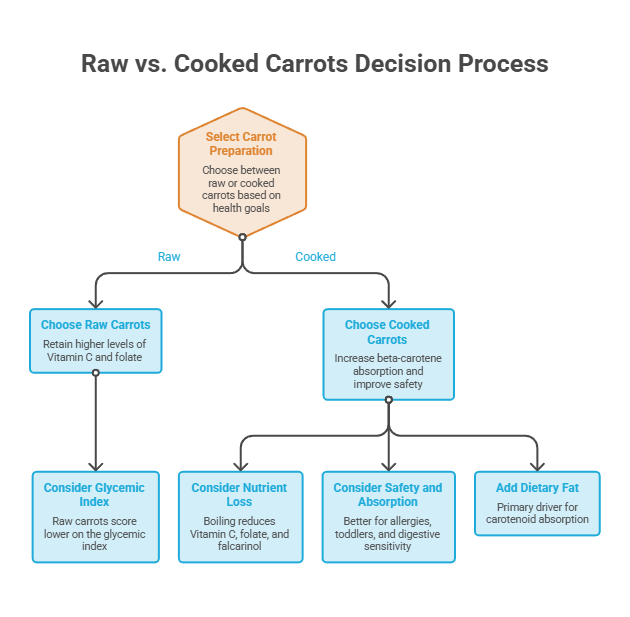
Quick Answer: Neither wins outright. Cooked carrots deliver more absorbable beta-carotene, more lutein, and more vitamin E, especially when eaten with a little fat. Raw carrots hold onto more vitamin C, more polyphenols, and far more falcarinol, a compound boiling largely destroys. For most Americans, the healthiest approach is rotating both forms through the week rather than picking a side.
At a Glance
Raw and cooked carrots carry nearly identical beta-carotene on paper, but your body absorbs far more from the cooked version.
Boiling drops vitamin C by roughly 39% and folate by about 26%, according to USDA data.
Close to 70% of falcarinol, a studied anti-cancer compound, is lost after 12 minutes of boiling.
Dietary fat, not heat, is the biggest single driver of carotenoid absorption.
Raw carrots score lower on the glycemic index, though the practical difference is close to zero.
Cooking is the safer choice for people with pollen-food allergy, toddlers, and sensitive digestive systems.
Carrots are one of the few vegetables Americans still eat consistently. They land in lunchboxes, on crudité platters, and roasted beside the Thanksgiving turkey.
That makes the raw vs cooked carrots question unusually practical. The answer changes what goes on your plate tonight, not just what you know.
Our medical reviewers at HealthCareOnTime field this question more often than almost any other vegetable query. It usually arrives from someone who just got a borderline vitamin A result and wants to know whether they have been preparing carrots wrong for years.
The Short Answer, and Why “Healthier” Is the Wrong Question
Both sides of this debate are quoting real data. That is exactly why the argument never resolves.
The cooked camp points to absorption studies showing your gut pulls far more beta-carotene out of a cooked carrot than a raw one. That finding is solid and repeatable across multiple study designs.
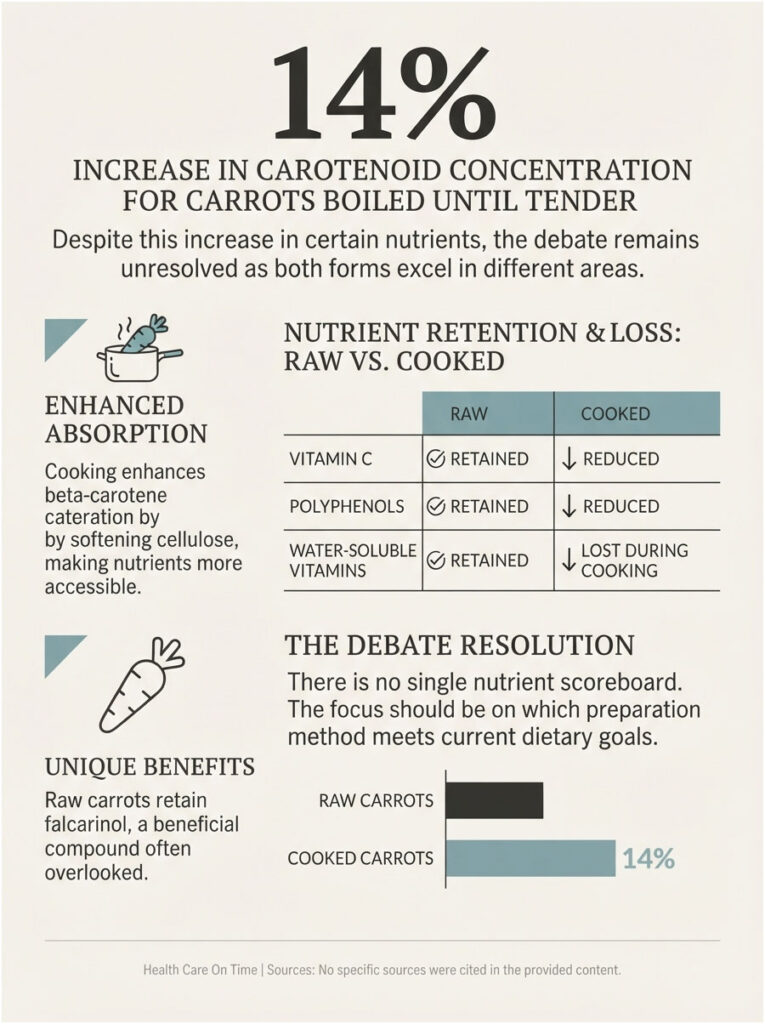
The raw camp points to vitamin C, polyphenols, and heat-sensitive plant compounds that boiling washes straight into the water. That finding is equally solid.
What Cooking Gives You
Heat softens the tough cellulose that locks nutrients inside plant cells. When vegetable cell walls break down during cooking, nutrients trapped inside are released and become easier for the body to absorb.
For carrots specifically, that structural breakdown matters enormously. Beta-carotene sits inside crystalline structures in the root that ordinary chewing barely disturbs.
Cooking also concentrates certain measurable compounds. A report in the Journal of Agricultural and Food Chemistry found that boiling carrots until tender raised carotenoid concentration by 14%.
What Cooking Takes Away
Water-soluble vitamins go first. Vitamin C, folate, and several B vitamins either degrade under heat or leach into water you then pour down the sink.
Potassium behaves the same way. So do polyphenols. University of Missouri Extension notes that polyphenols, which are antioxidants in their own right, are lost when you cook carrots.
Then there is falcarinol, the compound almost nobody discusses. It gets its own section below, and it represents the strongest scientific case for eating carrots raw.
Why the Framing Itself Is Flawed
Asking whether raw or cooked carrots are healthier assumes one nutrient scoreboard exists. It does not. There are at least six scoreboards, and each form tops three of them.
The better question is which form serves your goal this week. Patients booking nutritional panels through HealthCareOnTime almost always find that framing more useful than a winner-takes-all verdict.
Table 1: Raw vs Cooked Carrots, Core Nutrient Comparison (per 100 grams)
| Nutrient or Compound | Raw Carrots | Boiled, Drained, No Salt | What the Shift Means for You |
| Calories | 41 kcal | 35 kcal | Water uptake dilutes calories slightly; both are negligible |
| Beta-carotene | 8,285 mcg | 8,332 mcg | Nearly identical on paper; absorption is where they diverge |
| Vitamin A (RAE) | 835 mcg | 852 mcg | Both clear the adult daily value in a single serving |
| Vitamin C | 5.9 mg | 3.6 mg | A 39% loss, though carrots were never a leading vitamin C source |
| Folate | 19 mcg | 14 mcg | A 26% loss, most relevant during pregnancy planning |
| Potassium | 320 mg | 235 mg | A 27% loss, most of it straight into the cooking water |
| Lutein plus zeaxanthin | 256 mcg | 687 mcg | Cooked measures 2.7 times higher, relevant to macular health |
| Vitamin E | 0.66 mg | 1.03 mg | Cooked measures 56% higher and works alongside carotenoids |
| Dietary fiber | 2.8 g | 3.0 g | Essentially unchanged; both support digestive regularity |
Data source: USDA FoodData Central, raw carrots and boiled carrots.
The USDA Numbers, Side by Side
Figures per 100 grams are useful for chemistry and useless for grocery shopping. Nobody eats exactly 100 grams of carrot on purpose.
Per Realistic American Serving
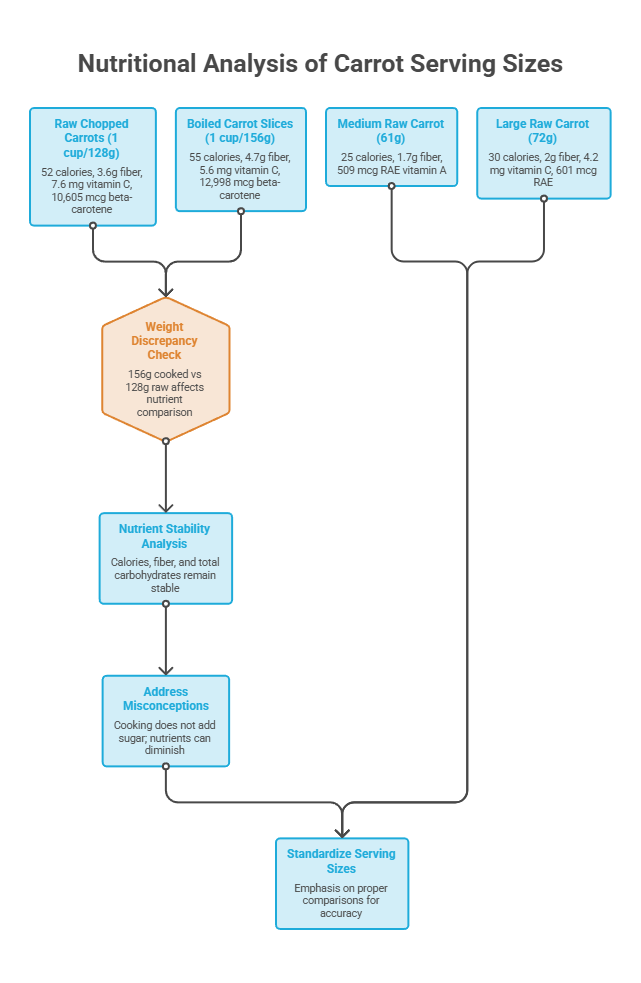
One medium raw carrot weighs about 61 grams. It delivers roughly 25 calories, 1.7 grams of fiber, and 509 mcg RAE of vitamin A.
One large raw carrot at 72 grams gives you 30 calories, 2 grams of fiber, 4.2 mg of vitamin C, and 601 mcg RAE.
A cup of raw chopped carrots, 128 grams, provides 52 calories, 3.6 grams of fiber, 7.6 mg of vitamin C, and roughly 10,605 mcg of beta-carotene.
A cup of boiled carrot slices, 156 grams, provides 55 calories, 4.7 grams of fiber, 5.6 mg of vitamin C, and roughly 12,998 mcg of beta-carotene.
The Water-Weight Trap Most Comparisons Fall Into
Look at those two cups again. The cooked cup appears to beat the raw cup on nearly everything. That comparison is misleading.
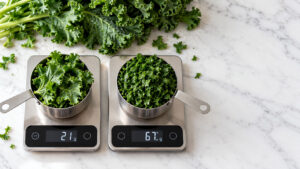
A measuring cup holds 156 grams of cooked carrot slices but only 128 grams of raw chopped carrot, because cooked pieces soften and pack more densely.
You are comparing 28 extra grams of vegetable, not a nutritional upgrade. Correct for weight and most of the cooked advantage on vitamins evaporates or reverses.
Our nutrition reviewers see this error repeated across popular comparison charts constantly. It is the single most common source of confusion in the raw vs cooked carrots debate.
What Genuinely Does Not Change
Calories stay inside a narrow band whether you eat carrots raw or cooked. Fiber holds steady and sometimes registers marginally higher after boiling.
Total carbohydrate stays roughly stable too. Boiling does not add sugar to carrots, a myth the FAQ section below addresses directly.
For a full per-serving breakdown covering baby carrots, medium carrots, large carrots, and cup measures, see our detailed carrot calories and nutrition guide.
Beta-Carotene, Where Cooking Clearly Wins
This is the strongest argument on the cooked side, and it survives scrutiny.
The Ileostomy Evidence
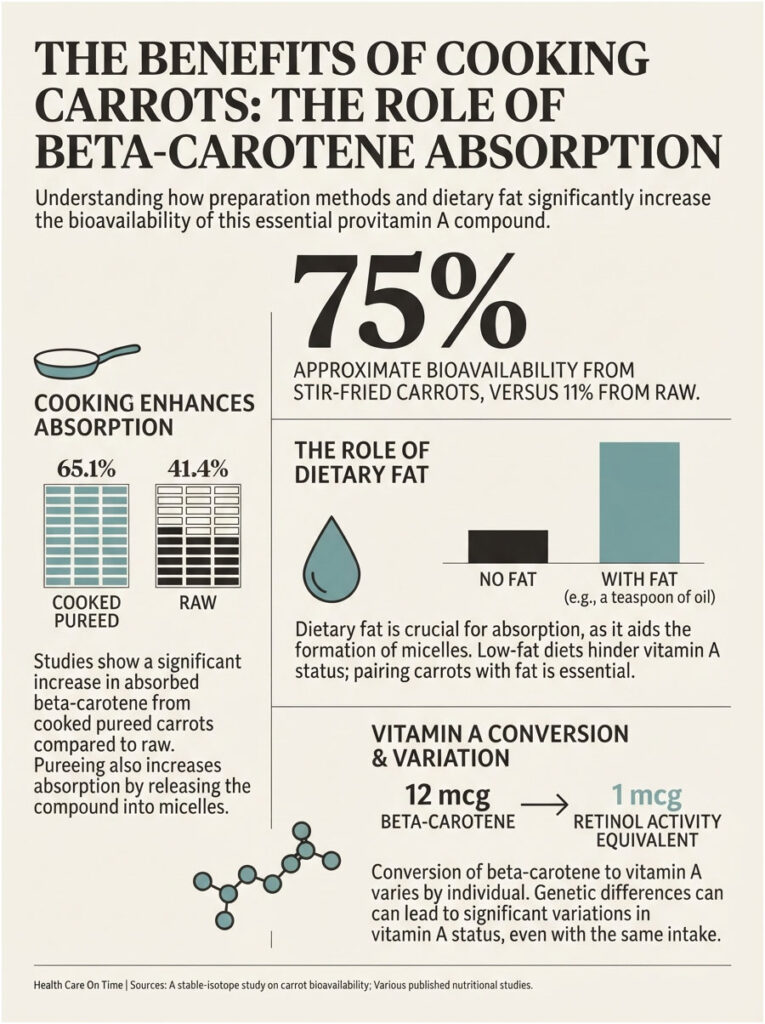
Researchers gave volunteers with ileostomies matched 15 mg beta-carotene meals, one built on cooked pureed carrots and one on raw chopped carrots, both served with skimmed-milk yogurt and sunflower oil.
Mass-balance calculations showed 65.1% of the beta-carotene was absorbed from the cooked pureed carrot meals, versus 41.4% from the raw chopped meals.
That design is unusually clean. Ileostomy volunteers let researchers measure exactly what was not absorbed, rather than inferring absorption from blood levels alone.
The study authors concluded that both processing and, mainly, lipid content significantly improve carotenoid bioaccessibility from carrots.
The 11% vs 75% Study Everyone Quotes
The figure repeated across nearly every article on this topic comes from a stable-isotope study. Bioavailability of beta-carotene from stir-fried carrots ran at approximately 75%, compared with only 11% from raw carrots.
Before throwing out your carrot sticks, read the method. Carrots were intrinsically labelled with deuterium and fed raw or stir-fried, alongside labelled reference compounds.
Stir-frying involves oil. That oil is doing a large share of the work commonly credited to heat alone.
Fat Matters More Than Heat
Beta-carotene is fat-soluble. Without dietary fat in the same meal, a meaningful portion passes through you regardless of preparation method.
Researchers attribute this to the fat-soluble nature of beta-carotene, which is better absorbed in the presence of lipids.
A raw carrot dipped in hummus, guacamole, or a full-fat ranch dressing outperforms a plain raw carrot by a wide margin. A boiled carrot eaten with nothing at all performs worse than most people assume.
How Much Fat You Actually Need
You do not need much. The absorption studies above used modest additions such as sunflower oil and yogurt, not deep-frying.
In practical American kitchen terms, one teaspoon of olive oil, a quarter of an avocado, two tablespoons of hummus, or a small handful of nuts alongside the meal is enough to change the outcome.
Our medical team flags this constantly for patients following very low-fat diets. A fat-free carrot salad is close to a nutritional dead end for vitamin A purposes.
Why Pureeing Beats Both
Particle size matters as much as temperature. Cell-model work found greater amounts of all-trans, 13-cis, and 15-cis beta-carotene in micelles from cooked carrots than from raw, with pureed carrots outperforming both raw and simply boiled samples.
An earlier crossover study in eight healthy women aged 23 to 36, consuming about 9.3 mg beta-carotene daily from either raw or thermally processed pureed vegetables across two four-week periods, found significantly greater plasma beta-carotene during the processed period.
Carrot soup, roasted carrot puree, and carrot-based sauces are the highest-absorption formats on the list.
The Conversion Wildcard Nobody Mentions
Beta-carotene is not vitamin A. Your body has to convert it, and conversion efficiency varies widely between individuals.
The NIH Office of Dietary Supplements uses a conversion ratio of 12 to 1 for beta-carotene from food, meaning 12 mcg of dietary beta-carotene yields roughly 1 mcg of retinol activity equivalent.
Common variants in the enzyme responsible for that conversion mean a substantial share of people convert well below the population average. Two people eating identical carrots can end up with meaningfully different vitamin A status.
This is why our reviewers discourage treating carrots as a stand-in for tested vitamin A status. For a closer look at the eye-health claims specifically, see our article on whether carrots actually improve vision.
Falcarinol, Vitamin C and Polyphenols, Where Raw Wins
Here is the case almost no competing article makes.
The Compound Boiling Destroys
Carrots contain a group of compounds called polyacetylenes, chiefly falcarinol, falcarindiol, and falcarindiol-3-acetate. Much of the cancer-prevention research on carrots points to these, not to beta-carotene.
A processing study found a reduction of almost 70% in falcarinol content in carrot pieces boiled in water for 12 minutes, compared with raw carrots.
Steam blanching causes smaller losses, in the range of 25 to 50% of major polyacetylenes, while boiling produces losses around 70%.
That is a real trade. You gain absorbable beta-carotene and lose most of a bioactive compound class beta-carotene cannot replace.
Laboratory work on human lymphoid leukaemia cell lines found that purified polyacetylenes from carrots induced apoptosis in a dose and time responsive manner, while beta-carotene and lutein showed no significant effect on either apoptosis or cell proliferation.
That does not make raw carrots a treatment. It does mean the compounds boiling destroys are the ones carrying much of the research interest.
Cut Shape Changes Everything
This detail is genuinely actionable and almost never mentioned anywhere.
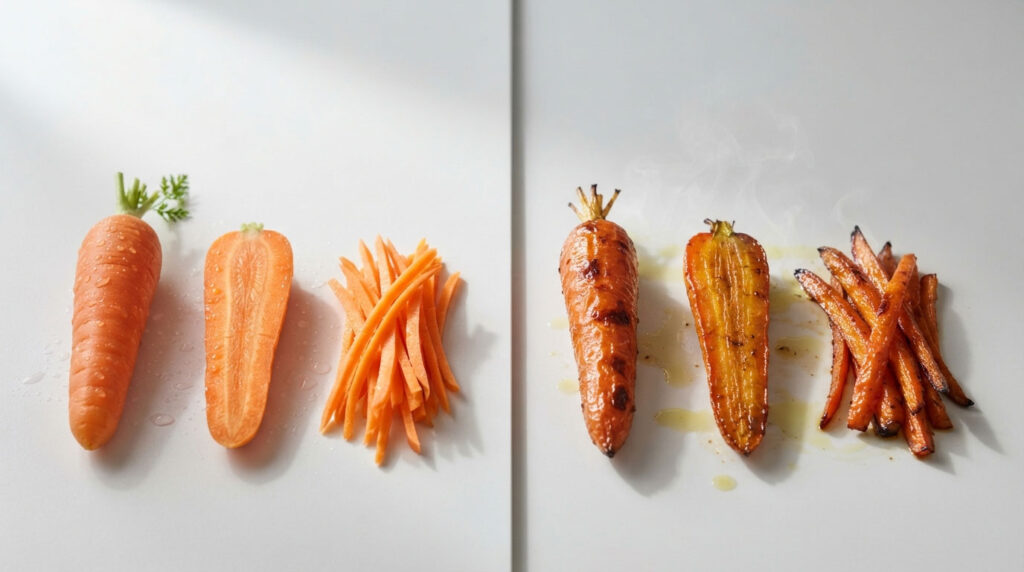
When carrots were peeled and cut into 5 mm disks, quartered lengthwise, or left whole, then boiled for 5 to 20 minutes, whole carrots retained significantly more polyacetylenes than both disks and batons, while carotenoids showed no significant losses or differences between shapes.
Researchers calculated that switching from disks to whole carrots could raise polyacetylene intake by 28% at 10 minutes of boiling, and found up to 4% of the lost compounds still present in the cooking water.
Practical translation: boil carrots whole, then slice after cooking. Same dish, same effort, meaningfully more of the bioactive compounds retained.
Vitamin C, Folate and Potassium
Table 1 tells this story plainly. Vitamin C falls from 5.9 mg to 3.6 mg per 100 grams. Folate drops from 19 mcg to 14 mcg. Potassium slides from 320 mg to 235 mg.
None of these losses is severe on its own, because carrots are not a leading US source of any of the three. If carrots are a daily household staple, though, the cumulative difference becomes real.
Polyphenols Leach Into the Water
Polyphenol losses during boiling can be steep. Research on domestic cooking methods reports that boiling had a greater negative effect on total polyphenol content and total flavonoid content than other methods, with losses reaching 70.3% and 82.27% respectively.
One study of cooking conditions in carrots found that total polyphenols and antioxidant activity rose with microwave cooking and fell with boiling, while steaming held values more stable.
Patients often assume antioxidant content moves as a single block. It does not. Carotenoids tolerate heat well; polyphenols and polyacetylenes do not.
Table 2: Key Research Findings on Raw vs Cooked Carrots
| Finding | Figure | Source | Year |
| Beta-carotene absorbed, cooked puree vs raw chopped | 65.1% vs 41.4% | European Journal of Nutrition, ileostomy volunteers | 2003 |
| Bioavailability, stir-fried vs raw carrots | about 75% vs 11% | Stable-isotope intrinsic labelling study | 2011 |
| Falcarinol lost after a 12-minute boil | about 70% reduction | Journal of the Science of Food and Agriculture | 2003 |
| Polyacetylene intake gained, whole vs disks | plus 28% at 10 min | Proceedings of the Nutrition Society | 2016 |
| Carotenoid concentration change from boiling until tender | plus 14% | Journal of Agricultural and Food Chemistry | 2008 |
| Total flavonoid loss from boiling vegetables | up to 82.3% | Heliyon, cooking method comparison | 2023 |
| Skin carotenoid score rise, baby carrots 3 times weekly | plus 10.8% in 4 weeks | American Society for Nutrition annual meeting | 2024 |
| US adults meeting daily vegetable recommendations | 10% | Centers for Disease Control and Prevention | Current |
Cooking Method Matters More Than Raw vs Cooked
Once you decide to cook carrots, the method changes the outcome more than the raw-versus-cooked decision did in the first place.
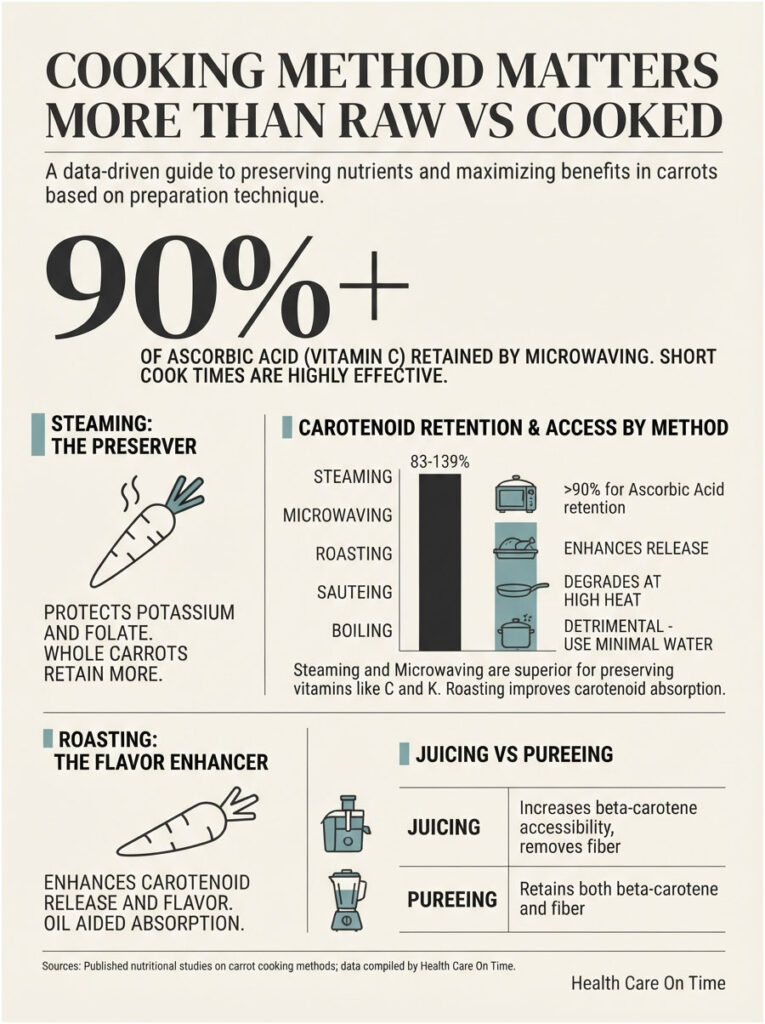
Steaming
The reliable middle ground. Nutrients cannot leach into water the vegetable is not submerged in, which protects potassium and much of the folate.
Steaming showed very good retention of alpha- and beta-carotene across tested vegetables, in the range of 83 to 139% of raw values. Retention above 100% reflects easier laboratory extraction from softened tissue, not new nutrients appearing.
Boiling
The most common American method and the most destructive for water-soluble compounds. Long boils in large volumes of water are the worst case.
If you boil, use minimal water, keep the carrots whole, and stop at fork-tender. Save the liquid for stock, since part of what you lost is sitting in it.
Roasting
Arguably the best all-around choice for a weeknight. You get cell-wall breakdown that improves carotenoid release, added fat that drives absorption, and no leaching medium at all.
Caramelization also makes carrots taste better, which matters more than most nutrition writing admits. Only 10% of US adults eat enough vegetables, according to the Centers for Disease Control and Prevention.
A preparation you enjoy beats an optimal one you skip.
Microwaving
Badly underrated. Short cook times and almost no water make it strong for heat-sensitive nutrients.
Microwaving had the mildest effect on ascorbic acid across tested vegetables, preserving over 90% of the initial content, while boiling produced the largest reduction.
One assessment of cooking methods concluded that microwave cooking resulted in lower carotenoid loss in carrots, while steaming better preserved folate, texture, and color.
Sauteing and Stir-Frying
High absorption thanks to added oil, but high temperatures degrade carotenoids at the same time.
Frying produced the largest decrease in antioxidant compounds among the methods tested, and is generally not recommended for antioxidant preservation because the compounds break down during the process.
Moderate-heat sauteing in a small amount of oil is the sensible compromise between absorption and degradation.
Juicing and Pureeing
Mechanical disruption without much heat damage. Juicing breaks down carrot cell walls, making beta-carotene more accessible for absorption.
The trade-off is fiber. Juice strips out the pectin and insoluble fiber that make whole carrots filling and gut-friendly.
Blending into a puree instead of juicing keeps fiber and absorption together, which is why carrot soup ranks so well on both counts.
Table 4: Cooking Method Quick Reference
| Method | Carotenoid Access | Water-Soluble Vitamin Retention | Polyacetylene Retention | Best Use |
| Raw | Lowest | Highest | Highest | Snacks, slaws, dips with fat |
| Steaming | Good | Good | Moderate | Side dishes, meal prep |
| Microwaving | Good | Highest among cooked | Moderate | Fast weeknight cooking |
| Roasting with oil | Very high | Moderate | Lower | Dinner sides, batch cooking |
| Boiling whole | High | Lower | Moderate | Soups where you keep the liquid |
| Boiling in disks | High | Lowest | Lowest | Avoid when possible |
| Pureeing or juicing | Highest | Moderate | Lower | Soups, sauces, smoothies |
For a parallel comparison in a leafy green where the trade-offs run in a different direction, see our raw vs cooked spinach breakdown.
Blood Sugar, Digestion and Gut Comfort
This is where the raw vs cooked carrots question stops being academic and starts being personal.
Glycemic Index: The Real Numbers
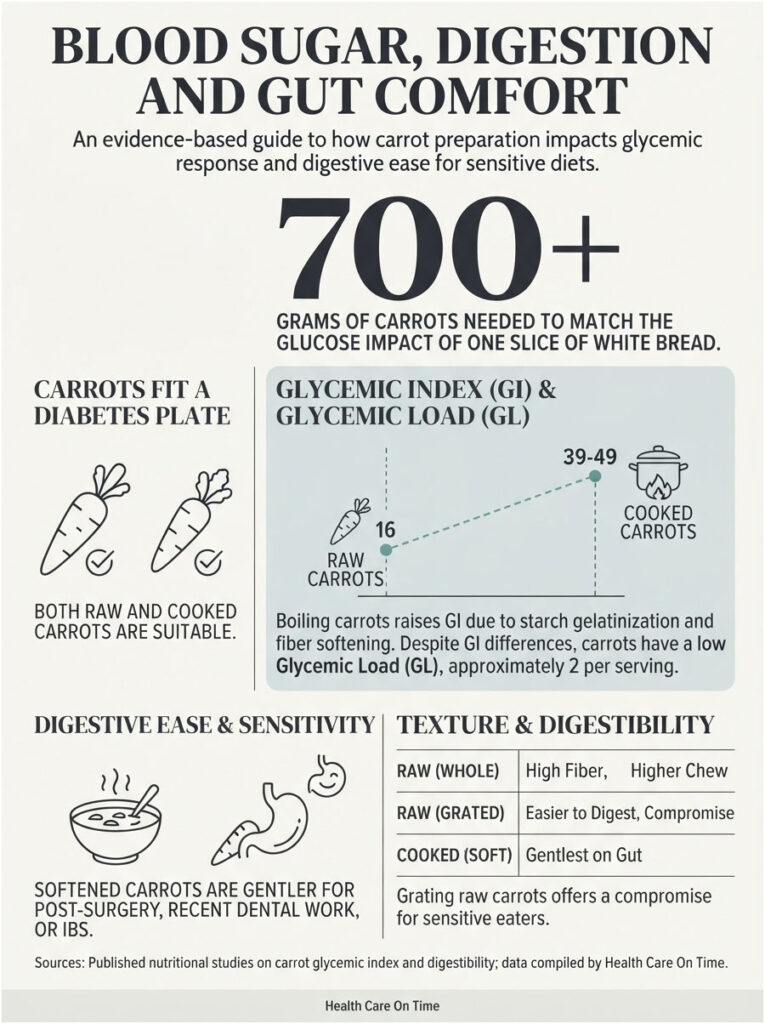
Raw carrots carry a glycemic index of roughly 16, which is very low, while cooked or boiled carrots range from about 39 to 49, still within the low category.
Boiling can raise carrot GI to somewhere between 32 and 49 depending on duration and method. Heat gelatinizes starch and softens fiber, making natural sugars easier for digestive enzymes to reach.
The mechanism is real. The magnitude is what gets misreported.
Why Glycemic Load Makes That Nearly Irrelevant
Glycemic index measures speed per 50 grams of carbohydrate. Glycemic load measures impact per actual serving. Carrots expose the gap between the two better than almost any food in the produce aisle.
Carrots run around GI 39 cooked and 16 raw, but glycemic load sits at roughly 2 per standard serving, because carrots are 88% water with only about 5% carbohydrate by weight.
You would need to eat more than 700 grams of carrots, about 1.5 pounds, to match the glucose impact of a single slice of white bread.
Carrots eaten raw, boiled, or cooked from frozen without salt fall between GI 16 and 49, squarely in the low glycemic category.
Our medical reviewers regularly see carrots avoided unnecessarily by people managing type 2 diabetes, based on GI charts read without glycemic-load context. Both forms fit a diabetes-friendly plate.
Fiber, IBS and Chewing Comfort
Raw carrot fiber is intact and mechanically tough. For some people that is the point, adding bulk and slowing gastric emptying.
For others it is a genuine problem. People with active IBS flares, inflammatory bowel disease, diverticulitis recovery, recent dental work, or difficulty chewing often tolerate cooked carrots when raw ones cause discomfort.
Softened carrots are also gentler after abdominal surgery, a scenario our reviewers encounter often in post-procedure diet questions.
When Cooked Is the Only Realistic Option
Older adults with dentures, people recovering from oral surgery, and anyone with a swallowing disorder should not be wrestling with raw carrot sticks.
Grating raw carrot finely is a middle path that keeps heat-sensitive compounds intact while removing the mechanical challenge entirely.
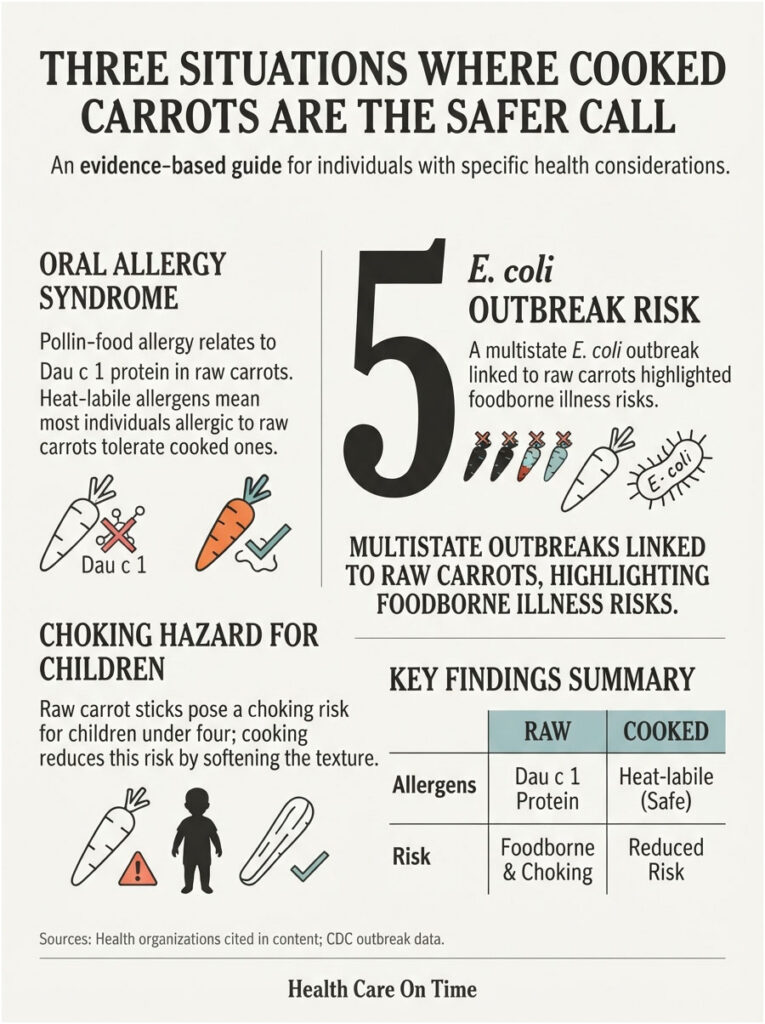
Three Situations Where Cooked Carrots Are the Safer Call
Nutrition is not the only variable on the table. In three specific situations, safety decides the answer outright.
Oral Allergy Syndrome and the Dau c 1 Protein
If your mouth itches after raw carrots, you most likely have pollen-food allergy syndrome rather than a true carrot allergy.
The main carrot allergens include Dau c 1, a PR-10 protein closely related to the major birch pollen allergen Bet v 1, and Dau c 4, a profilin. Both are heat-labile, which is why the majority of carrot-allergic individuals react to raw carrots but tolerate cooked carrots without issue.
Cross-reactivity is well documented, with one study reporting that 70% of patients allergic to birch pollen may also react to foods including apples, nuts, celery, soybeans, and carrots.
One allergist reports that essentially all of her patients whose mouths itch on raw carrots do fine with cooked ones.
In birch-endemic regions, including the northeastern United States, carrot is among the foods most frequently reported as a trigger of pollen-food allergy syndrome.
The Exception Worth Knowing About
A third allergen, Dau c 3, is a lipid transfer protein. LTPs are heat-stable and digestion-resistant, so individuals sensitized to Dau c 3 may react to both raw and cooked carrots.
Reactions occasionally go beyond mild oral symptoms. Anyone experiencing throat tightness, swelling, hives, or breathing changes after carrots needs an allergist evaluation, not a cooking adjustment.
Foodborne Illness and a National Recall
Raw produce carries a risk that cooking removes. A recent multistate outbreak made that concrete for American shoppers.
An outbreak of E. coli O121:H19 traced to Grimmway Farms carrots produced 48 confirmed cases across 19 states, with 20 hospitalizations, one case of hemolytic uremic syndrome, and one death, before the CDC declared it over in December.
Illness onsets ran from early September to mid-November, and Grimmway Farms recalled multiple sizes and brands of bagged organic baby and whole carrots on November 16.
Of the 27 people interviewed by public health officials, 26 reported eating carrots.
Cooking to a proper temperature kills Shiga toxin-producing E. coli. For pregnant women, adults over 65, young children, and anyone immunocompromised, that reliability matters.
Choking Risk in Children Under Four
Raw carrot sticks and whole baby carrots sit close to the worst-case profile for pediatric airways. The American Academy of Pediatrics lists raw carrots among the foods most associated with choking in young children.
Steamed carrot coins cut into quarters, or grated raw carrot folded into other foods, deliver the same nutrition without the hazard.
Can You Overdo Carrots Either Way?
The Orange Skin Question
Carotenemia is real, harmless, and reversible. Sustained high beta-carotene intake, generally cited in the range above 20 to 30 mg daily over several weeks, can tint the palms, soles, and creases beside the nose.
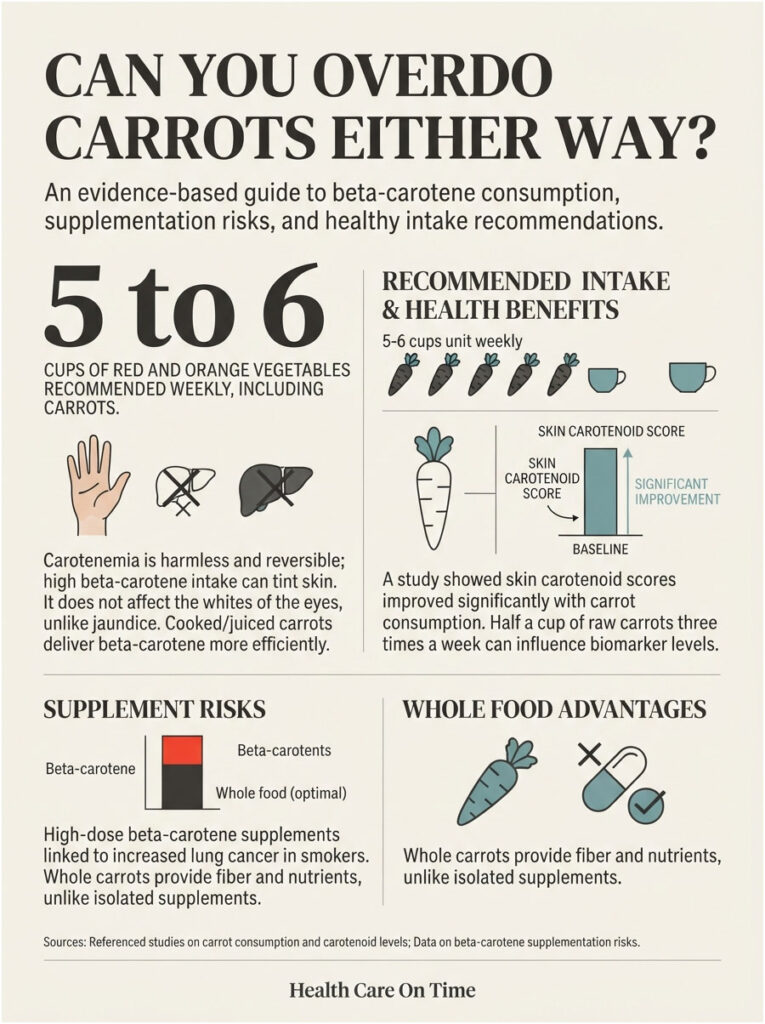
Because cooked and juiced carrots absorb better, they reach that threshold at lower carrot volumes than raw sticks do. Skin tone returns to normal within weeks of cutting back.
One distinguishing detail matters clinically: carotenemia never yellows the whites of the eyes. Jaundice does. That difference is what separates a harmless dietary effect from a reason to call your doctor.
Why Whole Carrots Beat Beta-Carotene Supplements
This distinction is not academic. Large US trials of high-dose beta-carotene supplements in smokers found increased lung cancer incidence, results never replicated with whole carrots.
Whole-food carotenoids arrive packaged with fiber, polyacetylenes, and a natural dose ceiling your appetite enforces. Isolated supplements arrive with none of that.
Our medical reviewers consistently steer patients toward the vegetable rather than the capsule, particularly anyone with a current or former smoking history.
How Much Is a Normal Amount
Federal dietary guidance places red and orange vegetables in their own subgroup, with adults on a 2,000-calorie pattern advised to reach roughly 5 to 6 cups per week from that group.
A randomized four-week study presented at a recent American Society for Nutrition meeting assigned 60 young adults to Granny Smith apple slices, 100 grams of baby carrots, a beta-carotene multivitamin, or carrots plus the supplement.
Skin carotenoid scores rose 10.8% in the carrot group and 21.6% in the carrot-plus-supplement group, while supplement-only and apple groups showed no notable change.
Findings presented at conferences are evaluated by expert committees but have not generally undergone full peer review, so results should be treated as preliminary until published.
Half a cup of raw carrots three times a week moved a measurable biomarker. That is a low bar for most American households to clear.
What This Means for Your Plate
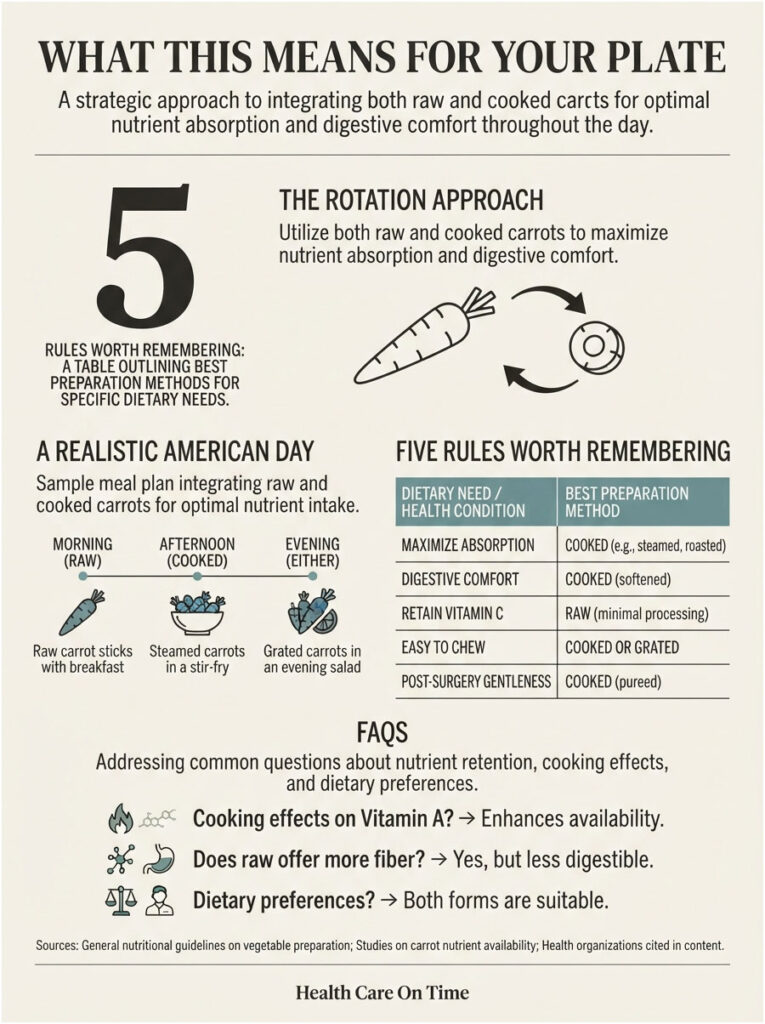
The Rotation Approach
Stop optimizing. Eat raw carrots as snacks and in salads, where crunch and vitamin C shine. Eat cooked carrots as sides and in soups, where absorption and digestive comfort matter more.
Anyone eating both formats across a week captures nearly everything either form offers, with zero tracking required.
A Realistic American Day
Morning: grated raw carrot in a slaw, or blended into a smoothie with full-fat yogurt supplying the fat component.
Afternoon: baby carrots with hummus, which pairs the raw form with the fat that makes its carotenoids usable.
Evening: whole carrots roasted in olive oil, sliced after cooking rather than before, served alongside protein.
That single day covers falcarinol, vitamin C, absorbable beta-carotene, and fiber without a calculator.
Five Rules Worth Remembering
- Add fat to raw carrots. Hummus, guacamole, nut butter, cheese, or a real dressing.
- Cook carrots whole and cut them afterward.
- Choose roasting, steaming, or microwaving over long boiling.
- Keep the cooking water if you boil, and turn it into stock.
- Vary the format across the week instead of committing to one.
Table 3: Which Form Fits Your Situation
| Your Situation | Best Choice | Why |
| Want maximum vitamin A from carrots | Cooked or pureed, with fat | Absorption rises from about 41% raw to 65% cooked, higher again with oil |
| Managing type 2 diabetes | Either, slight edge to raw | Raw sits at GI 16 versus 39 cooked, but glycemic load stays near 2 for both |
| Mouth itches or tingles after raw carrots | Cooked | Dau c 1 and Dau c 4 are heat-labile and break down during cooking |
| Active IBS flare, diverticulitis recovery, or dental issues | Cooked and soft | Softened fiber is easier on the gut and on chewing |
| Feeding a child under four | Cooked coins, quartered, or grated raw | Raw sticks are a documented choking hazard at that age |
| Focused on cancer-protective plant compounds | Raw, or boiled whole | Boiling cut pieces destroys close to 70% of falcarinol |
| Pregnant, over 65, or immunocompromised | Cooked | Cooking removes the foodborne pathogen risk raw produce carries |
| Simply want to eat more vegetables | Whichever you will actually eat | Only 10% of US adults hit vegetable targets; preference beats optimization |
Frequently Asked Questions
Is it healthier to eat carrots raw or cooked?
Neither is definitively healthier. Cooked carrots deliver more absorbable beta-carotene, lutein, and vitamin E. Raw carrots retain more vitamin C, polyphenols, and falcarinol. Rotating both across the week captures the advantages of each without forcing a choice you do not need to make.
Do carrots lose nutrients when cooked?
Some, yes. Vitamin C drops around 39%, folate around 26%, and potassium around 27% during boiling, and polyphenols and falcarinol take heavier hits. Beta-carotene, fiber, and vitamin A hold steady or improve, so the losses are selective rather than across the board.
Do carrots lose vitamin A when you boil them?
Barely. USDA data shows raw carrots at 835 mcg RAE per 100 grams and boiled carrots at 852 mcg. Beta-carotene is unusually heat-stable compared with vitamin C or folate. What actually changes is absorption, and cooking improves that substantially.
Do cooked carrots have more sugar than raw carrots?
No. Cooking cannot add sugar. USDA figures show boiled carrots at 3.45 grams of sugar per 100 grams versus 4.74 grams raw, reflecting water absorption during cooking. Cooked carrots taste sweeter because heat breaks down cell walls and releases existing sugars onto your palate faster.
Do you need fat to absorb beta-carotene from carrots?
Yes, meaningfully. Beta-carotene is fat-soluble, so a fat-free carrot delivers noticeably less usable vitamin A. A teaspoon of olive oil, a quarter avocado, or two tablespoons of hummus in the same meal is enough to change absorption substantially.
Are cooked carrots easier to digest than raw?
For many people, yes. Heat softens the tough cellulose fiber that raw carrots hold intact. People with IBS flares, inflammatory bowel disease, diverticulitis recovery, recent dental work, or chewing difficulty typically tolerate cooked carrots far better than raw ones.
Why do raw carrots make my mouth itch?
That is usually pollen-food allergy syndrome. Dau c 1 in carrots closely resembles the major birch pollen allergen, so a birch-sensitized immune system misreads it. The protein is heat-labile, which is why most affected people tolerate cooked carrots. Throat tightness or swelling warrants an allergist visit.
Should people with diabetes eat carrots raw or cooked?
Both are appropriate. Raw carrots sit at a glycemic index near 16 and cooked near 39, but glycemic load stays around 2 per serving either way. Carrots are 88% water with roughly 5% carbohydrate, which makes the GI difference clinically minor for most people.
Is carrot juice better than eating whole carrots?
Juicing improves beta-carotene absorption by breaking down cell walls, but it strips out the fiber. Whole or blended carrots give you absorption plus fiber and satiety. Juice also concentrates carotenoids enough that carotenemia thresholds arrive faster than with whole carrots.
Does microwaving carrots destroy their nutrients?
Microwaving is among the better methods. Short cook times and minimal water preserve heat-sensitive vitamins well, with research reporting over 90% ascorbic acid retention against much heavier boiling losses. It also protects polyphenols and total antioxidant activity better than boiling does.
Are baby carrots as nutritious as whole carrots?
Nutritionally they are close, since most American baby carrots are simply whittled-down mature carrots. USDA figures show them running slightly lower on calories and sugars. Their real advantage is convenience, and convenience is what actually drives daily vegetable intake.
Should you peel carrots before eating or cooking them?
Peeling removes a thin outer layer where some phenolic compounds concentrate, and both peeling and cutting reduce falcarinol content. A firm scrub under running water is usually enough for fresh carrots. Peel only when the skin tastes bitter, looks damaged, or feels unusually gritty.
Medical Disclaimer: This article is for general information only and is not a substitute for professional medical advice, diagnosis, or treatment. Nutrient needs vary with age, pregnancy status, medications, and existing health conditions. Anyone with a diagnosed food allergy, a managed metabolic condition, or a suspected vitamin A deficiency should consult a licensed physician or registered dietitian before making significant dietary changes. Never disregard professional medical advice because of something you read on this page.
References
- USDA FoodData Central, Carrots, raw (FDC 170393)
- USDA FoodData Central, Carrots, cooked, boiled, drained, without salt (FDC 170394)
- Beta-carotene bioavailability from differently processed carrot meals in human ileostomy volunteers, PubMed
- Bioavailability of beta-carotene is lower in raw than in processed carrots and spinach in women, Journal of Nutrition
- Bioavailability of beta-carotene isomers from raw and cooked carrots, Caco-2 cell model
- Comparative bioavailability of beta-carotene from raw carrots and fresh carrot juice, Nutrition Research and Practice
- Retention of polyacetylenes and carotenoids in carrot during cooking, Proceedings of the Nutrition Society
- Stability of falcarinol type polyacetylenes during processing of Apiaceae vegetables
- Influence of cooking conditions on nutritional properties of selected vegetables, PMC
- Effect of cooking methods on the nutritional quality of selected vegetables, PMC
- Assessment of the effect of different cooking methods on carotene content in carrots
- Raw vegetables not always healthier than cooked veggies, University of Missouri Extension
- Carrot allergen f31, Thermo Fisher Allergen Encyclopedia
- Are cooked carrots an OAS allergy trigger, Allergic Living
- Outbreak investigation of E. coli O121:H19 in organic carrots, FDA
- CDC food safety alert on E. coli outbreak linked to organic carrots
- E. coli outbreak linked to organic carrots, AAP Red Book Online
- Trying to eat more vegetables, snacking on carrots might help, American Society for Nutrition
- Are carrots good for diabetics, glycemic index range explained