
You spot a yellow tint on your underwear, brace for the worst, and start mentally booking a doctor’s appointment. Here’s the part most people miss: yellow discharge with no smell, no itch, and no pain is often not an infection at all.
Table of Contents
Color is the loudest signal your body sends, and also the least reliable one on its own. What actually matters is the company that color keeps, the odor, the texture, and how you feel day to day. Patients who book tests through HealthCareOnTime ask about yellow discharge more than almost any other symptom, and the honest answer tends to surprise them.
The goal here is to give you both halves of that answer. You’ll learn when a yellow tint is a normal, harmless variation, when it points toward something that needs testing, and exactly what to do tonight versus what can wait.
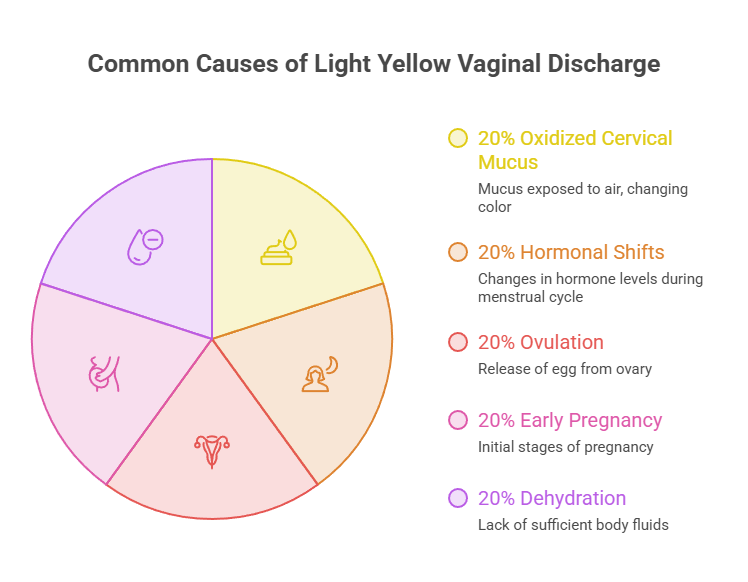
Quick Answer: Yes, yellow discharge can show up without an infection. Pale or light yellow discharge with no itching, no odor, and no pain is often just cervical mucus that oxidized in the air, a normal hormonal shift, early pregnancy, mild dehydration, or semen residue after sex. Watch for a bright yellow or green color, a foul smell, frothy texture, or pelvic pain, and get tested if any of those appear or if it lasts beyond a week.
At a Glance
- Light yellow discharge with no smell or itch is frequently normal, not an infection.
- Common harmless causes include oxidized cervical mucus, hormonal shifts, ovulation, early pregnancy, and dehydration.
- Color alone rarely tells the full story; the symptoms around it matter far more.
- Bright yellow or green discharge, a fishy or foul odor, itching, or pelvic pain points toward infection and testing.
- Bacterial vaginosis affects roughly 1 in 3 US women of reproductive age, and most have no symptoms at all.
- The safe rule: monitor for a week, get tested if you’re sexually active or symptoms appear, and call a provider if anything worsens.
What Yellow Discharge Actually Means
Vaginal discharge is your body doing maintenance, not malfunctioning. It carries away dead cells, keeps tissue lubricated, and holds the vaginal environment slightly acidic so unwelcome microbes struggle to take hold.
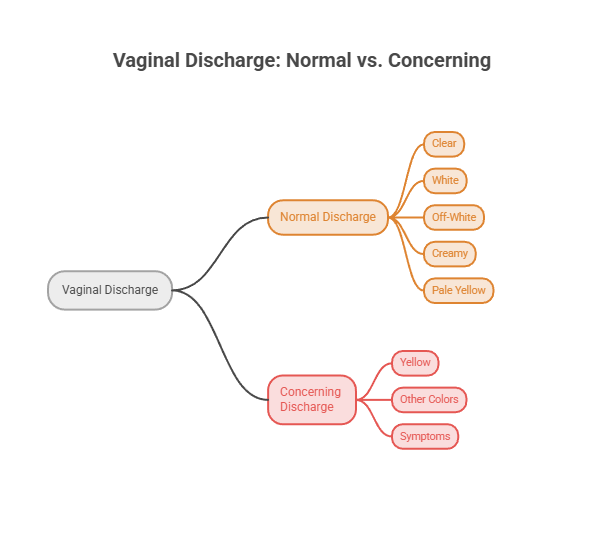
That fluid shifts constantly. Across a single menstrual cycle, discharge can run clear, white, off-white, creamy, or pale yellow, and all of those fall inside the normal range for many women. The color you notice today may look nothing like last week’s, and that variation is usually a feature, not a flaw.
The trouble is that yellow sits right on the border between totally normal and worth a look. That ambiguity is why a single glance at color triggers so much worry, and why the rest of this guide focuses on the signals that actually tell the two apart.
Your Vagina’s Self-Cleaning System
A healthy vagina runs acidic, with a normal pH somewhere around 3.8 to 4.5. That acidity comes from Lactobacillus, the friendly bacteria that dominate vaginal flora and keep less welcome organisms in check.
When that balance holds, discharge tends to stay clear to milky white. When it tips, through hormones, hygiene products, antibiotics, or a genuine infection, both the color and the smell can change. Our medical reviewers note that color shifts inside the normal pH range are common and rarely a problem on their own.
This self-cleaning design is the reason doctors push back on douching and internal washes. The system already works; interfering with it tends to cause the very imbalance people are trying to prevent.
Why Healthy Discharge Can Turn Yellow
Most yellow you see has a boring explanation: air. Light yellow discharge is often just cervical mucus mixed with air or slightly oxidized after exposure, and hormonal changes can also affect its appearance.
Think of how a cut apple browns on the counter. Clear or white mucus can oxidize the same way once it leaves your body and dries on fabric, taking on a pale yellow cast. If there’s no itching, burning, swelling, pain, or strong odor, the cause is often non-infectious.
That single rule, no odor and no irritation, does most of the heavy lifting in sorting harmless yellow from the kind that needs attention. Hold onto it as you read the causes below.
Non-Infectious Causes of Yellow Discharge (No Itching, No Odor)
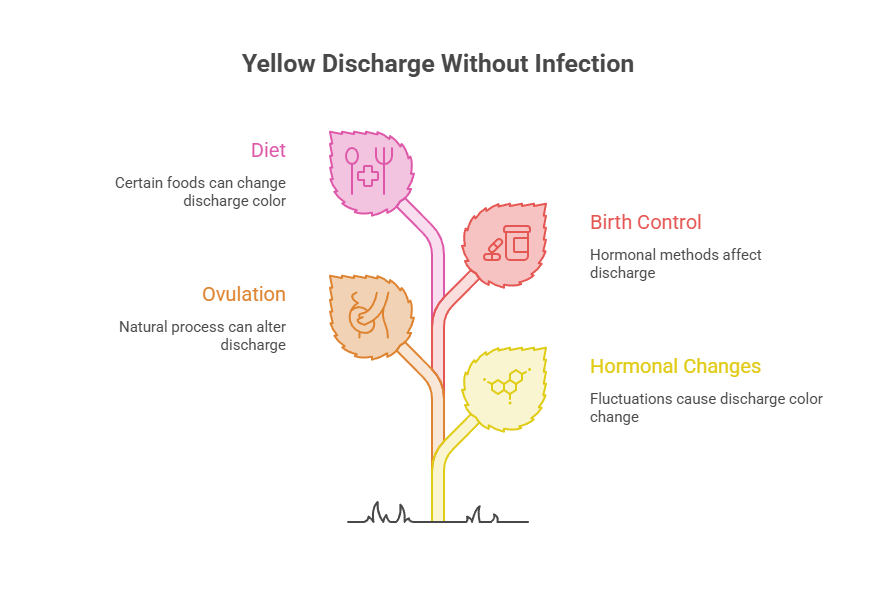
This is the part the top search results gloss over. Plenty of everyday triggers turn discharge yellow, and none of them involve an infection or antibiotics. Here are the ones our lab partners and reviewers see most often, with the practical context for each.
Oxidized Cervical Mucus
The single most common reason for symptom-free yellow discharge is simple oxidation. Mucus that looked clear or white inside takes on a yellow tint after exposure to air and after it dries.
You’ll often notice this later in the day or on a panty liner rather than right after a shower. The fluid sat against fabric for hours, oxidized, and shifted color. With no odor and no irritation, oxidized mucus needs nothing more than a fresh pair of underwear.
Hormonal Fluctuations Across Your Cycle
Estrogen and progesterone rise and fall throughout the month, and your discharge follows their lead. Vaginal discharge starts out pasty soon after your period, turns creamy and white during the first half of the cycle, then becomes clear, slippery, and stretchy like egg whites around ovulation.
As those hormone levels shift, the amount, texture, and shade of your discharge shift with them. A pale yellow tint at certain points in the cycle is well within normal for many women, and it often repeats on a predictable monthly rhythm.
If you start tracking, you may find your yellow days land in the same window every cycle. That consistency is reassuring; random, out-of-pattern color is what deserves a second look.
Ovulation and the Days Before Your Period
Timing tells you a lot. Discharge that’s pale or light yellow can be completely normal, especially before your period or during ovulation.
In the days leading up to menstruation, cervical fluid thickens and tiny amounts of older blood can blend in, nudging discharge toward yellow or brownish-yellow. This type of discharge typically lasts a few days and is just the last of your period leaving your uterus.
Patients commonly ask us about this exact pre-period color, and it usually clears on its own once bleeding starts. The brownish edge comes from old blood, not an active infection.
Early Pregnancy
A surge of progesterone in early pregnancy increases blood flow to the pelvic area and ramps up vaginal secretions. That extra fluid sometimes carries a creamy yellow tint, and many women notice more discharge overall than they’re used to.
If you’ve missed a period, a home pregnancy test is the logical next move. Any yellow discharge during a confirmed pregnancy is worth a quick call to your OB provider, since infections need prompt treatment while you’re expecting and shouldn’t be guessed at from color alone.
Dehydration
Skimp on water and your whole body concentrates its fluids. Urine darkens, and vaginal secretions can do the same, taking on a deeper yellow than you’re used to.
The fix is as low-tech as it gets: drink more water. Color tied to dehydration usually lightens within a day of better hydration. If it sticks around despite plenty of fluids, that’s your cue to look for other clues rather than chalk it up to thirst.
Semen After Unprotected Sex
After unprotected sex, semen mixes with your own cervical mucus and can appear yellowish, especially as it dries over the next several hours. This is a mechanical mixing of fluids, not a sign that something is wrong.
With no itching, odor, or burning attached, residue like this is harmless and clears on its own. Lubricants, spermicides, and even some condoms can tweak the look of discharge for a day, too.
Foods, Vitamins, and Medications
What you put in your body can faintly color what comes out of it. Certain B vitamins, supplements, and beta-carotene-rich foods can lend a subtle yellow tint to many secretions.
The change here is usually mild, not dramatic. Some medications shift vaginal flora indirectly; antibiotics, for example, can upset the bacterial balance and occasionally trigger a yeast overgrowth, which is a separate issue from a benign dietary tint and usually comes with itching.
Perimenopause and Lower Estrogen
As estrogen drops in perimenopause and menopause, vaginal tissue thins and produces less moisture. That change can alter both the amount and the color of discharge, sometimes leaving it pale yellow.
This shift is hormonal, not infectious. Across the cases our diagnostic network reviews, low-estrogen changes in older patients are frequently mistaken for infection when the real driver is the natural hormonal decline of midlife. A provider can confirm the cause and discuss options if dryness or irritation comes with it.
The table below sorts the harmless yellow from the kind that deserves a closer look.
| Feature | Likely Normal (No Infection) | Possible Infection | What It Points To |
| Color | Pale or light yellow, slight tint | Bright yellow, yellow-green, or gray-yellow | Vivid color suggests pathogen activity |
| Odor | None or very mild | Foul, fishy, or strong | Odor strongly hints at BV or trichomoniasis |
| Texture | Thin, sticky, or creamy | Frothy, bubbly, thick, or clumpy | Frothy fits the trichomoniasis pattern |
| Itching or burning | Absent | Present, sometimes intense | Irritation points to yeast or an STI |
| Timing | Around ovulation, before a period, early pregnancy | Random, persistent, after a new partner | Cycle-linked timing is reassuringly physiologic |
| How you feel | Fine; no other symptoms | Pelvic pain, fever, painful urination, bleeding | Systemic signs mean see a provider |
How Common Is Yellow Discharge in the US?
If you’re worried you’re the only one googling this at midnight, you’re not. Discharge concerns drive a staggering number of medical visits, and the conditions behind them are often silent.
Bacterial vaginosis occurs in about one third of adult women in the United States, which works out to roughly 22 million women, and women make around 10 million office visits a year for vaginal discharge. That volume tells you how routine these questions are for clinicians, and how little reason there is to feel embarrassed bringing one up.
The most eye-opening detail is how quiet these conditions stay. In a nationally representative US survey, bacterial vaginosis prevalence was 29.2%, corresponding to about 21 million women aged 14 to 49, yet only 15.7% of women with BV reported any vaginal symptoms.
That single statistic reframes the whole without an infection question. Bacterial vaginosis is the most common cause of vaginal discharge worldwide, and in that survey the majority of women with it were asymptomatic. Feeling fine, in other words, doesn’t fully rule out a low-grade imbalance, which is exactly why testing earns its place when risk factors are present.
| Metric | US Figure | Source |
| Adult women with bacterial vaginosis | ~29.2% (about 21 million, ages 14 to 49) | CDC / NHANES 2001 to 2004 |
| Share of BV cases that cause symptoms | ~15.7% (most have none) | CDC / NHANES |
| Annual US office visits for vaginal discharge | ~10 million | Clinical literature (eMedicine) |
| Trichomoniasis cases with no symptoms | up to ~70% | Cleveland Clinic |
| BV prevalence, general population | ~29% | CDC-cited research |
| Normal vaginal pH | 3.8 to 4.5 (acidic) | ACOG / clinical reference |
These numbers carry one practical message. Plenty of yellow discharge is harmless, but the conditions that aren’t can hide in plain sight, so symptoms are a guide, not a guarantee. The women most served by testing are those who are sexually active, pregnant, or noticing anything new alongside the color.
When Yellow Discharge Could Mean an Infection
Reassurance is only half the job. The trustworthy approach is to show you exactly where probably normal ends and get this checked begins.
Cleveland Clinic is direct about it. Yellow, gray, or green discharge may suggest a bacterial or sexually transmitted infection, and changes in the amount, color, or smell of your discharge can be a sign of infection or another problem.
The key is pattern recognition. A faint yellow tint with zero other symptoms reads very differently from a vivid yellow-green that arrived with an odor and a new sexual partner. The sections below break down both the warning signs and the specific infections that can wear a yellow disguise.
Warning Signs to Watch For
A few combinations should move you from monitoring to action. The color itself matters less than these companions:
- A foul, fishy, or otherwise strong odor
- Itching, burning, redness, or swelling around the vulva
- A frothy, bubbly, or thick, clumpy texture
- Pelvic or lower-abdominal pain, or pain during sex
- Burning when you urinate, fever, or bleeding between periods
- Discharge that turns bright yellow or yellow-green and keeps deepening
Any one of these tips the scale toward a clinical evaluation. Two or more together, especially with pain or fever, deserves prompt attention rather than a wait-and-see week. Pelvic pain plus fever in particular can signal pelvic inflammatory disease, which is a same-day concern.
Infections That Sometimes Look Yellow
Several common conditions can produce a yellow tint, and knowing the patterns helps you describe symptoms accurately to a provider. None of these are diagnoses you can confirm at home, but recognizing them tells you when to act.
Bacterial Vaginosis (BV)
BV happens when Lactobacillus drops and other bacteria overgrow. It’s classically gray with a fishy odor, but it can read as yellow, and as the data show, it often produces no symptoms at all. The CDC treats it as the leading cause of discharge worldwide.
The odor, when present, is often described as fishy and may be stronger after sex. BV is treatable with prescription antibiotics, but it tends to recur, which is one reason self-diagnosis falls short.
Trichomoniasis
This parasitic STI is a textbook cause of colored discharge. Trichomoniasis can cause a greenish-yellow, sometimes frothy discharge. It’s also frequently silent: up to 70% of people with this sexually transmitted infection don’t notice symptoms.
When symptoms do appear, the frothy texture and greenish-yellow color are distinctive. Trichomoniasis is curable with a short course of prescription medication, and partners usually need treatment too.
Gonorrhea and Chlamydia
Both bacterial STIs can produce cloudy, yellow, or green discharge, and both are notorious for causing no symptoms in many people. Left untreated, they can lead to pelvic inflammatory disease and fertility problems, which is why testing matters even when you feel well.
These are exactly the infections that hide behind a but I feel fine yellow tint. Routine screening is the only dependable way to catch them early.
Yeast Infections
Yeast discharge is usually thick, white, and cottage-cheese-like with intense itching. It can occasionally appear yellow when mixed with other fluids, though the hallmark itch and texture usually set it apart from a benign yellow tint.
Yeast isn’t an STI; it’s an overgrowth of fungus that already lives in the body. Antibiotics, pregnancy, and high blood sugar can all trigger it.
What to Do Next: Your Step-by-Step Plan
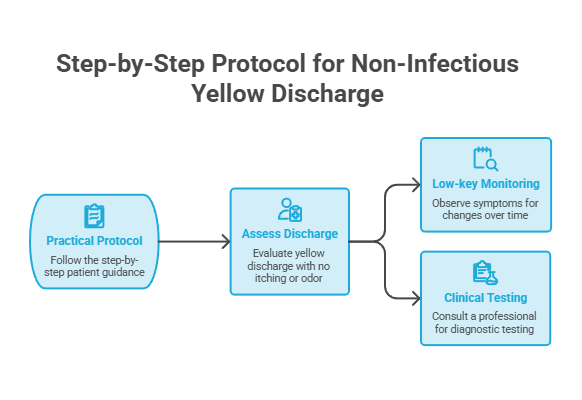
Knowing the causes is useful only if it tells you what to actually do tonight. Here’s the practical protocol our reviewers walk patients through, from low-key monitoring to getting tested.
Track and Monitor (the 7-Day Rule)
If your discharge is pale yellow with no odor, no itch, and no pain, and you otherwise feel fine, give it about a week of attention. Note the color each day, the timing in your cycle, and whether anything new shows up.
A simple way to do this is a quick daily note: the shade, the texture, any smell, and where you are in your cycle. Plenty of symptom-free yellow discharge resolves on its own as hormones shift or hydration improves, and a short log makes any real change obvious instead of leaving you guessing from memory.
This kind of tracking also makes a future appointment more productive. Walking in with a week of specifics gives a provider far more to work with than it looked a little yellow.
When to Call a Provider or Get Tested
Skip the waiting period in specific situations. Get evaluated promptly if you’re sexually active with a new or multiple partners, if you’re pregnant, or if any warning sign from the list above appears.
Because STIs and BV so often stay silent, testing is the only reliable way to clear them. Patients who book tests through HealthCareOnTime frequently learn that I feel fine and my labs are clean aren’t always the same thing, which is the entire point of checking rather than assuming.
There’s no need to wait for symptoms to pile up. If your gut says something is off, that instinct is reason enough to get it looked at.
What a Visit and Testing Involve
An evaluation is quick and low-drama. A provider typically asks about your symptoms and cycle, then may take a simple swab of the discharge or request a urine sample for lab analysis.
That testing identifies whether bacteria, yeast, or a parasite is involved, and it can include a vaginal pH check, a look at the discharge under a microscope, and STI screening. The results determine treatment, since an antibiotic that clears BV does nothing for a yeast infection.
There’s no upside to self-treating a guess. Over-the-counter yeast products won’t touch an STI, and using them blindly can delay the right care. Matching the correct therapy to the actual cause is what resolves the problem and keeps it from coming back.
| Your Situation | Recommended Action | Urgency |
| Pale yellow, no smell or itch, you feel fine | Track for up to a week, hydrate, note cycle timing | Low / monitor |
| Yellow discharge and you’re sexually active or have a new partner | Schedule STI testing even without other symptoms | Moderate / within days |
| Yellow-green, frothy, or foul-smelling discharge | Book a provider visit and get tested | High / 24 to 48 hours |
| Yellow discharge plus pelvic pain, fever, or painful urination | Seek same-day or urgent care | Urgent / today |
| Yellow discharge during pregnancy | Call your OB provider | High / same day |
| Mild, symptom-free yellow that recurs each cycle | Mention at a routine visit, keep a discharge log | Low / routine |
How to Keep Your Discharge Healthy
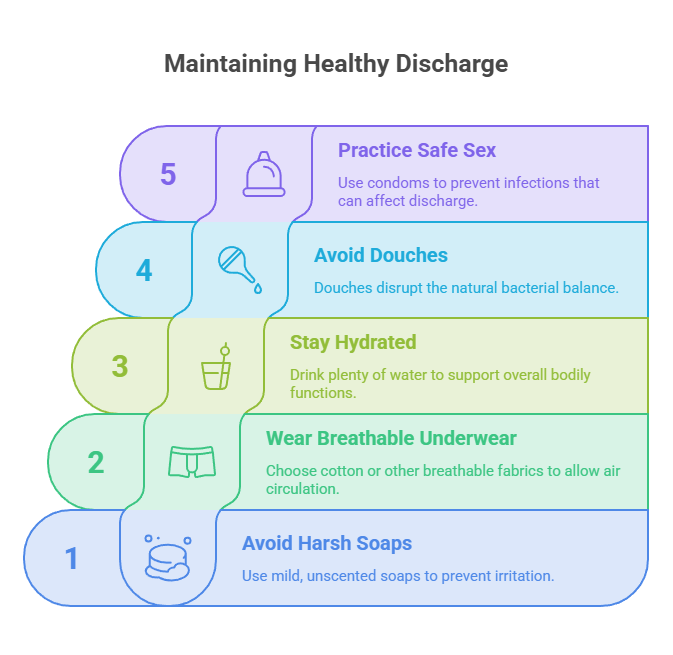
A few habits protect the bacterial balance that keeps discharge clear and odor-free. None of them are complicated, and most are about leaving your body alone to do its job.
Habits That Protect Vaginal Flora
Wear breathable cotton underwear and change out of damp workout clothes or swimwear promptly, since warmth and moisture encourage overgrowth. Wipe front to back, stay well hydrated, and let the vagina’s self-cleaning system handle the inside without help.
If you’re sexually active, regular STI screening catches silent infections early, before they cause symptoms or complications. Our medical reviewers note that consistent screening is one of the simplest ways to stay ahead of the conditions behind abnormal discharge, and it takes the guesswork out of color changes entirely.
Probiotic-rich foods and a balanced diet support overall flora for some people, though evidence varies. The fundamentals, hydration, breathable fabrics, and screening, matter most.
What to Avoid
Skip douching entirely. Rinsing out the vagina strips away protective Lactobacillus and raises the risk of bacterial vaginosis, the opposite of what most people intend.
Steer clear of scented washes, sprays, and harsh soaps on delicate tissue, and avoid scented panty liners if you’re prone to irritation. The vagina needs warm water on the outside and nothing inside it. Tight, non-breathable clothing worn for long stretches is also worth limiting if you notice recurring changes.
Frequently Asked Questions
Is yellow discharge normal if there’s no smell?
Often, yes. Pale yellow discharge with no odor, itching, or pain is frequently just cervical mucus that oxidized in the air or a normal hormonal shift. Patients ask us this constantly, and color without other symptoms is usually low concern. Watch for changes over a week, and get tested if you’re sexually active.
Can yellow discharge be a sign of pregnancy?
It can. Early pregnancy raises progesterone, which boosts blood flow and vaginal secretions, sometimes giving discharge a creamy yellow tint. If you’ve missed a period, take a pregnancy test. Any yellow discharge during a confirmed pregnancy should be mentioned to your OB provider, since infections need prompt treatment while you’re expecting.
Why is my discharge yellow but I feel fine?
Feeling fine is a good sign. When yellow discharge comes with no itching, burning, odor, or pain, the cause is usually non-infectious: oxidized mucus, ovulation, mild dehydration, or semen residue after sex. Our medical reviewers note that symptom-free color changes rarely signal anything serious, though monitoring for a week is the smart move.
Does yellow discharge always mean an STI?
No. Yellow discharge is not automatically a sexually transmitted infection. Plenty of harmless causes exist, from hormones to diet to dehydration. That said, some STIs like trichomoniasis, chlamydia, and gonorrhea can produce yellow discharge, and many cause no other symptoms. If you’re sexually active, testing is the only way to rule them out.
Is yellow discharge normal before my period?
Yes, this is common. In the days before menstruation, cervical fluid thickens and small amounts of old blood can mix in, tinting discharge pale yellow or brownish-yellow. It usually clears within a day or two as your period starts. With no odor or irritation, this pattern is typically nothing to worry about.
Can dehydration cause yellow discharge?
It can contribute. When you’re low on fluids, many body secretions concentrate and darken, including vaginal discharge, which may look more yellow than usual. Drinking more water often returns it to a paler color within a day. If the yellow tint persists despite good hydration, look for other symptoms and consider a checkup.
What discharge color is a real warning sign?
Bright yellow, yellow-green, or gray discharge raises more concern, especially with a foul or fishy odor, frothy texture, itching, or pelvic pain. Cleveland Clinic flags yellow, gray, and green as colors that may point to a bacterial or sexually transmitted infection. Any blood-tinged discharge outside your period also deserves attention.
How long should I wait before seeing a doctor?
A reasonable rule is about a week. If symptom-free yellow discharge clears on its own within seven days, monitoring is usually enough. If it lasts longer, worsens, or develops odor, itching, or pain, book a visit. Pregnant patients or anyone sexually active with a new partner should not wait that long.
Can stress change my discharge color?
Stress doesn’t directly turn discharge yellow, but it disrupts hormones, which can shift your cycle and cause discharge to appear at unexpected times or in a slightly different shade. The color change is usually subtle. If stress-linked changes come with no odor or irritation, they’re generally harmless and settle as your routine stabilizes.
Does yellow discharge after sex mean infection?
Not necessarily. After unprotected sex, semen mixes with cervical mucus and can look yellowish as it dries, which is harmless. Lubricants and condoms can also alter appearance. If yellow discharge after sex comes with itching, burning, odor, or pain, or keeps recurring, get tested to rule out a sexually transmitted infection.
Is light yellow different from dark yellow discharge?
Yes, shade matters. Light or pale yellow discharge is more often a normal variation tied to your cycle or mild oxidation. Darker, vivid, or yellow-green discharge is more likely linked to infection, particularly alongside odor or other symptoms. When patients describe a deepening color over several days, we suggest testing rather than waiting.
Can birth control change discharge color?
It can. Hormonal birth control alters estrogen and progesterone levels, which changes the amount, texture, and sometimes color of discharge, including a pale yellow tint for some users. This is usually a benign side effect. If you notice odor, itching, or irritation alongside the change, mention it to your provider.
Medical Disclaimer: This article is for general educational purposes and reflects current US medical guidance. It is not a substitute for professional medical advice, diagnosis, or treatment. Vaginal discharge has many possible causes, and only a licensed healthcare provider can evaluate your specific situation. If you’re sexually active, pregnant, or experiencing concerning symptoms, contact a qualified clinician or arrange appropriate testing.
References
- Cleveland Clinic, Vaginal Discharge: Causes, Colors & What’s Normal
- Cleveland Clinic, Vaginitis: Causes, Symptoms, Treatment & Prevention
- Cleveland Clinic Health Essentials, Decoding Vaginal Discharge
- Mayo Clinic, Vaginitis: Symptoms & Causes
- Mayo Clinic, Vaginal Discharge Causes
- CDC, Bacterial Vaginosis (STI Treatment Guidelines)
- Prevalence of Bacterial Vaginosis in the United States, NHANES 2001 to 2004 (PubMed)
- ACOG, Is It Normal to Have Vaginal Discharge?