Your booking request has been received successfully. We will contact you shortly.
Share this offer
Anti saccharomyces cerevisiae iga antibodies Test and its Function
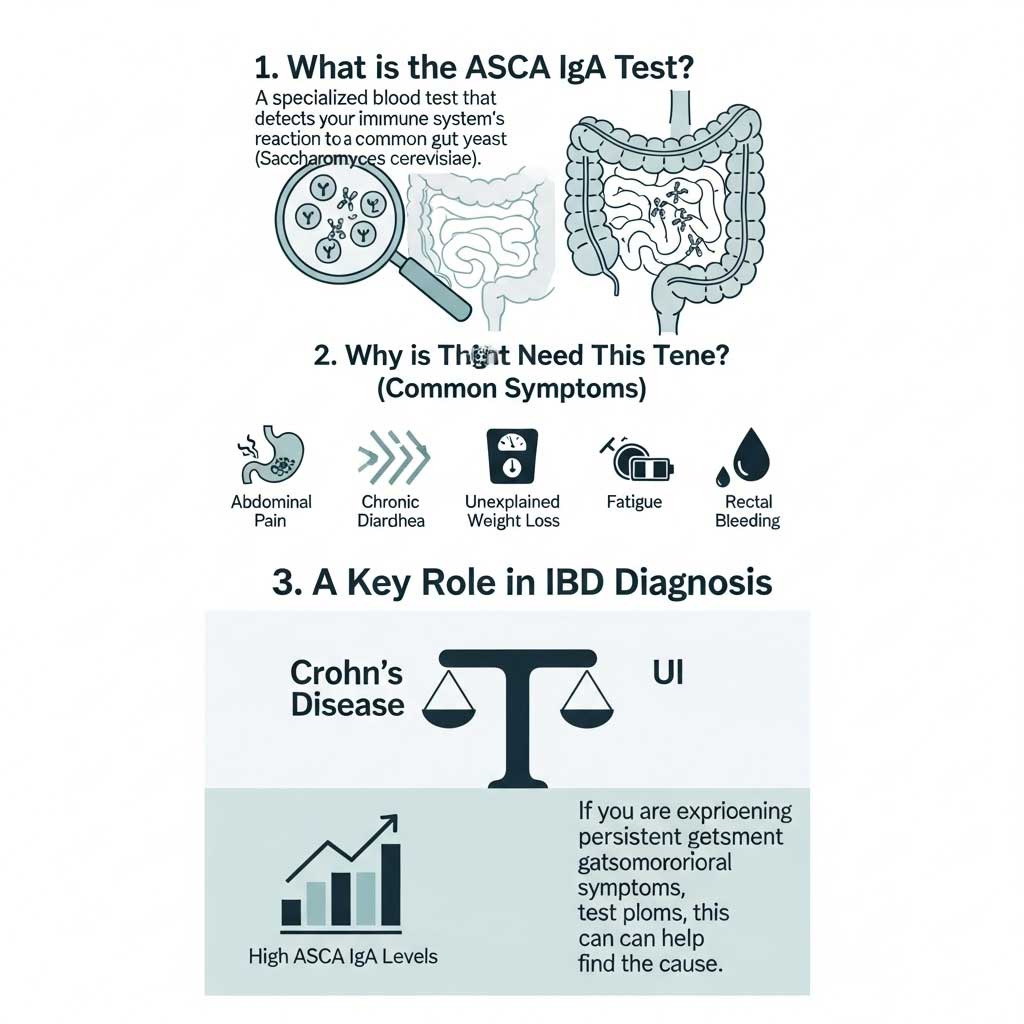
The Anti-Saccharomyces Cerevisiae IgA (ASCA IgA) antibodies test is a specialized blood test used to detect the presence of IgA antibodies against Saccharomyces cerevisiae, a type of yeast commonly found in food. These antibodies are often elevated in individuals with inflammatory bowel diseases (IBD), particularly Crohn’s disease. The test helps differentiate between Crohn’s disease and ulcerative colitis, two major forms of IBD, by identifying immune responses specific to yeast antigens. It is a valuable diagnostic tool when clinical symptoms and imaging results are inconclusive.
Conditions that may require Anti saccharomyces cerevisiae iga antibodies Test
This test is primarily recommended for individuals showing symptoms of gastrointestinal distress such as chronic diarrhea, abdominal pain, rectal bleeding, fatigue, and unexplained weight loss. It is especially useful in evaluating suspected cases of Crohn’s disease or ulcerative colitis, helping clinicians distinguish between the two. In rare cases, elevated ASCA IgA levels may also be observed in other autoimmune conditions like celiac disease, although this is less common.
Anti saccharomyces cerevisiae iga antibodies Test Procedure
The ASCA IgA test involves a simple blood draw, typically collecting 5 ml of blood from adults via venipuncture. No fasting or special preparation is required. The sample is processed using ELISA (Enzyme-Linked Immunosorbent Assay) technology, which detects and quantifies the presence of IgA antibodies targeting Saccharomyces cerevisiae. The procedure is quick, minimally invasive, and results are usually available within 24–48 hours depending on the lab.
Interpreting Anti saccharomyces cerevisiae iga antibodies Test Results
A positive ASCA IgA result strongly suggests Crohn’s disease, as these antibodies are found in approximately 75% of affected patients. Conversely, a negative result may point toward ulcerative colitis or a non-IBD condition. However, results must be interpreted alongside other diagnostic tests like pANCA, colonoscopy, and imaging studies, as ASCA alone cannot confirm or rule out IBD. Dual testing with ASCA and pANCA improves diagnostic accuracy, helping clinicians tailor treatment strategies more effectively.
Service was prompt, sample collected on time. And also got the report quickly.
POORVI PATEL
Prompt and efficient service. Trained staff. They can also send Soft copy of your test reports on WhatsApp and email.
TABASSUM SHAIKH
Good and friendly staff, Reliable result, I'll recommend this place.
ANUJ KULKARNI
Thye are punctual for time and deliver the report on time. This the first time I used their services for my blood test.
DEBARATI CHAKRABORTY
Technician who had come for collection had been very professional in his conduct and had kept all the covid necessary precautions in place. The entire process was smooth.
DANNY DAVIS
Rate 5 out of 5..warm & welcoming environment.. friendly and helpful staff.. Appointment on time and professionally dealt with. Thank you for your kind support. All the best.
BALJIT KAUR
Nice and friendly. Their blood test packages cover various tests at reasonable rates.
SENTHIL S
HealthcareOnTime Blogs
Stay Informed: Latest Insights on Health, Conditions, Tests, and Treatments VIEW ALL