
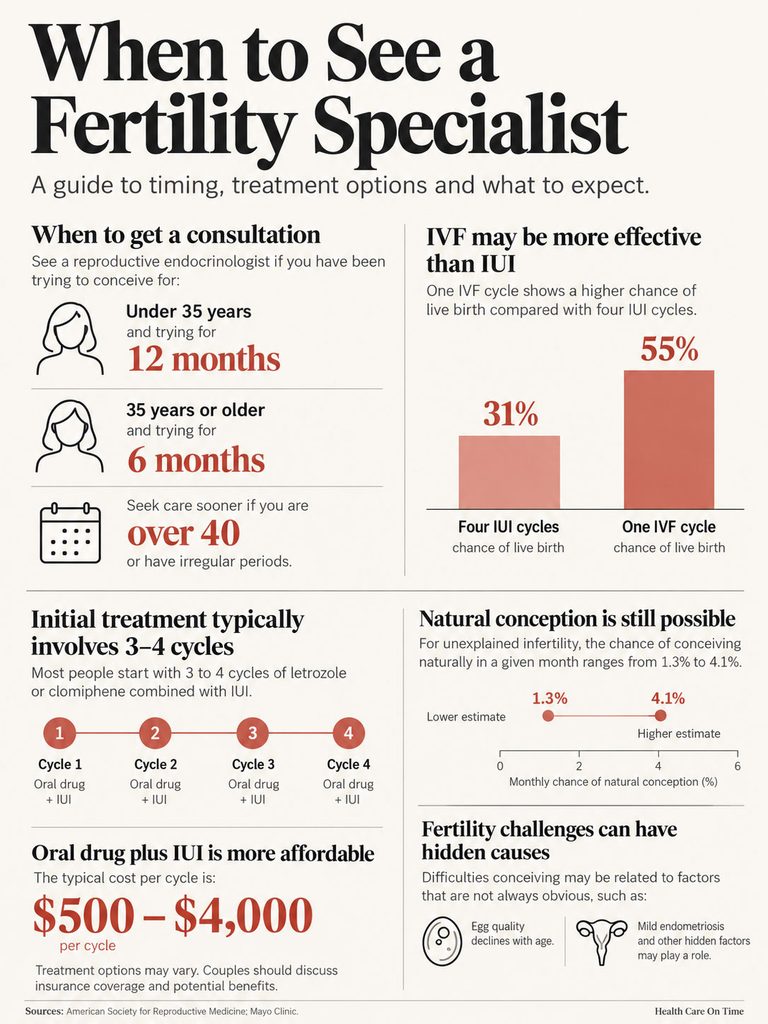
Fifty-five percent versus thirty-one percent. That is the gap in live births between one cycle of IVF and four cycles of IUI in a new trial published in the New England Journal of Medicine on October 27, 2026.
Table of Contents
If you have just been told your infertility is “unexplained,” that number matters. It challenges the step-by-step order most US clinics still follow, and it is missing from every top-ranking page on this topic.
This guide ranks the main unexplained infertility treatment options in the order most specialists use them, with the success data, cycle counts and US costs for each step in one place.
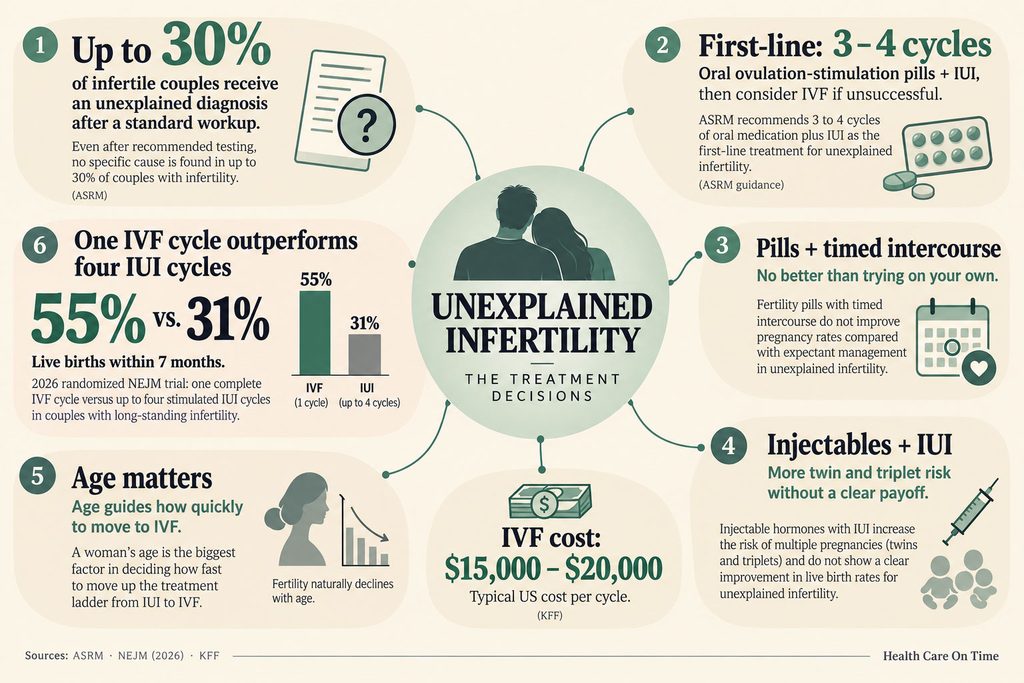
Quick Answer: Unexplained infertility treatment options usually follow a ladder. Couples with good odds may try on their own for a few months. Next comes 3 to 4 cycles of letrozole or clomiphene with intrauterine insemination (IUI). If that fails, IVF is the next step. Women 38 and older, and couples who have tried for many years, often do better going to IVF sooner. Timed sex with fertility pills alone is not recommended.
At a Glance
- Up to 30% of couples with infertility get the “unexplained” label after a standard workup, per the ASRM.
- ASRM recommends 3 to 4 cycles of oral medication plus IUI as first-line treatment.
- Fertility pills with timed intercourse work no better than trying on your own.
- Injectable hormones with IUI raise twin and triplet risk without a clear payoff.
- A 2026 NEJM trial found one IVF cycle beat four IUI cycles (55% vs. 31% live births) in couples with long-standing infertility.
- Age is the biggest factor in deciding how fast to move up the ladder.
- One IVF cycle typically costs $15,000 to $20,000 in the US, per KFF.
What “Unexplained Infertility” Actually Means
Unexplained infertility means the standard tests came back normal, yet you still are not pregnant after a year of trying (or six months if you are 35 or older). It does not mean nothing is wrong. It means today’s routine tests cannot see what is wrong.
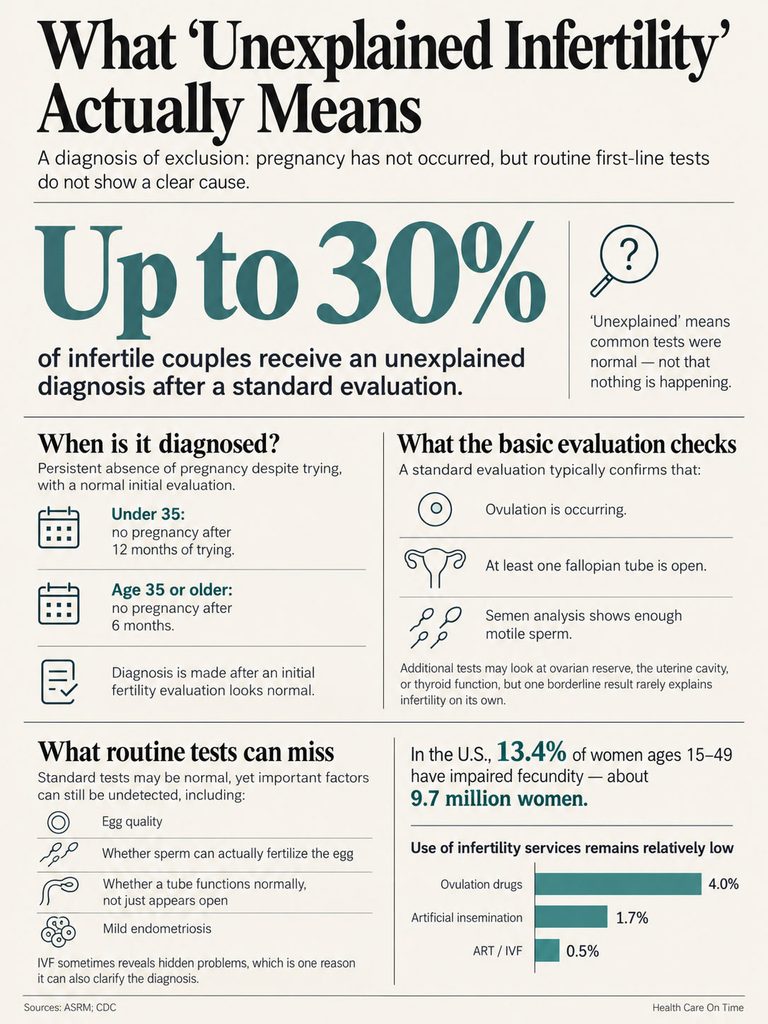
The ASRM guideline says up to 30% of couples with infertility end up with this diagnosis. That makes it one of the most common results of a fertility workup, not a rare puzzle.
Infertility itself is common in the US. CDC survey data from the National Survey of Family Growth show 13.4% of women ages 15 to 49, about 9.7 million, have impaired fecundity, meaning it is hard or impossible for them to get pregnant or carry a pregnancy to term.
The same survey shows how few people reach the higher rungs. About 4.0% of US women have ever used ovulation drugs, 1.7% have had artificial insemination and only 0.5% have used assisted reproductive technology such as IVF.
What the Standard Workup Includes
A couple is labeled “unexplained” only after a basic evaluation. The ASRM guideline describes it as three core findings:
- At least one open fallopian tube
- Proof that the woman ovulates
- A semen analysis with enough moving sperm
Many clinics also check ovarian reserve, the uterine cavity and thyroid function. When our team reviews lab reports, a common question is whether one “borderline” value explains everything. It rarely does, but it is worth asking your doctor. Our guide to the TSH blood test explains one of the checks that is often included.
What the Tests Can Miss
Routine testing cannot measure egg quality directly, check whether sperm can fertilize an egg, or confirm that the fallopian tube picks up the egg. Mild endometriosis can also go unseen without surgery.
The 2008 review by Quaas and Dokras notes that IVF can sometimes reveal the hidden problem, such as poor fertilization. That is one reason IVF sits at the top of the ladder.
The Unexplained Infertility Treatment Ladder at a Glance
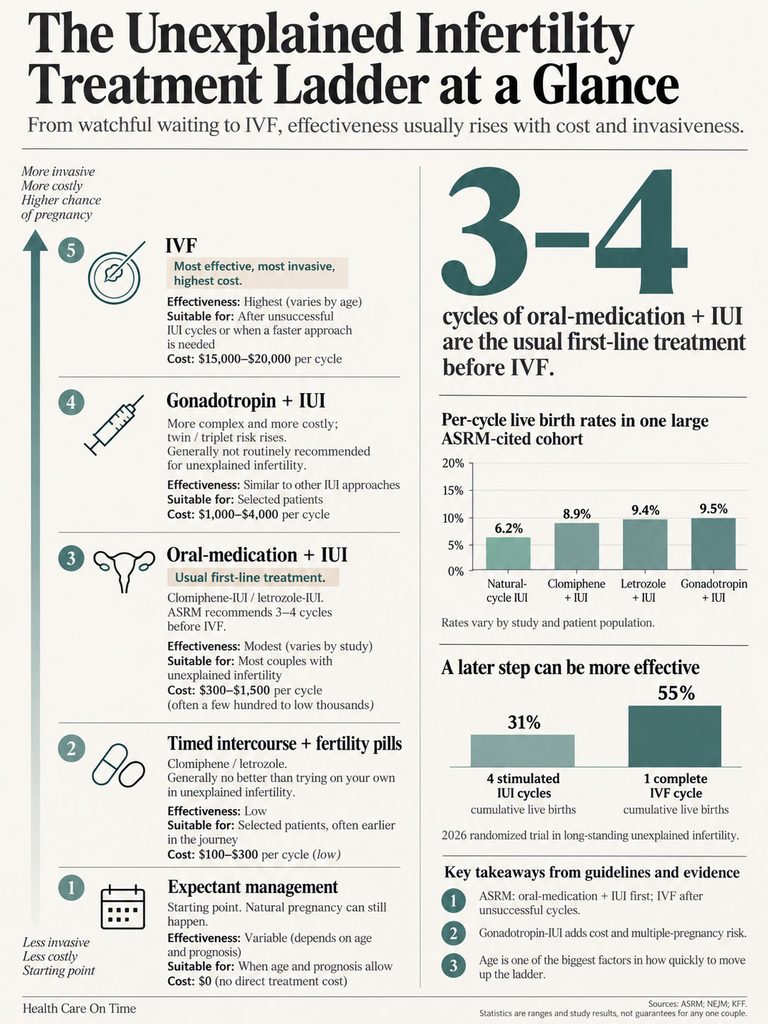
Because no single cause is known, unexplained infertility treatment options are empiric. Doctors try options that raise the odds per month, starting with the least invasive and cheapest that still work. Here is how each rung compares, using published US and international data.
| Option | Who it suits | Cycles before moving on | Live birth data | Approx. US cost per cycle |
| Expectant management (trying on your own) | Younger women, shorter time trying | Often about 6 months | 1.3% to 4.1% per month untreated; 9% over 3 months in the TUI trial | No treatment fees |
| Letrozole or clomiphene with timed sex | Not recommended by ASRM for unexplained infertility | Not advised | No better than trying alone (odds ratio 0.80) | Oral drug about $100 |
| Natural-cycle IUI (no drugs) | Not recommended by ASRM | Not advised | 6.2% per cycle; 23% vs. 17% over 6 cycles, not significant | Insemination $150 to $400, plus monitoring |
| Letrozole or clomiphene with IUI | First-line for most couples | 3 to 4 cycles | 8.9% (clomiphene) and 9.4% (letrozole) per cycle; 23.3% and 18.7% over up to 4 cycles in AMIGOS | IUI cycle $500 to $4,000 |
| Injectable gonadotropins with IUI | Rarely, per ASRM | Not advised for most | 32.2% over up to 4 cycles, but 32% of births were multiples | Drugs about $2,000 per cycle |
| IVF | After failed oral IUI, or sooner at 38+ | 1 to 3 egg retrievals, by age | 55% after one complete cycle in the 2026 NEJM trial; 43.1% per intended retrieval under 35 (SART) | $15,000 to $20,000 |
Sources: ASRM 2020 guideline, Quaas 2008, NEJM 2026, SART 2022 data, FertilityIQ, KFF. Per-cycle IUI rates come from a 14,519-cycle cohort cited by ASRM.
Our editors checked each row against the original guideline text. Numbers come from different studies with different patients, so read them as ranges, not promises.
Step 1: Trying on Your Own (Expectant Management)
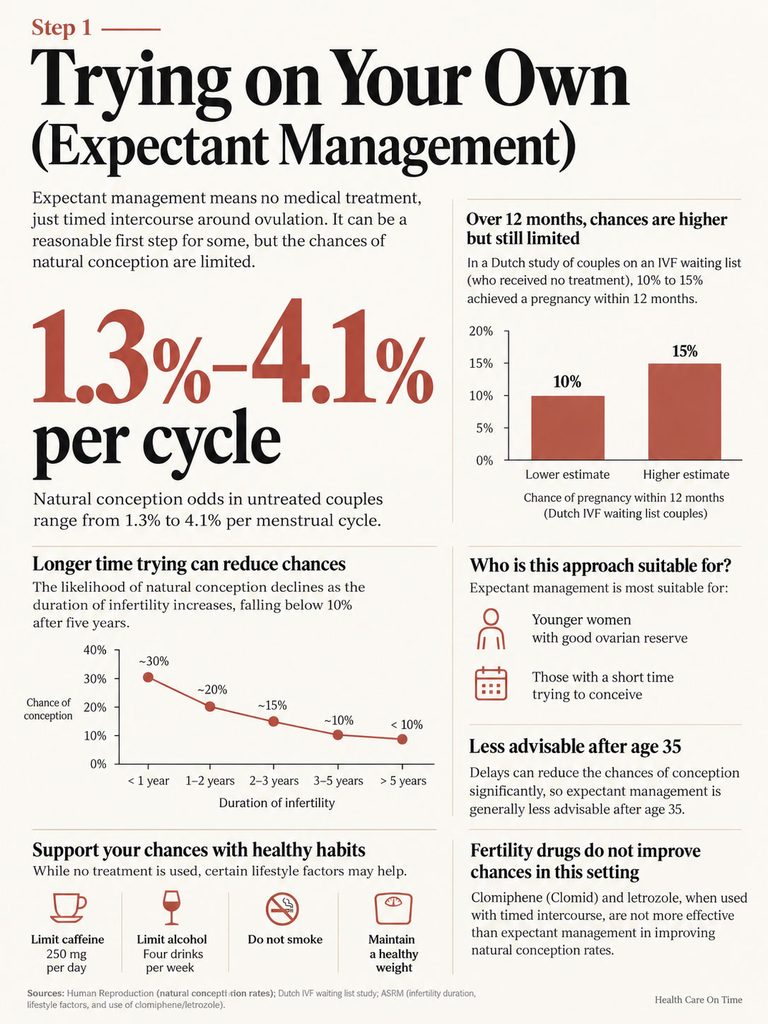
Expectant management means no treatment, just regular sex timed around ovulation. It sounds passive, but it is a real option backed by data for some couples.
How Good Are the Natural Odds?
They are lower than for fertile couples but well above zero. A review of 45 studies cited by Quaas and Dokras found an average of 1.3% to 4.1% per cycle in untreated couples. Dutch couples on an IVF waiting list had a 10% to 15% chance of pregnancy over 12 months.
Duration matters most. The Advanced Fertility Center of Chicago notes that after five years of infertility, the chance of conceiving alone falls below 10%.
Who Should Consider It
Waiting makes the most sense when the woman is young, ovarian reserve tests look good and the couple has not been trying for long. It costs nothing and carries no twin risk.
It makes less sense after 35, when each month of delay costs more. The ASRM guideline also notes that most couples do not prefer waiting once they have a diagnosis.
Lifestyle Steps That Help Any Option
The Quaas review suggests keeping caffeine to about 250 mg a day (roughly two cups of coffee) and alcohol to no more than four drinks a week. Not smoking and reaching a healthy weight also help.
Tracking ovulation with test strips or a BBT chart helps you time sex. Starting a prenatal vitamin with folic acid now is sensible for anyone trying to conceive.
Why “Clomid and Timed Sex” Is Not the Answer
Many couples are first offered clomiphene (Clomid) or letrozole with timed intercourse, often by a general OB-GYN. Cleveland Clinic’s patient page lists timed intercourse and medication as treatment options.
The ASRM guideline is blunt here. In a high-quality trial, clomiphene with timed sex was no better than doing nothing (odds ratio for live birth 0.80). Letrozole with timed sex was also no better. Both carry a “not recommended” rating for unexplained infertility.
Readers often ask us why a pill that “makes you ovulate” fails here. The answer is that these women already ovulate. The pill adds a second egg some months, which slightly raises twin risk without clearly raising the baby rate.
Step 2: Letrozole or Clomiphene With IUI
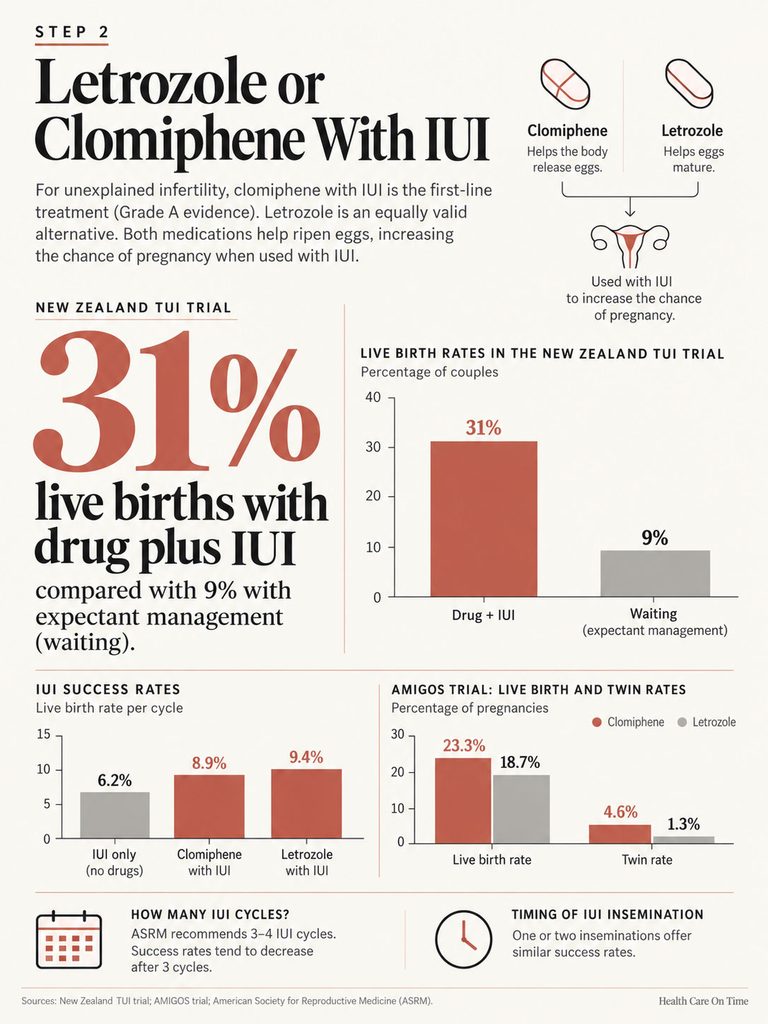
This is the true first-line treatment. ASRM gives clomiphene with IUI its strongest rating (Grade A evidence, strong recommendation) and rates letrozole with IUI as an equally valid alternative.
In IUI, washed sperm is placed directly into the uterus around ovulation. Pairing it with an oral drug that ripens one to three eggs gives sperm and eggs a better chance to meet.
How Well It Works
In the New Zealand TUI trial of 201 couples, cited by ASRM, three cycles of oral drug plus IUI produced live births in 31% of couples versus 9% with three months of waiting. That is roughly a threefold gain.
Per cycle, the numbers are modest. A cohort of 14,519 IUI cycles found live birth rates of 6.2% with no drugs, 8.9% with clomiphene and 9.4% with letrozole.
In the US AMIGOS trial of 900 couples, up to four cycles produced live births in 23.3% with clomiphene and 18.7% with letrozole. Across studies, ASRM concluded the two drugs perform similarly.
Letrozole vs. Clomiphene
Both are pills taken for about five days early in the cycle. Letrozole is an aromatase inhibitor approved by the FDA for breast cancer; its fertility use is off-label. ASRM states it is not FDA approved for unexplained infertility but is considered effective and well tolerated.
Twin rates differ a little, and the studies do not agree on which drug is lower. In the large cohort, multiple pregnancy rates were 4.6% with clomiphene and 1.3% with letrozole per cycle. In AMIGOS, multiples made up 5.7% of clomiphene births and 14.3% of letrozole births.
Because the two drugs perform about the same, your doctor may pick one based on your history, side effects or past response. Neither one is clearly the better choice for every couple.
Why Injectable Hormones Usually Are Not the Next Step
Some clinics add injectable gonadotropins (FSH shots) with IUI before IVF. In AMIGOS, this raised live births to 32.2%. But 32% of those births were multiples, including 10 sets of triplets among pregnancies in that arm.
ASRM recommends against both low-dose and conventional-dose injectables with IUI for unexplained infertility. The FASTT trial found that skipping the injectable step and moving straight to IVF shortened time to pregnancy (8 vs. 11 months) in women under 40. Per-cycle live birth rates in FASTT were 7.6% for clomiphene IUI, 9.8% for injectable IUI and 30.7% for IVF.
How Many IUI Cycles Before Moving On
Three to four. Most pregnancies from IUI happen in the first few tries. In an Egyptian study of 594 couples summarized by Quaas and Dokras, cycles 1 to 3 had a 16.4% success rate per cycle, but cycles 4 to 6 dropped to 5.6%. Cumulative success reached 39.2% after three cycles and only crept up to 48.5% by six.
That pattern is why ASRM recommends “typically 3 or 4 cycles.” After that, staying on IUI mostly costs time, which matters more with each birthday.
Timing Details That Do Not Matter Much
ASRM found that a single IUI between 0 and 36 hours after the trigger shot works as well as two. Double inseminations add cost without a clear benefit in clomiphene cycles.
Step 3: IVF
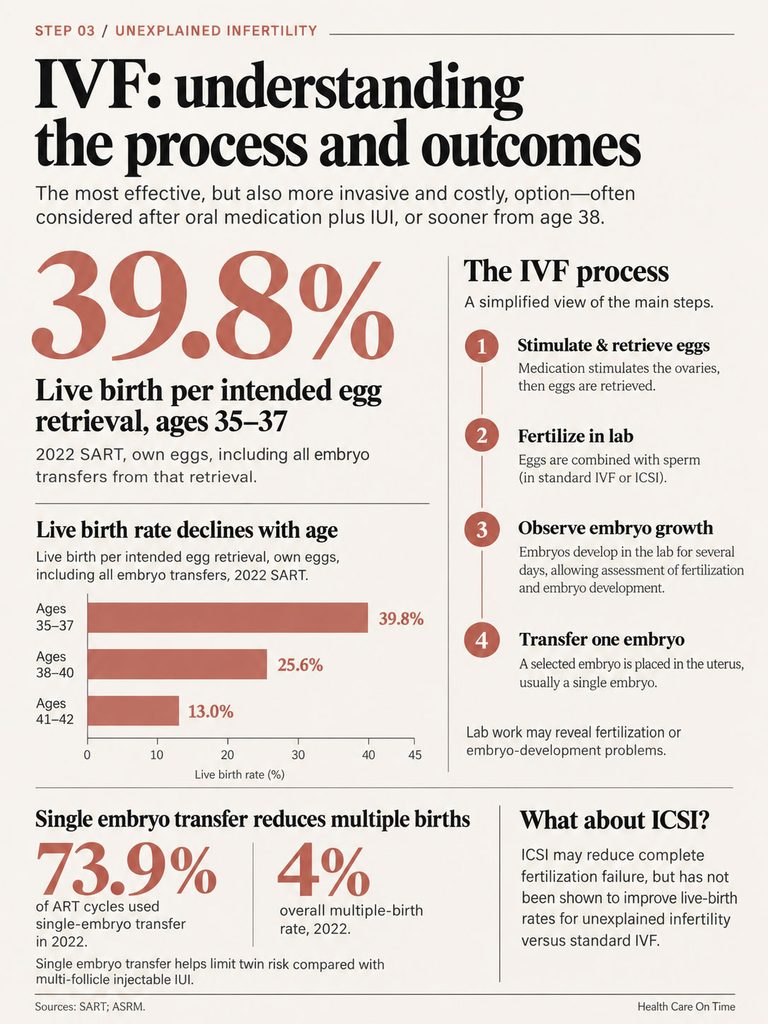
IVF is the most effective treatment for unexplained infertility, but also the most invasive and expensive. Eggs are retrieved, fertilized in the lab, and an embryo is placed in the uterus. Our guide to embryo transfer walks through that day.
When IVF Comes In
ASRM recommends IVF after an unsuccessful course of oral medication with IUI, rather than switching to injectable IUI cycles. It also says IVF first may make sense at 38 and older (more on age below).
IVF can also act as a test. If eggs fertilize poorly or embryos stall, couples finally get an explanation they could not get from blood work.
IVF Success Rates by Age
Age drives IVF success more than any other factor. Preliminary 2022 SART national data, reported by Contemporary OB/GYN, show live birth per intended egg retrieval of:
- 43.1% under age 35
- 31% at ages 35 to 37
- 19% at ages 38 to 40
- 3.2% over age 42
These figures cover all diagnoses, not only unexplained infertility. They still show why waiting longer on low-yield steps carries a real cost after the mid-30s.
Is ICSI Needed?
Intracytoplasmic sperm injection (ICSI) injects one sperm into each egg. ASRM found no difference in live birth rates between ICSI and standard IVF for unexplained infertility, although ICSI lowers the risk that no eggs fertilize. Ask whether your clinic uses it routinely and what it adds to the bill.
Single Embryo Transfer Keeps IVF Safer
In SART clinics, single embryo transfer rose to 73.9% of cycles in 2022, and multiple births fell to 4%. Unlike injectable IUI, IVF lets your team control twin risk by transferring one embryo.
The New NEJM Trial: Should IVF Come First?
This is the biggest change in years. On October 27, 2026, the New England Journal of Medicine published a head-to-head trial of IUI versus IVF in couples with unexplained infertility.
What the Researchers Did
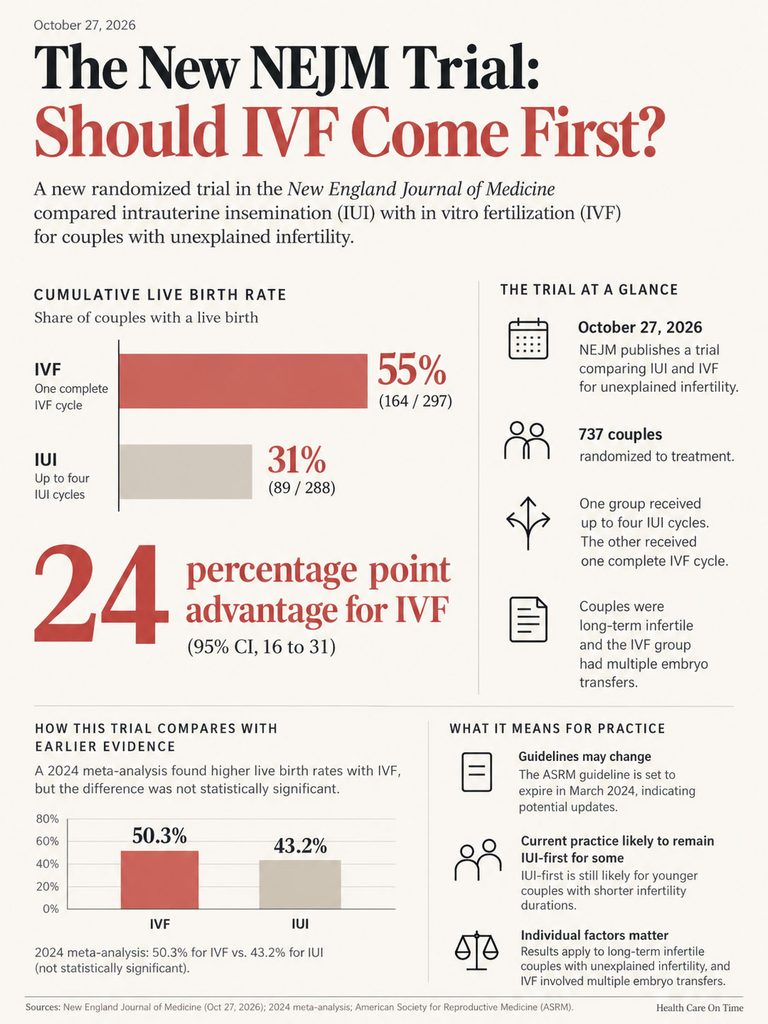
The study randomized 737 couples. One group got up to four cycles of IUI with ovarian stimulation; the other got one complete IVF cycle, with all resulting embryos transferred. The main result counted live births from that first stage.
The trial protocol, published in Human Reproduction Open, describes the setting. It ran in six publicly funded New Zealand clinics. Women had to be younger than 39 years and 4 months, with a BMI of 32 or less. IUI cycles used five days of clomiphene or letrozole, and IVF used single embryo transfer.
After the first stage and a seven-month mark, couples could move on. Those in the IUI group could have up to two IVF cycles, and those in the IVF group one more.
What They Found
According to the published abstract, the cumulative live birth rate was 55% with one IVF cycle (164 of 297 couples) and 31% with four IUI cycles (89 of 288 couples). The adjusted difference was 24 percentage points (95% CI, 16 to 31).
The authors concluded that four cycles of IUI were not noninferior to one complete IVF cycle. In plain English, IUI did not hold up as “about as good.”
Why It Does Not Mean IVF First for Everyone
Our medical content team reviewed the trial design before writing this section, and three details matter.
First, these couples were long-term infertile. New Zealand public funding usually requires about five years of infertility, and the trial enrolled couples with a poor predicted chance of natural pregnancy. Most US couples start treatment much sooner.
Second, the comparison was one full IVF cycle, including frozen embryos, against four IUI cycles. IVF gets several chances to transfer embryos from one retrieval.
Third, we could read the published abstract and protocol, but not the full paper. Cost, twin rates and subgroup results by age were not available to us at the time of writing.
How It Fits With Earlier Evidence
Before this trial, the best summary was a 2024 individual participant data meta-analysis of four trials and 908 women. It found cumulative live birth rates of 50.3% with IVF and 43.2% with IUI, a difference that was not statistically significant. Multiple pregnancy rates were low in both groups (3.8% with IVF, 5.2% with IUI).
That analysis mostly included Dutch trials using injectable hormones for IUI. The new trial used cheaper oral drugs and found a much larger gap, which may push future guidelines toward earlier IVF for poor-prognosis couples.
The current ASRM guideline lists a document expiration of March 2024, so an update is due. Until then, expect most US clinics to keep the oral IUI-first path for younger couples with shorter infertility.
How Age Changes the Order
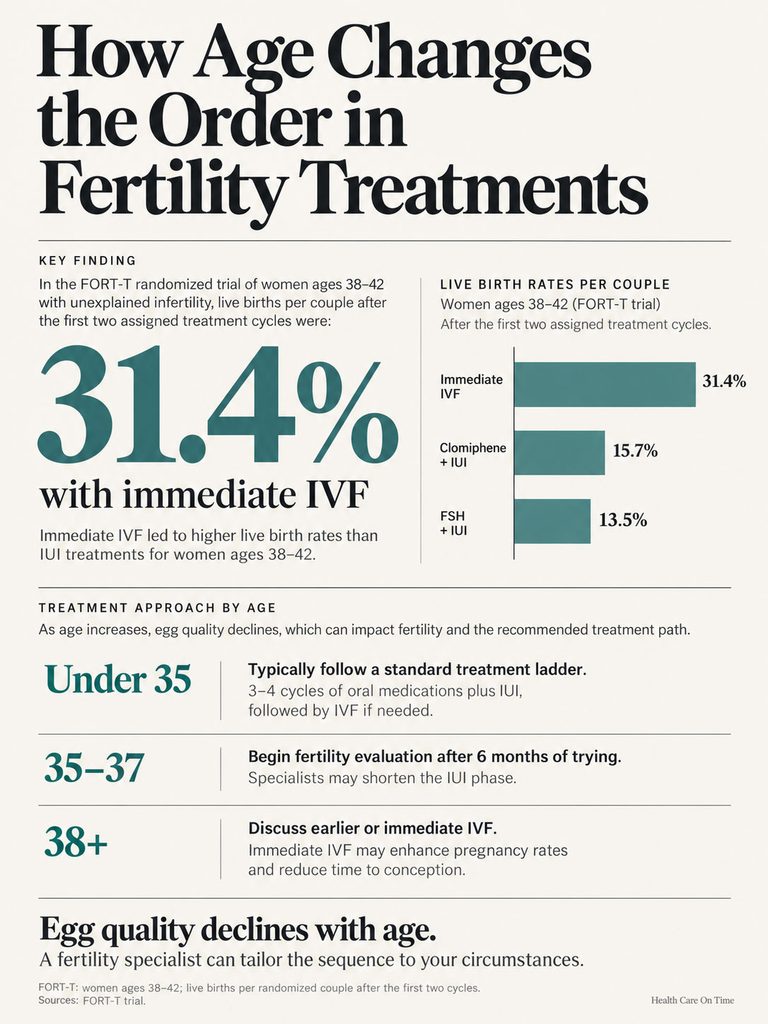
Age shifts the math because egg quality falls with time while the cost of each wasted month rises.
Under 35
Most couples can follow the standard ladder: possibly a short stretch of trying, then 3 to 4 cycles of oral drug plus IUI, then IVF. If you have been trying for many years, the NEJM data are a reason to discuss earlier IVF.
35 to 37
Start the workup after six months of trying, as Cleveland Clinic and most US groups advise. Many specialists shorten the IUI phase in this age group.
38 and Older
ASRM states that immediate IVF at 38 or older may lead to higher pregnancy rates and shorter time to pregnancy. The FORT-T trial of women ages 38 to 42 found that after two treatment cycles, live birth rates were 31.4% with IVF versus 15.7% with clomiphene IUI and 13.5% with FSH IUI.
US Costs and Insurance
Cost often decides the plan as much as the evidence does. These are typical US figures from neutral sources.
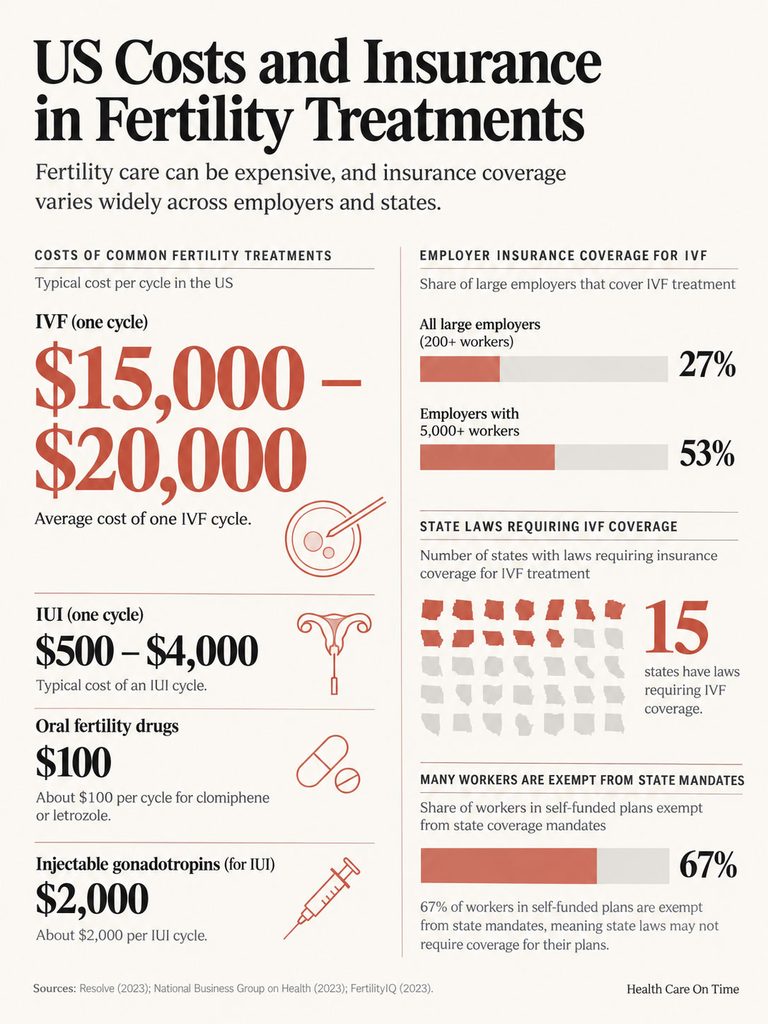
| Statistic | Number | Source |
| Average cost of one IVF cycle | $15,000 to $20,000 | KFF, October 2025 |
| Typical IUI cycle cost | $500 to $4,000 | FertilityIQ |
| Oral drug (clomiphene or letrozole) per cycle | About $100 | FertilityIQ |
| Injectable gonadotropins per IUI cycle | About $2,000 | FertilityIQ |
| Large employers (200+ workers) covering IVF | 27% | KFF Employer Health Benefits Survey |
| Employers with 5,000+ workers covering IVF | 53% | KFF |
| States with laws requiring IVF coverage | 15 | RESOLVE, updated October 2026 |
| Workers in self-funded plans exempt from state mandates | 67% | KFF |
| US women 15 to 49 who ever received infertility services | 12.2% | CDC NSFG 2015 to 2019 |
Sources: KFF, FertilityIQ, RESOLVE, CDC NSFG.
What If You Cannot Afford IVF?
Readers often ask us this, and it is a fair worry. Oral drug plus IUI is the evidence-based, lower-cost first step, and for many couples it is enough.
Before paying cash, check three things. Is your plan fully insured or self-funded? Does your state have a mandate? Does your employer offer a separate fertility benefit? RESOLVE’s state list shows what each law covers.
Some plans cap IUI cycles or require them before IVF. Knowing the rules up front lets you plan the order rather than repeat steps that will not be covered.
Ask for an itemized quote, too. FertilityIQ notes that an IUI bill can include monitoring visits ($500 to $1,000) and the insemination itself ($150 to $400) on top of the drugs, so the cheapest-looking cycle is not always the cheapest.
Questions to Ask at Your Next Appointment
Comparing unexplained infertility treatment options is easier with specific questions in hand. Our editors pulled these from the guideline and trial details above.
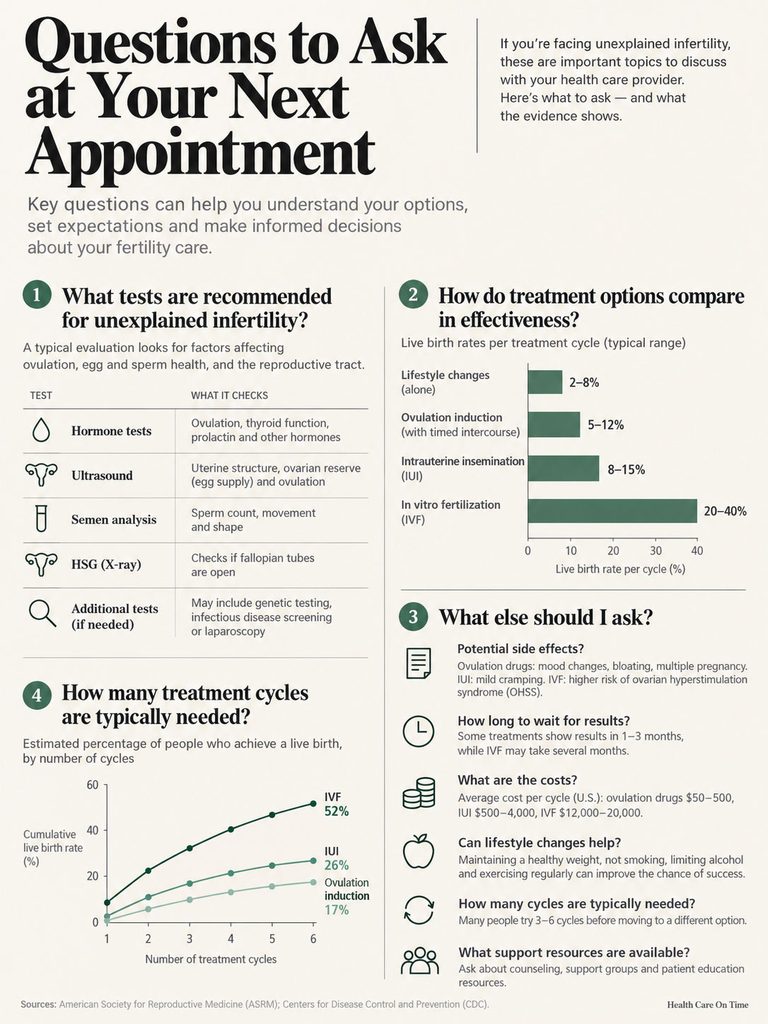
- How long should we try on our own, given our ages and time trying?
- Will you add IUI to the letrozole or clomiphene, rather than timed sex only?
- How many oral IUI cycles do you plan before we talk about IVF?
- Do you use injectable hormones with IUI, and what is your twin rate?
- Does the new NEJM trial change your advice for a couple like us?
- What does our insurance plan cover, and does it require IUI before IVF?
Your Decision Guide
Use this table to discuss the next step with your doctor. It reflects the ASRM guideline and the trials above, not a personal plan.
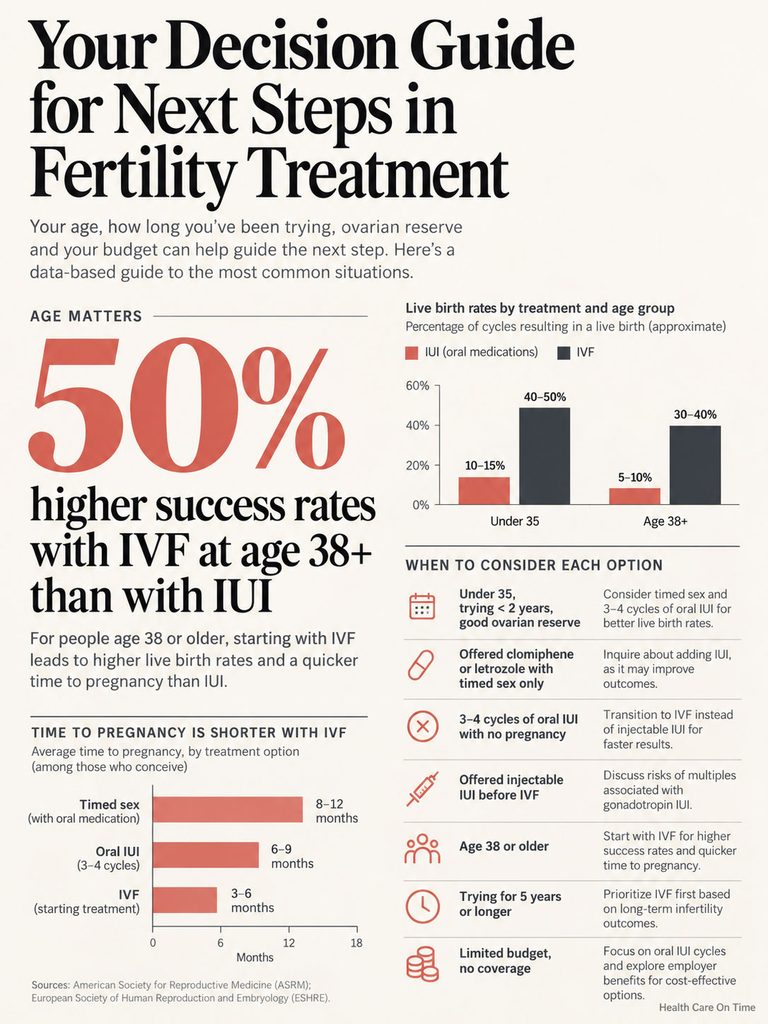
| Your situation | Recommended next step | Why |
| Under 35, trying under 2 years, good ovarian reserve | Consider a few months of timed sex, then 3 to 4 cycles of letrozole or clomiphene with IUI | Natural odds are real; oral IUI triples live births vs. waiting (TUI trial) |
| Offered clomiphene or letrozole with timed sex only | Ask about adding IUI instead | ASRM rates pills with timed sex as no better than waiting |
| 3 to 4 oral IUI cycles, no pregnancy | Move to IVF rather than injectable IUI | FASTT: pregnancy about 3 months sooner |
| Offered injectable IUI before IVF | Ask about the twin and triplet risk | AMIGOS: 32% multiples with gonadotropin IUI |
| Age 38 or older | Discuss starting with IVF | ASRM and FORT-T: higher live birth rate, shorter time to pregnancy |
| Trying 5 years or longer | Discuss IVF first | NEJM 2026: 55% vs. 31% live births in long-term infertility |
| Limited budget, no coverage | Prioritize oral IUI cycles, check employer benefits | Lowest cost evidence-based option |
Mistakes That Waste Time or Money
When our team reviews questions from couples, the same missteps come up again and again.
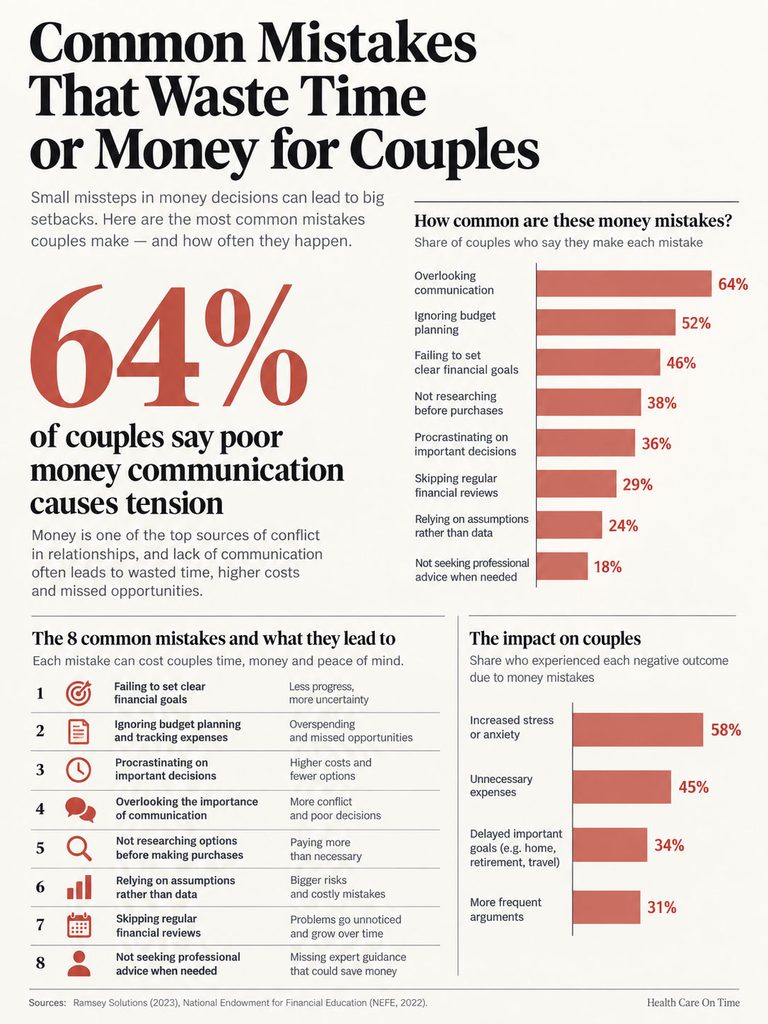
- Staying on pills with timed sex for a year. ASRM rates this as no better than waiting.
- Doing six or more IUI cycles. Success per cycle drops sharply after three.
- Adding injectables to IUI by default. It raises multiples more than it raises babies.
- Waiting too long after 35. IVF success falls with age, from 43.1% under 35 to 19% at 38 to 40.
- Skipping the male evaluation. A semen analysis is part of the definition; without it, the diagnosis is not truly “unexplained.”
- Not asking about insurance first. Plan rules can dictate which steps are covered.
When to See a Fertility Specialist
A reproductive endocrinologist can walk you through all unexplained infertility treatment options. See one if you are under 35 and have tried for 12 months, or 35 and older and have tried for six months. Go sooner if you are over 40 or have irregular periods.
Get prompt care for:
- Severe pelvic pain, or pain with a positive pregnancy test (possible ectopic pregnancy)
- Rapid weight gain, belly swelling or shortness of breath during fertility drug treatment (possible ovarian hyperstimulation)
- Very heavy bleeding; our heavy menstrual bleeding guide explains warning signs
- Signs of a mood crisis; infertility stress is real and treatable
If you do conceive, our article on the earliest pregnancy signs covers the two-week wait.
Frequently Asked Questions
Is there a cure for unexplained infertility?
There is no single cure because no single cause is found. But treatment works for many couples. Cleveland Clinic cites an NIH study in which 92% of couples with unexplained infertility who had treatment eventually had a child. Among unexplained infertility treatment options, oral drug plus IUI, then IVF, gives most couples a realistic path.
What is the first treatment for unexplained infertility?
For most couples, the first treatment is 3 to 4 cycles of letrozole or clomiphene combined with IUI. The ASRM guideline gives this its strongest recommendation. Some younger couples with short infertility may first try on their own for a few months, since natural pregnancy is still possible.
How many IUI cycles should we try before IVF?
Most guidelines say three to four. Per-cycle success falls after the first few tries; in one study it dropped from 16.4% in cycles 1 to 3 to 5.6% in cycles 4 to 6. Women 38 and older may be advised to move to IVF sooner, or skip IUI.
Is IVF better than IUI for unexplained infertility?
Per attempt, yes. The October 2026 NEJM trial found one IVF cycle produced live births in 55% of couples versus 31% after four IUI cycles. Those couples had long-standing infertility, though. A 2024 meta-analysis found a smaller, non-significant gap, so IUI first is still reasonable for many younger couples.
Does letrozole work for unexplained infertility?
Letrozole works when combined with IUI, with results similar to clomiphene. It does not help much with timed sex alone. In a large cohort it produced a 9.4% live birth rate per IUI cycle. Its fertility use is off-label in the US, but ASRM considers it effective and well tolerated.
Can you get pregnant naturally with unexplained infertility?
Yes. Untreated couples average about 1.3% to 4.1% per month, and one Dutch study found 10% to 15% conceived within a year while waiting for IVF. Chances are better when the woman is young and the couple has tried for a shorter time. They fall below 10% after five years.
What if you can’t afford IVF?
Start with oral drug plus IUI, which costs far less, typically $500 to $4,000 per cycle. Check whether your plan is fully insured, whether your state has a mandate, and whether your employer offers a fertility benefit. RESOLVE lists state laws and grant programs that may help.
What is the biggest cause of unexplained infertility?
By definition, no cause is found. Suspected hidden factors include egg quality, problems with fertilization, tubal egg pickup and mild endometriosis. Age-related egg changes become more likely after 35. IVF sometimes reveals the answer, for example when eggs fertilize poorly in the lab.
How do you fix secondary infertility that is unexplained?
Secondary infertility means trouble conceiving after a previous pregnancy. If the workup is normal, treatment follows the same ladder: oral drug plus IUI, then IVF. A past pregnancy does not rule out new issues, so a fresh semen analysis and ovarian reserve testing are worth doing.
Is timed intercourse with Clomid worth trying?
For unexplained infertility, usually not. The ASRM guideline found clomiphene with timed sex was no more effective than trying on your own, with a live birth odds ratio of 0.80 in a high-quality trial. Adding IUI to the medication is the step that improves results.
Does insurance cover treatment for unexplained infertility?
It depends on your plan and state. RESOLVE counts 15 states that require IVF coverage, but state laws do not apply to self-funded employer plans, which cover about two-thirds of US workers. Some large employers add fertility benefits on their own. Call your insurer and HR before starting.
Medical Disclaimer: This article is for general information only and is not medical advice. HealthCareOnTime does not provide fertility treatment. Talk with a board-certified OB-GYN or reproductive endocrinologist about your own situation, test results and options before starting or changing any treatment.
References
- Prentice LR, Sadler LC, et al. In Vitro Fertilization or Intrauterine Insemination in Unexplained Infertility. N Engl J Med. Published online October 27, 2026. https://www.nejm.org/doi/full/10.1056/NEJMoa2602728
- Prentice L, et al. IVF and IUI in couples with unexplained infertility (FIIX study): study protocol. Hum Reprod Open. 2020. https://pmc.ncbi.nlm.nih.gov/articles/PMC7508023/
- Practice Committee of the ASRM. Evidence-based treatments for couples with unexplained infertility: a guideline. Fertil Steril. 2020;113:305-322. https://www.asrm.org/practice-guidance/practice-committee-documents/evidence-based-treatments-for-couples-with-unexplained-infertility-a-guideline-2020/
- Lai S, Wang R, et al. IVF versus IUI with ovarian stimulation for unexplained infertility: an individual participant data meta-analysis. Hum Reprod Update. 2024;30:174-185. https://academic.oup.com/humupd/article/30/2/174/7499718
- Quaas A, Dokras A. Diagnosis and Treatment of Unexplained Infertility. Rev Obstet Gynecol. 2008;1(2):69-76. https://pmc.ncbi.nlm.nih.gov/articles/PMC2505167/
- CDC National Center for Health Statistics. Key Statistics from the National Survey of Family Growth, I Listing. https://www.cdc.gov/nchs/nsfg/key_statistics/i-keystat.htm
- Contemporary OB/GYN. SART data indicates rise in IVF use in 2022. April 2024. https://www.contemporaryobgyn.net/view/sart-data-indicates-rise-in-ivf-use-in-2022
- KFF. Will Trump’s Announcement Expand Access to IVF? October 27, 2025. https://www.kff.org/womens-health-policy/will-trumps-announcement-expand-access-to-ivf/
- RESOLVE. Insurance Coverage by State. Updated October 2026. https://resolve.org/learn/financial-resources/insurance-coverage/insurance-coverage-by-state/
- FertilityIQ. The Cost of IUI. https://www.fertilityiq.com/fertilityiq/iui-or-artificial-insemination/the-cost-of-iui
- Cleveland Clinic. Unexplained Infertility. https://my.clevelandclinic.org/health/diseases/23187-unexplained-infertility
- Advanced Fertility Center of Chicago. Unexplained Infertility. https://www.advancedfertility.com/patient-education/causes-of-infertility/unexplained-infertility