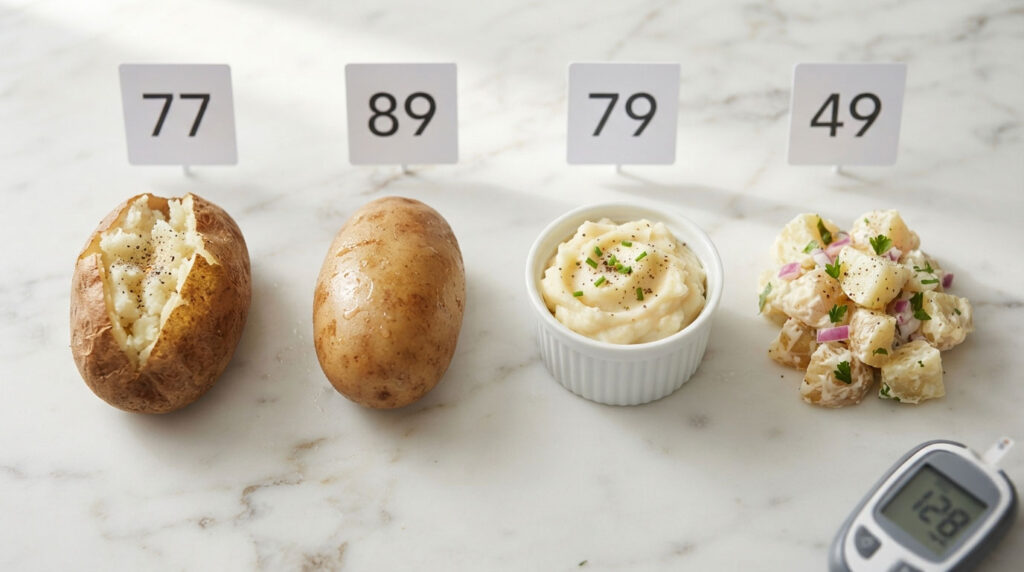
A russet potato can behave like a slice of white bread or like a bowl of brown rice. Same tuber, same weight, same 26 grams of carbohydrate.
What changes the outcome happens in your kitchen, in the hour between the pot and the plate. Most of the advice you have read skips that hour entirely, which is why the answers you have collected so far contradict each other.
Table of Contents
Quick Answer: Yes, most people with diabetes can eat potatoes. Potatoes have a medium to high glycemic index, roughly 49 to 103 depending on variety, cooking method, and serving temperature. Portion size, keeping the skin on, cooling cooked potatoes before eating, adding acid, and pairing with protein all lower the blood sugar response. Deep-fried potatoes are the one form clearly linked to higher type 2 diabetes risk.
At a Glance
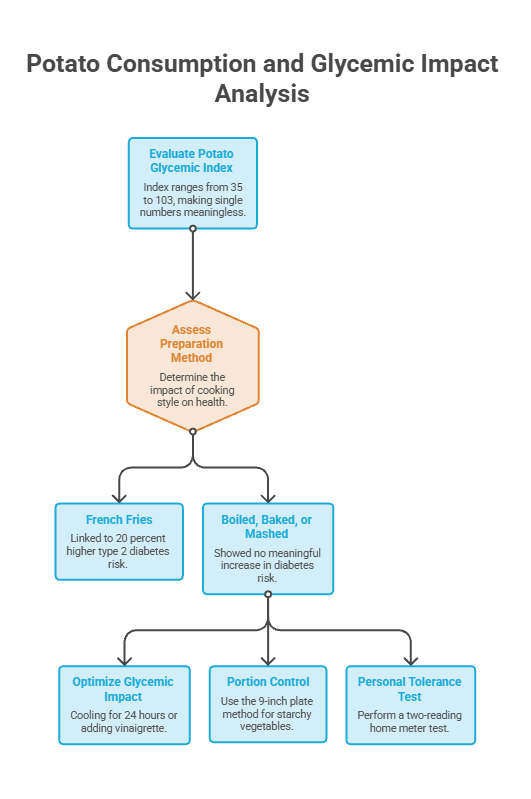
• Potato glycemic index spans about 35 to 103, so any single number quoted for potatoes is close to meaningless.
• Three weekly servings of french fries were linked to a 20 percent higher type 2 diabetes risk, while boiled, baked, or mashed potatoes showed no meaningful increase.
• Glycemic load, not glycemic index, predicts what your meter will show after dinner.
• Cooling boiled potatoes for 24 hours raised resistant starch from 3.3 percent to 5.2 percent of total starch, and adding vinaigrette cut the glycemic index by 43 percent.
• A 12-week trial in adults with type 2 diabetes found no glycemic penalty for a daily baked potato versus calorie-matched white rice.
• The American Diabetes Association keeps starchy vegetables on the plate; the 9-inch plate method sets the portion for you.
• A simple two-reading home test will tell you more about your own potato tolerance than any published chart.
The Short Answer, and Why the Long Answer Matters
Potatoes are not off-limits. They are also not free food. On a diabetes meal plan they sit alongside bread, rice, and pasta, which means they count against your carbohydrate total for that meal.
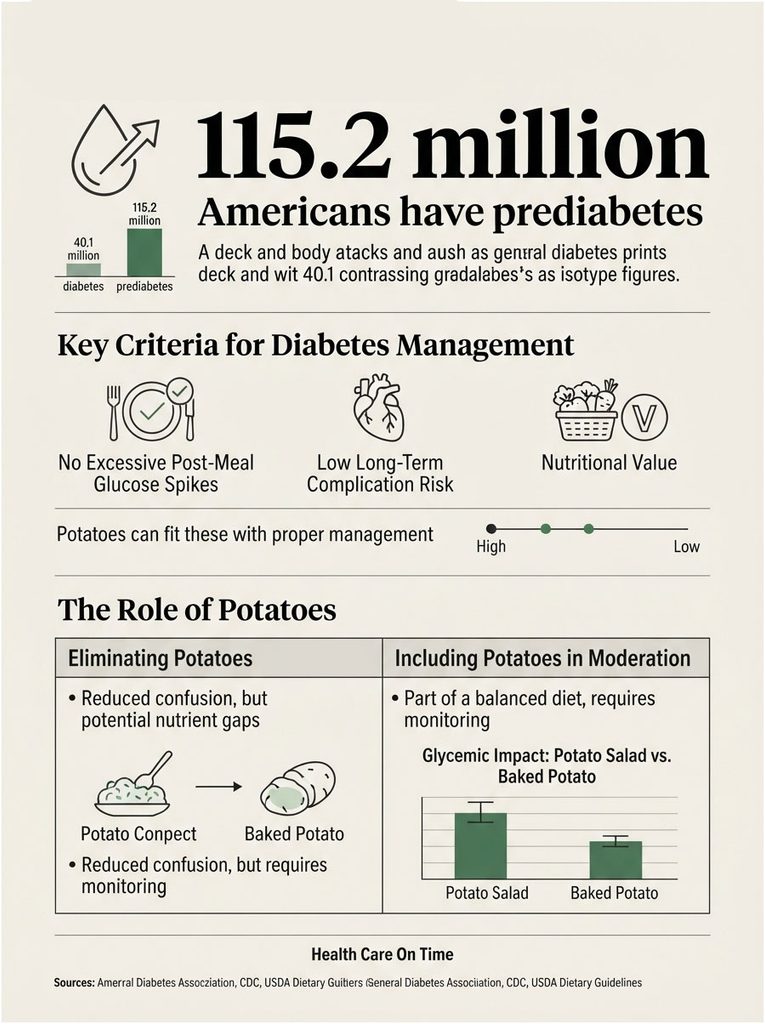
The confusion comes from two statements that are both technically correct. Potatoes are high glycemic is true. Potatoes are fine in moderation is also true. Neither one tells you what to put on the plate tonight.
What good for diabetics actually has to mean
A food earns that description by passing three tests at once. It should not push your post-meal glucose outside your target range, it should not raise your long-term risk of complications, and it should deliver nutrients you would otherwise miss.
A potato can pass all three or fail all three. The variable is almost never the potato itself.
The scale of the question in the United States
The CDC National Diabetes Statistics Report, updated January 21, 2026, counts 40.1 million Americans with diagnosed or undiagnosed diabetes, about 12.0 percent of the population, and 31.3 million adults aged 65 and older living with prediabetes. More than 2 in 5 American adults, 115.2 million people, have prediabetes.
Potatoes remain the most commonly eaten vegetable in the country. That combination makes vague guidance expensive.
Patients who book A1C and fasting glucose panels through HealthCareOnTime ask about potatoes more often than almost any other single food. The pattern repeats: someone told them to quit, they quit, and now they want to know whether the sacrifice bought them anything.
Glycemic Index Explained Without the Jargon
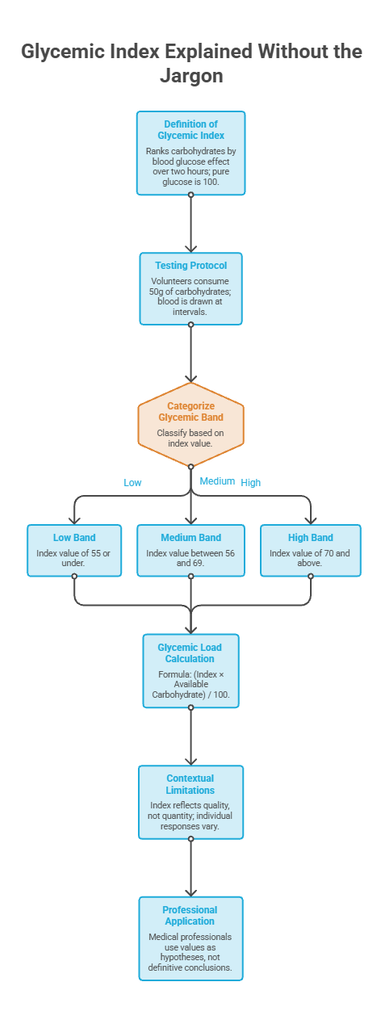
Glycemic index ranks a carbohydrate food by how fast and how far it lifts blood glucose over two hours, measured against pure glucose scored at 100.
How the number is actually produced
Researchers give volunteers a portion containing exactly 50 grams of available carbohydrate, then draw blood at fixed intervals for two hours. The area under that curve is compared with the same person’s response to 50 grams of glucose.
That protocol detail matters more than most articles admit. The test standardizes carbohydrate, not food weight. Nobody eats 50 grams of available carbohydrate worth of watermelon at once, which is exactly why watermelon looks alarming on a chart and behaves harmlessly on a plate.
The three bands
Low is 55 or under. Medium is 56 to 69. High is 70 and above. Potato preparations scatter across all three.
Why glycemic index on its own will mislead you
Glycemic index describes carbohydrate quality. It says nothing about quantity, and quantity is what your pancreas or your insulin pen has to answer for.
Glycemic load, worked out on a real American potato
The formula is straightforward. Glycemic load equals glycemic index multiplied by grams of available carbohydrate, divided by 100. Available carbohydrate means total carbohydrate minus fiber.
A medium 5.3-ounce potato with the skin carries roughly 26 grams of total carbohydrate and 2 grams of fiber, so 24 grams available. Baked as a russet at glycemic index 77, the glycemic load works out near 18. Boiled, chilled overnight, and served cold in a salad, that same potato lands closer to 12.
Under 10 counts as low, 11 to 19 as medium, 20 and above as high. That arithmetic explains why a small cold potato barely registers while a large baked potato with a dinner roll on the side pushes glucose hard.
Why the lab number and your meter disagree
Published values come from small groups of volunteers, mostly people without diabetes, eating one food alone after an overnight fast. You eat mixed meals, at varying hours, on varying medications, after varying amounts of movement.
Glycemic response to any given food varies widely between individuals, and choosing foods on glycemic index score alone discounts the real-life variables that determine glycemic impact outside a controlled laboratory setting.
Our medical reviewers treat published glycemic index values as a starting hypothesis for a patient, never as a verdict.
The Real Glycemic Index of Potatoes, Method by Method
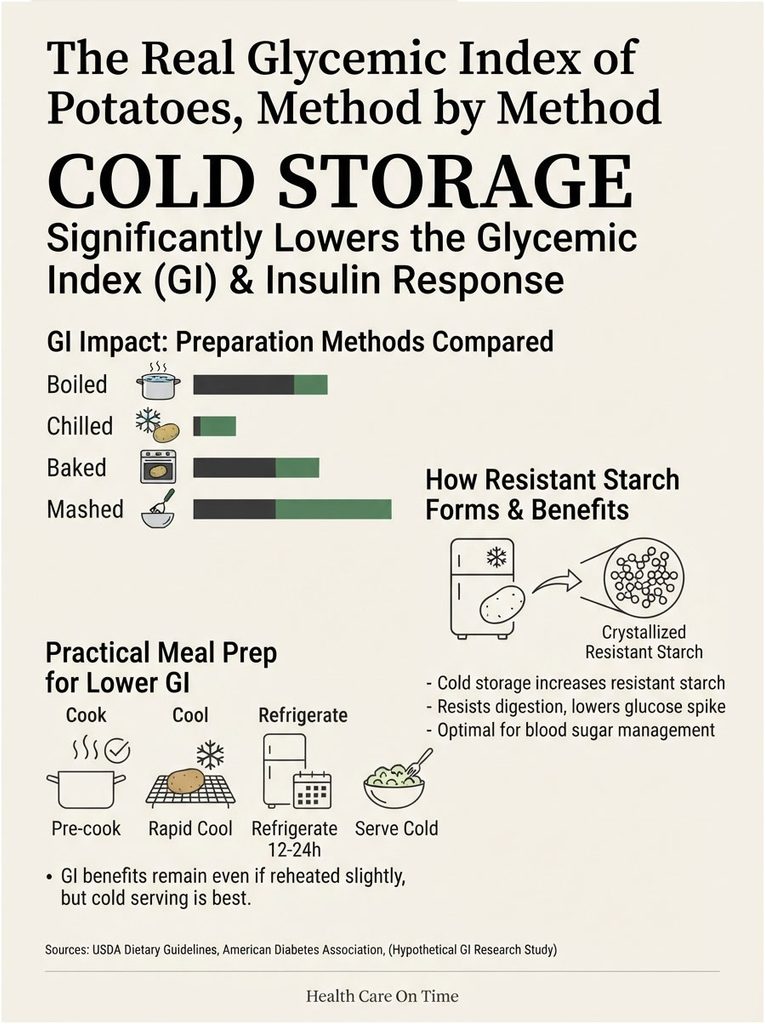
Here is where the vague 60 to 90 ranges get replaced with tested figures.
| Preparation | Measured GI | Calculated GL per serving | What drives the number | Verdict for blood sugar |
| Boiled red potato, served hot | 89 | 21 (high) | Fully gelatinized starch, no cooling, fast enzyme access | Hardest hit of the boiled options |
| Boiled, chilled 24 hours, served cold | 49 to 56 | 12 to 13 (medium) | Retrograded resistant starch resists digestion | Best everyday choice |
| Baked US russet, hot | 77 | 18 (medium) | Dry heat, fluffy interior, wide starch surface area | Workable at a controlled portion |
| Roasted California white | 72 | 17 (medium) | Crust formation slows digestion slightly | Similar to baked |
| Homemade mashed, 1 cup | 79 | 25 (high) | Mashing destroys cell structure completely | Portion discipline is mandatory |
| Instant mashed, 1 cup | 84 to 88 | 27 to 28 (high) | Pre-cooked and dehydrated, near-instant absorption | Weakest option on the list |
| French fries, medium order | 63 to 75 | 25 to 30 (high) | Added fat slows glucose but adds the metabolic problem | The risk here is not the GI |
| Potato salad, chilled, vinaigrette | 50 to 58 | 12 to 14 (medium) | Resistant starch plus acetic acid slowing gastric emptying | Lowest-impact potato dish |
Glycemic index values are measured figures drawn from Atkinson et al., American Journal of Clinical Nutrition 2021, and Fernandes, Velangi and Wolever, Journal of the American Dietetic Association 2005. Glycemic load figures are calculated by HealthCareOnTime from those glycemic index values against a standard medium 5.3-ounce potato at 24 grams available carbohydrate, or a one-cup serving where noted.
The 2021 International Tables of Glycemic Index and Glycemic Load Values reported potato results ranging from 35 to 103, with averages of 84 for instant mashed, 79 for regular mashed, 73 for boiled, and 49 for cooked potatoes refrigerated overnight. North American potatoes averaged 67, lower than the Australian average of 77 and the European average of 73.
Read that last figure twice. American-grown potatoes test lower than many of the alarming numbers circulating online, which were generated elsewhere.
A separate North American study using US and Canadian cultivars found the same spread. Values ran from boiled red potatoes eaten cold at 56, to roasted California whites at 72 and baked US russets at 77, up to instant mashed at 88 and hot boiled red potatoes at 89. The authors concluded that US russet potatoes have only a moderately high glycemic index.
Why baking hits harder than boiling
Raw potato starch sits packed in tight, semi-crystalline granules your digestive enzymes cannot reach. Cooking gelatinizes those granules, swelling them with water and opening them up.
Dry oven heat pushes gelatinization further than wet boiling does, and it produces the light, fluffy interior everyone likes. Fluffy means accessible. Accessible means fast.
Mashing goes further still, physically shredding what remains of the cell walls. That is why mashed outranks baked, and instant outranks homemade.
The chilling effect, with the actual numbers
When cooked starch cools, some of it recrystallizes into retrograded resistant starch, which passes through the small intestine largely undigested and ferments in the colon instead.
A Lund University crossover trial in 13 volunteers found cold storage of boiled potatoes raised resistant starch from 3.3 percent to 5.2 percent of total starch, and that cold potatoes dressed with olive oil and white vinegar cut glycemic index by 43 percent and insulin index by 31 percent against freshly boiled potatoes. Cold storage on its own lowered the insulin response by 28 percent.
An American study in 30 women with elevated fasting glucose pointed the same direction. Chilled russet potatoes produced significant reductions at 15 and 30 minutes in glucose (4.8 percent and 9.2 percent), insulin (25.8 percent and 22.6 percent), and glucose-dependent insulinotropic peptide (41.1 percent and 37.6 percent) compared with boiled potatoes.
In cases reviewed by our medical team, this is the easiest single change a patient can make. Cook on Sunday, refrigerate, eat through the week.
Does reheating cancel it out?
Partly, not completely. A portion of the retrograded starch survives gentle reheating, so a reheated cold-stored potato still tests lower than the same potato eaten straight from the pot. Serving it cold gives the strongest effect.
Variety Matters More Than You Think
Waxy versus starchy, in one paragraph
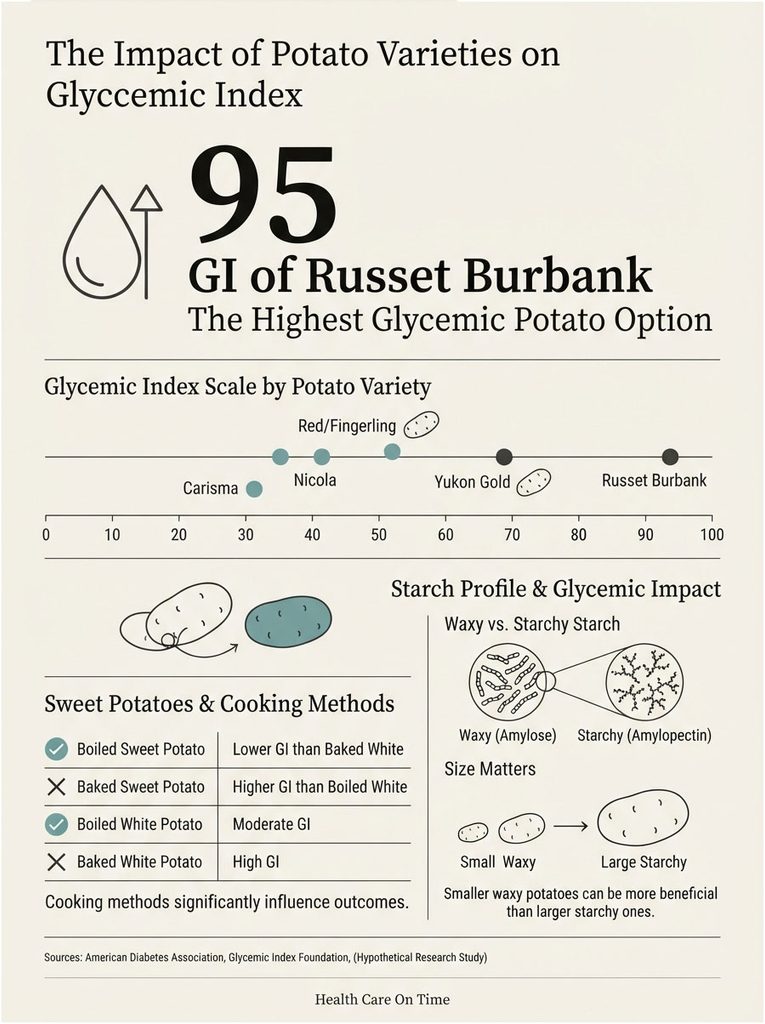
Potato starch is a mixture of two molecules. Amylose is a long straight chain that digests slowly. Amylopectin is heavily branched, offering enzymes far more attack points, and digests fast.
Most commercially produced potatoes carry a high proportion of amylopectin, which generally produces a high glycemic index and a rapid rise in blood glucose. Waxy varieties hold proportionally more amylose, which is why they keep their shape when boiled and why they test lower.
The American supermarket lineup, ranked
Russet Burbank is the classic baking potato and the highest-glycemic option in most produce aisles. Red potatoes, new potatoes, and fingerlings are waxier and test lower, particularly boiled and cooled.
Yukon Gold sits in the middle, all-purpose in the kitchen and mid-range on the scale. Purple varieties add anthocyanins without changing the starch behavior much.
Size is its own variable that shoppers overlook. Two small red potatoes and one large russet can differ by 20 grams of carbohydrate before a single cooking decision is made.
The low-glycemic cultivars you probably cannot buy
Plant breeders have produced genuinely low-glycemic potatoes. Some cultivars with lower amylopectin levels are commercially available in niche markets in a few countries, but they remain relatively unavailable in the United States and Latin America.
Carisma and Nicola are the two names that appear in the databases, testing around 53 and 58 respectively. If a specialty grocer stocks them, they are worth trying. Do not build a meal plan around finding them.
Sweet potatoes: better, worse, or just different?
Sweet potatoes are not a low-carbohydrate food. They are a different starch profile with more fiber, considerably more beta-carotene, and a wider glycemic spread depending entirely on how you cook them.
Boiled sweet potatoes test low to medium, around 46 after 30 minutes of boiling and about 61 after only 8 minutes, while peeled and roasted sweet potatoes reach 82 and peeled sweet potatoes baked for 45 minutes hit 94.
So a boiled sweet potato beats a baked white potato comfortably. A baked sweet potato loses to a boiled white potato. Cooking method outranks the vegetable, which is the theme of this entire article.
What the Newest USA Research Actually Found
This is the section most competing pages have not updated, and it changes the practical advice.
The 205,107-person study that reframed the question
In August 2025, researchers at the Harvard T.H. Chan School of Public Health published a three-cohort analysis in The BMJ drawing on the Nurses Health Study, Nurses Health Study II, and the Health Professionals Follow-up Study.
The team examined diets and diabetes outcomes in 205,107 men and women who answered dietary questionnaires for more than 30 years, tracking french fries separately from baked, boiled, and mashed potatoes. Eating three servings of french fries a week was associated with a 20 percent higher risk of developing type 2 diabetes, while the same quantity of boiled, baked, or mashed potatoes did not substantially increase risk. Non-fried preparations at three weekly servings carried a marginal 1 percent increase.
The substitution analysis is arguably more useful than the headline. Choosing whole grains instead of french fries three times a week was associated with a 19 percent lower type 2 diabetes risk, and replacing them with non-starchy vegetables lowered risk by 17 percent. Swapping potatoes for white rice was linked to increased risk.
The elevated risk tied to french fries held after adjusting for trans fat intake, polygenic risk scores, and body mass index, though the authors cautioned that most participants were white health professionals and more data in diverse populations is needed.
The clinical trial almost nobody is citing
Cohort studies show association. A controlled trial shows what happens when people actually change what they eat.
In a randomized crossover trial published in Current Developments in Nutrition, 24 adults with type 2 diabetes aged 45 to 80 with a body mass index of 25 to 40 consumed either 100 grams of baked white potato or 75 grams of calorie-matched white rice every day for 12 weeks, separated by a two-week washout.
There were no significant treatment-by-time interactions for any outcome. HbA1c showed no significant difference after 12 weeks on either regimen. The study was also the first to examine potato consumption and endothelial function using flow-mediated dilation in any population.
A daily baked potato did not worsen glycemic control in people who already had type 2 diabetes. That is the finding worth carrying to your next appointment.
What the ADA says in 2026
The 2026 Standards of Care recommend emphasizing minimally processed, nutrient-dense, high-fiber carbohydrate sources at a minimum of 14 grams of fiber per 1,000 calories, and note that reducing carbohydrate intake can improve glycemia for some adults, most effectively by limiting processed foods.
The Standards also endorse the diabetes plate method, a 9-inch plate with half nonstarchy vegetables, one quarter protein foods, and one quarter carbohydrates.
A potato belongs in that last quarter. It does not belong in the vegetable half, and mistaking one for the other is the most common planning error we hear described.
Where the federal guidelines landed
There was a loud public argument over whether potatoes should be reclassified out of the vegetable group. The previous guidelines counted potatoes within the starchy vegetables category and recommended five cup-equivalents per week for Americans aged two and older.
The 2025-2030 Dietary Guidelines for Americans, released January 7, 2026, prioritized vegetables and whole grains while discouraging highly processed foods and refined carbohydrates. Potatoes kept their place in the vegetable group, inside the starchy subgroup.
Nutritionally they earn it. Modeling published in Frontiers in Nutrition found the recommended daily serving of white potatoes, 0.58 cup equivalents, supplies 11 percent of daily potassium and 6 percent of daily fiber, plus vitamins B6 and C, copper, magnesium, thiamin, and niacin. A medium potato provides 2 grams of fiber and 620 milligrams of potassium, both underconsumed nutrients of public health concern, and 86 percent of Americans aged 2 and older eat less than the recommended amount of starchy vegetables.
| Finding | The number | Population studied | Source and year |
| US diabetes prevalence | 40.1 million people, 12.0 percent of the population | US national estimate, 2023 data | CDC National Diabetes Statistics Report, January 2026 |
| US prediabetes prevalence | 115.2 million adults, more than 2 in 5 | US adults 18 and older | CDC, January 2026 |
| French fries and type 2 diabetes | 20 percent higher risk at 3 servings per week | 205,107 US adults, about 30 years follow-up | Mousavi et al., The BMJ, August 2025 |
| Swapping fries for whole grains | 19 percent lower type 2 diabetes risk | Same three US cohorts | Mousavi et al., The BMJ, August 2025 |
| Daily baked potato vs white rice | No significant difference in HbA1c at 12 weeks | 24 US adults with type 2 diabetes | Akhavan et al., Current Developments in Nutrition, September 2025 |
| Cooling plus vinaigrette | GI down 43 percent, insulin index down 31 percent | 13 healthy adults, crossover design | Leeman et al., European Journal of Clinical Nutrition, 2005 |
How to Eat Potatoes Without the Spike
Seven levers, ordered by how much each one moves the needle.
Portion first, everything else second
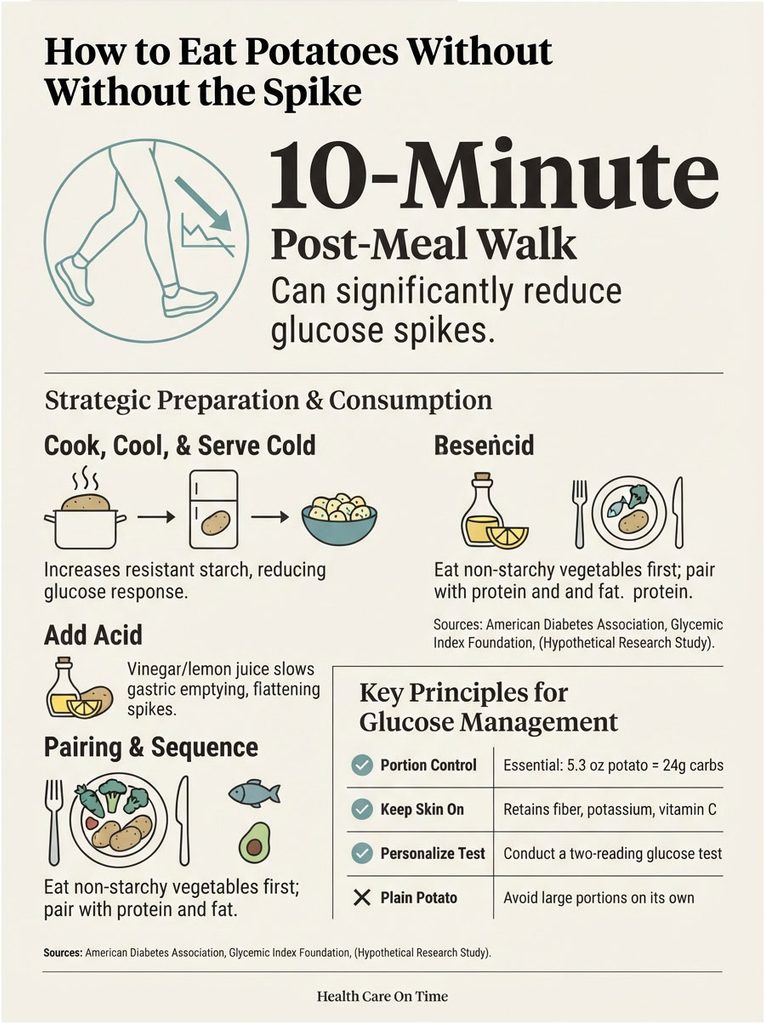
No cooking trick rescues a portion that is too large. A medium potato of about 5.3 ounces carrying roughly 24 grams of available carbohydrate counts as one to two carbohydrate servings on most plans.
If your target is 30 to 45 grams per meal, that potato spends most of the budget. The dinner roll, the corn, and the sweetened iced tea have to come off the table.
What the portions look like in real life
Half a cup of mashed potato is about 15 grams of carbohydrate. A small 3-ounce potato is about 15 grams. One cup of diced boiled potato runs near 24 grams. Half a large baked russet is around 30 grams.
Across the panels our lab partners process, the patients whose post-meal readings improve fastest are rarely the ones who eliminated potatoes. They are the ones who halved the serving and changed nothing else.
Keep the skin on
The skin carries the fiber, much of the potassium, and a good share of the vitamin C. Leaving the skin on adds fiber, which reduces the glucose-raising effect.
Cook it, cool it, then eat it
Boil or bake, refrigerate at least overnight, then serve cold or reheat gently. This is the highest-yield change available and it costs nothing but a little planning.
Add acid
Vinegar, lemon juice, pickles, or a vinaigrette all slow gastric emptying, which flattens the curve rather than shortening it.
A controlled study found acetic acid given as vinegar significantly reduced postprandial glucose and insulin responses to a starchy meal, with delayed gastric emptying identified as the likely mechanism. A pooled analysis of 11 trials found a significant mean reduction in postprandial glycemia for vinegar compared with control.
Potato salad dressed with vinaigrette rather than mayonnaise is not a compromise version. It is the optimized version.
Pair with protein, fat, and nonstarchy vegetables
A potato eaten alone digests quickly. The same potato beside grilled chicken, olive oil, and a pile of green beans produces a flatter, later curve.
Eat the vegetables first
Food order genuinely changes the response. A five-year Japanese primary-care cohort teaching patients to eat vegetables before carbohydrates found HbA1c improved from 8.5 percent to 7.6 percent in the intervention group while the control group did not change.
Walk for ten minutes afterward
Contracting muscle pulls glucose out of the bloodstream without requiring extra insulin. A short post-meal walk blunts the peak from a starchy dinner more than most people expect.
Then run the two-reading test on yourself
Published tables describe averages. Find your own number instead.
Eat your usual potato portion as part of a normal meal. Check at 60 minutes and again at 120 minutes, or read the curve on your continuous glucose monitor. Repeat on a second day for the same meal.
A rise of less than 40 mg/dL above your pre-meal value, back near baseline by two hours, means that portion and preparation work for you. A rise above 60 mg/dL, or a reading still elevated at two hours, means halve the portion or switch to the cook-and-chill method and test again.
Type 1, Type 2, Gestational, and Prediabetes: Different Rules
Patients commonly ask us whether the advice above applies to everyone. Not entirely.
If you dose mealtime insulin
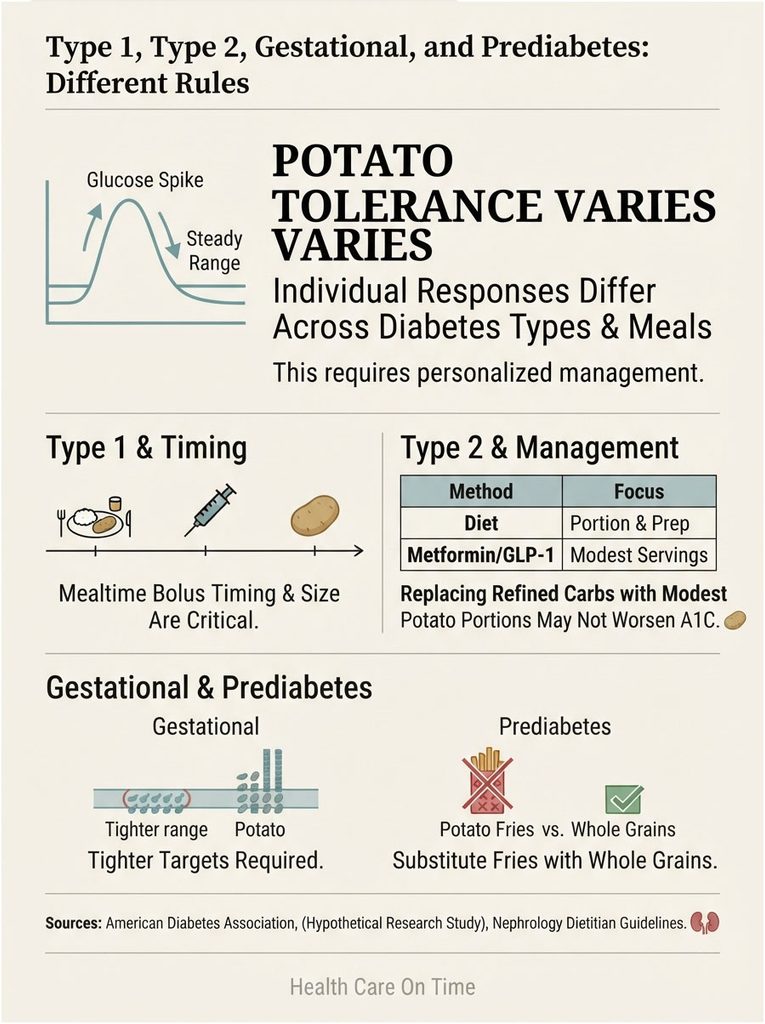
Potatoes hit fast, so bolus timing matters as much as bolus size. Many people using rapid-acting insulin need a longer pre-bolus before a potato meal than before pasta or beans.
Fat and protein alongside the potato delay the peak, which can turn a well-timed dose into an early low followed by a late high. Split doses and extended boluses exist for exactly this pattern. Work them out with your care team rather than guessing.
If you manage with diet, metformin, or a GLP-1
Portion and preparation carry nearly all the weight here. The 12-week trial evidence suggests a modest daily potato is unlikely to worsen your A1C, provided it replaces another refined carbohydrate rather than adding to your total.
Watch what travels with the potato. Butter, sour cream, cheese, and bacon change the calorie and saturated fat picture even when they barely move the glucose curve.
If you have gestational diabetes
Post-meal targets in pregnancy are tighter, and insulin resistance peaks in the morning. Many people tolerate potatoes at dinner and not at breakfast.
Test at one hour after eating, which is the standard checkpoint in most US prenatal protocols, and personalize with your obstetric team.
If you have prediabetes
This is where the substitution data is most actionable, and where the largest number of Americans sit. Cutting fries and shifting the freed-up starch toward whole grains is a measurable risk reduction, not a vague wellness gesture.
If you also have kidney disease
Potatoes are potassium-dense, which is a benefit for most people and a problem for some with advanced chronic kidney disease. If you have been told to restrict potassium, ask your nephrology dietitian about leaching methods before adding potatoes back.
Mistakes That Turn a Safe Potato Into a Bad One
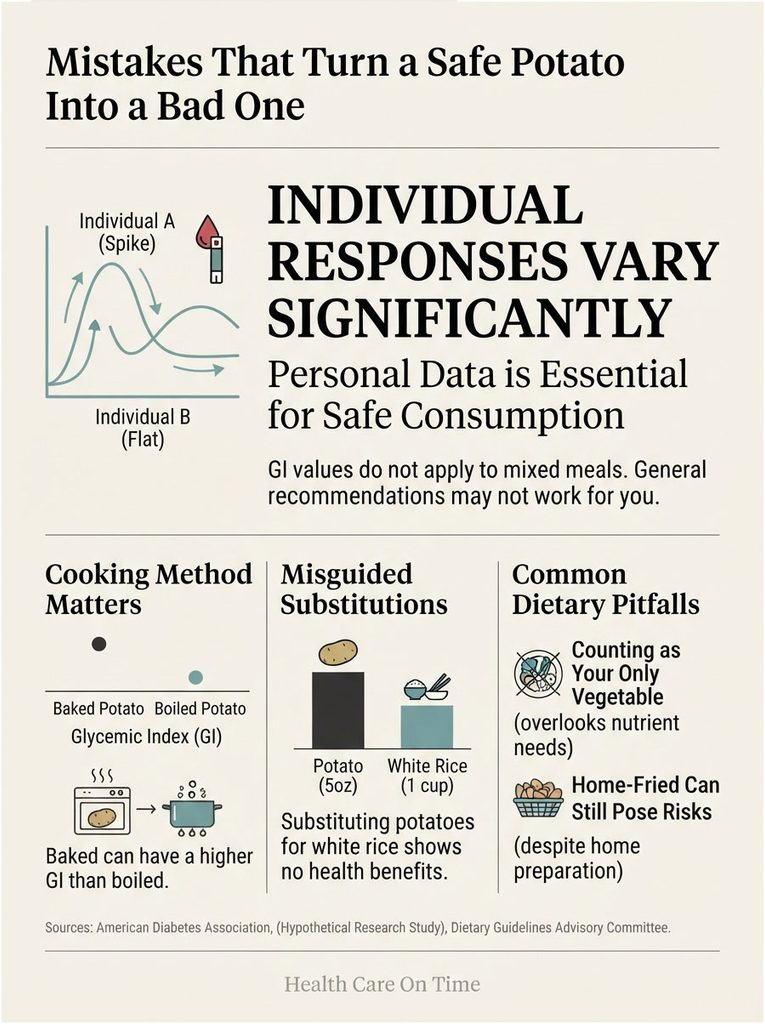
Counting the potato as your vegetable
Federal guidance files it under vegetables. Your meal plan files it under carbohydrates. Both are correct, and only one of them tells you what else the plate needs.
Assuming baked means safe
Baking is a cooking method, not a health halo. Baked starchy potatoes have been measured at a glycemic index of 111, higher than boiled waxy potatoes at 89.
Trusting a chart value for a food you eat in a mixed meal
Glycemic index is measured on the food alone, after a fast. Your dinner is not the food alone. Use the chart to rank options, then use your own readings to confirm.
Frying at home and calling it healthier
Home fries and air-fried wedges still belong to the fried-potato pattern the BMJ analysis flagged. The oil, the temperature, and the frequency are what carried the signal.
Swapping potatoes for white rice
The most common well-intentioned mistake on this list. The Harvard substitution analysis found that trade running the wrong way, and the 12-week clinical trial found no advantage for rice over potato.
Ignoring what your own data says
Two people can eat identical potatoes and see readings 40 mg/dL apart. Averages describe populations, not patients.
| Your situation | What to do | Portion target | Why it works |
| A1C above your target | Cut fried potatoes first, keep boiled and chilled | 1 small potato, 3 oz, 15 g carb | Removes the only preparation tied to higher risk in the BMJ cohort |
| Reading rises over 60 mg/dL after potatoes | Switch to cook-and-chill, add vinaigrette | 1 medium, 5.3 oz, 24 g carb | Resistant starch plus acetic acid cut the response by up to 43 percent |
| You take mealtime insulin | Extend the pre-bolus, log the result, adjust with your team | Keep portion fixed while testing timing | Fast starch outpaces a standard bolus window |
| Prediabetes, no medication | Replace weekly fries with whole grains | 5 cup-equivalents of starchy vegetables per week | Associated with 19 percent lower type 2 diabetes risk |
| Gestational diabetes | Move potatoes to lunch or dinner, never breakfast | Half a medium potato, 12 g carb | Morning insulin resistance is highest |
| Eating at a restaurant | Order the baked potato plain, halve it, box the rest | Half a large baked, 30 g carb | Restaurant potatoes run 8 to 12 oz, roughly double a home serving |
| Potato is the only carb at the meal | A full standard portion is reasonable | 1 medium, 24 g carb | Total meal carbohydrate is what your dose has to cover |
| Craving fries badly | Roast skin-on wedges in olive oil, chill the leftovers | 3 oz cooked, 15 g carb | Keeps the texture, drops the deep-fry pattern |
What to Eat Instead When Potatoes Do Not Work for You
Some people find no preparation keeps them in range. That is a legitimate physiological result, not a failure of discipline.
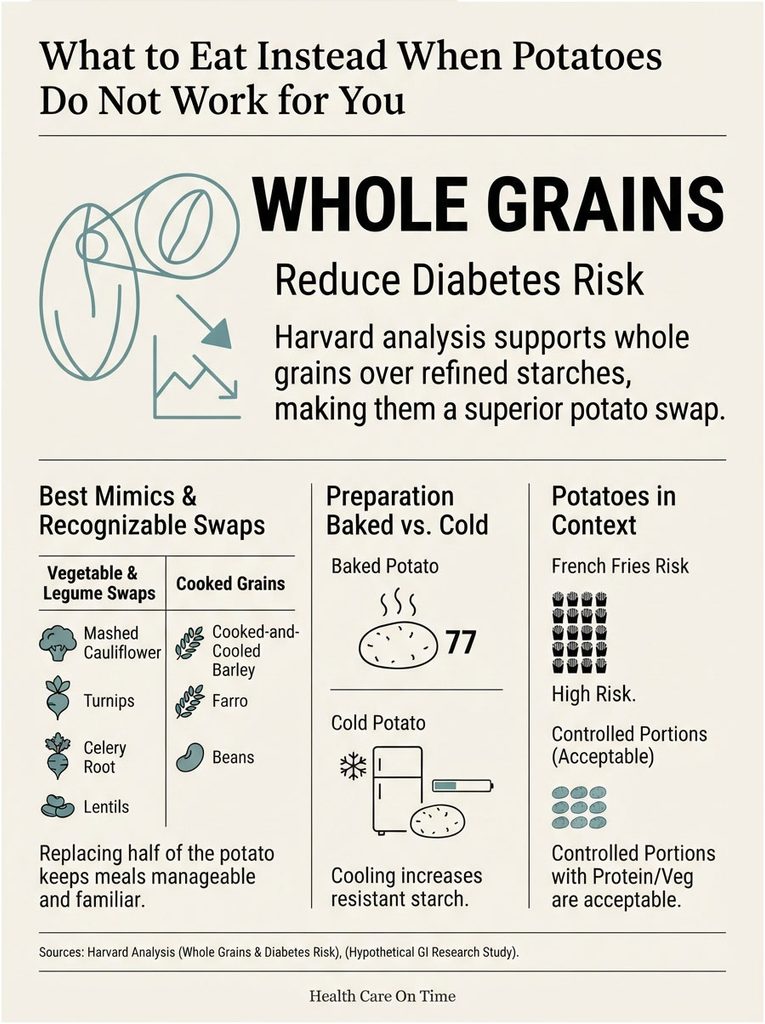
Swaps that taste closest to the original
Mashed cauliflower blended with a small amount of real potato holds the texture at a fraction of the carbohydrate. Turnips and celery root roast almost identically and land far lower on the scale.
Cooked-and-cooled barley or farro delivers the same chewy bulk with more fiber and more protein. Beans and lentils outperform everything else on this list, adding protein alongside slow-release carbohydrate.
The swap the data actually supports
The Harvard analysis is unambiguous that whole grains, not white rice and not another refined starch, produced the measurable risk reduction.
Across patients we serve, the substitutions that last are the ones that keep the meal recognizable. Replacing half the potato works. Replacing the entire dinner rarely survives the month.
Frequently Asked Questions
Are potatoes good for diabetics?
Yes, in controlled portions with the right preparation. Boiled or baked potatoes eaten with the skin, cooled before serving, and paired with protein and nonstarchy vegetables fit most diabetes meal plans. Deep-fried potatoes are the one form linked to higher type 2 diabetes risk in large US cohort data.
What is the glycemic index of a baked potato?
A baked US russet tests around 77, placing it in the high band, and some baked starchy varieties have measured as high as 111. With roughly 24 grams of available carbohydrate in a medium potato, the glycemic load works out near 18, which is medium rather than high.
Which potato has the lowest glycemic index?
Waxy varieties such as red potatoes, new potatoes, and fingerlings test lowest, especially boiled then chilled. Cooked potatoes refrigerated overnight average a glycemic index of 49, inside the low band. Carisma and Nicola are bred for low glycemic index but are rarely stocked in US stores.
How many potatoes can a diabetic eat in a day?
Most adults on a 30 to 45 gram carbohydrate meal target can fit one medium 5.3-ounce potato, about 24 grams of available carbohydrate, into a single meal. In practice that means one potato serving per day. A dietitian or diabetes educator can set a figure matched to your medications.
Do cold potatoes really lower blood sugar?
Yes, and the effect is measurable rather than folklore. Cooling boiled potatoes for 24 hours raises resistant starch from 3.3 percent to 5.2 percent of total starch. In one trial, cold potatoes with vinaigrette cut glycemic index by 43 percent and insulin index by 31 percent versus the same potatoes eaten hot.
Are sweet potatoes better than white potatoes for diabetics?
Only when you compare the same cooking method. Boiled sweet potato tests around 46 to 61, well below a hot boiled white potato. Baked sweet potato reaches 94, worse than most baked white potatoes. Carbohydrate content is similar, so portion rules do not change.
Can a diabetic eat mashed potatoes?
Yes, with a tight portion. Homemade mashed tests around 79 and instant mashed 84 to 88, both high. One cup delivers roughly 25 to 28 glycemic load units. Half a cup, made with the skin left in and using cooled leftovers, is far more manageable.
Is potato salad safe for people with diabetes?
Chilled potato salad dressed with vinaigrette is one of the lowest-impact potato dishes available, because cooling and acid both slow the glucose rise. Choose oil and vinegar over heavy mayonnaise, keep the serving near one cup, and count the carbohydrate as usual.
Do french fries raise diabetes risk more than other potatoes?
The Harvard three-cohort analysis of 205,107 US adults found three weekly servings of french fries associated with a 20 percent higher type 2 diabetes risk, while boiled, baked, and mashed potatoes showed no meaningful increase. The finding held after adjusting for trans fat, body mass index, and genetic risk score.
How long after eating a potato does blood sugar peak?
Most people peak 45 to 90 minutes after a potato meal, faster than after pasta or beans. Adding fat, protein, or acid delays and flattens that peak. Checking at 60 and 120 minutes gives a far clearer picture than one reading at an arbitrary time.
Can prediabetics eat potatoes?
Yes. Non-fried potatoes showed no meaningful risk increase across the Harvard cohorts. The strongest move for prediabetes is dropping fries and shifting some starch toward whole grains, which was associated with a 19 percent lower risk of progressing to type 2 diabetes.
Do potatoes count as a vegetable or a carbohydrate at a diabetes meal?
Both classifications are correct and they serve different purposes. Federal dietary guidance files potatoes under starchy vegetables. On the ADA 9-inch plate, potatoes belong in the carbohydrate quarter, not the nonstarchy vegetable half, so you still add greens alongside them.
Medical Disclaimer: This article is for general education and does not replace personalized medical advice. Glycemic responses vary substantially between individuals and can shift with medication, illness, activity, sleep, and pregnancy. Speak with your physician, registered dietitian, or certified diabetes care and education specialist before changing your eating plan, insulin dose, or any prescribed medication. If you use a glucose meter or continuous glucose monitor, your own readings remain the most reliable guide to how any specific food affects you.
References
- CDC National Diabetes Statistics Report – Centers for Disease Control and Prevention, January 2026
- Total and specific potato intake and risk of type 2 diabetes – Mousavi et al., The BMJ, 2025;390:e082121
- Potatoes may increase risk of type 2 diabetes depending on their preparation – Harvard T.H. Chan School of Public Health, August 2025
- Comparative effects of white potato and white rice consumption in type 2 diabetes – Akhavan et al., Current Developments in Nutrition, 2025;9(9):107518
- International tables of glycemic index and glycemic load values 2021 – Atkinson et al., American Journal of Clinical Nutrition
- Glycemic index of potatoes commonly consumed in North America – Fernandes, Velangi and Wolever, Journal of the American Dietetic Association, 2005
- Standards of Care in Diabetes 2026, Section 5 – American Diabetes Association
- Vinegar dressing and cold storage of potatoes lowers postprandial responses – Leeman, Ostman and Bjorck, European Journal of Clinical Nutrition, 2005
- Chilled potatoes decrease postprandial glucose, insulin, and GIP – Patterson et al., Nutrients, 2019
- Delayed gastric emptying may explain improved glycaemia with added vinegar – Liljeberg and Bjorck, European Journal of Clinical Nutrition
- Nutrient contribution of white potatoes and starchy vegetables – Richter et al., Frontiers in Nutrition, 2025
- Sweet potato glycemic index by cooking method – Healthline nutrition review
- Diabetes Statistics – National Institute of Diabetes and Digestive and Kidney Diseases
- Diabetes: A U.S. Report Card – Centers for Disease Control and Prevention, March 2026