Your colon manufactures this substance every hour of every day. It coats the entire length of your large intestine, gets stripped away, and gets rebuilt before you finish lunch. The strange part is not that you saw it in the toilet this morning. The strange part is that you have gone your whole life without noticing it until now.
Quick Answer
Jelly-like discharge instead of a bowel movement is almost always intestinal mucus, the gel your colon produces to protect and lubricate its lining. Small amounts are normal and become visible when no stool is there to hide them. The usual causes are constipation, IBS with constipation, and rectal irritation. Blood, pus, fever, weight loss, large volumes, or symptoms lasting past two weeks need medical evaluation.
At a Glance
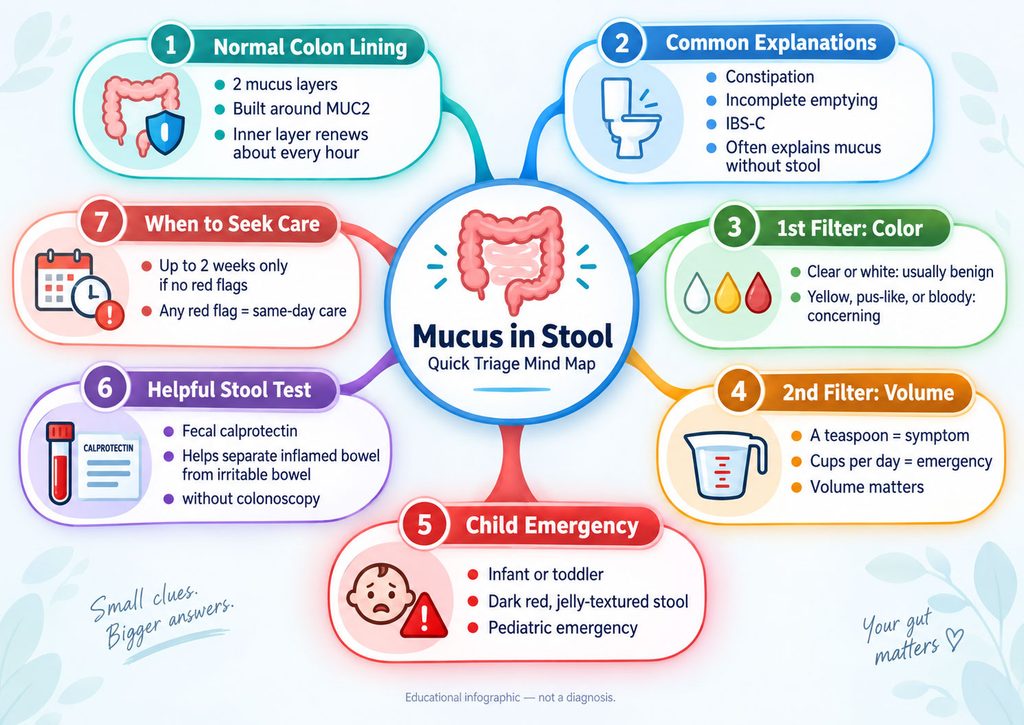
- Your colon lines itself with two mucus layers built around a protein called MUC2, and the inner layer is replaced roughly every hour.
- Constipation, incomplete emptying, and IBS-C explain most cases where mucus arrives without stool.
- Color is your first filter. Clear and white are usually benign. Yellow, pus-like, or bloody changes the conversation.
- Volume is your second filter, and almost nobody talks about it. A teaspoon is a symptom. Cups per day is an emergency.
- Dark red, jelly-textured stool in an infant or toddler is a pediatric emergency, not a bowel habit question.
- A stool test called fecal calprotectin separates an inflamed bowel from an irritable one without a colonoscopy.
- Two weeks is the practical waiting limit. Any red flag shortens that to same-day.
What That Jelly-Like Substance Actually Is
The Two-Layer Shield Lining Your Colon
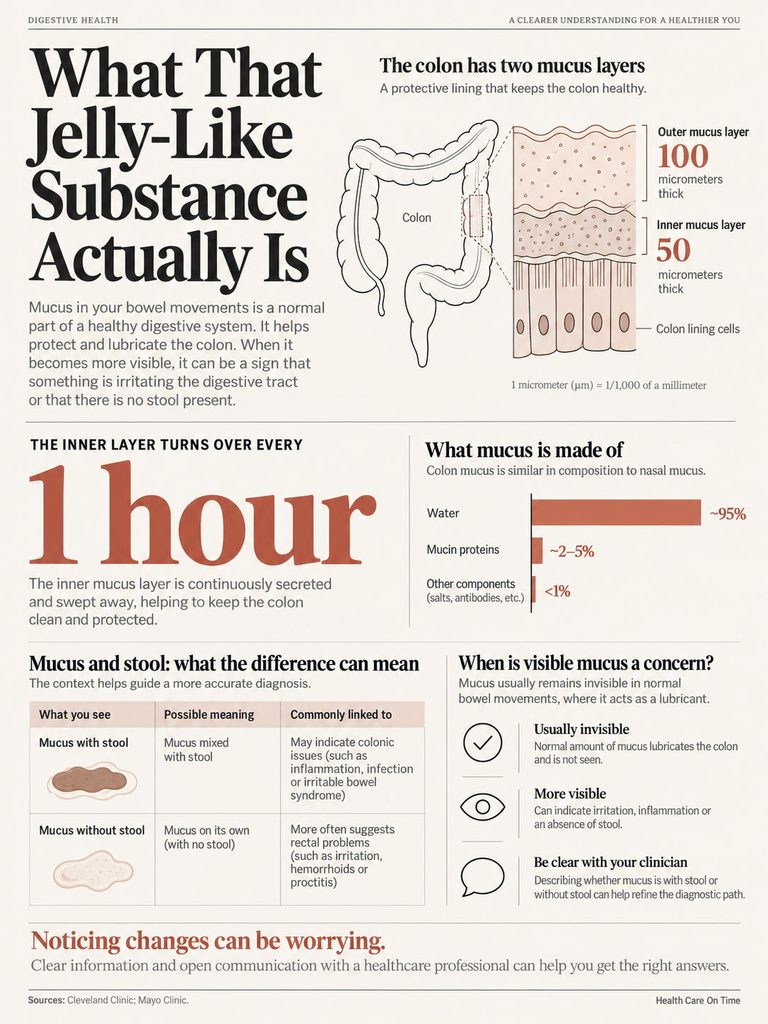
Your large intestine houses an enormous bacterial population, and it keeps those bacteria off the tissue itself using mucus. Researchers at the University of Gothenburg showed the colon organizes that mucus into two distinct layers.
The inner layer runs roughly 50 micrometers thick and adheres firmly to the cells. The outer layer sits loose on top at around 100 micrometers. Both are built around MUC2, a heavily sugar-coated protein secreted by specialized goblet cells.
The inner layer is dense enough that bacteria cannot penetrate it. The outer layer is where they live. That arrangement is why your gut tolerates trillions of microbes without constant inflammation.
What It Is Actually Made Of
Mucus is mostly water held in a net-like polymer of mucin proteins. Add electrolytes, shed cells, immune proteins, and enzymes, and you get the gel you saw.
Chemically it sits closer to nasal mucus than to anything else your body produces. That is why so many people describe it as looking like snot floating in the toilet bowl, and why the description keeps showing up in search queries word for word.
Your Body Replaces It Every Hour
The colonic mucus barrier is not a permanent coating. In vivo labeling work published in PLOS ONE found the inner mucus layer turns over in roughly one hour, continuously secreted and continuously swept away.
Across a full day, that adds up to a real volume of gel moving through you. Production continues whether or not you have a bowel movement, which is exactly the fact that explains your symptom.
Why You Normally Never See It
In a typical bowel movement, mucus is distributed through the stool and stays invisible. It is doing its job as a lubricant, which is precisely why passing stool does not hurt.
Two circumstances make it visible. Either you are producing more than usual because something is irritating the lining, or you are producing a normal amount but there is no stool to carry it out unseen.
That second scenario describes most people searching this question. Nothing has gone wrong with the mucus. Something has gone wrong with the stool.
Mucus With Stool Versus Mucus Instead Of Stool
Most health pages answer the wrong version of this question. Mucus coating an otherwise normal bowel movement and mucus arriving entirely on its own point toward different problems.
Mucus wrapped around stool tends to reflect something happening along the colon. Mucus with no stool at all tends to reflect the rectum and the outlet: irritation, inflammation, or stool that simply is not arriving.
Our medical reviewers flag this distinction constantly, because it changes which tests are worth running first. Patients who describe “mucus only, after ten minutes of straining” get a different workup than patients who describe “normal stool with slime on it.”
Why That Distinction Changes the Cause List
Rectal and outlet causes cluster around straining, hemorrhoids, fissures, proctitis, prolapse, and rectal inflammation. Colonic causes cluster around infection, inflammatory bowel disease, and transit problems.
When you tell a clinician “nothing came out but mucus,” you have already narrowed the field considerably. Say it that way rather than saying “I have mucus in my stool,” because those two sentences send the workup in different directions.
What the Color and Texture Are Telling You
Clear or Cloudy White
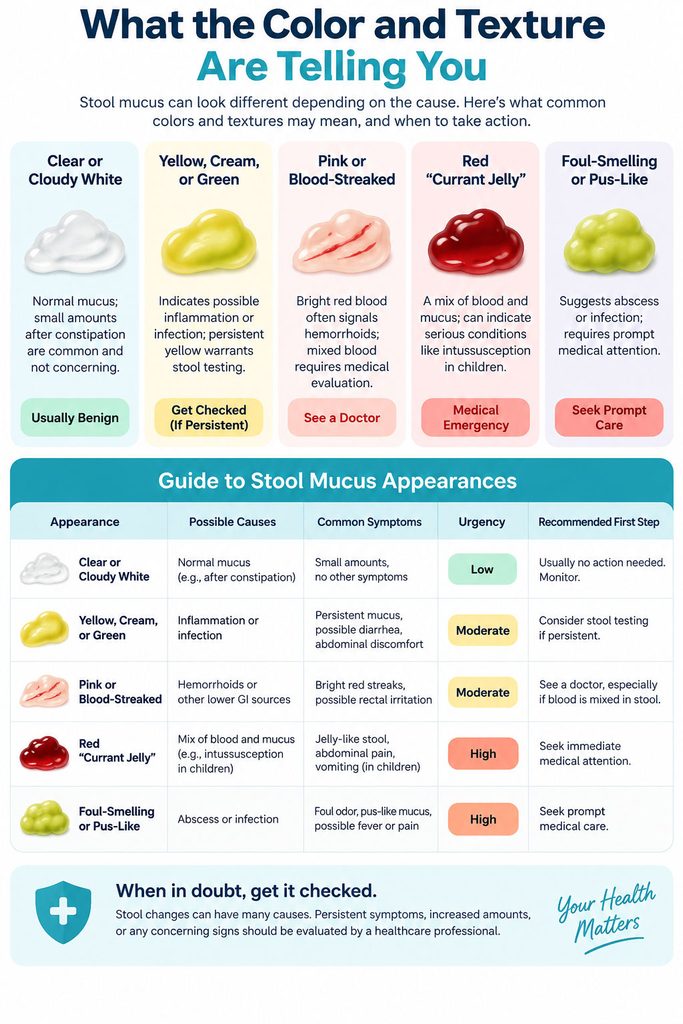
This is baseline mucus, unmixed and unchanged by anything. Small clear or slightly cloudy amounts, particularly after straining or after several constipated days, are the most common presentation and the least concerning one.
Yellow, Cream, or Green
Yellow tinting usually means white blood cells have joined the mucus, which points toward inflammation or infection somewhere in the rectum or lower colon. Green often reflects rapid transit or a recent gut infection.
Yellow once is not alarming. Yellow that keeps returning, or that arrives with pain or urgency, deserves stool testing rather than watchful waiting.
Pink or Blood-Streaked
Streaks of bright red blood in mucus most often come from hemorrhoids or an anal fissure, both of which sit right at the exit. That is the reassuring version.
Blood mixed evenly through the mucus rather than streaked across its surface is a different signal entirely and needs evaluation. Cleveland Clinic guidance on mucus in stool places bloody, off-white, or yellowish mucus in the contact-a-provider category, which is a sensible line to hold.
Red “Currant Jelly” and Why It Is Different
This term describes something specific, and it gets confused with ordinary mucus constantly. Currant jelly stool is a mixture of sloughed intestinal lining, blood, and mucus produced when a segment of bowel loses its blood supply.
In infants and toddlers, that classically means intussusception, where one part of the intestine telescopes into the next. It is a surgical emergency. The red flags section below covers exactly what parents should do and what usually appears first.
Foul-Smelling or Pus-Like
Thick, opaque, foul-smelling discharge suggests pus rather than mucus. That combination points toward an abscess, a fistula, or infectious proctitis.
None of those resolve on their own, and all three respond well to prompt treatment. Waiting is the only strategy that reliably makes them worse.
Table 1. What Your Discharge Looks Like and What It Usually Means
| Appearance | Most Likely Cause | Usually Comes With | Urgency | Typical First Step |
| Clear or white, small amount, occasional | Normal mucus made visible by absent stool | Constipation, straining, hard stools 2 to 4 days | Low | Fiber, fluids, watch for 7 to 10 days |
| Clear or white, daily or large amount | IBS-C, chronic constipation, rectal irritation | Cramping, bloating, incomplete emptying | Low to moderate | Primary care visit, fecal calprotectin |
| Yellow or cream colored | White cells present; proctitis, infection, inflammation | Urgency, tenesmus, burning with bowel movements | Moderate | Stool testing within 1 to 2 weeks |
| Thick, opaque, pus-like, foul odor | Abscess, fistula, infectious proctitis | Anal pain, fever, perianal swelling | High | Same-week appointment or urgent care |
| Pink or blood-streaked | Hemorrhoids, fissure; also colitis, polyps | Pain on wiping, bright red blood on tissue | Moderate to high | Anorectal exam, scope if recurring |
| Dark red, jelly-textured, blood mixed through | Bowel ischemia, intussusception, severe colitis | Severe pain, vomiting, lethargy, distension | Emergency | Emergency department now |
Nine Reasons Your Body Sends Mucus Instead of a Bowel Movement
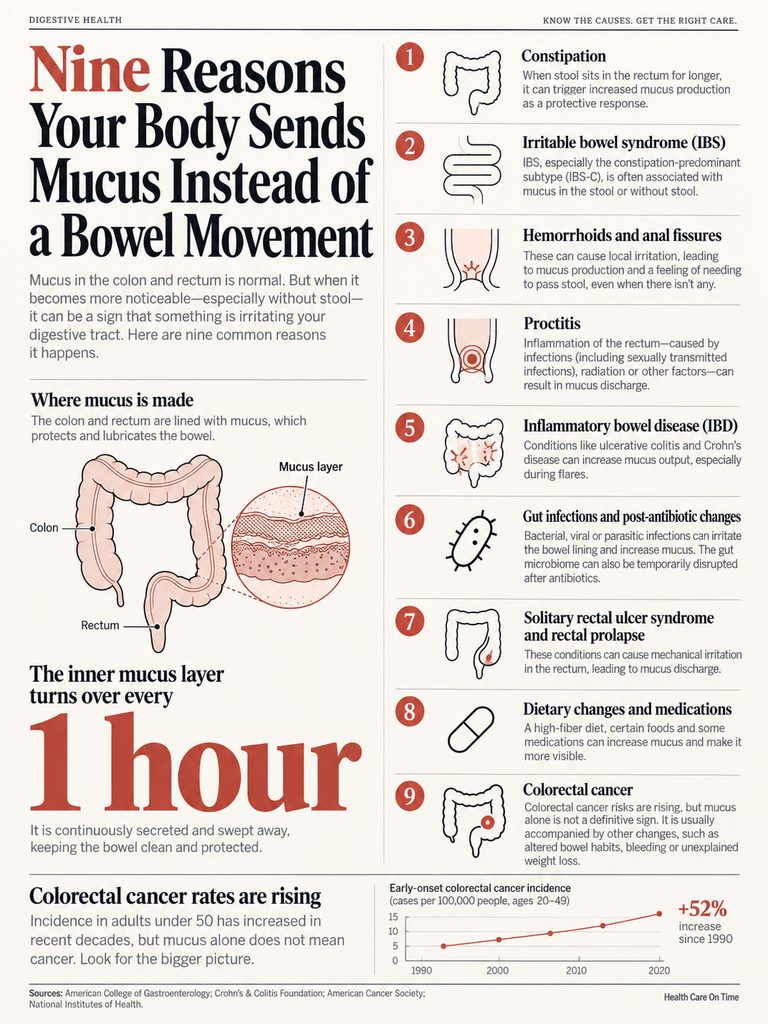
1. Constipation, Straining, and Incomplete Emptying
This is the single most common explanation and the most reassuring one. When stool sits in the rectum and does not move, mucus keeps being produced behind it and eventually slips past on its own.
Straining compounds the problem by irritating the rectal lining, which increases mucus output. You get a feedback loop: less stool, more mucus, more straining, more irritation.
Patients booking stool tests through HealthCareOnTime often describe this exact sequence, usually after several days of hard pellet-like stools, a travel week with poor hydration, or a stretch of skipped meals.
2. IBS, Especially IBS-C
Irritable bowel syndrome is a disorder of gut-brain interaction, and visible mucus is a recognized part of its symptom picture, most often in the constipation-predominant subtype.
A nationwide survey of nearly 89,000 US adults published in Gastroenterology04889-8/fulltext) found 6.1% met Rome IV criteria for IBS. The American College of Gastroenterology estimates 10 to 15% of US adults have IBS symptoms while only 5 to 7% have received a formal diagnosis.
That diagnostic gap matters here. A large share of people searching for an explanation of jelly-like discharge have undiagnosed IBS and have never had anyone put a name to it.
3. Hemorrhoids, Fissures, and Anal Irritation
Swollen internal hemorrhoids and small tears in the anal canal both provoke local mucus production. They also interfere with the anal seal, which allows mucus to leak out between bowel movements.
The giveaway is timing. Discharge appearing on underwear or toilet paper with no urge to go at all, plus stinging or itching, points to the anal canal rather than anywhere higher up.
4. Proctitis, Including Sexually Transmitted Causes
Proctitis means inflammation of the rectum. The CDC defines it as involving the distal 10 to 12 centimeters, with anorectal pain, tenesmus, and rectal discharge as its core features.
Sexually transmitted proctitis is genuinely common and genuinely underdiagnosed. Gonorrhea, chlamydia including LGV strains, herpes simplex, and syphilis are the usual organisms, and it occurs predominantly in people who have receptive anal exposures.
Among men who have sex with men, StatPearls cites rectal chlamydia prevalence around 9% and rectal gonorrhea around 5%. If discharge started within a few weeks of a new partner, targeted testing is the fastest route to an answer.
5. Ulcerative Colitis and Crohn’s Disease
Inflammatory bowel disease inflames the mucosal lining directly, and mucus output climbs with it. Ulcerative colitis nearly always begins in the rectum and extends upward, so rectal symptoms usually arrive first.
Why “Rectal Spitting” Happens in a Flare
When inflammation is confined to the rectum, the colon above may still be holding formed stool while the inflamed segment expels mucus and blood on its own. Clinicians sometimes call this rectal spitting.
The pattern is distinctive: repeated urgent trips producing nothing but mucus, often streaked with blood, and a persistent feeling of unfinished business. That combination should not be waited out.
6. Gut Infections and Post-Antibiotic Changes
Bacterial, viral, and parasitic infections all raise mucus production. Some, including dysentery, are known specifically for producing mucus and blood together.
Antibiotics reach the same symptom by a different road, either by disrupting the normal gut population or by allowing Clostridioides difficile to overgrow. Mucus appearing during or shortly after a course of antibiotics, especially alongside diarrhea, calls for a stool test rather than a wait-and-see approach.
7. Rectal Prolapse and Solitary Rectal Ulcer Syndrome
Solitary rectal ulcer syndrome (SRUS) is uncommon, roughly one case per 100,000 people per year, yet it produces this exact symptom in a large share of patients. A single-center case series recorded mucus passage in 25% of patients, while a cross-sectional study of 24 adults found mucus in stool in 63%, ranking behind only rectal bleeding and constipation.
SRUS earns space here because of the delay. Published series put the average time from first symptom to correct diagnosis at around five years, with a range stretching from three months to three decades.
The suggestive pattern is chronic heavy straining, a sense that the rectum never empties, mucus discharge, and sometimes needing a finger to assist evacuation. Rectal prolapse creates a similar picture through a different mechanism, and the two often overlap.
8. Diet, Medications, and Recent Bowel Prep
Sudden low-fiber eating, very low-carbohydrate diets, dehydration, and heavy alcohol intake can all shift stool consistency enough to expose mucus that was always there. Food intolerances, particularly lactose and gluten in sensitive people, do the same.
Colonoscopy prep empties the colon completely, and passing mucus alone for a day or two afterward before stool returns is expected. Our medical reviewers note this is one of the most frequent post-procedure questions and almost never signals a problem.
9. Polyps, Villous Adenomas, and Colorectal Cancer
This is the possibility driving most of the anxiety behind the search, so it deserves a straight answer rather than either dismissal or alarm.
Mucus-producing tumors are real. Villous adenomas and mucinous colorectal cancers can generate visible mucus, and rectal tumors sit exactly where mucus-only discharge originates. But mucus by itself, with no bleeding, no weight loss, no bowel-habit change, and no anemia, is a weak cancer signal in isolation.
The Rare Large-Volume Pattern: McKittrick-Wheelock
A small subset of large villous adenomas, roughly 2 to 3% of those exceeding 4 centimeters, secrete fluid and mucus in volumes that cause dehydration, low potassium, low sodium, and kidney injury. This is McKittrick-Wheelock syndrome, and a 2026 case series in Case Reports in Gastrointestinal Medicine counted 257 patients described worldwide.
One published case documented a man passing 1.5 liters of mucus per rectum daily. The point is not that this is likely, because it is not. The point is that volume is a variable nobody else discusses, and cups per day is a different symptom from a teaspoon.
What Changed in the 2026 Cancer Numbers
Older advice said colorectal cancer becomes a concern after 50. That advice no longer holds.
The American Cancer Society 2026 colorectal cancer statistics report found incidence rising 3% per year in adults aged 20 to 49 and 0.4% per year in adults aged 50 to 64, while falling 2.5% per year in adults 65 and older. The increase concentrates in the sigmoid colon and rectum.
Rectal cancer incidence has climbed 1% annually since 2018 after decades of decline and now accounts for 32% of all colorectal cancer, up from 27% in the mid-2000s. An estimated 158,850 new cases and 55,230 deaths are projected for 2026, and screening now begins at 45 for average-risk adults.
None of this means your mucus is cancer. It means “you are too young to worry about that” is no longer a safe thing for anyone to tell you when symptoms persist.
Table 2. How Common Each Cause Actually Is in the United States
| Condition | US Frequency | Mucus Involvement | Source |
| IBS (Rome IV criteria) | 6.1% of adults surveyed; 10 to 15% report symptoms | Recognized symptom, most visible in IBS-C | Almario et al., Gastroenterology 2023; ACG |
| Rectal chlamydia (MSM) | About 9% prevalence | Discharge, tenesmus, anorectal pain | StatPearls, Proctitis and Anusitis |
| Rectal gonorrhea (MSM) | About 5% prevalence | Mucoid or purulent rectal discharge | StatPearls, Proctitis and Anusitis |
| Solitary rectal ulcer syndrome | About 1 per 100,000 per year | Mucus in 25% to 63% of case series | Saudi J Gastroenterol 2016; Cureus 2025 |
| Colorectal cancer | 158,850 new cases projected for 2026 | Possible with rectal or mucinous tumors | ACS, CA Cancer J Clin 2026 |
| Early-onset colorectal cancer | Incidence up 3% per year, ages 20 to 49 | Rectal and distal colon tumors dominate | ACS, CA Cancer J Clin 2026 |
| McKittrick-Wheelock syndrome | 257 cases reported worldwide to date | Defining feature; liters per day possible | Case Rep Gastrointest Med 2026 |
How Long Is Too Long
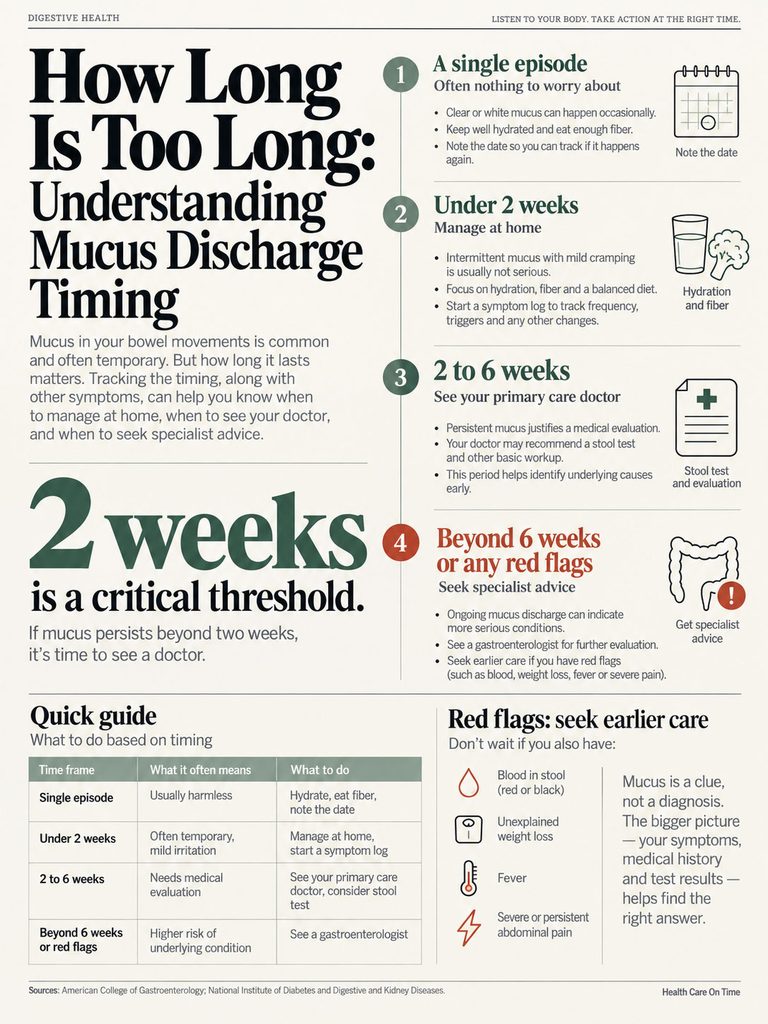
A Single Episode
One instance of clear or white mucus, no blood, no pain, no fever, following a stretch of constipation or a diet change. Nothing is needed beyond more fluid and fiber.
Note the date. If it happens again within a few weeks, you now have a pattern rather than an incident, and patterns are what clinicians act on.
Under Two Weeks
Intermittent mucus with mild cramping or constipation is reasonable to manage at home with fiber, water, and regular meal timing. Start a symptom log immediately so you have real data if it continues.
Most cases in this bracket resolve once bowel habits normalize. If the underlying constipation improves and mucus stops with it, you have your answer.
Two to Six Weeks
This is the window where testing earns its cost. Persistent mucus at this duration justifies a primary care visit and usually a stool workup, even when everything else feels normal.
Two weeks is roughly the point at which a temporary irritation should have settled. Anything still going after that is telling you something.
Beyond Six Weeks, or Any Duration With a Red Flag
Six weeks of a symptom that has not declared itself needs a specialist opinion, typically gastroenterology. Chronic mucus discharge with straining is also the classic missed presentation of SRUS, where the average diagnostic delay runs to five years.
Any red flag from the next section resets the clock to zero, regardless of how long things have been going on.
Red Flags That Override the Timeline
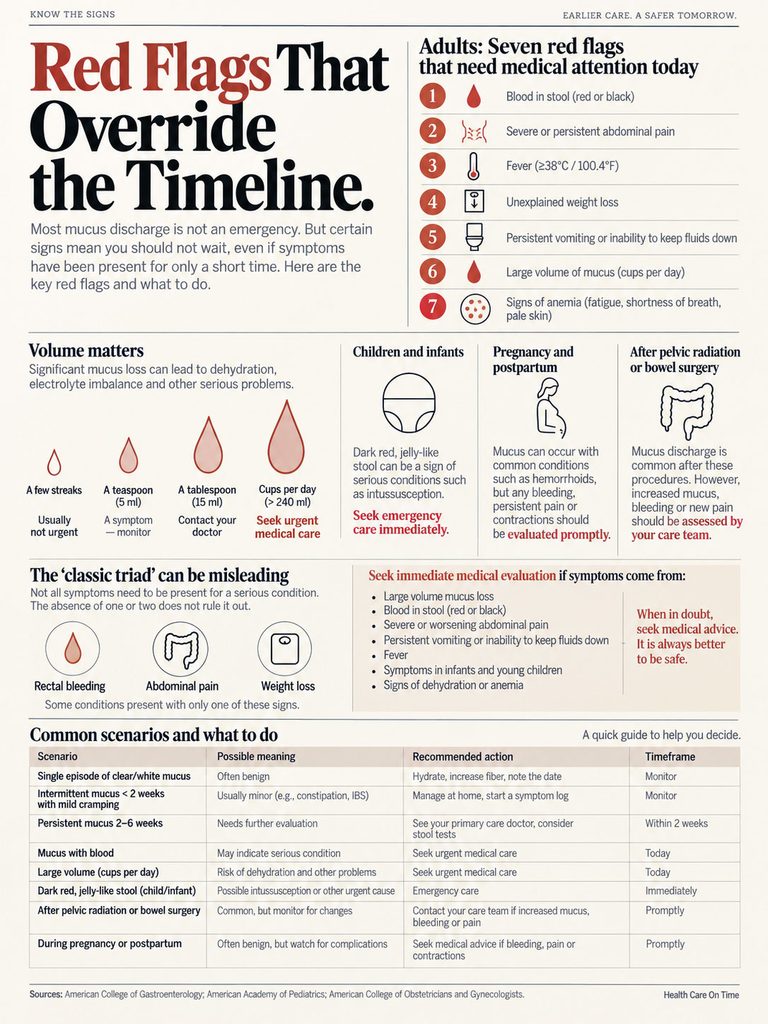
Adults: The Seven That Mean Call Today
- Blood mixed through the mucus rather than streaked across its surface
- Fever above 100.4°F alongside rectal discharge
- Unintentional weight loss you cannot account for
- Severe or worsening abdominal pain
- A change in stool caliber, such as pencil-thin stools, lasting more than a couple of weeks
- Discharge measured in cups rather than teaspoons
- New anemia, unexplained fatigue, or lightheadedness on standing
Why Volume Belongs on That List
Number six is the flag almost no health page mentions, and it is the one that most reliably identifies something serious.
Mucus is rich in electrolytes. Losing it in large volumes drains potassium and sodium fast enough to cause muscle weakness, heart rhythm disturbances, and kidney injury. Published McKittrick-Wheelock cases repeatedly describe patients cycling through emergency departments for dehydration and kidney failure before anyone connects it to the discharge.
If you are changing underwear repeatedly, if the toilet bowl is visibly clouded each time, or if you feel weak and crampy alongside the discharge, that is not a wait-two-weeks situation. Ask for electrolytes and kidney function the same day.
Children and Infants: The Diaper Finding That Means the ER
If a child under five, particularly between 3 months and 3 years, passes dark red jelly-like material, go to an emergency department. Do not wait until morning and do not start with a nurse line.
That appearance can indicate intussusception, where bowel telescopes into itself and the blood supply is cut off. StatPearls describes the mucosa sloughing under ischemia, which produces the characteristic currant jelly stool.
Why the Classic Triad Misleads Parents
Medical training teaches a triad of colicky pain, a sausage-shaped abdominal mass, and currant jelly stool. Parents who have read about it wait to see all three.
A 2025 review in the American Journal of Emergency Medicine reports the full triad appears in only 7.5% to 40% of cases and should not be used to rule the diagnosis out when absent. Currant jelly stool is also a late sign, meaning it shows up after ischemia is already underway.
The earlier and more reliable signs are episodes of inconsolable crying with knees drawn toward the chest, vomiting, and unusual lethargy between episodes. Any of those combined with bloody or jelly-like stool is an emergency room visit, not a phone call.
After Pelvic Radiation, Bowel Surgery, or With a Colostomy
Radiation proctitis can develop months to years after pelvic radiation for prostate, cervical, or rectal cancer, and mucus discharge is a common feature of it.
If you have a colostomy or ileostomy, the bypassed rectum keeps producing mucus even though nothing passes through it. Periodic discharge is expected and normal. Blood, pus, green color, or a foul smell is not, and any of those warrants a call to your surgical team.
Pregnancy and Postpartum
Pregnancy-related constipation, hemorrhoids, and pelvic floor strain all raise the odds of mucus discharge, and most of it is benign and self-limiting.
Bleeding alongside it still deserves a same-week call to your obstetric provider rather than an assumption that hemorrhoids explain everything.
Table 3. Your Situation and What to Do About It
| Your Scenario | What It Most Likely Means | Recommended Action | Timeframe |
| Clear mucus once, after 3 days constipated | Normal mucus, no stool to mask it | Fiber to 25 to 35 g/day, 6 to 8 glasses of water | Monitor 7 to 10 days |
| Mucus plus cramping and bloating, most weeks | Possible IBS-C or chronic constipation | Primary care visit, request fecal calprotectin | Within 2 to 3 weeks |
| Yellow mucus, urgency, burning, new partner | Possible infectious proctitis | STI panel including rectal swab, plus exam | Within 1 week |
| Mucus with blood, urgency, 6+ trips daily | Possible IBD flare or colitis | Calprotectin plus gastroenterology referral | Within days |
| Straining, incomplete emptying, mucus for months | Possible SRUS, prolapse, pelvic floor dysfunction | GI or colorectal referral, anorectal testing | Within 2 to 4 weeks |
| Any age, mucus plus weight loss or thin stools | Needs structural evaluation regardless of age | Colonoscopy referral | Within 2 weeks |
| Cups of mucus daily, weakness, muscle cramps | Possible secretory adenoma, electrolyte loss | Emergency evaluation, electrolytes and kidney panel | Same day |
| Child under 5 with dark red jelly stool | Possible intussusception | Emergency department | Immediately |
The Tests That Sort This Out
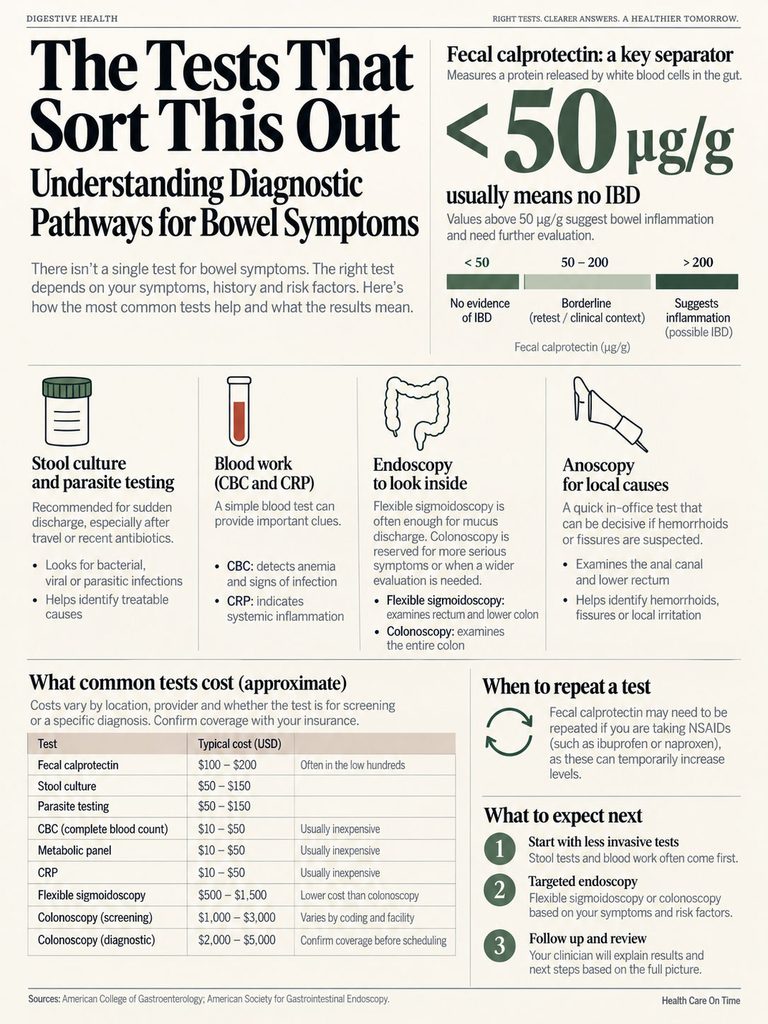
Fecal Calprotectin: The Test That Decides Whether You Need a Scope
Calprotectin is a protein released by neutrophils, the white cells that flood inflamed tissue. When it appears in stool, there is inflammation somewhere in the bowel. When it does not, there almost certainly is not.
Guidance published in Clinical and Translational Gastroenterology sets the practical thresholds. Below 50 µg/g excludes inflammatory bowel disease with a negative predictive value above 95%. Values between 50 and 250 µg/g sit in a gray zone requiring monitoring. Above 250 µg/g points toward endoscopy.
A 2023 meta-analysis in Alimentary Pharmacology & Therapeutics confirmed calprotectin reliably separates IBD from IBS, with better sensitivity at cutoffs of 50 µg/g or lower and in Western populations. Pooled estimates at that threshold have reached 93% sensitivity and 94% specificity in adults.
In cases reviewed across our diagnostic network, this single result is what most often converts a vague “maybe it is just IBS” conversation into a defined plan. It is a stool sample collected at home, not a procedure.
One caveat worth knowing. Calprotectin also rises with infections and with regular NSAID use, so a modestly elevated result does not automatically mean IBD. Repeat testing after stopping ibuprofen or naproxen for a couple of weeks often clarifies things.
Stool Culture, Ova and Parasites, and C. difficile Toxin
If discharge started suddenly, followed travel, or followed antibiotics, infection testing comes first. Stool culture covers bacterial pathogens. Ova and parasite testing covers organisms such as Giardia and Entamoeba. C. difficile toxin testing covers post-antibiotic colitis.
Fecal white blood cell testing also appears in proctitis evaluation, since white cells are commonly present in that setting.
Collect samples before starting any antidiarrheal medication where possible, since treatment can reduce yield and muddy the result.
Blood Work Worth Running
A complete blood count catches anemia from slow blood loss and raised white cells from infection. C-reactive protein and ESR flag systemic inflammation. A basic metabolic panel checks potassium, sodium, and kidney function, which matters most when discharge volume is high.
Iron studies and ferritin are worth adding whenever there has been any blood in the stool, because iron deficiency often shows up before hemoglobin drops.
Celiac serology deserves consideration if there is bloating, weight change, or a family history, since celiac disease can present with mucus and altered bowel habits.
Flexible Sigmoidoscopy Versus Full Colonoscopy
Because mucus-only discharge usually originates in the rectum, a flexible sigmoidoscopy examining the last two feet of colon often answers the question with lighter prep and no sedation.
Full colonoscopy becomes the right call when there is bleeding, anemia, weight loss, a family history of colorectal cancer, or when you are 45 or older and due for screening anyway. Our lab partners report that a sizeable share of these referrals turn up hemorrhoids or proctitis rather than anything structural, which is a reassuring number to carry into the appointment.
Anoscopy, a quick in-office look at the anal canal, is often skipped and often decisive when the suspected source is hemorrhoids or a fissure.
What This Typically Costs in the US
Fecal calprotectin generally runs in the low hundreds of dollars at list price and is widely covered when ordered for suspected inflammatory bowel disease. A CBC and metabolic panel are inexpensive by comparison.
Stool infectious panels vary enormously depending on how many organisms they cover, so ask whether a targeted test would do before agreeing to a large multiplex panel.
Colonoscopy is the expensive item, and coverage depends heavily on whether it is coded as screening or diagnostic. Ask that question before scheduling rather than after the bill arrives.
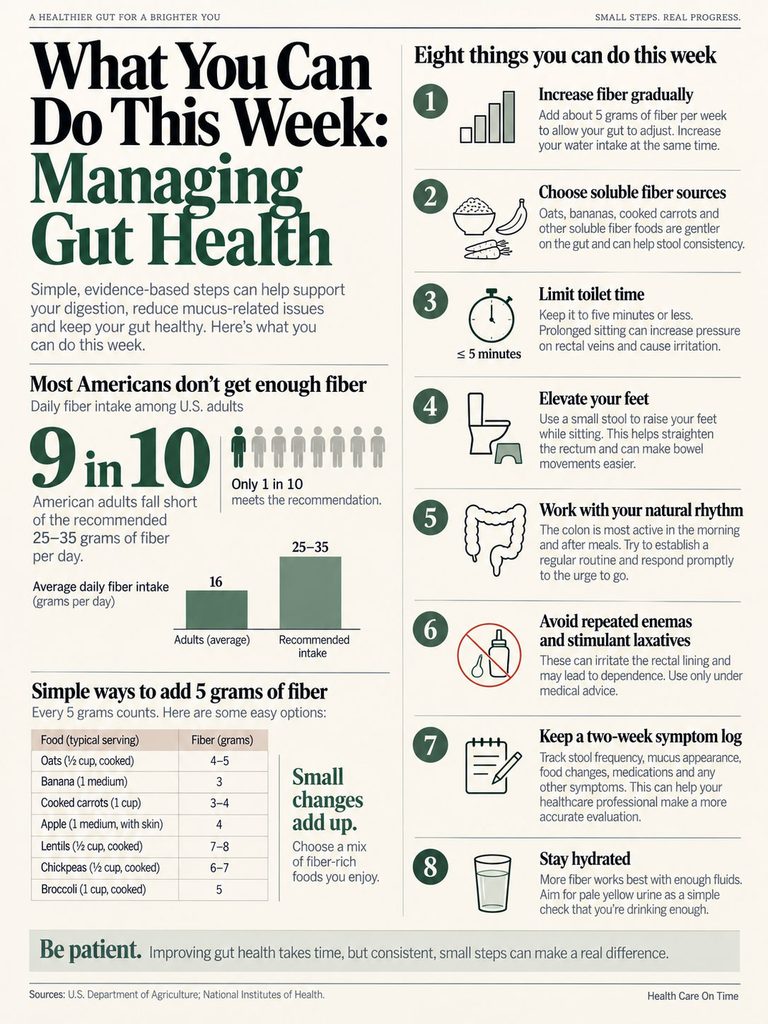
What You Can Do This Week
Fiber and Fluid Without Making It Worse
Most American adults fall well short of the 25 to 35 grams of daily fiber generally recommended for adults. Closing that gap helps, but adding a large amount overnight usually produces gas and cramping instead of relief.
Increase by roughly 5 grams per week and raise water intake at the same time. Fiber without fluid makes constipation worse, and worse constipation means more mucus.
Soluble fiber tends to be gentler on an irritated gut than a sudden pile of raw vegetables. Oats, bananas, cooked carrots, and psyllium are reasonable starting points.
The Toilet Habits Feeding the Problem
Long sitting and hard straining are two of the strongest drivers of rectal irritation and mucus production, and both are fixable this week without a prescription.
Cap toilet time at five minutes. If nothing happens, stand up and come back later rather than waiting it out with a phone in your hand.
Elevating your feet on a small stool changes the anorectal angle and reduces the force needed. Respond to the first urge instead of postponing it, since repeatedly ignoring the signal trains the rectum to stop sending it.
Movement, Timing, and the Morning Window
The colon is most active in the first hour after waking and after meals. Working with that rhythm beats fighting it.
A short walk after breakfast and a consistent bathroom window at the same time each day help more than most people expect. Regular physical activity also shortens transit time, which reduces the stool stagnation that lets mucus travel alone.
What Not to Do
Skip repeated enemas, frequent stimulant laxatives, and hydrogen peroxide or vinegar rinses. Every one of them irritates the rectal lining, and irritation is what generates mucus in the first place.
Avoid aggressive wiping and scented wipes. Warm water and patting dry works better and does less damage.
Do not self-treat presumed hemorrhoids for months while blood keeps appearing. That is the single most common reason a treatable problem gets found late.
A Two-Week Symptom Log Your Doctor Will Actually Use
Record five things daily: whether mucus appeared, its color, roughly how much (teaspoon, tablespoon, or more), whether any stool came with it, and any pain, blood, urgency, or fever.
Add what you ate and any new medications, including over-the-counter ones. Photograph anything unusual, since descriptions from memory are unreliable and clinicians rarely mind.
Two weeks of this turns a vague appointment into a focused one. Patients commonly ask us what to bring to a gastroenterology visit, and this log is the answer.
Frequently Asked Questions
Is clear jelly-like discharge from the anus normal?
Small amounts of clear mucus are normal, since your colon produces mucus continuously as a lubricant. It becomes noticeable when stool is not there to mask it. Clear discharge without blood, pain, fever, or weight loss, lasting under two weeks, rarely signals anything serious.
Why do I feel like I need to poop but only mucus comes out?
That sensation is called tenesmus. It means the rectum feels full and signals urgency even when stool is absent. Rectal inflammation, irritation, or stool sitting just out of reach all cause it. Persistent tenesmus with mucus deserves evaluation, since it is a hallmark of proctitis.
Can constipation alone cause jelly-like discharge?
Yes, and it is the most common explanation. When stool is not passing, mucus keeps being produced behind it and eventually slips past on its own. Straining adds rectal irritation, which increases mucus further. Correcting fiber, fluids, and toilet habits usually resolves it within a week or two.
Does mucus without stool mean I have IBS?
Not by itself. IBS requires recurrent abdominal pain linked to bowel movements or stool changes, and mucus is a supporting feature rather than a diagnostic one. Since roughly 6.1% of US adults meet criteria while many go undiagnosed, raise it with a doctor if cramping and bloating accompany it.
What does yellow mucus from the anus mean?
Yellow tinting usually means white blood cells have joined the mucus, pointing toward inflammation or infection in the rectum or lower colon. Proctitis, gut infections, and inflammatory bowel disease all produce it. A single yellow episode is not alarming, but a recurring pattern warrants stool testing.
Is jelly-like mucus a sign of colon cancer?
Mucus alone, without bleeding, weight loss, anemia, or a change in bowel habits, is a weak cancer signal. Rectal and mucinous tumors can produce mucus, though. Because colorectal cancer incidence is rising 3% per year in adults aged 20 to 49, persistent symptoms deserve evaluation at any age.
My toddler had jelly-like discharge in the diaper. What now?
Dark red jelly-like material in a child under five needs an emergency department, not a phone call. It can indicate intussusception, where bowel telescopes into itself and loses blood supply. Watch also for inconsolable crying with knees drawn up, vomiting, and lethargy between episodes.
Can hemorrhoids cause mucus discharge?
Yes. Internal hemorrhoids produce mucus locally and can prevent the anal canal from sealing properly, letting mucus leak between bowel movements. The typical pattern is discharge on underwear or toilet paper without any urge to go, often accompanied by itching or stinging.
Can stress or anxiety cause mucus discharge?
Indirectly, yes. Stress alters gut motility and is a well-documented trigger for IBS symptoms, including constipation and visible mucus. It does not create inflammation on its own. Symptoms that flare during stressful stretches and settle afterward support a functional cause rather than a structural one.
How much mucus in stool is too much?
There is no exact measurement, so use change as your guide. Occasional traces you barely notice are fine. Mucus visible at every bowel movement, clouding the bowl, or arriving without any stool for more than two weeks crosses the line. Cups per day is an urgent finding.
Why did mucus show up after antibiotics?
Antibiotics disrupt the gut bacterial population and can allow *Clostridioides difficile* to overgrow, inflaming the colon and increasing mucus production. If mucus appeared during or shortly after a course, especially with diarrhea or cramping, request a *C. difficile* toxin test rather than waiting.
How long should I wait before seeing a doctor?
Two weeks is the practical threshold for otherwise symptom-free mucus. Between two and six weeks, get a primary care visit and stool testing. Past six weeks, ask for a gastroenterology opinion. Any red flag, meaning blood, fever, weight loss, or severe pain, means calling now regardless of duration.
Medical Disclaimer
This article is for general information only and does not replace evaluation by a licensed healthcare provider. It cannot diagnose your condition, and the causes described here overlap in ways that require examination and testing to separate. Never delay seeking medical care because of something you read here. If you are experiencing severe abdominal pain, heavy rectal bleeding, high fever, or if a young child has passed dark red jelly-like stool, seek emergency care immediately.
References
- The two mucus layers of colon are organized by the MUC2 mucin, PNAS 2010
- Fast Renewal of the Distal Colonic Mucus Layers, PLOS ONE 2012
- Prevalence and Burden of Illness of Rome IV Irritable Bowel Syndrome in the United States, Gastroenterology 202304889-8/fulltext)
- Irritable Bowel Syndrome, American College of Gastroenterology
- Proctitis, Proctocolitis, and Enteritis, CDC STI Treatment Guidelines
- Proctitis and Anusitis, StatPearls
- Colorectal cancer statistics, 2026, CA: A Cancer Journal for Clinicians
- Rectal Cancer Incidence Rising, American Cancer Society
- Fecal Calprotectin for the Diagnosis and Management of IBD, Clinical and Translational Gastroenterology 2023
- Diagnostic performance of faecal calprotectin in distinguishing IBD from IBS, Aliment Pharmacol Ther 2023
- Child Intussusception, StatPearls
- High risk and low incidence diseases: Pediatric intussusception, Am J Emerg Med 2025
- Solitary Rectal Ulcer Syndrome: A Single-center Case Series, Saudi J Gastroenterol
- Anorectal Pathophysiology in Solitary Rectal Ulcer Syndrome, Cureus 2025
- McKittrick-Wheelock Syndrome Caused by Giant Tubulovillous Adenomas, Case Rep Gastrointest Med 2026
- The McKittrick-Wheelock Syndrome: Acute Renal Failure Due to Neoplastic Cholera
- Mucus in Stool: Causes and When To Be Concerned, Cleveland Clinic
- Mucus in stool: A concern? Mayo Clinic