In July 1952, one doctor performed 228 transorbital lobotomies in West Virginia over two weeks, a state project newspapers nicknamed “Operation Ice Pick.” He charged about $25 per operation and worked without a surgical mask or gloves.
Table of Contents
That doctor was Walter Freeman, and he sincerely believed he was helping. The question almost nobody asked back then is the one that matters most: did patients who had the surgery actually do better than similar patients who didn’t?
Quick Answer: A lobotomy was a brain operation, used mostly from 1936 to the mid-1950s, that cut the nerve fibers connecting the frontal lobes to deeper brain areas to calm severe mental illness. More than 40,000 Americans had one. Many became apathetic, lost emotional depth, or developed seizures, and some died. The classic operation is no longer performed. Today, rare, image-guided procedures and deep brain stimulation exist only for severe, treatment-resistant OCD or depression.
At a Glance
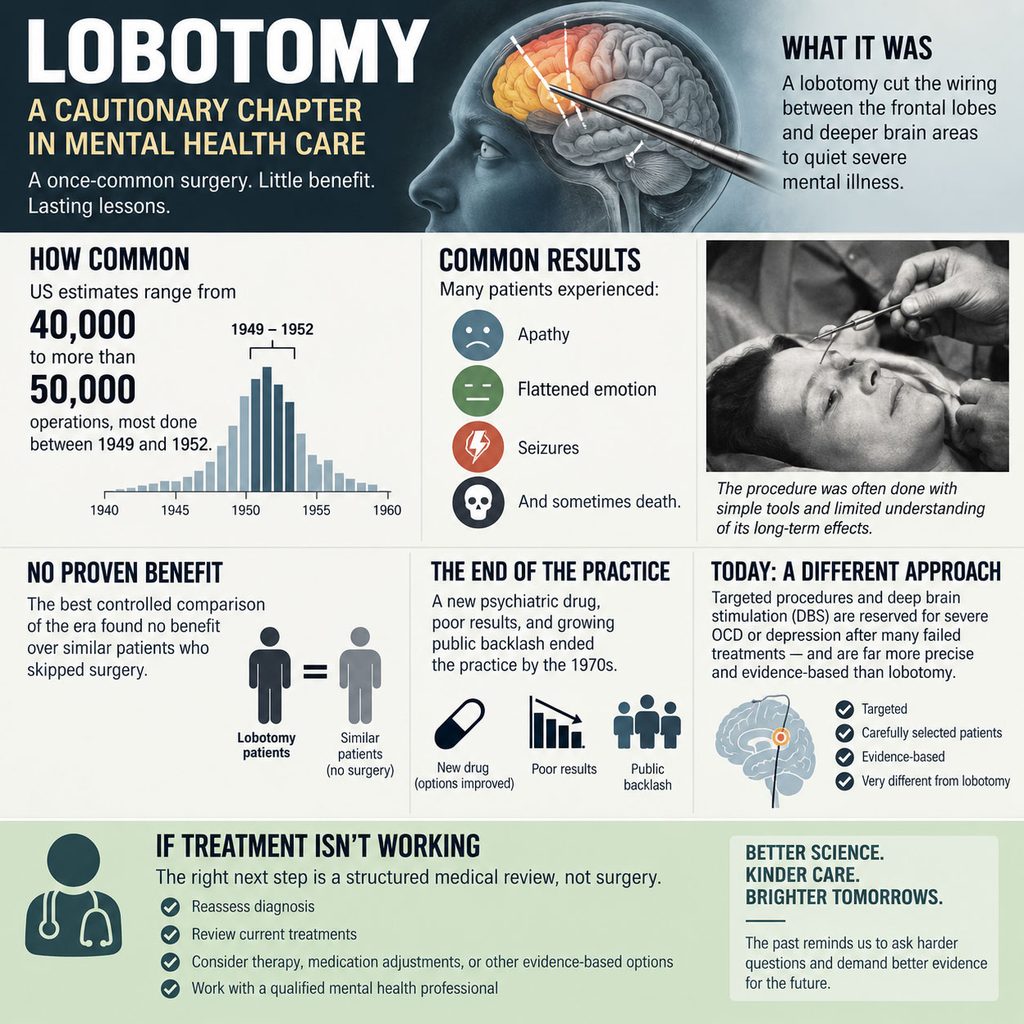
- A lobotomy cut the wiring between the frontal lobes and deeper brain areas to quiet severe mental illness.
- US estimates range from 40,000 to more than 50,000 operations, most done between 1949 and 1952.
- Common results included apathy, flattened emotion, seizures, and sometimes death.
- The best controlled comparison of the era found no benefit over similar patients who skipped surgery.
- A new drug, poor results, and public backlash ended the practice by the 1970s.
- Today, targeted procedures and deep brain stimulation are reserved for severe OCD or depression after many failed treatments.
- If treatment isn’t working, the right next step is a structured medical review, not surgery.
What Is a Lobotomy? A Plain Definition
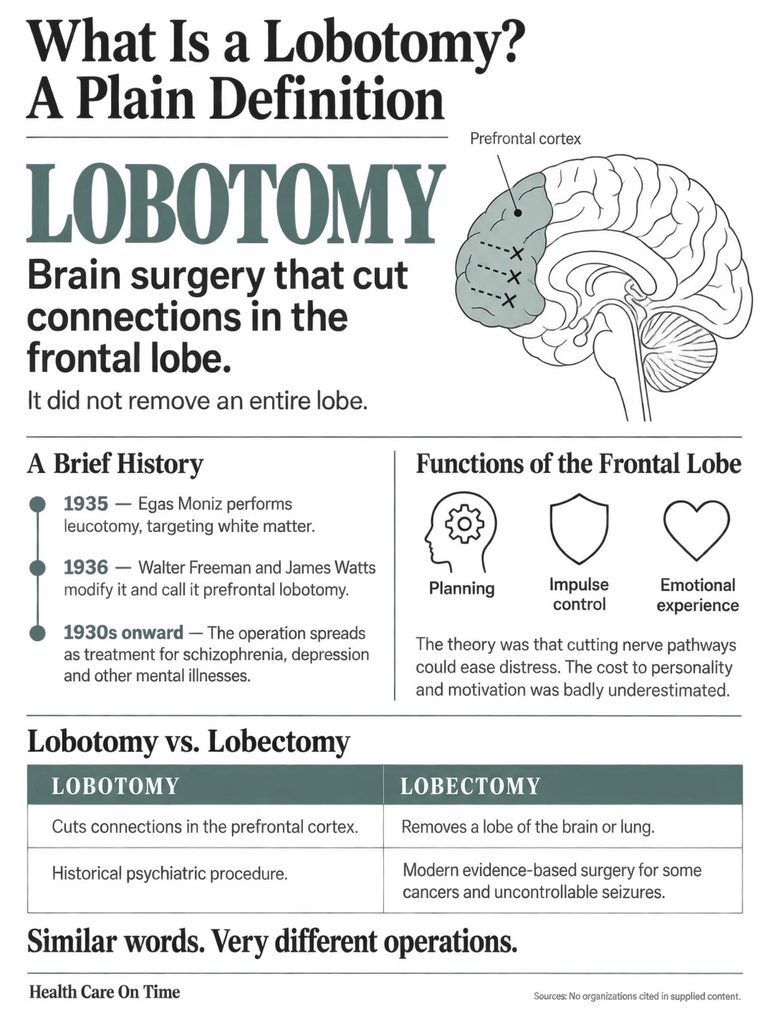
A lobotomy is brain surgery that cuts the connections between the frontal lobe and other parts of the brain. It spread in the 1930s as a treatment for schizophrenia, depression, and similar conditions, at a time when no effective treatment existed.
People reach HealthCareOnTime with this question for two very different reasons. Some are curious after a documentary. Others are quietly asking whether any brain surgery exists for someone whose illness won’t lift. This guide answers both.
Lobotomy vs Leucotomy: Two Names for One Idea
Portuguese neurologist Egas Moniz performed the first brain surgery for mental illness on November 12, 1935, and called it a “leucotomy.” The name comes from the Greek words for “white” and “cut,” because the operation targeted the brain’s white matter.
Walter Freeman and James Watts modified the operation in 1936, and Freeman renamed it the “prefrontal lobotomy.” In the United Kingdom, the name leucotomy stuck.
What the Frontal Lobe Does
The prefrontal cortex sits right behind your forehead. It helps you plan, weigh consequences, control impulses, and give your experiences emotional color.
Doctors of the era believed the nerve cells in this region were wired wrongly and stuck that way. Cutting them, the thinking went, would quiet the distress. The problem is that those same connections also carry motivation, personality, and emotional depth.
Lobotomy vs Lobectomy
The two words are one letter apart and often confused. A lobotomy is surgery on the brain’s prefrontal cortex, while a lobectomy removes a whole lobe of the brain or a lung.
Surgeons still perform lung lobectomies for cancer and temporal lobectomies for seizures that medicine can’t control. Both are modern, evidence-based operations with nothing in common with a psychiatric lobotomy.
How a Lobotomy Was Performed
The Moniz Prefrontal Leucotomy (1935)
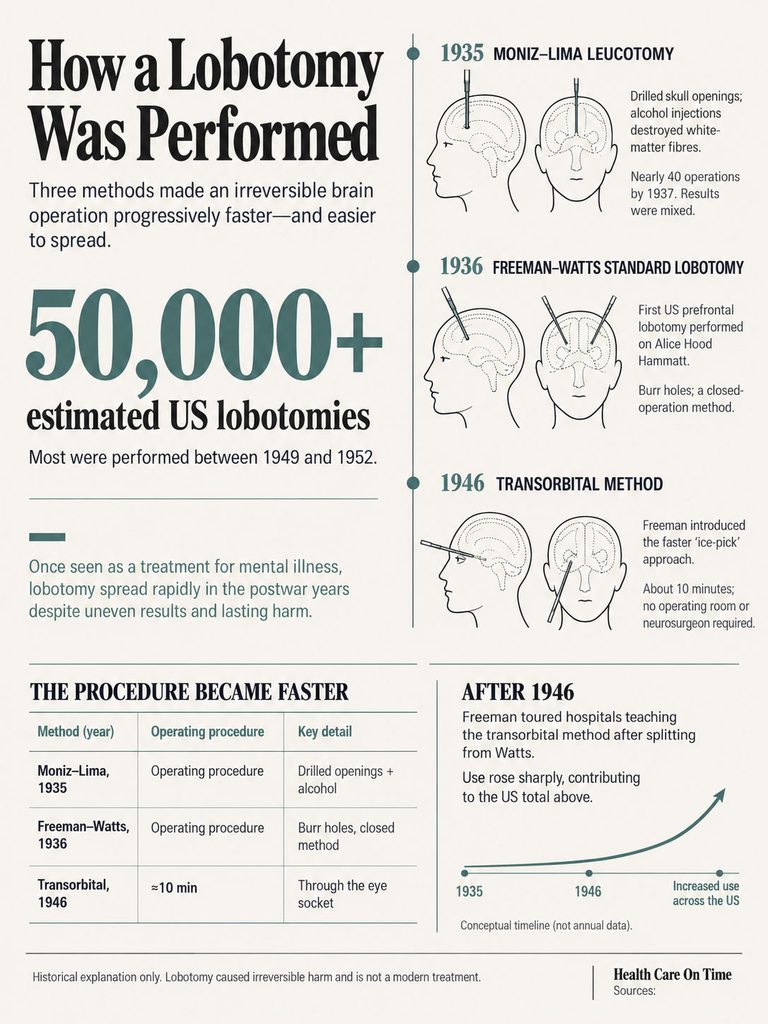
Moniz developed the procedure with his colleague Almeida Lima. They drilled small holes in the skull and destroyed white-matter fibers, first with injected alcohol and later with a wire-loop tool called a leucotome.
Moniz and his assistant completed nearly 40 operations by 1937, with only mixed success. Even so, the idea spread fast.
The Freeman-Watts Standard Lobotomy (1936)
On September 14, 1936, Freeman and neurosurgeon James Watts performed the first US prefrontal lobotomy on Alice Hood Hammatt, a housewife from Topeka, Kansas.
Their method involved drilling burr holes on the sides of the skull and inserting a cutting instrument. It was a “closed” operation, so the surgeon couldn’t see exactly what he was cutting.
The Transorbital “Ice Pick” Lobotomy (1946)
Freeman wanted something faster. On January 17, 1946, he performed the first US transorbital lobotomy in his Washington, D.C., office. The procedure took only about 10 minutes.
In plain terms, the transorbital method worked like this:
- The patient was made unconscious, often with an electroshock instead of general anesthesia.
- A thin steel instrument was placed under the upper eyelid, above the eyeball.
- It was tapped through the thin bone of the eye socket into the frontal lobe.
- It was swept side to side to cut connections, and the steps were repeated on the other side.
Why a 10-Minute Operation Spread So Fast
It needed no operating room and no neurosurgeon. Watts objected to the transorbital method, the partnership ended in 1950, and Freeman toured state hospitals nationwide, performing and teaching it.
In all, more than 50,000 lobotomies were performed in the United States by one estimate, most of them between 1949 and 1952.
What a Lobotomy Did to Patients
The Intended Effect
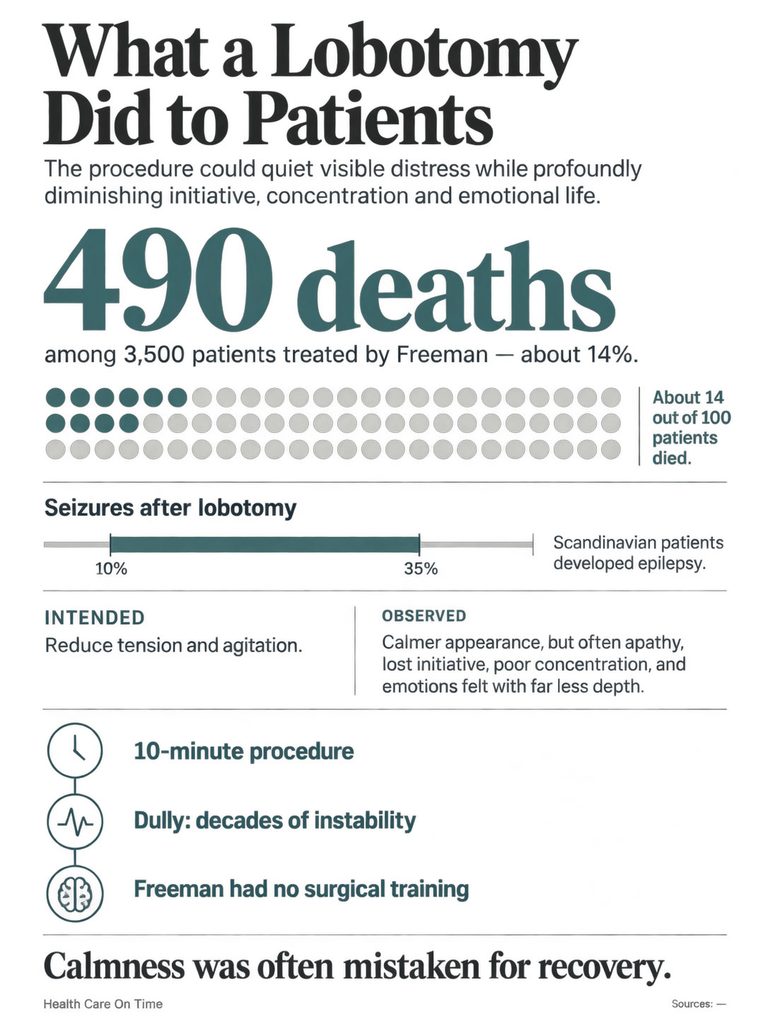
Doctors hoped to reduce tension and agitation, and many early patients did become calmer. For overcrowded state hospitals, calmer patients looked like success.
The Real Cost: Lobotomy Side Effects
Many patients also became apathetic and passive, lost initiative, struggled to concentrate, and felt emotions with far less depth. Some died as a result of the procedure.
Seizures were a major problem. In Scandinavia, at least 11,500 people were lobotomized between 1939 and 1983, and the surgery caused epilepsy in 10 to 35% of them. Many died from bleeding during surgery, prolonged seizures, or sudden death linked to epilepsy.
Freeman’s own record was grim. An estimated 490 of the roughly 3,500 people he operated on or supervised died as a result. Some of his patients were as young as 12, and he had no surgical training.
Three Patients Who Changed How America Saw Lobotomy
- Rosemary Kennedy: The sister of future President John F. Kennedy had a lobotomy in 1941 at age 23 and was left permanently incapacitated.
- Rose Williams: The sister of playwright Tennessee Williams was also left severely debilitated.
- Howard Dully: Freeman lobotomized him in 1960, when he was 12. As an adult, Dully said the operation, which was meant to relieve suffering, had done the opposite for him.
Dully later wrote that his operation took ten minutes and cost $200. He spent the next 40 years moving between asylums, jails, and halfway houses, a reminder that the damage often reached far beyond the operating room.
The Scientific Reality: Did Lobotomy Ever Work?
Our medical reviewers went back to the original 1950s and 1960s reports for this section, because the numbers repeated online rarely come with context. This evidence is 60 to 70 years old, and research standards were far weaker then.
One more honest caveat: the most careful follow-up came from Britain and Scandinavia. In the US, even basic facts, such as how many patients died, are impossible to pin down.
What Early, Uncontrolled Reports Claimed
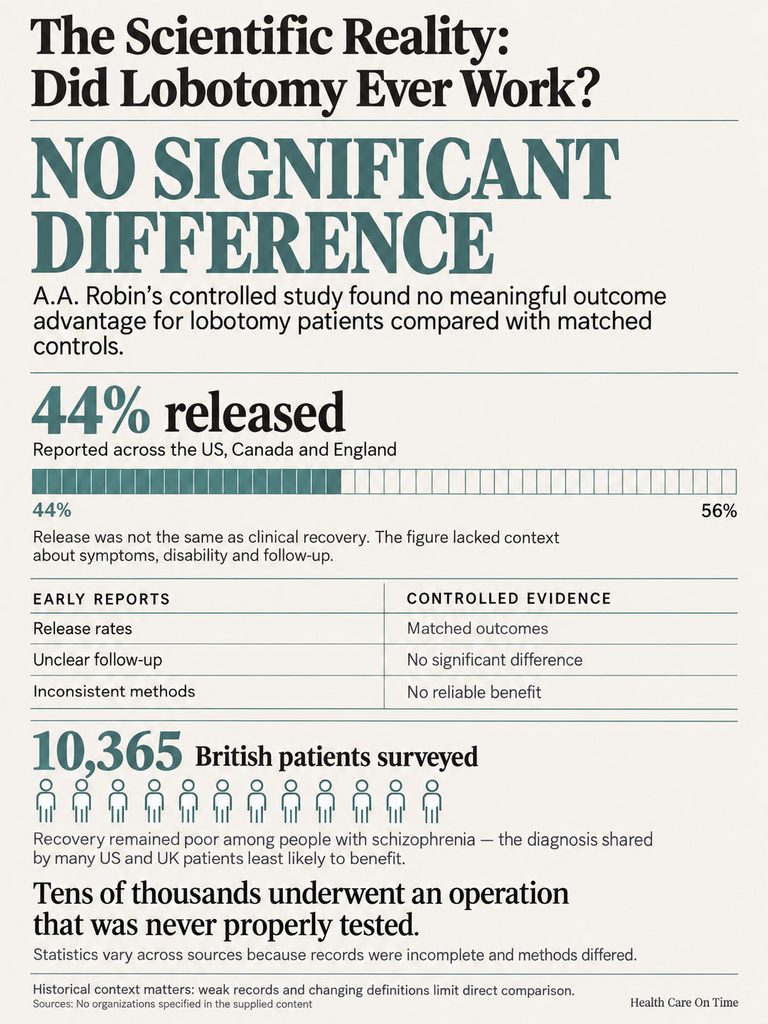
Early surveys looked encouraging. One large US study reported that 44% of patients were released from hospitals after surgery, with similar figures of 45% in Canada and 46% in England and Wales.
But “released” doesn’t mean “helped.” Without a comparison group, nobody could tell whether those patients would have left anyway. Freeman himself estimated that only about one-third of his operations succeeded.
The Controlled Comparison That Found No Difference
Researcher A.A. Robin compared 198 patients who had a standard leucotomy with an equal number of carefully matched patients who never had surgery. He found no difference in outcome.
The matching was done after the fact, not by randomization, so this isn’t a modern clinical trial. Still, it’s the closest thing to a fair test the lobotomy era produced, and it didn’t favor surgery.
What 10,365 British Patients Showed
A national survey of 10,365 people in England and Wales who had a single leucotomy between 1942 and 1954 found that about two-thirds had schizophrenia. That group did worst: only 17% of men and 20% of women recovered.
This matters for American readers because US patients had the same kinds of diagnoses, including schizophrenia, OCD, and mood disorders. The diagnosis surgeons operated on most often was the one least likely to benefit.
Why the Lobotomy Numbers Online Don’t Match
When our editorial team cross-checked the most-cited sources, no two agreed. Here’s why.
| Claim | Figures You’ll See | Likely Reason They Differ |
| Total US lobotomies | “Over 40,000” vs “more than 50,000” (Britannica) | Different time windows and incomplete state hospital records |
| Freeman’s operations | 2,500 (NPR) vs 3,500 (Britannica) vs up to 4,000 (Wikipedia) | 2,500 counts transorbital cases only; 3,500 includes operations he supervised |
| Deaths among Freeman’s patients | About 100 vs about 490 (roughly 14%) | The lower figure counts brain-bleed deaths only; the higher counts all procedure-linked deaths |
| Scandinavian patients | At least 11,500 (1939-1983) | Covers a longer period than most US estimates |
None of these figures is precise. What they agree on is scale: tens of thousands of Americans underwent an operation that was never properly tested.
Why Doctors Stopped Doing Lobotomies
A Pill Changed Everything
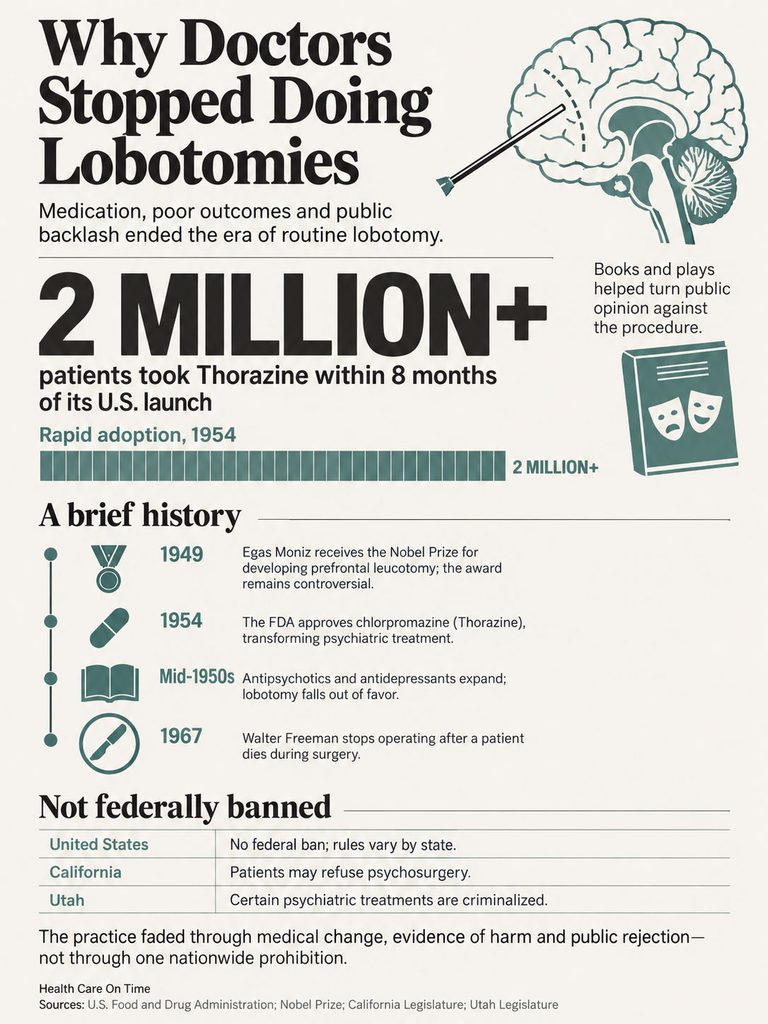
The FDA approved chlorpromazine in 1954, and it was sold as Thorazine. Within eight months of reaching the market, more than 2 million patients had taken it. Before launch, Smith, Kline and French tested the drug with some 2,000 doctors and their patients across the United States and Canada.
Lobotomy gradually fell out of favor from the mid-1950s as antipsychotics, antidepressants, and other far more effective drugs came into use.
Public Backlash and the Nobel Prize Controversy
Moniz won the 1949 Nobel Prize for the lobotomy, after being nominated by Freeman himself. The award has been controversial ever since.
Culture turned hard against the operation. Tennessee Williams’ 1958 play Suddenly, Last Summer and Ken Kesey’s One Flew Over the Cuckoo’s Nest portrayed lobotomy as a way to silence people and erase personality, and these works likely helped shift public opinion.
Freeman finally stopped in 1967, after a patient died of a brain hemorrhage during surgery.
Is a Lobotomy Legal in the US Today?
There’s no federal ban. In 1976, a national commission, created by Congress in 1974 after the Tuskegee syphilis study scandal, concluded that psychosurgery should not be banned, citing research in which at least half of 61 cingulotomy patients benefited. Its 1977 report endorsed continued, limited use.
States set their own rules, and a 2019 study found those laws remain inconsistent. California law gives psychiatric patients the right to refuse psychosurgery and names lobotomy in its legal definition.
California’s minor-consent law also does not let a minor receive psychosurgery without a parent’s or guardian’s consent. Utah makes it a crime to use psychiatric treatment, including lobotomy or surgery, to change a person’s belief in God.
Are Lobotomies Still Performed Today?
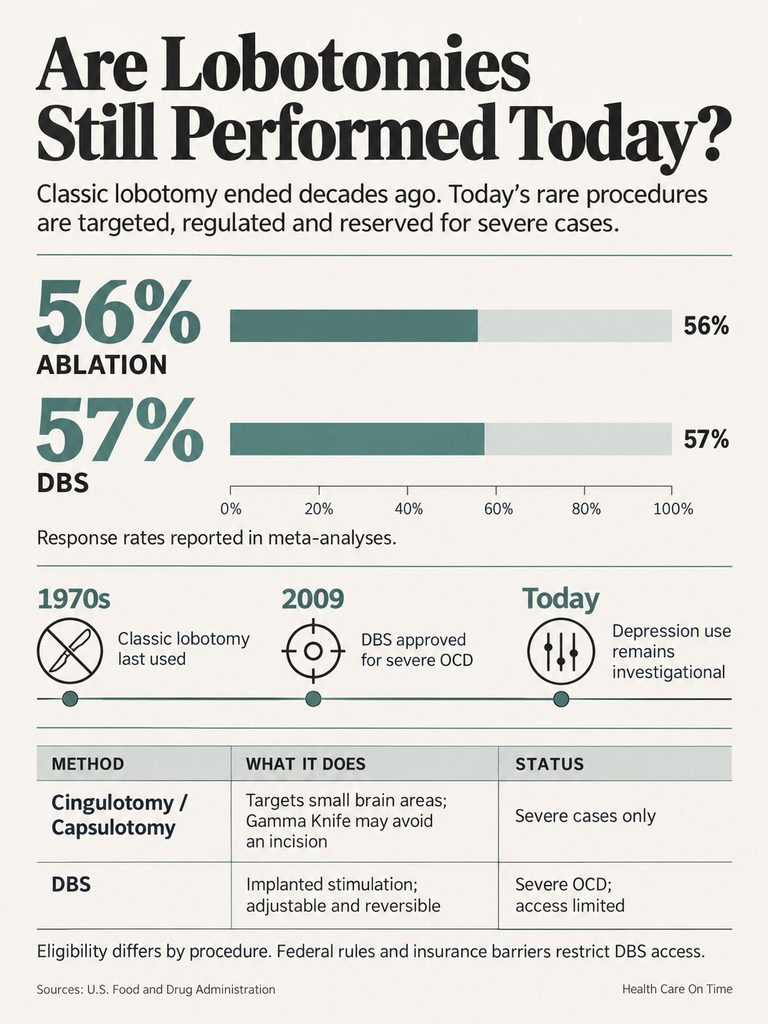
No. The classic lobotomy is not performed in modern medicine. Freeman’s type of operation was last used in the 1970s, but other forms of psychosurgery, such as cingulotomy and capsulotomy, still exist. These are rare, precise, and reserved for severe illness.
Modern Ablation: Cingulotomy, Capsulotomy, and Gamma Knife
Bilateral cingulotomy was introduced in 1948 as an alternative to lobotomy. Today it’s used mainly for depression, OCD, and chronic pain.
Cingulotomy and anterior capsulotomy destroy very small targets found through brain imaging, a fraction of the tissue a lobotomy destroyed. Gamma Knife radiosurgery reaches a mapped target with focused radiation beams, without opening the skull.
Deep Brain Stimulation: Adjustable and Reversible
In February 2009, the FDA approved Medtronic’s “Reclaim” deep brain stimulation system for adults with chronic, severe OCD who had failed at least three SSRIs. It was approved under a humanitarian device exemption, a pathway for rare conditions. At the time, it covered conditions affecting fewer than 4,000 people a year in the US.
The FDA based that approval on 26 patients at four centers. On average, their symptoms dropped 40% after one year.
Patients commonly ask us whether deep brain stimulation is “a modern lobotomy.” It isn’t. DBS uses thin, imaging-guided electrodes, can be reprogrammed or switched off, and requires review by a multidisciplinary team.
What the Evidence Shows
A 2021 meta-analysis found that 56% of patients responded to ablation and 57% to DBS, with more impulsivity and disinhibition after DBS. A 2019 meta-analysis reported adverse effects in 43.6% of ablation patients vs 64.6% of DBS patients. Ablation also produced more quality-adjusted life years, a measure that weighs benefit against side effects.
A 2025 umbrella review pooled 27 studies covering 323 patients with OCD and found an average drop of about 14 points on the Y-BOCS severity scale after DBS. Several authors disclosed consulting work for device makers, including Medtronic and Boston Scientific.
Why DBS Is So Hard to Get in the US
DBS for OCD has become less common since its 2009 approval and is now rarely performed, even at busy referral centers.
Under federal rules for humanitarian-use devices, each hospital’s institutional review board must approve DBS before surgeons there can offer it. Researchers also point to spotty insurance coverage, uneven acceptance among psychiatrists, and too few trained teams. A 2022 paper in Nature Medicine called the situation “a crisis of access.”
DBS for Depression: Still Investigational
Abbott’s TRANSCEND study is enrolling about 100 US adults, ages 22 to 70, whose depression hasn’t responded to at least four treatments. Participants won’t learn which group they’re in until 12 months after surgery.
The FDA gave the system Breakthrough Device designation, which speeds up review. That is not the same as approval.
| Feature | Classic Lobotomy | Modern Ablation (Capsulotomy, Cingulotomy) | Deep Brain Stimulation | Noninvasive Options (ECT, TMS, Esketamine) |
| How it works | Cut frontal lobe connections by feel | Tiny imaging-guided lesion in one circuit | Implanted electrodes send adjustable pulses | Electrical, magnetic, or drug effects; no surgery |
| Precision | None; closed or through the eye socket | Millimeter-level MRI targeting; Gamma Knife needs no incision | Millimeter targeting; programmable settings | Not applicable |
| Reversible? | No | No | Yes; can be adjusted or turned off | Yes; effects fade if stopped |
| US status | Abandoned by the 1970s | A few specialized centers | FDA humanitarian exemption for OCD since 2009; investigational for depression | FDA-approved or cleared for depression; TMS cleared for OCD in 2018 |
| Evidence of benefit | No difference vs matched controls (Robin) | 56% responders in refractory OCD | 57% responders in refractory OCD | Esketamine 22.5% vs 7.6% placebo remission at 4 weeks; TMS for OCD 38.1% response |
| Main risks | Apathy, epilepsy in 10-35%, death | Adverse effects in 43.6% | Adverse effects in 64.6%; impulsivity, hardware issues | ECT: short-term memory loss; esketamine: dissociation, requires monitoring |
| Who qualifies | Chosen by doctors, often with weak consent | Severe OCD or depression after years of failed care | Adults with severe OCD after 3+ failed SSRIs | Depression after 1-2+ failed antidepressants; varies by option |
Why This Question Still Matters
The lobotomy era ended, but the problem it tried to solve didn’t. Millions of Americans live with mental illness that doesn’t respond to the first, second, or third treatment.
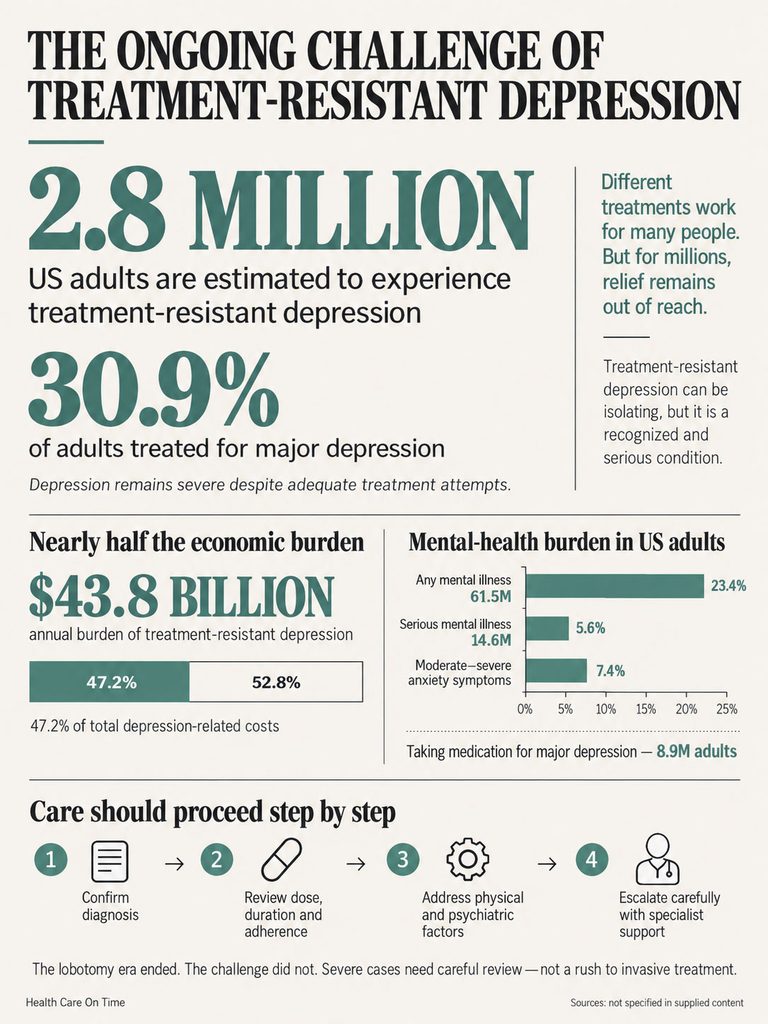
One cost model estimated that 2.8 million (30.9%) of the 8.9 million US adults taking medication for major depression had treatment-resistant depression. Researchers from Janssen Scientific Affairs co-authored that study, and Janssen sells a depression treatment. Treat the figure as one credible estimate, not a settled count.
| Measure | US Figure | Source |
| Adults with any mental illness (past year) | 23.4% (61.5 million), 2024 | SAMHSA NSDUH 2024 |
| Adults with serious mental illness | 5.6% (14.6 million), 2024 | SAMHSA NSDUH 2024 |
| Adults with moderate or severe anxiety symptoms | 7.4%, 2024 | SAMHSA NSDUH 2024 |
| Adults with serious thoughts of suicide | 5.2% annual average, 2022-2024 | SAMHSA NSDUH report, Sept 2025 |
| Adults taking medication for major depression | 8.9 million | Zhdanava et al., J Clin Psychiatry, 2021 |
| Of those, treatment-resistant depression | 2.8 million (30.9%) | Zhdanava et al., 2021 |
| Annual US burden of treatment-resistant depression | $43.8 billion (47.2% of the total) | Zhdanava et al., 2021 |
The lesson from the lobotomy era isn’t that nothing works. It’s that hard cases deserve careful, tested, step-by-step care instead of a desperate shortcut.
Medically Approved Next Steps When Treatment Isn’t Working
If you or someone you love isn’t getting better, surgery is almost never the next step. Here’s the order specialists generally follow.
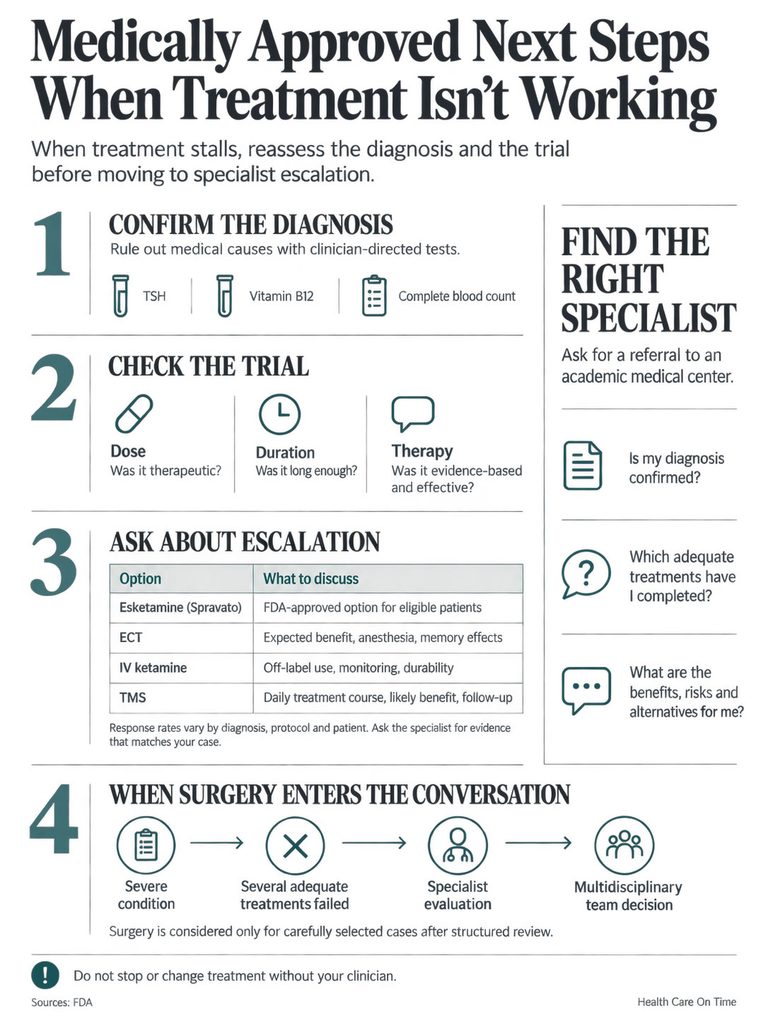
Step 1: Confirm the Diagnosis and Rule Out Medical Causes
Some “treatment-resistant” illness turns out to be a missed physical problem. Thyroid disease, low vitamin B12, anemia, sleep apnea, medication side effects, and alcohol or drug use can all mimic or worsen depression and anxiety.
Patients booking pre-treatment lab panels with us often ask which tests matter most. A common starting point is a TSH (thyroid) test, vitamin B12 and folate, a complete blood count, and a metabolic panel (CMP). Your doctor decides what fits your history.
The diagnosis itself deserves a second look, too. Bipolar disorder is sometimes treated as ordinary depression for years, and standard antidepressants may not help it.
Step 2: Check Whether Treatment Was Truly Adequate
Not responding to the first medication is common and doesn’t mean your depression is “resistant.” In the large US STAR*D trial, only 28 to 33% of patients reached remission on their first antidepressant.
A medication trial only counts if the dose was high enough, it was taken for long enough (usually at least 4 to 8 weeks), and it was taken consistently. Many people labeled “resistant” never had a full trial.
Therapy matters as much as pills. For OCD, exposure and response prevention (ERP) has an estimated 43 to 50% remission rate and a 62 to 65% response rate.
Step 3: Ask About FDA-Approved Escalation Options
Esketamine (Spravato)
In January 2025, the FDA approved esketamine nasal spray as the first stand-alone treatment for treatment-resistant depression. The label defines treatment-resistant depression as an inadequate response to at least two oral antidepressants.
In the trial behind the approval, 22.5% of patients on esketamine reached remission at four weeks, vs 7.6% on placebo. It’s available only through a restricted safety program, so it’s given at certified clinics.
Electroconvulsive Therapy and IV Ketamine
ECT is given under general anesthesia and involves no surgery. In the ELEKT-D trial of 403 patients with treatment-resistant depression without psychosis, 55.4% responded to IV ketamine and 41.2% responded to ECT.
Critics noted that ECT patients received only nine sessions, while a typical course is 12 to 16. For the most severe, life-threatening depression, many psychiatrists still turn to ECT first.
Age may matter, too. A large Swedish trial (not US data) found ECT led to remission in 77% of patients aged 51 to 85, vs 50% of those aged 18 to 50, while ketamine worked better in younger adults.
Transcranial Magnetic Stimulation (TMS)
The FDA cleared the first TMS device for depression in October 2008. Treatment is a 40-minute outpatient session, repeated daily for 4 to 6 weeks, with no anesthesia. That first clearance covered adults who hadn’t improved after one antidepressant.
TMS was also approved for OCD in 2018 and has shown a 38.1% response rate after six weeks.
Step 4: When Surgery Enters the Conversation
Brain stimulation or ablation is considered only after years of severe illness and many failed treatments. One US research protocol requires at least five years of treatment-resistant OCD with major loss of function.
Our medical reviewers note that even at this stage, surgery is a team decision. A psychiatrist, a neurosurgeon, and usually an ethics or review board weigh the case together.
Families sometimes ask us whether they can request surgery on a loved one’s behalf. Modern programs are built around the patient’s own informed consent, the opposite of how many lobotomies were decided.
How to Find a Specialist in the US
Start with a referral from your psychiatrist to an academic medical center with a psychiatry department. For OCD, the International OCD Foundation keeps a directory of specialists and intensive treatment programs.
Call your insurer early, because stimulation treatments and esketamine often require prior authorization. Studies like TRANSCEND are listed on ClinicalTrials.gov.
Good questions to ask a specialist center include:
- How many psychiatric DBS or ablation procedures has your team performed?
- Who adjusts the device, and how often are follow-up visits?
- What will insurance cover, and what’s the likely out-of-pocket cost?
- Will therapy and medication continue afterward?
| Scenario | Recommended Action | Why It Matters |
| Depression not improved after 1 antidepressant | Ask about a dose change, a switch, or adding therapy | Only 28-33% remit on the first drug, so this is common |
| Depression not improved after 2 antidepressants at full dose | Ask for a treatment-resistance review and basic labs | That’s the FDA-label definition of treatment-resistant depression |
| OCD not improved after an SSRI plus ERP | Request an OCD specialist or intensive program | ERP produces 62-65% response rates when done properly |
| New depression, psychosis, or personality change after age 50 | Get a medical and neurological workup first | Thyroid disease, B12 deficiency, medications, and brain conditions can mimic mental illness |
| Severe depression with suicidal thoughts or refusing food | Seek emergency care and ask about ECT | ECT acts quickly in severe depression |
| Severe OCD for 5+ years despite 3+ SSRIs, ERP, and add-on drugs | Ask for evaluation at an academic center offering DBS or capsulotomy | Last-resort options with roughly 56-57% responder rates |
| Thoughts of suicide right now | Call or text 988, or call 911 | Crisis support is available 24/7 |
5 Common Myths About Lobotomy
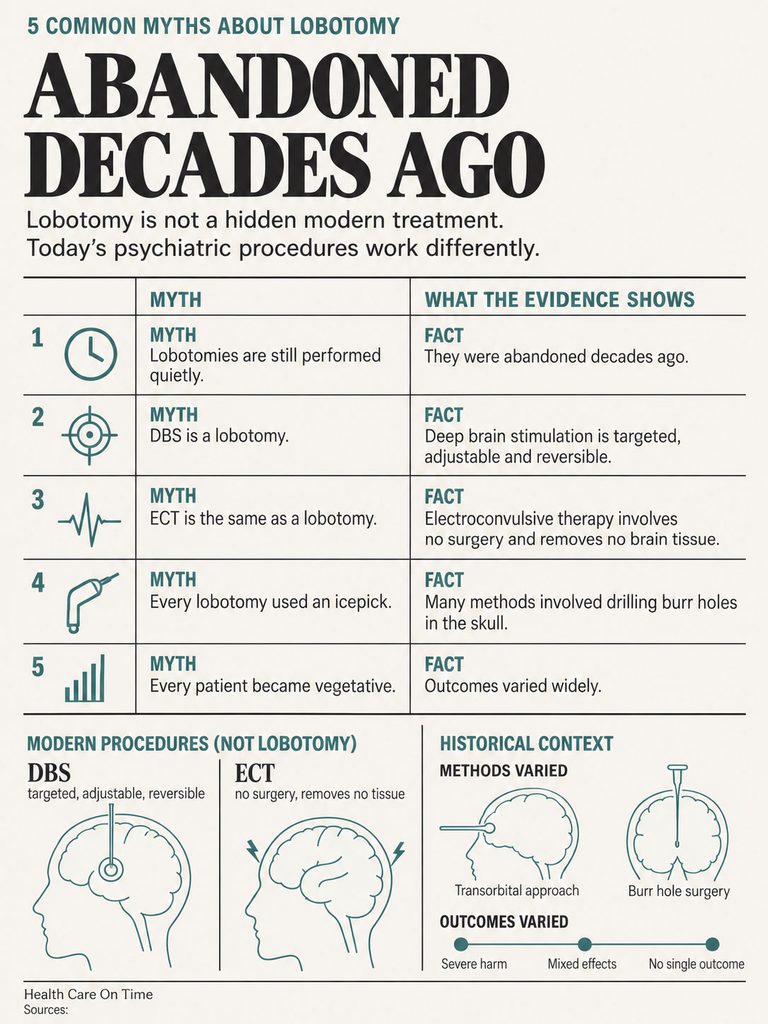
Myth: Lobotomies Are Still Done Quietly
The classic procedure was abandoned decades ago. Online lists claiming certain countries still do lobotomies routinely recycle old claims that authoritative sources contradict.
Myth: Deep Brain Stimulation Is a Lobotomy
DBS is targeted, adjustable, and reversible. A lobotomy was none of those.
Myth: ECT Is the Same Thing
Our editorial team hears this mix-up more than any other. ECT involves no surgery and removes no brain tissue.
Myth: Every Lobotomy Used an Ice Pick
Freeman’s transorbital method became the famous image, but many operations used burr holes drilled in the skull.
Myth: Every Patient Ended Up in a Vegetative State
Outcomes varied widely. Some patients left the hospital, many lost emotional depth and drive, and some died.
Frequently Asked Questions
What does a lobotomy do to a person?
A lobotomy cut connections between the frontal lobes and deeper brain regions. Many patients became calmer, but many also lost motivation, emotional depth, and the ability to plan or concentrate. Some developed seizures, some couldn’t care for themselves afterward, and some died from the surgery.
Are lobotomies legal in the United States?
There’s no federal ban, but the classic lobotomy isn’t performed in mainstream US medicine. A national commission in the 1970s chose to regulate psychosurgery rather than ban it, so states set their own rules. California, for example, lets psychiatric patients refuse psychosurgery and names lobotomy in its definition.
Why did doctors stop doing lobotomies?
Three forces ended it. Chlorpromazine, approved by the FDA in 1954, helped patients without destroying brain tissue. Outcome data looked poor once patients were followed closely. And public opinion turned sharply after high-profile cases and critical portrayals in books and films.
Who invented the lobotomy?
Portuguese neurologist Egas Moniz performed the first prefrontal leucotomy in 1935 with colleague Almeida Lima and won the 1949 Nobel Prize for it. Swiss psychiatrist Gottlieb Burckhardt had tried psychosurgery on mental patients around 1890. Walter Freeman popularized the lobotomy in the United States.
How many lobotomies were performed in the US?
Estimates range from more than 40,000 to more than 50,000, with most done between 1949 and 1952. Exact counts don’t exist because many operations happened in state hospitals with poor records. Walter Freeman alone performed or supervised roughly 3,500.
Can a lobotomy be reversed?
No. A lobotomy permanently destroyed brain tissue and nerve connections. Some patients adapted or partly improved over time, but the damage itself couldn’t be undone. That permanence is a key difference from deep brain stimulation, which can be adjusted or switched off.
What is the difference between a lobotomy and a lobectomy?
A lobotomy cut nerve fibers in the frontal lobes to change mood or behavior, and it’s no longer performed. A lobectomy removes an entire lobe of an organ, such as part of a lung for cancer or part of the temporal lobe for drug-resistant epilepsy. Lobectomies remain standard surgeries.
Is deep brain stimulation the same as a lobotomy?
No. Deep brain stimulation places thin, imaging-guided electrodes that send adjustable electrical pulses to one brain circuit, and it can be reprogrammed or turned off. The FDA permits it for OCD under a humanitarian device exemption, only in adults who have failed at least three SSRIs.
Is ECT the same as a lobotomy?
No. Electroconvulsive therapy uses a brief, controlled electrical current under general anesthesia to trigger a short seizure. It involves no surgery and removes no brain tissue. Temporary memory problems can occur, but ECT remains one of the most effective treatments for severe depression.
What is an ice pick lobotomy?
It’s the common name for the transorbital lobotomy Walter Freeman introduced in the US in 1946. A thin steel instrument was passed through the bone above the eye into the frontal lobe and swept to cut connections. It took about 10 minutes and needed no operating room.
Were lobotomies performed on children?
Yes, though far less often than on adults. Walter Freeman lobotomized Howard Dully in 1960, when Dully was 12. Today, California’s minor-consent law doesn’t allow a minor to receive psychosurgery without a parent’s or guardian’s consent, and modern programs generally treat adults only.
What replaced the lobotomy?
Medication replaced it first, starting with chlorpromazine in 1954. Today’s options include antidepressants, antipsychotics, structured therapy, ECT, TMS, and esketamine. For the rare patient who doesn’t respond to any of these, capsulotomy or deep brain stimulation may be considered at specialized centers.
Disclaimer: This article is for educational purposes only and isn’t medical advice. Decisions about psychiatric treatment, including brain stimulation or surgery, should be made with a qualified psychiatrist. If you or someone you love is thinking about suicide, call or text 988 to reach the 988 Suicide and Crisis Lifeline. In an emergency, call 911.
References
- NPR: A Lobotomy Timeline (2005)
- NPR: My Lobotomy, Howard Dully’s Journey (transcript)
- Britannica: Lobotomy
- Britannica: How Many People Actually Got Lobotomized?
- Britannica: Walter Jackson Freeman II
- History of Frontal Lobotomy in the United States, 1935-1955 (PubMed)
- Tuft M, Nakken KO. Post-lobotomy epilepsy. Epilepsy and Behavior Case Reports, 2017
- Pippard J. Leucotomy in Britain Today. Journal of Mental Science, 1962
- Robin AA. A controlled study of the effects of leucotomy. J Neurol Neurosurg Psychiatry, 1958;21:262-269
- Science History Institute: Chlorpromazine and the Arrival of Thorazine
- Tidsskriftet: Lessons to Be Learnt From the History of Lobotomy, 2022
- California Welfare and Institutions Code Section 5325
- Frontiers in Human Neuroscience: Laws Regulating Neurosurgery for Psychiatric Disorders, 2020
- Pinckard-Dover H, et al. The Decline of DBS for OCD After FDA HDE Approval. Frontiers in Surgery, 2021
- Psychiatric News: FDA OKs Brain-Stimulation Device for Treatment-Resistant OCD, 2009
- Abdulbaki A, et al. DBS for OCD: Umbrella Review and Updated Meta-Analysis. Psychiatry Research, 2025
- Hageman SB, et al. DBS vs Ablative Surgery for Refractory OCD. Acta Psychiatrica Scandinavica, 2021
- Kumar KK, et al. Neuroablation vs DBS for Treatment-Resistant OCD. J Neurol Neurosurg Psychiatry, 2019
- Visser-Vandewalle V, et al. DBS for OCD: A Crisis of Access. Nature Medicine, 2022
- Shea JM, et al. Mechanisms of DBS and Implications in OCD. Frontiers in Human Neuroscience, 2025
- Abbott: TRANSCEND Study
- SAMHSA: 2024 National Survey on Drug Use and Health
- SAMHSA: Any Mental Illness or Serious Thoughts of Suicide Among Adults, 2025
- Zhdanava M, et al. Prevalence and National Burden of TRD. J Clin Psychiatry, 2021
- Psychiatric Times: Esketamine Approved as Monotherapy for TRD, 2025
- Psychiatric News: Ketamine Comparable to ECT for Refractory Depression, 2023
- Current Psychiatry: Transcranial Magnetic Stimulation for Depression