
Roughly 4.5 million Americans land in an emergency department every year because something changed in how they think, speak, or stay awake. Here is the part nobody warns families about: in 27.1% of those visits, the discharge paperwork lists a nonspecific symptom code, which is hospital shorthand for a cause that was never pinned down.
Table of Contents
Quick Answer
Altered mental status (AMS) is any change from a person’s normal baseline in alertness, awareness, thinking, memory, or behavior. It is a description of a problem, not a diagnosis. Causes range from low blood sugar and medication side effects to stroke, sepsis, and organ failure. Sudden AMS is treated as a medical emergency until a cause is found, because several of the causes are reversible only if they are caught fast.
At a Glance
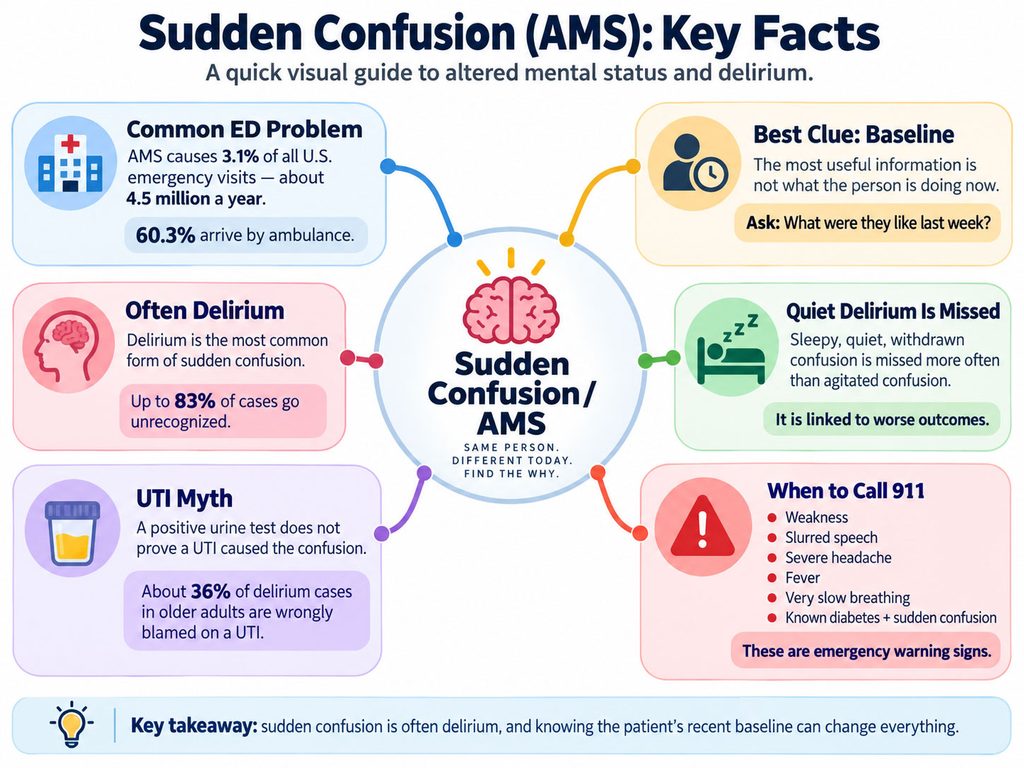
AMS accounts for 3.1% of all US emergency department visits, about 4.5 million a year, and 60.3% of those patients arrive by ambulance.
The most useful information is not what the person is doing now. It is what they were like last week.
Delirium is the most common form of sudden confusion, and as many as 83% of cases go unrecognized.
Quiet, sleepy, withdrawn confusion is missed far more often than agitated confusion, and it carries worse outcomes.
A positive urine test does not prove a urinary tract infection caused the confusion. About 36% of delirium cases in older adults are wrongly blamed on a UTI.
Sudden confusion with weakness, slurred speech, a severe headache, fever, very slow breathing, or a known diabetes diagnosis is a 911 call.
What Altered Mental Status Actually Means
Altered mental status is an umbrella term. It covers everything from mild fogginess and repeated questions to complete unresponsiveness, and by itself it says nothing about why the change happened.
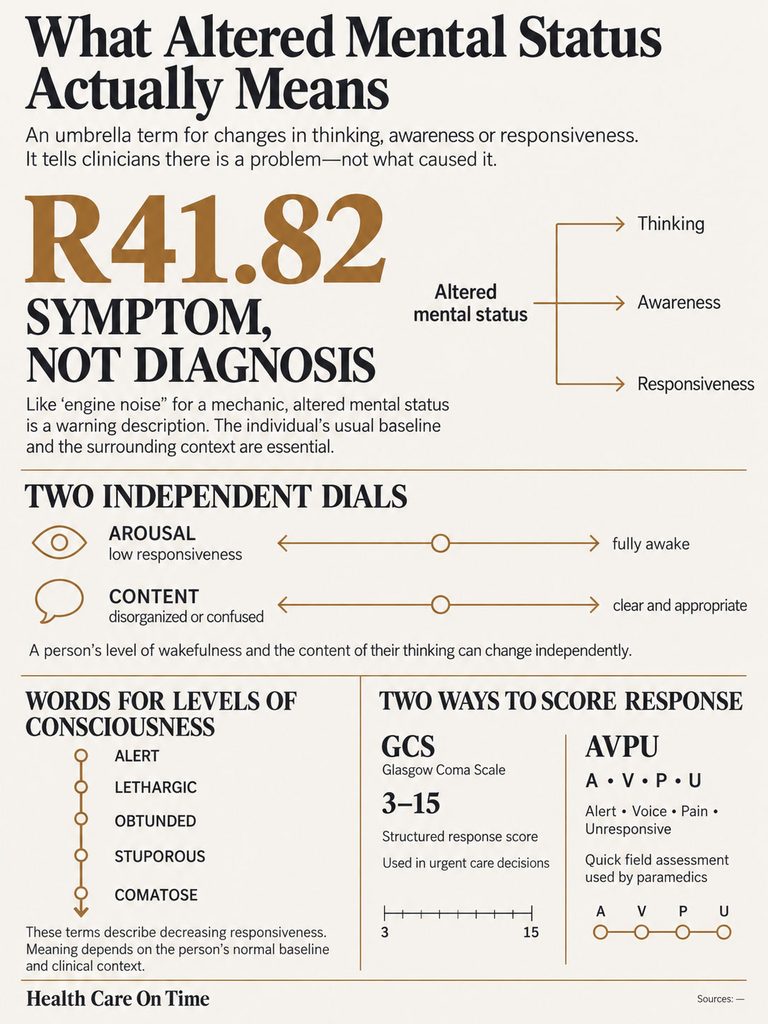
Clinicians use it the way a mechanic uses “engine noise.” The phrase flags that something is wrong and that the cause has not been identified yet. In the ICD-10 coding system it carries the code R41.82, filed under symptoms rather than diseases.
That distinction matters more than it sounds. Our medical reviewers note that families often read “altered mental status” on a discharge summary and assume it was the diagnosis. It was the question, not the answer.
Baseline Is the Whole Comparison
There is no universal normal for mental status. A retired engineer who does the crossword daily and a person with moderate dementia have wildly different baselines, and altered mental status only means “different from this person’s own usual.”
This is why the most valuable person in an emergency room is often the family member who can describe last Tuesday. Without that reference point, clinicians are reading a single frame of a film.
The Two Things Clinicians Are Measuring
Mental status has two separate dials, and they move independently.
The first is arousal, meaning how awake and responsive someone is. This is governed largely by a network in the brainstem called the ascending reticular activating system, running through the midbrain, pons, and medulla.
The second is content, meaning the quality of thinking. A person can be wide awake and talking complete nonsense, and another can be perfectly logical but nearly impossible to rouse.
Strokes, bleeds, and masses tend to hit one dial in a focal pattern. Metabolic problems such as low sodium or low oxygen usually dim both dials at once.
The Words You Will Hear on the Chart
Hospital staff work from a specific ladder of terms describing level of consciousness. Knowing them helps when a nurse calls at 2 a.m.
| Term | What It Looks Like | Rough Equivalent |
| Alert | Awake, aware, answers appropriately | AVPU: Alert; GCS 15 |
| Lethargic | Drowsy, wakes to voice, drifts back off | AVPU: responds to Voice; GCS 13 to 14 |
| Obtunded | Hard to wake, slow and minimal responses | Between voice and pain; GCS 10 to 12 |
| Stuporous | Wakes only to firm pain, no real conversation | AVPU: responds to Pain; GCS 8 to 9 |
| Comatose | No purposeful response to anything | AVPU: Unresponsive; GCS 3 to 8 |
The Glasgow Coma Scale scores three things: eye opening (1 to 4), verbal response (1 to 5), and best motor response (1 to 6). The lowest total is 3, the highest is 15, and a score at or below 8 usually triggers a conversation about protecting the airway.
AVPU is the faster field version paramedics use. Alert, responds to Voice, responds to Pain, Unresponsive. Four letters, five seconds, no arithmetic.
Delirium, Dementia, Psychosis, and Depression Are Not the Same Thing
This is where most consumer health pages get sloppy. Several popular sites list dementia, delirium, and psychosis as “the three types of altered mental status,” which flattens a slow chronic disease, a fast reversible one, and a psychiatric symptom into a single bucket.
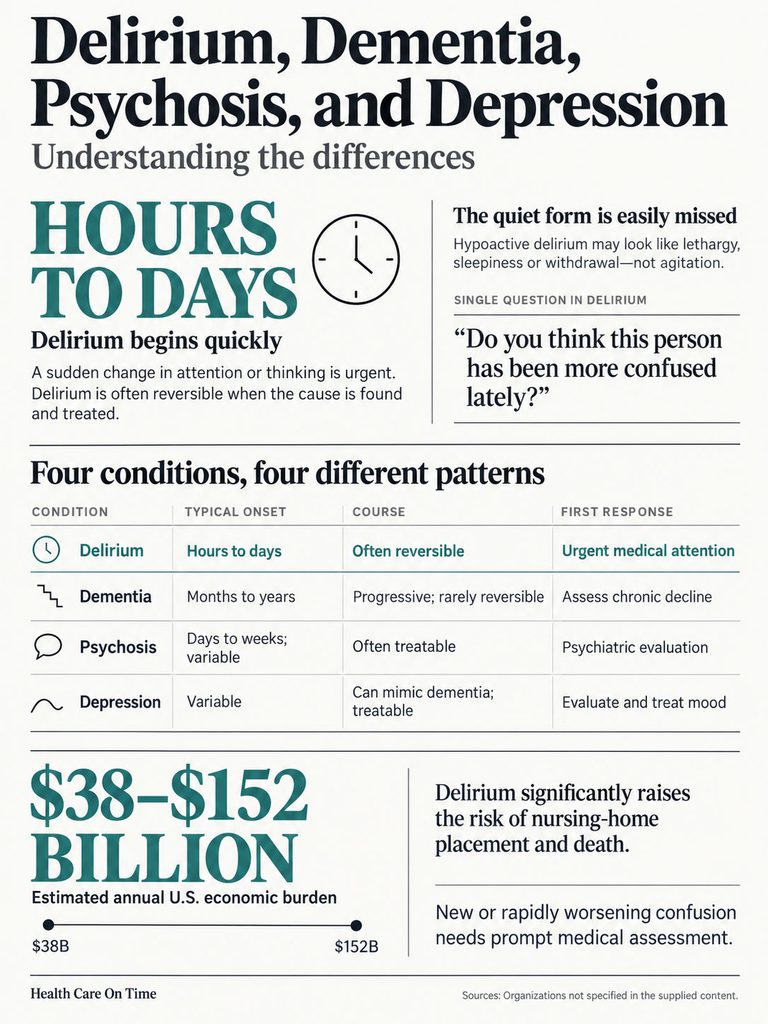
Telling them apart drives everything that follows, because the urgency and the treatment are entirely different.
| Feature | Delirium | Dementia | Psychosis | Depression (pseudo-dementia) | Normal Aging |
| How fast it starts | Hours to days | Months to years | Days to weeks | Weeks to months | Decades |
| Attention | Badly impaired, cannot hold a thread | Intact early, fades late | Usually intact | Poor effort, but able | Intact |
| Course across a day | Fluctuates, often worse at night | Steady, slow decline | Fairly steady | Steady, often worse in the morning | Stable |
| Alertness | Often abnormal (drowsy or hypervigilant) | Normal until very late | Normal | Normal | Normal |
| Reversible? | Often, if the cause is treated | Rarely | Often, with treatment | Yes, with treatment | Not a disease |
| Usual first step | Urgent medical workup | Outpatient cognitive evaluation | Psychiatric evaluation | Mood assessment | Reassurance |
Delirium is the form that sends people to the emergency department. It affects an estimated 23% of adult medical inpatients, rising to about 32% of critically ill patients and 75% in palliative care. Between 6% and 38% of older adults arriving at a US emergency department already have it.
Dementia is a risk factor for delirium, not a synonym. Someone with Alzheimer’s disease who gets sharply worse over 48 hours has delirium layered on top of dementia, and that new change needs a medical explanation.
Hypoactive Delirium, the Kind Everyone Misses
Ask most people to picture confusion and they picture agitation: pulling at IV lines, shouting, trying to leave. That is hyperactive delirium, and it is the minority presentation.
The more common version is hypoactive. The person is quiet, sleepy, withdrawn, slow to answer, easily mistaken for tired, depressed, or simply old. Nobody calls a nurse because grandma is being pleasant and napping.
That is why up to 83% of delirium cases are missed, and why emergency clinicians fail to recognize it as much as 70% of the time. Undetected delirium is linked with longer stays, higher mortality, and more repeat visits.
Patients and families who contact HealthCareOnTime after a hospital stay describe this pattern constantly. The change was real, it was noticed, and it was written off as fatigue.
One Question Families Can Actually Use
Researchers developed a shortcut called the Single Question in Delirium, and it is exactly what it sounds like. Ask someone who knows the patient well: “Do you think this person has been more confused lately?”
It is not a diagnostic test, and it should never replace a clinician’s assessment. It is a way to raise the question out loud in a room where nobody has yet, which is often the missing step.
Why Getting This Right Changes What Happens Next
Delirium is not a benign inconvenience. It is associated with roughly double the risk of nursing home placement, about triple the risk of later developing dementia, and a 15% to 30% rise in one-year mortality.
The financial picture matches. Costs attributable to delirium run from about $16,300 to over $64,400 per patient in the year after hospitalization, putting the national burden between $38 billion and $152 billion annually.
What Causes Altered Mental Status
The list of possible causes is enormous, which is why emergency clinicians work from a memory aid rather than a differential.
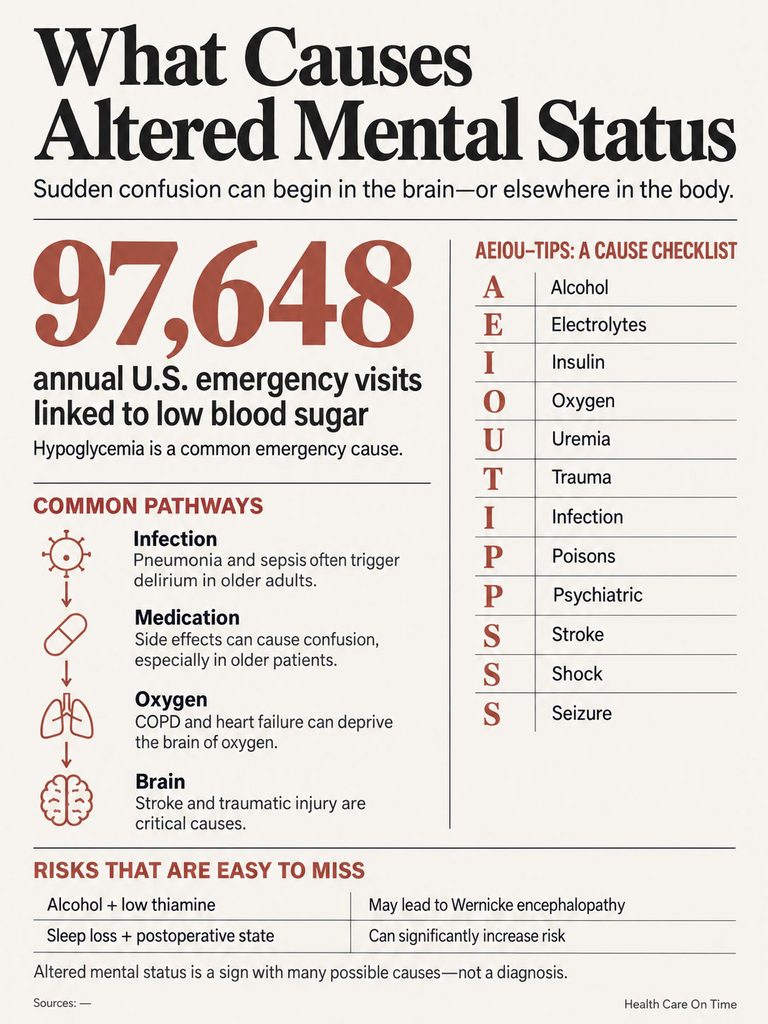
The classic one is AEIOU-TIPS: Alcohol, Epilepsy and Electrolytes, Insulin (blood sugar in both directions), Oxygen and Opiates, Uremia, Trauma and Temperature, Infection, Poisons and Psychiatric, and Stroke, Shock, and Seizure.
Age shifts the odds substantially, and the pattern is worth knowing before anyone assumes this is only a problem of old age.
Low Blood Sugar and Other Metabolic Causes
Hypoglycemia is checked first in nearly every emergency department in the country. It is common, it is fatal if ignored, and it is corrected in under a minute.
Insulin-related hypoglycemia alone drives an estimated 97,648 US emergency visits per year. Severe neurologic effects such as seizure or loss of consciousness were documented in 60.6% of those visits, and blood glucose at or below 50 mg/dL in 53.4%. Adults over 80 were 2.5 times likelier to need emergency care than adults aged 45 to 64.
Low sodium is the other heavyweight. Hyponatremia develops quietly with certain diuretics, some antidepressants, heavy beer intake, and excessive plain water during heat waves, and confusion can appear before any other symptom.
Round out the metabolic group with high calcium, kidney failure and rising urea, liver failure producing hepatic encephalopathy, and thyroid disease at either extreme.
Across the blood panels ordered through HealthCareOnTime, a small set of markers explains most metabolic confusion: glucose, sodium, calcium, blood urea nitrogen, creatinine, liver enzymes, and TSH.
Thiamine, Alcohol, and a Rule Worth Knowing
Heavy alcohol use depletes thiamine (vitamin B1), and severe depletion causes Wernicke encephalopathy: confusion, unsteady walking, and abnormal eye movements.
There is a practical wrinkle here that surprises people. Giving glucose to a thiamine-depleted person without also giving thiamine can worsen the condition, because the body burns through its last reserves metabolizing the sugar.
Emergency teams handle this routinely. It is worth understanding because it explains why a confused patient with a history of alcohol use gets a vitamin injection alongside everything else.
Infection and Sepsis
Infection is among the most frequent triggers of delirium in older adults, with pneumonia and bloodstream infections carrying the strongest link. In frail patients, confusion sometimes arrives before the fever does.
Sepsis-associated encephalopathy can appear with an unremarkable chest X-ray and only a mildly raised white cell count. The absence of dramatic infection findings does not rule one out.
Meningitis and encephalitis occupy a separate urgency tier. Confusion plus fever plus a stiff neck or a new severe headache is a same-hour evaluation, not a next-day appointment.
Medications, Alcohol, and Drugs
Medications are among the least suspected causes, especially when a drug has been taken for years without trouble. Kidney function declines with age, a dose that was fine at 68 stops being fine at 79, and nothing about the pill bottle signals the change.
Frequent offenders include anticholinergics (many over-the-counter sleep aids and older antihistamines among them), benzodiazepines, opioids, muscle relaxants, corticosteroids, sedating antidepressants, and several antiseizure drugs. The American Geriatrics Society Beers Criteria catalog these specifically for adults 65 and older.
Withdrawal belongs in this section too. Stopping alcohol or benzodiazepines abruptly, including involuntarily during a hospital admission, can produce severe agitated confusion two to four days later.
Opioid overdose presents differently: pinpoint pupils, very slow or shallow breathing, unresponsiveness. That combination calls for naloxone and 911.
Brain and Nerve Causes
Stroke, brain hemorrhage, traumatic brain injury, tumors, seizures, and the drowsy postictal period after a seizure all produce altered mental status.
Head trauma in older adults is easy to underestimate. A subdural hematoma can develop weeks after a fall that seemed minor at the time, particularly in someone taking a blood thinner.
Oxygen, Circulation, and Organ Failure
The brain consumes about 20% of the body’s oxygen, so anything starving it of oxygen or blood pressure produces confusion early.
That includes COPD flares with carbon dioxide retention, heart failure, severe anemia, dehydration with low blood pressure, and shock of any kind.
Carbon monoxide deserves a specific mention because it hides. Headache, nausea, and confusion in more than one household member during heating season, or in anyone using a generator or charcoal indoors, means everyone leaves the building and calls 911 from outside.
Environment, Sleep, Pain, and Hospital Delirium
Some triggers are not diseases at all. Sleep deprivation, unrelieved pain, constipation, urinary retention, dehydration, a new room, missing glasses, and missing hearing aids each raise the risk, and they stack on one another.
Surgery is a particularly heavy trigger. Reported postoperative altered mental status runs from 35% to 73% of surgical patients depending on age, existing conditions, and the type of operation.
Sundowning Is Related but Not Identical
Sundowning describes agitation, restlessness, and confusion that worsen in the late afternoon and evening in people with dementia. It follows a daily rhythm and tends to repeat in a familiar pattern.
Delirium also worsens at night, which makes the two easy to confuse. The difference is novelty. Longstanding evening restlessness in someone with dementia is likely sundowning. A new pattern, or a sudden intensification of an old one, should be treated as possible delirium until checked.
Children and Younger Adults
Mean age in the national emergency data was 50, not 80, so this is not solely a geriatric issue.
In infants and children, the leading causes are infection, trauma, metabolic changes, and accidental ingestion. A child who is unusually floppy, unrousable, or not recognizing a parent needs immediate evaluation, and a poison exposure should be reported to Poison Help at 1-800-222-1222.
In young adults, ingestion and trauma dominate, followed by seizures and severe infections. Sudden confusion in a healthy 25-year-old is never something to sleep off.
How Common Is Altered Mental Status in the US?
The clearest national picture comes from a 2025 analysis of the National Hospital Ambulatory Medical Care Survey covering 2016 through 2022.
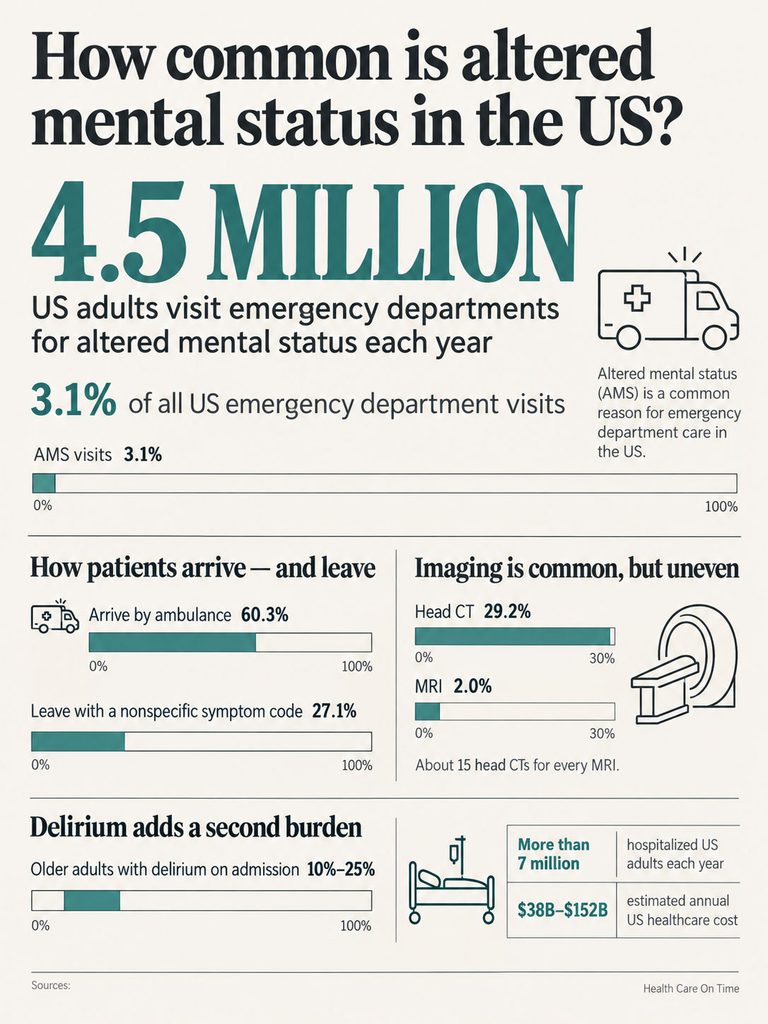
| Measure | Figure | Population | Source |
| Share of all US ED visits for AMS | 3.1% (95% CI 2.9 to 3.4) | Adult ED visits, 2016 to 2022 | Pertsovskaya et al., Am J Emerg Med, Nov 2025 (NHAMCS) |
| Annual US ED visits for AMS | About 4.5 million | Adults nationwide | Same NHAMCS analysis |
| Arrived by ambulance | 60.3% | Adult AMS ED visits | Same NHAMCS analysis |
| Discharged with a nonspecific symptom code | 27.1% (95% CI 24.3 to 30.2) | Adult AMS ED visits | Same NHAMCS analysis |
| Head CT performed | 29.2%; MRI in only 2.0% | Adult AMS ED visits | Same NHAMCS analysis |
| Delirium present at hospital admission | 10% to 25% | Hospitalized older adults | StatPearls, Change in Mental Status |
| Hospitalized US adults affected by delirium yearly | Over 7 million | US inpatients | Garcia Morales et al., 2026 (MCBS) |
| National annual cost attributable to delirium | $38 billion to $152 billion | US healthcare system | Leslie et al., one-year cost analysis |
Two figures in that table are worth reading together. Alcohol-related comorbidity appeared in 27.9% of these visits and substance use in 24.1%, which explains part of why the average age is lower than most people assume.
And 38% of patients went home directly from the emergency department, meaning a large share of altered mental status turns out to be manageable. The 27.1% syndromic-diagnosis figure is the uncomfortable one, because more than a quarter of these visits ended with a label that restates the symptom.
The UTI Myth That Sends Older Adults Home on the Wrong Antibiotic
If one section of this article is worth keeping, it is this one.
“Grandma is confused, it must be a UTI” is the most repeated claim about elderly confusion in the United States, and the evidence behind it is considerably weaker than its popularity suggests.
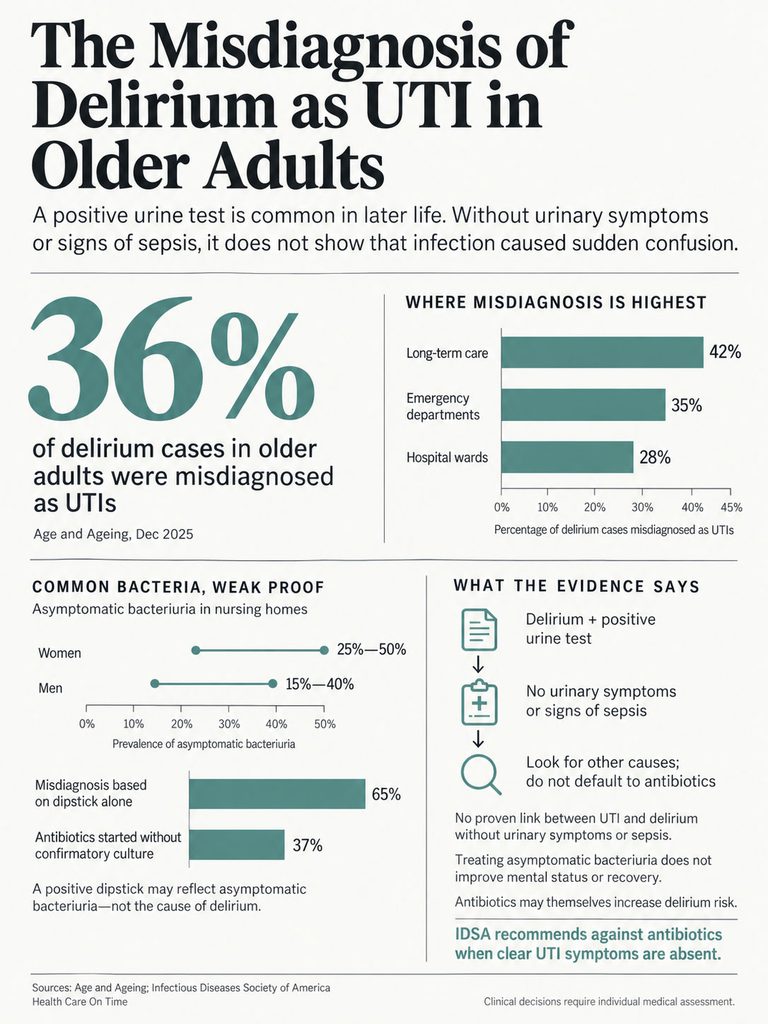
A systematic review published in Age and Ageing in December 2025, covering studies from 2015 to 2025, found that 36% of delirium cases in older adults were misdiagnosed as urinary tract infections (95% CI 29% to 42%). Long-term care facilities had the highest rate at 42%, emergency departments 35%, and hospital wards 28%.
The mechanism of the error is simple. Asymptomatic bacteriuria, meaning bacteria in the urine without infection symptoms, is very common in older adults. In nursing home residents without a catheter it runs 25% to 50% in women and 15% to 40% in men.
So the urine test comes back positive because the urine is usually positive. Around 65% of misdiagnosed cases in that review rested on a dipstick result alone, and empiric antibiotics were started in 37% without a confirmatory culture.
Multiple systematic reviews now conclude that any link between UTI and delirium has been overestimated, and that without urinary symptoms or signs of sepsis, asymptomatic bacteriuria is an unlikely cause of confusion. Treating it does not resolve the mental status change, does not reduce mortality, and does not improve functional recovery.
The Infectious Diseases Society of America strongly recommends against antimicrobial treatment for older adults with delirium who have no localizing genitourinary symptoms and no systemic signs such as fever or low blood pressure.
There is a second sting. Antibiotics themselves are associated with an increased risk of delirium, so a wrong diagnosis can deepen the very problem it was meant to solve while the real cause runs unchecked.
What to Ask Before Anyone Prescribes
None of this means a UTI can never cause confusion. In an older adult with genuine urinary symptoms, fever, or signs of sepsis, it can and should be treated quickly.
The useful question is whether anything besides the urine result points to infection. Reasonable things to ask:
- Are there urinary symptoms such as burning, urgency, new incontinence, or flank pain?
- Is there fever, low blood pressure, or a raised heart rate?
- Was a standardized delirium screen actually performed? Only about 40% of misdiagnosed cases had one.
- What else has been ruled out: glucose, sodium, oxygen, medications, and recent falls?
Our clinical reviewers see this often enough to keep it as a standing caution: a positive urine culture in a confused older adult is a finding, not a conclusion.
Red Flags: When Confusion Is a 911 Call
Sudden confusion does not reward patience. The table below is built for the person standing in a kitchen at 9 p.m., not for a clinic.
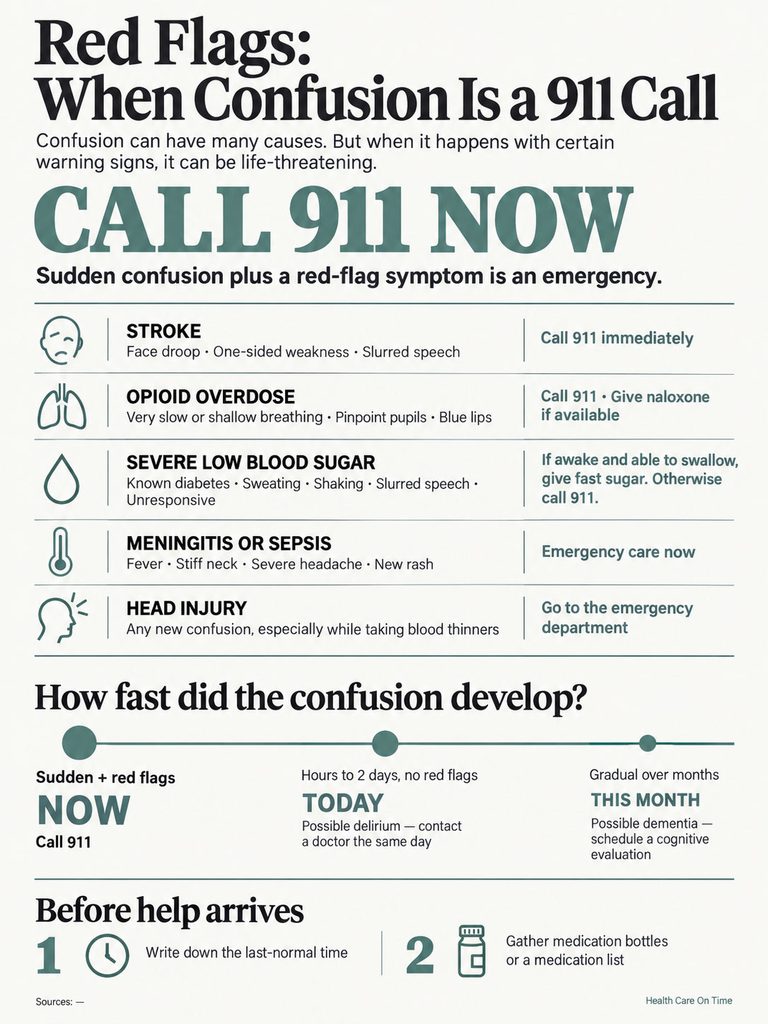
| What You Are Seeing | What It Could Mean | Timeframe | What to Do |
| Confusion plus face droop, one-sided weakness, or slurred speech | Stroke | Immediate | Call 911. Note the exact last-normal time. Do not drive them yourself. |
| Confusion plus very slow or shallow breathing, pinpoint pupils, blue lips | Opioid overdose | Immediate | Call 911. Give naloxone if available. Roll onto their side. |
| Known diabetes, plus sweating, shakiness, slurred speech, or unresponsiveness | Severe hypoglycemia | Immediate | If awake and swallowing safely, give fast sugar. If not, call 911 and put nothing in the mouth. |
| Confusion plus fever, stiff neck, severe headache, or a new rash | Meningitis or sepsis | Immediate | Call 911 or go to the nearest emergency department. |
| Confusion after any head injury, especially on a blood thinner | Bleeding inside the skull | Immediate | Emergency department, even if the fall seemed minor and even if it was days ago. |
| New confusion over hours to two days, no red flags above | Delirium from infection, medication, or a metabolic cause | Same day | Call the doctor’s office for a same-day slot or go to urgent care. Bring every medication bottle. |
| Gradual memory and word-finding decline over months | Possible dementia | This month | Schedule a primary care visit and request a cognitive evaluation. |
The Stroke Chameleon Problem
FAST-negative does not mean stroke-negative, and that assumption is one of the most dangerous in emergency care.
About 9% of strokes are missed at first emergency presentation, and in one two-hospital US review, 22% of ischemic strokes were initially misdiagnosed. The symptoms that pushed toward misdiagnosis were altered mental status, nausea and vomiting, dizziness, and vertigo.
The pattern is worst in the back of the brain. Posterior circulation strokes make up roughly 20% to 25% of ischemic strokes but were misdiagnosed 37% of the time, against 16% for anterior strokes. In one case-control study, 78% of misdiagnosed patients had been assessed as FAST-negative.
Altered mental status has been reported in as many as 25% of missed stroke cases. If confusion started abruptly, at a moment somebody can name, that abruptness is itself the warning.
The First Ten Minutes at Home
Before help arrives, a few actions matter and a few actively hurt.
Write down the exact time the person was last completely normal. That single detail determines eligibility for clot-busting treatment.
If they have diabetes and a meter is nearby, check the blood sugar. If they are drowsy or cannot swallow safely, put no food, drink, or pills in their mouth.
Gather every prescription bottle, over-the-counter product, and supplement into a bag. Leave nothing out for seeming harmless; sleep aids and older allergy medicines are frequent culprits.
What to Say at the Emergency Department
The person who can describe the baseline is the most valuable person in the room. Lead with four things:
- What they were like 24 hours, one week, and one month ago.
- Exactly when the change started, and whether it came on over minutes, hours, or days.
- Every medication, including anything new, stopped, or recently dose-adjusted.
- Recent falls, recent illness, alcohol use, and any new pain or constipation.
What Happens at the Hospital
The Bedside Screens
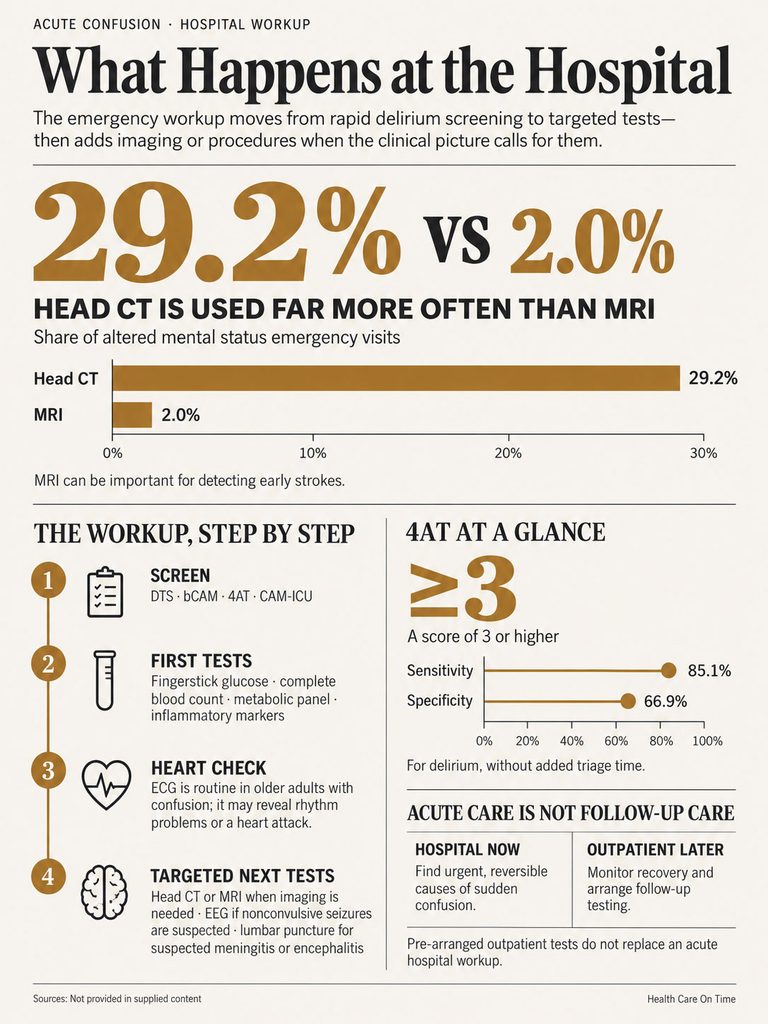
Delirium screening takes about two minutes when it happens. Common tools include the Delirium Triage Screen, the Brief Confusion Assessment Method, the 4 A’s Test, and CAM-ICU in critical care.
In a triage study of 370 emergency patients averaging 81.8 years old, a 4AT score of 3 or higher produced 85.1% sensitivity and 66.9% specificity for delirium, and added no measurable time to triage.
These tools work. The obstacle has never been the tools; it has been whether anyone reaches for them.
The Tests That Get Ordered and Why
Nearly every workup opens with a fingerstick glucose, then widens.
Standard first-round labs include a complete blood count (infection and anemia), a metabolic panel (sodium, calcium, kidney function, glucose), liver enzymes and ammonia when liver disease is suspected, thyroid function, urinalysis with culture, and a blood gas when oxygen or carbon dioxide is in question. Inflammatory markers such as CRP help gauge how much inflammation is running.
Toxicology screening, blood alcohol, and levels for drugs like digoxin or lithium are added when the history points that way. An ECG is routine, since rhythm problems and heart attacks in older adults sometimes announce themselves as confusion rather than chest pain.
Patients booking panels with us regularly ask which of these they can arrange in advance. The honest answer is that the acute workup belongs in a hospital, while the follow-up monitoring afterward is exactly what outpatient testing is for.
Imaging, EEG, and Spinal Taps
Head CT was performed in 29.2% of AMS emergency visits nationally, and MRI in only 2.0%. That gap matters, because early strokes at the back of the brain are frequently invisible on CT and need MRI to appear.
An EEG is added when nonconvulsive seizure activity is suspected, which is easy to miss because there is no shaking, only unexplained unresponsiveness. A lumbar puncture is reserved for suspected meningitis or encephalitis.
Treatment and Recovery
Fix the Cause First
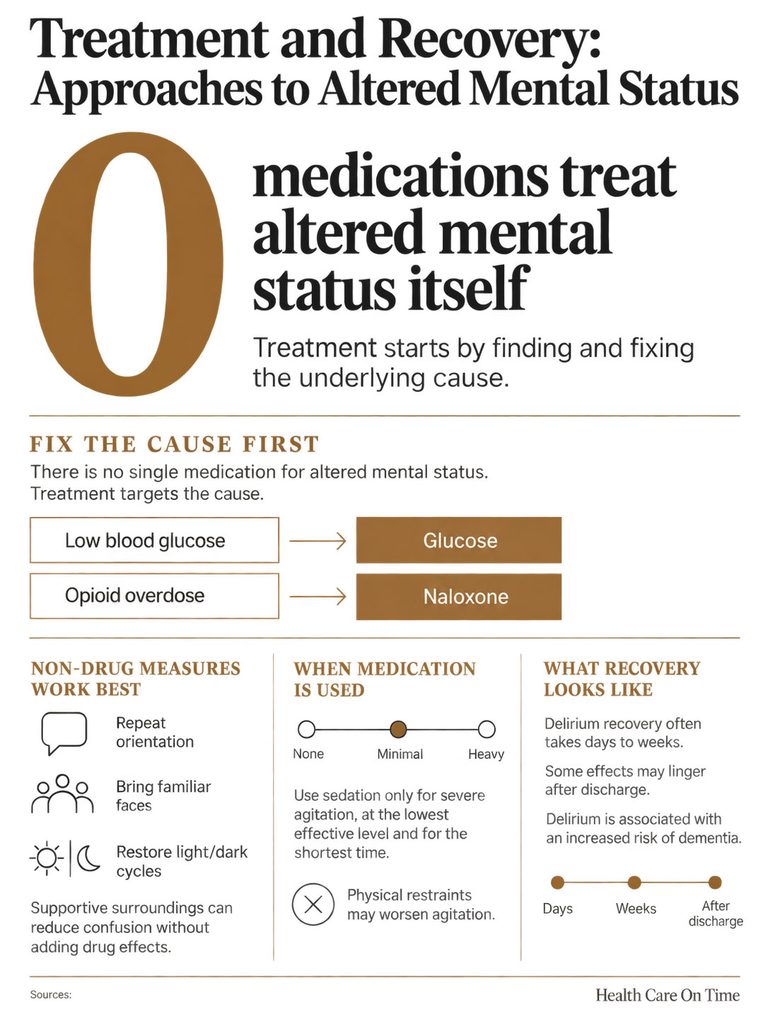
No medication treats altered mental status itself. Treatment targets whatever produced it: glucose for hypoglycemia, oxygen for hypoxia, antibiotics for a genuine infection, fluids for dehydration, naloxone for opioid overdose, thiamine for suspected Wernicke encephalopathy, and surgery for a bleed or rising pressure inside the skull.
Removing an offending medication counts as treatment too, and it is often the fastest-acting one available.
Non-Drug Measures That Work Best
For delirium, the strongest evidence sits with unglamorous interventions. Repeated orientation, restored glasses and hearing aids, bright days and dark quiet nights, protected sleep, early movement, treated pain, and a familiar face at the bedside.
Family presence is not a courtesy in this setting. It is part of the treatment.
When Medication Is Used
Sedating medication is reserved for agitation that puts the patient or staff at genuine risk, given at the lowest workable dose for the shortest possible time. It manages behavior; it does not shorten delirium or improve the outcome.
Physical restraints tend to worsen agitation and are avoided where possible.
What Recovery Looks Like
Many reversible causes resolve within hours. Delirium is slower and less tidy than families expect, often taking days to weeks, and sometimes months in older adults with existing cognitive impairment.
Honest framing helps. Some people return fully to baseline and some do not, and delirium is associated with roughly triple the risk of later dementia. Feeling not quite right for several weeks after discharge is common rather than a sign something went wrong.
Lowering the Risk Before It Happens
Before Any Planned Surgery
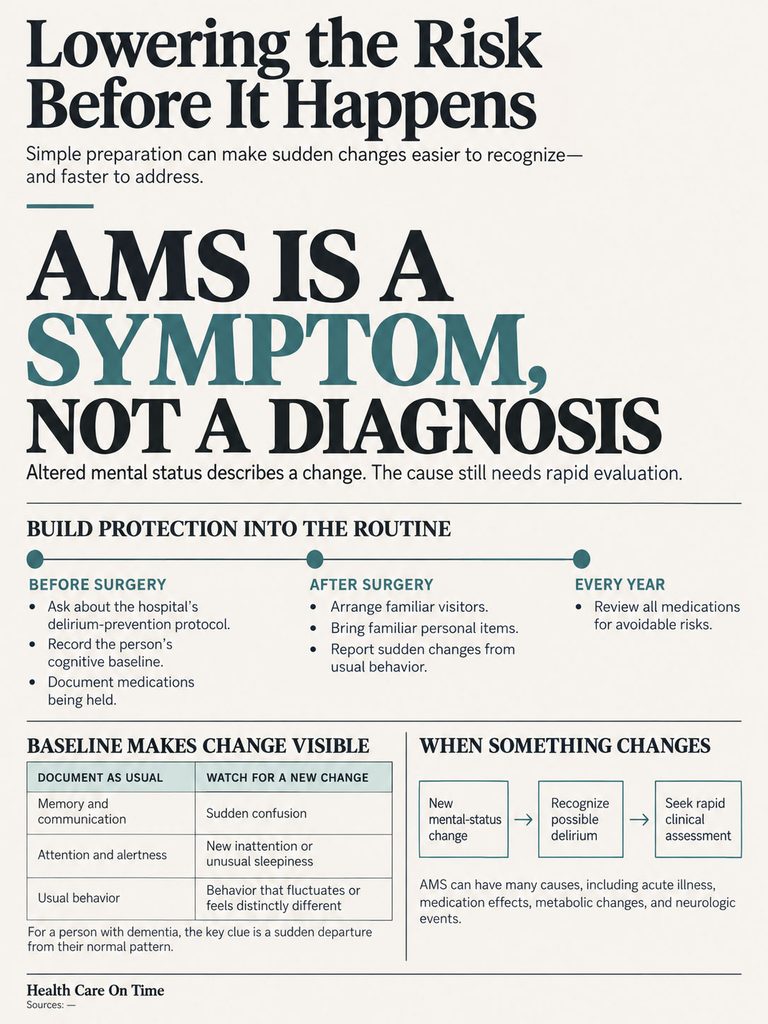
Ask the surgical team whether the hospital runs a delirium prevention protocol and whether a preoperative cognitive baseline will be recorded. Ask which current medications will be held.
Arrange for glasses, hearing aids, and a familiar visitor from the first day after surgery, not the third.
Medication Reviews That Matter
An annual medication review with a pharmacist or primary care clinician catches most of the avoidable causes on this page. Over-the-counter products count, particularly nighttime pain formulas and older allergy medicines.
Families who reach out to HealthCareOnTime after an episode of hospital confusion frequently discover the trigger was sitting in the medicine cabinet the whole time.
For Families of Someone With Dementia
Keep a short written baseline: how they usually speak, what they manage alone, how they sleep. It takes ten minutes to write and it is the most useful document any emergency clinician will read that night.
Delirium occurs in 40% to 89% of hospitalized older adults with dementia, so treat any sudden worsening as new until proven otherwise.
Frequently Asked Questions
What does AMS stand for in medical terms?
AMS stands for altered mental status. It describes any change from a person’s normal baseline in alertness, awareness, thinking, memory, or behavior. It is a symptom description used while the cause is still being investigated, not a diagnosis in itself, and it carries the ICD-10 code R41.82.
Is altered mental status the same as delirium?
No. Altered mental status is the broad umbrella term for any change in mental function. Delirium is one specific cause of it, defined by rapid onset, impaired attention, and symptoms that fluctuate through the day. Delirium is the most common form of sudden confusion in hospitalized and older adults.
What is the ICD-10 code for altered mental status?
The code is R41.82, “altered mental status, unspecified.” It sits in the symptoms and signs chapter rather than the disease chapters, which reflects exactly what the term means. Once a cause is identified, coders typically replace R41.82 with the specific diagnosis, such as delirium, hypoglycemia, or stroke.
Can dehydration alone cause confusion?
Yes, particularly in older adults. Dehydration lowers blood pressure and reduces blood flow to the brain, and it often travels with electrolyte disturbances such as abnormal sodium. It is rarely the whole story, so dehydration should not close the investigation before medications, infection, and glucose have been checked.
What is the most common cause of AMS in older adults?
There is no single answer, but infection, medications and drug interactions, metabolic disturbances, and stroke lead the list. Older adults frequently have more than one contributor at once, which is why finding one explanation does not mean the workup should stop there.
Is altered mental status always an emergency?
Sudden altered mental status, meaning a change over hours to a couple of days, is treated as an emergency until a cause is found. Slow decline over months is usually not an emergency but still needs evaluation. Confusion with weakness, slurred speech, fever, head injury, or very slow breathing warrants 911 immediately.
Can altered mental status be reversed?
Often, yes. Low blood sugar, dehydration, medication effects, electrolyte problems, and treated infections frequently resolve completely. Recovery depends on the cause and on how fast it was addressed, which is why delay is the main risk. Some causes, such as advanced dementia or severe brain injury, are not reversible.
How long does hospital delirium last?
It varies widely. Some episodes clear within a day or two once the trigger is treated, while others persist for weeks. Older adults and those with existing cognitive impairment recover more slowly, and lingering fogginess for several weeks after discharge is common rather than unusual.
Does a positive urine test prove the confusion is from a UTI?
No. Bacteria in the urine without symptoms is very common in older adults, affecting 25% to 50% of women in nursing homes. A 2025 systematic review found 36% of delirium cases were wrongly blamed on a UTI. Without urinary symptoms, fever, or low blood pressure, look for another cause.
What is the difference between hypoactive and hyperactive delirium?
Hyperactive delirium brings agitation, restlessness, and sometimes hallucinations, and it gets noticed quickly. Hypoactive delirium is quiet: sleepiness, withdrawal, slow responses, reduced movement. Hypoactive is more common, far more often missed, and associated with worse outcomes precisely because it resembles ordinary tiredness.
Can anesthesia cause altered mental status?
Yes. Postoperative altered mental status is reported in 35% to 73% of surgical patients depending on age, existing conditions, and procedure type. Anesthesia is one contributor alongside pain, opioids, sleep disruption, blood loss, and an unfamiliar environment. Risk climbs sharply with age and with pre-existing cognitive impairment.
What tests are ordered for altered mental status?
A fingerstick glucose comes first. Then usually a complete blood count, metabolic panel, liver enzymes, thyroid function, urinalysis with culture, an ECG, and often a chest X-ray. Head imaging, toxicology screening, EEG, or a lumbar puncture are added based on what the history and examination suggest.
Medical Disclaimer
This article is for general information only and does not replace evaluation by a licensed clinician. Altered mental status can signal a life-threatening condition. If someone has sudden confusion, weakness, slurred speech, a severe headache, fever with a stiff neck, very slow breathing, or unresponsiveness, call 911 immediately. Never start, stop, or adjust any medication based on information read online. For suspected poisoning or overdose, contact Poison Help at 1-800-222-1222.
References
- Change in Mental Status, StatPearls (NCBI Bookshelf, NBK441973)
- Pertsovskaya V, et al. Characteristics of U.S. emergency department visits for altered mental status, 2016-2022. American Journal of Emergency Medicine, November 2025
- Recent-Onset Altered Mental Status: Evaluation and Management. American Family Physician
- Misdiagnosing Urinary Tract Infections as Delirium in Older Adults: A Systematic Review. Age and Ageing, December 2025
- When urine testing to rule out infection does more harm than good (PMC)
- Krinitski D, et al. Associations of delirium with urinary tract infections and asymptomatic bacteriuria in adults aged 65 and older. Journal of the American Geriatrics Society, 2021
- Missed Ischemic Stroke Diagnosis in the Emergency Department. Stroke (American Heart Association)
- Gurley KL, Edlow JA. Avoiding Misdiagnosis in Patients With Posterior Circulation Ischemia. Academic Emergency Medicine
- Geller AI, et al. National estimates of insulin-related hypoglycemia and errors leading to emergency department visits and hospitalizations. JAMA Internal Medicine
- Why We Must Prevent and Appropriately Manage Delirium. AMA Journal of Ethics
- Garcia Morales E, et al. Additional hospitalization costs associated with delirium among older adults (Medicare Current Beneficiary Survey, PMC)
- Soler-Sanchis A, et al. The 4AT scale for rapid detection of delirium in emergency department triage. Frontiers in Medicine, 2024
- Han JH, Wilber ST. Altered Mental Status in Older Emergency Department Patients (PMC)
- Delirium in Hospitalized Older Adults: A Narrative Review (PMC)
- Villa NAE, et al. Postoperative Altered Mental Status: A Case Report and Diagnostic Dilemma. Cureus, 2024