Researchers have followed thousands of healthy adults for years to see who gets cancer. Across 22 of those studies, the heaviest onion eaters got cancer at about the same rate as everyone else.
Table of Contents
That finding almost never makes the onion lists. Onions still earn their spot on your plate, though. Here’s what the health benefits of onions look like when you count only studies done in people.
Quick Answer: The best-supported health benefits of onions come from human studies. Onions deliver quercetin your body absorbs well, trim LDL cholesterol by about 6 mg/dL, slightly lower blood pressure in people who already have hypertension, and track with higher bone density in women over 50. Evidence for blood sugar and stomach cancer is early. Claims that onions prevent cancer overall, regrow hair, or absorb germs don’t hold up.
The 7 proven health benefits of onions, ranked by evidence strength:
- Highly absorbable quercetin
- Lower LDL and higher HDL cholesterol
- Slightly lower blood pressure in people with hypertension
- Higher bone density in women over 50
- Prebiotic fiber for gut bacteria
- A short-term dip in blood sugar
- A narrow signal for lower stomach and throat cancer risk
At a Glance
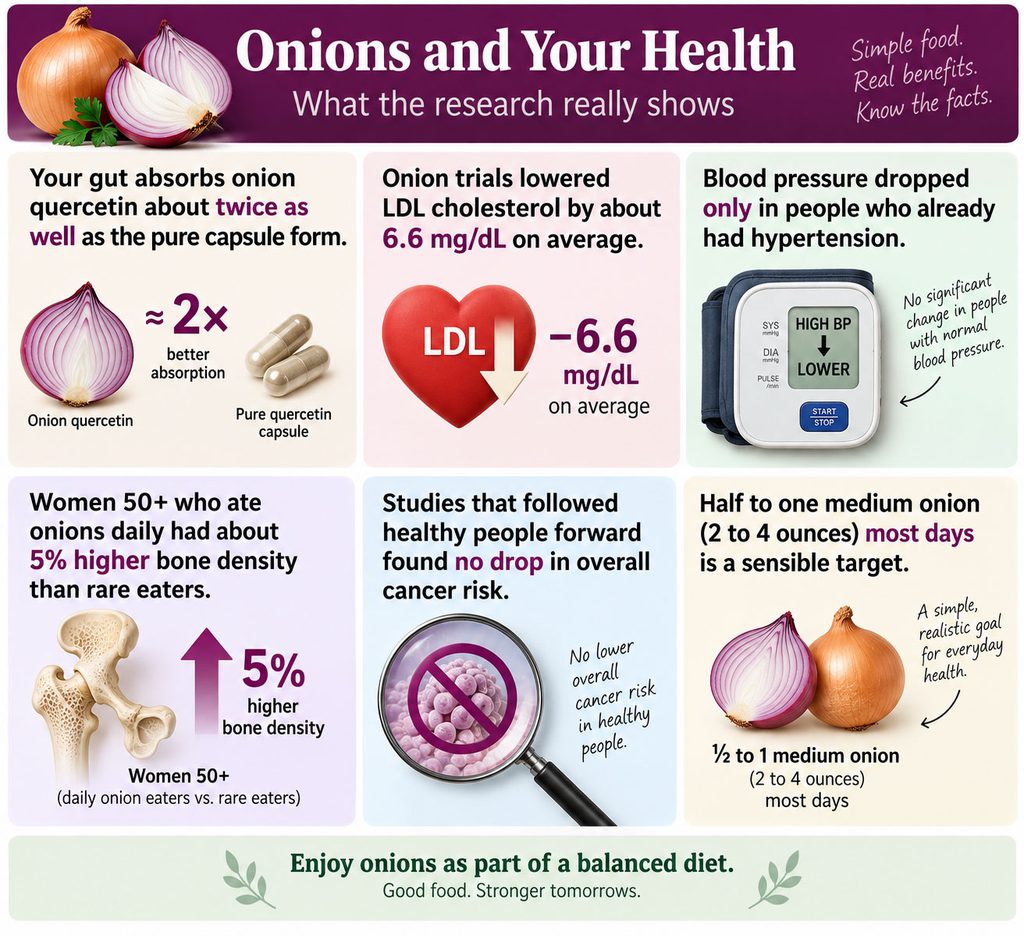
- Your gut absorbs onion quercetin about twice as well as the pure capsule form.
- Onion trials lowered LDL cholesterol by about 6.6 mg/dL on average.
- Blood pressure dropped only in people who already had hypertension.
- Women 50+ who ate onions daily had about 5% higher bone density than rare eaters.
- Studies that followed healthy people forward found no drop in overall cancer risk.
- Half to one medium onion (2 to 4 ounces) most days is a sensible target.
7 Proven Health Benefits of Eating Onions
Our medical reviewers sorted every claim about the health benefits of onions on Google’s first page into three piles. Some claims were tested in people eating onions, some in people taking onion extract, and many only in rats or test tubes. Only the first two piles made this list.
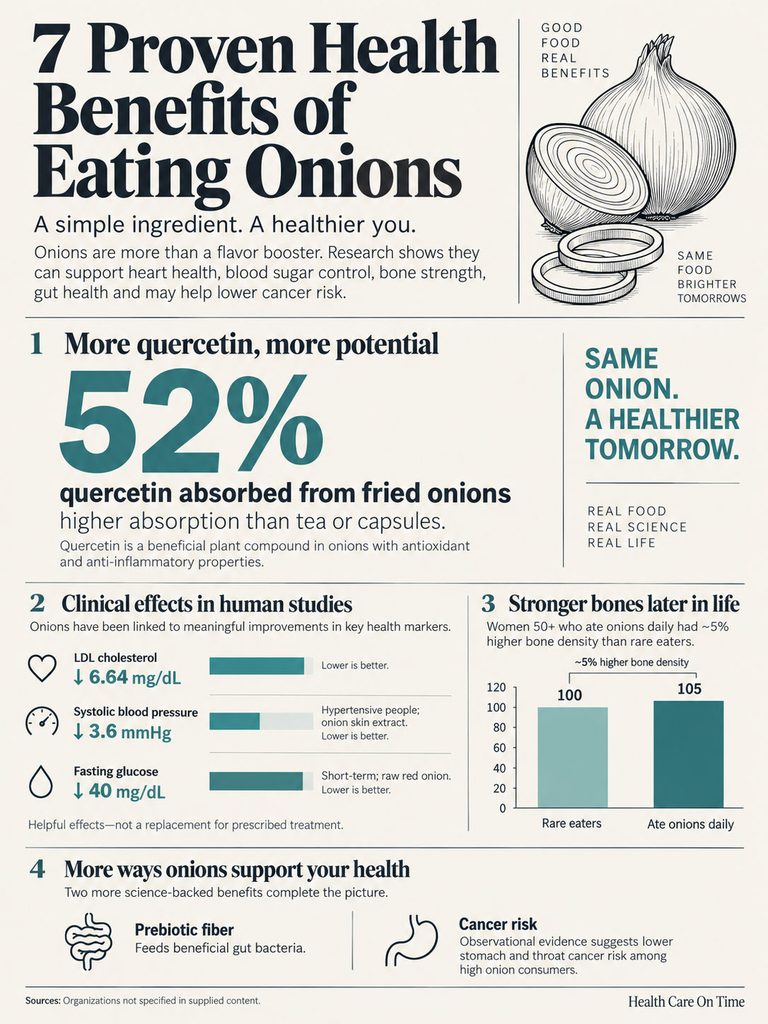
Table 1 grades each claim. Quick key to the grades:
- Strong: consistent human data
- Moderate: pooled trials, small effects
- Limited or Preliminary: one small trial
- Observational: a link, not proof
- Suggestive: a real but unconfirmed signal
| Claim | Best Human Evidence | Whole Onion or Extract? | Effect Size | Grade |
| Absorbable quercetin | Hollman 1995, 9 volunteers | Whole (fried onions) | 52% absorbed vs 24% for pure quercetin | Strong |
| Lower LDL cholesterol | 10 RCTs, 446 people (2021) | Mostly powder or extract | LDL down 6.64 mg/dL, HDL up 2.29 mg/dL | Moderate |
| Lower blood pressure | Brüll 2015 RCT, 70 adults | Extract (162 mg quercetin) | Systolic down 3.6 mmHg, hypertensives only | Limited |
| Higher bone density | NHANES 2003-2004, 507 women 50+ | Whole (diet survey) | About 5% higher bone density | Observational |
| Prebiotic gut fuel | Fructan fiber research | Whole | Fructans reach the colon undigested and feed bifidobacteria | Strong (mechanism) |
| Lower blood sugar | Taj Eldin 2010, 84 patients | Whole (3.5 oz raw red onion) | Fasting glucose down 40 mg/dL at 4 hours | Preliminary |
| Stomach and throat cancers | Zhou 2011; Guercio 2016 | Whole (diet) | Stomach cancer OR 0.54; throat cancers RR 0.72 | Suggestive |
| “Prevents cancer” | Zhang 2022, prospective only | Whole (diet) | RR 0.96 (0.90-1.03), not significant | Not supported |
| Hair regrowth | Sharquie 2002, 38 patients | Topical juice | 86.9% vs 13% regrowth, alopecia areata only | Very weak |
| Absorbs germs | None published | Not applicable | No human data | Myth |
1. The Most Absorbable Quercetin in the Produce Aisle
Quercetin is the plant compound behind most onion claims. Onions don’t just contain it; they hand it over in a form your gut takes up easily.
In a Dutch study of nine volunteers, the body absorbed about 52% of the quercetin in fried onions. By comparison, it absorbed 17% of the main form in tea and 24% of pure quercetin, the kind sold in capsules.
A follow-up study found quercetin from apples, and from tea’s main form, reached only about 30% of the levels seen with onions. Onion quercetin also peaked in the blood within an hour. The likely reason is that onion quercetin comes bonded to glucose, which the small intestine absorbs readily.
The test serving was a breakfast portion of fried onions holding the equivalent of 89 mg of quercetin. That’s a generous plate, but it shows ordinary cooked onions can deliver a meaningful dose.
Amounts depend on the onion. Red onions average about 32 mg of quercetin per 100 g (3.5 ounces), or roughly 35 mg in a medium onion. White onions average about 13 mg per 100 g, with large swings between samples.
2. Better Cholesterol Numbers
Among the heart-related health benefits of onions, this one has the most trials behind it. Ten randomized trials with 446 people found onion lowered LDL by 6.64 mg/dL and raised HDL by 2.29 mg/dL. Triglycerides didn’t budge.
Nine of those trials also showed total cholesterol dropping by about 5.4 mg/dL. The authors flagged that some results weren’t stable across analyses, and most trials used powder or extract rather than plain onions.
One trial did use the real thing. Women with PCOS (n=54) ate either 80 to 120 g of raw red onion daily (about 3 to 4 ounces) or 20 to 30 g daily, for 8 weeks. LDL fell in both groups, and by 5.13 mg/dL in the higher-onion group.
For scale, a moderate-intensity statin lowers LDL by 30% to 49%. Onions help at the margins; they don’t replace medication.
Patients who book lipid panels through HealthCareOnTime often ask whether food alone can close a cholesterol gap. For a gap of 5 to 10 mg/dL, sometimes. For a gap of 40, rarely.
Older population data point the same direction. In the Zutphen Elderly Study of 805 Dutch men aged 65 to 84, onions supplied 13% of flavonoid intake. Men with the highest flavonoid intake had about a third of the heart disease death risk after adjustment (RR 0.32). The link for onions alone was weaker.
3. Slightly Lower Blood Pressure, If Yours Is Already High
The best trial here used onion skin extract, not onions. Seventy overweight or obese adults took 162 mg of quercetin from onion skin extract daily, or a placebo, for 6 weeks each.
Across the whole group, 24-hour blood pressure didn’t change. In people with hypertension, 24-hour systolic pressure fell 3.6 mmHg. The researchers admitted that, given how many things they tested, the subgroup result could be chance.
The Dose Problem
The trial dose was set at 10 to 15 times what the average European gets from food each day. At about 32 mg per 100 g, matching it would take roughly 500 g of red onion daily. That’s about 1.1 pounds, or four and a half medium onions.
Patients checking blood pressure at home often ask us whether onions can stand in for a prescription. They can’t; most first-line blood pressure drugs lower systolic pressure several times more than 3.6 mmHg.
If your readings sit at or above 130/80, see HealthCareOnTime’s blood pressure chart and 140/90 guides for next steps. Onions belong on a heart-healthy plate, but they aren’t the plan itself. With 47.7% of US adults living with hypertension, the bigger wins still come from sodium, activity, sleep, and medication when needed.
4. Higher Bone Density in Women Over 50
A national NHANES analysis of 507 women aged 50 and older found that those who ate onions at least once a day had about 5% greater bone density than women who ate them once a month or less. The gap held after accounting for age, weight, calcium, vitamin D, estrogen use, smoking, and exercise. The authors estimated that frequent onion eaters might lower their hip fracture risk by more than 20%, but that was a projection, not a measured outcome.
That matters in the US, where 19.6% of women 50 and older have osteoporosis and more than half have low bone mass.
There are real limits. The study was a one-time survey of non-Hispanic white women, so it shows a link, not cause. The onion juice trial that often gets cited measured bone density in only three postmenopausal women, and the gains were mild.
Treat onions as a bone-friendly habit, not a treatment. The USPSTF advises DXA screening for women 65 and older, and for younger postmenopausal women with risk factors.
5. Prebiotic Fiber That Feeds Gut Bacteria
Onions contain inulin and fructooligosaccharides, two types of fructan fiber. Your small intestine can’t break them down, so they reach the colon intact. There, bacteria such as bifidobacteria ferment them into short-chain fatty acids that nourish the gut lining.
A medium onion (110 g, about 3.9 ounces) supplies roughly 1.87 g of fiber. Adults need 25 to 38 g a day, so onions contribute a modest share.
The prebiotic effect of fructans is well established. Human trials measuring gut outcomes from onions specifically are still thin. And the same fructans are a leading IBS trigger, covered below.
If onions give you mild gas but no IBS symptoms, start with a few tablespoons a day and build up over two weeks. Gut bacteria adjust to steady fiber intake, and most people find the bloating eases.
6. A Small, Short-Term Dip in Blood Sugar
Most onion articles now cite only rat data here, but one small human trial exists. It included 84 people with type 1 or type 2 diabetes.
Four hours after eating 100 g of raw red onion (3.5 ounces, about two-thirds of a cup chopped), fasting glucose fell about 40 mg/dL in type 2 patients. In type 1 patients, it fell about 89 mg/dL. That was one dose, measured once, and it says nothing about A1C over months.
A 12-week Japanese trial of quercetin-rich onion powder showed lower visceral fat, but only in people with low HDL. It also showed lower ALT, a liver enzyme. Promising, but narrow.
If You Take Insulin or Diabetes Pills
Onions make a smart swap for starchy sides. Don’t treat large raw servings as medicine, though. If you change your diet sharply while on insulin or a sulfonylurea, check your glucose more often and loop in your care team. An HbA1c test is the real scorecard.
7. A Narrow Signal for Stomach and Throat Cancers
A meta-analysis of 21 studies covering 543,220 people found that the heaviest allium eaters had about half the odds of stomach cancer (OR 0.54). For squamous cell cancers of the mouth, throat, and esophagus, top onion intake carried a relative risk of 0.72.
Why This Counts, and “Onions Prevent Cancer” Doesn’t
Most of these results come from case-control studies, which ask people already diagnosed to recall their past diet. That can inflate effects.
Still, the digestive-tract signal repeats across several pooled analyses. One forward-looking Dutch cohort also found a relative risk of 0.50 for stomach cancer among top onion eaters. That’s a specific, repeated signal worth knowing. The broad “prevents cancer” claim, covered next, fails the same test.
If stomach cancer runs in your family, the proven steps look different. Ask your doctor about testing for H. pylori, the bacterium behind most stomach cancers worldwide. Not smoking and cutting back on heavily salted and cured foods also matter more than any single vegetable.
How Old and How Strong Is This Evidence?
- The core absorption, heart, and bone studies date from 1993 to 2009.
- The blood sugar and hair studies are single small trials from 2010 and 2002.
- The newest pooled analyses were published in 2021 and 2022.
- Most trials ran 6 to 12 weeks, and few were done in the United States.
- Many trials used extracts, which deliver far more quercetin than a normal serving.
3 Onion Health Claims That Are Overhyped
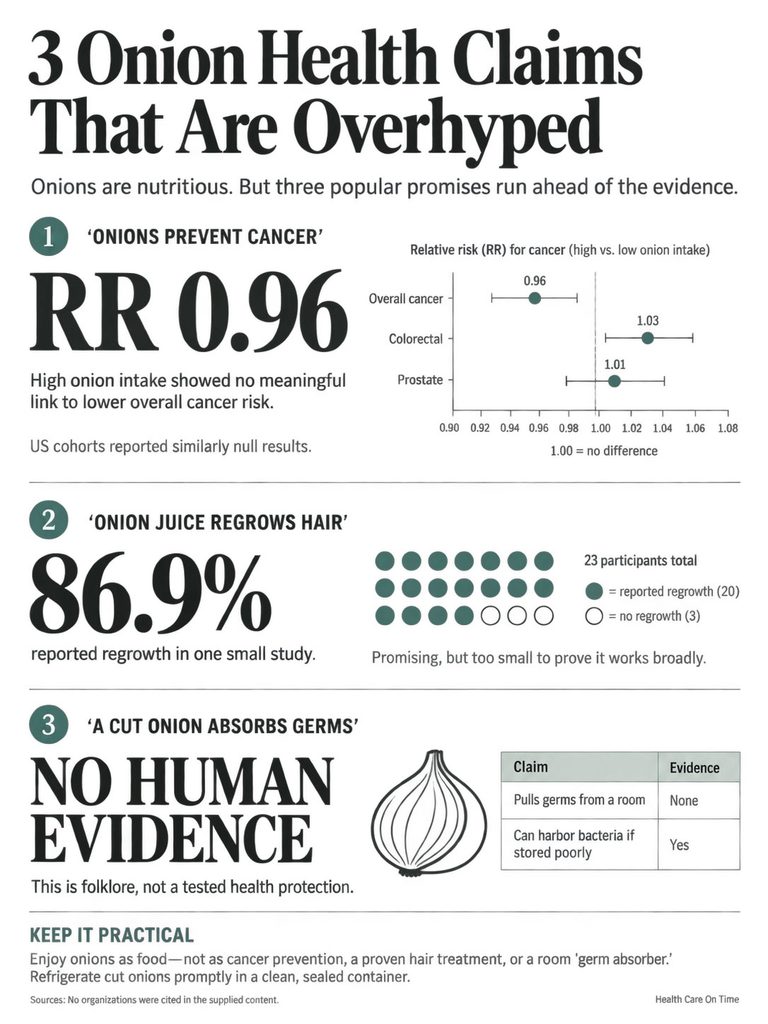
“Onions Prevent Cancer”
When researchers pooled only studies that followed healthy people forward, high onion intake showed no link to lower cancer risk (RR 0.96, 95% CI 0.90-1.03). The analysis drew on 22 allium studies with 13,677 cancer cases.
US cohorts agree. Onion intake showed no link to colorectal cancer in a US cohort of 107,401 people (RR 1.03), or to prostate cancer in a US cohort of 29,361 men (RR 1.01).
In cases reviewed by our medical team, the cancer claim is the one readers act on most, sometimes by treating food as a stand-in for screening. Onions don’t replace a colonoscopy, a mammogram, or a PSA conversation with your doctor.
“Onion Juice Regrows Hair”
This traces back to one small study. Of 23 people with patchy alopecia areata who applied crude onion juice twice daily, 86.9% had regrowth by six weeks, versus 13% of 15 people using tap water.
The problems are hard to ignore:
- Alopecia areata is autoimmune and often regrows on its own.
- Onion juice smells, so nobody was blinded.
- The study has never been repeated.
- It never tested male or female pattern hair loss, which is what most people mean by thinning hair.
“A Cut Onion Absorbs Germs”
The idea that a cut onion pulls cold or flu viruses out of the air, or cures a cold when tucked into your socks, has no published human evidence. It’s folklore.
A cut onion’s real risk runs the other way. Like any cut produce, it can grow bacteria at room temperature. Refrigerate it in a sealed container within two hours.
What’s Actually in an Onion
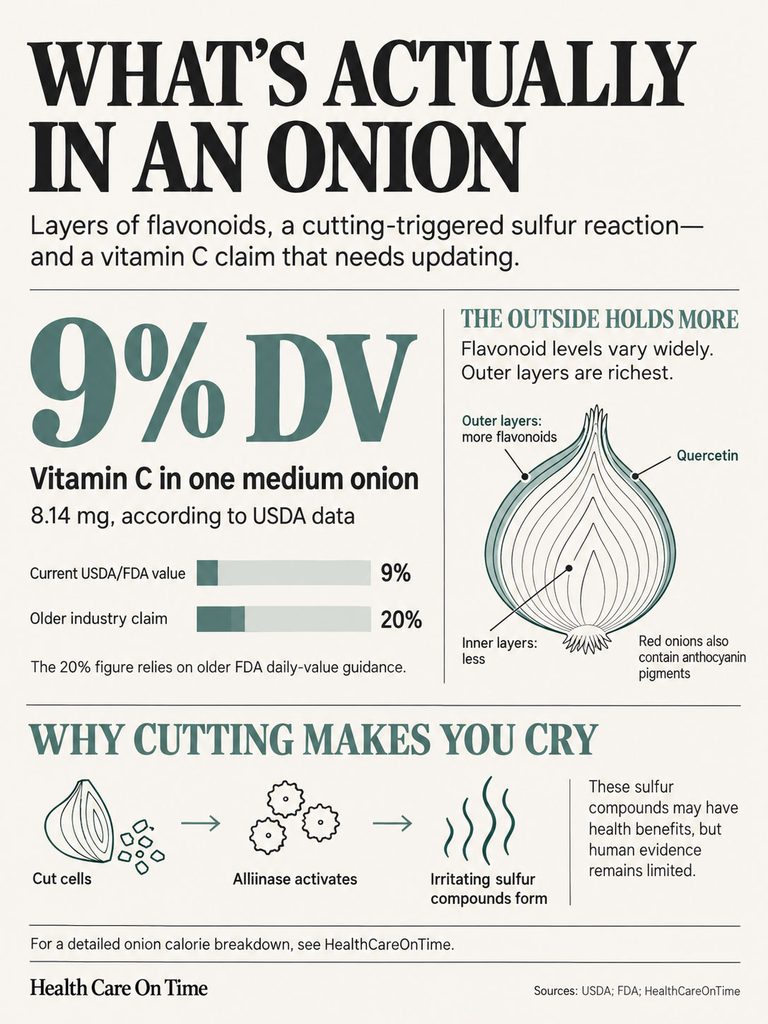
Quercetin and Anthocyanins
Flavonoid counts vary by source: one says at least 17 types, another more than 25. Quercetin leads either way, and red onions add anthocyanins, the pigments behind their color.
Placement matters. The outer layers hold the most flavonoids, so peel only the papery skin and the first tough layer.
Sulfur Compounds
Cutting an onion activates an enzyme called alliinase. It turns flavor precursors into sulfur compounds, the same ones that make your eyes sting. Lab studies tie onion compounds to antiplatelet and antibacterial effects, but human data are limited.
The Vitamin C Claim, Corrected
The onion industry says a medium onion covers about a fifth of your daily vitamin C. USDA data show a 110 g medium onion delivers 8.14 mg, which is 9% of today’s 90 mg Daily Value.
The 20% figure roughly matches a large onion measured against the old 60 mg Daily Value, which the FDA has since replaced. For full portion math, see HealthCareOnTime’s onion calories breakdown.
Why Onions Matter for Americans Right Now
Americans are eating fewer vegetables, but not fewer onions. In 2024, fresh vegetable availability fell 3% to 148 pounds per person, while onions rose 1% to 21 pounds.
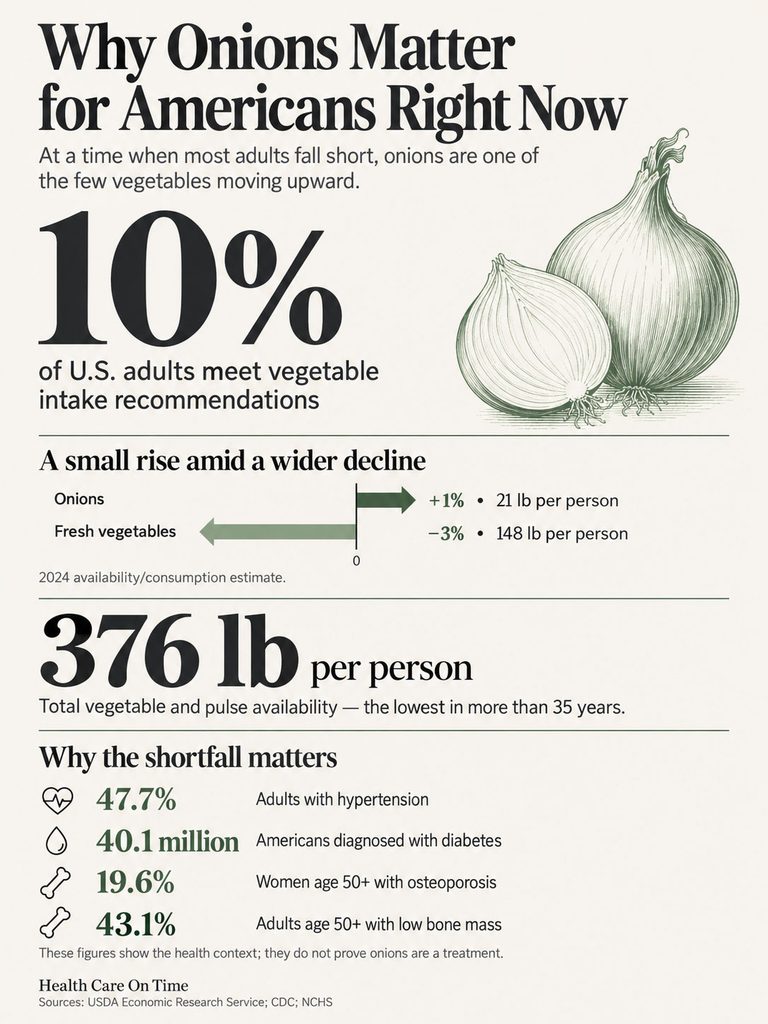
Total vegetable and pulse availability dropped to 376 pounds per person, the lowest in more than 35 years. That puts the health benefits of onions within easy reach. They’re already in your cart.
| Measure | Figure | Source |
| Onion availability per person (2024) | 21 lb, up 1% | USDA ERS |
| Fresh vegetable availability per person (2024) | 148 lb, down 3% | USDA ERS |
| Total vegetables and pulses per person (2024) | 376 lb, lowest since 1988 | USDA ERS, VGS-375 |
| Adults meeting vegetable recommendations | 10.0% | CDC, MMWR |
| Adults with hypertension | 47.7% | CDC NCHS Data Brief 511 |
| Americans with diabetes | 40.1 million | CDC |
| Women 50+ with osteoporosis | 19.6% | CDC NCHS Data Brief 405 |
| Adults 50+ with low bone mass | 43.1% | CDC NCHS Data Brief 405 |
| Onion-linked outbreak illnesses, 2020 to 2024 | 2,271 ill, 461 hospitalized | CDC, FDA |
Red vs. Yellow vs. White: Which Onion Is Healthiest?
Color changes the health benefits of onions more than most people expect. In one cooking study, red-skinned onions held almost twice the phenolic compounds of yellow ones: 50.12 vs 27.42 mg per 100 g. White onions trail both.
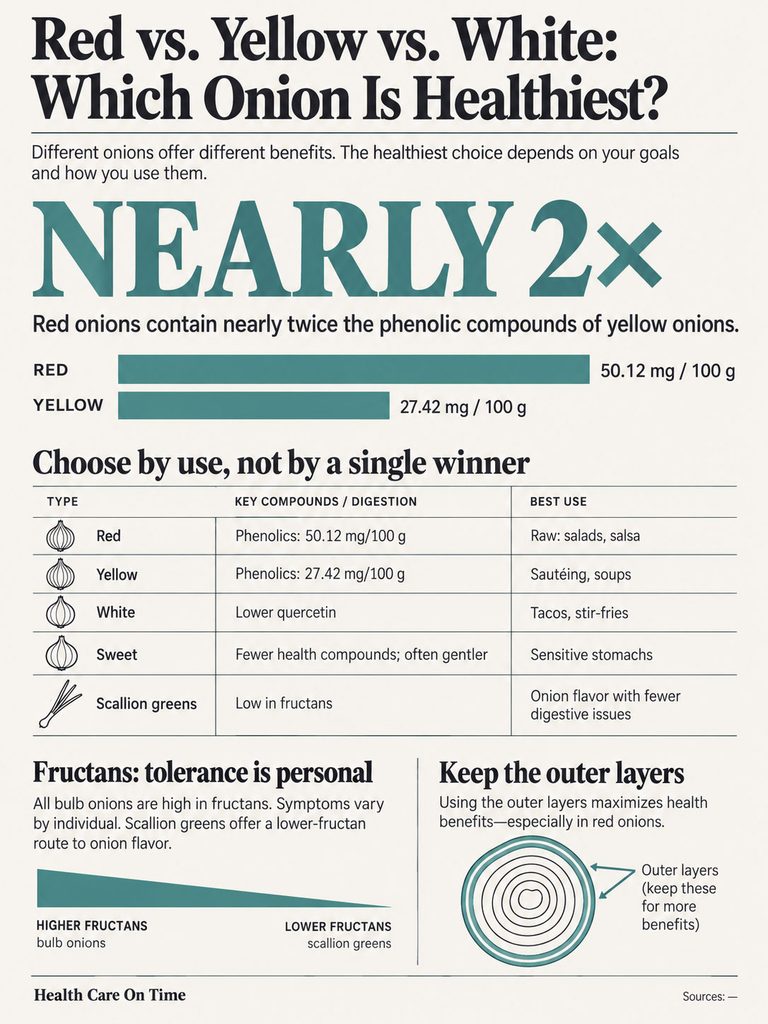
The catch is that every standard onion is high in fructans, so your tolerance matters as much as color.
| Onion Type | Plant Compounds per 100 g (3.5 oz) | Low-FODMAP Limit | Best Use |
| Red | About 32 mg quercetin (about 35 mg per medium onion); 50.1 mg phenolics; anthocyanins | 10 g, about 1 tbsp chopped (Monash) | Raw in salads, salsa, sandwiches |
| Yellow | 27.4 mg phenolics | 26 g, about 2½ tbsp (FODMAP Friendly) | Sautéing, roasting, soups |
| White | About 13 mg quercetin, wide range | 10 g, about 1 tbsp (Monash) | Salsa, tacos, stir-fries |
| Sweet (Vidalia) | Lower sulfur; 4.8 mg vitamin C | 22 g, about 2 tbsp (Monash) | Raw for heartburn-prone eaters |
| Scallion greens | Few fructans at tested serving | 75 g, about 1½ cups (Monash) | IBS-friendly garnish |
Eat the Outer Layers
Many cooks peel away two or three fleshy layers along with the skin, which throws out the richest part. In red onions, quercetin also clusters in the outer rings and near the root, so trim only the root tip.
Sweet Onions and Scallions
Sweet onions taste mild because they carry less sulfur and more water. That makes them easier on sensitive stomachs, though they also carry fewer of the sulfur compounds tied to onion’s lab effects. Scallion greens deliver onion flavor with almost no fructans.
Raw vs. Cooked Onions: What Changes
When it comes to raw vs cooked onions, water matters more than heat. Across five onion cultivars, sautéing and baking raised quercetin concentration 7% to 25%, while boiling lowered it 18%.
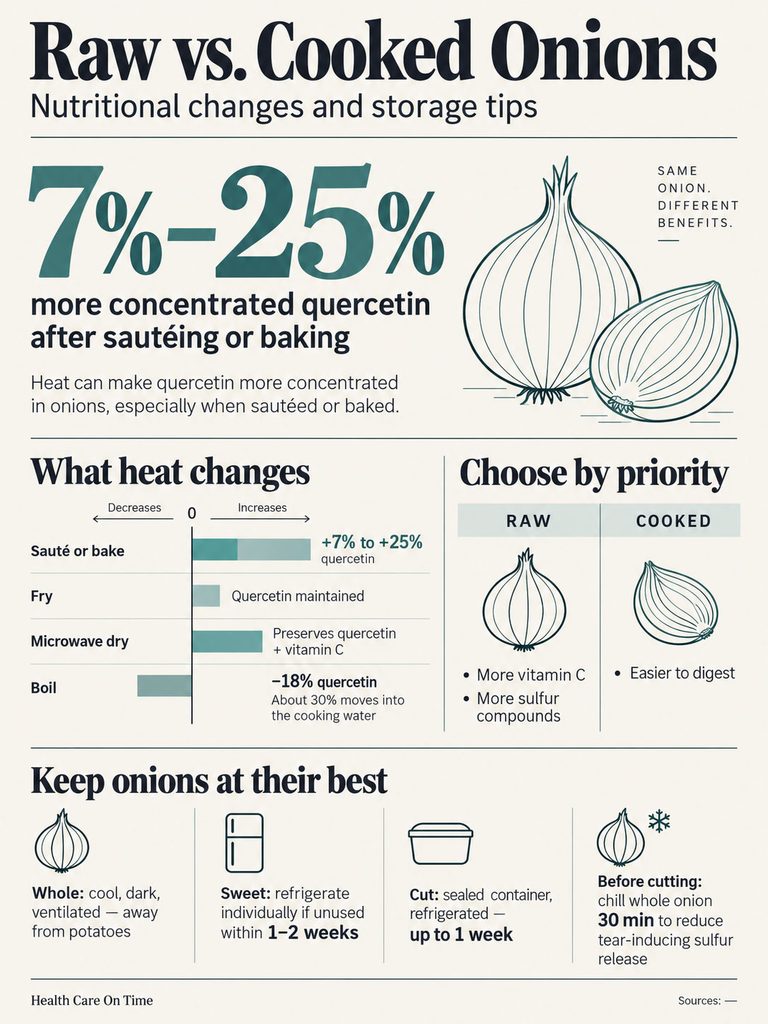
A second study found boiling pushed about 30% of onion quercetin into the cooking water. Frying didn’t change it, and microwaving without water held onto both flavonoids and vitamin C. Onion soup keeps the quercetin, as long as you eat the broth.
Raw onions keep more vitamin C and sulfur compounds. Cooked onions are easier to digest for many people. The Dutch absorption study used fried onions and still hit 52%, so cooked onions are no second-class choice.
Caramelized, Fried, Powdered, and Pickled
- Caramelized: Slow cooking over medium-low heat builds deep flavor; the butter or oil adds most of the calories.
- Battered and fried: Onion rings get nearly all their calories from batter and frying oil.
- Powdered: Drying concentrates fructans, and onion powder hides in soups, rubs, and snack seasonings.
- Pickled: Some fructans leach into the brine; Monash lists 60 g (about 2 ounces) of large vinegar-pickled onions as low-FODMAP.
How to Store and Cut Onions
Keep whole onions in a cool, dark, well-ventilated spot, not in plastic bags and not next to potatoes, which speed spoilage. Sweet onions hold more water and spoil faster, so wrap them individually and refrigerate if you won’t use them within a week or two.
Once cut, onions belong in a sealed container in the refrigerator, where they keep for about a week. Chilling a whole onion for 30 minutes before slicing slows the release of the sulfur compounds that make you tear up.
How Much Onion Should You Eat Per Day?
No US agency sets an onion target, but the research behind the health benefits of onions gives a practical range. The bone density link showed up with daily eating. The whole-onion cholesterol trial used 3 to 4 ounces a day.
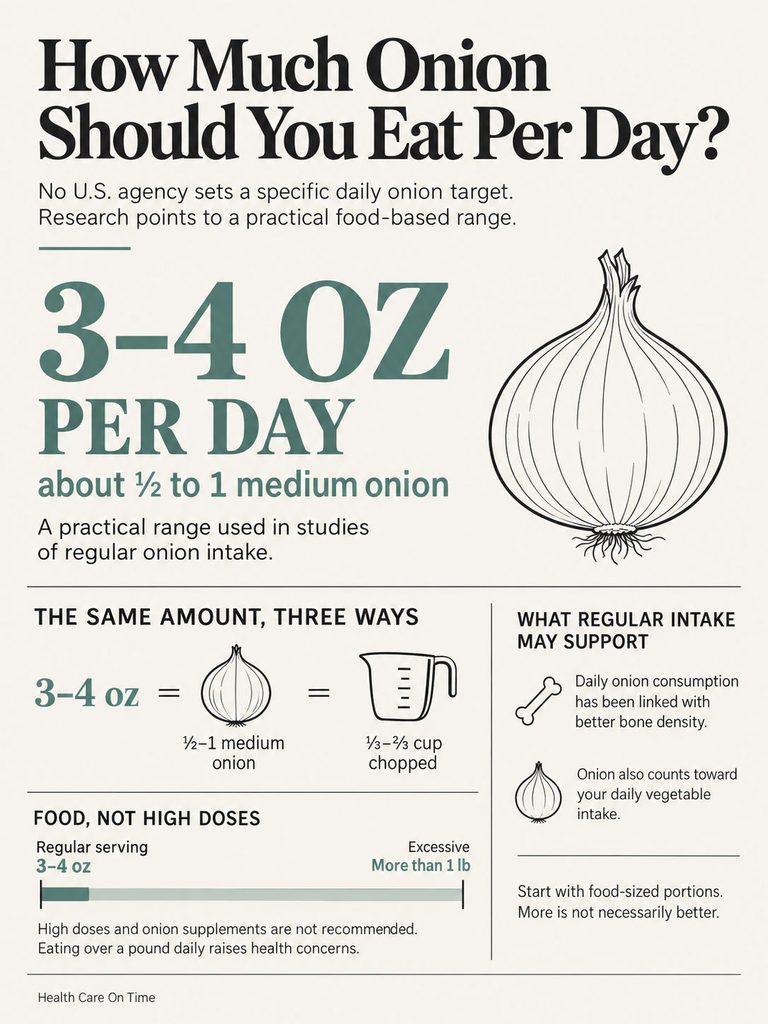
A sensible goal is half to one medium onion most days. That’s about 2 to 4 ounces, or one-third to two-thirds of a cup chopped, and it counts toward your daily vegetables.
Our nutrition reviewers advise skipping supplement-level doses. Matching the blood pressure trial would take more than a pound of red onion a day, and concentrated quercetin raises drug-interaction questions that food doesn’t.
Who Should Be Careful With Onions
IBS and the Low-FODMAP Diet
Fructans make onions one of the most common IBS triggers. Monash data set the low-FODMAP limit for raw red and white onion at 10 g, about 1 tablespoon chopped. Vidalia onions reach 22 g, and scallion greens 75 g.
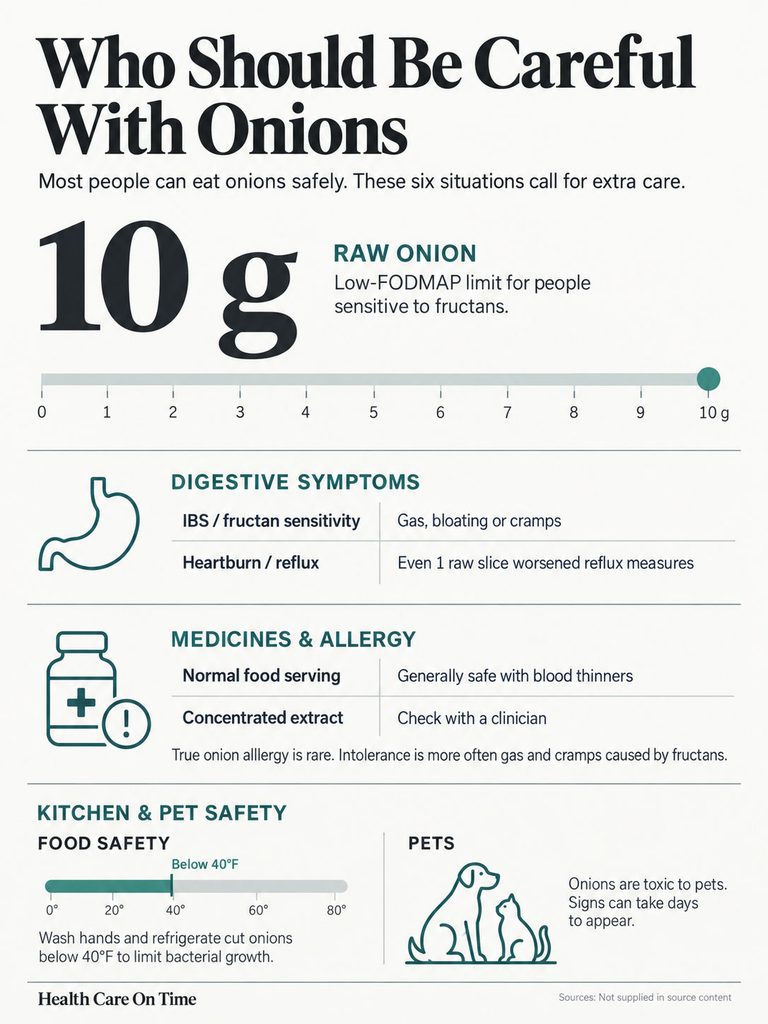
Across patients we serve, bloating is the most common onion complaint, well ahead of bad breath. A handy trick: fructans dissolve in water but not in oil, so onion-infused oil with the pieces strained out gives flavor without the load.
Heartburn and GERD
In a pH-probe study, one slice of raw onion on a plain hamburger worsened every reflux measure in 16 people with heartburn. It had no effect in 16 healthy people.
If raw onion bothers you, try small portions of cooked sweet onion. If heartburn comes with upper stomach pain, trouble swallowing, or weight loss, see a doctor. HealthCareOnTime’s upper stomach pain and nausea guide covers the warning signs.
Blood Thinners and Quercetin Supplements
Onions contain less than 1 mcg of vitamin K per 100 g. Normal servings won’t upset warfarin the way spinach or kale can.
Concentrated products are different. Onion extracts may slow clotting, so skip onion supplements while on antiplatelet drugs or other blood thinners unless your doctor approves, and before surgery.
Onion Allergy and Intolerance
True onion allergy is rare, but it happens. Hives, lip or throat swelling, wheezing, or dizziness after eating onion need prompt care, and trouble breathing means calling 911.
Far more common is intolerance: gas, cramps, or loose stools from fructans. That’s uncomfortable but not dangerous. Cooks and food workers who handle raw onions daily can also develop an itchy skin rash on their hands, which gloves usually prevent.
Food Safety: Three Big US Outbreaks Since 2020
- 2020: Red onions linked to Salmonella Newport sickened 1,127 people in 48 states and hospitalized 167.
- 2021: Onions imported from Mexico caused a Salmonella Oranienburg outbreak with 1,040 illnesses and 260 hospitalizations across 39 states, DC, and Puerto Rico.
- 2024: Slivered onions on McDonald’s burgers caused an E. coli O157:H7 outbreak with 104 cases in 14 states, 34 hospitalizations, and one death.
Check FDA recall notices when an outbreak hits the news. Wash your hands and knife, and keep cut onions at or below 40°F. Thorough cooking kills these bacteria.
Salmonella symptoms such as diarrhea, fever, and stomach cramps usually start 6 hours to 6 days after exposure and last 4 to 7 days. Call your doctor for bloody diarrhea, a fever above 102°F, signs of dehydration, or symptoms in a young child, an older adult, or anyone with a weakened immune system.
Onions Are Toxic to Dogs and Cats
Raw, cooked, and powdered onion can all damage a pet’s red blood cells. Onion powder hides in gravy, broth, and some baby foods.
If your pet eats onion, call your vet or the ASPCA Animal Poison Control Center at (888) 426-4435; a consultation fee may apply. Signs like weakness or pale gums can take days to appear.
Your Onion Action Plan
Match your situation to the right move.
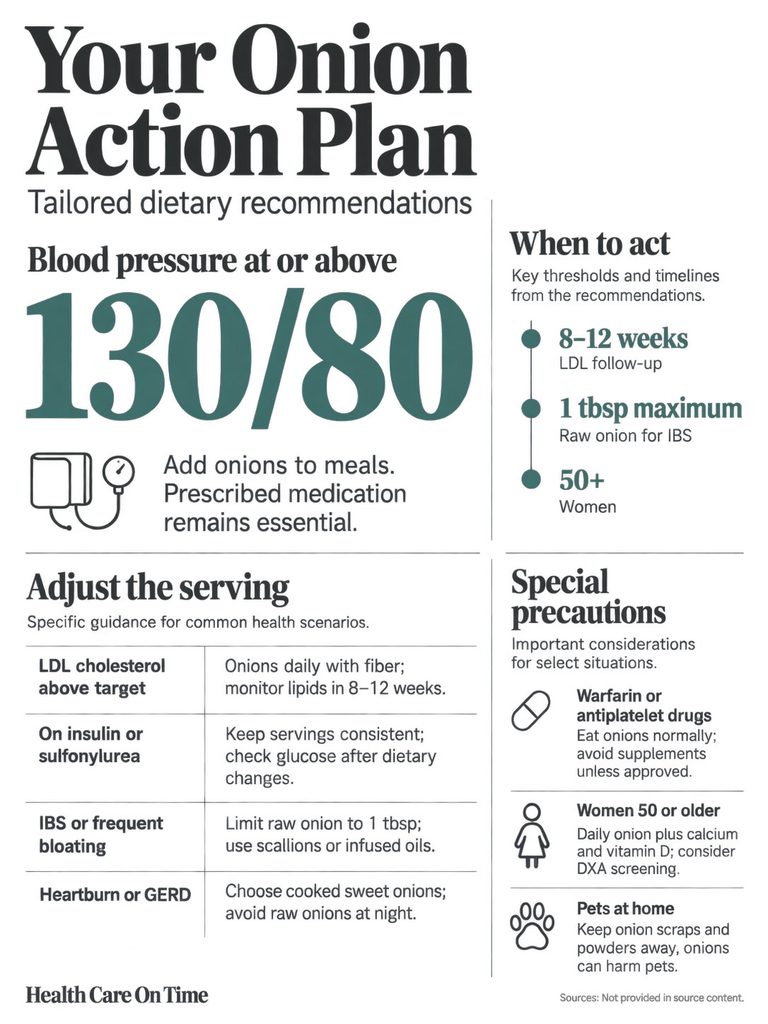
| Scenario | Recommended Action | Why |
| Blood pressure at or above 130/80 | Add onions to heart-healthy meals; keep prescribed medication | Best extract trial showed only 3.6 mmHg, in hypertensives |
| LDL above your goal | Eat onions daily with other fiber; recheck lipids in 8 to 12 weeks | Pooled trials show about 6.6 mg/dL lower LDL |
| On insulin or a sulfonylurea | Keep servings steady; check glucose after big diet changes | 3.5 oz raw onion dropped glucose 40 mg/dL in one study |
| IBS or frequent bloating | Cap raw red or white onion at 1 tbsp; use scallion greens and infused oil | Monash fructan limits |
| Heartburn or GERD | Choose cooked sweet onions; skip raw slices at night | Raw onion raised reflux in heartburn patients |
| On warfarin or antiplatelet drugs | Eat onions normally; avoid onion or quercetin supplements unless cleared | Food is low in vitamin K; extracts are concentrated |
| Woman 50 or older | Eat onions daily, plus calcium, vitamin D, and DXA screening | 5% bone density link is observational |
| Dog or cat at home | Keep scraps, powder, and gravies out of reach | Onions damage pet red blood cells |
| Onion recall in the news | Check FDA recall lists; toss onions you can’t trace | 2,271 US illnesses in three outbreaks since 2020 |
A Simple Week of Onions
- Monday: Thin-sliced raw red onion on a salad or sandwich.
- Tuesday: Sautéed yellow onion folded into scrambled eggs.
- Wednesday: Onion-based soup, broth included.
- Thursday: Pickled red onions on tacos or a grain bowl.
- Friday: Roasted onion wedges beside chicken or fish.
- Weekend: Sweet onion or scallion greens if raw onion bothers your stomach.
Frequently Asked Questions
Is it healthy to eat an onion every day?
Yes, for most people. Daily onion eating is linked to higher bone density in women over 50, and trials show small cholesterol gains. People with IBS or frequent heartburn may need smaller or cooked servings. Half to one medium onion a day is a sensible, food-based range.
How much onion should you eat per day?
No official target exists. Studies showing benefits used daily intake or 3 to 4 ounces of raw onion a day. A practical goal is half to one medium onion most days, about one-third to two-thirds of a cup chopped. Much larger amounts add little and may cause gas.
Are raw onions healthier than cooked onions?
Neither wins outright. Raw onions keep more vitamin C and sulfur compounds. Sautéing and baking keep or even concentrate quercetin, while boiling moves 18% to 30% of it into the water. Eat the broth when you boil onions, and choose the form you’ll eat regularly.
Which onion is the healthiest?
Red onions carry the most plant compounds, with about 35 mg of quercetin in a medium onion and nearly twice the phenolics of yellow onions. Yellow onions come second, and white onions have the least. Sweet onions are gentler on heartburn but lower in sulfur compounds.
Do onions lower blood pressure?
Only slightly, and mainly in people who already have high blood pressure. In a trial using onion skin extract with 162 mg of quercetin daily, 24-hour systolic pressure fell 3.6 mmHg in hypertensive adults. The full group saw no change, and normal servings deliver far less quercetin.
Are onions good for people with diabetes?
Yes. Onions are low in carbs, add fiber, and make a good swap for starchy sides. One small study found 3.5 ounces of raw red onion lowered fasting glucose about 40 mg/dL four hours later in type 2 diabetes. That’s not a treatment, so keep taking prescribed medication.
Can onions help prevent cancer?
Not proven. Case-control studies suggest lower stomach and throat cancer risk among heavy onion eaters. However, studies that followed healthy people forward found no drop in overall cancer risk. Eat onions as part of a vegetable-rich diet, and keep up with recommended cancer screenings.
Do onions help lower cholesterol?
Modestly. A pooled analysis of 10 trials found onion lowered LDL about 6.6 mg/dL and raised HDL about 2.3 mg/dL, with no change in triglycerides. That helps at the margins but is far smaller than statin effects. Recheck your lipid panel after two to three months of diet changes.
Why do onions cause gas and bloating?
Onions contain fructans, a fiber your small intestine can’t digest. Gut bacteria ferment them in the colon and produce gas. People with IBS are especially sensitive, and Monash University lists just 1 tablespoon of chopped raw red or white onion as low-FODMAP. Scallion greens are gentler.
Can onions cause heartburn?
Yes, in people who already get heartburn. In a pH-probe study, one slice of raw onion on a hamburger increased reflux episodes, acid exposure, and heartburn in heartburn patients, but not in healthy volunteers. Small portions of cooked sweet onion are usually better tolerated.
Does onion juice really help hair grow?
The evidence is weak. One 2002 study of 38 people with patchy alopecia areata found more regrowth with onion juice than with tap water, but it wasn’t blinded or repeated. It never tested common pattern hair loss. A dermatologist can explain treatments with stronger evidence.
Are onions safe with blood thinners like warfarin?
Onions eaten as food are generally fine. They contain very little vitamin K, so they don’t disrupt warfarin the way spinach or kale can. Concentrated onion extracts and quercetin supplements are different; they may affect clotting, so check with your doctor or pharmacist first.
Disclaimer: This article is for general education and isn’t a substitute for medical advice, diagnosis, or treatment. HealthCareOnTime’s medical team reviewed the research cited here, but your needs may differ. Talk with your doctor or pharmacist before changing your diet to manage a health condition, starting supplements, or adjusting any medication. If a pet eats onion, contact your veterinarian promptly.
References
- Hollman PC et al. Absorption of dietary quercetin glycosides and quercetin in healthy ileostomy volunteers. Am J Clin Nutr, 1995
- Hollman PC et al. Relative bioavailability of quercetin from various foods in man. FEBS Letters, 1997
- Effect of onion on blood lipid profile: meta-analysis of randomized controlled trials. Food Science & Nutrition, 2021
- Effects of raw red onion consumption on metabolic features in women with PCOS. PubMed
- Hertog MG et al. Dietary antioxidant flavonoids and risk of coronary heart disease: the Zutphen Elderly Study. Lancet, 1993
- Brüll V et al. Quercetin-rich onion skin extract and 24 h ambulatory blood pressure. Br J Nutr, 2015
- Matheson EM et al. Onion consumption and bone density in women 50 and older. Menopause, 2009
- Law YY et al. Onion juice and bone loss. Food & Function, 2016
- Taj Eldin IM et al. Clinical hypoglycemic effects of red onion in type 1 and type 2 diabetic patients. Environ Health Insights, 2010
- Nishimura M et al. Quercetin-rich onion powder and visceral fat: 12-week RCT. Nutrients, 2019
- Zhou Y et al. Allium vegetables and gastric cancer risk: meta-analysis. Gastroenterology, 2011
- Guercio V et al. Allium vegetables and upper aerodigestive tract cancers: meta-analysis. PubMed
- Zhang Q et al. Allium vegetables, garlic supplements, and risk of cancer: systematic review and meta-analysis. Front Nutr, 2022
- Sharquie KE, Al-Obaidi HK. Onion juice as a topical treatment for alopecia areata. J Dermatol, 2002
- Allen ML et al. The effect of raw onions on acid reflux and reflux symptoms. Am J Gastroenterol, 1990
- Lombard K et al. Quercetin in onion after heat treatment simulating home preparation. 2005
- Ioku K et al. Effect of cooking on onion flavonoids. J Nutr Sci Vitaminol, 2001
- Phenolic compounds in red and yellow onions after domestic cooking. PMC
- USDA FoodData Central: Onions, raw (FDC 170000)
- USDA ERS: Vegetable availability declined in 2024
- USDA ERS: Vegetables and Pulses Outlook, VGS-375
- CDC NCHS Data Brief 405: Osteoporosis or low bone mass in older adults
- CDC NCHS Data Brief 511: Hypertension prevalence among adults
- CDC: National Diabetes Statistics
- CDC MMWR: Adults meeting fruit and vegetable intake recommendations
- CDC: 2020 Salmonella outbreak linked to onions
- Salmonella Oranienburg infections linked to bulb onions from Mexico, 2021. Food Control
- CDC: E. coli outbreak, onions served at McDonald’s, 2024
- FDA: Outbreak investigation of E. coli O157:H7, onions, October 2024
- FODMAP Everyday: Monash and FODMAP Friendly onion serving data
- NIH Office of Dietary Supplements: Vitamin C fact sheet
- ASPCA Animal Poison Control Center