The headline said sweeteners “damage” gut bacteria. The study behind it never tested a single human gut.
It tested bacteria growing in small plastic wells in a Cambridge lab. The findings are real and worth your attention. They are not a reason to stop your medication or pour every diet soda down the sink.
Table of Contents
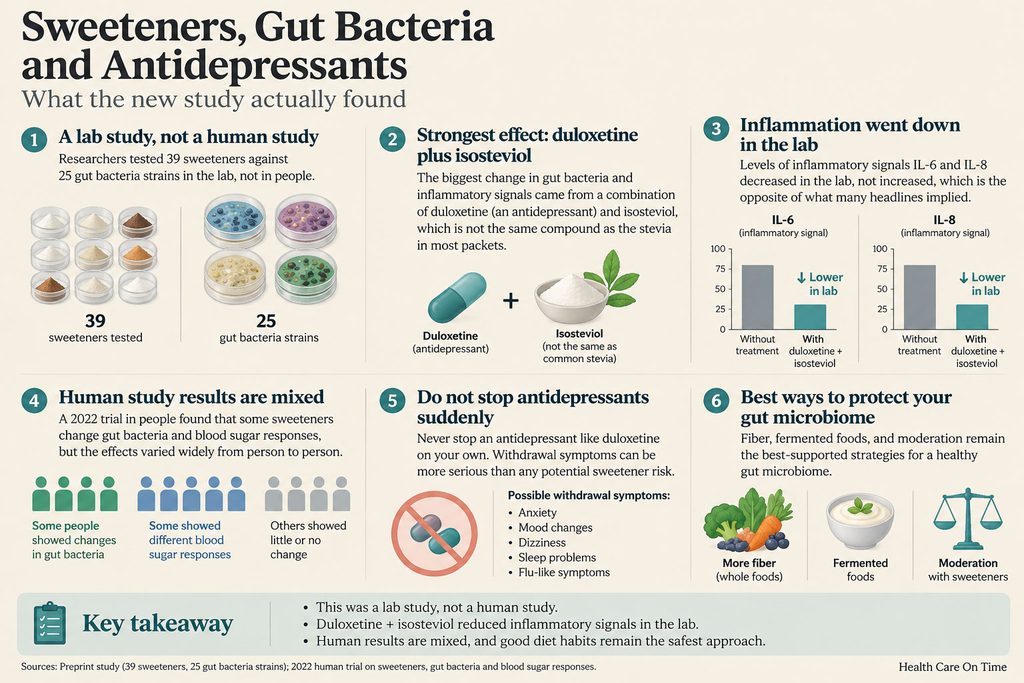
Quick Answer: No, you don’t need to stop your antidepressant or panic about sweeteners. The 2026 Cambridge study was a lab-only screen. It found that one antidepressant (duloxetine, sold as Cymbalta) combined with one stevia-derived compound (isosteviol) slowed key gut bacteria in a dish. No human was tested. The sensible response is to use sweeteners in moderation, keep taking your medication as prescribed, and raise any gut symptoms with your prescriber.
What the study showed, and what it didn’t:
- It showed that about 75% of 39 sweeteners changed the growth of at least one gut bacterial strain in the lab.
- It showed that duloxetine plus isosteviol cut gut bacterial diversity more than either compound alone.
- It did not test any human, so it says nothing yet about real health effects.
- It did not test Zoloft, Lexapro, Prozac, or any other SSRI.
- It did not show that common stevia packets (Reb A) cause the headline effect.
At a Glance
- The study tested 39 sweeteners against 25 gut bacteria strains in the lab, not in people.
- The strongest effect came from duloxetine plus isosteviol, which is not the same compound as the stevia in most packets.
- Inflammatory signals called IL-6 and IL-8 went down in the lab, not up, which is the opposite of what many headlines implied.
- A 2022 human trial found that some sweeteners change gut bacteria and blood sugar responses, but results varied widely by person.
- Never stop an antidepressant suddenly. Withdrawal symptoms can be worse than any sweetener risk.
- Fiber, fermented foods, and moderation remain the best-supported ways to protect your gut microbiome.
What the Cambridge Study Actually Tested
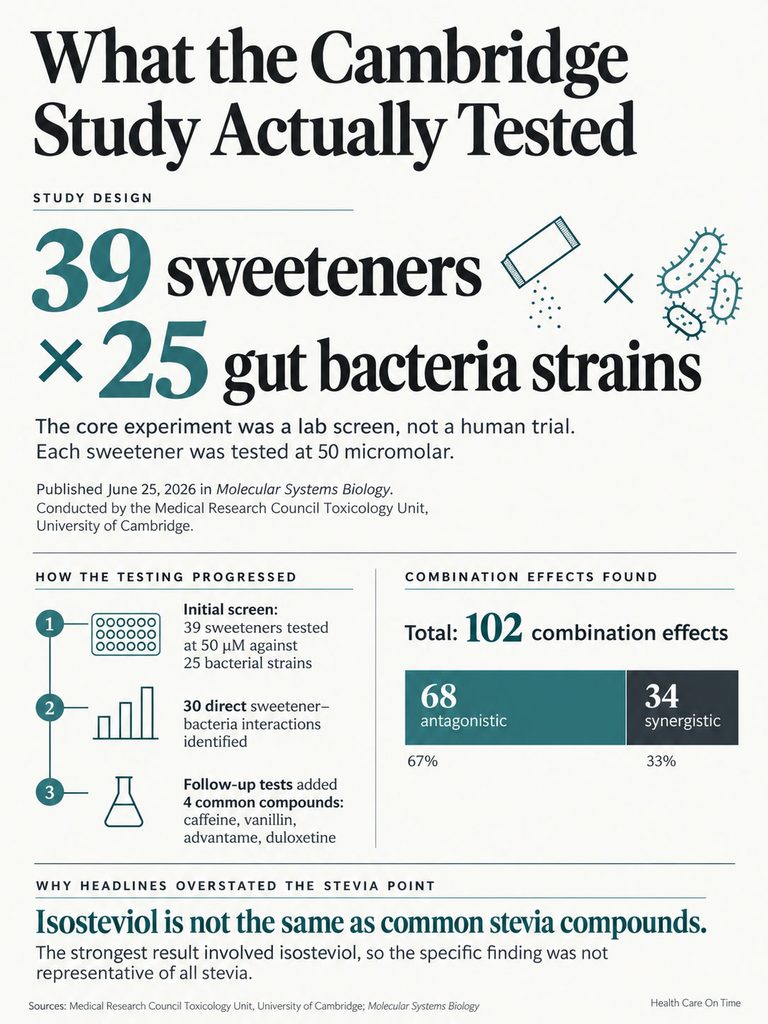
The study appeared in Molecular Systems Biology on June 25, 2026. It came from the Medical Research Council Toxicology Unit at the University of Cambridge, led by Sonja Blasche, Vinita Periwal, and Kiran Raosaheb Patil.
Patients commonly ask us whether this was a large human trial. It wasn’t. It was a screening study, the kind scientists run to decide what deserves testing in people next.
39 Sweeteners, 25 Bacteria, One Dose
The team grew 25 strains of gut bacteria and exposed each one to 39 commercially used sweeteners. The list covered the familiar names: sucralose, aspartame, saccharin, acesulfame potassium, stevia compounds, monk fruit (mogroside V), erythritol, and xylitol.
Every sweetener was tested at a single concentration of 50 micromolar. The researchers picked that level as a reasonable estimate of what reaches the colon.
The first screen covered 975 sweetener-bacteria pairs. After retesting, the team confirmed 30 direct interactions involving 26 sweeteners and just 5 bacterial strains. Most bacteria ignored most sweeteners. A few sensitive species did most of the reacting.
The Four “Co-Consumed” Compounds
The new part came next. Sweeteners rarely travel alone. They show up with caffeine in energy drinks, with vanillin in flavored foods, and alongside daily medications.
So the researchers paired each sweetener with four common companions: caffeine, vanillin, the sweetener advantame, and the antidepressant duloxetine. That produced 3,900 tests in total.
They found 102 combination effects. Of those, 68 were antagonistic (the pair did less than expected) and 34 were synergistic (the pair did more than expected).
The team also tested sweetener blends with eight common drugs often sweetened in tablet form. These included acetaminophen, ibuprofen, cetirizine, and montelukast.
Isosteviol Is Not Your Stevia Packet
This is the detail most coverage skipped. The headline compound, isosteviol, is a chemical relative of stevia. It is not the same molecule as the rebaudioside A (Reb A) or stevioside printed on most stevia labels.
Reb A and stevioside were tested as separate compounds in the same screen. The dramatic duloxetine result involved isosteviol specifically. “Stevia wrecks your gut on antidepressants” is not what the data shows.
The Duloxetine and Isosteviol Finding, in Plain English
Duloxetine is an SNRI (serotonin-norepinephrine reuptake inhibitor). Doctors prescribe it for depression, anxiety, diabetic nerve pain, fibromyalgia, and chronic back pain.
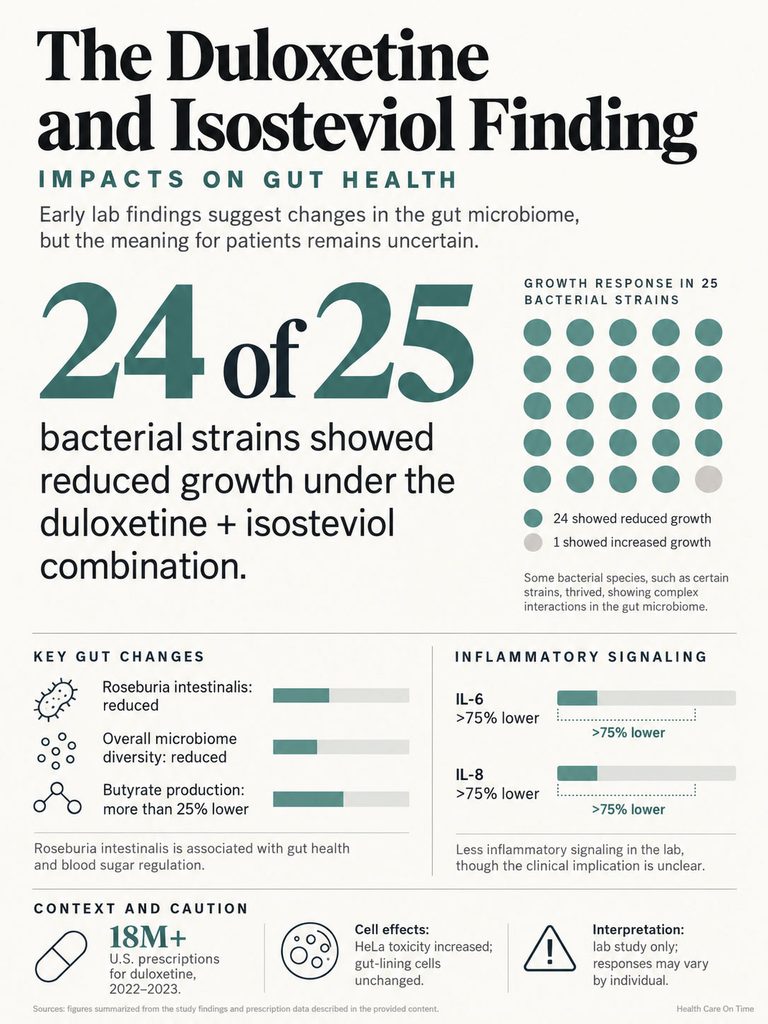
It is widely used. The study authors note that duloxetine was the 31st most prescribed drug in the US in 2022 and 2023, with more than 18 million prescriptions and over 4 million patients, citing ClinCalc DrugStats.
Why Duloxetine Was Chosen
The team didn’t pick duloxetine at random. Their earlier research showed that gut bacteria absorb and store duloxetine, and that this changes which chemicals the bacteria release.
That made duloxetine a logical test case for drug and sweetener combinations. It also means the result may not carry over to antidepressants that bacteria handle differently.
Which Bacteria Dropped and Why They Matter
Duloxetine plus isosteviol strongly suppressed Roseburia intestinalis. This bacterium has been linked to blood sugar regulation and to protection against gut inflammation.
A second species, Parabacteroides merdae, also fell, especially when all 25 bacteria grew together as a community. P. merdae is a common resident of healthy guts.
The combination also cut overall diversity in the lab community, more than either compound alone. A diverse microbiome is generally considered a sign of good gut health.
Butyrate Fell by More Than 25%
Roseburia intestinalis is a major producer of butyrate, a short-chain fatty acid. Butyrate is the main fuel for the cells lining your colon, and it helps keep the gut barrier intact.
Under the combination, butyrate output from this bacterium dropped by more than 25%. Glutamine production rose by about 50% at the same time.
Our medical reviewers note that this is a meaningful lab signal. Butyrate is one of the better-studied links between gut bacteria and whole-body health.
The Cytokine Twist: Inflammation Signals Went Down
Here is where headlines and data split. The researchers took liquid from treated bacterial communities and applied it to human gut-lining cells (Caco-2 cells).
Two inflammatory messengers, IL-6 and IL-8, dropped by more than 75% compared with untreated community liquid. Many readers assumed the study showed more inflammation. It showed less of these two signals.
The authors are careful about what this means. Lower IL-6 and IL-8 could be calming. They could also mean a weaker early-warning system against harmful microbes. The study cannot tell which, and the answer may differ from person to person.
The 24-of-25 Reversal
In single-species tests, 24 of the 25 bacteria grew less under the combination. In the mixed community, 7 of those species actually did better.
That flip matters. When some bacteria slow down, others move into the open space. A real human gut holds hundreds of species, so single-species results can overstate what happens inside you.
The same community liquid that lowered cytokines also raised toxicity in HeLa cells, a standard lab cell line. It caused no extra toxicity in the gut-lining cells themselves.
Lab Dish vs Your Body: Why the Results May Not Transfer
A lab screen is a flashlight, not a verdict. It shows researchers where to look next. Here’s how the study’s conditions compare with daily life.
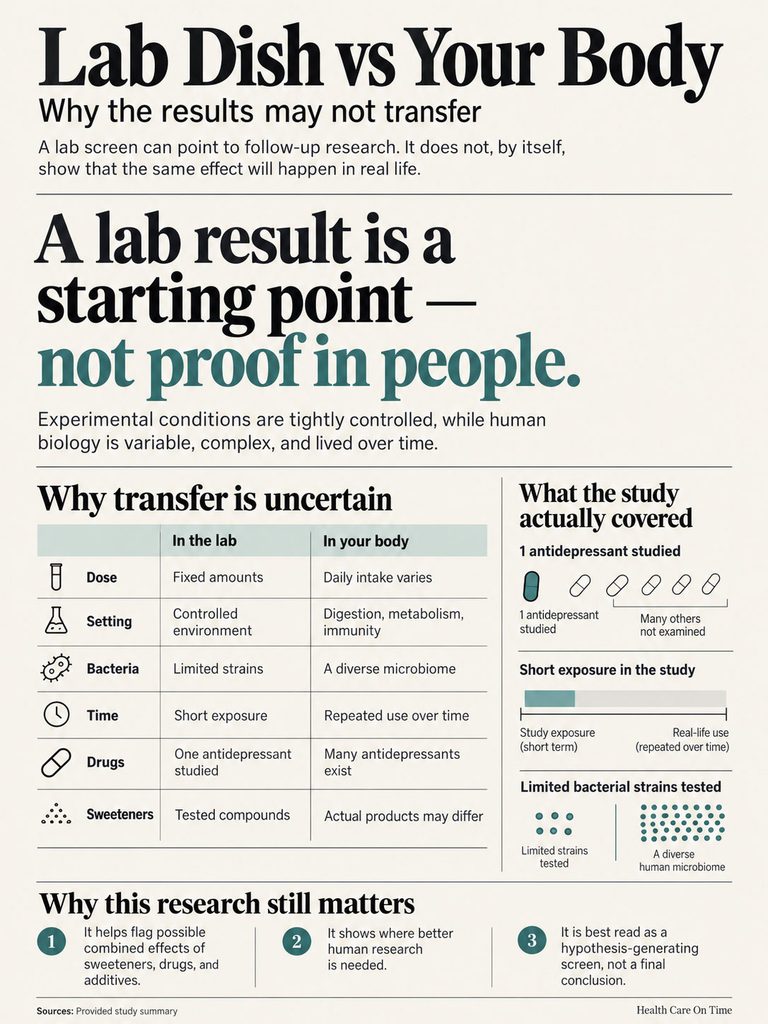
| Factor | In the Cambridge Study | In Real Life | What It Means for You |
| Dose | One fixed level: 50 µM of each compound | Varies by meal, drink, body size, and timing | Real exposure may be higher or lower than tested |
| Environment | One lab growth broth (mGAM), no oxygen, 98.6°F | Colon with mucus, food, bile, immune cells, and fiber | Fiber and food may buffer effects seen in a dish |
| Bacteria | 25 strains (24 species) | Hundreds of species, unique to each person | Your mix may respond very differently |
| Exposure time | 24 hours per round; 5 rounds in community tests | Years of daily use | Long-term human effects remain unknown |
| Antidepressants tested | Duloxetine only | Sertraline, escitalopram, bupropion, and many others | No data for SSRIs from this study |
| Sweetener tied to strongest effect | Isosteviol, a stevia relative | Most stevia products list Reb A or stevioside | Your stevia packet was not the headline compound |
| Human health outcomes | None measured | Mood, digestion, blood sugar, weight | No proof of harm or safety in people yet |
The authors list these limits themselves. They tested one concentration, in one growth medium, with four companion compounds. They also cite earlier work estimating that about 60% of single-species effects carry over into community settings.
What the Sweetener Industry Says
The International Sweeteners Association told Medical News Today that the work is a mechanistic screen. In the group’s view, it does not show that low- and no-calorie sweeteners harm human gut bacteria or health at normal intake.
On the narrow point, that’s fair, since no humans were tested. Industry groups do have a financial stake. The study was funded by the European Union’s Horizon 2020 program and the UK Medical Research Council, and the authors declared no competing interests.
Why This Research Matters Now
Most past sweetener studies tested one compound at a time. This is one of the first systematic looks at sweeteners combined with drugs and food additives.
Our medical team sees that as the real story. Your gut never meets a sweetener alone, and safety testing has not yet caught up with that fact.
What Human Studies Say About Sweeteners and Gut Bacteria
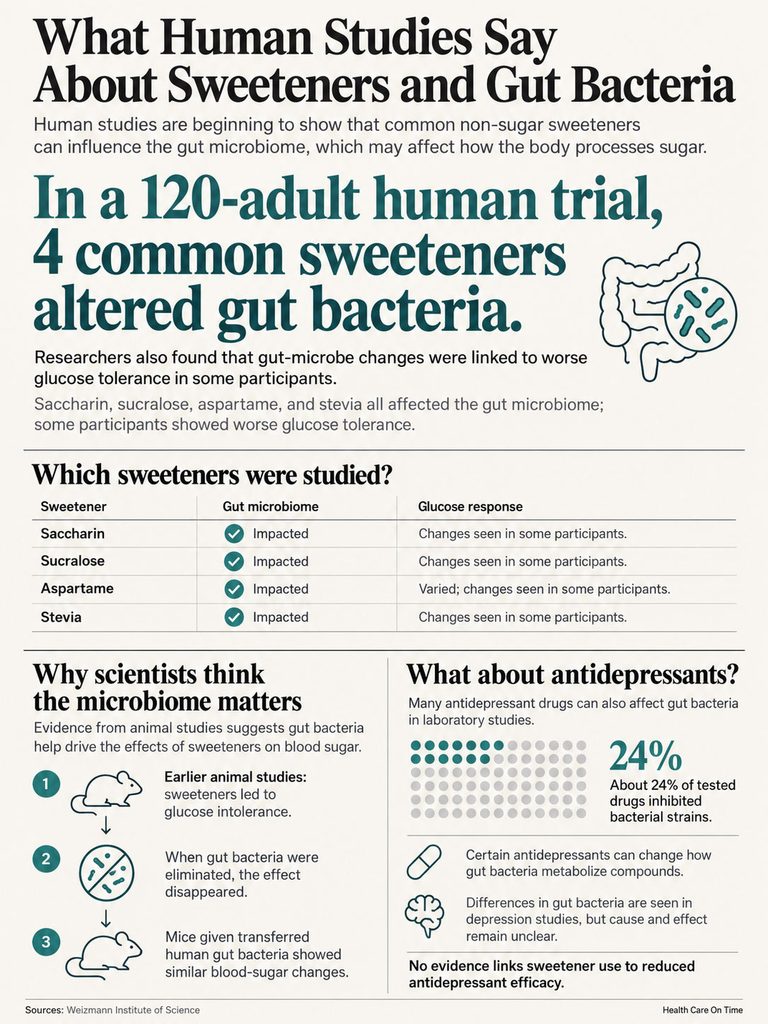
The Cambridge screen builds on human and animal research suggesting sweeteners are not as inactive in the body as once assumed.
The Weizmann Human Trial
The strongest human evidence so far comes from Suez and colleagues in Cell (2022). The team gave 120 healthy adults saccharin, sucralose, aspartame, stevia, or a control for two weeks. Doses stayed below FDA acceptable daily intake levels.
All four sweeteners changed participants’ gut bacteria. Saccharin and sucralose also worsened glucose tolerance, the body’s ability to handle sugar.
When the researchers moved participants’ gut bacteria into germ-free mice, the mice showed similar blood sugar changes. That points to the bacteria as a cause, not just a bystander.
Responses varied widely. Some people barely changed, while others shifted a lot. That matches the Cambridge finding that community makeup shapes the outcome.
What Earlier Animal Studies Added
Before the human trial, the same Weizmann group reported in Nature (2014) that mice given saccharin, sucralose, or aspartame developed glucose intolerance. When their gut bacteria were wiped out with antibiotics, the effect disappeared.
Animal results don’t translate neatly to people. Mice ate different diets and received doses scaled differently than a typical American would consume. Still, those findings are why researchers keep asking whether sweeteners act through gut bacteria.
Antidepressants Affect Gut Bacteria on Their Own
Medicines aimed at human cells can also hit bacteria. A landmark screen by Maier and colleagues in Nature (2018) tested more than 1,000 marketed drugs against 40 gut bacterial strains.
About 24% of drugs designed for human targets inhibited at least one strain. Several antidepressants and antipsychotics were among them.
Earlier Cambridge work showed some gut bacteria soak up duloxetine and store it, which changes their metabolism. In the new study, duloxetine changed how bacteria took up isosteviol, which helps explain why the pair hit harder together.
The Gut-Brain Link: Real but Early
Researchers have found differences in gut bacteria between people with and without depression. Butyrate producers like Roseburia tend to be less common in some depression studies.
What researchers can’t yet say is which comes first. Depression changes appetite, sleep, and diet, and those changes alter gut bacteria too. No trial has shown that sweeteners worsen depression through the gut.
Across reader questions we receive, the top worry is this: “Is my sweetener making my antidepressant work worse?” There is no human evidence for that today.
Who Is Most Exposed? US Numbers
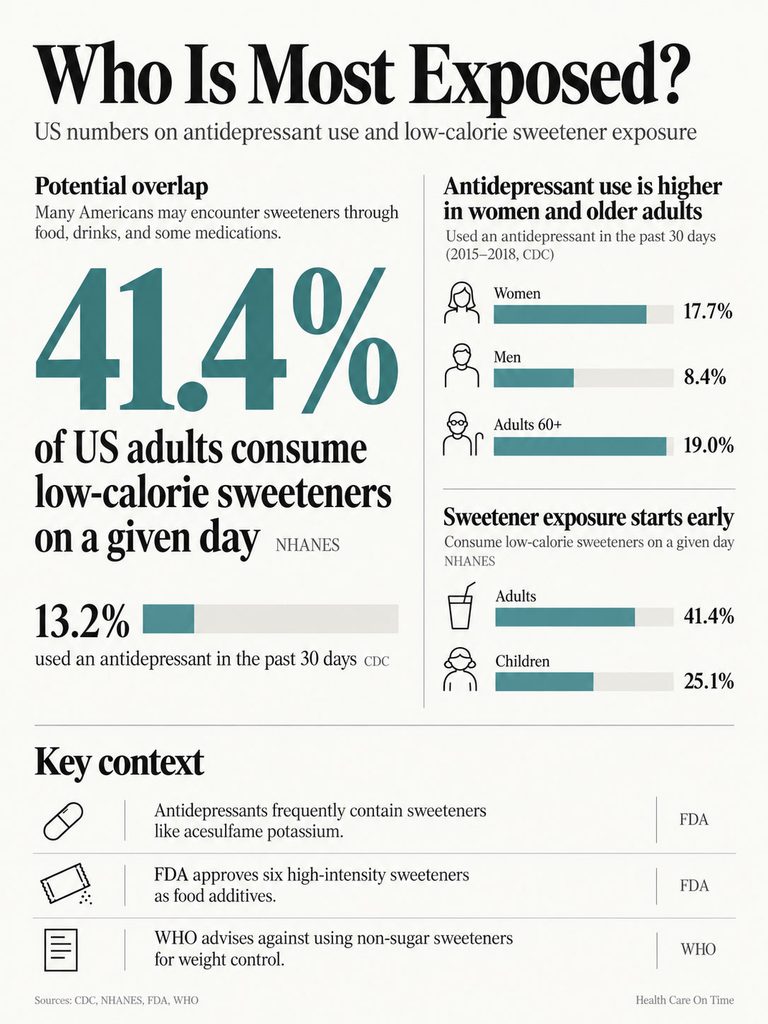
Two very common habits overlap in American life: taking antidepressants and consuming low-calorie sweeteners.
| Statistic | Figure | Source |
| US adults using an antidepressant in the past 30 days (2015–2018) | 13.2% | CDC NCHS Data Brief 377 |
| Antidepressant use, women vs men | 17.7% vs 8.4% | CDC NCHS Data Brief 377 |
| Antidepressant use, adults 60 and older | 19.0% | CDC NCHS Data Brief 377 |
| Duloxetine prescriptions and patients in the US | 18M+ prescriptions, 4M+ patients | ClinCalc DrugStats, cited in Blasche et al. 2026 |
| US adults consuming low-calorie sweeteners on a given day | 41.4% (children: 25.1%) | Sylvetsky et al., J Acad Nutr Diet 2017, NHANES 2009–2012 |
| Sweeteners that changed growth of at least one gut strain | About 75% of 39 tested | Blasche et al., Mol Syst Biol 2026 |
| Sweetener-plus-compound combinations showing an interaction | 102 (68 antagonistic, 34 synergistic) | Blasche et al., Mol Syst Biol 2026 |
Put those numbers together and millions of Americans likely take an antidepressant while using sweeteners every day. That overlap is why this research matters, even at the lab stage.
Women and Older Adults Have the Biggest Overlap
Women are about twice as likely as men to use antidepressants, according to NCHS. Use also climbs with age, reaching nearly 1 in 5 adults 60 and older.
Older adults often take several daily medications, and many of those tablets carry sweeteners too. Our medical reviewers note that this group stands to gain the most from future human studies on drug and sweetener combinations.
Sweeteners Hiding in Your Pills
Sweeteners aren’t only in soda and yogurt. Drug makers add them to tablets, chewables, and liquids to mask bitter flavors. The study notes that acesulfame potassium is often paired with ibuprofen, acetaminophen, and cetirizine.
These are called excipients, the “inactive” ingredients in a medicine. The amounts are small, but they add to your daily total. You’ll find them on the drug facts label or pharmacy leaflet.
How the FDA Regulates Sweeteners
The FDA has approved six high-intensity sweeteners as food additives: saccharin, aspartame, acesulfame potassium, sucralose, neotame, and advantame. Purified steviol glycosides and monk fruit extracts reach the market through GRAS (generally recognized as safe) notices.
Safety reviews focus on toxicity and cancer risk. Gut bacteria effects and drug-sweetener combinations are not part of standard approval testing. The World Health Organization’s 2023 guideline separately advises against using non-sugar sweeteners for weight control, citing a lack of long-term benefit.
Common Mistakes After Reading the Headlines
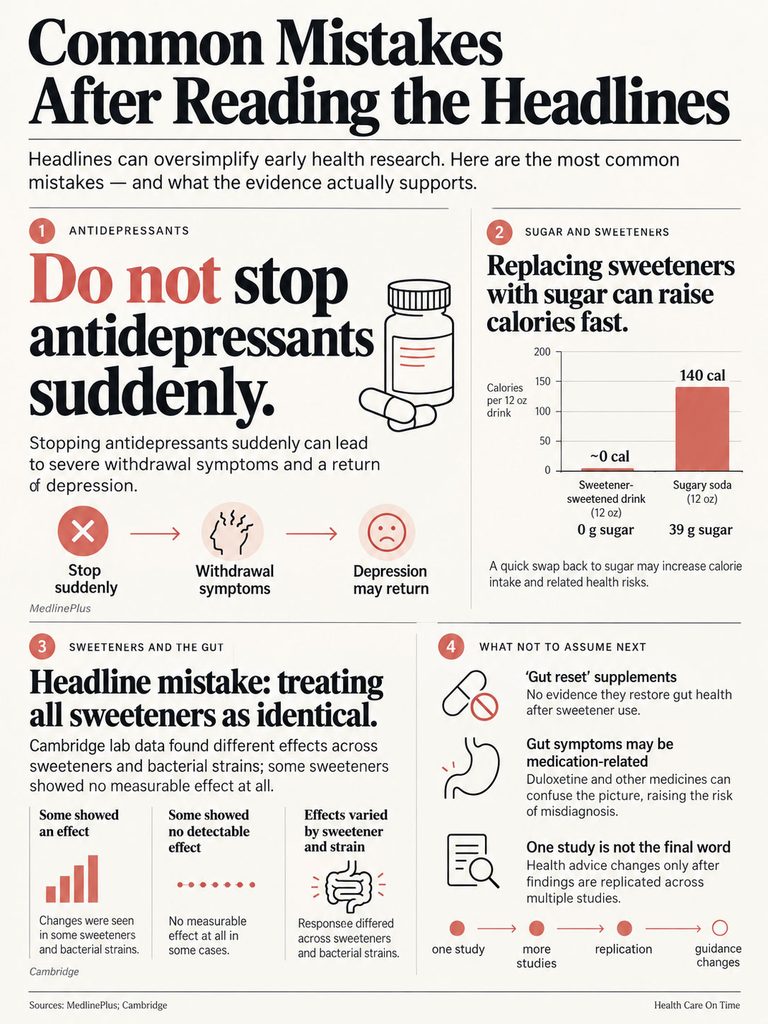
Scary headlines push people toward quick fixes. Some of those fixes cause more harm than the original concern.
Stopping an Antidepressant Suddenly
This is the biggest risk. Stopping duloxetine abruptly can cause discontinuation symptoms such as dizziness, nausea, headache, irritability, nightmares, and “brain zap” sensations. MedlinePlus advises against stopping without your doctor’s guidance.
Depression can also return. A lab study about bacteria in a dish is never a reason to change your medication on your own.
Swapping Sweeteners for Sugar
Trading diet soda for regular cola adds about 140 calories and roughly 39 grams of sugar per 12-ounce can. Over a year, that adds up fast.
Our medical reviewers point out that added sugar has a far larger evidence base for harm (weight gain, type 2 diabetes, tooth decay) than sweeteners have for gut changes.
Assuming All Sweeteners Act Alike
The Cambridge data shows sweeteners behave very differently. Some affected no bacteria. A few affected several. Some combinations cancelled each other out, as saccharin and vanillin did against one Bifidobacterium strain.
“Artificial versus natural” is not a reliable guide either. Isosteviol is stevia-derived, a reminder that “natural” doesn’t mean neutral.
Buying “Gut Reset” Supplements
Expect a wave of products claiming to “undo” sweetener damage. No study has tested any supplement against the effects seen in this research.
Probiotic capsules contain a handful of strains at most. None has been shown to restore Roseburia or P. merdae in people taking duloxetine.
Ignoring Real Gut Symptoms
The opposite mistake is just as common. Duloxetine itself often causes nausea, dry mouth, and constipation, especially in the first weeks. If new gut trouble lingers, tell your prescriber rather than blaming or ignoring it.
Treating One Study as the Final Word
Single studies make headlines. Health advice changes only after findings repeat across labs, animals, and people.
This screen is a starting point. It is not strong enough to change medical guidance on its own, and the authors don’t claim it is.
What to Do If You Take Antidepressants and Use Sweeteners
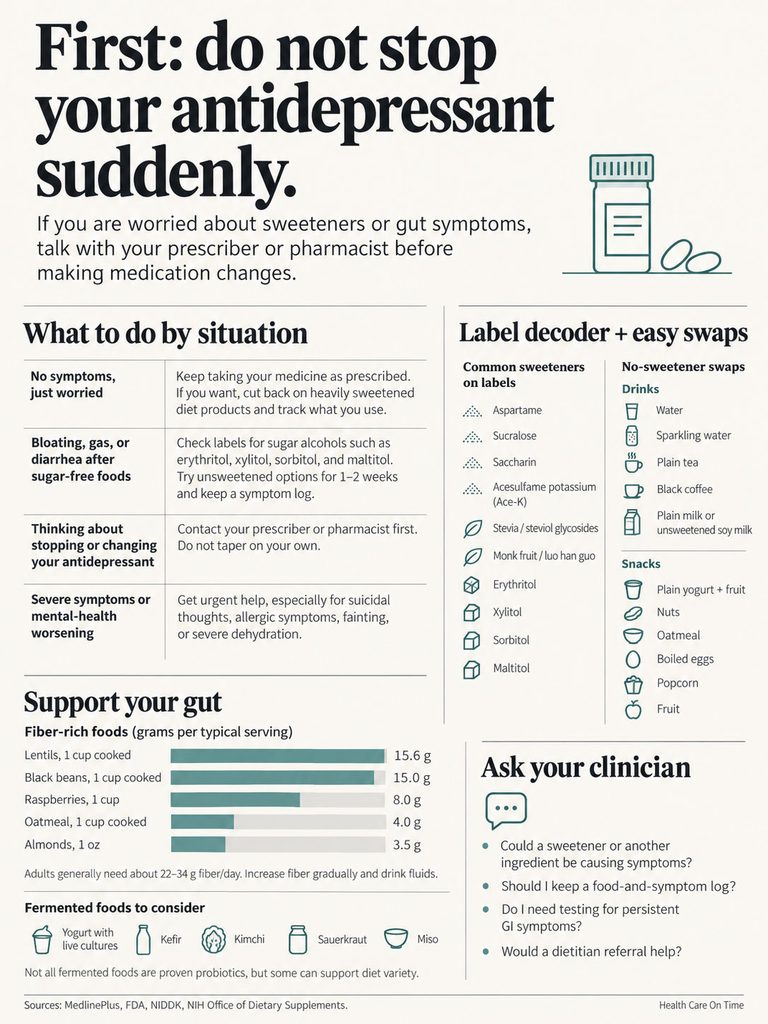
You don’t need a dramatic overhaul. Small, reversible steps fit the current evidence best.
| Scenario | Recommended Action | Who to Involve |
| You take duloxetine (Cymbalta) and use stevia-sweetened products daily | Keep your medication; consider plain or unsweetened options a few days a week | Prescriber at your next routine visit |
| You take an SSRI (sertraline, escitalopram, fluoxetine) and drink diet soda | No change needed based on this study; general moderation still makes sense | None required |
| You have new bloating, diarrhea, or constipation after starting an antidepressant | Track symptoms, food, and drinks for 2 weeks | Prescriber or primary care doctor |
| You want to stop your antidepressant because of this news | Do not stop on your own; share your concerns first | Prescriber before any change |
| You have diabetes and rely on sweeteners for blood sugar control | Keep using them in moderation instead of sugar; check HbA1c as scheduled | Primary care or endocrinologist |
| You notice blood in your stool, weight loss without trying, or diarrhea lasting more than 2 days | Seek medical care promptly | Primary care, urgent care, or ER if severe |
| You feel your depression is worsening or have thoughts of self-harm | Contact your care team now; call or text 988 | 988 Suicide & Crisis Lifeline, prescriber |
Easy Swaps That Cost Nothing
Start with what’s in your cup. Plain water, sparkling water, unsweetened tea, and black coffee contain no sweeteners at all.
Add flavor with lemon, lime, cucumber, mint, or a splash of 100% fruit juice. For yogurt, buy plain and add fresh fruit or cinnamon.
Check labels for “sucralose,” “acesulfame potassium,” “steviol glycosides,” “Reb A,” “erythritol,” and “monk fruit extract.” Protein bars, flavored waters, and “light” yogurts often contain two or three sweeteners at once.
A Real Label Example
Take a typical zero-sugar sports drink. Its ingredient list may show sucralose and acesulfame potassium together, plus “natural flavors” that can include vanillin.
That single bottle already delivers the kind of sweetener-plus-additive mix the Cambridge team tested. Seeing it on the label helps you count your real daily exposure instead of guessing.
Gut-Supportive Habits With Real Evidence
Fiber feeds butyrate producers like Roseburia. Most American adults eat about 15 grams a day, well short of the roughly 22 to 34 grams per day the Dietary Guidelines for Americans recommend, depending on age and sex.
Beans, lentils, oats, barley, berries, and vegetables are all fiber-rich. Increase slowly over 2 to 3 weeks to limit gas.
Fermented foods such as plain yogurt, kefir, sauerkraut, and kimchi raised gut microbial diversity in a 10-week Stanford trial (Wastyk et al., Cell 2021). Variety matters more than any single “superfood.”
When to Talk to Your Doctor
Bring this up at your next routine appointment if it worries you. A useful question is: “Should my diet change at all because of my medication?”
Other questions worth asking your prescriber or pharmacist:
- Do any of my current medicines contain sweeteners as inactive ingredients?
- Could my gut symptoms be a side effect of my antidepressant?
- Is there an unsweetened version of my liquid or chewable medicines?
- Would a fiber goal or dietitian referral help me?
In lab panels ordered through HealthCareOnTime, a complete metabolic panel (CMP), vitamin B12, and HbA1c are common baseline checks for people with long-term gut or blood sugar concerns. Your doctor can decide whether any testing makes sense for you.
What Scientists Need to Study Next
The Cambridge authors name several open questions. Each one matters for people who take antidepressants and use sweeteners every day.
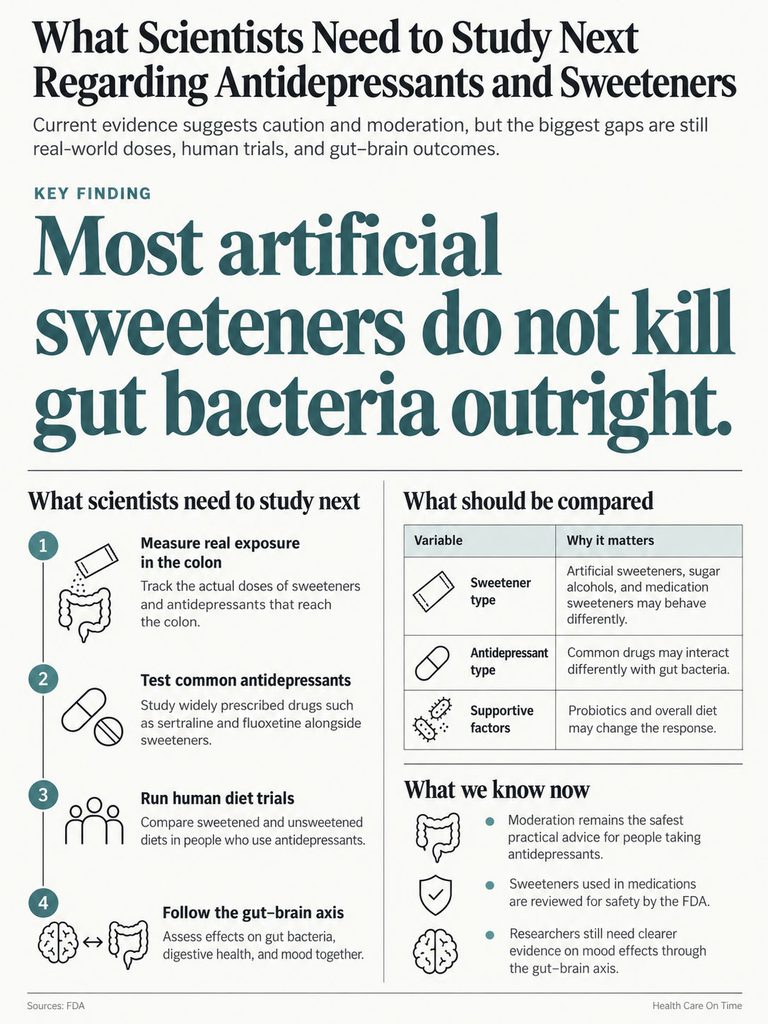
Real Doses in Real Guts
Researchers need to measure how much of each sweetener and drug actually reaches the colon. That level likely differs by person, meal, and medication timing.
More Antidepressants
Sertraline, escitalopram, fluoxetine, and bupropion are prescribed far more often than duloxetine. Testing them against common sweeteners would show whether this finding is a one-off or a pattern.
Human Stool and Symptom Studies
The most useful next step is a trial in people taking an antidepressant, comparing sweetened and unsweetened diets. Such a study could track gut bacteria, butyrate levels, digestion, and mood together.
Until that evidence arrives, the balanced approach is simple. Keep your medication steady, keep sweeteners moderate, and keep feeding your gut fiber.
Frequently Asked Questions
Do artificial sweeteners kill gut bacteria?
Most don’t kill bacteria outright. In the 2026 Cambridge screen, about 75% of 39 sweeteners slowed or boosted the growth of at least one strain, but only five strains reacted directly. Effects depended on the sweetener, the bacterium, and what else was present. Human studies show shifts in bacteria rather than mass die-off.
Should I stop drinking diet soda if I take antidepressants?
Not based on this study. Diet soda sweeteners like aspartame and sucralose were not the headline finding, and no SSRI was tested. General moderation is a sensible habit for anyone. Replacing diet soda with sugary soda would likely do more harm than good for your weight and blood sugar.
Does stevia interact with Cymbalta?
No human interaction has been shown. The lab finding involved isosteviol, a stevia-related compound, plus duloxetine (Cymbalta) in bacterial cultures. Most stevia products list rebaudioside A or stevioside instead. If you use a lot of stevia and take Cymbalta, mention it at your next visit, but don’t stop your medication.
Does this study apply to Zoloft or Lexapro?
Not directly. Duloxetine was the only antidepressant tested, and it is an SNRI, not an SSRI like sertraline (Zoloft) or escitalopram (Lexapro). The authors suggest other drugs that gut bacteria absorb or break down may also interact with sweeteners. That idea has not been tested yet.
What is isosteviol?
Isosteviol is a chemical relative of steviol, the backbone of compounds from the stevia plant. The study authors describe it as a commonly used sweetener component. In this screen it was the most active sweetener. It inhibited three bacterial strains on its own and showed combination effects with three of the four companion compounds.
Do antidepressants change gut bacteria on their own?
Yes, several do. A 2018 Nature screen of more than 1,000 drugs found about 24% of human-targeted medicines inhibited at least one gut strain, including some antidepressants. In the Cambridge study, duloxetine alone also reduced community diversity. These effects come from lab tests, and their meaning for patients is still being studied.
Which sweetener is easiest on the gut?
No sweetener has been proven gut-neutral in people. Sugar alcohols like sorbitol and xylitol can cause gas and diarrhea at high doses. The Weizmann trial linked saccharin and sucralose to blood sugar changes. The gentlest approach is lowering your total sweetness over time rather than hunting for a perfect substitute.
Are sweeteners in medications a concern?
The amounts in tablets and liquids are small compared with a sweetened drink. The study notes acesulfame potassium is often paired with ibuprofen, acetaminophen, and cetirizine, so exposure adds up across products. Don’t skip needed medicine over this. Ask your pharmacist about unsweetened versions if you’re concerned.
Can gut bacteria affect depression?
Research links gut bacteria and mood through what’s called the gut-brain axis. Some people with depression carry fewer butyrate-producing bacteria. Researchers haven’t confirmed whether these differences cause depression or result from it. No trial has shown that sweeteners worsen depression through gut bacteria.
Are sugar alcohols like erythritol safer?
Not necessarily. Erythritol was among the compounds in the Cambridge screen. A separate 2023 Nature Medicine study linked high blood erythritol levels to increased clotting activity and heart events, though it couldn’t prove cause. Sugar alcohols can also cause digestive upset in larger amounts, especially above about 10 grams at once.
Should I take a probiotic with my antidepressant?
There’s no evidence that a probiotic reverses the effects seen in this study. Small trials testing probiotics for mood have shown mixed results. Probiotics are generally safe for healthy adults, but check with your doctor first if you have a weakened immune system or a serious illness.
Is the FDA reviewing sweetener safety?
The FDA reviews sweeteners mainly for toxicity and cancer risk before approval and updates guidance when new evidence appears. Gut bacteria effects and drug combinations are not part of standard approval testing. Studies like the Cambridge screen may push regulators to consider those questions in future reviews.
Medical Disclaimer: This article is for general educational purposes and does not replace advice from your doctor or pharmacist. Do not stop, start, or change any antidepressant or other medication without talking to your prescriber. If you are in crisis or thinking about harming yourself, call or text 988 to reach the 988 Suicide & Crisis Lifeline, or call 911 in an emergency.
References
- Blasche S, Periwal V, et al. Common xenobiotics modulate gut microbial responses to low-calorie sweeteners in vitro. Molecular Systems Biology, 2026;22(9):1453–1473
- Full text on PubMed Central (PMC13538661)
- ScienceDaily: Scientists tested 39 sweeteners and found unexpected gut effects (University of Cambridge release)
- Medical News Today: Sweeteners may disrupt gut bacteria, especially when combined with antidepressants
- CDC NCHS Data Brief 377: Antidepressant Use Among Adults, United States, 2015–2018
- Suez J, et al. Personalized microbiome-driven effects of non-nutritive sweeteners on human glucose tolerance. Cell, 2022
- Suez J, et al. Artificial sweeteners induce glucose intolerance by altering the gut microbiota. Nature, 2014
- Maier L, et al. Extensive impact of non-antibiotic drugs on human gut bacteria. Nature, 2018
- Wastyk HC, et al. Gut-microbiota-targeted diets modulate human immune status. Cell, 2021
- Sylvetsky AC, et al. Consumption of low-calorie sweeteners among children and adults in the United States. J Acad Nutr Diet, 2017
- Witkowski M, et al. The artificial sweetener erythritol and cardiovascular event risk. Nature Medicine, 2023
- FDA: Aspartame and Other Sweeteners in Food
- WHO: Use of non-sugar sweeteners, WHO guideline, 2023
- Dietary Guidelines for Americans
- MedlinePlus: Duloxetine
- ClinCalc DrugStats: Duloxetine
- 988 Suicide & Crisis Lifeline