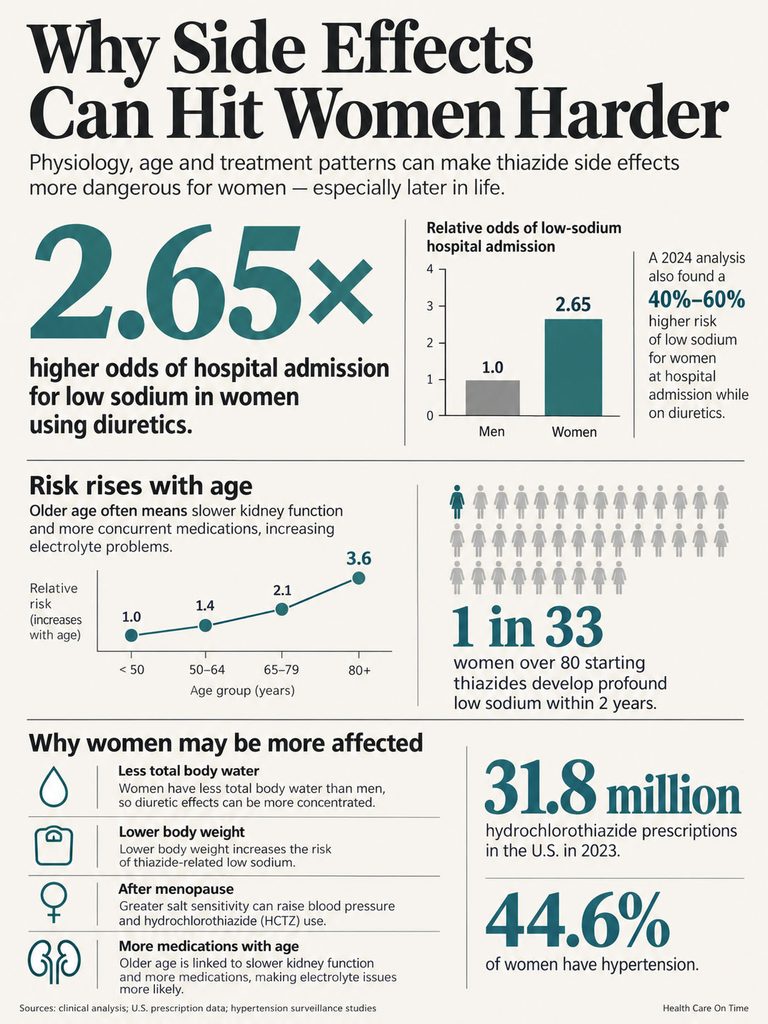
If you’re a woman under 65, the most talked-about danger of hydrochlorothiazide barely touches you. If you’re over 80, about 1 in 33 women who start it develop dangerously low sodium within two years, according to a large 2026 Swedish study.
Table of Contents
Same pill. Same dose. Very different risk. That gap is why a one-size side effect list doesn’t help much, and why this guide breaks things down by age, life stage, and symptom.
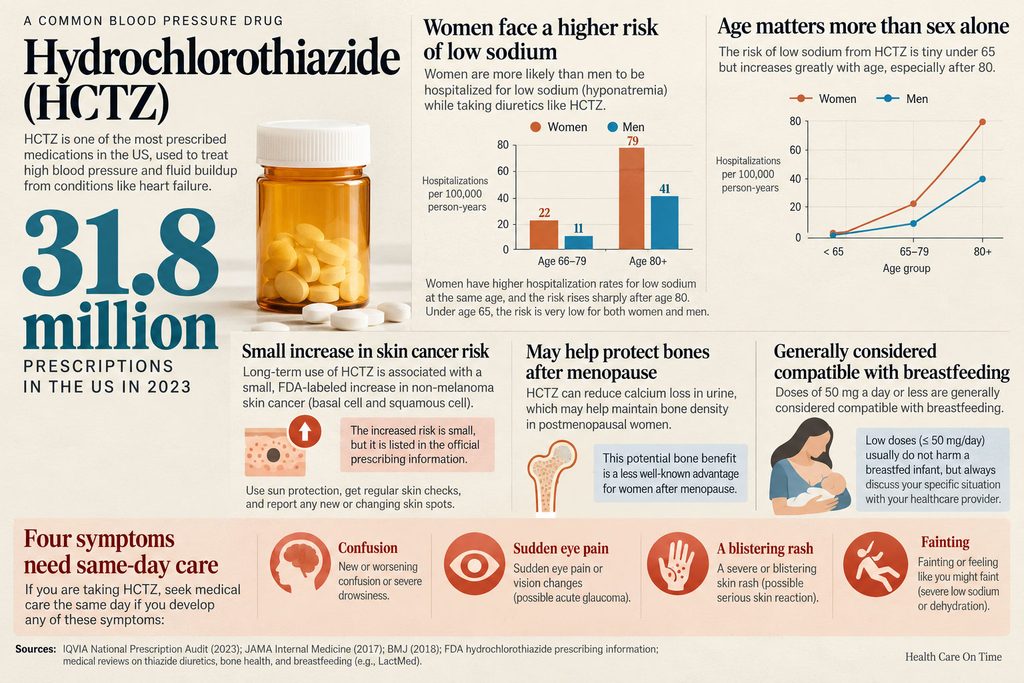
Quick Answer: The most common hydrochlorothiazide side effects in women are frequent urination, dizziness when standing, low potassium, low sodium, and sun sensitivity. Most are mild and fade within a few weeks. Women over 65, and especially over 80, face a much higher risk of low sodium. Ask for a basic metabolic panel within 1 to 2 weeks of starting, and never stop the drug without talking to your doctor.
At a Glance
- Hydrochlorothiazide (HCTZ) is one of the most prescribed drugs in the US, with about 31.8 million prescriptions in 2023.
- Women are more likely than men to be hospitalized for low sodium while on diuretics.
- Age matters more than sex alone: the low-sodium risk is tiny under 65 and large after 80.
- Long-term use carries a small, FDA-labeled increase in non-melanoma skin cancer.
- HCTZ may help protect bones after menopause, a benefit few women hear about.
- Doses of 50 mg a day or less are generally considered compatible with breastfeeding.
- Four symptoms need same-day care: confusion, sudden eye pain, a blistering rash, or fainting.
What Hydrochlorothiazide Does in a Woman’s Body
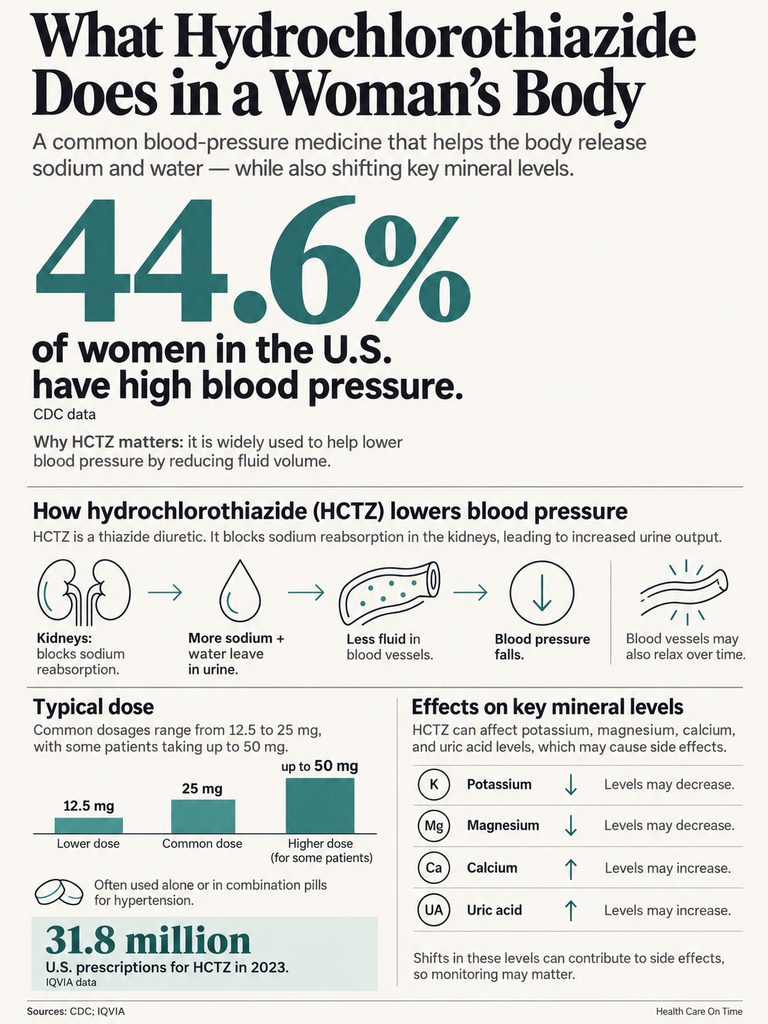
Hydrochlorothiazide is a thiazide diuretic, often called a “water pill.” Doctors prescribe it mainly for high blood pressure, and sometimes for swelling or to prevent calcium kidney stones.
It’s cheap, well studied, and taken once a day. That’s a big part of why it stays so popular.
How a Water Pill Lowers Blood Pressure
HCTZ works in the kidneys. It blocks sodium from being reabsorbed in a section called the distal tubule, so more sodium and water leave your body in urine.
Less fluid in your blood vessels means lower pressure. Over weeks, your blood vessels also relax a bit, which helps keep pressure down long term.
The catch is that HCTZ doesn’t only pull out sodium and water. It also changes potassium, magnesium, calcium, and uric acid levels. Most side effects trace back to those shifts.
Common Doses and Combination Pills
For blood pressure, the usual dose is 12.5 to 25 mg once a day, sometimes up to 50 mg. Lower doses cause fewer side effects, and many women do well at 12.5 mg.
You may be taking HCTZ without realizing it. It’s built into several combination pills, including:
- Losartan/HCTZ (Hyzaar)
- Lisinopril/HCTZ (Zestoretic)
- Valsartan/HCTZ (Diovan HCT)
- Triamterene/HCTZ (Maxzide, Dyazide)
If your prescription label ends in “HCT” or “HCTZ,” everything in this guide applies to you.
Why So Many Women Take It
High blood pressure is common. CDC data from 2021 to 2023 show 47.7% of US adults have hypertension, including 44.6% of women.
The 2025 AHA/ACC blood pressure guideline still lists a thiazide-type diuretic as one of the first-line choices for starting treatment. According to ClinCalc’s drug statistics, HCTZ alone reached about 31.8 million US prescriptions for 8.9 million patients in 2023.
Patients booking blood pressure-related lab work with HealthCareOnTime frequently list HCTZ among their current medicines, often inside a combination pill.
Why Side Effects Can Hit Women Harder
Women aren’t simply “smaller men” when it comes to drugs. Body composition, hormones, and age all change how a diuretic behaves.
Smaller Body Size and Water Balance
On average, women have less total body water than men of the same weight. A diuretic that removes a fixed amount of sodium and water creates a bigger relative shift in a smaller body.
Lower body weight is also a known risk factor for thiazide-related low sodium, according to a review in the American Journal of Kidney Diseases.
Age and Menopause
After menopause, many women become more salt-sensitive, which is one reason blood pressure tends to climb in the 50s and 60s. That’s also when HCTZ prescriptions rise.
Older age brings slower kidney function, more medicines, and a weaker thirst signal. Stack those on top of a water pill and electrolyte problems become far more likely.
What the Sex-Difference Studies Show
The research points in one direction. In a study of diuretic users, women had higher odds of a hospital admission tied to low sodium than men, with an adjusted odds ratio of 2.65.
A 2024 analysis found women on diuretics had roughly a 40% to 60% higher risk of low sodium at hospital admission. A Swedish register study also found women were more likely to report thiazide side effects overall.
Our medical reviewers note that part of this gap reflects age: women live longer and make up more of the oldest patients on HCTZ. But the higher risk for women held up even after researchers adjusted for age, dose, and other medicines.
| Metric | Figure | Source |
| US hydrochlorothiazide prescriptions (2023) | About 31.8 million, for 8.9 million patients | ClinCalc DrugStats |
| US women with hypertension | 44.6% (adults overall: 47.7%) | CDC NCHS Data Brief 511 |
| Women 80+ who start a thiazide and develop profound low sodium (below 125 mEq/L) within 2 years | About 1 in 33; number needed to harm of 53 vs. a calcium channel blocker | JAMA Network Open, 2026 (Swedish cohort, n=159,080) |
| Hospital admission for low sodium on diuretics, women vs. men | Adjusted odds ratio 2.65 | Pharmacoepidemiology and Drug Safety |
| Extra non-melanoma skin cancers linked to HCTZ | About 1 per 16,000 patients per year | FDA, 2020 label change |
| Hip fracture risk in postmenopausal thiazide users | Relative risk 0.69 (31% lower) | Prospective study of 83,728 women |
The 11 Side Effects Women Notice Most
Here are the 11 signs women on HCTZ report most, roughly from most to least common:
- Frequent urination
- Dizziness when standing up
- Dehydration, thirst, or dry mouth
- Low sodium (hyponatremia)
- Low potassium (hypokalemia)
- Low magnesium
- Higher blood sugar
- Higher uric acid and gout
- Sun sensitivity and rash
- Small long-term rise in skin cancer risk
- Fatigue or weakness
When Each Side Effect Usually Starts
Timing helps you tell a normal adjustment from a real problem.
- First few days: more urination, thirst, mild dizziness. These usually settle within 1 to 4 weeks.
- First 2 to 8 weeks: low potassium or low sodium may show up on blood tests, sometimes with cramps or tiredness.
- Hours to weeks: the rare eye reaction (covered in the red flags below).
- Months to years: gout flares, blood sugar creep, late-onset low sodium, and the slow buildup of skin cancer risk.
Fluid and Bladder Effects
Frequent Urination and Bladder Leakage
Expect more bathroom trips in the first few hours after each dose. This usually eases over 1 to 2 weeks as your body adjusts.
For women with an overactive bladder or stress incontinence, the extra urine volume can make leaks worse. Harvard Health lists diuretics, including HCTZ, among drugs that can trigger urgency.
The good news: in a study of 959 women aged 72 to 81, thiazides were not linked to new bladder leakage. A different blood pressure drug class (peripheral alpha blockers) was. Taking your dose in the morning helps most women.
Dehydration and Dizziness on Standing
Losing extra fluid can drop your blood pressure too far when you stand quickly. You may feel lightheaded, see spots, or need to grab a counter.
This is most common in the first weeks, in hot weather, and when you’re sick with vomiting or diarrhea. For older women, these dizzy spells raise the risk of falls and fractures. Our guide to dangerous low blood pressure in women explains which readings need attention.
Electrolyte Shifts
Low Sodium
Low sodium (hyponatremia) means blood sodium below 135 mEq/L. It’s the side effect where age and sex matter most.
A 2026 Swedish study in JAMA Network Open followed 159,080 people who started either a thiazide or a calcium channel blocker. In women under 65, the extra risk from the thiazide was negligible.
In women 80 and older, the picture flipped. For every 53 women treated with a thiazide instead, one extra woman developed profound low sodium. For every 16, one extra woman dropped below 135 mEq/L.
Mild low sodium often causes no symptoms. As it worsens, you may notice headache, nausea, tiredness, muscle cramps, unsteady walking, or confusion. Severe cases can cause seizures.
Low sodium often shows up early, but it can also appear months or years after starting. In basic metabolic panels booked through HealthCareOnTime, our reviewers flag a slow sodium drift for follow-up rather than dismissing it because “it was fine last year.”
Low Potassium and Magnesium
HCTZ also pushes potassium and magnesium out in your urine. Normal blood potassium runs about 3.5 to 5.0 mEq/L.
Low potassium can cause muscle cramps (often in the calves at night), weakness, constipation, and heart palpitations. Very low levels can trigger dangerous heart rhythms.
Risk climbs with higher doses, low-potassium diets, and other drugs that drain potassium, such as some laxatives or steroids. Low magnesium often travels with low potassium and can make it harder to correct.
Metabolic Effects
HCTZ can nudge blood sugar up slightly. For most women this is minor, but if you have prediabetes or diabetes, your A1C may creep higher. Keep up with your usual glucose checks.
HCTZ also raises uric acid, which can trigger gout. Before menopause, estrogen helps women clear uric acid, so gout is uncommon. After menopause, that protection fades, and a thiazide can tip some women into their first gout flare.
In an older US trial that mostly used chlorthalidone, a close cousin of HCTZ, 15.5% of treated women reached uric acid levels of 8.0 mg/dL or higher. Most never developed gout, but tell your doctor if you’ve ever had a flare.
Skin Effects
Sun Sensitivity and Rash
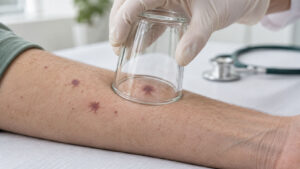
HCTZ makes skin more reactive to UV light. You may burn faster than usual or develop a red, itchy rash on sun-exposed areas like your face, neck, chest, and forearms.
Rarely, HCTZ causes serious skin reactions, including peeling or blistering rashes. A 2024 case report described a severe peeling rash that improved only after the drug was stopped.
The Skin Cancer Question
In August 2020, the FDA approved label changes to describe a small increased risk of non-melanoma skin cancer with HCTZ. The extra risk is mainly squamous cell carcinoma, and it builds with years of use.
How small is small? The FDA estimated about one extra non-melanoma skin cancer per 16,000 patients per year. A meta-analysis found a 35% higher relative risk of squamous cell carcinoma, and only about 5% for basal cell carcinoma.
The FDA did not pull the drug because uncontrolled blood pressure is far more dangerous. Instead, it advises daily sunscreen, protective clothing, and regular skin checks. Women with fair skin, a history of skin cancer, or heavy sun exposure should weigh this most carefully.
Fatigue, Weight Changes, and Hair Loss: What’s Real
Fatigue is common early on. It often reflects lower blood pressure, mild dehydration, or low potassium. If it lasts beyond a few weeks, ask for an electrolyte check before assuming it’s “just the pill.”
Weight changes usually go the other way. Most women lose 1 to 3 pounds of water in the first week. Steady weight gain is not a typical HCTZ effect; look at swelling, thyroid issues, or other medicines.
Hair loss is reported only rarely. Iron, thyroid, and recent stress are far more common causes in women. Women ordering thyroid and iron panels with us often find the answer there rather than in their blood pressure pill.
| Side Effect | How Common | Who’s Most at Risk | What It Feels Like | What to Do |
| Frequent urination | Very common, first 1 to 2 weeks | Women with overactive bladder | Bathroom trips 2 to 6 hours after dose | Take it in the morning |
| Dizziness on standing | Common | Older women, hot weather, illness | Lightheaded, vision dims briefly | Stand slowly; report falls |
| Dehydration | Common | Women 65+, low fluid intake | Thirst, dry mouth, dark urine | Drink to thirst; call if vomiting |
| Low sodium | Rare under 65; at 80+, 1 extra profound case per 53 women | Women 80+, low body weight, SSRI users | Headache, nausea, confusion, unsteadiness | Sodium test in 1 to 2 weeks |
| Low potassium | Fairly common; rises with dose | 25 to 50 mg doses, laxative or steroid users | Calf cramps, weakness, palpitations | Basic metabolic panel; diet changes |
| Low magnesium | Less common | Long-term users, alcohol use | Twitching, cramps, fatigue | Magnesium test if cramps persist |
| Higher blood sugar | Mild, common | Women with prediabetes | Usually no symptoms | Track A1C |
| High uric acid / gout | Uric acid rises often; gout less common | Postmenopausal women, gout history | Sudden hot, painful joint | Tell doctor about gout history |
| Sun sensitivity | Uncommon | Fair skin, outdoor activity | Fast sunburn, rash on exposed skin | SPF 30+, cover up |
| Skin cancer risk | About 1 per 16,000 per year | Long-term users, fair skin | New or changing skin spot | Yearly skin check |
| Fatigue | Common early | First month, low potassium | Tired, heavy limbs | Check electrolytes if over 3 weeks |
Hydrochlorothiazide at Every Life Stage
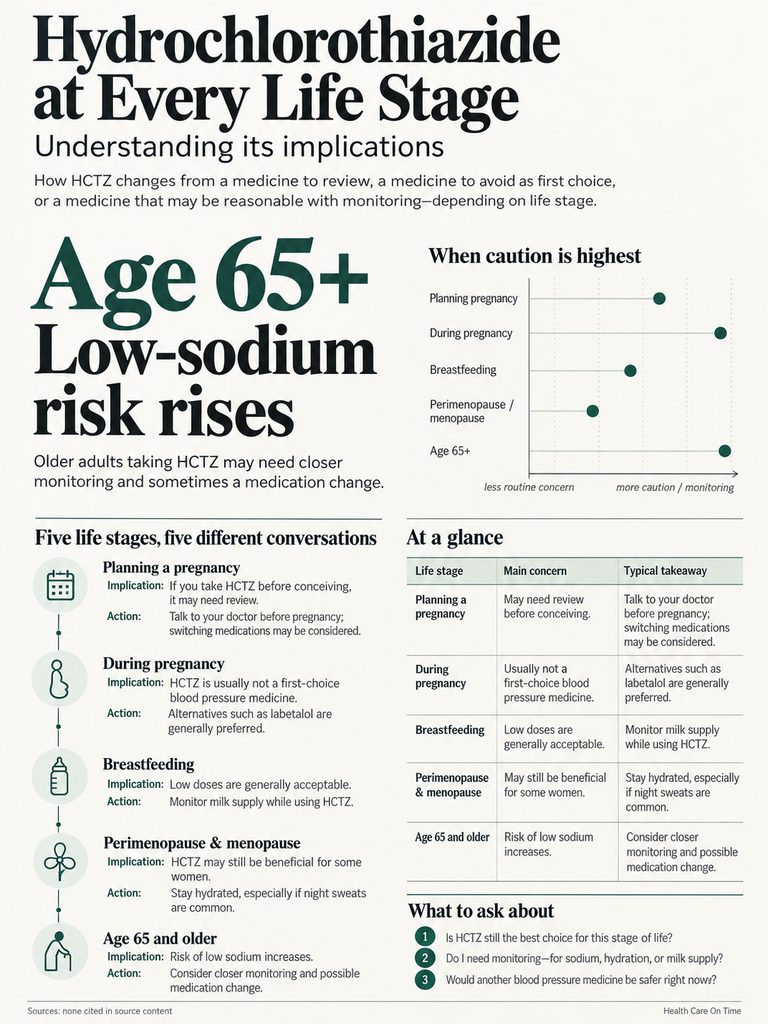
The same pill means different things at 32, 52, and 82. Here’s how the advice shifts.
Planning a Pregnancy
If you’re on HCTZ and planning to conceive, talk to your doctor before you stop birth control. Many doctors prefer to switch women to a drug with more pregnancy data before conception.
This matters even more if your HCTZ comes in a combination pill with an ACE inhibitor (lisinopril) or ARB (losartan, valsartan). Those partner drugs should be avoided in pregnancy, so the whole pill usually needs replacing. Our losartan guide covers that drug in more detail.
During Pregnancy
HCTZ is usually not a first choice in pregnancy. Diuretics can limit the blood volume that normally expands to support the baby, and older data raised questions about first-trimester use.
The 2025 AHA/ACC guideline now includes a full section on blood pressure in pregnancy, alongside ACOG guidance. Labetalol and long-acting nifedipine are the drugs most often used.
Some women with long-standing chronic hypertension do continue a thiazide under close supervision. If you find out you’re pregnant while on HCTZ, call your doctor promptly, but don’t stop it on your own.
Breastfeeding
HCTZ passes into breast milk in small amounts. The NIH’s LactMed database considers doses of 50 mg a day or less acceptable during breastfeeding.
The main concern is your milk supply, not the baby. Strong fluid loss at high doses may reduce milk production. Stay well hydrated and tell your pediatrician and doctor if your supply drops.
Perimenopause and Menopause
This is when HCTZ often gets started. It suits many women here because it lowers blood pressure in salt-sensitive bodies and may help preserve bone.
It’s also when gout risk rises and when night sweats can add to fluid loss. If you’re sweating heavily at night, keep water by the bed and mention it at your next visit.
Age 65 and Older, Especially 80+
After 65, the balance of benefit and risk shifts. Low sodium becomes the headline risk, along with dizziness and falls.
The 2026 JAMA study authors suggested doctors consider close sodium monitoring or a different blood pressure drug for women 80 and older. That doesn’t mean HCTZ is wrong for you. It means a sodium check soon after starting, and again after any dose change or new medicine, is smart.
In sodium tests booked through HealthCareOnTime for women over 75, our medical team watches readings in the low 130s closely, since a gradual slide is easy to miss.
The Upside Few Mention: Bones and Kidney Stones
Most HCTZ articles list only the downsides. But this drug has a real benefit that matters more to women than men.
Bone Density After Menopause
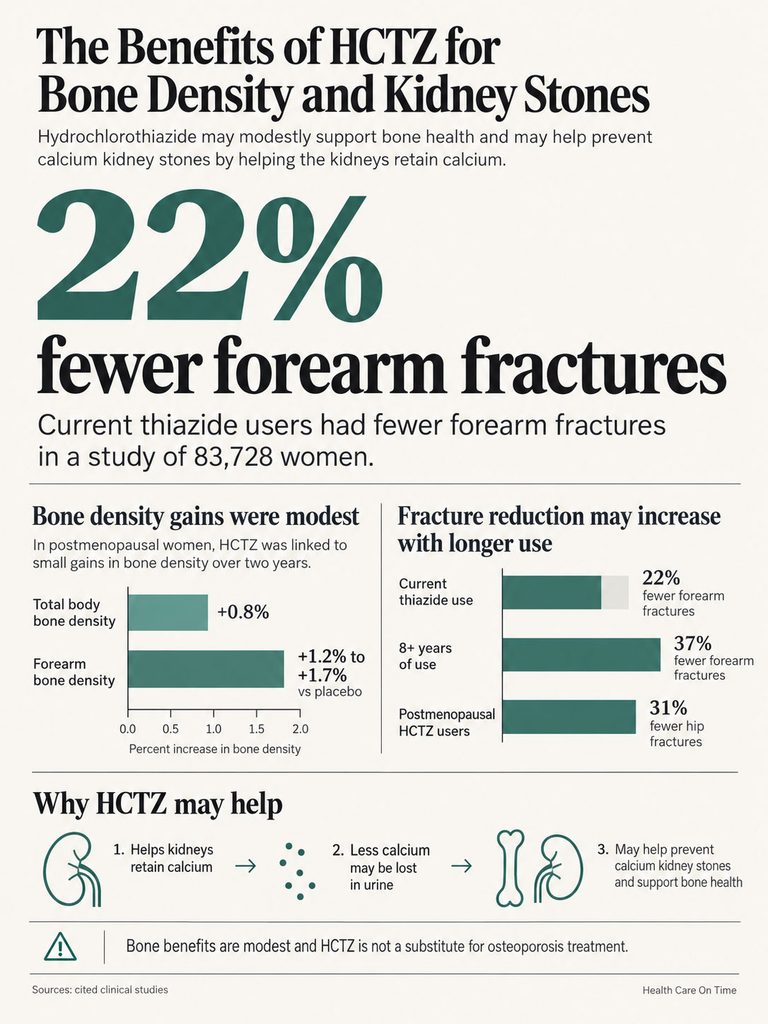
HCTZ makes your kidneys hold on to calcium instead of losing it in urine. That extra calcium appears to help bones.
In a two-year randomized trial in postmenopausal women, HCTZ 50 mg slowed cortical bone loss. Bone density was about 0.8% higher for the total body and 1.2% to 1.7% higher at the forearm compared with placebo.
A large prospective study followed 83,728 women for 10 years. Current thiazide users had 22% fewer forearm fractures, rising to 37% fewer after 8 or more years. Postmenopausal users also had about 31% fewer hip fractures.
Calcium Kidney Stones
The same calcium-holding effect is why doctors sometimes use thiazides to prevent calcium kidney stones. If you’ve had stones before, HCTZ may pull double duty.
Where the Evidence Stops
These bone effects are real but modest. The trial authors themselves said HCTZ is not a suitable stand-alone treatment for osteoporosis.
Some studies have also linked thiazides to a higher risk of spine fractures, possibly through low sodium and falls. If you have osteoporosis, you still need the standard bone treatments your doctor recommends.
4 Red Flags That Need Same-Day Care
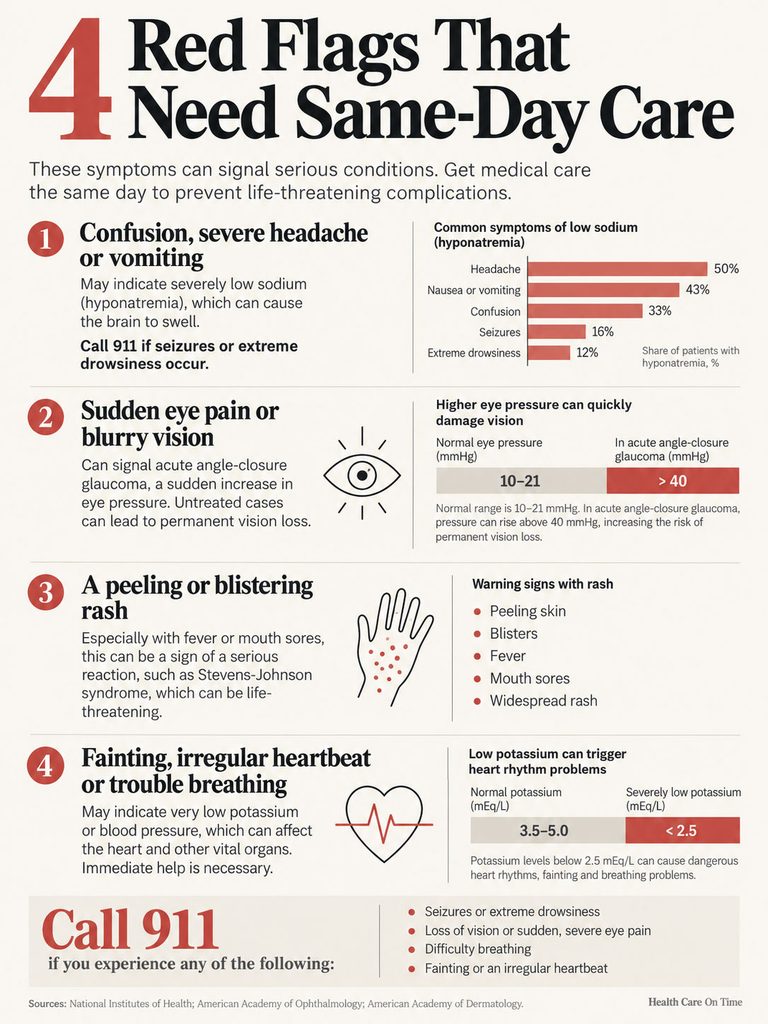
Most HCTZ side effects are annoying, not dangerous. These four are the exceptions. Call your doctor the same day or go to urgent care or the ER.
1. Confusion, Severe Headache, or Vomiting
These can signal severely low sodium, especially in older women or after a recent dose increase. Seizures or extreme drowsiness mean call 911.
Severe low sodium needs careful hospital treatment. Correcting it too quickly can also cause harm, so this is not something to treat at home with salt tablets.
2. Sudden Eye Pain or Blurry Vision
HCTZ’s label carries a warning for a rare eye reaction: sudden nearsightedness and acute angle-closure glaucoma, as listed by MedlinePlus. It usually appears within hours to weeks of starting.
Watch for eye pain, blurred vision, halos around lights, headache, or nausea. Untreated, this can cause permanent vision loss. Women with a history of sulfa or penicillin allergy may face higher risk.
3. A Peeling or Blistering Rash
A rash that spreads quickly, blisters, peels, or comes with fever and mouth sores needs urgent care. These rare reactions can be life threatening.
4. Fainting, Irregular Heartbeat, or Trouble Breathing
Fainting, a pounding or irregular heartbeat, or severe weakness can mean very low potassium or blood pressure. Get help right away.
Very rarely, HCTZ triggers fluid in the lungs within about an hour of a dose. Reported cases skew heavily toward women. Sudden shortness of breath after taking your pill is a 911 call.
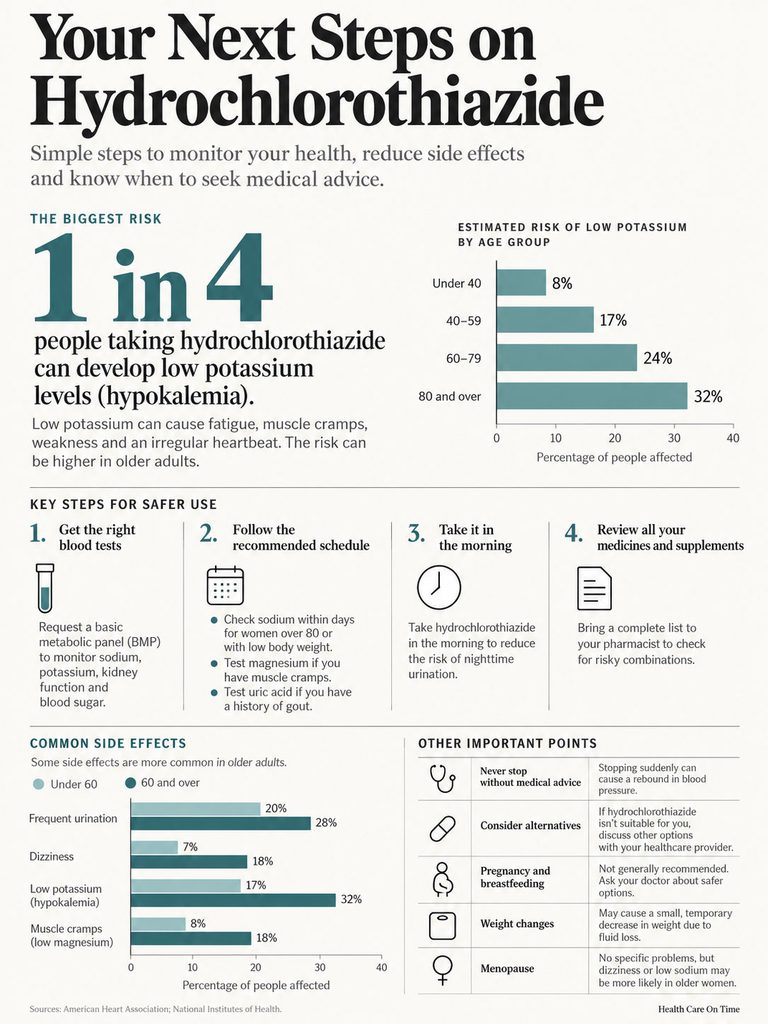
Your Next Steps on Hydrochlorothiazide
Knowing the risks is half the job. Here’s how to act on them.
Blood Tests to Ask For and When
A basic metabolic panel (BMP) checks sodium, potassium, kidney function, and blood sugar in one blood draw. It’s the single most useful test for anyone on HCTZ, and most insurance plans and Medicare Part B cover it when your doctor orders it for medication monitoring.
A practical schedule:
- Before starting: baseline BMP
- 1 to 2 weeks after starting or after any dose change
- Every 6 to 12 months once stable
- Sooner if you’re over 65, start a new medicine, or feel unwell
Women over 80, or with low body weight, may benefit from a sodium check within the first few days. In highly susceptible people, sodium can fall within 48 hours.
Add a magnesium test if you have ongoing cramps and a uric acid test if you have a gout history. Our medical reviewers note that many women never get the 2-week check, which is when early problems are easiest to catch.
Daily Habits That Cut Side Effects
- Take it in the morning. A night dose means night bathroom trips.
- Drink to thirst. Don’t force huge amounts of water, which can worsen low sodium. Steady, normal intake is the goal.
- Eat potassium-rich foods if your doctor approves, such as bananas, potatoes, beans, and leafy greens.
- Wear SPF 30+ sunscreen daily and a hat outdoors.
- Stand up slowly, especially in the morning and after hot showers.
- Call your doctor on sick days. Vomiting or diarrhea plus a water pill can drain you fast.
Medicines and Supplements to Review
Bring a full list, including over-the-counter products, to your pharmacist. Common combinations that need attention:
- SSRI antidepressants (like sertraline): both can lower sodium. See our Zoloft side effects guide.
- NSAIDs (ibuprofen, naproxen): can blunt HCTZ and stress the kidneys.
- Lithium: HCTZ can raise lithium to toxic levels.
- Steroids and stimulant laxatives: add to potassium loss.
- Cholestyramine: reduces HCTZ absorption; space doses apart.
Never Stop It on Your Own
Stopping HCTZ suddenly can let your blood pressure rebound. If a side effect is bothering you, call your doctor. Most issues can be fixed by lowering the dose, adding potassium, or switching drugs.
Other Options If HCTZ Isn’t Right for You
You have choices. The main alternatives include:
- Chlorthalidone or indapamide: other thiazide-type diuretics. In the large VA Diuretic Comparison Project, chlorthalidone didn’t beat HCTZ on heart outcomes and caused more low potassium. Nearly all participants were men, so data for women are limited.
- Amlodipine: a calcium channel blocker with much lower low-sodium risk, though ankle swelling is common.
- ARBs or ACE inhibitors: effective and gentle on electrolytes, but avoided in pregnancy.
Across patients we serve, the women who feel best on blood pressure treatment are usually the ones who speak up early about side effects instead of quietly skipping doses.
| Scenario | Recommended Action | How Soon |
| Just started HCTZ, peeing a lot | Take dose in the morning; expect it to ease | Recheck in 2 weeks |
| Calf cramps at night | Ask for BMP plus magnesium test | Within 1 week |
| Woman 75+ starting HCTZ | Request sodium check | Within 1 to 2 weeks, earlier at 80+ |
| Confusion, vomiting, or unsteady walking | Go to urgent care or ER | Same day |
| Sudden eye pain or blurred vision | Go to the ER | Immediately |
| Planning pregnancy | Discuss switching drugs before conception | Next visit, before stopping birth control |
| Breastfeeding and milk supply drops | Call doctor about dose; hydrate | Within a few days |
| New or changing skin spot | Book a dermatology skin check | Within 2 to 4 weeks |
Frequently Asked Questions
What are the most common hydrochlorothiazide side effects in women?
Frequent urination, dizziness when standing, thirst, low potassium, and sun sensitivity are the most common. Low sodium is less common in younger women but becomes a major concern after 65, and especially after 80. Most mild side effects ease within the first few weeks as your body adjusts to the medicine.
Does hydrochlorothiazide cause weight gain in women?
No, it usually causes a small weight loss. Most women drop 1 to 3 pounds of water weight in the first week. If you’re gaining weight steadily on HCTZ, look for other causes, such as swelling from another medicine, thyroid changes, or diet. Mention ongoing weight gain to your doctor.
Can hydrochlorothiazide cause hair loss?
Hair loss is a rare reported side effect, not a common one. Iron deficiency, thyroid problems, menopause, and stress are far more frequent causes of shedding in women. If you notice thinning after starting HCTZ, ask your doctor to check iron, ferritin, and thyroid levels before blaming the pill.
Is hydrochlorothiazide safe during pregnancy?
It’s usually not a first choice. Doctors typically prefer labetalol or long-acting nifedipine because they have more pregnancy safety data. Some women with chronic hypertension continue a thiazide under close supervision. If you become pregnant while taking HCTZ, call your doctor promptly, but don’t stop it on your own.
Can I take hydrochlorothiazide while breastfeeding?
Generally yes, at lower doses. The NIH’s LactMed database considers 50 mg a day or less acceptable during breastfeeding. Only small amounts reach breast milk. The bigger concern is that high doses may reduce your milk supply, so stay hydrated and report any drop in supply.
Does hydrochlorothiazide affect menopause symptoms?
It doesn’t cause or treat hot flashes directly. But night sweats plus a water pill can increase fluid loss, so keep water nearby. HCTZ may also help slow bone loss after menopause, while gout risk rises at the same stage because estrogen’s protection against uric acid fades.
Why does hydrochlorothiazide make me tired?
Early fatigue often comes from lower blood pressure or mild dehydration and fades within a few weeks. Ongoing tiredness can point to low potassium, low sodium, or low magnesium. If fatigue lasts more than three weeks, ask for a basic metabolic panel rather than assuming it’s normal.
Can hydrochlorothiazide cause bladder leakage?
It can worsen urgency in women who already have an overactive bladder, because it increases urine volume. However, a study of nearly 1,000 older women found thiazides were not linked to new leakage. Taking your dose in the morning and limiting fluids before bed usually helps.
What time of day should I take hydrochlorothiazide?
Morning is best for most women. The urine-increasing effect peaks a few hours after the dose, so a morning dose keeps bathroom trips during the day instead of overnight. Take it at the same time daily. Avoid taking it after mid-afternoon unless your doctor says otherwise.
How long do hydrochlorothiazide side effects last?
Frequent urination, mild dizziness, and early tiredness usually fade within 1 to 4 weeks. Electrolyte changes like low sodium or potassium can appear anytime, even years later, which is why regular blood tests matter. Sun sensitivity and skin cancer risk continue for as long as you take it.
Can I drink alcohol or coffee on hydrochlorothiazide?
Moderate coffee is generally fine, though both caffeine and HCTZ increase urination. Alcohol adds to dizziness, dehydration, and low blood pressure, raising fall risk. If you drink, keep it light, stay hydrated, and stand slowly. Heavy drinking also raises the risk of low magnesium and low sodium.
Is chlorthalidone better than hydrochlorothiazide for women?
Not clearly. A large 2022 VA trial found chlorthalidone didn’t reduce heart attacks or strokes more than HCTZ and caused more low potassium. Nearly all participants were men, so women-specific data are thin. The best choice depends on your labs, age, and other conditions. Ask your doctor.
Disclaimer: This article is for general education and is not a substitute for medical advice, diagnosis, or treatment. Do not start, stop, or change any medicine without talking to your doctor or pharmacist. If you have confusion, sudden eye pain, a blistering rash, fainting, or trouble breathing, seek emergency care or call 911.
References
- Thiazides and Risk of Hyponatremia by Age and Sex, JAMA Network Open, 2026
- Women on diuretics have a higher risk of hospital admission because of hyponatremia than men, Pharmacoepidemiology and Drug Safety
- Women have a higher risk of hospital admission associated with hyponatremia than men while using diuretics, Frontiers in Pharmacology, 2024
- Thiazide-Associated Hyponatremia: Clinical Manifestations and Pathophysiology, American Journal of Kidney Diseases
- FDA approves label changes to hydrochlorothiazide to describe small risk of non-melanoma skin cancer, FDA
- Use of Thiazide Diuretics and Risk of All Types of Skin Cancers: Updated Systematic Review and Meta-Analysis
- Hydrochlorothiazide reduces loss of cortical bone in normal postmenopausal women, American Journal of Medicine
- A prospective study of thiazide use and fractures in women, Osteoporosis International
- Hydrochlorothiazide, Drugs and Lactation Database (LactMed), NIH
- Hydrochlorothiazide, MedlinePlus Drug Information
- Hypertension Prevalence, Awareness, Treatment, and Control Among Adults, CDC NCHS Data Brief 511
- Hydrochlorothiazide Drug Usage Statistics, ClinCalc DrugStats
- 2025 AHA/ACC Guideline for the Prevention, Detection, Evaluation and Management of High Blood Pressure in Adults, Hypertension
- Antihypertensive drug class use and differential risk of urinary incontinence in community-dwelling older women
- Medications that can cause urinary incontinence, Harvard Health
- Chlorthalidone vs. Hydrochlorothiazide for Hypertension: Cardiovascular Events, New England Journal of Medicine, 2022
- Hydrochlorothiazide-Induced Exfoliative Rash and Sepsis, Cureus, 2024
- Hydrochlorothiazide Side Effects, Drugs.com