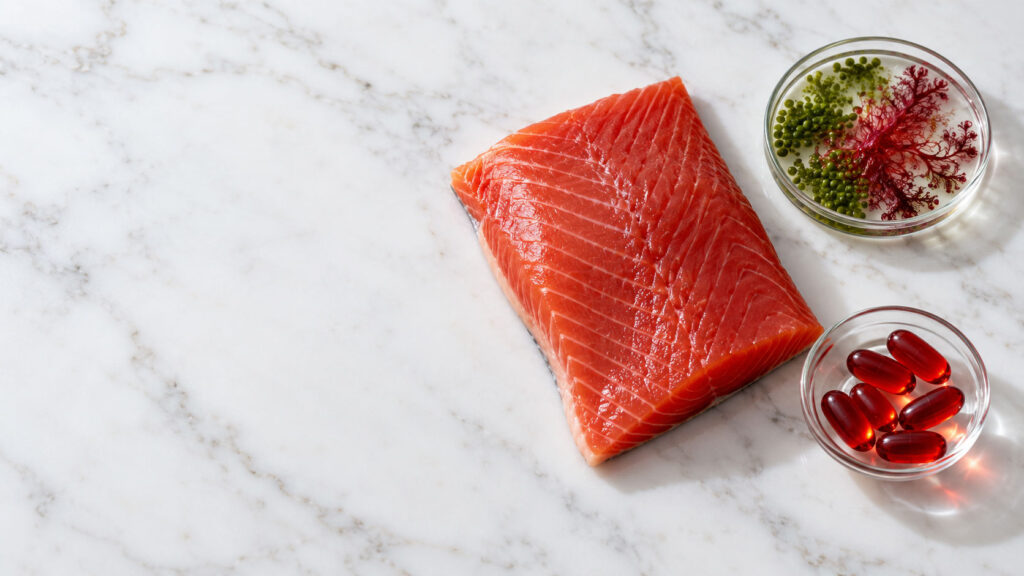
Flamingos hatch gray. Their pink color shows up only after months of eating algae and tiny shrimp loaded with one red pigment.
Table of Contents
That pigment is astaxanthin. Today it sits in capsule form on US pharmacy shelves, often with a label saying it’s “6,000 times stronger than vitamin C.” The number is real, but it doesn’t mean what most buyers think it means.
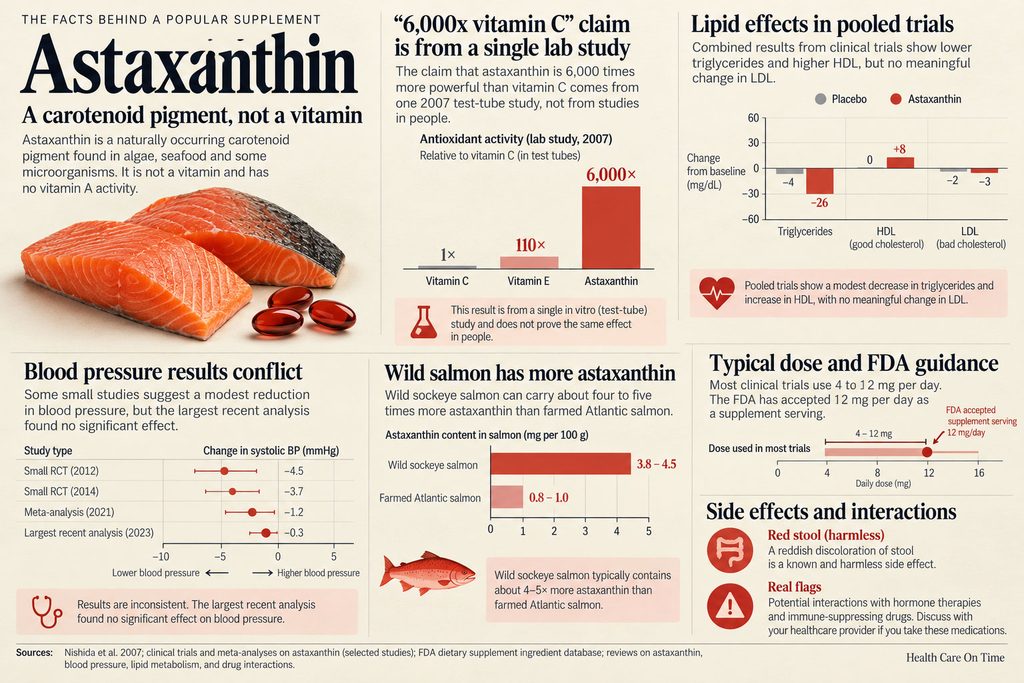
Quick Answer: Astaxanthin is a red-orange, fat-soluble carotenoid made by microalgae such as Haematococcus pluvialis. It gives salmon, shrimp, lobster, and flamingos their color. As a supplement, it’s usually sold at 4 to 12 mg a day. Human trials show modest drops in triglycerides, small rises in HDL cholesterol, and better skin elasticity. It does not reliably lower LDL. Unlike beta-carotene, your body can’t turn it into vitamin A.
At a Glance
- Astaxanthin is a carotenoid pigment, not a vitamin, and it has no vitamin A activity.
- The “6,000x vitamin C” claim comes from a single 2007 test-tube study, not from people.
- Pooled trials show lower triglycerides and higher HDL, but no meaningful change in LDL.
- Blood pressure results conflict. The largest recent analysis found no significant effect.
- Wild sockeye salmon can carry about four to five times more astaxanthin than farmed Atlantic salmon.
- Most trials use 4 to 12 mg a day, and FDA has accepted 12 mg a day as a supplement serving.
- Red stool is a known, harmless side effect. Hormone and immune-drug interactions are the real flags.
What Is Astaxanthin, in Plain English?
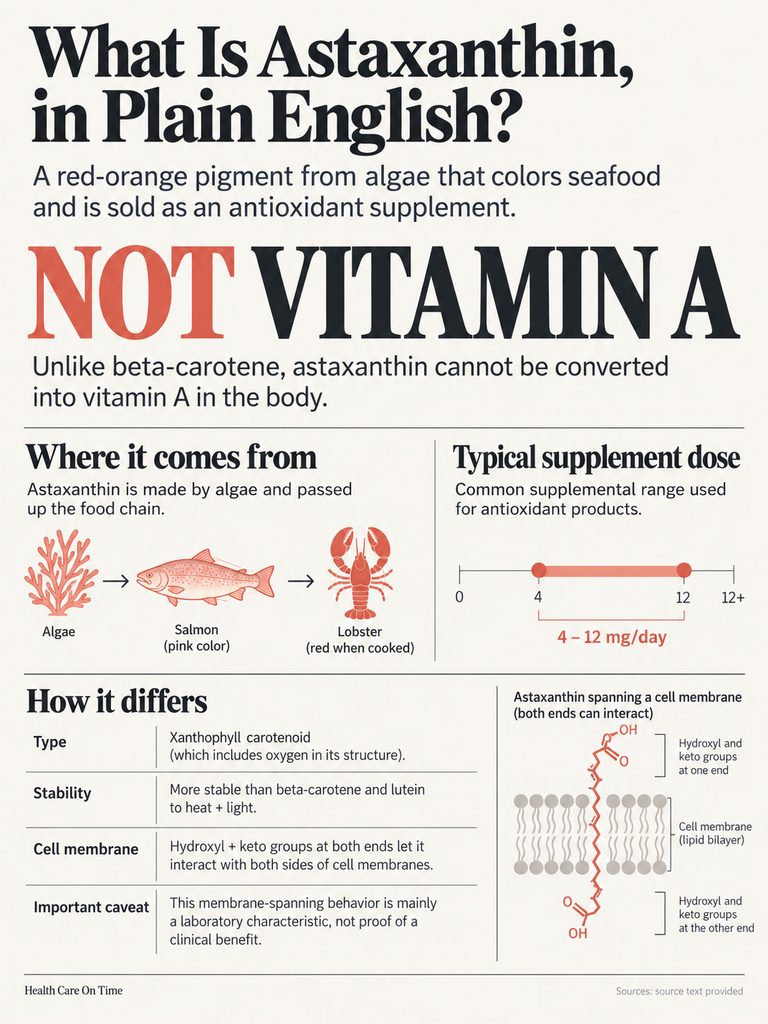
Astaxanthin is a red-orange carotenoid pigment that algae make and sea animals absorb through their diet. It’s what makes salmon pink and cooked lobster red. People take it as a supplement for its antioxidant effects, usually at 4 to 12 mg a day.
It belongs to the same broad family as beta-carotene in carrots and lycopene in tomatoes. Its formula is C40H52O4, and researchers describe it as a fat-soluble antioxidant. It was first isolated from lobster by the chemists Kuhn and Sørensen.
Where It Sits in the Carotenoid Family
Carotenoids split into two groups. Carotenes, like beta-carotene and lycopene, contain only carbon and hydrogen. Xanthophylls, like lutein, zeaxanthin, and astaxanthin, also carry oxygen.
That oxygen makes a difference. According to Examine’s review of the chemistry, astaxanthin is more stable than beta-carotene or lutein, so heat and light break it down less easily.
Why It Isn’t Vitamin A
Your body can split beta-carotene into vitamin A. It can’t do that with astaxanthin. A review in Marine Drugs states that astaxanthin has no pro-vitamin A activity in humans.
Patients who order nutrient panels through HealthCareOnTime sometimes assume their “carotenoid supplement” covers vitamin A. If that supplement is astaxanthin, it doesn’t.
What Makes Its Structure Different
Each end of the astaxanthin molecule carries hydroxyl and keto groups. A 2022 study explains that these groups let it slot into a cell membrane and stretch across its full width.
Vitamin C works in the watery parts of a cell, and vitamin E works in the fatty parts. Astaxanthin can touch both sides of the membrane at once. That’s the main idea behind the marketing, but it’s a lab feature, not proof of a health benefit.
Where Astaxanthin Comes From
Microalgae, Yeast, and the Food Chain
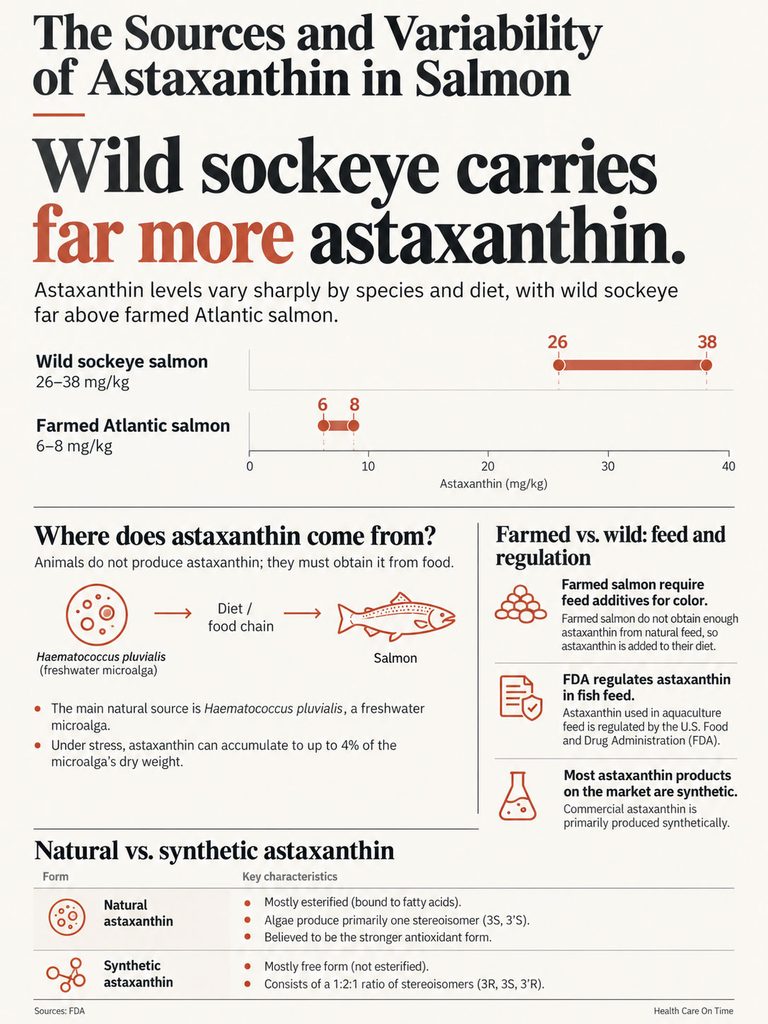
Animals can’t make astaxanthin. They have to eat it, which is why it shows up in salmon, trout, shrimp, lobster, and fish eggs.
The richest natural source is the freshwater microalga Haematococcus pluvialis. Under stress, it can pack astaxanthin up to about 4% of its dry weight. Commercial supplements come mainly from this alga and from the yeast Phaffia rhodozyma.
The chain is simple: algae make it, krill and shrimp eat the algae, and salmon eat the krill.
Wild vs Farmed Salmon
Farmed salmon don’t eat wild krill, so their color has to come from feed. The FDA has listed astaxanthin as a color additive for salmon and trout feed since April 1995.
Under 21 CFR Part 73, astaxanthin in finished fish feed can’t exceed 80 mg per kilogram. That cap applies whether the source is synthetic astaxanthin, algae meal, Phaffia yeast, or krill meal.
The result is a real gap on your plate. A review in Marine Drugs reports 26 to 38 mg per kilogram in wild sockeye flesh vs 6 to 8 mg per kilogram in farmed Atlantic salmon.
| Fish (raw) | Astaxanthin per kg | Per 3.5 oz (100 g) | Per 6 oz (170 g) | Amount for one 4 mg capsule |
| Wild sockeye | 26 to 38 mg | 2.6 to 3.8 mg | 4.4 to 6.5 mg | About 3.7 to 5.4 oz |
| Farmed Atlantic | 6 to 8 mg | 0.6 to 0.8 mg | 1.0 to 1.4 mg | About 1.1 to 1.5 lb |
| 12 mg dose, farmed Atlantic | 6 to 8 mg | n/a | n/a | About 3.3 to 4.4 lb |
These are raw values from published ranges. Individual fish vary widely, and cooking losses aren’t well measured, so the amount on your plate is likely a little lower.
When patients ask our team whether their salmon “counts,” the answer depends on the label. Wild sockeye adds a meaningful amount. Farmed Atlantic adds very little by supplement standards.
Natural vs Synthetic Supplements
Natural astaxanthin from algae is mostly esterified, meaning bonded to fatty acids. Synthetic astaxanthin is made in free form.
Astaxanthin comes in three mirror-image forms, called stereoisomers. Synthetic versions contain all three in a 1:2:1 ratio, while algae make mostly one. A 2018 review noted that most astaxanthin products on the market are synthetic.
Lab studies suggest the natural form is the stronger antioxidant. No large human trial has compared the two head to head on health outcomes. If the label doesn’t name the source, assume synthetic.
Astaxanthin vs Other Antioxidants
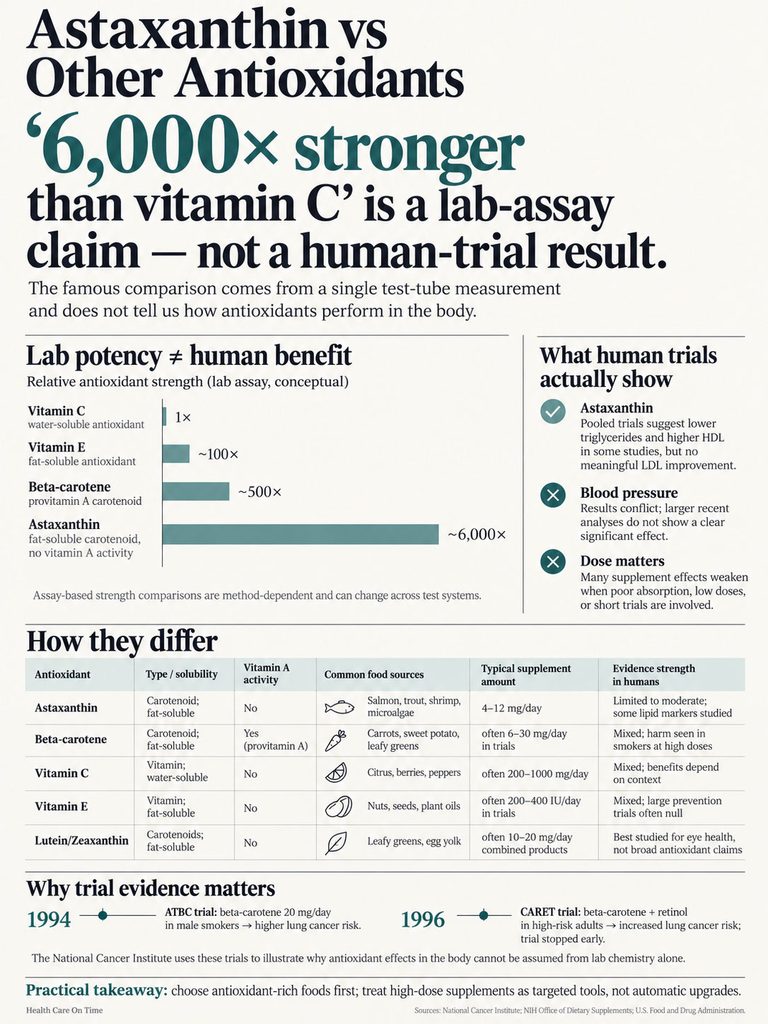
Here’s how astaxanthin compares with the antioxidants most Americans already know.
| Antioxidant | Type | Dissolves in | Vitamin A activity | Main US food source | Typical supplement amount | Strongest human evidence |
| Astaxanthin | Xanthophyll carotenoid | Fat | None | Wild sockeye salmon, shrimp | 4 to 12 mg/day | Modest triglyceride drop, HDL rise, skin elasticity |
| Beta-carotene | Carotene | Fat | Yes | Carrots, sweet potatoes | 20 to 30 mg/day in major trials | Raised lung cancer risk in smokers (ATBC +18%, CARET +28%) |
| Lutein | Xanthophyll carotenoid | Fat | None | Kale, spinach | 10 mg/day (with 2 mg zeaxanthin) | AREDS2 eye formula for macular degeneration |
| Lycopene | Carotene | Fat | None | Tomato paste, watermelon | 8 to 21 mg/day in trials | Small blood pressure effects, mostly from tomato foods |
| Vitamin C | Water-soluble vitamin | Water | None | Bell peppers, citrus | RDA 75 mg (women), 90 mg (men) | Prevents scurvy; little benefit above normal intake |
| Vitamin E | Fat-soluble vitamin | Fat | None | Nuts, seeds, oils | RDA 15 mg | No heart benefit in large US trials |
The pattern is clear. Antioxidants that look powerful in a lab dish often do much less, and occasionally harm, in large human trials. The National Cancer Institute’s antioxidant fact sheet covers the beta-carotene results in detail. Our article on whether tomatoes are good for heart health shows the same food-vs-supplement gap for lycopene.
The “6,000 Times Vitamin C” Claim, Traced
HealthCareOnTime’s medical review team traced the famous number to its source. It comes from a 2007 paper by Nishida, Yamashita, and Miki in Carotenoid Science. They measured how well different antioxidants neutralize singlet oxygen in a test tube.
Singlet oxygen is one specific type of reactive molecule. On that single test, astaxanthin beat vitamin C by about 6,000 times. On a different free-radical test, reviews cite a gap of only 65 times.
Those two figures are about 92-fold apart for the same two molecules. The multiplier depends on which test you run, so it can’t predict what happens inside your body.
There’s also a dose problem. Adults need 75 to 90 mg of vitamin C a day, while astaxanthin capsules hold 4 to 12 mg. A “stronger” molecule taken in a tiny dose isn’t automatically doing more.
What Human Studies Actually Show
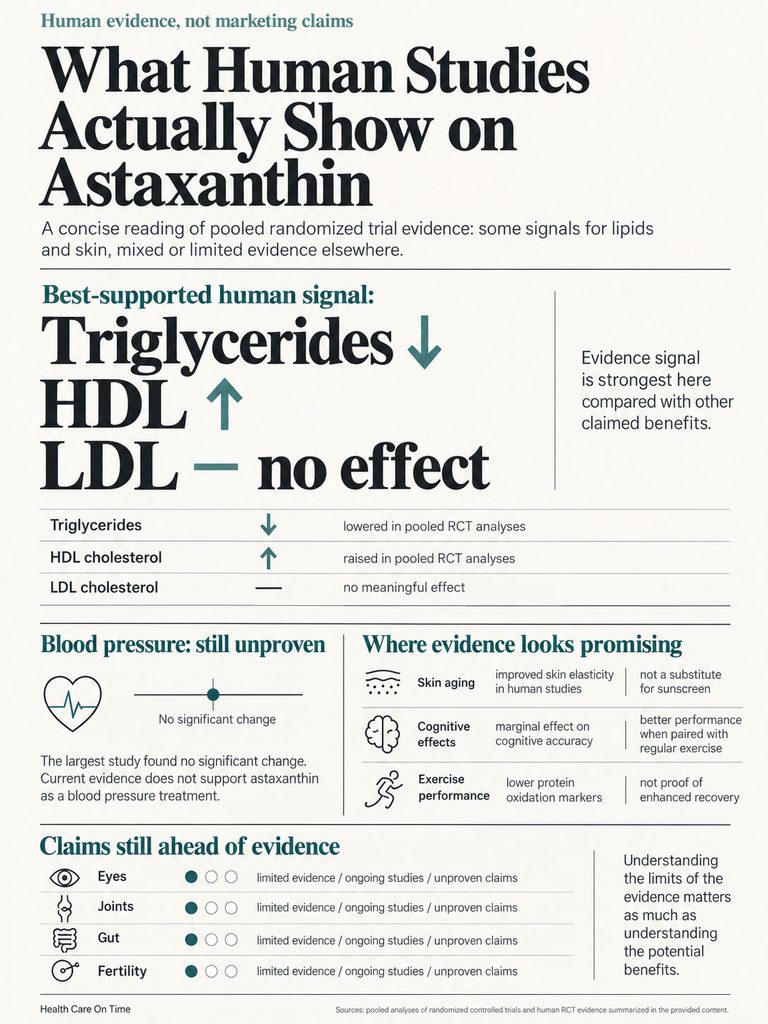
This is where the hype and the data part ways. The table below pulls the most recent pooled analyses of randomized controlled trials (RCTs).
| Health area | Trials / people | Dose and length | Pooled result | Source |
| Triglycerides and HDL | 8 RCTs, 307 people | Moderate to high doses | Triglycerides down, HDL up | Laurindo 2025 via Examine |
| LDL and total cholesterol | Same 8 RCTs | Same | No significant effect | Examine summary |
| Lipids in diabetes/prediabetes | 9 RCTs, 403 patients | Varied | Triglycerides -20.9 mg/dL, HDL +3.0 mg/dL | Molani-Gol 2026 |
| Blood pressure (largest pool) | 17 studies, 1,101 people | Average 10.14 mg/day for 68 days | No significant change in systolic or diastolic | IJPER 2025 |
| Skin elasticity | 6 RCTs (11 studies total) | Oral, several weeks | Effect size 0.77 (95% CI 0.19 to 1.35) | Zhou 2021, Nutrients |
| Cognition and fatigue | 11 RCTs, 346 healthy adults | 8 to 12 weeks | Cognitive accuracy only marginal; reaction time no change | Liu 2024 |
| Exercise performance | Subset of same pool | With regular training | Performance SMD 0.62; fat oxidation SMD 2.56 | Liu 2024 |
| Exercise oxidative stress | 7 RCTs, 188 people | 4 to 28 mg/day, 4 days to 12 weeks | Protein oxidation marker down (SMD -1.06) | PubMed 41710469 |
Cholesterol and Triglycerides
The most consistent finding is on blood fats. Across 8 RCTs with 307 people, astaxanthin lowered triglycerides and raised HDL (“good”) cholesterol. It did nothing to LDL or total cholesterol.
In people with prediabetes or type 2 diabetes, a 2026 meta-analysis found triglycerides fell by about 21 mg/dL and HDL rose by about 3 mg/dL. Those are real but modest changes, smaller than what prescription treatments typically achieve.
Some popular health sites still list “lowers LDL” as a benefit. Current pooled evidence doesn’t support that. Patients booking lipid panels with us often ask whether astaxanthin can replace a statin. The answer is no, because LDL is the number statins target.
Blood Pressure
The evidence here conflicts. The largest recent pool, 17 studies with 1,101 people, found no significant effect on systolic or diastolic pressure. It appeared in a smaller pharmacy journal, so it’s best read alongside the other analyses.
A 2021 meta-analysis of 10 RCTs found no systolic change and a borderline diastolic drop of about 1.2 mmHg. That effect showed up mainly at doses of 12 mg or more and in Asian study groups.
A 2022 analysis in adults at risk of metabolic syndrome found systolic pressure dropped about 4.7 mmHg only when supplements were taken for more than 8 weeks. Treat astaxanthin as unproven for blood pressure, and never as a swap for prescribed medication.
Skin Aging and Sun Damage
Skin is the second-strongest area. A 2021 systematic review and meta-analysis pooled 6 randomized trials and found oral astaxanthin improved skin elasticity compared with placebo. Moisture content improved too.
One cited trial used 2 to 3 mg twice daily for 6 weeks in middle-aged men and women and saw fewer fine lines and better elasticity. Trials were small and short, and many tested branded products.
Astaxanthin is not sunscreen. Daily broad-spectrum sunscreen still does far more for aging skin. Our guide to the effects of aging on skin explains why UV causes most visible aging.
Brain, Fatigue, and Exercise
Astaxanthin can cross into the brain in animal studies, which drives a lot of the brain-health marketing. Human results are thin.
A 2024 meta-analysis of 11 RCTs in 346 healthy adults found only a marginal effect on cognitive accuracy and no change in reaction time. The same pool showed better physical performance and fat burning when astaxanthin was paired with regular training.
A recent analysis of 7 trials in 188 people found lower markers of protein oxidation after exercise. That’s a lab marker, not proof you’ll run faster or recover sooner.
Eyes, Joints, Gut, and Fertility
These areas are early-stage. For indigestion, one study found 40 mg daily for 4 weeks eased reflux, mainly in people with H. pylori infection. A 16 mg dose didn’t help, and neither dose cleared the bacteria.
For joints, a US trial at Prisma Health in Columbia, South Carolina is testing astaxanthin in people with advanced knee osteoarthritis who are waiting for knee replacement. A 2024 fertility meta-analysis mixed clinical and animal studies, which limits what it can prove.
Eye health claims rest mostly on reviews and small trials. If you want proven eye nutrition, the AREDS2 formula with lutein and zeaxanthin has far stronger evidence. Our article on carrots and eye health covers that research.
Evidence Limits
Most astaxanthin trials enroll fewer than 100 people and run 4 to 12 weeks. Many come from Japan, Iran, or China, and several tested branded products from the companies that sell them.
Nearly all measure surrogate markers like triglycerides or skin moisture. No trial has shown that astaxanthin prevents heart attacks, strokes, dementia, or death.
Why Astaxanthin Is Everywhere Right Now
The supplement aisle reflects real money. Market research firm IMARC estimates the US astaxanthin market at $230.7 million in 2025, rising to $422.4 million by 2034.
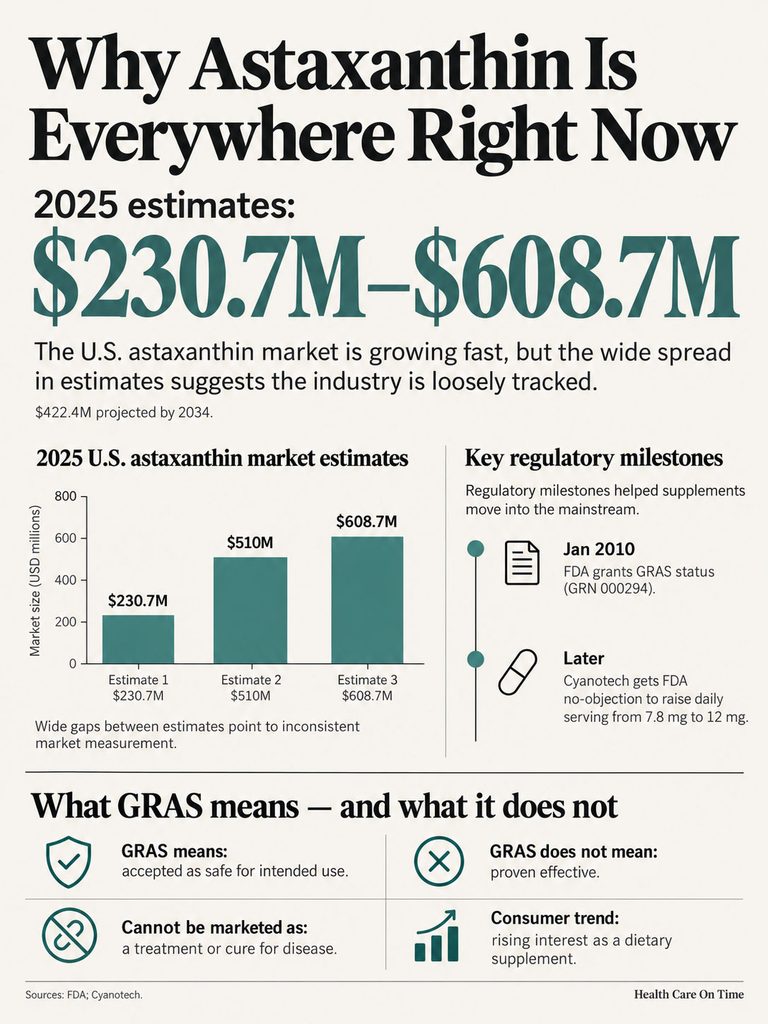
Other firms put the same 2025 market at $510 million or $608.7 million. Estimates that differ by more than double show how loosely this industry is tracked.
Our editorial reviewers checked the FDA records behind the “safe” claims on labels. The FDA accepted a GRAS (“generally recognized as safe”) notice, GRN 000294, in January 2010. Cyanotech later received an FDA no-objection letter for a 12 mg daily serving, up from a previous 7.8 mg ceiling.
GRAS status means FDA didn’t object to the safety data. It doesn’t mean the product works. As a dietary supplement, astaxanthin cannot be marketed to treat or cure a disease.
How to Take Astaxanthin
Typical Doses in Trials
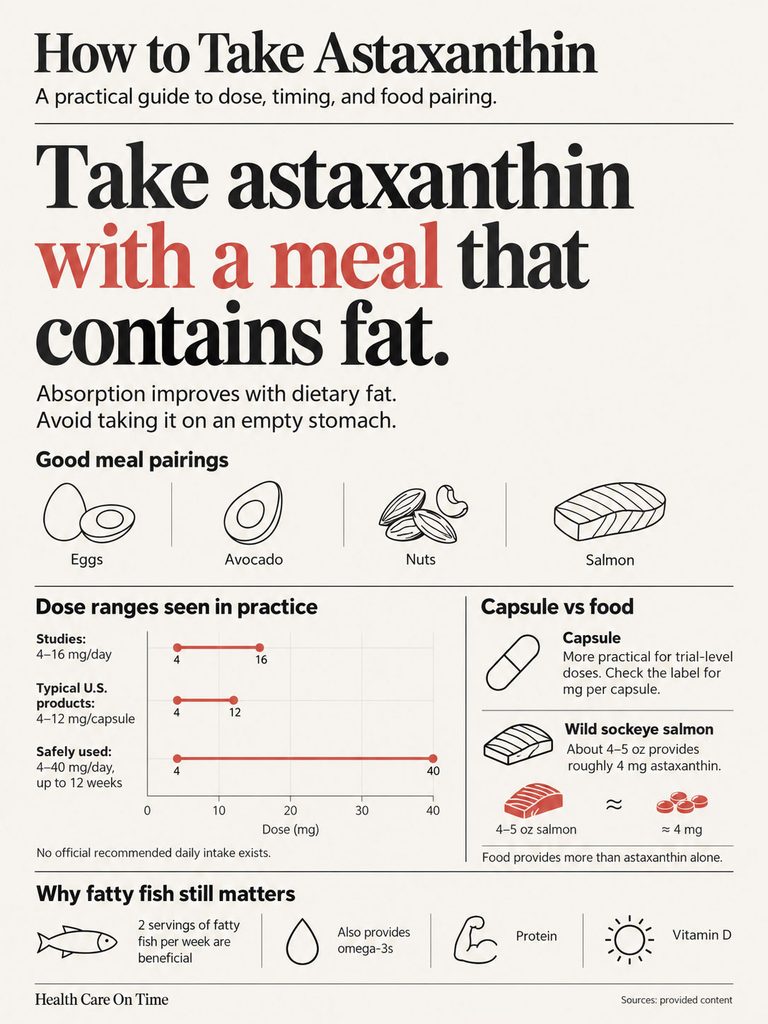
Studies typically use 4 to 16 mg daily. It has been used safely at 4 to 40 mg daily for up to 12 weeks, and at 4 mg daily alongside other nutrients for up to 12 months.
Most US products land between 4 and 12 mg per capsule. There’s no official recommended daily intake because astaxanthin isn’t an essential nutrient.
Take It With Fat
Astaxanthin is absorbed along the same pathway as dietary fat. Taking it on an empty stomach with water wastes much of each dose.
Take it with a meal that has some fat, like eggs, avocado, nuts, or salmon. One US insulin-resistance trial told participants to take their capsules within an hour after the morning meal.
Reading a US Label
Our editorial team suggests checking four things on any astaxanthin label:
- Milligrams of astaxanthin itself, not milligrams of “algae extract” or “oleoresin.”
- The source: Haematococcus pluvialis, Phaffia yeast, or synthetic.
- A third-party seal such as USP Verified or NSF Certified, which checks that the bottle contains what it claims.
- A lookup in the NIH Dietary Supplement Label Database, which lists ingredients for thousands of US products.
Food First or Capsule?
The math favors capsules if you want trial-level doses. You’d need about 4 to 5 ounces of wild sockeye for one 4 mg dose, or well over a pound of farmed Atlantic salmon.
Food still matters. Two servings of fatty fish a week bring omega-3s, protein, and vitamin D along with some astaxanthin. A capsule brings only the pigment.
Side Effects, Interactions, and Who Should Skip It
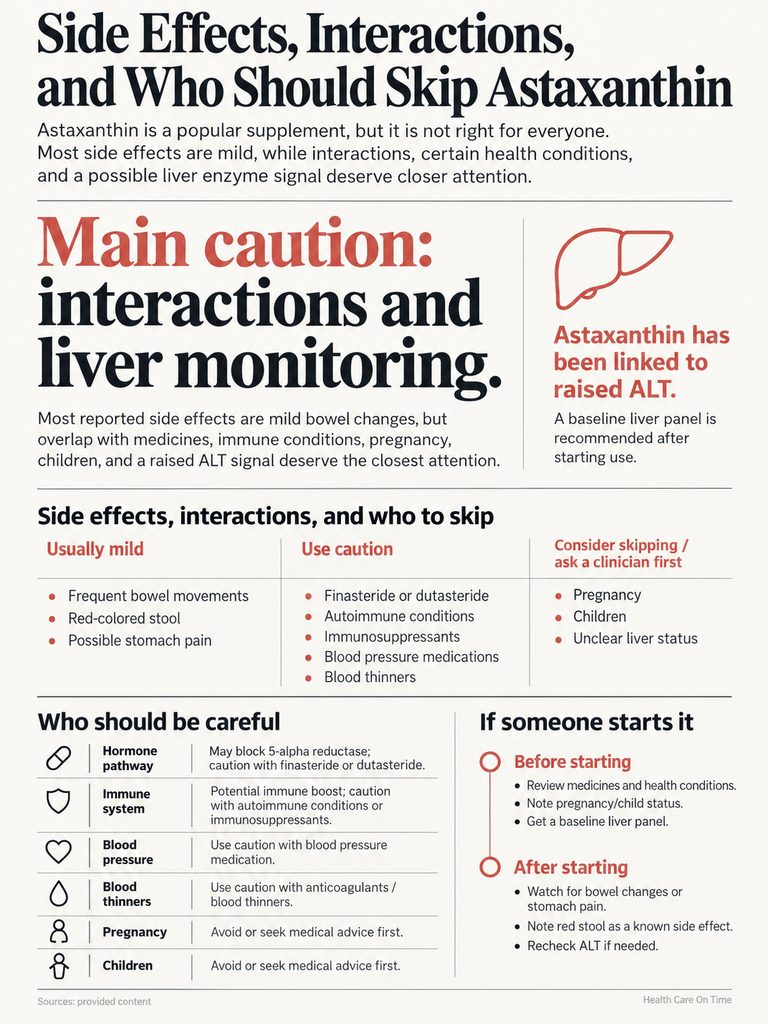
Check with a doctor before taking astaxanthin if any of these apply to you:
- You take finasteride, dutasteride, or other hormone medicines.
- You have an autoimmune disease or take immunosuppressant drugs.
- You take blood pressure medication.
- You take warfarin or another blood thinner.
- You’re pregnant or breastfeeding.
- You’re shopping for a child under 18.
- You’ve had abnormal liver tests.
Common Side Effects
Reported side effects include more frequent bowel movements and red-colored stool. High doses may cause stomach pain.
Red stool from the pigment is harmless, but it can look alarming. Black, tarry stool or bright red blood is different and needs prompt medical care.
Hormones and 5-Alpha Reductase
Lab studies show astaxanthin can block the 5-alpha reductase enzyme, which turns testosterone into DHT. That’s the same enzyme targeted by finasteride and dutasteride.
The Prisma Health knee trial excluded anyone taking these drugs. Its consent documents note that similar enzyme blockers can cause lower libido, breast growth in men, and erectile problems. Nobody has shown astaxanthin does this in people, but the overlap is a reason for caution.
Immune and Autoimmune Conditions
Astaxanthin may boost immune activity. The same US trial excluded people with autoimmune conditions or those taking immunosuppressant drugs.
If you have lupus, rheumatoid arthritis, or an organ transplant, or you take drugs like tacrolimus or methotrexate, talk with your doctor first.
Blood Pressure Medicines, Blood Thinners, Pregnancy, and Children
WebMD advises caution if you take hormones, 5-alpha reductase inhibitors, or blood pressure medication. For blood thinners, lab work found very high astaxanthin levels had no effect on platelets or clotting, but human data on warfarin users are limited.
There isn’t enough research on safety in pregnancy or breastfeeding. Children shouldn’t take it unless a pediatrician says so.
The Liver Enzyme Signal and Which Labs to Check
Astaxanthin is often sold for liver support. However, a 2024 meta-analysis on liver enzymes reported that astaxanthin has been linked to raised ALT, a liver enzyme.
In lab results reviewed across our diagnostic network, supplements are a common, overlooked reason for a mild ALT bump. If you start astaxanthin, a baseline liver panel and lipid profile, repeated after about 12 weeks, gives you real numbers instead of guesses. Our guide to high ALT levels explains what to do with an abnormal result.
Is Astaxanthin Worth It for You?
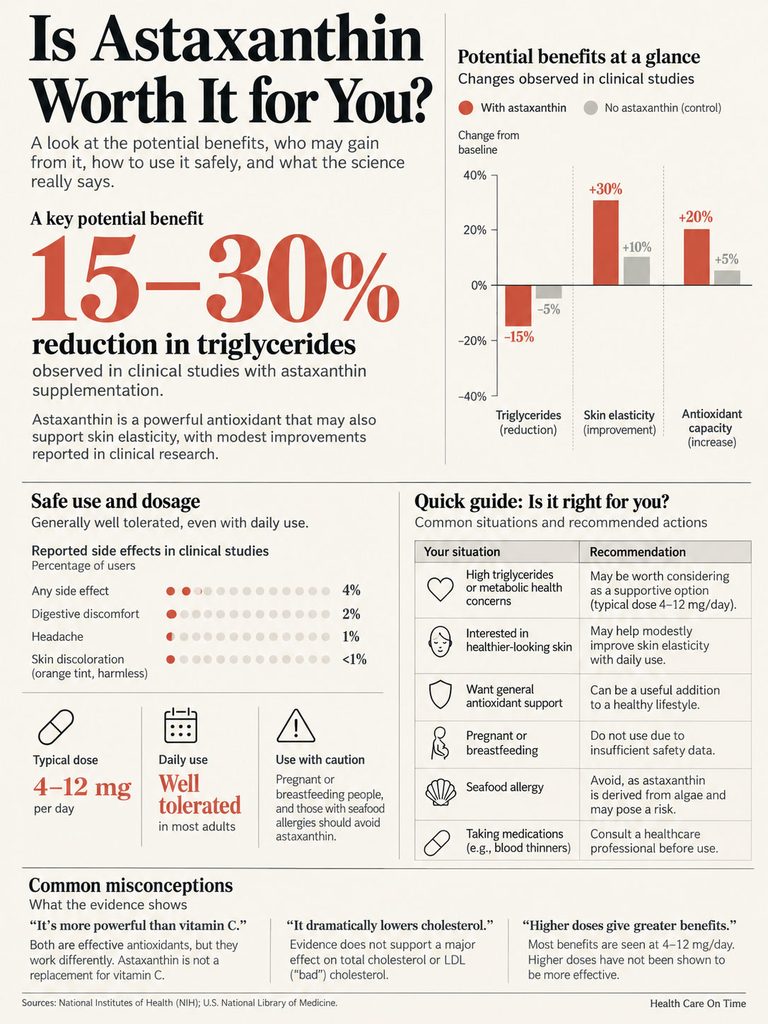
Our medical team built this quick-reference table from the trial data above. Match your situation to a sensible next step.
| Your situation | Recommended action | Why |
| Triglycerides 150 to 199 mg/dL | Diet changes first; astaxanthin 4 to 12 mg is a reasonable add-on after asking your doctor | Pooled trials show a modest triglyceride drop (about 21 mg/dL in diabetes) |
| High LDL is your main problem | Skip astaxanthin for this goal; discuss statins or other proven options | Pooled data show no meaningful LDL change |
| Want help with skin aging | Daily sunscreen first; optional 4 to 6 mg with a fatty meal for 8+ weeks | Elasticity improved in 6 RCTs, but effects were modest |
| Taking finasteride or dutasteride | Avoid or ask your prescriber first | Lab overlap on 5-alpha reductase; trial exclusions |
| Pregnant or breastfeeding | Don’t take it | No safety data for these groups |
| On immunosuppressants or have an autoimmune disease | Talk with your specialist before starting | Possible immune stimulation; trial exclusions |
| Eat wild salmon at least twice a week | Supplement is optional, not necessary | You already get some astaxanthin plus omega-3s |
| Need a vitamin A source | Choose beta-carotene foods or a vitamin A supplement instead | Astaxanthin has no vitamin A activity |
| Have high blood pressure | Keep taking prescribed medication; don’t use astaxanthin as a substitute | The largest analysis found no significant blood pressure effect |
Frequently Asked Questions
What does astaxanthin do for your body?
Astaxanthin acts as an antioxidant and may reduce inflammation. In human trials, the clearest effects are modest drops in triglycerides, small rises in HDL cholesterol, and better skin elasticity and moisture. Claims about brain, eye, joint, and heart protection rest mostly on lab and animal studies or small, short human trials.
Is it safe to take astaxanthin every day?
For most healthy adults, daily use appears well tolerated. Studies report safe use at 4 to 40 mg daily for up to 12 weeks, and at 4 mg daily for up to 12 months in combination products. Long-term data beyond a year are limited. Pregnant people and children should skip it.
How much astaxanthin should you take per day?
Most human trials use 4 to 12 mg daily, taken with a meal containing fat. FDA has accepted 12 mg as a daily supplement serving. There’s no official recommended amount because astaxanthin isn’t an essential nutrient. Starting at 4 to 6 mg and checking with your doctor is a cautious approach.
Is 12 mg of astaxanthin too much?
No, 12 mg falls within the studied range. FDA issued a no-objection letter for a 12 mg daily serving, and trials have used up to 40 mg daily for 12 weeks without serious problems. Higher doses raise the chance of stomach upset and red stool. Talk with your doctor if you take hormone or immune medications.
Is astaxanthin really 6,000 times stronger than vitamin C?
Only on one test-tube measurement. A 2007 Japanese study found astaxanthin neutralized singlet oxygen about 6,000 times better than vitamin C. A different free-radical test puts the gap at roughly 65 times. Neither number predicts what happens in your body, where dose, absorption, and location all matter.
Does astaxanthin lower cholesterol?
It partly helps. Pooled trials show lower triglycerides and slightly higher HDL cholesterol. However, a meta-analysis of 8 trials found no meaningful effect on LDL or total cholesterol. If high LDL is your concern, astaxanthin isn’t a substitute for statins, diet changes, or other proven treatments.
Does astaxanthin help with wrinkles?
Modestly. A 2021 meta-analysis found oral astaxanthin improved skin elasticity and moisture across several randomized trials, and some studies reported fewer fine lines. Effects were small, trials were short, and many tested branded products. Daily sunscreen remains the most effective way to prevent wrinkles from sun damage.
How much astaxanthin is in salmon?
It varies by species and source. Wild sockeye can contain 26 to 38 mg per kilogram, or about 2.6 to 3.8 mg per 3.5-ounce serving. Farmed Atlantic salmon averages 6 to 8 mg per kilogram, under 1 mg per serving. Cooking likely lowers these amounts somewhat.
Is natural astaxanthin better than synthetic?
Lab tests suggest natural astaxanthin from algae is a stronger antioxidant, and its chemical form differs from synthetic versions. However, no large human trial has compared the two on health outcomes. If you prefer natural, look for Haematococcus pluvialis on the label and a third-party testing seal.
Can astaxanthin turn your stool red?
Yes. Red or reddish stool is a known, harmless side effect caused by the pigment itself, and higher doses make it more likely. Black, tarry stool or visible bright red blood is different. Those signs can mean bleeding and need prompt medical attention, whether or not you take astaxanthin.
Does astaxanthin affect testosterone?
Lab studies show astaxanthin can block 5-alpha reductase, the enzyme that converts testosterone to DHT. That’s why a US knee trial excluded people taking finasteride or dutasteride. Human evidence on hormone levels is limited, so people on hormone therapy or these drugs should ask their prescriber first.
Should you take astaxanthin with food?
Yes. Astaxanthin is fat-soluble and is absorbed through the same pathway as dietary fat. Taking it with a meal that contains some fat, such as eggs, nuts, avocado, or fish, improves absorption. An empty stomach with only water likely wastes much of each dose.
Disclaimer: This article is for general education and isn’t medical advice. Astaxanthin is a dietary supplement, and the FDA does not evaluate supplements for effectiveness in treating or preventing disease. Talk with your doctor or pharmacist before starting any supplement, especially if you are pregnant, breastfeeding, managing a chronic condition, or taking prescription medications.
References
- Zhu X et al. Astaxanthin: A Compound in the Prevention of Chronic Diseases. Antioxidants, 2025
- Davinelli S et al. Astaxanthin in Skin Health, Repair, and Disease. Nutrients, 2018
- Examine. What Is Astaxanthin?
- Wu H et al. Astaxanthin as a Potential Neuroprotective Agent. Marine Drugs, 2015
- Natural Astaxanthin and Lipid Peroxidation. Int J Mol Sci, 2022
- Galasso C et al. On the Neuroprotective Role of Astaxanthin. Marine Drugs, 2018
- Ambati RR et al. Astaxanthin: Sources, Extraction, Stability, Biological Activities. Marine Drugs, 2014
- Fassett RG, Coombes JS. Astaxanthin in Cardiovascular Disease. Marine Drugs, 2011
- Federal Register. Astaxanthin Color Additive Final Rule, April 13, 1995
- eCFR. 21 CFR Part 73, Listing of Color Additives Exempt from Certification
- National Cancer Institute. Antioxidants and Cancer Prevention
- Examine. Astaxanthin Lipid Meta-Analysis Summary, 2025
- Molani-Gol R et al. Astaxanthin in Prediabetes and Type 2 Diabetes, 2026
- Effects of Astaxanthin Supplement on Cardiovascular Health. IJPER, 2025
- Impact of Astaxanthin Supplementation on Blood Pressure. J Funct Foods, 2021
- Astaxanthin in Adults at Risk of Metabolic Syndrome. Meta-Analysis, 2022
- Zhou X et al. Astaxanthin on Human Skin Ageing. Nutrients, 2021
- Liu C et al. Astaxanthin on Fatigue, Motor Function and Cognition. Biol Res Nurs, 2024
- Astaxanthin and Exercise-Induced Oxidative Stress. Meta-Analysis
- RxList. Astaxanthin Uses, Side Effects, and Dosing
- ClinicalTrials.gov NCT05138549. Astaxanthin in Knee Osteoarthritis, Prisma Health
- ClinicalTrials.gov NCT07063056. Curcumin and Astaxanthin for Triglycerides
- ClinicalTrials.gov NCT03310359. Astaxanthin in Insulin-Resistant Subjects
- SupplySide. BioAstin NDIN Clears FDA
- FDA Docket FDA-2020-S-0023. Astaxanthin New Dietary Ingredient Notification
- IMARC Group. United States Astaxanthin Market
- EBSCO Research Starters. Astaxanthin as a Dietary Supplement
- WebMD. Astaxanthin Uses and Side Effects
- Healthline. Astaxanthin Benefits, Risks, and Sources
- NIH Office of Dietary Supplements. Dietary Supplement Label Database