
Many people diagnosed with ATTR heart disease had carpal tunnel surgery years before anyone looked closely at their heart. That gap is the story of this disease. ATTR amyloidosis progression usually starts long before the first cardiology visit, and it keeps moving after diagnosis unless something slows it.
Table of Contents
If you or someone you love just got this diagnosis, the big question is simple: what happens next, and how fast? This guide answers that with real data, not vague reassurance.
Quick Answer: ATTR amyloidosis progresses as misfolded transthyretin protein builds up in tissues over many years. Most people move through five phases:
- Silent deposits
- Soft-tissue warning signs, such as carpal tunnel syndrome
- Early heart or nerve symptoms
- Established disease
- Advanced heart failure or disability
Speed depends on the type, the stage at diagnosis, and how early treatment starts.
At a Glance
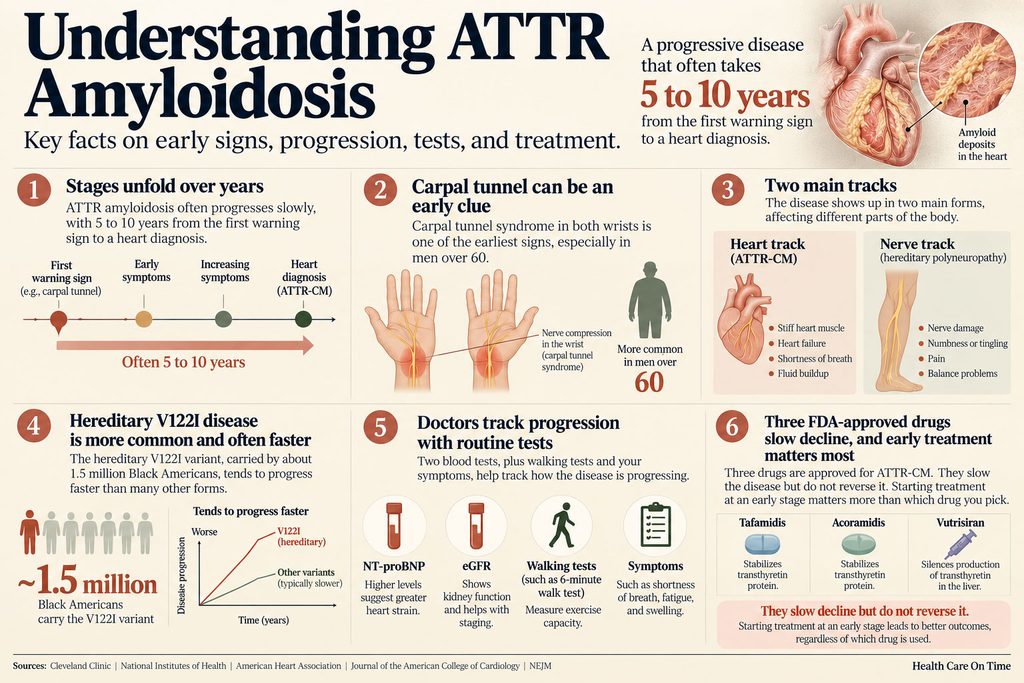
- ATTR amyloidosis stages unfold over years, often 5 to 10 years from the first warning sign to a heart diagnosis.
- Carpal tunnel syndrome in both wrists is one of the earliest clues, especially in men over 60.
- The disease travels on two main tracks: the heart (ATTR-CM) and the nerves (hereditary polyneuropathy).
- Hereditary V122I disease, carried by about 1.5 million Black Americans, tends to progress faster.
- Doctors track progression with two routine blood tests (NT-proBNP and eGFR) plus walking tests and symptoms.
- Three drugs are FDA-approved for ATTR-CM. They slow decline but don’t reverse it.
- Starting treatment at an early stage matters more than which drug you pick.
What ATTR Amyloidosis Is and Why It Progresses
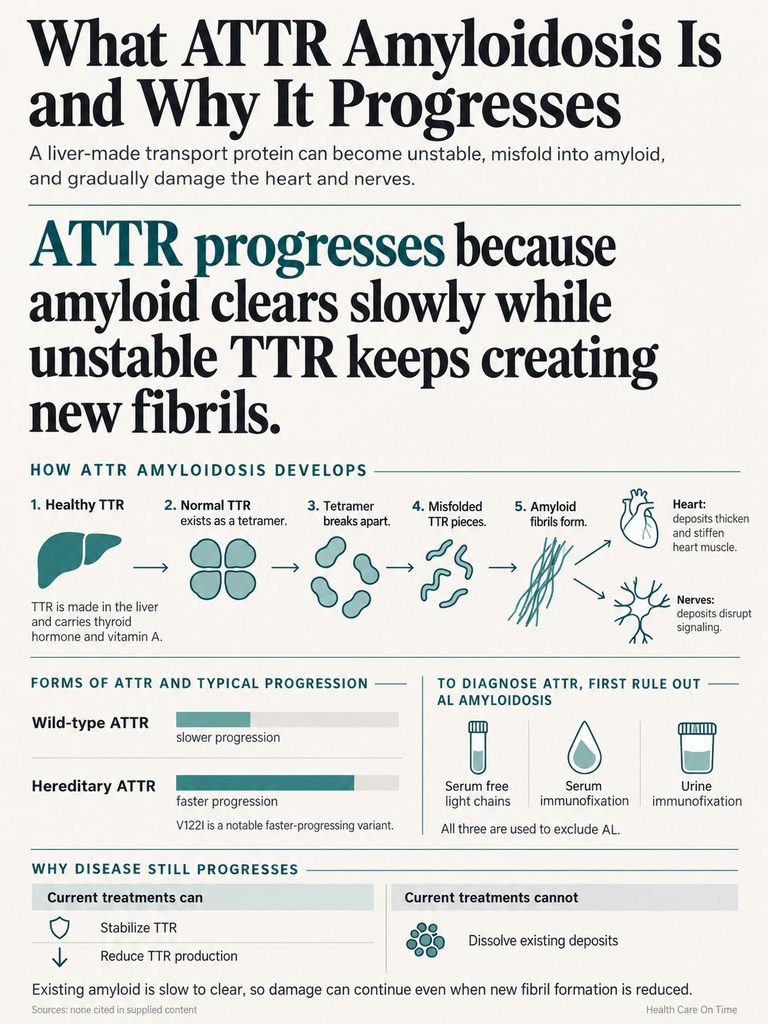
Transthyretin (TTR) is a normal protein made mostly by your liver. It carries thyroid hormone and vitamin A through your blood. In ATTR amyloidosis, that protein falls apart and refolds the wrong way.
The Misfolding Chain in Plain English
Healthy TTR travels as a group of four pieces, called a tetramer. When the group breaks apart, single pieces can misfold. Misfolded pieces stick together into stiff fibers called amyloid fibrils.
Those fibrils settle between cells. In the heart, they make the muscle thick and stiff. In nerves, they block signals. In the wrist, they crowd the carpal tunnel and squeeze the median nerve.
Wild-Type vs Hereditary: Two Diseases, Two Speeds
There are two main forms, and they progress differently.
- Wild-type ATTR (ATTRwt): No gene change. The protein becomes unstable with age. It mostly affects men over 70 and mostly targets the heart.
- Hereditary ATTR (ATTRv or hATTR): A change in the TTR gene makes the protein unstable from birth. Symptoms can start anywhere from the 30s to the 70s, depending on the variant.
In the US, the most common hereditary variant is V122I (also written V142I). It mainly causes heart disease after age 60 and progresses faster than wild-type disease.
First, Ruling Out AL Amyloidosis
Before anyone can call it ATTR, doctors must rule out AL amyloidosis, a blood-cell disorder treated with chemotherapy-type drugs. This takes three tests: serum free light chains, serum immunofixation, and urine immunofixation.
Our medical team flags this step often. A nuclear heart scan can look positive in both conditions, and AL moves much faster. Getting the type right shapes everything that follows.
Why Deposits Don’t Simply Clear on Their Own
Your body is slow to remove amyloid once it lands. New fibrils keep forming as long as unstable TTR circulates. That’s why ATTR amyloidosis progression is steady rather than stop-and-start for most people.
Current drugs work upstream. They either hold the protein together or cut how much your liver makes. Neither one dissolves deposits already in place.
The 5 Phases of ATTR Amyloidosis Progression
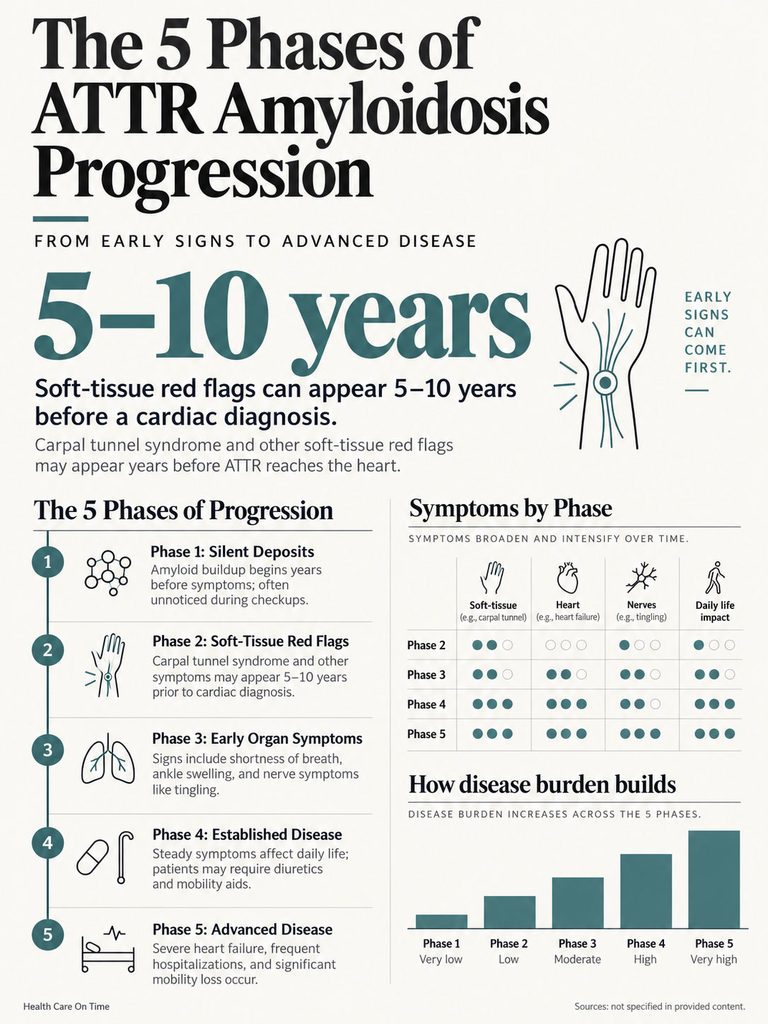
Doctors use formal staging systems, covered later. For patients and families, it helps to see the full journey first. The five phases below are a practical reading map built from published research. They are not an official staging system, and timing varies widely from person to person.
In natural-history studies reviewed by our medical team, one pattern repeats: the body sends early signals that are easy to miss.
Phase 1: Silent Deposits
Amyloid starts building years before any symptom. In hereditary disease, this can begin decades early. In wild-type disease, it likely starts in a person’s 60s.
Nothing feels wrong yet. Standard checkups usually look normal.
Phase 2: Soft-Tissue Red Flags
This is the most overlooked phase. Amyloid often settles in ligaments and tendons before the heart.
The classic signs are:
- Carpal tunnel syndrome, often in both hands
- Lumbar spinal stenosis (narrowing in the lower back)
- A biceps tendon that ruptures without a major injury
- Trigger finger
An Italian study in the European Journal of Heart Failure found carpal tunnel syndrome precedes the cardiac diagnosis by 5 to 9 years. A 2025 European neurology study of 75 wild-type patients found 84% had carpal tunnel syndrome, with wrist surgery a median of 10 years before diagnosis.
Phase 3: Early Organ Symptoms
Now the heart or nerves start to complain. Early heart signs include shortness of breath on stairs, ankle swelling, and tiring faster than friends the same age.
Early nerve signs include tingling, burning, or numbness in the feet. Some people notice dizziness when standing, constipation alternating with diarrhea, or erectile problems.
The heart often shows “heart failure with preserved ejection fraction.” Pump strength looks fine, but the muscle is too stiff to fill well.
Phase 4: Established Disease
Symptoms are now steady and affect daily life. Many people need water pills (diuretics). Irregular rhythms, such as atrial fibrillation, become common.
On the nerve track, numbness climbs up the legs and reaches the hands. Walking needs a cane or support.
Phase 5: Advanced Disease
In the late phase, heart failure becomes hard to control. Hospital stays grow more frequent. Blood pressure may run low, and fainting can occur.
On the nerve track, people may need a wheelchair. Weight loss and muscle wasting become serious problems.
| Phase | What’s Happening Inside | What You May Notice | Typical Timing | What Doctors Check |
| 1. Silent deposits | TTR misfolds; fibrils start forming | Nothing | Years to decades before symptoms | Genetic test (hereditary only) |
| 2. Soft-tissue red flags | Amyloid in wrist and spine ligaments | Carpal tunnel in both hands, back narrowing, biceps rupture | Often 5 to 10 years before heart diagnosis | Amyloid stain of wrist tissue, nerve tests |
| 3. Early organ symptoms | Heart wall thickens; nerve fibers damaged | Breathlessness on stairs, foot tingling, dizziness on standing | Around diagnosis | Echo, ECG, NT-proBNP, PYP scan, AL blood and urine tests |
| 4. Established disease | Stiff heart, rhythm problems, spreading neuropathy | Daily diuretics, AFib, cane needed | Varies widely; faster in V122I | NAC stage, 6-minute walk, Holter monitor |
| 5. Advanced disease | Severe stiffness, low output, widespread nerve loss | Frequent hospital stays, low blood pressure, wheelchair | Late stage; pace depends on treatment | NAC Stage III labs, symptom class |
Two Tracks: How It Progresses in the Heart vs the Nerves
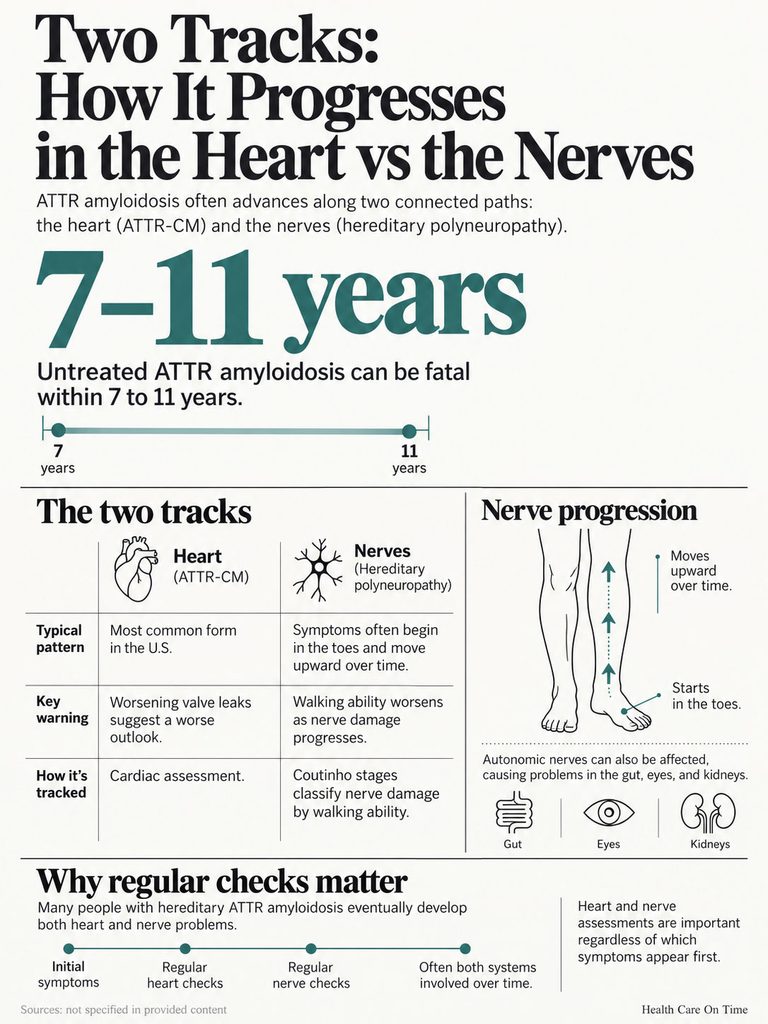
ATTR amyloidosis does not follow one road. It follows two main tracks, and many people travel both.
The Heart Track (ATTR-CM)
Transthyretin amyloid cardiomyopathy (ATTR-CM) is the most common form in the US. ATTR-CM progression usually looks like this:
- The heart wall thickens and can be mistaken for high-blood-pressure heart disease.
- The muscle stiffens and fills poorly.
- Fluid backs up into the lungs and legs.
- The heart’s electrical wiring gets damaged. Slow rhythms and blocks appear, sometimes needing a pacemaker.
- Valves start to leak.
That last step matters. A UK study of 877 patients from the National Amyloidosis Centre found worsening mitral and tricuspid valve leaks at 12 months predicted a worse outlook, while many other echo measures did not.
The Nerve Track (Hereditary Polyneuropathy)
Hereditary ATTR often damages long nerves first. Symptoms start in the toes and climb upward over time.
Coutinho Stages
Doctors grade the nerve track by walking ability. A Brazilian registry study describes the three Coutinho stages:
- Stage 1: Tingling, numbness, or burning in the feet. Walking is normal.
- Stage 2: Weakness spreads to the hands. Walking needs help.
- Stage 3: Severe weakness in all four limbs. The person uses a wheelchair or is bedbound.
Without treatment, the nerve track is serious. A German and Austrian expert review reports that heart failure, wasting, and infections lead to death within 7 to 11 years of onset in untreated people.
The Gut, Eyes, and Kidneys
Autonomic nerves run automatic body jobs. When amyloid damages them, people may get:
- Dizziness or fainting when standing
- Bladder problems and repeat urinary infections
- Diarrhea, constipation, or early fullness
- Unplanned weight loss
- Sweating changes
Some hereditary variants also affect the eyes and kidneys, sometimes before the heart.
Why Many Hereditary Patients End Up on Both Tracks
Most hereditary patients develop both heart and nerve problems over time, according to the UK’s NICE assessment. A person diagnosed for numb feet still needs heart checks. A person diagnosed for heart failure still needs nerve checks.
How Fast Does ATTR Amyloidosis Progress? What the Numbers Show
There is no single speed. Still, data from trials and registries gives a clear picture.
Untreated: What Placebo Groups Reveal
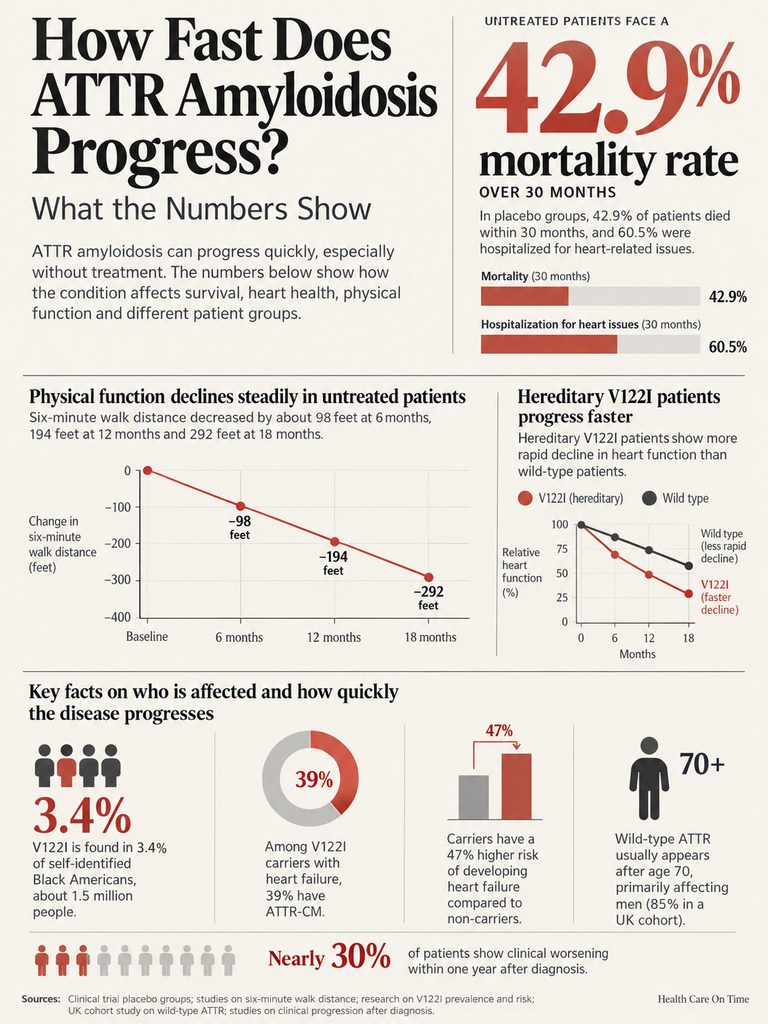
The best natural-history data comes from people who got placebo in clinical trials. In the ATTR-ACT trial, 177 placebo patients were followed for 30 months. 42.9% died and 60.5% had a heart-related hospital stay in that time.
Walking ability drops steadily too. In one untreated wild-type group (median age 78), the six-minute walk distance fell by about 98 feet at 6 months, 194 feet at 12 months, and 292 feet at 18 months.
That is roughly the length of a football field lost in a year and a half.
Hereditary V122I Progresses Faster
In the ATTR-ACT placebo group, hereditary patients started sicker and worsened faster than wild-type patients. The UK echo study found V122I patients showed the most rapid decline in heart structure and function.
This matters in America. The SCAN-MP study estimates V122I is present in 3.4% of self-identified Black Americans, about 1.5 million people. Not every carrier gets sick. Among carriers who already had heart failure, about 39% had ATTR-CM.
The NHLBI-funded ARIC study of 3,856 Black adults found carriers had a 47% higher risk of developing heart failure.
Wild-Type: Slower, Later, Mostly Men
Wild-type disease usually appears after 70. In the large UK staging cohort, 85% of patients were men and the median age was 77. It tends to move more slowly than V122I disease, but it still moves.
Progression After Diagnosis Is Common
A German real-world study followed 106 patients for about one year. Nearly 30% showed clinical worsening, and 11.5% met formal expert criteria for progression.
Patients booking NT-proBNP tests through HealthCareOnTime often ask whether a rising number means the disease is speeding up. Sometimes it does. Sometimes it reflects fluid status, kidney shifts, or a lab-to-lab difference. Trends across several tests matter more than one result.
| Metric | Finding | Source |
| Carpal tunnel lead time | Precedes heart diagnosis by 5 to 9 years | Milandri et al., European Journal of Heart Failure |
| Untreated outcomes (30 months) | 42.9% died; 60.5% hospitalized for heart reasons | ATTR-ACT placebo group, ESC Heart Failure 2021 |
| Walk distance decline (untreated ATTRwt) | About 98 ft at 6 mo, 194 ft at 12 mo, 292 ft at 18 mo | Orphanet J Rare Dis 2015 |
| Real-world worsening in 1 year | 29.8% clinical worsening; 11.5% met formal criteria | LMU Munich cohort, n=106 |
| V122I carriers in US | 3.4% of Black Americans, about 1.5 million people | SCAN-MP, JAHA 2023 |
| Heart failure risk in V122I carriers | 47% higher (hazard ratio 1.47) | ARIC study, NEJM 2015 |
| Diagnostic delay | Up to 4 years from first heart symptoms in 42% of cases | Systematic review of musculoskeletal red flags in ATTR-CM |
For survival figures by stage and type, see our guide to ATTR amyloidosis life expectancy.
How Doctors Measure Progression
You can’t feel amyloid building. Doctors rely on blood tests, scans, and function tests to see where you stand.
NAC Staging From Two Routine Blood Tests
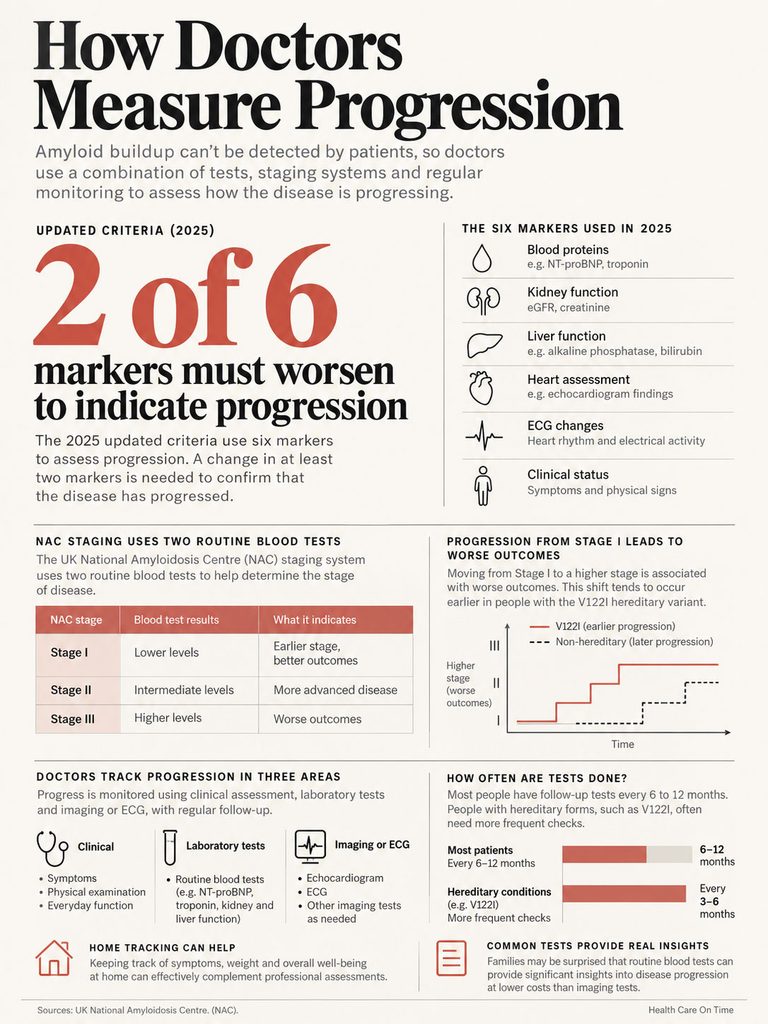
The UK National Amyloidosis Centre built a simple staging system from 869 patients. It uses two common lab results:
- NT-proBNP: a heart strain marker
- eGFR: a kidney function estimate
The Gillmore NAC staging works like this:
- Stage I: NT-proBNP 3,000 or lower, and eGFR 45 or higher
- Stage III: NT-proBNP above 3,000, and eGFR below 45
- Stage II: everyone else
Stage matters over time, not just at diagnosis. A later NAC analysis found moving up from Stage I predicted worse outcomes throughout follow-up. That shift happened earlier in V122I patients.
Families are often surprised that two common labs carry so much weight. A kidney panel and an NT-proBNP test together cost far less than one imaging study.
The 2025 Updated Criteria: 6 Markers, 2 Must Worsen
In 2021, an international panel published the first expert consensus on monitoring ATTR-CM. It split tracking into clinical, lab, and imaging or ECG areas.
In December 2025, experts proposed updated criteria in JACC: Heart Failure. The ACC summary lists six markers:
- Heart failure hospitalization
- Needing more diuretic as an outpatient
- NT-proBNP rise
- eGFR decline
- Shorter six-minute walk
- Worse quality of life (KCCQ score or NYHA class)
Progression counts when at least two markers cross set thresholds. One bad number alone can overstate decline, which is reassuring for anyone who panics over a single lab result.
Tests You’ll See at Follow-Ups
Most specialists check patients every 6 to 12 months. For hereditary nerve disease, Mayo Clinic training materials suggest clinical exams every 6 months, or every 3 months in more advanced stages.
Common tests include:
- Echocardiogram (heart ultrasound)
- ECG and sometimes a Holter monitor
- NT-proBNP and troponin
- Kidney panel (creatinine, eGFR, BUN)
- Six-minute walk test
- Kansas City Cardiomyopathy Questionnaire (KCCQ)
- Nerve conduction tests for the nerve track
Signs Worth Tracking at Home
You see yourself every day. Your doctor sees you twice a year. Home tracking fills the gap.
- Weight every morning: A gain of 3 pounds in 2 days or 5 pounds in a week often means fluid.
- Ankle swelling: Note if socks leave deeper marks.
- Stairs: Count flights before you need to stop.
- Dizziness on standing: Write down when it happens.
- Feet and hands: Note new numbness, burning, or dropped objects.
- Blood pressure: Low readings matter as much as high ones here.
Can Treatment Slow Progression?
Yes, but “slow” is the honest word. No approved drug reverses ATTR amyloidosis.
Stabilizers: Tafamidis and Acoramidis
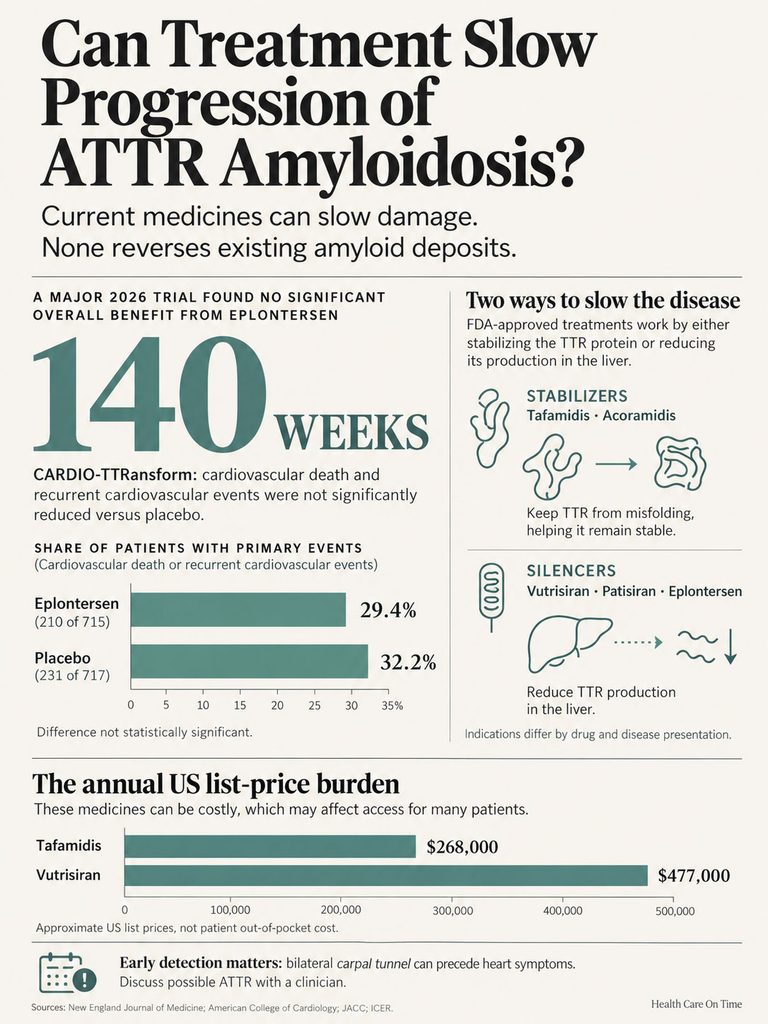
Stabilizers hold the four-piece TTR protein together so it can’t break apart and misfold.
- Tafamidis (Vyndaqel, Vyndamax): First FDA approval for ATTR-CM in May 2019. In ATTR-ACT, it cut all-cause death over 30 months from 42.9% to 29.5% and lowered heart-related hospital stays by 32%.
- Acoramidis (Attruby): FDA-approved in November 2024. Taken by mouth twice daily.
Silencers: Vutrisiran, Patisiran, Eplontersen
Silencers tell the liver to make less TTR.
- Vutrisiran (Amvuttra): Approved for ATTR-CM in March 2025 after the HELIOS-B trial. It’s a shot given four times a year and also treats hereditary nerve disease.
- Patisiran (Onpattro): Approved for hereditary nerve disease. The FDA declined to extend it to ATTR-CM.
- Eplontersen (Wainua): Approved for hereditary nerve disease.
The 2026 CARDIO-TTRansform Result
The largest ATTR-CM trial to date tested eplontersen in 1,432 patients. Results presented at ESC Congress 2026 showed no overall difference in heart deaths and heart events versus placebo over 140 weeks.
The details tell a more useful story. Patients already on a stabilizer saw no added benefit. Patients not on a stabilizer had fewer events. People in NAC Stage I showed a 37% lower event rate (rate ratio 0.63).
That Stage I signal fits a theme across ATTR research: earlier is better.
Why “Slower” Isn’t “Stopped”
Progression on treatment is common. A review of 16 studies found that among people starting tafamidis, lab-based worsening appeared in 40% to 70% within 6 to 12 months. It was presented by researchers focused on unmet need, so read it with that context.
Worsening doesn’t mean the drug failed. Without treatment, decline would likely be steeper. It does mean your team should keep monitoring and may adjust therapy.
There is hopeful data too. In one US study of ATTR-CM patients with weak pumping at diagnosis, over a third showed improved ejection fraction over time.
Early Diagnosis Matters Most
Trials keep showing the biggest gains in early-stage patients. A 2026 study of 1,449 wild-type patients found those with prior carpal tunnel or spinal stenosis were diagnosed and treated earlier, and both red flags were linked to better survival.
Families who contact HealthCareOnTime rarely regret which drug they chose. The regret is about the years before anyone connected the dots.
Paying for Treatment in the US
These drugs are expensive. Tafamidis carried a $268,000 yearly list price at approval, and vutrisiran lists at about $477,000 a year.
How Medicare covers them depends on the form:
- Oral drugs (tafamidis, acoramidis): Medicare Part D. In 2026, Part D has a yearly out-of-pocket cap of $2,100.
- Clinic-given shots (vutrisiran): Usually Medicare Part B, with 20% coinsurance unless you have a supplement.
Manufacturer copay cards can’t be used with Medicare, but independent charitable foundations sometimes help. Ask your amyloidosis center’s financial counselor early. Many US academic hospitals run dedicated amyloidosis programs with social workers who handle prior authorization.
Common Mistakes That Speed Up Decline
Some problems in ATTR care come from missed clues and wrong assumptions.
Treating It Like “Normal” Heart Failure
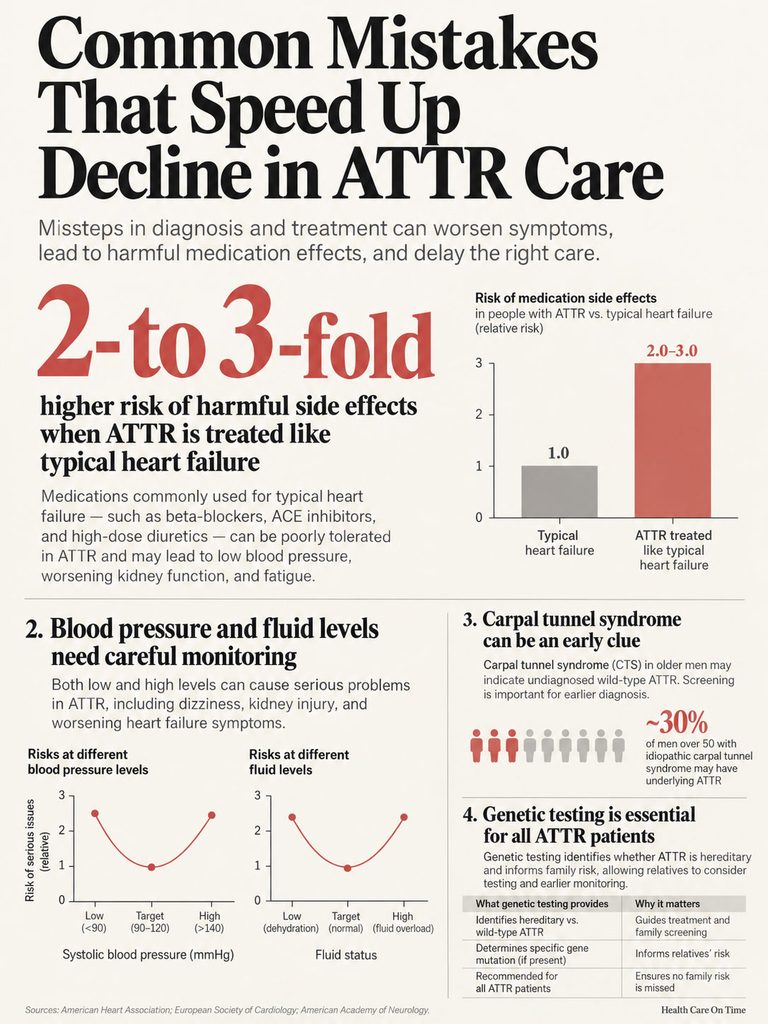
Standard heart failure drugs can backfire here. Beta-blockers and some blood pressure drugs may drop pressure too far in a stiff heart. Digoxin needs extra caution.
Tell every doctor, including urgent care and emergency staff, that you have cardiac amyloidosis.
Missing Low Blood Pressure and Fluid Shifts
A stiff heart has a narrow comfort zone. Too much fluid causes swelling and breathlessness. Too little causes dizziness and kidney strain. Small diuretic changes can matter a lot.
Ignoring Carpal Tunnel in Older Men
Carpal tunnel is common and usually harmless. But carpal tunnel in both hands in a man over 60, especially with heart symptoms, deserves a second look. One screening study found 8.3% of people over 60 who had carpal tunnel surgery had undiagnosed wild-type ATTR.
Ask the surgeon whether removed tissue can be stained for amyloid. It’s a simple request.
Skipping Genetic Testing for Family
Every person with ATTR should get genetic testing, even if their doctor suspects wild-type. A hereditary result changes things for children and siblings. Each child of a carrier has a 50% chance of inheriting the variant.
Relatives who test positive can start monitoring before symptoms appear.
What to Do at Each Phase
This table turns the research into clear next steps. It doesn’t replace your care team, but it helps you know when to call.
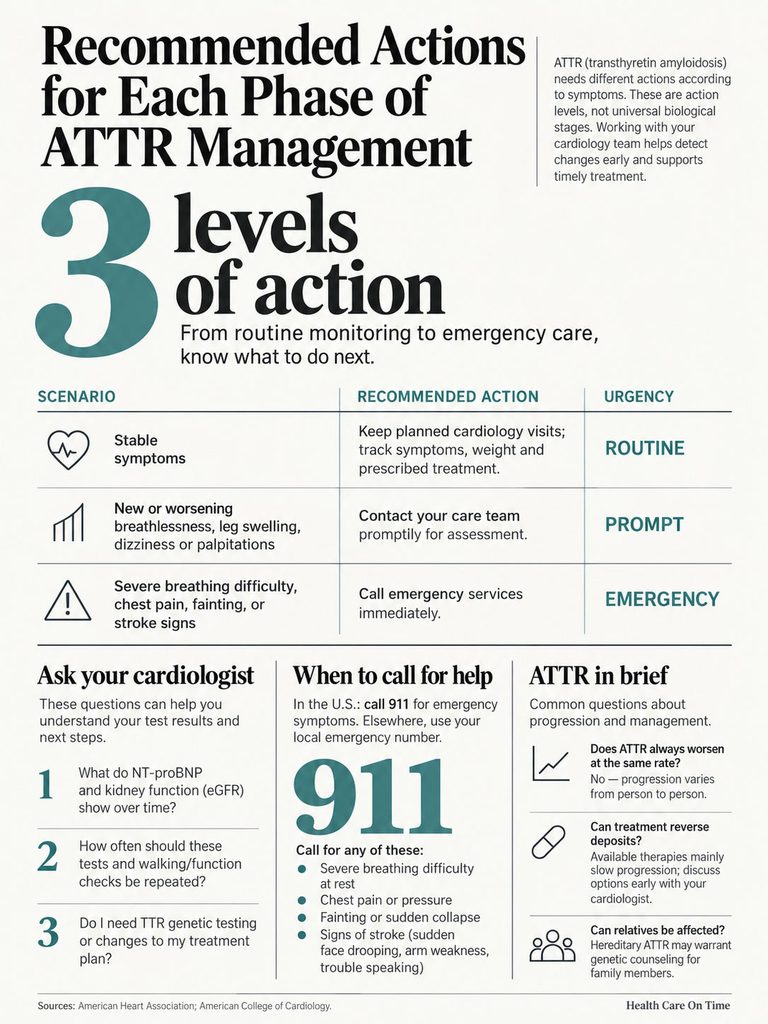
| Scenario | Recommended Action | Urgency |
| Carpal tunnel in both hands, age 60+, plus shortness of breath | Ask for an echo and NT-proBNP; ask the surgeon to stain wrist tissue for amyloid | Next routine visit |
| Parent or sibling has hereditary ATTR (including V122I) | Get genetic counseling and a TTR gene test | Within a few months |
| Weight up 3 lb in 2 days or 5 lb in a week | Call your cardiology team; diuretic dose may need changing | Same day |
| NT-proBNP rising on two tests in a row | Review NAC stage and other markers with your specialist | Within 1 to 2 weeks |
| New numbness spreading to the hands, or needing a cane | Request a neurology review and nerve testing | Within weeks |
| Dizziness on standing, near-fainting | Call your doctor; blood pressure meds may need adjusting | Same day |
| Fainting, chest pain, or a very slow or racing heartbeat | Call 911 | Emergency |
| Struggling at home with daily tasks | Ask about home health, a care plan, and caregiver support | Soon |
Questions to Bring to Your Cardiologist
- What is the current NAC stage, and what was it at diagnosis?
- Which of the six progression markers are changing?
- Has AL amyloidosis been fully ruled out?
- Is the current drug the right fit for this stage and type?
- Would a visit to an amyloidosis center help?
- Should family members get tested?
Patients commonly ask HealthCareOnTime which labs to bring to a new specialist. A recent NT-proBNP, kidney panel, CBC, and any genetic report make the first visit far more productive. Caregivers can find practical help in our ATTR caregiver support guide.
When to Call 911
Call 911 for fainting, chest pain, severe breathlessness at rest, confusion, or a heart rate that feels dangerously slow or fast. Don’t drive yourself.
Frequently Asked Questions
How fast does ATTR amyloidosis progress?
It varies. Untreated, about 43% of patients in one trial’s placebo group died within 30 months, and walking distance dropped roughly 194 feet in a year. Hereditary V122I disease usually moves faster than wild-type. Early treatment can slow the pace substantially.
What are the stages of ATTR cardiomyopathy?
Doctors often use NAC staging. Stage I means NT-proBNP is 3,000 or lower and eGFR is 45 or higher. Stage III means NT-proBNP is above 3,000 and eGFR is below 45. Stage II is everything between. Moving up a stage signals progression.
Does carpal tunnel mean someone has amyloidosis?
Usually not. Carpal tunnel is very common. But carpal tunnel in both hands, especially in men over 60, can be an early ATTR sign. It often appears 5 to 10 years before heart symptoms. Ask about amyloid staining if you have wrist surgery.
Is wild-type ATTR slower than hereditary ATTR?
Generally yes. Wild-type ATTR usually starts after 70 and progresses more slowly. Hereditary forms, especially V122I, tend to show faster heart decline. Both types are progressive, though, and both benefit from early treatment and regular monitoring.
Can ATTR get worse while taking tafamidis?
Yes. Tafamidis slows progression but doesn’t stop it. Studies show many patients still see some lab worsening in the first year. That doesn’t mean the drug failed. Your doctor reviews several markers together and may add or switch therapy if needed.
Can amyloid deposits be reversed?
Not with any approved treatment today. Stabilizers and silencers prevent new amyloid from forming. Some patients see heart function improve modestly over time. Experimental antibody drugs that aim to clear existing deposits are being studied in clinical trials.
What blood tests track ATTR progression?
NT-proBNP and eGFR are the core pair because they set your NAC stage. Troponin, a kidney panel, and a CBC also help. Track trends across several tests rather than reacting to one result, since fluid status can shift the numbers.
What are signs of end-stage ATTR amyloidosis?
Late signs include breathlessness at rest, frequent hospital stays, low blood pressure, fainting, major weight loss, and severe fatigue. On the nerve track, people may need a wheelchair. Palliative and hospice care can greatly improve comfort at this stage.
Will someone with ATTR eventually need a pacemaker?
Many do, but not all. Amyloid can damage the heart’s electrical system, causing slow rhythms or heart block. Regular ECGs and Holter monitoring catch this early. A pacemaker treats the rhythm problem but doesn’t slow the amyloid itself.
Should family members get genetic testing?
Yes, if the person with ATTR carries a gene variant. Each child of a carrier has a 50% chance of inheriting it. Genetic counseling helps relatives decide when to test and how to monitor. Testing the patient first tells the family whether this applies.
How often should ATTR be monitored?
Most specialists check every 6 to 12 months. People with hereditary nerve disease or more advanced stages may need visits every 3 to 6 months. Between visits, daily weight checks and symptom notes help catch changes early.
Disclaimer: This article is for general education and does not replace advice from your doctor. ATTR amyloidosis is complex, and treatment decisions should be made with a cardiologist or amyloidosis specialist who knows your full history. Medicare cost figures can change each year; confirm with your plan. If you have chest pain, fainting, or severe breathlessness, call 911.
References
- Natural history and progression of ATTR-CM: insights from ATTR-ACT (ESC Heart Failure, 2021)
- A new staging system for cardiac transthyretin amyloidosis (ACC Journal Scan of Gillmore et al.)
- NAC ATTR stage and survival throughout the disease course
- Analysis of disease progression in transthyretin cardiac amyloidosis (Orphanet J Rare Dis, 2015)
- Progression of echocardiographic parameters in ATTR-CM (European Journal of Heart Failure, 2022)
- Expert consensus on the monitoring of ATTR-CM (European Journal of Heart Failure, 2021)
- New proposed criteria for monitoring disease progression in ATTR-CM (ACC, 2025)
- Carpal tunnel syndrome in cardiac amyloidosis (Milandri et al.)
- Carpal tunnel and spinal stenosis in wild-type ATTR-CM (2026)
- Screening for ATTRwt after carpal tunnel surgery
- Musculoskeletal red flags in ATTR-CM: systematic review
- Hereditary ATTR polyneuropathy review (Journal of Neurology, 2021)
- THAOS Brazilian cohort and Coutinho stages
- The amyloidogenic V122I variant in elderly Black Americans (ARIC, NEJM 2015)
- Clinical penetrance of V122I: the SCAN-MP study (JAHA, 2023)
- Real-world disease progression in ATTR-CM (LMU Munich)
- Current and emerging treatments for ATTR-CM (review)
- Disease-modifying advances in ATTR-CM management (ReachMD)
- Vutrisiran joins the ATTR-CM field (TCTMD)
- CARDIO-TTRansform results (ACC, ESC Congress 2026)
- No added CV benefit of eplontersen on top of standard care (Healio, 2026)
- Likelihood of disease worsening on tafamidis (ISPOR, 2024)
- LVEF changes in ATTR-CM with systolic dysfunction
- Mayo Clinic: hereditary ATTR amyloidosis diagnostic and monitoring guide
- NICE HST9: hereditary transthyretin amyloidosis, the condition