Here’s a number that surprises most people. Only about 1 in 10 adults who see a doctor for a sore throat has strep. Yet antibiotics were written at 6 of every 10 of those visits in national US data.
Table of Contents
So the medicine people hope for is often the one they don’t need. The good news is that the right pharmacy-aisle picks can make the next few days much easier.
Quick Answer: For most adults, the best medicine for a sore throat is ibuprofen (Advil, Motrin) or acetaminophen (Tylenol) to cut pain, plus a numbing lozenge or spray with benzocaine, phenol, or menthol for fast local relief. Honey and a salt-water gargle help as add-ons. Antibiotics only help when a strep test is positive. See a doctor if pain is severe, lasts over a week, or you can’t swallow.
At a Glance
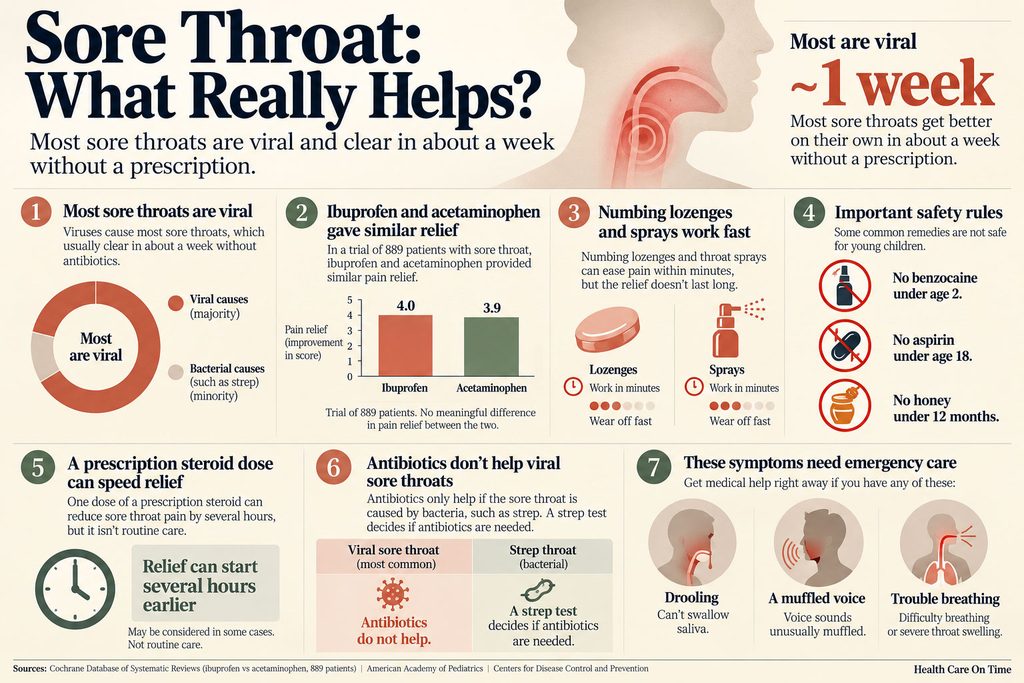
- Most sore throats are viral and clear in about a week without a prescription.
- Ibuprofen and acetaminophen gave similar relief in a trial of 889 patients.
- Numbing lozenges and sprays work in minutes but wear off fast.
- No benzocaine under age 2, no aspirin under 18, no honey under 12 months.
- One prescription steroid dose can speed relief by several hours, but it isn’t routine care.
- Antibiotics don’t help viral sore throats; a strep test decides.
- Drooling, a muffled voice, or trouble breathing means emergency care now.
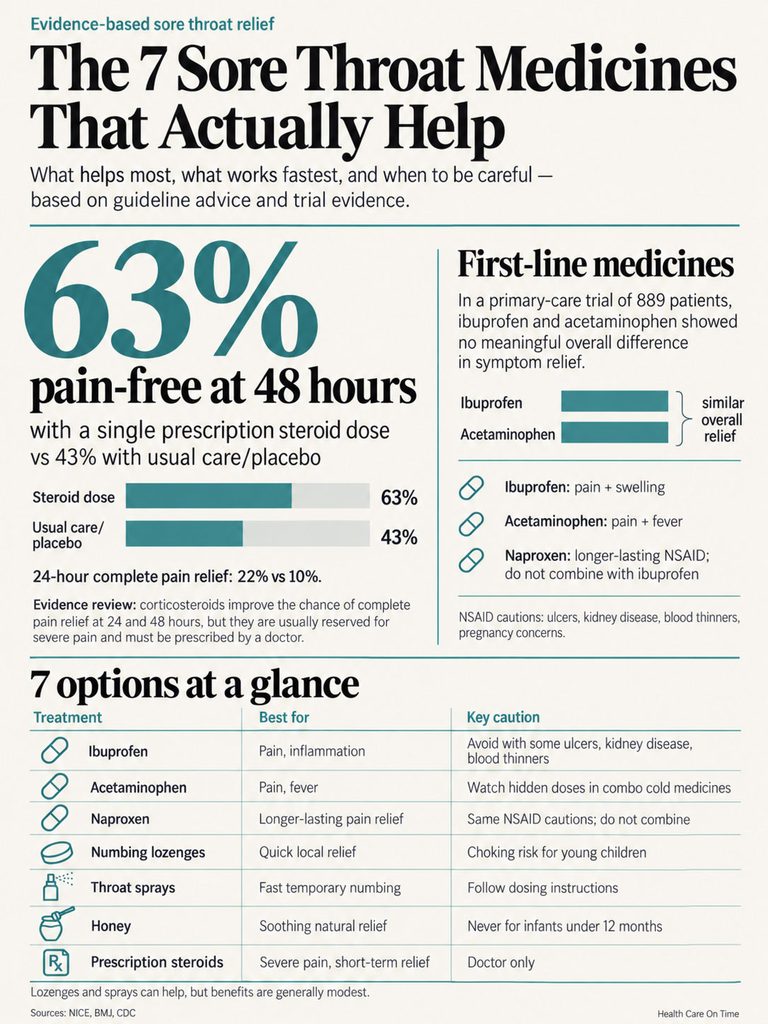
The 7 sore throat medicines that actually help:
- Ibuprofen (Advil, Motrin)
- Acetaminophen (Tylenol)
- Naproxen (Aleve)
- Numbing lozenges (benzocaine, menthol, phenol)
- Throat sprays
- Honey
- Prescription steroids, when a doctor offers one
Why Most Sore Throats Don’t Need a Prescription
When you’re asking what medicine to take for sore throat, the real first question is what’s causing it. That answer decides whether a bottle from the shelf is enough.
Patients booking tests with us often assume a painful throat means a bacterial infection. In most cases, it doesn’t.
Viral vs Bacterial, in Numbers
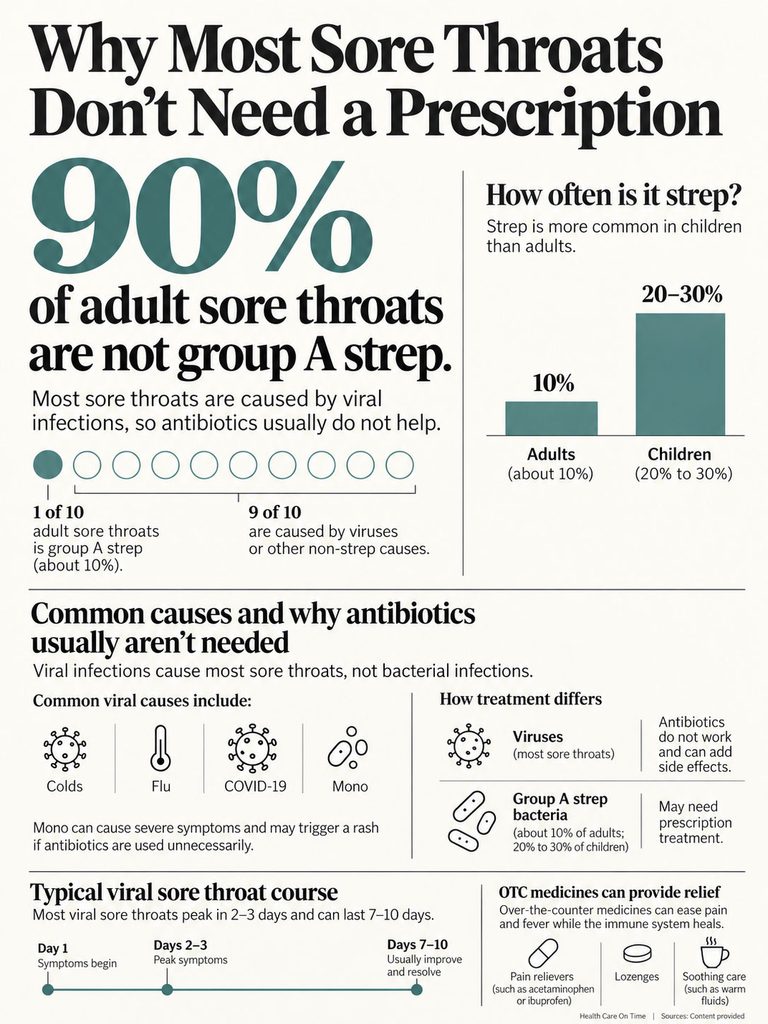
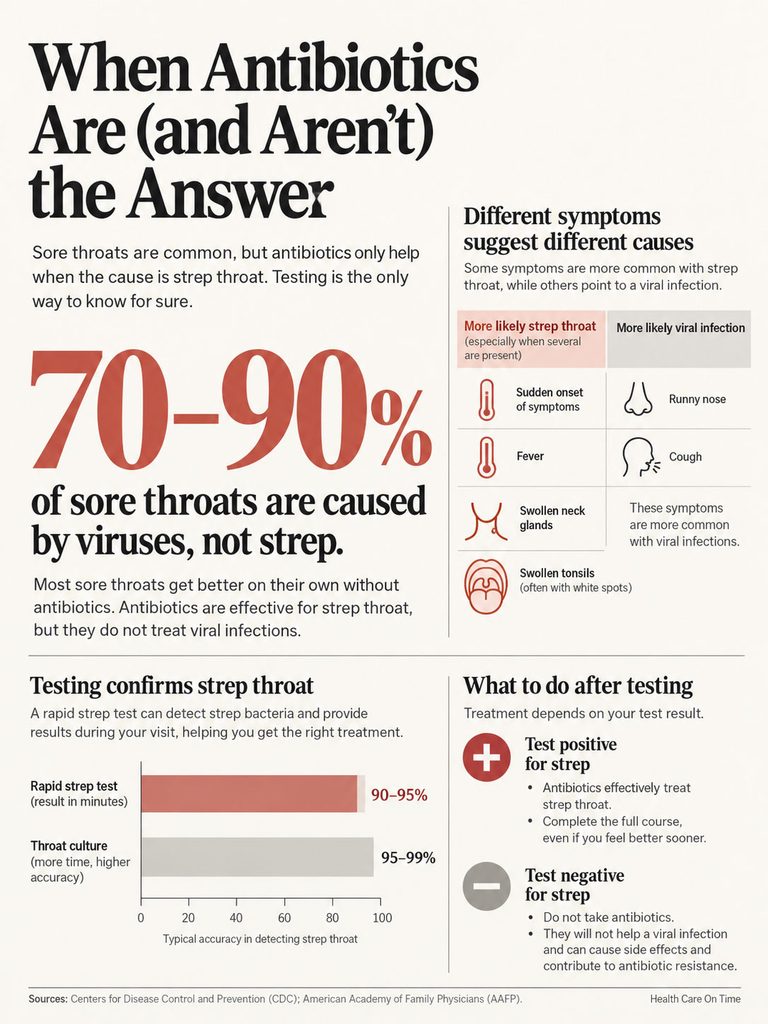
Among adults seeking care for sore throat, group A strep, the only common cause that needs antibiotics, turns up in about 10% of cases.
Kids are different. Strep causes roughly 5% to 15% of adult sore throats but 20% to 30% in children. Colds, flu, COVID-19, and mono make up most of the rest.
Mono deserves a special note. It can cause a severe sore throat with deep fatigue for weeks, and antibiotics like amoxicillin can trigger a rash in people who have it, one more reason testing matters before treatment.
That gap matters because antibiotics only kill bacteria. Against a virus, they add side effects and cost with no relief.
How Long a Normal Sore Throat Lasts
Most viral sore throats peak in the first two to three days, then fade. A Cleveland Clinic family physician says a sore throat can take seven to ten days to clear, and that OTC medicines soothe it without making it go away.
That’s the honest frame for every product below. Sore throat medicine buys comfort while your immune system does the real work.
The 7 Sore Throat Medicines That Actually Help
Our medical team reviewed each option against trial data, FDA labeling, and what’s actually sold in US pharmacies. Here’s how they compare.
1. Ibuprofen (Advil, Motrin)
Ibuprofen is an NSAID. It lowers pain and fever and eases some of the swelling that makes swallowing hurt.
The usual OTC adult dose is 200 to 400 mg every 4 to 6 hours, with no more than 1,200 mg in 24 hours unless a doctor says otherwise. Take it with food or milk.
Skip it, or ask first, if you have stomach ulcers, kidney disease, heart failure, uncontrolled high blood pressure, or take a blood thinner.
2. Acetaminophen (Tylenol)
Acetaminophen eases pain and fever but doesn’t reduce swelling. It’s easier on the stomach, so it’s the usual pick for people who can’t take NSAIDs.
For Extra Strength 500 mg caplets, the US label allows 2 caplets every 6 hours and no more than 6 caplets (3,000 mg) in 24 hours.
The bigger risk is hidden doses. Many cold and flu combos also contain acetaminophen, and stacking them can quietly push you toward liver damage.
3. Naproxen (Aleve)
Naproxen is a longer-acting NSAID. One 220 mg tablet covers 8 to 12 hours, which suits people who’d rather not redose often.
Same cautions as ibuprofen apply. Never take naproxen and ibuprofen together, since they belong to the same drug class.
4. Numbing Lozenges (Benzocaine, Menthol, Phenol)
Medicated lozenges numb the throat lining for quick, short relief. Check the Drug Facts box for benzocaine, phenol, or menthol as the active ingredient.
Plain hard candy helps a little too, because sucking boosts saliva and keeps the throat moist. Medicated versions add a numbing layer on top.
Two cautions: lozenges are a choking risk for young kids, and benzocaine carries a rare but serious blood warning covered below.
5. Throat Sprays
Phenol and benzocaine sprays deliver numbing medicine right to the sore spot. They work within minutes but fade faster than a lozenge.
A spray before meals can make the first few bites easier. Follow the label’s dosing interval and don’t eat or drink right after spraying.
6. Honey
Honey isn’t a drug, but it has evidence behind it. A review of 14 studies found honey improved combined symptom scores compared with usual care (mean difference −3.96).
Stir 1 to 2 teaspoons into warm (not hot) tea or water, or take it by the spoon. Never give honey to a baby under 12 months because of infant botulism risk.
7. Prescription Steroids (When a Doctor Offers One)
This one isn’t on the shelf, but patients commonly ask us about it. A single low-dose steroid, usually dexamethasone, can shorten a rough sore throat.
In a BMJ review, one low dose (most often oral dexamethasone, up to 10 mg) doubled the chance of relief at 24 hours and made people 1.5 times as likely to be pain-free at 48 hours.
Relief arrived about 4.8 hours sooner and pain fully cleared about 11.1 hours sooner than with placebo. Real but modest, and a doctor’s call, not a routine add-on.
| Medicine | Common US brands | Starts working | Best for | Main caution |
| Ibuprofen | Advil, Motrin, store brand | 30 to 60 minutes | Pain plus swelling, fever | Ulcers, kidney disease, blood thinners, pregnancy 20+ weeks |
| Acetaminophen | Tylenol, store brand | 30 to 60 minutes | People who can’t take NSAIDs | 3,000 mg/day Extra Strength label limit; hidden doses in cold combos |
| Naproxen | Aleve, store brand | About 1 hour | Long-lasting relief (8 to 12 hours) | Same as ibuprofen; never combine the two |
| Numbing lozenges | Cepacol, Halls, store brand | 5 to 15 minutes | Quick relief between pain-reliever doses | Choking risk in small kids; no benzocaine under 2 |
| Throat sprays | Chloraseptic, store brand | 1 to 5 minutes | Fast relief before meals | Short-lived; brief stinging |
| Honey | Any pure honey | Minutes | Sore throat with cough | Never under 12 months; adds sugar |
| Steroid (Rx) | Dexamethasone | A few hours | Severe pain at a doctor’s visit | Prescription only; not for routine repeat use |
Home Add-Ons That Make Medicine Work Better
Medicine works best alongside a few simple habits. These cost almost nothing.
- Salt-water gargle: stir 1/4 to 1/2 teaspoon of table salt into 8 ounces of warm water, gargle, and spit. Repeat several times a day.
- Fluids: warm tea, broth, or cold water all help; aim for pale yellow urine.
- Cold options: ice pops and ice chips numb the throat for kids and adults.
- Humidifier: a cool-mist unit at night eases dry, scratchy mornings.
- Voice rest: talk less, and skip whispering, which strains the throat too.
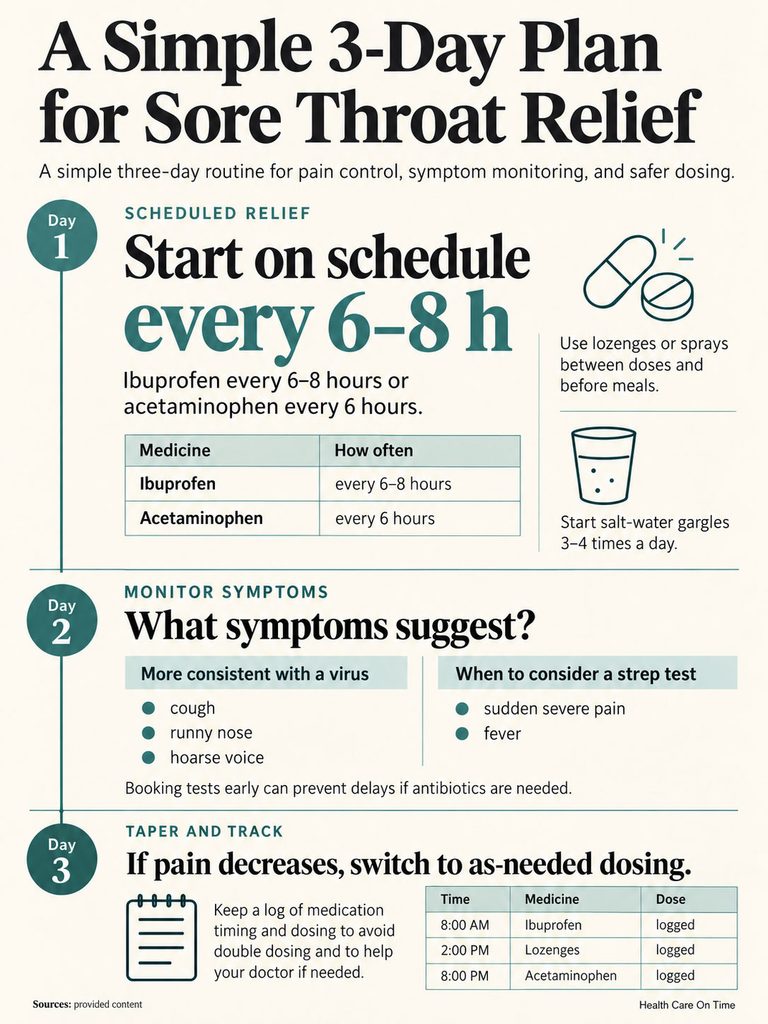
A Simple 3-Day Plan for Sore Throat Relief
Most people grab one product and hope it works. A short plan covers both day and night, and it keeps doses safe.
Day 1: Get Ahead of the Pain
Take your chosen pain reliever on a schedule for the first day instead of waiting for pain to peak. Ibuprofen every 6 to 8 hours or acetaminophen every 6 hours, within label limits, keeps relief steady.
Use a lozenge or spray between doses and before meals. Start salt-water gargles three to four times a day.
Day 2: Watch the Pattern
By day 2, notice whether you have a cough, runny nose, or hoarse voice. Those point toward a virus, and home care is usually enough.
If you instead have sudden severe pain, fever, and no cough, this is the day to book a strep test. Patients booking tests with us often wait until day 4 or 5, which only delays antibiotics when they’re truly needed.
Day 3 and Beyond: Taper Off
Most people can switch to as-needed dosing by day 3. If pain is still climbing, or you need both pain relievers around the clock, get checked.
Keep a simple log on your phone with the time, medicine, and dose. It prevents accidental double dosing and gives your doctor useful facts if you do need a visit.
Ibuprofen or Tylenol: Which Is Better for Sore Throat?
Several popular health sites say ibuprofen clearly wins because it fights inflammation. The largest real-world trial doesn’t fully back that up.
What the PRIMIT Trial Actually Found
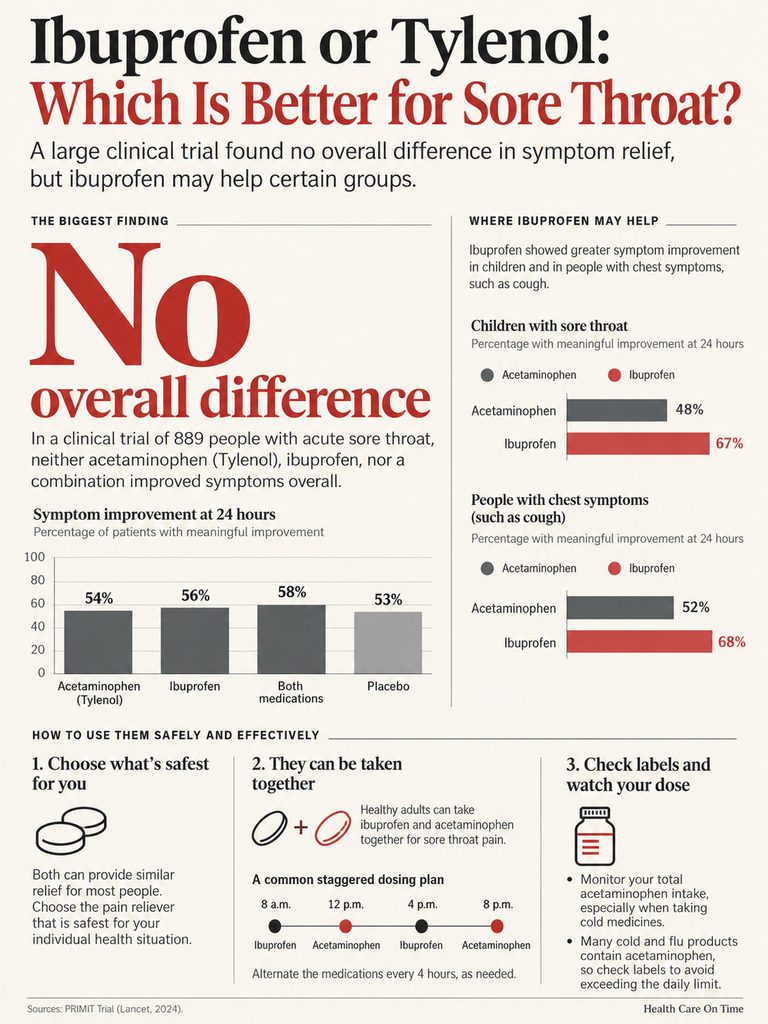
UK researchers randomized 889 patients to advice on paracetamol (acetaminophen), ibuprofen, or both, along with dosing style and steam.
Neither the pain reliever chosen, the dosing pattern, nor steam improved symptoms overall. Ibuprofen did seem to help children and people with chest symptoms.
The takeaway is simple. Pick the one that’s safest for your body, and you’ll likely get similar relief either way.
Taking Both Together Safely
Healthy adults can combine acetaminophen and ibuprofen because they work in different ways. Many people stagger them, for example ibuprofen first, then acetaminophen about 3 hours later.
Keep each drug within its own daily limit and log times on your phone. Needing both for more than 3 days is a sign to get checked.
Hidden Acetaminophen in Cold Medicines
NyQuil, DayQuil, and many store-brand “severe cold” products contain acetaminophen. Add Tylenol on top, and the total climbs fast.
Scan every Drug Facts label for “acetaminophen” or “APAP.” Our guide on how many Tylenol 500mg you can take in a day walks through the stacking math.
Sore Throat Medicine Facts by the Numbers
Our medical reviewers pulled these figures from primary research and federal sources. Together they show why the shelf, not the prescription pad, handles most cases.
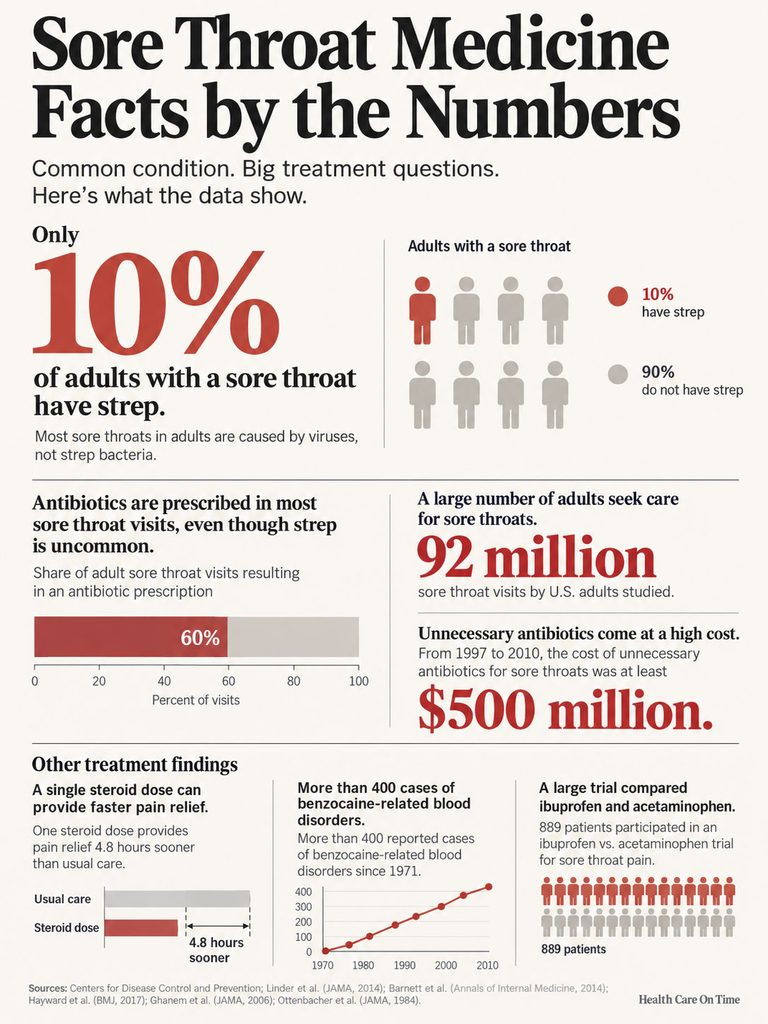
| Statistic | Number | Source |
| Adults with sore throat who have strep | About 10% | Barnett & Linder, JAMA Internal Medicine |
| Sore throat visits with an antibiotic prescribed | 60% | Barnett & Linder, US data 1997 to 2010 |
| US adult sore throat visits studied | 92 million | Barnett & Linder, national surveys |
| Cost of unneeded antibiotics in that period | At least $500 million | Barnett & Linder |
| Faster pain relief with one steroid dose | 4.8 hours sooner | Sadeghirad, BMJ 2017 (10 trials, 1,426 people) |
| Benzocaine blood-disorder cases reported since 1971 | More than 400 | FDA Drug Safety Communication, 2018 |
| Patients in ibuprofen vs acetaminophen trial | 889 | Little, BMJ 2013 (PRIMIT) |
The researchers put the cost of unnecessary antibiotics for US adults with sore throat from 1997 to 2010 at a conservative $500 million.
In cases seen across our diagnostic network, the steroid benefit matters most for people with severe pain who are already at a clinic. For a mild cold-type sore throat, OTC options cover it.
What This Evidence Can’t Tell You
Honest limits matter for a medicine decision, so here they are.
- PRIMIT wasn’t sore-throat-only. It enrolled people with colds, flu, sore throat, ear infections, sinusitis, croup, and cough, and patients knew which advice they got.
- The honey review leans on cough. When researchers pooled just the two honey-vs-placebo studies, the combined result wasn’t statistically clear (SMD −0.63, 95% CI −1.44 to 0.18).
- The antibiotic data stops in 2010. Prescribing may have improved since, though the 10% strep figure still holds.
- Steroid safety for repeat use is unknown. The trials did not look at bigger cumulative doses in people with frequent sore throats.
What US Shoppers Should Know Before Buying
Much of the sore throat advice online comes from outside the US. That leads to product tips you can’t follow at an American pharmacy.
Why Flurbiprofen Lozenges Aren’t on US Shelves
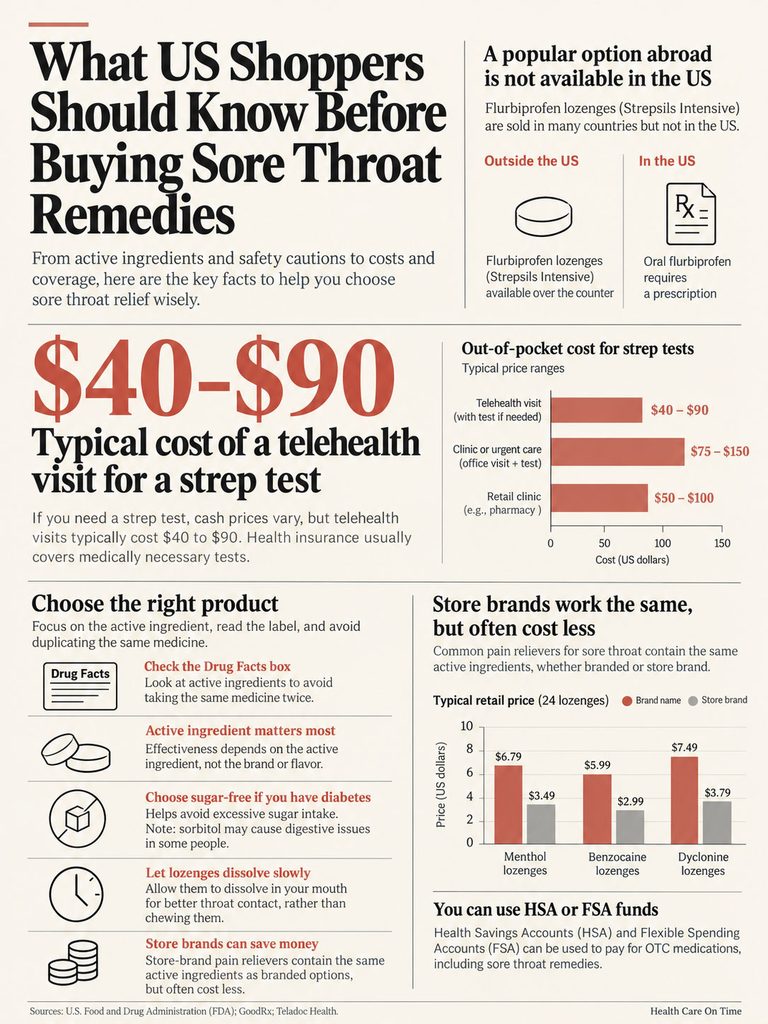
Some guides recommend flurbiprofen lozenges, sold abroad as Strepsils Intensive. These 8.75 mg lozenges are sold OTC in many countries, but not the US.
Here, oral flurbiprofen is prescription-only. If an overseas lozenge pack shows up, ask a pharmacist before using it, especially with other NSAIDs.
US shoppers get the same kind of relief from plain ibuprofen plus a benzocaine, phenol, or menthol lozenge for the throat itself.
Reading the Drug Facts Label
Every OTC product in the US carries a standard Drug Facts box. Check three lines before you buy.
- Active ingredients: what you’re taking and how much per dose.
- Warnings: who should ask a doctor first (pregnancy, liver disease, ulcers, kids).
- Directions: dose, timing, and daily maximum.
If two products share an active ingredient, don’t take them together.
How to Pick a Lozenge or Spray
The active ingredient matters more than the brand or flavor. Each one works a little differently.
- Benzocaine: the strongest numbing effect of the common shelf options. Adults and kids 2 and older only, and stop if your lips or skin look bluish.
- Phenol: found mostly in sprays. It numbs quickly and suits people who want relief right before eating.
- Menthol: gives a cooling feeling more than true numbing. A good pick for a mild, scratchy throat or one that comes with a cough.
- Pectin: a gentle coating agent in some drops, useful for kids old enough to use lozenges safely.
If you have diabetes, look for sugar-free versions, since a pack of regular drops can add a surprising amount of sugar over a day. Sugar-free lozenges often use sorbitol or similar sweeteners, which can cause loose stools if you go through many in a short time.
Across patients we serve, people get the most out of lozenges by letting them dissolve slowly instead of chewing them. That keeps the medicine in contact with the throat longer.
What It Costs
Store-brand ibuprofen, acetaminophen, and naproxen contain the same drug as Advil, Tylenol, and Aleve. They usually cost far less, and HSA and FSA cards cover OTC medicines without a prescription.
If you need a strep test, typical cash prices vary widely by region. A telehealth visit often runs about $40 to $90, though a swab test itself needs an in-person stop at urgent care, a retail clinic, or your doctor’s office. Most insurance covers a medically needed strep test.
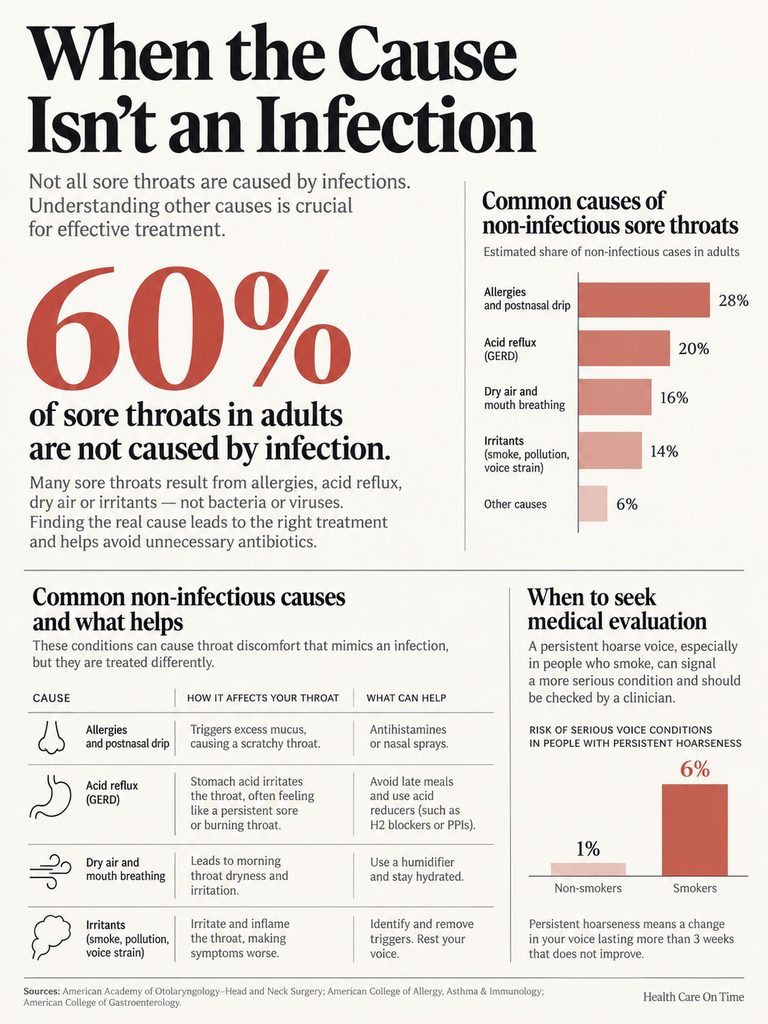
When the Cause Isn’t an Infection
Not every sore throat comes from a germ. When the cause is something else, the best medicine changes too.
Allergies and Postnasal Drip
A scratchy throat that’s worse in the morning, with sneezing and itchy eyes, often comes from mucus dripping down the back of the throat. A non-drowsy antihistamine such as loratadine or cetirizine, or a steroid nasal spray like fluticasone, targets the source better than lozenges.
Our guide to constant phlegm and mucus in the throat covers this pattern in more depth.
Acid Reflux
Stomach acid that reaches the throat can cause a raw, burning feeling, hoarseness, or constant throat clearing, often without classic heartburn. Pain relievers won’t fix it.
Skipping late meals and asking a doctor about acid reducers usually helps more. NSAIDs can make reflux worse, so acetaminophen is the better pain pick here.
Dry Air and Mouth Breathing
Winter heating and a stuffy nose can leave you waking with a dry, sore throat that fades by mid-morning. A cool-mist humidifier, water at the bedside, and saline nasal spray usually solve it without medicine.
Smoke, Vaping, and Voice Strain
Smoke, vaping, and shouting at a game all irritate the throat lining. Rest, fluids, and lozenges help, but removing the trigger is the real fix.
A hoarse voice that lasts more than 4 weeks, especially in someone who smokes, needs a throat exam. In cases reviewed by our medical team, this is the sore throat pattern people most often brush off.
When Antibiotics Are (and Aren’t) the Answer
Antibiotics are the right medicine for strep throat. They’re the wrong one for nearly everything else behind a sore throat.
Signs That Point to Strep
Strep often comes on suddenly with fever, tender swollen neck glands, and swollen tonsils. A cough and runny nose point more toward a virus.
Our article on what strep throat looks like explains which visual signs mislead and which ones matter more.
Why Testing Beats Guessing
The only way to confirm strep is a test. A rapid strep swab takes a few minutes, and results often come back during the visit.
If you test positive, finish the full antibiotic course. CDC advises staying home until you’re fever-free for at least 24 hours and have taken antibiotics for at least a day.
Patients booking tests through HealthCareOnTime often ask whether they should take antibiotics “to be safe.” Our medical team’s answer is no: with a negative test, they won’t help and can cause diarrhea, rashes, and resistance.
Special Cases: Kids, Pregnancy, and Health Conditions
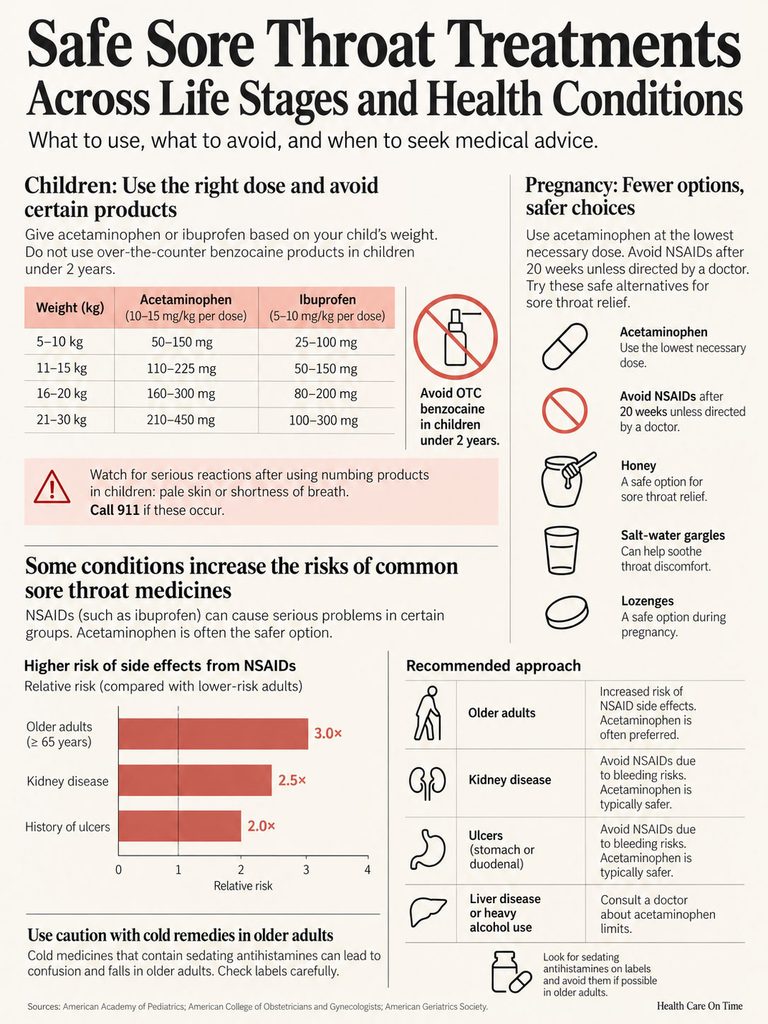
The safest sore throat medicine shifts with age, pregnancy, and other health conditions. Here’s where the rules change.
Children
Kids need weight-based doses of children’s acetaminophen or children’s ibuprofen (for babies 6 months and older). Use the syringe or cup in the box, never a kitchen spoon.
Three hard rules apply:
- No benzocaine products under age 2.
- No aspirin under 18, because of Reye’s syndrome.
- No honey under 12 months.
FDA warned in 2018 that OTC oral benzocaine products should not be used in children younger than 2. The related blood disorder can appear within minutes to two hours.
Watch for pale, gray, or bluish skin, lips, or nail beds, plus shortness of breath, headache, or a racing heart. Call 911 if these show up after using a numbing product.
Skip hard lozenges for children under about 4. Cold drinks, ice pops, and soft foods are safer.
Pregnancy
Acetaminophen remains the pain reliever ACOG considers appropriate in pregnancy when needed, at the lowest dose for the shortest time. FDA moved in 2025 to update its pregnancy labeling, so a quick call to your OB before regular use is wise.
FDA advises avoiding NSAIDs such as ibuprofen and naproxen at 20 weeks or later unless your doctor directs it, because of the risk of low amniotic fluid. Honey, salt-water gargles, and plain lozenges are reasonable add-ons.
Older Adults
Adults 65 and older face higher risks from NSAIDs, including stomach bleeding and kidney strain, especially alongside blood pressure pills or water pills. Acetaminophen within label limits is often the first choice.
Many nighttime cold products also contain diphenhydramine or other sedating antihistamines, which can cause confusion and falls in older adults. Our medical reviewers suggest checking every label with a pharmacist when someone already takes several daily medicines.
Kidney Disease, Ulcers, Blood Thinners, High Blood Pressure
NSAIDs can raise blood pressure, strain the kidneys, and add bleeding risk with warfarin, apixaban, or daily aspirin. Here, acetaminophen plus local relief is usually the safer route.
If you have liver disease or drink heavily, ask your doctor about a lower acetaminophen ceiling. Our medical reviewers note that this group gets the least attention in typical sore throat advice.
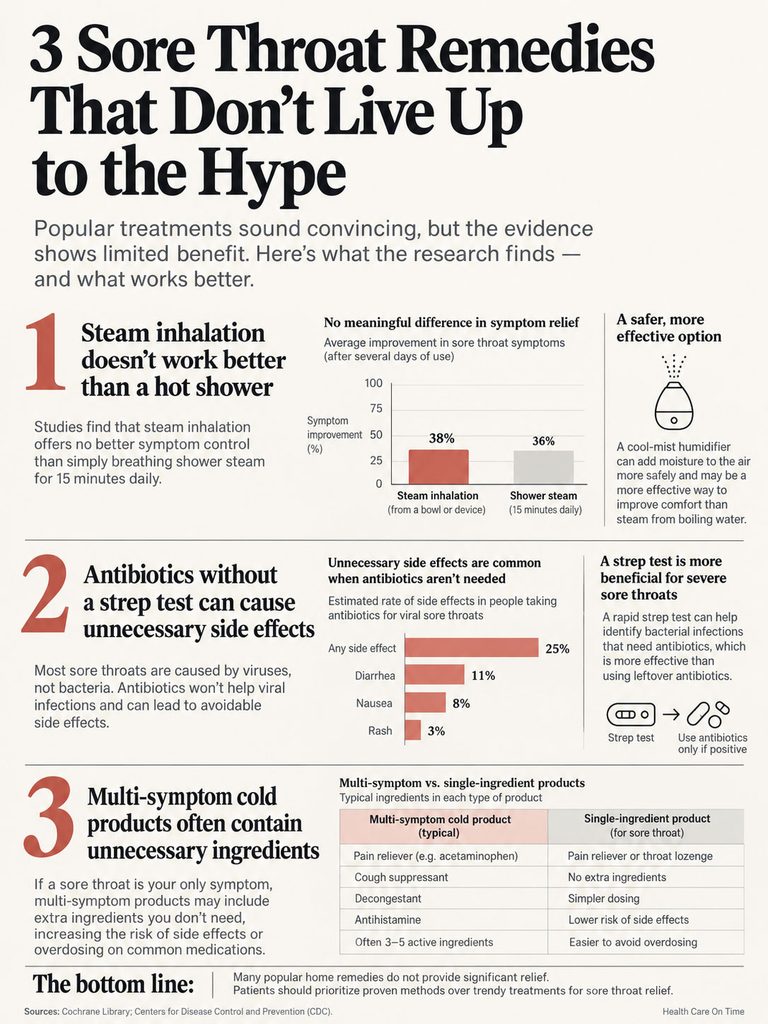
3 Sore Throat Remedies That Don’t Live Up to the Hype
Some popular fixes cost time or money without much payoff. Here’s where the evidence falls short.
Steam Inhalation
Breathing steam feels soothing. But in PRIMIT, patients told to breathe shower steam five minutes, three times a day, saw no better symptom control.
A cool-mist humidifier at night is a fine comfort step. Skip bowls of boiling water, which can scald, especially around kids.
Antibiotics “Just in Case”
Asking for antibiotics without a strep test feels proactive. For a viral sore throat, it only adds side effects.
Across patients we serve, the most useful step for a severe sore throat is a rapid strep test, not leftover pills from the medicine cabinet.
Stronger-Sounding Multi-Symptom Products
“Severe” or “Max” cold products often bundle a pain reliever, a decongestant, and a cough suppressant. If your only problem is a sore throat, you’re paying for drugs you don’t need.
Single-ingredient products let you control each dose. They also cut the risk of doubling up on acetaminophen.
When to See a Doctor
Most sore throats get better at home. A few warning signs mean the medicine cabinet isn’t enough.
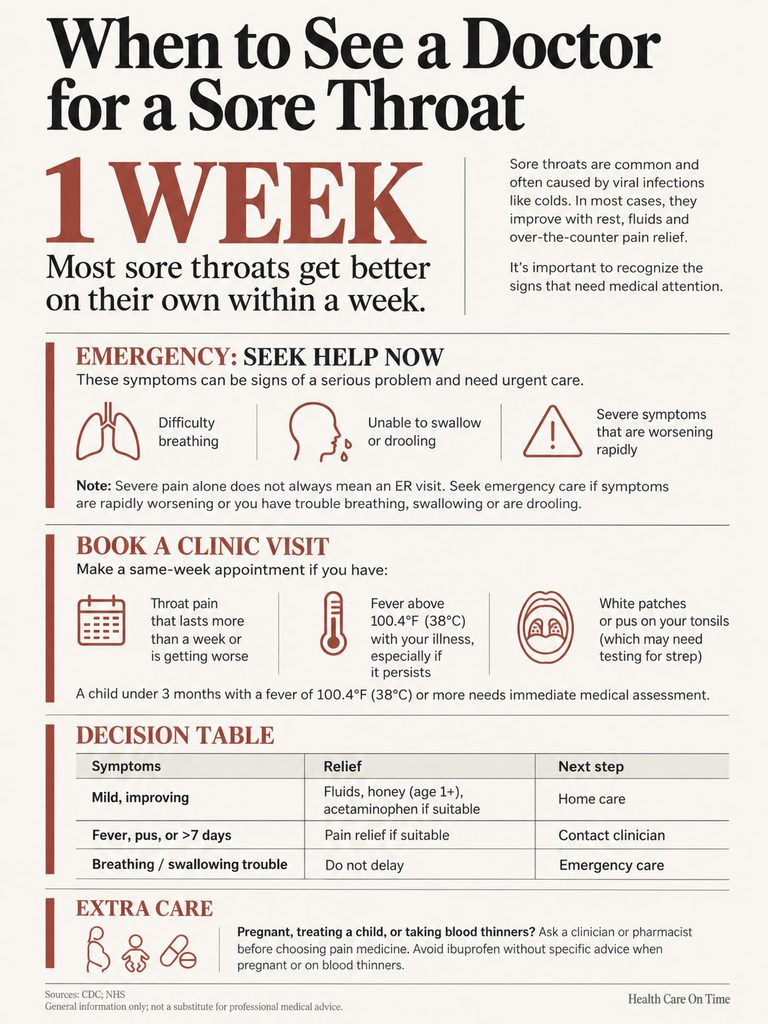
Red Flags for the ER Today
Go to the emergency room or call 911 if you notice:
- Trouble breathing or noisy breathing
- Drooling, or you can’t swallow your own saliva
- A muffled “hot potato” voice
- Trouble opening your mouth fully
- Swelling on one side of the throat or neck
- Stiff neck with high fever
These can signal an abscess, epiglottitis, or a serious allergic reaction.
Signs for a Same-Week Visit
Book an appointment if your sore throat lasts more than a week or keeps coming back. CDC also lists a fever above 100.4°F, pus on the back of the throat, a rash, joint pain or swelling, and signs of dehydration as reasons to get checked.
| Your situation | What to take | Next step |
| Mild sore throat with runny nose and cough | Ibuprofen or acetaminophen, plus a lozenge or honey | Home care; recheck if not better in 7 days |
| Sudden severe pain, fever, no cough | Ibuprofen or acetaminophen for comfort | Rapid strep test within 1 to 2 days |
| Positive strep test | Prescribed antibiotic plus pain reliever | Finish the full course; stay home 24 hours on treatment |
| Pregnant, 20 weeks or later | Acetaminophen, honey, salt-water gargle | Avoid NSAIDs unless your OB directs; call OB with fever |
| Child under 2 | Children’s acetaminophen (or ibuprofen 6 months+) by weight | No benzocaine, no honey under 1; call pediatrician |
| On a blood thinner or with kidney disease | Acetaminophen plus a lozenge or spray | Ask a doctor before any NSAID |
| Drooling, muffled voice, or trouble breathing | Nothing that delays care | Emergency room now or call 911 |
Disclaimer: This article is for general information and does not replace advice from your doctor or pharmacist. Always follow the Drug Facts label, and ask a healthcare professional before taking any medicine if you are pregnant, breastfeeding, giving medicine to a child, or managing a chronic health condition. If you have trouble breathing, drooling, or cannot swallow, call 911 or go to the nearest emergency room.
References
- Barnett ML, Linder JA. Antibiotic Prescribing to Adults with Sore Throat in the United States, 1997–2010. JAMA Internal Medicine (PMC)
- Sadeghirad B, et al. Corticosteroids for treatment of sore throat: systematic review and meta-analysis. BMJ 2017;358:j3887
- Little P, et al. Ibuprofen, paracetamol, and steam for patients with respiratory tract infections in primary care. BMJ 2013;347:f6041
- American Family Physician. Cold Symptoms Unaffected by Regular Analgesic Dosing or Use of Steam (2014)
- Abuelgasim H, Albury C, Lee J. Effectiveness of honey for symptomatic relief in upper respiratory tract infections. BMJ Evidence-Based Medicine 2021
- U.S. Food and Drug Administration. Drug Safety Communication on OTC oral benzocaine products (2018)
- U.S. Food and Drug Administration. NSAIDs and pregnancy at 20 weeks or later
- Centers for Disease Control and Prevention. Sore Throat
- Medical News Today. How long does strep throat last?
- Cleveland Clinic Newsroom. How to Soothe a Sore Throat (November 2025)
- Flurbiprofen 8.75 mg spray vs lozenge randomized trial (PMC)