Statins lower LDL cholesterol two to three times more than ezetimibe, and they have far more proof that they prevent heart attacks and strokes. Ezetimibe (Zetia) is the gentler add-on: it works in the gut instead of the liver, so doctors usually pair it with a statin or use it when a statin can’t be tolerated.
Table of Contents
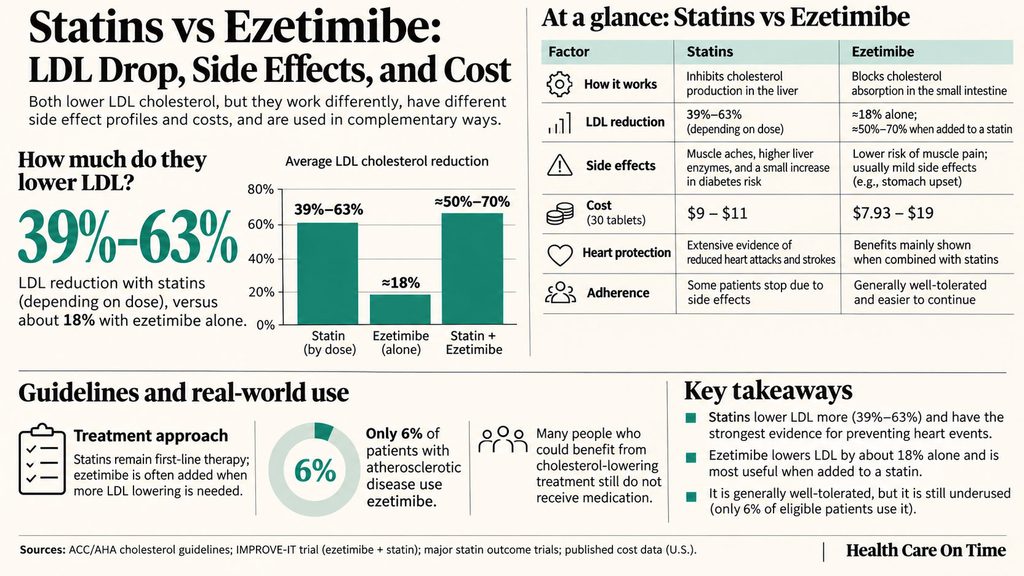
Quick Answer: On LDL lowering, statins vs ezetimibe isn’t close. Atorvastatin and rosuvastatin cut LDL by roughly 39% to 63%, depending on the dose, while ezetimibe alone lowers it by about 18%. Added to a statin, ezetimibe takes off roughly another 16 to 21 percentage points. Both are generic and often cost under $20 a month. Ezetimibe causes fewer muscle complaints, which makes it the usual next step when statins cause trouble.
How a Statin and Ezetimibe Each Lower LDL
Your blood gets its cholesterol from two places: your liver makes most of it, and your small intestine absorbs the rest from food and from bile that the liver releases into the gut, so a drug can attack the supply from either end.
A statin slows an enzyme called HMG-CoA reductase, which the liver needs to build cholesterol. Starved of its own supply, the liver puts more LDL receptors on its cells and pulls LDL out of the bloodstream to make up the difference. That’s how atorvastatin works, and rosuvastatin, simvastatin, pravastatin and the rest of the class do the same.
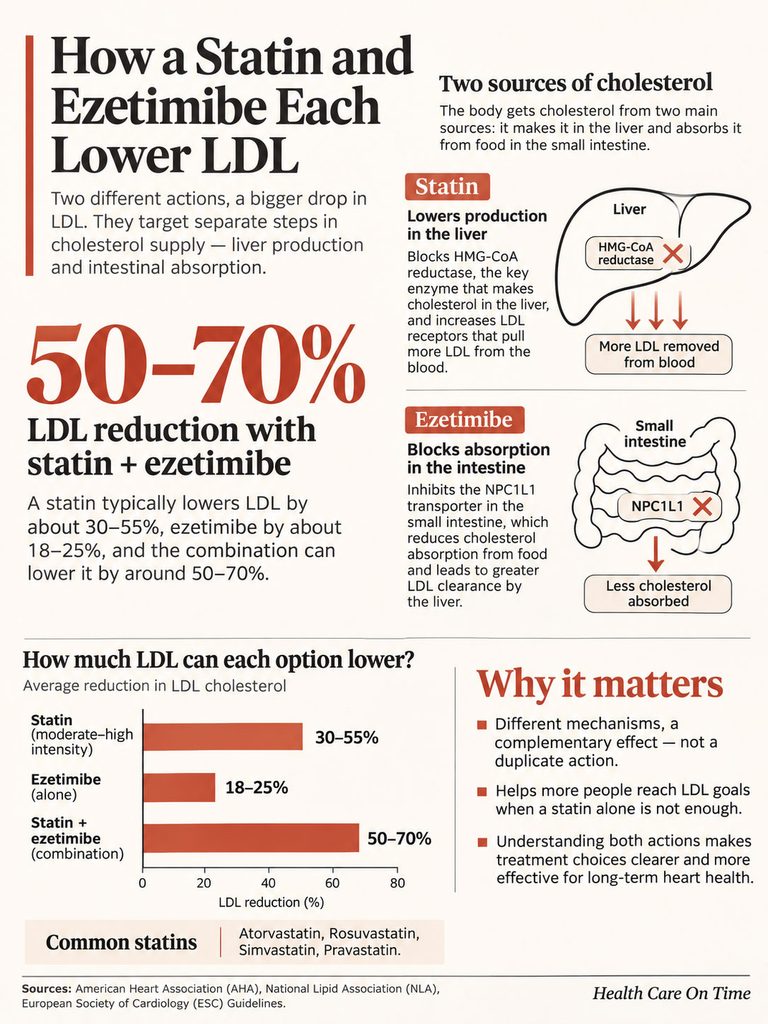
Ezetimibe blocks a transporter protein called NPC1L1 on the cells lining the small intestine. With that door partly shut, less cholesterol from meals and bile gets absorbed, the liver receives less of it from the gut, and it responds much as it does to a statin, by clearing more LDL from your blood.
Because the two drugs hit different targets, their effects add up instead of overlapping.
How Much LDL Each One Lowers
Statin strength depends on the drug and the dose. Doctors sort regimens into three tiers: high-intensity statins lower LDL by 50% or more, moderate-intensity ones by 30% to 49%, and low-intensity ones by less than 30%. Only atorvastatin at 40 or 80 mg and rosuvastatin at 20 or 40 mg reach the top tier.
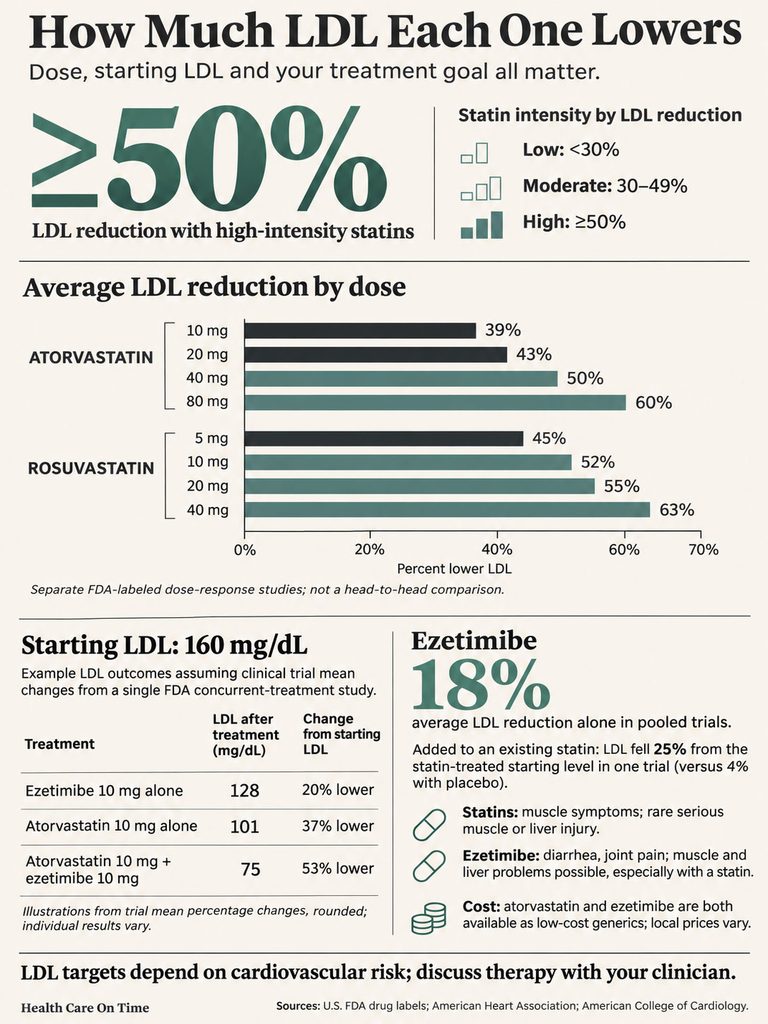
In pooled six-week dose-finding trials, atorvastatin lowered LDL by 39% at 10 mg, 43% at 20 mg, 50% at 40 mg and 60% at 80 mg, compared with a 4% rise on placebo. Rosuvastatin does a little better at every step: 45% at 5 mg, 52% at 10 mg, 55% at 20 mg and 63% at 40 mg.
Going from 10 mg to 80 mg of atorvastatin, an eightfold jump in dose, adds only about 21 percentage points. Muscle symptoms and new diabetes diagnoses both rise with intensity, though, so many doctors now think about adding a second drug before pushing the first one to its maximum.
Ezetimibe comes in a single strength, 10 mg once a day, and in the pooled placebo-controlled trials behind its FDA approval, it lowered LDL by about 18% on its own, while placebo raised it by about 1%, and trial results across the literature mostly fall between 15% and 22%.
Paired with a statin, it looks like a different drug. People already on a statin who added ezetimibe saw LDL fall 25% further, compared with 4% for those who added a placebo, and when ezetimibe and atorvastatin 10 mg were started together, LDL dropped 53%, versus 37% for atorvastatin 10 mg alone. So a low-dose statin plus ezetimibe lands in the same range as atorvastatin 40 mg by itself.
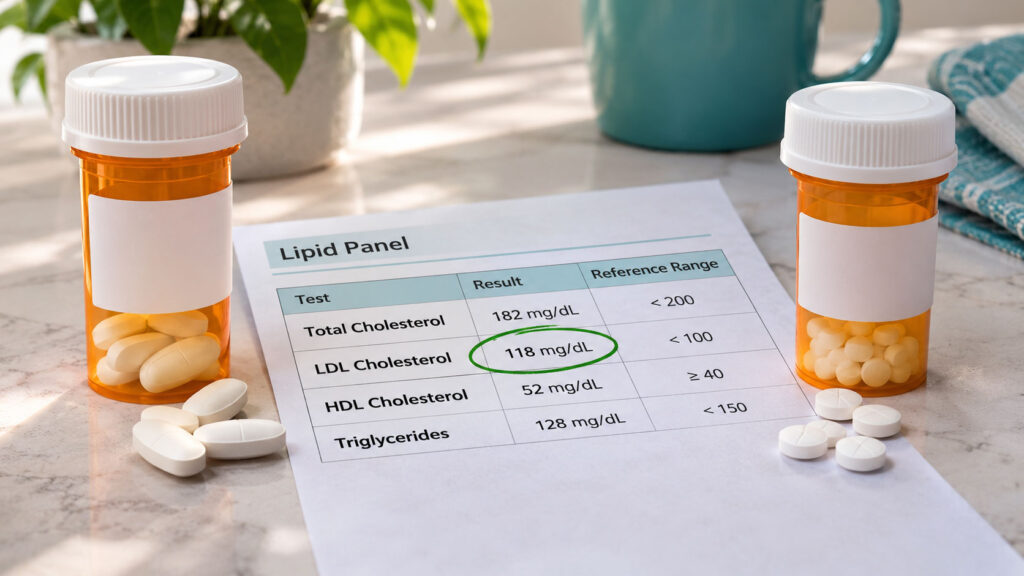
The 2026 guideline judges treatment by where the LDL on your lipid panel ends up, so the percentage matters mainly as a way of getting there. Someone at very high risk with an LDL of 160 mg/dL needs to lose more than half of it to get under 55, and no single moderate-dose drug does that. A person at borderline risk who only needs to get under 100 may get there with far less. Your starting number and your goal decide how hard the drugs have to work.
For someone starting at an LDL of 160 mg/dL, the math works out roughly like this: ezetimibe alone would bring it to about 130, atorvastatin 10 to 20 mg to somewhere around 90 to 100, and atorvastatin 10 mg plus ezetimibe to the mid-70s. Those are averages built from trial percentages. Your own response can land well above or below them, which is why the prescribing information for both drugs suggests rechecking LDL as early as four weeks after starting.
| Feature | Statins (atorvastatin, rosuvastatin and others) | Ezetimibe (Zetia) | What it means for you |
| Where it works | Liver: blocks HMG-CoA reductase, the enzyme that makes cholesterol | Small intestine: blocks the NPC1L1 cholesterol transporter | Different targets, so the effects add together |
| LDL drop alone | 39% (atorvastatin 10 mg) to 63% (rosuvastatin 40 mg) on FDA labels | About 18% in pooled FDA label trials | A statin is two to three times stronger |
| LDL drop when combined | Atorvastatin 10 mg alone: 37% | Ezetimibe plus atorvastatin 10 mg: 53% | Low-dose statin plus ezetimibe rivals a high-dose statin |
| Proof of fewer heart attacks and strokes | Many outcome trials, e.g., 44% fewer major events with rosuvastatin 20 mg in JUPITER | Shown when added to a statin (IMPROVE-IT: 32.7% vs 34.7% events at 7 years) | Statins remain first choice when you can take one |
| Muscle symptoms | Small excess: 27.1% vs 26.6% on placebo in blinded trials | Myalgia 3.2% vs 2.7% when added to a statin | Ezetimibe is the easier drug for muscle complaints |
| Liver enzyme rise (over 3 times normal) | About 0.7% (atorvastatin), 1.1% (rosuvastatin) | 1.3% with a statin vs 0.4% statin alone | Uncommon with either; checked by blood test |
| Blood sugar | 10% higher diabetes risk at low or moderate doses, 36% at high doses | No clear link in pooled trials | Matters most if you already have prediabetes |
| Dose | Once daily; atorvastatin 10 to 80 mg, rosuvastatin 5 to 40 mg | 10 mg once daily, one strength | Ezetimibe needs no dose adjustment |
| Generic cash price | About $9 to $11 for 30 atorvastatin tablets | About $8 to $19 for 30 tablets | Both are low-cost generics |
Heart Attack and Stroke Protection
LDL numbers matter because they track with heart attacks, strokes, stents, bypass surgery and cardiovascular death. On that score, the two drugs differ more in how much evidence they have than in how strong they are.
Statins have decades of outcome trials. Atorvastatin 10 mg cut fatal heart disease or nonfatal heart attacks by 36% in people without a prior heart attack (ASCOT-LLA) and major cardiovascular events by 37% in people with type 2 diabetes (CARDS), and in people who already had heart disease, 80 mg prevented 22% more events than 10 mg (TNT). Rosuvastatin 20 mg did even better in JUPITER, where major cardiovascular events fell by 44% and the trial was stopped early because the benefit was so clear.
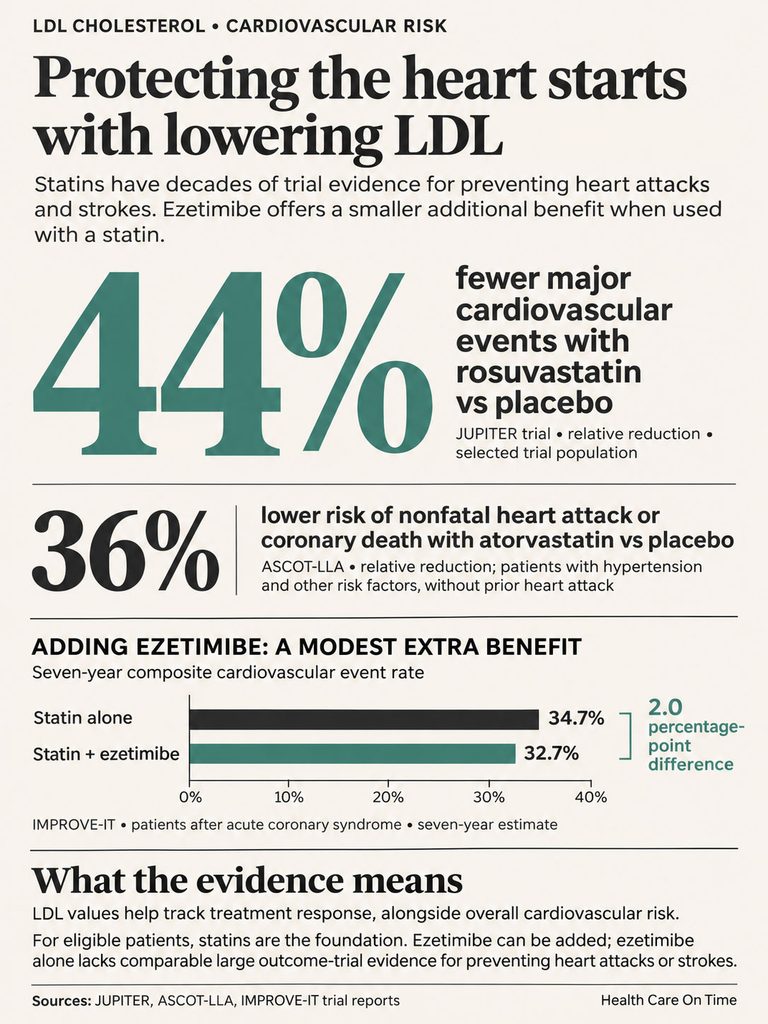
Ezetimibe’s main outcome trial is IMPROVE-IT, published in the New England Journal of Medicine in 2015. Researchers gave 18,144 people who’d recently had an acute coronary syndrome either simvastatin 40 mg plus ezetimibe or simvastatin 40 mg plus a placebo. A year in, average LDL was 53.2 mg/dL with the combination and 69.9 mg/dL with simvastatin alone. After seven years, 32.7% of the combination group had had a major cardiovascular event, compared with 34.7% of the simvastatin-only group, a hazard ratio of 0.936. Side effect rates were about the same in both groups.
That benefit is modest in absolute terms, about two fewer events for every 100 people over seven years, and it came on top of a statin. A pooled analysis of 26 randomized trials with 23,499 people found ezetimibe plus a statin lowered major cardiovascular events with a relative risk of 0.94, nonfatal heart attacks with a relative risk of 0.88 and nonfatal strokes with 0.83, though neither all-cause nor cardiovascular death changed, and IMPROVE-IT drove most of the result.
No large trial has shown that ezetimibe alone, without a statin, prevents heart attacks or strokes, and its FDA labeling makes no outcome claim. For anyone who can take a statin, that’s the strongest argument for keeping one as the base of treatment.
Side Effects Compared
Most people do fine on either drug, and the side effects that do show up are usually mild enough that nobody stops treatment over them.
Muscle aches
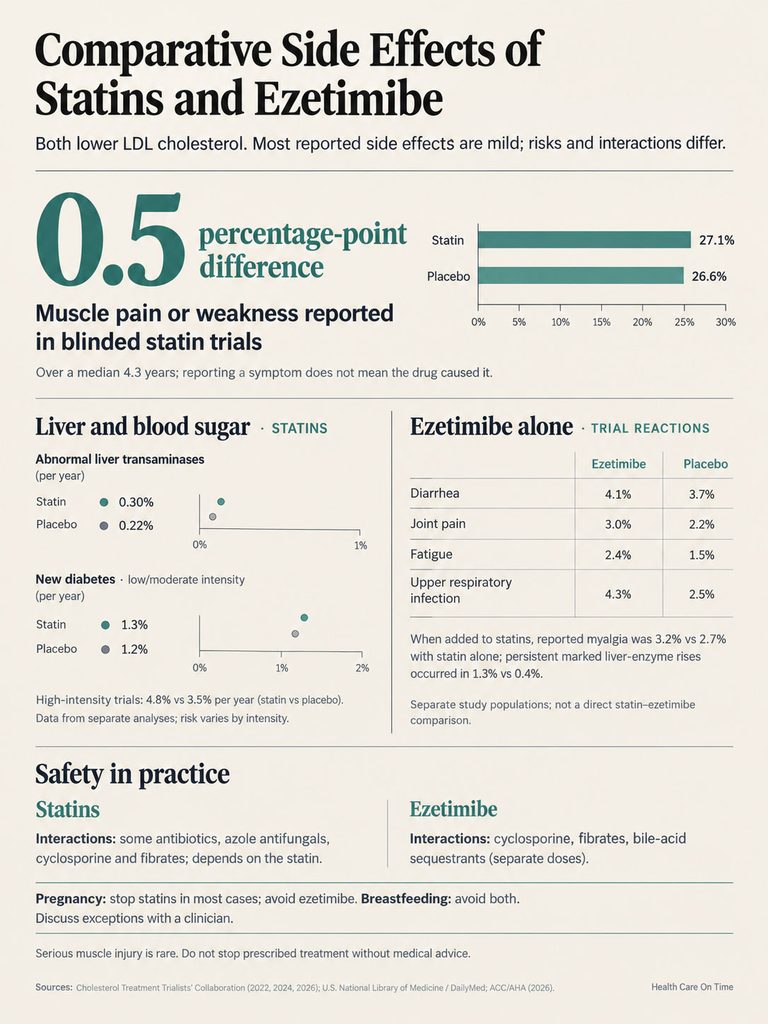
Muscle aches get more attention than any other statin complaint, and blinded trials are more reassuring than most people expect. The Cholesterol Treatment Trialists’ Collaboration pooled individual records from 19 double-blind trials with 123,940 participants, and muscle pain or weakness turned up in 27.1% of people on a statin and 26.6% on placebo, a rate ratio of 1.03.
Almost all of the extra cases came in the first year, at about 11 per 1,000 person-years, with no significant excess afterward. By the researchers’ estimate, only about 1 in 15 muscle complaints among statin users was actually caused by the drug. Higher-intensity regimens had a slightly bigger effect than moderate ones, so dose matters here too.
So your aches can be real and still come from somewhere else. An underactive thyroid is a classic culprit: uncontrolled hypothyroidism raises the risk of statin muscle injury, and hypothyroidism raises cholesterol too, so treating it can help on both fronts. A second medicine that raises statin levels in the blood is the other usual suspect. Constant tiredness without soreness is a separate problem, and statin fatigue has causes of its own that a few blood tests can sort out.
Ezetimibe is easier on muscles. Myalgia occurred in 3.2% of people taking ezetimibe plus a statin versus 2.7% on a statin alone, and muscle pain isn’t among the common side effects when ezetimibe is used by itself. Myopathy and rhabdomyolysis can still happen, but most of those cases seen after approval involved people who were also taking a statin or a fibrate.
Serious statin muscle problems are rare, and they cluster in certain people: adults 65 and older and people with uncontrolled hypothyroidism, kidney impairment, interacting drugs or high doses. A rare autoimmune form called immune-mediated necrotizing myopathy can continue even after the statin is stopped. Asian patients have about twice the rosuvastatin exposure of White patients, so they’re usually started at 5 mg.
Liver enzymes
Persistent liver enzyme elevations above three times the upper limit of normal occurred in about 0.7% of people on atorvastatin and in 1.1% on rosuvastatin versus 0.5% on placebo. For ezetimibe taken with a statin, the figure was 1.3%, compared with 0.4% on a statin alone.
These rises usually cause no symptoms, and liver failure from statins is rare. Doctors check liver enzymes before a statin starts and then as needed, and when a routine panel shows a high ALT level, the usual next step is to look at fatty liver, alcohol and other medicines before blaming the cholesterol pill.
Blood sugar and diabetes risk
Statins nudge blood sugar up a little. In a 2024 analysis in The Lancet Diabetes & Endocrinology, low- or moderate-intensity statins raised new diabetes diagnoses by 10% (1.3% per year versus 1.2% on placebo), while high-intensity statins raised them by 36% (4.8% versus 3.5% per year). Average HbA1c went up by only 0.06 to 0.08 percentage points. About 62% of the new cases were in people already in the top quarter of blood sugar before treatment, so the drug mostly pushed people who were near the line over it.
In those trials the heart benefit still outweighed the diabetes risk. Prediabetes is still a fair reason to talk about a moderate statin dose plus ezetimibe instead of a high dose, especially since pooled data on ezetimibe show no clear link to new diabetes (relative risk 0.88).
Ezetimibe’s own side effects
The extra side effects in ezetimibe-alone trials were minor, and each one ran only a point or two above placebo:
- Upper respiratory infection: 4.3% vs 2.5% on placebo
- Diarrhea: 4.1% vs 3.7%
- Joint pain: 3.0% vs 2.2%
- Sinusitis: 2.8% vs 2.2%
- Arm or leg pain: 2.7% vs 2.5%
- Fatigue: 2.4% vs 1.5%
- Flu: 2.0% vs 1.5%
Allergic reactions, including swelling and hives, have been seen rarely since approval.
Drug interactions
Statins have the longer interaction list. Certain other drugs raise the risk of muscle injury enough that the statin dose has to be lowered, and atorvastatin users are told to avoid more than 1.2 liters (about 40 ounces) of grapefruit juice a day. Ezetimibe’s list is shorter: cyclosporine raises ezetimibe levels by 240%, cholestyramine lowers them by 55%, and fibrates other than fenofibrate aren’t recommended with it. With a bile acid binder, ezetimibe should be taken at least 2 hours before or 4 hours after.
Pregnancy and breastfeeding
Neither drug is a routine choice during pregnancy. The FDA no longer lists statins as absolutely off-limits in pregnancy, but the 2026 ACC/AHA guideline still advises stopping them during pregnancy except in rare, very high-risk cases, and it recommends putting off most cholesterol drugs around conception and while breastfeeding. For ezetimibe, there isn’t enough human data, and nobody knows yet whether it passes into breast milk. Women planning a pregnancy should raise it before starting either drug, so the plan for stopping is set ahead of time.
When Doctors Combine the Two
The 2026 ACC/AHA guideline on dyslipidemia, released March 13, 2026, brought back specific LDL targets after years of focusing mainly on percentage drops. The goals are under 100 mg/dL for people at borderline or intermediate risk, under 70 mg/dL for high-risk people, and under 55 mg/dL for very high-risk people with established atherosclerotic disease, with non-HDL cholesterol goals 30 mg/dL higher. Statins remain the foundation, and when lifestyle changes plus a statin don’t reach the goal, a nonstatin gets added.
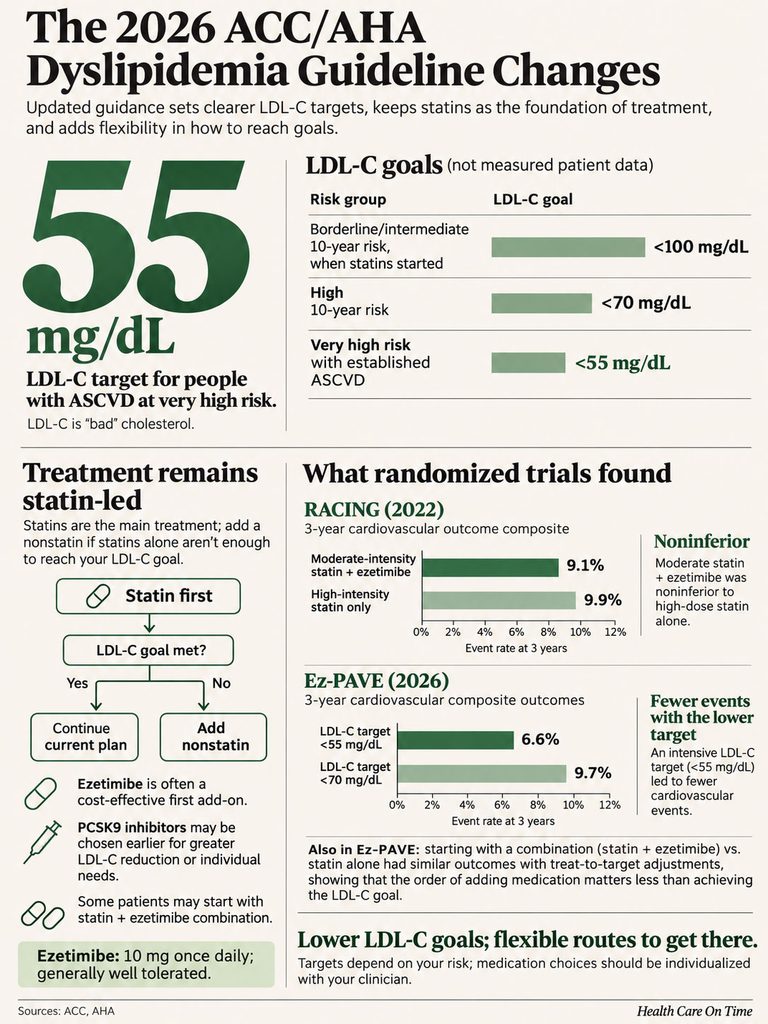
Ezetimibe is usually the first add-on because it’s an inexpensive generic pill with outcome data behind it. The new guideline no longer locks in the order, though: ezetimibe doesn’t have to come before a PCSK9 inhibitor, and the choice rests on how much more LDL lowering is needed, tolerability, cost and what the patient prefers. Someone far above goal may go straight to an injectable, while someone a little above it usually gets ezetimibe first.
Raising the statin dose versus adding ezetimibe to a moderate dose is the question many patients actually face, and the RACING trial put the two head to head in 3,780 people with atherosclerotic disease at 26 centers in South Korea. Half took rosuvastatin 10 mg plus ezetimibe 10 mg; half took rosuvastatin 20 mg alone. Over three years, the main outcome occurred in 9.1% of the combination group and 9.9% of the high-dose group, which met the bar for noninferiority. More people on the combination had an LDL under 70 mg/dL at three years (72% vs 58%), and fewer stopped or cut back their medicine because of side effects (4.8% vs 8.2%).
Ez-PAVE, a newer trial also run in South Korea, looked at timing. Its secondary analysis appeared in Circulation in November 2026: 3,048 adults with atherosclerotic disease started either rosuvastatin plus ezetimibe or a statin alone, and doses were then adjusted to hit an LDL target. After three years, events occurred in 8.5% of the upfront-combination group and 7.9% of the statin-first group, a difference that wasn’t significant.
What mattered in Ez-PAVE was the target. Aiming for under 55 mg/dL instead of under 70 mg/dL cut events with a hazard ratio of 0.67, no matter which drugs people started on, and more than a third of the statin-first group in the stricter-target arm ended up getting ezetimibe added anyway. Both trials were open-label and enrolled mostly East Asian men, so the results may not carry over perfectly to every American patient.
The two trials answer different questions. RACING suggests a moderate statin plus ezetimibe can stand in for a higher statin dose, and Ez-PAVE suggests the order in which the drugs are added matters less than actually reaching the goal. For stable patients who get regular lab checks, starting with a statin and adding ezetimibe when LDL stays high seems to work about as well as starting both at once. A moderate statin plus ezetimibe is also a reasonable swap for a high-dose statin that’s causing side effects. Combination pills exist, such as ezetimibe with simvastatin (Vytorin) and ezetimibe with rosuvastatin (Roszet), but two separate generics usually cost less.
Adding ezetimibe is about as simple as a medication change gets. There’s no dose to work up to, since the 10 mg tablet is the only strength, and it can be swallowed at the same time as the statin each day, with or without a meal. The one exception is a bile acid binder such as cholestyramine, which needs the spacing described earlier. Most people notice nothing at all after starting it. The real feedback comes from the blood test a month or so later, and if LDL still sits above goal at that point, the conversation moves on to a higher statin dose, bempedoic acid or an injection.
If You Can’t Take a Statin
Statin intolerance has a formal definition. The National Lipid Association describes it as one or more side effects that improve or go away when the dose is lowered or the drug is stopped. Complete intolerance means no cholesterol-lowering dose can be taken at all, and partial intolerance means some statin works but not enough to reach the goal. At least two statins should have been tried, one of them at the lowest approved daily dose, before the label sticks.
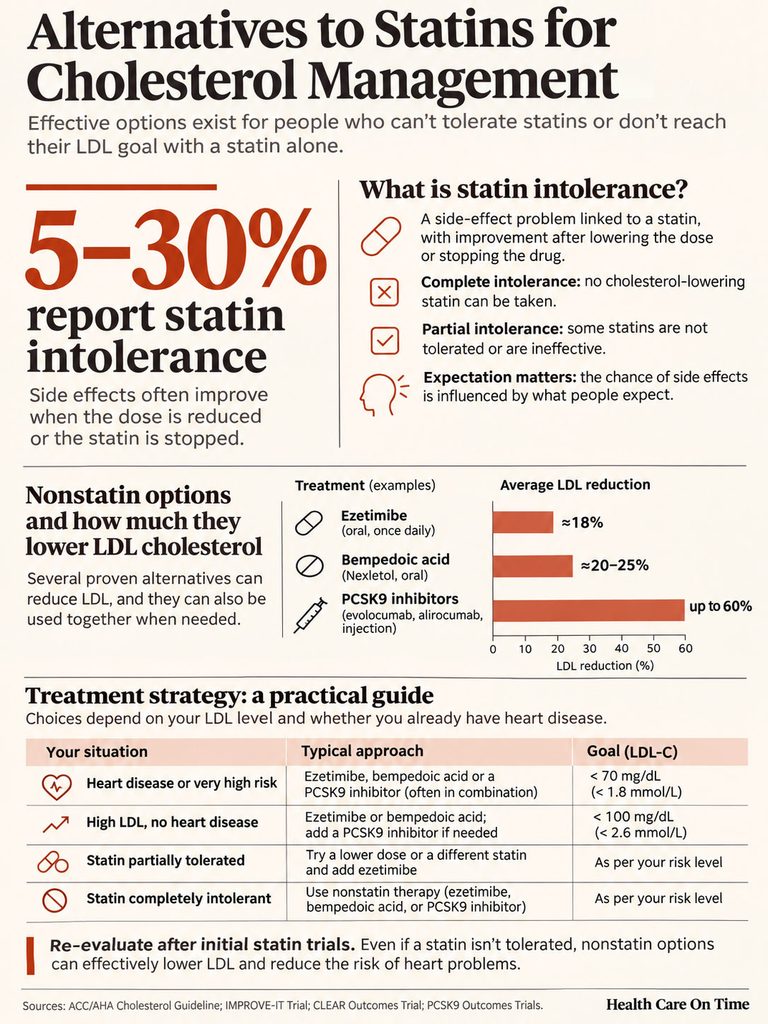
Giving up after one bad month on one statin is usually too soon. A different statin, a different dose or a less frequent schedule, such as every other day, often solves the problem, especially once fixable risk factors like thyroid disease or an interacting drug are dealt with. Expectation plays a part too; the nocebo effect, where expecting side effects makes people feel them, is real. Reported intolerance rates run from 5% to 30%, but with strict international definitions the pooled estimate is closer to 9.1%.
When a statin truly isn’t an option, ezetimibe alone is the usual first choice because it’s cheap, once a day and rarely causes muscle trouble. Its weakness is size. An 18% drop may leave LDL well above goal, and ezetimibe alone has no outcome trial of its own.
That doesn’t make it pointless. For someone at moderate risk who sits only a little above goal, ezetimibe by itself may be enough, and every bit of LDL lowering counts toward lower lifetime risk. For someone with known heart disease and a high LDL, though, it usually ends up as one piece of a two- or three-drug plan.
Bempedoic acid (Nexletol) has the outcome data that ezetimibe monotherapy lacks. In CLEAR Outcomes, 13,970 statin-intolerant adults took bempedoic acid 180 mg or a placebo for a median of 40.6 months. LDL fell 21.1 percentage points more than with placebo, major cardiovascular events occurred in 11.7% versus 13.3% (hazard ratio 0.87), and fatal or nonfatal heart attacks dropped with a hazard ratio of 0.77. Gout (3.1% vs 2.1%) and gallstones (2.2% vs 1.2%) were more common, and the drug has been FDA approved since 2020.
PCSK9 inhibitor injections such as evolocumab (Repatha) and alirocumab (Praluent) are given every 2 to 4 weeks and can lower LDL by up to about 60%. Inclisiran (Leqvio) is given once, again three months later and then twice a year, and it lowers LDL by up to about 52%, though it’s still being studied to see whether that lowering prevents heart attacks and strokes. For high-risk people, starting a nonstatin while still searching for a tolerable statin makes more sense than leaving LDL high through months of trial and error.
| Your situation | What doctors usually do | Why |
| High LDL, no heart disease, never treated | Start a statin at a dose matched to your risk; recheck LDL after about 4 weeks | Statins have the most outcome data; labels advise testing as early as 4 weeks |
| Known heart disease, LDL still 55 to 70 mg/dL on a statin | Add ezetimibe 10 mg | IMPROVE-IT showed fewer events; 2026 goal is under 55 mg/dL |
| Side effects on high-dose statin, otherwise doing well | Drop to a moderate dose and add ezetimibe | RACING: 9.1% vs 9.9% events, with fewer people stopping |
| Muscle aches on one statin | Try a second statin, a lower dose or every-other-day dosing | NLA: at least 2 statins tried before calling it intolerance |
| Cannot take any statin dose | Ezetimibe, bempedoic acid, or both; PCSK9 injection if far from goal | CLEAR Outcomes: bempedoic acid cut major events (11.7% vs 13.3%) |
| LDL far above goal despite a statin | PCSK9 inhibitor may come before or with ezetimibe | 2026 guideline no longer fixes the order of add-ons; PCSK9 drugs lower LDL up to about 60% |
| Prediabetes and need for strong LDL lowering | Discuss moderate statin plus ezetimibe instead of high dose | High-intensity statins: 36% more new diabetes vs 10% at lower doses |
What Each Option Costs in the US
Both drug types are generic and made by many manufacturers, so the cheapest versions cost about the same. Cash prices for generic ezetimibe start at about $7.93 for 30 tablets and run up to about $19, with 90-tablet supplies listed at $12.49 to $42.71. Generic atorvastatin costs about $9 to $11 for 30 tablets at every strength from 10 to 80 mg.
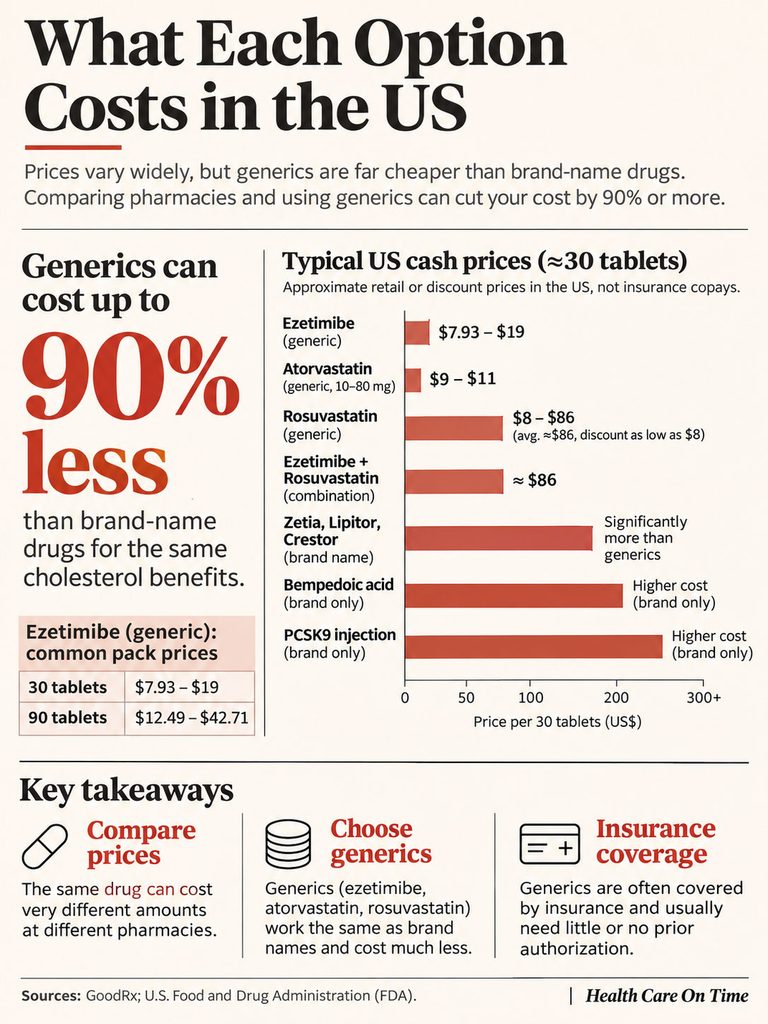
Generic rosuvastatin shows how wildly pharmacy prices swing. Thirty 10 mg tablets carry an average retail price of about $86, yet discount-card prices go as low as about $8, and nearly every insurance plan covers it with little prior authorization. Shop around. The brand names, Zetia, Lipitor and Crestor, cost far more, so ask for the generic name on the prescription.
A combination pill costs more than its parts: the ezetimibe and rosuvastatin tablet starts at about $86 for 30 tablets, several times the price of the two generics bought separately. One pill can still be worth it for someone who keeps forgetting the second one.
Bempedoic acid and the PCSK9 injections are still brand-name only and cost far more than either generic.
Who Gets Treated in the US
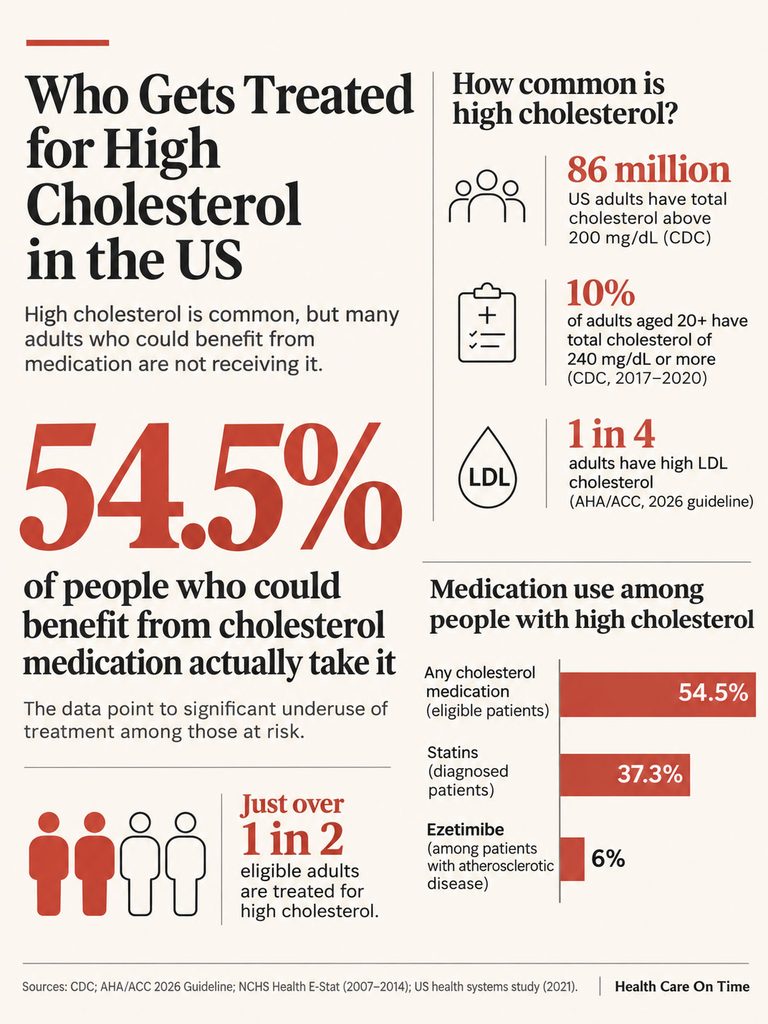
Far more Americans qualify for cholesterol treatment than receive it. Only about half of the people who could benefit from a cholesterol medicine take one, by CDC estimates, and in national survey data from 2007 to 2014, a little over a third of adults told they had high cholesterol were on a statin.
| Measure | US figure | Source and period |
| Adults with total cholesterol above 200 mg/dL | About 86 million | CDC, High Cholesterol Facts |
| Adults with total cholesterol of 240 mg/dL or more | 10% of adults 20 and older | CDC, 2017 to 2020 data |
| Adults with high LDL | About 1 in 4 | AHA/ACC 2026 guideline release |
| People who could benefit from cholesterol medicine and take it | 54.5% (about 47 million) | CDC, 2011 to 2016 data |
| Adults diagnosed with high cholesterol who took a statin | 37.3% | NCHS Health E-Stat, 2007 to 2014 |
| Patients with atherosclerotic disease taking ezetimibe | 6% of 728,423 | 89 US health systems, 2021 (Biomarker Insights review) |
Ezetimibe use was lowest of all. Only 6% of people with atherosclerotic disease were taking a generic that can cost under $10 a month, which the authors of the 2024 review read as plain underuse of nonstatin therapy.
Questions to Ask Your Doctor
Bring a few of these to your next visit, whichever ones fit where you are.
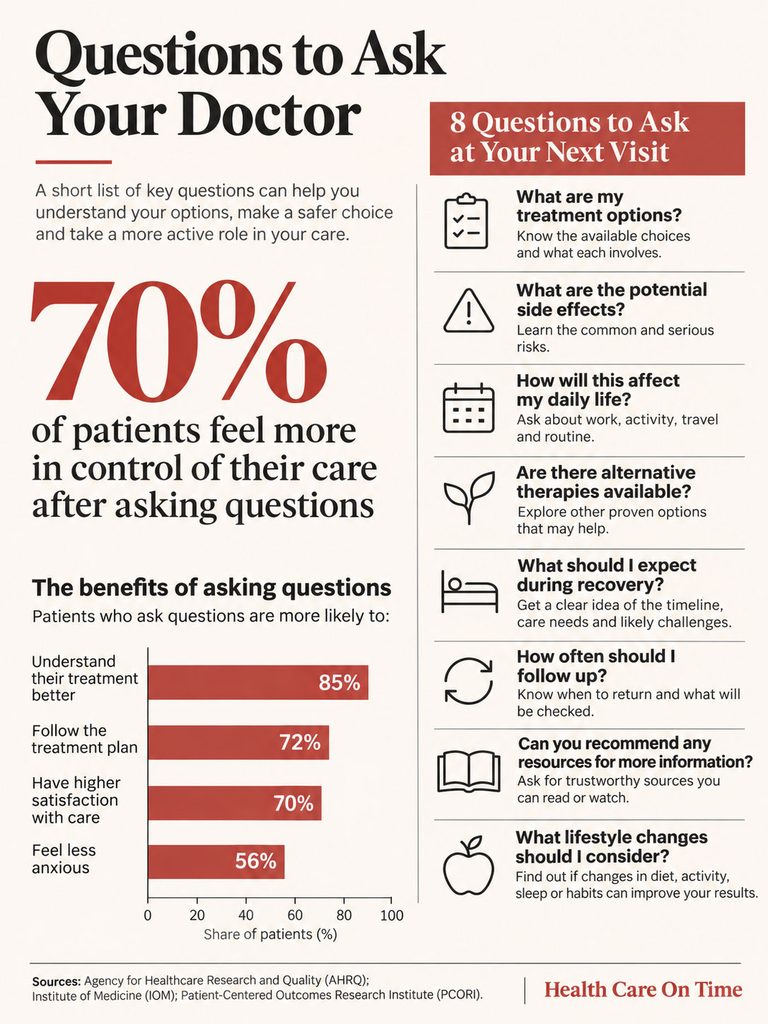
- Given these numbers, what LDL goal should we be aiming for?
- These leg cramps started the same month as the statin; could something else be causing them?
- Would raising the dose or adding ezetimibe get us to goal with fewer side effects?
- Is a coronary calcium scan worth doing before we decide whether treatment is needed now?
- How long should we give this new statin before calling it a failure?
- Does the next blood test need fasting, and when should it be?
- If ezetimibe alone won’t get there, what’s next, and will insurance pay for it?
When to Call a Doctor
Mild, achy muscles in the first few weeks are common and usually not an emergency. Don’t just quit the pill, though. Call the office, describe what you feel and when it started, and ask whether a blood test for muscle enzymes makes sense before the next step.
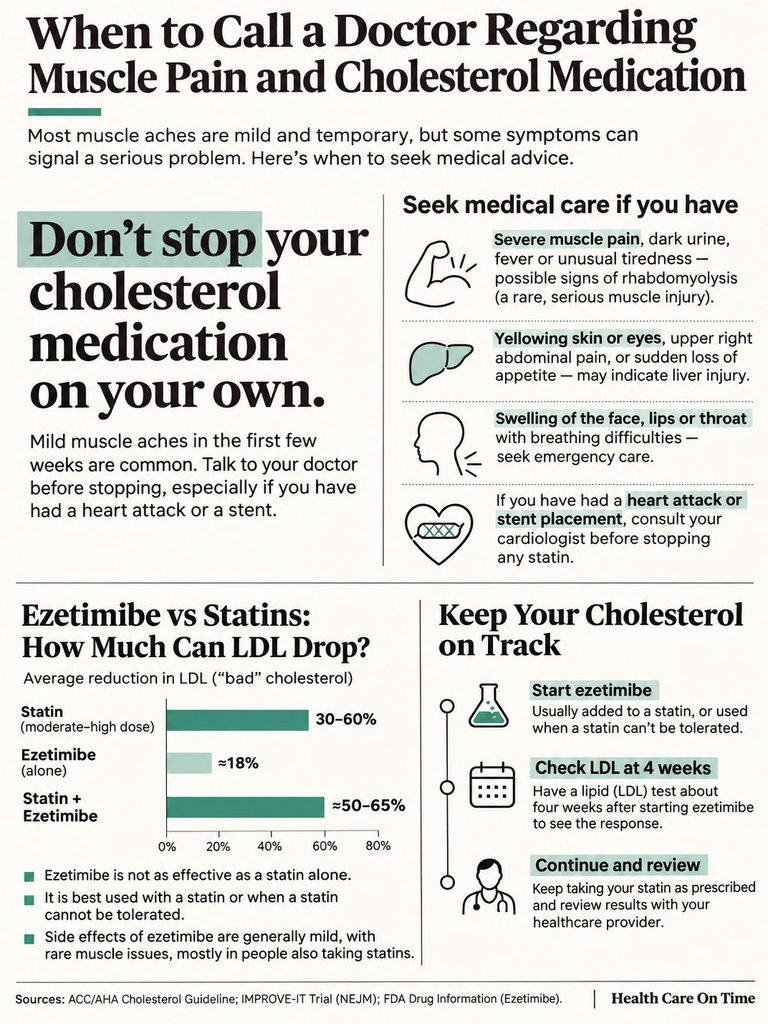
Call right away if you have severe or unexplained muscle pain, tenderness or weakness, especially with fever or unusual tiredness, or if your urine turns dark like tea or cola. Those can be signs of rhabdomyolysis, a rare breakdown of muscle tissue that can harm the kidneys. Yellowing skin or eyes, pain in the upper right belly or a sudden loss of appetite can point to liver injury. Swelling of the face, lips or throat with trouble breathing needs emergency care. And after a heart attack or stent, don’t stop a statin on your own; call your cardiologist first so a replacement plan is in place.
Frequently Asked Questions
Is ezetimibe as good as statins?
No, not on its own. A statin lowers LDL two to three times as much, and statins have many outcome trials showing fewer heart attacks and strokes, while ezetimibe’s outcome benefit in IMPROVE-IT was shown only when it was added to a statin. As a partner to a statin, or as a fallback when statins can’t be used, it’s very good.
What is the downside of ezetimibe?
Limited strength is the main one. An average LDL drop of about 18% often won’t reach a goal by itself, and no large trial has shown that ezetimibe alone prevents heart attacks. Side effects tend to be mild: colds, diarrhea, joint pain and tiredness. With a statin, a small number of people develop higher liver enzymes. Rare muscle problems and allergic reactions are possible, and it interacts with cyclosporine, cholestyramine and some fibrates.
What do cardiologists recommend instead of statins?
For people who truly can’t take a statin, cardiologists usually start with ezetimibe because it’s cheap and well tolerated. Bempedoic acid (Nexletol) is the other daily pill, and its outcome trial was run entirely in statin-intolerant patients, with fewer major cardiovascular events than placebo. When LDL is far above goal, PCSK9 inhibitor injections such as evolocumab or alirocumab are the next tool, and inclisiran is another injectable option. Before switching, though, most cardiologists try a different statin, a lower dose or every-other-day dosing, because plenty of people tolerate one of those.
What is the best cholesterol medication with the least side effects?
Ezetimibe has one of the mildest side effect profiles, with rates close to placebo in its trials, but it also lowers LDL the least. For most people the better balance is the lowest statin dose that reaches the goal, often with ezetimibe added; in RACING, that approach meant fewer people quitting because of side effects than a higher statin dose did.
Can you take ezetimibe without a statin?
Yes. It’s approved alone for high LDL and is commonly used that way when statins aren’t tolerated. Expect about an 18% drop.
Does ezetimibe cause muscle pain?
Less often than statins do. Added to a statin, it raised muscle pain only slightly over the statin alone, and muscle pain isn’t one of its common side effects when used by itself. Rare cases of muscle injury have been seen, mostly in people also taking a statin or a fibrate, so new or severe aches after adding it are still worth a call to your doctor.
What time of day should you take ezetimibe?
No particular time. One 10 mg tablet once a day, with or without food.
When should LDL be rechecked after starting ezetimibe?
As early as four weeks after you start, which is the same timing suggested for statins.
Can you stop a statin once your LDL is normal?
Usually not. A normal LDL on a statin means the drug is working, and stopping it lets LDL climb back toward where it started. If cost or side effects are the problem, ask whether a lower statin dose plus ezetimibe could keep you at goal instead. Anyone with heart disease, a stent or a past stroke should talk to a doctor before stopping.
Medical disclaimer: This article is for general information and isn’t a substitute for advice from your doctor or pharmacist. Don’t start, stop or change any cholesterol medicine without talking to your healthcare provider. If you have chest pain, signs of a stroke, or severe muscle pain with dark urine, call 911 or seek emergency care.
References
- U.S. Food and Drug Administration. ZETIA (ezetimibe) tablets prescribing information, revised 7/2023.
- U.S. Food and Drug Administration. LIPITOR (atorvastatin calcium) tablets prescribing information, revised 4/2024.
- U.S. Food and Drug Administration. CRESTOR (rosuvastatin) tablets prescribing information, revised 4/2026.
- American Heart Association Newsroom. ACC/AHA issue updated guideline for managing lipids, cholesterol (March 13, 2026).
- DeGeorge K. EBM Focus: Top takeaways from the updated ACC/AHA guideline on the management of dyslipidemia. EBSCO Health Notes, May 20, 2026.
- Cholesterol Treatment Trialists’ Collaboration. Effect of statin therapy on muscle symptoms. Lancet. 2022;400:832-845 (NHLBI BioLINCC abstract).
- Cholesterol Treatment Trialists’ Collaboration. Effects of statin therapy on diagnoses of new-onset diabetes and worsening glycaemia. Lancet Diabetes Endocrinol. 2024;12:306-319 (NHLBI BioLINCC abstract).
- National Lipid Association. NLA statement on the IMPROVE-IT study findings (NEJM 2015;372:2387-97).
- American College of Cardiology. RACING trial summary (Lancet 2022;400:380-90).
- HCPLive. Ez-PAVE: Initial statin-ezetimibe combination no better than statins alone (Circulation, November 7, 2026).
- Are we using ezetimibe as much as we should? Biomarker Insights. 2024;19:11772719241257410 (PMC).
- National Lipid Association. NLA scientific statement on statin intolerance: a new definition and key considerations (J Clin Lipidol, 2022).
- Patient Care. Bempedoic acid may be effective alternative for statin-intolerant patients, CLEAR Outcomes (March 7, 2023).
- High-intensity statins: what they are and who needs them (reviewed July 7, 2026).
- British Heart Foundation. 4 statin alternatives that lower cholesterol (updated November 1, 2024).
- Ezetimibe price guide; atorvastatin price guide; ezetimibe/rosuvastatin price guide.
- How much is rosuvastatin without insurance? (updated June 10, 2026).
- Centers for Disease Control and Prevention. High Cholesterol Facts (updated October 24, 2024).
- Hales CM, Carroll MD. Abnormal lipid levels, diagnosed high cholesterol, and lipid-lowering treatment among adults: Los Angeles County and the United States, 1999–2014. NCHS Health E-Stat, 2020.