After 15 years of treating patients with sudden bowel changes, I can tell you one thing for certain. The question I hear more than almost any other is, “what stops diarrhea fast naturally?” And the answer is simpler than most people think.
Table of Contents
The fastest natural approach combines three things: proper rehydration using the right electrolyte balance, a therapeutic probiotic yeast called Saccharomyces boulardii, and targeted soluble fiber to firm things up. Together, these interventions calm your gut, stabilize your microbiome, and prevent the kind of dehydration that lands people in the emergency room.
Now, most people head straight to the pharmacy for over-the-counter options. Those have their place. But here is the problem. Chemical binders can actually trap harmful pathogens inside your digestive system. Your body is trying to flush something out, and you do not want to completely stop that process. What you want is to support your body while keeping fluid loss under control.
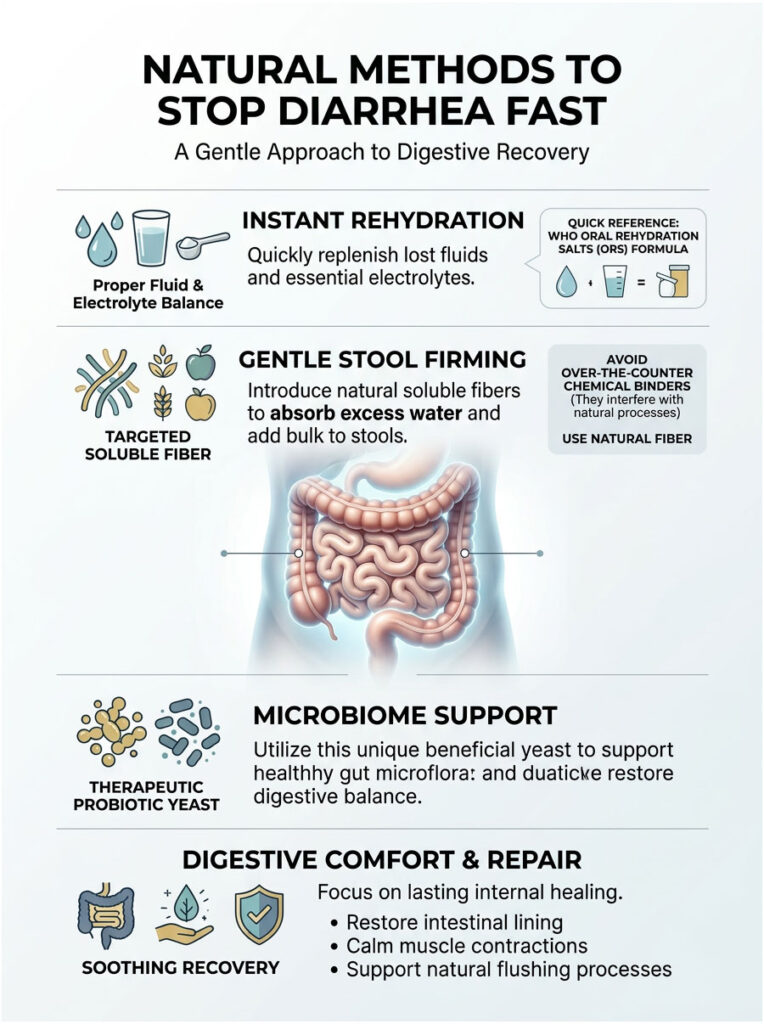
That is what this guide is all about. I will walk you through how to restore your intestinal lining, calm those painful muscle contractions, and replace lost electrolytes quickly, all using evidence-based natural methods.
Quick Answer: If you need to know what stops diarrhea fast naturally, start with the World Health Organization’s Oral Rehydration Salts (ORS) formula to prevent dehydration. Follow up with a dose of the probiotic yeast Saccharomyces boulardii. Then eat soluble fiber sources like psyllium husk or apple pectin from the BRAT diet to absorb excess water and firm up your stool within 12 to 24 hours.
Key Statistics on Gastrointestinal Health
- Acute diarrheal infections affect over 179 million people in the United States every year (Source: CDC, 2023).
- Proper Oral Rehydration Salts can prevent up to 93 percent of severe dehydration cases during acute episodes.
- Clinical trials show therapeutic yeast shortens acute bowel distress by 24 to 48 hours.
- Viral gastroenteritis causes nearly 70 percent of all acute infectious cases in adults.
- Untreated episodes can lead to severe hypokalemia, dangerously low potassium, within just 48 hours.
- Post-infectious irritable bowel syndrome develops in roughly 10 to 30 percent of patients after a serious gut infection.
Why Your Body Triggers Diarrhea in the First Place
Diarrhea is unpleasant, embarrassing, and exhausting. But from a medical perspective, it is actually a brilliant defense mechanism. Your body detects a threat, whether that is a virus, bacteria, or irritating food, and floods your lower digestive tract with water to wash the invader out.
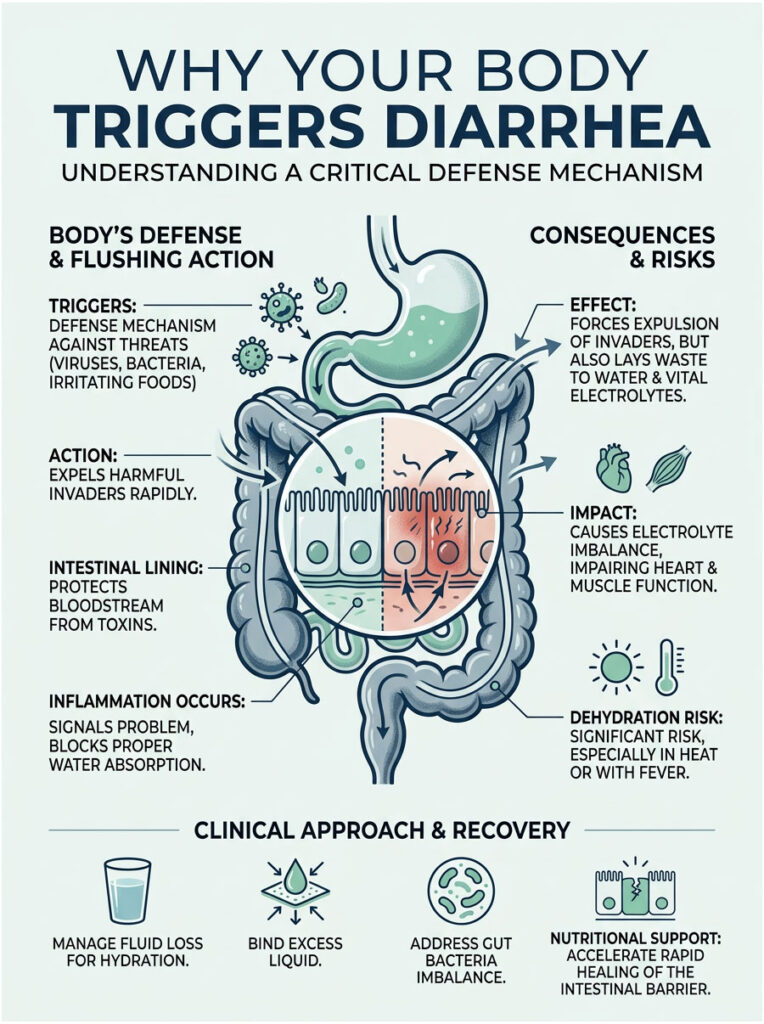
This flushing action has kept humans alive for thousands of years. The problem is that when your body pushes water out, it also pushes out vital electrolytes like sodium and potassium. Lose too many of those, and your heart and muscles stop working the way they should.
So finding fast natural relief is not just about comfort. It is about protecting your organs from shock. Dehydration creeps up quickly, especially in warm climates or if you are already running a fever.
How Doctors Approach This Clinically
In practice, the approach comes down to three priorities. First, manage fluid loss immediately. Second, bind the excess liquid pooling in the colon. Third, address the root cause, which is usually a temporary imbalance in gut bacteria.
Your intestinal lining is only one cell thick. This fragile barrier separates your bloodstream from the toxic contents inside your gut. When pathogens attack it, they cause intense localized inflammation. That swelling prevents your cells from absorbing water normally, and you end up with watery stools.
Healing this barrier is the primary objective. When you provide the right nutrients, damaged intestinal cells can repair themselves in hours. That rapid cellular turnover is the real secret to natural recovery.
Understanding What Type of Diarrhea You Have
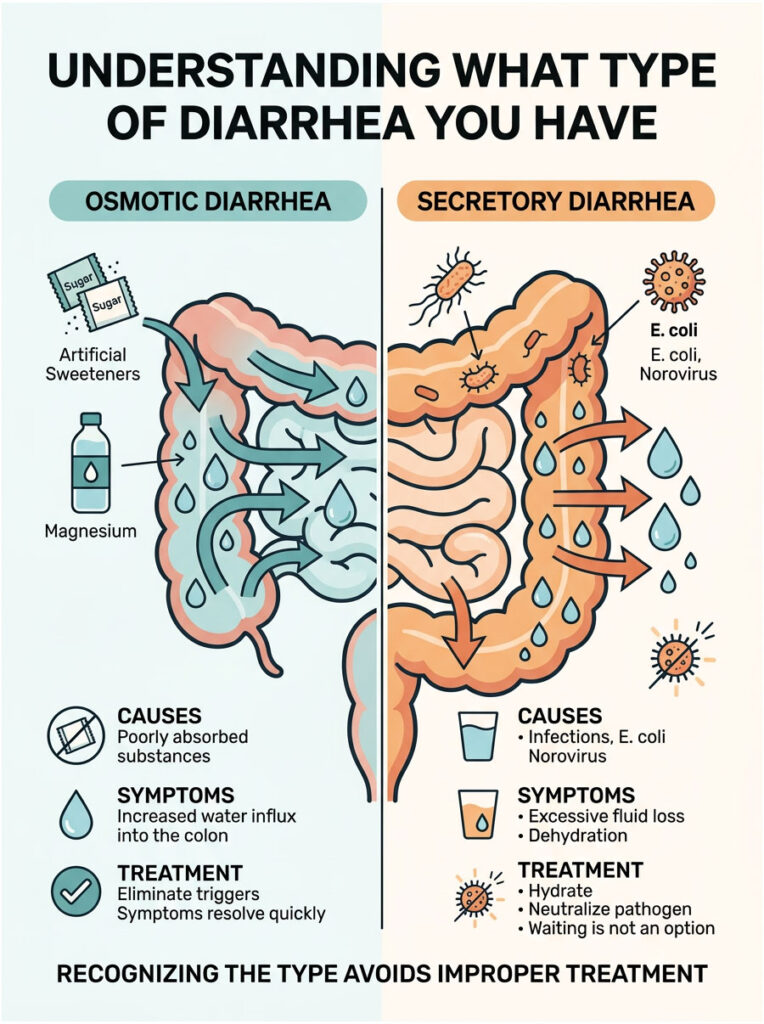
Not all diarrhea works the same way. Treating the wrong type with the wrong remedy can actually make things worse. Here is how to tell the difference between the two most common types.
Osmotic Diarrhea
This happens when you eat something your body simply cannot digest or absorb properly. Common triggers include artificial sweeteners, high-dose magnesium supplements, and excessive vitamin C.
Because these substances sit unabsorbed in your intestines, they draw water from your bloodstream directly into your colon. The sudden influx overwhelms your colon’s ability to handle it, and you end up rushing to the bathroom.
The fix for osmotic diarrhea is straightforward. Stop eating whatever is causing it, and symptoms usually clear within a day.
Secretory Diarrhea
This type is usually caused by an active infection. Bacteria like E. coli or viruses like Norovirus latch onto the cells lining your gut (called enterocytes) and release toxins. Those toxins force your cells to pump out massive amounts of water and chloride.
According to National Institutes of Health data, secretory diarrhea from viral gastroenteritis is the most common form of acute bowel trouble. The volume of fluid lost during these episodes can be staggering.
If you have secretory diarrhea, you cannot just wait it out. You need to actively fight dehydration and neutralize the pathogen to avoid serious complications.
How Peristalsis and Gut Cell Health Play a Role
Your digestive tract is a long, muscular tube that moves food along through rhythmic contractions called peristalsis. Normally, this movement is slow and steady, giving your cells plenty of time to absorb nutrients and water.
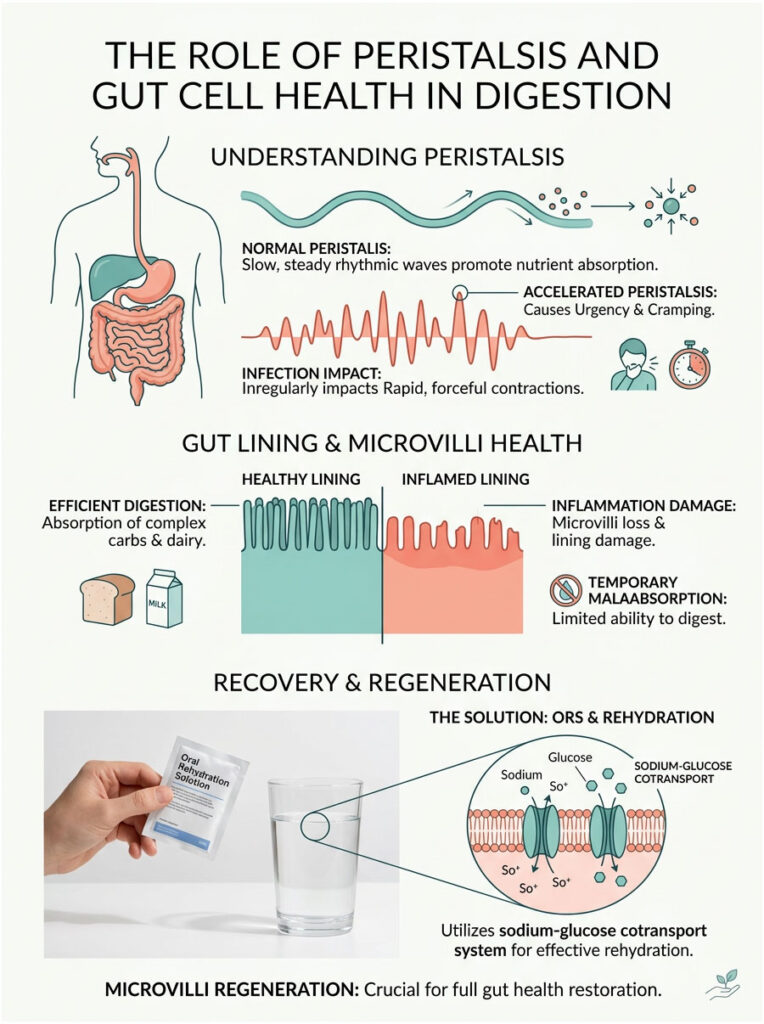
During an infection, that process shifts into overdrive. Your nervous system detects a threat and triggers rapid, forceful contractions designed to expel gut contents as fast as possible. This leaves zero time for absorption. The result is sudden, uncontrollable urgency paired with sharp cramping.
On top of that, the physical lining of your gut becomes inflamed and damaged. Tiny structures on your cells called microvilli get blunted or sheared off. This temporarily destroys your ability to digest complex carbohydrates and dairy. That is why drinking milk during an episode almost always makes things worse, your body simply lacks the enzymes to process lactose until those microvilli regenerate.
Clinical Insight: Imagine tiny pumps on the surface of your gut cells. Each pump needs exactly one molecule of sodium and one molecule of glucose to activate. When they fire, they pull water from your intestines into your bloodstream. This sodium-glucose cotransport system is the biological basis for life-saving oral rehydration.
What Stops Diarrhea Fast Naturally: 7 Clinically Backed Remedies
Now for the practical part. Based on clinical testing and established medical guidelines, here are seven powerful natural treatments that can stabilize your gut quickly. No prescription needed.
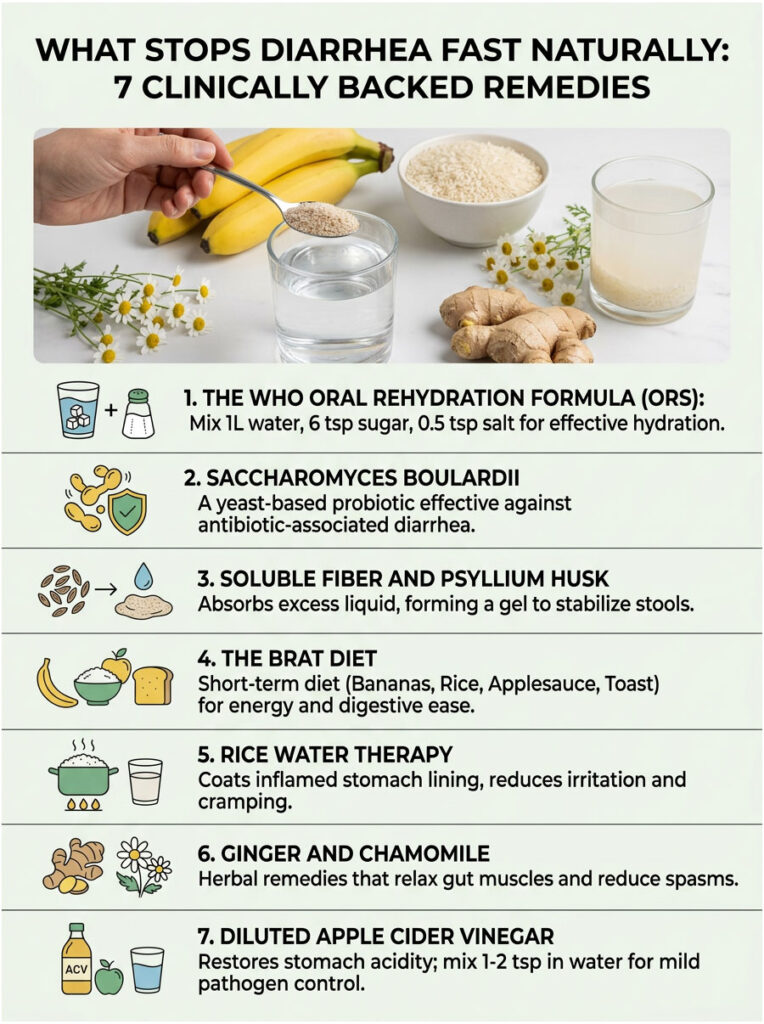
1. The WHO Oral Rehydration Formula (Precision Hydration)
The single biggest mistake people make is rehydrating with plain water. Surprisingly, plain water can actually worsen osmotic diarrhea. It dilutes sodium levels in your blood, which can create a dangerous condition called hyponatremia.
You need the exact right ratio of salt to sugar to activate those cellular pumps in your gut. The World Health Organization spent decades perfecting this formula, and it is considered one of the most important medical advances of the 20th century.
Here is the good news. You can make it at home.
Mix one liter of clean water with six level teaspoons of sugar and half a teaspoon of salt. Stir until dissolved. Sip about half a cup every fifteen minutes throughout the day. This mixture outperforms every commercial sports drink on the market for rehydration during illness.
2. Saccharomyces Boulardii for Gut Microbiome Restoration
After hydration, my next recommendation is almost always Saccharomyces boulardii. Unlike standard probiotics such as Lactobacillus, this is a therapeutic yeast. Because it is a yeast and not a bacterium, antibiotics do not affect it at all, making it perfect for antibiotic-associated diarrhea.
It survives stomach acid easily, reaches the lower intestines intact, and gets to work fast. This yeast secretes proteins that break down dangerous toxins produced by harmful bacteria like Clostridium difficile. It also stimulates your gut to produce secretory IgA, a key antibody that fights viral infections.
The American Gastroenterological Association supports its use for acute gastrointestinal distress. It is also a top-tier option for preventing post-infectious irritable bowel syndrome, a chronic condition that develops when the microbiome never fully recovers from the initial infection.
3. Soluble Fiber and Psyllium Husk
Taking fiber for loose stools sounds counterintuitive. Most people think of fiber as something that gets things moving. But there is a critical difference between fiber types.
Insoluble fiber (found in kale, wheat bran, and fruit skins) acts like a rough broom that speeds things up. Avoid it completely during diarrhea.
Soluble fiber works the opposite way. Think of it like a dry sponge. It enters your watery colon, absorbs excess liquid, and forms a thick, soothing gel. This gel slows down hyperactive intestinal motility and reduces that awful sense of urgency.
The best source of pure soluble fiber is psyllium husk powder. Mix half a teaspoon into a small glass of room-temperature water and drink it immediately before it thickens. Within hours, you should notice your stool becoming more formed and manageable.
4. The BRAT Diet and Apple Pectin
The BRAT diet, Bananas, Rice, Applesauce, and Toast, has been a go-to remedy for decades. While doctors no longer recommend following it for extended periods, it remains an excellent short-term stabilizer.
The real power lies in the biochemistry behind each food:
- Bananas are loaded with easily digestible potassium, which is critical because diarrhea causes rapid potassium loss.
- Unsweetened applesauce contains apple pectin, a soluble fiber that coats your inflamed colon lining, absorbs water, and acts as a natural binding agent.
- Plain white rice and toast provide simple carbohydrates your body can process without triggering more digestive distress.
Stick to this diet strictly for the first 24 hours of your illness. These foods give your body energy to fight the infection without overworking your digestive enzymes.
5. Rice Water Therapy
This ancient remedy still works remarkably well. Rice water is simply the starchy liquid left after boiling plain white rice. It contains complex carbohydrates (amylose and amylopectin) that coat the inflamed lining of your stomach and intestines on contact.
This coating reduces irritation almost immediately and signals your enteric nervous system to slow down its aggressive contractions. It works like a gentle, natural antispasmodic for your entire digestive tract.
How to make it: Boil one cup of plain white rice in three cups of water for about 15 minutes. Strain out the rice and save the cloudy water. Let it cool, add a small pinch of salt, and sip slowly.
Many patients report a noticeable reduction in cramping within an hour of drinking the first cup.
6. Ginger and Chamomile (Herbal Antispasmodics)
Your gut contains millions of sensitive neurons, often called the “second brain.” During infection, this localized nervous system goes into overdrive, causing the painful spasms and cramps you feel.
Ginger contains active compounds called gingerols that bind to serotonin receptors in your gut. By blocking these receptors, ginger naturally reduces nausea, vomiting, and erratic intestinal motility.
Chamomile tea is equally effective. It contains a flavonoid called apigenin that binds to receptors in both your brain and gut at the same time. It works as a mild, natural relaxant for your overworked digestive muscles. Sipping warm chamomile tea helps soothe the vagus nerve and ease the cramping tied to rapid peristalsis.
7. Diluted Apple Cider Vinegar for Mild Pathogen Control
Apple cider vinegar gets a lot of attention in natural health circles, and for mild food poisoning cases, there is some logic behind it. Raw, unfiltered vinegar has natural antimicrobial properties thanks to its high acetic acid content.
It can help restore the natural acidic pH of your stomach, which creates an environment where bad bacteria struggle to thrive. This is especially useful if an infection has triggered bacterial overgrowth in the small intestine, leading to excessive gas and explosive bowel movements.
Important caution: Never drink apple cider vinegar straight. Mix one to two teaspoons into a large glass of water. Have it once or twice a day with a small amount of food. Too much acid on an already inflamed stomach lining will make things worse, not better.
Why Sports Drinks Are the Wrong Choice
Many people reach for colorful sports drinks when they feel dehydrated. This is a common and costly mistake. Sports drinks are designed for healthy athletes losing water through sweat, not for sick patients losing electrolytes through the bowel.
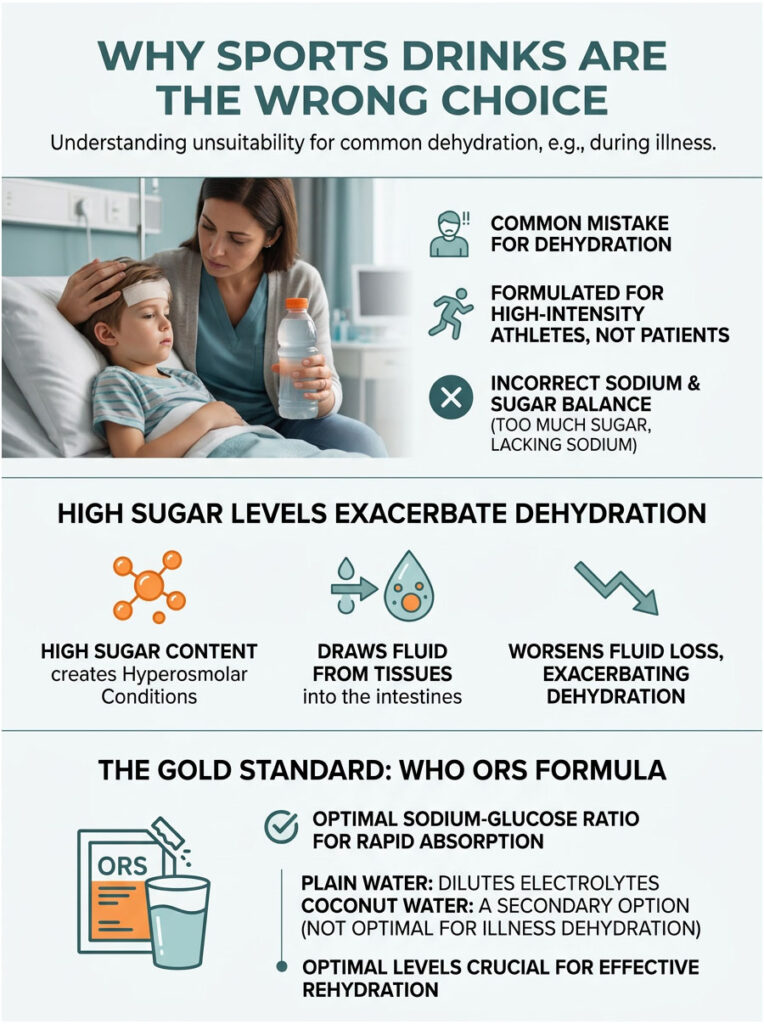
They contain too much sugar and too little sodium. The high sugar concentration makes them hyperosmolar, meaning unabsorbed sugar actually pulls more water into your colon through osmosis, worsening your symptoms.
This is exactly why the WHO formula is the gold standard.
Rehydration Method Comparison
| Method | Sodium Level | Sugar/Glucose Level | Effect on Diarrhea | Recommendation |
|---|---|---|---|---|
| WHO ORS Formula | Optimal (75 mEq/L) | Optimal (75 mmol/L) | Highly effective | Gold standard |
| Sports Drinks | Low (~20 mEq/L) | Very high (>250 mmol/L) | Worsens symptoms | Not recommended |
| Plain Water | None | None | Dilutes electrolytes | Only with salty food |
| Coconut Water | Low sodium, high potassium | Moderate | Helps with low potassium | Good secondary option |
How Soluble Fiber Heals Your Gut at the Cellular Level
When beneficial bacteria in your colon ferment soluble fiber, they produce short-chain fatty acids. The most important of these is butyrate, which serves as the primary fuel source for your colon cells.
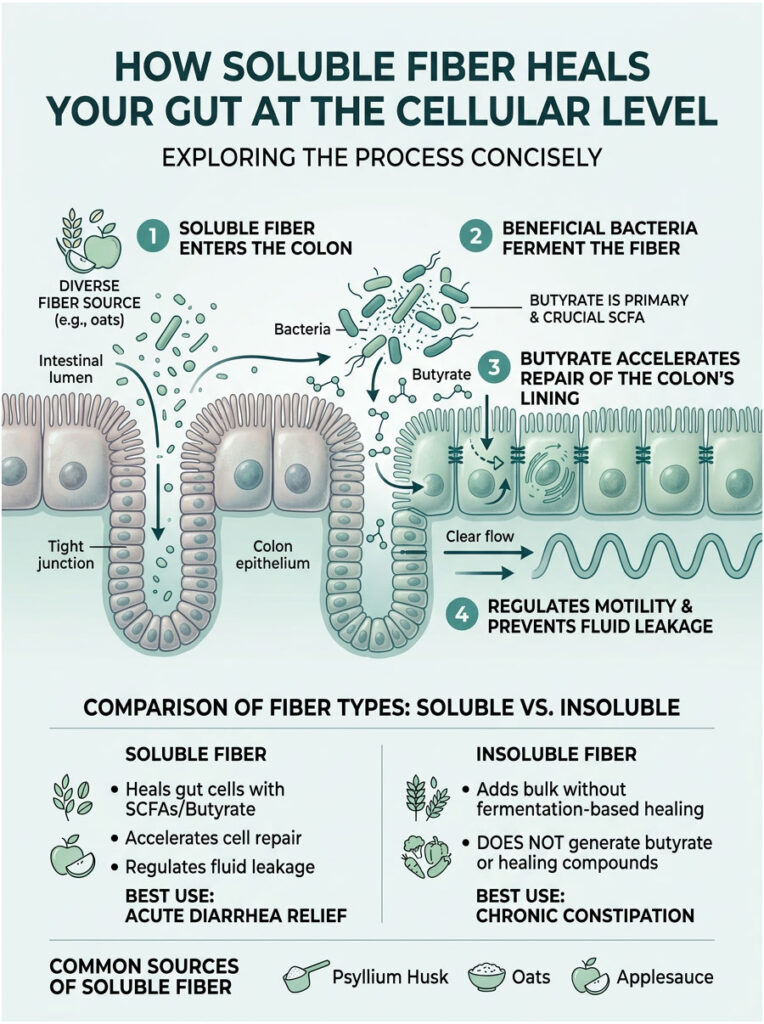
When your colon has plenty of butyrate, it repairs its damaged lining much faster. This process naturally regulates motility and stops fluid leakage at the cellular level. Insoluble fiber does not produce these healing compounds in the same way.
Fiber Comparison Chart
| Fiber Type | How It Works | Effect on Motility | Common Sources | Best Use |
|---|---|---|---|---|
| Soluble | Absorbs water, forms gel | Slows transit time | Psyllium husk, oats, applesauce | Acute diarrhea relief |
| Insoluble | Adds bulk, mildly irritating | Speeds transit time | Wheat bran, raw kale, fruit skins | Chronic constipation |
| Prebiotic | Feeds beneficial bacteria | Normalizes motility over time | Green bananas, chicory root | Post-infection recovery |
What Clinical Research Shows About Probiotic Yeast
A peer-reviewed study in a major gastroenterology journal tested patients with acute secretory diarrhea. Half received standard care alone, while the other half received standard care plus Saccharomyces boulardii.
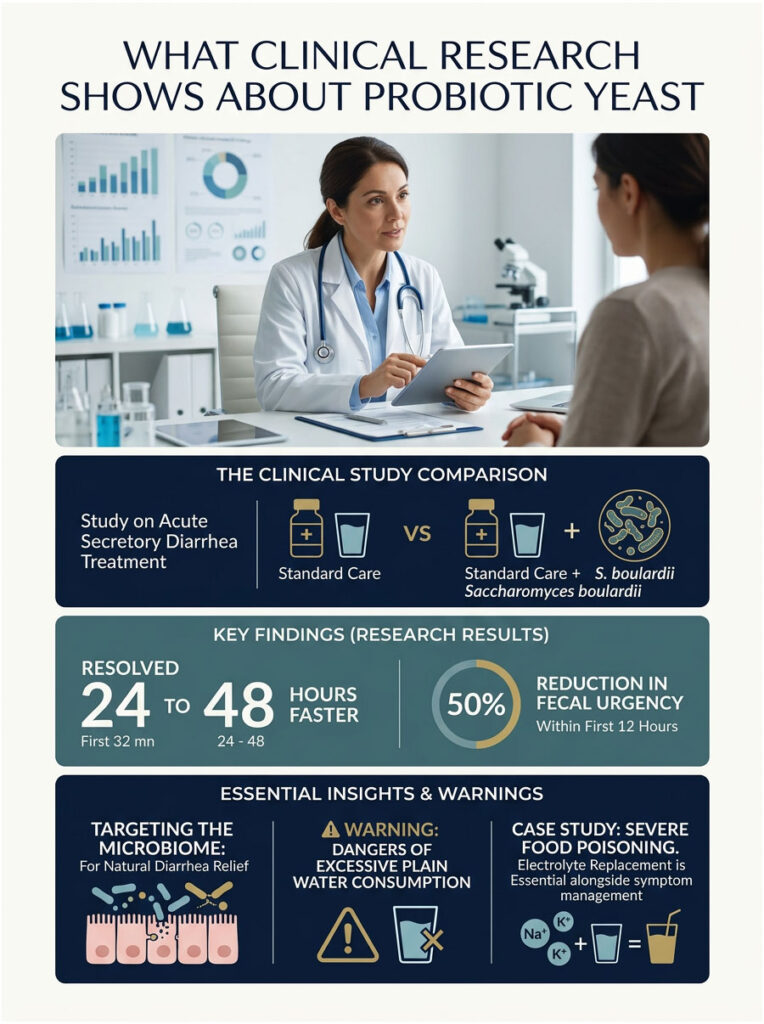
The results were striking. The yeast group saw symptoms resolve 24 to 48 hours faster, with a 50 percent reduction in fecal urgency within the first 12 hours. This confirms that targeting the microbiome is a critical part of what stops diarrhea fast naturally. Hydration alone is not enough.
A Real-World Warning About Plain Water
One of my patients, a young man, tried to manage severe food poisoning by drinking over two gallons of plain tap water in 48 hours. He ended up in the emergency room with severe muscle cramps, a racing heart, and extreme fatigue. Blood work showed severe hypokalemia, dangerously low potassium, caused entirely by flushing electrolytes with plain water.
If he had used the BRAT diet or proper oral rehydration salts, he could have avoided the hospital. This case shows why electrolyte replacement is just as important as stopping the physical symptoms.
Foods to Strictly Avoid During an Episode
You can take all the right supplements, but if you keep eating the wrong foods, you will keep resetting your recovery. Here are the biggest triggers to cut immediately.
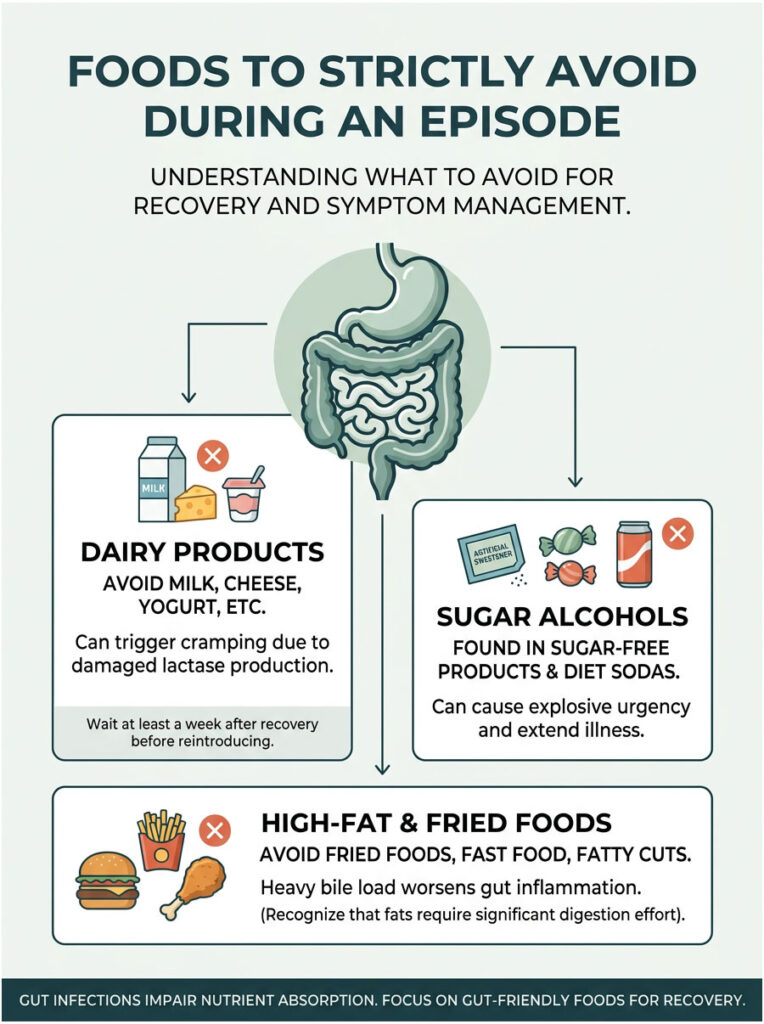
Dairy products. During gut infections, the tips of your intestinal villi get damaged. These tips produce lactase, the enzyme you need to digest milk. Without it, even a splash of milk in your tea can trigger hours of cramping. Wait at least a week after recovery before reintroducing dairy.
Sugar alcohols. Sorbitol, xylitol, and mannitol are found in sugar-free gums, diet sodas, and low-calorie snacks. Your body cannot absorb them properly. They sit in your gut, pull in water, and trigger explosive urgency. Many patients accidentally extend their illness by sipping diet sodas to “settle” their stomachs.
High-fat and fried foods. Fats require a lot of bile to digest. When you eat greasy food, your gallbladder dumps a heavy load of bile into your intestines. In an inflamed gut, unabsorbed bile acids act as a powerful natural laxative and make everything significantly worse.
Your 24-Hour Rapid Recovery Protocol
When symptoms hit, you need a clear plan, not a random list of remedies. Here is the step-by-step protocol I give my patients.
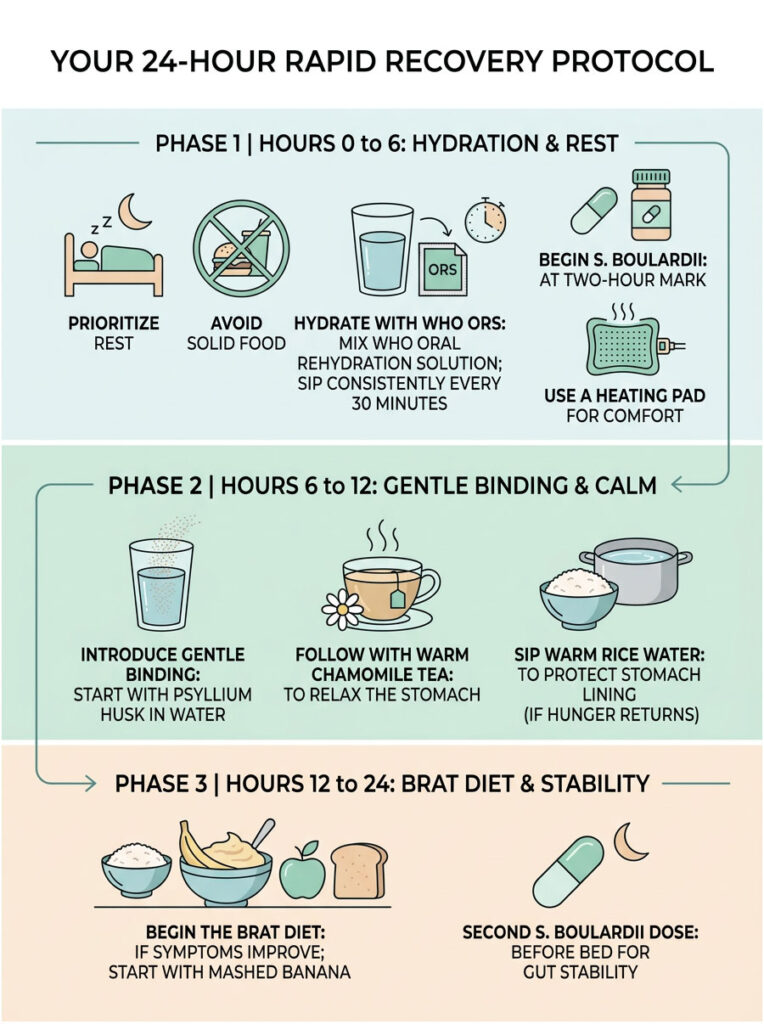
Hours 0 to 6: Focus Entirely on Hydration
Do not eat solid food during this window. Your gut needs total rest.
Mix a batch of the WHO oral rehydration solution and sip four ounces every thirty minutes. If nausea is severe, take smaller sips but stay consistent. At the two-hour mark, take your first capsule of Saccharomyces boulardii to give it time to reach your colon and start working. Rest with a warm heating pad on your abdomen.
Hours 6 to 12: Introduce Gentle Binding
If vomiting has stopped and you can keep fluids down, start with half a teaspoon of psyllium husk in water. Drink it quickly before it gels. Follow with a cup of warm chamomile tea to relax your vagus nerve and ease abdominal spasms.
Hunger may start returning. Do not eat a heavy meal. Instead, sip warm rice water to coat and protect your stomach lining.
Hours 12 to 24: Carefully Reintroduce Solid Food
If bowel movements have slowed, begin the BRAT diet. Start with half a ripe, mashed banana for potassium. Wait two hours. If no cramping occurs, eat a small bowl of plain, unsweetened applesauce. The apple pectin will continue binding excess fluid.
Take your second dose of Saccharomyces boulardii before bed. By morning, your gut should feel notably more stable.
Long-Term Gut Healing After the Acute Phase
Getting through the worst of it is only half the battle. A severe gut infection leaves your intestinal landscape damaged and vulnerable. Think of it like a forest after a wildfire. The flames are out, but the ecosystem is devastated and needs rebuilding.
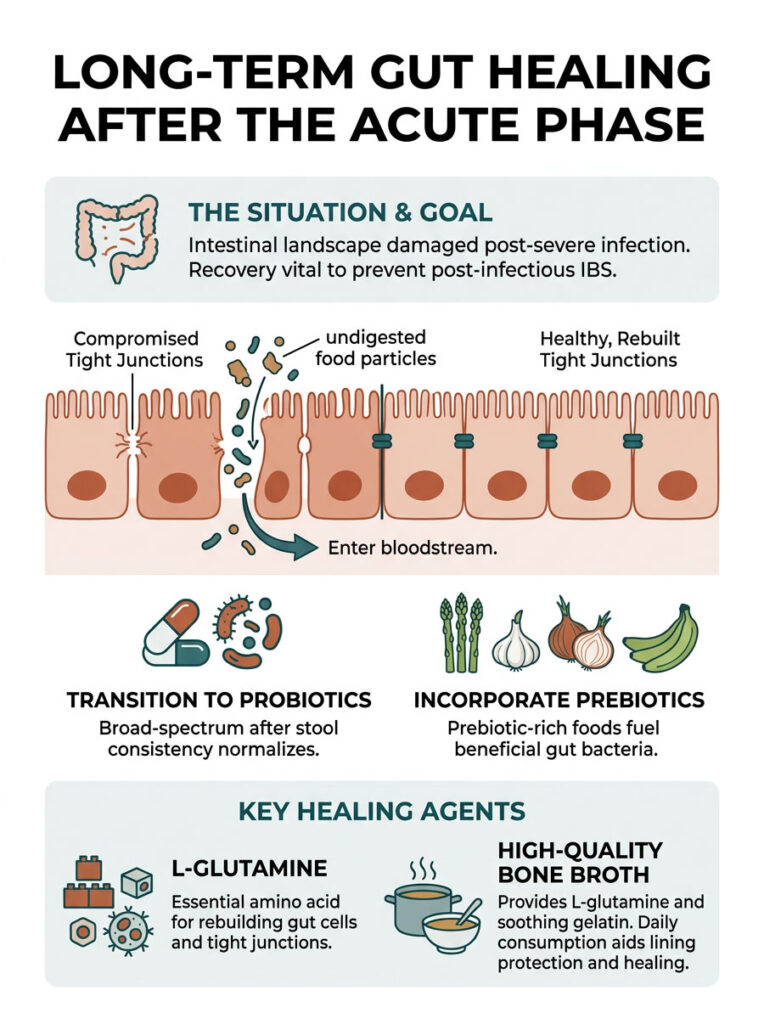
If you skip this recovery phase, you risk developing post-infectious irritable bowel syndrome, a condition that can cause unpredictable bowel habits for months or even years.
Rebuilding Your Microbiome
Once your stool is back to normal consistency, transition from therapeutic yeast to a broad-spectrum bacterial probiotic containing diverse Lactobacillus and Bifidobacterium strains. Take it daily for at least four weeks.
Feed those new bacteria with prebiotic-rich foods like asparagus, garlic, onions, and slightly green bananas. These prebiotics act as fuel for beneficial bacteria, helping them colonize and crowd out any remaining harmful organisms.
Repairing the Gut Barrier
Severe inflammation likely compromised your intestinal tight junctions, the microscopic gatekeepers of your bloodstream. When these stay open, undigested food particles leak into your blood and trigger systemic inflammation.
Your gut cells need the amino acid L-glutamine to rebuild. It is their preferred fuel source. You can get it naturally through high-quality bone broth, which also contains gelatin that soothes and protects your healing gut lining. Drink a warm cup daily for about a month.
Key Takeaways
When you need to know what stops diarrhea fast naturally, remember that it comes down to clinical precision, not guesswork. You are not just blocking a symptom. You are restoring balance to your entire digestive system.
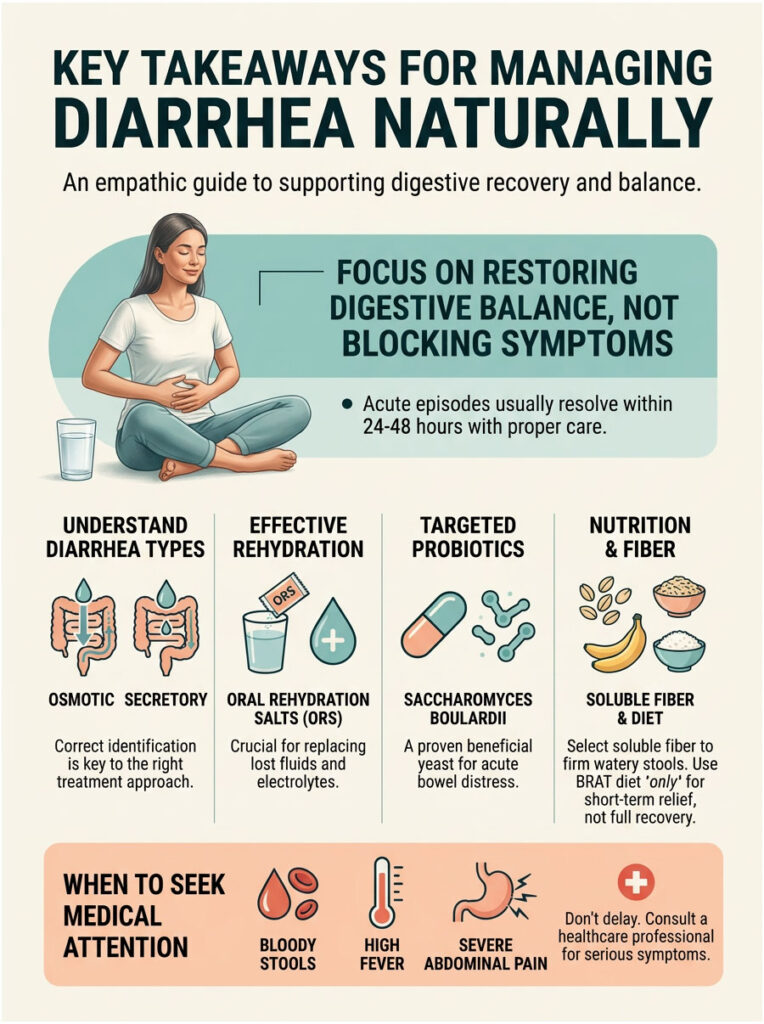
- Hydrate correctly using the WHO ORS formula to prevent dangerous electrolyte imbalances.
- Bind excess fluid with soluble fiber like psyllium husk and apple pectin from the BRAT diet.
- Restore the gut with Saccharomyces boulardii to fight toxins and prevent post-infectious IBS.
- Calm the nervous system with ginger and chamomile tea to ease spasms and cramping.
- Fuel gut cell repair through short-chain fatty acids produced by soluble fiber fermentation.
Follow these steps, and most acute episodes resolve naturally within 24 to 48 hours. You are supporting your body’s own immune response while protecting against the dangerous effects of fluid loss. That is real power over your health, without relying on harsh medications.
Frequently Asked Questions
Why is plain water often ineffective for rapid rehydration during a diarrhea episode?
As a gastroenterologist, I advise against relying solely on plain water because it lacks the precise ratio of electrolytes needed to activate the sodium-glucose cotransport system. In cases of secretory diarrhea, drinking excessive plain water can actually dilute your blood’s sodium levels, leading to a dangerous condition called hyponatremia. To stop dehydration fast, you must use an Oral Rehydration Salts (ORS) formula that provides the specific molecular match required for your enterocytes to absorb fluids effectively.
What is the best probiotic to stop diarrhea fast naturally?
The most clinically effective probiotic for acute bowel distress is the therapeutic yeast Saccharomyces boulardii. Unlike bacterial probiotics, this yeast is resilient against antibiotics and works rapidly to neutralize toxins produced by pathogens like C. difficile. It also stimulates the production of secretory IgA in your gut lining, which helps your immune system fight off viral gastroenteritis and reduces the overall duration of symptoms by 24 to 48 hours.
How can fiber help stop loose stools when it’s usually used for constipation?
It is a common misconception that all fiber speeds up the gut. While insoluble fiber (like wheat bran) increases motility, soluble fiber (like psyllium husk) acts as a high-capacity binding agent. When it reaches the colon, soluble fiber absorbs excess water and transforms into a soothing gel that slows down hyperactive peristalsis. This provides the intestinal muscles with a firm substance to grip, effectively giving form to watery stools within hours.
What is the difference between osmotic and secretory diarrhea?
Osmotic diarrhea occurs when unabsorbed substances, such as artificial sweeteners or magnesium, pull excess water into the colon through osmosis. Secretory diarrhea is typically caused by infections where pathogens force the enterocytes to actively secrete chloride and water. Understanding this distinction is vital; osmotic issues usually resolve by removing the trigger, while secretory cases require active intervention with rehydration salts and binding agents to prevent systemic shock.
Is the BRAT diet still the gold standard for gastrointestinal recovery?
The BRAT diet (Bananas, Rice, Applesauce, Toast) remains a highly effective short-term tool for gut stabilization, though we no longer recommend it for long-term use due to nutritional deficiencies. Its efficacy lies in biochemistry: bananas provide essential potassium to prevent hypokalemia, while the apple pectin in applesauce acts as a powerful natural binder that coats the inflamed mucosal lining and reduces fecal urgency.
How does rice water help soothe an angry digestive tract?
Rice water is an ancient clinical tool rich in starches like amylose and amylopectin. When consumed, these starches provide a protective physical coating for the inflamed intestinal lining, acting as a natural antispasmodic. This simple remedy signals the enteric nervous system to slow down violent muscle contractions, providing rapid relief from the painful cramping associated with increased intestinal motility.
Can herbal teas like chamomile and ginger actually stop intestinal spasms?
Yes, specific herbal compounds target the gut-brain axis to reduce cramping. Ginger contains gingerols that block serotonin receptors in the gut to curb nausea and slow motility. Chamomile contains the flavonoid apigenin, which binds to receptors that act as a natural tranquilizer for the digestive muscles. These antispasmodics help calm the ‘second brain’ in your gut, reducing the frequency of urgent bowel movements.
Why should I avoid dairy products until my bowel movements return to normal?
During a severe gut infection, the microscopic tips of your intestinal villi—where the enzyme lactase is produced—are often sheared off or damaged. This creates a state of temporary, infection-induced lactose intolerance. Consuming dairy during this window will lead to undigested lactose sitting in the gut, which creates an osmotic load that worsens diarrhea and causes significant gas and bloating.
Is apple cider vinegar safe to use for food poisoning?
Apple cider vinegar can be beneficial due to its high acetic acid content, which has antimicrobial properties that can help sanitize the upper digestive tract. However, it must be used with caution; it should always be heavily diluted (1-2 teaspoons in a large glass of water) to avoid irritating the already inflamed gastric mucosa. It is most effective for mild bacterial overgrowth rather than viral infections.
What are the risks of using commercial sports drinks for diarrhea recovery?
Commercial sports drinks are often hyperosmolar, meaning they contain far too much refined sugar and not enough sodium for a sick patient. When this high sugar concentration hits an inflamed gut, it can actually pull more water out of your bloodstream and into your intestines, worsening osmotic diarrhea. For clinical recovery, the World Health Organization’s specific ORS ratio is much safer and more effective.
How can I prevent post-infectious Irritable Bowel Syndrome (IBS) after a stomach bug?
To prevent post-infectious IBS, you must focus on rebuilding the gut barrier and microbiome after the acute phase. I recommend transitioning to a broad-spectrum probiotic and consuming L-glutamine-rich foods like bone broth to repair the intestinal tight junctions. This ‘reforesting’ of the gut prevents long-term microscopic inflammation and helps normalize the gut-brain axis after the initial trauma of an infection.
When does diarrhea transition from a home-treatable issue to a medical emergency?
You should seek immediate medical intervention if you experience ‘red flag’ symptoms: bloody stools, a high fever over 102°F, severe localized abdominal pain, or signs of advanced dehydration such as dark urine, extreme dizziness, and a racing heart. These symptoms may indicate a more serious bacterial infection or severe electrolyte imbalances like hypokalemia that require intravenous fluids and professional monitoring.
Disclaimer
This article is for informational purposes only and does not constitute medical advice. Diarrhea can lead to severe dehydration and may be a symptom of serious underlying conditions. Always consult a board-certified gastroenterologist or qualified healthcare professional before beginning new treatments, especially if you experience “red flag” symptoms like high fever, bloody stool, or extreme dizziness.
References
- World Health Organization (WHO) – who.int – Official guidelines on the production and clinical use of Oral Rehydration Salts (ORS) for fluid loss.
- Centers for Disease Control and Prevention (CDC) – cdc.gov – Annual data on the burden of acute gastrointestinal illness and infectious disease statistics.
- American Gastroenterological Association (AGA) – gastro.org – Clinical practice guidelines regarding the use of probiotics and yeast in managing acute gut disorders.
- National Institutes of Health (NIH) – nih.gov – Research on the efficacy of rice water and the sodium-glucose cotransport system in enterocytes.
- Journal of Clinical Gastroenterology – journals.lww.com – Peer-reviewed study on the efficacy of Saccharomyces boulardii for reducing the duration of acute diarrhea.
- Mayo Clinic – mayoclinic.org – Expert guidance on dietary triggers and foods to avoid during acute digestive distress episodes.