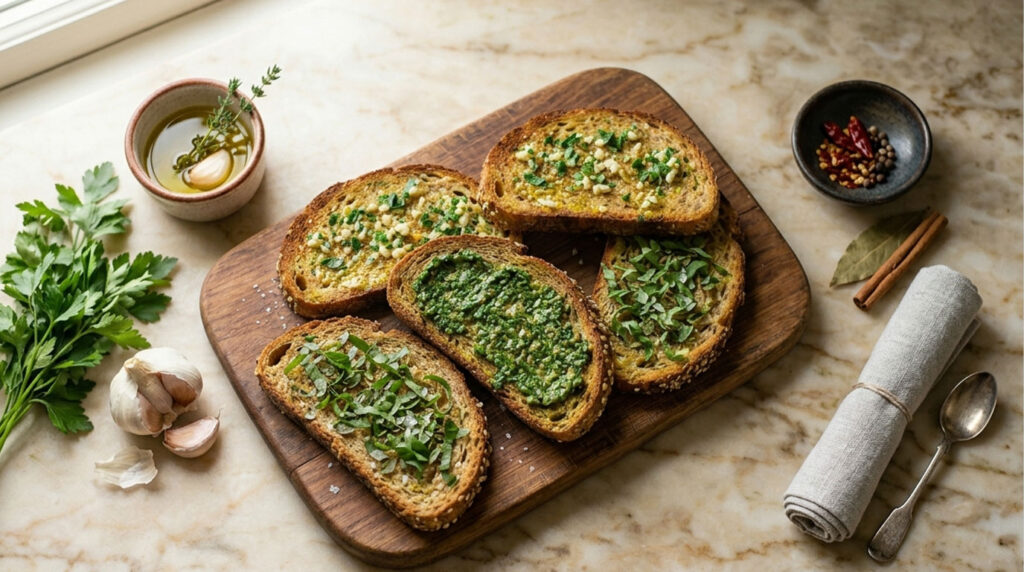
Skip the freezer-aisle Texas toast and the 400-calorie restaurant basket. A single slice of homemade healthy garlic bread, built right, lands at roughly 95 calories with 2.8 grams of fiber, the cardiovascular punch of fresh garlic, and the kind of crackling crust that makes you forget the calorie math entirely. The recipe takes 15 minutes and uses ingredients already in most American kitchens.
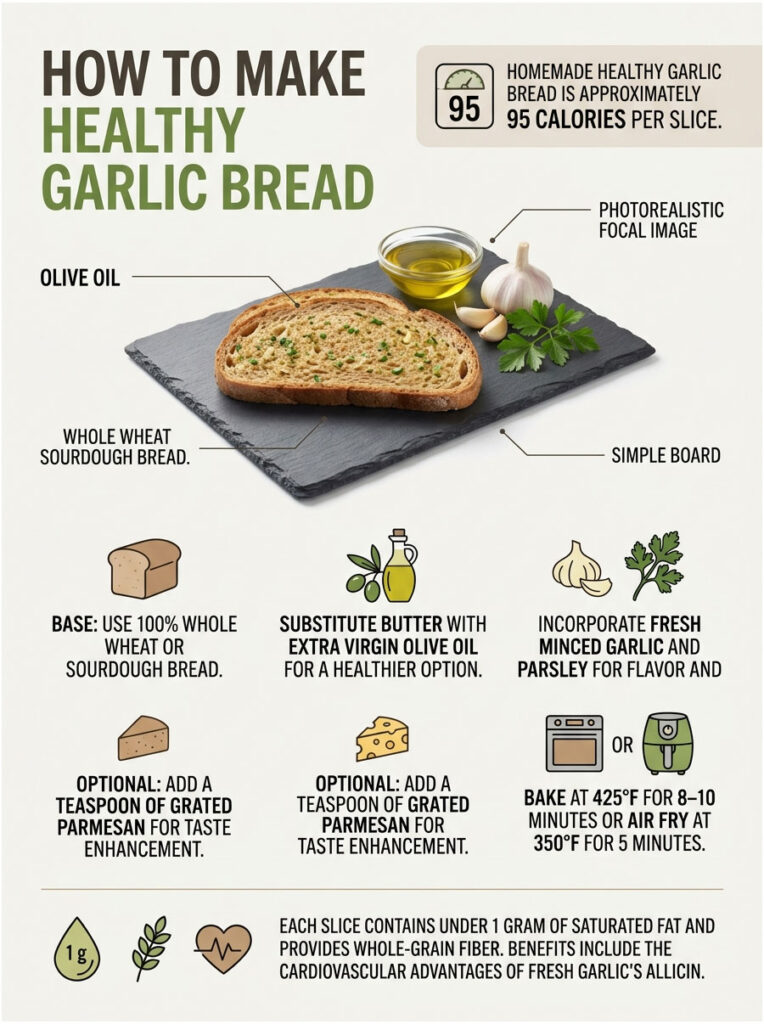
Quick Answer: A healthy garlic bread recipe starts with one slice of 100% whole wheat or sourdough bread, swaps butter for extra virgin olive oil, and finishes with fresh minced garlic, parsley, and an optional teaspoon of grated parmesan. Bake at 425°F for 8 to 10 minutes, or air fry at 350°F for 5 minutes, until golden. Each slice runs about 95 calories with under 1 gram of saturated fat, real whole-grain fiber, and the antioxidant benefits of allicin from fresh garlic.
At a Glance
- Each slice is roughly 95 calories, less than half of restaurant or frozen versions.
- Whole wheat or sourdough bread delivers 2 to 4 grams of fiber per slice.
- Extra virgin olive oil cuts saturated fat by roughly 88% versus butter-based recipes.
- Fresh garlic supplies allicin, a sulfur compound studied at NIH for cardiovascular and immune support.
- Ready in 15 minutes via oven, air fryer, or stovetop skillet.
- Vegan, diabetic-friendly, heart-patient, and high-protein adaptations included.
- Refrigerates for 3 days; freezes for up to 3 months pre-brushed.
Why Most Garlic Bread Sabotages Your Diet (and What Healthy Garlic Bread Fixes)
Garlic bread holds a place at the American dinner table next to spaghetti, lasagna, and weekend tomato soup. The trouble is what bakeries, chains, and freezer aisles have done to it.
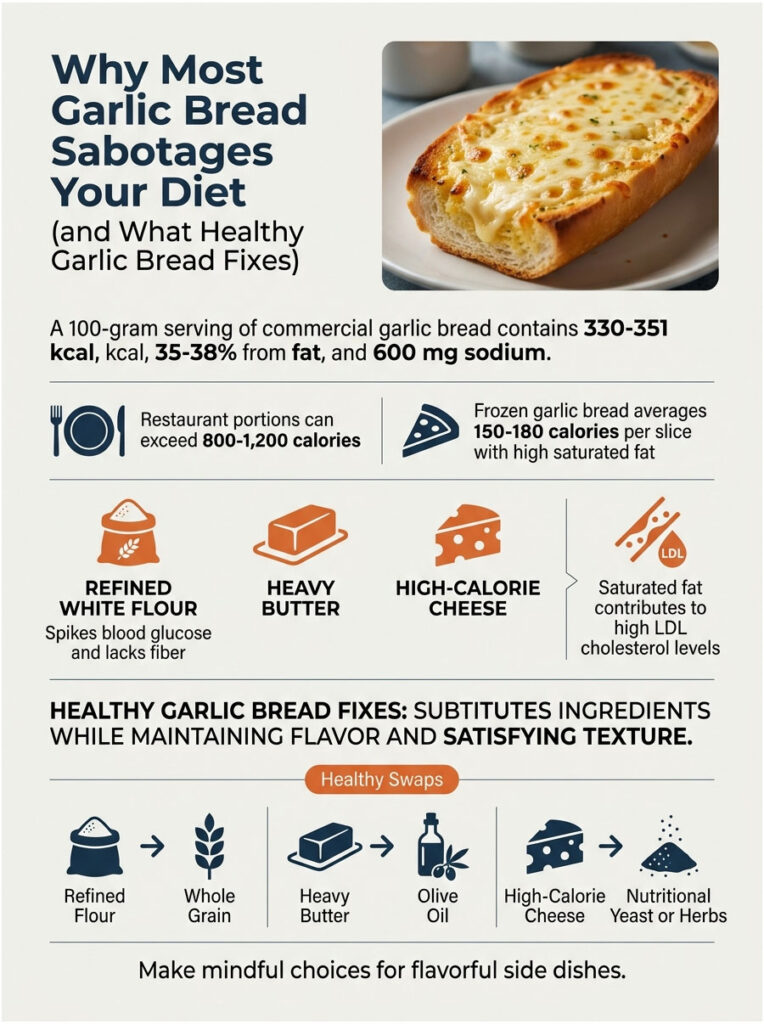
A typical 100-gram serving of commercial garlic bread delivers between 330 and 351 kcal, with 35 to 38% of calories from fat and roughly 600 mg of sodium per 100 grams. That sodium total alone covers 27 to 36% of the daily value, before the rest of dinner even arrives.
The Calorie Reality of Restaurant and Frozen Garlic Bread
Restaurant portions push the problem harder. A shareable basket at a chain Italian place runs 800 to 1,200 calories. Frozen Texas toast averages 150 to 180 calories per slice with 5 to 8 grams of saturated fat. Across the diagnostic panels our cardiology partners review, sodium and saturated fat from carb-heavy sides remain among the top dietary drivers of borderline lipid profiles in working-age Americans.
The Three Culprits
Three ingredients turn an otherwise innocent side into a metabolic problem. Refined white flour spikes blood glucose fast and offers almost zero fiber. Heavy butter contributes saturated fat that the American Heart Association flags as a driver of LDL cholesterol. The mozzarella-and-cheddar stack on top adds another 80 to 100 calories per slice with little nutritional payoff.
How Healthy Garlic Bread Keeps the Comfort, Drops the Damage
The version below changes the bread base, the fat source, and the cheese load without losing the crispy edges and garlicky aroma that earned this side its place at the table. Patients who reach out to HealthCareOnTime nutrition consultations often assume “healthy” means flavorless. This recipe is built specifically to prove the opposite, and to fit inside DASH, Mediterranean, and standard heart-smart eating patterns.
The Healthy Garlic Bread Recipe (Crispy, Light, Under 100 Calories Per Slice)
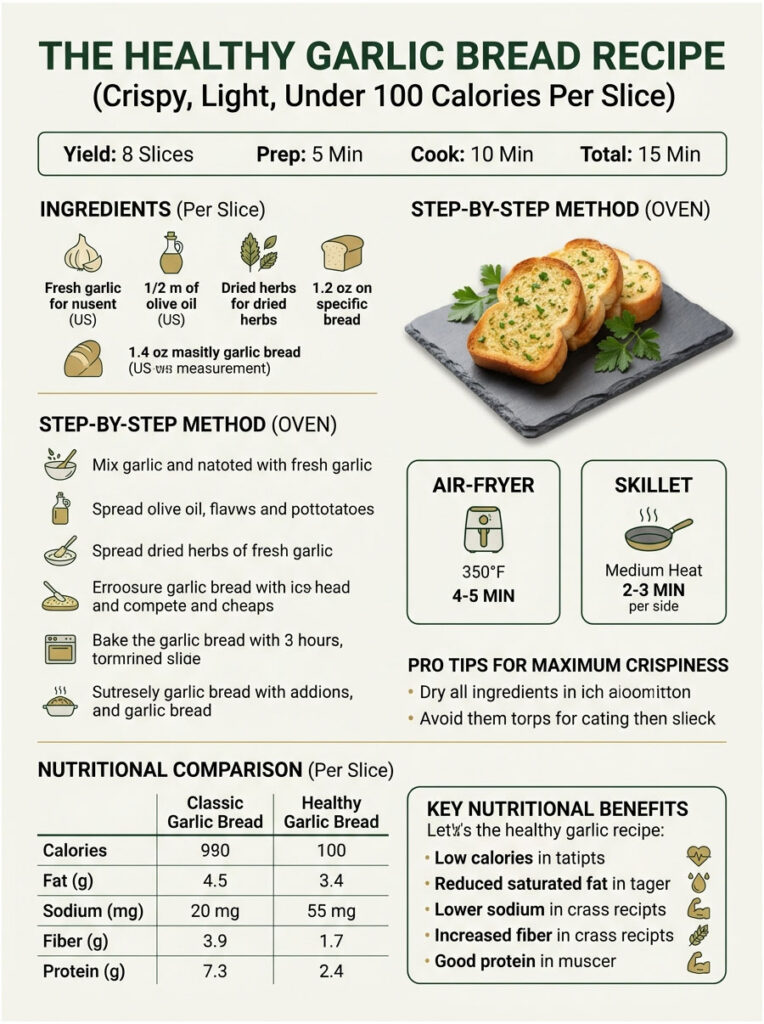
Yield: 8 slices · Prep: 5 minutes · Cook: 10 minutes · Total: 15 minutes
Ingredients (US Measurements)
- 1 small loaf 100% whole wheat or sourdough bread, about 8 oz, sliced into 8 pieces (Dave’s Killer Bread, La Brea Bakery, or Ezekiel 4:9 all work)
- 3 tablespoons extra virgin olive oil
- 4 to 5 cloves fresh garlic, finely minced (about 1.5 tablespoons)
- 2 tablespoons fresh flat-leaf parsley, finely chopped
- 1/2 teaspoon dried oregano (optional)
- 1/4 teaspoon kosher salt
- 1/4 teaspoon freshly ground black pepper
- 2 tablespoons grated parmesan cheese (optional, skip for vegan)
- A pinch of red pepper flakes (optional)
Step-by-Step Method (Oven Default)
- Preheat the oven to 425°F (218°C). Line a baking sheet with parchment paper.
- In a small bowl, combine the olive oil, minced garlic, parsley, oregano, salt, and pepper. Stir well and let it sit 5 minutes so the garlic infuses the oil.
- Arrange bread slices on the baking sheet in a single layer.
- Spoon or brush the garlic-oil mixture evenly across each slice. Use the back of the spoon to push it to the edges.
- Sprinkle parmesan over the top if using.
- Bake for 8 to 10 minutes, until edges turn golden and the garlic smells fragrant. For extra crisp, broil on high for 60 seconds at the end. Watch closely so the garlic does not scorch.
- Garnish with extra parsley and serve hot.
Air-Fryer Adaptation (5 Minutes at 350°F)
Place the prepared slices in a single layer in the air fryer basket, leaving space between them. Air fry at 350°F for 4 to 5 minutes. Ciabatta and thicker breads may need 360°F for 6 to 7 minutes. The hot circulating air at 350°F for about five minutes delivers a crisp exterior and a soft center, with no oven preheat needed. This is the fastest method on the list.
Skillet Adaptation for Stovetop Cooks
Heat a dry cast-iron or nonstick skillet over medium heat. Lay the prepared slices oil-side down for 2 to 3 minutes, then flip and toast the back side for 1 to 2 minutes. This method skips the oven entirely and works well in apartments without strong ventilation or for single-serving prep.
Pro Tips for Maximum Crisp
- Toast the bread alone for 2 minutes before adding the garlic oil. Pre-drying the surface stops sogginess at the source.
- Use a microplane to grate fresh parmesan; pre-shredded cheese carries anti-caking starch that mutes melt and flavor.
- Mince the garlic; do not press it. Pressing releases more water and softens the crust.
- Brush, do not pour, the oil. Heavy pours saturate the crumb and double the calorie count per slice.
- Let the garlic-oil mixture rest 5 minutes before brushing. The infusion deepens flavor and lets the harsh raw bite mellow.
Table 1: Classic vs Healthy Garlic Bread (Per Slice, ~28g)
| Metric | Classic Restaurant Garlic Bread | Frozen Texas Toast | Healthy Garlic Bread (this recipe) | Difference vs Classic |
| Calories | 220 kcal | 150 kcal | 95 kcal | -57% |
| Total fat | 11 g | 7 g | 4 g | -64% |
| Saturated fat | 5 g | 2.5 g | 0.6 g | -88% |
| Sodium | 380 mg | 290 mg | 145 mg | -62% |
| Fiber | 0.8 g | 1 g | 2.8 g | +250% |
| Protein | 4 g | 3 g | 4 g | Same |
Source: Compiled from USDA FoodData Central, frozen-aisle nutrition labels, and our recipe calculation using standard 28-gram slice weights.
The Science: Why This Version Earns the “Healthy” Label
“Healthy” has gotten loose as a marketing word. Three pillars hold the claim up for this healthy garlic bread recipe: the garlic itself, the bread base, and the fat source.
Allicin and Your Heart
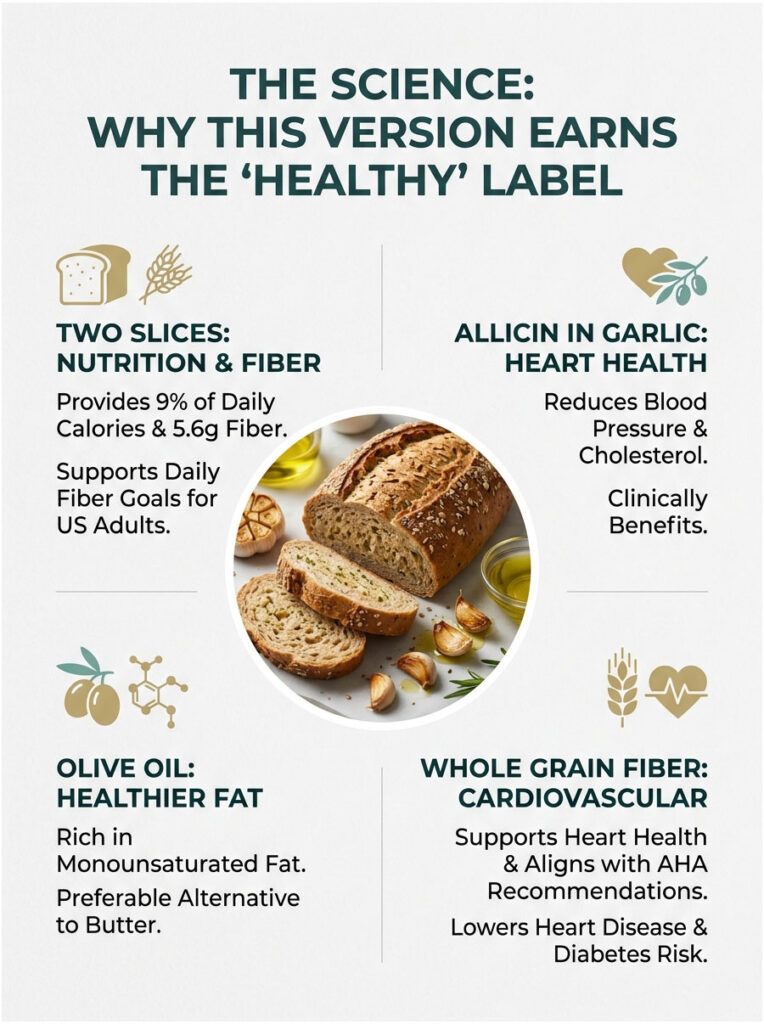
Crushing or finely chopping fresh garlic activates an enzyme called alliinase, which converts alliin into allicin. Allicin is the sulfur compound responsible for garlic’s signature bite and most of its medicinal effects. Research published through the National Institutes of Health describes allicin as garlic’s primary active ingredient with the potential to enhance antioxidant state, lower reactive oxygen species, and increase glutathione production.
A systematic review in PubMed examining garlic and cardiovascular risk found that consistent garlic intake can reduce blood pressure, body mass index, LDL cholesterol, total cholesterol, triglycerides, and inflammatory markers, while increasing HDL cholesterol. Across the cardiology consults our diagnostic network reviews, fresh garlic remains one of the few “common” foods backed by genuine clinical-trial data. A separate meta-analysis published in PubMed reported that garlic supplementation reduced blood pressure by 7 to 16 mm Hg systolic and 5 to 9 mm Hg diastolic, and reduced total cholesterol by 7.4 to 29.8 mg/dL across multiple meta-analyses.
Whole Grain Fiber: The AHA Three-Serving Rule
The American Heart Association recommends choosing whole grains and products that contain at least 51% whole versus refined grains, with a target of three fiber-rich whole-grain servings every day. One slice of this recipe knocks out a third of that target on its own.
The Mayo Clinic adds that whole grains help control cholesterol levels, weight, and blood pressure, and lower the risk of diabetes, heart disease, and other conditions. The 2025-2030 Dietary Guidelines for Americans urge consumers to prioritize fiber-rich whole grains and significantly reduce highly processed refined carbs such as white bread.
Olive Oil’s Monounsaturated Fat Advantage
Butter brings saturated fat that raises LDL cholesterol over time. Extra virgin olive oil delivers monounsaturated fat that the AHA actively promotes for cardiovascular protection. The trade is roughly equal on calories per tablespoon, but the metabolic effect is meaningfully different. Our cardiology nutrition partners often cite this single swap as the easiest “healthy garlic bread” upgrade home cooks can make tonight.
What This Means for Real Diets
For a 2,000-calorie eating pattern, two slices of this healthy garlic bread cover roughly 9% of daily calories with 5.6 grams of fiber, contributing meaningfully toward the 25 to 30 grams most US adults still fall short of. The combination of soluble fiber, monounsaturated fat, and allicin-rich garlic stacks three independent cardiovascular wins into one comfort-food side.
Table 2: USA Nutrition Data by Bread Type and Fat Source (Per 1 Slice, ~28g)
| Combination | Calories | Saturated Fat | Fiber | Source |
| White bread + butter spread | 196 kcal | 5 g | 0.7 g | USDA FoodData Central |
| White bread + olive oil | 178 kcal | 1.1 g | 0.8 g | USDA FoodData Central |
| Whole wheat + butter | 165 kcal | 4.2 g | 2.5 g | Harvard T.H. Chan |
| Whole wheat + olive oil (this recipe) | 95 kcal | 0.6 g | 2.8 g | Recipe calculation |
| Sourdough + olive oil | 102 kcal | 0.7 g | 1.6 g | USDA FoodData Central |
Best Bread Choices in American Grocery Stores (Aisle Cheat Sheet)
The bread carries most of the calories in any garlic bread, so this is where the upgrade pays off most. A few brands consistently meet the AHA whole-grain standard across major US grocers including Kroger, Publix, Whole Foods, Trader Joe’s, Wegmans, and HEB.
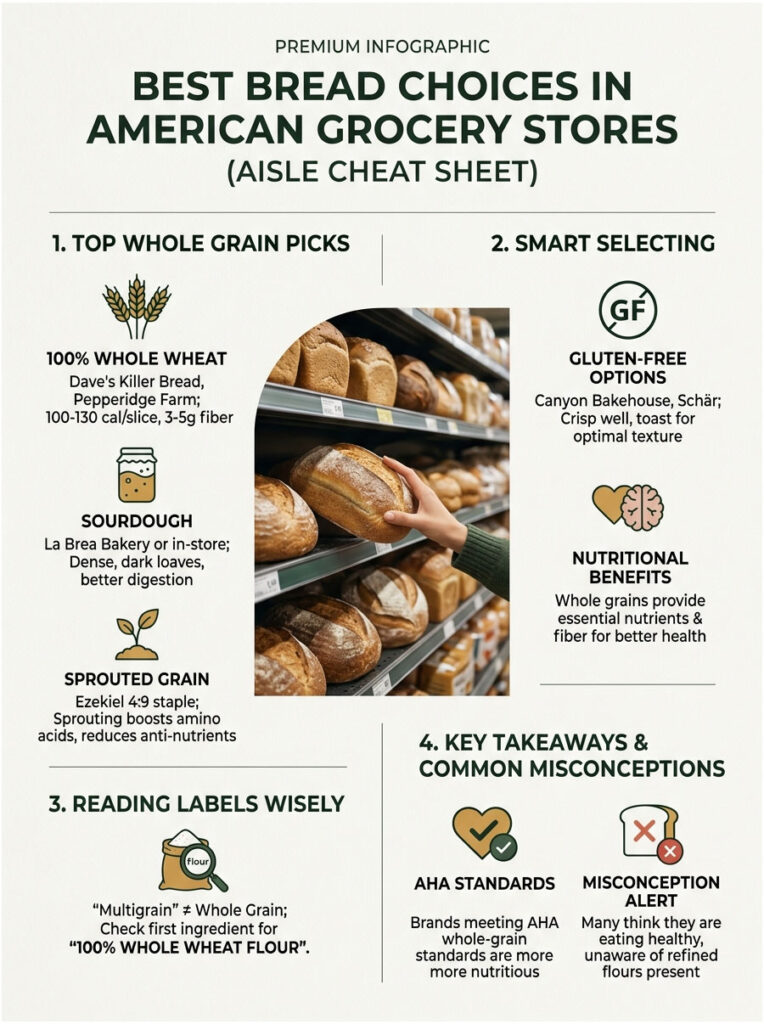
100% Whole Wheat
Dave’s Killer Bread “21 Whole Grains and Seeds” and Pepperidge Farm Whole Grain run between 100 and 130 calories per slice with 3 to 5 grams of fiber. Both label clearly with whole grain as the first ingredient, which is the test the Whole Grains Council recommends for verifying real whole-grain content.
Sourdough
Sourdough’s slow fermentation lowers its glycemic index and breaks down some of the gluten, which makes it gentler on digestion for most people. La Brea Bakery and San Francisco-style boules from in-store bakeries work well. Pick the darker, denser loaves over soft white “sourdough” sandwich versions.
Sprouted Grain
Ezekiel 4:9 from Food For Life is the sprouted-grain staple in most US Whole Foods and Sprouts locations. Sprouting increases certain amino acids and lowers anti-nutrients. Slice it thin; the texture is dense, which actually helps the bread stand up to the garlic oil without going soggy.
Gluten-Free Options That Actually Crisp
Canyon Bakehouse Heritage Style and Schär Artisan Baker are two of the few gluten-free loaves that crisp instead of crumble. Toast them before saucing for the best texture. Most gluten-free breads benefit from an extra minute in the oven or air fryer.
Reading the Label Without Falling for Marketing
“Multigrain,” “wheat,” “honey wheat,” and “12 grain” do not equal whole grain. Flip the package over. The first ingredient should read “100% whole wheat flour” or “whole grain wheat flour,” not “enriched wheat flour.” Patients booking nutrition labs through HealthCareOnTime regularly discover the bread they call healthy is mostly refined flour with caramel coloring. Our lab partners report this is one of the most common dietary blind spots flagged on metabolic panels.
Healthy Variations for Real Life
One recipe rarely fits every household. The base method scales easily across the diet patterns most American families navigate.
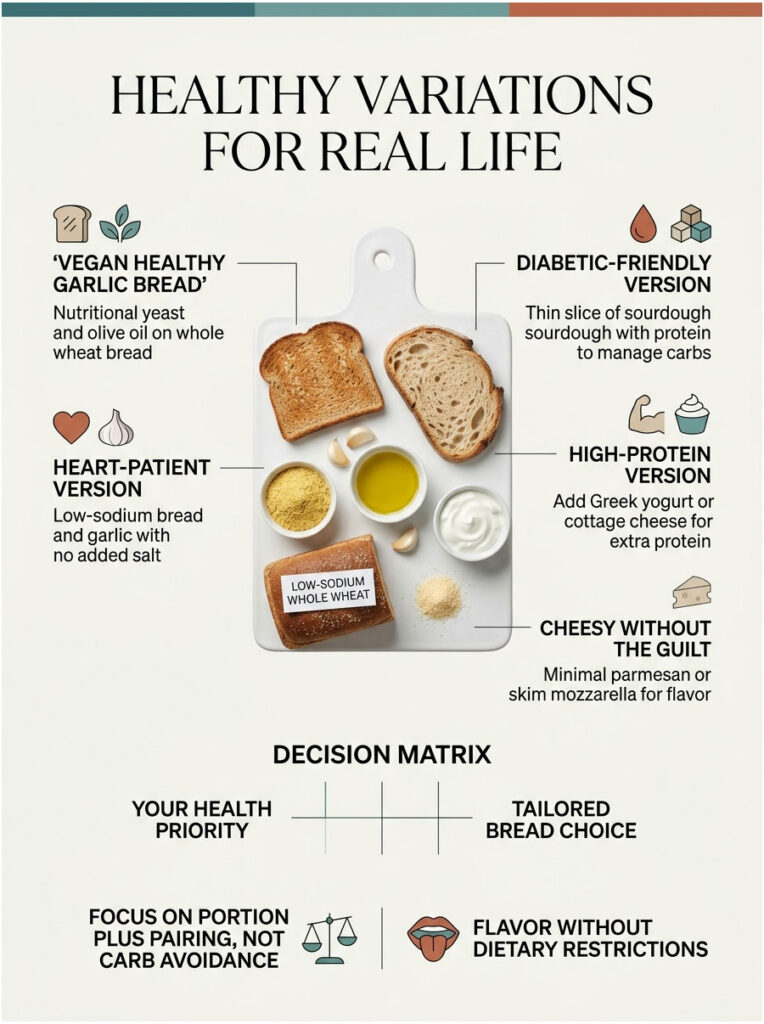
Vegan Healthy Garlic Bread
Skip the parmesan and finish with 2 teaspoons of nutritional yeast for a cheesy, savory umami note. The recipe is then fully plant-based without losing the savory finish. Substituting butter with olive oil while using whole wheat bread keeps the flavor of the classic version intact while making it vegan-friendly.
Diabetic-Friendly Version
Use a single thin slice of dense sourdough or sprouted-grain bread per serving and pair with a protein source. The fiber and protein combination blunts the glycemic curve. Endocrinology partners across our diagnostic network often emphasize that what matters most is portion plus pairing, not avoidance of carbs entirely. People managing type 2 diabetes should still log carbs and review responses with their care team.
Heart-Patient Version
Skip the added salt entirely. The parmesan and garlic carry plenty of savory flavor on their own. Use a low-sodium whole-grain bread (under 110 mg per slice) and finish with cracked black pepper. This drops sodium per slice under 100 mg, well within DASH-diet guidelines for blood pressure management.
High-Protein Version
Spread 1 tablespoon of plain non-fat Greek yogurt or whipped cottage cheese under the garlic-oil mixture. This adds 3 to 4 grams of protein per slice without changing cooking time. Useful for post-workout dinners or anyone targeting 30+ grams of protein per meal.
Cheesy Without the Guilt
Stick to 1 to 2 teaspoons of finely grated parmesan per slice, or skim mozzarella in 1-tablespoon portions. Parmesan delivers strong flavor at low volume, so a little goes a long way. Avoid bagged “Italian blend” cheeses; they hide cellulose, sodium, and extra fats most home cooks do not budget for.
Table 3: Decision Matrix: If You’re Watching X, Then Choose Y
| Your Priority | Bread Choice | Fat Source | Cheese | Method |
| Weight loss | Sprouted grain, thin slice | 1 tsp olive oil | Skip or 1 tsp parmesan | Air fryer 350°F, 5 min |
| Heart health | 100% whole wheat | Extra virgin olive oil | Skip salt; 1 tsp parmesan | Oven 425°F, 8 min |
| Diabetes / blood sugar | Sourdough, dense | Olive oil + Greek yogurt | Skip | Skillet, dry-toast first |
| Muscle / high protein | Whole wheat | Olive oil + cottage cheese base | 1 tbsp parmesan | Oven 425°F, 10 min |
| Vegan | Whole wheat or sprouted | Olive oil only | Nutritional yeast | Air fryer 350°F, 5 min |
Equipment, Storage, and Reheating (Stay Crispy, Skip the Sog)
The right tool turns a 90-calorie slice into a restaurant-grade side. The wrong reheat undoes the entire effort.
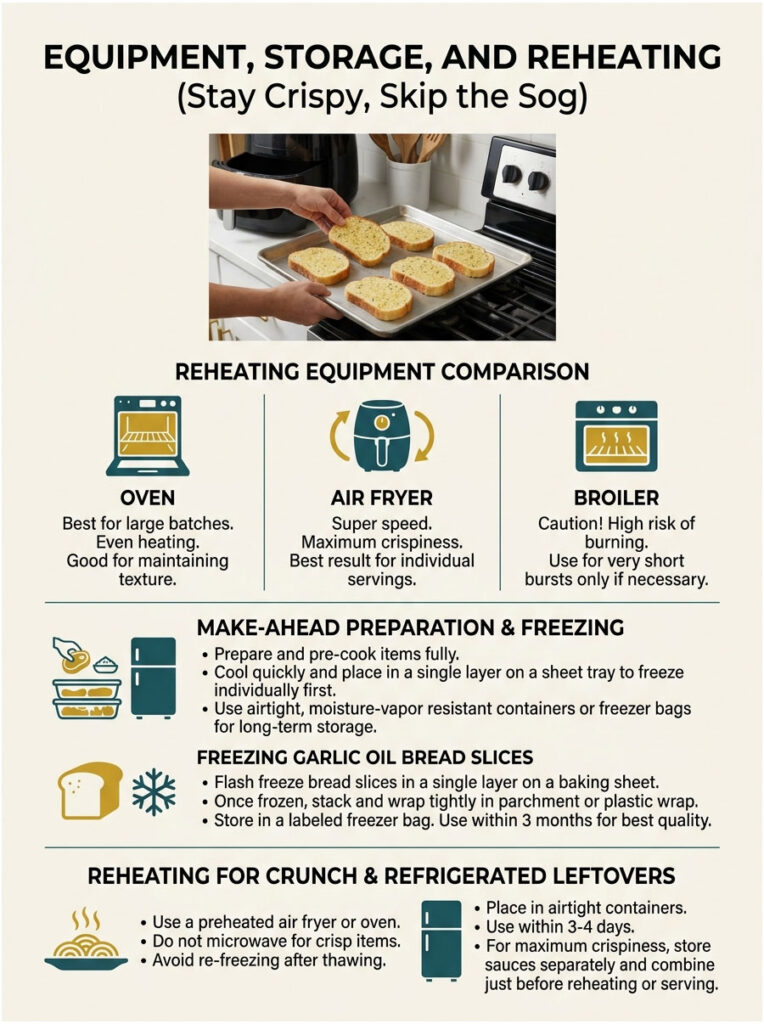
Oven vs Air Fryer vs Broiler
The oven is the most forgiving, especially for batch cooking 6+ slices. The air fryer wins on speed and crisp; cooking at 350°F to 380°F for about five minutes delivers a crisp exterior and a soft center, with no oven preheat needed. The broiler works in a pinch but burns garlic in seconds, so stay close.
Make-Ahead and Freezer Prep
Brush the garlic oil onto the bread, freeze the slices on a parchment-lined tray until firm, then transfer to a zip bag. They keep for up to 3 months. Bake straight from frozen at 425°F for 12 to 14 minutes. Pre-batched freezer slices are how busy weeknight cooks who message HealthCareOnTime food-prep groups stay consistent month over month.
Reheating Without Losing Crunch
Skip the microwave; it steams the bread soggy. Reheat at 375°F for 4 to 5 minutes in the oven, or 3 minutes in the air fryer. Fridge storage works for 2 to 3 days in a sealed container. Avoid plastic wrap, which traps moisture and ruins the crust.
Common Mistakes That Turn Healthy Garlic Bread Into a Diet-Buster
Even smart swaps unravel fast if execution slips. Five mistakes show up most often in home kitchens.
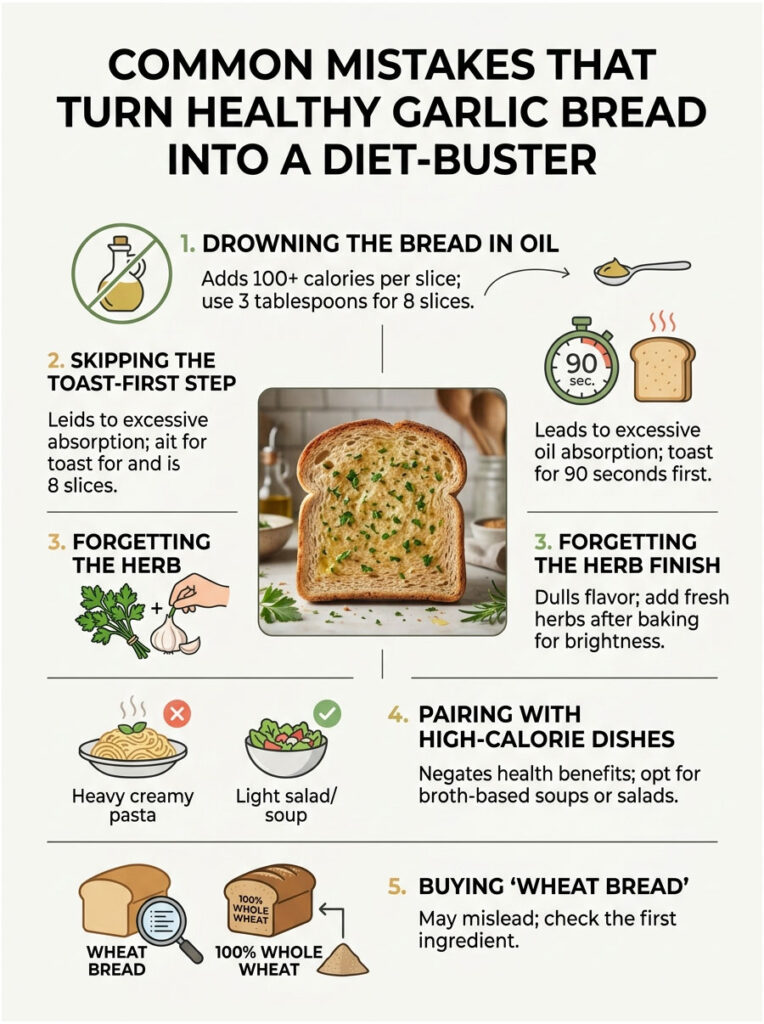
Drowning the Bread in Oil
A heavy hand with the olive oil bottle adds 100+ unintended calories per slice. Stick to 3 tablespoons total across 8 slices, brushed lightly. A pastry brush or oil mister is the easiest way to control the dose.
Skipping the Toast-First Step
Soft, fresh bread soaks up oil like a sponge. Toasting for 90 seconds before adding the garlic mixture creates a barrier that keeps the crust intact and the calorie count predictable.
Forgetting the Herb Finish
Fresh parsley, basil, or chives added after baking lift the entire dish. Heat dulls brightness, so finish; do not bake them in. Dried herbs go in the oil mix; fresh ones go on top after the timer dings.
Pairing It With the Wrong Main Dish
Two slices of healthy garlic bread next to a 1,200-calorie creamy alfredo cancels every gain. Pair with broth-based soups, lean grilled proteins, or vegetable-forward salads. Mediterranean and DASH plates are natural fits.
Buying “Wheat Bread” Instead of “100% Whole Wheat”
Marketing language slips past most shoppers. “Wheat bread” is often refined flour with caramel coloring. Always check the first ingredient on the label.
What to Serve With Healthy Garlic Bread
The right pairing turns one slice into a satisfying meal without pushing the calorie total over budget.
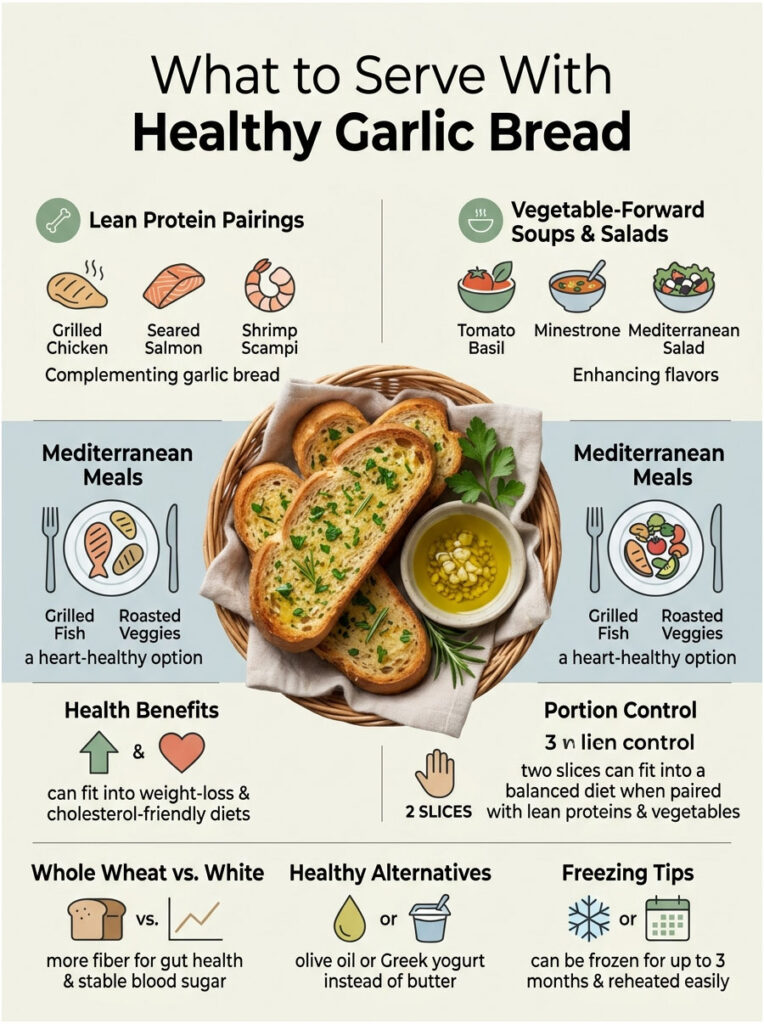
Lean Protein Pairings
Grilled chicken breast, seared salmon, or shrimp scampi (cooked in olive oil instead of butter) keep the meal balanced. Add a green vegetable and the plate covers protein, fiber, and healthy fats in under 600 calories.
Vegetable-Forward Soups and Salads
Tomato basil soup, minestrone, white bean and kale stew, or a chopped Mediterranean salad with cucumber, tomato, feta, and olives all complement the garlic flavor without overlap. The bread becomes the carb anchor, not the calorie peak.
Mediterranean and DASH-Friendly Meals
Two slices alongside grilled fish, roasted eggplant, and a green salad lands squarely inside Mediterranean diet patterns the Mayo Clinic and Cleveland Clinic both recommend for cardiovascular protection. This pairing also fits the dietary patterns highlighted in the most recent Dietary Guidelines for Americans.
Frequently Asked Questions
Is Garlic Bread Healthy for Weight Loss?
Standard garlic bread, no. The version in this recipe, yes, in moderation. At about 95 calories per slice with 2.8 grams of fiber and minimal saturated fat, two slices fit comfortably into a 1,500 to 1,800 calorie weight-loss day when paired with lean protein and vegetables. Portion control and bread choice decide the outcome.
How Many Calories Are in Healthy Garlic Bread Per Slice?
Each slice in this healthy garlic bread recipe runs roughly 90 to 100 calories, depending on the bread brand and how much olive oil you brush on. Compare that with 200 to 250 calories for a typical restaurant slice. Skipping the parmesan brings it closer to 80 calories per slice.
Can I Make Healthy Garlic Bread Without Butter?
Yes, and the result is often crispier. Extra virgin olive oil, mashed avocado, or unsweetened Greek yogurt mixed with garlic all replace butter cleanly. Olive oil is the classic Mediterranean swap and the easiest one to execute. The flavor stays rich; saturated fat drops by roughly 80% per slice.
Is Whole Wheat Garlic Bread Better Than White?
Yes. Whole wheat delivers 2 to 4 grams of fiber per slice versus less than 1 gram in white bread. Fiber slows digestion, supports gut health, and keeps blood sugar steadier. The American Heart Association recommends choosing whole grains as at least half of all grains consumed daily.
Is Garlic Bread Good for Cholesterol?
Standard garlic bread is not, due to butter and refined flour. Healthy garlic bread made with olive oil and whole grains can support healthy cholesterol levels. Garlic itself has been studied for its ability to reduce total and LDL cholesterol, especially with consistent intake. The fiber in whole grains reinforces that effect.
Can Diabetics Eat Healthy Garlic Bread?
Often, yes, with portion control. A single slice of dense sourdough or sprouted-grain bread paired with protein and a non-starchy vegetable produces a modest glycemic response. The fiber and fat slow glucose absorption. People with diabetes should still log carbs and discuss portion sizes with their care team.
How Do I Make Healthy Garlic Bread Crispy Without Oil?
Use the dry-toast-first method. Pop the slices in the toaster or under the broiler for 90 seconds. Then rub the warm bread directly with a peeled raw garlic clove (the heat releases the oils naturally) and finish with a fine mist of olive oil spray. Calorie cost drops to around 75 per slice.
What Is the Healthiest Store-Bought Garlic Bread Brand?
Most frozen options carry refined flour, butter, and high sodium. If you must buy ready-made, look for whole-grain bases without partially hydrogenated oils, sodium under 200 mg per slice, and a short ingredient list. Trader Joe’s and select Whole Foods bakery offerings come closest. Homemade still wins on every metric.
Can I Freeze Healthy Garlic Bread?
Yes. Brush the slices with the garlic-oil mixture, freeze on a tray until solid, then transfer to a freezer bag. They keep up to 3 months. Bake from frozen at 425°F for 12 to 14 minutes, or air fry from frozen at 350°F for 7 to 8 minutes. No thawing needed.
Is Olive Oil or Butter Healthier for Garlic Bread?
Olive oil. Tablespoon for tablespoon, both have similar calories, but olive oil delivers monounsaturated fats that support heart health, while butter contributes saturated fat the AHA links to higher LDL cholesterol when consumed in excess. Olive oil also pairs flavor-wise with garlic and herbs without the heavy richness of butter.
How Long Does Healthy Garlic Bread Last in the Fridge?
Two to three days in a sealed container. The bread loses crispness fast, so reheat in the oven or air fryer (never the microwave) to restore texture. For longer storage, freeze immediately rather than refrigerate. Refrigeration actually stales bread faster than freezing does.
Can I Eat Garlic Bread on the Mediterranean Diet?
Yes, when made the Mediterranean way: whole grain bread, extra virgin olive oil, fresh garlic, herbs, and minimal cheese. This recipe is essentially Mediterranean garlic bread. Pair with grilled fish, vegetables, and legumes for a meal that sits inside the dietary pattern Harvard and the Mayo Clinic continue to recommend for longevity.
Disclaimer: This article is for informational purposes only and does not replace personalized nutrition advice from a registered dietitian, physician, or other qualified healthcare professional. People with diabetes, kidney disease, hypertension, celiac disease, gluten sensitivity, or food allergies should consult their care team before making dietary changes. Caloric and nutritional values are estimates based on common US ingredient brands and may vary. HealthCareOnTime promotes balanced eating and regular preventive testing as part of overall wellness.
References
- Mayo Clinic: Whole grains, hearty options for a healthy diet
- American Heart Association: Whole grains, refined grains, and dietary fiber
- NIH / PMC: Role of garlic usage in cardiovascular disease prevention
- PubMed: Garlic, a systematic review of effects on cardiovascular diseases
- PubMed: Garlic and heart disease, meta-analysis
- Harvard T.H. Chan School of Public Health: Whole grains
- USDA / Dietary Guidelines for Americans
- Whole Grains Council: US Dietary Guidelines and whole grains
- NIH / PMC: Garlic, a review of potential therapeutic effects
- USDA FoodData Central