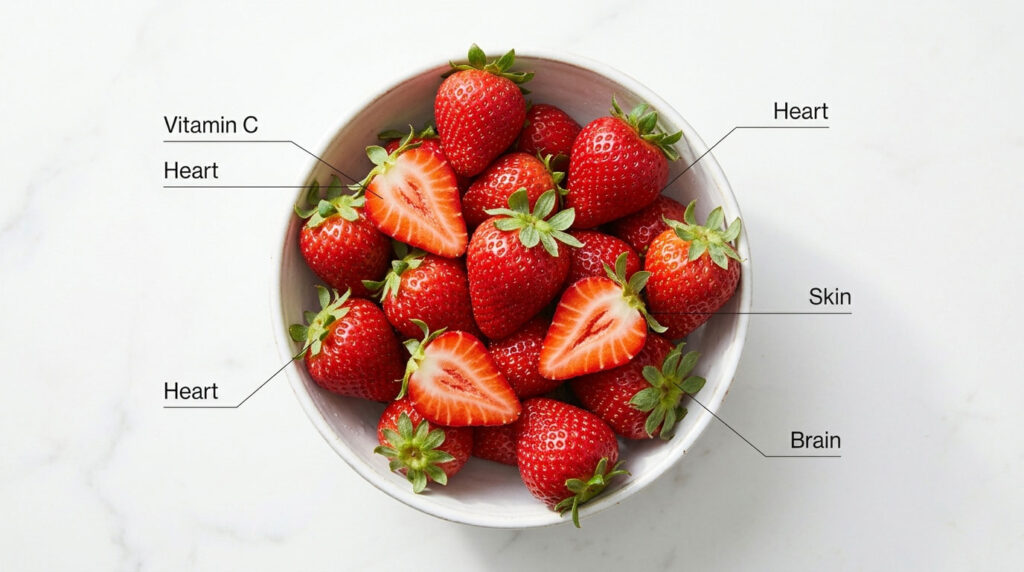
A group of healthy adults in their seventies ate the equivalent of two servings of strawberries a day for eight weeks. By the end, their cognitive processing speed had climbed, their blood pressure had dropped, and their antioxidant capacity had jumped by double digits. That single trial captures why strawberries keep showing up in serious nutrition research, not just dessert recipes.
Table of Contents
These bright red berries are one of the most studied fruits in the American diet, and the findings are hard to ignore. Strawberries pair a near-zero calorie cost with one of the highest vitamin C returns of any common fruit, plus a deep bench of plant compounds.
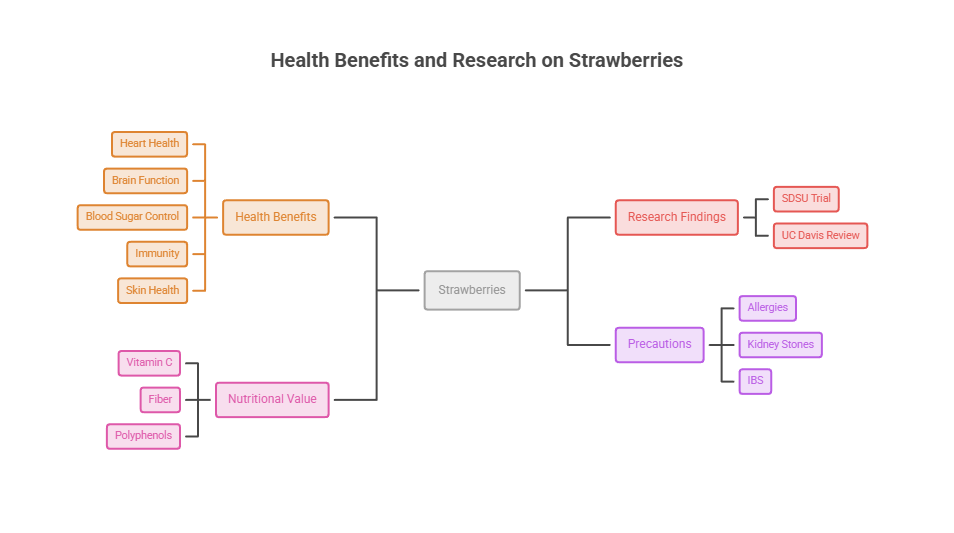
This guide walks through nine evidence-backed benefits, what the latest USA research actually found, how much to eat, and who should be cautious. Every claim traces back to USDA data or peer-reviewed studies, with the limitations spelled out honestly.
Quick Answer: Strawberries support heart health, brain function, blood sugar control, immunity, and skin, thanks to vitamin C, fiber, and antioxidants called polyphenols. One cup delivers more than 100% of your daily vitamin C. A 2023 San Diego State University trial linked daily strawberries to faster cognitive processing, lower blood pressure, and higher antioxidant capacity, while a 2024 UC Davis review tied them to lower cholesterol.
At a Glance
- One cup of strawberries provides over 100% of the daily value for vitamin C.
- A 2024 UC Davis review of 60 studies linked strawberries to lower LDL cholesterol and triglycerides.
- A 2023 SDSU trial found a 5.2% rise in cognitive processing speed and a 3.6% drop in systolic blood pressure.
- Strawberries have a low glycemic index of 40 and may improve insulin sensitivity.
- Polyphenols like anthocyanins and ellagic acid fight inflammation and oxidative stress.
- At about 46 calories per cup, strawberries support weight management.
- Some people should limit them, including those with allergies, kidney stones, or IBS.
What Makes Strawberries So Good for You?
Strawberries pack an unusual amount of nutrition into a low-calorie, high-water package. Healthline reports they are about 91% water with only 0.3% fat, yet they remain an excellent source of vitamin C and manganese plus useful folate and potassium.
The real story is in the plant compounds. Strawberries are rich in polyphenols, including anthocyanins (which give them their red color), ellagic acid, quercetin, and kaempferol. These antioxidants are what most of the health research zeroes in on.
Our medical reviewers point out that the benefits stack because these compounds work together. Vitamin C supports the immune system and skin, fiber steadies blood sugar and digestion, and polyphenols calm the inflammation that sits behind many chronic diseases.
A typical serving is one cup, or roughly eight medium berries. Eating that amount a few times a week is enough to capture most of the benefits described below, according to the body of research reviewed by USA nutrition scientists.
There is one more reason strawberries earn their reputation: they deliver this nutrition for almost no calories. A full cup carries only about 46 calories, so the vitamin C, fiber, and antioxidants come without any meaningful trade-off on your daily energy budget.
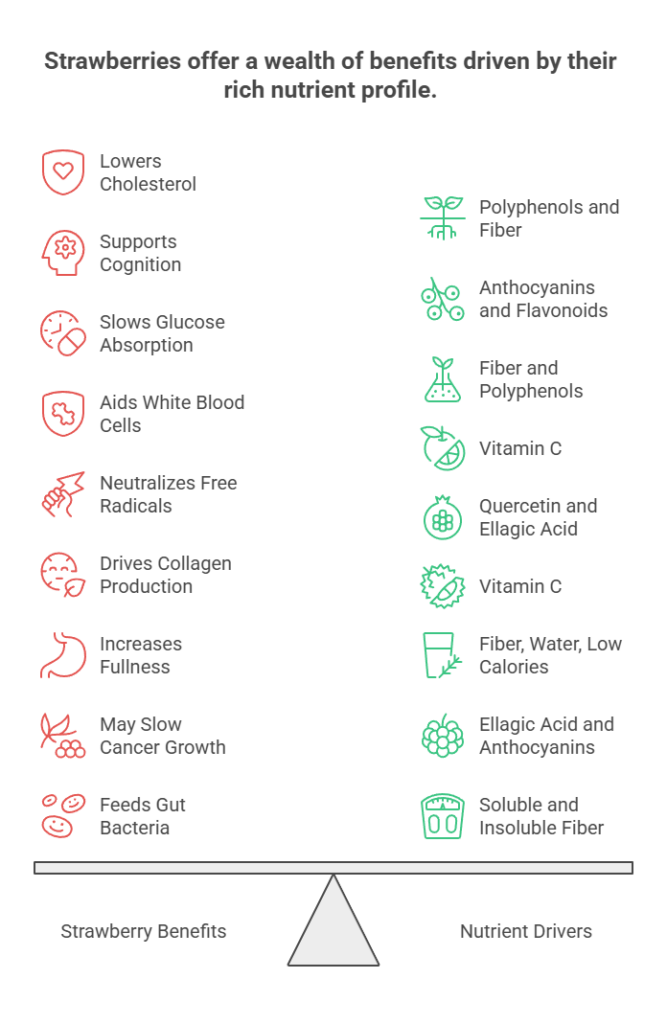
The table below maps each major benefit to the nutrient or compound driving it and what the evidence shows, so you can see the mechanism rather than taking the claim on faith.
| Benefit | Key Nutrient or Compound | What It Does | Strength of Evidence |
| Heart health | Polyphenols, fiber | Lowers LDL cholesterol and triglycerides | Strong (60-study review) |
| Brain and memory | Anthocyanins, flavonoids | Supports cognition, slows decline | Moderate (RCTs ongoing) |
| Blood sugar control | Fiber, polyphenols | Slows glucose absorption, aids insulin | Moderate to strong |
| Immune support | Vitamin C | Aids white blood cell function | Strong |
| Anti-inflammatory | Quercetin, ellagic acid | Neutralizes free radicals | Moderate |
| Skin health | Vitamin C | Drives collagen, protects from damage | Moderate |
| Weight management | Fiber, water, low calories | Increases fullness for few calories | Strong |
| Cancer risk | Ellagic acid, anthocyanins | May slow some cancer cell growth | Early, preliminary |
| Digestion | Soluble and insoluble fiber | Feeds gut bacteria, aids regularity | Moderate |
Table 1: Strawberry Benefits Mapped to Nutrients and Evidence.
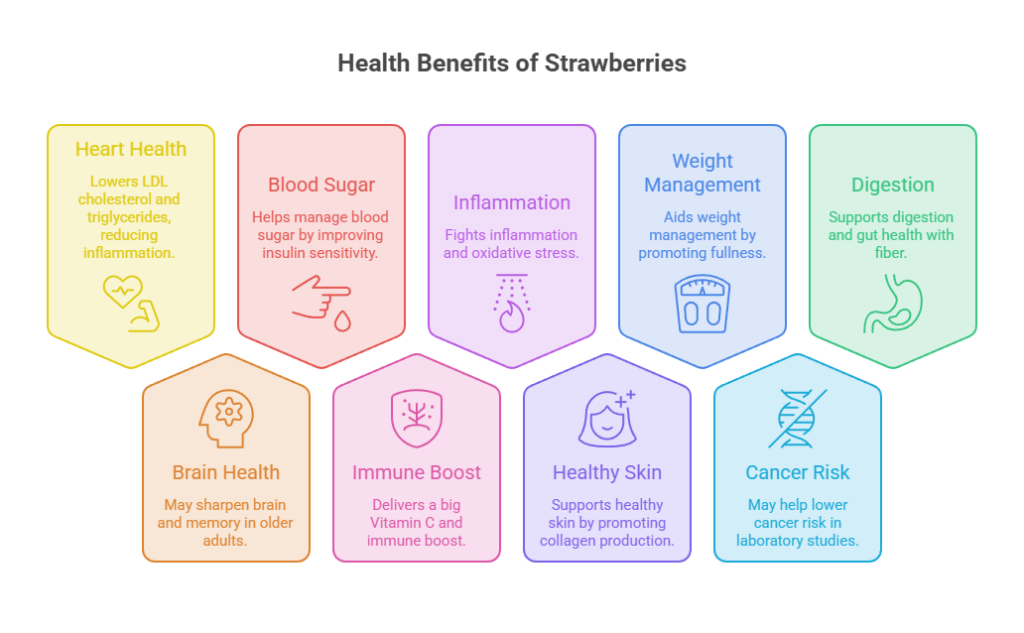
9 Science-Backed Health Benefits of Strawberries
The benefits below are ordered roughly by how strong the evidence is. None of them turns a strawberry into medicine, but together they explain why dietitians keep recommending the fruit as a daily staple.
1. Supports Heart Health and Cholesterol
This is the benefit with the deepest evidence behind it. A 2024 literature review from the University of California, Davis pulled together 47 clinical trials and 13 observational studies and concluded that regular strawberry intake lowers LDL cholesterol and triglycerides while reducing inflammation.
The researchers reported that adding about a cup of strawberries to a daily routine could meaningfully cut cardiovascular risk. The credit goes to polyphenols and fiber, which support healthy cholesterol levels and blood vessel function.
What this means in practice is simple. Cardiovascular disease remains a leading cause of death in the United States, and small, repeatable food habits add up over years. A daily cup of strawberries is one of the easier habits to keep.
Patients booking cardiac panels with us often ask which foods actually move the needle on cholesterol. Strawberries are a reasonable everyday choice, though they work as part of a heart-healthy pattern, not as a standalone cure.
The mechanism is worth understanding. Soluble fiber binds to cholesterol in the digestive tract so the body excretes more of it, while polyphenols help keep blood vessels flexible and reduce the oxidation of LDL particles that drives plaque buildup. Both effects nudge cardiovascular risk in the right direction over time.
2. May Sharpen Brain and Memory
The headline study here comes from San Diego State University. Researchers gave 35 healthy adults aged 66 to 78 the equivalent of two servings of strawberries daily for eight weeks, in a double-blind, placebo-controlled design.
The strawberry group showed a 5.2% increase in cognitive processing speed, a 3.6% decrease in systolic blood pressure, and a 10.2% rise in total antioxidant capacity. Their waistlines also shrank by about 1.1% on average.
Neurologists note that berries support the heart and arteries that keep blood flowing to the brain, which is part of how they may slow cognitive decline. UT Physicians has linked regular berry intake to better memory performance in older adults.
The brain benefit is best described as promising rather than proven. The trial was small and short, but the direction of the findings lines up with a larger pattern across berry research, which is why scientists keep studying it.
3. Helps Manage Blood Sugar
Despite their sweetness, strawberries have a low glycemic index of 40, so they raise blood sugar slowly. WebMD notes that the polyphenols in strawberries improve insulin sensitivity in nondiabetic adults.
The fiber and ellagic acid in strawberries slow the digestion of starchy foods, which blunts the glucose spike after a meal. Clinical research has found that eating strawberries alongside carbohydrate-rich meals lowers the post-meal glucose and insulin response.
In cases reviewed by our medical team, readers managing prediabetes often want a sweet food that will not sabotage their numbers. Strawberries paired with protein, such as yogurt or nuts, are a steady choice that keeps the rise gentle.
The practical takeaway is to eat them whole and pair them, rather than blending them into a sugary juice or smoothie that strips the fiber and concentrates the sugar.
This matters most around higher-carb meals. Eating a cup of strawberries with breakfast oatmeal or alongside a sandwich gives the fiber and polyphenols a chance to slow the whole meal’s glucose response, not just the sugar from the berries themselves.
4. Delivers a Big Vitamin C and Immune Boost
Strawberries are a vitamin C standout. A single cup of whole berries provides about 85 milligrams, and a cup of sliced berries pushes near 97 milligrams, which is more than the daily target for most adults and more than a medium orange delivers.
Vitamin C supports the production of white blood cells and protects immune cells from free radical damage. The NIH Office of Dietary Supplements lists strawberries among recommended food sources of the nutrient, which the body cannot make on its own.
Our lab partners report that borderline-low vitamin C readings show up more often than people expect on wellness panels. A daily cup of strawberries is one of the simplest dietary ways to close that gap without supplements.
Because vitamin C is sensitive to heat, light, and air, eating strawberries fresh and raw preserves the most of it. Storing them whole and washing them just before eating protects the nutrient too.
5. Fights Inflammation and Oxidative Stress
Chronic inflammation sits behind many serious conditions, from heart disease to certain cancers. The antioxidant compounds in strawberries, including quercetin and ellagic acid, neutralize the unstable molecules called free radicals that drive oxidative stress.
WebMD explains that by curbing free radicals, these plant chemicals may lower the kind of excess inflammation that harms the immune system and contributes to several health conditions, including obesity.
The redder the berry, the more anthocyanins it carries, since the pigment level rises as the fruit ripens. A fully ripe, deep red strawberry delivers a stronger antioxidant dose than a pale, underripe one.
This anti-inflammatory effect is part of why strawberries connect to so many other benefits at once. Lower oxidative stress supports the heart, the brain, the skin, and the metabolic system together, rather than one system in isolation.
6. Supports Healthy Skin
Much of the skin benefit traces back to vitamin C again. The nutrient is essential for collagen production, the protein that keeps skin firm and elastic, and it helps protect skin against damage from UV rays and pollution.
Strawberries also bring anti-inflammatory effects that may soothe irritated skin and reduce redness. Together, the collagen support and antioxidant protection make strawberries a quiet ally for skin that ages well.
Patients commonly ask us whether eating fruit really affects skin or whether it is marketing. The honest answer is that diet is one factor among many, but a steady supply of vitamin C genuinely supports the skin’s structure from the inside out.
Eating strawberries for skin works best as a long game. There is no overnight glow, but consistent vitamin C intake over months gives the body the raw material it needs to maintain collagen.
7. Aids Weight Management
Strawberries are filling for almost no calories. A cup of whole berries carries about 46 calories along with roughly 3 grams of fiber and a high water content, a combination that signals fullness and curbs the urge to overeat.
That low energy density lets you eat a satisfying portion while keeping calories modest, which is why strawberries fit so neatly into weight-loss diets. They satisfy a sweet craving without the calorie load of cookies, candy, or ice cream.
The SDSU trial even recorded a small drop in waist size among daily strawberry eaters, a marker tied to less visceral fat. The effect was modest, but it points in a healthy direction rather than the opposite.
Used as a snack swap, strawberries do double duty. They replace a higher-calorie option while adding fiber, water, and vitamin C, so the trade improves the diet on more than one front.
8. May Help Lower Cancer Risk
This benefit is the most preliminary, so it deserves careful framing. Strawberries contain ellagic acid and anthocyanins, phytochemicals that have shown promise in slowing the growth and spread of some cancer cells in laboratory and early studies.
The American Institute for Cancer Research has noted ellagic acid among compounds that may help guard against certain cancers. Vitamin C and fiber may also play protective roles, particularly for cancers of the esophagus and colon.
Our medical reviewers stress that this is early evidence, not proof. Most of the promising results come from cell and animal studies, which do not always translate to humans, so caution is warranted in how the claim is read.
Strawberries are a smart part of a cancer-protective diet rich in fruits and vegetables, but no single food prevents cancer on its own. The benefit comes from the overall pattern of eating, not one berry.
9. Supports Digestion and Gut Health
The fiber in strawberries, about 3 grams per cup, comes in both soluble and insoluble forms. Soluble fiber feeds the friendly bacteria in your gut, while insoluble fiber supports regularity and keeps digestion moving smoothly.
A healthy gut microbiome is linked in research to immunity, lower inflammation, and even mood. Berries, including strawberries, are among the fruits most often tied to these gut benefits in recent studies.
Eating strawberries whole rather than juiced preserves that fiber, which is the part doing most of the digestive work. Juicing strips the fiber and leaves mostly sugar and water behind.
For anyone trying to eat more fiber, strawberries are an easy on-ramp. They are sweet enough to feel like a treat, which makes the fiber goal more pleasant to hit than it is with plainer foods.
What the Latest Research Really Says
Two recent USA studies anchor most of the current strawberry coverage, and both are worth understanding in their own terms. The table below summarizes the key findings with sources.
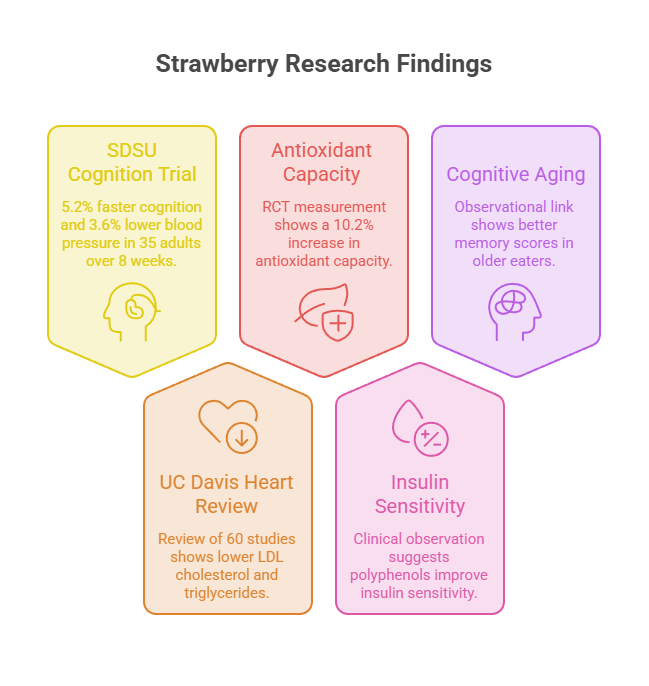
| Study and Year | Source | Design | Key Finding |
| SDSU cognition trial (2023) | San Diego State University | RCT, 35 adults, 8 weeks | 5.2% faster cognition, 3.6% lower BP |
| UC Davis heart review (2024) | UC Davis / Critical Reviews | Review of 60 studies | Lower LDL cholesterol and triglycerides |
| Antioxidant capacity (2023) | SDSU | RCT measurement | 10.2% increase in antioxidant capacity |
| Insulin sensitivity | WebMD summary | Clinical observation | Polyphenols improve insulin sensitivity |
| Cognitive aging | UT Physicians | Observational link | Better memory scores in older eaters |
Table 2: Recent USA Strawberry Research at a Glance.
One limitation deserves an honest mention. Some of this research, including the UC Davis review, was funded by the California Strawberry Commission. Industry funding does not automatically invalidate findings, but it is a reason to read single studies with care and to trust the broader pattern across many studies more than any one result.
The fair takeaway is that the evidence for heart, blood sugar, and antioxidant benefits is consistent and growing, while brain and cancer claims are promising but still developing. Across patients we serve, that nuance matters far more than a flashy headline.
It also helps to keep expectations realistic. Strawberries are a healthy food, not a treatment, and they deliver their benefits as part of a varied diet rather than as a single magic ingredient.
How Many Strawberries Should You Eat?
There is no strict limit on fresh strawberries, since they are low in sugar and calories. Most US dietary guidance recommends about 1 1/2 to 2 cups of fruit per day, and strawberries can cover much of that easily.
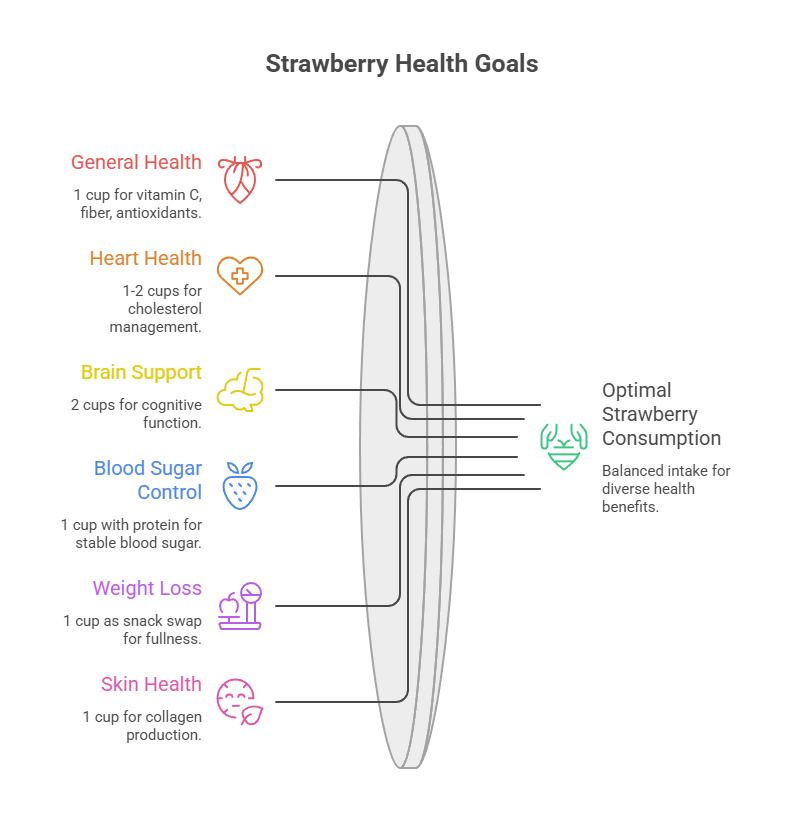
The research studies generally used one to two servings daily, where one serving is a cup or about eight medium berries. That range is a sensible target for most people looking to capture the benefits described above.
The table below translates common health goals into a practical daily portion you can act on today.
| Your Goal | Recommended Daily Portion | Why It Works |
| General health | 1 cup (~8 berries) | Covers vitamin C, fiber, antioxidants |
| Heart health | 1 to 2 cups | Matches intake in cholesterol studies |
| Brain support | 2 servings (~2 cups) | Mirrors the SDSU trial dose |
| Blood sugar control | 1 cup with protein | Low GI; protein slows absorption further |
| Weight loss | 1 cup as a snack swap | High fullness for about 46 calories |
| Skin health | 1 cup | Steady vitamin C for collagen support |
Table 3: How Many Strawberries to Eat Based on Your Goal.
Patients booking tests with us sometimes worry that eating fruit daily is too much sugar. For plain strawberries, the natural sugar is modest and comes packaged with fiber, so a daily cup or two fits comfortably into almost any healthy pattern.
The one habit worth avoiding is loading strawberries with sweet add-ons. A cup of plain berries is a health food; the same berries drowned in sugar, cream, or chocolate are a dessert, and the math changes completely.
Fresh, Frozen, or Dried: Getting the Most Benefit
The form you choose changes how much benefit you actually get. Fresh strawberries are the benchmark, delivering full vitamin C, fiber, and water at the lowest calorie cost.
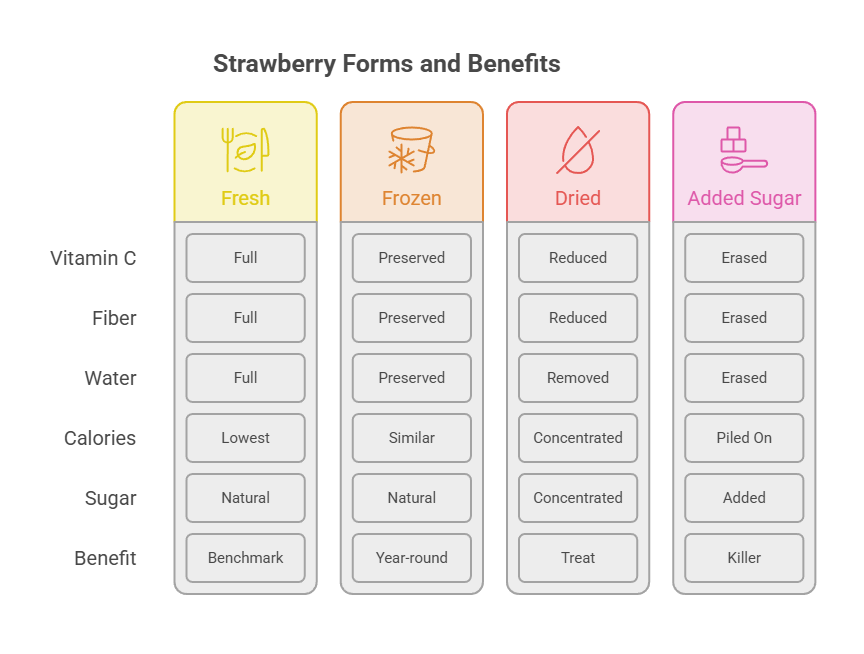
Plain frozen strawberries hold up well. Freezing preserves most of the vitamin C and antioxidants, so unsweetened frozen berries are a budget-friendly, year-round option for smoothies and oatmeal with no real loss of benefit.
Dried strawberries are a different matter. Removing the water concentrates the sugar and calories into a small piece, and many dried versions add sugar on top, which tips them toward a treat rather than a health food.
The biggest benefit killer is added sugar. Strawberry jam, syrup, sweetened yogurt, chocolate-dipped berries, and milkshakes pile on sugar and calories that erase the advantages of the plain fruit. Our medical reviewers note that the closer a strawberry stays to its raw state, the more of these benefits survive.
Washing matters too. Rinse berries in cold water just before eating rather than long beforehand, since washing too early speeds up molding and spoilage. Choose firm, deep red berries with fresh green caps for the highest antioxidant content.
Who Should Be Careful With Strawberries?
Strawberries are safe for most people, but a few groups should pay attention. Honest guidance means flagging the limits, not just the upside.
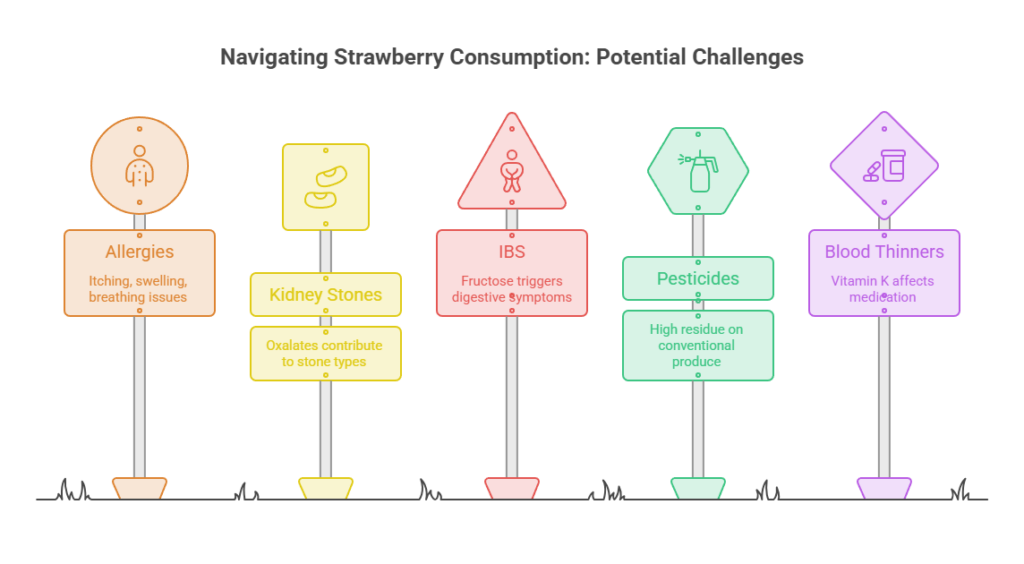
People with strawberry allergies can experience itching, swelling of the lips or throat, or, rarely, trouble breathing. Anyone with a known allergy should avoid them, and a severe reaction that affects breathing is a medical emergency.
Those prone to kidney stones may want to moderate intake, since strawberries contain oxalates that can contribute to certain stone types. People with IBS sometimes find that the fructose in strawberries triggers symptoms, as berries are not always well tolerated on a low-FODMAP plan.
Two more notes round out the picture. Strawberries frequently rank near the top of the Environmental Working Group’s list of produce with the most pesticide residue, so buying organic or washing thoroughly is reasonable. And because strawberries contain a little vitamin K, anyone on blood-thinning medication should keep their intake steady rather than wildly variable, since big swings can affect how the medication works.
Strawberries remain one of America’s favorite fruits, with USDA data showing per capita use of roughly 6.7 to 7.9 pounds in recent years, according to the USDA Economic Research Service. For the vast majority of those eaters, the berries are a clear net positive for health.
Easy Ways to Eat More Strawberries
Capturing the benefits comes down to consistency, and that is easier when strawberries are part of foods you already eat. The goal is a daily cup or two without turning the fruit into a sugar-laden dessert.

For breakfast, slice them over oatmeal, plain Greek yogurt, or whole-grain cereal. The pairing with protein and whole grains slows sugar absorption and turns a simple bowl into a balanced, fiber-rich start to the day.
For snacks and meals, toss whole berries into a spinach salad with nuts, blend them into a smoothie with unsweetened yogurt, or simply eat them plain straight from the carton. Keeping a washed bowl at eye level in the fridge makes the healthy choice the easy one.
Our medical reviewers suggest treating frozen strawberries as a year-round backup. When fresh berries are out of season or pricey, a bag of plain frozen strawberries delivers nearly the same nutrition for smoothies, sauces, and oatmeal at a lower cost.
Frequently Asked Questions
Are strawberries good for you?
Yes. Strawberries are low in calories and sugar yet rich in vitamin C, fiber, and antioxidants. Research links them to better heart health, steadier blood sugar, and stronger immunity. They support the body in several ways at once, which is why dietitians regularly recommend them as part of a balanced diet.
What happens if you eat strawberries every day?
Eating a cup or two of strawberries daily can support heart health, supply more than your daily vitamin C, and add fiber for digestion and fullness. A 2023 trial found daily strawberry intake improved cognitive speed and lowered blood pressure over eight weeks, with no downside for most healthy people.
Are strawberries good for your heart?
Yes, with solid evidence. A 2024 UC Davis review of 60 studies found regular strawberry consumption lowers LDL cholesterol and triglycerides while reducing inflammation. The polyphenols and fiber in strawberries support healthy cholesterol and blood vessel function, making them a heart-friendly choice as part of an overall healthy diet.
Do strawberries help lower blood sugar?
Strawberries have a low glycemic index of 40, so they raise blood sugar slowly. Their fiber and polyphenols slow glucose absorption and may improve insulin sensitivity. Eating them with carbohydrate-rich meals can blunt post-meal glucose spikes, making them a reasonable fruit choice for blood sugar management.
Are strawberries good for weight loss?
Yes. At about 46 calories per cup with 3 grams of fiber and high water content, strawberries are filling for very few calories. Swapping a processed snack for a cup of strawberries cuts calories while adding nutrients. One study even found a small reduction in waist size among daily strawberry eaters.
Are strawberries good for your skin?
Yes. Strawberries are rich in vitamin C, which the body needs to produce collagen, the protein that keeps skin firm and elastic. The antioxidants also help protect skin from UV and pollution damage, while anti-inflammatory compounds may calm irritation and redness over time.
How many strawberries should you eat a day?
For most people, one to two cups a day, or about 8 to 16 medium berries, is an ideal target. That range matches the amounts used in research studies and fits within the daily fruit recommendation of about 1 1/2 to 2 cups for most adults.
Can diabetics eat strawberries?
Generally yes. Strawberries have a low glycemic index and modest sugar, so they cause only a gentle rise in blood sugar. Pairing them with protein and watching portions helps further. Anyone managing diabetes should confirm their personal plan with a clinician or registered dietitian.
Are frozen strawberries as healthy as fresh?
Mostly, yes. Freezing preserves most of the vitamin C and antioxidants in strawberries, so plain unsweetened frozen berries are nearly as nutritious as fresh and often cheaper. Check the label and avoid versions packed in sugar or syrup, which add unnecessary calories.
Do strawberries have any side effects?
For most people, none. Some experience allergic reactions ranging from mild itching to rare breathing trouble. People prone to kidney stones or with IBS may need to limit intake due to oxalates or fructose. Strawberries also rank high for pesticide residue, so washing well or buying organic helps.
Are strawberries anti-inflammatory?
Yes. Strawberries contain antioxidants like quercetin, anthocyanins, and ellagic acid that neutralize free radicals and reduce oxidative stress. By lowering excess inflammation, these compounds may help protect against conditions tied to chronic inflammation, including heart disease and some metabolic disorders.
Are strawberries good for your brain?
Research suggests yes. A 2023 San Diego State University trial found that daily strawberry intake improved cognitive processing speed in older adults. The flavonoids and anthocyanins in strawberries support blood flow to the brain and may help slow age-related cognitive decline, though research is still developing.
Medical Disclaimer: This article is for general informational purposes only and is not a substitute for professional medical advice. The health benefits described reflect current research and may not apply to everyone, and some findings come from industry-funded studies. Consult a licensed physician or registered dietitian before making dietary changes, especially if you have allergies, kidney stones, IBS, diabetes, or take blood-thinning medication.
References
- USDA FoodData Central, Raw Strawberries (FDC ID 167762)
- University of California, Davis Strawberry Heart Review (2024)
- Medical News Today, San Diego State University Strawberry Study
- Healthline, Strawberries 101: Nutrition Facts and Health Benefits
- WebMD, Health Benefits of Strawberry
- Cleveland Clinic, Benefits of Strawberries
- NIH Office of Dietary Supplements, Vitamin C Fact Sheet
- UT Physicians, Berries Support Brain and Heart Health
- California Strawberry Commission, Strawberry Nutrition
- USDA Economic Research Service, U.S. Strawberry Consumption